What happened when I went to a coronavirus testing booth #ศาสตร์เกษตรดินปุ๋ย

#ศาสตร์เกษตรดินปุ๋ย : ขอบคุณแหล่งข้อมูล : หนังสือพิมพ์ The Nation.

https://www.nationthailand.com/lifestyle/30386818?utm_source=category&utm_medium=internal_referral

What happened when I went to a coronavirus testing booth

Apr 27. 2020
By The Washington Post · Ruth Eglash · WORLD, MIDDLE-EAST 
JAFFA, Israel – I’ve had my fair share of medical testing – needles, X-rays, ultrasounds, MRIs, even a CT scan – but nothing prepared me for the underwhelming experience of my first coronavirus test.

https://www.washingtonpost.com/video/c/embed/d12c3fe0-b5a9-4759-9b91-fc3db96af25e

It’s a virus that has the world on its knees, so when Maccabi Healthcare Services recently unveiled what it billed as a simple one-stop testing booth, I was curious.

Could this be the solution to freeing millions of Israelis from a months-long lockdown? If anyone could go to a health clinic for a fast and fairly painless test, confirm whether they have the virus, seek treatment and isolate themselves, then maybe our lives could get back on track.

I decided I had to go see this “roadside” testing booth for myself.

In Israel, which has managed to keep the number of covid-19 cases and related deaths relatively low – as of Friday, there were roughly 14,800 confirmed infections and fewer than 200 deaths – there is still quite strict criteria on who can take a coronavirus test.

Showing no symptoms of the virus, not having traveled overseas lately and not living in a high-risk area, I did not qualify for a test, but when I asked Maccabi if I could try out the new testing booth, it readily agreed – though my results would not be fully processed.

Part of me was relieved. I had already thought about what a positive result might mean for me, my husband and our two teenage daughters, who have all been stuck at home with me since early March. Even if I tested negative, I wasn’t sure I really wanted to appear in Israel’s digitalized medical system as being a suspected carrier.

The concept of the testing booth is simple. It is basically a booth that allows the examiner to stand safely inside, eliminating the need for protective personal equipment as they interact with patients from behind a fiberglass screen. They administer the test through oversized rubber gloves that poke out of the booth. Immediately after each test, the examiner presses down on a foot pump that sprays disinfecting soap over the outside of the booth, including on the gloves.

As nervous as I felt, I was so excited to get out of the house after six weeks of lockdown.

I approached the booth awkwardly, hampered by a face mask and a funky GoPro on my head (to film the process). I strained to hear the tester’s instructions, wondering if a face mask hampered one’s hearing too.

“Come closer but don’t touch anything,” he said, directing me to swipe my health insurance card and then, after a quick scan of my details on his computer, ordered me to hold up my ID card.

Israeli law requires citizens to join one of four public health funds, services heavily subsidized by the government to ensure that everyone has access to health care. I am a member of the Maccabi health organization.

I watched as a pair of giant rubber gloves clipped open a test tube and withdrew an extra-long Q-tip-type stick. The tester instructed me to open my mouth wide and poked around inside, reaching the back of my throat, scraping for a few seconds on the top of my tongue. It was very similar to the DNA test I did myself a few years ago, but obviously I was much more gentle. Then came the kicker: He told me to tilt my head back before pushing the same swab up my left nostril.

But it was over in seconds and I felt no lingering pain.

I watched as the tester placed the resealed test tube with my sample inside into a cooler box attached to the booth. Then began the process of sterilizing the outside of the stand.

According to Ran Sa’ar, Maccabi’s chief executive, the development and building of the testing booth took less than a week. The health fund is working to improve and modify the idea.

“The great thing about this testing booth is that it’s not only simple and easy to assemble, it is also very cheap to manufacture,” Sa’ar said in an interview with The Washington Post.

Maccabi has some 2.4 million members and, in regular times, carries out about 25,000 different kinds of medical tests per day. Sa’ar said the plan is to place these booths at each of his organization’s clinics.

There are still some barriers though. At the start of Israel’s outbreak, Magen David Adom, Israeli’s first-aid agency, hurried to take up the challenge of testing for the virus, and the government is still reluctant to open up the process. But Sa’ar, along with the heads of the other public health funds, is pushing to have the testing process transferred to them. This would not only increase the number of tests being carried out – this week Israel reached more than 10,000 tests per day – but it would also enable the virus to be tracked more effectively, Sa’ar said.

As I drove home from Jaffa, I wondered to myself if what I had just experienced could soon become the new norm shaped by the coronavirus crisis. Will we all need to stand in front of a booth like that every time we get a sore throat, or have been near someone who has covid-19, or when we want to travel?

The anonymous tester, the giant gloves, even the cotton swab deep up my nostrils – if that’s what we have to do to reclaim our pre-coronavirus lives, at least until a cure or a vaccine, then I can live with that.

Warnings of worsening hunger, malaria emerge as coronavirus cases spike 40% in Africa #ศาสตร์เกษตรดินปุ๋ย

#ศาสตร์เกษตรดินปุ๋ย : ขอบคุณแหล่งข้อมูล : หนังสือพิมพ์ The Nation.

https://www.nationthailand.com/lifestyle/30386679?utm_source=category&utm_medium=internal_referral

Warnings of worsening hunger, malaria emerge as coronavirus cases spike 40% in Africa

Apr 24. 2020
Photo Credit: PxHere

Photo Credit: PxHere
By The Washington Post · Danielle Paquette · WORLD, AFRICA 

Africa’s reported number of coronavirus cases soared by more than 40 percent in the last week, stoking concerns that the continent could become the epicenter of the pandemic at a time when hunger is rising and doctors fear a resurgence of malaria deaths.

Confirmed cases have surpassed 25,000 among Africa’s 1.3 billion people, and the death toll has exceeded 1,200.

Dozens of nations have “very, very limited” capacity for testing, said John Nkengasong, director of the Africa Centers for Disease Control and Prevention, at a Thursday briefing. The lack of tests could be obscuring a larger danger.

The virus threatens to kill more than 300,000 people in Africa, according to a United Nations estimate, and plunge tens of millions more into poverty.

Leaders can still dodge worst-case scenarios, officials said, with wider testing nets and aggressive contact tracing. Most African countries have sealed or tightened their borders, banned public gatherings and closed schools, among other preventive measures.

“Are you finding the cases?” Nkengasong asked. “Are you isolating and tracking the contacts?”

But doctors, aid workers and residents say the lockdowns are blocking people from food, water and health care. For many, money comes from human interactions: cleaning houses, doing odd jobs, hawking fruit.

“It’s as if we are in a grave,” said Moussa Diallo, 22, who sells milk, sugar and other basics on a street corner in the Senegalese capital, Dakar.

Customers are disappearing, he said. His perishable goods expire in May, and he doesn’t have the cash to restock if they go bad.

“I have nothing to eat – just this milk,” said Diallo, who said social distancing has disastrously slashed incomes. “It’s unthinkable.”

About 135 million people worldwide, mostly in Africa and the Middle East, are already “marching toward the brink of starvation,” David Beasley, executive director of the World Food Program, told reporters this week.

Pandemic-sparked food insecurity could nearly double that total by the end of the year.

Fallout from food scarcity is expected to be most extreme in Yemen, Syria, Congo, South Sudan and Nigeria, the organization said.

“More people will die of hunger than the coronavirus,” said Isa Sanusi, spokesman for Amnesty International in the Nigerian capital, Abuja.

Nigeria’s lockdowns have put an untold number of workers out of jobs, he said. Most people in Africa’s most populous nation can’t afford to eat if they miss a day of paid labor.

The government is passing out bags of rice and other necessities, but people tell him they haven’t received anything.

“They say, ‘We don’t see these things. Where is the food? We only read about it in the news,’ ” he said.

The struggle to find clean water also hinders the fight against covid-19, said Canisius Kanangire, executive secretary of the African Ministers’ Council on Water in Abuja.

In densely packed urban neighborhoods, where police and soldiers enforce stay-at-home orders, poorer residents routinely lack running water at home.

“The lockdown cannot work because people have to go out for water,” Kanangire said. “They have little to drink or for hand-washing.”

Another effect of travel restrictions: Medical deliveries are stalled, health-care workers say, and people battling illnesses other than the coronavirus face longer waits.

A shift in efforts away from malaria control could fuel another fatal outbreak, a new WHO report cautioned Thursday.

Sub-Saharan Africa accounts for 94% of all malaria deaths, and the victims are usually younger than 5. If prevention services, such as the distribution of mosquito nets, decline during the pandemic, the number of casualties this year could double.

“Even in times of lockdown, these essential services must be continued,” Matshidiso Moeti, WHO’s Africa director, said Thursday.

Breakdowns in some services are already happening, said Nicolas Mouly, program manager for emergency response at the Alliance for International Medical Action, an aid group that ships health-care supplies across West Africa.

Roughly two-thirds of the continent’s airports are closed, and lifesaving drugs are sitting in storage. Finding flights for them is an increasingly strenuous task.

“It’s a daily fight,” he said.

Nursing homes linked to up to half of coronavirus deaths in Europe, WHO says #ศาสตร์เกษตรดินปุ๋ย

#ศาสตร์เกษตรดินปุ๋ย : ขอบคุณแหล่งข้อมูล : หนังสือพิมพ์ The Nation.

https://www.nationthailand.com/lifestyle/30386678?utm_source=category&utm_medium=internal_referral

Nursing homes linked to up to half of coronavirus deaths in Europe, WHO says

Apr 24. 2020
By  The Washington Post · Michael Birnbaum, William Booth · WORLD, HEALTH, EUROPE

BRUSSELS – Up to half of coronavirus-related deaths in Europe are taking place in long-term care facilities such as nursing homes, the World Health Organization said Thursday, an assessment that suggests public health authorities may have allowed the pandemic to rage among some of their most vulnerable populations as they focused on hospitals and other aspects of their response.

A “deeply concerning picture” is emerging about residents of homes for the elderly, Hans Kluge, the WHO’s top official for Europe, told reporters at a news conference Thursday. According to countries’ estimates, he said, “up to half of those who have died from covid-19 were resident in long-term care facilities. This is an unimaginable human tragedy.”

Kluge’s warning focused on Europe, but the United States has also struggled with the pandemic at homes for the elderly. A Washington Post analysis this week found that nearly 1 in 10 nursing homes in the United States have reported cases of the coronavirus, with a death count that has reached the thousands.

Many countries in Europe have banned family visits to nursing homes, an attempt to shelter the facilities from the spread of the disease, since it is far more fatal among older people and those with pre-existing conditions. Those bans, though well-intentioned, may have deprived the elderly of advocates as conditions swiftly deteriorated.

“This pandemic has shown a spotlight on the overlooked and undervalued corners of our society,” Kluge said.

He and other WHO officials who spoke Thursday said they did not have enough data to say conclusively that people in nursing homes were being transferred to hospitals less often than they should be, or that they were being discharged from hospitals prematurely – fears raised by advocates in Britain and elsewhere. But the WHO officials hinted strongly that those factors might be contributing to the high death rates.

“It is important that the decisions, the very tough decisions that have to be made, are not based on a single criteria like age,” said Manfred Huber, a WHO long-term care specialist.

Measuring and comparing coronavirus death rates can be difficult, since some nations are testing more suspected coronvirus cases than others are and each country is using different accounting methods as they record cases and deaths.

Many countries in Europe have essentially ignored coronavirus testing in nursing homes to focus their testing capacity on hospital patients and hospital staffers. In Italy, for instance, a recent national health service report indicated that people dying in nursing homes were overwhelmingly unlikely to have been tested for the virus.

And many countries have not been carefully tracking deaths outside of hospitals.

“The challenge is we don’t have very good information for people in care homes,” said Adelina Comas-Herrera, a researcher at the London School of Economics.

Comas-Herrera and colleagues reported last week that coronavirus deaths in nursing facilities in Belgium, Canada, France, Ireland and Norway might account for half of those countries’ deaths from covid-19, the disease caused by the novel coronavirus.

She noted that most elderly care homes were never designed to serve as acute care hospitals. Many do not even have a nurse on duty.

A first grim glimpse of Europe’s nursing home situation came on March 23, when soldiers sent to disinfect nursing homes in Madrid discovered dozens of elderly people dead in their beds. Spain’s defense minister pledged that the government would be “unrelenting and forceful” in finding those responsible. As of this week, public prosecutors are investigating some 86 nursing homes throughout Spain for hundreds of elderly deaths, including 40 facilities in the region of Madrid, which has outpaced the rest of the country in death toll.

Spain has not included deaths in nursing homes in its official counts, although authorities say 10% to 20% of residents might be infected.

British Health Secretary Matt Hancock on Wednesday told Parliament that nursing home residents might represent 20% of all deaths in that country. That corresponds to an estimate by the nonprofit National Care Forum, which says elderly and disabled people in residential and nursing homes account for 4,000 of Britain’s nearly 19,000 coronavirus-related deaths. But some researchers in Britain have put the number as high as 40% for deaths in care homes – a staggering number, considering that such facilities house less than 1% of the country’s population.

In Belgium, where officials have included suspected cases in their overall death count since early this month, more than half of the 6,450 recorded deaths were in long-term care facilities, not hospitals. And of those nursing-home deaths, 95% are “suspected” cases, meaning that patients displayed some of the symptoms of covid-19 but were never tested for the disease.

“We have not had enough testing capacity in the past to confirm all of them in the laboratory,” said Steven van Gucht, the head of viral diseases at Belgium’s public health institute, at a news conference this week. “But that does not mean that those cases are less real.”

Kluge and others say now is the time to pour resources into nursing homes – to provide more testing of staff and residents, to supply caregivers with proper protective gowns and visors, to give them quick training to protect themselves and residents.

Some employees have complained that they have been offered little or no equipment. Many facilities are staffed by people with scant medical training or none at all.

Despite the vulnerability of most residents of the facilities, Kluge said, good medical care ought to be able to prevent many deaths.

“Even among very old people who are frail and live with multiple chronic conditions, many have a good chance of recovery if they are well-cared for,” he said.

Italian authorities have said some of the worst outbreaks at nursing homes might have been preventable, and they have launched investigations into malpractice at a series of facilities, including one of the largest in the country: the 1,000-bed Pio Albergo Trivulzio in Milan. Italy’s ANSA news service reported that 200 elderly residents had died at that facility.

In France, one of the earliest coronavirus restrictions was an urging by President Emmanuel Macron that people stop visiting elderly relatives in assisted-living centers.

But as the French government began to give daily briefings on the rising death toll and number of confirmed infections, figures from assisted-living centers and care homes were initially excluded from the tally, and only included starting April 1. The numbers are still reported irregularly, largely because it takes public health authorities longer to collate data from centers spread across the country.

The plight of the elderly isolated in homes away from their families has gained increasing traction in France.

Jeanne Pault, 96, lamented in a televised interview this week that she hasn’t been able to eat properly, and that she said she is no longer able to converse with her neighbor, much less her family.

“Is this a life, at age 96?” Pault said.

Macron responded to her directly on Twitter.

“Madame, your grief overwhelms us all,” he wrote. “For you, for all our seniors in retirement homes or institutions, visits from loved ones are now authorized.”

In Germany – where about one-third of the country’s 5,000 deaths have been among residents of care centers, according to data from the Robert Koch Institute – Chancellor Angela Merkel on Thursday said she was particularly “burdened” by what those in nursing and assisted-living facilities “have to endure.”

“It’s cruel that, aside from the staff doing their best, no one can be there for those nearing the end of their lives, their strength ebbing,” she said. “We will not forget these people and the isolation they now have to live,” she said.

Under Trump, coronavirus scientists can speak – as long as they toe the line #ศาสตร์เกษตรดินปุ๋ย

#ศาสตร์เกษตรดินปุ๋ย : ขอบคุณแหล่งข้อมูล : หนังสือพิมพ์ The Nation.

https://www.nationthailand.com/lifestyle/30386594?utm_source=category&utm_medium=internal_referral

Under Trump, coronavirus scientists can speak – as long as they toe the line

Apr 23. 2020
President Trump listens to Dr. Robert Redfield, director of the Centers for Disease Control and Prevention, at a coronavirus briefing at the White House on Wednesday. MUST CREDIT: Washington Post photo by Jabin Botsford

President Trump listens to Dr. Robert Redfield, director of the Centers for Disease Control and Prevention, at a coronavirus briefing at the White House on Wednesday. MUST CREDIT: Washington Post photo by Jabin Botsford
By The Washington Post · Ashley Parker, Josh Dawsey, Yasmeen Abutaleb, Lena H. Sun · NATIONAL, HEALTH, POLITICS, SCIENCE-ENVIRONMENT

WASHINGTON – Robert Redfield, director of the Centers for Disease Control and Prevention, issued a candid warning in a Tuesday Washington Post interview: A simultaneous flu and coronavirus outbreak next fall and winter “will actually be even more difficult than the one we just went through,” adding that calls and protests to “liberate” states from stay-at-home orders – as President Donald Trump has tweeted – were “not helpful.”

The next morning, Trump cracked down with a Twitter edict: Redfield had been totally misquoted in a cable news story summarizing the interview, he claimed, and would be putting out a statement shortly.

By Wednesday evening, Redfield appeared at the daily White House briefing – saying he had been accurately quoted after all, while also trying to soften his words as the president glowered next to him.

“I didn’t say that this was going to be worse,” Redfield said. “I said it was going to be more difficult and potentially complicated ’cause we’ll have flu and coronavirus circulating at the same time.”

He added: ” ‘It’s more difficult’ doesn’t mean it’s going to be more impossible.”

The remarkable spectacle provided another illustration of the president’s tenuous relationship with his own administration’s scientific and public health experts, where the unofficial message from the Oval Office is an unmistakable warning: Those who challenge the president’s erratic and often inaccurate coronavirus views will be punished – or made to atone.

In a statement Wednesday, for example, Rick Bright – who until recently led the agency working on a coronavirus vaccine – said he was removed from his post for resisting efforts to “provide an unproven drug on demand to the American public.”

The result is a culture in which public health officials find themselves scrambling to appease and placate Trump, a mercurial boss who is focused as much on political and economic considerations as scientific ones.

An internal White House “Covid Mail” email address, for instance, exists to receive queries and suggestions from “friends and family” as well as random individuals – including doctors and business owners – from around the country who have reached out to White House officials. Those emails then get farmed out to the appropriate agencies – from the Food and Drug Administration to the Health and Human Services Department – but some officials have privately worried that these missives receive priority and distract from more crucial scientific pursuits.

In another instance, Nancy Messonier, the CDC’s director of the National Center for Immunization and Respiratory Diseases, was removed from her post as her agency’s coronavirus response head after sounding early alarms that Americans should begin preparing for “significant disruption” to their lives from a “severe illness.” The CDC held its last daily briefing on March 9 – a forum through which the nation would normally receive critical public health information – in part out of a desire to not provoke the president.

“I think the main media briefing has been the task force briefing,” Redfield said in his interview with The Post on Tuesday, asked about the now-defunct CDC briefing. “A lot of the flow of the briefings probably had to do with where the response was grounded.”

And Surgeon General Jerome Adams seemed to go out of his way to lavish praise on Trump in an interview on CNN last month, claiming the 73-year-old president was “healthier than what I am” – a comment the 45-year-old physician later walked back in a series of tweets.

“We hope that science and the public health experts are leading the politicians, that their voices are in the foreground, and that the politicians follow their advice,” said Matt Seeger, who has researched crisis and emergency risk communication for the past 35 years at Wayne State University. “But in this case, the political agenda seems to be setting the agenda for the subject matter experts, which is exactly the opposite of the way we would expect to have this happen.”

Seeger, who has watched the daily White House briefings and said he has seen some of the administration’s health professional speak in other forums, added that “it’s very clear the public health professionals have been self-censoring their statements.” They are, he added, “being very thoughtful and measured and probably adjusting their statements they don’t run the risk of running afoul of the political agenda. That’s very problematic.”

The White House dismissed the idea there was any undue pressure on public health officials from the president.

“Despite the media’s ridiculous efforts to somehow create distance between the president and his top health experts, it is simply fake news,” White House spokesman Judd Deere said in a statement. “President Trump has relied on and consulted with Dr. Adams, Dr. Birx, Dr. Fauci, Dr. Hahn, Dr. Redfield, and many others as he has confronted this unforeseen, unprecedented crisis and put the full power of the federal government to work to slow the spread, save lives, and place this great country on a data-driven path to opening up again.”

One senior administration official said Trump is also more receptive to the scientists and doctors in private than his public statements indicate. He is especially respectful of Deborah Birx, who oversees the administration’s coronavirus response, and has figured out a way to gently push back against the president, the official said.

The president has described Birx in positive terms to other confidants and always wants her at the briefing lectern, even as his opinion wavers on other task force members. She regularly spends several hours a day with the president and top aides, including Trump son-in-law and senior adviser Jared Kushner.

During Tuesday’s coronavirus news conference, Birx seemed hesitant to directly contradict Trump – who has made clear he is eager to see states begin to reopen their economy as quickly as possible – when asked about the plans by Georgia’s governor to reopen places like gyms and nail and hair salons.

“So if there’s a way that people can social distance and do those things, then they can do those things,” Birx said. “I don’t know how, but people are very creative.”

During Wednesday’s task force meeting, a White House official said, the group discussed Georgia’s plans, as well as their concerns that the state’s proposal does not necessarily allow for safe and responsible distances to be maintained, or for good hygiene practices. And during the briefing Wednesday, Trump also addressed his concerns with the plan, claiming he told Georgia Gov. Brian Kemp, a Republican, he strongly disagrees with his decision, which he called “too soon.”

Earlier this month, Anthony Fauci, an infectious disease expert and coronavirus task force member, began a briefing by offering a seeming apology for comments he had made to CNN’s Jake Tapper, in which he said that earlier mitigation efforts “could have saved lives.” Fauci said he had not intended to criticize Trump in responding to a hypothetical question with “the wrong choice of words,” but stressed that his clarification was entirely “voluntary.”

On Wednesday, asked if health professionals are unable to speak freely in Trump’s administration, Fauci dismissed the suggestion, saying, “Here I am.”

Many public health experts, however, say they are frustrated at what they see happening during the daily briefings, with the scientists being sidelined. According to a Post analysis, since the federal guidelines were announced on March 16, Trump has spoken 63 percent of the time, compared with Birx at 10 percent and Fauci at 5 percent.

“For most of us in the field, there’s frustration with the dance that we’re seeing,” said Jeanne Marrazzo, the director of the Division of Infectious Diseases at the University of Alabama at Birmingham School of Medicine. “. . . Most of us in the field are incredibly frustrated that they are being put in that position, but also incredibly grateful that they are willing to do it.”

Trump also regularly tells visitors to the Oval Office that he is in touch with doctors in New York – including his own – and many others he knows personally.

Guidelines that were drafted by the CDC and Federal Emergency Management Agency for safely reopening the country were watered down by White House officials before they were published, officials say. A person involved in the White House revision of the guidelines, however, said the goal was simply to make them understandable to the public.

Bright, the former director of the Biomedical Advanced Research and Development Authority who was moved to a narrower role at NIH this week, had expressed opposition to the way hydroxychloroquine was being politicized by the president and others in the administration, according to two people familiar with the discussions. Two senior administration officials said he repeatedly clashed with his boss, Robert Kadlec, the HHS assistant secretary for preparedness and response.

An adviser familiar with the virus response said the doctors were attempting to communicate with the country and follow crisis management guidelines. The president, on the other hand, this person said, “is trying to win a political battle.”

“He’s broken every rule of maintaining public trust, if you’re trying to do crisis communications for the entire public,” the adviser said, speaking anonymously to share a candid assessment. “I’m not sure that is what he’s trying to do.”

HHS Secretary Alex Azar, who once led the coronavirus response meetings as chairman of the task force, now attends only some in person. Late last month, he called into a meeting after President Trump enacted the Defense Production Act, saying he was unaware and asking for specifics.

The White House also recently installed Michael Caputo, a longtime Trump loyalist, to run communications at HHS.

“Secretary Azar communicates with agency heads constantly and attends Task Force meetings with them daily. Any statement to the contrary is false,” HHS spokeswoman Caitlin Oakley said in a statement.

Within the agencies, less public-facing health officials are also struggling with the requests coming from the White House. Ideas passed along through the internal “Covid Mail” email system are routed largely to the health agencies. There have been messages to the FDA on testing, to the CDC on surveillance and epidemiology; and to NIH on vaccines.

Because the missives are coming from the White House, agency officials imbue them with a sense of urgency. “And then everyone has to drop what they’re doing,” a senior administration official said.


Short of breath? Is it your heart or Covid-19? #ศาสตร์เกษตรดินปุ๋ย

#ศาสตร์เกษตรดินปุ๋ย : ขอบคุณแหล่งข้อมูล : หนังสือพิมพ์ The Nation.

https://www.nationthailand.com/lifestyle/30386490?utm_source=category&utm_medium=internal_referral

Short of breath? Is it your heart or Covid-19?

Apr 21. 2020
By The Nation

Covid-19 has affected people across the world since it surfaced in China’s city of Wuhan late last year and one of its key symptoms is tightness of chest and shortness of breath. However, these are the same symptoms for certain types of heart disease, so how does one differentiate?

Dr Chattanong Yodwut, a cardiologist at Bangkok Hospital, said the symptoms of Covid-19 begin in the upper respiratory system, with nasal congestion, runny nose, which later develops into a cough, sore throat, high fever, chills, aches, headache and joint pain.

After that, the virus shifts to the lower respiratory tract and infects the lungs, bringing down the level of oxygen in the blood. At this point, the patient will feel exhausted, short of breath and have palpitations. These symptoms are similar to those for coronary diseases, with the exception of flu symptoms.

Similarly, the symptoms for pulmonary edema or fluid filled lungs does not include flu symptoms. In pulmonary edema the patient will find it difficult to breathe when lying down and will develop a cough.

It is important for chronic heart disease patients to beware that Covid-19 simulates this disease until the symptoms can be quite difficult to distinguish, Dr Chattanong advised.

The Covid-19 virus can be fatal for heart-disease patients, as well those above the age of 65 and suffering from chronic conditions like high-blood pressure, lung disease, cancer, kidney disease, cirrhosis and immune deficiency. Patients with such conditions must be extremely careful in protecting themselves and strictly follow the recommendations of the Public Health Ministry, especially since there is no direct vaccine for the virus.

Heart disease patients who have been infected by Covid-19 virus will show severe symptoms which may lead to myocardial infarction or heart failure. The virus causes the metabolic system to go into overdrive until it causes heart failure. Covid-19 also affects the kidneys, causing the body to fail in expelling water and thus flooding the lungs. The doctor said both these conditions can be fatal or lead to complications that require long periods of hospitalization.

People with chronic heart disease must closely keep watch for any symptoms they may develop, starting from colds, nasal congestion, runny nose, cough, sore throat, a high temperature, chills, aches and joint pain, and immediately rush to the hospital if these symptoms worsen.

The best and most effective advice for everybody with chronic conditions is they maintain social distancing, wear a mask, keep their hands clean, eat well-cooked food with their own spoons, keep their daily necessities separate from others and not venture into hotspots. People coming into close contact with such patients must realise that they may be putting them at risk.

They escaped China. Now they wait for the pandemic to end. #ศาสตร์เกษตรดินปุ๋ย

#ศาสตร์เกษตรดินปุ๋ย : ขอบคุณแหล่งข้อมูล : หนังสือพิมพ์ The Nation.

https://www.nationthailand.com/lifestyle/30386444?utm_source=category&utm_medium=internal_referral

They escaped China. Now they wait for the pandemic to end.

Apr 21. 2020
William Lowe, 51, and his daughter, Weiya, 5, at the airport in Wuhan, China, before their Feb. 7 evacuation flight. (MUST CREDIT: Family photo)

William Lowe, 51, and his daughter, Weiya, 5, at the airport in Wuhan, China, before their Feb. 7 evacuation flight. (MUST CREDIT: Family photo)
By The Washington Post · Joe Heim · NATIONAL, HEALTH, SCIENCE-ENVIRONMENT

In early February, as their flight departed the airport in Wuhan, China, William Lowe and his wife, Xiaoli, thought they had escaped the most dangerous place on Earth.

The Maryland couple and their 5-year-old daughter had been visiting Xiaoli’s parents in Hubei province, the original hot spot of the novel coronavirus outbreak, when they were evacuated. When the cargo plane chartered by the U.S. government to fly them and other Americans out of China finally landed at Travis Air Force Base in California, William breathed a huge sigh of relief.

Back on U.S. soil, he felt a sense of security. He believed the human and medical disaster unfolding in China couldn’t happen here. He trusted the United States would respond with its scientific and economic might to prevent an outbreak of similar scale.

That was then.

Following a two-week quarantine at Lackland Air Force Base near San Antonio, the family returned to their Baltimore County home and soon realized the invisible threat they had escaped in China was already spreading quickly in the United States. Now, two months after leaving Wuhan, they find themselves anxiously waiting for the pandemic to peak in their community. And wondering about what will follow.

In the meantime, the sense of security he felt about being back in the United States has evaporated.

“I assumed the federal government would be doing things to prepare. The level at which that wasn’t done is astounding and exasperating,” William, who is on sabbatical from his teaching position at Howard County Community College, said in a phone interview. “That period of denial has put us in a much worse position.”

When they first arrived back from China, Xiaoli, a doctoral candidate in the school of education at the University of Maryland, would call her family every day to check on them and make sure none had caught the virus. Now the tables have turned. It is her family and friends in China who call and email to check on her health and safety.

“They are all very worried about us,” Xiaoli said. “My high school classmates have collected masks to send to me. Every day they ask me how I’m doing and what I need.”

In China, Xiaoli said, life is slowly starting to return to normal. Schools are still closed, but more and more people, including her siblings and her father, have returned to work. Her family and friends still get their temperature taken when they leave their homes in the morning and when they go into stores and supermarkets. There is an extensive tracking system that attempts to test and isolate anyone showing coronavirus symptoms.

“People are relaxing a little bit, but I think everyone is being very cautious because they know there are asymptomatic people,” she said. “No one really goes to public places. Big restaurants are not open.”

Having life return to normal in Maryland feels a long way off for Xiaoli, William and their daughter. Xiaoli has not left the home in more than a month, other than to take short walks in the neighborhood. All of the family’s food is delivered. The only interaction with the outside world is on social media video platforms. William rides his bike, but at Xiaoli’s urging he has gone out less.

“I’m just more concerned all the time,” Xiaoli said. “The message that this virus is very dangerous really registers with me both through my experiences and my mom’s constant nagging.”

Xiaoli said she’s pleased with how Maryland Gov. Larry Hogan (R) has handled the pandemic and credits him for being among the first governors to shut schools and nonessential business. But like her husband, she is dismayed with the federal response and wishes the government would have acted sooner and with more urgency.

“I really feel angry,” she said. “I feel the federal government really played this down at the beginning before they took any strict measures.”

Until last year, Xiaoli taught in the Baltimore City school system. One of the most difficult things for her has been knowing how many low-income students are stuck at home without computers or laptops. For them, she said, the learning has stopped.

“With this crisis I feel they will be left behind,” she said, starting to cry. “The government really needs to allocate more resources to city students. My heart is with the students.”

Xiaoli said she takes comfort that so many Americans have practiced social distancing and made great sacrifices to keep themselves and others healthy. But as the death toll in the United States continues to mount and signs point to it becoming the country hardest hit by covid-19, the disease caused by the coronavirus, William and Xiaoli can’t help but think about their journey from Wuhan two months ago.

“The irony is that the evacuation flight was to get us out of a danger zone,” William said. “And now we’re in a danger zone, and things are much worse here than they are in China.”

ER nurse in an overwhelmed hospital recounts ‘impossible’ decision she had to make #ศาสตร์เกษตรดินปุ๋ย

#ศาสตร์เกษตรดินปุ๋ย : ขอบคุณแหล่งข้อมูล : หนังสือพิมพ์ The Nation.

https://www.nationthailand.com/lifestyle/30386376?utm_source=category&utm_medium=internal_referral

ER nurse in an overwhelmed hospital recounts ‘impossible’ decision she had to make

Apr 20. 2020
Emergency nurses Sal Hadwan, 30, left, Mikaela Sakal, 25, and Joey Friedman, 24, pose in Detroit on Wednesday, April 15, 2020. MUST CREDIT: Photo for The Washington Post by Brittany Greeson

Emergency nurses Sal Hadwan, 30, left, Mikaela Sakal, 25, and Joey Friedman, 24, pose in Detroit on Wednesday, April 15, 2020. MUST CREDIT: Photo for The Washington Post by Brittany Greeson
By  The Washington Post · Eli Saslow · NATIONAL, HEALTH 

Mikaela Sakal, on being an ER nurse in an overwhelmed hospital and the decision she had to make – – –

This was my first nursing job. How crazy is that? Nobody prepared us for this, because this didn’t exist. These aren’t the kind of scenarios you go over in training. Where do you put 26 critical patients when you only have 12 rooms? How many stretchers fit into a hallway? What are you supposed to tell your patients when you might not have time to take them to the bathroom, or clean them, or call their families, or make them comfortable, because you’re the only nurse on that part of the floor, and you’ve got eight people on life support and a few who might be dying?

Nothing went by the book. We did the best we could, and it was never close to enough. Every night, we had to come into work and rewrite the rules.

The breaking point came last week. There were a lot of breaking points, but that was the last one. We got into work at 7, like always, and the first thing we do is get our assignment for the night and look at the patient loads. In school, what they teach you is it should be one nurse for every four patients in the ER. That’s what you hope for. That’s the ideal.

Our charge nurse, Sal, came in, and you could see he was upset. He told us: “These numbers are terrible. I’m sorry. It’s worse than ever. I don’t even want to tell you.”

We had like seven or eight nurses staffing the entire ER. Some of us were going to have 15 patients by ourselves at some point in the night, and that’s when we decided: “We can’t do this again.” It’s not fair to us. It’s not safe for the patients. We started calling and sending text messages to management: “We’re not clocking in or reporting to the floor until you bring in more staff.” Day shift kept working overtime to support us, which we knew was brutal for them, but it meant the patients were getting care. All of us went into the break room and listened to all the alarms going off. We sat in our scrubs and we waited.

It was always a little crazy working at Sinai Grace, even before all this. That’s one of the reasons I came to work here. They tell you: “This place will make you a great nurse.” We get more ambulances than any other hospital in Detroit. It’s sirens and resuscitations all night. I asked and I advocated for myself to work in the most critical area, because I wanted to learn. Nurses come here to get that hands-on experience, so it was almost a point of pride sometimes if we were a little short-staffed. Like, we can handle it. This is a tightknit group. We’ve been through a lot together. You think you’ve seen it all, but then a month ago, the ER was suddenly getting maxed out, and we had a bunch of staff leaving, or quarantined, or getting sick with this virus. Our patient loads started going way up. We’d have like 110 people in the ER and not nearly enough staff. Each night it was like: “It is bad? Or is it really, really bad?”

It got scary bad. I wish I could forget how bad it got.

Like the night it was just Joey and me assigned to 26 critical patients. He’s one of our best nurses, and I’d like to think we make a good team. We were in the part of the emergency room called the TCU, or transitional care, where they put the sickest people before transferring them to the ICU. Usually, you might have 10 patients in there, with a few on ventilators who will transfer within a few hours. This night we had eight on vents and the rest on supplemental oxygen. Some of the patients were awake and some were sedated. A few patients had been in there for 90 hours. The ICU was full, and we didn’t have anywhere else to put people. There were stretchers lined against the walls. We ran out of oxygen monitors. We had extension cords running everywhere.

You need to be everywhere at once. That’s how it feels. You don’t go to the bathroom. You don’t eat. You’re lucky if you find time in a 12-hour shift to get water. You spend every minute moving from patient to patient, trying to keep them stable and alive.

There’s constant noise, and it’s all so mechanical. There’s really no talking. We’re not allowing any visitors, and the patients are sedated or just trying to breathe. Most of them are too sick to ask for what they need. But call lights are going off and the tweeter is beeping every time we get another medical trauma, which happens like 15 or 20 times a night. The phones ring all the time, and it might be a family member asking for an update, but you look at the number and if it isn’t a doctor, you honestly don’t have time. Alarms are going off every minute. Pump alarms for the patients’ life-sustaining medications. Monitor alarms. Oxygen alarms. Heart-rate alarms. Some beep, some chime, some ring. Every one could mean a crisis. I’d go home and hear alarms. All of us do. Sometimes, I think I’m hearing them in my sleep.

And the thing is, you have to prioritize. You have to choose. You want to sit with these patients and build relationships and comfort them. That shouldn’t be a luxury. That’s part of basic care. Some of these patients are hanging on and continuing to suffer because they don’t have family with them. They need someone to say, “It’s OK. I’m here.” They need someone to touch them. We had one nursing-home patient whose heart rate dropped really low, and he wasn’t verbal at all, and you could see that he was scared and confused and working too hard to breathe. His family wishes were that he didn’t want to be intubated. We gave him a low dose of morphine for comfort. We stood in the hallway with him and took his hand and kind of rubbed his head, and as soon as we did that, this guy started to let go. We were able to be there for him, and a lot of times now, we can’t be.

That’s probably my best memory in all this.

There are a lot of bad ones. I had a patient in a backroom, and her blood-pressure medication ran out. I was taking care of somebody else, because we’re always taking care of someone else. We’re changing an oxygen tank, or helping intubate someone, or refilling a crucial medication. We can’t be everywhere. It’s unrealistic and dangerous to keep this up. I heard the pump alarm in her room at the last minute. By the time I got there, her pressure had dropped to like 40 over 20. She was still alive, barely, but I don’t know how she’s doing now.

There was another patient in bad shape a few rooms over. Joey had to leave the floor to transport someone to ICU, so now I was alone with 25 or 26. It was maybe 5 o’clock in the morning. I was responding to alarms and trying to keep an oxygen mask on one lady who was confused and kept wanting to take it off, even though her life depended on it, and meanwhile, this other patient was in a room pretty far out of sight because we didn’t have any other space. His blood-pressure medication must have run out. I didn’t know about it until Joey came back and started yelling to grab more medication and call the doctor, but it was too late. This patient had come from a nursing home and he was a lot older. He was incredibly sick. It’s a lot to process. There’s sadness and guilt and so much anger at the situation. But we had to keep moving. We had to do the after-life care, and there were other alarms going off.

Joey and I talked when we got off in the morning. We wanted to put in our two weeks right then. The whole nursing staff was saying the same thing to management. “This isn’t OK. We need more people. We need support.”

I realize this is a crazy situation for any hospital to deal with. It’s a pandemic, and Detroit is one of the hardest hit, and our hospital gets the worst of it. We have a bunch of nursing homes nearby, and a huge number of our patients have underlying health issues. It’s the perfect storm. They’ve tried to hire some nurses or bring some in from other areas and departments, but they don’t always have the same training, and a lot don’t want to stay. Who can blame them? The whole ER is this virus. We’re wearing one disposable gown for our entire shift. We’ve had sit-ins here over staffing issues before, and the demands of this virus made it so much worse. We went from having 14 nurses on at night to sometimes having 10 or less. Eventually, all of us hit that point: “Enough is enough. We’re not clocking in until you bring more support. Do something.”

So we sent the message, and then it felt like we were waiting in the break room for a long time. We all agreed it wasn’t safe, but the nurses on day shift were a little better staffed than we were, so it was actually better care for patients with them staying on. They were FaceTiming us, saying they could handle the whole shift if they needed to. They were ready to stay 24 hours. Nobody could believe it had gotten to that point. We were a mess in the break room. It was a cry fest. Some people were frustrated and really angry, but honestly I was getting quieter and more and more sad. It didn’t feel natural to sit there, knowing what was happening outside. We love this community, and we love these patients. A part of me was like: “We can’t leave it to day shift. Should we just go deal with it?” But if we kept doing that, nothing was going to change. It wasn’t going to get better, not for us or for the patients. Eventually, an administrator came in and asked: “So what do you want?”

We said we wanted more staff, but he said nobody could come right away. We asked to talk to someone higher up, but he said the situation was what it was, and there was nobody to call.

It went on like that. At one point it felt like we were being told to either report to work or leave the premises. We all kind of sat there, shocked, trying to make a decision. Do you accept a situation that’s unsafe for you and your patients, or do you take a stand and walk away from them? Two versions of feeling guilty. It was impossible. It’s still impossible.

Joey and I made our decision about 9 o’clock. We said, “You can start calling somebody to address these staffing concerns, or we’re leaving.” It hurt to do it. The alarms were going off and ambulances were coming in. We handed over our badges and walked out the door.

Unknown number of people unwittingly infected #ศาสตร์เกษตรดินปุ๋ย

#ศาสตร์เกษตรดินปุ๋ย : ขอบคุณแหล่งข้อมูล : หนังสือพิมพ์ The Nation

https://www.nationthailand.com/lifestyle/30384945?utm_source=category&utm_medium=internal_referral

Unknown number of people unwittingly infected

Mar 27. 2020
By The Nation

There is no way of knowing how many people are unwittingly infected with the Covid-19 virus, the National Research Council of Thailand says.

Dr Thiravat Hemachudha, head of the Centre for Emerging Infectious Diseases Health Science Centre, cited the council’s conclusion on Friday (March 27) in pointing out that these unaware victims form an entirely separate group from the documented cases.

They might not be showing any symptoms or could do so within 12 hours of infection, he said.

A report in the magazine Science suggests there could have been 6.2 times more unaware victims than confirmed victims prior to the government’s clampdown on dining and entertainment venues.

That measure and steadily improving healthcare management will have reduced the figure to 0.5, it’s estimated.

Is ‘social distancing’ the wrong term? Expert prefers ‘physical distancing,’ and the WHO agrees. #ศาสตร์เกษตรดินปุ๋ย

#ศาสตร์เกษตรดินปุ๋ย : ขอบคุณแหล่งข้อมูล : หนังสือพิมพ์ The Nation

https://www.nationthailand.com/lifestyle/30384905?utm_source=category&utm_medium=internal_referral

Is ‘social distancing’ the wrong term? Expert prefers ‘physical distancing,’ and the WHO agrees.

Mar 27. 2020
By Special To The Washington Post · Rebecca Gale

The government, media organizations and meme creators have all embraced the term “social distancing” when discussing how to stem the coronavirus pandemic.

But Daniel Aldrich, a professor of political science and public policy at Northeastern University, is concerned that the term is misleading and that its widespread usage could be counterproductive. The World Health Organization has come to the same conclusion. Last week, it started using the term Aldrich prefers: “physical distancing.”

Aldrich says efforts taken to slow the spread of the coronavirus should encourage strengthening social ties while maintaining that physical distancing. In a tweet, he lauded young people running errands for elderly neighbors for practicing “social connectedness with physical distance.”

“These social ties are the critical element to getting through disasters,” said Aldrich. As director of the Security and Resilience Program, he researches how communities show resilience under major shocks, such as war, natural disasters and pandemics, focusing on the role of networks and cohesion.

Aldrich has been reaching out to his colleagues and decision-makers about his concern regarding the usage of social distancing, and he said some public health authorities and nongovernmental organizations are shifting their language accordingly.

The WHO independently started using the term “physical distancing” last week. “We’re changing to say ‘physical distance,’ and that’s on purpose because we want people to still remain connected,” said WHO epidemiologist Maria Van Kerkhove in the organization’s March 20 daily press briefing.

Social distancing, which refers to creating physical space between one another and avoiding large gatherings, comes from public health and epidemiology lexicon. Aldrich said he thinks the semantics are misleading. “Some people think the [term] social distancing literally sounds like, ‘If I had friendships before, it’s time to hunker down. Or, if I were a member of a church or synagogue, it’s time to pray by myself,'” he said. “But the covid-19 order is going to be around for a while, and we need to feel connected.”

He’s heard anecdotally about people who have stopped attending religious services or the gym, for example, but aren’t reaching out through technology to maintain their social connections.

Aldrich is particularly concerned about the elderly and infirm, who are even less likely to have the tech-savviness to maintain social ties. He urges their loved ones to reach out through notes, phone calls or by leaving groceries on porches.

Aldrich’s research shows that the communities that survive and rebuild most effectively after disasters are those with strong social networks, which can share lifesaving information with one another. The people and communities that fare the worst are the ones with vulnerable populations who have weak social ties and lack trust and cohesion. Such people – as the 1995 Chicago heat wave, the 2018 Camp Fire in California and the 2011 earthquake and tsunami in Japan showed – are often the first to perish in a disaster.

In the 2018 Camp Fire in Paradise, California, Aldrich found that the people who didn’t survive were often the ones who didn’t have strong social connections. “The people who got out in time had people calling ahead of time, before the fire arrived, saying, ‘It’s time to go,'” he said.

Aldrich found similar results about who followed evacuation orders after Hurricanes Harvey, Irma and Maria. In Japan’s March 2011 earthquake, tsunami and subsequent nuclear meltdown, Aldrich found widely uneven death rates in coastal communities: places where everyone survived, and places where 1 in 10 residents died. “The communities where no one died had incredibly strong social cohesion. They were able to evacuate and help everyone out of their homes,” he said.

Some experts don’t think the current language needs to or should be changed. While conceding that Aldrich has a point about the importance of maintaining social connections, Lori Peek, a sociology professor at the University of Colorado at Boulder and the director of the National Hazards Center, said “social distancing” has already taken root.

“People understand what [social distancing] is,” she said. “They are adopting it as individuals, and organizations are adopting policies that are rooted in this protective action.”

She wouldn’t alter any terminology at this point, she added, because it is important to maintain clear and consistent messages from trusted sources. “Anything that could further confuse the public is really dangerous,” Peek said. “Trust me, I am an academic. I love talking about language and words, but right now this is a matter of life and death.”

Robert Olshansky, emeritus professor of urban and regional planning at the University of Illinois at Urbana-Champaign, sees a paradox in the term social distancing. “The paradox is that we are being very collaborative and social by mutually agreeing to stay six feet away from each other,” he said. “The term ‘social distancing’ implies that we have to become a more separate and individual society, but there is no way we are going to survive this problem and emotionally support ourselves through this if that is what we do.”

But Olshansky, who has studied how communities recover after large urban disasters, said that, in this instance, it is abundantly clear that social distancing is a physical, not a social, requirement.

“People are thinking about being solitary in their homes, but in all of my online networks, I am not sensing that people are being alone, just physically separating themselves.”

In the San Francisco Bay area, where he lives, he said he sees walkers waving hello to him through his picture window and stepping off trails and sidewalks to allow six feet between other people when passing.

He and Aldrich agree about the importance of social networks in surviving and recovering from disasters. In studying anxiety after Japan’s twin disasters, Aldrich found that the single biggest factor – more than wealth or physical health – that accounted for the levels of anxiety for people sheltering indoors was whether they had a neighbor or a friend they could talk to regularly. “However bad it is, however nervous I am, having these friends make it better. There is emotional support that we can get as well.”

Such social connections are necessary not just to combat the pandemic, but for rebuilding and recovering, Olshansky said. “History has shown us that collaborative, mutually supportive communities are the ones that are most successful at sustainably recovering from large disasters.”

Gale is a writer in Chevy Chase, Maryland, who covers health, politics and policy.

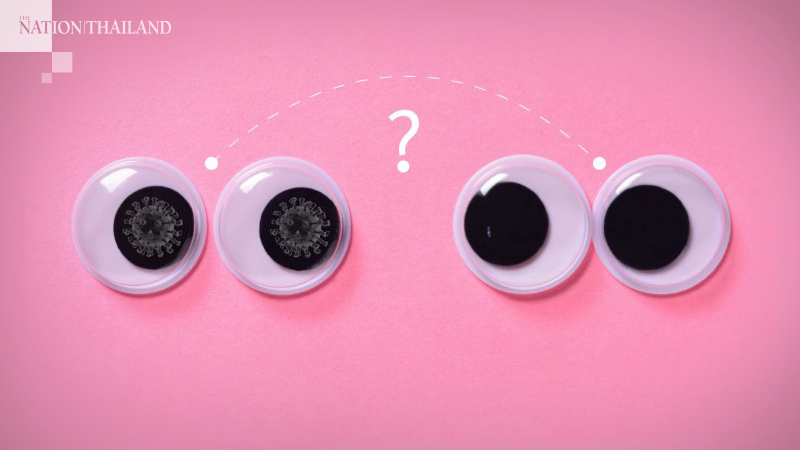
Virus in tears? Little to cry about #ศาสตร์เกษตรดินปุ๋ย

#ศาสตร์เกษตรดินปุ๋ย : ขอบคุณแหล่งข้อมูล : หนังสือพิมพ์ The Nation

https://www.nationthailand.com/lifestyle/30384892?utm_source=category&utm_medium=internal_referral

Virus in tears? Little to cry about

Mar 26. 2020
By The Nation

A recent report cited by the World Health Organisation saying the SARS virus was found in a patient’s teardrops has many people asking if Covid-19 dwells there too.

The new coronavirus is known to spread through bodily fluids, but the focus has been on mucous from coughs and sneezes.

Dr Saichin Isipradit, director of Mettapracharak Hospital (Wat Rai Khing) in Nakhon Pathom, said this week a study had found symptoms of pink eye (conjunctivitis) in 0.8 per cent of Covid-19 victims.

“Tears normally leave the eyes through tiny openings on the edges of the eyelids,” she said. “The fluid then drains into the nose through little ‘tubes’ called nasolacrimal ducts.

“If a large amount of the virus enters the eyes, such as when someone sneezes or coughs directly into your face, the droplets could enter these ducts. Cases of airborne Covid-19 are rare – infection comes mostly from infected droplets.”

Avoid crowds, Saichin advises. Eat only healthy food, wash your hands frequently with soap or alcohol-based hand sanitiser, and never use someone else’s personal utensils.