FDA steps up scrutiny of coronavirus antibody tests to ensure accuracy #ศาสตร์เกษตรดินปุ๋ย

#ศาสตร์เกษตรดินปุ๋ย : ขอบคุณแหล่งข้อมูล : หนังสือพิมพ์ The Nation.

https://www.nationthailand.com/lifestyle/30387289?utm_source=category&utm_medium=internal_referral

FDA steps up scrutiny of coronavirus antibody tests to ensure accuracy
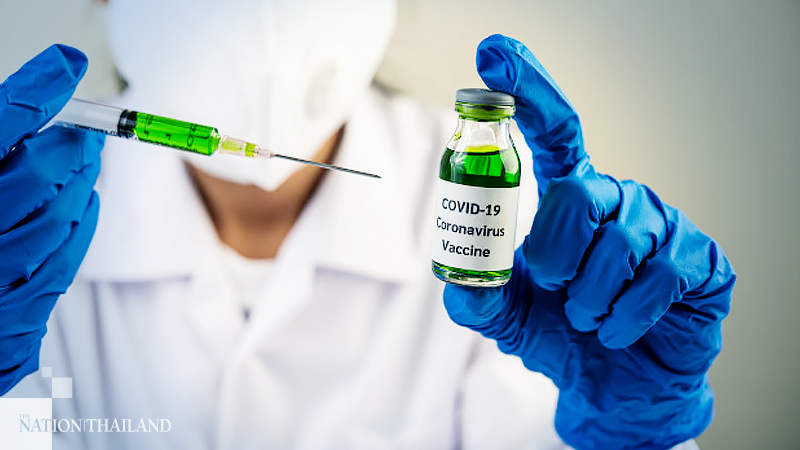
May 05. 2020

Photo credit: Jcomp

Photo credit: Jcomp
By The Washington Post · Laurie McGinley · NATIONAL, HEALTH 
WASHINGTON – The Food and Drug Administration, under fire for allowing more than 100 commercial coronavirus antibody tests on the market without review, moved Monday to assert oversight, saying the tests will have to pass agency muster, including meeting standards for quality and accuracy.

https://www.washingtonpost.com/video/c/embed/6c9dd052-a8a6-4445-b891-cbf466ad582c

Officials said “unscrupulous actors” have been “marketing fraudulent test kits and using the pandemic as an opportunity to take advantage of Americans’ anxiety.”

The action was the latest about-face in the administration’s coronavirus response as it seeks to fix a testing response that has been criticized as either too restrictive or too lenient. Earlier this year, the FDA agency was hammered for the speed at which it moved to allow academic medical centers and others to develop diagnostic tests for the virus that might have made them more widely available. Then, critics say, it swung too far in the other direction in allowing the antibody tests to go unvetted.

The result, they complained, was a flood of products of dubious quality that confused hospitals, doctors and consumers – “a wild, wild West” environment, said Scott Becker, chief executive officer of the Association of Public Health Laboratories, which represents state and local public laboratories.

The tougher requirements will make it harder to buy questionable tests, but officials say there should still be enough reliable options for hospitals, doctors and consumers. The agency already has authorized 12 antibody tests for emergency use, including one by Roche. And it is working with companies on authorizations for an additional 200 serology tests.

Antibody, or serology, tests are designed to identify people who may have overcome covid-19, the disease caused by the novel coronavirus, including those who had no symptoms, and developed an immune response. They are not designed to detect active infections. Some officials tout the blood tests as a way to identify people who have developed immunity and can safely return to work. But many scientists say that even for good tests evidence is lacking that the tests can prove someone has immunity from the coronavirus or for how long. And the situation is made worse by shoddy tests that may give false results.

FDA Commissioner Stephen Hahn emphasized those uncertainties in a Monday call with reporters. “Whether a test should be a “ticket for someone to go back to work as the sole item, my opinion on that would be no, because there are a lot of unanswered questions,” he said.

Inaccurate tests can have serious consequences, experts warn. Incorrect results could indicate people have immunity against the virus when they don’t, potentially resulting in behavior that would endanger them and those around them. Such issues are taking on special importance as federal and state officials debate strategies, including using serological testing, to help determine when they can end state and local lockdowns. Antibody tests also are considered a way to determine whether people who have recovered from covid-19 can donate blood that can be used to manufacture “convalescent plasma,” which is being tried as a potential treatment.

Under the new rules, companies already marketing tests will be required to file applications for FDA emergency-use authorizations, including data on their tests, within 10 business days. Makers of new tests will have to file such applications within 10 days of notifying the agency of their plans to go to market. Under such authorizations, the FDA allows unapproved medical products to be used in a public health emergency without being subjected to a full-fledged review.

If commercial test-makers don’t submit applications for authorizations within the 10-day time limit, the agency plans to make that information public and consider enforcement action to take the products off the market.

FDA officials said their previous policy was appropriate because antibody tests are not used to diagnose covid-19 and that allowing the tests on the market early provided information about the prevalence of covid-19 in some populations and whether antibodies confer immunity to the virus.

“However, flexibility never meant we would allow fraud,” Anand Shah, deputy FDA commissioner for medical and scientific affairs, and Jeff Shuren, director of the agency’s Center for Devices and Radiological Health, said in a statement. “We unfortunately see unscrupulous actors marketing fraudulent test kits and using the pandemic as an opportunity to take advantage of Americans’ anxiety.”

They noted some test makers have wrongly said their products have been approved or authorized by the FDA or could be used to diagnose covid-19. In addition, they said, independent evaluations by the National Cancer Institute have showed some performed poorly. The agency is stopping some tests at the border. Many of the imported tests are from China.

The agency said it knows of about 160 serology tests being marketed in the United States that have not received authorization; of those, about two dozen are laboratory-developed tests that must be performed in special laboratories certified to do high-complexity testing. Those tests, many of which are being used at academic medical centers, won’t be required to have emergency-use authorizations, although the agency said it encourages it.

Overall, the agency has authorized 12 antibody tests for emergency use, including one by Roche. The FDA said it is working with companies on authorizations for an additional 250 serology tests and is taking steps to streamline the process. If commercial test makers don’t submit applications for authorizations within the 10-day time limit, the agency plans to make that information public and consider enforcement action to take the products off the market.

The FDA also said it expects all antibody tests – those made by both commercial manufacturers and laboratories – to meet certain standards on sensitivity (the tests’ ability to detect antibodies) and specificity (the ability to distinguish people who are infected from those who are not).

The agency received praise for the change. “The Food and Drug Administration made the right decision by walking back its policy on serology testing for covid-19,” said Becker of the public health labs group. “We’ve long been concerned that allowing tests on the market that have not been approved and authorized for use is a recipe for disaster. This revised policy makes a lot of sense and should have been in place over the last six weeks.”

The FDA’s initial hands-off policy also drew criticism from some congressional Democrats. Rep. Raja Krishnamoorthi, D-Ill., chairman of the House Oversight Committee’s economic and consumer policy subcommittee, recently conducted an investigation of the policy and concluded it had allowed scores of flawed tests onto the market. In a statement, Krishnamoorthi called on the agency to move quickly to “clear the market of tests that don’t work or aren’t submitted for review, so that consumers can take confidence that testing services they receive are reliable and trustworthy.”

As part of its program to assess the quality of antibody tests, the National Cancer Institute has validated 13 kits, according to FDA officials who said they will make the results available after reviewing them.

Even high-quality tests have limits and can result in errors, experts warn. An antibody test used in areas without many cases of covid-19 may produce as many or more false results as true results because the likelihood of finding someone who has been infected is very small. In those situations, it may be necessary for some people to have two antibody tests to get reliable results, the FDA said.

Coronavirus pandemic is pushing America into a mental health crisis #ศาสตร์เกษตรดินปุ๋ย

#ศาสตร์เกษตรดินปุ๋ย : ขอบคุณแหล่งข้อมูล : หนังสือพิมพ์ The Nation.

https://www.nationthailand.com/lifestyle/30387276?utm_source=category&utm_medium=internal_referral

Coronavirus pandemic is pushing America into a mental health crisis

May 04. 2020
Isolation and economic upheaval caused by the coronavirus pandemic are already resulting in a sharp spike in people seeking mental health help. MUST CREDIT: Photo for The Washington Post by Amanda Andrade-Rhoades

Isolation and economic upheaval caused by the coronavirus pandemic are already resulting in a sharp spike in people seeking mental health help. MUST CREDIT: Photo for The Washington Post by Amanda Andrade-Rhoades
By The Washington Post · William Wan · NATIONAL, HEALTH

WASHINGTON – Three months into the coronavirus pandemic, America is on the verge of another health crisis, with daily doses of death, isolation and fear generating widespread psychological trauma.

Federal agencies and experts warn that a historic wave of mental health problems is approaching: depression, substance abuse, post-traumatic stress disorder and suicide.

Just as the initial coronavirus outbreak caught hospitals unprepared, the country’s mental health system – vastly underfunded, fragmented and difficult to access before the pandemic – is even less prepared to handle this coming surge.

“That’s what is keeping me up at night,” said Susan Borja, who leads the traumatic stress research program at the National Institute of Mental Health. “I worry about the people the system just won’t absorb or won’t reach. I worry about the suffering that’s going to go untreated on such a large scale.”

Data show depression and anxiety are already roiling the nation.

Nearly half of Americans report the coronavirus crisis is harming their mental health, according to a Kaiser Family Foundation poll. A federal emergency hotline for people in emotional distress registered an 891% increase in March compared with the same time last year. Calls and messages to the Substance Abuse and Mental Health Services Administration’s hotline grew 338% in March from a month earlier, before state lockdowns began.

Online therapy company Talkspace reported a 65% jump in clients since mid-February. Text messages and transcribed therapy sessions collected anonymously by the company show coronavirus-related anxiety dominating patients’ concerns.

“People are really afraid,” Talkspace co-founder and CEO Oren Frank said. The increasing demand for services, he said, follows almost exactly the geographic march of the virus across the United States. “What’s shocking to me is how little leaders are talking about this. There are no White House briefings about it. There is no plan.”

The suicides of two New York health-care workers highlight the risks, especially to those combating the pandemic. Lorna Breen, a top New York emergency room doctor, had spent weeks contending with coronavirus patients flooding her hospital and sometimes dying before they could be removed from ambulances. She had no history of mental illness, her relatives have said in interviews, but struggled increasingly with the emotional weight of the outbreak before she died. Days later, reports emerged that a Bronx EMT also killed himself.

Researchers have created models – based on data collected after natural disasters, terrorist attacks and economic downturns – that show a likely increase in suicides, overdose deaths and substance use disorders.

And yet, out of the trillions of dollars Congress passed in emergency coronavirus funding, only a tiny portion is allocated for mental health. At the same time, therapists have struggled to bring their practices online and to reach vulnerable groups because of restrictions on licensing and reimbursement. Community behavioral health centers – which treat populations most at risk – are struggling to stay financially solvent and have begun closing programs.

“If we don’t do something about it now, people are going to be suffering from these mental health impacts for years to come,” said Paul Gionfriddo, president of the advocacy group Mental Health America. That could further harm the economy as stress and anxiety become debilitating among workers and strain the medical system as people flock to emergency rooms with panic attacks, overdoses and depression, he said.

Just as the country took drastic steps to prevent hospitals from being overwhelmed by infections, experts say, it needs to brace for the coming wave of behavioral health needs by providing widespread mental health screenings, better access to services through telehealth, and a sizable infusion of federal dollars.

– – –

When diseases strike, experts say, they cast a shadow pandemic of psychological and societal injuries. The shadow often trails the disease by weeks, months, even years. And it receives scant attention compared with the physical symptoms, even though it, too, wreaks carnage, devastates families, harms and kills.

Mental health experts are especially worried about the ongoing economic devastation. Research has established a strong link between economic upheaval and suicide and substance use. A study of the Great Recession that began in late 2007 found that for every percentage point increase in the unemployment rate, there was about a 1.6% increase in the suicide rate.

Using such estimations, a Texas nonprofit – Meadows Mental Health Policy Institute – created models that suggest if unemployment amid the coronavirus pandemic ends up rising 5 percentage points to a level similar to the Great Recession, an additional 4,000 people could die from suicide and an additional 5,500 from drug overdoses.

But if unemployment rises by 20 percentage points – to levels recorded during the 1930s Great Depression – suicides could increase by 18,000 and overdose deaths by more than 22,000, according to Meadows.

“These projections are not intended to question the necessity of virus mitigation efforts,” cautioned authors of the Meadows report, “but rather to inform health system planning.”

Suicide experts and prevention groups have deliberately refrained from discussing too widely death projections such as those from the Meadows Institute. Research has shown reporting excessively or sensationally on suicide can lead to increases in suicide attempts, an effect known as contagion. And the factors involved in any suicide are often complex, they point out.

“Could the numbers go up? Yes, but it isn’t inevitable. We know suicide is preventable,” said Christine Moutier, chief medical officer for the American Foundation for Suicide Prevention.

Research has shown interventions make a marked difference, such as limiting access to guns and lethal drugs, screening patients for suicidal thoughts, treating underlying mental conditions and ensuring access to therapy and crisis lines to call and text. “That’s why we need to act now,” Moutier said.

On Wednesday, a coalition representing more than 250 mental health groups announced it was convening a national response to the problem of pandemic suicide – an effort that will include at least one federal agency, the National Institute for Mental Health.

– – –

Front-line workers – health-care providers, grocery store workers, delivery people – are especially vulnerable to the coming storm of mental health problems.

“We’re used to dealing with sick people and seeing terrible things, but what’s devastating with covid is the sheer volume. It’s like drinking from a poisonous fire hydrant,” said Flavia Nobay, an emergency room doctor.

With infections soaring in March in New York, Nobay took leave from her duties at the University of Rochester Medical Center to volunteer as an ER doctor in Queens.

Weeks later, the experience haunts her: Watching families crumple in the ambulance bay knowing they may never see relatives again. Hearing the relentless alerts every few minutes of crashing patients and respiratory arrest. Sending patients home because they weren’t quite sick enough, knowing they may be coming right back. Or even worse, the chance they may not make it back.

“It chips away at your soul,” Nobay said. “You have to hold on to the positive and how you’re helping in the ways you can. That hope is like medicine. It’s as important and tangible as Tylenol.”

A study of 1,257 doctors and nurses in China during that country’s coronavirus peak found that half reported depression, 45% anxiety and 34% insomnia.

Pre-pandemic, doctors and nurses were already prone to burnout, research shows, because of the workload, pressure, chaos and increasingly dysfunctional health-care system.

“We’re now hitting a period of uncertainty where a lot of people are asking themselves how long they can keep it up,” said Liselotte Dyrbye, a Mayo Clinic doctor and leading researcher on burnout. “The teapot can only boil for so long.”

– – –

This approaching wave of mental injuries will be met in coming months by a severely broken system.

In the United States, 1 in 5 adults endure the consequences of mental illness each year. Yet less than half receive treatment, federal statistics show. As suicide rates have fallen globally, the rate in the United States has climbed every year since 1999, increasing 33% in the past two decades.

Part of the problem, experts say, is the markedly different way the United States treats mental illness compared with physical illness.

In normal times, a heart attack patient rarely has trouble securing a cardiologist, operating table and hospital bed. But patients in mental crisis, studies show, struggle to get their insurance to pay for care. Even with insurance, they struggle to find therapists and psychiatrists willing to take that payment. Those who can afford it often end up paying out of pocket.

Experts warn that such parity and access problems may only worsen with the pandemic, which has upended the functions of hospitals, insurance companies and mental health centers.

In a joint letter Wednesday, leaders in mental health and substance abuse treatment pleaded for the Trump administration’s help. The letter – signed by the American Psychological Association, the American Psychiatric Association, the National Alliance on Mental Illness and 12 other organizations – asked federal officials to save community mental health centers facing financial collapse.

The letter also asked the government to lift reimbursement restrictions that have prevented therapists from using phone calls to treat patients. On Thursday, the Trump administration indicated it would do so.

A survey of local mental health and drug addiction centers showed the pandemic has left many on the brink of financial collapse, preventing them from providing services that generate much of their reimbursement revenue. More than 60% said they would run out of funding in less than three months and had already closed some programs.

In a letter to Congress in early April, mental health organizations estimated that $38.5 billion is needed to save treatment providers and centers and that $10 billion more is needed to respond to the coronavirus pandemic. On Friday, the federal substance abuse and mental health agency said it had received less than 1% of the amount advocated by mental health groups – $425 million in emergency funding – and has awarded $375 million to states and local organizations.

While Congress recently authorized $100 billion in emergency funds for hospitals and medical providers, very little will reach mental health and addiction service providers because they mainly receive funding through Medicaid. Most of the emergency money provided by Congress is being distributed through Medicare.

“We are facing the loss of mental health centers and programs at a time when we are going to need them more than ever,” said Chuck Ingoglia, president of the National Council for Behavioral Health, which represents 3,326 treatment organizations.

– – –

There are glimmers of hope, experts say, amid the gloomy outlook.

The sudden push into telemedicine could make services more accessible in years to come. And the national mental health crisis could spark reforms and movement toward better treatment.

And while almost everyone is experiencing increased stress, the effect for many will be transient – trouble sleeping, shorter fuses.

The difficulty is identifying and treating those who develop deeper, worrisome mental problems such as post-traumatic stress disorder and severe depression.

“To control the virus, it’s all about testing, testing, testing. And for the mental health problems ahead, it’s gonna be all about screening, screening, screening,” said Gionfriddo of Mental Health America.

For years, Gionfriddo’s nonprofit has offered questionnaires on its website – widely used in medicine – to help people screen themselves for mental health problems. Since the pandemic began, those daily screenings have jumped 60 to 70%. And since February, the number of people screening positive for moderate to severe anxiety and depression has jumped by an additional 18,000 people compared with January.

Speaking from her parents’ home in Pittsburgh, Ananya Cleetus said she has felt the increased strain.

First came the closure of her school, the University of Illinois, bringing to an end her ambitious plans for the semester in computer engineering. Then came the loss of her therapist, forbidden by licensing rules from treating her across state lines. And social media didn’t help – all those posts of people baking bread, picking up hobbies and living their best #quarantinelife, making hers feel all the more pitiful.

It was getting harder to even get out of bed, said Cleetus, 23, who has a bipolar disorder and helps lead a student advocacy group.

“It took me a few weeks and talking to friends to finally realize this wasn’t just something wrong with me,” Cleetus said. Since then, she has poured her energies into creating a daily routine and an online guide for fellow students struggling with the pandemic and mental health.

“This virus is messing with everyone. The anxiety, isolation, uncertainty, lack of structure,” she said. “Everyone’s struggling with it in one way or another.”

Moisturizing tips on rashes and face masks #ศาสตร์เกษตรดินปุ๋ย

#ศาสตร์เกษตรดินปุ๋ย : ขอบคุณแหล่งข้อมูล : หนังสือพิมพ์ The Nation.

https://www.nationthailand.com/lifestyle/30387215?utm_source=category&utm_medium=internal_referral

Moisturizing tips on rashes and face masks

May 04. 2020
Photo credit: Pressfoto

Photo credit: Pressfoto
By Special To The Washington Post · Marlene Cimons · HEALTH 

Before the onset of the novel coronavirus pandemic, Adam Friedman, professor and interim chair of dermatology at George Washington University, rarely wore a face mask. Today, working full days at the GWU outpatient facility, he wears one up to eight hours a day. As a result, his face has become perennially inflamed with an angry red rash.

“I’m now a dermatologist and a patient at the same time,” he says.

While he isn’t seeing many patients in person – only urgent cases – he’s still around his co-workers all day, so the mask must stay on. “These masks are super uncomfortable,” he says.

Skin irritation from wearing personal protective equipment is a hazard already familiar to health-care providers working in settings where infection control is critical. Now it has also become familiar to many people wearing masks in public, and frequently washing their hands. (Even bandannas and cloth masks, different from medical masks, can cause reactions, depending on the cloth, dyes and the detergent used to clean them, experts say.)

Friedman applies moisturizer to his face several times a day to decrease friction between his skin and the mask, useful advice for everyone, he says.

“It’s all about the barrier,” he says. “We need to protect our biological armor. This means not overwashing, especially with soap, and applying a moisturizer, preferably a thicker lotion or cream, to damp skin to lock moisture in where it’s needed, and to add an extra layer of protection from all the nasty things out there.”

The Centers for Disease Control and Prevention recommends that everyone wear face masks or cloth coverings over the mouth and nose when in public, especially where social distancing may be difficult, so it’s probably wise to take steps to protect the skin to prevent or alleviate problems.

“I think we will be wearing masks for months to come, given the smoldering nature of this viral pandemic,” Friedman says. “These skin issues, without good preventive and treatment strategies – which we have – will likely persist and become more prevalent.”

Dawn Davis, a dermatologist with the Mayo Clinic, says the skin, which is the body’s largest organ, protects us from the environment but can become damaged when it cannot respond fast enough to stresses.

“The skin is a very active organ of the body, just like any other organ,” she says. “In contrast to many other organs, it continually regenerates and produces its own moisturization. Our skin is very busy on a day-to-day basis on a level we don’t think about. It’s a full-time job.”

She compares skin to beleaguered feet that end up in ill-fitting or too tight shoes.

“The skin compensates by creating calluses,” she says. “The difference between the foot and the hands and face is that the bottom surface of the foot is much thicker than the skin on the backs of hands and on the face, so it doesn’t have the natural mechanism to form a callus. Instead, you get irritation, dryness, friction and dermatitis.”

She suggests using hypoallergenic soaps and washing hands and face in warm – not scalding – water. Pat dry, using linen or cotton, less abrasive than a paper towel. For hands, if moisturizing with cream or lotion alone doesn’t work, she recommends covering the lotion layer with an ointment, like petroleum jelly, then putting cotton socks over the hands overnight.

And if that’s not enough, try what she calls the “skin burrito,” a technique that adds additional moisture. Wash your hands, pat them dry and apply two layers of hypoallergenic lotion or cream. Put a teaspoon of white vinegar into a glass or small bowl of warm water and soak two clean washcloths in the solution. Wring them out, wrap them around your hands and cover them with socks.

The advice is similar for the face. Wash, pat dry and apply hypoallergenic moisturizer – lotion or cream – twice, leaving a thick layer. The vinegar soak works here, too. Lay the wet cloths across the irritated parts of the face for about 15 minutes, three or four times a day.

Davis also likes zinc oxide – which fights inflammation – the same stuff lifeguards put on their noses to prevent sunburn, and parents put on babies’ bottoms to treat diaper rash. Put a thin layer in facial areas where the mask rubs.

It’s also important to remember that broken skin is a portal for infection, and that ignoring skin problems can cause long-lasting, although treatable, skin discoloration, or require prescription medications. Moreover, mask wearing can worsen existing primary skin diseases, such as seborrheic dermatitis, or red scaly skin, rosacea, or red patches and visible blood vessels, eczema, an itchy inflammation, and perioral dermatitis, an acnelike redness around the mouth.

“Many of the masks that people – and myself – have at home are these fairly hard cone masks that can be very irritating from the pressure,” says Brian Kim, a dermatologist and co-director of Center for the Study of Itch and Sensory Disorders at Washington University School of Medicine. “Usually these masks are used very transiently while people are doing housework that creates dust.

“However, during covid-19, people are wearing them all day,” Kim says. “My face had long pressure lines, with redness, soreness, and my face was also very flushed underneath. I also have some mild rosacea, which was getting exacerbated by the heat and humidity and causing my face to get unusually red.”

Karen Ousey, director of the Institute of Skin Integrity and Infection Prevention at the University of Huddersfield in England and the author of a recent paper describing the skin issues among health-care workers, urges them to ensure masks are fitted correctly and aren’t too tight.

Apply moisturizer at least 30 minutes before putting on the mask, to avoid an improper fit, she says. She also warns that paraffin products are flammable, so anyone using them should not smoke. Finally, “if possible and safe to do so,” she says, remove masks every two hours to relieve pressure.

Most of these problems are preventable and easily treated, Friedman says.

“In this unprecedented time, we all need to do our part to protect ourselves and those around us,” he said. “Face masks save lives. Moisturizers save skin. Apply both to your daily routine.”

Science tackles how immunities decline with age #ศาสตร์เกษตรดินปุ๋ย

#ศาสตร์เกษตรดินปุ๋ย : ขอบคุณแหล่งข้อมูล : หนังสือพิมพ์ The Nation.

https://www.nationthailand.com/lifestyle/30387214?utm_source=category&utm_medium=internal_referral

Science tackles how immunities decline with age

May 04. 2020
File photo

File photo
By Special To The Washington Post · Jonathan Wosen · HEALTH

As cases and deaths from the pandemic rise, one trend remains consistent: The virus is deadliest for older adults who are more likely to have existing medical conditions and weakened respiratory systems. Both are major risk factors for becoming severely ill from infection by the novel coronavirus that causes the disease covid-19.

But scientists believe that another factor in the observed heightened risk is probably the general decline in the immune system that happens with age. In medicine, it has long been known that older immune systems struggle to fight off infections.

The ebbing of resistance to infectious disease with age is particularly clear when looking at studies of vaccines. During 2018-2019, for example, the seasonal flu vaccine was effective for roughly 3 of 5 children 17 and younger, according to the Centers for Disease Control and Prevention. The same vaccine was effective for only about 1 of 4 adults 50 and older.

Scientists have rushed to start trials for a vaccine against coronavirus. But even when they succeed in developing an effective one, University of Pennsylvania immunologist Michael Cancro worries that any coronavirus vaccine may be less effective for older adults – just as current vaccines are for other diseases.

“I doubt it’ll be worse, I don’t think it will be any better,” says Cancro, who wrote about age-associated changes in the immune system in the most recent Annual Review of Immunology.

Scientists are working hard to understand how age changes the immune system so that they can better protect seniors against current and future infectious diseases. It’s a timely goal. By 2030, there will be more adults over 60 than children under 10, according to the United Nations. In addition to the current threat of covid-19, influenza poses a serious risk to this age group: Nearly 3 of 4 people who died of flu during the 2018-2019 season were 65 or older, according to the CDC.

Here’s some information about what researchers know so far.

– How do vaccines work?

Vaccines stimulate the immune system in much the same way as an actual infection – minus the risk of major, deadly symptoms – because they contain fragments of disease-causing microbes, or pathogens, for the immune system to recognize. A prime example is the seasonal flu shot, made of pieces of the influenza virus. Other vaccines, such as polio, use inactivated or weakened versions of the whole virus or bacterium.

“It’s more or less been: You slice and dice the pathogen, you see what works,” Cancro says.

A successful vaccine will activate two classes of immune cells: B cells and T cells. B cells inactivate pathogens or mark them for killing by coating them with Y-shaped molecules called antibodies. T cells kill infected cells and direct the activity of the rest of the immune system, including B cells.

Those T cells are alerted to potential threats by another immune player called the antigen-presenting cell. It engulfs chunks of the pathogens, chomps them into bits and displays those bits on its surface. Nearby T cells respond to this by dividing rapidly to increase about a thousand-fold; your doctor can feel this by checking for swollen lymph nodes in your neck.

Most of the activated B and T cells will die soon after encountering a microbe or vaccine. But some become memory cells, which can last years or even decades and protect against future infections of the same kind. Memory responses are the hallmark of a successful vaccine, and are especially valuable for those with the least prior exposure to pathogens: children.

– How do immune responses change with age?

Older adults struggle to respond to pathogens they haven’t already been exposed to. One example is yellow fever, a virus endemic to sub-Saharan Africa and Latin America. Studies show that older people from other regions, most of whom have never been exposed to the virus before, take longer to produce antibodies in response to yellow fever vaccine, and those antibodies tend to be less effective at stopping the virus.

Something similar may happen with a vaccine for coronavirus, Stanford immunologist Jörg Goronzy says. “It will be one of those events where we vaccinate older people for something they’ve never seen before.”

There are likely multiple reasons for a waning immune response with age. One is that B cells in older adults produce antibodies that are less fine-tuned. When a B cell activates and starts to divide, with each division it slightly tweaks – mutates – its antibody-producing genes. This creates a population of cells with slightly differing versions of the same antibody, a bit like musical variations on a theme.

Some antibody versions will latch onto a pathogen better than others. B cells producing the most efficient forms get signals from neighboring T cells to continue dividing, while the remaining cells die off. But the genes regulating mutations in antibody-producing genes become less active with age, maybe helping to explain the sometimes-lackluster antibody responses in older adults.

And while older adults do retain immune cell memory, they can also struggle to respond to new versions of a pathogen that have shifted a bit since the person’s last encounter with it.

Scientists have long known that, when confronted with a new strain of a pathogen, the immune system will respond less strongly to it than to the first strain. That happens because memory cells from the first exposure gear into action and drown out a more tailored response to the newer strain.

“We still don’t exactly understand why the heck that is, but it’s a fact,” Cancro says.

Immunologists call this phenomenon original antigenic sin. Original antigenic sin makes it harder to mount effective antibody responses to rapidly mutating pathogens, such as influenza. The H1N1 flu strain, for example, has been with us ever since its emergence in the 1918 flu pandemic and during that time has acquired about 14 new mutations a year.

Older adults also have fewer T cells that can respond to new infections or vaccinations. After around age 20, we mostly stop making new T cells and rely on keeping existing cells alive, says Goronzy, who studies aging’s effects on T cells. He likens this change to a city losing skilled laborers.

T cells that do survive behave differently from those in youth. Work from Goronzy’s team and colleagues has shown that T cells in older adults are less likely to assist B cells or become long-lived memory cells. Instead, older adults tend to produce T cells that die after short bursts of activity – a necessary part of any immune response, but not one that leads to lasting protection.

– How are researchers improving vaccines for older adults?

One success story that researchers hope to learn from is Shingrix, a vaccine for the varicella zoster virus, which causes chickenpox and shingles. Shingrix was approved by the Food and Drug Administration in 2017 and is recommended by the CDC for adults 50 and over.

Studies show that the vaccine is about 90 percent effective in preventing shingles among adults 70 to 79, and equally effective for those over 80. One strength of the vaccine is its ability to boost immune memory; older adults vaccinated with Shingrix had stronger memory T cell responses than adults vaccinated with Zostavax, an older shingles vaccine that is only about 50 percent effective. Unlike Zostavax, Shingrix was designed to include molecules that stimulate antigen-presenting cells through the same pathways that activate these cells when they encounter bacteria.

“We’re seeing more imagination in the way we formulate vaccines,” Cancro says, “either in terms of mimicking what a pathogen looks like or providing molecules that drive immune cells.”

Researchers are also looking to identify immune pathways affected by age and trying to reverse some of these changes. In a 2018 study, 264 adults ages 65 and older were treated with experimental drugs that inhibit a biochemical pathway that becomes more active with age. Those pretreated with the drugs had stronger flu vaccine antibody responses than those given the flu shot alone – suggesting that older adults may benefit from vaccines tailored to their biology.

– How can older people best protect themselves against infectious diseases such as the flu?

One option is to take a flu vaccine designed specifically for older adults. The CDC doesn’t specifically recommend any one version of the flu vaccine for them, but two in the United States are offered only to people 65 and older.

One of these, Fluzone High-Dose, contains four times the dose of a standard flu shot. A 2014 study reported that while 1.9 percent of older adults who received the typical vaccine got the flu, only 1.4 percent of those administered Fluzone became infected. The other choice, FLUAD, is a standard-dose vaccine that includes an additional ingredient to boost antibody and T-cell responses – a similar strategy to the Shingrix vaccine, although the specific ingredient is different.

Even a vaccine that isn’t 100 percent effective can reduce recovery time and symptom severity.

A CDC study reported that adults 50 and older who got the flu vaccine during 2010-2011 cut their risk of ending up in the hospital due to flu by more than half. Plus, getting vaccinated makes you less likely to infect family, friends and co-workers – some of whom might be immunosuppressed or unable to get certain vaccines.

“I get my flu vaccine every year,” Cancro says. “And I’m 70.”

– – –

This report was produced by Knowable Magazine and can be read in full at knowablemagazine.org.

Maryland cancels $12.5 million order for masks, ventilators from GOP-linked firm #ศาสตร์เกษตรดินปุ๋ย

#ศาสตร์เกษตรดินปุ๋ย : ขอบคุณแหล่งข้อมูล : หนังสือพิมพ์ The Nation.

https://www.nationthailand.com/lifestyle/30387186?utm_source=category&utm_medium=internal_referral

Maryland cancels $12.5 million order for masks, ventilators from GOP-linked firm

May 03. 2020
Photo credit: internewscast

Photo credit: internewscast
By The Washington Post · Tom Hamburger, Juliet Eilperin · NATIONAL, HEALTH 

The state of Maryland on Saturday terminated a $12.5 million contract for personal protective equipment with a firm started this spring by two well-connected Republican operatives.

State officials said the company, Blue Flame Medical, failed to deliver masks and ventilators as promised and that the matter has been referred to Maryland Attorney General Brian Frosh, a Democrat, for review.

Blue Flame received a nearly $6.3 million down payment from Maryland in early April – after promising to provide within weeks desperately needed personal protective equipment for front-line medical personnel dealing with the novel coronavirus.

Ethan Bearman, the Los Angeles attorney for Blue Flame Medical, said Saturday he was unaware the state was unhappy with the firm.

“This comes as a surprise,” Bearman said when told that the attorney general had confirmed receiving a referral about the company from the state General Services Department. “This does not comport with what I know of Blue Flame Medical.”

However, a letter sent to the firm Thursday by Danny Mays, Maryland’s director of procurement, revealed deep frustration.

“Despite numerous requests for information and order status, Blue Flame Medical has yet to deliver any items under this order, or provide any pertinent data as to a pending shipment,” Mays wrote. “As Blue Flame Medical LLC has failed to honor its delivery commitment under the terms and conditions, [the Department of General Services] is now formally requiring Blue Flame Medical to cure this deficiency.”

Bearman acknowledged that delays had occurred in filling the order but said such problems have become commonplace this spring during the chaotic rush to locate masks and other protective equipment.

The Wall Street Journal first reported the contract’s cancellation Saturday.

Blue Flame was started in late March by Michael Gula, a Republican fundraising and lobbying consultant in Washington, and John Thomas, a California political consultant.

Before moving in to the medical supply business, Gula was known in GOP circles for his political fundraising prowess. His firm has raised campaign funds for Sens. Patrick Toomey of Pennsylvania, Steve Daines of Montana, Ron Johnson of Wisconsin and dozens of other influential Republicans. He startled some longtime clients in March when he announced he was quitting the fundraising world during an election year to start the medical supply business with Thomas.

Thomas recently worked as a strategist and fundraiser for Republican Don Sedgwick, who sought to run against Rep. Katie Porter, D-Calif., but lost in the March primary.

The two Republican consultants incorporated their firm in Delaware on March 23 and a week later received the contract from Maryland.

Gula used a connection to a staffer in the administration of Gov. Larry Hogan, a Republican, to initially make a pitch for the sale, according to a Maryland official who spoke on the condition of anonymity to discuss a sensitive legal matter. After Gula started using that staffer’s name on a reference sheet to seek contracts with other states, the official said, the staffer referred the matter to the chief legal counsel for Hogan, Mike Pedone.

Pedone then referred the matter on April 9 to Frosh’s office, the official said.

Gula and Thomas did not respond to requests for comment.

The April 1 purchase order, which was obtained by The Washington Post, identifies June 30 as the delivery deadline. But the Maryland official said that is only because June 30 is the end of the current fiscal year. The agreed upon shipping date for the masks and ventilators was April 14, this person said. Bearman did not respond to a request for comment on this complaint.

The order shows that Blue Flame agreed to provide 1.5 million N95 masks and 110 ventilators, and that the state wired the company nearly $6.3 million as a deposit.

Michael Ricci, a spokesman for Hogan, said in an interview Friday that none of the masks and ventilators had arrived.

“We placed this order on April 1, and we haven’t gotten anything,” Ricci said. “We received no shipping confirmation. Obviously, that’s a concern. That’s not been the case with any of our other vendors.”

The price Blue Flame was charging at the time for N95 masks – $4.52 each – was much higher than the list price provided by manufacturers.

Frosh confirmed Saturday the matter had been referred to his office.

Frosh would not comment on the contract, the investigation or what precipitated the referral.

Asked about the delays in fulfilling the contract, Bearman said: “I know Blue Flame Medical wanted to deliver the shipment [masks and ventilators] in April. I know, too, of actions by the Chinese government. Their supplier in China wrote a letter to Blue Flame Medical informing them that the Chinese government interfered with the supplier’s ability to ship.”

Bearman said his client “has done everything in its power to fulfill, and has alternate suppliers to fulfill the order as written. And they so informed the state of Maryland.”

The Hogan administration has been aggressively working to shore up the state’s supplies of equipment needed to fight the pandemic, including the purchase of 500,000 coronavirus tests from South Korea last month.

Local officials in Maryland were frustrated that those tests were not made available for their use, in part because of a lack of swabs, reagents and other testing supplies.

The last time the government sought a ‘warp speed’ vaccine, it was a fiasco #ศาสตร์เกษตรดินปุ๋ย

#ศาสตร์เกษตรดินปุ๋ย : ขอบคุณแหล่งข้อมูล : หนังสือพิมพ์ The Nation.

https://www.nationthailand.com/lifestyle/30387149?utm_source=category&utm_medium=internal_referral

The last time the government sought a ‘warp speed’ vaccine, it was a fiasco

May 02. 2020
President Gerald Ford receives a swine flu inoculation from his White House physician, William Lukash, in 1976. MUST CREDIT: David Hume Kennerly/Courtesy Gerald R. Ford Library

President Gerald Ford receives a swine flu inoculation from his White House physician, William Lukash, in 1976. MUST CREDIT: David Hume Kennerly/Courtesy Gerald R. Ford Library
By The Washington Post · Michael S. Rosenwald · NATIONAL, HEALTH 

The federal government has launched “Operation Warp Speed” to deliver a covid-19 vaccine by January, months ahead of standard vaccine timelines.

The last time the government tried that, it was a total fiasco.

Gerald Ford was president. It was 1976. Early that year, a mysterious new strain of swine flu turned up at Fort Dix, New Jersey. One Army private died. Many others became severely ill. The nation’s top infectious disease doctors were shaken.

“They were well aware of the ravages of the 1918 flu, and this virus appeared to be closely related,” political scientist Max Skidmore wrote in his book, “Presidents, Pandemics, and Politics.” “The officials were concerned about a repetition of the tragedy, or the threat of perhaps an even more virulent pandemic.”

Ford raced to come up with a response, consulting with Jonas Salk and Alfred Sabin, the scientists behind the polio vaccine, and in late March he announced an audacious plan for the federal government to both produce the vaccine and organize its distribution.

“No one knows exactly how serious this threat could be,” Ford said, with Salk and Sabin by his side, a shocking sight given the two scientists had become enemies over who should get credit for the polio vaccine. “Nevertheless we cannot afford to take a chance with the health of our nation.”

Every American, Ford said, would be vaccinated.

The government had never attempted such an endeavor – both in its breadth and speed.

Almost immediately, there was chaos.

According to Skidmore, a professor at the University of Missouri-Kansas City, insurers were concerned about liability and balked at covering the costs. Manufacturers the government wanted to partner with had similar concerns, prompting Congress to pass a law waiving liability.

One manufacturer produced two million doses with the wrong strain. As tests progressed, more scientific problems emerged – even as there were few, if any, signs that a pandemic was materializing. In June, tests showed the vaccine was not effective in children, prompting a public squabble between Salk and Sabin over who should be vaccinated.

But Ford was undeterred. He directed the vaccination program to proceed, announcing plans to inoculate one million people per day by the fall – an unprecedented timeline the government struggled to meet.

By mid-October, vaccinations were underway. Ford was injected by the White House doctor.

And then more problems emerged. There were reports of sporadic deaths possibly connected to the vaccine. Cases of Guillain-Barre syndrome also emerged, and are still cited today by the anti-vaccine movement. Panic emerged, with dozens of states pausing vaccinations.

By December, following 94 reports of paralysis, the entire program was shut down.

Almost immediately, in grand Washington fashion, fingers were pointed. Scientists and government officials turned on each other, with allegations that Ford acted recklessly for political gain without knowing for sure whether a pandemic would emerge – an impossible predictive game, his defenders argued.

The recriminations were fueled by the fact that the swine flu pandemic hadn’t materialized.

“Had it done so,” Skidmore wrote, “the swine flu vaccination program would immediately have been reinstituted.” The risk-benefit analysis – a relatively small number of cases of Guillain-Barre syndrome vs. widespread death from the flu – would have appeared differently.

Despite the problems, Skidmore and other historians have given the program credit for its swiftness in the face of typical government red tape. The infrastructure Ford’s team set up was able to quickly identify the side effects. And in the end, Ford had the backing of the world’s foremost vaccine experts — Salk and Sabin.

The program “appears clearly to have been based on concern for the public good,” Skidmore wrote, “not to achieve political advantage.”

NYC emergency doctor dies by suicide, underscoring a secondary danger of the pandemic #ศาสตร์เกษตรดินปุ๋ย

#ศาสตร์เกษตรดินปุ๋ย : ขอบคุณแหล่งข้อมูล : หนังสือพิมพ์ The Nation.

https://www.nationthailand.com/lifestyle/30386972?utm_source=category&utm_medium=internal_referral

NYC emergency doctor dies by suicide, underscoring a secondary danger of the pandemic

Apr 29. 2020
By  The Washington Post · Marisa Iati, Kim Bellware · NATIONAL, HEALTH

A New York City emergency-room director died by suicide on Sunday after treating coronavirus patients and contracting the illness herself, according to police and the hospital where she worked.

Lorna Breen, chair of the emergency-medicine department at NewYork-Presbyterian Allen Hospital, died of self-inflicted injuries after being transported to UVA Hospital in Charlottesville, Virginia, police said.

Breen’s father, Philip Breen, told the New York Times that she had described coronavirus patients flooding her hospital and sometimes dying before they could be removed from the ambulances. She had no history of mental illness but seemed detached before she died, the Times reported.

“She tried to do her job, and it killed her,” the elder Breen told the newspaper.

He later added: “Make sure she’s praised as a hero, because she was. She’s a casualty just as much as anyone else who has died.”

After she contracted the coronavirus, Lorna Breen, 49, recovered for about a week and a half and then tried to return to work, Philip Breen told the Times. The hospital directed her to go back home, and her family brought her to stay with them in Charlottesville.

The Washington Post could not immediately reach Breen’s family on Tuesday.

Lucky Tran, a spokesperson for Columbia University Irving Medical Center and NewYork-Presbyterian, echoed Philip Breen’s praise of Lorna as a hero.

“Dr. Breen is a hero who brought the highest ideals of medicine to the challenging front lines of the emergency department,” Tran said in a statement.

The Allen campus of NewYork-Presbyterian, located on the north side of Manhattan, serves the region of the United States that has been most devastated by the pandemic. New York state had reported 295,106 cases of the coronavirus and 22,866 deaths as of Tuesday.

Breen’s suicide comes during a global pandemic that increasingly directs health care workers’ attention toward the mental-health risks faced by physicians, who die by suicide at twice the rate of the general population. Among doctors, women are the most vulnerable.

Early research out of Wuhan, China, where the coronavirus outbreak is believed to have originated, indicated that female front-line workers experienced higher rates or more severe symptoms of depression, anxiety, insomnia and distress than health care workers overall.

Suicides are an occupational risk for emergency physicians, and the brutality of a pandemic can make them more common, said Loice Swisher, an emergency-room physician in Philadelphia and member of the American Association of Suicidology.

“I’m afraid we’re going to see more of this. And not just physicians,” Swisher said. “People who are losing their jobs, who think all is lost and just don’t see an end to this.”

While suicide and many of the feelings that precede can be difficult to talk about, Swisher said doctors in particular can struggle within a larger culture that views doctors as steady, competent and driven. Doctors who struggle may be especially reluctant to ask for help from the people best positioned to intervene – their own colleagues.

“We don’t want to be seen as a weak link. We don’t want to be seen as incompetent, or place an extra burden on our colleagues,” Swisher said. “It’s almost like you’re being kicked off the island – you don’t belong anymore – if you admit to [needing help].”

There are also professional consequences that can deter doctors from seeking support, said William Jaquis, president of the American College of Emergency Physicians. State medical boards and hospitals often ask doctors seeking hospital credentials whether they have ever been treated for depression.

Those credentialing and licensing boards do not distinguish between whether a depressive episode was 20 years ago or last month, Jaquis said. The risk is the same.

“We need to be able to get treatment for depression without the stigma behind it,” he said, adding that a history of depression or mental illness does not necessarily indicate a risk of suicidal thoughts. “There are ‘happy’ doctors who kill themselves.”

Charlottesville Police Chief RaShall Brackney said Breen’s suicide serves as a reminder that health care workers on the front lines of the pandemic are not immune to its mental or physical effects.

“Personal protective equipment (PPE) can reduce the likelihood of being infected,” she said in a statement. “But what they cannot protect heroes like Dr. Lorna Breen, or our first responders against is the emotional and mental devastation caused by this disease.”

Before working at NewYork-Presbyterian, Breen attended the Medical College of Virginia at Virginia Commonwealth University and completed her residency at Long Island Jewish Medical Center in Queens, New York. She also taught emergency medicine at Columbia University Medical Center, according to her bio on the hospital’s website.

As a longtime member of the American College of Emergency Physicians, Breen spearheaded a point-of-care tool – a research resource that doctors can use while with a patient – for people with autism spectrum disorder, the organization said in a statement.

JoAnne Tarantelli, executive director of the ACEP’s New York chapter, said in the statement that she and Breen often discussed Breen’s travels and snowboarding vacations.

“She was a gentle soul with a kind heart and engaging personality,” Tarantelli said. “Lorna will be remembered for her dedication, devotion and contributions to emergency medicine.”

If you or someone you know needs help, call the National Suicide Prevention Lifeline at 800-273-TALK (8255). You can also text a crisis counselor by messaging the Crisis Text Line at 741741.

Pandemic hobbles drugmakers in recruiting for new studies #ศาสตร์เกษตรดินปุ๋ย

#ศาสตร์เกษตรดินปุ๋ย : ขอบคุณแหล่งข้อมูล : หนังสือพิมพ์ The Nation.

https://www.nationthailand.com/lifestyle/30386960?utm_source=category&utm_medium=internal_referral

Pandemic hobbles drugmakers in recruiting for new studies

Apr 29. 2020
The Novartis campus in Basel, Switzerland, on Jan. 16, 2019. MUST CREDIT: Bloomberg photo by Stefan Wermuth

The Novartis campus in Basel, Switzerland, on Jan. 16, 2019. MUST CREDIT: Bloomberg photo by Stefan Wermuth
By Syndication Washington Post, Bloomberg · James Paton · BUSINESS 

A study evaluating a Novartis cholesterol drug stopped enlisting patients due to Covid-19, just the latest example of how the pandemic is hampering research across the industry.

The Swiss drugmaker has paused new enrollment in a large U.K. clinical trial called Orion-4 that’s evaluating the experimental heart drug inclisiran, Chief Executive Officer Vas Narasimhan said in a Bloomberg Television interview. The medicine, a potential blockbuster, was central to Novartis’s $9.7 billion takeover of Medicines Co. last year.

Novartis is far from alone as regulators around the world ask researchers to avoid in-person interactions and try to use telephone or video visits instead, and medical centers focus on tackling the coronavirus. Sanofi said it’s seen some slowdowns, without giving examples, while Wolfe Research analysts said the outbreak is probably affecting enrollment for a study of Biogen Inc.’s experimental Alzheimer’s drug aducanumab.

“The real issue for us, and across the sector, has been new clinical trial starts, as well as continuing enrollment of studies that are ongoing,” Novartis’s Narasimhan said in an interview with Anna Edwards. “We’re doing our best to mitigate that.”

Most studies are still on track at Novartis, the CEO said. The company has been able to shift tests to China and other Asian countries. The Orion-4 study, expected to finish in 2024, aims to recruit 15,000 participants from sites in the U.S. and U.K., Novartis said last month. The delay shouldn’t have a long-term impact on the trial if enrollment can resume in coming months.

“There are a few digital technologies we have deployed over the years that are helping us manage this situation,” Narasimhan said on an earlier call with reporters, pointing to the company’s global surveillance hub that monitors its network of hundreds of drug studies and aims to predict potential problems on a minute-by-minute basis.

Covid-19 is having an impact on clinical trials in areas such as respiratory diseases that could divert hospital resources from tackling the crisis, Sanofi said by email. The drugmaker said it’s maintaining progress on key projects.

The U.K. regulator last month cited reports of deviations from clinical-test procedures related to the coronavirus. Patients with health problems may be advised to stay away from hospitals or they may be reluctant to visit them, it said.

Another large pharmaceutical company, Eli Lilly and Co., delayed most new study starts and paused enrollment in most ongoing trials, but will continue tests for patients who are already enrolled. And, Erytech Pharma SA, a small drugmaker, said last week that the pace of recruitment for a pancreatic cancer trial has slowed.

The pandemic so far hasn’t hurt demand for existing Novartis medicines — quite the contrary as patients rushed to buy essential drugs before lockdowns. The company maintained its sales and profit forecast for the year as it reported first-quarter earnings.

Bill Gates’ coronavirus vaccine could be ready in 12 months #ศาสตร์เกษตรดินปุ๋ย

#ศาสตร์เกษตรดินปุ๋ย : ขอบคุณแหล่งข้อมูล : หนังสือพิมพ์ The Nation.

https://www.nationthailand.com/lifestyle/30386884?utm_source=category&utm_medium=internal_referral

Bill Gates’ coronavirus vaccine could be ready in 12 months

Apr 28. 2020
Bill Gates, co-chair of the Bill and Melinda Gates Foundation, during the Bloomberg New Economy Forum in Beijing on Nov. 21, 2019. MUST CREDIT: Bloomberg photo by Takaaki Iwabu.

Bill Gates, co-chair of the Bill and Melinda Gates Foundation, during the Bloomberg New Economy Forum in Beijing on Nov. 21, 2019. MUST CREDIT: Bloomberg photo by Takaaki Iwabu.
By Syndication Washington Post, Bloomberg · Lucca de Paoli · WORLD, HEALTH, SCIENCE-ENVIRONMENT

Billionaire Bill Gates’s foundation will focus all of its resources on fighting the coronavirus, according to the Financial Times.

The philanthropist and founder of Microsoft said that the Bill & Melinda Gates Foundation, with an endowment exceeding $40 billion, will give “total attention” to the pandemic that has killed more than 200,000 and is roiling economies around the world, he said in an interview with the newspaper.

“You’re going to have economies with greatly reduced activity levels for years,” Gates said. The pandemic could cost the global economy “tens of trillions of dollars,” he said in the interview.

The foundation has contributed $250 million to help counter the coronavirus and is re-purposing units dedicated to fighting other diseases to join in the battle against the pandemic.

“We’ve taken an organization that was focused on HIV and malaria and polio eradication, and almost entirely shifted it to work on this,” he told the FT.

Gates also defended the World Health Organization against accusations from U.S. President Donald Trump that the body had mishandled the virus response.

“WHO is clearly very, very important and should actually get extra support to perform their role during this epidemic,” Gates said. He said he doesn’t believe Trump will follow through on his threat to withdraw funding for the WHO.

CDC confirms six new coronavirus symptoms that are showing up in patients over and over #ศาสตร์เกษตรดินปุ๋ย

#ศาสตร์เกษตรดินปุ๋ย : ขอบคุณแหล่งข้อมูล : หนังสือพิมพ์ The Nation.

https://www.nationthailand.com/lifestyle/30386882?utm_source=category&utm_medium=internal_referral

CDC confirms six new coronavirus symptoms that are showing up in patients over and over

Apr 28. 2020
File photo

File photo
By The Washington Post · Angela Fritz, Michael Brice-Saddler, Maura Judkis · NATIONAL, HEALTH, SCIENCE-ENVIRONMENT

The Centers for Disease Control and Prevention added six symptoms of the novel coronavirus to its list, suggesting health experts are learning more about the growing number of ways physicians see the virus affecting patients.

The symptoms, which the CDC reports could appear two to 14 days after exposure to the virus, are:

– Chills

– Repeated shaking with chills

– Muscle pain

– Headache

– Sore throat

– New loss of taste or smell

Previously, the CDC listed just three known symptoms: shortness of breath, cough and fever.

Mario Ramirez, the former acting director of the Office of Pandemic and Emerging Threats under President Barack Obama, told The Washington Post that the frequency of symptoms in new diseases changes with time, even with recurring illnesses like season influenza. The recent additions, he said, reflect the CDC’s confidence in stating: “we can say reliably that these six symptoms go with covid-19.”

Ramirez, who is also an emergency room physician, said that confidence stems in part from the growing number of patients being treated for covid-19 in the United States. Local trends in symptoms, in conjunction with data from other countries, allow the CDC to present information that captures the right segment of the population for testing, he added.

“You don’t want to list twenty-something symptoms, especially if half the population has those symptoms,” Ramirez said. “You’re trying to balance targeting the right people to come in for testing, so it must be specific.”

The additions confirm what patients and doctors have been reporting anecdotally for weeks. In particular, the loss of taste or smell has been known to appear in patients since at least mid-March when a British group of ear, nose and throat doctors published a statement amid growing concern that it could be an early sign someone is infected but otherwise asymptomatic.

A study of European covid-19 patients found between 85.6% and 88% of patients “reported olfactory and gustatory dysfunctions, respectively.” In an Iranian study, 76% of covid-19 patients who reported a loss of smell said it had a sudden onset. In many of the cases, anosmia, as it’s called, appeared before other symptoms.

“It scared the hell out of me,” said Vallery Lomas, a 34-year-old champion baker, who feared she would never get her senses of smell and taste back. “I could smell nothing for probably five days.”

Lomas was presumed positive for covid-19 in the midst of writing a cookbook. Smell and taste are intertwined, so some people who think they have lost both senses may have lost only their sense of smell.

“What happens with loss of the sense of smell is you lose flavor,” but not taste, said Jo Shapiro, a professor of otolaryngology at Harvard Medical School.

Though not listed on the CDC website, fatigue also has been reported in people who have either tested positive or told to assume they have covid-19 when testing was not available.

Hedy Bauman told NBC News the fatigue hit her like a truck. Even reading was exhausting, she said.

“My bathroom is maybe 15 steps from my bed,” Bauman told NBC News. “I wasn’t sure I could get from the bathroom to my bed.”

Bauman told NBC she had chills but no fever.

Early reports of the virus suggested it caused standard respiratory symptoms, though it is extremely contagious and deadly. During the past few weeks, health experts have noted how covid-19 attacks many organs in the body.

In some patients, physicians are reporting a blood-clotting complication that does not respond to anticoagulants. Some patients’ lungs fill with hundreds of microclots, autopsies have shown, and larger clots can break off and travel to the brain or heart, causing a stroke or heart attack.

Evidence from the more than 80,000 coronavirus cases reported in China indicates symptoms in about 80% of patients are mild. The additional symptoms will make it easier for people to know when to ask for a test, Ramirez said, and it could help physicians determine when patients need to be tested or at least be told to assume they have it and self-isolate.

“Anecdotally, we’ve heard about the symptoms – and most physicians were already including it in their decision-making process,” Ramirez said. “But to the extent the U.S. population reads CDC guidelines, this is a much more public-facing document.”

The CDC continues to recommend managing symptoms at home unless they include trouble breathing, persistent pain or pressure on the chest, new confusion or inability to arouse, or bluish lips or face.