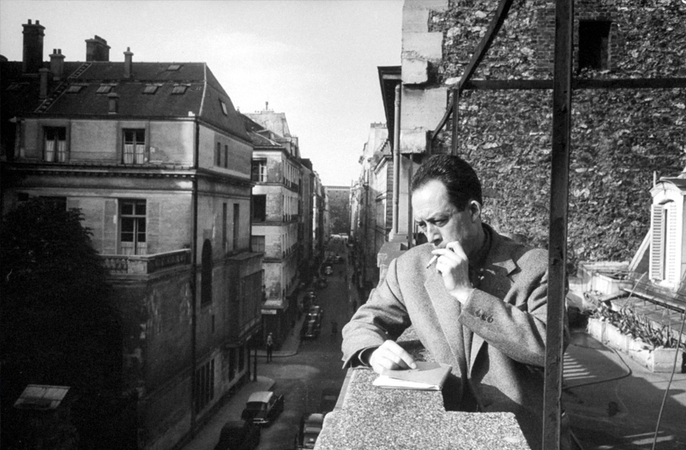
Book World: In Camus’ ‘The Plague,’ lessons about fear, quarantine and the human spirit #ศาสตร์เกษตรดินปุ๋ย

#ศาสตร์เกษตรดินปุ๋ย : ขอบคุณแหล่งข้อมูล : หนังสือพิมพ์ The Nation.

https://www.nationthailand.com/lifestyle/30385503?utm_source=category&utm_medium=internal_referral

Book World: In Camus’ ‘The Plague,’ lessons about fear, quarantine and the human spirit

Apr 06. 2020
By Special To The Washington Post · Roger Lowenstein

The Plague

By Albert Camus

Vintage. 320 pp. $15

In his novel “The Plague,” published in 1947, Albert Camus did not extend his imagined pestilence to the entire globe, like the coronavirus that is threatening the planet now. Camus had just lived through the worldwide terror of the Third Reich and Japanese aggression. In “The Plague,” he confined his scourge to Oran, a “treeless,” “soulless” port city “ringed with luminous hills,” in his native Algeria.

Yet the book deeply evokes the adaptations imposed on us today. Camus focused less on the ambulances and body counts in stricken Oran than on how the plague affected the citizenry, who, like us, had to realign priorities, schedules, in some cases relationships and modes of living.

Like us, they had no intimation of disaster. Throughout history, plague had been as frequent as war, the book’s narrator observes – yet each outbreak takes people “equally by surprise.” Yet it is not so much the shock of the plague, but its innocent-seeming, almost innocuous beginnings, that clamp a dreadful foreboding on the novel’s opening pages.

The hero, Bernard Rieux, a young doctor with dark, steady eyes, is exiting a routine surgery on an April morning when he feels underfoot an unpleasant softness: a dead rat. The rats emerge in force; soon they are piled in garbage cans and carted off in batches, not before emitting “a gout of blood” accompanied by “shrill little death-cries.” The mysterious human fever immediately follows.

Doctors hesitate to give it a name, though Rieux recognizes the disease as plague from the swollen ganglia forming at the neck and limbs of its victims. The local prefect, and the chair of the local medical association, are concerned with avoiding alarm – even, as one terms it, “false alarm.”

Oran has no supply of plague serum. The newspapers publish only brief, discreet notices. Meanwhile, use of disinfectant is required, people living with victims are to be quarantined, schools are refashioned to house the overflow of stricken patients from hospital wards. Yet normal life goes on, save that the death toll rises from several a day to more than 10, more than 20. When it doubles to 40, the fateful telegram arrives: “Proclaim a state of plague stop close the town.”

It is at this point that the novel really begins, and it is the moment, to varying degrees, that Americans and people in scores of other afflicted countries are living in now. Camus likened it to a state of “exile,” a familiar theme to the writer, for whom metropolitan France, where he spent his adult life, was never more than an adoptive home. In “The Plague,” exile is partly geographic, describing the painful isolation from those outside the city gates – but it refers, more powerfully, to exile in time.

The plague separates people from their former lives. Despite their fervent longings to go back, the past is suddenly alien – a detached memory. As the cranes on the wharves go silent and the death toll mounts, seemingly in time with the oppressive heat, people become fixed on “the ground at their feet.” The narrator – whose identify is long kept secret – stoically observes, “Each of us had to be content to live only for the day.”

Camus was preoccupied with the absurd – with Sisyphus condemned, like mankind, to pushing a stone up a hillside. In “The Plague” he found a lens for projecting life at once suspended and more vivid. Though Oran had become but a vast “railway waiting-room,” with all the boredom and indifference the metaphor implies, people were, at least, living in the present. The urgency of volunteering in sanitary squads replaces the yearning for a vaccine or the outside world. The present replaces the future. A mysterious observer trapped in Oran, to whose diary the narrator gains access, posits that only this – being “fully aware” of time – guarantees that it won’t be wasted.

As with the virus today, the citizens crave a return to normalcy yet are visited by doubt that they could – or should – again be the same. There is a hint of self-condemnation.

The local priest sermonizes to his beleaguered flock, “Calamity has come on you, my brethren, and, my brethren, you deserved it.” He does not mean those flouting the plague rules, trafficking in forbidden goods, but the sinfulness of Oran before its crisis. Today one reads of supposed contributory evils – globalism, political failings, world capitalism. Even Camus’ finally revealed narrator seems to invoke a judgment, after the plague has lifted: The fight against “terror,” as he now styles it, is “assuredly” ongoing. The plague bacillus, as if it were some uncleansable stain on the human character, “never dies or disappears for good.”

Yet the satisfying surprise for me, rereading “The Plague” a half-century after my first encounter with it, is that Camus, who died at 46 in an automobile accident, fashioned from this morbid allegory a theme of human goodness. It is a redemptive book, one that wills the reader to believe, even in a time of despair. Rieux and the priest cannot resolve the eternal question of whether a God could allow such a blight, but to Rieux, the answer is simple: In the absence of an all-responsive deity, he must make his rounds, cure whom he might. As with all evils, he says, “It helps men to rise above themselves.”

This is true for Rieux, and for some of the lesser townsfolk, who overcome their selfish desires and lend a hand, only to discover that if happiness is shameful by oneself, fear is more bearable when it is shared. To this, the veiled narrator has chosen to bear witness. His mission, he ultimately declares, is to state what we learn in a time of pestilence: “There are more things to admire in men than to despise.”

Lowenstein is the author, most recently, of “America’s Bank: The Epic Struggle to Create the Federal Reserve.”

Comfort from a 102-year-old who has lived through a flu pandemic, the Depression and WWII #ศาสตร์เกษตรดินปุ๋ย

#ศาสตร์เกษตรดินปุ๋ย : ขอบคุณแหล่งข้อมูล : หนังสือพิมพ์ The Nation.

https://www.nationthailand.com/lifestyle/30385465?utm_source=category&utm_medium=internal_referral

Comfort from a 102-year-old who has lived through a flu pandemic, the Depression and WWII

Apr 06. 2020
Lucille Ellson on her 102nd birthday - Dec. 30, 2019. MUST CREDIT: Photo by Jane Pickle

Lucille Ellson on her 102nd birthday – Dec. 30, 2019. MUST CREDIT: Photo by Jane Pickle
By The Washington Post · Jesse Dougherty · FEATURES, RELATIONSHIPS

At Lucille Ellson’s home, inside her brimming drawers, are hints of how the present mirrors the past.

Ellson is 102 years old. She was born on Dec. 30, 1917, right before the Spanish Flu spread through military camps in Europe and the United States and became a global pandemic. She was a baby then, unaware, but heard stories of how her uncle contracted the flu while serving in World War I; and how her father got it so badly that he took time away from the family farm outside Laurens, Iowa.

Lucille Ellson and her husband, Floyd, when she and Floyd were dating. MUST CREDIT: Family photo

Lucille Ellson and her husband, Floyd, when she and Floyd were dating. MUST CREDIT: Family photo

Neither died. Ellson’s mother would remind her of that, too. But it wasn’t Ellson’s last time living through a historic crisis. She was a teenager during the Great Depression. She was a school teacher and young wife during World War II. And she’s reflected on that as the country faces another pandemic, this one from the novel coronavirus.

Ellson has been going through the letters, newspaper clippings and other stuff – she calls it “mumbo jumbo” – she’s kept over a century. It all reminds her of what’s gripping the country now, the feeling of being stuck inside, a bit scared, and not knowing what the future holds.

“I know a lot of people are in a panic about their weddings because they have to cancel them or postpone them,” Ellson said this week from her home in Orlando. “Well, let me tell you about my wedding …”

She can only draw faded lines between the coronavirus and Spanish Flu, since all those stories are second-hand. The lines get thicker between today and the Great Depression, spanning 1929 and 1933, with millions applying for unemployment and the economy faltering. But Ellson sees today and the World War II period as true parallels.

It starts, for her, with a delayed wedding. She was supposed to marry Floyd Ellson in July of 1942. Then came the Dec. 7, 1941, attack on Pearl Harbor. She and Floyd knew what that meant. He had a low draft number. Their marriage would have to wait. He was soon enlisted in the Navy, sent away for training, and Ellson stayed home in Iowa, teaching, while panic reigned.

Plumbers were out of work, she remembered, because all metal was directed to the war effort. A few local heating businesses closed for the same reason. People left her tiny town and rushed west, hoping for jobs building ships in California or Washington state. There was a shortage of teachers, and the school system begged her brother, who had fallen sick and was discharged from the Army, to come use his college degree in their classrooms.

“I spent so much time reading the ration book,” Ellson recalled. “The grocery store shelves were empty. It wasn’t quite like now, because you were allowed outside, but there was the same fear. That we didn’t know what was going to happen tomorrow.”

When she and Floyd did have their wedding, about a year later than expected, they weren’t gifted any metal dishware or table cloths. Those materials were still needed in large bulk by the U.S. military. She left teaching for a desk job at the Great Lakes Stable train station. He was away for 17 months as a gunnery officer. They were lucky and lost no relatives or close friends in the war.

Floyd didn’t make it home for Christmas in 1944. But he did send a letter to Lucille, who would soon give birth to their first child, a baby girl named Jane. They loved writing to each other. They would later write a book together, titled “My First 100 Years,” an effort Lucille finished after Floyd died at 104 in 2012. They had been married for 69 years.

“Darling I really love you,” Floyd penned to Lucille in a letter dated Dec. 25, 1944. “Everything you wrote & each little package just brought out to me your really true colors. You made this a very pleasant Christmas in such a way that I cannot be bitter. I can only hope we can be together next year & we can demonstrate to each other only what we can feel now … I will sign off now and dream of you.”

Floyd was honorably discharged on Dec. 20, 1945. He made it back to Iowa for Christmas with Lucille and Jane.

“I’ve been through so many things,” Ellson said. “To cope with this virus, and all that’s going on, I would tell people to not get stressed about planning far ahead. You can’t do it. A long time ago, I started making a list every morning of what I had to do. It was the only thing I could control, and I stuck to it, you hear me?”

Those lists now are similar day to day: check in on family with her iPad. Do Zoom video calls with her kids, and their kids, and their kids. Make meals and bake desserts to leave on the front porch for her son who lives nearby. She cooked for 25 people in February. She calls that preparing “a little something.”

Ellson has few infirmities for her age, wearing a hearing aid, taking thyroid and blood pressure medicine. She still walks unassisted when inside. She otherwise uses a rollator for balance and storage. She calls it her “buggy.”

Lately, she’s been focused on organizing the drawers that show a life in full. She is sorting the mumbo jumbo into categories. One is for when her house will be sold, a pile of neighborhood regulations, the property deed, and old contracts that Floyd signed. Another is for receipts she doesn’t want to throw away. Another is for her kids, with the first grade report card that shows she received a “D” in deportment, and more letters from the war.

This is not her way of wasting time. She wishes she had more of that. But what Ellson wants people to know – “if I can preach for a minute,” she requested with a laugh – is that this, like everything else, will pass.

“I learned that from living, I guess,” she said. “You see a lot when you get to 102.”

Book World: Crossroads in Emily Dickinson’s journey to becoming a poet for the ages #ศาสตร์เกษตรดินปุ๋ย

#ศาสตร์เกษตรดินปุ๋ย : ขอบคุณแหล่งข้อมูล : หนังสือพิมพ์ The Nation.

https://www.nationthailand.com/lifestyle/30384703?utm_source=category&utm_medium=internal_referral

Book World: Crossroads in Emily Dickinson’s journey to becoming a poet for the ages

Mar 24. 2020

“These Fevered Days: Ten Pivotal Moments in the Making of Emily Dickinson” by Martha Ackmann. MUST CREDIT: Norton
By Special To The Washington Post · Scott Bradfield

“These Fevered Days: Ten Pivotal Moments in the Making of Emily Dickinson”

By Martha Ackmann

Norton. 268 pp. $26.95

– – –

Emily Dickinson spent the wildest of her “Wild Nights!” alone in a room with her pens, ink and papers, and over the course of several decades, she secretly produced more than 2,000 deeply personal poems without any specific audience in mind. Yet when the first selected volume of her work was published four years after her death, an audience seemed to be already waiting. Her books have sold briskly ever since. “I’m Nobody!” she wrote in one verse. “Are you – Nobody – too?” Apparently there were a lot of Nobodies, and many were eager to hear the things Dickinson spent a lifetime saying only to herself. It is probably the foremost irony of a life that abounded with ironies.

Dickinson’s home was presided over by two emotionally distant parents, and despite sharing a great affection with her friends and siblings (her beloved brother, Austin, and family lived right next door), Dickinson was a deeply reticent personality. She preferred to watch the world of war and commerce pass by her living room window than join in the parade. According to Martha Ackmann – author of the enjoyable and absorbing “These Fevered Days,” a top 10 list of Dickinson’s “pivotal moments” – the only “acclaim” she received during her lifetime “was winning second prize for her rye and Indian bread at the annual cattle show.”

Delivering letters to friends, she abruptly “rang the bell and ran”; she only played piano for visitors if they listened in the next room; and from a young age, she enjoyed Sundays because that was the day her family went to church and left her to her books and pencils. “I am left alone in all my glory,” she wrote to a friend. But it was a glory that only Dickinson seemed to appreciate.

Despite her solitary nature, she often reached out for companionship through her letters and, more clandestinely, through the poems she kept hidden away. (When her sister, Vinnie, found them, hand-sewn into batches, or “fascicles,” she couldn’t bring herself to burn them, as Dickinson had requested.) In her writing, Dickinson often referred to a “thee” that sounded like an imaginary lover (“Might I but moor – Tonight – / In Thee!”), or an ideal reader; but she might just as well have been addressing the most important presence in her life, which was not God (whom she once called “an Eclipse”) but rather the cumulate body of her beloved poems. For Dickinson, writing poetry was a form of “singing.”

With an odd sense of common words and uncommon metrics, she wove strange, lyrical conundrums of emotion and logic. Dickinson wrote to explore her own deeply idiosyncratic reflections, but when we, her audience, read them, she seems to be speaking directly to us.

Late in life, she developed a long-term relationship with an older man, but even then, the relationship was conducted almost entirely through correspondence. For Dickinson, words and love were part of the same material stuff.

But there is nothing sentimental about Dickinson or her poems. Initially, her verse grabs readers with an almost sing-songy nursery-rhyme cleverness – but it quickly draws them into a sense of perilous dissonance, which strikes from the heart of those bony dashes punctuating almost every line. “Because I could not stop for Death – ” one poem begins, just before hitting you with that killer second line: “He kindly stopped for me – “. And there’s my personal favorite – and possibly the only poem I was required to read in school that I never got out of my head: “I heard a Fly buzz – when I died – “. In a Dickinson poem, the next logical thought is the one that questions everything you thought before.

There are many monumental biographies of Dickinson (such Richard Sewall’s in 1974), and there are many useful, pocket-size quick-study guides. But Ackmann’s list aims for the sweet spot in terms of length and depth, and generally hits its target. In fact, Dickinson – a poet of those small, insignificant moments that suddenly blossom into wide, disturbing vistas of significance – fits Ackmann’s model neatly.

Sometimes, Ackmann’s selected “moments” seem like arbitrary pegs on which to hang a piece of Dickinson’s life – such as the summer day of her 14th year when she wrote a letter to a friend, auspiciously concluding, “All things are ready.” But others are indisputably important, such as the day she first published a poem in the local newspaper (only a handful of poems were published in her lifetime, and always anonymously) or her first effort to reach out to the writer and abolitionist Thomas Wentworth Higginson after reading in the Atlantic Monthly his essay of advice for young writers. (She must have felt an electric jolt at the passage, “There may be years of crowded passion in a word, and half a life in a sentence.”) All her life, Dickinson had sought out a “rare Ear” that could hear the things she wanted to say. And yet over many subsequent years of friendship and correspondence, she rarely took Higginson’s advice about how to revise her work or where to publish it.

But then Dickinson was never looking for a mentor. She was only looking for conversation.

– – –

Bradfield is the author, most recently, of “Dazzle Resplendent: Adventures of a Misanthropic Dog.”

VIRUS-VOICES: ‘How long can a heart last like this?’ #ศาสตร์เกษตรดินปุ๋ย

#ศาสตร์เกษตรดินปุ๋ย : ขอบคุณแหล่งข้อมูล : หนังสือพิมพ์ The Nation.

https://www.nationthailand.com/lifestyle/30387599?utm_source=category&utm_medium=internal_referral

VIRUS-VOICES: ‘How long can a heart last like this?’

May 10. 2020
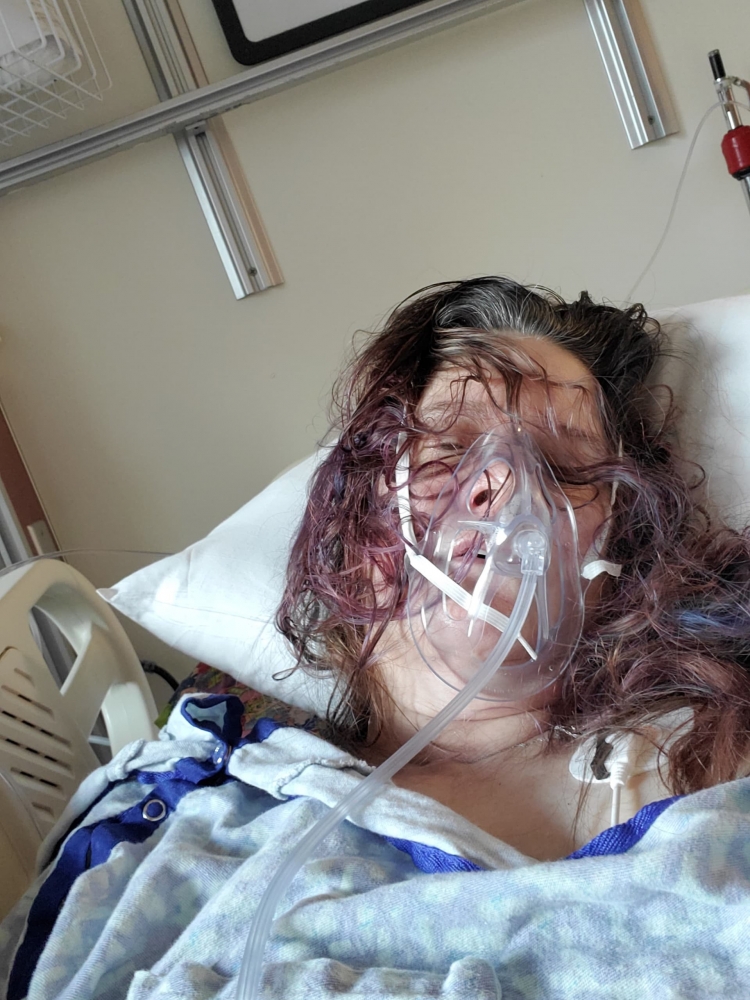
Darlene Krawetz has been beset by debilitating symptoms of the coronavirus disease for weeks. MUST CREDIT: Photo via Facebook

Darlene Krawetz has been beset by debilitating symptoms of the coronavirus disease for weeks. MUST CREDIT: Photo via Facebook
By The Washington Post · as told to Eli Saslow · NATIONAL, HEALTH

I’ve hardly moved from this couch in weeks, but right now my heart rate monitor says I’m at 132. That’s double my normal. That’s like if I’m climbing a mountain. How come? Nobody knows. Nobody ever knows. And why has my fever been spiking again? Do I need to go back to the ER? I’m on week six of this crap, and I still don’t know if I’m getting better or worse, but people want to act like the threat is behind us?

Wait, no, that’s not right. This is actually week eight for me. I started getting symptoms right before New York shut down. I mix up my dates. My mind is all foggy. I’ve been a nurse for 30 years, and now I can’t even remember if my last Tylenol was five minutes or five hours ago. It feels like electricity is burning through my spine, and nobody can tell me why. It’s like I’m sucking air through a straw. When I stand up, my ears start ringing until dizziness forces me back down. Every symptom is a whole new mystery. This virus is unpredictable and so, so violent.

Darlene Krawetz is pictured in the hospital in April with covid-19 symptoms. MUST CREDIT: Photo courtesy of family

Darlene Krawetz is pictured in the hospital in April with covid-19 symptoms. MUST CREDIT: Photo courtesy of family

I’m up to 140 now. See? It’s relentless. How long can a heart last like this? The palpitations come a few times every hour and go on for a minute or more. It’s just banging, banging, banging, banging.

It hurts too much to talk. I’ll try again later. I have to lie down and breathe through it. That’s what they tell me to do.

– – –

The next morning, Wednesday, May 6

My heart rate is back down now to 105. That’s nothing to celebrate. That’s still considered abnormal, but it’s typical now for me.

I didn’t use to be like this. I’m healthy. I’m a vegetarian. I’ve got grown kids in the military and a teenager at home, and we hike and kayak. I’m a positive, hard-charging person. Maybe I got it at the VA hospital where I work, but we didn’t have any confirmed cases yet. Or my son might have had an exposure and given it to me. Who knows? It’s one more mystery. I didn’t even notice I was sick until another nurse asked why I was coughing. I figured it was allergies. Take some Zyrtec and get on with it. Hardly anybody here in Syracuse had covid at that point. What were the odds?

Then, after I tested positive, I thought I’d get a mild case. I told my husband: “Relax. I’m fine.” I don’t have diabetes. I don’t have hypertension, COPD or anything like that. I thought I could stay home, take care of myself and be back at work in a few weeks.

Right away I started running a temperature of 103, and the Tylenol couldn’t control it. I was shaking and cursing all day in bed, and the symptoms spread from there. I was head-to-toe exhausted. I wanted the whole world to let me alone. I had equipment at home from my nursing work, and I started checking my vitals and saw my blood pressure shooting up. I’ve never had that. I’d get up to shower and start gasping for air. My son was also covid-positive, and he ran a high fever and recovered within a week while I kept on getting worse. Maybe because I’m older? Or because I used to be a smoker? You can’t get a definitive answer on anything with this. I started coughing to the point of throwing up. I coughed until I was incontinent. My lips were chapped from dehydration. I had headaches. Migraines. Heartburn. Rashes. I lost 16 pounds in the first few weeks. I would lie down at night after taking melatonin and Benadryl, soaked in sweat and terrified of what might be coming next. What if I fall asleep and stop breathing? More Benadryl. More melatonin. Maybe try a Xanax. I’d lie there for hours but it was nonstop insomnia. I’d turn the TV to Lifetime for a distraction, but I couldn’t make sense of what they were saying.

One day, my son needed money to buy groceries. I said I’d give him $80, but I couldn’t count it out. I couldn’t do the math. I handed him $50, then $70. I asked him: “Is this really happening right now or is this a hallucination?” He took the cash and counted it himself. He begged me to get help.

I went to urgent care. The X-rays showed pneumonia, so they told me to go to the ER. I didn’t want to risk a secondary infection at the hospital, and I knew they didn’t have any magic treatment for this virus, but I couldn’t take care of myself. There wasn’t any choice. I wrote down my end-of-life wishes, and I had my son drop me at the ER.

I’m having another palpitation. Hang on. Are these panic attacks? I never had them before. It feels like my heart is trying to jump out of my chest.

Breathe. Stay calm. What is there to be calm about? It’s up over 150 now. Something is really wrong with me. I need to go rest. I need to figure this out.

– – –

A few hours later

OK. I’m a little better. It’s hour by hour. I’m not sure I can handle it again if I have to go back to the hospital. That first stay lasted 10 days, or at least that’s what they told me. I couldn’t tell days apart. I had a little glass isolation room with a curtain they kept closed. There was nothing to see out the window except a parking garage across the street. I couldn’t have visitors, and most of the doctors and nurses were afraid to stay in the room. It was okay. I was too sick to talk and too scared to feel lonely. I appreciate what they did. They were honest about what they didn’t know, and they tried. They kept throwing stuff at the wall to see what might stick.

They gave me a malaria drug, but it did absolutely nothing. They gave me an antibiotic for pneumonia, but I still couldn’t breathe without 15 liters of oxygen. They tried vitamin C, magnesium, shots of blood thinner, baby aspirin, Tums, multivitamins, Xanax, cough syrup with codeine. It was like fixing a car when you don’t know what’s broken. They gave me inhalers and breathing exercises to do every hour, but my oxygen level kept dropping. They wanted to put me on life support, but I was afraid I’d never come off. The doctor came in and said: “We have a team ready to revive you in case you start to code. We’re going to watch you closely.” Watching was all anybody could do. Then, one morning, my fever started to go down. Nobody knew why that happened either. But it stayed down for 36 hours, and they said I could go home.

Now I’ve got my oxygen on a long extension cord. I can make it to the kitchen or the bathroom if I’m feeling good, but usually I stay here in the den. My husband never caught it, so we’re staying apart. He works as a manager at Wegmans, and if he got sick, we might be out on the street. The $1,200 stimulus went to rent and hospital co-pays, and now we’re burning through our savings. I try not to think about it. I watch the news and check my vitals, but they’re always bad. My family stands in the doorway to visit sometimes, and other people text or call. “Are you feeling better yet?” It’s like they’re becoming impatient. They want to feel safe going out. We managed to buckle down for a while, but now it’s getting nice outside, and people need to work. The deniers and the protesters are coming out. One of my relatives went on Facebook and wrote that this whole virus is overblown, or maybe even a hoax. People want to minimize.

“Are you better yet? Why aren’t you better yet?”

I don’t know. I don’t know anything. My brain keeps racing with unanswered questions. Are my lungs scarred? Is my heart damaged? Can I get sick again? Will I be hiking the Adirondacks this summer or lugging this oxygen tank from the den to the bathroom for the rest of my life?

I hate this virus. It’s been two months of uncertainty and I don’t think I can take any more. Why are my legs burning? Why is my skin so hot? I need answers. I need help.

– – –

The next morning, Thursday, May 7

I’m back at the hospital.

My fever won’t come down. The doctors say I have blood clots on my lungs and a mass on one of my organs. They’re trying to figure it out. There’s no timeline and no prognosis. All I know is they’re admitting me. I’ve been crying my eyes out. The morphine is making me in a fog. When will this damn thing let me alone?

In the early days of the pandemic, the U.S. government turned down an offer to manufacture millions of N95 masks in America #ศาสตร์เกษตรดินปุ๋ย

#ศาสตร์เกษตรดินปุ๋ย : ขอบคุณแหล่งข้อมูล : หนังสือพิมพ์ The Nation.

https://www.nationthailand.com/lifestyle/30387597?utm_source=category&utm_medium=internal_referral

In the early days of the pandemic, the U.S. government turned down an offer to manufacture millions of N95 masks in America

May 10. 2020
Mike Bowen, Vice President of Prestige Ameritech, stands with a truck load of masks to be sent to MD Anderson Cancer Center. MUST CREDIT: contributed by Elizabeth Givens.

Mike Bowen, Vice President of Prestige Ameritech, stands with a truck load of masks to be sent to MD Anderson Cancer Center. MUST CREDIT: contributed by Elizabeth Givens.
By The Washington Post · Aaron C. Davis · NATIONAL, HEALTH 

It was Jan. 22, a day after the first case of covid-19 was detected in the United States, and orders were pouring into Michael Bowen’s company outside Fort Worth, some from as far away as Hong Kong.

Bowen’s medical supply company, Prestige Ameritech, could ramp up production to make an additional 1.7 million N95 masks a week. He viewed the shrinking domestic production of medical masks as a national security issue, though, and he wanted to give the federal government first dibs.

“We still have four like-new N95 manufacturing lines,” Bowen wrote that day in an email to top administrators in the Department of Health and Human Services. “Reactivating these machines would be very difficult and very expensive but could be achieved in a dire situation.”

But communications over several days with senior agency officials – including Robert Kadlec, the assistant secretary for preparedness and emergency response – left Bowen with the clear impression that there was little immediate interest in his offer.

“I don’t believe we as an government are anywhere near answering those questions for you yet,” Laura Wolf, director of the agency’s Division of Critical Infrastructure Protection, responded that same day.

Bowen persisted.

“We are the last major domestic mask company,” he wrote on Jan. 23. “My phones are ringing now, so I don’t ‘need’ government business. I’m just letting you know that I can help you preserve our infrastructure if things ever get really bad. I’m a patriot first, businessman second.”

In the end, the government did not take Bowen up on his offer. Even today, production lines that could be making more than 7 million masks a month sit dormant.

Bowen’s overture was described briefly in an 89-page whistleblower complaint filed this week by Rick Bright, former director of the Biomedical Advanced Research and Development Authority. Bright alleges he was retaliated against by Kadlec and other officials – including being reassigned to a lesser post – because he tried to “prioritize science and safety over political expediency.” HHS has disputed his allegations.

Emails show Bright pressed Kadlec and other agency leaders on the issue of mask shortages – and Bowen’s proposal specifically – to no avail. On Jan. 26, Bright wrote to a deputy that Bowen’s warnings “seem to be falling on deaf ears.”

That day, Bowen sent Bright a more direct warning.

“U.S. mask supply is at imminent risk,” he wrote. “Rick, I think we’re in deep s—,” he wrote a day later.

The story of Bowen’s offer illustrates a missed opportunity in the early days of the pandemic, one laid out in Bright’s whistleblower complaint, interviews with Bowen and emails provided by both men.

Within weeks, a shortage of masks was endangering health-care workers in hard-hit areas across the country, and the Trump administration was scrambling to buy more masks – sometimes placing bulk orders with third-party distributors for many times the standard price. President Donald Trump came under pressure to use extraordinary government powers to force private industry to ramp up production.

In a statement, White House economic adviser and coronavirus task force member Peter Navarro said: “The company was just extremely difficult to work and communicate with. This was in sharp contrast to groups like the National Council of Textile Organizations and companies like Honeywell and Parkdale Mills, which have helped America very rapidly build up cost effective domestic mask capacity measuring in the hundreds of millions.”

Carol Danko, an HHS spokeswoman, declined to comment on the offer by Bowen and other allegations raised in the whistleblower complaint. Wolf also declined to comment on the whistleblower complaint.

A senior U.S. government official with knowledge of the offer said Bowen, 62, has a “legitimate beef.”

“He was prescient, really,” the official said, speaking on the condition of anonymity to describe internal deliberations. “But the reality is [HHS] didn’t have the money to do it at that time.”

Another HHS official, also speaking on the condition of anonymity, said: “There is a process for putting out contracts. It wasn’t as fast as anyone wanted it to be.”

– – –

Two decades ago, the low-slung factory in Texas was part of a supply conglomerate that produced almost 9 in 10 medical and surgical masks used in the United States.

Bowen was a new product specialist at the plant back then, and he watched as industry consolidations and outsourcing shifted control of the plant from Tecnol Medical Products to Kimberly-Clark and then shuttered it altogether. In less than a decade, almost 90 percent of all U.S. mask production had moved out of the country, according to government reports at the time.

Bowen and Dan Reese, a former executive at Tecnol, went into business together in 2005 and eventually bought the plant, believing a market remained for a dedicated domestic manufacturer of protective gear.

In wake of the terrorist attacks of Sept. 11, 2001, Congress appropriated $6 billion to buy antidotes to bioweapons and the medical supplies the country would need in public health disasters. An obscure new government organization called the Biomedical Advanced Research and Development Authority, or BARDA, was among the agencies purchasing material for what would become the Strategic National Stockpile.

Bowen began studying BARDA, attending its industry conferences and searching for a way in to press his case.

In the parlance of BARDA, Bowen was seeking a “warm base” contract. The government would pay a premium to have masks manufactured domestically, but his company would keep its extra factory lines in working order, meaning production could be ramped up in an emergency.

Bowen said he soon concluded that BARDA’s focus was trained elsewhere, on billion-dollar deals to induce manufacturing of vaccines for the most exotic disasters, such as weaponized attacks with anthrax or smallpox.

Still, as Bowen moved down the supply chain, appealing directly to hospitals to buy his domestic-made masks, his sales pitch often ended with a plea to call BARDA.

Bowen often carried PowerPoint slides from a 2007 presentation by BARDA and its parent division at HHS, the Office of the Assistant Secretary for Preparedness and Response. One had a table showing that, in the event of a pandemic, the country would need 5.3 billion N95 respirator masks, 50 times more than the number in the stockpile. The presentation concluded: “Industrial surge capacity of [respiratory protection devices] will not be able to meet need and supplies will be short during a pandemic.”

Bowen said he felt like a voice in the wilderness.

“The world just looked at me as a mask salesman who was saying the sky was falling,” he said, “and they would say, ‘Your competitors aren’t saying that in China.’ ”

After Trump’s election, Bowen hoped the new president’s America-first mentality might trickle down to operations like his. He wrote a letter to Trump and addressed it to 1600 Pennsylvania Avenue: “90% of the United States protective mask supply is currently FOREIGN MADE!” it began.

“I didn’t think Trump would read it, but I thought someone would and take note,” Bowen said.

He also called Bright, who had been appointed to lead BARDA just before Trump took office. “In 14 years of doing this, there have been maybe four people in government who I felt like really understood this issue,” Bowen said. “Rick was one of them.”

In Trump’s first year, however, Bowen grew newly disillusioned. During a week that the White House touted its “Buy American, Hire American” initiative, Bowen lost a military contract worth up to $1 million, to a supplier that would make many of the masks in Mexico, he said.

“Shame on the Department of Defense! One of these days the US military will need America’s manufacturers to help win another war or fight another pandemic – and they will not exist,” Bowen wrote on Aug. 17, 2017, to Maj. Gen. Jeffrey Clark, a senior official with the Pentagon’s Defense Health Agency.

Clark, who retired last year, did not respond to a message seeking comment.

– – –

For Bowen, the first signs of trouble came in mid-January. Online orders through his company’s website, typically totaling maybe $2,000 a year and accounting for only a fraction of his business, suddenly skyrocketed to almost $700,000 in a few days.

On Jan. 20, Bowen also fielded a call from the Department of Homeland Security, urgently seeking masks for airport screeners. Bowen said he did not have masks in stock to fill the order, but the call led him to contact Bright to tell him about the surge in demand for masks. “Is this virus going to be problematic?” Bowen wrote.

Inside HHS, Bright quickly passed Bowen’s on-the-ground observations to a group that included Wolf, the director of the agency’s Division of Critical Infrastructure Protection.

“Can you please reach out to Mike Bowen below? He is a great partner and a really good source for helpful information,” Bright wrote on Jan. 21.

“Thanks Rick,” she replied. “We are tracking and have begun to coordinate with fda, niosh, and manufacturers today. More to follow tomorrow. Thinking about masks, gowns (inc those in shortage), gloves, and eye protection.”

Within a day, Bowen sent an email to Wolf laying out what Prestige could do. The company’s four mothballed manufacturing lines could be restarted with large noncancelable orders, he wrote.

“This is NOT something we would ever wish to do and have NO plans to do it on our own,” he wrote. “I’m simply letting you know that in a dire situation, it could be done.”

Over the next three days, Bowen kept HHS officials informed as orders for a million masks came in from intermediaries for buyers in China and Hong Kong. On Jan. 26, he sent the email warning that the U.S. mask supply was at “imminent risk.”

Bright forwarded it that day to Kadlec and others, urging action: “We have been watching and receiving warnings on this for over a week,” he wrote.

The next day, Bright wrote to his deputy asking him to explore whether BARDA could divert money earmarked for vaccines and other biodefense measures to instead buy masks.

From his end, Bowen said his proposal seemed to be going nowhere. “No one at HHS ever did get back to me in a substantive way,” Bowen said.

The senior U.S. official said Bowen’s idea was considered, but funding could not easily be obtained without diverting it from other projects.

Bowen started talking to reporters about the mask shortage in general terms. He was soon invited to appear on former Trump adviser Stephen K. Bannon’s podcast: “War Room: Pandemic.”

On the Feb. 12 podcast, the two commiserated over the beleaguered state of U.S. manufacturing. “What I’ve been saying since 2007 is, ‘Guys, I’m warning you, here’s what is going to happen, let’s prepare,’ ” Bowen said on the program. “Because if you call me after it starts, I can’t help everybody.”

Bowen said Bannon put him in touch with Navarro, the White House economic adviser.

Navarro was quick to see the problem, Bowen said. After talking with Navarro, Bowen wrote to Bright that he should soon expect a call from the White House, “I’m pretty sure that my mask supply message will be heard by President Trump this week,” Bowen wrote. “Trump insider reading yesterday’s Wired.com article, the ball is screaming toward your court.”

According to Bright’s complaint, he soon began attending White House meetings and helping Navarro write memos describing the supply of masks as a top issue. Emails and memos attached to the complaint show Bright reporting back to Kadlec and others about his work with Navarro.

None of it turned the tide for Bowen.

Nearly a month after his emailed offer, Bowen received his first formal communication about possibly helping to bolster the U.S. supply. The five-page form letter from the Food and Drug Administration – one Bowen said he suspected was sent to many manufacturers – asked how his company could help with what was by then a “national emergency response” to the shortage of protective gear.

Bowen responded on Feb. 16, by firing off a terse email to FDA and HHS officials. He directed the agencies to a U.S. government website listing approved foreign manufacturers of medical masks. “There you’ll find a long list of . . . approved Chinese respirator companies,” he wrote. “Please send your long list of questions to them.”

In March, Bowen submitted a bid to supply masks to the Federal Emergency Management Agency, which by then had taken over purchasing.

The government soon spent over $600 million on contracts involving masks. Big companies like Honeywell and 3M were each awarded contracts totaling for over $170 million for protective gear. One distributor of tactical gear – a company with no history of procuring medical equipment – was awarded a $55 million deal to provide masks for as much as $5.50 a piece, eight times what the government was paying months earlier.

On April 7, FEMA awarded Prestige a $9.5 million contract to provide a million N95 masks a month for one year, an order the company could fulfill without activating its dormant manufacturing lines. For the masks, Prestige charged the government 79 cents a piece.

Eat to boost immunity, protect lungs, says doctor #ศาสตร์เกษตรดินปุ๋ย

#ศาสตร์เกษตรดินปุ๋ย : ขอบคุณแหล่งข้อมูล : หนังสือพิมพ์ The Nation.

https://www.nationthailand.com/lifestyle/30387526?utm_source=category&utm_medium=internal_referral

Eat to boost immunity, protect lungs, says doctor

May 08. 2020
By The Nation

With the Covid-19 outbreak still not under complete control, people are being advised to start consuming fruits and vegetables that are packed with antioxidants to boost their immunity.

Dr Sanphong Ritthaksa, deputy director-general of the Department of Thai Traditional and Alternative Medicine, said people should now “eat like Thais in the new normal”.

According to him, vegetables and fruits can be divided into three categories – those that boost the immunity, offer antioxidants and those that protect the body from respiratory infections.

He said the best vegetable for boosting immunity is the mushroom, which can be added to many dishes, such as tom yum, or turned into separate dishes like salad or stir fry. The best mushrooms are straw, shiitake, lingzhi and orychi.

Vegetables that are packed full of antioxidants include kale, Liang leaves, basil and gourd, which can be added to curries and stir-fries.

Meanwhile, veggies that strengthen the respiratory system are those that contain quercetin, which helps fight free radicals and reduces inflammation, such as shallots, turmeric, galangal and lemongrass, which can be added to anything from omelettes to curries.

The doctor also advised the consumption of fruits that are high in vitamin C, such as orange, lemon, guava, apple or mango. He also said tea from butterfly pea as well as the juice of orange and lime are good vitamin C sources.

He also advised people to opt for traditional medicines as well as work on easing their stress by saying prayers, meditating or exercising. The department has released the “Thai to Happiness” YouTube video offering lessons in traditional physical and breathing exercises.

He also advised people to grow vegetables at home, especially those that take up less space and are easy to take care of, as this will also help cut down on food bills.

CRISPR tool test approved by FDA #ศาสตร์เกษตรดินปุ๋ย

#ศาสตร์เกษตรดินปุ๋ย : ขอบคุณแหล่งข้อมูล : หนังสือพิมพ์ The Nation.

https://www.nationthailand.com/lifestyle/30387478?utm_source=category&utm_medium=internal_referral

CRISPR tool test approved by FDA

May 08. 2020
Molecular biologist Feng Zhang is co-inventor of CRISPR, a gene-editing system its inventors say can determine in an hour if someone is infected with the coronavirus. MUST CREDIT: Washington Post photo by Joel Achenbach

Molecular biologist Feng Zhang is co-inventor of CRISPR, a gene-editing system its inventors say can determine in an hour if someone is infected with the coronavirus. MUST CREDIT: Washington Post photo by Joel Achenbach
By The Washington Post · Joel Achenbach, Laurie McGinley · NATIONAL, BUSINESS, TECHNOLOGY, HEALTH, SCIENCE-ENVIRONMENT 

WASHINGTON – The Food and Drug Administration on Thursday approved a new diagnostic tool that employs the revolutionary CRISPR gene-editing technology to determine in just one hour if someone is infected with the novel coronavirus.

The FDA’s emergency use authorization allows only “high-complexity” laboratories to use the test kit, developed by researchers at the Massachusetts Institute of Technology, Harvard University, the Ragon Institute and the Howard Hughes Medical Institute and marketed by Sherlock Biosciences of Cambridge, Mass. The inventors and marketers of the test describe it as highly accurate and easy to use.

“We think this has a lot of potential. The test doesn’t require any complicated or expensive equipment,” said Feng Zhang, a leader of the research team.

Zhang, an internationally renowned molecular biologist, is affiliated with the Broad Institute and the McGovern Institute at MIT and is a co-founder of Sherlock Biosciences. He’s a co-inventor of CRISPR, a gene-editing system that exploits a natural immune response system used by bacteria to fight off viruses.

CRISPR – for Clustered Regularly Interspaced Short Palindromic Repeats – is not the first or only technology for manipulating genes, but it is prized for its relative simplicity and versatility. It has also generated soul-searching and protracted debate in the scientific community because of potential misapplications of the technology.

Sherlock Biosciences said the kit works by using a CRISPR-engineered molecule to detect the genetic signature of the SARS-CoV-2 virus. When the signature is located, the company explained in a news release, “the CRISPR enzyme is activated and releases a detectable signal.”

Zhang and his colleagues have yet to gain approval for point-of-care use of the new test kit. They hope it eventually can be widely distributed and used even by nonprofessionals for rapid diagnosis. For example, it could be deployed in an office building to screen employees, Zhang said.

“You can imagine a makeshift lab in a nursing home or an office or a drive-through testing station,” he said.

The FDA issues emergency use authorizations for deployment of unapproved medical products on a temporary basis during public health emergencies. In the current pandemic, the agency has granted hundreds of authorizations, including for diagnostic tests to detect the virus; antibody tests to check whether a person has been exposed to the virus and developed antibodies; medical devices such as swabs and ventilators; and for an antiviral drug called remdesivir from Gilead Sciences.

The new CRISPR-based test has already been rolled out in Thailand, using an earlier formulation. The authorization for use in the United States comes as testing for the coronavirus has improved but remains far short of what public health officials desire. They say many states and localities still are not doing enough testing, in part because of shortages of important chemicals, laboratory staff and equipment.

“We want the quickest diagnosis, closest to the patient,” said Scott Becker, chief executive of the Association of Public Health Laboratories. “Right now, there’s limited point-of-care [testing], and anything to expand lab capacity that’s good quality testing is going to be welcome.”

He added: “There has to be availability of the test. I don’t want a new test out on the market that’s only going to cover 1,000 people a day.”

Sherlock Biosciences, founded only a year ago, was already working on a diagnostic test kit for dengue and Zika, two other infectious diseases, when the coronavirus outbreak began late last year in China. The company realized the technology could be deployed to combat the new virus and would be particularly helpful in places with limited laboratory equipment or medical infrastructure, such as in the developing world.

Jonathan Gootenberg, one of the inventors, said the researchers asked themselves, “How do we make the simplest test possible – something that could be done at point-of-care, as we say – without any complex equipment or experimental procedures?”

They are trying to prove that the technology could be used not only on samples from the upper respiratory tract and the lungs but also on saliva. That would potentially make the test less invasive and uncomfortable than the nasal swabs used in the most common tests.

Trump vows complete end of Obamacare law despite pandemic #ศาสตร์เกษตรดินปุ๋ย

#ศาสตร์เกษตรดินปุ๋ย : ขอบคุณแหล่งข้อมูล : หนังสือพิมพ์ The Nation.

https://www.nationthailand.com/lifestyle/30387414?utm_source=category&utm_medium=internal_referral

Trump vows complete end of Obamacare law despite pandemic

May 07. 2020
President Trump/File photo

President Trump/File photo
By The Washington Post · Devlin Barrett · NATIONAL, WHITEHOUSE 

WASHINGTON – President Donald Trump said Wednesday that he will continue trying to toss out all of the Affordable Care Act, even as some in his administration, including Attorney General William Barr, have privately argued that parts of the law should be preserved amid a pandemic.

“We want to terminate health care under Obamacare,” Trump told reporters Wednesday, the last day for his administration to change its position in a Supreme Court case challenging the law. “Obamacare, we run it really well. . . . But running it great, it’s still lousy health care.”

While the president has said he will preserve some of the Affordable Care Act’s most popular provisions, including guaranteed coverage for preexisting medical conditions, he has not offered a plan to do so, and his administration’s legal position seeks to end all parts of the law, including those provisions.

Democrats, who view the fight over Obamacare as a winning election issue for them, denounced the president’s decision.

House Speaker Nancy Pelosi, D-Calif., said, “the president’s insistence on doubling down on his senseless and cruel argument in court to destroy the ACA and every last one of its benefits and protections is unconscionable, particularly in the middle of a pandemic.”

Trump’s declaration caps months of debate within his administration about the best course of action, in which the stakes have become greater now that the nation’s health-care system is struggling to deal with the spread of covid-19, the disease caused by the novel coronavirus, which has killed more than 70,000 Americans.

On Monday, Barr attended a meeting of senior officials in which he argued that the administration should temper its opposition to Obamacare, leaving some parts of the law intact, according to people familiar with the discussion who spoke on the condition of anonymity because the conversation was private.

The case before the court was brought by a group of Republican states, and as part of that case, the Trump administration is seeking to invalidate the entire Affordable Care Act, which passed in 2010 and became one of President Barack Obama’s most significant legislative victories.

Barr and others in the administration have argued that killing Obamacare completely could be politically damaging to Republicans in an election year, particularly at a time when there is a national health crisis. In two previous case, the Supreme Court upheld the law, but if the high court were to strike it down, millions of people could find themselves without affordable health care.

The high court plans to hear arguments in the case this year, and a decision may not come until 2021, well after the November election.

The latest ACA suit was organized by Republican attorneys general in Texas and other Republican-led states. When the Trump administration declined to defend the law, a coalition of Democratic-led states entered.

The case began after the Republican-led Congress in 2017, unable to secure the votes to abolish the law, reduced to zero the penalty for a person not buying health insurance. Lawyers for the state of Texas argued that in doing so, Congress had removed the essential tax element that the Supreme Court had previously ruled made the program constitutional.

A district judge in Texas agreed and said the entire law must fall. Eventually the Trump administration agreed with that assessment.

Pfizer starts U.S. trials of experimental coronavirus vaccine #ศาสตร์เกษตรดินปุ๋ย

#ศาสตร์เกษตรดินปุ๋ย : ขอบคุณแหล่งข้อมูล : หนังสือพิมพ์ The Nation.

https://www.nationthailand.com/lifestyle/30387365?utm_source=category&utm_medium=internal_referral

Pfizer starts U.S. trials of experimental coronavirus vaccine

May 06. 2020
The Pfizer logo on the lab coat of an employee at the company's research and development facility in Cambridge, Massachusetts. MUST CREDIT: Bloomberg photo by Scott Eisen

The Pfizer logo on the lab coat of an employee at the company’s research and development facility in Cambridge, Massachusetts. MUST CREDIT: Bloomberg photo by Scott Eisen
By Syndication Washington Post, Bloomberg · Cynthia Koons · NATIONAL, BUSINESS, HEALTH 

Pfizer has administered the first U.S. patients with its experimental vaccines to fight the disease caused by the novel coronavirus, part of a bid to shave years off of the typical time it takes to develop a new inoculation.

The trials are being conducted at the NYU Grossman School of Medicine and the University of Maryland’s school of medicine, the drugmaker said Tuesday.

“The short, less than four-month time-frame in which we’ve been able to move from preclinical studies to human testing is extraordinary,” Chief Executive Officer Albert Bourla said in a statement.

Preclinical studies are what companies do in animals or in the lab before they test vaccines in humans. Drugmakers have been working with regulators to compress development times to stop the spread of the virus, which has infected more than 3.5 million people globally and killed more than 250,000.

Pfizer shares rose 2.2% to $38.44 in morning trading in New York. They are down 2% this year.

New York-based Pfizer is working with BioNTech of Germany. The companies started testing the inoculations in patients in Germany in late April. Vaccine trials normally start by looking at safety, but in order to hasten the development of a vaccine for Covid-19, the disease caused by the novel coronavirus, the drugmakers are looking at both safety and the immune-system response from the experimental shots.

Pfizer and BioNTech are in a race with companies including Johnson & Johnson, Moderna and dozens of other biopharmaceutical outfits and academic groups to come up with a safe and effective vaccine against the illness within the next year to 18 months. Several are in human trials already, including Moderna’s and ones from CanSino Biologics, the Beijing Institute of Biotechnology and Inovio Pharmaceuticals.

Pfizer’s U.S. trial will involve 360 patients in two age groups: 18 to 55, and 65 to 85, though trials in the older population will start only after safety and immune response are established in the younger group. The University of Rochester Medical Center/Rochester Regional Health and Cincinnati Children’s Hospital Medical Center will eventually provide testing sites for the vaccines.

“In an early vaccine trial, you actually monitor for a lot of potential reactions, you cast a very wide net, you actually ask the people to report to you everything they’re feeling,” said Pfizer’s Phil Dormitzer, chief scientific officer for viral vaccines. “You don’t know for sure until you’ve looked at a very large number.”

Given what has happened with the development of other vaccines in the past, there is a risk that the new inoculation could actually make patients more susceptible to severe illness.

“Knowing there’s a potential risk, we’re going to proceed as though that’s a real risk,” Dormitzer said. “If it were to happen, we’ll detect it as soon as possible”

– – –

Pfizer and BioNTech are looking at four shots – and at a variety of doses and schedules – and will decide as the trials proceed which is the most effective. The aim is to have a shot ready for emergency use by the fall. The companies are also sharing data with regulators in real time, instead of analyzing it themselves before submitting it and applying for approval from regulators.

Pfizer and BioNTech’s potential vaccine harnesses a new type of RNA technology. After being injected into the body, the RNA slips into human cells and tells them to produce the viral proteins that then cause the body to develop protective antibodies. It’s not technology that has been approved for use yet. The advantage is that RNA technology can move faster into trials because it doesn’t involve brewing batches of protein or inactivated viral particles in living cells, which can take months.

Moderna is pursuing a similar approach, and started testing its vaccine on patients in March.

One of the major challenges, beyond finding a safe and effective vaccine, will be in increasing production quickly enough to meet the world’s needs. Pfizer says it should be able to make millions of doses this year and hundreds of millions in 2021, were it to succeed with one of its vaccine candidates.

The RNA method is “actually a more natural mimic of what happens with a natural immune response to an invader,” said Mark Mulligan, director of NYU Langone Vaccine Center, where the trials are taking place. “There certainly are things that I think are favorable in terms of the speed with which they can be produced and this idea that this is a natural type of vaccination.”

New York City has been an epicenter for Covid-19 in the U.S. The boroughs of Queens, Brooklyn and the Bronx rank as the three highest counties for deaths in the nation, according to Johns Hopkins University data. At NYU, screening began last week, with the first 10 to 15 people who volunteered. The first person was vaccinated Monday.

“We’ve had a tremendous response of people interested,” Mulligan said. “I think that it speaks highly of the desire of New Yorkers to fight back.”

Wearing a mask while running ‘very harmful’ #ศาสตร์เกษตรดินปุ๋ย

#ศาสตร์เกษตรดินปุ๋ย : ขอบคุณแหล่งข้อมูล : หนังสือพิมพ์ The Nation.

https://www.nationthailand.com/lifestyle/30387328?utm_source=category&utm_medium=internal_referral

Wearing a mask while running ‘very harmful’

May 05. 2020
By The Nation

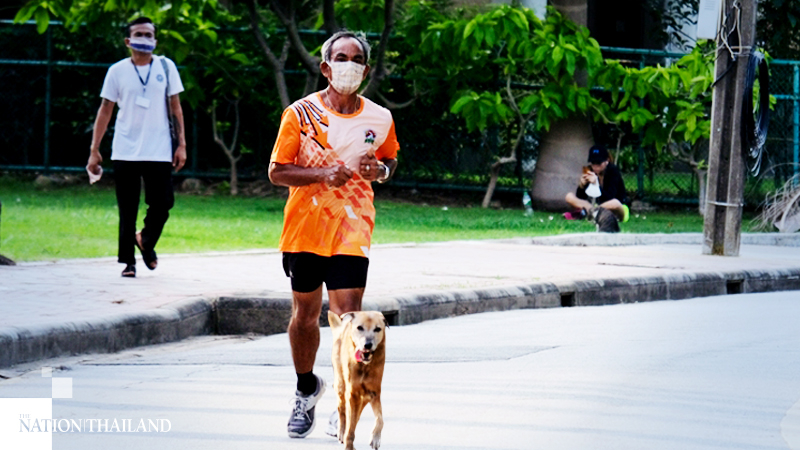
The Department of Health has said that people should not wear a mask while running or exercising as that will cut down on their access to oxygen, but warned that masks need to be worn if there are other people close by. The department has also ordered that all exercise sites should be sanitised.

Department chief Panpimol Wipulakorn said now that the government has loosened some measures, many people have returned to running and exercising in public parks and stadiums. However, she said, it will be injurious to health if people wear masks when exerting themselves.

She also said that runners should maintain distances and only wear a mask when coming in close contact with others. She also warned people to avoid unnecessarily touching surfaces in public places.