Pre-symptoms virus tests prove nothing, MD says #ศาสตร์เกษตรดินปุ๋ย

#ศาสตร์เกษตรดินปุ๋ย : ขอบคุณแหล่งข้อมูล : หนังสือพิมพ์ The Nation

https://www.nationthailand.com/lifestyle/30384417?utm_source=category&utm_medium=internal_referral

Pre-symptoms virus tests prove nothing, MD says

Mar 19. 2020
By The Nation

Online and in the street, many people are saying that everyone should be tested for Covid-19 infection and it should be free, but there’s a caveat to consider: If the test isn’t done correctly, a “negative” might mean only “no infection found”, as opposed to “not infected”.

It could even be a false negative, masking the dire truth.

Dr Opas Karnkawinpong

Dr Opas Karnkawinpong

In a talk this week, Dr Opas Karnkawinpong, head of the Health Ministry’s Department of Medical Sciences, said there are two ways to detect Covid-19 infection:

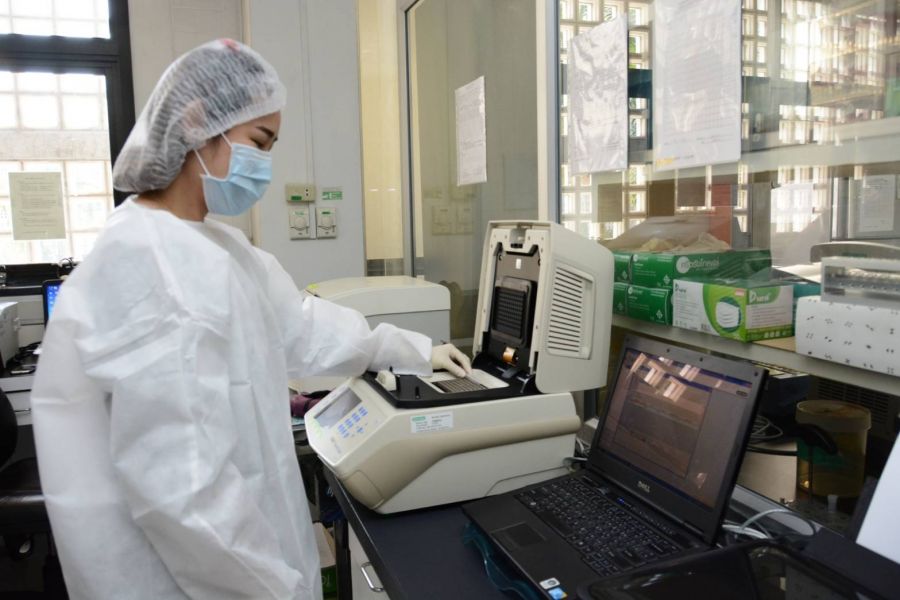
• A real-time reverse transcription polymerase chain reaction (RT-PCR) test, which looks for the virus in the cells of mucus from the throat or tissue from behind the nasal cavity. If infection might be present in the lungs, sputum from the lungs is examined. Care must be taken to prevent environmental contamination, so the test has to be done in a proper laboratory. It takes 2.5-3 hours to get a result and costs Bt2,500.

• The “rapid test”, which assesses immunity after the immune system has begun fighting the virus. it takes 15-30 minutes. Imported test kits cost Bt500, but the department is developing its own, which will cost Bt200.

Opas said laboratory testing is beneficial in determining whether there is infection, in helping monitor, prevent and control an infection, and in supplying epidemiological data to guide measures to control the diseases and gauge the efficacy of vaccines.

During the Covid-19 incubation period of about 14 days, before any symptoms become apparent, a respiratory test can determine if there is infection, but it’s a tricky process and the virus might easily escape detection, Opas said.

If the test result is negative, the examiner can only conclude “virus not found”, but that doesn’t mean “not infected”. Infection only becomes easily detected after symptoms appear.

“If you get sick, you have to go to the lab again,” he said. “If you have the symptoms, infection will be detected 100 per cent, and this is when the testing becomes useful in diagnosing and controlling the disease.”

Midway through the incubation period, 5-7 days after infection, the immune system should be at work and a blood sample will show the state of immunity, Opas said. A positive result indicates an immune response, but it remains unclear what stage the infection has reached, so any such result “is likely to be useless”. He nevertheless recommends undergoing a blood test if there is suspicion of infection.

“Leave it to medical personnel or health officials to interpret every result. Don’t try to check yourself or interpret the results yourself. That requires lab study. Not everyone can immediately know whether they’re infected or not,” he said. “The Health Ministry conducts free respiratory-infection diagnoses and blood tests to monitor disease control.”

The Department of Medical Sciences has certified 40 laboratories to test for Covid-19. They have the combined capacity to examine 4,000-5,000 samples per day, but currently are receiving only about 500 samples a day.

The ministry will soon have 100 labs in the system, increasing the potential capacity to 10,000 samples per day.

Covid-19 hits doctors, nurses, EMTs, threatening health system #ศาสตร์เกษตรดินปุ๋ย

#ศาสตร์เกษตรดินปุ๋ย : ขอบคุณแหล่งข้อมูล : หนังสือพิมพ์ The Nation

https://www.nationthailand.com/lifestyle/30384294?utm_source=category&utm_medium=internal_referral

Covid-19 hits doctors, nurses, EMTs, threatening health system

Mar 18. 2020
File photo

File photo
By The Washington Post · Lenny Bernstein, Shawn Boburg, Maria Sacchetti, and Emma Brown · NATIONAL, HEALTH

Dozens of health care workers have fallen ill with covid-19 and more are quarantined after exposure to the virus, an expected but worrisome development as the U.S. health system girds for an anticipated surge in infections.

From hotspots such as the Kirkland, Washington nursing home where nearly four dozen staff tested positive for coronavirus, to outbreaks in Massachusetts, Pennsylvania, California and elsewhere, the virus is picking off doctors, nurses and others needed in the rapidly expanding crisis.

“We all suspect it’s the tip of the iceberg,” said Liam Yore, a board member of the American College of Emergency Physicians.

“The risk to our health care workers is one of the great vulnerabilities of our health care system in an epidemic like this,” he said. “Most ERs and health care systems are running at capacity in normal times.”

Gauging how badly providers have been hit is difficult because no nationwide data have been released by the U.S. Centers for Disease Control and Prevention, medical associations or health care worker unions. A federal official who was not authorized to speak with the media said the government has received reports of more than 60 infections among health care workers. More than a dozen are related to travel. Authorities are investigating how the others became sick.

In previous outbreaks of infectious disease and in other countries where the current pandemic arrived earlier, health care workers have experienced a disproportionate share of infections. They have been put at risk in the U.S. not only by the nature of their jobs, but by shortages of protective equipment such as N95 face masks and government bungling of the testing program, which was delayed for weeks while the virus spread around the country undetected.

At EvergreenHealth hospital in Kirkland, Washington – just miles from the nursing home at the center of the U.S. outbreak – and in Paterson, New Jersey, two emergency physicians are hospitalized in critical condition with covid-19, according to their professional association. It is unclear whether the doctors, in their 40s and 70s respectively, were infected at their hospitals or in their communities, the organization said.

“As emergency physicians, we know the risks of our calling,” its president, William Jaquis, said in the statement.

In Pittsfield, Massachusetts, 160 employees of Berkshire Medical Center have been quarantined at home after exposure to patients who tested positive, forcing the medical center to hire 54 new nurses who began arriving Friday, according to news reports.

A provider has tested positive at Johns Hopkins Medicine. That former employee of NYU Winthrop Hospital in Mineola, New York infamously flew from New York to Florida last week while awaiting results of a test that ultimately showed he was positive, a spokeswoman told The Washington Post. In Philadelphia, St. Christopher’s Hospital for Children shuttered its intensive care unit to new patients and closed a trauma unit when a physician tested positive, the Philadelphia Inquirer reported.

Caregivers outside hospitals and nursing homes may be even more vulnerable.

A 36-year-old firefighter and emergency medical technician in Santa Cruz, Califorina, who was denied a test early this month because he didn’t meet strict government criteria then in force, tested positive for the virus late last week.

“This, to me, was the failure of the public health system,” said his wife, who also has tested positive and spoke on the condition of anonymity because she fears her family will be unfairly blamed for exposing others. “This was a decision made because there weren’t enough tests to prioritize my husband.”

On Mar. 9 the couple learned that one of the EMT’s co-workers had tested positive after being hospitalized. At that point, based on their contact with someone with a confirmed infection, they both were tested.

“As EMTs, they are going into these vulnerable communities, going into convalescent homes, literally responding to and interacting with the most vulnerable people,” she said.

Eight firefighters in nearby San Jose also have tested positive for the virus in recent days, according to news accounts. In Kirkland, 42 of 100 members of the Fire Department and a few police officers were quarantined, some after responding to 911 calls from the Life Care Center nursing home.

Others caught the virus as it spread through their community, said a spokeswoman for the city. Five firefighters remained in quarantine Monday and one has tested positive for the virus.

A Life Care health worker in her 40s was one of the first known people to test positive in Seattle’s King County, public health officials announced on Feb. 29. A third of the 180-member staff remained out on Friday with covid-9 symptoms, said Timothy Killian, a Life Care spokesman.

Because the testing program has lagged,health care workers often have no way to know whether people walking through the door with respiratory symptoms are suffering from the flu or covid-19, providers said. Even when precautions were taken, the virus has found its way into health care facilities.

At a Veterans Affairs hospital in Tucson, 23 people with respiratory symptoms were brought to an outpatient clinic with no protections for staff except masks, said a doctor who works at the facility. She asked to speak anonymously because she is not authorized to discuss care with the news media. Later, the patients tested positive for coronavirus.

“They’re not doing the testing,” she said. “They marched them through the hospital to my clinic. They put masks on them, but nothing else.”

Marcelo Venegas, a doctor at an urgent-care center in Queens, New York, woke up on Thursday morning with symptoms consistent with covid-19, including shortness of breath and a low-grade fever. His flu test came back negative, and a coronavirus test is still pending. He is now is quarantined at home in Teaneck, New Jersey, until at least Friday.

Venegas has seen two patients who had confirmed covid-19 infections and more than a dozen others whom he suspected of covid-19. Many were younger than 50 and had negative tests for the flu. Venegas said he wanted to test at least 20 people for coronavirus but didn’t bother because he knew they would not fit the tight eligibility criteria.

Venegas said he’d called in sick only twice before in eight years on the job. “Being sick is daunting,” he said. “I’m never sick.”

During Monday’s briefing on the pandemic, Vice President Mike Pence stressed that health care workers and people older than 65 would receive priority as the government increases the number of testing sites.

“We’re putting a real priority on our extraordinary health-care workers,” Pence said.

But the risks of caring for infectious, seriously ill people under the pressure of a pandemic are almost impossible to avoid. In hard-hit Italy, for example, 20% of health care professionals in the Lombardy region have become infected with the virus, according to a March 13 update in the medical journal The Lancet. In China, 3,387 health-care workers were infected by Feb. 24, almost all in Hubei province, the center of the outbreak, according to Chinese health authorities.

In the 2003 SARS outbreak in Toronto, most cases were acquired in hospitals. Of the 44 people who died, two were nurses and one a doctor. During the Ebola outbreak of 2014-2016, more than 8% of Liberian health care workers died.

“If there are large numbers of health-care workers exposed, how do we manage that and keep them out of health-care facilities?” asked former CDC Director Tom Frieden. ” . . . You eliminate your ability to respond.”

U.S. coronavirus testing stalled for six weeks. A small German lab made 1.4 million tests in that time. #ศาสตร์เกษตรดินปุ๋ย

#ศาสตร์เกษตรดินปุ๋ย : ขอบคุณแหล่งข้อมูล : หนังสือพิมพ์ The Nation

https://www.nationthailand.com/lifestyle/30384211?utm_source=category&utm_medium=internal_referral

U.S. coronavirus testing stalled for six weeks. A small German lab made 1.4 million tests in that time.

Mar 17. 2020
By The Washington Post · Peter Whoriskey, Neena Satija · NATIONAL, WORLD, HEALTH, EUROPE

 When Olfert Landt heard about the novel coronavirus, he got busy. The founder of a small Berlin-based company, the ponytailed 54-year-old first raced to help German researchers come up with a diagnostic test and then spurred his company to produce by the end of February more than 1.4 million tests for the World Health Organization.

“My wife and I have been working 16 hours a day, seven days a week, ever since,” said Landt by phone about 1 a.m. Friday, Berlin time. “Our days are full.”

By contrast, over the same critical period, U.S. efforts to distribute tests ground nearly to a halt, and the country’s inability to produce them left public health officials with limited means to determine where and how fast the virus was spreading. From mid-January until Feb. 28, fewer than 4,000 tests from the U.S. Centers for Disease Control and Prevention were used out of more 160,000 produced.

The United States’ struggles, in Landt’s view, stemmed from the fact the country took too long to use private companies to develop the tests. The coronavirus pandemic was too big and moving too fast for the CDC to develop its own tests in time, he said.

“There are 10 companies in the U.S. who could have developed the tests for them,” Landt said. “Commercial companies will run to an opportunity like this.”

As the coronavirus continues to spread across the United States, causing more than 70 deaths and more than 4,000 confirmed cases, the struggles that overwhelmed the nation’s testing are becoming clearer.

First, the CDC moved too slowly to tap into the expertise of academia and private companies such as Landt’s, experts said. For example, it wasn’t until last week that large companies such as Roche and Thermo Fisher won approval from the Food and Drug Administration to produce their own tests.

While FDA and CDC officials have attributed some of the testing delays to their determination to meet exacting scientific standards they said were needed to protect public health, the government effort was nevertheless marred by a widespread manufacturing problem that stalled U.S. testing for most of February.

The CDC has yet to fully explain the nature of the manufacturing problem but told The Washington Post on Monday that the design of the test could also have resulted in flawed tests.

But the U.S. Department of Health and Human Services, which oversees the CDC, said earlier this month that it is investigating the defect in many of the initial coronavirus test kits.

It has been long-standing practice for CDC scientists in emergencies to develop the first diagnostic tests, in part because the CDC has access to samples of the virus before others, officials said. Later, private companies that win FDA authorization can scale up efforts to meet demand.

In responses for this report, CDC spokesman Benjamin Haynes said in a statement: “This process has not gone as smoothly as we would have liked. . . . CDC has a responsibility to ensure that all CDC laboratory research and development activities, testing processes, and data are the highest possible quality and are traceable, reproducible, and documented with appropriate rigor.”

He said the manufacturing problem may have arisen because of the test’s design or because of contamination.

Finally, acknowledging that there “is a great need for test manufacturers to rapidly make testing available,” the statement said that “commercial labs are working to develop their own tests and hopefully will be available soon for clinical settings throughout the country.”

But critics say government officials should have moved much more quickly to bring on expertise from outside the CDC.

“The CDC has good scientists and they are proud,” Landt said. “But in this situation, they took the wrong approach.”

– – –

At the very beginning, U.S. efforts to develop a diagnostic test for the coronavirus kept pace with the rest of the world.

Shortly after publication of the virus’s genome in early January, German researchers announced that they had designed a diagnostic test. Then, within days, scientists at the CDC said they’d developed one, too, and even used it detect the first U.S. case.

“We actually do have laboratory diagnostics here at CDC that are stood up,” Nancy Messonnier, the CDC’s director of the National Center for Immunization and Respiratory Diseases, told reporters Jan. 17.

From there, however, U.S. efforts fell behind quickly, especially when compared with the efforts of the WHO, which has distributed more than 1 million tests to countries around the world based in part on the method developed by the German researchers.

As early as Feb. 6, four weeks after the genome of the virus was published, the WHO had shipped 250,000 diagnostic tests to 70 laboratories around the world, the agency said.

By comparison, the CDC at that time was shipping about 160,000 tests to labs across the nation – but then the manufacturing troubles were discovered, and most would be deemed unusable because they produced confusing results. Over the next three weeks, only about 200 of those tests sent to labs would be used, according to CDC statistics.

In fact, the U.S. efforts to distribute a working test stalled until Feb. 28, when federal officials revised the CDC test and began loosening up FDA rules that had limited who could develop coronavirus diagnostic tests.

During that critical interval, the CDC repeatedly assured the public that progress was being made, even as public health officials around the country began to raise alarms about the shortage of tests.

In January, CDC officials boasted during the coronavirus briefings that the United States has “one of the strongest public health systems in the world.”

At briefing on Feb. 12, Messonnier said “rapid development of a diagnostic and rapid deployment to the states” is “clearly a success.”

On Feb. 14, she said: “We can be proud. . . . We moved quickly.”

On Feb. 21, Messonnier acknowledged problems with the testing kits but described the issues as “normal.”

But by that point, public health labs around the nation had run very few of the CDC tests, according to the agency. Health officials across the country began pleading for a test that worked, or at least the authorization to use another test.

– – –

In the absence of tests, the calls for the United States to tap into the expertise of academia, hospitals and private companies, such as Landt’s, grew more insistent.

“It took [the CDC] a while to come up with the test, honestly,” said Alex Greninger of the University of Washington.

His lab had developed its own test and began seeking approval to use it on patients on Feb. 18. But that test, along with others that had been developed in various academic centers and hospitals, could not be used on patients until the FDA relaxed its testing rules on Feb 28.

He noted that many of the state public health labs had also figured out how to use the CDC test properly – by tossing one of its components – but were not allowed to actually do so until the FDA approved the workaround that same day.

“We had all these state public health labs that had a perfectly good [test] on their hands, and they knew it, they were upset,” Greninger said.

“What surprised me the most was to hear how much emphasis there is at CDC on quality control – to the point where, in my opinion, it really compromised surveillance,” said Michelle Mello, a professor of law and medicine and Stanford who recently wrote a paper about the delays in testing for coronavirus in the United States. “You can’t track what you don’t see.”

On March 7, FDA Commissioner Stephen Hahn stressed the importance of quality, noting that diagnostic tests in some other countries have been flawed. He did not specify which countries he meant, but China’s test may have produced lots of false positives, according to a recent publication by Chinese researchers.

“What’s important here is that we have a test that the American people can trust,” Hahn said.

But even a small firm, like Landt’s, is capable of producing a lot of high-quality tests and could have helped the efforts in the U.S., Landt said. His company, known as TIB for TIB Molbiol Syntheselabor GmbH, based their tests on the methods the German researchers published in January.

Though it has just 55 employees globally, TIB had experience in developing tests for SARS and the swine flu. It began producing the coronavirus tests in mid-January, just days after the Chinese researchers posted the virus’s genome, Landt said. It can produce about a million of them a week.

As wearying as his schedule has been, Landt said, “I like the feedback from people.”

– – –

Exactly what went wrong with the CDC’s first tests in the first critical weeks hasn’t been fully explained by the agency, aside from the possibility that the design was flawed or that the tests were contaminated.

While such diagnostic tests can vary in the specifics, they typically involve trying to match the genetics of a patient sample, taken from nasal and throat swabs, against those of the virus.

In the case of the CDC method, the test consisted of attempts to match a patient sample against three distinct pieces of the virus’s genetic code. A patient was declared to have coronavirus if each of those three attempts came back as a match.

The trouble with the CDC test arose because the third attempt at a match, known as the N3 component, produced an inconclusive result even on known samples of the coronavirus.

While the cause of the problem in the CDC test may be unknown, it meant that in the weeks before Feb. 28, the public health labs were left waiting for a usable test.

By Feb. 8, public health labs were notifying the CDC of troubles with the test, and four days later, about a week after the first CDC tests had shipped, officials acknowledged the problem during a news conference.

“Some of the states identified some inconclusive laboratory results,” Messonnier said Feb. 12. “We are working closely with them to correct the issues and as we’ve said all along, speed is important, but equally or more important in this situation is making sure that the laboratory results are correct.”

In the following weeks, CDC officials repeatedly said they were working to resolve the manufacturing problem. Then, on Feb. 28, the agency announced that it would just scrap the N3 component of the test that had been causing trouble. Officials also contacted a private company called Integrated DNA Technologies and asked it to make new test kits, the company said.

While the problems with the CDC test persisted, the vast majority of testing had to be done at the CDC’s Atlanta lab, and the numbers being tested were woefully below what experts said was needed.

As late as Feb. 27, 203 specimen tests had been run out of state labs; another 3,125 had been run out of the CDC.

James Lawler, director of the global center for health security and an epidemiologist at the University of Nebraska Medical Center, was one of the infectious disease specialists who flew out to meet the Diamond Princess cruise ship passengers in Japan and flew back with them to the United States. Lawler said the problem was not just in the manufacturing of the test but in the design.

In his view, the test has design problems that make it too difficult for many labs to make it work unless they have perfect conditions.

He said that even though the University of Nebraska Medical Center – a world renowned infectious-disease institution that houses the state’s public health lab – was able to get the CDC version of the test to work, the Nebraska center developed its own test based on the German lab design published by the WHO.

“It’s very nuanced and complicated to make a diagnostic test,” Lawler said. “If you don’t go back and fix things . . . and realize, ‘Hey, maybe I should try a different target,’ that’s when you can run into problems. . . . Everything down to the details of the humidity and temperature in some people’s laboratories is going to be different.”

If the design of the test is flawed, he said, “all of those conditions may come into play. Some people have been able to get reproducibly good results and others haven’t.”

– – –

Shortly after Feb. 28, when CDC officials announced the decision to reconfigure the CDC test, the number of those tests run by public health labs soared, from roughly 25 or fewer per day to as many as 1,500. At the same time, authorities were allowing other facilities to use their own tests – including the Cleveland Clinic, Stanford University and Greninger’s at the University of Washington.

Even so, complaints of testing scarcity continued to roll in last week. And even as tests become more widely available, experts and officials have cautioned that a backlog will continue due to a critical shortages: swabs to collect patient samples, machines to extract the genetic material from the swabs, workers qualified to run the tests.

Even if those problems are resolved, however, those critical early delays, when the CDC was struggling to issue tests to the states, significantly damaged efforts to contain the spread of coronavirus, experts said.

In a CDC tele-briefing on Feb. 29 that included some local and state public health directors, local officials lamented the initial inability to test. A reporter asked: “Did the lack of testing capabilities delay finding out who these cases were, particularly the person who died?”

In answer, Jeff Duchin, the public health chief in King County, Washington, where 37 deaths have been reported, suggested that the lack of tests was critical, in addition to the fact that authorities had limited who could be tested. Initially, they had said tests would only be used for those who had traveled in affected regions of the globe or had otherwise been in contact with an infected person.

“So, you know, if we had the ability to test earlier, I’m sure we would have identified patients earlier in the community, possibly at hospitals, but we were also looking at not only availability of testing but whether patients met criteria for testing,” Duchin said.” So, given the fact that we just recently acquired our availability of testing and new criteria were published, this person was brought to our attention.”

Thomas Frieden, an infectious disease physician who served as CDC director under President Barack Obama, called on Sunday for an “independent group” to investigate what went wrong with the CDC’s testing process. He said that in the past, the CDC moved quickly to produce tests for diseases such as H1N1, a.k.a. swine flu.

“We were able to get test kits out fast,” Frieden said on CNN. “Something went wrong here. We have to find out why so we can prevent that in the future.”

Frieden said the agency has been muzzled under President Donald Trump and despite the multitude of problems with the rollout of testing, “the CDC is still the greatest public health institution in the world.”

Europe bans travel amid virus threat to its free-flowing economy #ศาสตร์เกษตรดินปุ๋ย

#ศาสตร์เกษตรดินปุ๋ย : ขอบคุณแหล่งข้อมูล : หนังสือพิมพ์ The Nation

https://www.nationthailand.com/lifestyle/30384206?utm_source=category&utm_medium=internal_referral

Europe bans travel amid virus threat to its free-flowing economy

Mar 17. 2020
A pedestrian wearing a face mask stands in an almost empty Pariser Platz square beside the Brandenburg Gate monument in Berlin on March 16, 2020. MUST CREDIT: Bloomberg photo by Krisztian Bocsi.

A pedestrian wearing a face mask stands in an almost empty Pariser Platz square beside the Brandenburg Gate monument in Berlin on March 16, 2020. MUST CREDIT: Bloomberg photo by Krisztian Bocsi.
By Syndication Washington Post, Bloomberg · Nikos Chrysoloras, Viktoria Dendrinou, Milda Seputyte · WORLD, EUROPE 

The European Union proposed a temporary halt to non-essential travel in the latest efforts by the trading bloc to suspend the foundations of its community to contain the spread of the deadly coronavirus.

In a memo sent to EU governments, and seen by Bloomberg, the European Commission said the ban on incoming visits to Europe and the restrictions to outgoing travel are aimed at lifting an ever growing number of internal border closings, which have disrupted free movement within the bloc — one of the key pillars of European integration.

In an unusually blunt admission, the EU’s executive arm also warned the travel restrictions may not be effective in slowing the spread of the virus.

The desperate move comes as member states erect unprecedented barriers within the EU’s boundaries, hlating the normal free flow that underpins the livelihoods of 500 million people and prompting output cuts at manufacturers including PSA Group and Volkswagen, Europe’s two largest carmakers.

A 20-mile (32-kilomter) tailback of trucks on the border between Poland and Lithuania is the latest indicator of how the coronavirus is bogging down Europe’s economy. Like most in the 27-nation bloc, Poland is desperate to keep a lid on the outbreak of the disease, but national measures have gummed up supply routes.

Alongside the internal snarls of traffic, there’s a similar story on the periphery: Ukraine, which enjoys free trade with the EU, has closed 150 customs checkpoints. Bulgaria says trucks trying to leave for Turkey along a critical transport corridor face “significant” delays. Sea cargo from China is being held for at least 14 days at Romania’s Constanta port.

Healthcare professionals, frontier workers, diplomats and persons in need of humanitarian protection are exempt from the proposed travel ban, which is due to last for a month but could be extended further. EU leaders are due to adopt the proposal over a conference call on Tuesday.

German Chancellor Angela Merkel spoke Monday with French President Emmanuel Macron, European Council chief Charles Michel and EU Commission President Ursula von der Leyen about ways to coordinate and unify “measures to ensure the functionality of the domestic market.” The EU’s external borders are the subject of discussions this week among home-affairs ministers.

Inside the bloc, the economic realities of health-induced lockdowns are starting to sink in.

“As a result of the current global outbreak of coronavirus, supply chains and the global transport and logistics markets are currently seeing a substantial negative impact,” DSV Panalpina said in a statement on Monday, when the Denmark-based logistics company withdrew its 2020 outlook.

With operations across Europe that rely on a timely flow of parts, Volkswagen joined peers such as Fiat Chrysler Automobiles and PSA in winding down production at some factories. Restricted access to sites has complicated the movement of parts and finished cars, a spokesman for Wolfsburg, Germany-based VW said.

The world’s largest automaker said the consequences of halting output at sites in Spain, Slovakia and Italy are starting to ripple out to other plants including its U.S. factory in Chattanooga, Tennessee. Even countries less affected by the virus are stepping up health checks. VW’s plant in Portugal started measuring the temperature of truck drivers at factory gates.

Citing “serious” virus outbreaks near some sites, supply disruptions and a “sudden decline” in auto markets, Peugeot maker PSA said Monday it will gradually close all European production sites this week starting with its facility in Mulhouse, France. The halts will include plants in France, Spain, Germany, the U.K., Poland, Portugal and Slovakia, and will be carried out between March 16 and March 19, according to the statement.

Earlier Monday, Fiat Chrysler said its Italian unit and the Maserati brand would suspend production in Europe.

Border closings within the EU disrupt the normally tightly woven links between its members. When Austria closed its border to Italy last week, there were reports of an 80-kilometer backup at the Brenner Pass, a critical artery over the Alps. Efforts to clear the bottleneck — including opening car lanes for trucks — appears to have helped, thanks in part to the sharp drop in passenger vehicles making the crossing.

With truck traffic down about 50%, queues have all but disappeared, but some of the issues cropped up elsewhere. At crossings into Germany, there are waits of 1.5 hours near Passau, about 40 minutes in Kufstein-Kiefersfelden and 15 minutes at the Walserberg border near Salzburg, according to the Austrian operator Asfinag.

With travel all but halted, there’s a further knock-on effect for the freight market. When a passenger flight gets canceled, so does its cargo capacity, which could increase transport costs and hamper production, according to Paivi Wood, special adviser at the Finnish Chambers of Commerce.

As national governments try to secure their citizens, there are concerns that the measures have gone too far. French Finance Minister Bruno Le Maire urged fellow European leaders to take a united front inside the EU to smooth the difficulties.

“The first reflex is withdrawal, protection. It’s also a reflex you have to understand — everyone protects their population, everyone protects their citizens,” he said late Sunday on France 2 television. “It’s essential for Europe to be present for solidarity and to say we are putting our means together, we protect our economy and we guarantee solidarity for everyone.”

There are some early signs of that the community sentiment is playing out. Near the queue of trucks in the Lithuanian town of Kalvarija, border guards lent devices to test travelers’ temperatures to their Polish counterparts, whose equipment was malfunctioning.

But such gestures may be too little, too late to ease the pain for Europe’s economy.

VW’s management board and top labor leaders have called on workers to prepare for more difficulties ahead, according to a letter to staff seen by Bloomberg.

“The next weeks will be strenuous, maybe hard as well,” Chief Executive Officer Herbert Diess and other company officials said in the message.

12 productive things you can do to feel better about being stuck at home #ศาสตร์เกษตรดินปุ๋ย

#ศาสตร์เกษตรดินปุ๋ย : ขอบคุณแหล่งข้อมูล : หนังสือพิมพ์ The Nation

https://www.nationthailand.com/lifestyle/30384453?utm_source=category&utm_medium=internal_referral

12 productive things you can do to feel better about being stuck at home

Mar 20. 2020
File photo by Syndication Washington Post

File photo by Syndication Washington Post
By Special To The Washington Post · Nicole Anzia · FEATURES, HOMEGARDEN

Now that the coronavirus has sent workers and students home, closed businesses and canceled events, it’s going to be important to create new routines and find meaningful ways to spend our long days at home. The following organizing tasks are simple and will help you structure your day and create a small sense of control.

– Order picture frames and albums: Do you have a stack of photos you have been meaning to put in frames or photo albums? If so, take a few minutes online to find options that will work for you, and place the order. Depending on how long social distancing lasts, you may even have time to put those photos into the frames and albums.

– Send notes: Write those thank-you cards that you have had on your to-do list for the past few months. If you don’t have any thank-you notes to send, just send a few written notes or cards to friends. It will make you feel good to keep up some connection offline, and the recipient will be thrilled to open some real mail.

– Organize and minimize your inbox: Spend 15 minutes deleting and filing emails. You’ll be amazed at how much you can lighten your inbox in a small amount of time. For bonus points, do this every day for a full week.

– Wash and store winter items: Wash winter coats, hats and gloves that are launderable. Set aside for donation those items that your family members have outgrown, and properly store the rest.

– Meal planning: The upside to not sending kids to school and not going into an office is that you don’t have to pack lunches. On the other hand, with everyone at home, you will have to make three meals a day. Spend 20 minutes one day a week thinking through lunches and dinners. This will make mealtimes feel less stressful and rushed, and you can make sure you have everything you need in advance. With stores having uneven inventory, ensuring you can prepare what you want is important.

– Wash backpacks and reusable bags: When is the last time you washed your kids’ backpacks and any of the reusable tote bags you bring to the grocery store or on errands? For most people, the answer is never, but now you have time to get them cleaned up and germ-free. Will this change your life? No. But it will feel good for both you and your kids to start fresh when normal life resumes.

– Clean your car: If you have a car, this is the perfect time to clean it. This activity has the extra bonus of getting you outside for a portion of your day. Start by taking everything out, and then wipe down the surfaces and vacuum the floors and seats. Finish by cleaning the windows inside and out. This is something kids can help with.

– Deep-clean your kitchen cabinets: This is an activity that you don’t have to do all at once, but it will keep you busy for 30 minutes each day for a couple of days. Take things out of your drawers and cabinets and wipe down the insides. Put items that you no longer want or use in a bag for donation, and toss expired food. Put things back neatly. Wipe down both the inside and outside of your cabinet doors and all of the pulls, too.

– Move furniture in one room and clean: Get some help from other family members to move your family room or living room furniture and clean underneath, either with a vacuum or Swiffer. While you’re at it, take the cushions off the couch and chairs and vacuum them, too.

– Refresh your bookcases: Take all the books and items off one bookshelf in the house. Put books that you no longer want in a bag to donate, wipe down the shelves and put everything back in a new configuration.

– Write down goals for the rest of 2020: Some of us made a list of goals at the beginning of the year, but if you didn’t, now is a good time to make one. It will help you visualize life after the coronavirus and help you prioritize in the coming months. If you already have a list, take a look and revise as necessary. If you’re making a new list, be sure to include larger home projects you would like to complete, ideas for things you want to do with your kids and professional goals.

– Streamline your bill-paying: If you’re still a holdout to online bill-paying, this is the perfect time to get set up. If you’re just getting started, entering the information for all of your payees does take a while, but you don’t have to do it all at once, and the time you spend now will save you countless hours later. If you already have online bill-pay, take a look at your recipients to make sure they’re current, and add any new vendors. Alternatively, call the companies you pay each month and set up automatic bill-pay through them.

Many of us have wished for more time at home to get things done, and, well, now we have it. Using this opportunity to do some cleaning and organizing will not only make you feel more in control and save you time later, but it will also give you a sense of renewal and accomplishment.

– – –

Anzia is a freelance writer and owner of Neatnik.

Whose bedroom becomes the infirmary? Group-house living just got a whole lot trickier #ศาสตร์เกษตรดินปุ๋ย

#ศาสตร์เกษตรดินปุ๋ย : ขอบคุณแหล่งข้อมูล : หนังสือพิมพ์ The Nation

https://www.nationthailand.com/lifestyle/30384361?utm_source=category&utm_medium=internal_referral

Whose bedroom becomes the infirmary? Group-house living just got a whole lot trickier

Mar 18. 2020
From left, housemates Sam Lane, Zack Johnson, Dutch Seitz and Zach Lane have stocked up on extra food and toilet paper. Seitz is prepared to cede his bedroom to anyone who gets sick. MUST CREDIT: Photo for The Washington Post by Evelyn Hockstein

From left, housemates Sam Lane, Zack Johnson, Dutch Seitz and Zach Lane have stocked up on extra food and toilet paper. Seitz is prepared to cede his bedroom to anyone who gets sick. MUST CREDIT: Photo for The Washington Post by Evelyn Hockstein
By The Washington Post · Maura Judkis · FEATURES, HOMEGARDEN, RELATIONSHIPS 

WASHINGTON – The best room in the four-dude D.C. group house is also the most isolated – up on the third floor, with pine-tree wall art, big windows and its own bathroom and shower. It belongs to Dutch Seitz. But if our current national nightmare infiltrates their home, the 26-year-old is prepared to move a few of his possessions to a small, spare room with an air mattress, allowing his coveted third-floor spot to become the infirmary.

That’s the deal he and his housemates made as Washington, along with much of the nation, girds itself for an outbreak: If one of them gets covid-19, the illness caused by the novel coronavirus, Seitz’s room is where the sick will go: sealed into the navy-and-white-clad annex without hesitation, with only a mounted stag for company. It’s like “The Cask of Amontillado,” but with Netflix.

Sam Lane and Dutch Seitz clean the spare bedroom in their Washington, D.C., group house. MUST CREDIT: Photo for The Washington Post by Evelyn Hockstein

Sam Lane and Dutch Seitz clean the spare bedroom in their Washington, D.C., group house. MUST CREDIT: Photo for The Washington Post by Evelyn Hockstein

“It’s a necessary sacrifice for the greater good,” says Seitz. Late last week, even though his housemates were in good health, he packed a bag of about 10 days’ worth of clothing to stash in the spare room so he could be ready to move there at a moment’s notice.

The designated sick room has its own climate control, so the sick person’s air wouldn’t recirculate back through the house’s HVAC. Between that and the private bathroom, it would be possible, in theory, to cut off contact between the infected housemate and his roommates, who would deliver food and medication outside his door.

Zach Lane has stocked up on nonperishable food and toilet paper. MUST CREDIT: Photo for The Washington Post by Evelyn Hockstein

Zach Lane has stocked up on nonperishable food and toilet paper. MUST CREDIT: Photo for The Washington Post by Evelyn Hockstein

It’s what the Centers for Disease Control and Prevention recommends in its guide to caring for a stricken member of your household: “Stay in a specific room” with its own bathroom, “avoid sharing personal household items” and “clean all ‘high-touch’ surfaces every day.”

“The only avenue we haven’t addressed is, once that person has healed, how we’d disinfect that room afterward,” he says. “It would be the responsibility of the person who was sick,” he supposes.”I would be following through with a secondary disinfectant after that.” (It’s all moot if more than one of them gets sick, of course.)

In communal houses across Washington right now, there are group texts and house meetings where discussions of who is responsible for scrubbing the toilet have given way to planning for what will happen if – when, really – the virus strikes. Few of these 20-somethings are worried about the actual symptoms – their demographic has among the best survival rates – but rather, the disruption to their lives and the possibility of transmission. Some of those housemates are longtime friends looking for an extension of college fun, while others are in the unnerving position of having to wait out a deadly global pandemic with a near-stranger from Craigslist. Maybe they are lucky to have each other. Or maybe they should have sprung for the tiny studio apartment instead. Maybe they’ll soon find out one way or the other.

“It’s easy to feel kind of powerless when you’re living with multiple people in a small space,” says Magen Eissenstat, a 25-year-old nonprofit worker who lives in a share house. “Your friends kind of become your family, and this has kind of driven that home. It’s made it a much bigger deal when you realize that you might be stuck in the house with people.”

People living in group houses can socially distance from the world, but not from one another.

“We all live so closely together and we share bathrooms,” says Jason Johnson, a 25-year-old Capitol Hill staffer who lives in a group house with three other roommates he found via Craigslist. If one were to get sick, “it’s almost inevitable that each of us is going to get the virus.”

They haven’t done much to prepare for that “inevitable” possibility, either. In Johnson’s house, as in many group houses, everyone buys their own groceries, and they take turns buying shared items, like cleaning supplies. And toilet paper. Which, as Johnson just realized, is about to become a big problem.

“We have one six-pack left. I was planning to get some after work,” he says. “I guess I need to check Amazon.” Good luck, pal. (Yes, Amazon chief executive Jeff Bezos owns The Washington Post, but we’re scrambling for toilet paper just like the rest of you.)

“One of our house members bought a lot of food for himself, but that’s one out of four of us,” says Zach Lane, 24, who lives in the house with Seitz. “We all cook our own food. There’s no sharing.”

They wouldn’t let each other go hungry, of course. Still, an alert went out on the house group text last week: Go to Costco. ASAP.

“I bought food on Sunday for the whole entire week, because I might be working from home, but I don’t have weeks or months of food,” says Lane. “I’ll probably have to go to the store in five days.”

Five days. That’s a long time to be together, especially for houses with members that – as some note proudly in their Craigslist ads for open rooms – tend to spend almost no time at home. But emergency telework policies have turned housemates into officemates. Officemates who never part ways.

“It might start out kind of as a party, but I feel like we will quickly go into a cabin fever feeling,” says Don Masse, 27, who lives in the same house as Johnson. “We’re a fairly social and outgoing house.”

In Thomas Carpenter’s five-person group house, there will be plenty of video-game sessions in the living room. Over at another group house, Shannon McDermott and her housemates are doing group yoga and watching “Cheer,” a Netflix series shot in the before times when crowds were benign and colleges had students. At the share house nicknamed “Dolphin House” – it came with three large dolphin emblems surrounding its front door – American University student Ben Davis, 23, plans to hold big group dinners with his housemates, all recent grads except for one new guy who arrived to Dolphin House just as the coronavirus was arriving to most U.S. states.

“We brought in a random person who is a Vanderbilt guy,” says Davis. “We’ve only known him about two weeks now.” Based on early observations, he seems like a reliable hand-washer.

Things are a little more tense over at Blaine Smith’s group house. The 23-year-old public health researcher has three roommates, but one of them just lost a paid internship thanks to coronavirus shutdowns and can’t afford to stay. So they’ll need to find a subletter. That means inviting a bunch of strangers over to see the place.

“It is definitely nerve-racking that there are going to be people coming through our house to tour it, and movers,” says Smith. The standard D.C. group house interview questions – Are you messy? Do you work long hours? Do you have people over? – may be replaced with more pressing ones, such as: How frequently do you wipe down your doorknobs?

“We just had our March house meeting, where we talked about what we would be doing to keep surfaces a little more clean,” says Smith. “We are all adults that are living very different and separate lives,” which makes those check-ins more important. “If I lived with my parents … it would be a bit easier to navigate, because our lives would be a bit more connected.”

Cleaning is all anyone can talk about at McDermott’s house. Last week, one of the housemates returned from visiting a friend in Spain, which has the fifth-highest total of confirmed coronavirus infections in the world and the second-highest in Europe.

“I personally am kind of spooked by it,” says McDermott. At first, the housemates thought they would try to stay six feet away from one another, but they realized doing so probably wouldn’t work due to the shared kitchen and bathrooms.

So they’re all going to self-quarantine together for two weeks. McDermott canceled her birthday party. The housemates pulled together a good supply of Lysol, hand soap and medicine, and McDermott ordered thermometer probe covers. No one will leave the house, except to go on the porch.

They’re not holding it against the housemate, who had left for the trip to Spain before things got bad.

“I’m happy that I live with people,” says housemate Amanda Riddle, 24. “I know that it’s a little bit scary because you could have multiple exposure points, but I personally am quite extroverted and I like to be around my friends.”

But not all of her friends live in her house, so just before her housemate returned, Riddle went on a farewell tour, of sorts: She spent the evening visiting friends at their homes, knowing that she wouldn’t be seeing them for two weeks. Then, she made one last trip to the grocery store for essentials: coffee and oat milk, frozen vegetables, pizza dough, cans of tomato soup, sour cream and onion chips, more cheese (“of course”), mint chocolate chip ice cream. And few other items:

“Four bottles of wine,” added McDermott. “That’s the big one.”

No gatherings over 50 people, the CDC says. Here’s what couples are doing with their wedding plans. #ศาสตร์เกษตรดินปุ๋ย

#ศาสตร์เกษตรดินปุ๋ย : ขอบคุณแหล่งข้อมูล : หนังสือพิมพ์ The Nation

https://www.nationthailand.com/lifestyle/30384283?utm_source=category&utm_medium=internal_referral

No gatherings over 50 people, the CDC says. Here’s what couples are doing with their wedding plans.

Mar 17. 2020
By The Washington Post · Lisa Bonos · FEATURES, RELATIONSHIPS 

Days before the Centers for Disease Control and Prevention urged Americans to postpone or cancel gatherings of more than 50 people, Robyn Macy, 29, and her fiance, Andrew, were already downsizing their March 21 wedding.

The original plan: 180 people a venue in Tarrytown, New York, black-tie dress, with a wedding band coaxing people out onto the dance floor. The new plan: 25 people in Andrew’s parents’ living room, twinkle lights strewn about, dinner and a homemade cake, no dancing. The guest list is capped at the couple, their immediate families, the rabbi who’s officiating, bridal party and best friends. Everyone will still wear their tuxes and gowns.

Like many other couples around the country, Robyn and Andrew are postponing their larger celebration, which will now take place in August.

But they didn’t want to wait six months to tie the knot.

“Even this feels a bit Prohibition-y,” Macy said in a phone interview Monday, “because Trump just said no gatherings of more than 10 people.”

Planning a wedding is stressful on its own. Replanning it while a pandemic is unfolding is a whole new level of stress. To help couples cope, the Knot and Wedding Wire launched a 24/7 hotline staffed with wedding planners and experts. Callers are asking things like: “I have a wedding in June. Should I postpone?” says Kristen Maxwell Cooper, editor in chief of the Knot. “Or: I need to postpone because it’s in 3 weeks. How do I start?”

Some people just want to be heard, Maxwell Cooper says. “Couples understand that there are bigger things at play, but it’s still a disappointing thing. Sometimes they just want someone to tell them they’re allowed to feel disappointed and upset.”

To Macy, the chaos of this moment has been clarifying. Her mantra to her fiance has been: “As long as I get to marry you, I don’t care.”

“The whole point of this is to marry your person,” Macy adds. “At the end of the day, if you get to do that, you’re winning.”

Here’s what couples are doing, and professionals are suggesting, to amend wedding plans.

– Find alternatives

Weddings are all about bringing people together, which becomes tricky during a period of social distancing. Susan Cordogan, founder of the Chicago-based event planning company Big City Bride, suggested using technology to help include those who can’t attend in person.

“We’ve had the best man read the father’s toast, and had the toast live-streamed,” Cordogan said of past clients. Virtual guest books and prerecorded speeches can help, too.

When it comes to food and drinks, she advised skipping communal and self-service options like buffets, though the recommended alternatives of individually plated options are more expensive.

Obviously those who were planning weddings of more than 50 people will have to postpone or cancel. But even those beyond the next eight weeks should come up with a Plan B, suggests Maxwell Cooper, so talk to your vendors. “You may not have to execute a plan B, but come up with one,” she says, starting with brainstorming a backup date and then letting your guests and vendors know.

Vendors have been extremely accommodating, Maxwell Cooper notes, and couples will need to be flexible as well. That might mean rescheduling what would have been a Saturday wedding for a Thursday, Friday or Sunday wedding.

– Make it smaller (or private)

Bree Ryback, a day-of wedding coordinator in Washington, reminds couples that they can always go to courthouse and get married. A wedding reception is “a party; you can move parties,” she said, adding that the District even allows for self-uniting marriages in which one partner acts as the officiant. So even if you and your partner are self-quarantined, you could still get married – and celebrate later.

Sarah Yates, 25, and her fiance Byron, 26, had been planning a 130-person wedding for March 28 in Laguna Beach, California. They recently decided to postpone the big celebration until July. But in the meantime, they’re planning a wedding with nine people (themselves included). On March 28, Sarah and Byron, along with their moms and best friends, plan to drive from Laguna Beach four hours north to Morro Bay, where Sarah and Bryon got engaged 15 months ago.

“This whole process of not being able to have the wedding that you planned for 15 months is the best reminder of why you’re getting married in the first place,” Yates said in a phone interview Monday, adding that she and Byron have become so much closer in having to be flexible and make these big decisions around their nuptials. “Getting married has such a bigger and deeper meaning than one day. . . . I could get married in a laundromat; I don’t really care,” she added.

In the event that they can’t drive up to Morro Bay, the couple said they would just take some cool pictures around the house and gather a few core folks in their backyard. “We have plan A thru Z and backwards,” Yates said. “The big thing right now is: We’re still healthy; we’re OK. There are bigger things in the world.”

– Postponing

Adam Ezring and Heather Foster, who live in Washington, had planned a May 3 wedding in Italy but are postponing until August. “We had some friends propose that we just get married in D.C. and do a one-year anniversary trip to Italy. But we’re not ready to give up on our dream wedding yet,” Ezring said.

Adam Sontag and his fiance are in the process of rescheduling their April 4 wedding in New Jersey. They don’t have a new date yet, but Sontag reports that their venue and photographer have already offered to be flexible. “We want to feel good about everyone attending doing so when they also will feel good about it,” Sontag wrote in an email, adding that postponing the wedding “relieves some of the incredible stress of this moment, as we can now go back to just being worried about this moment, rather than how it will affect our wedding.”

– While postponing, you can still mark that special day

While shifting to a later date, Maxwell Cooper still encourages couples to find a way to celebrate the day they had intended to get married. That could be by making a favorite dish and opening a bottle of wine you’d been saving for your honeymoon. Or watching a favorite movie or show together.

– Insurance

When Ezring and Foster were planning their wedding in Italy, they didn’t even know wedding insurance existed. They found just two providers that covered Italy: One had an update on its website saying it doesn’t cover cancellations because of the coronavirus, and the other didn’t respond to a request for comment. “Even if we had bought it, it would be debatable about whether it would be covered,” Foster said.

Borales notes that most wedding venues in Washington require the hosts to take out liability insurance. “We always suggest to get insurance,” Borales said, which typically runs $300 to $600. However, it’s unclear whether wedding insurers will cover the costs of events canceled due to the coronavirus. “This is not something any of us have really had an opportunity to work through,” she said.

Seward Johnson, Johnson & Johnson heir who sculpted real-life images in bronze, dies at 89 #ศาสตร์เกษตรดินปุ๋ย

#ศาสตร์เกษตรดินปุ๋ย : ขอบคุณแหล่งข้อมูล : หนังสือพิมพ์ The Nation

https://www.nationthailand.com/lifestyle/30384143?utm_source=category&utm_medium=internal_referral

Seward Johnson, Johnson & Johnson heir who sculpted real-life images in bronze, dies at 89

Mar 15. 2020
By The Washington Post · Matt Schudel · NATIONAL, BUSINESS, ENTERTAINMENT, OBITUARIES, MUSEUMS

Seward Johnson, a sculptor whose lifelike works have become familiar sights on street corners and in public spaces throughout the country and whose personal wealth, as an heir to the Johnson & Johnson pharmaceutical fortune, enabled him to create a sculpture park and foundry in New Jersey, died March 10 at his home in Key West, Florida. He was 89.

The cause was cancer, said Rhoades Alderson, a family spokesperson.

Johnson came from one of the country’s richest families but struggled for years to find his niche in life. He tried working in his family’s business, which makes Band-Aids, Tylenol and countless other products, before discovering his vocation through art.

“It all started when my uncle fired me,” Johnson told the Star-Ledger newspaper in Newark in 2000. “I’m dyslexic, you know, and there I was, with no university degree, as they say, no where, no way. I had absolutely no idea what to do with myself.”

In the late 1960s, he began to focus his energies on sculpture, making hyper-realistic bronze statues, often of enormous scale, that invited people to interact with them. Taxi drivers have been known to stop outside the Four Seasons Hotel in Georgetown, the site of one of Johnson’s sculptures of a man hailing a taxi.

Others portray people reading or talking on park benches or are three-dimensional representations of famous works of art, including scenes from impressionist paintings and the photograph of Marilyn Monroe’s white dress being blown above her knees.

“No one knows his name, but everyone knows his sculptures,” David Levy, the onetime director of Washington’s old Corcoran Gallery of Art, told the Chicago Tribune in 2003.

Several of Johnson’s works, including portrayals of a skateboarder, a police officer and a woman sketching, have been installed in Washington. One of his best-known pieces, “The Awakening,” is now at the National Harbor in Prince George’s County. It consists of a gigantic head, arm, hand, knee and foot emerging from the earth. Children often climb on the colossal work.

“Public art has to be accessible,” Johnson said in a video made for a 2019 exhibition of his work in Nantucket, Massachusetts. “It also civilizes an area – it ‘peoplizes’ it, it makes it inviting to the human being . . . It’s all interaction, it’s ‘please touch.’ ”

Johnson created hundreds of sculptures, yet for many years he was considered a dabbler, a purveyor of kitsch, a rich dilettante who was scorned by critics and the art establishment. He did not have an exhibition in a museum until 2003, when the Corcoran Gallery presented “Beyond the Frame,” Johnson’s sculptural tableaus based on paintings by Edouard Manet, Pierre-Auguste Renoir, Vincent van Gogh and other impressionist masters.

“Let’s not mince words: This show is really, really bad,” Washington Post art critic Blake Gopnik wrote. “I can assert with a fair degree of certainty: This is the worst museum exhibition I’ve ever seen.”

Other artists, such as George Segal, Duane Hanson and Jeff Koons, had earned critical praise for their realistic, life-size sculptures, but Johnson was lambasted for being derivative and unoriginal, for having poor technique and “no imaginative component that I can see,” as Time magazine critic Robert Hughes put it.

Johnson took the critical brickbats in stride and kept on working. Near his studio in New Jersey, he established the Seward Johnson Atelier, consisting of a school for sculptors and one of the world’s leading foundries for casting large-scale works in bronze.

He converted the onetime site of the state fair in Hamilton, New Jersey, into the Grounds for Sculpture, now consisting of 42 acres of outdoor artworks. He exhibited his own sculptures along with those of such acclaimed artists as Segal, Beverly Pepper and Red Grooms.

“Seward is the artist that everybody loves to hate,” Corcoran director David Levy told the New York Times in 2002. “But quietly and selflessly, he is an enormously important citizen of art. He’s above and beyond patronage. The atelier and Grounds for Sculpture are grand contributions.”

Some of Johnson’s work has acquired a deeper and more lasting meaning than even he could have imagined. In 1982, he created a sculpture, “Double Check,” depicting a businessman looking in his briefcase, which was installed near the World Trade Center in New York.

After the terrorist attacks of Sept. 11, 2001, an estimated $100 million worth of art near the World Trade Center was destroyed. Johnson’s “Double Check” survived intact. Firefighters arriving at the scene tried to rescue the seated businessman, covered in debris, before realizing he was made of bronze.

The sculpture became an impromptu memorial, adorned with flowers, balloons and personal notes. It was a symbol not only of the workers who lost their lives that day, but also of a spirit of determination to keep forging ahead through the sorrow.

“Double Check” was reinstalled near the site of the World Trade Center in 2006, still bearing the gouges and scars of 9/11.

“I thought of him as a businessman Everyman – with his briefcase – getting ready for his next appointment,” Johnson told the Times in 2005, “and people identified with him. So when he survived, it was as if he was one of them – surviving as well.”

John Seward Johnson Jr. was born April 16, 1930, in New Brunswick, New Jersey. His father was on the board of directors of Johnson & Johnson, which was founded in 1886 by three brothers. His mother, a homemaker, was from Bermuda.

In 1932, not long after the young son of aviator Charles Lindbergh was kidnapped and killed, someone tried to break into the Johnson family mansion, presumably in an attempt to kidnap the 2-year-old Johnson or his younger sister.

“My father shot the man in the leg, and he fell off his ladder,” Johnson told the Times in 2002. “He was arrested later. But my father became obsessed about security.”

Johnson grew up mostly in New Jersey and attended a private school in Connecticut and the University of Maine before serving in the Navy during and after the Korean War. He spent several years working for Johnson & Johnson before being fired in 1962 by his uncle.

After a tumultuous early marriage to Barbara Kline ended in divorce, Johnson married writer Cecelia Joyce Horton in 1964. They began painting together, and she suggested that he take up sculpture because of his mechanical aptitude. His first effort, a nude in a fetal position, won an international award.

“I haven’t won a prize since, but I knew what I wanted to do,” Johnson told the Star-Ledger in 2000. He went on to sell tens of millions of dollars worth of sculptures, with individual works going for as much as $500,000. In time, some critics were even won over, and his work can be found in private collections and museums all over the world.

“In the corporate world, I wasn’t having fun,” he said in 2010. “In the world I chose for these last many decades, I am. And what’s life without fun?”

In 1971, Johnson’s 76-year-old father married his former maid, a 34-year-old Polish immigrant named Barbara “Basia” Piasecka. Weeks before the elder Johnson’s death in 1983, he revised his will to leave his entire fortune, worth an estimated $400 million to $600 million, to his wife. His six children were omitted.

As the eldest child, Johnson led a long court fight to contest the inheritance.

“When Basia was asked to come and clean house,” he said in 1985, “she took it idiomatically instead of literally.”

After three years and $25 million in legal fees, each of the six Johnson children was awarded $6 million, with millions more going to a family-founded oceanographic institute in Florida, which had also been excluded from the will.

Basia Johnson ended up as one of the richest women in the world. She died in Poland in 2013.

In a separate court case resolved in 2001, Johnson’s daughter from his first marriage, Jenny Anne “Cookie” Johnson, successfully sued to receive a portion of a multimillion-dollar family trust.

Johnson’s survivors include his wife of 55 years, Cecelia Joyce Johnson; their two children, John Seward Johnson III, a founder of the BuzzFeed media website, and India Blake, a poet and photographer; two sisters; a half sister and half brother; and five grandchildren.

Johnson, whose primary home was in Hopewell, New Jersey, continued to make artworks until shortly before his death. The Grounds for Sculpture has become a pilgrimage site for art lovers, and Johnson often led singalongs at a nearby restaurant.

One of his more playful works, which he created near his studio, was a three-dimensional replica of van Gogh’s 1889 painting “The Bedroom.” It came outfitted with a bed and a drawer that contained Johnson’s tap-dancing shoes.

“I take naps in here sometimes,” he told the Times in 2002. “Once, when I woke up, I had so much energy I put on my shoes and danced. I’m living in my own dream, you see.”

A resource-starved rural hospital steels itself for coronavirus’s arrival #ศาสตร์เกษตรดินปุ๋ย

#ศาสตร์เกษตรดินปุ๋ย : ขอบคุณแหล่งข้อมูล : หนังสือพิมพ์ The Nation

https://www.nationthailand.com/lifestyle/30384124?utm_source=category&utm_medium=internal_referral

A resource-starved rural hospital steels itself for coronavirus’s arrival

Mar 15. 2020
Dayton General CEO Shane McGuire is checked for fever outside the assisted-living center. MUST CREDIT: Photo by Nick Otto for The Washington Post

Dayton General CEO Shane McGuire is checked for fever outside the assisted-living center. MUST CREDIT: Photo by Nick Otto for The Washington Post
By The Washington Post · Eli Saslow · NATIONAL, HEALTH 

DAYTON, Wash. – The hospital was still waiting on a test result for its first possible case of the novel coronavirus when the staff crowded into a meeting room late last week to finalize plans for a potential outbreak. Employees at tiny Dayton General Hospital had spent the past month marshaling what few resources they could as they watched the virus spread from China to Italy to Seattle and finally toward them in rural America, which they worried was the most vulnerable place of all.

“How are we on masks and protective gear?” asked Shane McGuire, the hospital’s CEO.

“Getting low,” the supply manager said. “I can’t buy anything. Everything’s out of stock.”

“How about our staffing?” McGuire asked. “We need to make contingency plans in case some of us get exposed and need backup.”

Nobody answered, and McGuire looked around the room at his pharmacy department of one, at his 70-year-old doctor, who was working alone in the emergency room, and at his lab director, who was now also in charge of infection control. Most people on his staff were already working multiple jobs to keep the hospital functioning. “I know we’re stretched thin as it is,” McGuire said. “We’ll improvise and make it work however we can.”

They had been doing exactly that for the past several years, somehow keeping the doors open even as America’s rural health-care system collapsed all around them, with 125 other rural hospitals around the country closing for budget reasons and doctor shortages spreading across 85 percent of rural counties. Dayton General could no longer afford to offer obstetrics, endoscopy or surgery of any kind. Its emergency room and nursing home were both losing more than $1 million per year. But the hospital remained the final lifeline for an aging community of about 5,000 people in a rugged corner of southeast Washington state, isolated from all other medical care by 35 miles of barley and wheat.

The employees in the meeting room took turns reviewing what they knew about the novel coronavirus. The Centers for Disease Control and Prevention said it was deadliest for the elderly, and Dayton residents were an average of 13 years older than people in the rest of the state. The virus was worse for people with underlying health issues, and, like most rural communities, Dayton had high rates of COPD, obesity, diabetes and heart disease. Experts estimated that as many as 1 million of the most vulnerable Americans might need to rely on lifesaving ventilators, and Dayton General had none.

“This is a virus that can take over and expose your weaknesses,” McGuire said, and he feared that was true for both rural residents and the beleaguered hospitals left to care for them.

The virus had just arrived in rural America, but already, small hospitals across the country had begun bumping up against the limitations of their resources. A facility in the Berkshires had lost much of its nursing staff to a 14-day quarantine. A critical access hospital in North Texas had only one face shield in storage and couldn’t acquire any others. A hospital in Wisconsin was borrowing sterilized medical gowns from local dentists. And throughout the hard-hit areas of Washington state, rural hospitals with only a handful of beds had begun making plans to set up tents or rent vacant buildings in case extra space was needed.

Dayton had already closed its nursing home to visitors as a safety precaution and lined the hospital walls with its limited supply of hand-sanitizer stations. It had put signs outside the ER instructing people with flu-like symptoms to call rather than enter the building, which was what one local woman had done a few days earlier after returning from a trip abroad with a fever and a cough. Two nurses in protective gear had walked outside to the resident’s car to take a sample for coronavirus testing and had sent the test kit off to a lab in North Carolina. Three days later, they were still waiting for the results.

“We should know something soon, right?” a nurse asked.

“Yes,” McGuire said. “But as far as our mentality goes, it’s not a matter of if this virus comes. It’s when.”

“But it might not be here yet?”

“Maybe not yet,” he said.

– – –

If there was any source of comfort for the hospital, it could be found in the supply room. The staff had more than 40 cartons of medical gloves in storage. It had at least 50 gallons of hand sanitizer, 4,000 medical gowns, and four boxes of precious N95 respirator masks that an employee had found hidden away on the shelves of Tractor Supply and City Lumber. Under normal circumstances, Dayton General had enough supplies and enough cash on hand to operate for about two weeks, but nothing promised to be normal about the next two weeks, or the weeks after that, so supply manager Chris Davis left the meeting and went to his desk in the storage bunker to see if he could somehow bolster their reserves.

He sat at a computer surrounded by shelves that were already starting to empty. He went online and checked the 11 orders he had resubmitted to the hospital’s vendors earlier that morning.

Antibacterial wipes, 1 carton: “Rejected.”

Yellow procedure masks, 12 boxes: “Rejected.”

Face shields, two cases: “Rejected.”

Children’s masks, 1 case: “Rejected.”

Davis had first noticed a change in the hospital’s supply chain in early January, when most retail stores sold out of respirator masks and they became increasingly difficult to find online. The hospital’s vendors had begun to ration equipment according to each hospital’s ordering history, which meant rural hospitals were permitted to purchase only their typically small allotment of weekly supplies, even as they prepared for the threat of a pandemic. Eventually, Dayton General’s weekly purchasing allowance had been dropped to half its normal supply order, and then to a third, and lately, Davis hadn’t been able to get anything at all. Vendors were running so low on protective equipment that they had begun to prioritize their biggest accounts, which meant Davis had begun looking for masks and hand sanitizer on Amazon, where he found two 12-ounce bottles selling for $80.

He had been forced to begin his own sort of rationing, tucking away boxes of gloves and surgical masks in the hidden corners of the bunker, doling out supplies little by little to each hospital department according to need. The process of caring for just one coronavirus patient, during just one interaction, meant that each nurse and doctor would need to wear a sanitized gown, two pairs of gloves, a face shield, goggles, and a respirator mask – all of which would need to be thrown out after a single use.

“We could burn through some of these supplies in days,” Davis said, so management at Dayton General had called the governor’s office to request 3,500 masks that had yet to emerge from a state stockpile, and Davis had continued placing and checking his daily orders even as the quest began to seem increasingly futile.

Surgical masks: “Rejected.”

Sanitary hats: Backordered and scheduled to arrive April 8.

Hand sanitizer: Backordered and scheduled to arrive April 11.

“That’s almost a month,” Davis said, and he got up from his desk to sort through boxes of supplies, trying not to think about what might happen before the next delivery came.

– – –

One doctor at the hospital had spent his professional life anticipating and confronting worst-case scenarios, and now Lewis Neace finished treating a patient for stomach pain and toured his empty ER with another doctor as they tried to envision what it might look like during an outbreak. Neace had only three examination bays where he could treat patients. He had only two rooms with negative airflow that could be used in the case of an infectious disease. He had an average of only one nurse and one nursing assistant to accompany him during each shift, and his ER had no intensive-care capabilities.

“What if people start to crash?” his colleague asked.

“We’ll transfer them,” Neace said. “Spokane. Walla Walla.”

“And if those trauma centers are full?”

Neace thought for a moment. He knew it was a possibility, and he’d imagined creating more ER space in the event of a surge by adding tents or cots in the hallways for patients. But who would care for those patients? And how much intensive care could the hospital provide without ventilators?

“The path of this disease is something we can’t fully travel,” Neace said.

He’d spent more than 45 years practicing the most intense versions of emergency medicine as a doctor in a busy urban ER and also as an Air Force flight surgeon on missions in Afghanistan and Iraq. He’d served as a helicopter medic during Hurricane Andrew and performed rescue missions around the world by parachuting and by scuba diving. And then, in 2015, he’d moved back with his wife to their tiny hometown nine miles down the road from Dayton, planning to retire. But the hospital needed another doctor to staff the ER, so he’d agreed to work one day a week, which had become three days a week, which had turned into a full-time job as ER director.

“I failed at retirement,” Neace liked to say, but the hospital needed him, and he loved the work. Dayton General was considered one of the best-run rural hospitals in the state, with an innovative program for telemedicine and stellar ratings from its patients. Most of them were on Medicaid or Medicare with limited income, but they had voted to increase their own taxes to expand the hospital’s nursing home and keep the ER afloat. Occasionally, Neace treated traumatic injuries coming off the adjacent highway, or the nearby ski area, or the Snake River, but his job mostly consisted of caring for patients who were dealing with the gradual impacts of getting older. Many left their trucks running in the parking lot and greeted him by name.

Only during the past few weeks had it occurred to Neace that it could be here in this troubled hospital that he might confront one of the largest global emergencies of his career.

A nurse knocked on his office door and held out a piece of paper. “The results finally came back,” she said, and Neace took the single-spaced lab report from her hand and started to scan it, until after a few seconds he noticed a line that read, “Reference Range: Not Detected.”

“Not detected,” he said, sounding relieved, and he kept looking at the lab report until he saw a section labeled “COVID-19,” where a single word was printed on its own line. “Detected,” it read.

“Oh,” Neace said, wincing, setting the paper down on his desk. “Detected.”

– – –

Within a few minutes, the news began to travel out of the ER and through the building, spreading from one person to the next until it reached the main nursing station, where Angie Moore was holding an evening meeting for her staff.

“In case you didn’t know yet, we got a positive result,” she told them. A few of the nurses started to stay something and Moore held up a hand. She had been born at Dayton General, and now both of her daughters were also on the nursing team. Nobody knew the hospital better, which made her a trusted authority among her staff. “Now, there’s also good news,” she said. “It’s one person that tested positive. That one person was traveling overseas. That one person was tested in the car and never came into the hospital. From what I understand, that one person has been quarantined at home ever since she took the test, which is exactly how this is supposed to go.”

“But what about before she took the test?” one of the nurses asked.

“How about her family?” asked another. “Have they been quarantined, too?”

“Everything spreads in this town,” another nurse said. “If any of them even stopped at the gas station at some point, that could be all it takes.”

“Or went to church, or the grocery store -”

“OK. Yes. That’s the reality,” Moore said, hoping to end the conversation, because despite all the variables her nurses couldn’t control, there were still some things they could. She led her staff toward the two rooms of the hospital that had negative airflow to prevent the spread of infectious disease. The rooms had been sealed off with two clear plastic sheets, with just enough room between the plastic sheets for a few nurses to change into protective gear.

Moore explained that the hallway had been divided into three zones: “COLD” for the regular part of the hospital; “WARM” for the area between the plastic sheets where the medical staff would change into protective equipment; and “HOT” for the two negative-airflow rooms where they would treat patients who had the novel coronavirus. She handed each nurse two pairs of gloves, a gown, a sanitary hat, a respirator mask and a face shield. She reminded them to save their equipment, since it didn’t need to be thrown out until they treated a patient.

“It’s time to practice a full dress rehearsal,” Moore told them.

One by one, the nurses moved through the stations, traveling from cold to warm to hot, until after a few minutes the medical staff at Dayton General was crowded into the secure area. They stood in full protective gear and rubbed hand sanitizer onto their gloves, waiting for the virus they knew had arrived.

How countries around the world have tried to contain the coronavirus #ศาสตร์เกษตรดินปุ๋ย

#ศาสตร์เกษตรดินปุ๋ย : ขอบคุณแหล่งข้อมูล : หนังสือพิมพ์ The Nation

https://www.nationthailand.com/lifestyle/30384108?utm_source=category&utm_medium=internal_referral

How countries around the world have tried to contain the coronavirus

Mar 15. 2020
By The Washington Post · Adrian Blanco, Marisa Bellack · NATIONAL, WORLD, HEALTH
How does the coronavirus pandemic end? Governments around the world are trying to figure that out, along with what role they can play. Some countries – including China, South Korea and Japan – appear to have had some success in slowing the rate of infection. But the United States and many European nations are still seeing exponential growth in cases.

How many cases a country has confirmed reflects, in part, how many people it has tested. South Korea and Italy have conducted widespread testing; the United States and Japan have not. Certain factors may also make some societies more vulnerable than others. The virus has proved deadliest for older people, and Japan, Italy and Germany have the oldest populations in the world. Some researchers have further theorized that weather could have something to do with the spread, just as seasonal flu has a winter peak in the Northern Hemisphere. Others have suggested that population density and the degree of physical contact societies are accustomed to could affect transmission. All of that remains highly uncertain.

https://www.washingtonpost.com/video/c/embed/ea4bdf93-731f-4b4a-ad22-199ca0dc1b65

But epidemiologists say how and when governments impose containment and mitigation measures can make a difference. China, after initially denying any problem and moving to silence whistleblowers, has gone after the virus aggressively with a mandatory quarantine in Hubei province. Italy has now extended its lockdown to the entire country, restricting freedom of movement on a scale unprecedented in a democracy – but it is still playing catch-up, trying to control a virus that spread in the country for weeks before anyone noticed. Other nations are beginning to promote social distancing, while assessing how much economic fallout, curtailment of civil liberties and disruption of routine their populations will tolerate.

– – –

Measures taken by countries experiencing outbreaks

– – –

114.84 cases per 100,000 people in Hubei province; 5.81 cases per 100,000 people in all of China

The first inkling of serious trouble came on Jan. 8, when Chinese authorities and the World Health Organization revealed that scientists in China had discovered a new strain of coronavirus responsible for a mysterious surge of pneumonia cases. The timing could not have been worse, coming just as millions of Chinese citizens were preparing to travel for the Lunar New Year holiday.

Authorities soon began taking temperature checks at airports and tracing contacts between infected individuals and others in the community. It was already too late. Wuhan, an industrial city where an exotic animal market is believed to have been the source of the virus, became the epicenter of the outbreak and soon found its nearly 12 million residents under a mandatory quarantine. On Jan. 23, that lockdown was extended throughout Hubei province, home to Wuhan, trapping roughly 50 million people in their homes. The lockdown continues today.

Most means of transportation, including bus and train travel, have also been shut down in Hubei province; international travel to and from China largely remains off limits. President Xi Jinping has been criticized for refusing to give international medical experts access to its findings and processes.

His government has also been pilloried for relying on draconian measures, including silencing and punishing a young doctor and whistleblower who alerted a small group of friends and family about the coronavirus’s existence. That doctor, Li Wenliang, died in early February after contracting the virus. He was 34.

Although China continues to lead the world in the number of confirmed cases (about 81,000) and deaths (nearly 3,100), it has recently begun to slow the rate of infections.

– – –

Japan

0.50 cases per 100,000 people

Most of Japan’s initial cases had a directly traceable link back to China. The first documented case was that of a Chinese man in his 30s, living outside Tokyo, who had just returned from visiting Wuhan. He was hospitalized with a fever on Jan. 3, but discharged after five days, only to test positive for coronavirus on Jan. 15. Japan imposed its first travel restrictions 2½ weeks later, on Feb. 1, with a ban on travelers from Hubei province in China. Restrictions were gradually expanded to cover visitors from parts of South Korea, Iran and Italy. Nevertheless, clusters of infections began to emerge around the country.

On Feb. 3, the Diamond Princess cruise ship docked in the port of Yokohama. With a former passenger having contracted the virus, the boat was soon placed under quarantine. For the next two weeks, the fate of its 3,711 passengers and crew transfixed the world. In the end, about 700 people contracted the virus and seven died.

Onshore, a key moment came in mid-February, when several infections in the eastern prefecture of Wakayama could not be traced back to China. Experts said they believed an invisible chain of transmission had begun.

Japan has continued to focus on identifying clusters and tracing contacts, rather than widespread testing. Prime Minister Shinzo Abe recommended on Feb. 26 that organizers should cancel, scale back or postpone large events, and on Feb. 27, he recommended that schools across the country close until the end of spring break, in early April. Although some companies are allowing employees to work from home, commuter trains are still fairly crowded. So far, Japan has conducted more than 22,000 tests, with 725 positive cases and 21 deaths as of March 14, not including the people who contracted the virus on the Diamond Princess.

– – –

South Korea

15.23 cases per 100,000 people

South Korea began conducting one-on-one temperature checks on visitors from Wuhan, China, as early as Jan. 8, and it identified its first coronavirus case on Jan. 20, in a woman who had flown from Wuhan and was isolated upon entry after displaying a fever. For a time, the temperature checks appeared to help prevent a wider outbreak, with only 30 new cases of the virus reported in the weeks after that first confirmed infection. President Moon Jae-in said on Feb. 13 that the virus would “disappear before long” and urged citizens to resume regular economic activities.

However, after a 61-year-old woman was diagnosed with the virus on Feb. 18 in Daegu, the southern city saw an exponential growth in infections. Most were traced to a local branch of Shincheonji church she attended, and health authorities ordered coronavirus tests on more than 200,000 members of the church nationwide.

South Korea has done the biggest number of covid-19 tests per capita, with more than 10,000 people tested daily over the past few weeks. People can even submit test samples at drive-through centers. Health authorities conduct robust contact tracing on all confirmed patients, then test identified contacts. Most controversially, the South Korean government is publishing the movements of people before they were diagnosed with the virus – retracing their steps using tools such as GPS phone tracking.

The government has dismissed the idea of lockdowns. People can still travel in and out of Daegu. Local governments across the country promote social distancing, but there is no ban on mass gatherings, only recommendations. In late February, the Seoul mayor banned mass demonstrations typically held in the city center on weekends, but many protesters crowded Seoul’s main square the following weekend anyway. The Education Ministry has postponed the start of the new school year by three weeks to March 23.

On March 13, South Korea reported more recoveries than new cases for the first time, though an emerging outbreak in Seoul threatens to undermine progress. In total, the country has confirmed more than 8,000 cases and reported 72 deaths.

– – –

France

3.40 cases per 100,000 people

France announced Europe’s first known coronavirus cases on Jan. 24, one in Bordeaux and two in Paris, all affecting people who had recently been in China. By Feb. 8, a small cluster of cases was identified among British nationals who stayed at a ski chalet in the French Alps. Almost all of the 12 people diagnosed in late January and early February recovered; an 80-year-old tourist from China’s Hubei province, died at a Paris hospital on Feb. 14, becoming Europe’s first coronavirus death.

The French government has lagged behind others on the continent with its interventions. While the streets of Rome emptied, life in Paris remained largely unchanged. On Feb. 29, after an emergency Cabinet meeting at a point when the country had 100 cases and two deaths, the French government announced a ban on gatherings of more than 5,000 people, leading to the cancellation of the Paris Book Fair. On March 3, Education Minister Jean-Michel Blanquer announced the closure of 120 schools, mostly in Brittany and the Oise region north of Paris, where clusters of community transmission were detected. “We will not paralyze the economic and social life of the country,” Health Minister Olivier Veran said in an interview published March 5.

The tone in France has shifted abruptly. On March 6, President Emmanuel Macron urged French citizens to “avoid visiting our elders as much as possible,” to protect that vulnerable population. On March 8, with nearly 1,230 confirmed cases and 19 deaths, the government revised its restrictions on public gatherings, banning events larger than 1,000 people. On March 12, Macron announced that schools and universities would close nationally starting Monday. And on March 14, with more than 3,600 cases and 79 deaths, the government moved to close all nonessential businesses, including cafes and restaurants.

– – –

Germany

2.50 cases per 100,000 people

Germany’s initial outbreak is thought to have begun with a Chinese woman who traveled to the Bavarian town of Stockdorf for a workshop at a car parts factory on Jan. 21. On Jan. 27, a German man who participated in the workshop became the country’s first confirmed case. The factory closed for two weeks and asked all employees and their family members – some of whom were diagnosed in subsequent days – to stay home.

Airline employees were asked to look out for sick passengers arriving from China as early as Jan. 24, but they did not administer temperature checks. Health Minister Jens Spahn said on Feb. 12 that checking temperatures “makes no sense,” because so many people with the virus are asymptomatic. He said flight passengers may be questioned about recent contacts.

While Germany’s first cluster could be controlled through contact tracing and isolation, by Feb. 26, the country was starting to see cases that were harder to track; Spahn created a crisis management committee and told German states to activate their pandemic plans. On March 9, with more than 1,150 cases in Germany, Spahn said events with more than 1,000 people should be canceled. But this is only a recommendation; it’s up to each German state to decide what to do. The German government has issued travel warnings but no restrictions. Some state governments have closed schools, and Berlin is reducing public transport and shuttering all bars starting Tuesday.

Germany reported its first two deaths related to the virus on March 9. Two days later, Chancellor Angela Merkel warned that coronavirus could spread to two-thirds of the country’s population before the end of the outbreak, but she did not announce new control measures. As of March 14, Germany had nearly 4,000 confirmed cases and eight deaths.

– – –

Italy

20.62 cases per 100,000 people

Italy’s first detected cases of coronavirus involved two Chinese tourists visiting Rome. The couple tested positive on Jan. 31; Italy immediately declared a six-month state of emergency and suspended flights from China. “The system of prevention put in place by Italy is the most rigorous in Europe,” Prime Minister Giuseppe Conte said.

Infectious disease specialists now believe the virus may already have begun spreading in communities in northern Italy by that point. The first identified case resulting from apparent community transmission was that of a 38-year-old man in the town of Codogno, outside Milan. He sought medical attention multiple times, starting on Feb. 14, but he wasn’t diagnosed until Feb. 21 (after he infected his wife, hospital staff, several patients and others). The next day, Feb. 22, Conte announced a lockdown affecting 50,000 people, who are prohibited from leaving hotspot towns in the Lombardy and Veneto regions without specific permission.

Italy expanded its restrictions in phases. On March 4, with more than 2,500 cases confirmed, it announced the closure of schools and universities nationally. On March 8, with nearly 5,900 cases confirmed, the government ordered a lockdown for 16 million people in the north, while also closing museums and theaters across the country. On March 9, with nearly 7,400 total cases, the lockdown was extended to the rest of the country, limiting travel abroad and across regions. On March 11, with nearly 12,500 cases, the government ramped up the lockdown even further, halting nearly all commercial activity aside from supermarkets and pharmacies.

Italy has been testing fairly widely, performing more than 50,000 swabs. That partially explains why it has identified so many cases. The country, with the world’s second-highest proportion of seniors, is also particularly vulnerable. As of March 13, Italy had recorded more than 17,600 total cases and 1,266 deaths.

– – –

United States

0.50 cases per 100,000 people

The United States identified its first coronavirus case on Jan. 21, the day after a 35-year-old man who recently returned from Wuhan, China, showed up coughing at a clinic in Washington state. A few major airports had already begun screening passengers arriving from Wuhan. Health officials began tracing his contacts right away, locating 60 people, who all tested negative, and on Jan. 31, they established mandatory quarantines for certain passengers traveling from China.

That wasn’t enough. Washington state has emerged as the pandemic’s largest foothold in the United States, with new cases confirmed every day across the country. On Feb. 6, the Centers for Disease Control and Prevention began sending out test kits, which turn out to be flawed, and weeks passed before new kits could be delivered. In that time, the virus continued to spread, and health officials were left blind. By the end of February, new cases had arrived from Italy and South Korea. “CDC and my Administration are doing a GREAT job of handling Coronavirus, including the very early closing of our borders to certain areas of the world,” President Donald Trump said on Feb. 25.

The country marked its first case of apparent community transmission in California on Feb. 28. Until late February, testing criteria remained narrow. A 56-year-old woman in Chevy Chase, Maryland, who returned in February from northern Italy and who had suffered from a cough and flu-like symptoms for 10 days, told The Washington Post that she could not get a coronavirus test at a hospital because she was not hospitalized or severely ill. The CDC approved widespread testing on March 3, but complaints about the availability of testing continued to mount.

In the first two weeks of the month, a new normal rapidly emerged, with school and universities closures, workplaces going remote, state and local governments banning large gatherings, and sports leagues suspending their seasons. By mid-March, the virus had spread to at least 11 nursing homes in the Seattle area, and facilities around the country were on lockdown. On March 10, New York Gov. Andew Cuomo declared a one-mile containment zone in the town of New Rochelle, the center of a growing outbreak in Westchester County. The National Guard was deployed to deliver food. On March 11, Trump placed travel bans on most of Europe, to the surprise of many officials there, adding to restrictions already in place on travel from China and Iran.

On March 13 – with more than 2,100 cases confirmed in nearly every state, and after the worst day for U.S. stocks since 1987 – Trump declared a national emergency and pledged to increase testing. The House passed a relief bill on March 14, dedicating tens of billions of dollars for paid sick leave, unemployment insurance, free testing and other measures. The Senate is expected to pass the legislation this coming week.