Traveling the loneliest road #ศาสตร์เกษตรดินปุ๋ย

#ศาสตร์เกษตรดินปุ๋ย : ขอบคุณแหล่งข้อมูล : หนังสือพิมพ์ The Nation

https://www.nationthailand.com/lifestyle/30379718?utm_source=category&utm_medium=internal_referral

Traveling the loneliest road

Dec 22. 2019
Marlene Kennedy visits her husband at Emerald Nursing & Rehab in Cozad, Neb., more than 50 miles from their home in Broken Bow. Earl Kennedy, 88, has Parkinson's disease. MUST CREDIT: Washington Post photo by Michael S. Williamson

Marlene Kennedy visits her husband at Emerald Nursing & Rehab in Cozad, Neb., more than 50 miles from their home in Broken Bow. Earl Kennedy, 88, has Parkinson’s disease. MUST CREDIT: Washington Post photo by Michael S. Williamson
By The Washington Post · Eli Saslow 


282 Viewed

BROKEN BOW, Neb. – She had been waiting more than a week for the black ice to melt and the farm roads to clear, but Marlene Kennedy, 84, was unwilling to wait any longer.

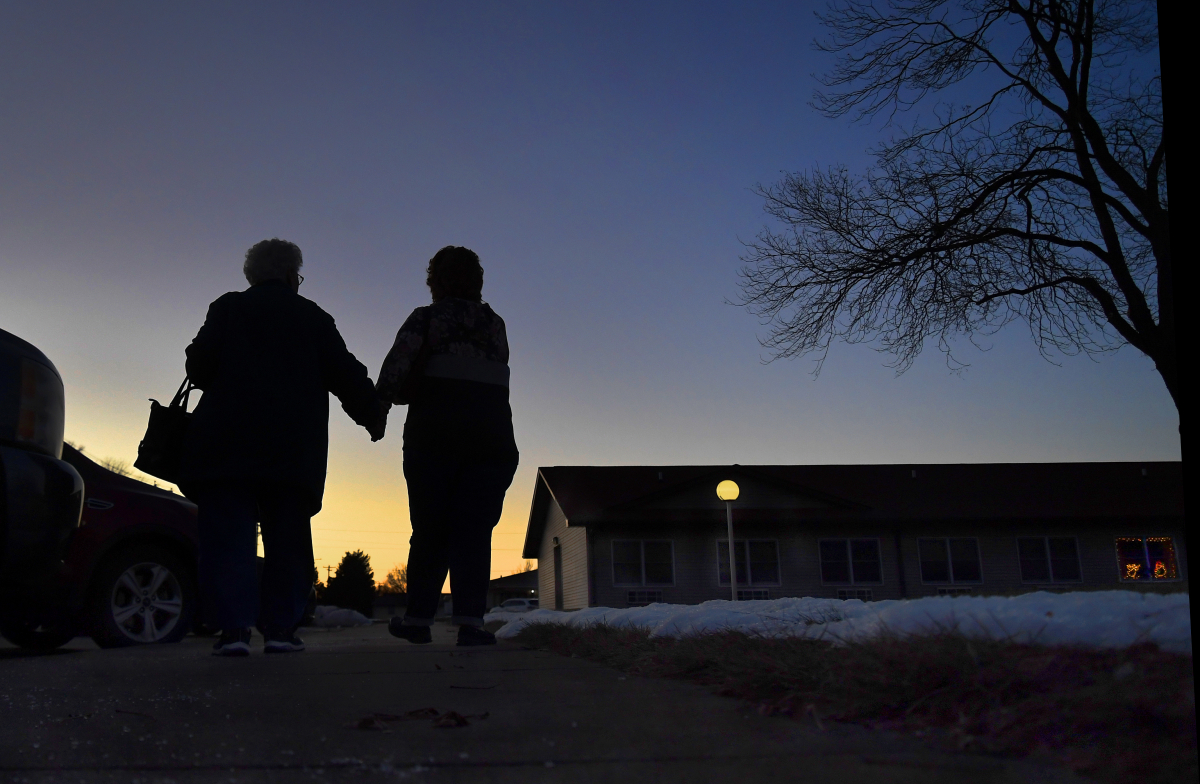
Marlene Kennedy, left, and her daughter Deb Kennedy at Emerald Nursing & Rehab in Cozad, Neb., after visiting Marlene's husband and Deb's father, Earl Kennedy, a resident there. MUST CREDIT: Washington Post photo by Michael S. Williamson

Marlene Kennedy, left, and her daughter Deb Kennedy at Emerald Nursing & Rehab in Cozad, Neb., after visiting Marlene’s husband and Deb’s father, Earl Kennedy, a resident there. MUST CREDIT: Washington Post photo by Michael S. Williamson

+++

The family-owned Evans Feed in Broken Bow, Neb., is opposite the grocery store where Earl stocked shelves for 47 years. MUST CREDIT: Washington Post photo by Michael S. Williamson

The family-owned Evans Feed in Broken Bow, Neb., is opposite the grocery store where Earl stocked shelves for 47 years. MUST CREDIT: Washington Post photo by Michael S. Williamson

She changed into snow boots, tucked her heart medication into her purse, and stepped out to the porch. She held onto a railing with one hand and to her daughter with the other, inching down the frozen walkway toward her garage, trying not to think about her husband’s slip and fall, which had shattered his hip and eventually forced him into a nursing home located more than an hour away.
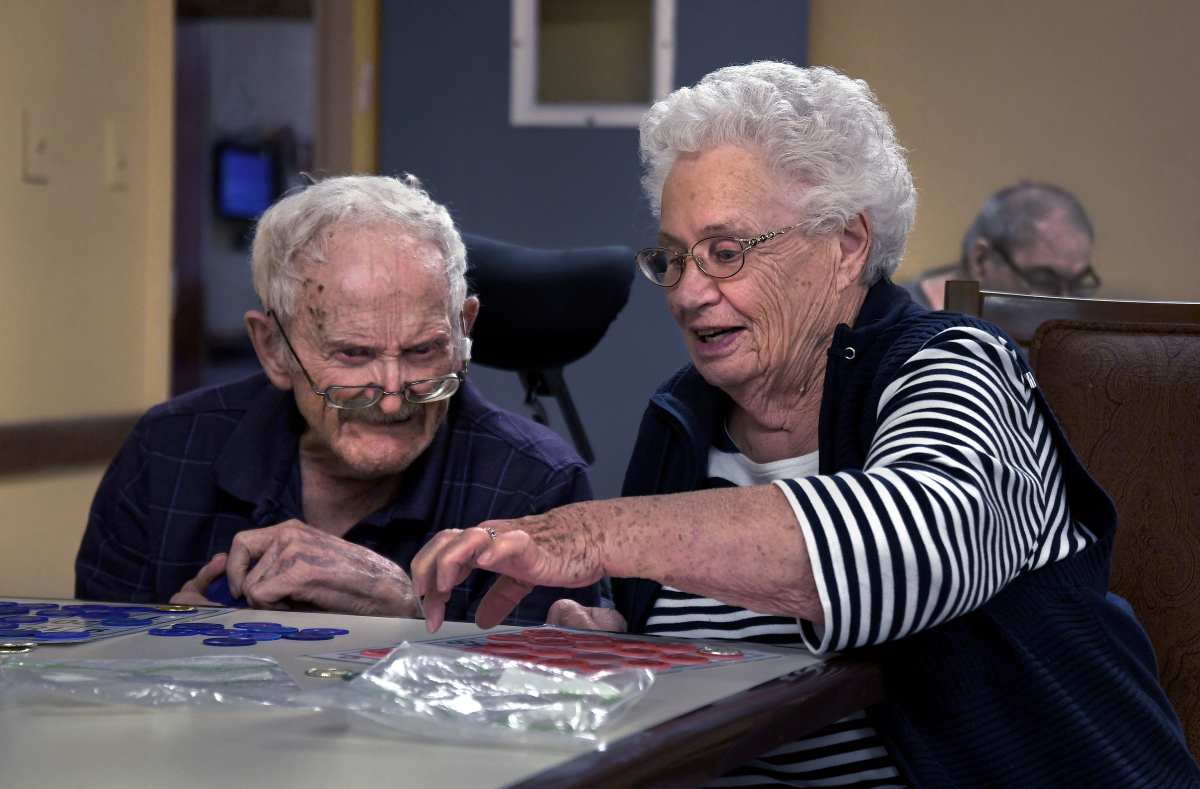
Marlene helps Earl play bingo at Emerald Nursing & Rehab, his new care home. She now faces long trips to see her husband. MUST CREDIT: Washington Post photo by Michael S. Williamson

Marlene helps Earl play bingo at Emerald Nursing & Rehab, his new care home. She now faces long trips to see her husband. MUST CREDIT: Washington Post photo by Michael S. Williamson

It had been 10 days since her last visit to see him, the longest they’d been apart in 63 years of marriage. He had Parkinson’s disease, which made it impossible for him to talk on the phone. She’d called the nursing staff for daily updates, and they said her husband seemed quiet, and he was losing his appetite.

“Why is it still so bad out here?” Marlene asked. Her feet skidded on the ice, and she wrapped her arm around her daughter’s shoulder as they moved closer to the car.

“Maybe it would be easier in a few hours, once the sun warms up,” said her daughter, Deb Kennedy, 51.

“No. I’m at the end of my rope already,” Marlene said. “Poor Earl’s probably wondering if we left him alone down there.”

In the first months after her husband’s fall, Marlene had helped Earl Kennedy move into a nursing home three minutes from their house in Broken Bow, a town of 3,000, close enough that she could visit him twice a day. But then that nursing home went bankrupt and closed in May, one of more than 260 rural nursing facilities across the country to shut down for financial reasons in the past three years, sending another family on a desperate search for the basic medical care that is disappearing from rural America.

Marlene tried to get Earl into the only other nursing home in Broken Bow, but that facility had managed to stay solvent in part by limiting the number of residents on Medicaid, as Earl was, because the federal program pays nursing homes in Nebraska about $40 less per day than the cost of providing care. The nursing homes in Ainsworth and Minden had already closed, and the one located next to a grain elevator in Callaway was running a waiting list. The best option Marlene could find was a shared room in the town of Cozad, more than 50 miles away down remote two-lane roads, and Marlene had been making the trip back and forth several times each week ever since.

This time, Deb had offered to drive her, and they rode away from the single-story house where Marlene and Earl had raised four children, and then past the grocery store where he had stocked shelves for 47 years. They continued beyond the feedlots on the outskirts of town, dense with cattle covering the hillsides. The road narrowed through a maze of cornfields. Frozen snow crunched beneath the tires and wind beat against the windows as they drove for miles without seeing another car.

“There’s a dip coming up here,” Marlene told her daughter, as the road climbed over a frozen creek.

“Where? I don’t see it.”

“Believe me. It’s there,” she said. “I’ve done this enough to know.”

She and Earl had rarely traveled outside of Nebraska, and they’d never been on an airplane. Many of their trips together in recent years had been medical trips, the escalating cost of a life spent in rural America, which in the past decade has lost at least 250 maternity wards, 115 hospitals, 3,500 primary care doctors, 2,000 medical specialists and hundreds of nursing homes. Marlene and Earl had traveled together to Lincoln for a heart operation, Kearney for an ankle, Grand Island for a hip, Omaha for corneal transplants, and then finally to Cozad in the back of a nursing home transport van for what Marlene feared would be Earl’s final trip. He was almost 88, and he could no longer walk or eat solid foods. Marlene had already paid for their adjacent cemetery plots in Broken Bow, where Earl had spent his entire adult life, but there was no place left in town where he could live safely until he died.

Deb slowed to pass a tractor. Marlene waved to the driver and then stared out the window, where rolling hills went on for miles. The prairie was empty except for hay bales and a few pieces of farming equipment left out in the snow.

“You all right?” Deb asked. “You seem quiet.”

“This drive always feels long,” Marlene said. “You spend your whole life tied up right next to somebody, and then you don’t get to be there for the hardest parts. It doesn’t seem natural.”

“You didn’t have a choice,” Deb said.

“No, but that doesn’t stop me from worrying about him,” Marlene said, because that was what she’d been doing for much of the past week and a half as she waited for the weather to improve. She’d worried that Earl’s bed was pressed too close to the window on subfreezing nights, and that the khakis she’d bought for him to wear weren’t thick enough, and that he was losing too much weight to keep himself warm, and that if he wasn’t warm he wouldn’t be able to sleep. She’d worried about what he might be doing if he wasn’t sleeping, since his eyesight made it difficult for him to read or watch TV or do much of anything except move back and forth from his bed to his wheelchair, in which case 10 days might have felt to him like forever. She’d worried he felt confused by her absence, or upset, or scared, or even abandoned.

“I’d be with him every day if I could,” Marlene said. “He knows that, right?”

“Of course. He knows we all want to be there,” Deb said. She drove by a large grain elevator and turned into the town of Cozad, parking in front of a small nursing home. She opened the passenger door and reached down to help her mother out of the car. “I bet you’ll feel better once you get a chance to visit with him,” she said.

“I don’t like being a visitor,” Marlene said. “I’m not a visitor to him.”

– – –

They walked down a tiled hallway with fluorescent lighting to a small room with an American flag taped beside the door. Marlene stepped into the front half of the room, which for the past 15 years had belonged to Earl’s new roommate, Oscar. He waved from his wheelchair, and then Marlene pulled back a curtain to reveal the back half of the room, where Earl was in the same position as she’d last seen him, 10 days earlier. He sat in his wheelchair with his body bent over to the right, wearing a baseball cap on his head and a kerchief to protect his shirt. He faced a TV that wasn’t on and a window with a view of snow-covered recycling bins. Marlene put her hand on his shoulder and leaned down to kiss his forehead.

“I missed you, Earl,” she said. “I missed you so bad I couldn’t stand it.”

He smiled at her and nodded. He reached over to his bed and picked up a holiday card he’d received from one of their great-grandchildren. He’d shown it to Marlene on her last visit, and now he handed it to her again.

“Isn’t that something,” she said, rubbing his back, pulling over a chair until it was pressed right up against his. She set the card down and rested her head against his shoulder.

“I missed you, Earl,” she said again. “Did you miss me?”

“Well,” he said. His lips tried to form more words, but they wouldn’t come. He’d been working with a speech therapist to fight back the advance of Parkinson’s and maintain his ability to eat, swallow and speak, but lately Marlene thought he had fewer good days than bad. She leaned in and tried to read his lips, smiling at him, waiting for him to talk as she rubbed his shoulders. His mind was still sharp, and some days his sentences came more easily as time went along. She believed the kind and respectful thing to do was to stay patient and wait through the silence, until after a few moments of watching Earl struggle, she decided the kinder thing was to break it.

“I wanted to come just about every day, but this weather had other ideas,” she told him. “You missed me, though, Earl. Didn’t you?”

“Well,” he said again. He smiled and reached over to wrap his arm around her shoulder.

“Yeah, I knew it,” she said. “You missed me. And what all did I miss here?”

“Well, the usual,” he said, beginning to find his voice. He pointed out toward the weekly schedule that was posted on the wall: a resident social hour at 8 a.m., three pureed meals in the cafeteria each day, bingo on Wednesdays and Fridays, Bible study on Tuesdays, “Wheel of Fortune” in the community room each night. Five residents had died in the past few weeks, and each time the nursing staff had made up the bed with a red rose and a copy of the same poem on the pillow: “I am home in heaven, dear ones; Oh so happy and so bright!”

“I suppose you didn’t miss much,” Earl said. “Life in a rest home. We rest.”

Marlene laughed. “You never were much of a complainer,” she said.

“No,” he said. “I guess not.”

They sat together holding hands as Marlene straightened Earl’s hat and smoothed the wrinkles out of his khakis. Sometimes during their visits, she took him into the cafeteria to play board games or read to him aloud from Philippians, but they spent most of their time together in silence.

“I like sitting with you like this,” Earl said.

His half of the room was barely large enough to fit a bed, a chair, and a handful of mementos. There were photos on the wall of his friends, his grandchildren, and his great-grandchildren, many of whom lived near Broken Bow and were too far away from Cozad to make regular visits. There was a prayer book from the country church where he’d met Marlene in 1954, and a few awards from the grocery store where he’d started out making $60 a week and then stayed on for nearly five decades.

“A life lived right,” read one of those employee plaques, which the store had given to him to commemorate his retirement at age 76, and Earl believed that declaration to be true. He’d raised four successful children, taught Sunday school, worked at the store six days each week, and come home most afternoons to eat lunch with Marlene. Their family had never earned more than $35,000 in a year, but somehow they had managed to send the children to college, stay out of debt, pay off their house, and even build up some savings – most of which had vanished in less than two years to pay for Earl’s nursing care in Broken Bow.

After that he was forced to rely on Medicaid, which meant that like most rural Nebraskans, he was dependent on a nursing system that was collapsing and scattering the poorest residents across the plains. Some of his friends from the home in Broken Bow had ended up in Omaha, Wyoming or North Dakota, and Earl had been moved out of a town where he knew almost everybody to a place where he knew almost nobody, and where the one constant was Marlene.

“It’s getting to be that time,” she said, as she looked out the window. They’d been sitting together for a few hours. The sun dipped down toward the cornfields, and the wind picked up and started whipping snow off the ground. Soon it would be dusk, when the roads started to refreeze and deer began to dart across the prairie.

“You should go,” Earl said. “I’m okay.”

“Another minute,” she said. She held his hand, and she thought she could feel it beginning to shake. She’d noticed that sometimes his Parkinson’s symptoms seemed to worsen at the end of their visits. “I’ll be back soon,” she said. “The weather coming up looks pretty good.”

“When you can,” he said. “I’ll be all right.”

“Soon,” she said again.

“Well,” he said. He patted her arm. He tried to say something more, but his hands were shaking harder now, and the words weren’t coming. Marlene leaned in and waited, watching his lips. “I’m okay,” he said again. “It’s okay,” he said, until finally Marlene squeezed his hand, forced herself up, and started walking out toward the car.

– – –

Earl watched out the window as the sky turned dark. His room was quiet, but in the hallway he could hear the sounds of oxygen machines and beeping call lights. Nurses wheeled residents into the cafeteria for bingo, and the food staff prepared creamy potatoes for dinner.

By all appearances, the nursing home was a place of routine and stability, but in fact it was facing the same financial pressures that had shut down 31 nursing homes in Nebraska in the past several years. A few months before, it had come within days of being the 32nd, after failing to meet payroll and making plans to transfer all 65 residents. The facility had been rescued out of bankruptcy at the last moment by a new ownership group from New York, and now the staff was trying help the nursing home save money however it could.

Lately, one strategy involved making trips to the shuttered nursing home in Broken Bow to salvage whatever supplies were left inside.

“I’ll be back in a few hours,” said Kiley Goff, the head administrator in Cozad, as she left a staff meeting and walked out to her truck to make her fourth trip to Broken Bow in the past month. Her bosses had purchased the building there, given her a key and allowed her to take whatever she needed for the nursing home in Cozad, which turned out to be almost everything. Their facility was almost 70 years old, and some of the rooms still had hand-crank medical beds. For one of her trips to Broken Bow, she’d rented a U-Haul and hired teenagers on the local high school wrestling team to help her load it with a dozen electric beds, a few couches, a washer and dryer, wooden doors, a bathtub, a fireplace, wall art and hundreds of pounds of linens.

This time she was hoping to find water pitchers, dishware and holiday decorations. “Any little thing we find is something we don’t have to buy,” she said.

She was a trained speech pathologist who had recently switched to management, and she’d spent the past year learning the difficult math of nursing home finances. The Medicaid reimbursement rate in Nebraska and most other states had stayed relatively flat for the past several years, even as medical costs rose by more than 20 percent. Her nursing home in Cozad received $152 per day for each Medicaid resident, far short of the $200-per-day cost of providing care. To make up for that loss, nursing homes typically charged much higher rates for people paying with their own money, a strategy that worked in urban areas where about half of residents could afford to pay out of pocket. But in rural Nebraska, only 35 percent of nursing home residents had money to pay for their own care, and in Cozad, it was less than 20 percent.

The result was that urban nursing homes had been able to remain relatively stable even as care disappeared from disproportionately older, poorer and rural areas of the country, where an elderly population that was projected to double in size over the next 20 years would have fewer places to go.

Goff drove by the feedlots on the edge of Broken Bow, stopped at the railroads tracks for a passing coal train, and then parked at a low-slung building across from a hardware store. Snow piled against the doorway and a broken-down medical van sat out front. She pushed open the front door and light streamed into the building. She could see down a long hallway, where medical lights flashed red against the walls and a broken fire alarm kept going off.

The nursing home had emptied out within just a few weeks in May once the closing was announced, as 46 residents and 65 staff members scrambled for places to go, but everything else had remained inside. There were wheelchairs in the front lobby, Bibles left open in the chapel, and plastic Easter eggs scattered in the hall. Goff grabbed an empty plastic bin from the front closet and started walking through the facility, opening closets and drawers to look for holiday decorations she could use in Cozad.

She found a stuffed Santa and some holiday lights in a closet. She went through the physical therapy room, the beauty parlor, and then into the secure memory care wing. “A Safe and Happy Forever Home,” read a framed cross-stitch near the entrance to what had once been the area for residents with Alzheimer’s or dementia, who tended to thrive on consistency, and who had since been uprooted to places all over Nebraska without understanding where or why.

Goff found a small Christmas tree in a closet and a package of unopened tablecloths in the cafeteria. Her phone rang, and she set down her bin to answer.

It was one of her staff members in Cozad, wanting to know when she’d be back. “I’m almost done,” she said. “It always feels weird in here.”

She pressed the phone to her ear, carried the bin of decorations out to her truck, and locked the nursing home’s front door.

“There’s still so much good stuff wasting away in here,” she told her employee. “We’ll need to come back with the trailer.”

– –

A three-minute drive away, in a house at the center of Broken Bow, Marlene was sorting through her own belongings, trying to compile the story of her last 63 years with Earl, just in case. She wanted to pick out photos for his funeral program. She wanted to be prepared with a eulogy. She needed to call their bank and switch all of their joint accounts into her name.

“You’re smart to prepare early,” a banker was telling her now, on the phone. “This way you can do some of it together.”

“Actually, he’s not here,” she said. “It’s just me.”

The walls of her living room were decorated with photos of the grandchildren whom Marlene sometimes felt guilty visiting without Earl, and mementos from the church she didn’t like attending without him, and plaques from the grocery store where she still sometimes expected to see him when she shopped. One picture showed Earl at his retirement celebration, when some former co-workers came back from out of state and the store offered free cake to the entire town. A few hundred people had come through the store that day to say goodbye. “A small town turns out to support one of its own,” read one local news story about that day, but on this day, Marlene was thinking about the things Broken Bow could no longer support, and the closed nursing home, and all of the people Earl was no longer able to see. Aside from their family, she thought he’d had two visitors in the past six months.

She turned on the TV to check the weather report. She put her heart medication into her purse. She inched down the driveway and into their 20-year-old car.

Earl had usually been the one who drove during their marriage, but Marlene had put 14,000 miles on the car in the past several months. She drove out of Broken Bow and past the feedlots on the edge of town. She turned through the cornfields. She went over the frozen creek. She slowed for the dip. She waved to a tractor. She went by the grain elevator. She looked out the front windshield at the rolling prairie and counted off the long miles, until she was parked in front of the nursing home and walking into Earl’s room.

She saw him looking out the window and waiting in his chair, where she’d left him a few days earlier and would soon have to leave him again.

“I’m here,” she said, putting her arm on his shoulder. “I’ll stay for as long as I can.”

As clear as glass: even those with dry skin can achieve a smooth, glowing look

#ศาสตร์เกษตรดินปุ๋ย : ขอบคุณแหล่งข้อมูล : หนังสือพิมพ์ The Nation

https://www.nationthailand.com/lifestyle/30379529?utm_source=category&utm_medium=internal_referral

As clear as glass: even those with dry skin can achieve a smooth, glowing look

Dec 17. 2019
By Thanisorn Thamlikitkul
Special to The Nation
228 Viewed

All the rage in South Korea and growing in popularity in Thailand, “glass skin” in the term used to describe facial skin so smooth, glowing and pore-less that it’s as “clear as glass”. The trend is likely to spread even further next year thanks to the advent of new technology in skin hydrating injectables this year. Here’s how to achieve the look.

As we age, our skin undergoes two important changes – loss of elasticity and loss of hydration. These changes cause our skin to become drier and the pores become more visible. One effective way to combat and slow these effects of ageing is to restore hyaluronic acid to the skin. Hyaluronic acid is a naturally occurring substance in skin that keeps it hydrated and youthful. With age, our hyaluronic acid decreases and that’s where treatment comes in.

Current synthesized hyaluronic acid or HA is designed to come in soft, small molecules and viscous liquidity. A dermatologist will administer tiny droplets of this hyaluronic acid into the dermis or just under the dermis using a serial puncture technique. This technique allow the HA to disperse evenly in the dermis. HA will provide hydration and stimulate new collagen, resulting in firmness, luminosity and potentially reduced pore size. It will improve overall skin quality and enhance the “glass skin” appearance as well.

A recent study published in the journal “Dermatology Times” revealed a 91-per-cent satisfaction rate among treated patients in clinical trials. It’s said that patients like the long-term result (approximately up to 9 months) as well as the idea of internal moisturizer for smoothness, hydration and texture. However, if you want to achieve smoother, dewier and more glowing skin, it is important to only visit clinics with dermatologists highly trained in this treatment.

Siriraj to produce first mite allergen vaccine in Asean

#ศาสตร์เกษตรดินปุ๋ย : ขอบคุณแหล่งข้อมูล : หนังสือพิมพ์ The Nation

https://www.nationthailand.com/lifestyle/30379303?utm_source=category&utm_medium=internal_referral

Siriraj to produce first mite allergen vaccine in Asean

Dec 11. 2019
By The Nation

1,405 Viewed

The Siriraj Dust Mite Centre for Services and Research recently said it would produce dust mite on semi-industrial scale which will further be used as the initial substance in mite allergen vaccine, after more than 20 years of research.

They were granted mite allergen vaccine certification by the Thai Food and Drug Administration on October 31. The mite centre now provides the know-how to the private sector and aims to become the central hub for R&D on dust mite allergy in the Asean region to produce more mite allergen-friendly products or suggest improvement or advice to the private sector or nongovernmental organisations, such as anti-mite mattress and air-conditioning.

Prof Dr Anchalee Tungtrongchitr, the director, said that “Another service provided here is anti-mite effectiveness in product testing, to protect consumers from pseudo-science-backed products.”

The Okura Spa goes coconuts for 2020!

#ศาสตร์เกษตรดินปุ๋ย : ขอบคุณแหล่งข้อมูล : หนังสือพิมพ์ The Nation

https://www.nationthailand.com/lifestyle/30379265?utm_source=category&utm_medium=internal_referral

The Okura Spa goes coconuts for 2020!

Dec 10. 2019
By The Nation

1,376 Viewed

Treat tired skin and start the New Year feeling great with The Okura Spa’s blissful Nourishing Coconut Retreat package, which starts with a 30-minute body scrub formulated with a therapeutic mix of young coconut pulp and virgin organic coconut oil combined with exfoliating Epsom salts and sugar.

Salt and sugar have been used for centuries in traditional therapies to heal and promote healthy skin and in this wonderfully relaxing treatment, the fine grains of the Epsom salts and sugar exfoliate skin with great results. They also have a detoxifying effect and help to balance excessive acid levels in the epidermis.

After the body scrub comes a soothing 60- or 90-minute massage also using virgin organic coconut oil extracted from the kernels of young coconuts. Coconut oil has softening and moisturizing properties and is easily absorbed. It contains lauric and caprylic acids, which have excellent anti-bacterial attributes and have been shown to have curative properties that help skin suffering from light sunburn to heal quickly. Taken in combination, this is a treatment guaranteed to repair and refresh tired skin and awaken the senses.

The Nourishing Coconut Retreat package is available daily at The Okura Spa from 10am to 10pm from January 1 to March 31 and costs at Bt3,800-plus for 90 minutes and Bt4,200-plus for 120 minutes

The Okura Spa is on the 25th floor of The Okura Prestige Bangkok

Thailand sees first case of pneumonia from e-cigarettes

#ศาสตร์เกษตรดินปุ๋ย : ขอบคุณแหล่งข้อมูล : หนังสือพิมพ์ The Nation

https://www.nationthailand.com/lifestyle/30379200?utm_source=category&utm_medium=internal_referral

Thailand sees first case of pneumonia from e-cigarettes

Dec 08. 2019
By The Nation

77 Viewed

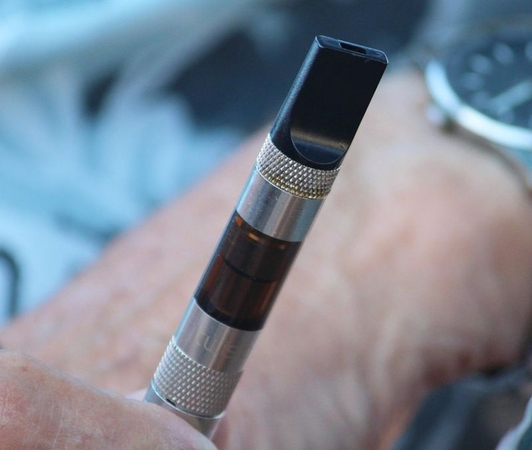
E-cigarettes have been blamed for breathing problems in a 48-year-old male patient admitted to a private hospital, Dr Asadang Ruaycharin, deputy director-general and a spokesman for the Department of Disease Control, said yesterday (December 7).

The man told doctors he had started to smoke e-cigarettes containing marijuana on November 3 and soon developed shortness of breath, fatigue, fever and chest pain. On November 15, he was admitted to a private hospital then transferred to another private hospital on November 18 after lab tests revealed no lung infection but symptoms consistent with pneumonia from electric cigarette use, according to the criteria set by the US Centres for Disease Control and Prevention. He was treated with intravenous steroid therapy and has now been sent home.

Yoga in prison: another life choice for inmates

#ศาสตร์เกษตรดินปุ๋ย : ขอบคุณแหล่งข้อมูล : หนังสือพิมพ์ The Nation

https://www.nationthailand.com/lifestyle/30378981?utm_source=category&utm_medium=internal_referral

Yoga in prison: another life choice for inmates

Dec 02. 2019
By The Nation

2,261 Viewed

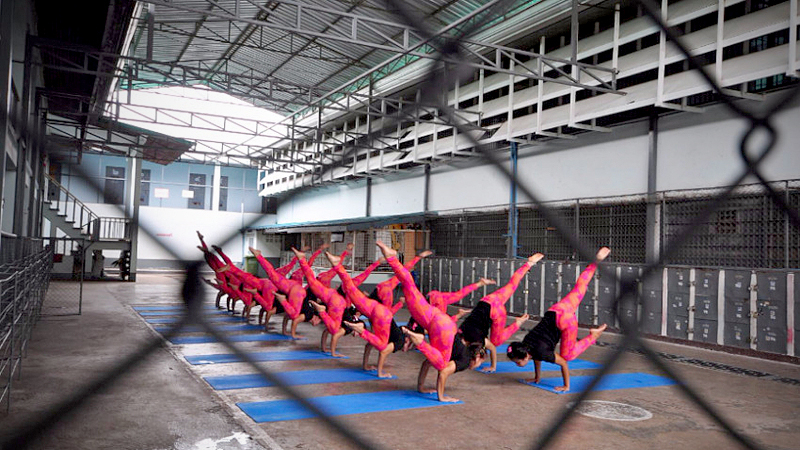
Stretching and bending on the mat, one female prisoner says it is the only time she feels free and no in pain.

Prison life in by its definition limiting and yes, painful, too as the minutes tick by slowly with little to occupy the mind or body. For the fortunate few, there are a number of volunteers doing projects in prisons including art activities, knitting, making furniture, making Buddha statues, all activities that could lead to income-earning work once they are released. There’s yoga too though that appears to be less-accepted on the outside

The Prison Yoga Project is being run by Thirawan Watthanothai, former dean of the Faculty of Architecture, Rajamangala University of Technology Thanyaburi (RMUTT) and introduced in 2011 at Ratchaburi Central Prison before expanding to other prisons. She also plans to initiate a yoga practice project for men in prisons.

After more than 8 years of running her yoga programme in prisons, Thirawan is determined to continue and expand, noting that it has been shown to be useful to the inmates.

“Ninety per cent of the inmates who come to practise yoga have their own unique abilities and what we need to do is encourage society to accept them once they are released. Most yoga studios refuse to give them work even if they pass the test. I want society to give people an opportunity. There was a case of a female inmate in Udon Thani, whose foreign boyfriend helped her move to Switzerland an even opened a yoga studio for her. She was proud that she learned yoga at the prison, “said Thirawan who started to learn yoga with an Indian instructor after overworking, feeling stressed and unable to sleep.

The idea to launch yoga in prison came about after she helped a fellow teacher prepare a report on life in prison and discovered the levels of stress from which female inmates suffer. She felt yoga could be the answer and set off on a journey to get her idea accepted. It took a while but Thirawan was determined.

“We ask the officers to select young people serving long sentences for yoga practice. If we want to mould them into yoga teachers, they must study from 9am to 2pm every day for several months. We saw how it improved not just their state of mind but also helped with lowering blood sugar. After three weeks, the body adapts and the students want to continue. We selected 25 people to teach yoga, most of them with 20 years to run on their jail terms. Prison administrators and staff cooperate to organize morning yoga classes for female inmates. ”

India, America, England, Australia and Scandinavia have also expressed interest in using yoga as part of their jail rehabilitation programmes and studies have shown that prisoners who have been practising yoga enjoy positive physical and mental or even spiritual health. Research in US prisons has found that yoga helps with concentration, makes the body and mind relax and reduces stress and anxiety.

Patcharee Mungmai, 30, a former inmate was given the opportunity to teach yoga to other inmates. She said that yoga is very helpful to her because while she was in prison, she almost lost her mind.

“In prison, the scariest thing is not being beaten but the possibility of going insane. Yoga really made us more conscious. I was sentenced to 16 years and 8 months, but only served 8 years and 1 day. I was arrested during my 4th year in university as part of a drug round up,” she says. Today she is a speaker on drug prevention at the probation office in Ubon Ratchathani Province.

What is Jin Wellness?

#ศาสตร์เกษตรดินปุ๋ย : ขอบคุณแหล่งข้อมูล : หนังสือพิมพ์ The Nation

https://www.nationthailand.com/lifestyle/30378957?utm_source=category&utm_medium=internal_referral

What is Jin Wellness?

Dec 02. 2019
By Thonburi healthcare group.
The Nation
898 Viewed
We are at the Thonburi Bamrungmuang Hospital, the flagship of Thonburi healthcare group.

How is it different from other hospitals in the network.

Dr.Thanatip: In our health group, we have 8-9 hospitals. However, this new hospital is especially designed for medical tourism. There are many centres of excellence. Today, we are taking you for a tour of Jin Wellness

And now we are at Jin Wellness clinic. There is another doctor here who will provide us with information.

What is Jin Wellness?

Dr Om: the Jin Wellness was founded to promote health and solve health problem of patients who wants to have a well-being life. A short definition is ‘The best of what you are’. For example, if you had a chronic disease and have reviewed your life that you have to change your diet, sleep behaviour, etc, you need help, please come to us. We will provide care and advice for you by finding the best approach to help you recover.

That’s great. Who should come to wellness clinic?

Dr.Om: I would like to say everybody.

Dr.Om: everybody with a mindset for a well-being life. When I ask people to raise their hand if they see themselves as a strong person. There were many people, even when they were not sick, felt their health wasn’t that good …

Well if I were one of them, I would too.

Dr.Om: Some had chronic fatigue syndrome. Some had a negative result in blood lab test or imbalance health problem. All of these problems could be solved through wellness. This help maintains their life quality during recovery and making life better.

It means whether you were sick or still strong, you can come to this clinic

Dr Om: even when you are not sick, you can come for a health check-up. We have a six-step health analysis which is one of our wellness programmes and the highlight. Before any analysis, we have to understand the patient’s lifestyle, mental health and diet portion which would affect the blood test. We found that it took many visits before the patient is familiar with their doctor and tell the truth which helps in the analysis. Sometimes it took hours before they started to open up. This programme is a short-cut for understanding patients deeply and truly in order to solve the problems.

Like getting doctor and patient to know each other and find the same tune.

Dr Om: Yes. They have to understand each other first. Patients should tell their intention. Some want to improve their performance such as pilot or athletic who are already in good condition but want a better record. They want to enhance their ability.

Dr Thanatip : Some want to climb mountains. Some want to visit the north pole.

Dr Om: Do you believe that a senior person, aged 70, still want to go hiking more. Then, we have to design a nutrition programme including IV Nutrition and nutrition calculation, like daily proteins consumption or sleep hours to enhance their ability. Next group is people who are sick. They felt blue or sad, we will use the ‘enlight’ method. Enlighten the best of what you are. Some patients suffer from dementia and depression. Sometime, a caregiver could not find a way to help people, such as grandmother and grandfather, to have a well being or at least sleep enough at night, we will enlight them.

They will continue to get better slowly but we will help with they could do. Like a support team. After entering six analysis programmes to know their status and performance, they can step further to the wellness check-up programme. We also have a programme to take care of the brain such as brain health check-up. Since our main strategic focus is on the hospital, We’re going to teach our staff on how to properly eat and workout to change their lifestyle. More, you can invite your relatives here for a better understanding of their health problems. Another programme is the Wellness heart programme. We will coordinate with cardiologists to study heart performance since we have to be highly concerned about it. Many have sudden death syndrome even at a young age. Our patients mainly want to check for sure. Next is the Wellness check-up programme for immune system. Nobody wants to have cancer. Buy some already got one but don’t know how to deal with. We have a programme to find out White blood cells’ performance which can eliminate cancer cells. Also there is the programme we designed for allergy and intestine check-up for people allergic to something or have poor digest systems. It is designed for kids who grow slow and elderly persons who have digestion problems. This is a programme specially designed for intestine care.

So there are four health check-up packages.

Dr Om: Yes. Four health check-up packages that we have already launched. According to my experience in the field for more than 10 years, these are major care that could help many patients. Whatever package you should, it will help you to have a well being for life.

You did mention IV Nutrition. What is it?

Dr Om: IV Nutrition is the process of administering nutrients into a vein directly into the bloodstream. The one we use in the programme is verified through research and very safe. It will increase whatever is lacking in the patient such as vitamins. Some need inflammation treatment. Some need to balance their digestion systems. We use this to increase the effectiveness of treatment .

This is one of the service provided here?

Dr.Om: Yes. One of them.

Dr Om: Sure. We have a wellness check-up – the six steps analysis which is a programme to find health problems. We also have IV nutrition therapy, acupuncture, therapeutic massage, and health discussion with doctor. Sometimes we provide art and music therapy workshop.

Can we talk to Dr Om directly.

Dr Om: Sure. Let’s talk to find out what do you need. When you found the problem then we would design a personal life wellness programme for you.

Dr.Thanatip: Yes. The concept of a clinic is to diagnoses the symptom, a doctor might give you medicine and mostly talk about the problem. However, our clinic in Rangsit area, the Jin Wellness clinic, is a large facility and wellness centre. Like a big resort with many facilities. There is Hydrotherapy where the pool can change water temperature. It is large enough for a wheelchair. And cooking class, music therapy, and Fitness centre. The target group is people who want to slow down and enjoy life.

Well that is all information we need about Jin Wellness clinic. Thank you for Dr.Om and Dr.Thanatip.

Flower-bedecked Rama IX Park hosting markets, music, soothsayers

#ศาสตร์เกษตรดินปุ๋ย : ขอบคุณแหล่งข้อมูล : หนังสือพิมพ์ The Nation

https://www.nationthailand.com/lifestyle/30378954?utm_source=category&utm_medium=internal_referral

Flower-bedecked Rama IX Park hosting markets, music, soothsayers

Dec 01. 2019
By The Nation

1,689 Viewed

The birthday of His Majesty the late King Bhumibol Adulyadej the Great is being commemorated all this week at his namesake park in southeast Bangkok.

King Rama IX Park in Prawet district is hosting its annual “Aram Ngam” Sunday (December 1) through December 10, daily from 8am-7pm.

The 500-rai park is a floral wonderland, adorned with hundreds of thousands of flowers and other ornamental plants including petunias, impatiens, verbena, vinca, hollyhocks, zinnia and many species from Europe.

Amid this natural beauty, a recreated “royal palace market” as it would have appeared in the early Rattanakosin Period is selling food and crafts “in the royal style”.

Handicrafts and dishes from each region of the country are on sale at both a dry market and a floating market.

There are cultural performances, DIY activities where you can make something creative to take home, and fortune tellers ready to study your personal horoscope and offer advice.

The park opened on December 5, 1987, in celebration of King Bhumibol’s 60th birthday.

It’s a wonderful place for picnics and exercise and interesting because of its botanical gardens, which have nearly 3,000 species of trees, shrubs, herbaceous plants, flowers, foliage and whole woodlots under academic study.

The park is open daily from 5am-7pm, with an entrance fee (Bt10 per person, Bt20 per van and Bt30 per bus) collected only between 9am and 5pm.

CPN, Mitsubishi Estate sign JV to make Central Village SE Asia’s top luxury outlet

ศาสตร์เกษตรดินปุ๋ย : ขอบคุณแหล่งข้อมูล : หนังสือพิมพ์ The Nation

https://www.nationthailand.com/lifestyle/30378774?utm_source=category&utm_medium=internal_referral

CPN, Mitsubishi Estate sign JV to make Central Village SE Asia’s top luxury outlet

Nov 26. 2019
Preecha Ekkunagul (Left), Yutaro Yotsuzuka (Right)

Preecha Ekkunagul (Left), Yutaro Yotsuzuka (Right)
By The Nation

1,390 Viewed

Central Pattana (CPN) and Japanese real estate developer Mitsubishi Estate Asia formed a joint venture on Tuesday (November 26) at Centara Grand, CentralWorld, to promote Central Village as Southeast Asia’s number one outlet.

Under the agreement, CPN is a majority shareholder with a 70 per cent stake in CPN Village, while Mitsubishi Estate holds the remaining 30 per cent.

The deal brings the total investment to Bt1 billion in the push to take Central Village – a 40,000-square-metre luxury outlet with more than 150 domestic and international luxury brands – to the next level with the goal of making it the best luxury outlet in Asean, a CPN press release said.

The outlet, which delivers an authentic luxury shopping experience to those in and around Bangkok, has succeeded in reaching its traffic target of 17,000 visitors per day, the press release said.

The first phase of Central Village has seen nearly 100 per cent of its luxury brand stores opened. Retailers are offering discounts on brand-name products, which are already 35-70 per cent off year-round. The outlet is also expected to promote tourism and trade between Thailand and Japan, with roadshows and the Thailand–Japan Expo.

Central Pattana president and chief executive Preecha Ekkunagul said the collaboration between CPN and Mitsubishi Estate Asia supports Thailand as a world-class shopping and tourism destination.

“The first phase of Central Village operates under the Bangkok luxury outlet concept,” he said. “Brands that have already opened their stores include Coach, Club21, Ermenegildo Zegna, Kate Spade New York, Kenzo, Max&Co, Michael Kors, Polo Ralph Lauren, and Salvatore Ferragamo.”

Mitsubishi Estate Asia managing director Yutaro Yotsuzuka said: “Our investment in this project is part of our effort to penetrate the Thai real estate market. We considered the following three factors when we decided to enter into this Central Village joint venture:

1. Thailand’s promising potential in terms of investment opportunities, infrastructure and tourism: Thailand enjoys the most progressive tourism growth in Asean. It is estimated that the number of travellers visiting Thailand in 2020 will continue to grow at about 4 per cent;

2. Our confidence in CPN as Thailand’s number one retail property developer: CPN is publicly traded on the Stock Exchange of Thailand. It is a leader in Thailand’s retail industry and the highest valued company in the real estate segment. It has managed to stay a member of the Dow Jones Sustainability Index for the second consecutive year as per the recently released DJSI World 2019 list and for the sixth consecutive year as per the Emerging Markets list;

3. The success of Central Village: the project is adjacent to Suvarnabhumi Airport, one of the busiest airports in Southeast Asia. Central Village is a completely new business model in Thailand. Its modern Thai village setting is a unique selling point among world travellers.”

Embracing state of the art technology

ศาสตร์เกษตรดินปุ๋ย : ขอบคุณแหล่งข้อมูล : หนังสือพิมพ์ The Nation

https://www.nationthailand.com/lifestyle/30378693?utm_source=category&utm_medium=internal_referral

Embracing state of the art technology

Nov 25. 2019
By Thonburi Bamrungmuang Hospital
The Nation
1,078 Viewed

We are here at Thonburi Bamrungmuang Hospital. There are many people here and the hospital looks trendy. What is the concept behind this hospital?

Dr Thanatip: Our network, Thonburi Healthcare Group, has many hospitals. We operate a large hospital in Bangkok and medium-sized ones in upcountry provinces. We also have branches in foreign countries — in China and Myanmar. However, for medical centre tourism we see this as the flagship hospital to accommodate foreign patients. We have also opened disease specialist centres such as Digital Dental Center, Wellness Clinic, Diabetes wound treatment centre — which attract many foreigners — to treat diseases needing specialist attention. They are located in the Bamrungmuang area where many Thai-Chinese people living. Bamrungmuang, Sampeng, Yaowarat and Worachak are in a two-kilometre radius from Bangkok’s famous China Town. It is the main patient base for the Thonburi group as people cross the Memorial Bridge or Somdet Phra Pinklao Bridge can visit our hospital.

Vehicles can also easily access the hospital, right?

Dr Thanatip: The new location is huge with plenty of parking lots. The design is modern.

Talk about the number of patients — both Thais and foreigners?

Dr Thanatip: Our patients are mostly foreigners. They are from the Middle East, Western countries and some from China. Out Western patients come for dental treatments while Middle Eastern people come to treat diabetic wounds.

So, where are you going to take us to?

Dr Thanatip: I will take you the Digital Dental Center lab. We can see how digital technology helps in dental treatments, especially in cases considered very difficult, such as implant placement. For foreigners, it used to be painful — the expense and the long time it took time, about two weeks. However, with 3D printing getting better and more widely accepted, we bought this high technology equipment from Germany.

MC: Which means implant placement can be done in one day?

Dr Thanatip: Exactly.

Then let’s see what it looks like.

One-day dental care

by Dr Vorawee Laovoravit:

We are at the dental centre lab of Thonburi Bamrungmuang Hospital. What kind of treatments do you provide here?

Dr Vorawee: We provide all treatments — from cleaning, polishing, teeth fillings, tooth extraction to implant placement and root canal treatment. We offer the entire range of dental treatments.

What is the highlight of the services you provide here?

Dr Vorawee: Well, we have brought the latest technology to treat our customers better. We also have our own lab to create material for dentistry use. We cover everything from dental clinic to laboratory.

However, the most talked about feature is the one-day dental care. Could you please explain?

Dr Vorawee: In the past, when we needed to make a crown first, it took a really long time.

Many days.

Dr Vorawee: Yes. You had to meet the doctor many times to continue the treatment. However, with the newest technology, we have shortened the crown-making process to one day.

We can complete the process in one day? If you come in the morning, you will go home in the afternoon? Can you tell us about the process?

Dr Vorawee: We have high technology equipment such as a 3D cavity scanner. When we drill the teeth and prepare to install a crown, we will use this equipment to scan our patient’s cavity. Usually, when scanning is finished, we used to send the data to other dentistry labs but since we have our own lab, we can send it out to the lab instantly. The lab uses a computer for analysis and shapes in the dental piece, increasing accuracy.

Less procedure but more accuracy. This is the crown-making process. What about the implant placement process? I heard many patients come here for treatments, especially seniors. Could you give us more information?

Dr Vorawee: We have a one-day implant placement service but it is only available for simple cases or for patients who have lost the front teeth. When they have to participate in an important event, we can create new front teeth for them in a day.

This also can be done in a day if you come early in the morning. How about the root-canal treatment process? Is it complicated?

Dr Vorawee: We have to prepare for dental implant surgery. First, we have to check if the tooth has been completely extracted and then arrange the implant placement. The placement that replaces the natural tooth root is made of titanium. After the implant is placed in the jawbone, we can place an abutment and a permanent crown.

Can everyone go for implant placement or is it on a case by case basis?

Dr Vorawee: It is case by case. We have to check first if you have enough bone mass volume for implantation. In the case of insufficient bone volume, patients have to increase bone volume first.

As Dr Vorawee said before, this dental centre has brought many new technologies. Could you provide us an example?

Dr Vorawee: We have a 3D oral cavity scanner and 3D X-ray technology. The previous technology used to give us a 2D result, which did not help an examination in detail. The 2D result comes on paper with tooth images from each view while results in 3D can be rotated to see it from every angle.

Then we can see it at 360 degrees.

Dr Vorawee: Correct, 360 degrees. We also take each layer out to see what happens inside the tooth providing a more accurate examination.

There is another instrument called microscope.

Dr Vorawee: It is an instrument that used to observe small objects. We usually used it for root canal treatment. Patients with decayed tooth usually receive root canal treatment, which is for tooth that has decayed but cannot be filled, but at the same time does not need to be removed. Root canal treatment starts with the tooth opening to flushed out pulp and bacteria. Then it will be filled and sealed.

Microscope is like a magnifying glass, right?

Dr Vorawee: Yes. People usually think that tooth treatment is done in narrow areas with difficulty. Normally, we do them with our bare hands and eyes. With a microscope, the doctor can see the tooth area in more detail and make a better judgement.

What about the examination room?

Dr Vorawee: We have installed a system and located a server room. Every information and scanning result of our patients will be shared with every examination room. Patients can X-ray or have 3D scanned result in every room, and all the data will be uploaded to the server. The patient can 3D-scan in A room and see other doctors in every room.

If a patient returns for another treatment, the patient’s history and information is prepared in the server and is ready for use, right?

Dr Vorawee: Yes.

Today, Dr Vorawee will guide us to the highlighted area, the digital lab. What is its speciality?

Dr Vorawee: It offers high support to the dentist and dental technicians.

Interesting. let’s look inside then.


A 3D approach

Now we are inside the digital dental lab where some people are at work. What is this machine for?

Dr Vorawee: This is the 3D oral cavity scanner.

How does it work?

Dr Vorawee: It works like a camera and takes photos inside the cavity. It will take a small set of pictures then process them into a 3D model of the patient’s tooth.

What can we see?

Dr Vorawee: Everything. We can rotate the 3D model of the patient’s tooth. When we make a crown, we can retrieve information and scan the result from the server instead.

Can you provide overall information in this lab?

Dr Vorawee: Well, we have working space. After scanning the patient’s oral cavity, we will use the information to design the crown or plan the placement implantation by computer.

Another thing you mentioned is shaping the crown.

Dr Vorawee: Yes. The shaping station is in another room.

Can you explain the shaping process?

Dr Vorawee: We use cubed premixed material then put it into the machine that works like a grinder and lathe. It will slowly and accurately grind it into the tooth shape.

What are the placement and crown made of?

Dr Vorawee: The placement is made of titanium while the crown uses ceramic, which provides the yellowish-white colour like a natural tooth. We rarely use metal as a material.

You also mentioned the 3D printer in this lab.

Dr Vorawee: The 3D printer works like a normal printer but the outcome is 3D not 2D on the paper. After 3D scanning, the doctor who really needs to print out the result will bring the model of the teeth out.

Since the hospital owns the dental lab, it is much easier to work. How about the patient?

Dr Vorawee: They will receive faster service from examination to the dental price process since everything happens here. Secondly, the quality of the work is controlled by dentists as it was an internal work. Third, since the work is done by a computer, there is no scope for human error.

We have received much information from the dental centre at Thonburi Bamrungmuang Hospital. All technologies have been installed to give patients the best treatment. Our thanks to Dr Vorawee.