Rebound earns Thai Airways profit of THB3.92 billion in Q3
FRIDAY, NOVEMBER 11, 2022
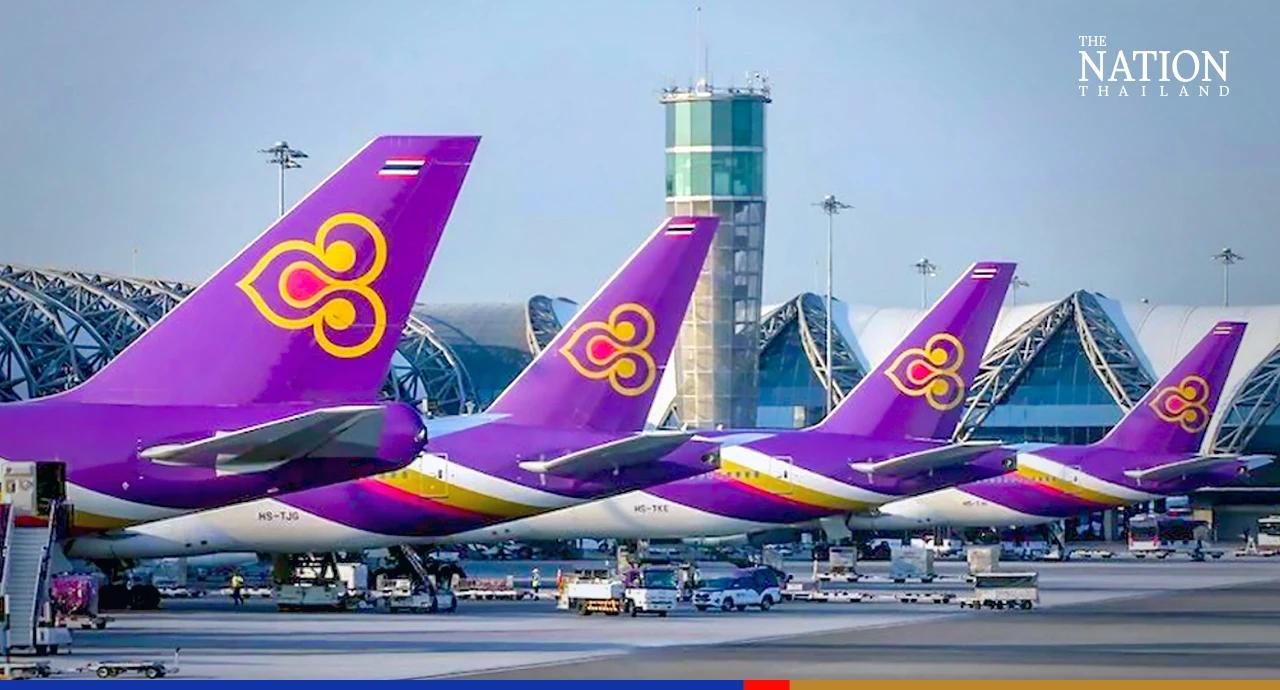
Thai Airways International (THAI) is back in the black now that tourism has started picking up.
The airline announced on Friday that it made 3.92 billion baht in profit in the third quarter of this year, compared to a 5.31 billion baht loss in the same period last year.
The national carrier said that it and its subsidiaries had recorded a revenue of 32.86 billion baht in the third quarter, up 582% year on year.
Revenue from passengers and cargo stood at 30.89 billion baht thanks to more frequent flights in the first half of the year to destinations, including London, Frankfurt, Chennai, Bengaluru, New Delhi, Mumbai, Lahore, Karachi, Islamabad, Hanoi, Ho Chi Minh City, Phnom Penh, Jakarta, Dhaka, Denpasar, Taipei, Singapore, Copenhagen, Munich and Zurich.
THAI has also reopened routes that were previously closed due to the Covid-19 pandemic such as Penang, Tokyo (Haneda) and Brussels. The airline boasted an average load factor of 77 per cent in the third quarter of this year, compared to 9.9 per cent in the same period last year.
The total expenses for THAI and its subsidiaries came in at 28.94 billion baht, up 186% from the previous year due to rising operational costs. The price of fuel has risen by 80% compared to the previous year and is responsible for 44 per cent of the operational cost, THAI said.
As of September 30, THAI and its subsidiaries had total assets of 183.29 billion baht, up by 22.07 billion baht from December 31, 2021. Total liabilities came in at 265.79 billion baht, up by 33.32 billion baht on December 31, 2021.
The shareholders’ equity, meanwhile, is in the deficit by 82.50 billion baht.
However, thanks to fast-growing tickets sales and EBITDA (earnings before interest, taxes, depreciation and amortisation) at over 2 billion baht per month, the company’s cash balance has risen steadily from 6.01 billion baht in March to 13.47 billion baht in June and 23.3 billion baht in September.
In October alone, THAI recorded an average 80.4% load factor, averaging 21,557 foreign passengers per day, which accounts for 30 per cent of total foreign arrivals at Suvarnabhumi Airport. The tally includes Thai Smile Airways passengers.
Rolls-Royce races to decarbonise aircraft industry with new technologies
FRIDAY, NOVEMBER 11, 2022
Picture this: if the aviation industry were a country, it would be the sixth-largest emitter of carbon dioxide in the world after China, the United States, India, Russia, and Japan, according to a recent study published in the journal Environmental Research Letters.
Picture this: if the aviation industry were a country, it would be the sixth-largest emitter of carbon dioxide in the world after China, the United States, India, Russia, and Japan, according to a recent study published in the journal Environmental Research Letters.
The study indicates that aviation is responsible for around 4% of human-caused global warming, and if current trends continue it will be responsible for an increase in warming of about 0.1 degrees Celsius (0.2 degrees Fahrenheit) by 2050.
It is estimated that 4.3 billion passenger journeys were made in 2018 before the Covid-19 pandemic struck. While the pandemic halted most global travel, and aviation traffic fell by 45% in 2020, it’s also true that earlier CO2 emissions have remained in the environment for hundreds of years. They don’t just disappear.
While this recent disruption in air travel may have slowed the advance of warming by around five years, that is of minor value compared with aviation’s total climate impact on the world.
Aviation engines undeniably play a huge role in climate change and its effects.
Some researchers do not believe that zero-carbon emissions can be achieved with aviation fuels, but a major aviation engine maker, Rolls-Royce, is a firm believer that “sustainable aviation fuel (SAF)” is among the technological breakthroughs critical to achieve a net-zero future by 2050.
“Using sustainable aviation fuel to power gas turbine engine rather than jet fuel used today will dramatically reduce CO2 emissions,” Dr Bicky Bhangu, Rolls-Royce President for Southeast Asia, Pacific and South Korea, based in Singapore, said during a recent visit to Bangkok.
Without doing anything, the curve (see the grey line in the chart) will keep rising, he added.
Rolls-Royce realises that most of its products contribute to some of the most carbon-intensive parts of the economy, and the company is choosing to make all its products SAF-compatible and using technology to drive incremental improvements in efficiency.
On the one hand, the company has existing products with a long lifecycle that need to be altered to be compatible with the net-zero requirement. On the other hand, it must come up with new technologies to drive its growth amid heated competition from other engine makers.
The British aircraft engine maker has thus lined up a wide range of technologies, including electric and hydrogen power and propulsion, to change the landscape and ecosystem of the aviation industry and that of other businesses such as civil aerospace, power generation, defence, shipping, and rail on the journey to net zero.
Rolls-Royce’s products and services are essential to ensure that they can help decarbonise transportation across air, land, and sea.
How does Rolls-Royce forge ahead on the path to net zero?
In 2020, Rolls-Royce joined the UN High-Level Climate Champions to launch “Race to Zero”, the UN’s campaign to mobilise the leadership of the world’s businesses, cities, and investors to commit to achieving net-zero emissions by 2050.
Rolls-Royce has pledged to do its share to help the world hold the rise in global warming below 1.5 degrees Celsius by using its technological prowess to help key sectors of the economy reach net-zero carbon emissions by 2050, as outlined in the Paris Agreement on climate change.
But Rolls-Royce alone cannot do the entire work regarding the development of sustainability. It recognises that global collaboration and partnerships are essential.
“Sustainable aviation fuel, for example, has challenges, which are price and scale,” said Dr Bicky. “That needs government regulators, suppliers, and engine makers to come together as an ecosystem to form the same agenda for the market.”
Rolls-Royce is focusing on three major technological leaps: engine efficiency, small modular reactor (SMR), and electrical technology.
Rolls-Royce already makes the world’s most efficient large civil aero-engine in service, the Trent XWB, and its successor, UltraFan®. They are respectively 15% and 25% more efficient than the first-generation Trent engines. Using SAF with UltraFan will significantly improve the economics.
The aviation industry is expected to continue expanding in the near-to-medium future. Therefore, greater engine efficiency alone won’t significantly reduce CO2 emissions overall. That will require a better aviation fuel: SAF
The goal of “carbon-neutral” air travel is lofty but not unachievable.
It will be quite some time before electric-hybrid or hydrogen-powered aircraft of any practical size are introduced to aviation. Here, progress in aviation battery technology, alongside storage of huge volumes of hydrogen are required.
However, SAF today is a viable alternative to traditional jet fuel that may be used in airplanes with no major modifications. When combined with cutting-edge planes and engines, SAF represents a crucial development for a greener future in aviation.
“By 2023, all our current civil aero engines will be 100% SAF compatible,” he said.
For the second innovation, Rolls-Royce has set up an SMR business and designed an SMR power plant, which has the capacity to generate 470 megawatts of low-carbon energy and with the potential to transform ways to power cities or industrial processes.
“The technology that differentiates Rolls-Royce is SMR,” Dr Bicky said. “It’s not to generate only electricity, but electricity that can be used to manufacture the hydrogen or SAF, which are energy-intensive manufacturing processes. We’ve got to break the hydro-carbon link of all value-chains from the beginning all the way to the end — and SMR allows us to do that.”
For its third breakthrough, in electrical technology, Rolls-Royce has made large investments in electrical technologies and is building a leading position in power and propulsion technologies for all-electric and hybrid-electric flight.
Spirit of Innovation
It’s hard to imagine how to fly an airplane with only electric power, but an all-electric plane has already broken the world’s all-electric flight speed record.
The Fédération Aéronautique Internationale awarded Rolls-Royce three world records for its groundbreaking battery-powered aircraft, the “Spirit of Innovation”.
On November 16, 2021, the aircraft hit a top speed of 555.9 km/h (300kt) over a distance of three kilometres, shattering the previous record for electric aircraft held by Siemens’ Extra 330LE in 2017 by a massive 115kt.
In a later run from Boscombe Down, the Spirit broke the previous record over a 15km track by 158kt, reaching 532.1km/h (287kt).
Additionally, it set a new record for the fastest ascent of 3,000 metres in just 202 seconds, or nearly 2,924 feet per minute, beating the previous mark by 60 seconds.
According to Rolls-Royce, the aircraft is the world’s fastest all-electric vehicle of any kind. During its record-breaking runs, the aircraft reached a top speed of 623 km/h (337kt).
“The first flight of the ‘Spirit of Innovation’ was a great achievement,” said Rolls-Royce CEO Warren East.
“We are focused on producing the technology breakthroughs that society needs to decarbonise transport across air, land, and sea, and capture the economic opportunity of the transition to net zero.
“This is not only about breaking a world record. The advanced battery and propulsion technology developed for this programme has exciting applications for the urban air mobility market and can help make net zero a reality,” East said.
For Rolls-Royce and its dedicated staff, the “Spirit of Innovation” proves that fully electric aircraft are within the realm of possibility. Despite the Covid-19 pandemic having rocked the aviation industry and delayed the development plans of many companies, Rolls-Royce has moved forward with a strong portfolio of technologies to achieve its net-zero target.
“At this point, I can tell we will be better off than we were in 2019,” said Dr Bicky. “When Rolls-Royce gets there, it’s not just Roll-Royce’s win, but that of the aviation industry, including supply chains as well.”
More than 400 airlines and leasing companies, 160 armed forces and navies, and more than 5,000 companies use the services of Rolls-Royce in more than 150 countries.
In 2021, the company spent £1.18 billion on R&D, in addition to assisting a network of 28 university technology centres throughout the world. Around 70% of research and development budget will be spent on sustainability technologies.
Timeline
2020 Rolls-Royce joined the UN High-Level Climate Champions to launch the “Race to Zero”, the UN’s campaign to mobilise leadership of the world’s businesses, cities, and investors to commit to achieving net-zero emissions by 2050 at the latest.
As part of this, Rolls-Royce has committed to aligning its business and value chain to the Paris Agreement goal of limiting the rise in global temperature to 1.5°C by using its technological capabilities and playing a leading role in enabling vital parts of the economy achieve net-zero carbon by 2050.
2021 Rolls-Royce announces its pathway to become net zero by 2050.
2023 All in-production civil aero engines are to be proven compatible with 100% sustainable aviation fuels.
2025 Increase the proportion of gross R&D spent on lower carbon and net-zero technologies from approximately 50% to 75%.
2030 All new products are to be compatible with net zero; reduce lifetime emissions of newly sold products from Power Systems by 35%; new generation Series 2000, 4000 engines to be certified for sustainable fuel. All facilities and operations (excluding product testing and development) achieve net zero.
Bitkub Online gets another 30 days to fix adminTransfer technology
FRIDAY, NOVEMBER 11, 2022
Cryptocurrency company Bitkub Online has been given another 30 days to fix its “adminTransfer” technology for transactions with its Bitkub Coin (KUB) tokens after it missed its November 5 deadline.
The Securities and Exchange Commission (SEC) on Thursday gave the company a second 30-day extension to rectify actions that may cause damage to the public. The SEC initially gave Bitkub Online a 30-day extension on October 6 to plug holes in the KUB token project, especially with the adminTransfer technology, which allows administrators to transfer digital assets from any digital wallet. The SEC wants this technology to be changed to limit unauthorised access to users’ digital assets.
The company was required to provide clear evidence of such remediation to the SEC within 30 days from October 6 and disclose risks associated with adminTransfer of KUB coins on the Bitkub website within three days from the set date.
The 30-day deadline ended on November 5, but Bitkub has yet to successfully fix the adminTransfer technology, so the authority decided to give it another 30 days.
SEC said that if the issuer of KUB tokens chooses to cancel the use of adminTransfer technology altogether, Bitkub must employ risk-control measures to minimise an impact on the digital assets of KUB token holders.
Thai companies prioritising ESG to attract foreign investors: Deloitte survey
FRIDAY, NOVEMBER 11, 2022
Nongluck Ajanapanya
Thailand’s companies prioritising ESG (Environment, Social, and Governance) practices to transform their operations and attract international investors, according to a new report by Deloitte Thailand.
The “Thailand ESG and Sustainability Survey Report 2022” polled executives at 106 leading Thai companies in key industrial sectors such as consumer products, energy, resources, and industrials, financial services, technology, media and telecoms, and life sciences and healthcare, between August and September.
It found that most Thai business leaders prioritise ESG awareness in the organisation and integrating ESG into corporate strategy.
Just over a third (34%) of respondents have a committee to oversee ESG in their businesses, and some have board directors with clearly defined roles in driving corporate sustainability.
The majority of respondents believed that improved corporate sustainability performance will result in the following three benefits: operational efficiency and cost savings, brand credibility and image, and risk management.
Meanwhile, 85% of respondents in finance agreed that sustainability plays an increasingly important role in corporate finance. The majority of them prioritise their role in reporting on sustainability KPIs or metrics as part of the standard cycle.
The survey also found that 51% of respondents currently report on ESG management approaches and KPIs as part of their reporting cycle. However, one-quarter of respondents collected ESG data but did not make it public.
The main gaps respondents saw in efficiently meeting sustainability reporting requirements were a lack of technology for data collection, lack of talent and skills within the organisation, and unavailable data.
Almost half of respondents worried that their organisation lacked the necessary technological tools to meet new ESG disclosure requirements.
The Global Reporting Initiative (GRI) is the most commonly used ESG disclosure standard among respondents, while internal ESG KPIs are commonly used to set their data collection template and structure.
Narain Chutijirawong, Deloitte Thailand’s executive director of clients and markets, said that encompassing sustainability will help companies recover from Covid-19 impacts and create resilience to future disruptions.
He said it was time for businesses to begin integrating ESG as a strategic priority and preparing for ESG data disclosures in line with global mandatory paths that are environmentally and socially responsible.
Huawei promotes ICT technology to support Thailand’s digital port transformation
FRIDAY, NOVEMBER 11, 2022
Today, around 90% of global trade is carried out by sea. Ports, as the bridges linking the world’s maritime fleets, connect the global trade and supply market. Because of this, efficient and intelligent ports are becoming increasingly more important in the global supply chain.
In addition, ports also play a pivotal role in promoting international trade and economic development for the country of Thailand. Prioritizing the digital and intelligent development of ports, as well as building green ecologically conscious ports, have therefore become the consensus of the industry and is considered a tangible way to achieve sustainable economic development in Thailand.
Huawei and Port Authority of Thailand sign MOU on developing Smart Port Project
During this year’s MBBF hosted in Thailand, Huawei Technologies (Thailand) Co., Ltd. signed a Memorandum of Understanding (MOU) with the Port Authority of Thailand (PAT) for strategic cooperation on the research and development of smart port, 5G port, and green port technologies. The partnership aims to upskill talent in preparation for the current digital transformation landscape.
This is the first time that Huawei has established a strategic MOU with the Port Authority of Thailand. Through this partnership, Huawei will support the transformation of Thailand’s port industry into the digital era over a three-year term specified in the memorandum. The cooperation will focus on joint efforts to research and establish port digitalization, 5G ports, and green ports, as well as to upskill talent through a variety of learning and training activities. This will facilitate Thailand’s digital infrastructure development and push forward Thailand’s digital transformation.
H.E. General Prayut Chan-o-cha, Prime Minister of Thailand, attended a 2021 Virtual Executive Meeting with Mr. Ren Zhengfei, CEO of Huawei Technologies, to talk about Smart Ports
Before signing the Smart Port MOU with PAT, Huawei Thailand proposed to use high-tech technologies, such as ICT technologies, to help Thailand build smart ports.
In 2021, General Prayut Chan-o-cha, Prime Minister of Thailand, attended a virtual executive meeting with Ren Zhengfei, CEO of Huawei Technologies. H.E. General Prayut expressed appreciation for Huawei’s continued support of Thailand’s digital transformation and post-pandemic recovery, as well as his eagerness to further strengthen cooperation with Huawei to help promote the Thailand 4.0 strategy and digital talent cultivation.
During this meeting, Ren Zhengfei mentioned that: “Among these actions, smart ports and airports are important potential cooperation areas for Huawei and Thailand”. He also introduced the company’s best practices in smart port and smart airport solutions in China, which builds automation capabilities based on multiple factors — such as people, vehicles, goods, enterprises, and places — to help build safe, efficient, and intelligent world-class ports and airports.
Huawei said that it would maintain depth cooperation with Thailand in the smart port field to improve port efficiency and reduce operating costs.
Huawei Hopes to introduce the successful Tianjin Port experience to Thailand and help build digital infrastructure in Thailand
Renting large cargo ships costs hundreds of thousands of dollars per day. Every hour spent waiting or working can cause wasteful expenditures of tens of thousands of dollars alone, a true embodiment of the phrase “time is money”. Traditional ship docks also require human planning and management, often taking 24 hours to clear, and the processes of which cannot be easily optimized on a global scale. Now, thanks to the ultra-large bandwidth and ultra-low latency of 5G, digital transformation can be fully enabled.
In China, Tianjin port is one of China’s most technologically advanced ports and is a vital hub for the One Belt One Road initiative. Today, Tianjin Port has introduced Huawei 5G+4L autonomous driving into its operations, making the smart port safer and more efficient by adopting intelligent port planning systems, which shorten the operation planning time from 24 hours to just 10 minutes. Not only is the time shortened, but the overall quality is also dramatically improved and planning even considers sudden occurrences such as typhoon weather and equipment failures. Each container now consumes 20% less energy and cranes are 20% more efficient on average, with each crane operating 39 container units every hour.
At the port, remotely controlled quay cranes stably pick up containers that are loaded with cargo from the ships before loading them onto unmanned electric container trucks. Under the guidance of the BeiDou navigation satellite system, the container trucks go to automatic locking/unlocking stations and then drive to the container yard, all while following optimal driving routes calculated in real time. The whole process is completed seamlessly in one go with these automatically guided vehicles solving driver shortage problems and greatly reducing safety risks.
The time spent by ships in the port has also reduced by 7%. Due to the improved loading and unloading efficiency of the terminal, with a throughput of 3 million TEUs, this can increase its annual revenue by up to 29 million. In total, there are five container terminals in Tianjin Port and the potential for efficiency gains in the future is considerable.
Currently, Thailand is the leader in 5G applications in the ASEAN region and certain technologies have started to be piloted in many sectors, including 5G smart railway stations in Bangkok, 5G smart districts in Chiang Mai, 5G smart agriculture in Chiang Rai, and 5G smart ports in Chonburi, etc.
Huawei is ready to support the move towards intelligent industries in Thailand with technologies such as 5G, AI, and cloud, in order to accelerate the digital transformation and upgrade of ports to be more automated and intelligent. By bringing the successful experiences of Tianjin port to Thailand, Huawei seeks to create new business opportunities for Thailand and stimulate greater potential in the industrial sector.
Abel Deng, CEO of Huawei Technologies Thailand, explained: “Huawei is willing to provide advanced digital transformation solutions to Thailand and is committed to using ICT technologies such as 5G, AI, and cloud to drive the digital transformation of Thailand’s ports. By building a sample of smart ports in Thailand, we hope to make positive contributions to the output of the “Thailand solution” and to the greater ASEAN region.”
Five international awards reaffirm SCB as the most sought-after employer in the 4.0 era, with more of the new digital generation recruited to further advance its enterprise
THURSDAY, NOVEMBER 10, 2022
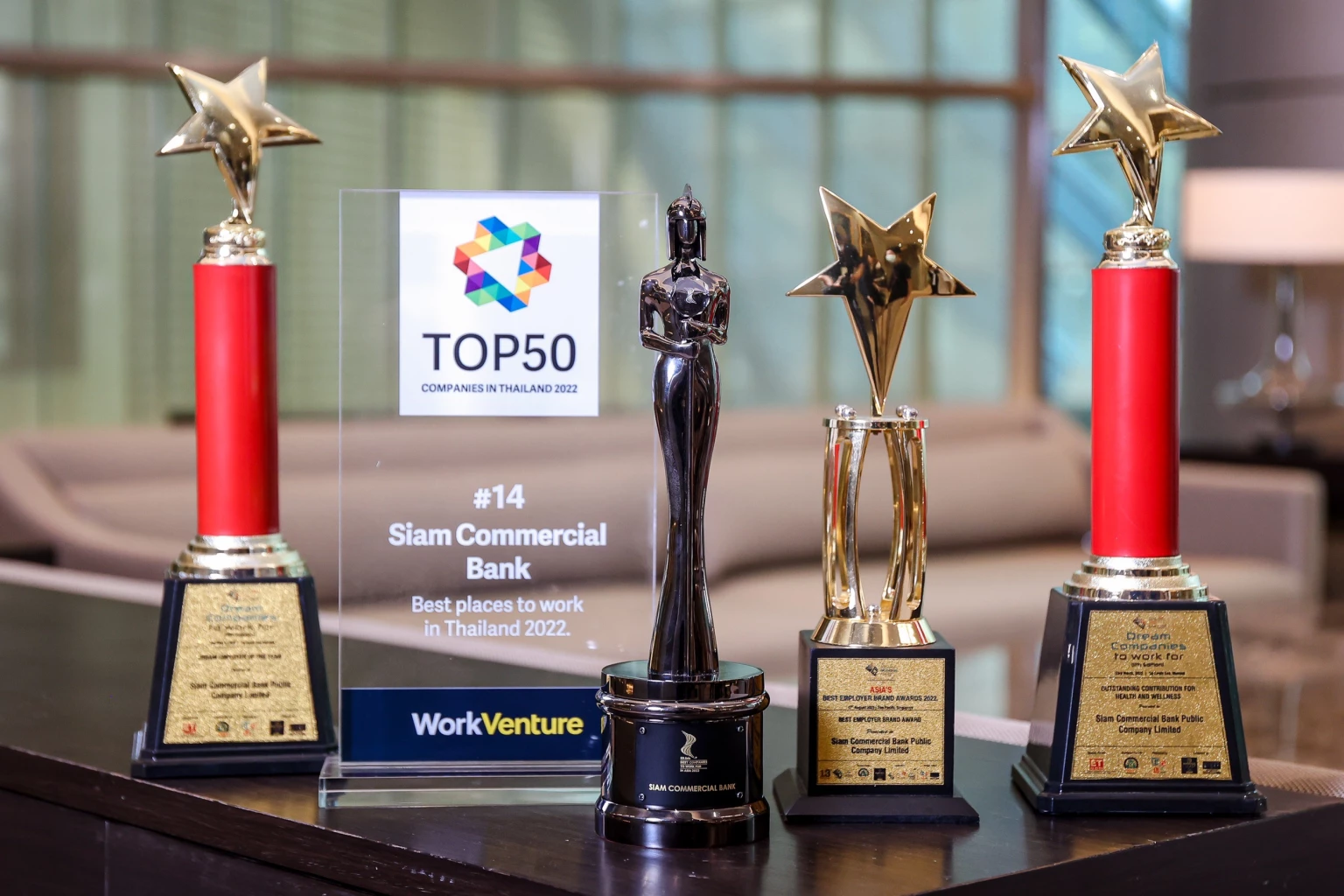
Five HR awards have confirmed Siam Commercial Bank’s (SCB) status as Asia’s most favored company in the 4.0 age. The Bank is committed to fostering a healthy workplace and actively seeking out new personnel to help advance its digital and technological capabilities, fuel its expansion, and realize its vision of becoming A Better Bank.
Speaking about the recognition, Siam Commercial Bank and SCB X PCL Senior Executive Vice President & Chief People Officer Patraporn Sirodom noted that Human resource management plays a crucial role in moving the organization forward in the direction of planned business operations as the Bank makes the transition to become a financial technology business under the SCB X Group, creating new value for the business and enabling it to respond to customers and society amid a changing competitive business landscape. The Bank has therefore consistently and extensively implemented its five primary human resource strategies, which include optimizing its workforce, creating an effective organization structure, developing a robust pipeline of leaders, institutionalizing a sound culture, and providing attractive remuneration. As a result, in comparison to 2021, the Bank’s Employee Engagement Index and Employee Net Promoter Score (eNPS) were higher, and the turnover rate was below the industry norm.
The Bank’s success in attracting and retaining top talent is largely attributable to the policies and procedures it has put in place to manage its human resources. Five prestigious awards received in 2022 included 1) Best places to work in Thailand 2022 from WorkVenture; 2) Dream Employer of the Year Award from HRD Congress; 3) Outstanding Contribution on Health and Wellness Award from HRD Congress; 4) World Asia’s Best Employer Brand Awards 2022 from the HRD Congress; and 5) HR Asia Best Companies to Work for in Asia 2022 from HR Asia. These five honors were determined using a benchmark of excellence against which other global institutions might be measured. They are a reflection of the culmination of efforts to tailor HR management to workers’ needs.
“In order to recruit and retain talented individuals from younger generations, we continually endeavor to establish a company culture that fosters a fun and upbeat place to work, a flexible organizational structure, and the innovative use of technology. To realize its vision of becoming a better bank, the Bank is actively seeking to hire members of the next generation who are fluent in digital and technology skills. In addition, the WorkVenture poll identified SCB as the most popular financial institution among the younger generation. That is because it is one of the country’s most advanced companies at implementing innovative changes to business operations through the introduction of new technologies and a willingness to respond swiftly to new circumstances. In particular, the advent of the remote work paradigm has given workers greater autonomy to concentrate on getting their work done. In this 4.0 era, we are certain that SCB is the most desirable employer fitting the needs of the new generation,” said Patraporn.
Asean-China comprehensive strategic partnership: A political perspective
SATURDAY, NOVEMBER 12, 2022
Since becoming an Asean Dialogue Partner in 1996, China has deepened its relations with the regional bloc throughout the years. In 2021, Asean and China elevated the relationship to the level of Comprehensive Strategic Partnership (CSP).
There are many prospects the two sides can reap, especially in economic and people-to-people cooperation. However, from the political angle, the partnership has barely made a difference. Both Asean and China still have a lot of work to do in order to build mutual trust and confidence.
Elevating to the level of CSP shows the commitment of Asean and China to deepening relations. It emphasized that the relations between Asean and China would go to another level with holistic cooperation in almost all fields of cooperation.
Nevertheless, this does not necessarily offer much of a prospect, especially in the scope of political-security cooperation according to the Joint Statement of the Special Summit back in November 2021 (Asean Secretariat, 2021). Politically speaking, according to the statement, it is the usual reaffirmation to support each other’s independence and sovereignty as well as various rhetorical statements of preserving peace and stability in the region.
Beyond the statement, it is observed that Asean and China have cooperated comprehensively throughout the years. The economic engagement between the two has increased alongside the exchange of leadership visits and meetings as well as people-to-people connectivity. Unlike other powers, China’s top leadership has shown keen interest to meet with Asean counterparts at various levels.
Nevertheless, it cannot be ignored that there is still a trust deficit going on within the engagement between Asean and China. According to ISEAS’ State of Southeast Asia Survey in the last couple of years (2019-2022), many scholars and observers in the region recognized that China is indeed the most influential in the region, but at the same time a threat.
Why, despite the deep engagement, has the perception among Asean peoples of China as a threat not faded away?
First of all, there are many thorny issues that Asean and China have not completely resolved.
Some Asean countries still have an ongoing dispute over maritime territorial claims in the South China Sea. So far, there are some dispute-management mechanisms, like the Declaration of the Conduct of the Party of the South China Sea (DOC); and negotiation toward a more legally binding Code of Conduct (COC) is in motion.
Yet, there are still issues surrounding this matter; and sometimes, there were skirmishes between China and some Asean claimants at the South China Sea (CNN Philippines, 2022; Mastro, 2020).
Beyond the issue regarding the sea, there is a growing concern over the Mekong River transboundary management. Hydropower dams built in the upstream river have been alleged as one of the causes of a shortage of water during the drought in some Asean countries a few years ago (Lovgren, 2019). Throughout the years, there has been a debate about whether the Mekong issue is the next South China Sea dispute.
All of these unsettled problems may erode the trust of some Asean member-states in China.
Second, the spill-over effect from the United States-China rivalry could undermine the confidence of Asean member-states in their northern neighbor. It is general knowledge that the US and China are now in a fierce competition mode in the global arena. Southeast Asia is no exception.
Among Asean countries, for years now, there have been concerns that the two superpowers push them to take sides (Radio Free Asia, 2022). Lately, both the US and China usually assure Asean countries that they do not want any countries to take a side; but through diplomatic discourses, both powers have presented indirect pressure by framing their own agenda as good, and the other as bad.
This competition has serious implications on the unity and centrality of Asean in the future, and could perhaps deteriorate the relations between Asean and China as well.
However, there are still feasible ways to strengthen the implementation of the China-Asean Comprehensive Strategic Partnership, especially in political-security cooperation.
First of all, both Asean and China should continue to have a frank and open discussion and find solutions to the ongoing issues, like the South China Sea and the Mekong River.
A clear-cut settlement may not be achieved immediately; but during the negotiation, there should be a risk-reduction mechanism to respond in a timely manner, if any issues occur. The mechanism could be in the form of a hotline from the ground connecting to Beijing and other Asean countries’ capitals.
Furthermore, there should be a regular working group of Asean-China relevant authorities with the collaboration of track-II institutions in order to identify and discuss any arising challenges in those hotspots.
Second, beyond cooperation under the lens of solving issues, deepening the comprehensive strategic partnership between Asean and China should not be exclusive. China and Asean should open the space for cooperation with other dialogue partners within Asean-led platforms, like Asean Plus Three (APT), AseanRegional Forum (ARF) and East Asia Summit (EAS), especially regarding issues of common concerns, like non-traditional security issues, including climate and public health. Furthermore, cooperation to push forward the implementation of the Five-Point Consensus on the Myanmar Crisis should be an area of cooperation between Asean, China and other Dialogue Partners. With this inclusiveness, it would mitigate any negative perceptions toward the partnership between Asean and China.
In the current geopolitical context, building trust and confidence is important. If trust and confidence were to collapse, it would jeopardize other aspects of cooperation between Asean and China.
Him Rotha
The Jakarta Post
Asia News Network
The writer is a researcher at the Cambodian Institute for Cooperation and Peace.
Yoon voices hope for swift reactivation of S. Korea-China-Japan cooperation
SATURDAY, NOVEMBER 12, 2022
President Yoon Suk-yeol on Saturday voiced hope for a swift reactivation of trilateral cooperation mechanisms among South Korea, China and Japan.
Yoon made the remark during a summit involving the Association of Southeast Asian Nations (Asean) and South Korea, China and Japan, known as the Asean Plus Three, which brought together the leaders of nine Asean countries, Chinese Premier Li Keqiang and Japanese Prime Minister Fumio Kishida. “South Korea will play an active role as this year’s chair of the South Korea-China-Japan summit and coordinator representing South Korea, China and Japan for the Asean Plus Three,” Yoon said.
“I hope trilateral cooperation mechanisms, including the South Korea-China-Japan summit, will be swiftly reactivated.” The three nations have not held a trilateral summit in nearly three years. The last such meeting was held in China in December 2019.
Yoon also noted this year marks 25 years since the launch of the Asean Plus Three and that the grouping has played a large role in strengthening practical cooperation between Asean and East Asia during that time.
“I hope we will further strengthen cooperation going forward to overcome the multiple crises we face,” he said, citing war and human rights violations, as well as a crisis in food security and energy security.
“I believe we must overcome these complex crises through our solidarity and cooperation,” Yoon said, adding there will be results for international peace and prosperity if Asean and the three East Asian nations respond jointly to challenges.
East Timor granted observer status by Asean; path to full membership open
SATURDAY, NOVEMBER 12, 2022
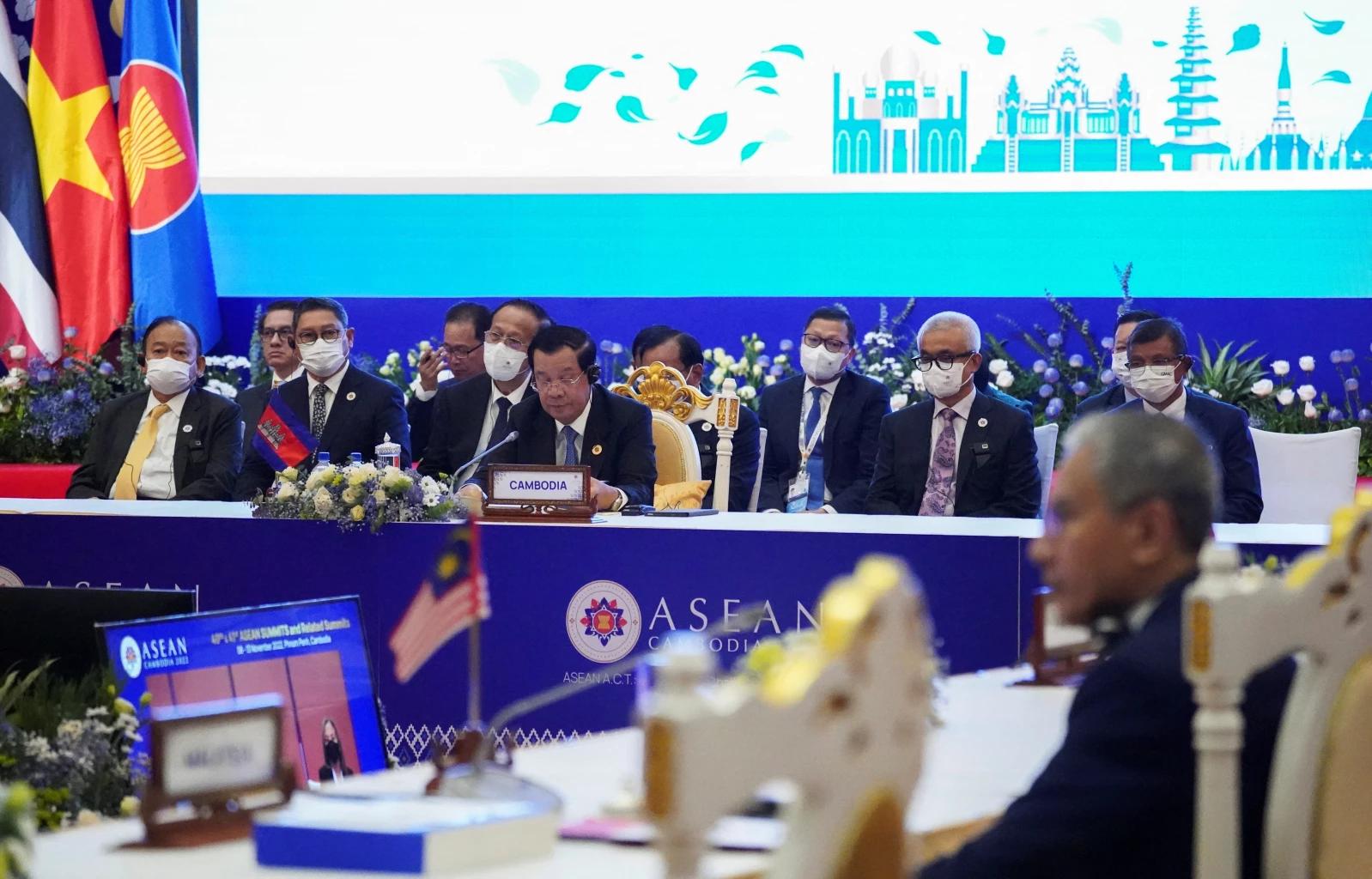
Asean leaders have agreed in principle to admit East Timor as the 11th member of Asean, according to an Asean press statement released during the bloc’s summit in Phnom Penh on Friday.
The statement said that the admission for East Timor, officially Timor-Leste, will grant the country “observer status” and allow its participation in all Asean Meetings, including the Summit plenaries.
The statement came after their consideration on the outcomes of fact-finding missions to East Timor which were conducted by the Asean Political-Security Community, Asean Economic Community and Asean Socio-Cultural Community.
The Asean leaders also agreed to formalize an ‘objective criteria-based’ roadmap for East Timor’s full membership, all of which will be based on the milestones identified in the reports of the Fact-Finding Missions conducted by the three Asean Community pillars.
The Asean Coordinating Council is tasked with formulating the roadmap and reporting it to the 42nd Asean Summit for adoption, the statement said.
They also agreed that: “All Asean Member States and external partners shall fully support East Timor to achieve the milestones through the provision of capacity building assistance and any other necessary and relevant support for its full membership in Asean”.
Cambodia has long supported the inclusion of East Timor to the 10-nation bloc.
Asean remains committed to Five-Point Consensus on Myanmar crisis
SATURDAY, NOVEMBER 12, 2022
Asean Leaders issued a statement on the evaluation of the implementation of the Five-Point Consensus (5PC) established in April 2021 to seek a solution for the Myanmar crisis.
The bloc’s leaders reviewed and made decisions during the 40th and 41st Asean Summit and related meetings on November 11 in Phnom Penh.
According to the two-page statement, the Asean leaders consider that the situation in Myanmar remains critical and fragile, with growing violence affecting not only Myanmar but also Asean’s community-building efforts. It said Asean is committed to assisting Myanmar to find a peaceful and durable solution to the ongoing crisis.
“With little progress achieved in the implementation of the 5PC, it is therefore incumbent on the Myanmar Armed Forces to comply with its commitments to the Asean Leaders,” the statement said.
They tasked the Asean foreign ministers to develop the implementation plan for the 5PC and maintained that Myanmar’s non-political representation to the Asean Summit and the Asean Foreign Ministers’ Meeting remained in force.
“We reaffirmed that the Asean Summit is the supreme decision-making body and will make the final decision on the implementation of the 5PC, including whether the consensus cannot be achieved, in line with the Asean Charter,” it added.
Asean urged all parties concerned to de-escalate tensions and exercise the utmost restraint.
“All parties concerned that bear arms should be held accountable and condemned for violence, noting that the Myanmar Armed Forces are the single largest military force in Myanmar,” it said, calling for all parties in Myanmar to facilitate the work of the Asean General Secretariat and the AHA Centre in delivering humanitarian assistance to all in need in Myanmar without discrimination.
According to the statement, Asean will call for support from the UN and other external partners in their efforts to get the 5PC implemented. Other approaches to the 5PC may also be sought.
It concluded that these decisions will be evaluated in future Asean sessions, and mandated the foreign ministers to monitor progress and report to the Asean Summit.