A shortcut from Benjakitti Park to Duang Phithak Road will open on Thursday next week to relieve traffic congestion in central Bangkok.
The Bangkok Metropolitan Administration (BMA) is planning to open the newly built shortcut linking Sukhumvit Soi 4 in front of Benjakitti Park in Khlong Toei district to Duang Phithak Road, which connects the main Sukhumvit and Rama IV roads, from September 1. The shortcut, which will be open from 5am to 9pm daily, is expected to help reduce traffic jams in the areas especially during rush hours.
Bangkok deputy governor Wissanu Subsomphon said on Thursday that the BMA was finalising the construction of the shortcut by painting the road and installing traffic signs, CCTV cameras and lights. He expected all this work to finish by Monday.
“Once open, the shortcut will help clear excessive traffic on Sukhumvit, Rama IV and nearby roads especially in the morning and evening when people and students head out to/return home from work and school,” Wissanu said.
Thailand’s Food and Drug Administration (FDA) has approved the use of Pfizer’s Comirnaty Covid-19 vaccine (magenta cap) for children aged 6 months to under 5 years, said FDA secretary-general Dr Paisan Dankhum on Wednesday.
The FDA had earlier approved the vaccine for children aged 5-11 at 30 micrograms per dose. For kids aged 6 months to under 5 years, the dose will be adjusted down to 10mcg for the first two jabs three weeks apart.
For booster shots, the Comirnaty vaccine will be given at 3mcg per dose eight weeks after the second jab.
“With three doses, the vaccine’s efficacy against Covid-19 will rise to 80.3 per cent,” said Paisan.
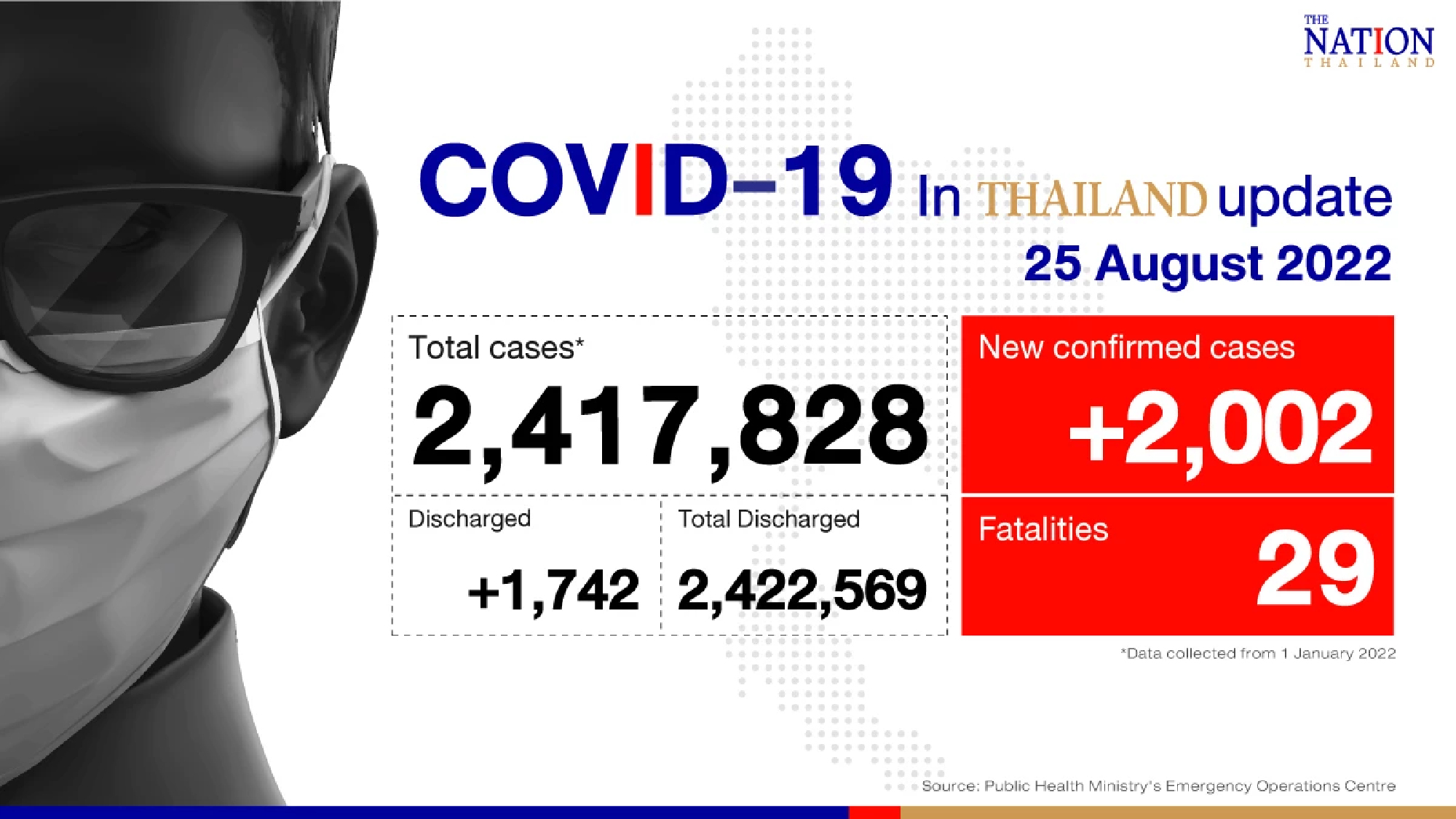
On Thursday morning Thailand recorded 2,002 confirmed Covid-19 cases and 29 deaths in the past 24 hours, while 1,742 patients have recovered and been discharged from hospital. The number of cumulative cases in the country since January 1, 2022, stands at 2,417,828 with 10,440 deaths.
As of Wednesday the country had administered 142.5 million doses of Covid-19 vaccines, with 57.2 million being first jabs (82 per cent of the population), 53.6 million being second shots (77 per cent), and 31.6 million being third jabs and over (45.5 per cent).
Residents of Bangkok, Pathum Thani, Nonthaburi, Ayutthaya, Saraburi and Lopburi have been warned of possible flash floods due to overflows from the Pa Sak and Chao Phraya rivers from Saturday as a full Pa Sak Jolasid Dam is about to release an increasing amount of water, the Disaster Prevention and Mitigation Department (DDPM) announced on Wednesday.
The upstream areas of Pa Sak river have experienced heavy rains since Sunday, resulting in a continuous rise of water levels, the DDPM reported.
The Royal Irrigation Department (RID) estimates Pa Sak Jolasid Dam will receive a hefty 133 million cubic metres of water between August 24 and 30, with the amount of water in the dam reaching a massive 355 million cubic metres, well above its optimal level, the DDPM said.
Therefore, the RID is set to increase water drainage from the dam – from 34.56 million cubic metres to 43.2 million cubic metres per day from August 27, which will drastically increase the water levels in both the Pa Sak and Chao Phraya rivers that flow through the six provinces.
The DDPM is therefore advising people who resides near the riverbanks to monitor the water level closely and follow the latest updates.
The department also said it is coordinating with related agencies to check the strength of flood levees and river dams in affected areas, and prepare for evacuation in case of any flash floods.
If you require assistance or would like to report a disaster, contact hotline 1784, Line @1784DDPM, or use the Thai Disaster Alert mobile application.
The Public Health Ministry reported on Thursday (August 25) that over the past 24 hours, 2,002 Covid-19 patients have been admitted to hospitals.
The death toll has risen by 29, while 1,742 patients have recovered and discharged from hospitals.
The number of cumulative cases in the country since January 1, 2022, stands at 2,417,828 with 10,440 deaths.
The country’s total caseload from Covid-19 stands at 4,641,263 – 4,591,063 of whom have recovered, 18,062 are still in hospitals and 32,138 have died.
Separately, another 3,756 people were given their first Covid-19 shot in the last 24 hours, 6,171 their second shot and 21,135 a booster, bringing the total number of Covid-19 vaccine doses administered nationwide to 142,546,210.
According to Worldometer, confirmed cases globally had risen to 603.57 million on Wednesday, 578.43 million of whom have recovered, 18.66 million are active cases (43,802 in severe condition) and 6.48 million have died (up by 2,061).
Thailand ranks 29th in the global list of most cases, which is topped by the US with 95.73 million, followed by India with 44.38 million, France with 34.41 million, Brazil with 34.33 million and Germany with 31.97 million.
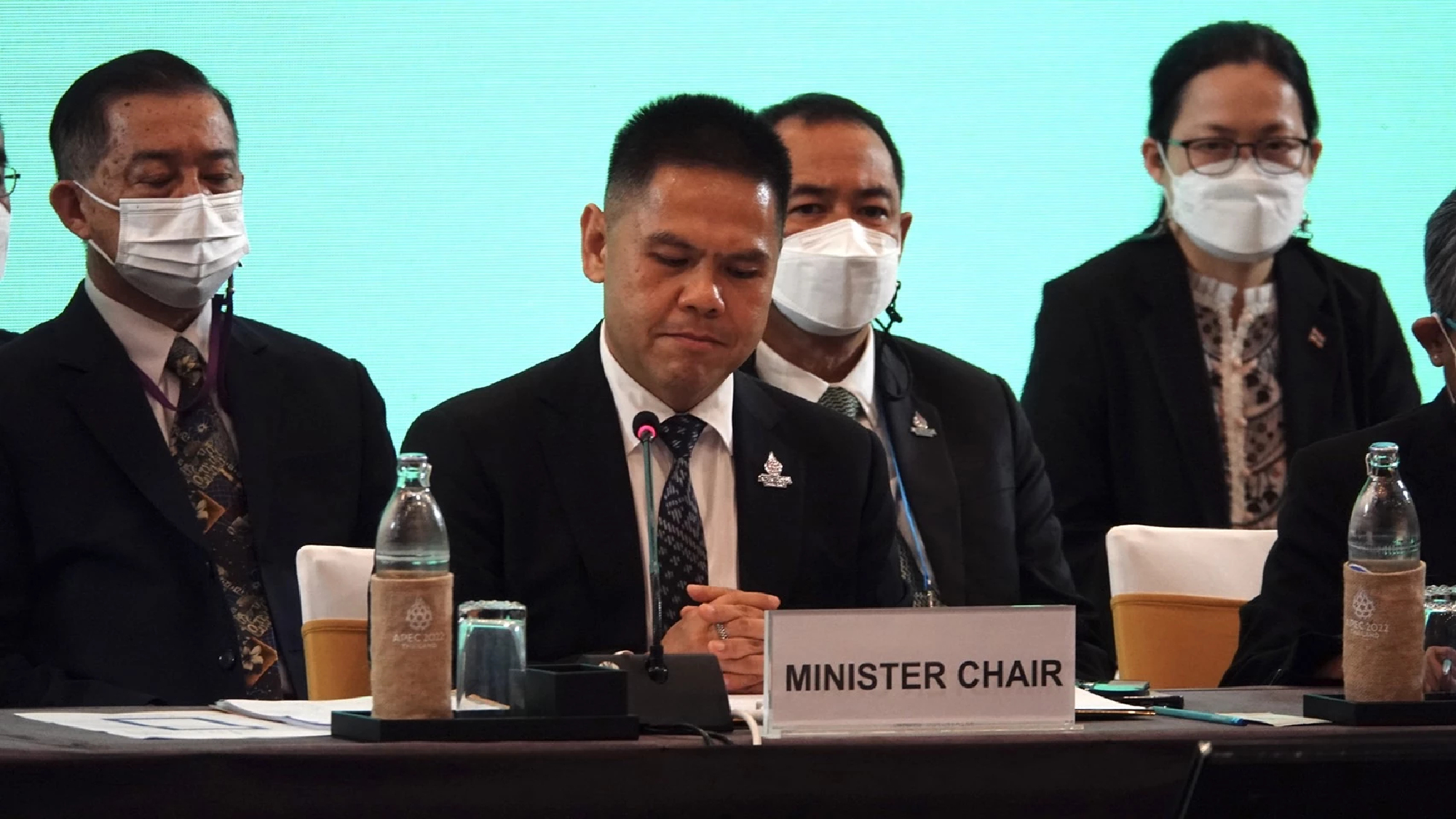
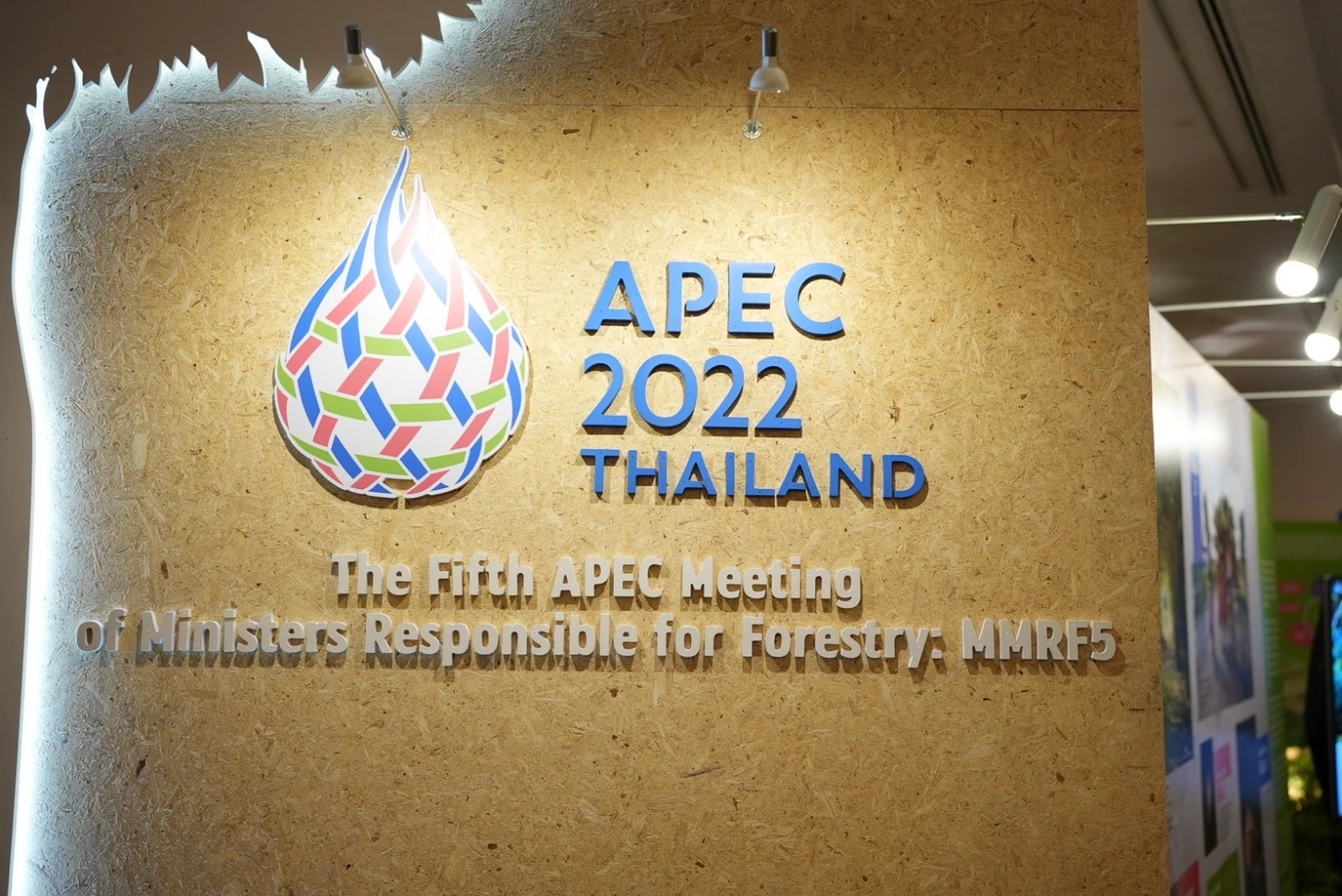
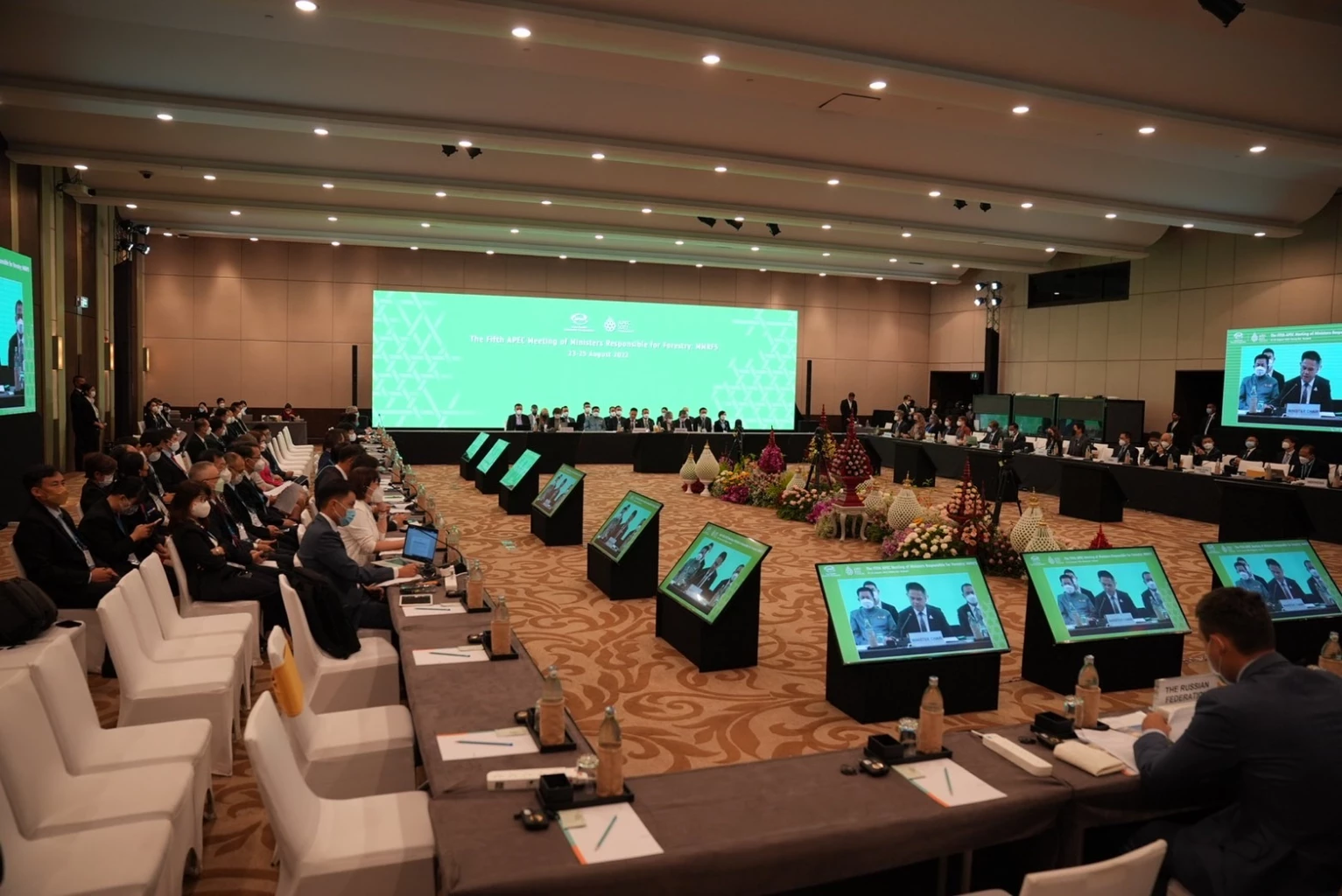
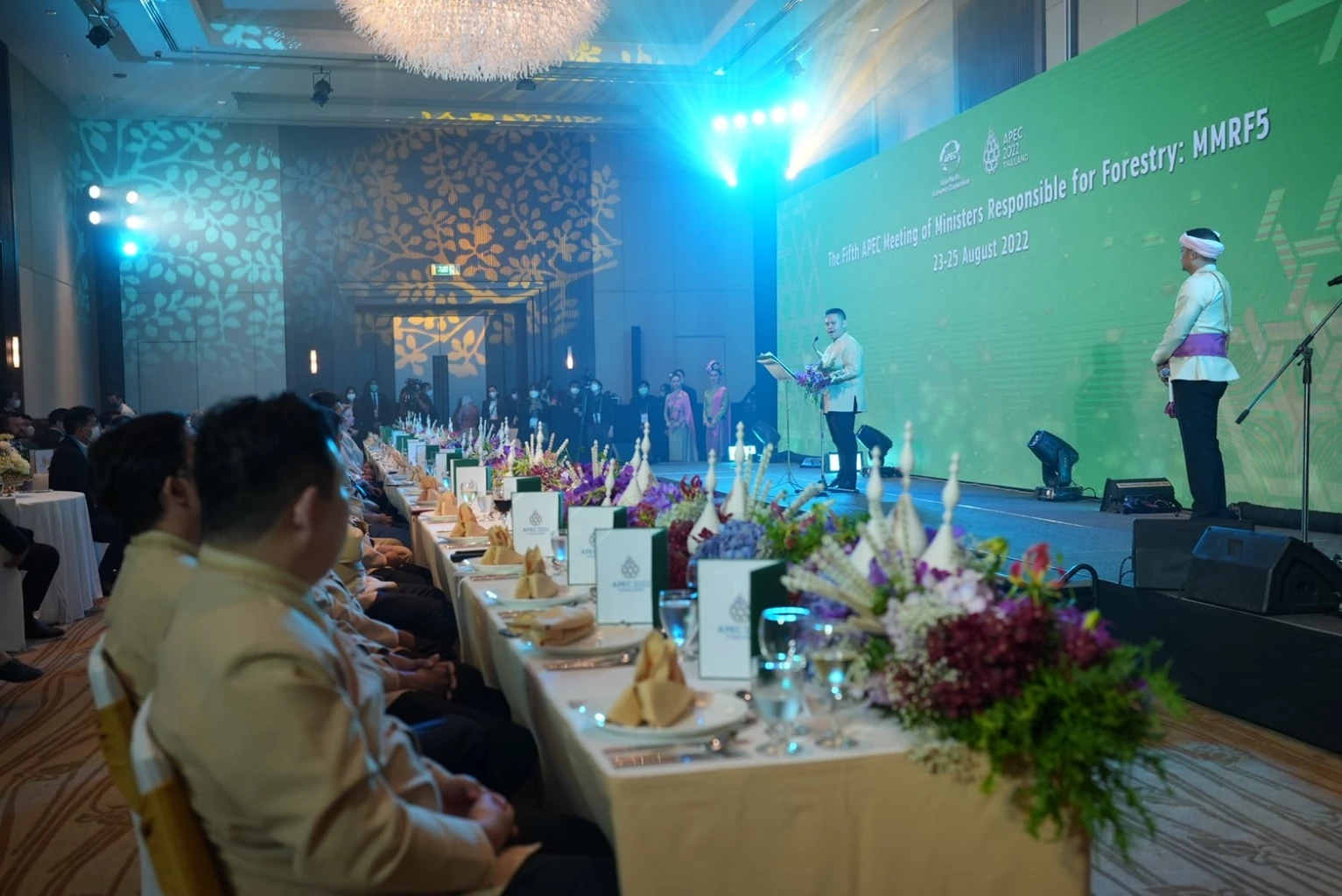
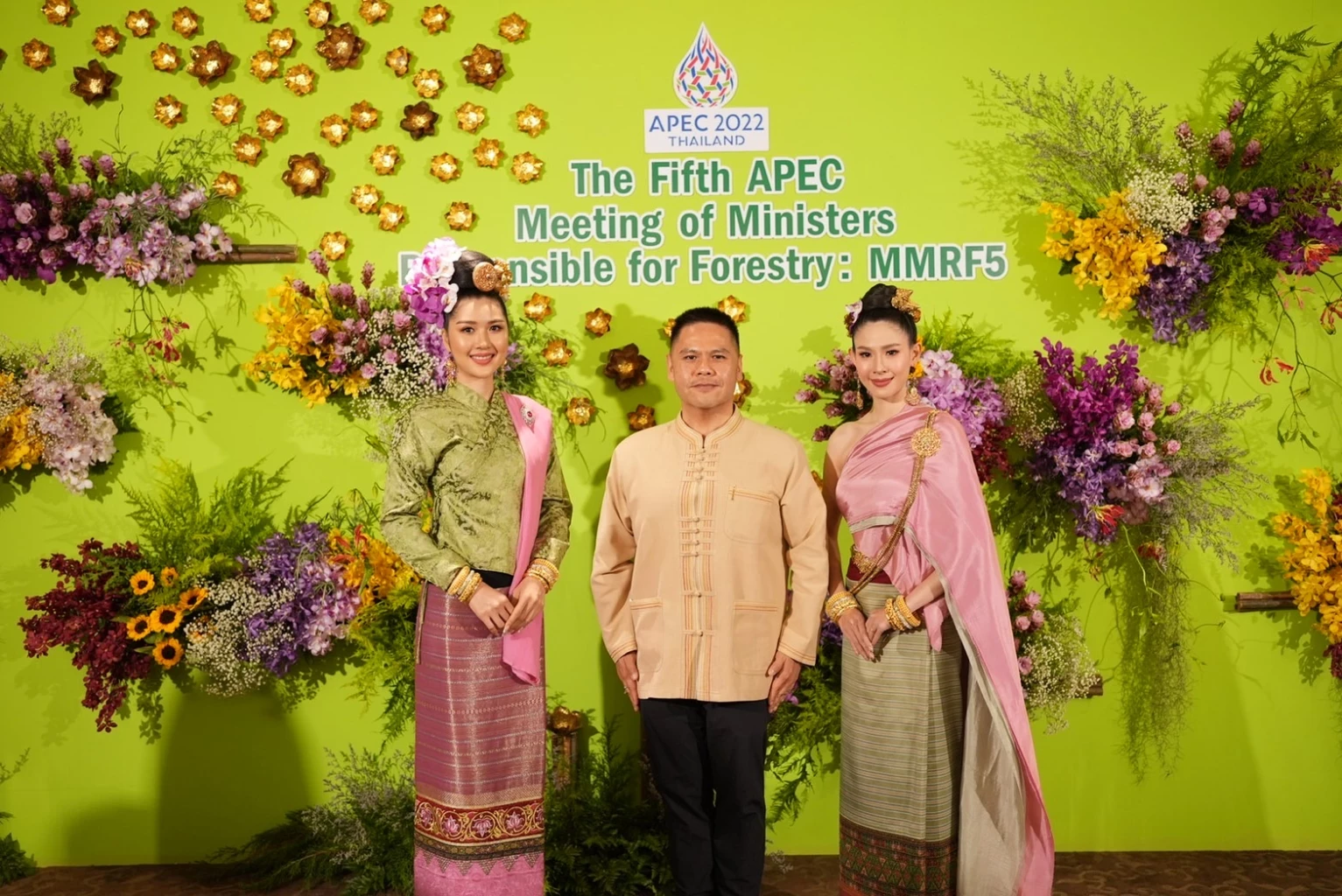
August 24, 2022 – Natural Resources and Environment Minister Varawut Silpa-archa presided over the Fifth APEC Meeting of Ministers Responsible for Forestry (MMRF5), which was held from August 23-25 at Le Meridien Hotel in Chiang Mai province.
It is the first time in 19 years that the APEC Meeting of Ministers Responsible for Forestry is held in Thailand.
The MMRF5 aims to promote cooperation in technical, operational, and financial aspects among members of the Asia-Pacific Economic Cooperation (APEC) to achieve sustainable economic development, reduce greenhouse gas emissions through forest management, and efficiently tackle climate change issues. The MMRF5 was held under the theme of APEC 2022 meeting that is “Open. Connect. Balance.”, with the Bio-Circular-Green (BCG) Economy Model as the overarching thinking.
Varawut said the meeting is highly successful as members of APEC agreed to use forest management as a key to solving several issues faced by APEC’s 21 economic zones, including illegal timber trading, sustainable forest management and achievement of the goal that Thailand has set in the 26th United Nations Climate Change Conference, also known as COP26, in which the country aims to become carbon neutral in 2050 and achieve net zero greenhouse gas emissions in 2065.
The Natural Resources and Environment Minister added that the meeting saw the exchange of opinions, experiences, and policies in anti-illegal timber trading. “Every country realizes that one of the causes of climate change is illegal deforestation,” he said. “As for Thailand, we will counter this problem with the use of BCG Model to expand the forest areas and minimise the impact of climate change. In the future, we will also introduce the carbon credit system as an economic cost.”
“We will use the MMRF5 stage to show our stance, and will adopt new knowledge presented by APEC members to create mutual benefits regarding forest management, community economic development, and climate change prevention,” said Varawut.
Varawut also thanked APEC forest ministers for joining the meeting and sharing ideas that will lead to increased cooperation in forest conservation. “I also thanked all members for promoting sustainable forest management in the region so that we have expanded the forest areas to 174.38 million rai or 27.9 million hectares,” he said.
After the meeting, APEC leaders paid a visit to the Queen Sirikit Botanic Garden in Chiang Mai’s Mae Rim district. The 6,500 rai garden is one of the most complete forest areas in the country that helps demonstrate Thailand’s potential in hosting the MMRF5.
Natural Resources and Environment Ministry permanent-secretary Jatuporn Buruspat added that Thailand will take the opportunity at the forum to call on and encourage APEC members to overcome any conflicts through cooperating, promoting, and developing initiatives by highlighting three “If” scenarios: 1) “Business-as-usual”, 2) “Aspiration” which calls on all APEC members to set milestones as a reference point to achieve targets such as the Sustainable Development Goals under the Paris Agreement on Climate Change and acting accordingly to produce concrete results and, 3) to trigger “Disruption” with expected environmental catastrophic changes.
Jatuporn noted that Minister Varawut will put forward the concept of Thailand’s initiative-BCG Model to the MMRF5, and will encourage all APEC members to deploy appropriate tools to promote legal timber trade, combat illegal timber business, and take other related actions.
Electronic Transactions Development Agency (ETDA) under the Ministry of Digital Economy and Society has disclosed its survey of Thailand Internet User Behavior 2022 (IUB 2022) for Thai users at the event “IUB 2022: WHAT’S NEXT INSIGHT AND TREND”.
It penetrates deep into Thai lifestyles at a time when the Internet has become indispensable. It has discovered that Gen Y has reclaimed their throne of maximum net usage with an average figure of 8 hours and 55 minutes, beating out Gen Z, the former champions, who this year used on average 8 hours and 24 minutes of Internet.
Overall, Thais used the net on average 7 hours and 4 minutes a day. They mostly used the Internet for e-Health (making online medical appointments) communicating online, watching TV shows/ clips/ movies/ listening to music online, watching Live Commerce to purchase goods and services online, and making financial transactions online (e-Payment). These were the Top 5 popular user categories.
Meanwhile, in terms of occupations, civil servants and government employees use the Internet more than other occupations by up to 11 hours and 37 minutes a day, meaning that the state sector is the readiest for digital!
EDTA Executive Director Chaichana Mitrpant said that ETDA has conducted the Thailand Internet User Behaviour survey continuously into the current Year 10.
Over the last decade, analysis of data from every survey year found that the online activities with continuous growth trends were online communication, online activity for entertainment such as watching movies or listening to music, buying and selling online, making financial transactions, and reading the news, online posts, articles or books.
Online activities with the trend to be reduced and which may eventually disappear in the future are searches for information with a search engine and sending and receiving e-mail. This is because, at the current time, people tend to search for information and send it to others more often through social media.
At the same time, downloading software, music, TV drama, and games to watch afterwards may no longer exist in the future, as they are replaced by streaming services which can be watched in real-time and retroactively on the same platform.
The survey of Thailand Internet User Behavior (IUB) 2022 was conducted with online questionnaires from a sample of 46,348 respondents nationwide. Distinguished by age cohort and province of residence in each region, between April and July 2022, it was found that this year, Gen Y (22-41) has regained their championship of Internet usage with 8 hours and 55 minutes, overtaking Gen Z (under 22), the Champions for one season, who came second with the Internet usage of 8 hours and 24 minutes.
They were followed by Gen X (42-57) with 5 hours and 52 minutes, and then the Baby Boomers (58 and up) with 3 hours and 21 minutes.
In the overall picture, it was found that Thai people use the Internet on average 7 hours and 4 minutes per day. The portion of the sample resident in Bangkok used the Internet the most at 10 hours and 5 minutes per day.
Meanwhile, the Northeastern region, the Central region and the Northern region were not very different from each other with averages of 6 hours and 59 minutes, 6 hours and 45 minutes, and 6 hours and 17 minutes, respectively. The South registered the least usage with an average of 5 hours and 35 minutes.
When considered by occupation, the new data was very interesting because civil servants/state employees took #1 ranking with the most Internet usage compared to other occupations of 11 hours and 37 minutes, reflecting the interest and readiness of state sector personnel to upgrade their work in the digital age, and working more electronically in e-Offices. They were followed by students, at 8 hours and 57 minutes, freelancers at 7 hours and 40 minutes, business owners or self-employed at 7 hours and 29 minutes, and private sector workers at 7 hours and 6 minutes.
The top ten online activities popular among online society found that Thai people mostly like to use the Internet for medical consultations and services (making appointments and medical consultation) at 86.16%, which may be from the COVID-19 pandemic generating the interest to book vaccinations, tests and telemedicine consultations, which can avoid spending time at hospitals to reduce the risk of infection with COVID-19.
This is followed by communication at 65.70%, watching television/ clips/ movies/ listening to music at 41.51%, watching Live Commerce for buying and selling at 34.10%, making financial transactions at 31.29%, reading posts/ news/ articles/ online publications at 29.51%, receiving and sending e-mail at 26.62%, shopping online at 24.55%, working/ meeting online at 20.67% and playing games online at 18.75%.
The activity to watch out for is Live Commerce because although it was only added to the survey for the first time this year, it hit the Top 5 most popular online activities for Thai people. This illustrates that Live Commerce is another activity worth watching as an item becoming more popular among Thai people.
The segment watching the most is Gen Y, at a rate of 64.65%, with females outnumbering males. This gave Gen Y the championship of “online shoppers” (88.36%), overtaking every generation. In this, they are followed by Gen X (84.55%), Gen Z (81.53%), Baby Boomers (74.04%) and Gen Builders (52.30%).
The product category most preferred by Gen Y is apparel (clothing, shoes, sports equipment and accessories), followed by cosmetics. Meanwhile, Gen X chooses to purchase apparel the most, followed by consumer products.
Gen Z goes for mostly apparel, followed by cosmetics. Baby Boomers buy consumer goods the most, followed by dried food, while Gen Builders mostly choose to buy fresh food. As for the reasons for shopping online, most choose to do so because of the price at 63.10%, the product range at 58.73%, user-friendly platform at 45.81%, promotions such as 11.11, 12.12 and Flash Sales at 44.39% and cheap or free delivery at 34.10%. The outlets most chosen by Thai people for their online shopping are e-marketplaces (such as Shopee, Lazada, Kaidee) at 75.99%, followed by Facebook, 61.51% Website, 39.7%, LINE, 31.04%, Instagram 12.95%, and Twitter at 3.81%.
As for social commerce channels most favoured by sellers to sell products or services, the most popular at 66.76% is Facebook, followed by e-Marketplace, 55.18%, LINE, 32.05%, Website, 26.67%, Instagram, 19.91% and Twitter 9.90%. As for payment channels, it was found that Thai people mostly favour payment by transfer through bank website or app at 67.32% followed by Cash on Delivery (COD) at 58.49%, payment from e-Wallet at 24.43%, credit card at 17.09% and online payment services such as PayPal or Google Pay at 15.51%.
As well as online shopping behaviour, this year’s survey also found that Gen Y and Gen Z were trending to become content creators more than other generations, as they are the Gens who most like to make online content. The content categories most popular among creators are video/ clip at 49.85%, writing an article/ content/ website at 41.79%, live broadcast at 36.77%, streaming games and other streaming at 11.86%, online radio at 10.32% and podcasts at 8.98%.
As massive floods across Pakistan have claimed at least 830 lives since July, the government on Tuesday decided to launch an international appeal seeking funds for relief and rehabilitation of flood-hit people and restoration of damaged infrastructure.
The decision was taken during an urgent briefing on the flood emergency by the country’s National Disaster Management Authority (NDMA).
In addition to looking outward for assistance to mitigate the devastation caused by abnormal monsoon downpours, Prime Minister Shehbaz Sharif appealed to the nation to extend help to the flood-stricken people as the government required hundreds of billions to rehabilitate flood victims.
“The current relief operation needs Rs80 billion [13.26 billion baht] and hundreds of billions of rupees are also required to overcome the losses as well as for rehabilitation of the victims,” the prime minister said in a video message.
Sharing details about the relief announced by the government, the premier said the government was distributing Rs37.2 billion as cash relief, whereas funds to the tune of Rs5 billion had “immediately” been released to the NDMA to accelerate the rescue efforts.
PM Sharif said Rs25,000 cash assistance was being paid to the flood victims. Similarly, the government would also provide compensation of Rs1 million to the families of the deceased, along with additional support for the injured and damages caused to the houses, he added.
Appeal for funds
During the NDMA meeting, planning minister Ahsan Iqbal asked the governments of Balochistan and Sindh – the two worst-hit provinces – to formally requisition the military for help in dealing with the disastrous floods.
Speaking at the meeting, Climate Change Minister Sherry Rehman called for immediate humanitarian and rescue efforts in the wake of devastating floods as she admitted Pakistan was not able to cope with the situation on its own.
“Right now we are in the seventh spell of a torrential monsoon that has left thousands homeless, 830 dead and 1,348 injured. From Balochistan, the monsoon system has moved to Sindh, where 30 districts are under water. The magnitude of it can be accessed from the fact that it has rained more than 395 per cent in Sindh and 379 per cent in Balochistan above the average rainfall.”
The senator compared the current calamity with the super floods in 2010 that had wreaked havoc in Pakistan and said at least 30 districts of Sindh, almost the entire Balochistan, and south Punjab were facing an unprecedented humanitarian disaster. “People are adrift, livestock and crops are damaged. It is a humanitarian disaster of unprecedented monsoon proportions,” she said.
“The Indus is in high floods, where the flow of over 600,000 cusecs is expected to cross the Guddu and then Sukkur barrages on August 23 and 24, which will bring all the area along the Indus under water, displacing thousands of families.”
At least 216 lives have been lost, an estimated 1,500,000 mud houses have been damaged and crops cultivated on 1,989,868 acres have been completely destroyed in Sindh, the senator added.
EU aid
Meanwhile, the European Union agreed to provide Rs76 million for crucial humanitarian assistance which will focus on addressing the urgent needs of those most affected in some of the hardest-hit districts of Jhal Magsi and Lasbela.
“The devastating floods have left a trail of destruction in Pakistan, causing many to suffer the loss of their homes, livelihoods, and belongings,” said Taheeni Thammannagoda, who oversees EU humanitarian programmes in Pakistan.
“The EU funding will help get vital assistance to the most vulnerable people to support them during this hard time,” a press release by the EU mission in Islamabad added.
Dawn
Asia News Network
Asia News Network: The Nation (Thailand), The Korea Herald, The Straits Times (Singapore), China Daily, Jakarta Post, The Star and Sin Chew Daily (Malaysia), The Statesman (India), Philippine Daily Inquirer, Yomiuri Shimbun and The Japan News, Gogo Mongolia, Dawn (Pakistan), The Island (Sri Lanka), Kuensel (Bhutan), Kathmandu Post (Nepal), Daily Star (Bangladesh), Eleven Media (Myanmar), The Phnom Penh Post and Rasmei Kampuchea (Cambodia), The Borneo Bulletin (Brunei), Vietnam News, and Vientiane Times (Laos).
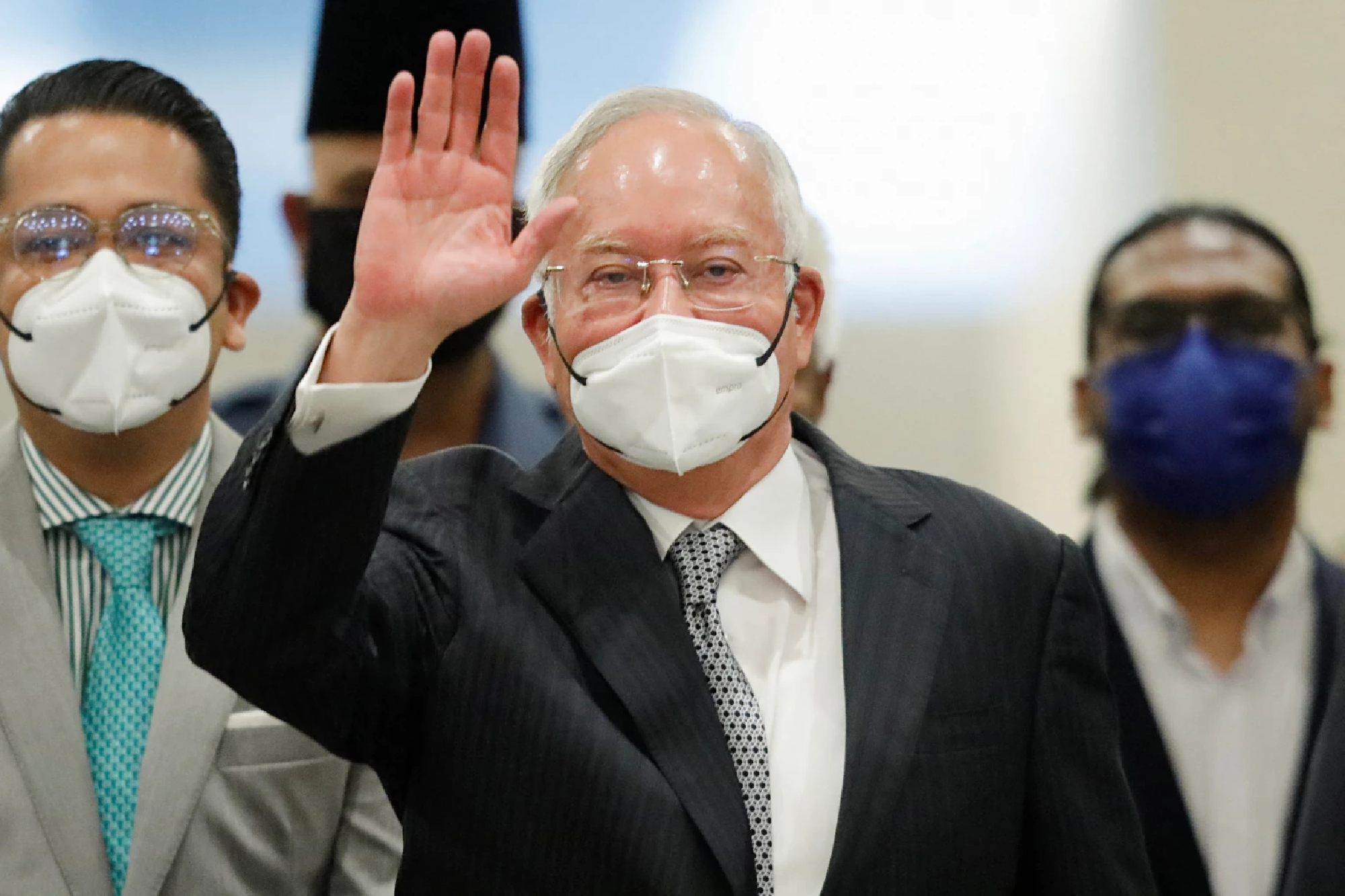
Former Malaysian prime minister Najib Razak has penned a “farewell” note to his family, saying he chose public service 46 years ago which took him away from his family.
“My years have gone by dedicated to people, public service, politics, a sacrifice I chose and I made, a journey which was joyous but unfortunately I overlooked and could not always be there for you,” said Najib in a Facebook post on Tuesday.
“All these challenges which bore fruit brought a smile to my face, while some did not, but it was all a big sacrifice with years and time passing by.”
He said he held steadfast to the teachings of Islam and the “journey was destined by God and was waiting for justice and judgement in the court of end times”.
“Hopefully God protects and blesses our family with health, longevity and eternal peace,” he added.
On Tuesday, Najib became the first former prime minister in the country’s history to be sent to prison after the Federal Court dismissed his final appeal.
On July 28, 2020, the Kuala Lumpur High Court sentenced Najib to 12 years in jail and fined him MR210 million (1.69 billion baht) after he was found guilty of seven charges of criminal breach of trust, money laundering and abuse of position in a MR42 million SRC International case.
The Star
Asia News Network
Asia News Network: The Nation (Thailand), The Korea Herald, The Straits Times (Singapore), China Daily, Jakarta Post, The Star and Sin Chew Daily (Malaysia), The Statesman (India), Philippine Daily Inquirer, Yomiuri Shimbun and The Japan News, Gogo Mongolia, Dawn (Pakistan), The Island (Sri Lanka), Kuensel (Bhutan), Kathmandu Post (Nepal), Daily Star (Bangladesh), Eleven Media (Myanmar), The Phnom Penh Post and Rasmei Kampuchea (Cambodia), The Borneo Bulletin (Brunei), Vietnam News, and Vientiane Times (Laos).
Intense heat waves have hit many parts of the world, including the United States, many European countries, East and Central Africa, India, Pakistan, Chile, the Republic of Korea and southern China.
Very high temperatures combined with rain shortfall have caused severe droughts, lowered water levels in rivers and reservoirs, and hastened the melting of glaciers in many parts of the world, which could seriously affect global grain output and, along with the lingering COVID-19 pandemic, the Russia-Ukraine conflict, and high global inflation and economic downturn, exacerbate food security risks.
According to the UN Food and Agriculture Organization’s Crop Prospects and Food Situation, issued last month, precipitation in Somalia, northern and eastern Kenya and southern Ethiopia was unusually low from March to May, leading to crop failure. As a result, cereal production in Somalia is expected to be 40-60 per cent below average.
In pastoral areas, dry weather has been hampering the regeneration of pastures and the replenishment of the underground water table, severely affecting herds and causing widespread livestock deaths. In fact, Ethiopia has lost about 2.5 million animals, Somalia 3 million and Kenya more than 1.5 million, and the figures are expected to increase in the coming months
Worse, by the end of June, the number of food-insecure people in Kenya, Somalia and southern Ethiopia had reached 16.5 million, up 80 per cent year-on-year.
But Africa is not the lone victim of the high temperatures and heat waves. Extreme heat and widespread droughts have seriously affected agricultural production in the European Union, according to the US Department of Agriculture. In the 2022-23 market year, corn production in the EU is expected to decline by 15.5 per cent to 60 million tons — 10 per cent below the past five years’ annual average. And the wheat output of 132.1 million tons is expected to be 4.5 per cent lower year-on-year.
Wheat output in India and Pakistan, too, is likely to decline — by 6 per cent and 3.9 per cent, respectively — while corn output could fall by 4.6 per cent and 6.3 per cent.
As such, food prices are expected to rise further in the fall, exacerbating the cost-of-living crisis.
As for China, the summer grain harvest this year was 147 million metric tons, up 1 per cent year-on-year. But the July-September period is critical for fall grain output, and the eastern, southern and southwestern parts of the country have been experiencing unusually high temperatures since July, a trend that meteorologists say is likely to continue.
According to the Ministry of Water Resources, drought has affected 32.99 million mu (2.2 million hectares) of arable land, 2.46 million people, and 350,000 farm animals in nine provinces, including Anhui, Jiangxi, Hubei, Hunan and Sichuan provinces, and Chongqing municipality. To deal with the situation, the Ministry of Agriculture and Rural Affairs has dispatched provincial liaison groups and scientific and technological experts to key fall grain-producing areas, especially those severely affected.
Also, on Aug. 11, the State Flood Control and Drought Relief Headquarters launched a four-level emergency response mechanism to better manage drought-resistant water sources, implement emergency water supply measures, and ensure water supply for irrigation, in order to minimize the effects of the dry weather on agriculture. Also, the central finance and disaster relief authorities have released about 500 million yuan to support drought relief work.
However, high temperatures are not exceptional this year. As a matter of fact, extreme heat could become the new normal, with more frequent, longer-lasting heat waves. The UN Intergovernmental Panel on Climate Change has warned that if global temperatures rise by 1.5 degrees Celsius, heat waves will increase, and summers will be longer and winters shorter. And if global temperatures were to rise by 2 C, extreme heat could cause serious health issues both for humans, agriculture and livestock.
Besides, studies show that adapting to and fighting climate change is becoming increasingly costly, with Africa facing the biggest threat to food security.
So China, while intensifying efforts to cope with extreme heat and ensure a bumper grain harvest in the fall, should play a bigger role in global food security governance and strengthen cooperation with the international community to minimize the negative impacts on global food security.
First, there is an urgent need for the international community to provide assistance where needed including supplying food to the affected regions in Africa, establishing social safety nets, and safeguarding the livelihoods of poor families, given the funding gap in the World Food Programme this year — the WFP needs $22.2 billion to help 152 million people in need but is facing a fund shortage.
Second, the Chinese authorities should strengthen research and development and increase investment in green technologies, and climate-resistant crops and strengthen management. Chinese scientists have already developed new strains of heat-resistant and higher yield rice, The high-temperature resistance genes are already conserved in other major crops, such as wheat, corn, soybean and vegetables, and are valuable resources for breeding high heat stress-tolerant crops to reduce crop losses caused by rising temperature.
Third, infrastructure construction should be expedited to improve “drought irrigation and flood drainage” during extreme weather events, so crop output is not affected.
Fourth, the authorities also need to take measures to improve the agriculture and food production systems in order to reduce greenhouse gas (GHG) emissions, because the global agriculture and agri-food sector account for a third of the total GHG emissions.
Fifth, agricultural insurance and green finance should be used to strengthen climate risk management and safeguard agriculture. For example, China’s central financial agricultural insurance premium subsidy of 33.3 billion yuan ($4.8 billion) in 2021 helped protect farmers against natural disasters, allowing them to be better cope with climate risks.
Fan Shenggen and Zhang Yumei
China Daily
Asia News Network
Fan Shenggen is the dean of, and Zhang Yumei is a professor at the Academy of Global Food Economics and Policy, China Agricultural University.
The views don’t necessarily reflect those of China Daily.
Asia News Network: The Nation (Thailand), The Korea Herald, The Straits Times (Singapore), China Daily, Jakarta Post, The Star and Sin Chew Daily (Malaysia), The Statesman (India), Philippine Daily Inquirer, Yomiuri Shimbun and The Japan News, Gogo Mongolia, Dawn (Pakistan), The Island (Sri Lanka), Kuensel (Bhutan), Kathmandu Post (Nepal), Daily Star (Bangladesh), Eleven Media (Myanmar), The Phnom Penh Post and Rasmei Kampuchea (Cambodia), The Borneo Bulletin (Brunei), Vietnam News, and Vientiane Times (Laos).
A scientist specializing in sustainability science and process systems engineering for energy, environment and sustainability has won the 2022 Apec Science Prize for Innovation, Research and Education—also known as ASPIRE.
Jingzheng Ren was selected by consensus as the Apec region’s top young science researcher this year. Through his research, he unfolded new methods to promote integrated development of the economy, environment and society, including through bio-circular-green practice.
He has been published in more than 200 publications and, in November 2020, was ranked in the top two per cent of scientists in The Stanford List under the field of energy. Some of his research has proven to be helpful to enhance understanding of waste-to-energy conversion, technology for sustainable food production and industrial activities, as well as carbon-neutral tourism.
“The transition to a more sustainable practice for our industries in the region is complex and costly, but very much critical,” said Ren, who was nominated by Hong Kong, China and is an associate professor at the Hong Kong Polytechnic University.
“My research aims to improve the understanding of this transition by developing innovative industrial processes to achieve sustainability-oriented decision-making and optimization,” he added. “This can help the decision-makers to make informed decisions in achieving sustainable industrial systems by considering various objectives, dimensions, scales and multiple stakeholders.”
Ren was selected from a group of 13 finalists, each nominated by Apec member economies under Thailand’s 2022 ASPIRE theme, “Innovation to Achieve Environmental, Economic, and Social Goals.” All nominees were considered based on their dedication to excellence in scientific research and collaboration with other Apec economies.
“Ren’s research is the perfect example of excellence and innovation to achieve economic, environmental and social goals,” said Pasit Lorterapong, the Deputy Permanent Secretary of Thailand’s Ministry of Higher Education, Science, Research and Innovation.
“Sustainability, including through the bio-circular-green economy, are key to a resilient and more advanced economic development in the future,” Pasit added. “Ren’s research, especially on the development of the circular economy, recycling, industrial systems and supply network optimization, provides us with knowledge and helps us address future environmental and economic challenges.”
The ASPIRE winner was announced by science, technology, and innovation officials from the Apec member economies at an award ceremony hosted in Chiang Mai, Thailand.
“Our goal is to promote and advance excellence in scientific research and strengthen international collaboration,” said Xuemei Yang, Chair of the Apec Policy Partnership for Science, Technology, and Innovation. “The ASPIRE allows Apec to celebrate the accomplishments of our region’s researchers and their joint efforts in supporting policymakers address global challenges.”
For his achievement, Ren was awarded a prize of USD 25,000, supported by publishers of scholarly scientific knowledge and co-sponsors of ASPIRE, Wiley and Elsevier.
“We congratulate Ren for his pioneering work on the integrated, sustainable development of the economy, the environment and society at large,” said Brian Napack, President and CEO of Wiley. “His collaboration with twelve Apec economies clearly highlights a deep commitment to cross-border cooperation in this important endeavour.”
“The ASPIRE continues to celebrate international scientific values and showcase high-impact researchers lighting the pathway to an economically inclusive and sustainable future,” he added.
“The pandemic heightened the economic, environmental and social complexities that the Asia-Pacific region—and the world more broadly—faces today,” said Youngsuk “Y.S.” Chi, Chairman of Elsevier. “The ASPIRE prize has highlighted the outstanding talent and dedication of Ren and the other nominees, who have worked hard to find solutions to these critical issues. I have no doubt that their research will promote sustainable and collaborative development in our society.”