แล้วก็มีการอภิปรายกันจริงๆ แต่ อเล็ก โล (Alex Lo) ผู้สื่อข่าวอาวุโสแห่ง South China Morning Post ชี้ว่าแม้แต่ The New York Times (ที่โจมตีจีนเป็นกิจวัตร) ก็ยังทำมึนเพื่อรู้ว่ามีชาวอุยกูร์ถือคบเพลิง โดยใช้คำว่าคนๆ นั้นมีชื่อ “ฟังดูเหมือนอุยกูร์” แทนที่รับไปตรงๆ ว่านี่คือคนอุยกูร์จริงๆ
Inflation has risen sharply in recent months and is likely to remain high in the near-term, mainly driven by the price of energy, she explained.
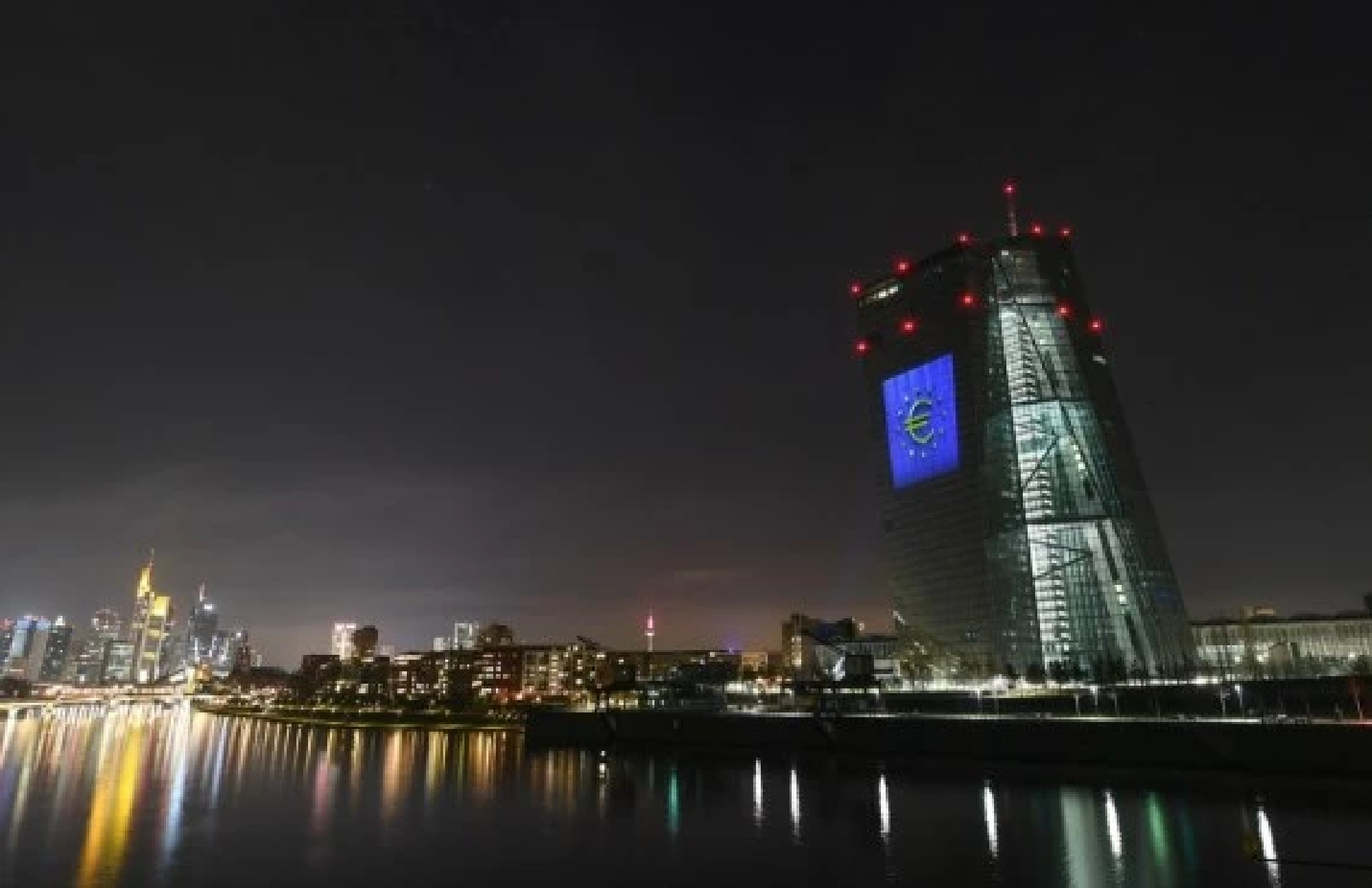
Inflation in the euro area is likely to remain elevated for longer than previously expected, but will decline in the course of this year, European Central Bank (ECB) president Christine Lagarde said on Monday.
“Compared with our expectations in December, risks to the inflation outlook are tilted to the upside, particularly in the near-term,” said Lagarde while addressing a hearing of the European Parliament’s Committee on Economic and Monetary Affairs.
“If price pressures feed through into higher-than-anticipated wage rises or the economy returns more quickly to full capacity, inflation could turn out to be higher,” she warned.
She stressed that recent data confirms a moderation in the momentum of growth due to the spread of the Omicron variant. Measures imposed to deal with Omicron have dampened activity, particularly in consumer services such as travel, tourism, hospitality and entertainment.
Quarterly growth in the eurozone slowed to 0.3 percent in the final quarter of 2021, but nonetheless, this still allowed for the gross domestic product (GDP) to recover to its pre-pandemic level.
European Central Bank (ECB) President Christine Lagarde speaks during a press conference at the ECB headquarters in Frankfurt, Germany, Oct. 28, 2021. (Xinhua/Lu Yang)
The current pandemic surge and related restrictions are likely to continue to negatively impact growth earlier this year, Lagarde said. Supply bottlenecks and high energy costs are also expected to dampen economic activity in the short term.
Inflation has risen sharply in recent months and is likely to remain high in the near-term, mainly driven by the price of energy, she explained.
“Energy prices continue to be the main reason for the elevated rate of inflation. Their direct impact accounted for over half of headline inflation in January, and energy costs are also pushing up prices across many sectors. Food prices have also increased, owing to seasonal factors, elevated transportation costs and the higher price of fertilizers. In addition, price rises have become more widespread, with the prices of a large number of goods and services having increased markedly,” she said.
Valdis Dombrovskis, European Commission (EC) Executive Vice President for an Economy that Works for People, also said the surge in energy prices was “a serious concern,” mentioning the impact it is having on the most vulnerable households and small and medium-sized enterprises (SMEs).
Dombrovskis confirmed Lagarde’s statement that inflation is now expected to remain elevated, adding that price pressures are having an impact on people’s purchasing power and growth. “It is important that the spike in inflation does not become entrenched,” he said.
— “We need to consider in all seriousness how to take steps to improve the design and implementation of the council sanctions to minimize their adverse impact.” — “There was a serious shortage of food and the conditions for medical care leave much to be desired (following sanctions imposed on the DPRK).” — “Unilateral sanctions, often in the glorified name of implementing council sanctions, have caused great disasters and chaos, not only putting the UN on the receiving end of the blame when it shouldn’t be, but also undermining the authority and effectiveness of the council sanctions themselves.”
AChinese envoy on Monday urged the UN Security Council to adopt a prudent and responsible approach to sanctions while raising the issues of sanctions imposed on the Democratic People’s Republic of Korea (DPRK) and unilateral sanctions.
“It has been China’s consistent position that while all UN member states have the obligation to implement in good faith the sanctions authorized by the council, the council should take a prudent and responsible approach to sanctions,” Zhang Jun, China’s permanent representative to the United Nations, told the Security Council debate on “general issues relating to sanctions: preventing their humanitarian and unintended consequences.”
“For over 20 years, there has been a trend of expansion of the council sanctions regime, whose adverse humanitarian – and livelihood – related impact cannot be brushed aside and has increasingly caused disruptions to the normalcy of economic and social activities of the general public and third countries,” said the envoy.
“We need to consider in all seriousness how to take steps to improve the design and implementation of the council sanctions to minimize their adverse impact,” added Zhang.
According to the ambassador, sanctions are meant to create enabling conditions for a political solution. “They are not a substitute for diplomatic efforts. The council should keep in check the impulse to resort too readily to sanctions or the threat of sanctions, and should give precedence to non-compulsory measures such as good offices, mediation and negotiation.”
Zhang Jun, China
On sanctions mechanisms, the envoy said that it is important to design sanctions mechanisms that dovetail precisely with the core issues at hand and the desired objectives.
“The intensity and the scope of compulsory measures should be carefully calibrated with clearly and unequivocally articulated provisions to minimize collateral damage. Humanitarian assistance should not be construed as a violation of Security Council sanctions,” he said.
Zhang stressed that member states must faithfully implement the council sanctions. “Neither should they subtract a value from the formula by cutting corners, nor should they add a value to the formula by giving themselves too much license in interpretation and over-compliance.”
“The Security Council should closely monitor and comprehensively assess the humanitarian, economic and social impact of sanctions,” said the ambassador, adding that “transparent, standardized and actionable exemption provisions should be established.”
Photo provided by the Korean Central News Agency (KCNA) on Oct. 12, 2021 shows a defense development exhibition held to mark the 76th founding anniversary of the ruling Workers
Zhang pointed out that as a basic principle, Security Council sanctions “should not be open-ended,” noting that “a sunset clause” should be introduced into all new sanctions mechanisms going forward.
Referring to the council’s sanctions committees, the ambassador underscored that the committees “must be selected against the highest professional standards consistently and in line with the principles of diversity and equitable geographical distribution.”
From 2000 to 2016, the Security Council had an Informal Working Group on General Issues of Sanctions, which “did useful work” to help fine tune and improve the council sanctions. Zhang said that China proposes that the Security Council “re-establish a working group on general issues of sanctions tasked with a comprehensive review of the adverse humanitarian and other impacts of Council sanctions and issue specific recommendations for improvement.”
Talking about the sanctions imposed on the DPRK, Zhang said that “Resolution 2397 has brought about serious humanitarian consequences since its adoption,” noting that the import of humanitarian livelihood goods such as agricultural machinery, medical equipment and water purification pipes has been severely restricted.
“There was a serious shortage of food and the conditions for medical care leave much to be desired. The experts of the 1718 committee have reported on these issues on many occasions,” he added.
Hundreds of people participate in a rally against the six-decade U.S. embargo in Havana, Cuba, Aug. 5, 2021. (Photo by Joaquin Hernandez/Xinhua)
The ambassador said that China and Russia co-sponsored a draft resolution on the DPRK in the Security Council last October, aiming to eliminate the humanitarian and livelihood impact of sanctions and create enabling conditions for resuming dialogue and consultation and supporting political solution.
“Regrettably, however, a scant few council members chose to refuse to discuss this draft resolution. China once again calls on those members not to evade the issue, and to participate in the consultations on the draft resolution in a responsible and positive manner,” said the envoy.
Turning to unilateral sanctions, Zhang said that “we should be all the more cognizant of the harm of unilateral sanctions imposed by certain countries,” adding that “unilateral sanctions, often in the glorified name of implementing council sanctions, have caused great disasters and chaos, not only putting the UN on the receiving end of the blame when it shouldn’t be, but also undermining the authority and effectiveness of the council sanctions themselves.”
The ambassador stressed that unilateral sanctions are extremely harmful, but it is a matter of concern that a few countries have not only failed to rein in their unilateral sanctions. “On the contrary, they have been flinging them about left, right and center, in a frenzy so much so that they seem to be addicted to them.”
“We have seen that unilateral sanctions imposed in the various names have thrown a spanner in the works of economic and social development and scientific and technological progress of the targeted countries, created an aggravated humanitarian crisis, violated the basic rights of civilians, including women, children, and caused great damage to the harmony and stability of international relations,” he said.
Zhang further pointed out that unilateral sanctions have even affected the payment of UN assessed contributions and the participation of targeted countries in the work of the UN.
“We hereby solemnly urge the countries concerned to immediately cease and desist from unilateral sanctions, and to stem the severe consequences of unilateral sanctions. We call on the international community to join hands to come together to resist such unlawful acts,” he said.
President Joe Biden said that if Russian tanks and troops cross the border and enter Ukraine, “there will be no longer Nord Stream 2.”
U.S. President Joe Biden reaffirmed Monday that a joint gas pipeline project between Germany and Russia won’t advance if Russia invades Ukraine, stopping short of explaining how it will be achieved if Germany has reservations for that decision as a deterrence against Moscow.
With visiting German Chancellor Olaf Scholz standing next to him, Biden told a press conference at the White House that if Russian tanks and troops cross the border and enter Ukraine, “there will be no longer Nord Stream 2,” referring to the now-finished pipeline delivering natural gas from Russia to Germany that bypasses Ukraine.
“We will bring an end to it,” the president said of the pipeline that is not yet operational.
Asked how the United States will manage to prevent gas from flowing in the pipeline since the project is under Germany’s control, Biden didn’t elaborate, only saying he can “promise” that Washington “will be able to do that.”
Scholz, for his part, repeatedly avoided directly mentioning Nord Stream 2, although it appeared that the pipeline was one of the subjects that most concerned reporters during the press conference.
German Chancellor Olaf Scholz delivers his first government statement at the Reichstag building in Berlin Dec. 15, 2021, after he was elected as the new federal chancellor Dec. 8. (Xinhua/Shan Yuqi)
“We will be united,” the chancellor said, speaking in English as if he wanted to give Americans reassurance. “We will act together. And we will take all the necessary steps, and all the necessary steps will be done by all of us together.”
Biden and Scholz — whose ongoing visit in the United States is his first since assuming the chancellorship in December — were both trying to exhibit the unwavering unity between Washington and Berlin vis-a-vis the handling of the ongoing crisis on Ukraine’s borders.
There has been a great deal of frustration expressed by U.S. media and lawmakers on Capitol Hill about Germany’s decision not to aid Ukraine with lethal weapons, as well as what they perceived as the lack of clarity from Berlin on whether to turn off Nord Stream 2.
“There’s no need for him to win back trust. He has the complete trust of the United States,” Biden said in defense of Scholz as the chancellor was challenged by a reporter to rethink whether Germany’s decision will make it less of a reliable ally of the United States.
Stressing that the transatlantic partnership with the United States is “one of the permanent pillars of German policy,” Scholz said his country has done its part both in terms of strengthening the North Atlantic Treaty Organization’s military might and with regard to providing financial assistance to Ukraine.
Further dispelling concerns over Germany’s dependence on Russian gas supply, Scholz said his government has been taking measures to accelerate the transition into a clean energy-based economy, noting that one quarter of the total energy that Germany now relies on is generated by gas, “and only part of that gas comes from Russia – big part comes from Norway or The Netherlands.”
Russia’s core concerns on security were ignored by the United States and NATO, Putin said.
Russian President Vladimir Putin met with visiting French President Emmanuel Macron on Monday to discuss the Ukrainian crisis and the security issue in Europe.
The meeting was businesslike and useful, Putin said at a joint press conference with Macron following their hours-long talks in the Kremlin.
Russia’s core concerns on security were ignored by the United States and the North Atlantic Treaty Organization (NATO), while the military alliance attempts to lecture Russia on where and how to place its armed forces, Putin said.
He told Macron that Kiev refuses to comply with the 2015 Minsk agreements on a peaceful settlement of the Ukrainian issue and even aims to dismantle the deals.
Putin reiterated Russia’s opposition to NATO’s eastwards expansion.
During the briefing, Macron said that he believes there is still an opportunity to find a peaceful path for Europe, where new mechanisms are needed to ensure security and existing pacts should be preserved at the same time.
He said that there is no alternative to a political solution to the Ukrainian crisis and the Minsk agreements remain the basis of it.
As for Moscow-proposed security guarantees between Russia and the U.S.-led NATO, Macron said that negotiations should continue, although it won’t be easy to reach a consensus.
Putin and Macron agreed to talk over phone after the latter’s visit to Kiev on Tuesday.


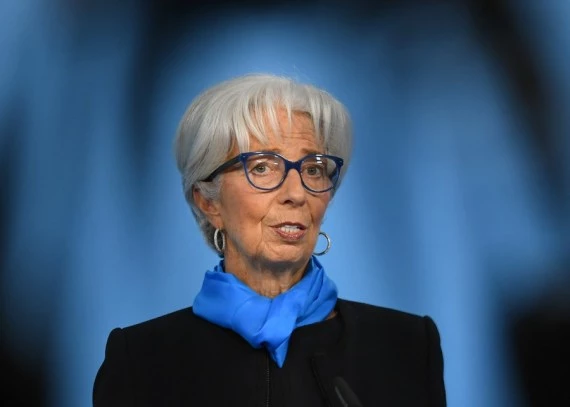 European Central Bank (ECB) President Christine Lagarde speaks during a press conference at the ECB headquarters in Frankfurt, Germany, Oct. 28, 2021. (Xinhua/Lu Yang)
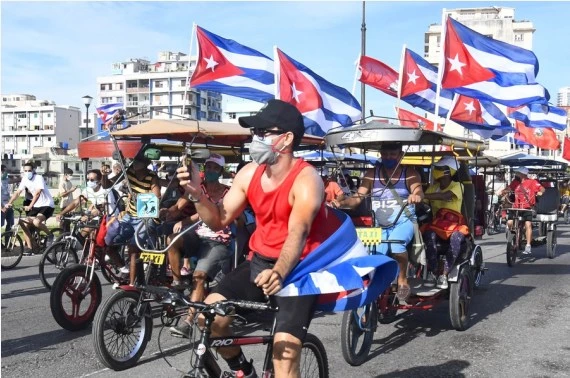 Hundreds of people participate in a rally against the six-decade U.S. embargo in Havana, Cuba, Aug. 5, 2021. (Photo by Joaquin Hernandez/Xinhua)
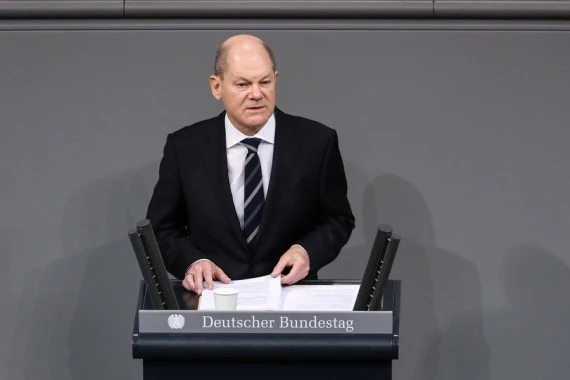 German Chancellor Olaf Scholz delivers his first government statement at the Reichstag building in Berlin Dec. 15, 2021, after he was elected as the new federal chancellor Dec. 8. (Xinhua/Shan Yuqi)

