
Can test-to-stay keep kids in schools safely? A Maryland system is finding out

#SootinClaimon.Com : ขอบคุณแหล่งข้อมูล : หนังสือพิมพ์ The Nation.

https://www.nationthailand.com/international/40010402


For Jessica Hasson, a mother of two in Maryland, keeping children healthy during the pandemic is a priority – but keeping them in school is, too.

Can test-to-stay keep kids in schools safely? A Maryland system is finding out

“Anything that we can do to give children some normalcy and consistency is a great thing,” said Hasson, a clinical psychologist who lives in Gaithersburg.

She and others say one way to accomplish that safely is the growing school approach of “test-to-stay.” The Centers for Disease Control and Prevention recently recommended the practice, which allows unvaccinated students exposed to the coronavirus by a classmate to get tested regularly at school to make sure they are not infected. If they are negative, they stay in school.

The Montgomery County school system, where Hasson’s son is in fifth grade, conducted a trial run of the practice this fall and plans to expand test-to-stay in the new year. Nationally, a handful of states have recommended the practice, said Mara Aspinall, a professor at Arizona State University who has studied the issue.

And support for it is growing as the highly contagious omicron variant spreads, threatening a spike in quarantines.

“I expect schools will increasingly adopt it next semester,” Aspinall said. “It helps kids stay in school and assure everyone in the school community that classrooms are as safe as possible.”

The CDC released two studies – in Illinois and California – showing the effectiveness of the approach, with CDC Director Rochelle Walensky describing test-to-stay as “a promising and now proven practice” that “works to keep unvaccinated children in school safely.”

In Montgomery, home to the state’s largest school system, the protocols were in use at seven schools as of mid-December. Students exposed to a virus-positive classmate were able to do rapid testing each morning for five school days, if they had parental permission, rather than simply go home.

The result was significant: a combined 240 days of in-person learning spared from quarantine, said Earl Stoddard, assistant chief administrative officer for Montgomery County and part of the leadership team on the effort. What’s more, none of the students who stayed in school tested positive, he said.

“It was definitely successful,” he said. “We’re going to need to do more of it.”

Stoddard said that while omicron appears to cause less serious illness, the variant’s high transmissibility will result in more cases, which under current CDC guidelines could mean more potential quarantines – “thus making test-to-stay more important,”

In the Washington region, test-to-stay is still new – and untried in school systems in Arlington, Alexandria and Prince George’s counties. School officials in Fairfax County submitted a request to be part of a test-to-stay pilot program Virginia is planning for the new year, a spokeswoman said.

School system officials in Montgomery say the practice is being used for exposures during eating or drinking, essentially lunch time – when masks are off but there is no forced exhalation as would happen during sports activities. There has been a limited number of such cases, schools spokesman Christopher Cram said.

For all of the promise of test-to-stay, there are challenges, too. Nationally, some school systems have struggled to find sufficient staffing to coordinate testing, acquire the necessary stock of rapid tests and gather parental permission for the testing, Aspinall said.

In Montgomery, rapid tests are not an obstacle, according to Stoddard. “The biggest challenge, by leaps and bounds, is staffing,” he said. The county has 75 extra contract employees, all in nursing, to bolster testing and other health efforts in schools, he said, and expects to bring more into schools in January.

“The limitations have often been the availability of personnel, as in people who are interested in doing this type of testing are available and are ready to come on board rapidly,” Stoddard said Wednesday.

Still, supporters of the practice say there needs to be greater urgency, claiming Montgomery County has been too slow to roll out the practice in its 209 schools and too tight-lipped about how the effort is going.

Jennifer Reesman, a parent leader who has testified before the Montgomery County school board on the issue, says the pace has cost students important in-school hours that could have helped with pandemic learning losses. Every day and every hour of instruction counts, she said.

Data released this fall in Montgomery County showed a decrease of 35 percentage points in literacy readiness among second-graders and a decrease of 26 percentage points on math measures among fifth-graders for the year that ended in June compared with 2019, the last regular school year that ended before the pandemic.

“Test-to-stay is an incredibly equitable and effective program,” said Reesman, urging it be deployed “far more widely” and used for other circumstances beyond lunch. “We should not have entire-class or entire-grade quarantines in high-vaccinated Montgomery County,” she said. “We are a tool-rich county. We’re just not using the tools we have very wisely.”

Stoddard attributed the slow ramping up of test-to-stay to a desire to scrutinize a new program to ensure it would not create new risks. He also said nurses have not been easy to come by so many months into the pandemic.

At New Hampshire Estates Elementary, in Silver Spring, PTA President Kea Anderson said nearly half of K-2 students were in quarantine the Tuesday before winter break, following 13 days of accumulating cases. She posted a tweet asking how to bring test-to-stay into the high-needs school.

“Test-to-stay is kind of a mystery,” Anderson said. “How do we get it? I don’t know.”

For school families, quarantines are highly disruptive, she said: “It’s not easy for many of our families to switch to virtual learning because they can’t stay home or arrange care at a moment’s notice.”

Montgomery, like many school systems, also uses other strategies to reduce quarantines. When students are properly masked and one tests positive, quarantines are not mandated for close contacts, as long as they are enrolled in – or sign up for – the school system’s coronavirus-screening program. In those cases, students continue to attend in-person classes but can’t participate in high-risk activities and are expected to quarantine outside of school.

Nationally, some school systems eased up on quarantine rules starting last school year.

Jennifer Martin, president of the Montgomery County Education Association, the 14,000-member teachers union, said it was too early to comment on the efficacy of test-to-stay, which many teachers don’t know enough about yet. But broadly speaking, Martin said, teachers recognize that students have gone through a lot and learn best in person. “If we are safe together, we want to be together,” she said.

Hasson, the mother of two in Gaithersburg, said that as a psychologist she worries about the mental health toll of more missed school days for students. She thinks test-to-stay will help.

“There is no way to have zero risk,” Hasson said. “But this would allow the student to continue to go to school, while minimizing the risk of an outbreak.”

Published : December 25, 2021

By : The Washington Post

A new drug to treat covid could create a breeding ground for mutant viruses

#SootinClaimon.Com : ขอบคุณแหล่งข้อมูล : หนังสือพิมพ์ The Nation.

https://www.nationthailand.com/international/40010401


On Thursday, the Food and Drug Administration made what may be the most momentous drug-approval decision in its history: It granted emergency-use authorization for Mercks molnupiravir to treat covid-19. This approval is significant not because molnupiravir is an especially good drug, but because it is a rather ineffective and dangerous one. In particular, molnupiravir might create new variants of SARS-CoV-2 that evade immunity and prolong the pandemic.

A new drug to treat covid could create a breeding ground for mutant viruses

The problem with molnupiravir lies in its mechanism of action. Unlike any previous antiviral drug, molnupiravir does only one thing: It introduces mutations into the viral genome. We are already familiar with the fact that viruses naturally mutate to evade immunity; the many mutations of the spike protein in omicron, for example, allow it to evade the antibodies created by prior infections or vaccines. Molnupiravir relies on inducing even more mutations so that eventually the virus’s proteins are damaged beyond function. That molnupiravir can mutate SARS-CoV-2 to death has been demonstrated in the controlled conditions of a petri dish and lab animal cages, leading Merck to test it in covid-19 patients in clinical trials.

But people are not petri dishes or lab animals, and while molnupiravir works to some extent, it has not worked very well in covid-19 patients. Specifically, molnupiravir reduced hospitalizations by only 30 percent. In contrast, Pfizer’s antiviral drug Paxlovid, which works by a different mechanism and was also approved this week by the FDA, reduced hospitalization by 89 percent. (My lab does research on drugs using the same mechanism as Paxlovid – inhibition of the viral protease enzyme – independently of any company affiliations.) This means that most of the time that molnupiravir was given the opportunity, it failed to inhibit viral replication enough to allow the patient to avoid hospitalization.

Merck’s own research, published Thursday, explains why. It found that viable virus can still be detected in some patients on the third day of treatment with the drug. That means that for at least several days, the drug is in the body mutating the virus – but not all virus genomes have picked up enough mutations to die off. For those initial few days, then, the patient is a breeding ground for viable mutated viruses.

The first days of molnupiravir treatment present a clear opportunity for mutant viruses to be transmitted to family members or caregivers. Viral evolution is a process of selecting for rare mutations that are beneficial to the virus. It doesn’t matter if just one out of the billions of copies of viruses in an infected individual mutates to a higher level of fitness. That single copy, either by evading existing antibodies or replicating to yet higher levels of fitness, will become amplified either in that patient or in the next person infected.

The worst-case scenario is worrisome. As long as molnupiravir is in use somewhere in the world, it could generate repeated cycles of new variants, with people desperately taking the drug to fight the new variants it spawns, creating a vicious positive feedback loop while causing more suffering and deaths.

Molnupiravir’s low efficacy may come as no surprise, because drugs that only mutate a viral genome have never been tested before in people. By contrast, the previous antiviral medication capable of mutating viruses, ribavirin, also had direct effects, including blocking the viral replication enzyme and stimulating innate immunity – and that was with much less contagious viruses. We didn’t know how well a drug whose sole function is to introduce mutations could work against a highly contagious, rapidly replicating virus. Now we know: not very well.

The FDA’s fact sheet for prescribers, also released Thursday, actually recognizes the risk that a mutated virus could escape. It says: “Completion of the full 5-day treatment course and continued isolation in accordance with public health recommendations are important to maximize viral clearance and minimize transmission of SARS-CoV-2.” But how are we going to prevent people from stopping the drug, or forgetting a dose, or merely talking and dining with family members without masks, throughout treatment? This is simply not realistic in the general population.

In addition, the fact sheet recognizes that “changes in the spike protein occurred at positions targeted by monoclonal antibodies and vaccines.” Bafflingly, however, it adds, “The clinical and public health significance of these changes are unknown.” The significance of changes to spike protein positions by antibodies and vaccines is very well known: These changes are what allowed each variant of concern – from alpha to beta to delta to omicron – to evade immunity from previous infection, vaccines or monoclonal antibody treatment.

What can be done? We can take some comfort in the FDA’s requiring Merck to report, within three months, the viral mutations induced by molnupiravir in clinical trial participants. Merck will also need to report viral mutations in immunocompromised patients, who are likely to harbor viruses longer. As this crucial information should have been supplied before approval, a responsible approach would be to limit molnupiravir use for the next three months to the best controlled settings. For example, health care providers could prescribe it only to people who live alone, or who live in managed care or nursing facilities where effective isolation can be implemented. And then it will be important for the FDA to be ready to revoke the emergency-use authorization if viable immunoevasive variants do indeed arise, even if only once.

The FDA and Merck have essentially engaged the public in a gamble without public debate. They are betting that every single mutated virus copy that will be transmitted from patients taking molnupiravir will be neutral, or hurt the virus itself and not its host – that there won’t be even one case of a lucky hit that creates a more capable or evasive virus. This seems like a bad bet, as SARS-CoV-2 has a track record in this pandemic of winning its own bets. But now that the dice have been rolled, we must take every measure we can to use the drug responsibly and quantify its risks. Our ability to end the pandemic may well depend on it.

Published : December 25, 2021

By : The Washington Post
Two Maryland hospitals declare disaster as coronavirus cases rise

#SootinClaimon.Com : ขอบคุณแหล่งข้อมูล : หนังสือพิมพ์ The Nation.

https://www.nationthailand.com/international/40010400


A health-care “disaster” was declared at two Maryland hospitals Friday as coronavirus cases have skyrocketed more than 450% in the past month at the facilities, University of Maryland Upper Chesapeake Health announced.

Two Maryland hospitals declare disaster as coronavirus cases rise

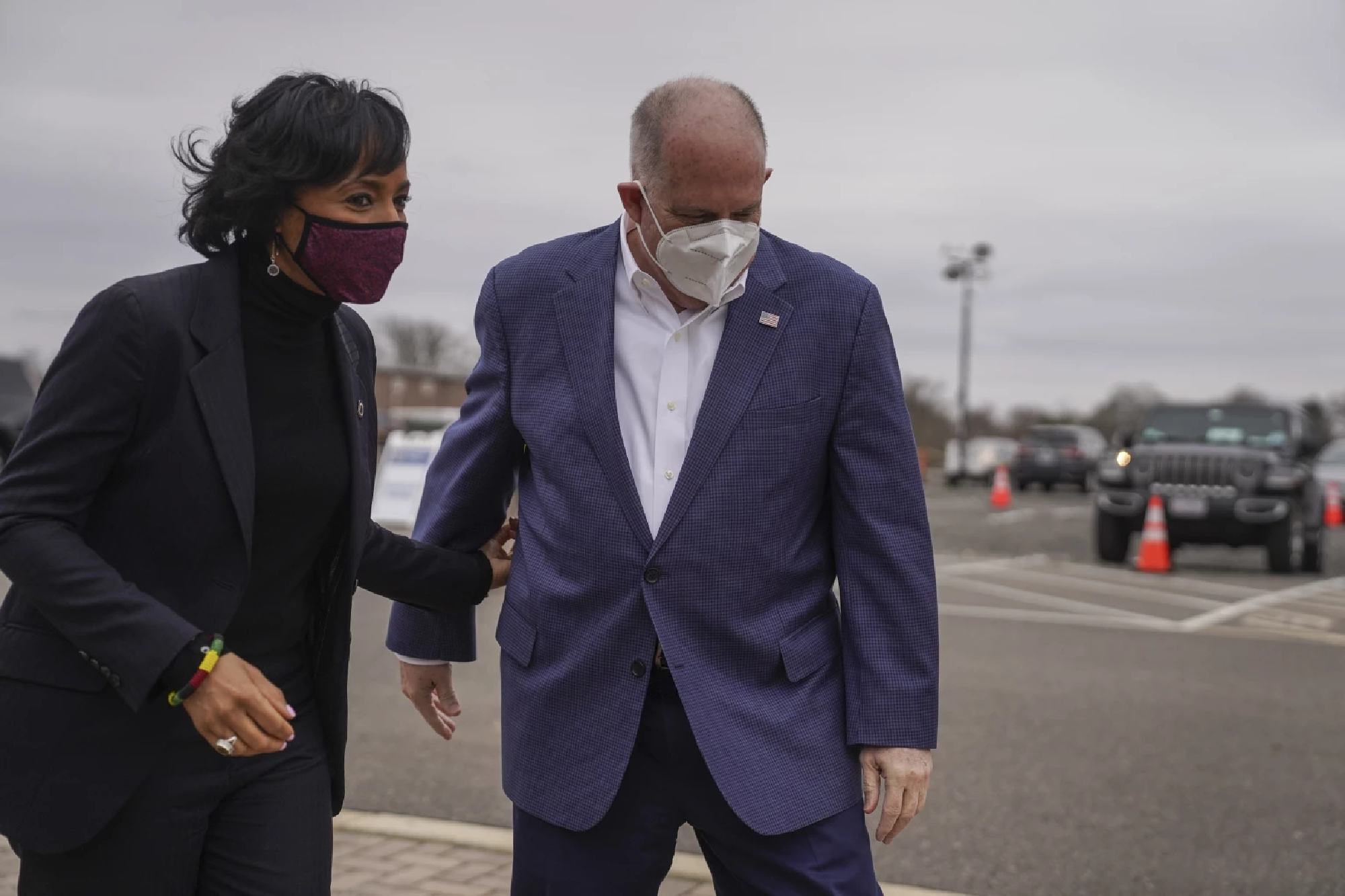
The medical provider’s announcement came as Prince George’s County Executive Angela Alsobrooks, D, announced on Twitter that she had tested positive for the coronavirus and was “experiencing mild symptoms.”

Photo Credit: Washington Post photo by Michael Robinson Chavez

“To keep my parents and family safe, we have cancelled Christmas dinner at my house and will be gathering virtually this year,” she tweeted. Maryland Gov. Larry Hogan, R, announced earlier in the week that he had tested positive. Both said they were fully vaccinated and had received booster doses.

With the highly transmissible omicron variant spreading across the region, the emergency declaration by the Maryland health-care provider allows the Upper Chesapeake Medical Center in Bel Air and the Harford Memorial Hospital in Havre de Grace to modify surgical schedules and redeploy staff to meet a surging demand for care.

Hospital officials described the measure as “unprecedented” for its organization.

“We did not take this decision lightly,” Fermin Barrueto, an Upper Chesapeake Health senior vice president, said in a telephone interview. “The demand for our services has outstripped our resources, which includes staffing.”

He said the emergency measure is expected to last “days, weeks, but your guess is as good as mine.”

Martha Mallonee, a spokesperson for Upper Chesapeake Health, said in an email that the system does not release its case count “because they change too much hour by hour.” However, she added that the statistic that remains consistent is that 75% to 80% of patients admitted to the facilities for covid-19 are unvaccinated.

Between the two hospitals, coronavirus cases have increased 458% in the past month, according to the statement. At Upper Chesapeake Medical Center alone, the caseload has increased 733%.

Barrueto said surging cases have coincided with a staffing shortage in the hospitals’ intensive care and emergency departments. As has been the case in medical facilities across the country, Barrueto attributed the decrease in staff to “burnout” and “moral distress” among hospital workers.

“It has been a challenge,” he said.

Across the region, coronavirus cases are climbing, with Maryland on Thursday reporting 6,869 new positive tests, its highest single-day count since the pandemic’s start.

With Maryland’s covid-19 hospitalizations rising above 1,500, medical centers were required to institute their pandemic plans. That includes reducing the number of non-urgent or elective procedures and surgeries, transferring patients to other sites, and increasing the number of beds available.

Hogan said in a statement Thursday that he expected “record levels” of hospitalizations in coming weeks, with the unvaccinated “driving the strain on our health care system.”

Meanwhile, D.C. has been reporting its own unprecedented number of cases, with a single-day record of 1,904 new cases on Thursday.

Virginia, which is the only one of the three jurisdictions to update numbers Friday, had 8,756 new cases. The state’s seven-day average of new cases per 100,000 is now up to 60.16, a level not seen since January’s surge.

Published : December 25, 2021

By : The Washington Post
Americans widely distrust Facebook, TikTok and Instagram with their data, poll finds

#SootinClaimon.Com : ขอบคุณแหล่งข้อมูล : หนังสือพิมพ์ The Nation.

https://www.nationthailand.com/international/40010399


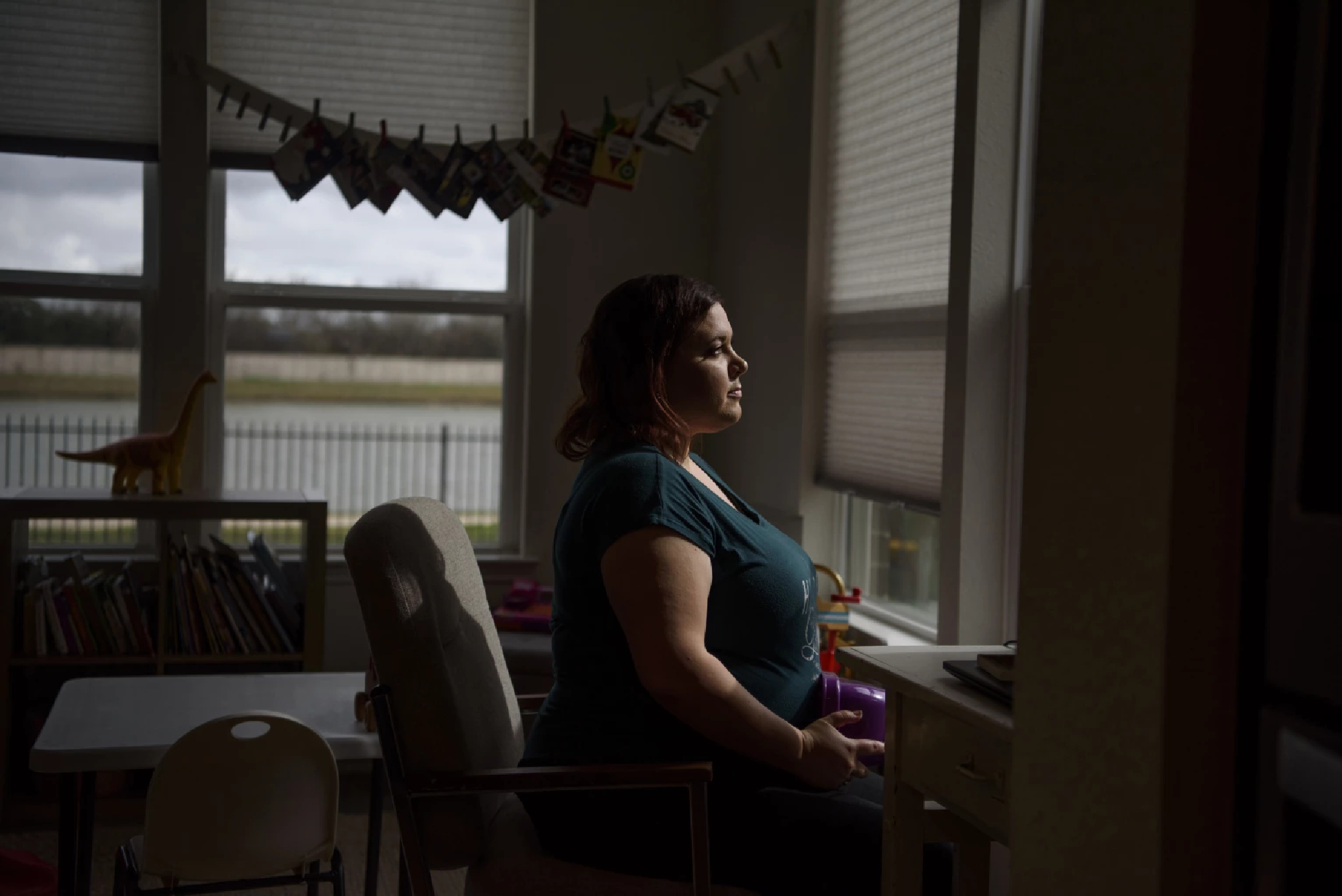
Youll find all the usual technology suspects inside Mary Veselkas Pearland, Texas, home. Theres her iPhone, a school-issued iPad for her young daughter and the latest boxes delivered from Amazon. The full-time mother has an active Facebook account and a TikTok account, and sitting in her living room is an Echo speaker, its Alexa voice assistant always ready to add items to her shopping list or turn off the lights.

Americans widely distrust Facebook, TikTok and Instagram with their data, poll finds

Like many Americans, Veselka’s daily life is saturated with the products and services pushed by big technology companies, paid and free. And like many Americans, she simultaneously does not trust the businesses or the people running them when it comes to privacy issues, but can’t simply shake them off, either. She doesn’t like the way Facebook collects her personal data to target ads, or the kinds of videos YouTube offers to her child, and she suspects that her devices are always listening.

Photo Credit: Photo for The Washington Post by Callaghan O’Hare

“We go into it knowing that we can’t really trust them, but I don’t think we can get around not using it,” Veselka, 30, said of her technology. “I’ve tried giving up Facebook for a period of time. . . . It’s just not really something you can do and still maintain a regular social life.”

It’s the rare thing that Americans of all ages and across the political spectrum largely seem to agree on: They don’t trust social media services with their information and they view targeted ads as annoying and invasive, according to a Washington Post-Schar School poll. Many Americans use social media – and most use Facebook – but 64% say the government should do more to rein in big tech companies.

People are caught in thrall to platforms and devices that increasingly shape the way we communicate, shop, store important information and otherwise manage the most fundamental parts of our lives. With nearly 3 billion monthly users around the world, Facebook can seem particularly inescapable.

Most Americans say they are skeptical that several Internet giants will responsibly handle their personal information and data about their online activity. And an overwhelming majority say they think tech companies don’t provide people with enough control over how their activities are tracked and used. The survey was conducted in November among a random sample of 1,122 adults nationwide.

According to the survey, 72% of Internet users trust Facebook “not much” or “not at all” to responsibly handle their personal information and data on their Internet activity. About 6 in 10 distrust TikTok and Instagram, while slight majorities distrust WhatsApp and YouTube. Google, Apple and Microsoft receive mixed marks for trust, while Amazon is slightly positive with 53% trusting the company at least “a good amount.” (Amazon founder Jeff Bezos owns The Washington Post.)

Only 10% say Facebook has a positive impact on society, while 56% say it has a negative impact and 33% say its impact is neither positive nor negative. Even among those who use Facebook daily, more than three times as many say the social network has a negative rather than a positive impact.


People think their devices are listening

Perhaps the most alarming pervasive suspicion is one that is still dismissed by many experts – and the companies themselves – as an urban legend. About 7 in 10 Americans think their phone or other devices are listening in on them in ways they did not agree to. Perhaps given the steady drumbeat of damaging true stories that come out about the companies – mishandling of personal data, unchecked dangers for children, contributing to the destructive spread of misinformation and polarization – secretly activating a microphone doesn’t seem like a big leap.

“My phone is listening,” said Gabriela Adame Torrace without a hint of doubt in her voice. The 46-year old accountant recalls telling her husband she wanted to go to Disneyland, then opening Facebook and seeing an ad for Disneyland passes. “Anything that I talk about, automatically I know I will see those ads on Facebook.”

Suspected Big Brother-like eavesdropping isn’t even at the top of her list of concerns about the major technology companies, though. The Southern California resident is most worried about how social media pushes people into filter bubbles, where they see and hear people who already think like them, as well as falling down rabbit holes of conspiracy theories. She thinks the companies themselves are behind this, trying to manipulate their users into having certain opinions and points of view.

Still, Torrace says she’s not anti-technology and doesn’t plan to give any of it up. Instead, she spends some of her time online “trying to go to the other side,” looking for posts a social media algorithm might hide from her. The key isn’t quitting technology, but using it with eyes wide open, she said.

Major tech companies including Facebook and Amazon have denied accessing microphones without permission, and experts say it’s likely that they instead have enough personal data to accurately predict what you’re interested in.

Social media companies are trusted the least

Despite the catchall term “Big Tech,” the biggest technology companies are not all viewed in the same negative light. The businesses that sell goods or services directly to people are viewed more favorably, like Apple and Amazon. There’s less mystery about how they’re making money off customers, and there’s not as much of a barrier between the organizations and the individuals who pay them.

It’s the social media companies, where the services are offered up ostensibly free, that unsettle Americans more. After years of privacy experts warning that “if it’s free, you’re the product,” perhaps the reality of what that really means has started to be fully absorbed. Tech companies have no-cost products such as social media apps, search engines, dating apps and email. In exchange, they collect data and feed the online marketing and advertising industry while profiting off it.

The biggest goal of collecting data is to serve up narrowly targeted ads. Two companies dominate. Google earned $147 billion in revenue from advertising in 2020, or 80% of its total, while Facebook earned $84 billion in revenue from advertising, or 98% of its total.

About 8 in 10 Internet users say that tech companies do not provide enough control over how information about their activities are tracked and used, including majorities across age, race, education and partisan groups.

Targeted ads – the entire point of all that data collection – are widely disliked. More than 8 in 10 Internet users say they see targeted ads at least somewhat often. Among those who see them, 82% say they are annoying and 74% say they are invasive. And while companies sometimes defend targeted ads as helping people find products they want, 66% of Internet users who see them online say they are not helpful.

Criticisms of the data-for-usage trade-off have increased since 2012, when a Pew Research survey found 59% saying it represented an “unjustified use of people’s private information.” Today, 73% of Americans hold this view, including majorities of Americans across political and demographic groups, according to the Post-Schar School poll.

“They think free enterprise means ‘I can do anything I want, anytime I want,'” said Ken Dorsch, a 76-year old retiree in Tulsa. “We want to make money more than we want to be responsible for what we’re doing.”

Dorsch uses Facebook to follow the news from his church groups, and to keep up with friends and relatives. He has a computer, orders through Amazon, uses a free Google email account, and has dabbled in Twitter but didn’t quite get it. He especially hates how many ads fill up his Google searches, Facebook feed and even Amazon results.

Just last week he thought about quitting Facebook and came to the same conclusion as many people: It is too necessary for staying in touch and being part of a community. Where else would he go?

Looking for fixes, from government regulation to self-regulation

“The fact that people continue to use Facebook doesn’t mean they like it,” said Jack Goldstone, who directs the Center for the Study of Social Change, Institutions and Policy at the Schar School of Policy and Government. “It’s not unexpected that people would continue to find ways to interact with a program, even if they’re deeply suspicious of its broader social impact. That’s how we’re wired.”

What is striking about the results of the survey, says Goldstone, is how distrust of Big Tech unifies Republicans and Democrats, even though they may have different reasons for disliking the companies and their policies.

Overall, 64% of Americans say the government should do more to regulate how Internet companies handle privacy issues, a sharp increase from 38% who said the same in the 2012 Pew survey. Democratic support for the government doing more to regulate how Internet companies handle privacy grew from 45% in 2012 to 82% this year, while Republican support is up from 30% to 53%, and support from independents is up from 38% to 66%.

That’s a high percentage for Republicans, a party traditionally against government regulation. In a free market – a hallmark of Republican thinking that calls for minimal government involvement in the economy – people can simply choose not to use a company that they dislike. Yet few people appear to be opting to leave Facebook, quit TikTok, switch from Amazon or power down smartphones over concerns about data privacy.

Dorsch, the Oklahoma retiree and an independent, would like to see the companies try to regulate themselves, and Veselka, the Texas mother, thinks that the government doesn’t have a place trying to create laws that specifically control what private companies do. “There definitely needs to be changes or some sort of oversight but not the government’s,” she said. Some responsibility, they say, falls to individuals.

“I look at [regulation] as a very good thing, but I don’t know exactly what that would look like,” said Democrat David Noon, a history professor at the University of Alaska Southeast who has similarly lost trust in the big tech companies, especially social media. “I think about the long history of regulation. Most of it is government agencies trying to monitor industries that they don’t really know that well. And as a result, whatever instruments of regulation they put in place tend to get captured by the organization being regulated.”

Nearly 8 in 10 Internet users take at least some precautions to limit the information that websites, search engines or apps gather about them, according to the Post-Schar School poll.

A 57% majority say they have changed privacy settings on websites, such as not allowing tracking, and half say they altered the privacy settings on their phone or apps. Most say they have deleted their Web history (56%), while nearly 4 in 10 say they changed their browser settings (39%) or used a private browsing setting such as “incognito mode” (37%). About 1 in 4 (26%) say they have used a virtual private network – software for creating a more private Internet connection – to protect their privacy.

Facebook has been plagued by privacy issues for years, from the Cambridge Analytica scandal to the recent revelations by whistleblower Francis Haugen. Yet more than 7 in 10 Internet users are on Facebook, with over half saying they use it daily.

Noon, the history professor, is in the minority. He has actually quit Facebook. The breaking point came around Thanksgiving 2016, a few weeks after the election. He was looking at the Facebook account he’d had for nearly 10 years and saw nothing but a toxic stew of political infighting, splintering families and conspiracy theories. He decided to deactivate his account and says he hasn’t looked back.

“In my most cynical moments I feel like at a certain point, people in the company must have realized just how corrosive the platform was, not just in the U.S. but elsewhere,” said Noon, 51. “They’ve always seemed to be playing catch-up. It’s a company that responds to publicity surrounding its mistakes, its blind spots – they try to keep a lid on it as long as they can.”

He still has a mostly unused Instagram account, and spends time on Twitter.

At home in Texas, Veselka tries to have some rules to protect her family. Her daughter isn’t allowed to have her own tablet or unfettered access to streaming sites or other apps. And while she rarely worries about the tech gear around her house listening, she does avoid microphone-equipped devices when having private conversations.

“The only time I think about it actively is when my husband and I are having a conversation about politics. We’re a little more libertarian,” Veselka said with a laugh. “If we’re talking about something sketchy, let’s take it outside.”

The poll was conducted by The Post and the Schar School of Policy and Government at George Mason University Nov. 4-22, among a random national sample of 1,122 adults including 1,058 Internet users. Respondents were contacted by mail through a random sample of U.S. households and completed the survey online or by mailing back a questionnaire. The margin of sampling error is plus or minus 3.5 percentage points for overall results, and four points among Internet users. Sampling, data collection and tabulation conducted by SSRS of Glen Mills, Pa.

Published : December 25, 2021

By : The Washington Post

Courts backlog prolongs suffering, with pandemic keeping victims and defendants on hold

#SootinClaimon.Com : ขอบคุณแหล่งข้อมูล : หนังสือพิมพ์ The Nation.

https://www.nationthailand.com/international/40010398


When the coronavirus struck American shores in early 2020, the red-brick courthouse that has stood sentry on Main Street in Newport, Vt., since the late 19th century abruptly shut down.

Courts backlog prolongs suffering, with pandemic keeping victims and defendants on hold

So did courthouses nationwide. But unlike most, the one in Newport – a small, lakeside community nestled near the Canadian border – has never fully reopened.

Photo Credit: Washington Post photo by Jonathan Newton

With jury trials still suspended, cases are being dismissed by the dozen. Defendants live with charges they can’t shake. And Dick Collier lies awake at night, wondering if he will die before the man accused of killing his daughter faces justice.

“That’s my fear,” said Collier, 81, and in precarious health. “That I might not live long enough to see him go to trial.”

Nearly two years after the American justice system was paralyzed by a pandemic, the repercussions continue to radiate through communities nationwide, from tiny towns to the largest cities.

District attorneys face some of the longest case backlogs in living memory. Defendants languish in jails that have become breeding grounds for the coronavirus. Others are set free – and, some prosecutors say, may be contributing to a spike in violent crime that is only compounding the pileup.

Although the shutdown in Newport is extreme – most courthouses are back in action, even if they are not yet at their pre-pandemic capacity – legal officials from coast to coast say justice delayed by covid-19 will continue to be a feature of the American landscape for several years to come. And that’s assuming the courts don’t have to shut down again for omicron or another new variant.

“This is a three-year project to get the number of pending cases back to what it was. And I’m an optimist,” said Dan Satterberg, prosecuting attorney in King County, Wash., which includes Seattle. “It’s a historic challenge that we’re facing right now.”

The backlogged system has had deadly consequences, officials say.

In Wisconsin, Darrell Brooks was set to stand trial this year for allegedly firing a gun at his nephew. Prosecutors were ready, as was the defense. But there was no courtroom available. With the system unable to deliver the speedy trial that Brooks had requested – and that the state was required to deliver – he was released on $500 bail.

While out, court records show, the 39-year-old allegedly tried to use his car to run over the mother of his child and was arrested once more. But an overburdened junior prosecutor juggling a jury trial and two dozen other felony cases set his new bail at $1,000 – an amount the district attorney would later call “a mistake” – and Brooks was released again.

Just days later, on Nov. 21, prosecutors say Brooks plowed his car into the Christmas parade in the Milwaukee suburb of Waukesha, hitting 60 people – and killing six. This time, his bail was set at $5 million.

While critics have focused on the low bail amounts, Milwaukee District Attorney John Chisolm said the case was better understood as the tragic consequence of when courts can’t keep up.

“This is a system issue right now, and it’s only going to get worse,” Chisholm told reporters this month. “These backlogs aren’t going to magically disappear.”

Delays in the U.S. court system are nothing new, of course. Long before the coronavirus, America stood out among its industrialized peers for the extensive wait times from charges filed to verdict delivered.

“It’s not that the criminal justice system was a model of efficiency prior to the pandemic,” said Christopher Slobogin, a law professor at Vanderbilt University. “But now things have gotten much worse, and ultimately that’s not good for anybody.”

When the pandemic struck, the impact on the courts was immediate and far-reaching: The Pennsylvania Supreme Court declared a “statewide judicial emergency” and extended filing deadlines. Virginia’s Supreme Court issued an order suspending nonessential proceedings in circuit and district courts. The Iowa Supreme Court announced that it was pushing back criminal trials, while Alabama’s Supreme Court suspended in-person court proceedings.

Because criminal defendants have a constitutional right to face their accusers, criminal trials – unlike civil and family law cases – generally could not be conducted remotely. And amid fears of superspreader events, jury trials in cramped quarters seemed especially unwise.

The shutdowns reverberated nationwide, but to varying degrees. Some states reopened far more quickly than others. Now, even as certain areas report lengthy delays, others say their backlogs are gone. A survey by the Thomson Reuters Institute released in August found that the average backlog in state and local courts had increased by about a third.

Vera Institute of Justice Vice President Insha Rahman said that, on the whole, the courts were slow relative to other parts of society in getting back up and running. And the reason, Rahman said, is insidious: The courts disproportionately “process cases for people who are poor, who are Black and Brown. If the courts were filled with cases of White kids from suburban, wealthy parts of our communities, there would have been more urgency to bring things back to normal.”

Attorneys and experts say the impact of delayed criminal cases is felt across the board. They point out that defendants can be sitting in jail, losing out on employment and means to support their families. Victims of crime who were traumatized face added anguish waiting to see how the cases are resolved. And, these attorneys and experts say, there are practical reasons for trials to happen sooner rather than later.

“You don’t want witnesses’ memories to fade,” Slobogin said. “You don’t want evidence to go stale. The longer a trial takes, the greater those dangers become.”

While most criminal cases never go to trial, with the vast majority ending in plea agreements, the backlogs have made it substantially harder to cut a deal, prosecutors and defense attorneys said.

In some cases, said Michael Young, the chief public defender in Bexar County, Texas, a defendant might wait until the last second before a trial to enter a guilty plea, or prosecutors could wait until the same moment to dismiss a case.

“Having that threat of a jury trial really helps move the docket,” Young said. “With no threat of a jury trial, there’s very little incentive for the state to do anything or the defense to do anything.”

Prosecutors, for their part, don’t agree that the pressure is off to do deals. If anything, they say, it has risen as their case count swells and jail populations climb to or past capacities that were, in many places, set lower in an attempt to stem the tide of coronavirus clusters behind bars.

Given that reality, some prosecutors believe they have “no choice but to move product. And moving product means giving out plea deals,” said John J. Flynn, the district attorney in Erie County, N.Y., which includes Buffalo.

Flynn, the incoming president of the National District Attorneys Association, said that for much of 2020, there were no jury trials taking place in Buffalo. Then one was allowed at a time. Now it’s up to two. But pre-covid, there were typically three or four at once.

To catch up, Flynn has been pushing his most serious cases into court: murder, attempted murder, sexual assault.

“But all the miscellaneous felonies – burglaries, robberies, assaults, you name it. None of them have gone to trial since March of 2020,” he said. “So just imagine the backlog.”

It would be worse, except that new cases in Buffalo are down dramatically. Nationwide, total crime has been lower during the pandemic, even as violent crime has risen.

That makes sense to Flynn on one level: Because of the pandemic, people are at home more, for instance, so there’s less opportunity for criminals to commit crimes like breaking and entering.

But part of it, he suspects, is that police officers are aware the courts are jammed, and don’t want to add to the problem.

“You don’t want to keep dumping water in a clogged sink,” he said. “So there are fewer and fewer arrests, and more potential for people who are a danger to our society to be out on the streets.”

Flynn said he suspects that is helping to fuel the rise in violent crime.

While backlogs are widespread, there are some places where the problem has been resolved. Joseph Cole, a public defender in Casper, Wyo., said court officials did have to wade through a backlog stemming from the shutdowns in 2020, but “we finally got done with the last of those trials somewhere in the area of February 2021.”

Other places are still working to untangle the knot. Mary E. Triggiano, the chief judge in Milwaukee County – the jurisdiction where Brooks was twice freed on bail before the Waukesha parade massacre – said the courts there have a backlog of about 1,700 felony cases and about 3,100 misdemeanor cases still pending.

“You’re just constantly trying to move cases,” she said. Triggiano said that in her district, they have been gradually reopening courtrooms that had shuttered during the pandemic, and the hope is that by early January, every criminal division courtroom will be open for jury trials for the first time since March 2020.

“Nobody has ever seen anything like this,” she said. Officials are “trying to balance public safety on the streets with public safety in the courtrooms” as the world continues to battle the coronavirus, Triggiano said. That courtroom safety extends to people who work there – including attorneys, judges and staff – as well as members of the public cycling through for cases and summoned for jury duty, she said.

Hillary King, a public defender in Salt Lake City, described a ballooning caseload following what she called a year-long pause in jury trials.

To get through the backlog, King said, officials are having jury trials going every week. In a normal year, King said, she would handle two or three felony trials. King said she has already handled four this year and has another on deck this month.

“We’re going to trial more because of the backlog, but it kind of adds to the backlog in the sense that when you’re in trial, you really can’t do anything else in your other cases,” she said.

King said one of her clients has been in the county jail since December 2019. His case was ready for a trial in May 2020, King said, but no trials were being set then, so it kept getting delayed. Now it looks like a trial is not happening until the spring of 2022, she said.

“Setting aside all the legal issues, the constitutional issues – on just a human level, I feel so bad for my client,” King said. “Even if he ends up convicted, that’s time he could’ve been plugging away on his sentence, and getting to probation eventually, or maybe parole.”

Candice Jones, another of King’s clients, said it took about two years for her to have a felony case resolved. According to Jones, she was driving when another woman claimed Jones was following her too closely, tried to hit her with her car and threatened her with a knife. Jones faced two felony charges as a result.

King, who called it a “she said, she said situation,” was ready for trial in March 2020, but it was delayed until July 2021. Jones, now 26, said she kept having to take time off work to deal with the case during that long wait. She also had a baby, and while she felt like she could have been doing better financially at another job, she considered herself unable to apply because of the lingering case.

“I don’t want to apply for a good job, then they see this on my record as pending or whatnot, and I’m not able to be hired,” Jones said. “It was really stressful.”

Her jury trial was held over a single day this summer. She was acquitted on both counts.

On the other side of the justice ledger are people like Dick Collier – victims and relatives of victims who have grown increasingly frustrated waiting to see perpetrators held accountable.

Collier’s daughter was killed in May 2018, and the case against her husband still had not gone to trial by the time the courthouse in Newport, Vt., shut down in the spring of 2020.

The courthouse – more than 130 years old – has poor ventilation and small rooms. Court officials have repeatedly said it’s not a safe place to hold jury trials while the coronavirus remains a threat, though they recently announced plans to make fixes that will allow for a resumption in 2022.

In the meantime, said Orleans County State’s Attorney Jennifer Barrett, “people are spiraling out of control,” racking up charge after charge. But because they don’t meet the standard for pretrial detention, they have to be released each time.

“There’s a lot more property crime, more drug-related violence,” she said of the rural area that is one of the state’s poorest. “And a lot of it has to do with our inability to address these cases in a timely fashion.”

Recently, judges have begun dismissing cases, ruling that defendants have been deprived of their right to a speedy trial.

The man accused of killing Collier’s daughter has been held since his 2018 arrest. Thea Swartz, 54, was shot dead while she was on the phone with a 911 operator, whom she had called to report that her husband was drinking and pointing a pistol at her.

Randall Swartz has pleaded not guilty to the charges, which include first-degree murder.

Initially, Collier said he expected the trial “would be fairly quick” given the overwhelming evidence.

But 3½ years after their only child was killed, he and his wife, Dot, have begun to despair that they won’t see the end of it.

Neither can sleep at night. Their health is deteriorating. They both think constantly of Thea, whom Dot Collier described as “my best friend,” a constant companion for travel, shopping trips and shared meals.

Dot Collier knows the trial won’t bring Thea back. But she said she wants the chance to face the defendant in court “and tell him the pain, the suffering, what he’s done to this family.”

The lengthy delay has made that pain all the more excruciating.

“Grieving is hard enough,” she said. “But having to go through what we’ve been through, I wouldn’t wish that on anybody.”

Published : December 25, 2021

By : The Washington Post
Asean reported over 24,000 new Covid-19 cases on Friday

#SootinClaimon.Com : ขอบคุณแหล่งข้อมูล : หนังสือพิมพ์ The Nation.

https://www.nationthailand.com/international/40010391


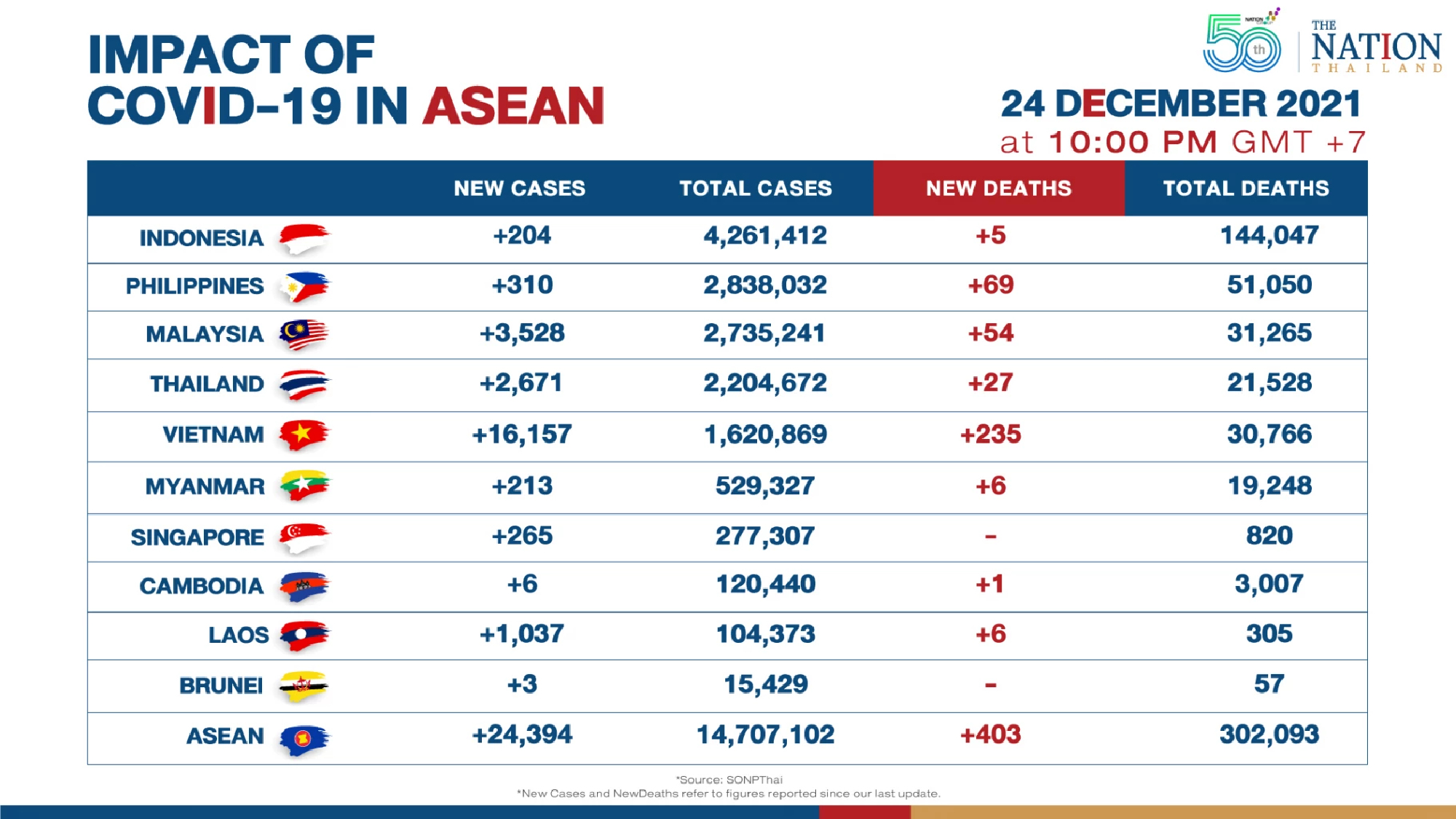
The number of Covid-19 cases crossed 14.7 million across Southeast Asia, with 24,394 new cases reported on Friday (December 24). New deaths are at 403, bringing accumulated Covid-19 deaths in Asean to 302,093.

Asean reported over 24,000 new Covid-19 cases on Friday

Singapore is planning to nearly double the number of designated facilities for close contacts of Covid-19 cases if needed, in preparation for a possible surge in infections due to the Omicron variant. There are 14 active designated facilities as of Wednesday (December 22), and the Ministry of Health is looking to convert an additional 12 designated facilities over the next month, if required. These facilities will be able to accommodate up to 11,000 people in total.

Meanwhile, Cambodia’s Phnom Penh Municipal Administration said it will kick off a new Covid-19 booster shot campaign on January 3 for people aged 12-18 who received a second dose at least four months ago, at 42 total locations in all of the capital’s 14 districts. More than 3.27 million people nationwide have received a booster to date.
 

Published : December 25, 2021

By : THE NATION

Dozens injured in West Bank clashes with Israeli soldiers: medics

#SootinClaimon.Com : ขอบคุณแหล่งข้อมูล : หนังสือพิมพ์ The Nation.

https://www.nationthailand.com/international/40010368


Dozens of Palestinian protestors were injured on Thursday in clashes with Israeli soldiers in a village northwest of the West Bank city of Nablus, Palestinian medics and eyewitnesses said.

Dozens injured in West Bank clashes with Israeli soldiers: medics

42 Palestinians, including a local journalist, were injured by rubber-coated metal gunshots and 83 others suffered from suffocation after inhaling tear gas fired by the Israeli soldiers in the village of Burqa, northwest of Nablus, the Palestinian Red Crescent Society said in a statement.

Eyewitnesses in the village told Xinhua that clashes between the demonstrators and the Israeli soldiers broke out earlier on Thursday. They added that the protestors organized a demonstration against Israeli settlers’ assaults and expansion of settlements.

The clashes broke out in the village shortly after hundreds of Israeli settlers, under the protection of Israeli soldiers, attempted to break into the village, the Palestinian official news agency WAFA reported.

In the past few days, the tensions between Israel and the Palestinians have been flaring in the West Bank over the Israeli measures. Two Palestinians were killed on Tuesday and Wednesday.

Palestinian protesters run to take cover from tear gas canisters fired by Israeli soldiers during clashes, in the village of Burqa, north of the West Bank city of Nablus, Dec. 23, 2021. (Photo by Nidal Eshtayeh/Xinhua)Palestinian protesters run to take cover from tear gas canisters fired by Israeli soldiers during clashes, in the village of Burqa, north of the West Bank city of Nablus, Dec. 23, 2021. (Photo by Nidal Eshtayeh/Xinhua)

Related Stories

Meanwhile, Saleh al-Arouri, deputy chief of the Islamic Resistance Movement (Hamas) told the pro-movement Al-Aqsa TV channel that there is a clear ascending trend of tension in the West Bank as a result of the Israeli occupation practices.

Diplomatic ties between Israel and the Palestinians were interrupted in 2014 due to the Palestinian rejection of the Israeli policies of expanding settlements and the Israeli measures against the Palestinians in East Jerusalem.

Israeli soldiers and a bulldozer are seen in the village of Burqa, north of the West Bank city of Nablus, Dec. 23, 2021.  (Photo by Nidal Eshtayeh/Xinhua)Israeli soldiers and a bulldozer are seen in the village of Burqa, north of the West Bank city of Nablus, Dec. 23, 2021. (Photo by Nidal Eshtayeh/Xinhua)

The Palestinians want to establish an independent Palestinian state alongside Israel on all the Palestinian territories occupied by Israel in 1967, including the entire West Bank and the Gaza Strip, with East Jerusalem as its capital.  

Palestinian protesters burn tires during clashes with Israeli soldiers, in the village of Burqa, north of the West Bank city of Nablus, Dec. 23, 2021. (Photo by Nidal Eshtayeh/Xinhua)Palestinian protesters burn tires during clashes with Israeli soldiers, in the village of Burqa, north of the West Bank city of Nablus, Dec. 23, 2021. (Photo by Nidal Eshtayeh/Xinhua)

Palestinian protesters run to take cover from tear gas canisters fired by Israeli soldiers during clashes, in the village of Burqa, north of the West Bank city of Nablus, Dec. 23, 2021. (Photo by Nidal Eshtayeh/Xinhua)Palestinian protesters run to take cover from tear gas canisters fired by Israeli soldiers during clashes, in the village of Burqa, north of the West Bank city of Nablus, Dec. 23, 2021. (Photo by Nidal Eshtayeh/Xinhua)

Published : December 24, 2021

By : Xinhua

Italy tightens anti-virus rules for holiday season as Omicron cases mount

#SootinClaimon.Com : ขอบคุณแหล่งข้อมูล : หนังสือพิมพ์ The Nation.

https://www.nationthailand.com/international/40010367


The cabinet unanimously approved a decree to introduce new restrictions which will enter into force in the next few days, including prohibiting public gatherings for Christmas and the New Years Eve.

Italy tightens anti-virus rules for holiday season as Omicron cases mount

Italy on Thursday tightened anti-pandemic rules for the Christmas and New Year holidays amid concerns over rising Omicron cases across the country.

The cabinet unanimously approved a decree to introduce new restrictions which will enter into force in the next few days, including prohibiting public gatherings for Christmas and the New Year’s Eve.

The step came after several mayors and regional authorities had cancelled all public events in the festivities.

According to the new rule, discos and nightclubs have to stay closed until Jan. 31, 2022. The validity of the health green pass certificate is reduced from nine months to six months in order to stem the spread of the highly contagious Omicron variant, Health Minister Roberto Speranza told a press conference.

The decree also cuts from five months to four months the required time between the completion of full vaccination (two doses) and the administration of a booster dose.

“This is a difficult phase… and we are implementing measures that we think will provide further protection to citizens and to our public health system,” the minister said.

Face masks are required in every outdoor place, plus to use only FFP2 masks — those providing more protection — on public transports and public indoor places.

A policeman checks green pass of a passenger at a bus station in Rome, Italy, Dec. 6, 2021.  (Photo by Alberto Lingria/Xinhua)A policeman checks green pass of a passenger at a bus station in Rome, Italy, Dec. 6, 2021. (Photo by Alberto Lingria/Xinhua)

Related Stories

According to earlier restrictions imposed on Dec. 6, only those vaccinated and recovered, who hold the so-called “super Green Pass,” would be allowed to sit at restaurants and bars, theatres, discos, stadiums and other sports facilities.

Yet, the rapid increase in new cases combined with the forthcoming Christmas and New Year holidays prompted authorities to move further on.

The new restrictions were decided after the National Health Institute (ISS) on Thursday shared with the cabinet the results of a preliminary survey on the spread of the highly contagious Omicron variant.

According to data based on some 2,000 swabs carried out on Dec. 20, Omicron represented 28 percent of new infections.

“Although preliminary, the estimate confirms the great rapidity of the variant spread, which seems to produce large outbreaks in a short time, and it is expected to become predominate, as it is already occurring in several other European countries,” ISS president Silvio Brusaferro said in a statement.

Italy has seen an increase in new infections and deaths, yet the daily caseload has so far remained below that of some other major European countries.

Nonetheless, the surge is significant, with over 44,500 new infections over the 24 hours on Thursday, which marked the highest daily increase since the beginning of the pandemic here.

People wearing face masks walk on a street in Rome, Italy, on Nov. 30, 2021. (Xinhua/Jin Mamengni)People wearing face masks walk on a street in Rome, Italy, on Nov. 30, 2021. (Xinhua/Jin Mamengni)


Published : December 24, 2021

By : Xinhua

APEC Officer (fixed term) – New Zealand Embassy, Bangkok

#SootinClaimon.Com : ขอบคุณแหล่งข้อมูล : หนังสือพิมพ์ The Nation.

https://www.nationthailand.com/international/40010289


The New Zealand Embassy in Bangkok is seeking an experienced project coordinator with excellent planning and organisational skills to join our team as Asia Pacific Economic Cooperation (APEC) Officer until 2 December 2022.

APEC Officer (fixed term) - New Zealand Embassy, Bangkok

About the role

The New Zealand Embassy in Bangkok manages New Zealand’s relationship with Thailand, as well as cross-accreditations to Cambodia and Lao PDR. We represent the New Zealand Government to the highest standards of professional excellence in diplomacy, trade and economic engagement, international development and consular services. The Post takes a distinctively New Zealand approach, reflecting New Zealand’s diversity and heritage.

As APEC officer, the successful candidate will undertake a crucial role supporting New Zealand’s participation in APEC 2022 in Thailand. The central focus of the role will be leading logistical and administrative planning for New Zealand ministers and senior officials’ engagement in APEC meetings and events in Thailand.

Successful delivery of New Zealand’s participation in APEC 2022 is a key priority for the Embassy.

Who are we looking for?

The role will suit those with previous experience in project management support, logistics or administration in a policy context. The ability to be highly organised, show attention to detail, and deal with complexity will be critical to success in the role.

The APEC Officer will need to be adaptable and agile in their work, and demonstrated strengths in risk management and contingency planning will also be an advantage.

This role will be an exciting – and rewarding – opportunity to join a dynamic team working to deliver on one of the Embassy’s key priorities for 2022.

• The successful candidate will need excellent English language skills (written and oral communication). Proficiency in Thai would be helpful, but not essential.

• The successful applicant will be employed on local terms and conditions and must have the right to live and work in Thailand.

• The role will be full-time, fixed term until 2 December 2022.

• The monthly salary range is THB 57,137-77,370, depending on qualifications and expertise.

How to apply

To apply for this role, please submit a completed application form (available at https://careers.mfat.govt.nz), CV, and cover letter outlining your skills and experience relevant to the role to BKKJobApplication@mfat.govt.nz

Applications will close at 5pm on Friday 14 January 2022 (ICT). Only shortlisted candidates will be contacted to proceed to the next stage in the process.

Published : December 24, 2021

Biden signs Uyghur Forced Labor Prevention Act into law

#SootinClaimon.Com : ขอบคุณแหล่งข้อมูล : หนังสือพิมพ์ The Nation.

https://www.nationthailand.com/international/40010357


WASHINGTON – President Joe Biden on Thursday signed into law the Uyghur Forced Labor Prevention Act, a bipartisan bill that bans imports from Chinas Xinjiang region unless the importer can prove they were not made with forced labor.

Biden signs Uyghur Forced Labor Prevention Act into law

The House and the Senate passed the measure last week. Lawmakers from both parties welcomed Biden’s signing of the law, with Sen. Jeff Merkley, D-Ore., a co-sponsor of the legislation, saying in a statement that it “sends a powerful, bipartisan message that the United States will not turn a blind eye” to China’s violations of human rights.

“The United States must send a resounding and unequivocal message against genocide and slave labor wherever these evils appear,” said Merkley, who is also chairman of the Congressional-Executive Commission on China. “Now that the Uyghur Forced Labor Prevention Act has reached President Biden’s desk and been signed into law, we can finally ensure that American consumers and businesses can buy goods without inadvertent complicity in China’s horrific human rights abuses.”

Biden thanked Merkley and the legislation’s other three sponsors – Sen. Marco Rubio, R-Fla., Rep. Jim McGovern, D-Mass., and Rep. Christopher H. Smith, R-N.J. – as well as House Speaker Nancy Pelosi, D-Calif., and Senate Majority Leader Chuck Schumer, D-N.Y., for their work in pushing the measure forward.

White House press secretary Jen Psaki told reporters on Thursday that U.S. companies “should never feel the need to apologize for standing up for fundamental human rights or opposing repression.”

“As we’ve said before, we call on all industries to ensure that they are not sourcing products that involve forced labor, including forced labor from Xinjiang,” Psaki said at a regular news briefing. “The reality is that companies that fail to address forced labor and other human rights abuses in their supply chains face serious legal risk [and] reputational and customer risks, not just in the United States but in Europe and other regions of the world.”

The legislation applies to “all goods, wares, articles, and merchandise mined, produced, or manufactured wholly or in part” in Xinjiang, a sprawling region in China’s far west where, beginning in 2017, the Chinese government has carried out a mass “reeducation” campaign against Uyghurs and members of other ethnic groups.

Under the 1930 Tariff Act, it is illegal to import into the United States any goods made in whole or in part by forced labor. The new law prohibits all imports from Xinjiang “unless U.S. Customs and Border Protection certifies by clear and convincing evidence that goods were not produced with forced labor.”

Biden’s signing of the law follows a move earlier this year by the Trump administration to issue a sweeping ban on imports of cotton or tomato products from Xinjiang – although enforcement of those sanctions is proving challenging.

Scholars estimate that more than 1 million people in Xinjiang were detained in camps, with some released, some transferred to prison and others pressured to work in factories.

In its annual human rights report released in March, the Biden administration declared China’s treatment of the Uyghurs a genocide, formalizing its dire assessment of Beijing’s campaign of mass detention and sterilization of minority groups in Xinjiang.

China has repeatedly denied that any forced labor has taken place in Xinjiang, although it acknowledges “vocational training programs” for residents whom officials considered susceptible to separatism or religious extremism.

Reasons for detention could include such supposed infractions as wearing a headscarf or a long beard, having more than two children or traveling overseas for vacation.

In a statement Thursday, Pelosi said that with the legislation’s enactment, Biden and Congress “have taken a strong step to combat the exploitation of forced labor in Xinjiang.”

“Congress, on a bipartisan and bicameral basis, will continue to condemn and confront the [Chinese Communist Party’s] human rights abuses in Xinjiang and many other abuses in the region, from Hong Kong to Tibet to the mainland,” Pelosi said. “If America does not speak out for human rights in China because of commercial interests, we lose all moral authority to speak out for human rights any place in the world.”

Rubio called the legislation “the most important and impactful action taken thus far by the United States to hold the Chinese Communist Party accountable for their use of slave labor.”

“It will fundamentally change our relationship with Beijing,” he said. “This law should also ensure that Americans no longer unknowingly buy goods made by slaves in China. I look forward to working with the Biden Administration and my colleagues to ensure the new law is implemented correctly and enforced properly.”

Published : December 24, 2021

By : The Washington Post