Companies burned by big tech plead for Congress to regulate Apple, Amazon, Facebook and Google #ศาสตร์เกษตรดินปุ๋ย

#ศาสตร์เกษตรดินปุ๋ย : ขอบคุณแหล่งข้อมูล : หนังสือพิมพ์ The Nation

https://www.nationthailand.com/edandtech/30380740?utm_source=category&utm_medium=internal_referral

Companies burned by big tech plead for Congress to regulate Apple, Amazon, Facebook and Google

Jan 18. 2020
By The Washington Post · Tony Romm 

BOULDER, Colo. – Apple, Amazon, Facebook and Google took a public lashing at a congressional hearing here Friday, where some of their smaller rivals, including Sonos and Tile, pleaded with federal lawmakers to take swift action against big tech.

Democrats and Republicans at times appeared stunned as they heard tales of tech giants wielding their massive footprints as a weapon, allegedly copying smaller competitors’ features or tweaking their algorithms in ways that put encroaching companies at a costly disadvantage. The testimony came as part of a wide-ranging antitrust probe into Silicon Valley’s biggest players that House lawmakers aim to wrap up – with recommendations for regulation – in the coming months.

“It’s like soccer,” said Kirsten Daru, the general counsel of Tile, which has accused Apple of acting anti-competitively. “You might be the best team in the league, but you’re playing against a team that owns the field, the ball, the stadium and the entire league, and they can change the rules of the game at any time.”

The pleas for regulatory relief resonated with lawmakers, led by Rep. David Cicilline, D-R.I., the chairman of the House’s top antitrust committee. “It has become clear these firms have tremendous power as gatekeepers to shape and control commerce online,” Cicilline said to open the session.

The hearing at the University of Colorado-Boulder put a public face on the pain caused by some of the largest tech companies in the United States. Cicilline and his Democratic and Republican peers have sought to determine if federal antitrust law is sufficient to hold Silicon Valley accountable – and whether changes to federal law are necessary to address anti-competitive concerns in search, smartphones, e-commerce and social networking.

“I think it’s clear there’s abuse in the marketplace and a need for action,” said Rep. Ken Buck, a Republican from Colorado.

The House investigation comes as the U.S. government’s two competition agencies, the Federal Trade Commission and Justice Department, proceed with their own probes into Apple, Amazon, Facebook and Google for potential antitrust violations. Nearly every state attorney general, meanwhile, has trained their sights on Facebook and Google, announcing wide-ranging inquiries of their own earlier this year.

A key leader in those states’ efforts – Colorado Attorney General Phil Weiser – sketched out a broad, ambitious agenda for antitrust enforcement in a private meeting with U.S. lawmakers Friday morning, where he called on them to invest more resources in oversight.

“The idea we’re not going to regulate tech companies is so 1990s,” Weiser said in an interview before he spoke.

At the hearing, Tile took issue with Apple for changes to its most recent iOS software for iPhones and iPads. Tile said Apple’s tools to help smartphone owners find their missing items largely mimics its own offering. Adding to its advantages, Apple imposes tougher restrictions on how Tile and others collect much-needed location data, said Daru, the company’s general counsel.

“Tile welcomes competition,” she said, “but it has to be fair competition.”

Apple says its policies seek only to protect privacy, but lawmakers at times did not appear convinced, pointing to other instances in which the iPhone giant – seeing a successful product in Apple’s app ecosystem – launches competing services of their own.

“Once Apple has essentially decided to do the same, it renders all of those apps superfluous and unnecessary,” said Rep. Joe Neguse, D-Colo.

Patrick Spence, the leader of Sonos, blasted Google and the rest of the industry for “using their power in one market to conquer or destroy nascent markets.” The high-end speaker company alleges in a lawsuit that Google unlawfully copied its technology, a charge Google denies.

PopSockets, a Boulder-based company that makes circular grips for smartphones, took issue with Amazon. David Barnett, the company’s founder, fretted about restrictions Amazon places on sellers. He said PopSockets at one point tried to quit selling through the e-commerce giant, but severing those ties ultimately cost his company $10 million. Amazon has disputed Barnett’s claims.

And David Heinemeier Hansson, the co-founder of Basecamp, which makes Web-based product management tools, said the digital ecosystem as a whole had been “colonized by a handful of big tech companies.” He likened the current behaviors of Apple, Amazon, Facebook and Google to some of the same practices that decades ago led the government to try to penalize Microsoft for antitrust abuses.

“Help us, Congress,” Hansson said, “you’re our only hope.”

European Union mulls new tougher rules for artificial intelligence #ศาสตร์เกษตรดินปุ๋ย

#ศาสตร์เกษตรดินปุ๋ย : ขอบคุณแหล่งข้อมูล : หนังสือพิมพ์ The Nation

https://www.nationthailand.com/edandtech/30380730?utm_source=category&utm_medium=internal_referral

European Union mulls new tougher rules for artificial intelligence

Jan 17. 2020
Hanson Robotics Inc.'s humanoid robot

Hanson Robotics Inc.’s humanoid robot “Sophia” on the opening day of the MWC Barcelona in Barcelona, Spain, on Feb. 25, 2019. MUST CREDIT: Bloomberg photo by Angel Garcia
By Syndication Washington Post, Bloomberg · Natalia Drozdiak

The European Union is considering new legally binding requirements for developers of artificial intelligence in an effort to ensure modern technology is developed and used in an ethical way.

The EU’s executive arm is set to propose the new rules apply to “high-risk sectors,” such as healthcare and transport, and suggest the bloc updates safety and liability laws, according to a draft of a so-called “white paper” on artificial intelligence obtained by Bloomberg. The European Commission is due to unveil the paper in mid-February and the final version is likely to change.

The paper is part of the EU’s broader effort to catch up to the U.S. and China on advancements in AI, but in a way that promotes European values such as user privacy. While some critics have long argued that stringent data protection laws like the EU’s could hinder innovation around AI, EU officials say harmonizing rules across the region will boost development.

European Commission President Ursula von der Leyen has pledged her team would present a new legislative approach on artificial intelligence within the first 100 days of her mandate, which started Dec. 1, handing the task to the EU’s digital chief, Margrethe Vestager, to coordinate.

A spokesman for the Brussels-based Commission declined to comment on leaks but added: “To maximize the benefits and address the challenges of Artificial Intelligence, Europe has to act as one and will define its own way, a human way. Trust and security of EU citizens will therefore be at the center of the EU’s strategy.”

The EU is also considering new obligations for public authorities around the deployment of facial recognition technology and more detailed rules on the use of such systems in public spaces. However, the provision on facial recognition isn’t among the three policy options officials recommend that the commission pursue.

The provision suggests prohibiting use of facial recognition by public and private actors in public spaces for several years to allow time to assess the risks of such technology.

“Such a ban would be a far-reaching measure that might hamper the development and uptake of this technology,” the commission says in the document, adding that it’s therefore preferable to focus on implementing relevant provisions in the EU’s existing data protection laws.

As part of the recommended policy measures, the EU also wants to urge its member states to appoint authorities to monitor the enforcement of any future rules governing the use of AI, according to the document.

In the draft, the EU defines high-risk applications as “applications of artificial intelligence which can produce legal effects for the individual or the legal entity or pose risk of injury, death or significant material damage for the individual or the legal entity.”

Artificial intelligence is already subject to a variety of European regulations, including rules on fundamental rights around privacy, non-discrimination, as well as product safety and liability laws, but the rules may not fully cover all specific risks posed by new technologies, the Commission says in the document. For instance, product safety laws currently wouldn’t apply to services based on AI.

Totwoo pendant aims to enhance women’s safety #ศาสตร์เกษตรดินปุ๋ย

#ศาสตร์เกษตรดินปุ๋ย : ขอบคุณแหล่งข้อมูล : หนังสือพิมพ์ The Nation

https://www.nationthailand.com/ann/30380716?utm_source=category&utm_medium=internal_referral

Totwoo pendant aims to enhance women’s safety

Jan 17. 2020
The newly launched electronic kit in the shape of an apple aims to enhance women's safety in an emergency.[Photo provided to China Daily]

The newly launched electronic kit in the shape of an apple aims to enhance women’s safety in an emergency.[Photo provided to China Daily]
By By Wang Qian | China Daily Global

Running or walking after dark, backpacking in an unfamiliar city, even taking a taxi alone in the middle of the night, can all be dangerous activities, especially for women.

To offer better protection, some technology companies are looking for a way to develop or expand tools that highlight women’s safety.

In Beijing on Jan 10, China’s smart jewelry brand Totwoo launched a kit called Safety, which is expected to combat assaults on women in the country.

If the user feels threatened, pressing the button for four seconds will activate the device that will start recording for 10 seconds. Within 50 seconds, the device will telephone and send text messages to three emergency contacts to alert them, providing a location, first-aid information and audio recordings.

Once a contact responds, the device vibrates and lights up to inform the user. The user can disable the alarm by pressing the button three times in succession.

Around the diameter of a bottle cap, the waterproof piece of jewelry can be attached to a bag, a key or even worn as a necklace.

“In Chinese culture, certain jewelry is sometimes worn as an emblem of safety. Our product brings some truth to that,” says Wang Jieming, who founded Totwoo in 2015.

It makes sense that the company decided to model the trinket in the shape of an apple, the name of which in Chinese is pingguo, sharing the same pronounced ping as ping’an, the Chinese word for “safety”.

Cooperating with China Mobile, the small core module uses a remote SIM, bypassing the need for a physical SIM card. It has certified wireless-charging technology similar to the system used by Apple. Supporting navigation systems such as GPS, Beidou and GSM base station positioning, it can provide accurate location information.

The newly launched electronic kit in the shape of an apple aims to enhance women's safety in an emergency.[Photo provided to China Daily]

The newly launched electronic kit in the shape of an apple aims to enhance women’s safety in an emergency.[Photo provided to China Daily]

Xin Yang, head of the International Security Defense College in Beijing, a private security training school established in 2011, says an independent device can enhance women’s safety in an emergency, because “mobile phones are often the first item an assailant will attempt to snatch or destroy”.

Reports of females being attacked while out running, taking a taxi or traveling alone have stoked fear and anxiety among women.

According to the World Health Organization, one in three women worldwide have experienced sexual or physical violence in their lives.

According to a 2019 study by the nonprofit Stop Street Harassment, 68 percent of women in the United States reported being harassed in public spaces like streets, trails and parks.

In 2018, Didi Chuxing, China’s leading ride-hailing online platform, came under scrutiny after two female passengers in China were killed by the drivers, raising public concern not just over women’s safety, but loopholes in the company’s driver vetting system.

Late last year, Didi relaunched its Hitch carpooling service, with improved safety features and more rigorous mechanisms for driver and passenger verification. The service allows registered car owners to accept rides each day along preset routes.

Didi has upgraded its existing emergency button to allow users to make a one-click call to police. For long-distance rides, the app records audio during journeys. Daily facial recognition protocol for drivers is also being implemented. Drivers are also required to complete a “safety knowledge test” every day before they start picking up passengers.

With such improved safety features, it will be the test bed for a women’s safety program that Didi intends to roll out to other services, the company says.

As well as the platform’s efforts, the market for safety wearables, while not a new one, is growing. Whether it’s a watch, pendant or ring, the chances are that a woman will have one about her person, meaning potentially dangerous situations can be avoided or alleviated with the quick press of a button.

Private-debt market offers rare 12% yields, but there’s a catch #ศาสตร์เกษตรดินปุ๋ย

#ศาสตร์เกษตรดินปุ๋ย : ขอบคุณแหล่งข้อมูล : หนังสือพิมพ์ The Nation

https://www.nationthailand.com/business/30380750?utm_source=category&utm_medium=internal_referral

Private-debt market offers rare 12% yields, but there’s a catch

Jan 18. 2020
Scott Bluestein
By Syndication Washington Post, Bloomberg · Lisa Lee · BUSINESS 

Scott Bluestein has a favorite type of debt investment: companies with no profits, no cash flow, and in some cases even no revenue.

While that may seem like a recipe for disaster for most fixed-income money managers, it’s perfectly normal in the world of venture debt. And few companies in the space have been more successful in recent years than Bluestein’s Hercules Capital Inc., the largest nonbank lender in the business.

The market for venture debt operates largely in the shadow of venture equity, the segment of startup financing famous for providing early funding for technology giants such as Facebook and Alibaba Group Holding. Winning wagers tend to not produce the sort of eye-popping payouts the equity side has become renowned for, but they’re also less risky, relatively speaking. Flying under the radar also has its benefits, according to Bluestein.

While investors have plowed hundreds of billions of dollars into direct-lending funds over the past few years amid a global hunt for yield, the $15 billion venture debt market has yet to see the same influx of cash. As a result it’s largely avoided the intense competition, record dry powder and pricing pressures seen in other corners of private credit. In fact, the Hercules chief executive expects core loan yields to keep pace with the long-term average of about 12% going forward.

“Venture debt has historically mystified the direct-lending market,” Bluestein said in an interview. “We have the opportunity to partner with and help finance some of the most exciting growth-stage technology and life-sciences companies in the world.”

Hercules’s current borrowers include rare-disease drug developer BridgeBio Pharma Inc. and fake-meat producer Impossible Foods Inc.

Lending to such companies requires a unique blend of credit, equity and industry expertise, according to Bluestein. The ability to assess why the companies are burning cash is critical.

“Venture lending is a pretty esoteric, specialized part of the market,” Bluestein said. “It requires significant domain expertise. It requires an achievement of scale from a performance perspective.”

Hercules originally provided BridgeBio a $35 million secured term loan in June 2018. The financing had grown to $75 million by the time BridgeBio went public a year later. Since then, its market capitalization has ballooned to $4.3 billion.

As for Impossible Foods, Hercules closed a $50 million commitment in the second quarter of 2018. A year later, the meat-substitute company reached a $2 billion valuation. In both deals, Hercules made equity investments alongside the loans. In others, it often receives equity kickers in the form of stock warrants.

Of course, the lender’s record isn’t spotless. Portfolio company Sungevity Inc. filed for bankruptcy in 2017, and the debt was subsequently converted into equity of the company that bought some of its assets. BIND Therapeutics Inc. went bust in 2016, though Hercules says it was able to fully recover its outstanding commitment.

Last year, the company’s main challenge was unrelated to its investments. Founder and then-CEO Manuel Henriquez was forced to step aside after being charged by federal prosecutors in March for participating in the college-admissions cheating conspiracy.

Wall Street was quick to cut its expectations for publicly-traded Hercules’s shares, worried that access to capital and origination growth may be hurt. The stock has since recovered, and the company said earlier this week it had surpassed more than $10 billion in committed debt capital since its inception in 2003. Assets under management stood at $2.3 billion as of Sept. 30.

Others are also growing in the space. Avenue Capital has sought to raise about $500 million for a venture debt fund, Reuters reported in November. Specialty lenders in the business also include TriplePoint and Horizon Technology Finance, while Silicon Valley Bank is seen as an industry pioneer.

Still, the strategy isn’t for everyone. Direct-lending giant Ares Capital Corp. exited the space in 2017, offloading its $125 million portfolio of venture loans to Hercules. CEO Kipp deVeer at the time attributed the exit to the overwhelming challenge of overseeing so many small and complicated financings.

Along with being relatively small, maturities on the loans tends to be short. That makes for a fast-churn, research-intensive business. The average tenor of a Hercules loans is 36 to 48 months, but the actual average duration is just a year-and-a-half, according to Bluestein.

“Our portfolio turns about every 18 months,” Bluestein said. “The treadmill is set at 10, and you can’t stop.”

While recent high-profile venture-capital stumbles such as WeWork may make investors wary of startup financing broadly, Bluestein welcomes the greater scrutiny and caution, acknowledging there have been a number of so-called unicorns where valuations reached extreme levels.

“It’s a positive. It puts more focus on fundamentals,” Bluestein said. “Anything that makes the market more realistic is good for business.”

Walmart reshuffles leadership as nervous investors await results #ศาสตร์เกษตรดินปุ๋ย

#ศาสตร์เกษตรดินปุ๋ย : ขอบคุณแหล่งข้อมูล : หนังสือพิมพ์ The Nation

https://www.nationthailand.com/business/30380749?utm_source=category&utm_medium=internal_referral

Walmart reshuffles leadership as nervous investors await results

Jan 18. 2020
File Photo

File Photo
By Syndication Washington Post, Bloomberg · Matt Townsend, Matthew Boyle 

Walmart’s new U.S. chief wasted no time putting his stamp on the unit, appointing his former top lieutenant as second in command and parting ways with the retailer’s head of merchandising.

Dacona Smith, a company veteran who most recently served as chief operating officer for Walmart’s Sam’s Club, will become COO under John Furner, according to a memo seen by Bloomberg News. Steve Bratspies, who ran the retailer’s merchandising unit for nearly five years, will leave the company and be replaced by long-time executive Scott McCall, the memo showed. The company also named its first ever chief product officer in Meng Chee, who joins from JPMorgan Chase & Co.

The world’s largest retailer typically makes leadership moves in January, in the weeks before its fiscal year ends. The rejig, which sent Walmart shares down nearly 1%, will focus more attention on the company as it prepares to report its fourth-quarter results on Feb. 18. All eyes are on Walmart after a slew of lackluster holiday results from retailers including Kohl’s Corp., Target Corp. and J.C. Penney Co. If Walmart follows suit, that will raise more concerns about the health of the American consumer.

Toshiba completes NuFlare takeover, snubs minority holders #ศาสตร์เกษตรดินปุ๋ย

#ศาสตร์เกษตรดินปุ๋ย : ขอบคุณแหล่งข้อมูล : หนังสือพิมพ์ The Nation

https://www.nationthailand.com/business/30380728?utm_source=category&utm_medium=internal_referral

Toshiba completes NuFlare takeover, snubs minority holders

Jan 18. 2020
By Syndication Washington Post, Bloomberg · Pavel Alpeyev, Yuki Furukawa

Toshiba Corp. said it completed a takeover of NuFlare Technology Inc. despite a higher competing offer, in a snub to minority shareholders.

The Japanese conglomerate acquired 5,450,695 shares of NuFlare, clearing the 14.27% minimum needed for its bid to succeed, Toshiba said in a statement on Friday. While the 11,900 yen per share price it paid is a 45% premium to where the stock traded before news of the deal broke in November, it’s less than the 12,900 yen Hoya Corp. was prepared to pay.

Toshiba was already NuFlare’s biggest shareholder with 52.4% when it initiated the buyout. Toshiba Machine Co., an independent company that retains the former parent’s name and the second-largest NuFlare stockholder, late on Wednesday said it will sell its 15.8% stake to Toshiba.

“Just because the stock went up, it doesn’t mean it was done right,” said Travis Lundy, a special-situations analyst who writes for Smartkarma. “A lot of Japanese companies trade inexpensively precisely because shareholders don’t expect to be treated fairly.”

Hoya offered to spend as much as 148 billion yen ($1.35 billion) for NuFlare, seeking a minimum of 66.7% of the chip-equipment manufacturer. At the time, Hoya said it hadn’t discussed the bid with NuFlare or Toshiba in advance for fear of the information leaking out and driving up the price. Toshiba Chief Executive Officer and Chairman Nobuaki Kurumatani has said that NuFlare wouldn’t be able to survive outside of the group and he has no plans to sell his stake. After Toshiba’s announcement, Hoya said it would not pursue its tender any further.

“We saw it as a 50-50 chance to begin with,” said Taishi Arashida, a spokesman for Hoya. Arashida said there is still room to discuss acquisition or some kind of a partnership with Toshiba.

NuFlare dominates the market for mask writers, which are used for imprinting patterns on glass squares slightly bigger than a CD case that act as a stencil for semiconductor designs. Hoya is one of only two companies in the world — the other being Japanese compatriot AGC Inc. — capable of making the blank masks used in next-generation extreme ultraviolet lithography, and it sees a lot of synergy between itself and the acquisition target.

Toshiba hasn’t explained how it arrived at the offer price and it’s not clear how NuFlare fits into the company’s business portfolio, since chip manufacturing hasn’t been core to its business after it spun off memory operations in 2018. NuFlare has said that it saw Toshiba’s bid as the best way to increase the company’s value and that the two of its 10 board directors who had connections to Toshiba group recused themselves from voting on the matter.

“The burden was on NuFlare management and its board to look at the competing bid,” Lundy said. “This conflict of interest between parent-subsidiary and minority shareholders won’t go away.”

Ex-congressman Chris Collins sentenced to 2 years on insider-trading, false-statements charges #ศาสตร์เกษตรดินปุ๋ย

#ศาสตร์เกษตรดินปุ๋ย : ขอบคุณแหล่งข้อมูล : หนังสือพิมพ์ The Nation

https://www.nationthailand.com/business/30380744?utm_source=category&utm_medium=internal_referral

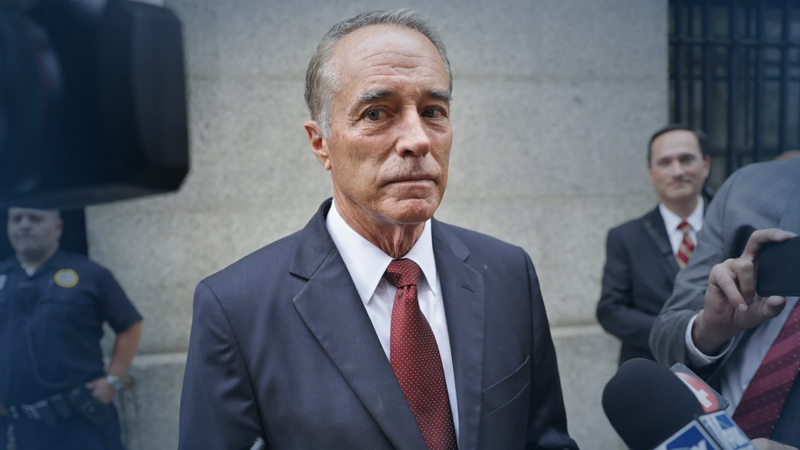
Ex-congressman Chris Collins sentenced to 2 years on insider-trading, false-statements charges

Jan 18. 2020
Chris Collins
By The Washington Post · Renae Merle 

NEW YORK — A federal judge on Friday sentenced former congressman Chris Collins to 26 months in prison for his part in an insider trading scheme and lying to the FBI.

“You had a duty to meet and you betrayed that duty,” U.S. District Judge Vernon Broderick said as he handed down the sentence.

Collins tearfully apologized to his family and his constituents, acknowledging that he tipped off his son to confidential information that a small Australian biotechnology company’s new therapy for multiple sclerosis had failed a critical clinical trial. Collins’s son and several others used the information to avoid more than $700,000 in losses. Collins also admitted that he later lied to the FBI about the incident.

“I stand here today a disgraced former congressman,” said Collins, who was one of President Donald Trump’s first supporters in Congress. “I cannot face my constituents. What I have done has marked me for life.”

Collins said he particularly regretted the impact the case would have on his son, who is scheduled to be sentenced next week. “I have destroyed the reputation of my son,” he said.

Collins’s attorneys cited his age, 69, years of public service and track record as a businessman who saved hundreds of jobs in New York, in asking Broderick to sentence Collins to probation, home detention and community service. But prosecutors asked for a much longer sentence, 46 to 57 months in prison, arguing that the New York Republican had violated a public trust and the loss of status and money was not enough of a penalty.

After a more-than-three-hour hearing, Broderick said Collins was “highly unlikely to be a recidivist” but that he still considered the former congressman’s crime significant. Insider trading creates the perception for investors that the financial markets are rigged, he said.

Broderick received more than 100 letters of support for Collins, including from John Boehner, the former Republican speaker of the House, Collins’s family and former business associates. Others, including some former constituents, sent angry letters calling for a tough sentence.

Broderick sentenced Collins to 26 months each for two counts: conspiracy to commit securities fraud and making false statements. The sentences are to run concurrently. Collins was also fined $200,000.

The case ended the career of one of Trump’s most ardent early supporters. Collins represented New York’s 27th Congressional District, which encompasses suburban and rural areas stretching east of the Buffalo metropolitan area, for more than five years. The district is a Republican stronghold that supported Trump by a wide margin in the presidential election.

Even before facing federal charges, Collins was under scrutiny for his role in promoting Innate Immunotherapeutics, a small Australian company that was developing a new therapy for multiple sclerosis. Collins served on the company’s board and was its largest shareholder.

Then, while at the June 2017 congressional picnic at the White House, Collins received an email from Innate Immunotherapeutics’s chief executive alerting the company’s board that an eagerly anticipated drug trial had been a failure, according to court filings. Minutes later, the filings said, Collins responded to the email: “Wow. Makes no sense. How are these results even possible???”

Collins frantically attempted to contact his son, who owned millions of Innate Immunotherapeutics shares, according to the indictment. Within a few minutes, Collins and his son called each other six times before connecting and talking for six minutes. During that call, Collins told his son about the failed drug trial, according to the indictment, which cites phone and bank records as well as texts.

With that insider knowledge, Collins helped his family avoid significant losses before the news became public and the company’s stock price fell more than 90%, prosecutors allege. (Because Collins was a board member, he was prevented from unloading his stock and reportedly lost millions.)

Collins was “emotionally devastated” by the failed drug trial and when he shared the news with his son, the former congressman’s attorneys argued. “It was a stupid, impulsive action. He didn’t need the money, neither did his son,” said Jonathan Barr, one of Collins’s attorneys. “People are not robots.”

And when the FBI questioned him months later, making a surprise visit to his home at 6:30 a.m., Collins didn’t want to implicate himself or his son in a potential crime, Barr said. “He has paid a very heavy and public price for his conduct,” he said.

But prosecutors were skeptical. Collins didn’t act out of emotion but from financial interests, which he exacerbated by lying to the FBI, said Assistant U.S. Attorney Max Nicholas. “We do not agree this was a crime of emotion,” he said. “The fact that he was in a position to write the country’s laws… there is nobody in a better position to know not to lie to the FBI.”

Prosecutors also faulted Collins for running for reelection after being charged in 2018. “There was a courtship of the public trust… to hold this high office having just lied to the FBI to cover up a crime he committed ten months earlier,” Nicholas said.

After the federal indictment, Collins initially suspended his campaign but then reversed course. He was narrowly elected to his fourth term months after being indicted. He resigned his seat in October after entering a guilty plea.

Several of Collins former constituents wrote to the judge complaining that they had been left unrepresented on Capitol Hill and now faced the cost of putting on an another election.

While standing before the judge, Collins sometimes struggled to form words as he sobbed and talked of finding himself in a “dark hole.” He was now branded a felon, unable to vote or even participate in the Boy Scouts as he had for decades, Collins said.

“People feel sorry for me. They shouldn’t,” he said. “I did what I did, and I violated my core values.”

Stocks surge to record highs; dollar strengthens, gold rise #ศาสตร์เกษตรดินปุ๋ย

#ศาสตร์เกษตรดินปุ๋ย : ขอบคุณแหล่งข้อมูล : หนังสือพิมพ์ The Nation

https://www.nationthailand.com/business/30380739?utm_source=category&utm_medium=internal_referral

Stocks surge to record highs; dollar strengthens, gold rise

Jan 18. 2020
The benchmark S&P 500 index, along with the tech heavy Nasdaq Composite, set record highs for an eighth consecutive trading session. Boeing Co. slumped after a Fitch downgrade, weighing on the Dow Jones Industrial Average. The Stoxx Europe 600 index closed at a record, posting its biggest gain since mid-December.

The benchmark S&P 500 index, along with the tech heavy Nasdaq Composite, set record highs for an eighth consecutive trading session. Boeing Co. slumped after a Fitch downgrade, weighing on the Dow Jones Industrial Average. The Stoxx Europe 600 index closed at a record, posting its biggest gain since mid-December.
By Syndication Washington Post, Bloomberg · Sarah Ponczek 

Stocks extended this week’s relentless push to all-time highs as positive U.S. and China economic data, low interest rates and easing trade tensions propelled investor optimism. The dollar strengthened and gold climbed.

The benchmark S&P 500 index, along with the tech heavy Nasdaq Composite, set record highs for an eighth consecutive trading session. Boeing Co. slumped after a Fitch downgrade, weighing on the Dow Jones Industrial Average. The Stoxx Europe 600 index closed at a record, posting its biggest gain since mid-December.

“The headwinds of last year have dissipated and we’ve gotten more clarity on the backdrop. That clarity is helping to solidify marginal improvement in risk assets,” said Jack Janasiewicz, a portfolio manager at Natixis Investment Managers Solutions, which oversees $1 trillion “The big one is going to earnings, and so far so good.”

The longest-dated Treasuries dipped after the U.S. announced plans for a new 20-year bond. The dollar increased against its major peers including the euro and pound, with the latter reversing gains while gilts turned higher after U.K. retail sales data disappointed.

Investors in risk assets headed into the weekend looking confident after the completion of an initial Sino-American trade deal and solid results from the biggest banks on Wall Street. U.S. markets are closed Monday for the Martin Luther King Jr. holiday. The earnings season continues to ramp up next week with Procter & Gamble Co. and Intel Corp. reporting, but for now most economic data is supporting sentiment: China GDP was in line with estimates, while housing starts surged in the U.S.

“At this stage of the game we’ve got a Fed that’s committed to staying on hold, you’ve got a belief that there’s a signal of easing, and some improvement in the economic data globally,” Kathy Jones, chief fixed income strategist at Charles Schwab, said on Bloomberg Television. “That’s helping propel markets.”

Elsewhere, oil slumped for a second week as optimism following the signing of the America-China trade agreement offset signs that supplies remain plentiful.

Emerging-market equities also climbed for a seventh week of gains.

These are the major market moves:

Stocks

-The S&P 500 index climbed 0.4% to 3,329.46 as of 4:02 p.m. New York time, the highest on record.

-The Dow Jones Industrial Average gained 0.2% to 29,347.62, reaching the highest on record with its fifth consecutive advance.

-The Nasdaq Composite index rose 0.3% to 9,388.95, the highest on record.

-The Stoxx Europe 600 index climbed 1% to 424.56, the highest on record with the biggest increase in more than a month.

-The MSCI All-Country World index increased 0.4% to 579.17, hitting the highest on record with its fifth straight advance.

Currencies

-The Bloomberg Dollar Spot index increased 0.2% to 1,194.36, the highest in more than three weeks on the biggest climb in more than a week.

-The euro fell 0.4% to $1.1093, the weakest in more than three weeks on the largest drop in more than a week.

-The Japanese yen was little changed at 110.14 per dollar.

-The British pound dipped 0.5% to $1.3014.

Bonds

-The yield on two-year Treasuries declined less than one basis point to 1.57%.

-The yield on 10-year Treasuries increased two basis points to 1.83%.

-Britain’s 10-year yield decreased one basis point to 0.632%, reaching the lowest in 11 weeks on its sixth straight decline.

-Germany’s 10-year yield rose less than one basis point to -0.22%.

Commodities

-Gold strengthened 0.3% to $1,557.03 an ounce, the highest in a week.

-West Texas Intermediate crude rose 0.3% to $58.70 a barrel, the highest in a week.

U.S. to start issuing 20-year bonds to fund rising deficit #ศาสตร์เกษตรดินปุ๋ย

#ศาสตร์เกษตรดินปุ๋ย : ขอบคุณแหล่งข้อมูล : หนังสือพิมพ์ The Nation

https://www.nationthailand.com/business/30380729?utm_source=category&utm_medium=internal_referral

U.S. to start issuing 20-year bonds to fund rising deficit

Jan 18. 2020
Visitors take photographs outside the U.S. Treasury building in Washington on Aug. 13, 2019. MUST CREDIT: Bloomberg photo by Andrew Harrer.

Visitors take photographs outside the U.S. Treasury building in Washington on Aug. 13, 2019. MUST CREDIT: Bloomberg photo by Andrew Harrer.
By Syndication Washington Post, Bloomberg · Saleha Mohsin

The U.S. Treasury will start issuing 20-year bonds in the first half of 2020, expanding its roster of securities as the government seeks ways to fund a ballooning deficit.

Institutional investors have been clamoring for more longer-dated, risk-free securities that offer some nominal yield, amid a global total of $11 trillion of debt with negative rates. Japanese officials have discussed adding a 50-year security, something the U.S. opted against in its announcement.

“The 20-year bond fits more easily into the existing market structure,” said Lou Crandall, chief economist at Wrightson ICAP in New York. “This is a way of taking advantage of long-term interest rates that are low by historical standards without introducing a wild-card such as an ultra-long bond, which would have had more growing pains.”

Previously issued 30-year Treasuries with about 20-years left to maturity yield about 2.15%, suggesting the new debt will offer a sizable premium over other comparable notes. Japanese 20-year bonds yield about 0.31%, and German ones just 0.07%.

The new 20-year bonds will probably draw more domestic buyers than global funds, who tend to favor shorter maturities. Foreign investors bought an average of less than 9% of U.S. 30-year debt sold at auctions in 2019.

More information will come in the Treasury’s next quarterly announcement of sales of longer-dated debt, on Feb. 5, the department said in a statement. Given that the long-standing practice is to avoid a market-timing issuance strategy, the sales will be done “in a regular and predictable manner in benchmark size,” the Treasury said.

“The newness of the bond should make it trade a little cheap,” said Priya Misra, head of global rates strategy at TD Securities in New York. The yield curve is likely to steepen as the 20-year supply will be coming sooner than some had anticipated, she said.

Misra said she’ll be looking to see which securities the Treasury will cut back on to make space for the new 20-year bonds. One danger is that, given the Federal Reserve’s efforts to boost purchases of bills, there could be “scarcity” in some maturities, she said.

Longer-maturity Treasuries fell in Asian trading Friday, steepening the yield curve. Thirty-year yields rose three basis points to 2.29% while 10-year yields climbed two basis points to 1.82%. The spread between 30-year bonds and matched maturity interest rate swaps, known as the swap spread, tightened over one basis point.

This is a revival for the 20-year bond, which the Treasury abandoned back in 1986 in favor of the 30-year security, long known as the benchmark “long bond” in the American market before it too was ditched for a time in the 2000s.

The U.S. also issued bonds with maturities up to 40 years between 1955 and 1963, and sold 50-year debt in 1911 to fund the construction of the Panama Canal.

Treasury Secretary Steven Mnuchin said in the statement that “we will continue to evaluate other potential new products” to finance debt at the lowest cost over time.

The decision, made in consultation with dealers, comes after the U.S. reviewed options including ultra-long bonds maturing in 50 or 100 years. The current maximum is 30 years. Many on Wall Street lobbied against those longer durations.

At President Donald Trump’s request, Mnuchin in August began a second review into ultra-long bonds since taking office. Trump has said repeatedly the U.S. should seek to take advantage of historically low interest rates.

Issuing extremely long-term debt would limit the cost to taxpayers of plugging a budget deficit that’s headed to $1 trillion annually. Pension funds are also likely to enjoy a few extra points of returns amid falling yields.

“Lengthening duration as a borrower in the current very-low interest-rate environment is a sensible move,” said Michael McCarthy, chief market strategist at CMC Markets Plc in Sydney. “It’s the richest and deepest of markets around the globe. They are happy to take a long-run view to reshape their portfolio for the long term.”

Among the risks of an ultra-long bond is the ebb and flow of demand over the course of an economic cycle. Buyers may be enthusiastic when yields are high, but in downturns, when the Fed is cutting rates, interest may evaporate, pushing government borrowing costs higher.

For now at least, demand is likely to be sustained, market participants said.

There’s a large gap between the 10-year and 30-year bonds so “there will be demand for it,” said Tony Farren, managing director at broker-dealer Mischler Financial in Stamford, Connecticut. It will appeal to “people that don’t want to go all out to 30 years,” he said.

– – –

Bloomberg’s Christopher Anstey, Emily Barrett, Vivien Lou Chen, Adam Haigh and Stephen Spratt contributed to this report.

U.S. housing starts surged last month to highest in 13 years #ศาสตร์เกษตรดินปุ๋ย

#ศาสตร์เกษตรดินปุ๋ย : ขอบคุณแหล่งข้อมูล : หนังสือพิมพ์ The Nation

https://www.nationthailand.com/business/30380733?utm_source=category&utm_medium=internal_referral

U.S. housing starts surged last month to highest in 13 years

Jan 18. 2020
By Syndication Washington Post, Bloomberg · Ana Monteiro

Groundbreakings on new U.S. homes surged in December to a 13-year high, giving the housing market momentum heading into the new year amid low mortgage rates, solid job growth and optimistic buyers and builders.

Residential starts rose 16.9% to a 1.61 million annualized rate after an upwardly revised 1.375 million pace in the prior month, according to government figures released Friday. The gain was the biggest in three years and well above all estimates in a Bloomberg survey. Permits, a proxy for future construction, fell 3.9% to 1.42 million.

Shares in homebuilding companies rose at the open of New York trading, with the index climbing to the highest since August 2005.

The data indicate residential construction added to fourth-quarter growth after contributing in the previous quarter for the first time since the end of 2017. While the spike may not be immediately sustained at these levels, demand has been fueled by mortgage rates near a three-year low as the job market remains resilient and wage gains help put money into the pockets of potential homebuyers.

Construction of single-family homes rose 11.2% to the highest since mid-2007, while permits for those dwellings decreased 0.5%. Groundbreakings for the multifamily category, which tends to be more volatile and includes apartment buildings and condominiums, jumped 29.8% to the highest since 1986.

The full-year gain was more subdued, as new-home construction rose 3.2% following 3.9% in 2018. Permits were up 3.9% in 2019.

Even so, the strong overall reading on starts corroborates a jump in developers’ confidence. U.S. homebuilder sentiment posted the highest back-to-back readings since 1999 in December and January amid a jump in prospective buyers and a bump in the sales outlook.