Self-driving cars with lidar tech likely to hit Seoul roads soon #ศาสตร์เกษตรดินปุ๋ย

#ศาสตร์เกษตรดินปุ๋ย : ขอบคุณแหล่งข้อมูล : หนังสือพิมพ์ The Nation

https://www.nationthailand.com/news/30380638?utm_source=category&utm_medium=internal_referral

Self-driving cars with lidar tech likely to hit Seoul roads soon

Jan 16. 2020
Lee Han-bin (second from left in second row), co-founder of South Korean lidar solutions startup Seoul Robotics, poses with his colleagues. Photo: Seoul Robotics

Lee Han-bin (second from left in second row), co-founder of South Korean lidar solutions startup Seoul Robotics, poses with his colleagues. Photo: Seoul Robotics
By Kim Young-won
The Korea Herald/ANN

Global carmakers are paying closer attention to lidar-based sensing technology for better detection of objects on the road.

Lidar, which involves sending out light pulses and detecting objects by analyzing the light reflected off targets, will likely be applied to fully autonomous vehicles in the future. Despite its outstanding accuracy in identifying objects, lidar has not yet been widely adopted in self-driving cars, largely because of its high price tag — $10,000 or more.

Lee Han-bin, co-founder of South Korean lidar solutions startup Seoul Robotics, forecasts that the price will go down within a couple of years, which will enable the company to be a trailblazer.

“Mobileye, a company that started 20 years ago with camera-sensing technology, is still spearheading the market for autonomous driving with 70 percent market share,” Lee said in a recent interview with The Korea Herald.

“Likewise, Seoul Robotics is aiming to take the lead in the lidar market when its sensing technology for self-driving cars is commercialized in earnest,” he said.

When lidar is more affordable, even Tesla CEO Elon Musk, who has long taken a strong stance against the 3D sensing technology, will adopt it for his signature electric car lineup, Lee added.

Having seen the potential of Seoul Robotics’ lidar-based solutions, global carmakers BMW and Volvo are already partnering with the startup to apply the technology to their self-driving cars. The startup also raised Series A funding of 6.5 billion won ($5.6 million) in December. KB Investment led the funding round. Other investors include Korea Development Bank, FuturePlay, Access Ventures and Artesian.

With the new injection of funds, the company plans to beef up its workforce.

“The company wants to hire people who enjoy solving challenging problems and are willing to jump into the relatively untapped market,” Lee said.

There are only around 90 companies that produce lidar sensors around the world, including 50 from the United States and 10 from China. There is only one Korean company that develops its own lidar sensors.

Although Seoul Robotics is headquartered in Seoul, the company’s focus is the global markets, so nationality does not matter when it comes to hiring.

“Domestic market conditions are not favorable for software companies because software is often treated like less important elements as the nation’s economy has been driven by heavy industries, like cars, shipbuilding and construction,” he said.

For that reason, Seoul Robotics is trying to emulate Israel, where companies develop technology in the domestic market and then do businesses overseas. More than 90 Israeli companies are listed on Nasdaq, compared to only nine from Korea.

Including Lee, a graduate of the University of Pennsylvania, many of the company’s employees have studied overseas and 30 percent are from different countries, including Ireland, the United Kingdom, France, Vietnam and the US.

The company’s staff also includes former Samsung Electronics and Hyundai Motor Group employees. A former global director of Visteon, an automotive supplier spun off from US car manufacturer Ford, joined the lidar solutions startup some months ago.

Lee said computer engineers, researchers in machine learning and data scientists are an ideal fit for the startup. Those who have knowledge in physics and 3D data are preferred even if they do not know how to code.

“Building software for 3D sensing requires a deep understanding of physics,” said Kim, who majored in mechanical engineering and later learned about coding for robots and artificial intelligence at Udacity, an online education platform.

In 2017, he and others he met online through the Udacity program formed a team and took part in a competition to create a self-driving car. The team, a precursor to Seoul Robotics, was the only competitor using the lidar technology, ranking No. 10 out of 2,000 teams while coming in first in Korea.

The company’s short-term goal is to create a stable stream of revenue, but it also hopes to work to develop a range of applications with lidar technology, Lee said.

Chinese firms to build new Phnom Penh airport #ศาสตร์เกษตรดินปุ๋ย

#ศาสตร์เกษตรดินปุ๋ย : ขอบคุณแหล่งข้อมูล : หนังสือพิมพ์ The Nation

https://www.nationthailand.com/news/30380637?utm_source=category&utm_medium=internal_referral

Chinese firms to build new Phnom Penh airport

Jan 16. 2020
A plane sits on the tarmac at Phnom Penh International Airport last year. Photo: Hong Menea

A plane sits on the tarmac at Phnom Penh International Airport last year. Photo: Hong Menea
By May Kunmakara
The Phnom Penh Post/ANN

Three enterprises, all Chinese-owned, have been chosen to build the new airport that will service the Cambodian capital, the company in charge of the project said.

Cambodia Airport Investment Co Ltd said a total of five companies had entered the bidding process.

Yee Con Long, a member of the project steering committee of Cambodia Airport Investment, said last week that the process of designing the airport is 60 per cent complete. Construction will be divided into three phases, with the first scheduled to be completed this year.

“We will issue permits for the three contractors on January 20,” he said.

“We hope to issue a letter in July authorising the construction. If all goes as planned, the airport will be ready by July 2022, at which point it will operate on a trial basis,” he said.

He said the airport will be able to accommodate 27 million passengers by 2030, and up to 30 million by 2050.

The new Phnom Penh International Airport, a 4F-class airport, is a joint venture between local conglomerate Overseas Cambodia Investment Corporation (OCIC) and the State Secretariat of Civil Aviation (SSCA).

It will be located in Kandal province and will cost $1.5 billion to build. Of that, $1.1 billion will come from loans from overseas banking institutions, while $280 million will be contributed by OCIC.

It is unclear where the remaining $120 million – which will be used as registration capital – will come from.

The project will occupy 2,600ha. OCIC will be responsible for 90 per cent of the project, while the remaining 10 per cent belongs to SSCA, according to a statement issued by Teck Reth Samrach, Council of Ministers’ Secretary of State, in 2017.

In February last year, the government formed a committee in preparation for the construction of the airport. Minister of Land Management, Urban Planning and Construction Chea Sophara was appointed committee chairman and SSCA Minister Mao Havanall was named vice-chairman.

The committee consists of 21 members, with Kandal governor Mao Phirun the sole permanent member.

UK hopes to engage more with ASEAN, attend future meetings #ศาสตร์เกษตรดินปุ๋ย

#ศาสตร์เกษตรดินปุ๋ย : ขอบคุณแหล่งข้อมูล : หนังสือพิมพ์ The Nation

https://www.nationthailand.com/news/30380636?utm_source=category&utm_medium=internal_referral

UK hopes to engage more with ASEAN, attend future meetings

Jan 16. 2020
The UK's minister for Asia and the Pacific, Heather Wheeler (center), opens the UK Mission to ASEAN in Jakarta on Jan. 15. She is accompanied by UK Ambassador to Indonesia Owen Jenkins (seated left) and UK Ambassador to ASEAN Jon Lambe (seated right). (JP/Dian Septiari)

The UK’s minister for Asia and the Pacific, Heather Wheeler (center), opens the UK Mission to ASEAN in Jakarta on Jan. 15. She is accompanied by UK Ambassador to Indonesia Owen Jenkins (seated left) and UK Ambassador to ASEAN Jon Lambe (seated right). (JP/Dian Septiari)
By Dian Septiari
The Jakarta Post/ANN

The United Kingdom has expressed hope of attending future ASEAN meetings as the country doubles down on its ambition to be a dialogue partner with the Southeast Asian grouping after Brexit — which is expected to take place by the end of this month.

UK’s minister for Asia and the Pacific, Heather Wheeler, who was in Jakarta on Wednesday to open Britain’s new mission to ASEAN, said the UK wanted to continue the friendship it already had with the countries in Southeast Asia.

“We’ve been a dialogue partner via the European Union for over 40 years. We would like to have that status going forward. We realize it is going to take a little time to get that done but we are planting the seed today to say that we’d like UK dialogue status with ASEAN partners,” Wheeler told reporters.

The UK introduced its “All of Asia” policy last year to expand its presence in Southeast Asia and has since decided that it would appoint a dedicated mission to ASEAN. UK Foreign Secretary Dominic Raab made Bangkok his first overseas destination in July last year to attend an ASEAN ministerial meeting as a guest of Thailand, which, at that time, chaired ASEAN.

The UK has also been expressing its intention to be one of ASEAN’s dialogue partners even though ASEAN has for years implemented a moratorium on the establishment of new dialogue partnerships.

When asked on whether the UK would also want to attend future ASEAN meetings, including upcoming summits in Vietnam in November, Wheeler said her government was certainly hoping so.

“The last big ASEAN meeting came only three days after our general election so you will understand why our prime minister [Boris Johnson] could not go, but […] we would like to be there and we expect to be there,” she said.

Wheeler also conveyed the UK’s position on the South China Sea — the highly disputed waters where tensions between some ASEAN countries and China are recurrent — saying that all parties should uphold international laws.

“We believe that everybody should stand by the laws of the sea and that we expect people to use all the appropriate legal mechanisms,” she said.

In her visit to Jakarta, Wheeler met Trade Minister Agus Suparmanto on Wednesday, as well as ASEAN Secretary General Lim Jock Hoi and Indonesia’s Deputy Foreign Minister Mahendra Siregar on Tuesday. (ipa)

Murdoch family discord plays out publicly #ศาสตร์เกษตรดินปุ๋ย

#ศาสตร์เกษตรดินปุ๋ย : ขอบคุณแหล่งข้อมูล : หนังสือพิมพ์ The Nation

https://www.nationthailand.com/news/30380635?utm_source=category&utm_medium=internal_referral

Murdoch family discord plays out publicly

Jan 16. 2020
File Photo of Australia's bushfires

File Photo of Australia’s bushfires
By The Washington Post · Sarah Ellison 

It took an epic natural disaster to publicly surface the long-standing tension within one of the world’s wealthiest and most powerful families.

In an unusual, brief statement, James and Kathryn Murdoch voiced their “frustration” this week with what they see as the Murdoch family empire’s role in climate change denial. The comments, while focused narrowly on the way Murdoch-owned media properties have covered the wildfires in Australia, highlighted the family’s underlying discord. (The fires have claimed 27 lives and an estimated 1 billion animals.)

Since James officially left the company founded by his father Rupert Murdoch – after having lost out to his older brother, Lachlan, in a succession race – James and his wife, Kathryn, have become increasingly outspoken about their views. Many of their perspectives directly contradict the editorial direction of the Murdochs’ properties, including Fox News and News Corp. Australia, the most dominant force in the Australian media landscape.

“Kathryn and James’ views on climate are well established and their frustration with some of the News Corp. and Fox coverage of the topic is also well known,” a spokesperson for the couple wrote in an email to The Washington Post, confirming the previously released statement to the Daily Beast.

“They are particularly disappointed with the ongoing denial among the news outlets in Australia given obvious evidence to the contrary,” the statement continued.

News Corp. Australia publishes more than 140 newspapers and employs 3,000 journalists in print, broadcast, and online. Some columnists in Murdoch’s Australian outlets have deemed those who attribute the fires to climate change as “hysterical,” even though most scientists say otherwise. Fox News prime-time host Laura Ingraham recently dismissed the “climate-change flameout” as “celebrities in the media” pressing “the narrative that wildfires in Australia are caused by climate change.”

Representatives for News Corp. declined to respond to the joint statement but referred The Post to an editorial published last week in the Australian, a company-owned newspaper, that decried coverage in the New York Times and the Guardian Australia for “willfully and ineptly” misrepresenting The Australian’s coverage of the wildfires as “climate denial.”

James and Kathryn Murdoch’s comments are the latest in a series of moves distancing themselves from the company James and his siblings were raised to inherit and run.

James Murdoch has chafed for years against the direction of his father’s empire. Inaction on climate change and climate denialism are just one element of that dissatisfaction.

When the younger Murdoch son was an executive in his father’s company, he often ran up against his father’s loyalists who dismissed his authority.

Former executives of the company who worked with James and requested anonymity to speak frankly about their former employer say James is “thrilled” to be out of the company and free to express his views without looking over his shoulder to wonder what his father and brother think.

In the spring, James said in an interview with the New Yorker that he was “very lucky to have the opportunity at this point to make a clean break, and literally have an empty slate.” In the same interview, he said that “there are views I really disagree with on Fox,” a statement that surprised few within the Fox firmament.

James was long at odds with Fox News’ late founder, Roger Ailes, and James pushed to have Ailes fired after he was accused of sexually harassing and assaulting women who worked for him. (Ailes, who died in 2017, was forced to resign in the summer of 2016 and received a $40 million payout from the company.)

Kathryn, too, made her dim opinion of Fox News and Ailes well known when her husband was an executive at Fox News’ parent company.

Kathryn and James were not available to comment. A spokesperson for Fox News did not respond to a request for comment.

The sale of most of 21st Century Fox to Disney last year netted each of Rupert Murdoch’s children $2 billion. With that money, Kathryn and James Murdoch have doubled down on a wide range of philanthropic causes. They created the Quadrivium Foundation, which says it “invests in evidence-based solutions to some of society’s most urgent challenges.”

James also founded Lupa Systems, a private investment company named after the Roman goddess who nursed the mythical Romulus and Remus. (It is exactly the kind of historical reference that used to draw eyerolls from Rupert Murdoch’s executives, when they were forced to work alongside their boss’ sons.)

Since leaving the family business, James has also bought a controlling stake in the Tribeca Film Festival; he put money into Artists Writers & Artisans, a company that produces comics and graphic novels; and invested in the Void, a virtual-reality-entertainment company. He also recently bought a stake in Vice.

Even when he was an executive at his father’s company, James’ values were on display. When he ran the paid-television division Sky, he turned that entity into a carbon-neutral operation. “A lot of people are worried about climate change but are waiting for someone else to do something about it,” he said in a 2006 statement. “We are showing that you can take action.”

In her bio, Kathryn notes that she is “an advocate for improving science communications.” She is a trustee of the Environmental Defense Fund and Climate Central, and is a founding trustee of SciLine, a group that connects scientific experts with journalists. From 2007 to 2011, she served as the director of strategy and communications for the Clinton Climate Initiative. She also serves on the board of the Climate Leadership Council, a group focused on establishing Republican support for climate solutions.

In an interview with the New York Times last fall, Kathryn said that she decided to work to stem climate change after hearing Al Gore speak at the Fox retreat in 2006. The former vice president had recently made “An Inconvenient Truth,” and presented an abridged version of its findings at the retreat. “I decided to switch everything I was doing,” she said. “I wanted to be able to look my children in the eye and say ‘I did everything I could.’ ”

After the Murdoch family elected to sell most of its media empire to Disney, James was eager to move away from the family company, according to former executives and friends whom he spoke to at the time. His older brother, Lachlan, elected to stay behind and run what has become Fox Corp., which encompasses Fox News, Fox Sports, Fox Entertainment and Fox TV stations. (All of the company’s movie studios and most of its television production capabilities, along with National Geographic, were sold for $71 billion to Disney.)

On Monday, Fox Corp. announced that it was donating $3.5 million to fire relief efforts in Australia. That donation is in addition to about $2.8 million that the company said Rupert and Lachlan Murdoch have donated individually.

Rupert Murdoch released a statement announcing the donation: “It is clear that confronting the bush fire disaster in Australia requires both an immediate response and an ongoing investment in rebuilding the lives and livelihoods of those most affected by the fires across the country. As a company with roots in Australia and an abiding commitment to its people and communities, we are determined to help, both in this time of great need, and well into the future, as the hard work of restoration continues.”

Trump signs deal with China, calls trade pact a ‘momentous step’ #ศาสตร์เกษตรดินปุ๋ย

#ศาสตร์เกษตรดินปุ๋ย : ขอบคุณแหล่งข้อมูล : หนังสือพิมพ์ The Nation

https://www.nationthailand.com/news/30380631?utm_source=category&utm_medium=internal_referral

Trump signs deal with China, calls trade pact a ‘momentous step’

Jan 16. 2020
President Donald Trump on Wednesday signed a trade deal with China, proclaiming it a landmark rebalancing of an economic relationship that had cost the United States millions of good-paying factory jobs.

President Donald Trump on Wednesday signed a trade deal with China, proclaiming it a landmark rebalancing of an economic relationship that had cost the United States millions of good-paying factory jobs.
By The Washington Post · David J. Lynch 

WASHINGTON – President Donald Trump on Wednesday signed a trade deal with China, proclaiming it a landmark rebalancing of an economic relationship that had cost the United States millions of good-paying factory jobs.

The deal reflected the president’s distinctive reshaping of American trade policy, relying on government dictates rather than market forces and establishing a direct enforcement system outside the World Trade Organization.

The 86-page agreement, which comes after a protracted standoff between the two nations, commits China to buy an extra $200 billion in American products over the next two years.

Under a novel enforcement mechanism, the two sides have agreed to resolve any disputes through a process of direct consultations that will be backstopped by the threat of new import tariffs.

The president took a victory lap for the deal – the most consequential achievement to date from his “America First” policy – by presiding over a loosely organized, 75-minute White House ceremony.

“Today we take a momentous step, one that has never been taken before with China, towards a future of fair and reciprocal trade,” Trump said. “It just doesn’t get any better than this.”

With Chinese Vice Premier Liu He and three other senior Chinese officials standing by his side, the president complained that China had taken advantage of the United States on trade for years.

“It was pillage,” Trump said.

Trump’s China bargain is the most concrete expression of his enthusiasm for “managed trade,” which relies on government fiat to guarantee key results. His approach, also evident in deals with South Korea, Mexico and Canada, is a striking departure from generations of U.S. trade gospel.

The deal faces widespread skepticism about China’s ability to meet ambitious targets for buying $200 billion in American products over the next two years, as well as prospects for resolving compliance disputes.

Robert Lighthizer, the president’s chief trade negotiator, said the deal contained important new Chinese commitments to protect American intellectual property, halt coercive technology transfers and refrain from using currency devaluation as a trade weapon.

“The agreement will work if China wants it to work,” he told reporters.

But Mark Cohen, the former intellectual-property attache in the U.S. Embassy in Beijing, said “most of the positive changes” reflect measures China introduced last year.

“There is very little on systemic issues, such as improving transparency in the courts and agencies,” he said in an email. “There are some tired repeats from past negotiations for thirty years.”

The agreement, which does not require congressional approval, also leaves unaddressed major U.S. concerns about the impact of Chinese industrial subsidies on world markets.

Those issues will be tackled in a second phase of negotiations expected to begin in several weeks, according to Lighthizer.

Myron Brilliant, executive vice president at the U.S. Chamber of Commerce, said “it’s important to recognize the importance of today’s signing.”

“It’s a first step,” he said. “But it’s an important and necessary step toward a broader goal.”

Senate Minority Leader Chuck Schumer, D-N.Y., criticized the deal, saying it failed to reduce the Chinese government’s economic role. “The stunning lack of substance and long-term reform achieved will harm American workers and industry,” he said.

The accord calms but does not end the erosion in U.S.-China relations. The Trump administration is developing new export control regulations aimed at limiting flows of sophisticated technology to China. U.S. officials also are more closely scrutinizing potential Chinese investments in the United States and the activities of visiting Chinese students and scientists.

Trump seemed at ease amid a standing-room-only audience in the East Room before he signed the agreement, putting on a performance of political improvisation.

Smiling and gesturing toward guests during an extended introduction, he joked about football with Sen. Steve Daines, R-Mont., took shots at what he called an impeachment “hoax” by House Democrats and boasted of his popularity with Alaska voters.

Along with an all-Republican lineup of Senate and House members, the audience included dozens of chief executives from manufacturers such as Boeing and Honeywell and Wall Street financiers from Citibank, JPMorgan Chase and Citadel, a prominent hedge fund.

No representatives of organized labor attended.

“There were a lot of Wall Street guys and big cheerleaders for outsourcing jobs to China,” said Scott Paul of the Alliance for American Manufacturing, a union-backed group that has supported the president’s approach. “I didn’t see many working-class folks in that room.”

At the signing, Liu read a letter from Chinese President Xi Jinping, who said the deal reflects “mutual respect” between the two countries.

In the first year of the deal, China has agreed to buy an additional $76.7 billion in U.S. goods and services. That would represent a 41% jump compared with the $187.5 billion it spent on American exports in 2017, according to the office of the U.S. trade representative.

The Chinese have agreed to dollar targets for services as well as for farm goods, energy products and manufactured goods. New sales for American farmers alone are expected to near $40 billion in the first year, up from $24 billion.

The administration is not making public all details of the agreed-upon Chinese purchases, to avoid triggering sudden commodity price increases, but it did list specific targets for 23 product categories in 2020 and 2021.

The secrecy is unusual for a U.S. trade agreement and is just the latest indication of how Trump’s embrace of managed trade is breaking new ground.

“Trump has shattered orthodoxy on trade right and left since 2017,” said Claude Barfield, a trade expert with the American Enterprise Institute, adding: “It leaves the U.S. open to charges of hypocrisy on state capitalism and government intervention.”

The new enforcement system sets up a schedule for handling complaints by either government. If lower-level officials fail to resolve disputes, they will be elevated to more senior civil servants before reaching Lighthizer and his Chinese counterpart.

If they deadlock, the American or Chinese president ultimately can take action, including the imposition of tariffs, to penalize the other side.

“What distinguishes this mechanism from previous trade agreements is that it does not rely on independent panelists to adjudicate a dispute,” said Wendy Cutler, vice president of the Asia Society and a former U.S. trade negotiator. “Rather it’s up to each side to decide on its own whether the other is violating its commitments. How this will play out remains to be seen.”

Trump’s eagerness to shape trade flows to benefit American workers has been a central feature of his presidency. In 2018, South Korea agreed to limit its steel exports to the United States to 70% of their previous volume – good news for U.S. steelmakers but a costly change for South Korea’s American customers.

Likewise, the new U.S.-Mexico-Canada Agreement contains specific wage and plant localization requirements designed to steer additional manufacturing work to the United States.

Along with the broadest use of tariffs since the 1930s, Trump established a cumbersome government process to weigh requests from companies seeking permission to continue importing the affected goods without paying the new levies.

“This administration is more open to intervening in the economy than most recent Republican administrations have been,” said John Veroneau, a deputy U.S. trade chief under President George W. Bush and now a partner at the Covington & Burling law firm.

The president’s decision to direct trade outcomes rather than rely on free-market competition represents a sharp break with a quarter-century of bipartisan trade policy. But it is not without precedent.

In the 1980s, when Lighthizer was a young official in the Reagan administration, he helped negotiate voluntary export limits with the Japanese.

In the 1994 Uruguay Round of trade talks, which led to the creation of the World Trade Organization, the United States and more than 100 other nations agreed to outlaw such agreements as a distortion of global trade flows and a threat to the multilateral rules-based system.

The president is opting to manage trade directly, rather than trust the vagaries of the market, in hopes of achieving one of his main goals – reducing the gap between the enormous amount that Americans buy from China and the smaller figure that Chinese customers spend on U.S. products.

In 2018, the most recent year for which full data is available, the U.S. merchandise trade deficit with China topped $419 billion, according to the Census Bureau.

Some analysts have questioned whether China has the capacity to increase its American purchases so sharply. Chinese officials publicly have sought some wiggle room, saying any new orders must be based on “market conditions.”

Clete Willems, who helped negotiate the deal as a White House official, said there is ample room for China to ramp up its U.S. imports. The deal’s dollar targets are less important than the changes it requires in Chinese agricultural regulations, which should lead to billions of dollars in new sales for American pork, beef and chicken, he said.

“It really is the lasting policy changes that will make a difference,” said Willems, now a partner at the Akin Gump law firm.

Schiff, Nadler lead group of House managers to prosecute Trump in Senate impeachment trial #ศาสตร์เกษตรดินปุ๋ย

#ศาสตร์เกษตรดินปุ๋ย : ขอบคุณแหล่งข้อมูล : หนังสือพิมพ์ The Nation

https://www.nationthailand.com/news/30380622?utm_source=category&utm_medium=internal_referral

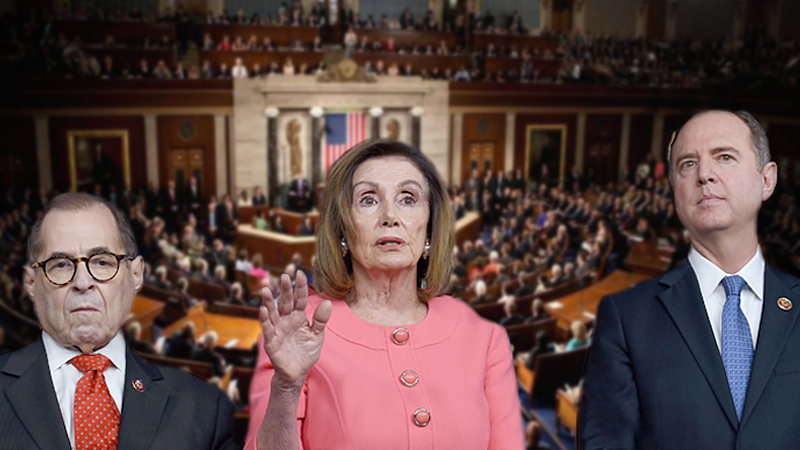
Schiff, Nadler lead group of House managers to prosecute Trump in Senate impeachment trial

Jan 16. 2020
By The Washington Post · Mike DeBonis

WASHINGTON – House Speaker Nancy Pelosi tapped two trusted committee chairmen to lead the team that will make the case in the Senate for President Donald Trump’s removal from office, supported by a relatively small cast of additional impeachment “managers.”

Confirming widespread speculation that swirled for weeks as she held back the articles, Pelosi turned to House Intelligence Committee Chairman Adam Schiff, D-Calif., and Judiciary Committee Chairman Jerrold Nadler, D-N.Y., to lead the House team. She made the announcement at a Wednesday news conference after keeping the cast of managers under tight wraps for weeks.

Joining Schiff and Nadler are Democratic Reps. Jason Crow of Colorado, Val Demings of Florida, Sylvia Garcia of Texas, Hakeem Jeffries of New York and Zoe Lofgren of California.

The seven-member team is smaller than the 13-member squad that presented articles of impeachment against President Bill Clinton to the Senate in 1999, reflecting a more tightly controlled approach to the investigation. In a sign of the highly choreographed process, Garcia said she learned only Tuesday that she would be named a manager.

“The emphasis is on litigators. The emphasis is on comfort level in the courtroom. The emphasis is on making the strongest possible case” to the Senate, Pelosi said Wednesday as she introduced the team.

Schiff, 59, has been the unquestioned leader of the congressional investigation into Trump’s alleged scheme to coerce the Ukrainian government into investigating his political rivals by withholding nearly $400 million in military aid.

The House Intelligence Committee was joined by three other panels in conducting the probe, but it was Schiff – a former federal prosecutor who is among Pelosi’s most trusted colleagues – who directed the effort from the start.

Nadler, 72, headed the second phase of the House impeachment inquiry, laying the constitutional foundation for the adoption of the two articles – abuse of power and obstruction of Congress – and shepherding them to the House floor.

Speaking to reporters Wednesday, Nadler cited an “overwhelming case” for Trump’s removal but also said it was incumbent on the Senate to call additional witnesses – deeming it a “test of the Constitution.”

“The American people know that in a trial you have witnesses, you present evidence,” he said. “The Senate is on trial as well as the president.”

The House is expected to vote Wednesday afternoon to formally name the managers and send the two articles to the Senate. After the vote, Pelosi has scheduled a formal ceremony to sign and “enroll” the articles for transmission across the Capitol, followed by a procession of the managers to the Senate door.

Contrary to much of the speculation that had swirled ahead of the announcement, aside from Schiff, only one other manager is a member of the Intelligence Committee – Demings, who belongs to both the Intelligence and Judiciary panels.

All seven, however, have a variety of professional backgrounds in the law.

Demings, 62, is the only nonlawyer, but she is steeped in law enforcement, having served as the first woman chief of the Orlando Police Department. Garcia, 69, one of two freshmen on the managers’ team, is a former state senator and longtime county judge.

Lofgren, 72, is participating in her third impeachment. She worked as a congressional staffer during the 1974 impeachment proceedings against President Richard Nixon and served on the Judiciary Committee during the 1998 proceedings against Clinton. While she is best known on Capitol Hill for her immigration expertise, Lofgren also has broad experience in constitutional matters and is a trusted Pelosi ally.

Jeffries, 49, has emerged this year as one of his party’s chief messengers as chairman of the House Democratic Caucus. But before embarking on his congressional career, Jeffries worked as a corporate litigator in New York and has long served on the Judiciary Committee. There he worked closely with Republicans – and Trump’s son-in-law and White House adviser Jared Kushner – to advance a major criminal justice reform bill in 2018.

Crow, 40, is the only manager who did not serve on any of the investigating committees, but he has national security credentials as a former U.S. Army Ranger officer and member of the House Armed Services Committee. He also practiced law before his 2018 election to Congress and was a key member of a group of seven freshmen who spoke up at a critical juncture in September to support the launching of an impeachment inquiry.

Diversity was also a consideration in selecting the team, aides said in the weeks leading up to the announcement. Three of the seven are women. Demings and Jeffries are African American; Garcia is Latina. Garcia and Crow also bring geographic diversity to a group otherwise drawn from coastal states.

Among the lawmakers she passed over are some of the House’s most aggressive advocates for impeachment – including some with legal backgrounds such as Rep. Eric Swalwell, D-Calif., an Intelligence Committee member who worked as a state prosecutor, and Rep. Jamie Raskin, D-Md., a Judiciary Committee member who was a constitutional law professor at American University in Washington.

Nor did Pelosi choose independent Rep. Justin Amash of Michigan, a former Republican who some observers suggested could help make the case for removal a less partisan one.

“I believe they bring to this case in the United States Senate great patriotism, great respect of the Constitution of the United States, comfort level in the courtroom,” Pelosi said of her chosen managers. “It’s going to be a very big commitment of time, but I don’t think we could be better served.”

Putin offers prime minister post to head of tax service amid government shake-up #ศาสตร์เกษตรดินปุ๋ย

#ศาสตร์เกษตรดินปุ๋ย : ขอบคุณแหล่งข้อมูล : หนังสือพิมพ์ The Nation

https://www.nationthailand.com/news/30380621?utm_source=category&utm_medium=internal_referral

Putin offers prime minister post to head of tax service amid government shake-up

Jan 16. 2020
By The Washington Post · Isabelle Khurshudyan

MOSCOW – In a day of sweeping government change that saw the resignation of Prime Minister Dmitry Medvedev, Russian President Vladimir Putin tapped his replacement less than three hours later.

Medvedev submitted his resignation Wednesday as part of a surprise government shake-up directed by Putin as he looks to an eventual transition of power and ensure his influence after his term ends in 2024. Medvedev, a longtime Putin ally and political partner who once served as president, will remain in Russia’s power structure as the Security Council’s deputy chairman, which has been compared to a vice presidency.

Less than three hours after Medvedev’s resignation, Putin offered the post of prime minister to Mikhail Mishustin, head of the Russian tax service.

The sweeping moves came shortly after Putin gave his annual address to Russian lawmakers and proposed major constitutional changes that included transferring more power to parliament, including the ability to name the country’s prime minister. Currently, the post is selected by the president.

Putin also called for “enshrining” the state council, an advisory body to the president, in what could be a path for him to maintain significant influence in a different capacity once this presidential term is finished in four years.

Medvedev’s resignation means the entire ministerial Cabinet is out, too, but it’s expected to remain in place until a new government is formed. Putin also gave no immediate indication on Medvedev’s successor.

“For my part, I also want to thank you for everything that was done at this stage of our joint work, I want to express satisfaction with the results that have been achieved,” the president told a meeting of the Cabinet.

“Not everything was done, but everything never works out in full,” Putin said, without giving details.

Medvedev served as Russia’s prime minister since 2012 and spent four years before that as president in 2008-2012. He said the decision to resign was because the constitutional changes, when passed, will affect the whole balance of the executive, legislative, and judicial branches of government.

“In this context, it is obvious that we as the government should allow our country’s president to make all necessary decisions before that,” Medvedev added.

Andrei Kolesnikov, a senior fellow and the chair of the Russian Domestic Politics and Political Institutions Program at the Carnegie Moscow Center, called the day’s events “absolutely unprecedented.”

“There has been nothing similar in the history of the Soviet Union or post-Soviet Russia,” he said.

Medvedev’s move to Russia’s Security Council, second to only Putin, has added to speculation that Putin may be looking to copy the path of a Soviet republic, Kazakhstan, on how to retain power past his presidency. Last March, Kazakhstan’s long-serving president, Nursultan Nazarbayev, stepped down but became Chairman of the Security Council for life – making him the effective power broker.

In his speech to parliament Wednesday, Putin again suggested limiting presidential term limits to two. That indicated, he won’t attempt to seek a third consecutive term. He also set out plans to shift power away from the presidency to the lower house of parliament – a move that erodes the influence of his successor.

“This is all about how to influence the prerogatives of the future president,” said Tatiana Stanovaya, the head of a think tank called R. Politik. “Putin would like to have some leverage, some mechanism to control and to get involved in case his successor makes mistakes or has some disagreements with him.”

After Putin served two presidential terms from 2000 to 2008, he swapped places Medvedev, who served one term. Medvedev was widely seen as a caretaker, enabling Putin to retain power behind the scenes, but there was also believed to be a rift between the two halfway through Medvedev’s presidency. Putin then took over the presidency in 2012 and was reelected last year.

Stanovaya considers it unlikely Putin would want to be prime minister again after his presidency, but both she and Kolesnikov said chairing a beefed-up state council could be appealing to him.”He doesn’t want to get engaged in routine social and economic policy, like the budget – it’s boring for him,” Stanovaya said. “He wants to focus on foreign policy, and I think the state council is much more convenient for him. But for that, he will need to make it a constitutional body and significantly enlarge its possibilities.”

Putin concluded his speech to parliament, which lasted slightly more than an hour, by recommending the package of amendments be approved by a vote – with passage all but certain. He plans to sign a special decree establishing a date and the rules for putting the changes to a vote, presidential spokesman Dmitry Peskov said, according to the state-run news agency Tass.

Other constitutional changes included limiting the supremacy of international law, raising the residency requirements for presidential candidates from 10 years to 25 years, giving the Russian constitutional Court the right to verify whether adopted laws are in compliance with the constitution before they are signed by the president, prohibiting civil servants from holding foreign citizenship and adding a provision to keep minimum wage and pension above the official poverty line.

“Our society is clearly demonstrating a demand for change,” Putin said at the start of the address.

The annual speech to top Russian officials and members of parliament largely focused on how to improve domestic living standards. Putin opened with initiatives to improve Russia’s demographics by proposing financial incentives for citizens who have children and then addressed low teacher salaries, boosting their monthly wages by roughly $80. He also touched on health care and environmental issues.

Putin’s approval ratings remain high – at about 68 percent, according to a December poll from the Levada-Center – but it has been gradually declining due to a stagnant economic growth and unpopular moves in recent years to raise the retirement age and increase taxes on goods and services.

Kolesnikov suggested Wednesday’s bombshell could have been Putin’s way of trying to avoid public “discontent with his economic policy” with Russia’s economy largely stagnant and corruption rampant.

The state-of-the-nation address was his first to be projected across several large buildings in Moscow. Putin also pointed out that the speech was unique in how early it was delivered; typically such speeches are given in February or March.

“We need to expedite achievement of the large-scale social, economic and technological challenges our country faces,” he said.

_ _ _

The Washington Post’s Natalia Abbakumova in Moscow contributed to this report.

Putin to seek new government and calls for big constitutional shakeup #ศาสตร์เกษตรดินปุ๋ย

#ศาสตร์เกษตรดินปุ๋ย : ขอบคุณแหล่งข้อมูล : หนังสือพิมพ์ The Nation

https://www.nationthailand.com/news/30380617?utm_source=category&utm_medium=internal_referral

Putin to seek new government and calls for big constitutional shakeup

Jan 15. 2020
Vladimir Putin, Russia's president, gestures as he speaks during his annual state of the nation address in Moscow, on Jan. 15, 2020. MUST CREDIT: Bloomberg photo by Andrey Rudakov.

Vladimir Putin, Russia’s president, gestures as he speaks during his annual state of the nation address in Moscow, on Jan. 15, 2020. MUST CREDIT: Bloomberg photo by Andrey Rudakov.
By Syndication Washington Post, Bloomberg · Ilya Arkhipov

Russian Prime Minister Dmitry Medvedev resigned and said President Vladimir Putin will choose a new government hours after the Kremlin leader called for a series of constitutional changes in his annual address.

Medvedev, who became premier in 2012 after stepping down as president to make way for Putin’s return to the Kremlin, will take up a new post as deputy chairman of the security council, the Kremlin said. He answers to Putin, who chairs the body as president.

The surprise announcement came just hours after Putin made his annual state-of-the-nation address, pledging as he has in past years to boost living standards and economic growth. Russia has struggled to improve performance on those in recent years amid low oil prices and western sanctions. Medvedev’s government has long been criticized for inefficiency and his popularity ratings lag those of the president.

The two men appeared on state television in a choreographed announcement to tell ministers of Medvedev’s departure and the resignation of the government. The reforms set out by Putin will mean “fundamental changes” to the constitution, Medvedev said.

“In these circumstances, I think it would be right for the government to resign,” Medvedev said. Putin, 67, said the government hasn’t fulfilled all of its tasks, though he thanked it for its work.

The ruble fell as much as 0.6% against the dollar on the news, before paring its loss to 0.3% at 61.62 per dollar at 4:54 p.m. in Moscow.

Medvedev, 54, served four years as president from 2008 when Putin left the Kremlin to comply with constitutional term limits. Seen initially as a standard-bearer for liberal reforms, he surrendered the presidency back to Putin at the end of his first term after they disclosed at a September 2011 congress of the ruling United Russia party that the job-swap had been agreed on years earlier.

He’s been among Putin’s closest political allies since they worked together in St. Petersburg city council in the early 1990s after the Soviet Union’s collapse.

BMA readies 5 zones in four districts for street vendors #ศาสตร์เกษตรดินปุ๋ย

#ศาสตร์เกษตรดินปุ๋ย : ขอบคุณแหล่งข้อมูล : หนังสือพิมพ์ The Nation

https://www.nationthailand.com/news/30380633?utm_source=category&utm_medium=internal_referral

BMA readies 5 zones in four districts for street vendors

Jan 16. 2020
By The Nation

Street vendors will be allowed back to ply their trade on the footpaths in four Bangkok districts after the Bangkok Metropolitan Administration (BMA) agreed to the setup of 191 stalls. Registration of vendors is set for February before sales begin in March.

Bangkok Governor Assawin Khwanmuang said five areas in four districts had been designated vendor zones: Soi Bang Khunthian 69 in Bang Khunthian district (45 stalls), Saleeratthawipak Road in Phaya Thai District (36 stalls), the area opposite Pata department store in Bang Phlat district (66 stalls), an area close to Central Plaza Pinklao (20 stalls), and an area near Tesco Lotus Pinklao in Bangkok Noi district (24 stalls).

BMA will complete the drafting of regulations and criteria by January 20 and will announce the registration date within 15 days.

To be eligible for registration, the applicant must be a low-income earner and meets the criteria for a state welfare card.

The BMA will prepare the sites for sales to begin on March 5.

Rules vendors are subjected to include: registered vendors are prohibited from sale or rental of their stalls; they must leave a 2 metre-wide passage for disabled people and pedestrians beside the stalls; the stall area should be 1 metre deep, 2 meters wide and 50 cm away from the road; vendors are prohibited from placing items beyond the allowed space.

Revenue Department seeks entrepreneurs to open VAT refund stations #ศาสตร์เกษตรดินปุ๋ย

#ศาสตร์เกษตรดินปุ๋ย : ขอบคุณแหล่งข้อมูล : หนังสือพิมพ์ The Nation

https://www.nationthailand.com/news/30380627?utm_source=category&utm_medium=internal_referral

Revenue Department seeks entrepreneurs to open VAT refund stations

Jan 16. 2020
By THE NATION

The Revenue Department is accepting applications from entrepreneurs for opening permanent VAT refund stations for foreign tourists in Bangkok to help speed up the refund process as well as boost sales of retail shops.

Director-general Ekniti Nitithanprapas said on Wednesday (January 15) that currently six entrepreneurs had expressed interest in opening the permanent VAT refund station. “We will keep the registration period open for now to get as many entrepreneurs as possible,” he added.

In 2019, some 2.6 million tourists applied for VAT refund, with purchasing value of Bt46.6 billion and more than Bt3 billion of VAT refunded. “We hope this year will see more tourists applying for VAT refund thanks to more refund stations,” he said.

Ekniti also added that his department had cooperated with the Immigration Office in integrating the data of incoming and outgoing foreigners in Thailand via the electronic system with the help of blockchain technology. “This will help streamline the VAT refund process for foreign tourists and foreign residents in Thailand by eliminating the need to wait in the line and fill forms, as well as reduce mistakes and prevent fraud, as we can immediately identify when each person had entered the Kingdom and how much they had spent at each shop.”

This campaign will officially kick off on Friday (January 17) at Suvarnabhumi Airport, he added.