By Syndication Washington Post, Bloomberg · Lucas Shaw
Netflix Inc.’s investment in foreign-language shows is paying off at home, with U.S. viewership of the titles growing more than 50% this year.
Shows from Spain, Germany and France ranked among the most popular shows on Netflix, while viewership of dramas from Korea almost tripled, the company said Thursday. The fourth installment of “Money Heist,” a crime show from Spain, was one of the 10 most popular shows in 92 different countries this year.
Once reluctant to share any data on what its customers watched, Netflix has released more and more information to underscore what is working and dispel criticism that programs get lost amid the onslaught of new shows on the service.
While most U.S. media companies have historically focused on producing shows in English, Netflix has spent billions of dollars to produce shows in dozens of countries around the world. That strategy has been a major factor in the company’s success in signing up customers abroad, both over the last decade and this year in particular.
The company is on track to add the most customers in its history, and has said it will eclipse 200 million subscribers worldwide in the year’s final quarter. More than 60% of its users hail from outside the U.S., including 62 million in Europe, the Middle East and Africa, its largest region abroad.
The majority of Netflix’s most popular programs are still in English. When Netflix released a list this summer of its 10 most popular original movies, they were all in English.
The Netflix statement Thursday also revealed some viewership trends during the pandemic. Interest in home baking shows surged almost 50% in March, while searches for sad movies climbed in April. October was the year’s biggest month for comedy viewing.
Moriya hot on heels of leader Olson at US Women’s Open
Dec 11. 2020Moriya Jutanugarn (LPGA Photo)
Thai No 2 Moriya Jutanugarn shot an unblemished opening round 68 to chase American leader Any Olson a shot behind in the US Women’s Open at the Cypress Creek Course at Champions Golf Club in Houston, Texas. With three birdies in 10 holes, the one-time LPGA winner is placed at second alongside Hinako Shibuno of Japan and South Korean A Lim Kim after 18 holes. US-based Patty Tavatanakit, another Thai hope in the field, fired five birdies against three bogeys to start the Major with a 69 with f
With three birdies in 10 holes, the one-time LPGA winner is placed at second alongside Hinako Shibuno of Japan and South Korean A Lim Kim after 18 holes.
US-based Patty Tavatanakit, another Thai hope in the field, fired five birdies against three bogeys to start the Major with a 69 with former world No 1 Ariya Jutanugarn coming a shot behind.
For the second time in 2020, North Dakota’s Olson has got off to a hot start in a major championship. The 28-year-old from Fargo shot a four-under 67 in Thursday’s first round.
Olson highlighted her day with an ace at No. 3, while three birdies and one bogey rounded out her career-low round at the US Women’s Open. Considering Cypress Creek played a full stroke harder (74.59 to 73.46) than the Jackrabbit Course, which is co-hosting the first two rounds due to daylight concerns, Olson’s first-round success is especially hard-earned.
“I hit the ball really well off the tee. I gave myself some good chances for birdies, but I really made some putts that I definitely wasn’t necessarily thinking birdie on, and that helped,” said Olson, the USGA’s 2009 US girls’ junior champion. “Obviously, the hole-in-one was kind of the highlight of the round. I was pretty excited to be able to do that at the US Open.”
Olson has twice been close to major success. In August, Olson shot another 67 to open the AIG Women’s Open but struggled to a second-round 81 and dropped well off the pace. She also came up one hole short at the 2018 Evian Championship, making a heart-breaking double-bogey on the 72nd hole to hand the title to Angela Stanford.
Olson knows only too well that the championship is far from over, saying, “It’s not easy to win out here. You have to put four really good days together.”
Shibuno, who captured the hearts of the golf world after winning the 2019 AIG Women’s Open, carded four birdies and one bogey in the first round of her US Women’s Open debut. She played the Cypress Creek Course on Thursday and looks forward to the challenge of playing a completely different course in the second round.
“This is my first time playing two different courses, so that’s why I did a lot of practising rounds beforehand. That’s why I came in early,” said Shibuno. “By doing so, by doing more practising, I learned more, so I would like to use what I learned in the practising rounds and in the tournament.”
Moriya and Kim both opened their major weeks on the Jackrabbit Course. Moriya returned a clean scorecard with three birdies, while Kim endured an up-and-down round of five birdies and two bogeys.
Seven players are tied for fifth at -2, including 2020 AIG Women’s Open champion Sophia Popov and Gerina Piller, who had the best first-round showing of the championship’s seven Texans. US Women’s Open champion in 2019, Jeongeun Lee, opened her title defence with a two-over 73 on the Cypress Creek Course.
Former Bantamweight Champion Kevin Belingon Looking to Bounce Back in 2021
Dec 11. 2020
Team Lakay has certainly had a rough year, and that includes former ONE Bantamweight World Champion Kevin “The Silencer” Belingon.
The 33-year-old Belingon came up short in his lone appearance inside the ONE Circle this year, falling to Brazilian thunderclap John “Hands of Stone” Lineker by knockout just last November.
Yet despite all that the world has been going through, Belingon feels he’s still in a good place in his life, even with his career hitting a slight stumbling block.
“2020 for me was still a good year, despite everything that happened. I still have a good career. Most importantly, my family welcomed our beautiful baby daughter to the world. She’s the best thing that happened to me. As for my fighting career, I’m looking to get back to the top in 2021,” said Belingon.
Belingon and wife Lee welcomed Kelsey Tuesday to the world last August, and the two loving parents have been preoccupied since in raising their baby girl. Belingon says he’s even more motivated to succeed in his career now, with his family growing.
“The Silencer” has his focus still firmly on the ultimate prize, and that’s to reinsert himself into the world title mix in his division.
“I just have to stay strong and stay healthy right now. That’s one of the toughest challenges with all the different restrictions and obstacles we now face in training. There are a lot of moving parts that have been affected. I just need to stay on top of it. I’m keeping the dream in sight,” said Belingon.
Looking forward to the next 12 months, Belingon has his finger on a handful of things he wants to accomplish, both in his career and in his own personal life.
“We’ll take the time we need to review our past fights and our past performances, so we can learn the lessons we need to learn to move forward. There are still a lot of holes in my game, and I want to fix them all. I can’t wait to go back to the gym and train hard. I want to be ready for whatever challenge I will potentially face next year,” said Belingon.
“My goal in 2021 is to erase the memory of 2020. My eyes are still on the bantamweight belt. That’s what I want, and that’s what I’m after. Aside from that, I just want to raise my daughter well and take care of her.”
The 33-year-old mixed martial arts veteran plans to spend some much-needed time with his family during the holidays, but is completely determined to hit the gym hard once it’s time to get back to work.
“I am very fortunate that my family and I have been safe from COVID-19. It’s been a blessing to stay in Baguio City where we can enjoy and experience nature. It’s one of the best places in the world to start a family. I want to spend good, quality time with them in the next few weeks,” said Belingon.
“Still, fans can expect a new and improved, much better Kevin Belingon next year. In my last fight, I didn’t feel like I was myself. I want to remind everyone what I am capable of. 2021 will be the year of The Silencer.”
ONE Championship returns with ONE: BIG BANG II, a previously recorded event for global broadcast on Friday, 11 December. In the main event, former ONE Flyweight Muay Thai World Champion and current #3-ranked contender Jonathan “The General” Haggerty of the United Kingdom takes on Taiki “Silent Sniper” Naito of Japan.
Watch ONE: BIG BANG II this Friday, 11 December on ONE Super App or ONE Championship youtube at 7:30 p.m. Thailand Standard Time. Thairath TV Channel 32 will air the event on a same-day at 9.30 p.m.
Paolo Rossi, Italian World Cup soccer hero, dies at 64
Dec 11. 2020
By The Washington Post · Phil Davison
Paolo Rossi became a national hero in Italy at age 25 – and remained so all his life – when he helped the national soccer team to victory at the 1982 World Cup in Spain. The center forward, or striker, scored the first goal for the Azzurri (the Blues) in the final against West Germany as Italy triumphed, 3-1, at Santiago Bernabéu Stadium in Madrid.
The victory, Italy’s first in the World Cup since 1938, brought ecstasy to millions of Italian fans glued to their screens at home. Their country was beset by political and social unrest, but the success of their soccer team unleashed an outpouring of emotion and a badly needed feeling of joy and national unity.
That World Cup final goal, on July 11, 1982, was Rossi’s sixth of the tournament, winning him the Golden Boot as World Cup top scorer as well as the player of the tournament (equivalent of MVP).
Italian kids, even adults, rushed to buy blue Italian soccer jerseys bearing Rossi’s number 20 on the back. “Pablito,” as Italian fans nicknamed him, was also given the coveted Ballon d’Or (Golden Ball) as 1982 European player of the year, more recently dominated by the Portuguese star Cristiano Ronaldo, now of Juventus in Italy, and FC Barcelona’s Argentine wizard Lionel Messi. The respected U.K. magazine World Soccer also gave him its inaugural World Player of the Year award.
Rossi, 64, died Dec. 9 at a hospital in Siena, Italy, according to the Italian TV channel RAI Sport, where Rossi had worked as a soccer pundit. The channel cited Rossi’s family, which did not specify the cause of death.
That Rossi even got into the 1982 World Cup squad at the last minute was remarkable and fortunate – for him and, as it turned out, his country.
In 1980, he had been banned from soccer for three years after a match-fixing scandal, known as the Totonero (black-betting). He was accused of involvement but issued denials. At the time, he was one of the world’s highest-paid players, lining up for the club Perugia.
An investigation involving 13 teams in Italy’s two top leagues, Serie A and Serie B, found, among many other cases, that a match involving Perugia – a 2-2 draw with Avellino – had been fixed by a betting syndicate.
His ban was reduced to two years, by which time he had been signed by the Turin club Juventus, allowing Italy Manager Enzo Bearzot to include him in his 1982 World Cup squad.
Bearzot came under heavy criticism from the soccer-mad Italian media when Rossi looked unfit during the first three group matches. The Italian newspaper Gazzetta dello Sport described the striker as “a ghost wandering aimlessly around the field.”
Bearzot stuck with him, however, in the next round for the crucial matches against two of the world’s greats, Argentina, reigning world champions at the time, and Brazil, already three-time champions and tournament favorites in 1982.
Italy beat Argentina, 2-1, shutting down the soccer marvel Diego Maradona, but it was in the riveting game against Brazil that Rossi erased memories of the match-fixing ban.
It was July 5, 1982, in the Estadio Sarría, Barcelona. Every non-Italian lover of the “beautiful game” expected and wanted the magical Brazil side to win and go through to the semifinals. Not to be.
Rossi scored all three goals – a hat trick – as the Azzurri beat Brazil, 3-2, sending the soccer-crazy fans in the South American nation into shock and mourning. Many soccer writers have called it the greatest World Cup match ever.
Rossi later described that game, and Italy’s ultimate triumph over West Germany, as a “personal redemption” after the betting scandal.
He then scored both goals in Italy’s 2-0 win over Poland in the semifinals and, of course, another one in the final triumph against West Germany.
Paolo Rossi was born in Prato, northwest of Florence, on Sept. 23, 1956. He first came to the notice of big-team talent scouts as a prolific scorer for Vicenza, west of Venice. That earned him a move to Juventus, winning the European Cup in 1985.
Unlike most world-class players in modern times, he spent his entire club career in Italy, gaining two Serie A (the top league) titles. He also played for AC Milan and Verona.
Retiring in the late 1980s, he became a popular TV soccer pundit on Sky Sports and the Italian national broadcaster RAI.
His first marriage, to Simonetta Rizzato, ended in divorce. In 2010, he married Federica Cappelletti, a journalist. In addition to his wife, survivors include a son from Rizzato; two daughters from Cappelletti; and a brother.
Amazon’s new health band is the most invasive tech we’ve ever tested
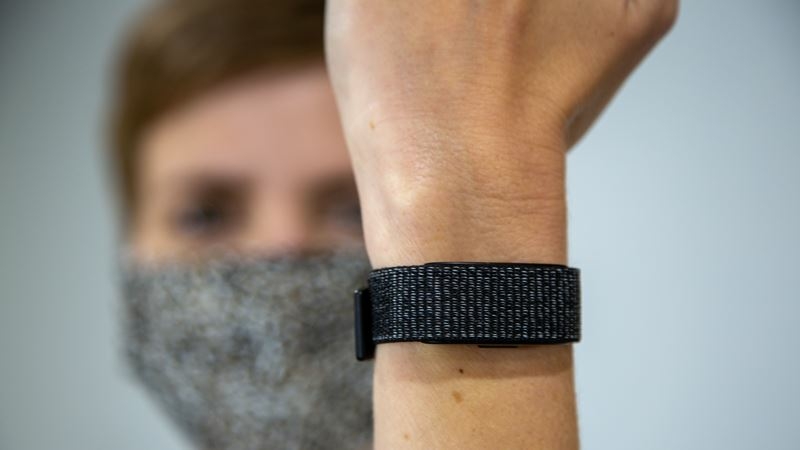
Dec 11. 2020Amazon calls the Halo Band design “distraction free,” but we found the lack of a screen made it less useful for motivation. MUST CREDIT: Washington Post photo by Geoffrey A. Fowler.
By The Washington Post · Geoffrey A. Fowler, Heather Kelly
Amazon has a new health-tracking bracelet with a microphone and an app that tells you everything that’s wrong with you.
You haven’t exercised or slept enough, reports Amazon’s $65 Halo Band. Your body has too much fat, the Halo’s app shows in a 3-D rendering of your near-naked body.
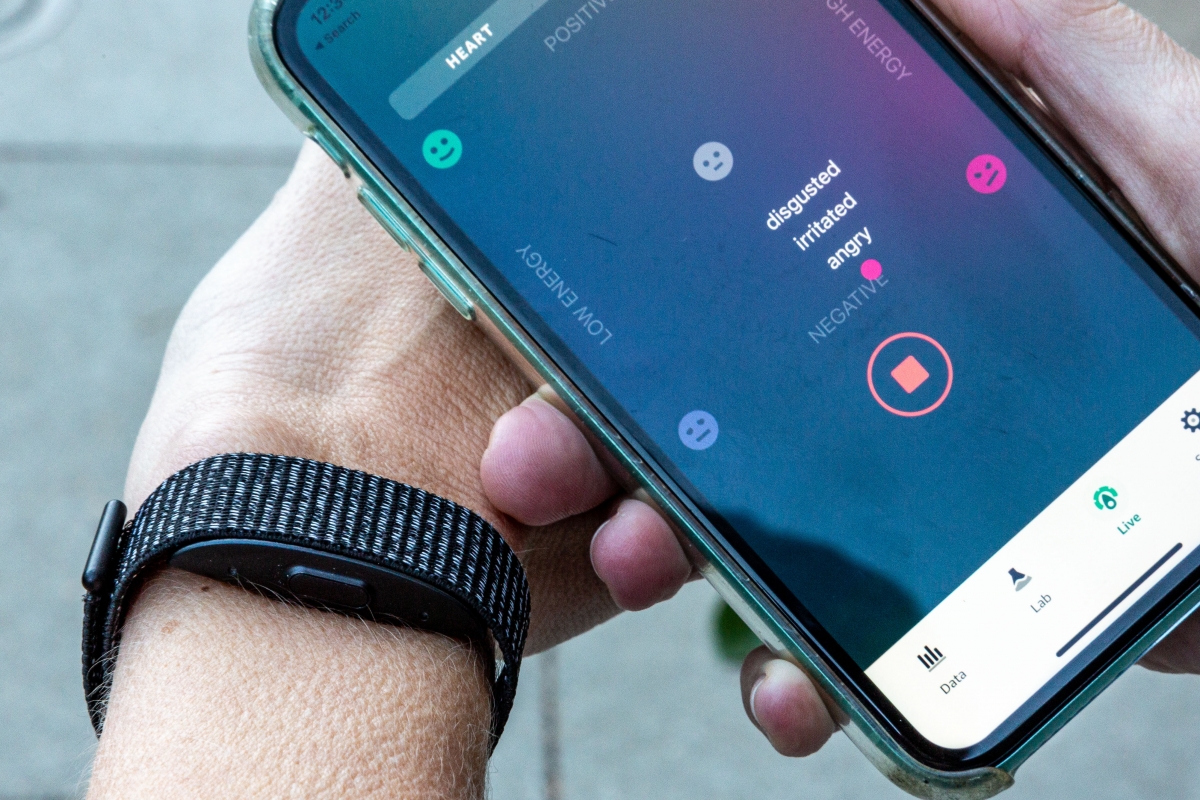
And even: Your tone of voice is “overbearing” or “irritated,” the Halo determines, after listening through its tiny microphone on your wrist.
Hope our tone is clear here: We don’t need this kind of criticism from a computer. The Halo collects the most intimate information we’ve seen from a consumer health gadget – and makes the absolute least use of it. This wearable is much better at helping Amazon gather data than at helping you get healthy and happy.
The optional body feature in the Halo app asks you to take four photos of your body in underwear or skintight clothes, and the generates an estimate of your body fat composition and a 3-D model of your body. MUST CREDIT: Amazon.
Since August, the Halo has been listed by Amazon as an “early access” product that requires an “invitation” to buy. (It will cost $100 plus a $4 monthly fee once it’s sold widely.) We’re reviewing the Halo now because Amazon’s first digital wellness product offers a glimpse of how one of tech’s most influential companies thinks about the future of health. And what better to do when we’re lonely during a pandemic than have an always-listening device point out our flaws? Amazon CEO Jeff Bezos owns The Washington Post, but we review all technology with the same critical eye.
Late to the fitness tracker market dominated by the Apple Watch and Fitbit, the fabric-covered Halo has no screen, no sounds or vibrations and no design innovation. Like its competitors, it contains sensors that monitor physical activity, heart rate, sleep and skin temperature. A companion phone app is the only place to see what it has learned.
But the Halo pushes into uncharted territory by also collecting new, unabashedly invasive kinds of personal information – including body photos and voice recordings – and then feeding it into Amazon’s software for analysis. They’re going for AI doctor, or at least life coach.
One reason we tested two Halo bands, one on each of our bodies, is to see how well the AI could account for gender and other important human differences – particularly on factors as complicated as fat composition and tone of voice. Spoiler alert: It described Geoffrey’s tone with words like “opinionated” while it was more likely to flag the tone of Heather, a mom of two, as “dismissive” and even “condescending.”
“We can bring some unique expertise in AI and machine learning,” Amazon medical officer Maulik Majumudar, told us in an interview. “There are many examples of this in the product you see, but the specific ones that could come to mind are body [fat analysis] and tone – that’s a more comprehensive and holistic view of health than just physical health alone.”
We’re also believers, in the long run, that personal data might be able to help people get healthier or even detect diseases like covid-19, the subject of a flurry of recent research. Over the last decade, wearable tech hasn’t made much of a dent in America’s growing obesity rate. Our Fitbits and Apple Watches don’t really know how to turn mountains of body data into actionable insights and behavior changes.
Amazon’s problem is, the Halo does it even worse.
On the fitness tracker basics of measuring activity and sleep, the Halo is more erratic than its competitors. In a seated, side-by-side test, the Halo’s heart rate readings are similar to an Apple Watch 6 and Fitbit Sense. But during a bike ride, the Halo reported a peak heart rate of 129 bpm, while the Apple Watch reported 171 bpm. Part of the problem is there are no buttons to tell the Halo you’re about to exercise – it just tries to figure out for itself what you’re up to using its algorithms.
You also have to trust Amazon’s AI to accurately estimate other body measures, starting with a near-nude total body scan. The health baseline used by most doctors is body mass index, or BMI, a score based on height and weight. Amazon says a better measure is body fat percentage, which it calculates by asking you to stand in front of your phone’s camera in your skivvies for a 360-degree photo shoot and then sending the shots to Amazon’s cloud for analysis.
Evaluating the accuracy of Amazon’s fat measurement is difficult without a doctor or dietitian. One home device that calculates fat by sending a light current through your feet, the Withings Body+ scale, reported Geoffrey’s body fat was five percentage points lower than Halo. Heather’s fat estimate was nearly identical on the Withings scale and Halo. (We’re not going to tell you exactly how out of shape it thinks we are.) Amazon claims its AI is more accurate than the technology in smart scales, though it has not been cleared by the Food and Drug Administration.
The Halo’s voice tone analysis is questionable on a whole other level. You train the device to recognize your voice by reading sample phrases, and then it listens out constantly for moments in conversation that go beyond your neutral tone. (There is a button you can press to temporarily turn off the microphone.) The Halo plots these moments as positive vs. negative and high vs. low energy, and then applies more nuanced descriptors to them – for example, a voice that registers as negative and low energy might be classified as “discouraged.” You can review a dozen, or more, of these per day in the Halo app.
The Halo uses Amazon AI to analyze the tone of your voice, which it categorizes here with terms such as “disgusted,” “irritated,” and “angry.” MUST CREDIT: Washington Post photo by Geoffrey A. Fowler.
How could a computer possibly know you sound like a Debbie Downer? Amazon said it spent years training its tone AI by having people categorize voice recordings. The company held internal trials and says it tried to address any biases that might arise from varying ethnicity, gender, or age.
In our experience, the Halo could detect ups and downs in our voice, but seemed to misinterpret situations regularly. And some of the feedback feels, ironically, a bit tone deaf – especially when judging a woman’s voice.
Our sample size of two isn’t sufficient to conclude if Amazon’s AI has gender bias. But when we both analyzed our weeks of tone data, some patterns emerged. The three most-used terms to describe each of us were the same: “focused,” “interested,” and “knowledgeable.” The terms diverged when we filtered just for ones with negative connotations. In declining order of frequency, the Halo described Geoffrey’s tone as “sad,” “opinionated,” “stern,” and “hesitant.” Heather, on the other hand, got “dismissive,” “stubborn,” “stern” and “condescending.”
She doesn’t dispute she might have sounded like that, especially while talking to her children. But some of the terms, including “overbearing” and “opinionated,” hit Heather differently than they might a male user. The very existence of a tone-policing AI that makes judgment calls in those terms feels sexist. Amazon has created an automated system that essentially says, ‘Hey sweetie, why don’t you smile more?’
Each new generation of wearable gadget has invented new motivational scores to help you get more healthy. The Fitbit nudged you to take 10,000 daily steps – and the Apple Watch urges you to close three colorful daily rings for activity, exercise and standing. Amazon’s Halo gives you an activity score with a goal of 150 points per week. Say what?
Amazon says it’s not arbitrary: the score is based on guidelines from the American Heart Association that people should aim for 150 minutes of moderate exercise per week, though the points don’t translate exactly to time. The Halo gives more points for more-strenuous activity, and you lose points for stretches of inactivity.
It is smart to measure activity that actually exercises your heart (which taking steps might not). But putting it on a weekly scale of 150 – and burying your score in the Halo app – means it’s mostly meaningless as motivation in the moment when you have to decide to go for a jog or kick back on the couch.
It’s possible some people might be more receptive to criticism coming from an app than coming from a person. The Halo app also turns your body scans into a 3-D rendering, complete with a slider to see what you’d look like with more, or less, fat.
But we were disappointed that even with all that highly personal (somewhat nude) data, the Halo doesn’t offer any kind of a personalized plan or path forward. The app has what it called Labs, a hysterically techy term for what are mostly just videos or audio recordings from outside companies like Orangetheory and Openfit, with little reminders to watch them. The selections are the same for everyone, not tailored to your data or goals.
Even more perplexing is that Amazon thinks there might be anything motivating about its harshly worded reports about your conversational tone. “For the most part, people are relatively unaware of how they sound to others and the impact that may have on their personal and professional relationships,” said Majumudar. But he also told us Amazon is purposefully not providing any kind of diagnosis or interpretation of a person’s emotional state.
It’s hard to even match up the Halo’s daily AI tone judgments to what you actually said – you get a time stamp, but not a transcription. Was that panicked, overwhelmed moment tied to a breaking glass or just idle chit chat about coffee?
The Halo app’s Labs offers lectures from a communications expert about “conscious listening.” But there are no personalized suggestions based on your tone, like how to sound less “sad” in the middle of an isolated holiday season during a pandemic.
The Halo has invented a new personal behavior to feel self-conscious about, which we suppose is a kind of innovation.
While reviewing the Halo, we couldn’t shake the suspicion it was just another effort by Amazon to collect more data about customers’ lives.
Amazon approached some aspects of Halo data more carefully than it has other recent products. The Halo does not send Amazon recordings of your voice, like its Echo smart speakers. Instead, it sends recordings to your phone for analysis, and then deletes the recordings from both. Your body fat photos are sent to Amazon’s cloud for processing, then deleted from its systems. (You can choose to keep a copy on your phone, too.)
The Halo privacy policy says Amazon won’t sell your data, share it without your explicit permission or use it to target you with sales pitches.
But that still leaves open plenty of other ways for Amazon to profit from your information. In an anonymized way, it can data mine the heart rate, activity, sleep and tone patterns of Halo owners, using it to tailor its health algorithms and learn about human bodies. Make no mistake: disrupting medicine is the next goal for big tech.
Those ambitions are just hard to square with the half-baked product the Halo is today. But half-baked products are not totally out of character for Amazon, which has a history of tossing out weird, creepy ideas and letting customers do the testing. The first Echo smart speaker was not very useful, until devoted customers fed Amazon lots of data train its talking Alexa assistant. Amazon has also killed off other wacky products, including a camera called the Echo Look that used AI to judge fashion.
AI-powered devices like the Halo may well be the future of health. But they are not the present.
Singapore, UK ink free trade deal with eye on digital economy talks in 2021
Dec 11. 2020The UKSFTA was signed in Singapore by Minister for Trade and Industry Chan Chun Sing (right) and UK Secretary of State for International Trade Elizabeth Truss. PHOTO: MTI
By Ovais Subhani The Straits Times/ANN
SINGAPORE – Singapore signed a free trade agreement (FTA) with the United Kingdom on Thursday (Dec 10) to ensure that companies from both countries continue to enjoy the same benefits that they are receiving under the Republic’s FTA with the European Union.
The agreement will cover more than £17 billion (S$30.4 billion) of current bilateral trade in goods and services.
The two countries also agreed to assess the modules of a UK-Singapore digital economy agreement (DEA), with a view to launching negotiations on the DEA in 2021. They also committed to start talks on and conclude an investment protection agreement within two and four years respectively of the FTA’s entry into force.
The FTA was signed in Singapore by Minister for Trade and Industry Chan Chun Sing and UK Secretary of State for International Trade Elizabeth Truss.
Speaking at the event, Mr Chan noted that the UK is Singapore’s third and second-largest trading partner for goods and services respectively, as well as its top investment destination in Europe. In turn, Singapore is the UK’s largest trade and investment partner in South-east Asia.
As the first FTA between the UK and an Asean member state, it represents the UK’s deepening engagement of the region, and provides British businesses a platform to access opportunities in the region through Singapore, said Mr Chan.
“In these volatile times, the UKSFTA provides Singapore and UK businesses the certainty they need to find and access new growth opportunities,” he added.
The deal’s immediate and tangible benefits include tariff elimination for 84 per cent of all tariff lines for Singapore exports to the UK upon the UKSFTA’s entry into force, with virtually all remaining tariffs eliminated by Nov 2024 – the same timeline under Singapore’s FTA with the EU (EUSFTA), said Mr Chan.
It will also enhance market access for Asian food products made in Singapore, such as har gow (prawn dumplings) and sambal ikan bilis (spicy crispy anchovies), he added.
“We hope this will allow our UK friends to try more of our distinctive Asian food products,” said Mr Chan.
Ms Truss, in an interview with The Straits Times, said the FTA will come into force on Jan 1 next year, which is when the UK leaves the transition period for its exit (Brexit) from the EU.
“We want to secure a Canada-style deal with the EU, but if we are not able to secure that we will trade with the EU on Australian style terms. Neither of those, two arrangements will affect the deal with Singapore, the deal with Singapore is done,” she said in the interview.
A Canada-style pact will get rid of most but not all tariffs, while an Australian-style agreement is basically no trade deal at all and will fall back on World Trade Organisation terms.
The Ministry of Trade and Industry (MTI) in a statement issued after the signing of the FTA said the benefits of the UK-Singapore FTA include tariff elimination for goods trade, and increased access to respective services and government procurement markets.
The FTA will provide Singapore and UK companies with certainty and clarity in trading arrangements between both countries by reducing non-tariff barriers in at least four major sectors – electronics, motor vehicles and vehicle parts, pharmaceutical products and medical devices, and renewable energy generation.
The trade deal will also support the regional operations and supply chains of companies in the UK and Singapore.
In line with the current arrangement under the FTA with the EU, companies in UK and Singapore can continue to use materials and parts sourced from the EU-27 and Asean in their exports to each other’s markets – dubbed as Asean cumulation.
Similar to the EUSFTA, the UK-Singapore FTA requires Asean countries to provide undertakings of cooperation and compliance in order to allow for Asean cumulation.
Once the relevant cumulation arrangements are put in place, Singapore exports using Asean materials and parts can qualify for preferential tariff treatment when entering the UK.
“This will strengthen Singapore and the UK’s roles as business hubs in our respective regions,” MTI said.
As the first FTA between the UK and an Asean member, the UK-Singapore FTA will also serve as a pathfinder for the UK’s engagement of the Asean region, said MTI.
The proposed UK-Singapore DEA will also serve as such for modern rules on digital trade and financial services between Europe and South-east Asia.
“It (DEA) will facilitate more seamless digital trade and business between the UK and Singapore by promoting cross-border digital connectivity and interoperability of digital standards and systems,” MTI said.
The UK has indicated its interest in joining the Comprehensive and Progressive Agreement for Trans-Pacific Partnership (CPTPP), which Singapore supports and welcomes.
In addition to the FTA, the UK and Singapore have also committed to commence negotiations and endeavour to conclude a high standard investment protection agreement within two and four years respectively of the UK-Singapore FTA’s entry into force.
“This will ensure that bilateral investments are covered by robust and up-to-date treaty safeguards, as well as provide businesses and investors with the certainty of investment protection,” MTI said in its statement.
Singapore and the UK will now work on their respective ratification processes for the entry into force of the UK-Singapore FTA, MTI said without giving a timeline for the ratification process.
Mr Ho Meng Kit, chief executive officer of the Singapore Business Federation, said the FTA will allow businesses here to enjoy greater certainty and assurance after Britain’s exit from the EU.
“However, businesses should note that UK’s independent trade regulations may differ from that of the EU’s. They will also need to ensure that they comply with changes in UK’s domestic standards and Customs procedures,” he said.
“We look forward to working with both governments to support businesses coping with these changes, particularly those which may be using the UK as a hub to re-export to Europe or to offer services to EU customers.”
The British Chamber of Commerce Singapore said on Thursday that having this agreement in place at this time will “provide a sense of confidence for the business community, so that they may make critical decisions, strengthen their workforces, invest for the future and continue to grow”.
Failure to provide vaccine to developing world will have major effects on Japan: Gates Foundation report
Dec 11. 2020
By The Japan News/ANN
The Bill & Melinda Gates Foundation has estimated that if a novel coronavirus vaccine is not distributed to developing countries in regions such as Africa and Asia, the Japanese economy will suffer a loss of about ¥1.4 trillion over the next five years.
The report was presented during the online GZERO Summit on Wednesday. The foundation established by Microsoft Corp. founder Bill Gates and his wife Melinda commissioned the Eurasia Group, which hosts the summit, to compile the report.
The report pointed out that if the spread of COVID-19, the disease caused by the virus, does not stop in developing countries, there will be fewer tourists and students coming to Japan and fewer Japanese manufacturing exports. It also called for an equitable supply of vaccines to developing countries, saying that a pandemic cannot be overcome by a single country. The report stresses that Japan should play a leading role in international cooperation frameworks such as COVAX, through which several countries jointly purchase vaccines to provide access to them for other countries.
S. Korea ‘very encouraged’ by signs from Biden administration: Kang
Dec 11. 2020South Korean Foreign Minister Kang Kyung-wha (Yonhap)
By The Korea Herald/ANN
WASHINGTON — South Korea is “very encouraged” by signs coming from the incoming US administration regarding the South Korea-US alliance and cooperation, South Korean Foreign Minister Kang Kyung-wha said Thursday.
Kang also said working with the incumbent US administration of President Donald Trump has been great but challenging.
“We are very encouraged by the signs coming from the new incoming administration, although we are not able to coordinate or collaborate because this is time of the transition, and we want to preserve and respect that space for the incoming administration,”
Kang said in a webinar hosted by the Washington-based Aspen Institute.
Kang’s remarks come about six weeks before US President-elect Joe Biden is set to be inaugurated on Jan. 20.
The top South Korean diplomat said cooperation with the US under Trump may have reached a record high, in terms of volume, but that it has been challenging.
“The Trump administration, I think, in terms of the sheer volume of collaboration has been extraordinarily vast and deep. The unconventionalness of the president and his inner circle may have been a challenge because of the unconventional uniqueness,” she told the webinar.
“But I think we were still able to closely consult on alliance issues, such as the SMA,” she added, referring to the Special Measures Agreement that partly sets South Korea’s share of the cost in maintaining 28,500 US troops on the peninsula.
SMA negotiations have been and continue to be deadlocked due to a wide gap over how much of a burden Seoul should shoulder.
South Korea has offered to increase its burden-sharing by up to 13 percent from the $870 million it paid under last year’s agreement, but the US is said to be demanding a 50 percent hike to $1.3 billion a year.
Biden, in an op-ed piece contributed exclusively to Yonhap News Agency, has said he will not seek to “extort” US allies.
Kang noted renewing the SMA will probably be “one of the first issues that we will have to work on with a new administration.”
“But we have always been confident about the appreciation on the side of the US administration for the strategic importance of the alliance that they share with our country … and we very much hope to have the very close dialogue on how to promote that further, strengthen that with the incoming administration,” she said. (Yonhap)
ADB lifts developing Asia’s 2020 outlook to -0.4% from -0.7%
Dec 11. 2020
By Xinhua/China Daily/ANN
MANILA – Economic activity in developing Asia, a group of 45 nations in the Asia-Pacific, is forecast to contract by 0.4 percent this year before picking up to 6.8 percent in 2021 as the region moves toward recovery from the effects of the COVID-19 pandemic, according to an Asian Development Bank (ADB) report released on Thursday.
The new growth forecast, presented in a regular supplement to the Asian Development Outlook (ADO) 2020 Update, is an improvement from the -0.7 percent gross domestic product (GDP) growth forecast in September, while the outlook for 2021 remains unchanged.
This year’s expected decline would be the region’s first in nearly six decades.
While the ADB sees an improvement, it said in the report that prospects are diverging within the region, with East Asia set to grow this year while other subregions are contracting.
“The outlook for developing Asia is showing improvement. Growth projections have been upgraded for China and India, the region’s two largest economies,” ADB Chief Economist Yasuyuki Sawada said in a statement.
“A prolonged pandemic remains the primary risk, but recent developments on the vaccine front are tempering this,” he said.
Most of developing Asia’s subregions are forecast to contract this year.
According to the report, East Asia is the exception with an upgraded growth forecast of 1.6 percent for 2020 on the back of faster than expected recoveries in China. East Asia’s growth outlook for 2021 is maintained at 7.0 percent.
The ADB expects China’s economy to grow by 2.1 percent in 2020, more than the 1.8 percent forecast in September, before bouncing back to 7.7 percent in 2021, unchanged from the September Update.
“But risks on global economic recovery make the forecast uncertain,” the ADB warned.
The ADB said in the report that South Asia’s GDP is forecast to contract by 6.1 percent in 2020, revised up from the 6.8 percent contraction expected in September. Growth in South Asia is forecast to rebound to 7.2 percent in 2021.
The growth forecast for India, the subregion’s largest economy, for fiscal year (FY) 2020 is raised to -8.0 percent, from the -9.0 percent projection in September, while the outlook for FY 2021 is kept at 8.0 percent.
According to the report, economic growth in Southeast Asia remains under pressure as COVID-19 outbreaks and containment measures continue, particularly in Indonesia, Malaysia, and the Philippines.
The subregion’s growth forecast for 2020 is revised down to -4.4 percent from -3.8 percent in September. The subregion’s outlook for 2021 is also downgraded, with Southeast Asia now expected to grow 5.2 percent next year compared to the 5.5 percent growth forecast in September.
The outlook for the Pacific is unchanged for both 2020 and 2021 at -6.1 percent and 1.3 percent, respectively.
Central Asia’s growth forecast for 2020 remains at -2.1 percent, but the outlook for 2021 is slightly downgraded to 3.8 percent from the 3.9 percent growth projection in September.
Regional inflation is expected to marginally ease to 2.8 percent in 2020, from the 2.9 percent projected in September, due to depressed demand and low oil prices.
Inflation for 2021 is forecast at 1.9 percent, down from the 2.3 percent forecast in September.
Oil prices are retained at US$42.50 per barrel in 2020 before increasing to US$50.00 per barrel in 2021.
By Syndication Washington Post, Bloomberg · Rita Nazareth, Kamaron Leach
Stocks were mixed as traders assessed prospects for fresh stimulus amid the most-intense negotiations since Election Day.
The S&P 500 came off session lows, but closed down for a second day. The Nasdaq 100 climbed while the Dow Jones industrial average underperformed. Airbnb Inc. more than doubled in its trading debut. Treasuries gained after a strong 30-year bond auction dispelled concerns that this week’s debt sales could prove too large to be palatable for investors. The pound slid as U.K. Prime Minister Boris Johnson warned Britain should prepare to leave the European Union’s single market without a trade deal.
The fate of an additional relief package remains unresolved as Democrats and Republicans continue to negotiate. If a deal isn’t reached by the end of 2020, millions of Americans could start the new year with lapsed unemployment benefits. A bipartisan group of lawmakers agreed on a needs-based formula to distribute their proposed state and local aid, according to an aide to one of the senators. But negotiations continue to be bogged down by differences over shielding employers from liability for covid-19 infections. Earlier Thursday, Treasury Secretary Steven Mnuchin and House Speaker Nancy Pelosi, D-Calif., cited progress toward an agreement.
“We’re just kind of waiting on a deal,” said Keith Gangl, a portfolio manager of Gradient Investments. “I wouldn’t expect the market to do a whole lot one way or the other going into year-end from here,” he noted, “especially if the stimulus package keeps getting pushed out.”
Elsewhere, the euro rose after policymakers escalated their efforts to shield the region from a possible double-dip recession with another burst of monetary stimulus, while cautioning that it may not use up all the new firepower.
These are some of the main moves in markets:
Stocks
– The S&P 500 fell 0.1% as of 4 p.m. EST.
– The Stoxx Europe 600 Index dipped 0.4%.
– The MSCI Asia Pacific Index lost 0.2%.
Currencies
– The Bloomberg Dollar Spot Index fell 0.1%.
– The euro rose 0.4% to $1.213.
– The British pound decreased 0.8% to $1.3287.
– The Japanese yen was little changed at 104.25 per dollar.
Bonds
– The yield on 10-year Treasuries decreased two basis points to 0.92%.
– Germany’s 10-year yield rose less than one basis point to -0.60%.
– Britain’s 10-year yield dipped six basis points to 0.201%.
Commodities
– West Texas Intermediate crude jumped 2.9% to $46.86 a barrel.


 Moriya Jutanugarn (LPGA Photo)

 Amazon calls the Halo Band design “distraction free,” but we found the lack of a screen made it less useful for motivation. MUST CREDIT: Washington Post photo by Geoffrey A. Fowler.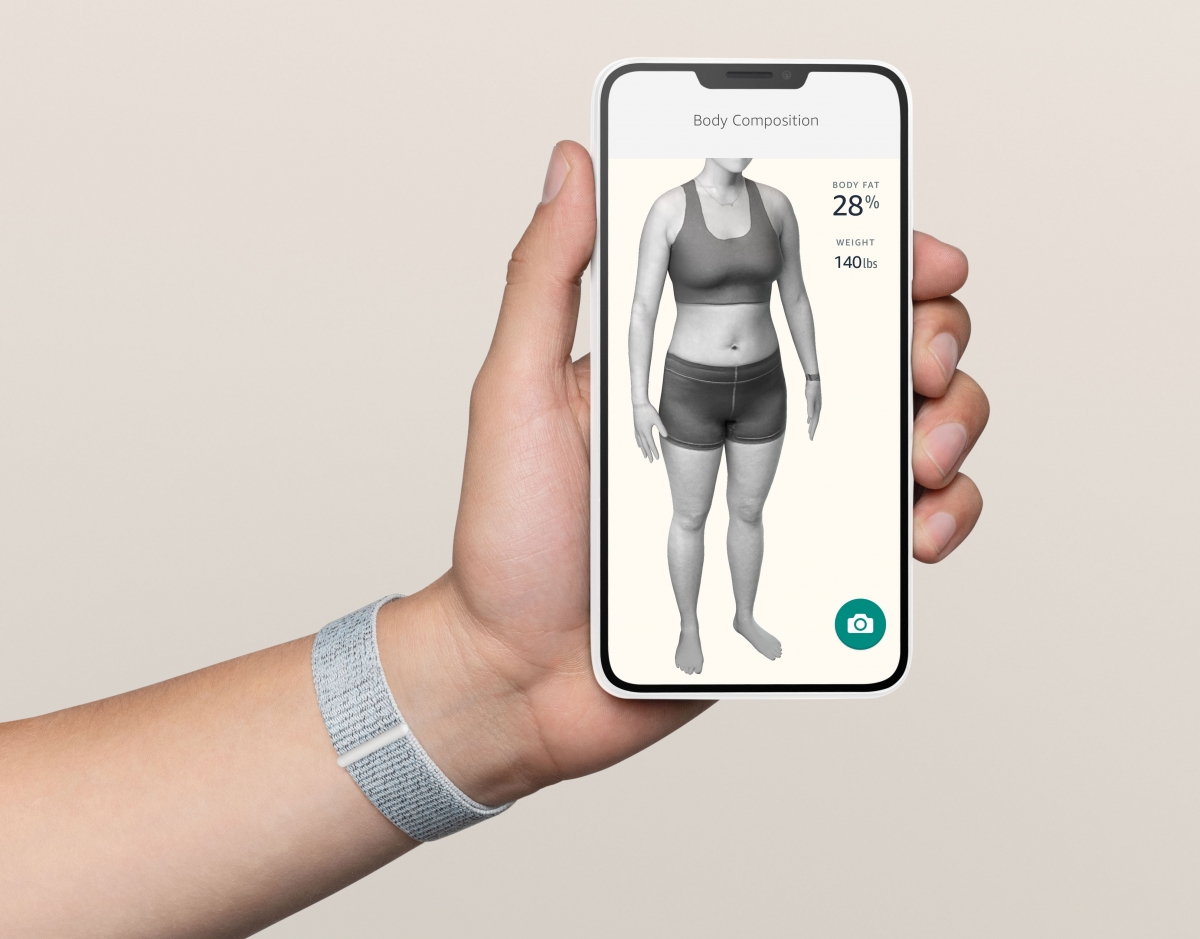
 The UKSFTA was signed in Singapore by Minister for Trade and Industry Chan Chun Sing (right) and UK Secretary of State for International Trade Elizabeth Truss. PHOTO: MTI
 South Korean Foreign Minister Kang Kyung-wha (Yonhap)
 SootinClaimon.Com