The coastal road between Nakhon Si Thammarat’s Khanom and Sichon districts was crowded with tourists at the start of the long weekend holiday on Thursday.
The winding route is dotted with beauty spots and viewpoints where visitors parked their vehicles to take photos.
However, tourists are advised to keep safety in mind when grabbing shots, as the road can get busy.
By The Washington Post · Laurie McGinley, Carolyn Y. Johnson
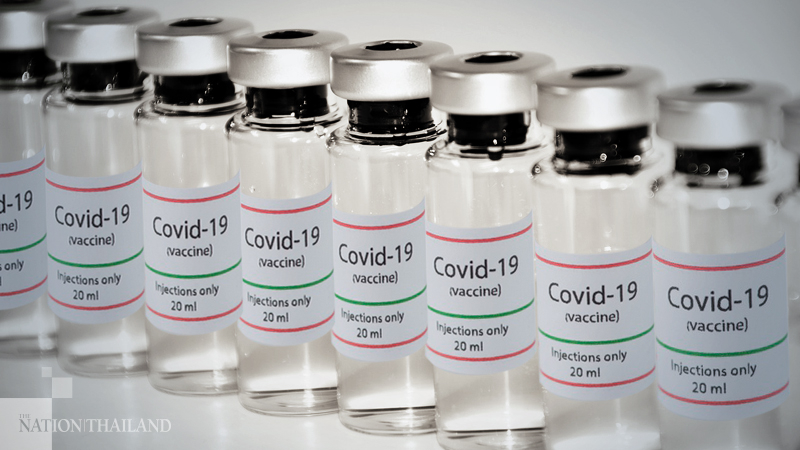
WASHINGTON – Federal advisers endorsed the Pfizer-BioNTech coronavirus vaccine on Thursday, making it all but certain the Food and Drug Administration will authorize the vaccine on an emergency basis within hours or days, kicking off an unprecedented effort to inoculate enough Americans to stop a rampaging pandemic.
The thumbs’ up from the FDA’s vaccine advisory committee was the culmination of an all-day meeting during which the panel heard presentations on the safety and effectiveness of the vaccine, including plans to monitor its longer-term safety.
The key moment came at the end of the meeting, just after 5:30 p.m. Eastern, when the agency asked its independent advisers: “Based on the totality of scientific evidence available, do the benefits of the Pfizer-BioNTech COVID-19 Vaccine outweigh its risks for use in individuals 16 years of age and older?”
The committee voted yes, 17 in favor, four against and one abstained. Panel members did not have an opportunity to explain their votes, but at least two dissenters objected to inclusion of 16- and 17-year-olds, given the low risk of severe disease in that age group and how few had participated.
“My ‘no’ vote was because of the inclusion of 16- 17-year-olds,” said David Kim, director of the division of Vaccines in the Office of Infectious Disease and HIV/AIDS Policy. “I would have voted ‘yes’ most enthusiastically had the language been ‘. . . 18 years of age and older.’ “
Panel member Paul Offit, a pediatrician and vaccine expert at the Children’s Hospital of Philadelphia, vehemently that argument.
“Kids in our hospital have had cardiac anomalies,” he said. “We have clear evidence of benefit, and all we have on the other side is theoretical risk.”
If as expected, the FDA follows quickly with an emergency authorization, the shots will start being moved to the states within 24 hours, according to officials at Operation Warp Speed, the Trump administration’s effort to accelerate the development and delivery of vaccines. Inoculations could begin early next week.
After the FDA authorization, an advisory committee to the Centers for Disease Control and Prevention will vote on whether to recommend the vaccine and for which groups. First in line to be inoculated are health care personnel and residents and staff of long-term care facilities, according to previous recommendations from the CDC panel. But states will have the final say on who gets the first shots and where they are administered. Those considerations are complicated by extreme logistics challenges, including the sub-Antarctic storage temperatures the vaccine requires.
Kathrin Jansen, Pfizer’s head of vaccine research and development, told the panel that “with the high efficacy and good safety profile shown for our vaccine, and the pandemic essentially out of control, vaccine introduction is an urgent need,”
During the meeting, committee members pressed the FDA on the safety of the vaccine, including raising questions about the allergic reactions that a new issue that cropped up on Wednesday when British regulators ordered hospitals to avoid giving the shots to people who have a history of “significant” allergic reactions. That directive came after two health care workers had adverse reactions after receiving the first dose of the vaccine, which British regulators authorized last week. British authorities said both workers have a history of serious allergies.
Susan Wollersheim, a medical officer in the FDA’s Office of Vaccines Research and Review, said the FDA has asked Pfizer to monitor vaccine recipients for “anaphylactic reactions” as a potential risk following the British reports.
Much remains unknown about the cases in the United Kingdom, and experts said more data was urgently needed. A specific study could be done to see if the vaccine carried risk to people with severe allergies.
“There are tens of millions of people in this country that carry EpiPens because they have peanut allergies and egg allergies. They are going to believe that they can’t get this vaccine. That is a lot of people,” Offit said.
In its review, the FDA found a slightly higher number of adverse events – “potentially representing allergic reactions” – in the group that received the vaccine, compared with those who got the placebo. There were 137 “hypersensitivity-related” reactions to the vaccine, compared with 111 such events in the placebo group. But there were no cases of anaphylactic reactions in the trial.
Pregnant women have been excluded from coronavirus vaccine trials, but FDA’s limited data doesn’t suggest a specific risk to pregnant women or a fetus. Doran Fink, deputy director of the FDA’s Division of Vaccines and Related Products Applications, said the agency is expecting later this month a developmental and reproductive toxicity study in animals that could help elucidate any risks, but will likely allow pregnant women and their doctors to decide whether or not to take the vaccine.
An authorization for Pfizer-BioNTech is the first of what health experts hope will be several vaccines to cross the finish line. Next to be considered is Moderna’s vaccine. The FDA will release its assessment of that vaccine on Tuesday. If it gets favorable evaluations are favorable, as expected, the FDA is likely to authorize that vaccine within days. Between the two vaccines, government officials project having 40 million doses by the end of the year – enough to fully vaccinate 20 million people with the two-shot regimen.
Canada’s health regulator on Wednesday approved Pfizer’s coronavirus vaccine, days ahead of possible approval in the United States. Canadian officials expect to administer them within days. Britain began vaccinations on Tuesday, after authorizing the shots last week. While some have wondered whether the FDA could have acted more quickly, Fink said the agency has been working nonstop to review the companies’ data.
“The American public demands and deserves a rigorous, comprehensive and independent review of the data,” Fink said. “That is what FDA physicians and scientists, all of us career public health servants, have been doing over days, nights, weekends and, yes, over the Thanksgiving holiday. This is in addition to months of review work already completed.”
Besides Canada and Britain, Saudi Arabia and Bahrain also have cleared the vaccine.
There was extensive debate over how to handle the difficult issue of when to give participants who received a placebo access to the vaccine. Some participants have called for it, but the FDA has expressed concerns that “unblinding” could hurt efforts to collect longer-term safety data.
Pfizer officials on Thursday proposed to FDA that participants in the placebo group be eligible to receive the vaccine when they become eligible due to age or other risk factors if they were not in the trial. Eligibility would be determined by local and national guidelines.
In preparation for the meeting, the FDA on Tuesday published a 53-page evaluation saying the vaccine appears to meet the standards it laid out in recent months for emergency authorization. The agency has said a vaccine must be at least 50% effective; its own scientists confirmed Pfizer’s assessment that the vaccine regimen was 95% effective at preventing covid-19 in a large clinical trial.
On safety, the FDA found that the vaccine has “a favorable safety profile, with no specific safety concerns identified that would preclude issuance of an [emergency authorization].” The vaccine caused several side effects, including sore arms, fatigue, headaches, muscle pain and chills, but they typically disappeared after a day or two. Pfizer provided the agency with a median of two months of follow-up on 38,000 participants in the trial.
The one surprise in the Tuesday report was that the first shot in the two-dose regimen was 52% protective against covid-19 in the three weeks between the two shots. But the FDA noted that there wasn’t enough data to draw firm conclusions about the efficacy of a single shot. Government officials have said they plan to hold back supplies for the second shots, which must be given three weeks later, to ensure sufficient supply of the shot that provides people get complete protection. But the signal of early protection from a single dose has led some to suggest that may not be the best way to use limited doses in the midst of amid surging cases.
University of Michigan epidemiologist Arnold Monto is temporary chairman of the 24-person panel, whose official name is the Vaccines and Related Biological Products Advisory Committee, which also includes a consumer representative and a nonvoting member who represents the pharmaceutical industry.
The independent panel of almost 24 members, includes experts on immunology, virology and infectious diseases. They Other Members include HIV researcher James Hildreth, dean of Nashville’s Meharry Medical College, one of the nation’s few historically black medical schools, and Paul Offit, director of the Vaccine Education Center at the Children’s Hospital of Philadelphia and co-developer of a rotavirus vaccine. The panel, whose official name is the Vaccines and Related Biological Products Advisory Committee, also includes a consumer representative and a nonvoting member who represents the pharmaceutical industry.
During the portion of the FDA’s advisory committee meeting for the general public, some people expressed concerns about the authorization of a vaccine that was so rapidly developed and reviewed. But Evan Fein told the panel he was a clinical trial participant at New York University and strongly urged quick action.
He said he is certain he got the vaccine last summer – not a placebo – because he had fatigue, fever and muscle aches after the second shot. But he said there were no longer-term side effects.
He said it would be “immoral and unethical” to not authorize the vaccine.
Relief, reluctance and reality checks with vaccine in sight
Health & BeautyDec 11. 2020Maribel Martinez, 43, outside her home this week in Baltimore. MUST CREDIT: Washington Post photo by Sarah L. Voisin.
By The Washington Post · Ian Duncan
Maribel Martinez has no qualms about getting the coronavirus vaccine. She watched as covid-19 attacked and weakened her husband for days during the summer before he relented and went to the hospital.
He survived, but the experience so shook Martinez that she is determined to get the vaccine as soon as it is available. She said that puts her out of step with most of her friends and neighbors in a predominantly Latino neighborhood in Baltimore where many are resistant to the idea of inoculation.
“We have a big problem,” said Martinez, 43. “The majority of the people around me are relying on what they hear from others, see on social media or their religious beliefs without knowing what it is to have the virus.”
Since the first indications that vaccine trials were successful, hope has grown that 2021 will bring an easing of the pandemic that has raged through 2020.
The three leading vaccines, developed using cutting-edge technology and being fast-tracked through the approval process, hold the promise of keeping the virus at bay in ways that counting on personal adherence to mask-wearing and social distancing have not. For many, making plans for family get-togethers and overseas travel no longer seems futile or outright dangerous.
But vaccines will not mean the immediate end of the pandemic. Emergency approval of the first vaccine, expected this week by officials at the Food and Drug Administration and the Centers for Disease Control and Prevention, will be only the first step in a rollout that presents staggering logistical challenges. Masks and social distancing will continue to be necessary. Because vaccine supplies will be limited at the outset, priority will be given to those most at risk of infection. That means it will probably be months before the average American is eligible for a shot.
And for all the enthusiasm about the vaccine – and a determination Tuesday by the FDA that it is safe and effective – there are swaths of people who, like Martinez’s neighbors, are apprehensive. For many, the speed with which the vaccines have been developed and evaluated by the Trump administration is reason to be cautious.
– – –
Iowa truck driver Candace Marley frets about bringing the coronavirus home from the road. Her boyfriend’s sister has an immune system compromised by cancer. Nevertheless, Marley is in no hurry to be vaccinated.
“They really rushed,” said Marley, 52. “Even if they make us a priority, I’ll probably wait a couple months after they start to see how everyone else is handling it.”
The resistance to vaccination is expected to be deepest in Black and Latino communities – groups that have been disproportionately affected by the virus but also subjected to racist and unethical medical practices and experiments in the past. A recent survey found that fewer than half of Black Americans and only 66% of Latinos would definitely or probably get vaccinated.
The study also found that only 14% of Black people think a vaccine will be safe and 18 percent think it will effective. The numbers for Latinos were 34% and 40%.
Liz Martin, 53, has endured a grueling nine months, moving from Georgia to South Florida for a teaching job that never materialized. She has cut herself off from almost everyone to limit her potential exposure to the virus.
Yet despite the toll the pandemic has taken on her, misinformation from the federal government about the virus has also affected her confidence in the vaccine.
“I don’t want to be anyone’s guinea pig,” said Martin, a single mother who has two children at home with her. “I have a lot to lose.”
Martin, who is Black, said she is aware of the troubled historical legacy of medical research and African Americans. But she also mentioned concern about recent reports of immigrant women in detention camps being subjected to unwanted and unnecessary medical procedures, including hysterectomies. Female detainees at a rural Georgia immigration facility have alleged “overly aggressive” gynecological procedures at a local physician’s office.
“Maybe by summer I’ll feel comfortable because I’ll see people around me who have had success with the vaccine,” she said.
The Trump administration initially pledged that its Operation Warp Speed would deliver about 300 million doses of vaccine by year’s end. The reality has fallen far short – to about 10% of that amount.
The CDC expects 35 million to 40 million doses to be available by the end of the year, enough to reach some 18 million people, because both the vaccines require two doses spread several weeks apart. Based on recommendations from a CDC advisory panel, 21 million health-care workers and 3 million nursing-home residents will be first in line. States will make the final determination on how to allocate the supply of vaccine they receive.
Maribel Martinez, 43, said many of her neighbors are wary of getting a coronavirus vaccine. MUST CREDIT: Washington Post photo by Sarah L. Voisin.
Residents at the Ohio Eastern Star Home in Mount Vernon, about 40 miles northeast of Columbus, have largely been spared by the coronavirus, chief executive Michele Engelbach said, knocking on wood. But she said she has watched lives fade amid the loneliness of the lockdown designed to keep the virus away.
“It’s not like they can say, ‘Well, next Christmas we can get together,’ because who knows?” Engelbach said, describing a “no win” choice between protecting residents from the virus and watching them waste away amid the feelings of isolation.
The 200 staffers and some of the 120 residents at the Eastern Star Home should be among the first people in the country to get the vaccine, solving her dilemma.
“I sure as hell hope so,” she said.
Engelbach said that some of her staffers have expressed concerns about the vaccine and that she will not mandate everyone get it, hoping instead that they can be persuaded. Residents will not be forced to get vaccinated, either, but Engelbach said they have not expressed any hesitancy.
“At that point in my mind, all the residents will be vaccinated, the majority of the staff will be vaccinated, so the only people who will be at risk are the people who choose not to get vaccinated,” she said.
Yet even as the vaccine approval nears, Engelbach said practical things, such as how it will get from the manufacturer to her facility and how it is to be administered, remain unclear, as do the implications for reopening the home to visitors.
“I know [the vaccine is] out there,” she said. “I know it’s coming. That’s about it.”
Significant questions also remain about how the vaccines will preform in the real world. The CDC says it is not clear yet how long the immunity conferred by the vaccines will last or when precautions such as mask-wearing and social distancing can safely be abandoned. There is also a chance that people who are vaccinated could still spread the virus if they subsequently become infected.
Data from the trials shows the vaccines to be generally safe, but federal officials said there will be what are known as “adverse events” as the vaccines are rolled out, and they are planning to monitor their safety.
While others ponder the risks, Bill Moore, an emergency department nurse in Boone, N.C., said he is ready to take the vaccine today, figuring it could safe his life. Though Moore, 65, should be close to the head of the line, he said he has heard nothing about when he might actually receive his first dose.
“If I knew that the vaccine was going to be here next week, I’d feel a lot better about it,” he said. “I’m working this coming weekend, and I dread it, to tell the truth.”
In the new year, the number of doses being manufactured is expected to grow, allowing additional groups of people to be vaccinated.
Whom those groups might include has not been determined, but they are likely to include older people who do not live in nursing homes and people in essential professions such as teaching and food production. Industries and unions have begun campaigning to get their workers good spots on the list.
Major fire service organizations are pushing states to prioritize firefighters, paramedics and emergency medical technicians, because many of these first responders treat coronavirus patients before they are transported to the hospital. Still, some rank-and-file firefighters are reluctant to be first in line. In a union survey of New York firefighters, more than half said they would refuse the vaccine.
Covid-19, the disease caused by the coronavirus, is the leading cause of death this year for law enforcement and corrections officers in the United States. Houston police officer Doug Griffith volunteered for one of the early vaccine trials. Hundreds of the department’s officers have tested positive for the virus. Officer Ernest Leal died of covid-19 late last month.
Griffith said he does not know whether he received the vaccine or a placebo, but he viewed participating in the trial as a way to keep his family safe.
“I’m healthy, and I think its incumbent to help out in any way I can,” said Griffith, 51. “I interact with the public every day and live close to my family. The last thing I want to do is get someone sick.”
Griffith said it makes sense for health-care workers and nursing home residents to be among the first to get the vaccine, but he would like first responders to be a close second or third.
He regularly fields questions from fellow officers about the vaccine: “Why would you do that to yourself? Did you ever feel funny? Are you afraid of it?” Griffith said he’s not trying to persuade anyone to get the vaccine, saying it’s a personal choice – but he is happy to be a “guinea pig” to help ease any doubts or concerns his colleagues might have.
– – –
Federal officials say they recognize that the hesitancy among many Americans is an important obstacle to overcome and are developing strategies to work with community organizations to build confidence in the vaccine.
Baltimore pediatrician Sarah Polk said she was stunned by the depth of the concern and mistrust in the vaccine in the largely Latino community she serves. At a meeting of a community advisory board, Polk, who is White, saw how deeply damaged the medical establishment’s reputation is among immigrants.
One of Polk’s patients works in a job that will probably require her to get vaccinated, but the girl said she would rather lose the job than get the vaccine.
Polk has no concerns about the vaccine and intends to get it – and for her family to get it when it becomes available. She intends to be open with her patients about her plans but said the message might not mean much coming from someone who looks like her.
“You need many different messengers,” she said.
Dallas construction worker Oscar Torres has taken on the job of messenger. He’s heard all the baseless conspiracy theories and falsehoods: The virus is a government-engineered plot for population control. Only old people die of it. If President Trump survived, how bad could it be?
Torres was not sure what to think until he caught the virus. He and his brother were violently ill for 10 days in early May.
“I thought it was an invention to scare people,” he said. “But in reality, when I got it, it was terrible.”
Texas construction workers, a large number of whom are estimated to be undocumented or foreign born, are five times as likely to be hospitalized with covid-19 as other workers, according to a recent study by the University of Texas at Austin.
Torres wants his colleagues to be vaccinated to lower his chances of getting covid-19 a second time. But like Polk, he said the government needs different messaging to ensure everyone realizes the importance of being vaccinated. Officials should be transparent without being alarmist, he said.
“I get it. A vaccine is the most important thing we can do to fight this pandemic,” Torres said. “But . . . there is a lot of mistrust.”
And then there are those like Julie Turner, who at 82 is tired of being stuck at home alone and ready to get back to living. She needs no convincing.
Turner said she has been extremely careful since the pandemic began. When her daughter came to visit in August, she realized she had not touched another person in months.
She splits her time between Waretown, N.J., and a home on the state’s Long Beach Island. She said her health is good, but when it comes to her age, “82 is 82.”
During the summer, going to the grocery store was a high point, but as news about the vaccine became increasingly encouraging, bigger plans took shape for 2021. She has lined up trips to Nepal, Oman and the Caucasus region and plans to be snorkeling in Indonesia’s Raja Ampat region come next December.
Spending Christmas alone is going to tough, Turner said, along with the rest of the winter. But, she said, at least there is now a light at the end of the tunnel.
“I think a lot of people just need to think that there is one,” she said.
The Game Awards have always been distinct from peer shows in the entertainment industry. With less formality and more announcements than any other prestige show, the video games industry has an awards show that tries to be its mirror.
Showrunner Geoff Keighley extended this philosophy this past year after the coronavirus lockdowns kicked in. He missed the in-person interactions from traveling to expos and other industry shows across the world. So instead, he used The Game Awards platform to host weekly fireside chats with industry titans like Xbox chief executive Phil Spencer, “Elder Scrolls” legend Todd Howard or the elusive Gabe Newell, co-founder of Valve and an early key figure in the creation of Microsoft Windows.
One day during the summer, Keighley tweeted to his 1.2 million followers asking who would want to show up on a Zoom call and chat about The Game Awards, what they want to see and how the show can be improved. To be selected, viewers were asked to send an email explaining why The Game Awards or gaming means so much to them. Keighley received over 2,000 emails. He invited about 150 people on the first call.
“Everyone online was telling me, ‘Oh it’s going to be a madhouse, everyone talking over each other,” Keighley said. “It was not at all like that. It was such a polite, respectful group of people, and we just really had a great conversation about games. And I’m blown away at how global it was.”
Keighley showed some of the emails to The Washington Post, where respondents raised a range of reasons for why they love The Game Awards, including the representation it showcases and the excitement it can bring – especially as trade shows like E3 lose some of their luster. They appreciate seeing the faces behind the works, especially in a medium that’s struggled to properly recognize the hundreds of people that can stand behind the creation of a single game.
The Post was invited to one of these calls, and can confirm that they were orderly, polite conversations. Viewers and listeners would often raise their hand to speak and wait their turn.
“It was inspiring because, you know, on Twitter we often see a lot of loud voices, but in the midst, there are tons of people who are really amazing, thoughtful people that love video games,” Keighley said. “I often live in a bubble where I go to PAX and E3 and see the same people, while a lot of these fans might never get a chance to talk to Todd Howard or Phil Spencer.”
Keighley said much of the feedback was affirmation for him and his team. It was a good “temperature check” on how people felt about the show, and how it could change moving forward after this tumultuous year.
Probably the most distinctive aspect of The Game Awards is that its also a vehicle for announcements. Nintendo debuted its trailer for “The Legend of Zelda: Breath of the Wild” at the 2016 show, and Microsoft made its first public unveiling of the Xbox Series X at last year’s show.
“People have crazy expectations about what’s going to be announced, and we don’t really control whether it’s going to be on the show or not,” Keighley said. “That’s always the hardest part for me, seeing games get requested that you know might not be there, but that’s not our choice.”
Keighley said the decision to run announcements or trailers largely depends on the work being done at the publisher or studio level, and this year has proven that the entire industry has struggled to meet its deadlines thanks to the pandemic.
None of these Zoom meetings are available for public viewing. Keighley said they were meant to be intimate, personal conversations, although none were really “off the record.” They were meant only as an interactive way to talk to his fans. Keighley is keen on interactivity as a core pillar of The Game Awards, and he’s worked with publishers in the past to offer free playable demos and discounts for award winners.
“I wasn’t going to turn this into a video that we were going to put up on YouTube and monetize, this was very much for the community,” Keighley said.
Despite problems relating to the pandemic ailing the world, Keighley said 2020 proved to be a banner year for gaming’s reputation.
“The wider world has really started to realize the power of this medium, whether that was the Travis Scott Fortnite concert to the new console launches,” Keighley said. “I really think the meta narrative for me is that this is a year that gaming has finally been accepted at its rightful place as the biggest form of entertainment.”












 Photos by Charoon Thongnual

.jpg)



 Maribel Martinez, 43, outside her home this week in Baltimore. MUST CREDIT: Washington Post photo by Sarah L. Voisin.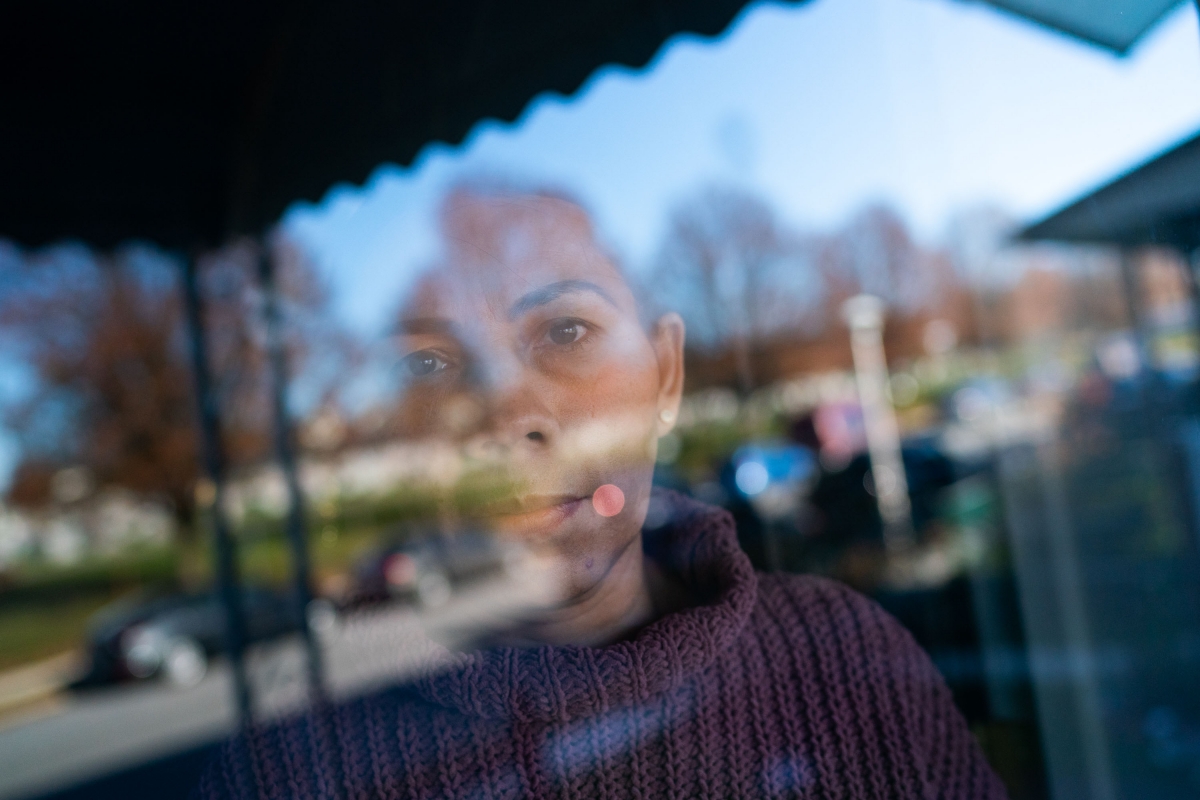

 SootinClaimon.Com