The price of gold surged by Bt250 per baht weight in morning trade on Wednesday after rising by Bt200 per baht weight at close on Tuesday, the Gold Traders Association reported.
As of 9.27am, the buying price of a gold bar was Bt25,850 per baht weight and selling price Bt25,950, while gold ornaments cost Bt25,377.84 and Bt26,450, respectively.
At close on Tuesday, the buying price of a gold bar was Bt25,600 per baht weight and selling price Bt25,700, while gold ornaments cost Bt25,135.28 and Bt26,200, respectively.
The spot gold price moved to US$1,813 (Bt54,791) per ounce in the morning, while the Comex (Commodity Exchange) gold price to be delivered in February next year rose by $38 to $1,818.90 per ounce on Tuesday, thanks to mass buy-ups of the precious metal after its price dropped in previous days.
Besides, the US Federal Reserve’s gloomy forecast that the economy would face various uncertainties due to the Covid-19 crisis also boosted gold sales.
The Hong Kong gold price meanwhile rose by HK$210 to $16,770 (Bt65,373) per tael, the Chinese Gold and Silver Exchange Society reported.
The Stock Exchange of Thailand (SET) Index rose by 4.08 points, or 0.29 per cent, to 1,424.95 in the morning session on Wednesday.
An analyst at Krungsri Securities expected the day’s index to swing between 1,410 and 1,430 points despite positive news of a $908-billion (Bt27.4 trillion) economic stimulus package and a Covid-19 vaccine.
“However, the falling oil price due to a postponement of the Opec+ meeting amid conflict over the bloc’s oil production policy, together with the expected Constitutional Court ruling in a case against Prime Minister General Prayut Chan-o-cha would pressure the index,” he said.
He recommended investors buy:
> MINT, CENTEL and AOT that benefit from the development of a Covid-19 vaccine.
> AMATA, WHA, SAT and AH that will benefit from the Asia-Pacific Regional Comprehensive Economic Partnership pact.
The SET Index closed at 1,420.87 on Tuesday, up 12.56 points, or 0.89 per cent. Total transactions amounted to Bt78 billion, with an index high of 1,430.03 points and a low of 1,416.39.
By Syndication Washington Post, Bloomberg · Claire Ballentine, Kamaron Leach
U.S. stocks started December by rising to record highs as a renewal of aid talks added to optimism over progress on coronavirus vaccines. The dollar extended its slide to a more than two-year low and Treasury yields jumped.
The risk-on mood powered the S&P 500 and Nasdaq Composite to all-time highs a day after posting double-digit gains last month. Traders continued to bet vaccine news will lead to an economic surge next year. There were also signs that appetite is picking up for a federal spending plan. President-elect Joe Biden urged Congress to pass a relief package.
Communication services, financial and information technology were the biggest S&P industry sector gainers. House Speaker Nancy Pelosi, D-Calif., delivered a new proposal for a stimulus package and Senate Majority Leader Mitch McConnell, R-Ky., said Tuesday he is circulating among Republicans his own revised plan, which has the backing of President Donald Trump.
“Investors have been prepared to look beyond the near-term continued rise in covid-19 cases in many regions,” said Mark Haefele, UBS Global Wealth Management’s chief investment officer. “They have focused instead on the potential for a return to normal social and economic activity based on the widespread roll out of effective vaccines in the first half of 2021. We see further upside for global equities in this environment, but also expect market leadership to continue to shift.”
After a record month for global stocks, there’s no end in sight for the rally that’s been fueled by vaccine breakthroughs. Pfizer Inc. and partner BioNTech SE have sought regulatory clearance for their covid-19 vaccine in the European Union and BioNTech said it could start shipping the first doses “within hours” after approval.
“People have faith that even though things are very uncertain around the virus in the short term, if they look out six months or a year, it’s credible things will be better,” said Alec Young, chief investment officer at Tactical Alpha LLC.
Strong economic data from Asia also added support to the positive mood in markets. Indexes of factory activity in some of North Asia’s biggest export-led economies rebounded in November and China’s recovery continues to lift the region.
It’s not all good news though. Federal Reserve Chairman Jerome Powell cautioned lawmakers that the U.S. economy remains in a damaged and uncertain state during testimony at a Tuesday hearing before the Senate Banking Committee.
In other markets, gold advanced. Oil fell as OPEC+ sought more time to reach a deal on production policy.
Bitcoin pulled back after almost reaching $20,000 for the first time.
Here are some of the main moves in markets:
Stocks
The S&P 500 Index advanced 1.1% to 3,662.41 as of 4:02 p.m .EST, the highest on record with the largest gain in a week.
The Dow Jones industrial average advanced 0.6% to 29,823.52, the biggest gain in a week.
The Nasdaq Composite Index gained 1.3% to 12,355.11, the highest on record with the largest gain in a week.
The Stoxx Europe 600 Index advanced 0.7% to 391.90, the biggest gain in a week.
The MSCI All-Country World Index advanced 1.2% to 625.45, the highest on record with the largest gain in a week.
Currencies
The Bloomberg Dollar Spot Index sank 0.7% to 1,136.59, the lowest in more than two years on the biggest dip in almost four weeks.
The euro surged 1.2% to $1.2075, the strongest in more than two years on the largest jump in about eight months.
The Japanese yen was little changed at 104.30 per dollar.
Bonds
The yield on 10-year Treasuries climbed eight basis points to 0.92%, the highest in almost three weeks on the largest surge in more than three weeks.
Germany’s 10-year yield jumped four basis points to -0.53%, the highest in almost three weeks on the biggest surge in more than three weeks.
Britain’s 10-year yield climbed four basis points to 0.347%, the highest in more than two weeks on the largest surge in more than three weeks.
Commodities
West Texas Intermediate crude sank 1.7% to $44.55 a barrel, the lowest in more than a week on the biggest tumble in more than two weeks.
Gold strengthened 2.1% to $1,814.78 an ounce, the largest jump in almost four weeks.
Govt hits brakes on ‘old car for new car’ proposal
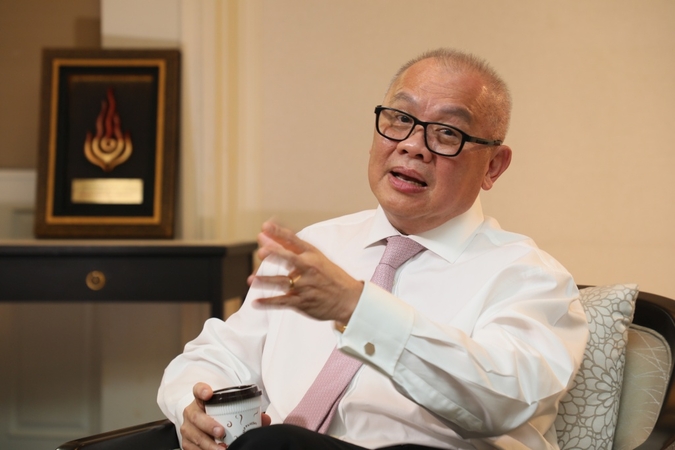
EconDec 02. 2020Deputy Prime Minister Supattanapong Punmeechaow
By The Nation
The Industry Ministry’s proposed “old car for new car” scheme needs more time and discussion before being finalised, Deputy Prime Minister Supattanapong Punmeechaow said on Tuesday. He added that the scheme is not ready to be implemented given the lack of clear details.
Industry Minister Suriya Juangroongruangkit told Tuesday’s Cabinet meeting that work on the details of the scheme had not been completed.
Government spokesman Anucha Burapachaisri said the scheme would be shelved for the foreseeable future to prevent confusion among car buyers and the auto market.
Anucha added that Prime Minister Prayut Chan-o-cha told the relevant parties to consider the idea carefully.
The Cabinet on Tuesday agreed to earmark Bt1.78 billion to fund two projects to boost the grassroots economy, government spokesperson Anucha Burapachaisri said.
Of the total, Bt1.6 billion will be spent on enhancing the capacity of machinery used by the Rice Department to improve the quality of rice grown in the country. This fund will also cover the purchase of new machines and equipment.
The remaining Bt176 million will be spent by the Culture Ministry’s Office of the Permanent Secretary to develop community products.
Ratchada Thanadirek, the government’s deputy spokesperson, said the Cabinet has also approved the Energy Regulatory Commission’s Phase 4 of the 2020-2022 power development plan.
The Department of Trade Negotiations has released a complete study on the pros and cons of Thailand resuming free-trade talks with the European Union (EU) for Commerce Minister Jurin Laksanawisit to consider.
Auramon Supthaweethum, the department’s director-general, said the Institute of Future Studies for Development has completed the study and it has been published on www.dtn.go.th.
The study shows that if Thailand and 27 EU members, excluding UK, cancel all import tariff, then in the long-run Thailand’s gross domestic product will be boosted by 1.28 per cent worth Bt205 billion per year.
Exports to the EU will rise by 2.83 per cent or Bt216 billion per year, while imports from EU will expand 2.81 per cent or Bt209 billion per year. Thai products that have good growth potential in the EU market include vehicles, auto parts, garments and textile, rubber and chemical products.
The study also shows that upgrading related sectors, such as transport, finance and insurance, in line with the free-trade accord (FTA) will reduce production costs in related industries.
She added that the department will discuss with related parties to work out a negotiation framework based on Thailand’s best interests and will seek ways to prevent possible adverse impacts on the country.
Last year, the EU (excluding UK) was Thailand’s fifth largest trading partner after Asean, China, Japan and the US. Trade between Thailand and the EU was worth US$38.23 billion (Bt1.16 trillion), of which $19.74 billion came from Thai exports.
Key products exported to the EU from Thailand were computers, automobiles, auto parts, gems and jewellery, air conditioners, rubber products and processed chicken.
Key imports from the EU included machineries, electric machines, chemical products, pharmaceuticals and auto equipment.
The number of medical companies applying for Board of Investment (BOI) tax privileges during the first nine months of this year jumped 132 per cent to 65, according to BI secretary-general Duangjai Asawachintachit.
Total value of the projects also soared 75 per cent year on year to Bt15 billion.
She attributed the surge to a response to the Covid-19 pandemic.
From 2018 up to the end of September this year, the BOI has received 129 applications from medical firms with projects totalling Bt30.887 billion in value.
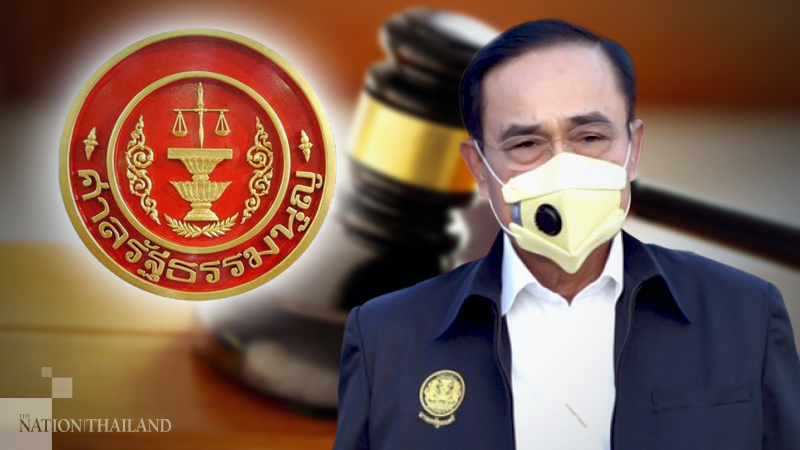
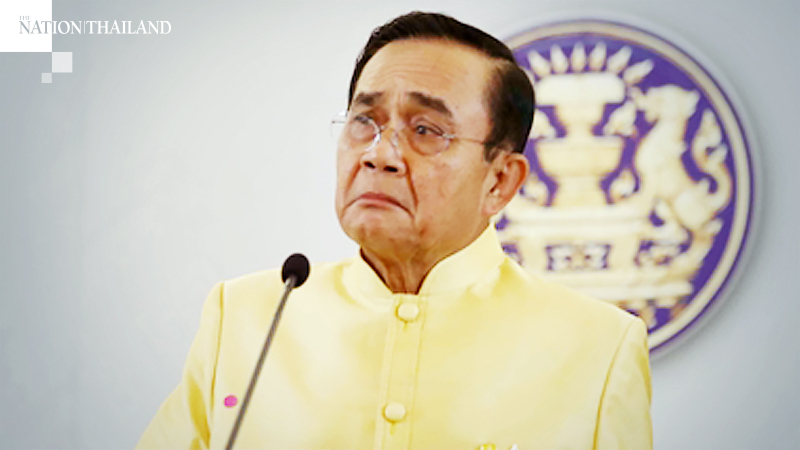
The Constitutional Court ruled on Wednesday that Prime Minister General Prayut Chan-o-cha has not violated the charter by staying on in his Army residence, so can remain in office.
The court ruled that military regulations allow former officers to remain in their Army residence after retirement.
Wednesday’s verdict came amid political unrest that has been escalating since July, with pro-democracy protesters demanding Prayut’s resignation, charter change and monarchy reform.
Protesters have called a rally at Lat Phrao Intersection today.
The opposition accused Prayut of breaching the Constitution by staying on at an official Army residence in the First Infantry Battalion of Royal Guards on Vibhavadi Rangsit Road in Bangkok, after his military retirement at the end of September 2014.
Prayut was accused of violating Sections 184 and 186 of the Constitution that forbid a government minister from “receiving any special money or benefit from a government agency, state agency or state enterprise apart from that given by the government agency, state agency or state enterprise to other persons in the ordinary course of business”.
In his court testimony, Prayut argued he had to stay at the Army base because the PM’s official residence, Baan Phitsanulok, was being renovated, according to a Parliament source.
Also, the PM argued that his security team suggested he live at the Army residence for safety. Hence, he said, the court should dismiss the petition against him.
The Army informed the court that the residence was provided to Prayut because he is PM and deserves the honour and security it provides.
Similar housing has been provided to other former Army chiefs who are members of the Cabinet, the Privy Council and Parliament, the Army says.
The opposition pushed the case knowing that a guilty verdict would mean Prayut was removed and disqualified from holding government office for two years.
It also knew an acquittal would mean business as usual for the prime minister, perhaps even bolstering his legitimacy as PM.
The Constitutional Court has played a key role in shifting political momentum in past years, making several controversial verdicts deemed politically biased by critics.
The court has disqualified three prime ministers – Samak Sundaravej, Somchai Wongsawat and Yingluck Shinawatra – and dissolved a handful of political parties including Thai Rak Thai, People’s Power, Thai Nation Party, Neutral Democratic Party and, most recently, Future Forward. All were at the opposite end of the spectrum to the conservative establishment.
The verdicts were also seen as fuel for mass protests by the red shirts and now Ratsadon (People’s Movement) against conservative governments and the royalist establishment.
Metropolitan Police announced on Wednesday morning that they will not close Bangkok’s Lat Phrao intersection to traffic even if pro-democracy protesters choose the area as a rally site later in the day.
Deputy commissioner Pol General Piya Tawichai said the pro-democracy movement has not officially informed police of the site for their rally, adding that he was not worried because enough police officers will be deployed to attend to the protesters.
He also said police will not block the traffic at the protest site unless asked by protesters to do so.
Meanwhile, Piya said police has taken legal action against those who damaged the police van during the protest at the 11th Infantry Regiment base in Bangkok on Sunday. He added that police plan to take action against more protesters for vandalism.
Pheu Thai Party’s deputy leader Anusorn Eiamsaard has demanded that the Army immediately terminate its information operation (IO) and asked why the top brass don’t admit to running an information war, when the evidence is quite clear.
He said the military should not be interfering in political matters, yet it is running an online campaign to discredit the pro-democracy movement and using taxpayers’ money for it.
Anusorn said political issues should be resolved through the political system and interference from the Army will only worsen the situation.
“Prayut [Chan-o-cha]’s regime will come and go, but the future belongs to our children. The IO campaign is leaving them with scars and destroying their future,” he said.
Businessman Prasit Jeawkok admitted on Tuesday that he was supporting the IO campaign by posting pro-monarchy messages.
His confession came after the Progressive Movement exposed details linking him to the operation.
Prasit said he allowed the operators of the IO campaign to use his server freely as it was the duty of a royalist to support the monarch, and that the money spent on the operation came from his own pocket.



 Deputy Prime Minister Supattanapong Punmeechaow
  Government spokesperson Anucha Burapachaisri
  Auramon Supthaweethum

 Anusorn Eiamsaard
  SootinClaimon.Com