Bangkok motorists advised to avoid 6 Lat Phrao routes today amid protest rally
PoliticsDec 02. 2020Photo by Tanachai Pramarnpanich
By The Nation
Bangkok motorists heading to the Lat Phrao five-point crossing have been advised to avoid a handful of routes from 2pm on Wednesday as the pro-democracy Ratsadon group is scheduled to hold a rally at the crossing from 4pm.
Ratsadon announced via the United Front of Thammasat and Demonstration group’s Facebook page on Tuesday that their rally on Wednesday would be held at Lat Phrao Intersection, also known as Ha Yaek Lat Phrao, in Bangkok’s Chatuchak district from 4pm, instead of the Constitutional Court in Lak Si district.
Earlier this week, Ratsadon protesters had planned to gather in front of the Constitutional Court as December 2 is the day the court announces the verdict in a case against Prime Minister General Prayut Chan-o-cha for reportedly breaking Army rules by living in a military house after retirement.
Metropolitan Police Bureau deputy commissioner Pol Maj-General Jirasan Kaewsangek said Lat Phrao intersection connects with many routes and usually witnesses heavy traffic, especially during rush hour.
To avoid being caught in jams, motorists are advised to avoid:
• Phaholyothin Road (outbound) from Kamphaeng Phet to Ratchayothin intersection.
• Phaholyothin Road (inbound) from Ha Yaek Lat Phrao (Lat Phrao five point crossing) to Ratchayothin intersection.
• Lat Phrao Road from Ratchada-Lat Phrao to Ha Yaek Lat Phrao intersection.
• Vibhavadi Rangsit Road (inbound), frontage road from Horwang Road to Ha Yaek Lat Phrao intersection.
• Vibhavadi Rangsit Road (inbound), frontage road to Lat Phrao or Ratchayothin overpass.
Students defy school rules with ‘no-uniform’ protest
PoliticsDec 02. 2020After taking part in a ‘no-uniform’ protest, students spend their free time after school on Tuesday at a rally in front of the Education Ministry in Bangkok.
By THE NATION
Students taking part in a campaign to boycott school uniforms received a mixed response when they turned up for class in their casual clothes on Tuesday.The KKC Pakee Students group issued a clarion call last Thursday urging students to dress casually on Tuesday and to not be afraid of questioning the need to wear uniforms.Photos of the casually dressed students at school began circulating online today, drawing praise from some internet users but fierce criticism from others.Only small groups of students reportedly joined the protest. Several schools allowed them to attend classes as normal, including Bangkok’s prestigious Triam Udom Suksa and Satriwithaya schools, and Khon Kaen Wittayayon.In other cases, schools banned students in casual clothes from attending class.One Facebook video showed students in uniform protesting at a school with cries of “free our friends”. The poster said it was recorded at Satree Wat Mahapruttaram School in Khon Kaen province, where students dressed casually were separated from their classmates.The self-mockingly titled “Bad Student” group set up a website where students can report the names of schools that punish them for not wearing uniforms.As of 6.10pm on Tuesday, Saint Joseph Convent topped the ranking with 709 reports, followed by Assumption Convent (472), Sriracha School (360), and Suranaree Wittaya (315).The KKC anti-uniform campaign also produced playful photos of a student in a Winnie-the-Pooh costume, and students wearing yellow shirts to mock royalists.A Phetchabun student who was reportedly the only person in the province to take part in the campaign escaped punishment by his school.
The Association of Southeast Asian Nations (Asean) and the European Union (EU) decided at a ministerial meeting on Tuesday to elevate their dialogue partnership to a “strategic partnership”.
This comes after a meeting in Brussels in 2019 agreed in principle to upgrade relations.
Tuesday’s meeting via video conference was co-chaired by Singapore’s Foreign Affairs Minister Vivian Balakrishnan, as country coordinator for Asean-EU Dialogue Relations, and EU high representative for Foreign Affairs and Security Policy/Vice-President of the European Commission Josep Borrell.
The meeting was attended by foreign ministers or their representatives from all Asean states and 27 EU states, as well as the Asean Secretariat and European Commission.
“We reaffirmed the shared values and common interests that underpin 43 years of Asean-EU Dialogue Relations and noted with satisfaction the comprehensive and multifaceted nature of our dynamic partnership today [Tuesday]. We commended the good progress on implementation of the Asean-EU Plan of Action (2018-2022),” a press statement said.
“We also reiterated our shared commitment to support Asean centrality and Asean-led mechanisms in the evolving regional architecture that is open, transparent, inclusive and rules-based. Asean member states reiterated the importance of the Asean Outlook on the Indo-Pacific [AOIP] as a guide for Asean’s engagement in the wider Asia-Pacific and Indian Ocean regions.
“Asean encouraged the EU to work with it in promoting the AOIP and in the key areas of cooperation identified in the outlook to enhance mutual trust, mutual respect and mutual benefit through Asean-led mechanisms,” it said.
“In the spirit of mutual cooperation pertaining to sustainable vegetable oil production, we welcomed the launch of a joint working group between the EU and relevant Asean states to address the challenge towards reaching Sustainable Development Goals in the vegetable oil sector, especially the importance of a holistic approach to the environment and looked forward to the convening of its first meeting, to be held in January 2021,” the statement said.
“Recognising the unprecedented impact of the Covid-19 pandemic, we encouraged greater cooperation in strengthening both regions’ preparedness for, and capacity to respond to, current and future public health crises in line with Sustainable Development Goal 3 on health and well-being.
“Asean expressed appreciation for the EU’s ‘Team Europe’ package of over €800 million [Bt29 billion] to combat the spread of Covid-19 and mitigate its impact in Asean as well as the €20-million EU support programme ‘Southeast Asia Health Pandemic Response and Preparedness’ announced at this ministerial meeting. We invited our experts to launch a dialogue on Covid-19 vaccines and looked forward to the outcome of the Asean-EU Experts Dialogue on Vaccine Security on December 8,” it said.
“We expressed our strong support for ‘vaccine multilateralism’ and the World Health Organisation (WHO), as we work together to ensure fair, equitable, and affordable access to safe and effective vaccines as ‘global public goods’. In this context, we recognised the EU’s contribution of €500 million in grants and guaranteed loans to support the multilateral Covax facility to accelerate and scale up development and manufacturing of a global supply of vaccines.
“Asean encouraged the EU to continue to support Asean’s pandemic response and recovery efforts, including the Covid-19 Asean Response Fund, the Regional Reserve of Medical Supplies and the Asean Comprehensive Recovery Framework.
“We recognised the EU’s early engagement with Asean at the outset of the pandemic through the successful convening of the Asean-EU Ministerial Video Conference on Covid-19 in March 2020. We also discussed ways to take forward cooperation to combat the pandemic, facilitate robust recovery, ‘build back better’, and enhance our long-term resilience and sustainability, including through cooperation to support the implementation of the Asean Comprehensive Recovery Framework.
“The EU and Asean agreed on the importance of collaboration at the WHO, including towards an impartial review of the pandemic response. The EU and Asean looked forward to continue working together on pandemic response and sustainable recovery efforts, in line with the Asean Comprehensive Recovery Framework,” the grouping said.
“We were heartened by our robust economic cooperation, with the EU being Asean’s third largest foreign investor and trading partner in 2019. Nonetheless, we acknowledged the serious economic impact of the pandemic and resolved to strengthen the economic linkages binding our two regions to bolster the comprehensive post-Covid economic recovery,” it said.
“Cognisant of the strategic value of closer Asean-EU trade relations, we committed to further efforts towards creating a practical framework for an ambitious free trade agreement [FTA] as this would send a strong signal of both regions’ commitment to bring tangible benefits through economic integration and trade liberalisation. We commended the trade agreements concluded between the EU and Singapore and Vietnam, respectively, and encouraged further progress in negotiations between the EU and Indonesia.
“We also looked forward to closer cooperation to reform core functions of the World Trade Organisation in order to preserve and strengthen the multilateral, rules-based trading system. We also encouraged deeper public-private engagements, including through the EU-Asean Business Council and the Asean Business Advisory Council,” the statement said.
“We recognised the need to enhance cooperation on the implementation of the 2030 Agenda and its Sustainable Development Goals, the Paris Agreement on Climate Change, and the Sendai Framework for Disaster Risk Reduction, including through the Asean-EU Dialogue on Sustainable Development and the Asean-EU High Level Dialogue on Environment and Climate Change.
“We acknowledged the work of the Asean Catalytic Green Finance Facility and looked forward to the 3rd Asean-EU Dialogue on Sustainable Development to be hosted by Thailand next year, as well as greater concrete cooperation on sustainable development, including in sustainable consumption and production, in partnership with the Asean Centre for Sustainable Development Studies and Dialogue.
“We welcomed the outcomes of the 2nd Asean-EU High-Level Dialogue on Environment and Climate Change, which took place on November 27, 2020. We welcomed the EU’s commitment to climate neutrality by 2050, and will work together to achieve a successful COP26,” it said.
“We recognised the long-standing robust partnership between Asean and the EU on concerted efforts to conserve and sustainably use the region’s natural heritage. In light of the global concern on biodiversity loss, Asean expressed appreciation for the EU’s continued support to the Asean Centre for Biodiversity through the Biodiversity Conservation and Management of Protected Areas in Asean project. Asean welcomed the EU’s crucial contribution to enhancing capacity in the effective management of Asean Heritage Parks and other protected areas and mainstreaming biodiversity into key development sectors, as we work together to develop the post-2020 global biodiversity framework towards transformative change. We looked forward to close cooperation in the preparation of COP15,” the grouping said.
“We agreed that sustainable connectivity represents a key priority for the region-to-region relationship and welcomed efforts to build on synergies between the master plan on Asean Connectivity 2025 and Connecting Europe and Asia: The EU Strategy. Despite the disruptions from Covid-19, we reiterated our shared objective of strengthening Asean-EU connectivity, including through the successful convening of the Asean-EU Connectivity Seminar in June 2020 and the Asean-EU Joint Ministerial Statement on Connectivity, which are particularly timely.
“We further appreciated the great strides that both sides have made towards an Asean-EU Comprehensive Air Transport Agreement, which would be the first substantive aviation agreement between two major regional groupings. We reaffirmed our commitment to its expeditious conclusion,” it said.
“Recalling the Asean-EU Statement on Cybersecurity Cooperation adopted in 2019, we underscored the importance of strengthening cooperation in cybersecurity to promote an open, secure, stable, accessible and peaceful information and communication technology environment and to support Asean’s digital economy, and looked forward to exploring further initiatives to advance cooperation. Asean also welcomed the EU’s engagement on promoting greener and more resilient cities in the region through the EU’s new €5-million programme ‘Asean Smart Green Cities’, and closer engagement with the Asean Smart Cities Network, by enhancing the sharing of experiences and expertise in tackling the challenges of urbanisation through innovative, digital and green technologies,” the statement continued.
“Asean encouraged the EU to support the humanitarian mine action of the Asean Regional Mine Action Centre as well as other regional activities pertaining to peace and reconciliation.
Asean welcomed the EU’s contributions towards Asean’s community building and regional integration efforts. In particular, the two sides welcomed the launch of the Asean Customs Transit System on November 30, 2020, as a significant achievement of the strong and dynamic Asean-EU partnership, which will benefit businesses and citizens.
“The EU supported the development of the ACTS through its Asean Regional Integration Support programme [Arise Plus]. We also identified topics through which we could expand the breadth and depth of Asean-EU cooperation, including maritime cooperation, climate change and green growth, disaster management, biodiversity conservation, smart cities, digitalisation, combating transnational crime, terrorism, sustainable development, and supporting human capital development, education and vocational training, narrowing the development gap, as well as micro, small, and medium enterprises,” it said.
“We also supported sub-regional economic cooperation efforts, which continue to serve as catalysts for economic growth and for reinforcing regional economic integration and connectivity.
“Asean welcomed the EU’s support and sharing of best practices and experiences in narrowing the development gap, enhancing Asean’s competitiveness as a region and further ensuring that sub-regional development and sustainable and equitable development strategies are aligned with the overall development strategies of Asean. In this respect, Asean welcomed the EU’s new €5-million programme to support the group: ‘Forest Law Enforcement, Governance and Trade in Asean’, the statement said.
“We updated each other on recent developments in Asean and the EU. We congratulated Vietnam for a successful Asean chairmanship in 2020 and commended its leadership for realising Asean’s achievements in an extraordinary year. We expressed support for Brunei Darussalam’s 2021 Asean chairmanship … and looked forward to working together to further enhance the Asean-EU relationship under Brunei Darussalam’s chairmanship next year.
“We engaged in frank and fruitful discussions on regional and international issues of mutual interest and concern. We underlined the importance of the respect for the rule of law, sovereignty and territorial integrity of states, maritime security and safety, freedom of navigation and overflight, peaceful resolution of disputes, in accordance with the universally recognised principles of international law, including the 1982 United Nations Convention on the Law of the Sea [UNCLOS] and the relevant standards and recommended practices of the International Civil Aviation Organisation and the International Maritime Organisation.
“We also reaffirmed our support for the open, inclusive and rules-based multilateral system and reiterated our shared interest in promoting international law and internationally agreed norms and standards.
Furthermore, “we reaffirmed the importance of maintaining and promoting peace, security, stability, safety and freedom of navigation in and overflight above the South China Sea. We emphasised the importance of non-militarisation and self-restraint in the conduct of all activities by claimants and all other states, including those mentioned in the 2002 Declaration on the Conduct of Parties in the South China Sea [DOC] that could further complicate the situation and escalate tensions in the South China Sea. We further underscored the importance of the full and effective implementation of the DOC in its entirety, and encouraged negotiations towards the early conclusion of an effective and substantive Code of Conduct in the South China Sea consistent with international law, including the 1982 UNCLOS”, the statement added.
“We looked forward to commemorating the 45th anniversary of Asean-EU relations in 2022, and to continuing our discussions at the 24th AEMM, which the EU is scheduled to host that same year,” it concluded.
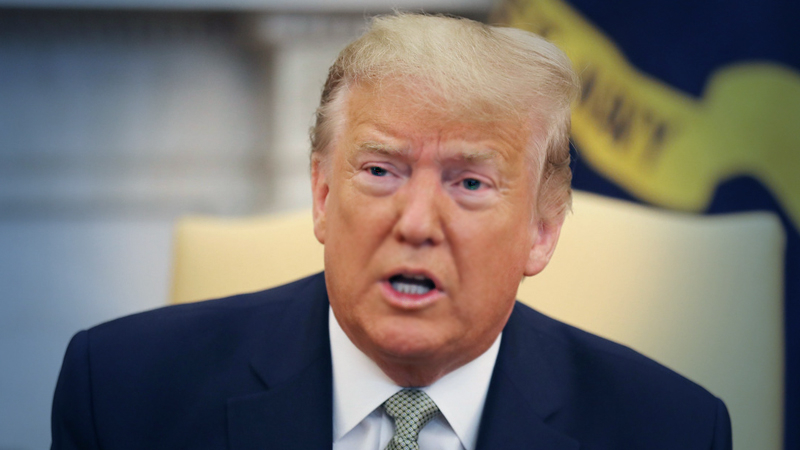
WASHINGTON – President Donald Trump’s campaign on Tuesday asked the Wisconsin Supreme Court to intervene in the state’s presidential election by throwing out hundreds of thousands of ballots in the state’s two most Democratic-leaning counties, a last-ditch bid to overturn President-elect Joe Biden’s victory in the state.
Legal experts said the suit has little chance of prevailing, and an attorney for the Trump campaign even acknowledged that it was unlikely to change the outcome of the White House race.
But the gambit shows how the president is continuing to try to open new fronts in his fading battle to undermine Biden’s win, even after all six swing states where he has contested the results have certified their results and courts around the country have rejected the arguments of Trump and his allies.
The Wisconsin suit was filed a day after Gov. Tony Evers, a Democrat, certified Biden’s more than 20,000-vote victory in the state. Trump had requested a recount in the state’s two largest counties, which concluded Sunday and reconfirmed Biden’s win. Under state law, a candidate who loses a recount has five days to file a lawsuit challenging the process.
Also on Tuesday, petitioners led by Rep. Mike Kelly, R-Pa., said they are asking the Supreme Court to consider a case challenging Pennsylvania’s mail-in voting rules. The state’s highest court had dismissed the case Saturday, arguing that its request to throw out millions of votes was “extraordinary” and had come far too late – more than a year after the balloting rules were adopted.
Generally, the U.S. Supreme Court does not second-guess state courts when they are interpreting their own constitutions. And in an interview Sunday on Fox News, Trump acknowledged that he may not succeed in getting the Supreme Court to weigh in on the election.
“Can you imagine?” he said. “Donald Trump, president of the United States, files a case, and I probably can’t get a case.”
In its suit in Wisconsin, the Trump campaign is seeking to toss out several large categories of ballots, including more than 170,000 cast early and in person in Milwaukee and Dane counties. The campaign argued that a form filled out by voters before casting such ballots does not qualify as an application for a ballot under state law.
The form, however, is used throughout the state and has been in place for many election cycles. Documents distributed during the recount showed that James Troupis, the Trump campaign’s lead attorney in Wisconsin, cast such a ballot himself – meaning the suit essentially argues that his own ballot was illegal and should not be counted.
The suit also challenges a practice adopted in October 2016 of allowing Wisconsin clerks to correct tiny errors on the certification envelope of mail-in ballots, as well another procedure, in place since 2011, that allows aged and infirm voters to assert that they are “indefinitely confined” and to vote without submitting a photo identification.
In all, the campaign’s lawsuit targets 221,000 votes – all cast in Milwaukee and Dane counties, home to the majority of voters of color in Wisconsin.
The lawsuit does not assert that fraud took place or that individual voters committed wrongdoing but instead claims that election clerks misinterpreted state law – allowing what the campaign termed “unlawful” ballots to be counted.
“As we have said from the very beginning of this process, we want all legal votes and only legal votes to be counted,” Trump lawyer Rudy Giuliani said in a statement. “Americans must be able to trust in our election results, and we not stop until we can ensure voters once again have faith in our electoral process.”
Troupis told Fox News on Tuesday that he did not believe the campaign’s lawsuit in Wisconsin would change the outcome of the national election. But he said it could result in changes in how ballots are handled in the state.
“Exposing exactly how the election processes were abused in Wisconsin holds enormous value for this election beyond a victory for President Trump, but the fact is, our state’s electoral votes likely won’t change the overall outcome,” he said. “Regardless, we’re demonstrating that the results of this election unequivocally ought to be questioned.”
Wisconsin Attorney Gen. Josh Kaul, a Democrat, said in a statement that the suit is essentially seeking the creation of a “two-tiered system for votes cast in the presidential election, with citizens from two of our counties subject to disenfranchisement under much stricter rules than citizens in the rest of the state.”
Nate Evans, a spokesman for the Biden campaign said in a statement that the lawsuit is “completely baseless and not rooted in facts on the ground.”
“The hundreds of thousands of Wisconsinites targeted by this lawsuit did nothing wrong. They simply followed long-standing guidance from elections officials issued under the law,” he said.
Evans called the suit an attempt to “disenfranchise large groups of Wisconsin voters” and noted that the same arguments were made during the recount process and rejected by local boards of canvassers, often on a bipartisan basis.
At a meeting Tuesday morning of the Wisconsin Elections Commission, Milwaukee Mayor Tom Barrett objected to the Trump campaign’s attempt to throw out votes in his city and in the county that includes the city of Madison.
“These claims are obviously an egregious and floundering attempt to discredit this fair election,” the Democratic mayor said.
Edward Foley, an election law expert at Ohio State University, said that of all Trump’s cases, the Wisconsin lawsuit offered the greatest chance of a favorable ruling.
“It’s his best shot,” Foley said. “These are not claims of fraud, and they’re not wild national conspiracy theories. They are talking about technical rules. Sometimes technical rules aren’t followed, and they should have been.”
However, the remedy the campaign is seeking is extreme, he added.
Even if the Trump campaign persuaded judges that the state’s rules were technically violated, it would still face a major challenge in convincing them that the proper response would be to throw out hundreds of thousands of votes, Foley said – particularly because the campaign did not challenge the rules before the election and voters cast their ballots in good faith.
Ultimately, he said, he believed that “upending the vote seems too heavy a lift for a court to be willing to undertake.”
Rick Hasen, an election law expert at the University of California at Irvine, said that if the Wisconsin Supreme Court follows the law, the case should “easily fail.” Conservatives hold a 4-to-3 majority on the panel.
“It raises issues that could have been raised well before the election, and deciding the issue now risks disenfranchising hundreds of thousands of Wisconsin voters through no fault of their own,” he said. “We’ve seen this same pattern in other lawsuits across the country, and courts have been similarly unwilling to go along with these late gambits for similar reasons.”
Bipartisan group of senators prepares $908 billion stimulus plan, aiming to break partisan logjam
InternationalDec 02. 2020Sen. Mitt Romney speaks to reporters in the Capitol in September. MUST CREDIT: Washington Post photo by Demetrius Freeman
By The Washington Post · Seung Min Kim, Jeff Stein, Mike DeBonis
WASHINGTON – A bipartisan group of senators introduced a coronavirus aid proposal worth about $908 billion on Tuesday, aiming to break a months-long partisan impasse over providing emergency federal relief to the U.S. economy and the ongoing pandemic response.
The new plan came amid a flurry of congressional jostling about the shape of economic relief, with House Democrats assembling a new proposal, Senate Majority Leader Mitch McConnell, R-Ky., creating a new plan, and President-elect Joe Biden calling for a massive government response. The growing calls for action have not rallied behind a unified approach, which has prompted the political leaders to forge ahead in different directions.
Still, the new actions and statements on Tuesday may reflect movement toward some level of pandemic relief for millions of Americans. Congress has faced increasing pressure to approve additional economic aid since talks between the White House and House Democrats collapsed, first over the summer and then again in the fall ahead of the Nov. 3 election.
While the negotiations among leadership and the administration were stuck, senators in both parties worked together for weeks on a proposal that could break the logjam. Several centrist lawmakers senators – including Joe Manchin, D-W.Va., Mark Warner, D-Va., Bill Cassidy, R-La., Mitt Romney, R-Utah, and Susan Collins, R-Maine – held a news conference Tuesday morning to push their proposal as a template for legislation that could pass Congress as the economy faces increasing strain from a winter surge in coronavirus cases.
“Our action to provide emergency relief is needed now more than ever before. The people need to know we are not going to leave until we get something accomplished,” Manchin said, flanked by about half a dozen lawmakers at the Capitol. “I’m committed to seeing this through.”
McConnell disclosed Tuesday that senior Republicans received a new coronavirus relief offer from House Speaker Nancy Pelosi, D-Calif., and Senate Minority Leader Chuck Schumer, D-N.Y., on Monday night. Democratic aides declined to disclose details of their offer, and Schumer called it a “private proposal to help us move the ball forward.”
Senate Republican leaders, though, circulated a slimmer plan Tuesday that would be opposed by Democrats. The measure includes a liability shield for businesses and more small-business assistance. It would provide short-term, limited jobless aid but no additional funding for state and local governments or help for cash-strapped transit agencies.
The plan represented a conservative turn from the Senate Republican leader after the electoral defeat of President Donald Trump, who had pushed the GOP to support more spending before the election. In September, McConnell pushed a federal supplement of unemployment benefits of $300 per week. The latest proposal from his office would for about one month extend base unemployment benefits and a program for gig workers and independent contractors, but would otherwise not provide supplemental federal unemployment benefits – a reversal in Republicans’ positions. A spokesman for McConnell did not immediately respond to a question about the change.
The McConnell bill also reintroduces a Republican plan to allow diners to claim a tax deduction on their meal expenditures, a provision pushed by the business lobby but viewed skeptically by economists and some Republicans.
“We just don’t have time to waste time. We have a couple of weeks left here,” McConnell said. “Obviously, it does require bipartisan support to get out of Congress, but it requires a presidential signature.”
By contrast, the plan circulated by the bipartisan group of senators is light on details but seeks to reach a middle ground on numerous contentious economic issues.
It would provide $300 a week in federal unemployment benefits for about four months – a lower amount than the $600 per week Democrats sought, while still offering substantial relief to tens of millions of jobless Americans. The agreement includes $160 billion in funding for state and local governments, a key Democratic priority opposed by most Republicans, as well as a temporary moratorium on some coronavirus-related lawsuits against firms and other entities – a key Republican priority that most Democrats oppose. The measure also includes funding for small businesses, schools, health care, transit authorities and student loans, among other measures.
Aides close to the effort described details as fluid and subject to change. Few outside the group of Senate negotiators endorsed their proposal on Tuesday, with some Republican senators complaining that the $908 billion cost was too steep.
But the substantive efforts at a compromise in the Senate reflect growing agitation from influential senators against the hard-line stances of their respective leaders, who have struggled to reach another round of coronavirus relief aid as the economy continues to suffer under the weight of the pandemic.
McConnell and Schumer have traded barbs, with McConnell on Monday accusing Democrats of “all-or-nothing obstruction.” Schumer said in a floor speech that “both sides must give,” but he trashed McConnell for advancing a GOP wish list in stimulus talks.
Some lawmakers have hoped that elements of a bipartisan stimulus deal could be added to the spending bill required to avoid a Dec. 11 government shutdown, though that could complicate the must-pass legislation. Nonetheless, McConnell suggested Tuesday that the spending bill could be an avenue to pass targeted coronavirus relief.
Pelosi and Treasury Secretary Steven Mnuchin spoke Tuesday afternoon on the government funding bill. As for the bipartisan Senate framework, Mnuchin said he would review it, though the plan got a much icier reaction from the White House.
“The Trump administration has been in ongoing talks with Leader McConnell and Leader McCarthy about a targeted covid relief plan,” White House press secretary Kayleigh McEnany said. “The $908 billion proposal has not been a topic of discussion.”
As for Pelosi, she stressed: “Additional covid relief is long overdue and must be passed in this lame duck session.”
Biden, who introduced his economic team Tuesday, expressed support for some form of relief now and signaled to Republicans that more aid will be necessary next year after his inauguration in January.
“Right now, the full Congress should come together and pass a robust package for relief to address these urgent needs,” Biden said in prepared remarks in Wilmington, Del. “But any package passed in a lame-duck session is likely to be, at best, just a start.”
Asked whether he supported the $908 billion stimulus proposal, Biden told reporters, “I just heard about it. I’ll take a look at it when I get back.” Asked whether he had spoken to McConnell, he said “not yet.”
Sen. Dick Durbin of Illinois, the second-highest-ranking Senate Democrat, was involved in the discussions but ultimately did not appear with lawmakers at the Tuesday news conference. In a floor speech, Durbin cited disagreements with the group’s decisions, arguing that it should have excluded the liability shield, but he said: “I’m still willing to work on it. . . . Let us not make the best the enemy of the good.”
Durbin called for the legislation to come to the Senate floor, despite his reservations.
“I’m not happy with a lot of these figures,” he said. “But that’s what it’s all about, in this world of the United States Congress: You come together, willing to sit down and listen to the other side and, if necessary, compromise.”
Economists have warned of devastating consequences for the economy and millions of Americans if no stimulus deal is passed. A number of relief programs are set to expire at the end of the year. Twelve million Americans are on pace to lose their jobless benefits, and protections for renters and student borrowers are also set to expire along with a federal paid-family-leave program.
The White House has largely abandoned its aggressive push for stimulus since Trump lost the Nov. 3 presidential election. It is also unclear whether Biden will push Democrats to accept a smaller package, though some of his economic advisers have been adamant that a stimulus deal must be passed quickly even if it is smaller than what Democrats prefer.
Republicans continued to try making that case Tuesday.
“I think $900 billion would do a lot more good right now than $2 trillion will do in March,” said Sen. Roy Blunt, R-Mo., a member of GOP leadership. “This is an important time to step up if we can.”
The bipartisan agreement has about $288 billion in funding for small businesses, including through the Paycheck Protection Program and other aid. It also includes $45 billion for transportation agencies; $82 billion for education; $26 billion in nutrition assistance; and $16 billion for health care, including to help with coronavirus testing and tracing, and vaccine distribution.
The effort was expected to leave out a second round of $1,200 stimulus payments as a way to bring down its overall cost, even though Trump and Pelosi support it.
The measure faced early opposition from both flanks, with liberals opposed to the liability shield and conservatives opposed to spending more money to help the economy. Rep. Rashida Tlaib, D-Mich., a member of the Congressional Progressive Caucus, criticized the proposal for leaving out another round of $1,200 stimulus checks. Jason Pye, vice president of legislative affairs for the conservative group FreedomWorks, said conservative GOP senators probably would reject the measure because of its cost over. Sens. Mike Lee, R-Utah, and Rand Paul, R-Ky., are among those who have resisted another spending package.
“Anything that adds to the deficit is a non-starter,” Pye said.
At the news conference, Romney stressed that he is a deficit hawk and that the proposal costs far less than the $1.8 trillion that White House officials pushed earlier. He also said the legislation would be partly funded by more than $500 billion in unspent money from the Cares Act, reducing the amount of new spending.
Sara Nelson, president of the Association of Flight Attendants, spoke positively of the bipartisan effort and urged lawmakers to quickly approve emergency financial help.
“More will be needed later, but immediate relief is needed now,” she said. “That’s what the senators are talking about. We cannot wait.”
InternationalDec 02. 2020Maryland Gov. Larry Hogan holds a news conference Nov. 17 to discuss the state’s response to the coronavirus pandemic. MUST CREDIT: Washington Post photo by Bill O’Leary
By The Washington Post · Ovetta Wiggins, Erin Cox
Maryland Gov. Larry Hogan said Tuesday the state is taking steps to address a looming shortage of hospital beds and an even graver shortage of doctors and nurses to staff them as the region braces for a winter coronavirus surge.
Maryland has 1,583 people in the hospital being treated for the virus, the highest number the state has seen since early May. The rising number comes as public health experts are sounding the alarm that the situation is expected to get worse.
In recent weeks, Maryland has recorded a rise in hospitalizations and in its coronavirus test positivity rate. The seven-day average has jumped to 7.33 percent, fueled in part by a surge in rural parts of the state. Somerset County on the Eastern Shore has a test positivity rate of nearly 20 percent, while Garrett and Allegany counties in Western Maryland are approaching 15 percent.
The seven-day average number of new cases across Maryland, Virginia and the District of Columbia on Tuesday stood at 4,775 infections – down slightly from a high of 4,989 recorded on Thanksgiving Day.
Hogan said Tuesday the state Department of Health is working with the Maryland Hospital Association to recruit medical personnel and support staff at the state’s hospitals. The facilities are in need of staff to provide screening, testing and treatment for coronavirus patients.
The state is also asking universities to award academic credit to students willing to work at hospitals during the pandemic and to let graduating students receive early licensing, the governor said.
A report from the Maryland Health Department last week showed the dire direction in which the state is headed. It found enough staff for 1,846 beds for coronavirus patients, and more than 85 percent of those beds were occupied.
Hogan asked hospitals to submit a “patient surge” plan, which includes a detailed strategy for increasing hospital bed and staffing capacities. The state Department of Health must receive the plans by Dec. 8.
There were 3,500 patients across Maryland, Virginia and D.C. hospitalized Tuesday with the coronavirus, up from 1,636 one month earlier. The number of virus-related deaths has also risen across the greater Washington region, with the seven-day average standing at 45 new daily fatalities to start the month, compared to 20 on Nov. 1.
The state is also requiring hospitals to expand staffed bed capacity by 10 percent within seven days if 8,000 patients become hospitalized statewide. As of Monday, there were a total of 6,780 patients in the state’s hospitals.
A Nov. 13 modeling estimate from Johns Hopkins Medicine – which accurately predicted 1,400 coronavirus patients in Maryland would be hospitalized by Thanksgiving – outlined four scenarios for the winter surge and its impact on the state’s health care system.
Just one model, called the “optimistic scenario,” predicts the state will have enough beds. It calls that scenario, showing a peak of 5,000 people hospitalized with the coronavirus around February, “highly unlikely” based on the rapid ascent of cases now.
A “moderate scenario” model predicts a peak of more than 8,000 patients by February, and a “pessimistic” one predicts 10,000. Maryland has about 10,000 beds statewide for all patients, and as of Wednesday, about half were available for coronavirus patients.
The “catastrophic scenario” predicted “peak hospitalization levels of about 15,000 patients, assuming no further modifications of (the public’s) behavior.”
As the Washington area stares down the beginning of a winter surge, officials across the region continue to urge residents who traveled during the Thanksgiving holiday to get tested. Hogan has continued to home in on the message of avoiding large crowds, wearing masks and getting tested.
In recent weeks, he has imposed a number of restrictions, including requiring bars and restaurants in Maryland to close at 10 p.m. for dine-in service and reducing capacity allowed in retail stores, religious facilities, fitness centers, personal service facilities and bowling alleys to 50 percent. He also limited visits to nursing homes.
Before the holiday, Hogan announced an “all-hands-on-deck” effort to ensure that bars and restaurants adhered to restrictions. State police were directed to be a part of enforcement normally handled by local police and health departments.
The Washington region on Tuesday reported 5,126 new cases and 68 additional deaths. Maryland had 2,765 cases and 32 deaths, Virginia had 2,228 cases and 31 deaths, and D.C. had 133 cases and five deaths.
Supreme Court weighs child-slavery case against Nestlé USA, Cargill
InternationalDec 02. 2020Children from Burkina Faso take a break in 2019 on a cocoa farm near the village of Niambly, Ivory Coast. MUST CREDIT: Washington Post photo by Salwan Georges
By The Washington Post · Peter Whoriskey
WASHINGTON – The Supreme Court heard arguments Tuesday about whether U.S. chocolate companies should be held responsible for child slavery on the African farms from which they buy most of their cocoa.
Six African men are seeking damages from Nestlé USA and Cargill, alleging that as children they were trafficked out of Mali, forced to work long hours on Ivory Coast cocoa farms and kept at night in locked shacks. Their attorneys argue that the companies should have better monitored their cocoa suppliers in West Africa, where about two-thirds of the world’s cocoa is grown and child labor is widespread.
These “are former child slaves seeking compensation from two U.S. corporations which maintain a system of child slavery and forced labor in their Ivory Coast supply chain as a matter of corporate policy to gain a competitive advantage in the U.S. market,” the Malians’ attorney, Paul L. Hoffman, told the court. He asked the justices to “allow these former child slaves to have their day in court.”
Nestlé USA and Cargill have responded that they, too, deplore child slavery and trafficking, and that they have taken steps to eradicate such practices among their suppliers.
Nestlé USA “firmly believes that traffickers deserve punishment,” the company said in court filings. “This case is not about any of that.”
The companies have asked the Supreme Court to toss the lawsuit, arguing that courts in the United States are the wrong forum for the Malians’ complaint and that the applicable law permits such cases against individuals but not corporations. In the view of the companies, such cases ought to be filed not against the corporations but against the traffickers and farmers involved.
“This case is about a 15-year-old lawsuit brought against the wrong defendant, in the wrong place, and under the wrong statute,” according to the brief on behalf of Nestlé USA filed by Neal Katyal and other attorneys. “The true wrongdoers are the Malian and Ivorian traffickers, farmers, and overseers.”
On Tuesday, both sides faced skepticism from the justices.
“Mr. Katyal, many of your arguments lead to results that are pretty hard to take,” Justice Samuel Alito said.
Suppose, Alito continued, a U.S. corporation surreptitiously hired agents in Africa to kidnap children to enslave them on a plantation so that the corporation can buy cheap cocoa or coffee.
“You would say that the victims … should be thrown out of court in the United States, where this corporation is headquartered and does business?” Alito asked.
Katyal answered, among other things, that the victims could sue in African courts or Congress could pass a law specific to such abuses.
Probing the arguments of the other side, however, the justices zeroed in on whether the companies’ practices really amounted to “aiding and abetting” child slavery. Is simply buying cocoa from these farms enough?
“What counts as aiding and abetting for purposes of this statute?” Justice Stephen Breyer asked Hoffman, the Malians’ attorney. “When I read through your complaint, it seemed to me that all or virtually all of your complaint amounts to doing business with these people. They help pay for the farm. And that’s about it.”
Hoffman answered that the companies had “crossed the line” from merely buying cocoa to facilitating the system.
The proliferation of global supply chains in recent decades has led to recurring debates over the responsibility of multinational companies to monitor the adherence of their far-flung suppliers to human rights and environmental standards.
Business groups, including the U.S. Chamber of Commerce and the National Association of Manufacturers, have pushed back against lawsuits such as the one against Nestlé and Cargill, arguing they are burdensome and could discourage investment in developing economies. U.S. and foreign companies have been sued 150 times over the past 25 years under a statute that permits foreign nationals to sue in the United States for international law violations, the business groups said.
Allowing the cases imposes “heavy legal and reputational burdens on companies that are sued on the basis that they conducted business with foreign actors accused of committing torts abroad,” their attorneys argued.
There is plenty of evidence, however, that the world’s chocolate supply depends heavily on child labor and that despite two decades of industry promises, it remains widespread. While much of it occurs on family farms, some is also arranged by traffickers who ferry in children from neighboring Mali and Burkina Faso. To human rights advocates, the persistence of child labor in the world’s cocoa supply amounts to, at best, tragic negligence.
A Washington Post investigation of the use of child labor in the cocoa industry found representatives of some of the biggest and best-known brands could not guarantee that any of their chocolate was produced without child labor. It featured children from Burkina Faso working in appalling conditions on Ivory Coast cocoa farms.
More recently, a report sponsored by the U.S. Department of Labor, indicated that the West African cocoa industry was exploiting the aid of 1.6 million West African child laborers. Most of those laborers were involved in tasks considered hazardous such as wielding machetes, carrying heavy loads or working with pesticides, according to the report.
What makes the legal cases against the companies particularly complex is the difficulties investigators face in connecting any child laborer with a specific company. But human rights advocates say the companies should be held responsible because child labor arises in part because they refuse to pay enough for cocoa and have yet to fully institute systems for tracing cocoa beans to specific farms.
“The business practices of these companies clearly have contributed to the use of forced and child labor in West Africa,” said Charity Ryerson, an attorney for the Corporate Accountability Lab who has traveled to Africa to investigate cocoa practices.
She noted that some smaller chocolate companies such as Tony’s Chocolonely pay higher prices and take extra care to eliminate child labor from their cocoa suppliers. Those added costs can make it difficult for the producers of “ethical chocolate” to compete against the companies using cocoa produced with child labor, she said.
“As slave-free cocoa and chocolate companies, [we] are at a competitive disadvantage to companies that source cheap cocoa produced with forced child labor,” some of the companies said in a legal filing. “The higher production costs associated with compliance with international human rights norms require [us] to sell . . . chocolate at higher prices.”
Indeed, cocoa prices are critical to the debate. As the Supreme Court begins to consider the case, a cocoa price war appears to be breaking out between the multinational companies and the governments of Ivory Coast and Ghana, which regulate cocoa exports.
The West African governments have added a $400 cost per ton in an attempt to give farmers what they call a “living income,” a move that has been met with some reluctance from the chocolate companies.
“Unfortunately, industry steps to lower the price are going in precisely the wrong direction,” said Antonie Fountain, managing director of the Voice Network, a group that pushes for environmental and human rights reform in the cocoa industry. “Prices need to go up, not down.”
The Voice Network issued an annual report on the industry Tuesday, citing the lack of progress despite promises by the companies to eradicate child labor.
“Twenty years into rhetoric, the challenges on the ground remain as large as ever,” it said. “Poverty is still the daily reality for virtually all West African cocoa farmer families, child labour remains rife, and old growth forests continue to be cleared to make way for cocoa production.”
White House planning a packed season of holiday parties
InternationalDec 02. 2020The Great Hall at the White House is decorated for Christmas with the theme “America the Beautiful.” MUST CREDIT: Washington Post photo by Jabin Botsford.
By The Washington Post · Josh Dawsey, Yasmeen Abutaleb
WASHINGTON – The White House is forging ahead with plans for more than a dozen indoor holiday parties this month despite the ongoing surge in coronavirus cases, ignoring warnings from the Trump administration’s own public health professionals to limit travel and avoid congregating in large group settings.
The president and the first lady are determined to have a final holiday season in the White House, officials said, despite a pandemic that has killed more than 266,000 Americans and infected 13 million across the country. Many of the administration’s supporters have taken a skeptical view of the restrictions aimed at combating the virus and are choosing to attend, officials said.
The events, including the Congressional Ball on Dec. 10, will each include more than 50 guests and could risk the health of White House staffers and others who work at the parties. Most guests will not be tested in advance, one official said.
At the first such event Monday afternoon – a reception for volunteers who helped decorate the White House – guests were given sparkling wine and snacks, and they mingled in the State Dining Room and the East Room, among other places. Some did not wear masks or adhere to social distancing, officials said.
The parties, likely to cost millions of dollars, will be paid for by the Republican Party, according to a person with knowledge of the planning.
Stephanie Grisham, a spokeswoman for first lady Melania Trump, said on Tuesday that protocols will be taken to protect attendees.
“This includes smaller guest lists; masks will be required and available, social distancing encouraged while on the White House grounds, and hand sanitizer stations throughout the State Floor,” Grisham said. “Guests will enjoy food individually plated by chefs at plexiglass-protected food stations. All passed beverages will be covered. All service staff will wear masks and gloves to comply with food safety guidelines. Attending the parties will be a very personal choice.”
But health experts expressed dismay at the plans, noting that cases are not only increasing across the country but in the Washington area specifically. They also said travel by many guests outside the District of Columbia probably would violate myriad state and city restrictions.
“Our rates in the area, just in the region, are going up at a degree where it’s hard now to trace or identify sources of infections, and testing alone is no longer protective unless you’re testing and technically quarantining, which I doubt these people are” said Kavita Patel, a fellow at the Brookings Institution who worked on health policy in the Obama administration. She is also an internal medicine physician at St. Mary’s health center in Washington who sees patients treated for covid-19, the disease that can be caused by the novel coronavirus.
“While colleagues of mine are literally leaving families and living in garages and trying to help take care of covid patients, this feels like another slap in the face. That is a disaster,” Patel said.
Across Washington, many businesses, trade associations and political groups are not having holiday parties this year because of concerns about spreading the deadly virus. Millions of families across the country have also canceled their plans to gather in large groups.
One White House ally said he had been invited to two parties already, while another said a formal invitation to one event included no guidance on masks or social distancing. Invitees include donors, lawmakers, senior staffers on Capitol Hill, family members of White House aides and prominent conservative supporters. The president and first lady are expected to make appearances at the events, officials said.
The parties are a bipartisan annual tradition, and many guests residing outside Washington visit the city for the fetes. There is considerable interest among Republicans on Capitol Hill in attending the parties, a senior Republican aide said.
Some of the events are tours, while others are formal receptions with food and drink offerings. There will be two parties a day on some days, officials said.
The Centers for Disease Control and Prevention says that indoor gatherings pose more risks than outdoor, and that “gatherings with more people pose more risk than gatherings with fewer people.” But the CDC does not have a limit on the number of attendees for gatherings.
Still, the administration’s leading scientists have asked Americans to be particularly careful over the holiday season. Health officials have repeatedly warned the White House against hosting indoor events, but they have resigned themselves to the fact that Trump and his aides will ultimately do what they want.
“I blame the White House for hosting as much the guests who choose to attend knowing that good public health behaviors are not practiced in and around the White House,” one senior health official said.
Anthony Fauci, the nation’s top infectious-disease expert, warned about a rising surge in cases on NBC News’s “Meet the Press.”
“What we expect, unfortunately, as we go for the next couple of weeks into December, is that we might see a surge superimposed on the surge we are already in,” Fauci said. “I don’t want to frighten people, except to say it is not too late to do something about this.”
Fauci floated additional restrictions he said the country might have to consider. “We are going to have to make decisions as a nation, state, city and family that we are in a very difficult time, and we’re going to have to do the kinds of restrictions of things we would have liked to have done, particularly in this holiday season, because we’re entering into what’s really a precarious situation,” he said.
Trump has shown no inclination to avoid attending large events, even after contracting the virus in early October.
A number of events at the White House have been linked to coronavirus outbreaks, including a ceremony for Supreme Court Justice Amy Coney Barrett’s nomination and an election night party. Besides the president, dozens of White House aides, including the chief of staff, the national security adviser and the press secretary, have contracted the virus.
Many aides say they believe Trump’s mishandling of the virus is one of the primary reasons he lost the election to Joe Biden, who has endorsed mask-wearing and other restrictions aimed at limiting spread.
“The White House is . . . sending out 2020 with a bang. Indoor gatherings like this at a time of high community spread of SARS-CoV2 puts revelers at the White House holiday party at risk, as well as staff who must work the event,” said Gregg Gonsalves, an epidemiologist at the Yale University school of public health. “It’s characteristic of the irresponsibility that has defined this administration’s approach to the pandemic. It’s cavalier, selfish and wrong.”
Two British retail collapses threaten 25,000 jobs in 24 hours
InternationalDec 02. 2020Topshop’s flagship store on Oxford Street in London. MUST CREDIT: Bloomberg photo by Jason Alden
By Syndication Washington Post, Bloomberg · Deirdre Hipwell, Katie Linsell
The British retail industry suffered one of the harshest blows yet after two of the country’s best-known retailers collapsed, putting 25,000 jobs at risk in less than 24 hours.
The Debenhams flagship store on Oxford Street in central London on Nov. 30, 2020. MUST CREDIT: Bloomberg photo by Jason Alden
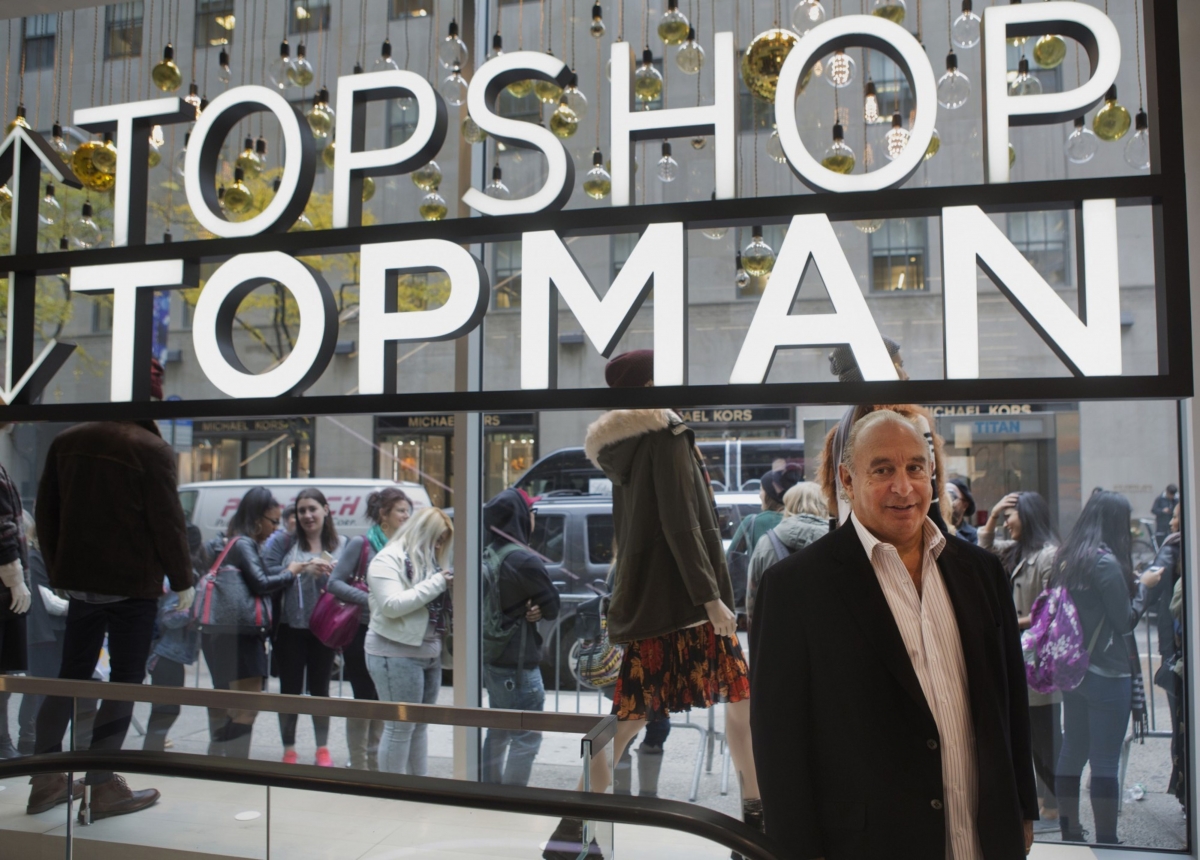
Debenhams said Tuesday morning it’s preparing to close its doors for good after failing to find a buyer. Late Monday, Philip Green’s Arcadia Group, which owns brands including Topshop and Dorothy Perkins, began insolvency proceedings.
Both retailers have anchored malls and main streets across Britain for decades and operate about 600 stores combined. U.K. retailers have suffered a double whammy: the pandemic hit as many were struggling to adjust to online competition. The industry is set to lose 235,000 retail jobs this year, according to the Centre for Retail Research.
The failure of Arcadia and Debenhams is “truly devastating” in a country where main streets are being increasingly hollowed out, said Richard Lim, chief executive officer of Retail Economics, a consultancy. “We cannot overstate the significance of the collapse given the vast property portfolio, number of jobs impacted and the reverberations felt across the industry.”
The U.K. government stands ready to support employees of both retailers, Chancellor of the Exchequer Rishi Sunak said Tuesday in the House of Commons.
Debenhams, a 232-year-old department-store chain, has been struggling for years as consumers shifted to online shopping and store visits declined. In April, the company filed to continue operating under administration while seeking a buyer.
The chain decided to wind up the business Tuesday after talks to sell the business to JD Sports Fashion Plc failed. Arcadia is the biggest concession partner of Debenhams, and after that retailer failed, the sportswear retailer said the purchase was no longer appealing.
Debenhams said it had no choice but to start winding down the business, given the prolonged effects of the pandemic. It’s still open for offers for all or parts of the company.
The decision is a blow to Debenhams’ lenders, a consortium of financial investors including Silver Point Capital and GoldenTree Asset Management, who took control of the chain last year as it struggled under a $962 million (720 million-pound) debt load. At the time the company rejected rescue offers from retail tycoon Mike Ashley, the founder of Frasers Group.
Philip Green at the opening of the Topman flagship store in New York. MUST CREDIT: Bloomberg photo by Victor J. Blue
Ashley may now return once again as a suitor as Debenhams is liquidated. He acquired rival retailer House of Fraser out of administration in 2018. The tycoon has also expressed interest in buying Arcadia.
Arcadia has appointed Deloitte to run the administration and the consultancy now has eight weeks to draw up initial proposals for the business, which could include a sale of all or part of the group. No job losses have been announced yet but they are likely to start mounting in the coming weeks as unprofitable stores are closed by the administrator.
The business employs 13,000 people across 466 stores, of which 444 are in the U.K.
Arcadia’s performance suffered from the nimbler growth of online rivals, such as Asos and Boohoo, and a heavy cost burden, bogged down by expensive store rents and property taxes.
Creditors to Arcadia will now be lining up to get repaid from asset sales if no buyer or new financing emerges. Among them, the company has a 310 million-pound loan with Apollo Global Management Inc. secured on its flagship store on Oxford Street. The subsidiary that owns that property has hired KPMG as administrators to assess options for the 100,000 square-foot site, which used to welcome 400,000 customers a week before the pandemic.Another liability is Arcadia’s pension plans, which the company agreed to provide security for last year to the value of 210 million pounds. The Unite union has warned that employees may lose their pensions as a result of the administration. The Pension Protection Fund is now assessing whether the schemes can be rescued, according to a statement Monday.
By Syndication Washington Post, Bloomberg · Naomi Kresge
Pfizer Inc. and partner BioNTech SE sought regulatory clearance for their Covid-19 vaccine in the European Union, putting the shot on track for potential approval there before the end of the year.
The European Medicines Agency said on Tuesday it could issue an opinion within weeks, with a meeting on the assessment scheduled for Dec. 29 at the latest. Submitted on Monday, the formal application caps a rolling review process that started on Oct. 6 and allowed Europe’s drugs regulator to examine data on the vaccine as it emerged.
Governments around the world are eager to start vaccinating their populations to curb the pandemic. Rival Moderna Inc. requested clearance in the U.S. and Europe on Monday. The U.K. invoked a special rule to allow its regulator to bypass its EU counterpart and may be the first to sign off on the Pfizer-BioNTech product. The U.S. isn’t far behind, with a Food and Drug Administration panel set to meet on Dec. 10 to discuss the vaccine.
BioNTech can start shipping the first doses “within hours” after regulatory clearance, Chief Financial Officer Sierk Poetting said at a press conference. BioNTech shares rose 2.3% in German trading.
In November, a study of almost 44,000 people showed the shot prevented 95% of symptomatic coronavirus cases.
If the EMA concludes that the benefits of the Pfizer-BioNTech shot outweigh its risks, it will recommend granting a conditional clearance that could enable the shot to be rolled out in Europe before the end of the year, the companies said in a statement. The agency said it would work “over the Christmas period” on the assessment.
Pfizer and BioNTech also started regulatory submissions in other countries including Australia, Canada and Japan, they said. The partners have signed deals to deliver hundreds of millions of doses of the vaccine, including an agreement with the EU for 200 million doses, with an option for an additional 100 million.
A conditional clearance is issued when European authorities want to get a drug to patients quickly without waiting for as comprehensive a data package as would normally be required for standard authorization. It’s valid for one year and can be renewed — and eventually converted into a standard approval.

 Photo by Tanachai Pramarnpanich
  After taking part in a ‘no-uniform’ protest, students spend their free time after school on Tuesday at a rally in front of the Education Ministry in Bangkok.
 Sen. Mitt Romney speaks to reporters in the Capitol in September. MUST CREDIT: Washington Post photo by Demetrius Freeman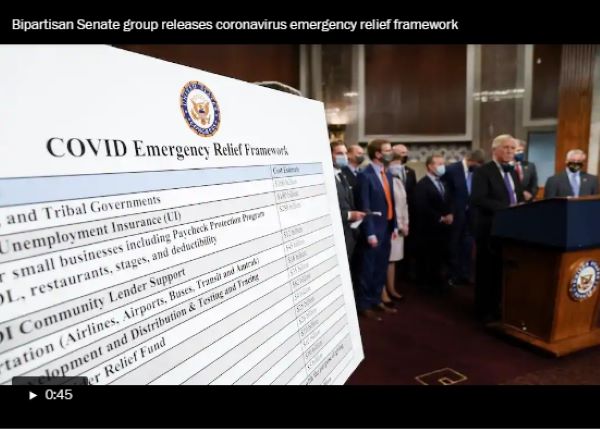
 Maryland Gov. Larry Hogan holds a news conference Nov. 17 to discuss the state’s response to the coronavirus pandemic. MUST CREDIT: Washington Post photo by Bill O’Leary
  Children from Burkina Faso take a break in 2019 on a cocoa farm near the village of Niambly, Ivory Coast. MUST CREDIT: Washington Post photo by Salwan Georges
  The Great Hall at the White House is decorated for Christmas with the theme “America the Beautiful.” MUST CREDIT: Washington Post photo by Jabin Botsford.
 Topshop’s flagship store on Oxford Street in London. MUST CREDIT: Bloomberg photo by Jason Alden

 SootinClaimon.Com