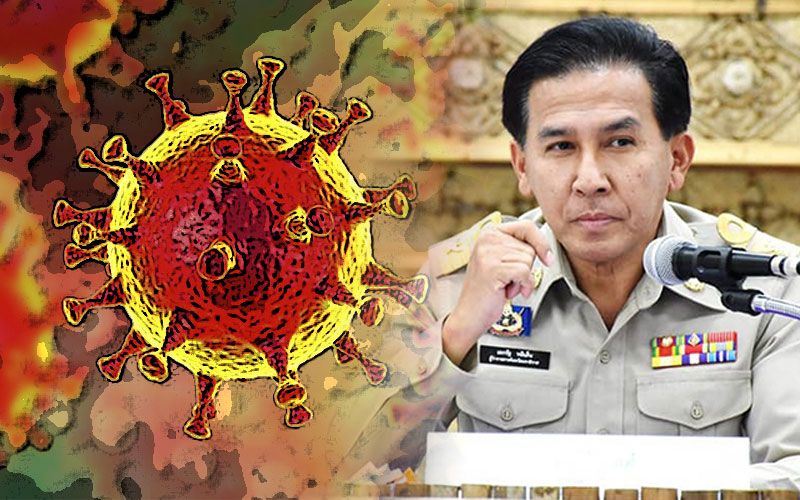
Health & BeautyDec 27. 2020CDC Director Robert Redfield speaks during a briefing by President Trump’s coronavirus task force on Jan. 31 at the White House. MUST CREDIT: Washington Post photo by Jabin Botsford.
By The Washington Post · David Willman
A new virus was exploding in Wuhan, a Chinese city with 11 million people connected by its airport to destinations around the world. In the United States, doctors and hospitals were waiting for the federal Centers for Disease Control and Prevention to develop a test to detect the threat.
On Jan. 13, the World Health Organization had made public a recipe for how to configure such a test, and several countries wasted no time getting started: Within hours, scientists in Thailand used the instructions to deploy a new test.
The CDC would not roll out one that worked for 46 more days.
Inside the 15-acre campus of the CDC in northeast Atlanta, the senior scientists developing the coronavirus test were fighting and losing the battle against time.
The agency squandered weeks as it pursued a test design far more complicated than the WHO version and as its scientists wrestled with failures that regulators would later trace to a contaminated lab.
The Washington Post reviewed internal documents and interviewed more than 30 government scientists and others with knowledge of the events to understand more fully the missteps in those early weeks as the coronavirus began to spread unchecked across the nation. Most spoke anonymously because they were not authorized to do so publicly.
This account reveals new details about how an overly ambitious test design and laboratory contamination caused the CDC’s delay, and describes previously unreported challenges that confronted the agency scientists assigned to carry out the work.
CDC leaders underestimated the threat posed by the new virus – and overestimated the agency’s ability to design and rapidly manufacture a test. Quality-control measures failed to prevent the shipping of compromised kits to dozens of state and local public health labs.
The CDC’s response to what became the nation’s deadliest pandemic in a century marked a low point in its 74-year history. More than 329,000 Americans have died of the virus. In an agency long known for its competence, hubris became the nemesis that could not be overcome.
The CDC has quietly removed or shifted to other duties several scientists who were involved in developing the coronavirus test, according to those familiar with the matter. Those displaced included a longtime division director, a supervising branch chief and a respiratory virus specialist who led the design of the test.
The problems with the CDC’s test kits are the subject of ongoing inquiries by the Department of Health and Human Services’ inspector general and the U.S. Government Accountability Office.
“We missed the game,” a senior CDC disease-transmission specialist said in an interview. “Many people here wish we had done things differently.”
Nearly all of those in charge at the highest levels of the CDC lacked hands-on lab expertise and for weeks deferred to subordinates – scientists who were logging grueling, high-pressure hours on the highly technical work.
Stephen A. Morse, a retired agency microbiologist who had helped establish a formal affiliation with the public health labs to ensure rapid responses to outbreaks caused by nature or biological terrorism, said the CDC’s approach was simply too narrow.
It would have been prudent, he said, “to use the WHO test that was already available. At the same time, get a better understanding of the performance of that test – see if you could improve on it with a second-generation test, as opposed to trying to develop your own test, independent of what’s out there.”
Without tests to identify the early cases, health authorities nationwide were unable to isolate the infected and trace the rapid spread among their close contacts. Those who were asymptomatic, yet contagious, went undetected.
CDC Director Robert Redfield, an appointee of President Donald Trump, took a hands-off approach while the in-house manufacturing efforts foundered and agency scientists clashed over whether to alter the design of the problem-plagued test, according to CDC and other federal officials.
James Le Duc, who as the director of the Galveston National Laboratory in Texas oversees development of diagnostics for rare pathogens, said he is perplexed by the CDC’s decision-making.
“The test that the WHO used early on was quite successful,” said Le Duc, a former senior CDC official who still serves as an adviser to the agency. “I frankly don’t know why CDC didn’t accept it.”
Redfield and other CDC leaders declined to be interviewed or to respond to written questions about the agency’s handling of the test.
“Appreciate the opportunity, but we are going to pass,” said CDC spokesman Benjamin N. Haynes.
The struggles with the test kits had far-reaching consequences.
“If we would have put [tests] out there quicker, could we have saved lives? Well sure,” said Peter C. Iwen, director of the Nebraska Public Health Laboratory in Omaha. “If we would have diagnosed quicker, we would have saved people.”
– – –
Since its founding in 1946, the CDC has grown from a regional bulwark against malaria in the southern United States to a world leader in fighting diseases of all kinds.
Nowhere has the CDC’s presence abroad been larger than in Thailand, where the agency maintains offices and a staff of about 170 epidemiologists, laboratory specialists and others. In 1980, the CDC established its first overseas epidemiology program in a suburb of Bangkok, training a new cadre of disease detectives.
In early January, Thai doctors in Bangkok were worried by the outbreak in Wuhan, less than seven hours away by airliner. They strategized at length about the threat with their local CDC counterparts. They also learned from scientists enough about the genetic makeup of the new coronavirus to begin developing a molecular test for in-hospital use.
That initial test would use real-time polymerase chain reaction, or RT-PCR, to examine sputum samples in search of unique genetic material from the virus.
On Jan. 12, using their new test, the Thais became the first country to confirm a coronavirus case outside China, a sickened traveler from Wuhan.
The same day, the Chinese posted on the Internet what public health authorities worldwide had been waiting for: the complete genetic sequence of this previously unseen strain of the coronavirus, the cause of the disease soon to be named covid-19.
Another breakthrough came the next day, Jan. 13, when the WHO publicly shared a protocol, essentially a recipe, specifying the materials needed to build a molecular test.
The Thais used that protocol to make a second test to detect the virus. This redundancy would eventually become the model for developing a vaccine against the virus.
“Multiple shots on goal,” as Anthony Fauci, the U.S. infectious-disease expert, often said of the approach. That way, said Fauci, if one attempt stalled or failed, another might score.
The approach paid off immediately for the Thais.
“We have not relied only on one testing technique from one laboratory,” Krit Pongpirul, a researcher and clinical epidemiologist at Bangkok’s Bumrungrad International Hospital, said in an email exchange with The Post.
Using their version of the WHO test, Thai health officials within days found other cases, including a taxi driver. He had not been to Wuhan, but Pongpirul and a colleague suspected he had become infected by Chinese travelers. Thai officials traced and tested close contacts of the cabbie and others who were found to be infected. The contacts were persuaded to isolate themselves to prevent the virus from spreading.
One of the infected, the Thais found, was asymptomatic – an early warning that the coronavirus was being spread by those not overtly sick.
“Patient 4 had detectable [virus] for 4 consecutive days, but we were only able to follow her for 7 days before she returned to China,” the Thai doctors and others wrote in a subsequent scientific journal article. “Her case is an example of a person without reported symptoms but with radiologic evidence of disease and detectable virus over several days.”
By the end of January, the Thais had diagnosed 11 patients with covid-19, according to Pongpirul, who described the details in the email correspondence and in the journal Emerging Infectious Diseases, published by the CDC.
Four of Pongpirul’s 11 co-authors were CDC specialists – three of them based in Bangkok and the other in Atlanta.
“The early availability of the RT-PCR testing definitely helped to reduce transmission and save lives,” Pongpirul told The Post by email.
The Thai scientists shared their success and insights in a Jan. 13 conference call that included CDC personnel in Bangkok and at headquarters in Atlanta.
“This was the first indication of international spread,” said an Atlanta-based official who described the call as riveting. ” ‘Why Thailand?’ We found out there was a direct flight from Wuhan.”
John R. MacArthur, a physician who had led the CDC’s Thailand operations since 2013, said that when PCR testing confirmed the first case there, “I immediately contacted CDC leadership in Atlanta to let them know what was happening.”
“Seeing the first case outside of China, I thought, was a big moment,” MacArthur said in a phone interview.
MacArthur, one of the co-authors of the journal article, said the CDC’s lab training in Thailand gave officials there “the tools that they needed to respond very quickly and effectively.”
At CDC headquarters, officials did not adopt the strategy that proved successful in Thailand.
Instead, the agency planned to design and manufacture its own test in-house and ship 300 of those kits to 120 public health labs throughout the United States.
At the time, CDC officials in Atlanta expected that the strain emanating from Wuhan, while worrisome, would be no worse than two earlier coronaviruses that spurred dread before fizzling out, those familiar with the matter said.
One of those viruses, severe acute respiratory syndrome, or SARS, originated in China in late 2002 and killed 774 people worldwide, but none in the United States. Middle East respiratory syndrome, or MERS, emerged in 2012 and over the next seven years killed 866 people, but resulted in only two U.S. infections and no deaths.
Neither SARS nor MERS was known to be widely spread by people who had no symptoms.
“It was being treated as a MERS situation or a SARS situation,” said a CDC scientist who had helped confront the new threat in January and who declined to speak on the record because he was not authorized to do so. “At that point we thought it was going to be a limited activity.”
– – –
In the first week of January, Nancy Messonnier, a physician and director of the CDC’s National Center for Immunization and Respiratory Diseases at the Atlanta campus, spoke to Stephen Lindstrom, an accomplished respiratory virus specialist. She wanted to know if, and how soon, he could get a coronavirus test up and running.
“Can you make this happen?” she asked, according to a person familiar with the exchange.
Lindstrom, co-inventor of seven earlier CDC tests for strains of the flu, had transitioned in 2018 to lead a respiratory virus lab that focused on diseases other than influenza.
Before saying yes to Messonnier, Lindstrom had an ask that she would promptly grant: He needed to pull in at least 20 people to supplement his staff of eight lab specialists.
On Jan. 9, Lindstrom outlined his plans to Messonnier, as well as the director of the viral diseases division, Mark A. Pallansch, and the respiratory viruses branch chief, Susan Gerber, among others. In a conference room near Messonnier’s eighth-floor office, Lindstrom narrated a slide show that spelled out how the test manufacturing and other tasks would be divided up.
That same week, Lindstrom recruited Julie M. Villanueva, who was also a PhD scientist and with whom he had collaborated on anti-flu efforts over the previous decade. In 2016, she had led the CDC’s Emergency Operations Center during an outbreak of the Zika virus.
Over the next few days, Lindstrom, who had not previously designed a coronavirus test, set about researching what materials were necessary as well as a recipe for combining them to detect the virus with PCR.
All of the CDC scientists and officials involved with the test’s development and named in this report – including Messonnier, Lindstrom, Pallansch, Gerber and Villanueva – declined to comment or referred questions to the agency’s public affairs office.
Invented in 1983, PCR is a multi-step test to detect infectious agents, including viruses in humans, using a sample of sputum or other genetic material. A machine extracts nucleic acids from the sample, placing them into a small tube with various chemical reagents, including an enzyme that converts viral RNA, which is present in coronaviruses, into DNA.
Some of the solution is then transferred to tiny plastic wells containing additional reagents to help detect whether the virus is present. The wells are placed into a PCR machine, resembling a midsize office photocopier.
The process seeks to copy and amplify targeted regions of the coronavirus genome. If the virus is present in the original sample, a detectable, fluorescent dye is released.
Two components that Lindstrom designed for the CDC’s test, called N1 and N2, focused on separate regions of the virus’s genome, a conventional approach.
But Lindstrom, aided by a lab colleague with coronavirus experience, Xiaoyan Lu, chose to add a third component that distinguished the CDC’s test design from others: This component would identify a wider family of coronaviruses, including SARS and bat-carried strains not known to have infected humans. They called it N3, and Lindstrom told colleagues it would help detect the novel coronavirus if it began to mutate, according to interviews with those familiar with the matter.
Villanueva’s chief role was to ensure that each step of development and production was properly documented and communicated to the public health labs and to regulators at the Food and Drug Administration. CDC officials expected the FDA to expedite emergency authorization of the test, and scientists said Lindstrom and Villanueva worked so seamlessly that colleagues took to calling them what sounded like one name, “Steve-and-Julie.”
On Jan. 17, just days after the Chinese made public the virus’s genetic sequence, Messonnier announced at a news briefing that health authorities in Thailand and Japan had already used molecular testing to detect coronavirus cases. Testing was beginning as well in South Korea and Taiwan.
“We at the CDC also have the ability to do that today, but we are working on a more specific diagnostic,” Messonnier said, indicating that the agency was seeking a more sophisticated test.
To provide reliable detection, a PCR test must be sensitive enough to identify microscopic levels of a pathogen – and able to distinguish them from genetic neighbors.
During the same briefing, Messonnier gave a low-key forecast of what to expect from the new coronavirus.
“It’s highly plausible that there will be at least a case in the United States,” she said.
Nationwide, the stakes were magnified because the 120 public health labs were without a government-approved test of their own and, with few exceptions, depended wholly on getting the CDC’s kits. Based on Messonnier’s forecast, companies had no incentive to navigate regulatory hurdles and mass-produce kits.
Representatives from the public health labs listened to Messonnier’s remarks on Jan. 17 and heard no grounds for concern.
Scott J. Becker, chief executive of the Association of Public Health Laboratories, recalled thinking: “We’ll get 100 labs up and running really quickly. We’ll be on top of this.”
Confidence remained high over the next few days. Messonnier said in another briefing that, as of Jan. 19, the CDC had “finalized development” of its test. The CDC used it in Atlanta, she said, to quickly confirm the first known U.S. coronavirus case, a man in Washington state who had just returned from Wuhan.
“Right now, testing for this virus must take place at CDC, but in coming weeks, we anticipate sharing these tests with domestic and international partners,” Messonnier said, adding, “We continue to believe the risk of this novel coronavirus to the American public at large remains low.”
On Jan. 30, the New England Journal of Medicine published an account from German doctors describing a worrisome twist with the virus.
They documented the case of a 33-year-old “otherwise healthy” businessman who took ill on Jan. 24 with a sore throat, chills and body aches from what turned out to be covid-19. Three days before, he had met extensively in Munich with a Chinese counterpart. At the time they interacted, she had shown no signs of sickness. But the woman became ill on her return flight to China, where she tested positive for the virus on Jan. 26.
It was “notable,” the doctors wrote, that the woman’s “infection appears to have been transmitted during the incubation period,” before she showed symptoms.
– – –
Lindstrom had seen no significant trouble with his nascent test when he confirmed the diagnosis of the first U.S. patient on Jan. 19, those involved said. As February approached, he was collaborating with Villanueva and their team to work through the remaining technical details.
They had to ensure proper manufacturing of the test so it could be distributed to the labs nationwide, and also secure the FDA’s swift authorization.
Lindstrom, who grew up in the Canadian prairie province of Saskatchewan, was known to colleagues as diligent, accessible and, at times, bluntly spoken. A self-described lab geek, he had worked at the CDC since July 2000.
Now he was conducting a burgeoning scientific orchestra.
Lindstrom turned to the Biotechnology Core Facility Branch on the CDC’s Atlanta campus to make detection-enabling “probes” and “primers.” These were synthetic nucleic acids to be added to the mixture of other reagents. As the core lab commenced production on Building 23’s top floor, it sent Lindstrom a portion of each batch for quality-control vetting.
He still saw nothing of undue concern, according to those involved. With help from a third lab, the Reagent and Diagnostic Services branch, also in Building 23, the materials were poured into vials and readied for shipment to the states. On Feb. 4, the FDA granted the emergency authorization.
The state labs started vetting the kits, using samples that contained no virus. Then calls and emails began coming in to Atlanta describing a consistent problem: false-positive results – confined to Lindstrom’s signature N3 component.
Lindstrom tried to grasp the underlying cause. Were the labs doing something wrong? Could his design or protocol for conducting the tests be revised to eliminate the false positives and ensure reliable detection? Did something go wrong with the CDC’s manufacturing?
The troubleshooting dragged on for weeks, but the false positives persisted. The CDC halted further shipment of the kits.
Soon the state labs and the Association of Public Health Laboratories were pressing the CDC: What about streamlining the test to get it up and working? Lindstrom and Villanueva opposed doing so.
“We had a conversation with Steve and Julie and asked, specifically: ‘Lots of members are asking if we can drop N3 and just keep N1 and N2,’ ” recalled Kelly Wroblewski, director of infectious diseases for the professional association, based in Silver Spring, Md.
“And their response at that point was: ‘FDA isn’t going to go for that.’ Both of them were like, it’s a non-starter.”
Government officials later told The Post that the FDA would have considered proposals to remove N3.
Some CDC scientists also were questioning among themselves the need for N3.
“Why are we trying so hard? . . . We know there’s a problem with it,” one of them recalled asking.
Instead of dropping N3, the CDC set about trying to manufacture a new batch of reagents in hopes of eradicating possible contamination that had caused the false positives. On Feb. 11, Villanueva informed directors of the state and local labs about the development.
“Thank you for your patience as CDC investigates reported sporadic aberrant reactivity in the N3 assay,” Villanueva wrote in an email. “After consultation and agreement with FDA, CDC is currently manufacturing and quality control testing a new N3 primer/probe set. . . . We hope to provide this replacement component as soon as possible.”
Lindstrom contacted industry sources, seeking private vendors that could promptly make more reagents, officials said. Scientists said he complained to colleagues about what he saw as a lack of urgency within the CDC to expedite the paperwork necessary for the contracts.
The public health labs remained in limbo as the virus continued to spread.
On Feb. 15, the labs’ newly formed task force on coronavirus testing circulated a bulletin, noting that “an overwhelming number of labs” had reported problems with the N3 component, adding in boldface, “The Task Force does not recommend that any PHL proceed with testing until CDC issues the new primer/probe set for the N3.”
The same bulletin advised that several of the labs had also reported “similar, although less frequent issues” with the N1 component.
A Feb. 17 email from a CDC supervisor, Darin Carroll, to six agency scientists, including Lindstrom, described concern about lab-induced contamination.
Referring to Jan Pohl, the core lab’s director, the email said, “Jan’s thoughts are that if the production facility is found to be free from contamination today it may be possible to have a small production run ready for drying/assembly by late this week.”
That same week, officials from a unit of the CDC responsible for monitoring lab safety and quality, led by associate agency director Stephan Monroe, traveled to the FDA’s offices in Silver Spring to confer about the false positives. Lindstrom also spoke with Monroe’s staff and opened his team’s lab records for review.
Meanwhile, the CDC tasked Lindstrom’s team with overseeing prompt PCR analyses of a growing number of samples arriving from the state labs, which remained unable to conduct tests themselves because the kits were unreliable.
Travelers returning from virus-besieged cruise ships were escalating demands for rapid test results in Atlanta. Lindstrom and Villanueva were also ordered by agency administrators to document their work in a separate information-management system, a time-consuming chore.
In mid-February, Lindstrom sought to clarify priorities at a meeting he attended that was led by the CDC’s coronavirus incident manager, influenza specialist Daniel B. Jernigan, and others in charge. “Tell me what the f— you want me to do,” Lindstrom said, a person who heard the remark recalled.
Though pressure mounted from the public health labs and from within the CDC, Lindstrom and Villanueva defended the test’s design.
Lindstrom warned superiors that dropping N3 might lead to missed cases of infection, false negatives. Villanueva told colleagues that the design was of “Nobel quality,” according to those familiar with the matter.
Lindstrom also conferred with Pohl, the chief of the core lab. A chemist, Pohl initiated rigorous measures to eliminate any contamination that might be causing the false positives, which were not confined to N3, records show.
Nine public health labs, including facilities serving the city and state of New York, the District of Columbia and Minnesota, reported difficulty with N1, lab officials said. The FDA would later conclude that N1 was probably contaminated during work in Lindstrom’s lab in Building 18, a view shared by CDC leaders.
In an email on Feb. 19, a scientist at the core lab, Nicky Sulaiman, told Lindstrom that Pohl had agreed to also decontaminate “all . . . areas and instruments” to be used in further manufacturing of the reagents.
On Feb. 23, a diagnostic-test expert from the FDA, Timothy Stenzel, entered the CDC to examine how the test kits were developed. He concluded that lab conditions for making the kits were substandard and that contamination was the most likely cause of the many N3 false positives, federal officials told The Post. It was likely, Stenzel later told HHS lawyers, that the contamination occurred during quality-control checks made in Lindstrom’s lab.
Stenzel saw nothing wrong with Lindstrom’s design, including N3 – but he flatly advised the CDC to shift any additional manufacturing of the kits to outside contractors.
Lindstrom believed that the contamination with both N1 and N3 stemmed from the core lab, those familiar with the matter said. He continued to say that the kits should include N3.
Meanwhile, the delays had become a national crisis.
By the third week of February, Fauci, the director of the National Institute of Allergy and Infectious Diseases, who was leading the government’s quest for a coronavirus vaccine, ducked into the office of Brian Harrison, chief of staff to HHS Secretary Alex Azar, about the stalemate with testing.
“Brian – you’ve got to do something,” Fauci said. According to officials familiar with the conversation, Harrison replied, “I share your concern.”
Azar urged Redfield and FDA Commissioner Stephen Hahn to intervene and take steps to end the impasse, a department official said. On Feb. 26, the FDA told the CDC by email that public health labs could use the test, without N3.
Two days later – 46 days after the World Health Organization publicly shared its protocol for coronavirus testing – Messonnier announced that the labs “can start testing.”
– – –
Throughout the CDC’s struggle to deliver a reliable test, Director Redfield repeatedly assured officials that a solution was close at hand, according to interviews with those involved.
When members of the White House coronavirus task force pressed him, Redfield, a physician and longtime HIV researcher, signaled complete faith in the CDC’s scientists. One task force member recalled that Redfield “kept on saying, ‘We got this covered, don’t worry.’ He made it seem that the fix was quick, a minor thing.”
Another official, who was privy to Azar’s regular phone calls with Redfield, said the low-key CDC director consistently defended the agency’s approach with the test kits.
“This was kind of the theme for about a month,” said the official, who spoke anonymously because he was not authorized to comment.
Messonnier has told colleagues that, not being a virologist or laboratory specialist, she relied on subordinates with greater subject-matter expertise.
Starting in spring and over the next few months, CDC leaders removed or shifted several of the people who worked on or supervised the original test, officials said.
Lindstrom was shifted to an advisory role and no longer leads the respiratory virus lab.
Gerber, Lindstrom’s boss and an epidemiologist experienced with coronaviruses, was excluded from supervisory decisions and accepted a scientific position elsewhere in the agency.
Pallansch, who oversaw Gerber and Lindstrom, was removed by Messonnier from his job as director of the viral diseases division and now holds a title of special adviser, officials said.
A polio virus expert and 36-year CDC employee, Pallansch told colleagues that if he had known about the N3 component when the test was designed, he would have challenged its inclusion as unnecessary. A person familiar with Pallansch’s thinking also said he regretted not having initially sought out the information.
In a June 19 report on the testing problems, the HHS lawyers said that “time pressure to ship test kits out quickly” may have caused the CDC to shortchange proper quality control and to miss “anomalies in data” and “likely” contamination before the kits were released.
What happened at the CDC remains under scrutiny by the HHS inspector general and by the GAO, according to their representatives. The department lawyers also have recently questioned Messonnier and staffers involved with making the kits, officials said.
Global mortality from the disease has varied dramatically: Thailand, South Korea, Japan and Taiwan, all of which jump-started coronavirus testing in January, have experienced death rates of less than 2 per 100,000 people. In the United States, the rate is 91 deaths per 100,000 people, according to lab-confirmed cases archived by Johns Hopkins University. Experts hesitate to quantify how many lives were saved by the early testing in Asia.
But Michael V. Callahan, a Massachusetts General Hospital infectious-disease physician who was detailed in February by HHS to help repatriate Americans from cruise ships hit by the coronavirus, said the CDC and the White House should have seen the gravity of the threat.
“We had a fast-moving outbreak with a solution at hand,” said Callahan, referring to the tests used immediately in Thailand and elsewhere. “Yes, CDC should make its own super-special test. But until then, they should make the test that will help us curb the problem.”
In recent weeks, senior CDC officials, including Jernigan and Monroe, have been drafting a review of the testing struggles that attributes the test failures with N3 to Lindstrom’s design, and with N1, to contamination in his lab. Officials said the summary is envisioned for public release, possibly in a scientific journal.
The GAO’s chief scientist, Timothy M. Persons, said that lessons to be learned from the CDC’s mishandling of coronavirus testing should shape policy for future outbreaks.
“The whole thing is a race,” Persons said. “You have to get the testing right as soon as possible, because if you don’t, you don’t know the size of the problem.”
The highly transmissible variant of the coronavirus first detected in England had by Saturday been documented in several European countries, as well as Canada, Japan, Australia and Lebanon, despite efforts to curb its spread through massive global disruptions in travel and movement.
Fears over the fast-spreading form of the virus that causes covid-19 come in sharp contrast to a wave of hope sweeping some countries and communities as vaccination programs begin to be rolled out. Scientists do not think the British variant is more deadly or resistant to the current coronavirus vaccines.
The variant has also been detected in France, Denmark, Spain, Sweden, the Netherlands, Germany and Italy.
In Canada, Ontario’s Chief Medical Officer announced Saturday that they had confirmed two cases, the first detection of the variant in North America. The patient, a couple, had no known travel history, meaning it was likely a case of community spread.
While the United States has not yet reported a case, experts say it is probably due to the nation’s very low rate of genetic sequencing of the virus to check for such changes, despite Americans leading the world in coronavirus infections and deaths.
Beginning Monday, the U.S. government will require all travelers flying in from Britain to show proof of a negative coronavirus test taken within 72 hours of the plane’s departure. Early in the pandemic, the United States banned travelers from China and the European Union, among others, though by that point the novel coronavirus had already been widely spreading undetected due to limited U.S. testing.
Japan on Saturday temporarily banned all foreign nationals except those with residency from entering the country starting Dec. 28 through the end of January. Japan reported its first case of the British variant on Friday amid a new surge of coronavirus cases in the capital, Tokyo. Japan said five patients detected with the variant had all traveled from the United Kingdom, from which Japan had curbed travel last week.
Countries across Europe and other continents began to block or restrict travelers from the U.K. last week in reaction to the variant’s outbreak. Some, like France, have since walked back near total border closures amid widespread disruptions in trade and travel.
France initially closed its border to all travelers from the United Kingdom on Sunday, but on Wednesday began allowing E.U. citizens to pass through. The border closure, however, led to a massive backlog in freight trucks, leading thousands of drivers stuck Christmas Day near the border waiting for coronavirus test results to be able to cross the English Channel back to France.
Elsewhere, hopes are tentatively rising. Hungary on Saturday became the first European Union member to begin vaccinations, a day ahead of France, Germany and Spain, among others, who will kick off vaccinating high-risk populations on Sunday.
Scientists, however, are additionally closely following news of another variant of the novel coronavirus first detected in South Africa that experts say also appears to be highly transmissible. British health officials have already documented cases of the South African variant in the United Kingdom.
Dec 27. 2020Jamal “Kherow” Yusupov of Russia and Samy “AK47” Sana of France
By THE NATION
ONE Championship returned to the Singapore Indoor Stadium for the promotion’s final event of 2020.
Jamal “Kherow” Yusupov of Russia
ONE: Collision Course, a previously recorded event broadcast globally on Friday, featured a series of impressive performances in the Circle from the world’s top mixed martial artists and Muay Thai stars.
In the main event, No. 2-ranked featherweight Muay Thai contender Jamal “Kherow” Yusupov of Russia was sharp and powerful across three rounds, overwhelming No. 4-ranked contender Samy “AK47” Sana of France and Algeria en route to a unanimous decision victory.
Yusupov employed a laser-like straight left that hammered Sana’s chin throughout the action-packed bout. In the second round, one of those explosive left hands sent Sana crashing to the canvas as the referee administered the mandatory count. The French-Algerian tried to turn up the pressure in the third stanza and swing the momentum in his favour, but Yusupov kept his composure and continued his unrelenting onslaught.
In the end, all three judges scored the bout for Yusupov, who earned the nod behind an impressive display of power and technique.
In the co-main event, former ONE flyweight world champion Kairat “The Kazakh” Akhmetov of Kazakhstan turned in a masterful performance, dominating “Ottogi” Dae Hwan Kim of South Korea across three rounds to earn a convincing unanimous decision. Akhmetov put on a striking clinic, pouncing on his opponent with a healthy dose of looping hooks and debilitating kicks that connected with power and precision. Kim tried his best to counter, but he lagged behind throughout the bout. In the end, Akhmetov’s complete showcase of skills was more than enough to clinch the victory on the scorecards.
A ONE Super Series Muay Thai showdown between WBC Muay Thai champion Momotaro of Japan and former ONE world title challenger Walter Goncalves of Brazil ended abruptly when Goncalves suffered a leg injury in the second round that forced him to bow out of the contest. In round one, Goncalves attacked with a steady torrent of thudding kicks that kept the Japanese fighter on the defensive. In round two, however, the Brazlian appeared to tweak his knee when a kick made contact with Momotaro, who earned the TKO.
In a heated three-round battle between talented lightweight mixed martial artists, South Korea’s “Crazy Dog” Dae Sung Park edged out Singapore’s Amir Khan to earn a narrow split decision on the scorecards. Khan played the role of aggressor for the duration of the bout, connecting on pinpoint striking combinations from range, while Park owned the wrestling and grappling exchanges. A strong third round from Park turned the tide, and in the end, the South Korean’s success on the mat was enough to convince the judges.
Highly regarded Russian welterweight Raimond Magomedaliev made quick work of Brazil’s Edson Marques to win a devastating knockout in the first round. Magomedaliev began the contest attacking Marques’s legs with low kicks and feints to slow his movements. Once Magomedaliev had Marques backed up against the Circle Wall, a thunderous right cross sent the previously undefeated Brazilian to the canvas for good, as the referee called a halt to the contest.
It was an action-packed affair between Japan’s Senzo Ikeda and China’s “The Little Monster” Liang Hui to start the evening. Both men tested each other’s chins with explosive strikes, with neither wanting to back down. Liang brandished a tremendous overhand right paired with a sharp left hook that had Ikeda reeling throughout the contest. Meanwhile, Ikeda employed a piston-like left jab that nearly shut Liang’s right eye, as well as a robust ground game that undoubtedly swayed the decision in his favour. In the end, all three judges scored the bout for Ikeda.
Official results
Muay Thai – featherweight: Jamal Yusupov bt Samy Sana via unanimous decision
Mixed Martial Arts – catch weight (62.2kg): Kairat Akhmetov bt Dae Hwan Kim via unanimous decision
Muay Thai – flyweight: Momotaro bt Walter Goncalves via TKO at 0:30 of round two
Mixed Martial Arts – lightweight: Dae Sung Park bt Amir Khan via split decision
Mixed Martial Arts – welterweight: Raimond Magomedaliev bt Edson Marques via knockout at 1:52 of round one
Mixed Martial Arts – catch weight (60kg): Senzo Ikeda bt Liang Hui via unanimous decision
Trump trade czar eyes exit hailing tariff power his critics hate
InternationalDec 27. 2020Robert Lighthizer and Liu He, China’s vice premier, wave before a meeting at the Office of the U.S. Trade Representative in Washington, on Oct. 11, 2019. MUST CREDIT: Bloomberg photo by Andrew Harrer.
By Syndication Washington Post, Bloomberg · Shawn Donnan
Robert Lighthizer has built a career on being a wily contrarian.
So it shouldn’t be a surprise that President Donald Trump’s trade czar is going out tilting at a consensus among mainstream economists that Trump’s signature policies — his tariffs on billions in imports from China and steel from around the world — have been a failure by most metrics.
The U.S. is on track to end Trump’s presidency and a pandemic-affected 2020 with a trade deficit in goods and services larger than the one he inherited, Lighthizer’s critics point out. At least 100,000 fewer Americans were employed in manufacturing in November than at the start of Trump’s presidents.Yet the U.S. trade representative, who is preparing to leave office in January believing he has overseen a sea change in American trade policy, particularly toward China, sees a different storyline borne out by the data.
Strip away the impact of this year’s pandemic, Lighthizer argues, and it’s clear the Trump trade doctrine has delivered. Five of the six quarters prior to the pandemic saw decreases in the U.S. goods and services deficit, he points out, though in the eight prior to that the trend went the other way. Before Covid-19 hit the economy in February, he adds, the U.S. had gained more than 500,000 manufacturing jobs on Trump’s watch.
Most importantly, though, those changes had translated into higher wages for American workers with the median household income in 2019 rising 6.8% from the year before.
“That’s the highest in American history,” Lighthizer said in an interview.
It may frustrate his critics but Lighthizer’s pushback is evidence that, as in its other forms, Trumpism’s trade legacy may be an enduring one.
President-elect Joe Biden and his aides have already signaled that in part by vowing a pro-worker focus as they rebuild the U.S. economy and a trade policy that will be a component of what they are dubbing a “foreign policy for the middle class.” Though what that means in substance remains unclear.
More clear is that Trump’s protectionist episode and the support it garnered him again in key industrial states like Ohio this year are likely to continue encouraging the Democratic Party’s own trade skeptics and progressives. Which is why the battle over the economics of Trump’s trade legacy matters and will shadow the work of Lighthizer’s likely successor, Katherine Tai, the senior congressional staffer Biden has chosen for the role.
It is in many ways a theological battle. Adam Posen, the head of the Peterson Institute for International Economics, which has led the analytical charge against Trump’s trade policies since 2016, likens any statistical defense of them to those offered by climate change deniers, or vaccine skeptics. To critics like Posen, Trump and Lighthizer’s preferred tool — the tariff, or import tax — has just gone through a very public discrediting experiment.
To Lighthizer and his supporters, however, the mighty American tariff has finally been absolved of what protectionists have long argued has been the unfair taint hanging over them since the Smoot-Hawley era of the 1930s, which economists have long blamed for at least prolonging the Great Depression around the world.
Lighthizer argues none of the critics’ predictions of economic or financial market collapses and price surges that accompanied the rollout of Trump’s tariffs in 2018 and 2019 have materialized. “It’s an important lesson that these catastrophes that they predicted didn’t happen,” he says.
Nor have the steel tariffs that critics have pointed to as one cause in the industrial output recession that the U.S. suffered in 2019 really hurt manufacturers, he argues.
Manufacturing jobs grew most robustly in 2018 when the tariffs first went in place and steel prices rose, he points out. And conversely that jobs growth slowed as steel prices fell in 2019. To Lighthizer, that is proof that a rescue effort for an essential industry could be done without major economic disruption.
“You have to have a steel industry,” Lighthizer says. “There is literally no evidence to support this notion that introducing the tariffs had a negative impact on manufacturing.”
Critics would argue the slump in steel prices that followed the initial spike and the softening manufacturing jobs market and industrial output in 2019 were evidence of an impact on demand. Prices rose and demand fell in response. Which meant that by the end of 2019 even U.S. Steel Corp. was announcing layoffs.
The tariffs levied on imports from China worth some $370 billion before they went into place have also had no negative economic effect, Lighthizer insists, despite credible studies pointing to the opposite.
Lighthizer contends the tariffs together with a “Phase One” trade deal signed with Beijing in January have helped rebalance trade with China and been part of an effective pressure campaign to shift supply chains out of China.
“The administration’s policy has put tariffs on things that they had taken advantage of us on. It has helped to block their anti-market industrial policy. It has done all of these things. Without question it has changed the nature and it has set up rules which no one else had done before,” Lighthizer said.
The deal he negotiated with China is often derided by critics as a dressed-up collection of unrealistic purchase commitments that Beijing has yet to live up to. It also failed to address fundamental issues like Chinese industrial subsidies.
Yet Lighthizer and his supporters argue the more important components include a mechanism to deal with bilateral economic disputes and new Chinese commitments on intellectual property. It guarantees greater access for U.S. financial services companies to the Chinese market. Its currency rules may prove important in the future. Beyond the commitment to buy more U.S. agricultural exports by Beijing were real changes in the regulatory barriers to those farm products, Lighthizer says.
“And they’ve implemented almost all of it,” he says.
The Trump administration has helped usher in an awakening around the world to the threat posed by China and its economic model, Lighthizer says, though he conceded that China’s own behavior in recent years has contributed to that.The mainstream view before the Trump administration, Lighthizer says, was that “China was a force for good in the trade world. And that’s completely changed not only here but in Europe and Africa and South America.”
Had Trump won the November election and were Lighthizer staying on he would be continuing to press for change in the relationship with China. Lighthizer believes the Biden administration should use the leverage it has from the existing tariffs to build on Trump’s trade deal and avoid a return to the endless and usually ineffective “dialogues” that prior administrations got caught up in.
Lighthizer believes he might have been able to close a deal with the U.K. before a congressional deadline next year. But he is also not convinced about the economic value of such a deal. His U.K. counterparts seem to want a deal for other reasons including a validation of their post-Brexit place in the world.
Were he to continue in office Lighthizer also would be turning his spotlight to a growing trade deficit with the European Union, one driven largely by automobiles. And to the World Trade Organization, to which he still attributes many of the failings in the global trading system.
Lighthizer is now in discussions with his EU counterpart, Valdis Dombrovskis, over a possible solution to a long-running trade fight over subsidies provided to Airbus SE and Boeing Co. that has led to a new round of WTO-authorized trans-Atlantic tariffs.But Lighthizer’s complaint is that the WTO system now often results in few substantial changes in practice.
That fits into the broader context of a discussion over new rules curtailing industrial subsidies — and China’s in particular — that many trade policy makers would like to see the WTO have. For now, Lighthizer says, the WTO is like a laughably ineffective on that front and the Airbus case is an example of it. He remains convinced some European governments will continue to find ways to subsidize Airbus as it competes with Boeing and wants to see countries like France and Germany forced to pay some sort of compensation.
“It literally is like somebody is robbing your house,” Lighthizer says. “You go to court and have them stop robbing your house and they start robbing your garage.”His skepticism is what drove a U.S. war on the institution’s appellate body, which Lighthizer crippled by blocking the appointment of new judges. He’d like to see a system of one-off arbitration instead and argues the appeals process until now has removed any incentive to negotiate new rules.He also has flagged his desire to see the WTO engage in a global renegotiation of its members’ tariff schedules. Too many large developing economies benefit from high tariff walls negotiated when they first joined the institution, he says.
The answer for Lighthizer is a universal tariff level, a 10% flat tax for trade if you will. With a bit of wiggle room allowed for “some small amount of your goods because you have political reasons.”
Which really comes back to Lighthizer’s belief in the power of tariffs, the one that irritates his critics and economists most. The cure is simple, Lighthizer said: “Everyone ought to have the same tariffs.”
By The Washington Post · Derek Hawkins, Michael Kranish, Simone Sebastian
ANTIOCH, Tenn. – Authorities investigating the Christmas morning explosion in downtown Nashville converged on a home in Antioch, Tenn., about 10 miles southeast of the blast site Saturday afternoon, as law enforcement agents continued to gather evidence and run down hundreds of tips.
Investigators think the person living at that address has a connection to the bombing. One theory investigators are pursuing is that the man blew himself up in the RV, according to two people familiar with the matter, who cautioned that officials are still pursuing numerous leads and that no final conclusions have been reached.
Several neighbors said a light-colored recreational vehicle similar to the one that blew up Friday morning had been parked in the backyard of the home for several months before the explosion. So far, investigators have not found evidence pointing to other potential conspirators or threats to public safety, according to multiple people familiar with the case.
A day after the explosion, AT&T communication networks remained disrupted throughout Tennessee, knocking out residential phones, cellphones and service at 20 call centers for 911. Business and government functions were hobbled, and flights were temporarily grounded at Nashville International Airport.
Tony Rodriguez lives in the second home of the duplex that law enforcement searched today. He said investigators removed a computer motherboard from his neighbor’s home, among other affects.
Rodriguez said he never spoke to his neighbor and didn’t know his name. The few times Rodriguez saw the man, he was tinkering with an antennae above the house and power washing the driveway behind their home. Rodriguez said the neighbor kept several “No Trespassing” and warning signs around his property, particularly where he kept the RV.
“He always seemed like an oddball,” Rodriguez said.
In an afternoon news conference in Nashville, FBI special agent Douglas Korneski said that there was “activity going on” in the Antioch area but that he “can’t confirm any individuals or anybody we’ve identified.”
The blast rocked the city around dawn Friday when an RV detonated near an AT&T transmission building on the city’s busy Second Avenue, home to a strip of honky-tonk bars and restaurants.
The incident – which officials described as an “intentional act” and “deliberate bomb” – left dozens of buildings mangled and sent three people to the hospital with what police said were noncritical injuries.
Officials said Saturday that the city was safe and that there were no known threats, but the area remained sealed off and under curfew over the weekend as investigators combed through the wreckage.
“It’s like a giant jigsaw puzzle created by a bomb that throws evidence over multiple city blocks,” U.S. Attorney Donald Cochran said. “They’ve got to gather it, they’ve got to catalogue it, they’ve got to put it back together and find out what the picture of that puzzle looks like.”
Earlier in the day, Tennessee Gov. Bill Lee asked President Donald Trump for federal assistance in response to the explosion, saying the damage to businesses and the disruptions in Internet and cell service caused by the blast were too severe for the state to handle alone.
The Republican governor said he spent part of the morning touring the destruction left by the explosion. “The damage is shocking and it is a miracle that no residents were killed,” Lee wrote in a tweet.
In a letter to Trump, Lee referred to the incident as an “attack” carried out with a “vehicle-born improvised explosive device” and called on the president to issue an emergency disaster declaration, unlocking financial and physical assistance from the federal government.
The governor estimated that the state had spent at least $175 million responding to other disasters since early 2019 and said federal help was essential.
“These extraordinary state and local expenditures have reduced our capacity to recover from this current event,” Lee wrote. “Given these factors, the severity and magnitude of the current situation is such that effective response is beyond the capabilities of the state and affected local governments.”
The White House has not publicly responded to Lee’s request. Trump was briefed on the situation yesterday and is monitoring developments, a spokesperson said Friday.
The shocking sequence of events leading to the explosion began before daybreak Friday morning, when residents were startled awake by the crackle of gunfire and called 911. Some later speculated that the noise was a recording intended to wake them up.
Shortly afterward, a strange warning began to play from a light-colored, older-model RV parked on Second Avenue.
“It was a computerized message of ‘Evacuate now. . . . This vehicle has a bomb and will explode,'” said Betsy Williams, who lives in a building adjacent to the blast site. The warning soon changed to a 15-minute countdown, prompting some residents to flee.
Police arrived at the scene around 6 a.m. local time. They didn’t see any evidence of a shooting, officials said, but saw the RV and called in a bomb squad. A half-dozen officers went door-to-door telling residents to leave the area, even turning away a man walking his dog.
The vehicle detonated at 6:30 a.m., spraying debris and ash through the streets and sending a column of flames and smoke curling above the rooftops.
Near the spot where the RV was parked on Second Avenue, about 15 people were at the five-story Nashville Downtown Hostel – a much smaller number than the capacity of 300, because of the pandemic and Christmas. Unlike some others in the area who evacuated before the blast, the staff and guests at the hostel were unaware of the situation until the blast went off at 6:29 a.m., a time recorded by the building’s closed-circuit television camera.
The video from the camera, provided by the hostel to The Washington Post, shows a double set of glass doors at the entrance, with “NASHVILLE” printed on them in dark lettering. Three police officers can be seen walking at a steady pace on the street. Moments later, the blast blows out the doors; debris rains down. Flashes of light fill the scene as the concussive force ripped across the entryway.
Ron Limb, 54, the hostel’s owner, was home in bed, awakened by a call from someone at the hostel. It is one of two such properties he owns in Nashville, a city that he said he fell in love with when he moved from California, attracted by its vibrant culture and youthful outlook. The building began life in 1880 and once was a candy factory. Limb bought it in 2011, spent a year restoring it, and has since introduced thousands of guests from around the world to his adopted hometown.
Limb said the staff rushed into action.
“They went around, knocked on every door, got every guest out of the building,” Limb said. “Some were asleep, rushed out in pajamas and underwear, without provisions to deal with the 20-degree weather.”
Limb said fire sprinklers had been activated, causing flooding in the building. Police blocked him from the scene for security reasons, and he spent hours trying to get the city to turn off the water, a task he said was accomplished midday Saturday.
The area around the blast site remained closed off as agents worked their way inward from the outermost perimeter of the crime scene. A curfew remained in effect for the area through Sunday.
While there were no confirmed fatalities, Nashville Police Chief John Drake said in a Friday night news conference that officers found tissue that could be human remains near the explosion that they were preparing to examine. He said police had not identified a suspect or motive. The department released a photo of the RV, which they said arrived on the street at 1:22 a.m. Friday.
Mayor John Cooper said at least 41 businesses were damaged and “there will be others as we see the full extent of this.” He said the city would focus on rebuilding but cautioned that it “will be some time before Second Avenue is back to normal.”
In his letter to Trump, Lee noted that many of the buildings rocked by the blast were historic and needed to be assessed by an engineer to make sure they are structurally sound.
As business owners and residents started to take stock of the damage Saturday, a city non-emergency number for people in the affected area remained out of service.
“We are aware property owners/residents are experiencing difficulties, and are working to resolve them as soon as possible,” Cooper tweeted. “Please know the explosion impact area is still a federal investigation zone.”
McConnell, GOP face splits with Trump over defense, relief
InternationalDec 27. 2020Senate Majority Leader Mitch McConnell, R-Ky., wears a protective mask while walking to his office at the U.S. Capitol in Washington, D.C., on Dec. 21, 2020. MUST CREDIT: Bloomberg photo by Oliver Contreras.
By Syndication Washington Post, Bloomberg · Laura Davison, Billy House
Congressional Republicans, led by Senate Majority Leader Mitch McConnell, face high-stakes decisions in coming days over two giant pieces of bipartisan legislation that President Donald Trump savaged this week.
Trump on Wednesday vetoed a $740.5 billion annual defense spending bill, which passed both chambers of Congress with greater than two-thirds majorities earlier this month.
On Saturday, Trump tweeted that he will “not stand by and watch this travesty of a bill happen without reigning in Big Tech,” but the outcome of the legislation now rests with lawmakers. House Speaker Nancy Pelosi plans a vote to override that veto next week, with McConnell’s office pledging guidance on his intentions after the House acts.
Also in play is a mammoth $2.3 trillion covid-19 relief and government funding bill. Since the measure passed this week Trump has attacked it repeatedly for including “wasteful” spending and for having insufficient stimulus checks — after the White House earlier signaled he would sign the legislation.
House Republicans blocked a bid Thursday by Majority Leader Steny Hoyer to increase the payments to $2,000 — up from the $600 previously authorized. Democrats blocked a Republican counterproposal that would repurpose foreign-aid money in the portion of the bill to fund the government.
House GOP leader Kevin McCarthy, in a letter to colleagues on Wednesday night, said Congress should “reexamine how our tax dollars are spent overseas,” though those provisions were part of a bipartisan appropriations process.
Democrats plan to vote Monday on new legislation to codify the $2,000 payments for most American adults and children. They could also vote on another stopgap measure to fund the government past the current spending deadline of midnight that day. While that would avert a government shutdown if the Senate also passes it and the president signs it, it is still unclear what Trump plans to do with the larger pandemic relief and annual spending bill Congress passed on Dec. 21. The bill has been flown to Florida, where Trump is spending the holidays, according to a person familiar with the matter.
“We can only do in the House what we can do,” Hoyer told reporters Thursday. “we are not going to let the government shut down. We are not going to the let the American people down from our perspective.”
David Popp, a spokesman for McConnell, didn’t respond to questions about Trump’s call for increased direct payments and Pelosi’s plan to pursue this in the House.
How Republican leaders respond to Trump’s criticisms could affect the outcome of the Jan. 5 Georgia runoff elections that will determine control of the Senate for the next two years — and whether McConnell will continue to oversee the flow of legislation and political and judicial nominations in Washington.
Trump rejected the defense policy bill on Wednesday, saying the legislation was a “gift” to China and Russia and failed “to include critical national security measures.”
Trump wanted to attach to the defense measure an unrelated provision to eliminate Section 230 of the Communications Decency Act, which protects technology companies from liability for most content published by their users. He had also criticized the legislation because it contained a provision for renaming military installations that honor Confederate generals.
The chairman of the Senate Armed Services Committee, Jim Inhofe, said the defense bill is “vital to our national security and our troops.” Inhofe, an Oklahoma Republican, said Trump’s complaints about technology liability could be addressed in different legislation.
“I hope all of my colleagues in Congress will join me in making sure our troops have the resources and equipment they need to defend this nation,” Inhofe said in a statement shortly after Trump vetoed the bill.
The bill, which includes military pay raises, hazard pay and health benefits for soldiers, has successfully cleared Congress for the past 59 years.
Lawmakers’ plans to override Trump’s defense bill veto next week will be the first time Trump is overruled by Congress. If Trump vetoes the combined pandemic relief and spending bill, that could be the second. Trump has rejected several bills during his tenure, but Congress has yet to successfully override any of his vetoes.
The decision about whether to expand the stimulus payments will also highlight growing political division in Trump’s party, splitting populists eager for more direct aid, like Senator Josh Hawley, against fiscal conservatives, including Senator Pat Toomey, who have been lobbying for months to keep the overall size of the stimulus package under $1 trillion.
Senate Minority Leader Chuck Schumer urged McConnell to take up a vote on the larger payments in a tweet Wednesday.
Trump’s moves also complicate the campaign politics for Georgia Senators David Perdue and Kelly Loeffler, who are seeking to ward off Democratic challengers Jon Ossoff and Raphael Warnock. A double win for Democrats would give them control of the Senate, albeit only through the tie-breaking vote of Kamala Harris as vice president.
Warnock and Ossoff have backed bigger payments, and dared their opponents to do the same. Loeffler stopped short of specifically calling for $2,000 payments, saying at an event Wednesday that she supports “redirecting any wasteful spending to be very targeted at families and businesses who have been impacted by this virus.”
The president has given Democrats an opportunity, by pitting himself against arguments put forward by his own party, said Gordon Gray, the director of fiscal policy at the right-leaning American Action Forum.
“For Pelosi and Schumer, it was never a problem with them to have higher rebates, so they are happy to put McConnell and McCarthy on the spot and cause problems for the Georgia delegation,” Gray said. “Fundamentally, the president has abdicated his responsibility. He was completely disengaged from the process.”
Tech worker turns hobby into a startup nearing unicorn status
InternationalDec 27. 2020Gary Kim, co-founder and co-chief executive officer of Danggeun Market, at the company’s office in Seoul, South Korea, on Nov. 18, 2020. MUST CREDIT: Bloomberg photo by SeongJoon Cho.
By Syndication Washington Post, Bloomberg · Sohee Kim
In his spare time, Gary Kim enjoyed trading used gadgets on an online bulletin board for employees of the South Korean messaging-app operator Kakao Corp.
Then he and a colleague realized it could become a money-making business. In 2015, with cash they got from selling Kakao stock options, they — and a former Naver Corp. engineer — launched a venue for selling second-hand goods online that’s now called Karrot.
It was initially only for people in South Korea’s Silicon Valley, the Pangyo Techno Valley outside Seoul, and has retained that localized approach even as it expanded throughout the country and beyond. Users who verify their location trade mostly face to face with others within a radius that’s usually about 6 kilometers (3.7 miles), in what’s known as a nearby marketplace.
Danggeun Market Inc., the startup behind Karrot, is planning to raise as much as 100 billion won ($90 million) in financing next summer, potentially pushing its valuation to about $1 billion, Kim said. It has — so far — been boosted by the pandemic, he said.
“We are hoping to become a unicorn,” Kim, 42, said in an interview in Seoul.
If it succeeds, Karrot would join a growing list of South Korean technology startups valued at more than $1 billion that serve the country’s deep and tech-savvy market. CB Insights, which provides analysis of private companies, has 11 Korean startups on its latest global unicorn list.
As well as buying and selling second-hand goods ranging from headphones to luxury yachts, Karrot users can share community information — on everything from job openings to lost-and-found items and housing listings — and trade with local businesses that advertise on the app.
“It’s an online gathering place for the local community,” said Kim, who serves as the company’s co-chief executive officer alongside Paul Kim, the other former Kakao employee who’s one of the co-founders. “If neighbors are gathered at a certain place, everyone wants to join.”
Karrot is now South Korea’s largest second-hand marketplace and second-biggest company in the country’s e-commerce industry after Coupang Corp., according to data-analysis company MobileIndex.
Joyce Yi, a 52-year-old English teacher, said she’s traded more than 20 items through the app since March, including a coffee-maker, books and an air-conditioner.”When I moved to Seoul from LA, I didn’t know anything about my new place and how to use the parcel delivery system — then I heard my friend bought a Louis Vuitton bag for $200 through Karrot,” she said. “Karrot is my first choice for shopping. It has cheaper and diverse options and I don’t need to go far to check out items.”
Although the Seoul-based startup is reporting losses, it’s generating tens of millions of dollars in annual revenue mainly from local advertisements, according to Kim. Monthly active users more than doubled to 12 million in October compared to January, while sales quadrupled in October from a year earlier, he said.
Until now, the covid-19 pandemic has helped the business, with users more actively selling through the app while spending more time at home, Kim said. The virus has had less impact in South Korea than in the U.S. or European countries.
“It’s a plus,” Kim said at the company’s headquarters in the Gangnam district of the capital. “Thankfully, our users don’t think there’s a risk of trading in person as everyone wears masks.”
But if the coronavirus has been a boost, it’s also a threat, according to Jay Choi, a senior associate at SoftBank Ventures Asia, which has invested in Karrot. New infections have risen to record levels in the country this month, raising the prospect of tougher social-distancing measures.
“The covid-19 pandemic poses risks and gives opportunity at the same time,” Choi said. “There was a concern that in-person trading may not survive if a city is locked down.”
Karrot is aiming to become as popular as Kakao Talk, the country’s largest messaging app, Kim said. Kakao Talk has about 36 million monthly active users, according to MobileIndex.
The company has no immediate plans to go public, but it will ultimately do so, Kim said. For now, it can stay afloat using funds from long-term investors who believe in its vision, he said.
Karrot has raised a total of 48.1 billion won from investors including SoftBank Ventures Asia, Altos Ventures, Kakao Ventures and Goodwater Capital.
Karrot will increase the number of employees to 300 in 2021 from 100 this year as it seeks to become the first Korean app that’s successful in both the U.S. and western Europe, Kim said. The company’s overseas expansion strategy is to enter cities with dense populations of environmentally conscious people who want to reuse old goods, he said. It prefers places where there isn’t a dominant market player. So far, Karrot is available in 42 areas of the U.K. and two cities in Canada, while the company is currently operating beta services in Manhattan and New Jersey.
“Our ultimate goal is to make a global local community service platform like Facebook,” Kim said.
Meanwhile, as his startup expands overseas, Kim continues his hobby of online trading in Seoul, now using his own firm’s app. Recently, he bought a table for his daughter and an electric piano for half the usual price.
“I go out by myself to trade used stuff,” he said. “Nobody recognizes that I’m the head of the company.”
Chances looked good for the resolution of a years-in-the-making investment agreement between China and the European Commission before the end of the year. This week, that changed.
In the span of days, reports of an emerging consensus gave way to news that negotiators had hit snags, as European officials voiced concern about forced labor in China and a senior aide to President-elect Joe Biden appeared to urge Europe to pump the breaks.
China and Germany are pushing the deal, which would make it easier for European and Chinese companies to invest in each other’s economies. But voices on both sides of the Atlantic are questioning whether this is the right time for Europe to deepen ties with Beijing.
The back and forth says much about how central – and how fraught – the issue of relations with China has become, both within the European Union and between Europe and the United States.
Within the E.U., there is growing unease about Beijing’s human rights record and role in international affairs, but little agreement on what to do about it.
Biden has promised to re-engage with Europe and to rally allies to respond to an increasingly assertive China. The timing and terms of that effort are not yet clear.
Against this backdrop, the fate of the investment pact is seen as an early signal of tensions set to play out in years to come, on issues ranging from trade to tech regulation to climate change.
“This is going to be a jumping-off point for a lot of these questions,” said Andrew Small, senior transatlantic fellow at the German Marshall Fund of the United States.
In some ways, the investment agreement, known as the Comprehensive Agreement on Investment, or CAI, seems straightforward.
For years, Europe has been pressing for greater access to China’s tightly controlled market. Europe contends that Chinese companies have more access to Europe than vice versa – and they want to change that.
Negotiations started in 2014. Progress has been slow, but picked up in the second half of 2020, as Germany began a six-month E.U. presidency and a push to get the deal done.
Biden’s election win, meanwhile, gave China a new sense of urgency. With Trump on the way out, Beijing sees a window to act before Biden, who is set to take office in January, seeks European cooperation to counter China.
It is not clear Beijing’s strategy will work. Early last week, Chinese diplomats touted progress, playing up the idea an agreement could be reached before the new year.
On Monday, Chinese Foreign Minister Wang Yi met with ambassadors from E.U. nations in Beijing. “China and Europe are hopefully reaching consensus on the comprehensive investment agreement,” he told the ambassadors, according to the South China Morning Post.
But the same day, Jake Sullivan, a top aide to Biden, responded to a news story about the potential deal with a tweet suggesting Europe ought to wait. “The Biden-Harris administration would welcome early consultations with our European partners on our common concerns about China’s economic practices,” he wrote.
On Tuesday, Poland expressed concern about the timing. “Europe should seek a fair, mutually beneficial Comprehensive Agreement on Investment with China. We need more consultations and transparency bringing our transatlantic allies on board,” Polish Foreign Minister Zbigniew Rau tweeted. “A good, balanced deal is better than a premature one.”
On Wednesday, France added its voice. Franck Riester, a French trade minister, told Le Monde his country will not sign an agreement unless China addresses the issues of forced labor in Xinjiang.
By Thursday, Christmas Eve, the South China Morning Post was reporting that Li was scrambling to salvage the deal, calling up Spain and the Netherlands to try to secure support.
If the agreement comes together, it will be a major diplomatic victory for China. But the stalled progress is revealing – and could signal trouble ahead for China-E.U. ties.
A central challenge is that much has changed since the E.U. and China entered talks in 2014. Under President Xi Jinping, the most powerful Chinese leader since Mao Zedong, China has become more authoritarian at home and more aggressive abroad.
In the United States, this has led to fundamental reconsideration of the practice of engaging China at all. For a while, Europe seemed to take a softer line. But China’s initial coverup of the coronavirus outbreak, repression in Xinjiang and the crackdown on Hong Kong may well change that.
“This [agreement] feels like it comes from when it was first negotiated,” said Small of the German Marshall Fund. “The overall political consensus is that the moment has passed, it fees like a tail end of the old, legacy agenda.”
Those who support the deal are trying to cast it as a practical, if imperfect step – not an endpoint for a new era in China-E.U. relations. Those who oppose it argue that it would be unwise to reward Beijing right now, especially with U.S. ties on the line.
“After this year, with China’s terrible behavior around the world, it would send a weird signal,” said Janka Oertel, director of the Asia program at the European Council on Foreign Relations.
“This is not about pragmatic, everyday business – it’s not something that we are just getting done,” she said. “At this critical moment, to do something like this with China, is not business as usual.”

 CDC Director Robert Redfield speaks during a briefing by President Trump’s coronavirus task force on Jan. 31 at the White House. MUST CREDIT: Washington Post photo by Jabin Botsford.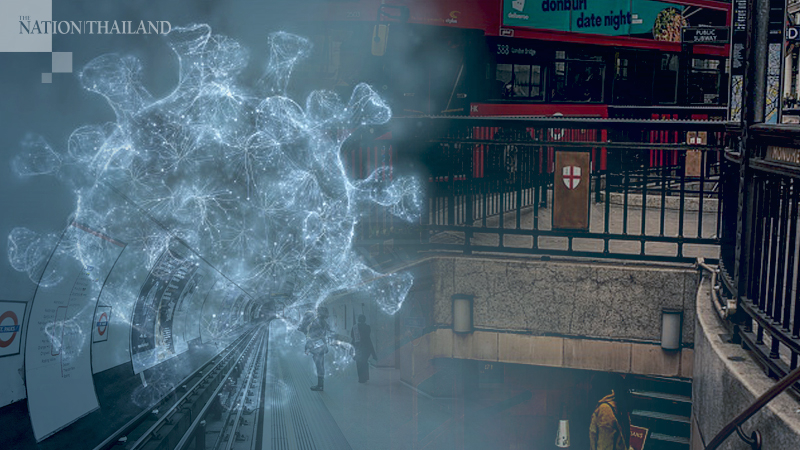
 Jamal “Kherow” Yusupov of Russia and Samy “AK47” Sana of France
 Robert Lighthizer and Liu He, China’s vice premier, wave before a meeting at the Office of the U.S. Trade Representative in Washington, on Oct. 11, 2019. MUST CREDIT: Bloomberg photo by Andrew Harrer.
 Senate Majority Leader Mitch McConnell, R-Ky., wears a protective mask while walking to his office at the U.S. Capitol in Washington, D.C., on Dec. 21, 2020. MUST CREDIT: Bloomberg photo by Oliver Contreras.
 Gary Kim, co-founder and co-chief executive officer of Danggeun Market, at the company’s office in Seoul, South Korea, on Nov. 18, 2020. MUST CREDIT: Bloomberg photo by SeongJoon Cho.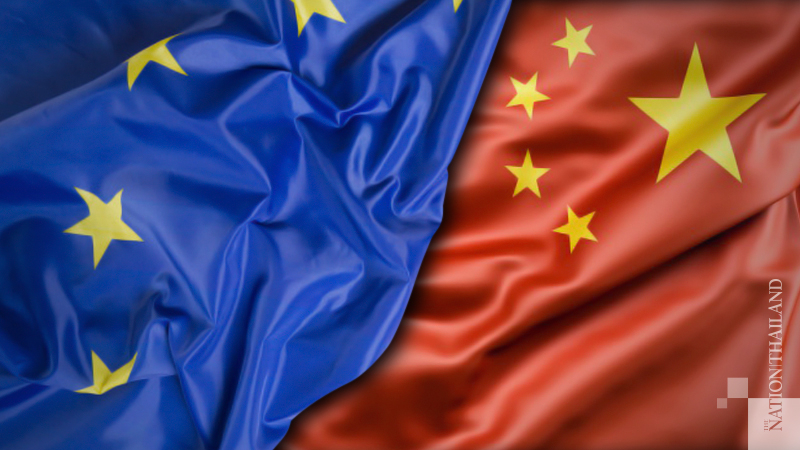
 SootinClaimon.Com