Dec 24. 2020Việt Nam’s brand value skyrocketed by 29 per cent to US$319 billion this year. — Photo baotintuc.vn
By Viet Nam News/ANN
HÀ NỘI — Việt Nam has become the fastest growing national brand in Brand Finance’s ranking this year, with its brand value skyrocketing by 29 per cent to US$319 billion.
The country climbed nine places from last year to 33rd in the Nation Brands 2020 list of the world’s 100 most valuable brands compiled by the UK independent branded business valuation and strategy consultancy.
According to Brand Finance, Việt Nam, which has recorded staggeringly low COVID-19 cases and deaths, has emerged as one of the top locations within the Southeast Asian region for manufacturing and has become an increasingly attractive destination for investors, particularly from the US, that are looking to relocate their China operations following the fallout from the US-China trade war. Recent trade deals with the EU are further supporting the growth of the nation.
“Emerging as a Southeast Asian haven for manufacturing, Việt Nam defies the global trend, with its brand value up an impressive 29 per cent,” Brand Finance noted.
Brand Finance measures the value of national brands based on three pillars: goods and services, investment, and society.
According to Brand Finance, the 100 most valuable nation brands in the world have suffered monumental losses to their brand value because of the COVID-19 pandemic, amounting to $13.1 trillion.
This year has put the nations of the world to the test – from the economic impacts of COVID-19 on nations’ GDP forecasts, inflation rates, and general economic uncertainty, to diminished long-term prospects. Brand Finance estimates that the total brand value of the top 100 nation brands dropped from $98 trillion in 2019 to $84.9 trillion in 2020, with almost every nation feeling a significant impact of the health crisis on their respective economies.
David Haigh, CEO of Brand Finance, said the downward trend of nearly all the world’s most valuable nation brands was unsurprising, given the year we were currently experiencing. With COVID-19 contributing to the recent rise of protectionism, we may see a reversal of the economic growth brought about by globalisation. Having said that, optimism had certainly prevailed, with forecasts looking less dire than initially predicted, and with the announcement of a working vaccine beginning to be rolled out, the future was certainly looking brighter. — VNS
Dec 24. 2020Prime Minister Yoshihide Suga delivers his speech at a symposium of the Yomiuri International Economic Society in Tokyo on Tuesday. (The Yomiuri Shimbun)
By The Japan News/ANN
Speaking at a symposium of the Yomiuri International Economic Society (YIES) in Tokyo on Tuesday, Prime Minister Yoshihide Suga expressed a sense of crisis about the spread of the novel coronavirus, saying, “[Cases] leveled off for a time, but have recently started to increase and expand across a wider area.”
He went on to say, “Vaccines are the decisive measure for controlling infections,” showing his determination to do his best to prepare the way for vaccinations.
According to Suga, the government plans to give vaccines to medical workers and elderly people first, after confirming safety and effectiveness. To resolve issues stemming from freezer storage and transportation of vaccines, the government has set up a team of officials at the Prime Minister’s Office from the Health, Labor and Welfare Ministry and the Land, Infrastructure, Transport and Tourism Ministry. “All relevant ministries and agencies are taking measures,” Suga said.
To prevent the further spread of infections, Suga urged the public to “have a quiet year-end and New Year holiday,” pointing out that “medical institutions have no choice but to scale down their operations” in the holiday season.
Regarding measures against global warming, Suga said the government aims to achieve zero carbon dioxide emissions from automobiles. The remark reflects his policy of promoting electric vehicles, and fuel cell vehicles, which use hydrogen, as the prime means of achieving the goal of reaching net-zero greenhouse gas emissions in 2050.
The YIES was founded in 1972 by a Japanese consortium of major companies, think tanks, experts and resident diplomats. Multiple times a year, it invites key people from Japan and abroad to give lectures.
Singapore confirms first case of new Covid-19 strain from UK, a 17-year-old student who recently returned from Britain
Dec 24. 2020Attendants at Changi Airport’s Terminal 3 handling luggage belonging to passengers from a flight which arrived from London on Dec 22,, 2020. ST PHOTO: MARK CHEONG
By Ng Keng Gene The Straits Times/ANN
SINGAPORE – One case of a new coronavirus strain reported in the United Kingdom to be potentially more contagious has been detected here, said the Ministry of Health (MOH) on Wednesday (Dec 23).
The patient is a 17-year-old Singaporean girl who had studied in the UK.
The Health Ministry said that with the B117 strain circulating in the UK, the National Public Health Laboratory is performing viral genomic sequencing for confirmed Covid-19 cases who arrived from Europe recently.
A total of 31 imported cases from Europe, who arrived in Singapore between Nov 17 and Dec 17, were confirmed to have Covid-19 infection this month.
Among them, 12 were not infected with the B117 strain, and one patient, identified as Case 58,504, has been found to be carrying the strain.
Five samples cannot be sequenced due to their low viral load, said MOH, which added it is pending confirmation of the results for another 11 cases who are preliminarily positive for the B117 strain.
The last two cases have not been tested yet.
MOH said there is currently no evidence that the B117 strain is circulating in the community.
“All the cases had been placed on 14-day stay-home notices at dedicated facilities or isolated upon arrival in Singapore, and their close contacts had been quarantined earlier,” it added.
The 17 year-old Singaporean girl who was infected with the B117 strain had been studying in the UK since August this year.
She returned to Singapore on Dec 6 and served a stay-home notice at a dedicated facility upon arrival.
She developed a fever the next day, and was confirmed to have Covid-19 infection on Dec 8, said MOH.
Her case was included in the ministry’s case count on the same day.
All her close contacts had been quarantined and tested negative at the end of their quarantine period, the ministry added.
“As she had been isolated upon arrival in Singapore, we were able to ringfence this case so that there was no further transmission arising from her,” MOH said.
As a precautionary measure to reduce the risk of B117 strain’s spread to Singapore, the multi-ministry task force combating Covid-19 announced on Tuesday that from 11.59pm on Wednesday, all long-term pass holders and short-term visitors with recent travel history to the UK within the last 14 days will not be allowed to enter or transit through Singapore.
On Tuesday, Education Minister Lawrence Wong, who co-chairs the multi-ministry task force, said after the announcement of the new travel curbs: “The preliminary assessment is that (the new strain) is 70 per cent more infectious, which is significant, and therefore we think it is prudent to stop all incoming travellers from the UK during this period until we are able to learn more about this new strain of the virus.”
Singaporeans and permanent residents returning from Britain are required to undergo a Covid-19 test on arrival here at the start of their 14-day stay-home notices.
Meanwhile, 21 new coronavirus cases were announced in Singapore on Wednesday, of which all were imported, taking Singapore’s total to 58,482.
All were placed on stay-home notices when they arrived here.
Among them, three are Singaporeans and five are PRs who returned from Canada, India and the UK.
Another nine are foreign domestic workers who arrived from Indonesia, India and Myanmar.
Two are student’s pass holders who arrived from India, while the remaining two cases are short-term visit pass holders who arrived here from India and Sweden.
No new community cases and none from within worker’s dormitories were announced on Wednesday.
Overall, the number of new cases in the community has remained low, with a total of one such case in the past week, who is currently unlinked.
With 18 cases discharged on Wednesday, 58,307 patients have fully recovered from the disease.
A total of 34 patients remain in hospital, with none in intensive care, while 97 are recuperating in community facilities.
Singapore has had 29 deaths from Covid-19 complications, while 15 who tested positive have died of other causes.
It looks like money can put a country at the front of the line when it comes to getting the COVID-19 vaccine, and some wealthy individuals are taking the same approach.
With both Pfizer-BioNTech and Moderna COVID-19 vaccines approved by the United States and other countries for emergency use, the vaccines are being spoken for, with the wealthiest Western countries snatching up most of the initial doses.
The US has already secured the first 100 million doses of Pfizer-BioNTech vaccine and another 100 million doses from Moderna. Both vaccines require two doses per person treated.
The US, which has the option to buy an additional 300 million doses from Moderna and 100 million to 500 million doses from Pfizer, has a population of 331 million.
The US also has the most coronavirus cases, more than 18 million, and the most deaths, over 322,800, as of Wednesday, according to the Johns Hopkins University Coronavirus Resource Center.
Globally, there are more than 78 million reported cases and over 1.71 million COVID-19 deaths.
According to Oxfam, a confederation of 20 independent charitable organizations focusing on alleviating global poverty, wealthier nations have bought enough doses to vaccinate their entire populations nearly three times over by the end of 2021. Canada tops the list with enough doses to vaccinate each citizen five times.
In total, rich nations representing 14 percent of the world’s population have bought 53 percent of all the most promising vaccines so far. Oxfam estimated that only 10 percent of the populations in 70 poor countries will get vaccinated in 2021.
COVAX, or the COVID-19 Vaccines Global Access Facility, aims to accelerate the development and production of vaccines through global cooperation and ensure that all countries can obtain them. The initial goal of COVAX is to distribute 2 billion doses of the vaccines by the end of 2021. China joined COVAX in October as a self-financing country, which helps the facility aid poorer countries.
Trying to pay for priorities
While the wealthier countries have moved to the front of the line for the vaccines, well-off individuals in the US also are trying to do the same, with some reportedly offering to pay as much as five figures in US dollars to bypass government-mandated priorities.
With the vaccines initially in short supply, priorities are to first vaccinate healthcare workers and nursing home residents. A panel advising the US Centers for Disease Control and Prevention recommended on Sunday that the next in line should be people age 75 and over plus frontline essential workers such as emergency responders, teachers and grocery store employees. So far, more than a half million people in the US have gotten their first shot, which needs to be followed by a second shot a few weeks later.
Some people, however, don’t want to wait.
According to the Los Angeles Times, doctors offering concierge medical care to wealthy individuals are getting hundreds of inquiries a day to see if they can jump the line to get the COVID-19 vaccines.
Hollywood celebrities and Silicon Valley executives accustomed to getting preferred treatment with their money are instructing their assistants to find out how they can get better treatment, the newspaper reported.
“Their people are calling me literally every day,” the Times quoted one doctor, who requested anonymity. “They don’t want to wait. They want to know how they can get it more quickly.”
Dr Jeff Toll, at Cedars-Sinai Medical Center in Los Angeles, one of the first hospitals to receive the vaccine, said a patient asked him: “If I donate $25,000 to Cedars, would that help me get in line?” Toll said he replied no.
California Governor Gavin Newsom has warned that California will be “very aggressive in making sure that those with means, those with influence, are not crowding out those that are most deserving of the vaccines”.
“Those that think they can get ahead of the line and those that think because they have resources or they have relationships that will allow them to do it… we also will be monitoring that very, very closely,” Newsom said.
STAT News, which covers biotech and pharmaceutical news, reported that athletes, politicians and well-connected or wealthy people have managed to get special treatment during the pandemic, “including preferential access to testing and unapproved therapies. Early access to coronavirus vaccines is likely to be no different”.
STAT said it could happen in different ways: fudging the definition of “essential workers” or “high-risk” conditions, physicians caving to pressure to keep their patients happy, and even through outright bribery or theft.
“When we talk about the concept of individuals being able to get to the front of the line, that’s not difficult, because our system is designed to advantage those people with means like that,” Glenn Ellis, a visiting scholar at the National Center for Bioethics in Research and Health Care at Tuskegee University and a bioethics fellow at Harvard Medical School, told STAT.
“They don’t have to really do anything sinister. All they have to do is access the system that they are a part of.”
The Times reported that doctors are receiving offers of “tens of thousands of dollars in cash”, in addition to “making their personal assistants pester doctors every day and asking whether a five-figure donation to a hospital would help them jump the line”.


.jpg)

 Việt Nam’s brand value skyrocketed by 29 per cent to US$319 billion this year. — Photo baotintuc.vn
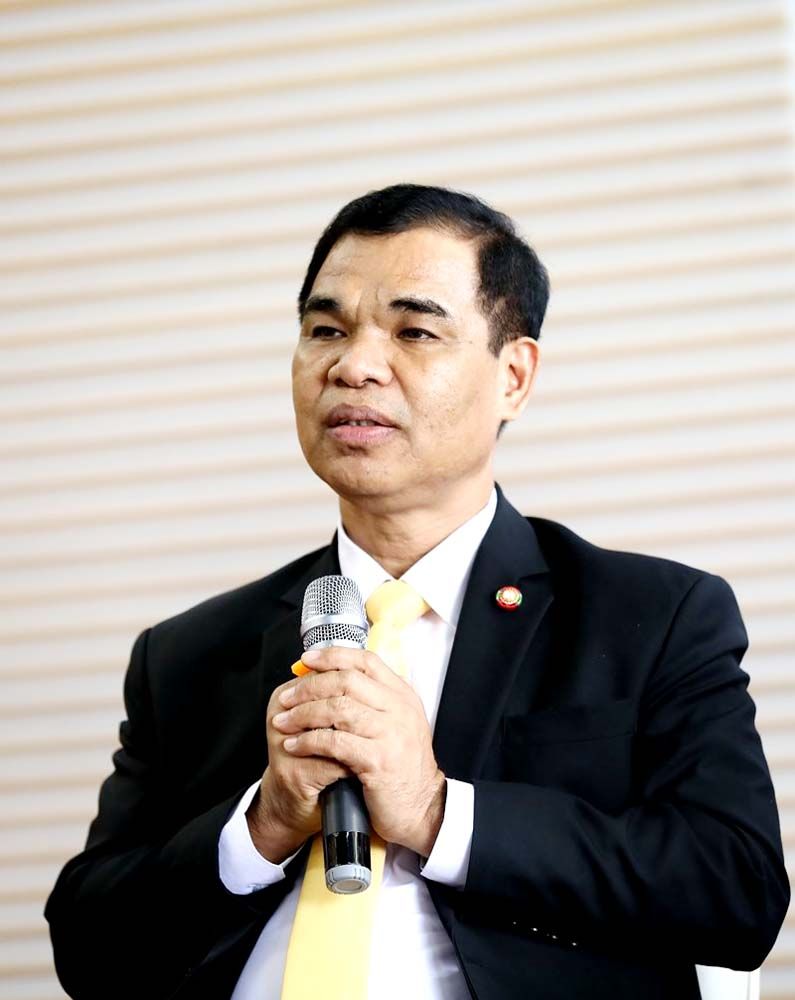
  Prime Minister Yoshihide Suga delivers his speech at a symposium of the Yomiuri International Economic Society in Tokyo on Tuesday. (The Yomiuri Shimbun)
  Attendants at Changi Airport’s Terminal 3 handling luggage belonging to passengers from a flight which arrived from London on Dec 22,, 2020. ST PHOTO: MARK CHEONG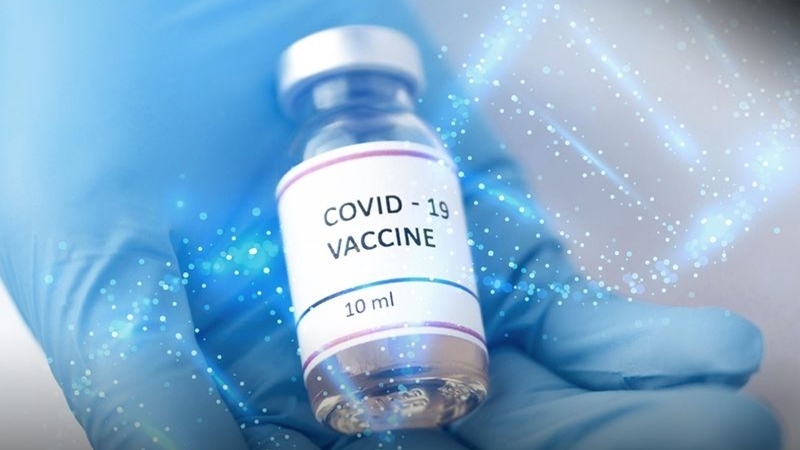
 SootinClaimon.Com