
Pierre Sprey, Pentagon analyst who battled brass to produce A-10 warplane, dies at 83 #SootinClaimon.Com

#SootinClaimon.Com : ขอบคุณแหล่งข้อมูล : หนังสือพิมพ์ The Nation.

https://www.nationthailand.com/international/40005055

Pierre Sprey, Pentagon analyst who battled brass to produce A-10 warplane, dies at 83


WASHINGTON – Pierre Sprey, a 1960s Pentagon “whiz kid” who was a formidable intellectual force in military analysis and weapons development and was sometimes an outspoken critic of Defense Department spending and war plans, died Aug. 5 at his home in suburban Glenn Dale, Md. He was 83.

Pierre Sprey, Pentagon analyst who battled brass to produce A-10 warplane, dies at 83

The cause appeared to be a sudden heart attack, said his son, John Sprey.

Sprey (pronounced “spray”) was considered a polymath whose interests encompassed history, engineering and French literature. In later years, he established a jazz record label, Mapleshade, and produced dozens of recordings known for their exquisite high-fidelity audio.

Former colleagues said he applied the same meticulous – and sometimes unconventional – principles to military matters. After working for the Grumman aircraft company early in his career, Sprey moved to the Pentagon in 1966 as part of a group of analysts and engineers dubbed the “Whiz Kids,” borrowing a term first used to describe then-Defense Secretary Robert S. McNamara and his former colleagues at Ford Motor Co.

“Even among McNamara’s Whiz Kids – the highly educated and extraordinarily bright young men brought into the [Pentagon] with the mandate to impose rational thought on both the military and the military budget – Pierre Sprey stood out,” author Robert Coram wrote in a 2002 biography of Sprey’s onetime Pentagon boss, John Boyd.

It was the height of the Cold War with the Soviet Union, and Sprey spent his first year working on a study of the Air Force budget and preparations for a potential war in Europe. His report, based on studies of World War II and information from the Joint Chiefs of Staff, stated that the Air Force’s existing plan to bomb bridges and infrastructure was useless and would not prevent Soviet troops from pouring into Europe.

ADVERTISEMENTx

By rejecting a long-held doctrine, Sprey quickly became persona non grata among top-ranking Air Force brass, many of whom had been fighter or bomber pilots and resented getting advice from a civilian who was barely 30.

“He was one of the most detested people by the United States Air Force,” Tom Christie, who spent decades as a Pentagon analyst, said in an interview, “because he was challenging a lot of sacred programs and strategies.”

Instead, Sprey advocated a primary mission of “close air support,” with Air Force planes flying low to support Allied ground troops and to attack enemy convoys and armored units. He made the startling assertion that the most important vehicles in warfare were not fighter planes, aircraft carriers or tanks – but ordinary trucks.

“I made myself pretty unpopular by pointing out that trucks were much more important than airplanes,” Sprey told the Baltimore Sun in 2002. “The tonnages moved by airplanes are tiny. Trucks are what count in the theater of war. Well, that wasn’t very glamorous for all those guys, so I got fired from that job.”

Sprey, Christie and a few others became part of a small group of analysts under the leadership of Boyd, a former fighter pilot who wanted to bring improved planning and efficiency to the Air Force. They adopted an almost furtive, underground approach, often working late at night, and came to be known as the “fighter mafia.”

In general, the group believed that simpler, cheaper weapons and aircraft worked better than complex, more expensive designs. Airplanes loaded down with electronics and other features, Sprey argued, were less maneuverable and harder to repair.

Sprey and his group faced a strong backlash from Pentagon officials and from manufacturers who stood to profit from defense contracts. According to Coram’s book on Boyd, the Air Force assigned a colonel to get Sprey fired. When the colonel presented doctored statistics to challenge Sprey’s calculations, Sprey replied, “Your numbers are a lie.”

The colonel demanded an apology, but Sprey responded by calling him a “slimy creature” who “oozed mendacity.”

“Unlike many civilians who worked in the Pentagon,” Coram wrote, “Sprey was not intimidated by rank; in fact, he thought there was an inverse relationship between the number of stars on a man’s shoulders and his intelligence.”

He stayed at the Pentagon as part of Boyd’s team and worked on two new airplane designs in the 1970s: one was a lightweight fighter that turned out to be the F-16; the other was a relatively slow, low-flying aircraft that became the A-10.

Sprey was particularly influential in the development of the A-10, a stubby plane with upright fins on the tail and two jet engines mounted over the body. Its central feature was a nose-mounted 30-mm Gatling gun that could fire 70 rounds a second. The plane could carry missiles and bombs under its wings.

Sprey insisted that the A-10 be durable and easy to repair. It was covered in a titanium shell that could withstand ground fire. Fuel tanks were insulated with nonflammable material to prevent explosions, and backup systems were in place for various hydraulic and mechanical components. Officially called the Thunderbolt, the A-10 looked so ungainly that pilots affectionately called it the Warthog.

The Pentagon sought repeatedly to kill the A-10 project or relegate the aircraft to the National Guard, even after testing proved that its gun and rockets could easily destroy armor-plated tanks. Sprey helped rally support for the plane among sympathetic military officials and members of Congress, and the program stayed alive.

During the Persian Gulf War in 1991, the A-10 was brutally effective, taking out 1,100 of the 1,500 Iraqi tanks lost during the conflict, plus more than 1,000 pieces of artillery. The A-10 was so rugged that stories and footage began to circulate of badly damaged planes landing safely after combat missions. The A-10 continued to be a useful warplane during the conflicts in Iraq and Afghanistan.

“The pilots love them,” Sprey said in 1999. “Any of our jet fighters can be shot down by a .22-caliber rifle. But you can punch an A-10 full of holes and it will come home with sky showing through the wings.”

Pierre Michel Sprey was born Nov. 22, 1937, in Nice, France. His Jewish parents had fled oppression in Germany in the early 1930s, then came to the United States in 1941, settling in the New York borough of Queens.

His father was a jeweler, and his mother a homemaker. Young Pierre grew up speaking German and sometimes French with his parents, who would discuss classical music at the dinner table.

Sprey studied engineering and French literature at Yale University, graduating in 1957 at age 19. He later received a master’s degree in systems engineering and statistics from Cornell University.

His eyesight was not sharp enough to allow him to be a fighter pilot, his son said, so he turned to aircraft design. After leaving the Pentagon in the 1970s, he continued to work on defense projects as a consultant for many years afterward.

While growing up in New York, Sprey often attended jazz clubs, and he began to record musical performances as a hobby. A fellow Pentagon engineer showed him a high-end turntable, spurring Sprey to take it apart and explore the mechanics of high-fidelity sound.

He devised a homemade recording system that employed extremely thin wires, battery-powered microphones and a two-track Sony reel-to-reel recorder weighted with lead. He had a restored 1911 Steinway piano in the front parlor of an old country house called Mapleshade in suburban Upper Marlboro, Md. He had made amateur recordings of Washington jazz singer Shirley Horn, who came to Sprey’s house to play his piano.

“One night she was sitting at my piano and fell in love with it,” he told The Washington Post in 1996. “She said, ‘P. baby, I want to do my next album on this piano and I want you to be my engineer’ . . . I enjoyed recording Shirley so much, I decided to hang out my shingle.”

Sprey named his record label Mapleshade and recorded primarily jazz and blues musicians, including saxophonists Clifford Jordan and Hamiet Bluiett and pianists Walter Davis Jr., John Hicks and Larry Willis. He placed rubber baffles on the walls and ceiling and turned off all the lights, refrigerators, furnaces and electronic devices to obtain as pure a sound as possible.

“Something important is happening in Upper Marlboro,” a CD Review critic wrote. “To sit down with a small stack of your very first Mapleshades is a revelation.”

A 1997 recording of New York’s Arc Choir singing the gospel tune “Walk With Me” was sampled on Kanye West’s hit “Jesus Walks.” Sprey said the royalties were enough “to support 30 of my money-losing jazz albums.”

Sprey later moved to two other “crumbling old wood and brick farmhouses” in Maryland, his son said, and often cooked for visiting musicians, who were welcome to stay overnight.

His wife of 40 years, Seana Covert, died in 2014. Survivors include a son, John Sprey, of Syracuse, N.Y.

During the 1980s, Sprey and some of his fellow defense analysts from the “fighter mafia” helped spearhead what was called the military reform movement, seeking to develop simpler, more efficient and less expensive weapons programs.

“Not all simple, low-cost weapons work, but war-winning weapons are almost always simple,” he said.

Sprey became a persistent critic of what he saw as wasteful spending and poorly conceived military efforts and often contributed to the website of an independent watchdog organization, the Project on Government Oversight.

“Very simply, I don’t think we should be going to war for oil companies,” he told The Post in 2006. Whether planning for war or setting up his studio for a jazz recording, Sprey followed the same precept: “The whole essence of this is to judge everything by outcomes.”

Published : August 21, 2021

By : The Washington Post · Matt Schudel

California judge rules unconstitutional the measure classifying Uber and Lyft drivers as contractors #SootinClaimon.Com

#SootinClaimon.Com : ขอบคุณแหล่งข้อมูล : หนังสือพิมพ์ The Nation.

https://www.nationthailand.com/international/40005054

California judge rules unconstitutional the measure classifying Uber and Lyft drivers as contractors


SAN FRANCISCO – A California judge ruled unconstitutional a ballot measure from last November defining Uber and Lyft drivers as independent contractors, throwing fresh uncertainty into the status of the hundreds of thousands of app-based workers.

California judge rules unconstitutional the measure classifying Uber and Lyft drivers as contractors

In a ruling issued Friday, Alameda County Superior Court Judge Frank Roesch declared that Proposition 22 is “unenforceable,” arguing several sections of the measure are unconstitutional under California state law. They included a section that required a seven-eighths legislative supermajority to amend the measure, which defied the legislature’s amendment power under the state constitution, according to the judge.

Roesch said that avenue for amendments ran counter to the state constitution, instituting a threshold that was “difficult to the point of near impossibility.”

In California, ballot measures are required to be limited to a single subject, and the provisions in the measures must be related. The judge found that the measure pitched to Californians in November overstepped that requirement by limiting the legislature’s ability to allow workers’ to collectively bargain. Proposition 22 passed by a 59% to 41% vote in November.

“A prohibition on legislation authorizing collective bargaining by app-based drivers does not promote the right to work as an independent contractor, nor does it protect work flexibility, nor does it provide minimum workplace safety and pay standards for those workers,” Roesch wrote. “It appears only to protect the economic interest of the network companies in having a divided, ununionized workforce, which is not a stated goal of the legislation.”

Uber criticized the ruling Friday and said it intended appeal.

“This ruling ignores the will of the overwhelming majority of California voters and defies both logic and the law,” Uber spokesman Noah Edwardsen said. “We will appeal and we expect to win. Meanwhile, Prop 22 remains in effect, including all of the protections and benefits it provides independent workers across the state.”

ADVERTISEMENTx

The hotly contested measure, driven by a $200 million campaign mounted by companies such as Uber, Lyft and DoorDash, followed a 2019 state law that defined Uber and Lyft drivers as employees. The companies and fellow apps mounted a vigorous defense, arguing the requirements of employment would impede the flexibility they offer drivers – and that the majority of drivers did not want to be employees.

Advocates for employment argued drivers should be entitled to a minimum wage and benefits such as health insurance, sick leave and job protections.

Prop 22 created a limited set of benefits such as an earnings guarantee and a health care stipend, but not the typical protections of employment under state law.

Geoff Vetter, a spokesman for the Protect App-Based Drivers & Services Coalition, said his pro-Prop 22 group would file an immediate appeal.

“This outrageous decision is an affront to the overwhelming majority of California voters who passed Prop 22,” he said in a statement. “We will file an immediate appeal and are confident the Appellate Court will uphold Prop 22.”

ADVERTISEMENT

Vetter noted the court ruling is not binding and said he expected it to be stayed as the group appeals.

Lyft did not immediately respond to a request for comment.

Veena Dubal, a Professor of Law at the University of California Hastings who co-wrote an amicus brief on behalf of the petitioners, said the companies erred in “trying to completely take away the right of legislatures and municipalities to do anything on behalf of workers, as well as trying to take the workers out from the state’s workers’ compensation scheme.”

“They were trying to do too much in one proposition,” she said.

Stanford University law professor emeritus William Gould, who also co-wrote on behalf of the petitioners, said the judge’s methodical arguments would be hard to defend against. The gig companies faced a steep road ahead, he said, potentially stretching beyond the Court of Appeal.

ADVERTISEMENT

“I think this is quite obviously important and precedential, and the final word is going to be with the Supreme Court of California,” he said.

Published : August 21, 2021

By : The Washington Post · Faiz Siddiqui

Amid the trappings of success, Panipak does not forget her first coach #SootinClaimon.Com

#SootinClaimon.Com : ขอบคุณแหล่งข้อมูล : หนังสือพิมพ์ The Nation.

https://www.nationthailand.com/life/40005092

Amid the trappings of success, Panipak does not forget her first coach


Olympic gold winner Panipak Wongpattanakit on Saturday visited her first taekwondo coach, Songsak Thipnang, in Hua Hin to express gratitude for his role in her blossoming as a taekwondo champion.

Songsak had trained her to become a part of the youth national taekwondo team in 2011.


Acting Pilot Officer Panipak Wongpattanakit, also known as “Tennis”, won the gold at the Tokyo Olympic Games in the 49kg women’s taekwondo.
On Saturday she along with her father made a personal visit to Songsak at Market Village in Hua Hin in Prachuap Khiri Khan province. Panipak also took along her Olympic gold medal.


She handed over the gold medal to her former coach and bowed before him. Both of them hugged happily after not having seen each other for a long time, as Panipak had been training hard for the Olympics, while Songsak had moved from Surat Thani to open a new school named “Huahin Taekwondo” for more than a year.


In a scene reminiscent of how her current coach Choi Young-seok had lifted her when the final competition result was announced at the Tokyo Olympics, Somsak gave Panipak back the medal and lifted her up. 


The mayor of Hua Hin, Nopporn Wuttikul, offered Panipak a bouquet on behalf of the people of Hua Hin. 
Panipak also signed autographs to coach Songsak’s students with a message: “Keep fighting, kids. I’m cheering for you,” written on the school’s board.


Panipak told the press that it was her intention to come and thank coach Songsak, the first coach, who had taught her when she was a child. His determination had inspired her to pursue the dream of becoming a youth national taekwondo athlete, and the goal of winning the Olympic gold, she said. 
She said she was thrilled to see him after many years, and to now appear as an inspiration for the young generation in Hua Hin. She also gave Songsak a promise to stay committed to the sport.


Coach Songsak said that he was proud of Panipak’s success. 
“Tennis was a determined student and I knew that she would become a national taekwondo athlete. It has always been my dream to see my student succeed on the sports career path and to hear the Thai national anthem in world competitions. Today, Tennis has made this dream come true.


“I would like to tell all the youths not to focus only on Tennis’ achievement, but to see in wide perspective that at every step of success, there always are difficulties and obstacles. Success is  achieved when you perform at your best. My appreciation goes to Tennis who has brought happiness back to the sport of taekwondo, including to all Thai people amid this Covid-19 crisis,” said the ex-coach.


Panipak also gave an autographed photo and souvenir to the coach, and took commemorative group photos with the children before she travelled back.

ADVERTISEMENTx

Amid the trappings of success, Panipak does not forget her first coachAmid the trappings of success, Panipak does not forget her first coachAmid the trappings of success, Panipak does not forget her first coachAmid the trappings of success, Panipak does not forget her first coach

Published : August 22, 2021

By : The Nation

U.S. Fed moves closer to tapering asset purchases despite Delta variant uncertainty #SootinClaimon.Com

#SootinClaimon.Com : ขอบคุณแหล่งข้อมูล : หนังสือพิมพ์ The Nation.

https://www.nationthailand.com/business/40005071

U.S. Fed moves closer to tapering asset purchases despite Delta variant uncertainty


“Consumers may pull back from some in-person services amid the spread of the more contagious strain and some may be reluctant to return to work, further delaying the labor market recovery,” says the Economics Group of Wells Fargo Securities.

The U.S. Federal Reserve is moving closer to announce a plan to taper its asset purchases later this year despite the uncertainty caused by the Delta variant, Fed officials and economists have said.

ADVERTISEMENTx

“Looking ahead, most participants noted that, provided that the economy were to evolve broadly as they anticipated, they judged that it could be appropriate to start reducing the pace of asset purchases this year,” the Fed said Wednesday in the minutes of its July 27-28 meeting.

Various Fed officials thought that economic and financial conditions would likely warrant a reduction in asset purchases in the coming months, the minutes said.

The Fed has pledged to keep its benchmark interest rate unchanged at the record-low level of near zero, while continuing its asset purchase program at least at the current pace of 120 billion U.S. dollars per month until “substantial further progress” has been made on employment and inflation.

“There are two main arguments for tapering. The first is that with such strong budget support and with the economy showing signs of continuing its strong recovery, the economy no longer needs the same strong monetary policy support as it did earlier,” Desmond Lachman, resident fellow at the American Enterprise Institute and a former official at the International Monetary Fund, told Xinhua.

“The second reason is that we are seeing unhealthy signs of excessive asset price inflation in the housing and equity markets that could cause financial instability down the road,” Lachman said, expecting the Fed to begin tapering by the end of the year.

Several Fed officials, including Dallas Federal Reserve Bank President Robert Kaplan and Boston Federal Reserve Bank President Eric Rosengren, have called for the central bank to announce a plan for tapering asset purchases as soon as September and end the purchases by the middle of next year.

In an interview with the Financial Times earlier this week, Rosengren noted that the cost-benefit analysis around the Fed’s asset purchase program changes a bit as a result of the pandemic creating these supply constraints.

“We’re having more of an impact on temporary surges of prices and less of an impact on trying to get back to full employment and a more sustainable inflation rate,” Rosengren said, adding the rising debt loads fueled in part by the asset purchases could eventually jeopardise economic recovery.

U.S. inflation remained elevated in July due to pandemic-related supply constraints. The consumer price index increased 5.4 percent over the past 12 months through July, the same increase as the period ending June and the largest 12-month increase since 2008, according to the Labor Department.

People wait in line at a mobile COVID-19 vaccination center in the Brooklyn borough of New York, the United States, Aug. 18, 2021. People wait in line at a mobile COVID-19 vaccination center in the Brooklyn borough of New York, the United States, Aug. 18, 2021.

“There are two reasons to think that inflation might have peaked. The first is that supply bottlenecks might ease. The second is that the economy might now slow as a result of a delta wave in the pandemic,” Lachman said.

Lachman expected that U.S. inflation rate would slow to 4 percent by year-end and to 3 percent by the end of 2022, still well above the central bank’s target of 2 percent.

Meanwhile, the spread of the more contagious Delta variant has also rekindled concerns about the labor market recovery.

People wearing face masks visit a market in New Orleans, Louisiana, the United States, on Aug. 3, 2021.People wearing face masks visit a market in New Orleans, Louisiana, the United States, on Aug. 3, 2021.

“Consumers may pull back from some in-person services amid the spread of the more contagious strain and some may be reluctant to return to work, further delaying the labor market recovery,” the Economics Group of Wells Fargo Securities led by chief economist Jay Bryson said Friday in a report.

“Overall, the increased uncertainty surrounding the Delta variant supports our view that the Fed will wait to see how the labor market evolves from here prior to removing accommodation,” the report said.

Fed Chairman Jerome Powell is expected to give a speech virtually on Aug. 27 during the annual Jackson Hole economic policy symposium, which may offer further clues on the Fed’s taper plan.

At a press conference in July, Powell seemed less concerned about economic effects from the spread of the Delta variant. “What we’ve seen is with successive waves of COVID-19 over the past year and some months now, there has tended to be less economic implications from each wave,” he said.

The Wells Fargo Economics Group continues to expect that the Fed will officially announce tapering near the end of this year and kick off the actual tapering of purchases at the start of next year.

A survey released by Bloomberg last month showed that most economists expected a formal announcement of tapering by the Fed in December and actual reductions starting in the first quarter of 2022.

People spend their leisure time at a pier in San Francisco, the United States, on Aug. 15, 2021. People spend their leisure time at a pier in San Francisco, the United States, on Aug. 15, 2021.


Published : August 22, 2021

By : xinhua

Four activists charged over anti-government protests get bail #SootinClaimon.Com
#SootinClaimon.Com : ขอบคุณแหล่งข้อมูล : หนังสือพิมพ์ The Nation.

https://www.nationthailand.com/in-focus/40005088

Four activists charged over anti-government protests get bail


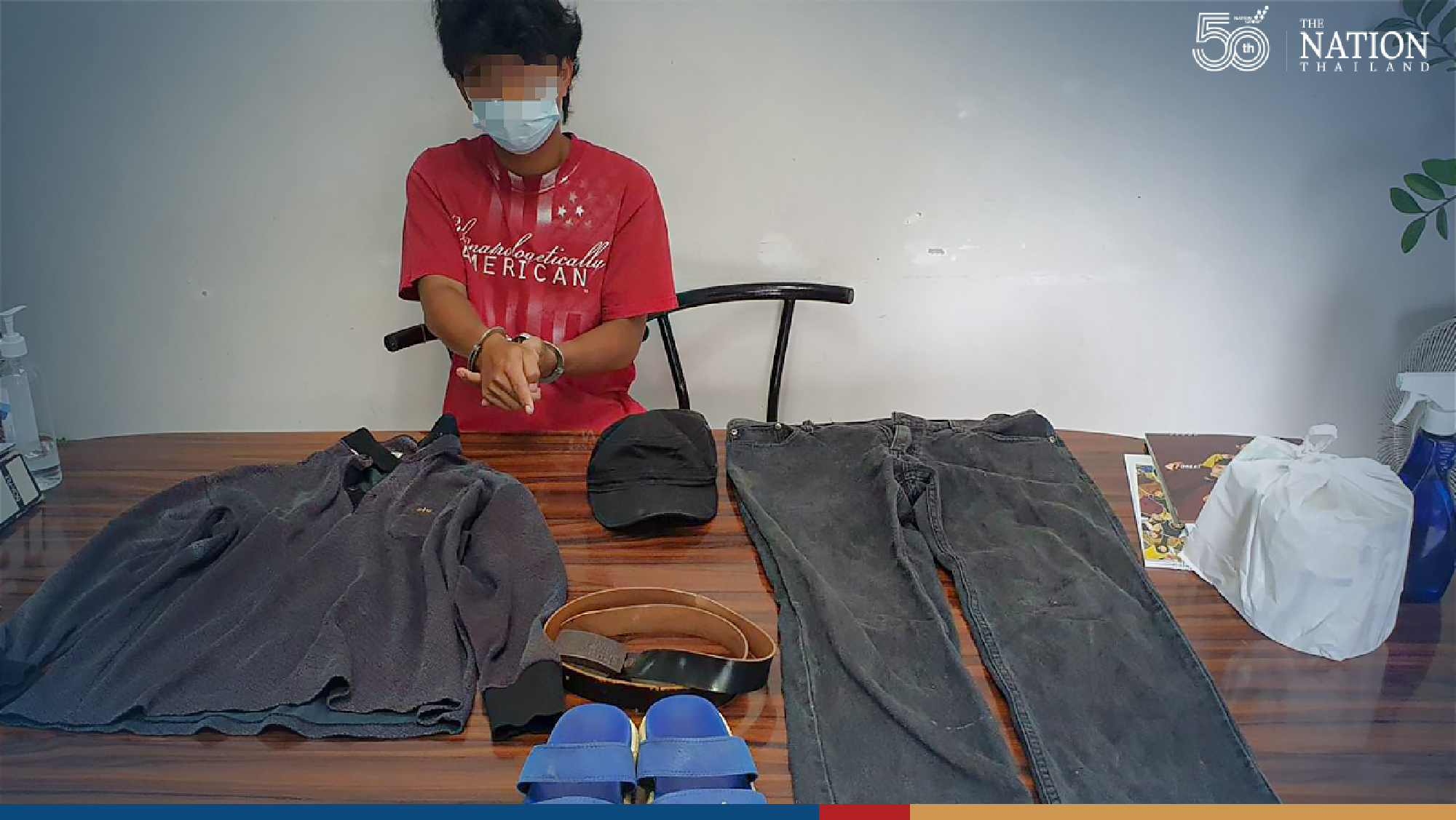
The Criminal Court on Saturday granted bail to four activists who allegedly participated in the anti-government protest at the Din Daeng Intersection.

Three activists — Thapchai Sinonyang (22), Chanadol Loymankong (24), and Sahachat Yongchaturas (19) — were charged with carrying ping pong bombs and other materials during the protest on Friday. All the suspects denied the charge and sought release on bail.

The Criminal Court set the bail amounts at THB110,000 per person for the first and second suspects and at THB35,000 for the third suspect, with the condition that they not repeat the alleged offences or participate in activities that may result in chaos.

ADVERTISEMENTx

Four activists charged over anti-government protests get bailFour activists charged over anti-government protests get bail


The Criminal Court also granted bail to Prawit Thiboonbun (19), who allegedly set fire to a police traffic control booth at the Din Daeng intersection on August 10. The bail amount was set at THB47,000 with conditions similar to those for the other three suspects.

Four activists charged over anti-government protests get bailFour activists charged over anti-government protests get bailFour activists charged over anti-government protests get bailFour activists charged over anti-government protests get bail

Published : August 22, 2021

By : The Nation

How pro-democracy groups plea for UN help culminated in violent clashes with police #SootinClaimon.Com

#SootinClaimon.Com : ขอบคุณแหล่งข้อมูล : หนังสือพิมพ์ The Nation.

https://www.nationthailand.com/in-focus/40005085

How pro-democracy groups plea for UN help culminated in violent clashes with police


The Thalu Fah pro-democracy group on Saturday submitted its petition to the Office of the United Nations High Commissioner for Human Rights in Bangkok, demanding justice for imprisoned political activists in Thailand.

Although the group called off the demonstration at 4pm, some protesters marched to the Din Daeng intersection to defy the police, similar to previous protests.

The timeline of events on Saturday:

ADVERTISEMENTx

Published : August 22, 2021

By : The Nation

Din Daeng residents up in arms over clashes between police and protesters #SootinClaimon.Com

#SootinClaimon.Com : ขอบคุณแหล่งข้อมูล : หนังสือพิมพ์ The Nation.

https://www.nationthailand.com/in-focus/40005084

Din Daeng residents up in arms over clashes between police and protesters



Residents living in Din Daeng Flats in Bangkok put up two huge banners on Saturday to express their displeasure after they were affected by the police tear gas and rubber bullets fired during the crackdown on pro-democracy protesters.

One banner said: “Residents of Din Daeng Flats do not want this place to be a battlefield” and another said: “We have children, seniors and patients. Please restore peace to us”.

The residents also urged police officers to remove the containers placed at the Din Daeng intersection where the clashes between protesters and riot police took place.

ADVERTISEMENTx

Din Daeng residents up in arms over clashes between police and protestersDin Daeng residents up in arms over clashes between police and protesters

They added that their representative will go to Government House on Tuesday to ask police officers to stop using violence to disperse the assembly.

Din Daeng residents up in arms over clashes between police and protestersDin Daeng residents up in arms over clashes between police and protesters

Published : August 22, 2021

By : The Nation

Hydro-floating solar hybrid plant expected to supply electricity from October #SootinClaimon.Com

#SootinClaimon.Com : ขอบคุณแหล่งข้อมูล : หนังสือพิมพ์ The Nation.

https://www.nationthailand.com/in-focus/40005091

Hydro-floating solar hybrid plant expected to supply electricity from October


The hydro-floating solar hybrid power plant on Sirindhorn Dam in Ubon Ratchathani province, with a capacity of 45 megawatts, will start operating from October, Boonyanit Wongrukmit, governor of the Electricity Generating Authority of Thailand (Egat), said.

He said the plant, which is the largest floating hybrid solar project in the world, would help reduce the limitation of being able to generate electricity from a renewable energy source only for a certain period of time. He said it would now be possible to produce electricity for a longer time. It generates electricity from solar cells during the day and from the hydroelectric power plant at night, using a battery that stores the electricity generated in daytime. It is also the best use of the existing resources of the dam, such as power transmission lines and high-voltage power stations, and reduces the cost of electricity.

Egat has completed installion of seven sets of solar panels and buoys in Sirindhorn Dam, concrete buoys of the underwater anchor system and the switchgear building. It is expected to be able to supply electricity to the commercial system in October 2021.

Egat is still waiting for the Ministry of Energy to approve the expansion of floating photovoltaic power generation from the current power development plan of 2,725 megawatts to 5,000 megawatts to meet the country’s clean energy needs.

In the transportation sector, Egat has promoted the use of electric vehicles (EV) to reduce carbon emissions in a concrete way, such as installing 14 EleX by Egat EV charging stations and preparing to expand 34 more. In the future, there will be the development of the EleXA application for finding EV charging stations, Egat Wallbox for charging EVs at home or business places, including the development of the BackEN platform for the management of EV charging stations, the governor said.

Published : August 22, 2021

By : The Nation

People seek govt support as they deplete their savings: poll #SootinClaimon.Com

#SootinClaimon.Com : ขอบคุณแหล่งข้อมูล : หนังสือพิมพ์ The Nation.

https://www.nationthailand.com/in-focus/40005089

People seek govt support as they deplete their savings: poll


Thai people are dipping into their savings, while their expenses have increased amid the Covid-19 pandemic, according to a Suan Dusit University opinion poll.

The poll respondents urged the government to solve the issue as some people would be able to support themselves for only another three months.


The Suan Dusit University opinion poll on “The expenditure of Thai people in the era of Covid-19 crisis” surveyed 1,274 people from August 16-19.


The survey found that:

  • 40.22 per cent of respondents reported an increase in expenses;
  • 83.57 per cent used their salary to pay for their expenses;
  • 42.63 per cent had to use some of their savings. 

The expenditure patterns during the pandemic were:

  • 80.44 per cent had reduced purchase of luxury goods;
  • 86.41 per cent of respondents want the government to help reduce water, electricity, internet and gas bills;
  • 37.37 per cent would be able to support themselves for only another three months at current expenditure levels.

    
Despite being frugal in expenditure, many people are having to use their savings due to the higher cost of living. The domestic consumption rates had been low due to unemployment and the downhill economy.


The current economic situation indicates that people will be able to support themselves for only another three months. Therefore, the government has to urgently solve the economic problems, provide measures to help with the necessary expenses and reduce the cost of living to help the people, the respondents said.

Published : August 22, 2021

By : The Nation

Korat hotel goes on sale after severe impact from the pandemic #SootinClaimon.Com

#SootinClaimon.Com : ขอบคุณแหล่งข้อมูล : หนังสือพิมพ์ The Nation.

https://www.nationthailand.com/in-focus/40005087

Korat hotel goes on sale after severe impact from the pandemic
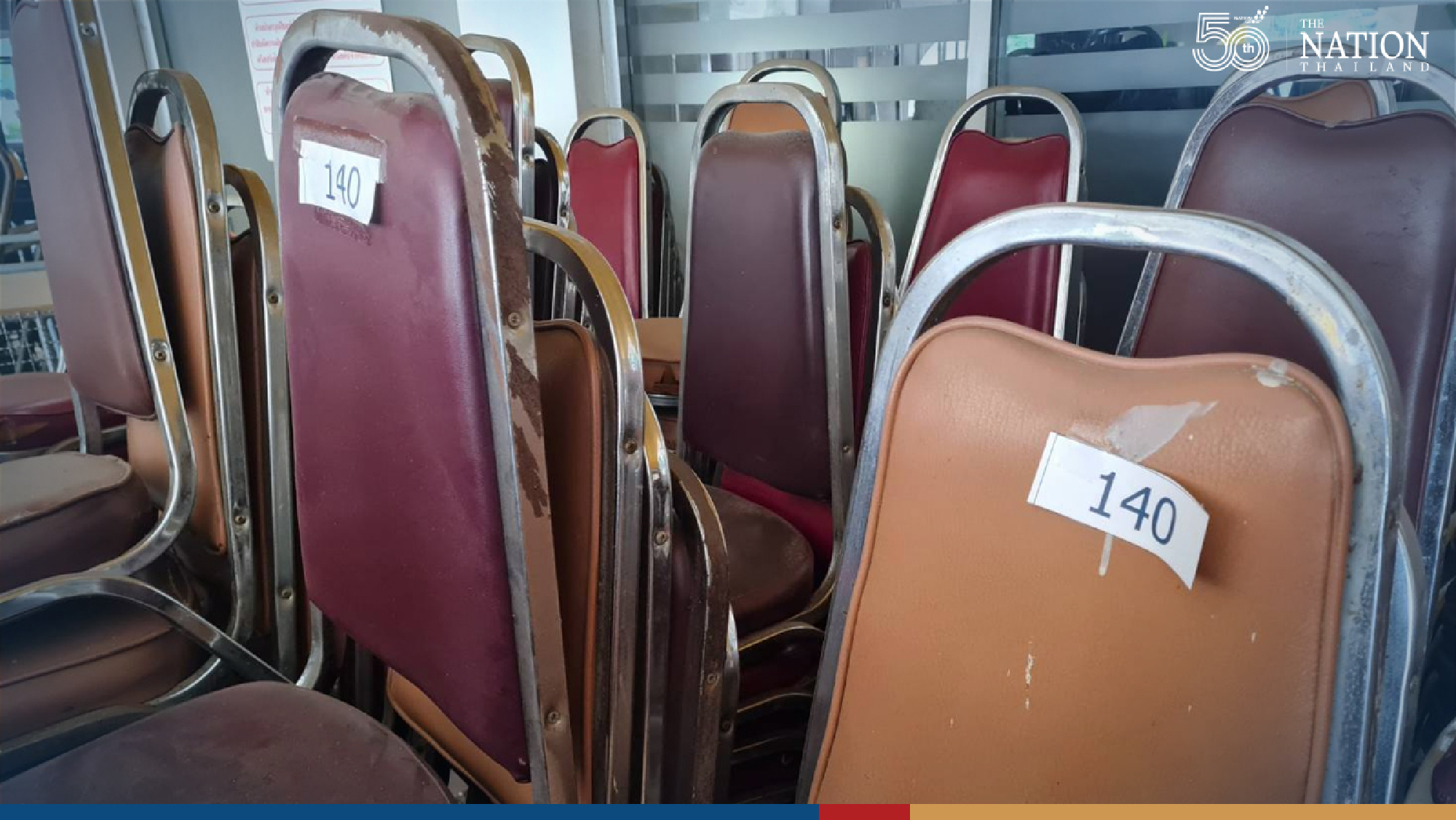

Sripattana Hotel, a well-known hotel in Korat, is up for sale at a price of THB250 million.

The hotel’s appliances were sold for low prices on Saturday after the business was shut down since 2020 due to the Covid-19 pandemic.


On Saturday, a sign saying “Appliances and equipment for sale” was reportedly seen at the hotel entrance.

 
The hotel, which is in Nakhon Ratchasima province, has been closed since October 2020, after it suffered from the pandemic impact and the economic stagnation.
A fence was built around the front area of the hotel and security guards were hired to watch over for many months, before the hotel was put up for sale at THB250 million. 


Thai and Japanese investors have expressed interest in the property. But, due to bank loan problems, the hotel has not yet found a buyer. 

The sale of appliances and equipment drew strong interest from the people and some 90 per cent of electrical appliances had already been sold.

Korat hotel goes on sale after severe impact from the pandemicKorat hotel goes on sale after severe impact from the pandemicKorat hotel goes on sale after severe impact from the pandemicKorat hotel goes on sale after severe impact from the pandemic


The eight-storey Sripattana Hotel was ranked 3.5 stars. It has 183 guest rooms, a banquet hall, an outdoor pool, a karaoke room, a traditional massage spa and restaurants.


The hotel was founded by General Kris Sivara, the former minister of defence and the former chief of the Royal Thai Army. The hotel opened its doors in 1967, and in 2011 Rathprateep Keeratiurai, one of the Nakhon Ratchasima Chamber of Commerce founders, made a contract with the owner to manage the hotel on behalf of Korat Sripatana Co Ltd. 


Rathprateep had offered the hotel as a temporary Covid-19 treatment facility in March 2020, before the lease expired in September 30 and business was closed due to the impact of the pandemic. 

ADVERTISEMENTx

The hotel is currently owned by General Kris Sivara’s heir, but the business was not intended to be continued. Therefore, the selling of the hotel, the hotel’s appliances and equipment has been announced accordingly.

Korat hotel goes on sale after severe impact from the pandemicKorat hotel goes on sale after severe impact from the pandemicKorat hotel goes on sale after severe impact from the pandemicKorat hotel goes on sale after severe impact from the pandemicKorat hotel goes on sale after severe impact from the pandemicKorat hotel goes on sale after severe impact from the pandemic

Published : August 22, 2021

By : The Nation