Cambodias tourism industry is gearing up to roll out the red carpet for Chinese travellers after Prime Minister Hun Sen on September 17 indicated that the Kingdom could soon throw open its doors to international holidaymakers vaccinated against Covid-19 – starting with guests from China.
Cambodia Chinese Tour Guide Association (CCTGA) president Tea Kileng told The Post on September 19 that CCTGA members were raring to return to work and welcome back international visitors, especially those hailing from China.
This brings tourism employers’ gruelling nearly two-year wait to a close, he enthused, noting that a sizeable portion have been forced to look into alternative ways to earn a living.
“We are ready to welcome [Chinese] tourists to Cambodia, although we do not think there will be many at this first stage,” he conceded.
He shared that virtually all CCTGA members have been vaccinated, noting that they had numbered 827 before Covid-19 struck.
Cambodia Association of Travel Agents president Chhay Sivlin said the private sector was eager for as early a reopening as possible to allow vaccinated foreign travellers to once more explore and experience the Kingdom.
And as Thailand and Vietnam trial partial, restricted border reopening schemes, Sivlin warns that Cambodia will lose prospective visitors to the neighbouring countries if plans to open are left on the backburner for too long.
Alluding to the fact that Cambodia has a better grip on the Covid-19 crisis than its neighbours, she stressed that countries with a lower risk of contracting the novel coronavirus and higher rates of inoculation against the pathogen should be first to reopen.
ADVERTISEMENT
“The high vaccination rate in Cambodia will be a pivotal consideration for Cambodia to reopen for foreign visitors that have taken the jab. We are looking forward to receiving them with open arms,” she said.
The Ministry of Tourism has repeatedly stated that the plan is to open Cambodia’s borders to fully-vaccinated international tourists in October-December.
Speaking at the launch of Covid-19 vaccination campaign for children aged 6-11 on September 17, the prime minister signalled that he was keen to allow all businesses to reopen soon if the Covid-19 situation shows significant signs of improvement.
“No one wants to see closures like this, our people want to go out. I first want to reopen the education sector, followed by the service industry … [including] domestic tourism – our people want to travel on Saturday, Sunday and public holidays,” he said, indicating that international tourism would follow soon after.
But he stopped short of abolishing quarantine requirements, at least in the near term, one of the options that had been on the table.
Instead, he hinted at a model reminiscent of “sandbox” schemes piloted in Thailand and Vietnam, with a seven-day quarantine period under controlled but less restrictive settings, during which inter-provincial travel is forbidden.
“It will not be an in-room quarantine,” he assured.
Citing strong Cambodia-China relations and the relatively low rate of daily new Covid-19 cases logged in the Kingdom, Hun Sen said Chinese tourists may be the first to be allowed in any reopening scheme.
“Now let’s all brainstorm a way towards reopening to [international] tourists. Do not forget that services lead the economies of developed countries,” he stressed, highlighting the lucrative nature of the tertiary sector, which he said eclipses industry and agriculture.
Cambodia booked just $1.023 billion in international tourism revenue last year, representing a 79.4 per cent nosedive from $4.919 billion in 2019 due to the sweeping effects of the global Covid-19 pandemic, the tourism ministry reported in April.
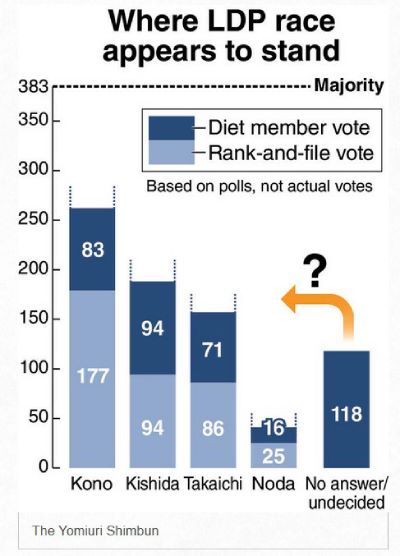
The Liberal Democratic Party’s rank-and-file members and members of affiliated groups appear to favor Taro Kono to be the party’s next leader, according to a Yomiuri Shimbun poll conducted over the weekend.
When asked which candidate they intend to vote for, 41% chose Kono, the minister in charge of administrative and regulatory reform. In second at 22% was Fumio Kishida, a former LDP Policy Research Council chairperson, followed closely at 20% by Sanae Takaichi, a former communications minister, with LDP Executive Acting Secretary General Seiko Noda at 6%.
As for the LDP’s Diet members, a separate poll appears to show their preference for Kishida, Kono, Takaichi and Noda in that order.
The results suggest that there will be no clear winner after the first round of voting, likely leading to a runoff between the top two finishers.
The nationwide telephone poll of rank-and-file members was conducted Saturday and Sunday, with valid responses received from 1,514 such members and members of affiliated groups who were confirmed to have the right to vote for the party president.
In the actual voting to take place Sept. 29, 382 votes will come from each of the LDP’s Diet members, and an equivalent value of 382 votes will be calculated based on the percentage each candidate receives of the ballots cast by rank-and-file members.
Extrapolating from the sample size of the poll, rank-and-file members appear to give 177 votes to Kono, 94 to Kishida, 86 to Takaichi and 25 to Noda. The calculation did not include the 11% of the respondents who did not disclose their intentions.
As for their reasons for choosing a particular candidate, 25% said they supported the candidate’s zeal for reform, 23% said they had strong expectations for the candidate’s policies and 13% said the candidate was trustworthy.
Asked what they thought the LDP needed most in the future, 37% said a generational turnover, 19% said dissolution of factions and 15% said transparency in political funds.
ADVERTISEMENT
When it came to Diet members’ favored candidates, however, the poll started on Sept. 6 and ended Sunday. Of the 382 LDP lawmakers, responses were received from 379, with 30% saying they were undecided or had no comment.
From the lawmakers’ responses, 94 backed Kishida, 83 supported Kono, 71 answered Takaichi. Noda, who officially announced her intention to run on Sept. 16, received 16 votes.
While Kono is a popular choice, the combined poll results appear to show that he does not have 40% of the votes.
If none of the candidates receives over 50% of the vote on Sept. 29, a runoff will take place with 429 votes available: 382 from Diet members and one each from the party’s 47 prefectural chapters.
Police and security authorities are placing strict controls on travel and many roads in the capital are now blocked off following new restrictions imposed as a result of the latest lockdown.
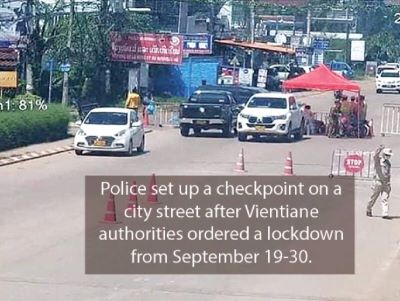
Vientiane authorities ordered a full lockdown of the capital on Sunday following new clusters of locally-transmitted Covid cases at several factories.
Police and security officials are now stationed on city streets to check people’s movements, especially in the four central districts of Sikhottabong, Sisattanak, Chanthabouly and Xaysettha, and some areas of Xaythany, Hadxaithong and Naxaithong.
There are now 14 checkpoints across the capital, including at Thongkhankham, the Comcenter roundabout, Nongbone, Donekoy, 23 Singha Park, Chao Fa Ngum Park, Dongdok, Km3, Nonvai, Nongnieng, Dondaeng-Huayhong, Km7, Lao-ITECC, and Km15 in Dongsang-hin village.
Travel is banned on roads in the capital from 10pm to 5am. Exceptions will be made for essential trips such as the transport of goods, food and medical equipment, ambulances, fire-fighting trucks, and emergency rescue vehicles.
Authorities are calling on people to stay at home while the lockdown is in place, to prevent the spread of Covid-19. This means everyone should stay at home except to buy essential goods such as medicine and to carry out duties authorised by the government.
The lockdown follows new clusters of cases at several factories, with over 430 cases being reported at a garment factory over the weekend. Most of the cases were identified as the Delta variant of Covid-19.
Violators of the rules will be subject to fines, with an individual to be fined 3 million kip per offence and an entity such as a business fined 10 million kip for each offence.
ADVERTISEMENT
The owners of restaurants that stay open in breach of the rules will be fined 3 million kip and service users will be fined 4 million kip or more.
While carrying out checks, police found the Homyen restaurant in Dongdok village, Xaythany district, was open and selling alcoholic beverages, while 17 people were drinking beer inside the restaurant.
Police fined the restaurant owner 3 million kip and fines amounting to 4,150,000 kip were issued to customers.
Gatherings of all kinds, parties and all other activities including cultural events, weddings and religious gatherings are forbidden as part of lockdown restrictions.
All places of entertainment, including casinos, karaoke bars, gaming shops and cinemas, will be closed, in addition to internet cafés, massage and spa facilities, barber shops, beauty salons, snooker clubs, night markets, food gardens, tourist attractions, guesthouses, hotels and refreshment shops.
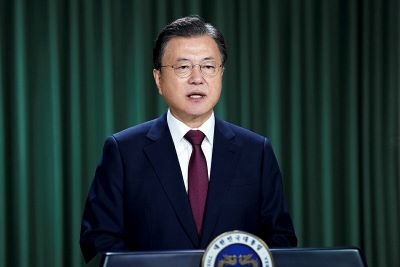
President Moon Jae-in will hold a meeting with Pfizer CEO Albert Bourlar in New York on Tuesday, during his five-day trip to the US for the UN General Assembly, Cheong Wa Dae said.
During the meeting, the president is expected to express his gratitude toward the US vaccine maker’s COVID-19 vaccine supply and ask support for future partnership.
Moon has held a series of meetings with leaders of global vaccine makers, including Moderna, AstraZeneca and Curevac, in recent months as part of his government’s efforts to speed up its vaccination campaign.
The president also plans to attend a signing ceremony for a Seoul-Washington vaccine partnership, an outcome of his first summit with President Joe Biden in May in Washington. Under the agreement, the two nations will work together to support vaccine development and production in both countries.
During the May summit, the two leaders agreed to boost their vaccine partnership by seeking synergy between the US’ vaccine development technology and Korea’s manufacturing capabilities. Korea, home to Samsung Biologics and SK Bioscience, is the world’s second-largest producer of biomedicines.
The strategic partnership is also key to Korea’s vision for hosting an Asian vaccine production hub.
The government recently unveiled a new 2.2 trillion won ($1.92 billion) plan to invest in vaccine development and production over the next five years, with the aim of debuting its first locally developed COVID-19 vaccine in the first half of next year and becoming one of the top five vaccine producers by 2025.
Besides vaccine-related meetings, Moon has a packed schedule for his US trip. He will deliver a keynote speech at the UN General Assembly that convenes Tuesday for two weeks and attend a separate SDG Moment session along with K-pop group BTS to discuss global challenges and urge action from future generations.
On the sidelines of the event, bilateral meetings, including summit talks with his Vietnamese and Slovenian counterparts, are expected to be arranged before he heads to Honolulu to attend a ceremony marking the return of the remains of US soldiers who died in the Korean War and other veterans’ events there.
He and first lady Kim Jung-sook are scheduled to return to Korea Thursday.
India is likely to resume vaccine export under ‘Vaccine Maitri’ in the fourth quarter starting from October, said Union Health Minister Mansukh Mandaviya here on Monday.
He said that vaccine export will resume to fulfill the commitment towards COVAX in line with the motto ‘Vasudhaiva Kutumbakam’ (the world is one family).
The decision to restart the vaccine export has come in view of the United States’ request, ahead of PM Modi’s visit to Washington starting Tuesday.
Mandaviya said that the surplus supply of vaccines will be used to fulfill the commitment towards the world for the collective fight against Covid-19. COVAX is co-led by Gavi, the Coalition for Epidemic Preparedness Innovations (CEPI) and WHO.
He added that it is due to the relentless efforts and guidance of PM Modi that India was simultaneously undertaking Research and production of Covid vaccines in line with the global developments.
India’s vaccination drive, he said, has been a role model for the world and it is marching ahead with great speed. More than 4 times we have crossed one crore mark since the drive commenced on January 16, Mandaviya said.
On vaccine production in coming months, the health minister said that more than 30 crore doses will be produced in October and more than 100 crore doses in the coming quarter.
India had stopped vaccine exports in April following second Covid second wave.
The Union Health Minister held a meeting with six All India Institute of Medical Sciences (AIIMS) hospitals for better coordination among them so that the government could provide best healthcare facilities to the public across the nation.
ADVERTISEMENT
Mandaviya also visited the vaccination centre at AIIMS and held a review meeting with other AIIMS hospitals.
The minister also discussed the modern infrastructure works going on in different wings of these 6 hospitals across the nation.
BJP national president J P Nadda also visited the vaccination centre at AIIMS along with the Union Health Minister on Monday morning.
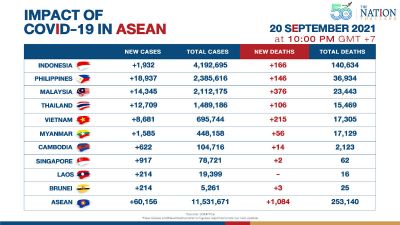
The number of Covid-19 cases crossed 11.53 million across Southeast Asia, with 60,156 new cases reported on Monday, lower than Sunday’s 63,862. The number of deaths was lower at 1,084 from Sunday’s 1,094. The death toll in Asean is now 253,104.
Vietnam will ease up disease control measures in Hanoi from Wednesday onwards after new infections in the city decreased to 20 people per day on average and more than 94 per cent of adult population have been vaccinated with the first jab. The city will continue to maintain social distancing measures while most of the construction sites have been allowed to open as usual.
Vietnam reported 8,681 new cases and 215 deaths on Monday, with a cumulative 695,744 patients and 17,305 deaths.
Meanwhile, the Philippines will reopen up to 120 schools for limited in-person classes for the first time since the start of the coronavirus pandemic in a pilot approved by President Rodrigo Duterte. Up to 100 public schools in areas considered “minimal risk” for virus transmission will be allowed to take part in the two-month trial, while 20 private schools can also participate. Classrooms will be open to children in kindergarten to Grade 3, and senior high school, but limited to not exceeding 20 students per class in a half-day session. It has yet to announce when the programme will start.
The FDA is likely to authorize Pfizer booster shots this week for many Americans at high risk of falling seriously ill from the coronavirus, now that a key advisory committee has voted to recommend the measure, media reported.
COVID-19 vaccine for younger children and booster shots for at least those over 65 years old are being prepared in accordance with a tight schedule in the United States, as the Americans stagger into the 19th month of their fierce fight against the COVID-19 pandemic.
The 7-day average of confirmed cases of the pandemic stood at 148,202 nationwide on Sunday, with its 14-day change striking an 8-percent fall, according to The New York Times (NYT). COVID-19-related deaths were 2,011 on Sunday, with the 14-day change realizing a 29-percent rise.
ADVERTISEMENT
California, once the country’s epicenter of COVID-19, is now the U.S. state reporting the lowest positivity rate per 100,000 people. As of Saturday evening, 24.99 new confirmed cases were reported for every 100,000 people in this Golden State, according to Johns Hopkins University.
Kindergarten children play toys in a classroom at Montrara Ave. Elementary School in Los Angeles, California, the United States, on Aug. 16, 2021. (Xinhua)
A lower dose of the Pfizer-BioNTech coronavirus vaccine, one-third the amount given to adults and teens, is safe and triggered a robust immune response in children as young as 5 years old, the drug companies announced in a news release Monday morning.
“The finding, eagerly anticipated by many parents and pediatricians, is a crucial step toward the two-shot coronavirus vaccine regimen becoming available for younger school-aged children, perhaps close to Halloween,” reported The Washington Post.
However, the companies must prepare and submit the data to the U.S. Food and Drug Administration (FDA), a process they expect to complete by the end of September. Then, the data, not yet published or peer reviewed, will be scrutinized by regulators to ascertain that the vaccine is safe and effective. That could take weeks, or up to a month.
According to the companies, the two-dose shot was found to be safe and well tolerated among the children in the study, with the vaccine generating levels of antibodies that were similar to those of younger adults, which met the study’s measurements of success.
Meanwhile, Pfizer and BioNTech said that they had not yet determined vaccine efficacy, or how well it protects against COVID-19 for children in the age group.
“We are eager to extend the protection afforded by the vaccine to this younger population, subject to regulatory authorization, especially as we track the spread of the Delta variant and the substantial threat it poses to children,” Pfizer Chief Executive Albert Bourla said in a statement.
Photo taken on Aug. 23, 2021 shows Pfizer signage at Pfizer
BOOSTER IN SIGHT
The FDA is likely to authorize Pfizer booster shots this week for many Americans at high risk of falling seriously ill from the coronavirus, now that a key advisory committee has voted to recommend the measure, reported NYT on Monday.
On Friday, a panel of experts endorsed offering Pfizer booster shots for those aged 65 and older, and people 16 and over who are at high risk of getting severe COVID-19 or who work in settings that make them more likely to get infected.
The agency, which often follows the committee’s advice but is not required to, is expected to decide early this week. An advisory committee of the Centers for Disease Control and Prevention (CDC) is scheduled to meet on Wednesday and Thursday to discuss booster shots before that agency, which sets vaccine policy, issues its recommendations.
Interviewed with news media on Sunday, Anthony Fauci, the nation’s top infectious disease doctor and an adviser to the White House, asked Americans to be patient and not to get a booster shot until they were eligible. That includes people aged 65 and over who received the Moderna and Johnson & Johnson vaccines.
Last month, the Biden administration proposed a plan that would have made all vaccinated Americans eligible for a booster shot eight months after their second shot, or their first in the case of the one-shot Johnson & Johnson vaccine.
In the meantime, the expert panel concluded that boosters were not necessary for most younger, healthier Americans, unless their jobs put them at special risk for infection.
RISING INSURANCE
In 2020, as the pandemic took hold, U.S. health insurance companies declared they would cover 100 percent of the costs for COVID-19 treatment, waiving co-pays and expensive deductibles for hospital stays that frequently range into hundreds of thousands of dollars.
But this year, most insurers have reinstated co-pays and deductibles for COVID-19 patients, in many cases even before vaccines became widely available. “The companies imposed the costs as industry profits remained strong or grew in 2020, with insurers paying out less to cover elective procedures that hospitals suspended during the crisis,” reported The Washington Post on Monday.
Now the financial burden of COVID-19 is falling unevenly on patients across the country, varying widely by health-care plan and geography, according to a survey of the country’s two largest health plans in every state by the nonprofit and nonpartisan Kaiser Family Foundation.
Last year, according to the Kaiser Family Foundation, 88 percent of people covered by private insurance had their co-pays and deductibles for COVID-19 treatment waived. By August 2021, only 28 percent of the two largest plans in each state and Washington, D.C. still had the waivers in place, and another 10 percent planned to phase them out by the end of October.
America’s Health Insurance Plans (AHIP), the industry’s lobbying and trade group, said insurance companies began to reinstate cost-sharing for COVID-19 treatment as vaccines became available and in recognition that the coronavirus will be an ongoing health challenge.
“After a year and a half, it’s pretty clear that COVID-19 is here to stay, that this is a continuing health condition,” AHIP spokesman David Allen was quoted as saying. “When it comes to treatment, we’re looking at it like we would treat any other health condition.”
People walk past a pharmacy in Washington D.C., the United States, on Nov. 12, 2020. (Xinhua/Liu Jie)
The 1918 flu killed an estimated 675,000 Americans. It was considered Americas most lethal pandemic in recent history up until now.
U.S. COVID-19 deaths on Monday surpassed 675,000, the estimated U.S. fatalities from the 1918 influenza pandemic.
As of 4:21 p.m. ET on Monday, 675,446 Americans were killed due to COVID-19, according to a tally by Johns Hopkins University. Total COVID-19 cases in the country were over 42 million.
ADVERTISEMENT
The fatalities are expected to continue to rise as the country is currently experiencing another wave of new infections, fueled by the fast-spreading Delta variant.
“The number of reported deaths from COVID in the US will surpass the toll of the 1918 flu pandemic this month. We cannot become hardened to the continuing, and largely preventable, tragedy,” tweeted Tom Frieden, the former head of the Centers for Disease Control and Prevention, on Sept. 13.
The 1918 flu killed an estimated 675,000 Americans, according to the Centers for the Disease Control and Prevention. It was considered America’s most lethal pandemic in recent history up until now.





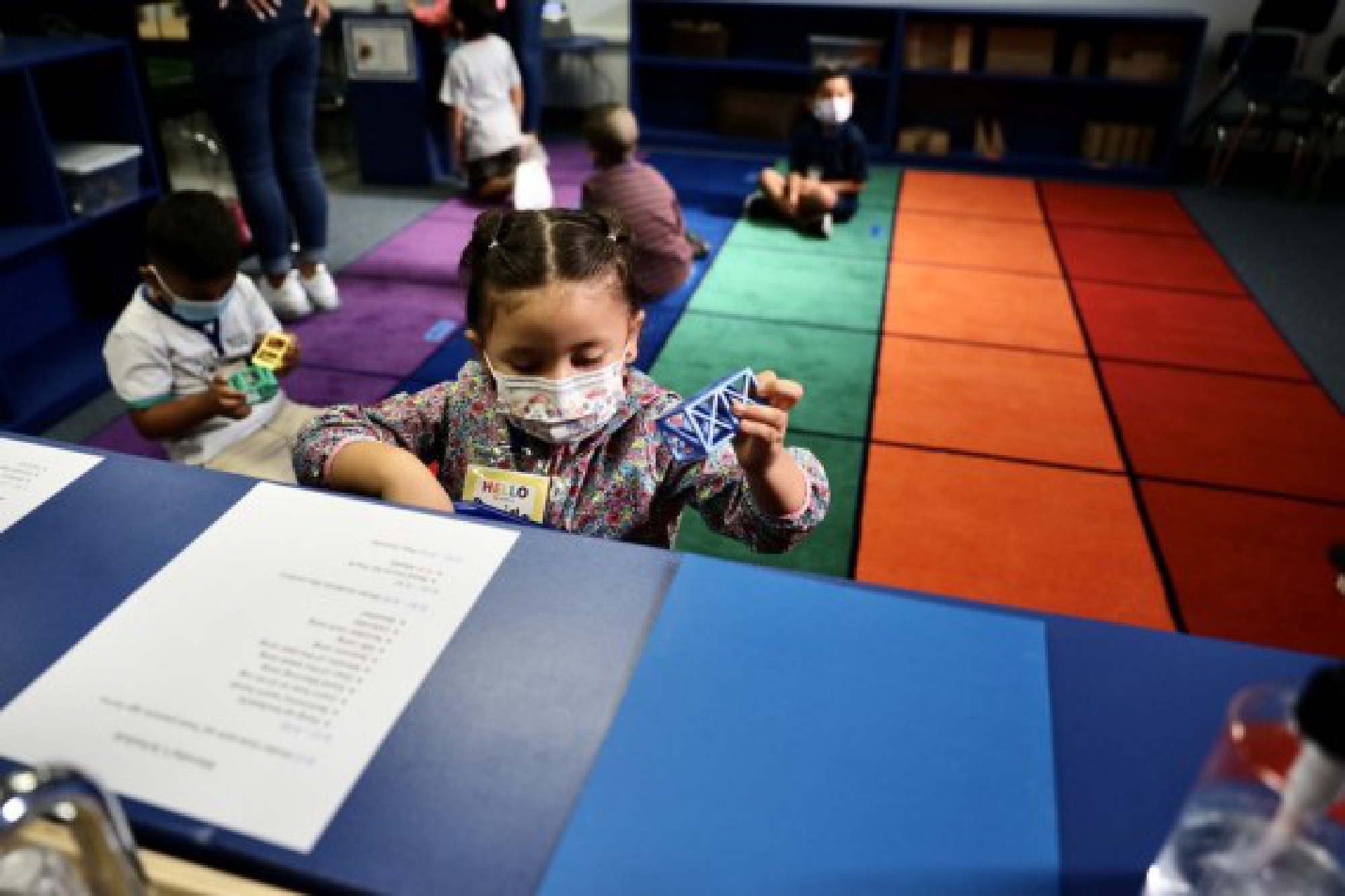 Kindergarten children play toys in a classroom at Montrara Ave. Elementary School in Los Angeles, California, the United States, on Aug. 16, 2021. (Xinhua)
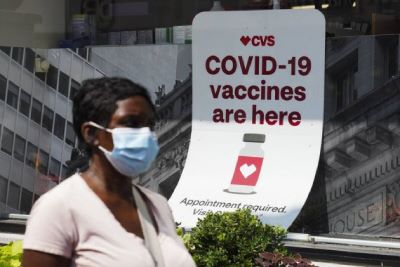
 People walk past a pharmacy in Washington D.C., the United States, on Nov. 12, 2020. (Xinhua/Liu Jie)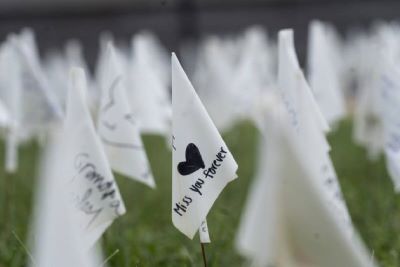
 SootinClaimon.Com