Police vow to end Din Daeng pro-democracy protests by Oct
The Bangkok Metropolitan Police Bureau announced on Saturday that daily demonstrations by a pro-democracy group at the Din Daeng intersection will end by October.
The demonstrations have been organised daily by local people of the Din Daeng area since late August. The protesters, called “Thalu Gas”, have had frequent violent clashes with crowd control police.
The police bureau blamed the protesters for a car accident during a clash on Friday night, and not officials as reported on social media.
Bangkok’s deputy police chief Piya Tawichai explained that a demonstrator had run past the car, which caused the accident. Police later used a water canon to put out the fire caused by the damage to the car.
Biden administration sets goal of replacing all jet fuel with sustainable alternatives by 2050
WASHINGTON – The Biden administration announced a goal Thursday of replacing all jet fuel with sustainable alternatives by 2050, setting forth a plan to dramatically boost production of fuels made from waste or plants to drive down the environmental cost of flying.
The use of what are called sustainable aviation fuels is in its infancy, with a handful of refineries in operation around the world. But airlines are banking on them as a major part of their efforts to cut emissions and become carbon neutral by the middle of the century.
In a fact sheet announcing the plan, the White House said speeding adoption of the new fuels and other steps to reduce emissions from flying “will transform the aviation sector, create good-paying jobs, support American agriculture and manufacturing, and help us tackle the climate crisis.” Aviation accounts for about 3% of U.S. greenhouse gas emissions.
The federal government’s new goal targets annual production of 3 billion gallons of the fuels by 2030 – a level the White House says would enable a 20% cut in carbon emissions from flying compared with doing nothing. Production on that scale would represent just over a tenth of the fuel airlines consumed in 2019 but would be a huge leap from the estimated 4.5 million gallons that is estimated to have been produced in the United States last year.
Currently, the alternative fuels have to be combined with conventional jet fuel, and eliminating fuel made from crude oil would require technological breakthroughs to allow engines to run entirely on the alternatives.
As part of the administration’s push, the Departments of Transportation, Energy and Agriculture have agreed coordinate their efforts to develop the fuels, carrying out research, developing fueling infrastructure and encouraging the production of raw materials.
In March, members of Airlines for America, a trade group for major carriers, set a 2030 target of producing 2 billion gallons of alternative fuels. On Thursday, Nicholas Calio, the group’s chief executive, said airlines had agreed to the administration’s more ambitious goal.
“To get there, we must work together – industry and government,” Calio said. “These goals are important, but they are meaningless without action. A4A and our members are taking and are committed to action, and we are committed to working together, across this industry and with Congress and the administration, to make these goals a reality.”
The Biden administration is pushing to dramatically cut emissions from the transportation sector, which is the biggest source of greenhouse gases in the United States. In August, the president signed an executive order calling for half of new cars and light trucks to be battery powered or plug-in hybrids by 2030, and has proposed fuel economy rules to start driving down emissions in the meantime.
But the prospects of improving fuel efficiency of jets or switching to electric-powered flights are limited, so the aviation industry is banking on alternative fuels to meet its emissions goals.
Sustainable aviation fuel refers to a number of different kinds of jet fuel made from ingredients other than crude oil. A refinery owned by World Energy in Paramount, Calif., for example, uses waste fat, oil and grease. While the alternative fuels can’t currently replace conventional jet fuel entirely, they can be mixed with it and used with existing engines and refueling systems.
Burning the fuels still produces carbon dioxide. The emissions savings come from either growing sources of carbon – which pulls carbon dioxide out of the atmosphere – or using waste as an ingredient. Determining the benefits requires a complicated analysis known as a life cycle assessment.
Using the fuel from the Paramount refinery cuts carbon emissions by 80% – a figure airlines have widely adopted in marketing materials – but Nikita Pavlenko, a fuels researcher at the International Council on Clean Transportation, cautioned that “the picture is much more complicated.”
A review by Pavlenko’s organization found that sustainable jet fuels produced by some methods could result in substantially smaller emissions savings, and in some cases lead to even higher emissions. It would probably fall to the Environmental Protection Agency or other government regulators to assure that fuels used by American carriers were actually cutting emissions.
At the same time, some research has concluded there are methods of making the fuels that could drive emissions below zero. United Airlines said Thursday it is planning to work on such an approach with Honeywell and biofuel firm Alder Fuels using forestry and crop waste.
“To scale SAF [sustainable aviation fuel] as quickly as necessary, we need to look beyond existing solutions and invest in research and development for new pathways like the one Alder is developing,” said Scott Kirby, the airline’s chief executive.
But there are also questions about how much waste or other ingredients are available to be turned into fuel.
“There’s not nearly enough used cooking oil to go around,” Pavlenko said.
In the short term, the cost of the alternative fuels is likely to hold back their adoption. Before the pandemic scrambled the industry, airlines paid about $2 per gallon for jet fuel. Airlines for America says the alternative fuels can cost at least three times as much.
Government subsidies could help bridge the gap. In May, a coalition of airline trade organizations and unions wrote to congressional leaders proposing a $1.50 per gallon tax credit for fuels that reduce emissions by half, rising to $2 for those that drive down emissions even further – an idea President Joe Biden endorsed in his budget.
The industry has also called for grants and loan programs to support investments in production facilities.
The Stock Exchange of Thailand (SET) Index closed at 1,629.12 on Thursday, down 11.33 points or 0.69 per cent. Transactions totalled THB91.09 billion with an index high of 1,646.07 and a low of 1,626.95.
In the morning session, Krungsri Securities expected Thursday’s index to fluctuate between 1,630 and 1,650 points due to a lack of fresh positive sentiment.
It also forecast slow trading as investors waited to see whether the European Central Bank would reduce its €80-billion monthly quantitative easing programme at its meeting on Thursday.
With higher inflationary pressure affecting fund flows, investors were advised to focus on high-profile stocks, said Krungsri Securities.
The 10 stocks with the highest trade value today were ADVANC, KBANK, INTUCH, CPALL, GULF, U, PTT, AOT, BANPU and LHFG.
Japan’s Nikkei Index closed at 30,008.19, down 173.02 points or 0.57 per cent.
China’s Shanghai SE Composite Index closed at 3,693.13, up 17.94 points or 0.49 per cent, while the Shenzhen SE Component Index closed at 14,698.53, up 10.45 points or 0.07 per cent.
Hong Kong’s Hang Seng Index closed at 25,716.00, down 604.93 points or 2.30 per cent.
South Korea’s KOSPI closed at 3,114.70, down 48.29 points or 1.53 per cent.
Taiwan’s TAIEX closed at 17,304.33, up 33.84 points or 0.20 per cent.
The price of gold dropped heavily, by THB200, in morning trade on Thursday.
AGold Traders Association report at 9.25am said the buying price of a gold bar was THB27,650 per baht weight and selling price THB27,750, while gold ornaments cost THB27,151 and THB28,250, respectively.
At close on Wednesday, the buying price of a gold bar was THB27,850 per baht weight and selling price THB27,950, while gold ornaments cost THB27,348 and THB28,450, respectively.
The spot gold price on Thursday morning was moving around US$1,790 (THB58,573) per ounce after Comex gold fell by $5 to $1,793.50 per ounce at close on Wednesday. This spelt the second consecutive day of decline, due to pressure over the appreciation of the dollar after the US announced that the number of job openings in July increased.
The Hong Kong gold price also dropped by a large margin – HK$70 – to $16,610 (THB69,910) per tael, the Chinese Gold and Silver Exchange Society reported.
The Stock Exchange of Thailand (SET) Index fell by 0.12 points or 0.01 per cent to 1,640.33 on Thursday morning. Krungsri Securities expected the index to swing around 1,630-1,650 points on Thursday due to a lack of fresh factors.
Investors were expected to go slow on trading to follow Thursday’s European Central Bank meeting to see whether the bank would reduce its quantitative easing, which works out to €80 billion per month.
“After higher inflationary pressures, which will affect fund flows, it is advised that focus should be placed on investing in stocks which are in the news,” Krungsri Securities said.
It recommended selective buying of the following companies’ shares as an investment strategy:
AOT, KBank, BBL, CPN, CRC, HMPro, AAV, BA, Mint, Amata and WHA, which would benefit from the country’s reopening.
Hana, KCE, TU, CPF, GFPT, Asian, EPG, NER, Sun and APure, which would benefit from the depreciation of the baht.
The SET Index closed at 1,640.45 on Wednesday, up 4 points or 0.24 per cent. Transactions totalled THB89.92 billion with an index high of 1,641.29 and a low of 1,627.17 as the SET bounced back after sliding almost 1 per cent in the first two days of the week.
Baht could wane today as investors offload Thai assets
The baht opened at 32.74 to the US dollar on Thursday, strengthening from Wednesday’s closing rate of 32.78.
The Thai currency is likely to move between 32.65 and 32.80 during the day, Krungthai Bank market strategist Poon Panichpibool predicted.
Poon said investors were awaiting results of a key European Central Bank meeting today as the baht drifts sideways.
The baht might be volatile and weaken during the day as many foreigners opt to offload their Thai assets, he said.
The key resistance level for the baht would be from 32.90 to 33.00 to the dollar, which is the level at which exporters might sell the US currency, Poon said.
Gatess firm buys part of Saudi princes Four Seasons Stake
Bill Gates will take control of the Four Seasons hotel chain after his investment firm agreed to acquire a stake from Saudi Prince Alwaleed bin Talals Kingdom Holding Co., in a bet that luxury travel will rebound from a pandemic-induced slump.
Gates’s Cascade Investment will pay $2.2 billion in cash to boost its stake in Four Seasons Holdings to 71.25% from 47.5%, according to a statement Wednesday.
The lodging industry has been hobbled by a drastic slowdown in global travel as the world struggles to halt the spread of Covid-19. Vaccination campaigns helped fuel a lodging rebound led by leisure travelers, but luxury hotels are still lagging behind lower-quality properties, according to data from STR.
Gates, 65, and Alwaleed, 66, have known each other for decades. In 2017, the Microsoft Corp. co-founder described the prince as an “important partner” in their charitable work, and he was one of a few Western executives to voice support for Alwaleed after he was detained and accused of corruption by Crown Prince Mohammed Bin Salman.
Four Seasons shareholders took the company private in 2007, when it managed 74 hotels, with Gates and Alwaleed leading the deal. The new owners expanded the company’s footprint to more markets in a bid to capitalize on what was then a booming market for luxury travel.
The chain now manages 121 hotels and resorts, and 46 residential properties, and has more than 50 projects under development, according to the statement. Its landmark Kingdom Tower in Riyadh is among the two dozen hotels it owns across the Middle East and Africa. That property is popular among the consultants and bankers who commute from nearby Dubai and have helped transform Saudi Arabia’s economy.
It has also expanded efforts to attach its brand to luxury homes, as real estate developers realized that affluent buyers would pay more to live in a condominium or residential community associated with the hotel brand.
Kingdom Holding, which will retain 23.75% of the hotel chain, plans to use proceeds from the transaction for investments and to repay debt. Four Seasons Chairman Isadore Sharp, who founded the company in 1960, will keep his 5% stake. The deal is expected to be completed in January.
Alwaleed has made a series of deals since he reached a “confirmed understanding” to secure his release from detention in 2018. Shortly after, he invested about $270 million in music streaming service Deezer. In February, he sold a stake in his Rotana Music label to Warner Music Group Corp.
Cascade, which is run by Gates’s money manager, Michael Larson, first invested in Four Seasons in 1997, when it was publicly traded. The investment firm also manages the endowment of the Bill and Melinda Gates Foundation.
Gates and Melinda French Gates ended their 27-year marriage last month. He has a net worth of $152.2 billion, according to the Bloomberg Billionaires Index, and she has received almost $6 billion of shares in public companies, filings show. More precise details of how the ex-couple’s fortune is being split remain confidential.
Alwaleed’s wealth has been almost cut in half since 2014 and now stands at $18.4 billion. In an earlier interview, he attributed the decline to a slump in Kingdom Holding’s shares and not because of any agreement or settlement he made during his detention. About half of the prince’s wealth is tied to shares in the holding company, in which he owns a 95% stake.
Alwaleed’s holdings include shares of Citigroup, ride-hailing firm Lyft and Accor.
His investment company reported a loss last year of 1.47 billion riyals ($392 million). The value of his other holdings — including Saudi real estate, public and private equities, jewelry and a superyacht — helped mitigate some of the losses, according to figures previously provided by the firm.
Shares of Kingdom Holding rose 1.1% on Wednesday, giving it a market value of almost 40 billion riyals.
U.S. job openings rose to a record 10.9 million in July
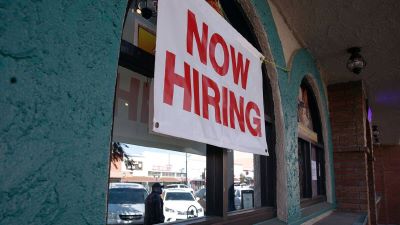
U.S. job openings rose to a fresh record high in July, illustrating the lingering staffing shortages that are making it challenging for businesses to meet demand.
The number of available positions rose to 10.9 million during the month from an upwardly revised 10.2 million in June, the Labor Department’s Job Openings and Labor Turnover Survey, or JOLTS, showed Wednesday. Economists in a Bloomberg survey had called for openings to remain little changed at 10 million.
After shedding millions of workers from payrolls last year, the rapid snapback in economic activity has left many businesses severely short-staffed. “Help Wanted” signs can be seen in the windows of businesses across the U.S., and many restaurants have limited their hours of operation.
Employers have offered incentives to attract applicants — like higher wages and one-time bonuses — but the pool of available workers remains constrained by pandemic-related factors.
Looking ahead, hiring constraints should ebb as virus fears abate and schools reopen for in-person learning. However, the surge of infections related to the delta variant and its impact on schools and Americans’ general sense of safety in the workplace could delay significant improvement in filling positions.
The number of vacancies exceeded hires by 4.3 million in July, the most since data dating back to 2000. The number of people who voluntarily left their jobs rose to 4 million in the month, and the quits rate was unchanged at a near record 2.7%.
The largest increases in openings were in health care and social assistance; finance and insurance; and accommodation and food services.
Total hires eased to 6.7 million in July, most notably in sectors like retail and manufacturing. The hires rate decreased to 4.5%. Layoffs and discharges picked up slightly.
The JOLTS figures trail the government’s monthly jobs data. That report, out last week, showed payrolls rose by just 235,000 in August — trailing all economists’ estimates — as the spread of the delta variant paired with ongoing hiring challenges weighed on job growth.
Separate figures last week showed half of small-business owners said they had vacant positions they could not fill in August, a record in the National Federation of Independent Business survey. Meantime, the share of consumers who said jobs were “plentiful” in the Conference Board’s survey last month hovered near a two-decade high.
Markets wrap: U.S. stocks extend drop on growth, valuation risks
U.S. equities retreated as investors reassessed valuations in light of global economic risks including the spread of the Covid-19 delta variant and reductions in central bank stimulus.
The Nasdaq 100 notched its biggest drop in two weeks, with losses in megacaps including Apple Inc. and Facebook Inc. among the biggest contributors to the decline. The S&P 500 fell for a third day since it closed at a record on Sept. 2. The Dow Jones industrial average extended its retreat from last month’s all-time high to more than 1.5%. Europe’s Stoxx 600 dropped to a three-week low. Cryptocurrency-exposed stocks slumped as a selloff in Bitcoin continued.
Wednesday’s declines came as money managers from Morgan Stanley to Citigroup have turned cautious on U.S. equities. Many investors have begun to see relative U.S. valuations as excessive even as growth elsewhere suffers from renewed Covid lockdowns and travel curbs. They doubt the world is ready for an eventual tapering of central-bank stimulus even as inflation accelerates due to supply shocks. End-of-year seasonality and valuation concerns are adding to the gloomy mood.
“Momentum definitely seems to be slowing as far as the recovery is concerned,” Fiona Cincotta, a senior financial markets analyst at City Index, said by phone. “Before we’d been hearing that the Fed would tighten monetary policy and that’s what was unnerving the market. Now, it’s actually slightly softer data and also rising Covid cases.”
Morgan Stanley this week cut U.S. stocks to underweight and global equities to equal-weight, citing “outsized risks” to growth through October. Extremely bullish positioning means corrections can be amplified, Citigroup said. Credit Suisse Group AG said it has a small underweight on the U.S. market.
In Europe, growth concerns were compounded by speculation that the European Central Bank is getting ready to slow down emergency stimulus. EQT AB slumped in Stockholm after partners in the private equity firm sold a part of their holdings earlier than expected.
Meanwhile, the continued spread of Covid-19 is curbing economic activity around the world. The Philippines backtracked on easing curbs in the capital region, while Japan may extend state of emergency orders. Taiwan identified a delta variant outbreak in New Taipei City.
Equities climbed for an eighth day in Japan, supported by hopes for economic stimulus from the next prime minister. Pakistan’s stocks benchmark slid to the lowest since May after MSCI downgraded the country to a frontier market from an emerging market.
Bitcoin posted second-day losses in the wake of El Salvador’s rocky implementation of a law that makes the cryptocurrency legal tender. Coinbase Global Inc. slumped after the Securities and Exchange Commission warned the company against launching a product that would allow consumers to earn interest on their crypto holdings. Other crypto-linked stocks also fell, including declines of more than 5% in Marathon Digital Holdings Inc. and Riot Blockchain Inc.
What to watch this week:
– U.S. President Joe Biden may make his choice this week on whether to renominate Fed Chair Jerome Powell to a second term
– ECB President Christine Lagarde holds a press conference after the bank’s rate decision Thursday
– China PPI, CPI, new yuan loans, money supply, aggregate financing, Thursday
Some of the main moves in markets:
– – –
– The S&P 500 fell 0.1%
– The Nasdaq 100 fell 0.4%
– The Dow Jones Industrial Average fell 0.2%
– The MSCI World index fell 0.4%
– – –
– The Bloomberg Dollar Spot Index rose 0.1%
– The euro fell 0.2% to $1.1819
– The British pound was little changed at $1.3774
– The Japanese yen was little changed at 110.27 per dollar
– – –
– The yield on 10-year Treasuries declined four basis points to 1.34%
– Germany’s 10-year yield was little changed at -0.32%
– Britain’s 10-year yield was little changed at 0.74%
– – –
– West Texas Intermediate crude rose 1.4% to $69.34 a barrel
The Stock Exchange of Thailand (SET) Index closed at 1,640.45 on Wednesday, up 4.00 points or 0.24 per cent. Transactions totalled THB89.92 billion with an index high of 1,641.29 and a low of 1,627.17 as the SET bounced back after sliding almost 1 per cent in the first two days this week.
In Wednesday’s morning session, Krungsri Securities expected the day’s index to fall to between 1,625 and 1,630 points due to foreign fund outflows, uncertainty over a surge in Covid-19 Delta infections in the US, and the falling oil price.
However, it said the index would rebound on news that the Thai government may suspend the emergency decree on Friday, as well as mass buy-ups of shares that gained positive sentiment.
The 10 stocks with the highest trade value today were ADVANC, GULF, KBANK, DELTA, TU, U, KCE, SCGP, INTUCH and PTT.
Japan’s Nikkei Index closed at 30,181.21, up 265.07 points or 0.89 per cent.
China’s Shanghai SE Composite Index closed at 3,675.19, down 1.40 points or 0.038 per cent, while the Shenzhen SE Component Index closed at 14,688.08, down 14.82 points or 0.10 per cent.
Hong Kong’s Hang Seng Index closed at 26,320.93, down 32.70 points or 0.12 per cent.
South Korea’s KOSPI closed at 3,162.99, down 24.43 points or 0.77 per cent.
Taiwan’s TAIEX closed at 17,270.49, down 158.38 points or 0.91 per cent.





 SootinClaimon.Com