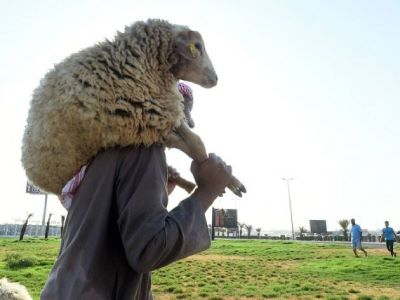
Thanks to the rollout of COVID-19 vaccination and the decreasing number of infections in Kuwait, people now enjoy the festive atmosphere during the Eid al-Adha, or Festival of the Sacrifice. After the Eid al-Adha prayer at a mosque on Tuesday, Ahmad Al-Salem, a 43-year-old Kuwaiti from Ahmadi Governorate, sacrificed a sheep.
On the first day of Eid al-Adha, or Festival of the Sacrifice, a large number of Kuwaitis flocked to the mosques across the country in the early hours of the morning, signifying that this year’s celebration is greater than last year, Al-Salem told Xinhua.
“We feel more relieved and comfortable than before thanks to the rollout of (COVID-19) vaccination and the decreasing number of infections in our country,” he said.
“We are now accustomed to following health requirements and wearing masks all the time outside,” the man added.
ADVERTISEMENTx
The first day of Eid al-Adha in Kuwait this year seems more lively and active. Theaters in the country reopened to receive the audience after the long shutdown following the spread of the COVID-19 pandemic.
The Opera Theater in Salmiya will present The Rest while Abdulhussain Abdulridha Theater in Hawalli Governorate will host The Phantom of the Opera. Both plays are presented under the strict health requirements, and only vaccinated people are allowed to enter.
Heba Al-Majed, a 32-year-old Kuwaiti, told Xinhua that going to the theater or cinema is the only entertainment for children during the Eid holiday.
“I am grateful that theaters are back to show new plays, and we can enjoy them with our children,” she said.
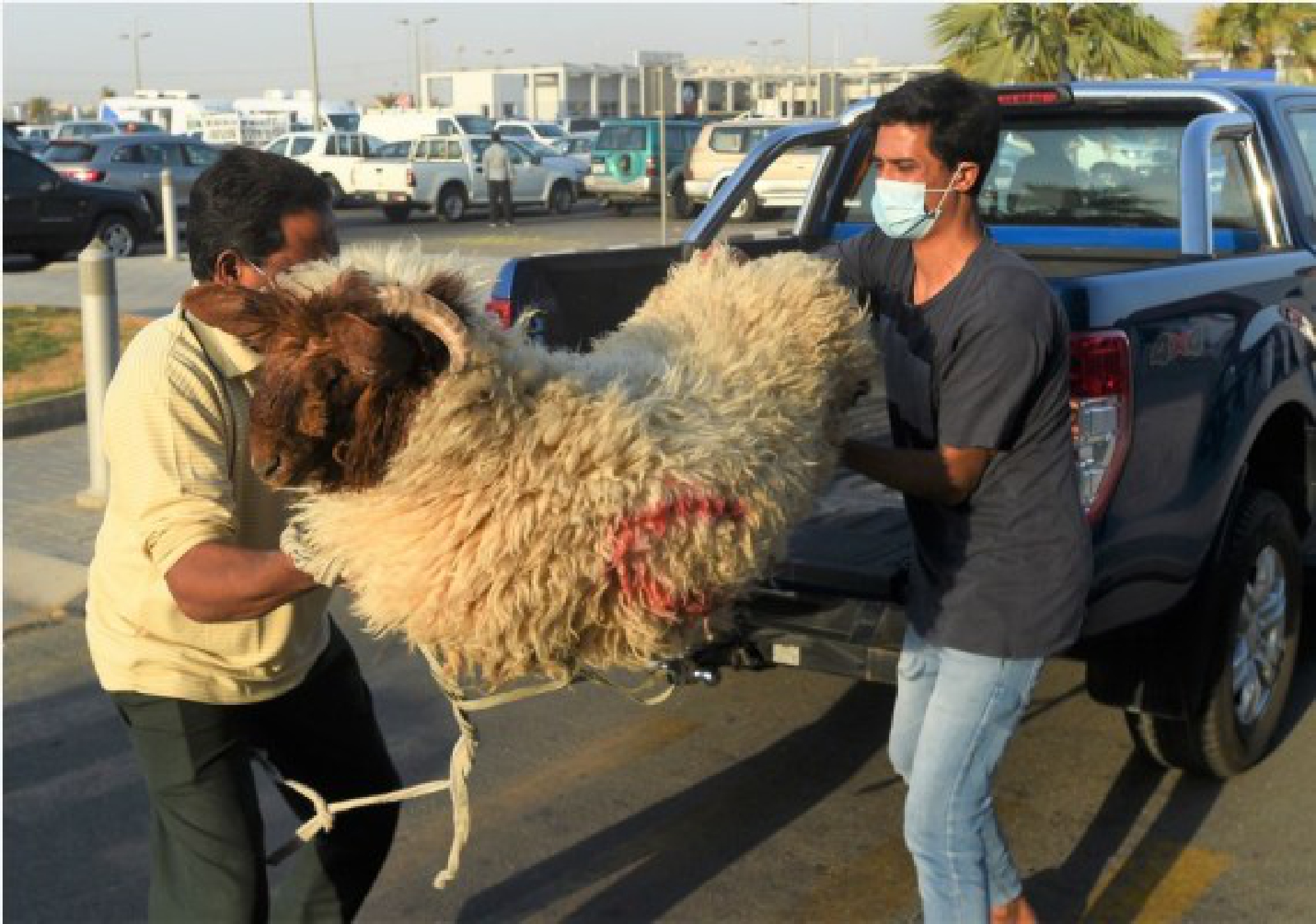
People carry a sheep during Eid al-Adha holiday in Capital Governorate, Kuwait,
People perform prayers during Eid al-Adha holiday in Hawalli Governorate, Kuwait
The livestock market in Shuwaikh area witnessed a great increase in demand for sacrifices.
Yasser Al-Hamad, a 39-year-old citizen, told Xinhua that the prices of sheep this year are reasonable.
“I bought an eight-month-old sheep for 100 Kuwaiti dinars (332 U.S. dollars), and it is an acceptable price,” he said.
Islam, a Bangladeshi sheep seller in the market, said the business is going well despite the pandemic, especially on the eve of the Eid al-Adha.
The prices of sacrifices increased slightly compared to last year as the COVID-19 has pushed up the cost of imported goods, according to Islam.
At Kuwait International Airport, activity and vitality have been restored after a long stagnation, as a number of Kuwaitis prefer to travel during the nine-day Eid al-Adha holiday.
Omar Ahmed, an Egyptian pharmacist who resides in Kuwait, told Xinhua that he decided to come back to his country to spend the holiday with his parents.
“I have not visited my country for over two years, and Eid al-Adha is a good opportunity for my children to spend a beautiful holiday with my big family,” he said.
People perform prayers during Eid al-Adha holiday in Hawalli Governorate, Kuwait
The number of Covid-19 cases in Southeast Asia crossed 6.27 million, with 78,379 new cases reported on Tuesday, higher than Monday’s tally of 73,124. There were 1,818 more deaths, decreasing from Monday’s 2,003 and taking total coronavirus deaths in Asean to 120,881.
Indonesia reported 38,325 new cases and 1,280 deaths on Tuesday, bringing cumulative cases in that country to 2,950,058 and a total 76,200 deaths so far. The president announced the extension of disease control measures until July 25, but expected to relax some of the measures after July 26.
Singapore meanwhile reported 195 new cases on Tuesday, bringing cumulative cases in the city-state to 63,440. Of these, 62,532 patients have been cured and discharged.
The government increased disease control measures to level two, which include prohibiting public gathering of more than two people and dining in at restaurants starting on Wednesday.
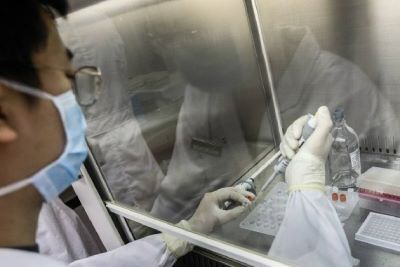
A secretive body is making questionable Covid decisions in india
For a century, the Indian Council of Medical Research was a little known government body quietly studying illnesses in New Delhi. But during the pandemic, it has taken on a role akin to Anthony Faucis National Institute of Allergy and Infectious Diseases in the U.S. — a powerful position thats made it a controversial face of Indias struggles with Covid-19.
As the ICMR has acted as a key medical adviser to Prime Minister Narendra Modi and his health ministry, it has increasingly drawn criticism from the nation’s doctors and independent scientists, who have questioned its drug recommendations and the group’s lack of transparency on data related to variants identified in India that are now spreading globally.
India struggled to curb the world’s fastest coronavirus surge this summer, and public health experts are warning that the country is ill prepared to face a possible third wave of infections. Some of the ICMR’s decisions during the pandemic reflect the broad chaos that’s dogged India’s overwhelmed government apparatus, and have ended up benefiting the pharmaceutical industry rather than patients, critics say.
In April last year, physician SP Kalantri — who helps runs a 1,000 bed hospital in the village of Sevagram — wrote to the international scientific journal, The Lancet, strongly criticizing the ICMR for signing off on the health ministry’s decision to recommend the malaria drug hydroxychloroquine as a Covid therapy. The medicine remained on India’s virus guidelines for almost a year after the drug, once embraced by Donald Trump, was discarded as a treatment for Covid in the U.S.
Kalantri’s hospital in Sevagram, a village once home to Mahatma Gandhi, refused to prescribe that and other unproven treatments. Desperate patients, however, simply sought them out elsewhere, he said.
“Countrywide, the doctors started writing these prescriptions, which artificially inflated the cost for Covid management,” said Kalantri, director professor of medicine at Sevagram’s Mahatma Gandhi Institute of Medical Sciences. “Big Pharma was laughing all the way to the bank and ultimately the one who suffered was the poor patient — it’s where the science failed in India.”
Numerous therapies initially looked promising and the ICMR’s guidelines are constantly evolving as trial evidence emerges, said Aparna Mukherjee, a New Delhi-based senior scientist at the ICMR. “It’s very easy to criticize when something is put forward,” she said in an interview. “When you know there is some possibility that this drug might work, then just because it is in shortage you cannot say don’t use it.” Like other Indian government health agencies, the ICMR has been “stretched thin” during the pandemic, Mukherjee said. Spokespeople for the ICMR and the Ministry of Health and Family Welfare didn’t respond to requests for comment.
Yet criticisms of the ICMR don’t stop there. Over the past year, the government and the ICMR have also been accused of withholding data about Covid and its variants that left physicians in the country flying blind, and of promoting a homegrown vaccine before it had passed key clinical trials. Public health experts say that it isn’t clear how the ICMR decides which Covid drugs to back, and have complained that the agency hasn’t fully disclosed how much funding it provided for the local shot.
Such moves have made the ICMR emblematic of India’s struggles with Covid, exemplifying problems in the country’s social and political fabric that existed for decades and lingered under Modi — from a lack of transparency to the underfunded health-care system.
India’s government needed “better evidence making and policy advice from the ICMR,” said Shahid Jameel, a virologist who resigned in May as chair of the advisory panel of a state Covid genome-sequencing panel after criticizing India’s response to the pandemic. The ICMR has also drawn criticism on social media from scientists and health care advocates for its decision making and recommendations, at times attracting attention overseas.
“The Indian Council of Medical Research has been singled out by experts for straying from scientific evidence, appearing at worst politically motivated and at best overly optimistic,” an editorial in the Lancet said in September 2020, discussing the dangers of the “false optimism” that India’s government was projecting even as virus cases continued to rise.
The pandemic has killed more than 400,000 people in India, numbers that experts say are vastly undercounted. As infections surged this summer, hospitals ran short of life-saving oxygen and some patients died in the streets. This month, India’s federal health minister, Harsh Vardhan, resigned amid a broad cabinet reshuffle by Modi, whose popularity has taken a hit over the government’s handling of the pandemic. But the ICMR hasn’t changed.
Headquartered in New Delhi, opposite India’s parliament, the ICMR was set up in 1911 by British colonial rulers and was traditionally focused on research. Covid-19 thrust the organization into the uncharted waters of actually managing an outsized viral outbreak.
In past epidemics, India’s National Centre for Disease Control — which has several infectious disease experts on its board — has played a bigger role. Yet the ICMR has become the more public face of India’s response to Covid-19, a development some scientists questioned. Sujeet Kumar Singh, the director general of the NCDC, didn’t respond to an interview request.
ADVERTISEMENTx
A secretive body is making questionable Covid decisions in india
ICMR’s Mukherjee acknowledged that the ICMR’s remit had widened during the pandemic and said that was due to the “need of the hour.” It’s taken on added responsibilities such as testing and procurement of diagnostic equipment, she said.
Funded through the health ministry, the organization has a budget of 23.5 billion rupees ($316 million) this year and backs hundreds of scientist fellowships. ICMR-linked researchers published more the 800 papers in Indian and international journals, according to its last annual report.
Since 2018, it’s been headed by Balram Bhargava, a cardiolologist. The ICMR has several experts focused on diseases like malaria that have traditionally been India’s biggest public health concerns, but few virologists work for the agency. Bhargava didn’t respond to multiple requests for an interview.
With its states easing lockdowns despite only about 6% of the population being fully vaccinated, India is at risk of new waves of infection. But experts question whether India’s health network will be better prepared when the next resurgence comes.
ADVERTISEMENT
“There is a distinct uneasiness in the scientific community on the government’s handling of the pandemic” and the “opaqueness of the process of consultations, consensus building, data sharing, and decision making,” said Lalit Kant, who headed the ICMR’s epidemiology and communicable diseases division for 13 years until 2011. “If we want the third wave to be managed appropriately then we need evidence-based insights.”
In April, almost 300 Indian scientists and medical researchers appealed to Modi to allow them access to data that could help study, predict, and curb the spread of the coronavirus. While the ICMR has data on all Indians who’ve been tested for Covid so far, it restricts access, they say.
“The ICMR database is inaccessible to anyone outside of the government and perhaps also to many within the government,” the scientists wrote. “While new pandemics can have unpredictable features, our inability to adequately manage the spread of infections has, to a large extent, resulted from epidemiological data not being systematically collected and released in a timely manner to the scientific community.”
The ICMR conducted some of the most comprehensive serological surveys last year, including studying the presence of antibodies in various groups. It has also recently published research on mortality rates during the country’s recent devastating second wave. Scientists outside of the government system have said they haven’t had access to this data.
This gatekeeping of crucial information on the genomic makeup of local virus strains, testing and immune response to vaccines has left India flying blind as it contends with the new and highly infectious delta variant, which was first identified in the South Asian country and is now spreading worldwide, say some researchers.
ADVERTISEMENT
“Granular data on antibody surveys, clinical severity of disease, demographics, etc., has not been made available in the public domain,” said Jameel, the Indian virologist. “Open data would have allowed better modeling, better preparation and perhaps saved lives.”
Mukherjee at the ICMR said there aren’t constraints on data and anyone with a proper proposal can access it, though she didn’t elaborate on what criteria they needed to meet.
The ICMR’s work with local company, Bharat Biotech International, on a homegrown Covid vaccine, has also drawn criticism from the scientific community. Earlier this year, the shot, called Covaxin, was approved by India’s government for emergency use before final trials were completed, a move doctors and public health experts said was premature and fueled widespread hesitancy.
While approvals in India are handled by the drug regulator, the ICMR helped finance the vaccine’s development, although it has not publicly said how much funding it provided. The company, India’s government and the ICMR have been further criticized for not making the details of the intellectual property rights to Covaxin public. Bharat Biotech in a statement last month said it will pay unspecified royalties to the ICMR and India’s National Institute of Virology.
Bharat Biotech and the ICMR have published studies showing potentially encouraging results on the vaccine’s effectiveness against new variants. However, because the papers have been authored by officials from the company and agency, scientists have pointed to conflict of interest issues.
Mukherjee from the ICMR declined to comment on the funding and intellectual property rights around Covaxin, but said final trial efficacy data should be published soon in a peer-reviewed journal, which was reiterated by a spokesperson for Bharat Biotech.
Back on the frontlines of the pandemic in Sevagram, Kalantri is mainly concerned about the poor in rural areas, some of whom went into debt buying medicines. Prices of some drugs — such as Remdesivir, which was added to India’s guidelines in March 2020 — soared more than tenfold on the black market.
Remdesivir is approved and used as a Covid treatment in the U.S. and elsewhere, but the World Health Organization has said there isn’t enough evidence to back it as therapy because the drug hasn’t been shown to improve survival in patients.
Its widespread use in India was particularly devastating because many had to pay for it out of pocket in a country where few have medical insurance and average incomes are less than $160 a month. Experts and bodies including the All India Drug Action Network, an umbrella group of non profits advocating drug access in India, have been critical of India’s continued advocacy of Remdesivir.
Gilead Sciences Inc., which makes Remdesivir, didn’t respond to a request for comment. ICMR’s Mukherjee said there was little the agency could do about price increases that arose in the black market.
Convalescent plasma therapy, too, remained on the list for months despite the ICMR’s own studies in November finding little benefit. Until late June, the health ministry’s guidelines also recommended Ivermectin, an anti-parasitic treatment that was untested against Covid, even though the WHO discouraged its use as far back as March 2021.
“I’m very sad and disappointed,” Kalantri said about the ICMR.
Meanwhile, even with the coronavirus at its peak in India this summer, an index of local pharmaceutical stocks advanced 21% this year and Alliance Bernstein estimates that drugmakers’ sales volumes surged 36% in May from a year earlier due to Covid-related demand.
The pandemic has shown up India’s failure to strengthen medical bodies that are “weak and functioning sub-optimally,” said Chandrakant Lahariya, a New Delhi-based epidemiologist and public health expert who has co-authored a book on the nation’s battle against Covid.
“It is not merely about the Covid-19 pandemic response, but also about preparing Indian institutions for the future,” Lahariya said. “That opportunity seems to have been lost.”
Published : July 21, 2021
By : Syndication Washington Post, Bloomberg · Chris Kay, Muneeza Naqvi
U.K. reopening in chaos as ministers undermine isolation orders
U.K. leader Boris Johnsons pandemic strategy descended into disarray after his own ministers said the public could ignore orders to isolate at home.
Two business ministers – Paul Scully and Gerry Grimstone – made the point that there is no legal requirement for people to self-isolate if they are “pinged” by the National Health Service’s contact tracing smart-phone app and told to quarantine.
The technology uses Bluetooth to identify people who have are at risk because they’ve come into close contact with someone who tested positive for covid-19. But the app has been at the center of a storm this week, after businesses and employers complained staff shortages were pushing them to the brink, with an estimated 1.73 million people across the country isolating.
The so-called “pingdemic” threatens to undermine efforts to revive the economy, which is still recovering from its deepest recession in 300 years. Most pandemic restrictions were lifted in England and Scotland on Monday.
Johnson is determined to reopen the economy, despite surging infection rates, and has said it is vital to follow the app’s “frustrating” orders to isolate in order to keep some control over the pandemic.
Speaking to Times Radio on Tuesday morning, Scully, the small business minister, said people should make “informed decisions” if they’re told to isolate by the app. They are legally required to stay home only if they have been contacted directly by NHS Test and Trace staff or if they’re claiming isolation support payments, he said.
“By backing out of mandating a lot of things, we’re encouraging people to really get the data in their own hands, to be able to make decisions – what’s best for them, whether they’re an employer or an employee,” Scully said.
ADVERTISEMENTx
Grimstone, the investment minister, separately wrote a letter to a company stating that there is no legal duty to self-isolate as a result of being pinged by the app, according to a person familiar with the matter.
Later the government sought to correct the message. “Isolation remains the most important action people can take to stop the spread of the virus,” spokesman for Johnson’s office said. “Given the risk of having and spreading the virus when people have been in contact with someone with Covid it is crucial people isolate when they are told to do so, either by NHS Test and Trace or by the NHS Covid app.”
The spokesman added that businesses “should be supporting employees to isolate”, not “encouraging them to break isolation.”
Johnson told the public on Monday it is “essential to keep up the system of test, trace and isolate,” regardless of how “frustrating” it is to get “pinged.”
The mixed messaging provoked criticism from all sides. Former Tory leader William Hague said the ministers’ comments would cause “greater confusion.” He told Times Radio: “I think it’s a risky approach, I must say, because I think people want to know what is the responsible thing to do?”
Justin Madders, health spokesman for the opposition Labour Party, accused the government of “making it up as they go along.”
“Ministers mix messages, change approach and water down proposals when the public and businesses need clarity and certainty,” he said. “Yet again there is more confusion and incompetence from the heart of government at the expense of public health. They need to get a grip.”
Published : July 21, 2021
By : Syndication Washington Post, Bloomberg · Tim Ross
How Chinese astronauts maintain personal hygiene in space
Three Chinese astronauts have been living and working in Chinas space station core module Tianhe for more than a month.
The astronauts have the same personal hygiene needs as people on Earth, but see to them in different ways due to their microgravity environment.
A video released on June 23 shows how the astronauts start their day. Tang Hongbo uses face wipes to clean himself, squeezes toothpaste directly into his mouth, and swallows it after brushing his teeth.
Huang Weifen, the chief designer of China’s manned space program astronaut system, said that it is impossible for astronauts to shower as they do on Earth. According to Huang, the astronauts heat wet towels to wipe their bodies.
As for washing their hair, they put on shower caps, massage their hair with rinse-free shampoo, and towel dry.
The astronauts underwent comprehensive training to live in space, said Huang, adding that they can shave and cut their hair.
“My barber is right beside me,” said Nie Haisheng in an interview before the three astronauts traveled to space, pointing to Tang Hongbo.
Nie said they would cut each other’s hair in space and had practiced many times. The hair clippers are attached to something like a vacuum cleaner, which produces negative pressure and can suck in the hair that is cut.
Liu Weibo, the deputy chief designer of the astronaut system, said that the three astronauts don’t do laundry in space and use disposable clothing instead.
Chinese scientists have devised a system to recycle water from the urine, breath and sweat produced by astronauts in space, which could save up to 100 million yuan (about 15.5 million U.S. dollars) in a period of six months with three astronauts in orbit.
“The most valuable thing in orbit is water,” Liu told reporters.
He noted that water, which is contaminated with detergent as well as skin debris and dirt washed from the body, will be challenging to recycle.
Liu said they have calculated and verified that disposable clothing that is regularly changed and discarded costs much less than doing laundry with water.
Liu said the astronauts change their clothes according to their needs. He said that underwear is the most frequently changed item of clothing, that sweatshirts and socks are changed less frequently, and that working uniforms are changed every month.
Worlds first 600 km/h high-speed maglev train rolls off assembly line
Chinas new high-speed maglev train rolled off the production line on Tuesday. It has a designed top speed of 600 km per hour — currently the fastest ground vehicle available globally.
The new maglev transportation system made its public debut in the coastal city of Qingdao, east China’s Shandong Province.
It has been self-developed by China, marking the country’s latest scientific and technological achievement in the field of rail transit, according to the China Railway Rolling Stock Corporation.
Scientists under pressure for denouncing “lab leak” conspiracy theory: media
As there have been resurgences in COVID-19 cases in many parts of the world, the rumor-mongering and politicization of COVID-19 must stop and let the truth and science decide, said a recent article published in Hong Kong news website Min.news.
Scientists and research institutions around the world are under increasing pressure for denouncing the conspiracy theory that COVID-19 was leaked from a lab, according to a recent article published in Hong Kong news website Min.news.
The article cited a number of public health experts and scientists, who were pressured and threatened for disputing the “lab leak” theory.
Anthony Fauci, an American immunologist who serves as the director of the U.S. National Institute of Allergy and Infectious Diseases and the chief medical advisor to the U.S. president, faced criticism and calls to resign, the article noted.
Additionally, Peter Daszak, a British zoologist and member of the World Health Organization mission team to Wuhan, was removed from the COVID-19 commission looking for the origins of the pandemic, while Edward Holmes, an evolutionary biologist and professor at the University of Sydney, also became a target of unrelenting online attacks.
U.S. intelligence agencies have never found any solid evidence on lab leaks and more and more scientists have spoken out against the conspiracy theory, the article said.
As there have been resurgences in COVID-19 cases in many parts of the world, the rumor-mongering and politicization of COVID-19 must stop and let the truth and science decide, it added.
Two pairs of panda twins born on same day in Chinas Sichuan
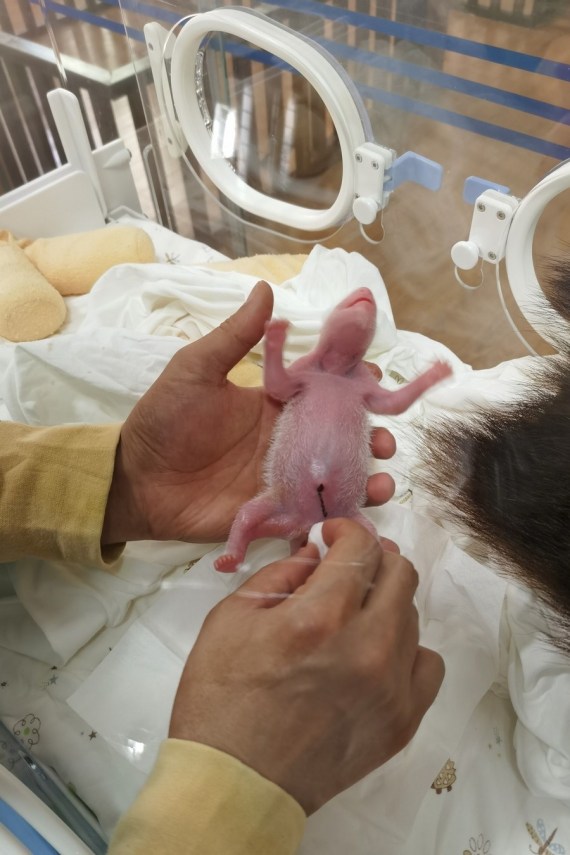
Giant Panda “Su Shan” looks after the first cub of her newborn twins at Shenshuping base of China Conservation and Research Center for the Giant Panda in Wolong National Nature Reserve
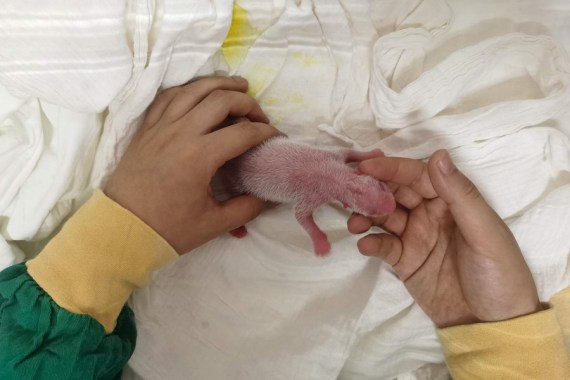
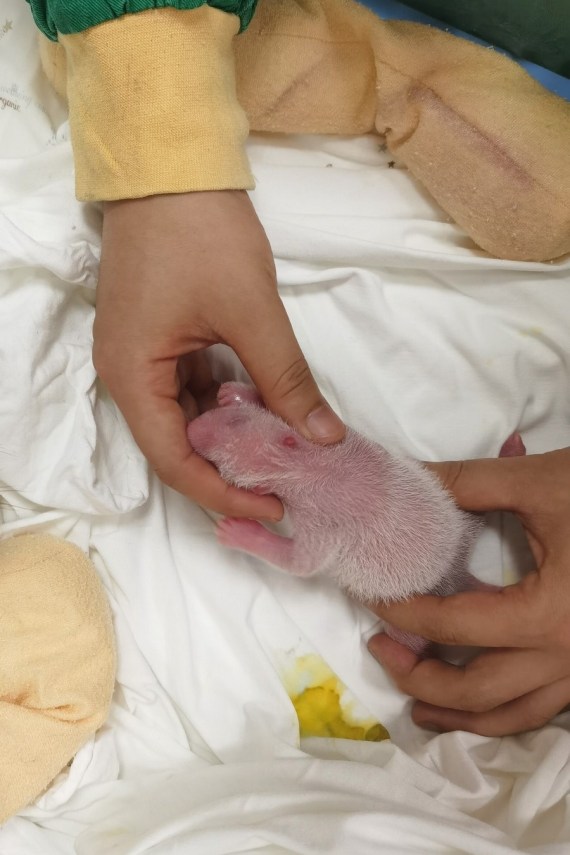
Two giant pandas at a base of the China Conservation and Research Center for the Giant Panda in southwest China’s Sichuan Province gave birth to two pairs of twins on Saturday.
The giant pandas were both from the Shenshuping giant panda base in Wolong National Nature Reserve.
One giant panda, named “Zhen Zhen,” gave birth to one cub at 6:44 p.m. and the second at 7:15 p.m., with the second cub being a male and weighing 120.7 grams.
Zhen Zhen was born in the San Diego zoo of the United States in 2007 and returned to the China Conservation and Research Center for the Giant Panda in 2010. In 2015, she gave birth to a pair of twins in the Bifengxia panda base in Ya’an of Sichuan.
The second giant panda, named “Su Shan,” gave birth to one cub at 6:52 p.m. and the second at 7:34 p.m., with the second being a female and weighing 165.9 grams.
Su Shan was born in August 2011, with both of her parents coming from the wild. She gave birth to a cub in the Bifengxia panda base in 2016.
The first cubs of the two pairs are bred by their mothers and while the second ones are being taken care of by the center workers. They were all in good condition, said Li Guo, an expert with the Shenshuping giant panda base.
UN chief warns against tensions in Old City of Jerusalem
“The secretary-general is following with concern the heightened tensions in and around the Holy Sites of the Old City of Jerusalem,” said his deputy spokesman. “He underscores that the status quo must be upheld and fully respected.”
UN Secretary-General Antonio Guterres on Monday warned against new tensions in the Old City of Jerusalem between Jews and Muslims.
“The secretary-general is following with concern the heightened tensions in and around the Holy Sites of the Old City of Jerusalem,” said Farhan Haq, Guterres’ deputy spokesman.
“He (Guterres) underscores that the status quo must be upheld and fully respected. He calls upon community, religious and political leaders on all sides to refrain from provocative action and rhetoric, in the interest of peace and stability,” said Haq.
At least 1,300 Jews on Sunday visited the flashpoint Al-Aqsa Mosque compound in East Jerusalem to mark the Jewish holy day of Tisha B’Av, despite tensions between Palestinians and Israeli police.
The Al-Aqsa Mosque compound is a site holy to both Muslims and Jews, the latter of whom call it the Temple Mount. Israel captured East Jerusalem in the 1967 war and annexed it shortly later, claiming it part of its “indivisible” capital, in a move unrecognized by most of the international community.
WMO chief warns of rising extreme weather events, natural disasters
Extreme weather events and natural disasters will continue to increase, the head of the World Meteorological Organization (WMO) warned on Monday, saying that climate change was the root cause for the torrential rainstorms and deadly floods ravaging across Western Europe this summer.
“We have always had extreme weather events, but because of climate change, we have started seeing them more often and they are more intense,” said the WMO chief.
“Climate change will anyhow continue for the coming decades. If we are successful with climate mitigation, we could stop this negative trend in the 2060s,” he said.
Speaking exclusively to Xinhua, Petteri Taalas, secretary-general of the Geneva-based WMO, said: “We have always had extreme weather events, but because of climate change, we have started seeing them more often and they are more intense.”
“Without climate change, we wouldn’t have observed such high temperatures in western parts of Canada and the U.S., so that’s a clear indication of climate change,” he said.
At the same time, devastating flash floods due to heavy rainfalls have swept through several western European countries in the past few days, killing more than one hundred and causing huge damages.
“SUMMER OF EXTREMES”
In the report “Summer of extremes: floods, heat and fire,” the WMO said on Friday that some parts of Western Europe received up to 2 months’ worth of rainfall in 2 days (July 14 and 15) on soils that were already near saturation.
“The top one meter of soil was completely saturated or well above field capacity after the intense rain in the most affected regions of Belgium, the Netherlands, Luxembourg and Germany,” it said.
Asked about whether he expected more natural disasters over the next couple of years, Taalas said: “Climate change will anyhow continue for the coming decades. If we are successful with climate mitigation, we could stop this negative trend in the 2060s.”
“Until then we will see a growing amount of natural disasters and a growing amount of this kind of weather extremes and also more human losses and more economic losses than before,” he warned.
ADVERTISEMENT
“That means that we have to also adapt to climate change, the most important thing is to mitigate climate change, to stop using fossil fuels and also pay attention to our diet.”
Countries around the world have pledged to reach a global peak of greenhouse gas emissions as soon as possible and to achieve a climate neutral world by mid-century.
The Paris Agreement, which was adopted by 196 parties in Paris in 2015, sets a target of holding the global average rise in temperature below 2 degrees Celsius above pre-industrial levels, and preferably below 1.5 degrees Celsius.
Taalas also stressed that no region in the world was safe from the negative impacts from extreme weather events and natural disasters.
“One could say that it’s a global thing. Last year, we had severe drought in the same areas where we now have these problems in North America, and also in South America in the Amazon region with also record-breaking drought.”
ADVERTISEMENT
He also warned of the record amount of hurricanes in the Caribbean last year, super typhoons in Asia, and cyclones hitting Pacific Islands and southern parts of Africa.
NEW EU CLIMATE ACTION
Last week, the European Commission unveiled a comprehensive roadmap for realizing the European Union’s (EU) ambitious target of reducing its net greenhouse gas emissions by at least 55 percent from 1990 levels by 2030 and to become climate-neutral by 2050.
“What the European Union has announced recently is very positive. We have heard plenty of positive news from many countries,” Taalas said.
“The current U.S. administration is interested in being more ambitious in climate mitigation and also the government of China indicated a year ago that they would like to become carbon neutral by 2060.”
To mitigate the impact of climate change, China last year announced that it would strive to bring carbon dioxide emissions to a peak before 2030 and become carbon neutral before 2060.
“The key is that we have to start acting now, we cannot wait for the coming decades,” Taalas urged.
Aerial photo taken on July 16, 2021 shows a scene after floods in Verviers, Belgium.
“We have to reduce the amount of fossil fuels, especially we have to get rid of coal-fired energy production, we have to convert our transport system to become more based on electric vehicles and biofuels. In housing we should cool our houses by using geothermal heat pumps, and in our diet we should reduce the amount of especially red meat.”
Taalas stressed that no more time could be wasted to tackle global warming: “The good news is that we have a lot of technological means to be successful with the mitigation. We just have to start acting. These plans are excellent and we have lots of countries which are now behind these carbon neutrality targets, but the concrete action needs to happen already during this decade.”
People cool themselves at the beach in Alameda County, California, the United States,
MORE SCIENTIFIC RESEARCH
The WMO, a specialized agency of the United Nations, has a membership of 193 member states and territories and was established in 1950.
“We are providing the scientific facts for the decision-makers on what’s happening with the climate today and what is supposed to happen in the future,” Taalas said.
He acknowledged that the early warning systems needed to be improved in a bid to better forecast weather events especially in less developed countries, emphasizing the importance of capacity development.
“We have major observation gaps in Africa, the Caribbean and Pacific Islands and parts of Latin America. That means that we have to build more stations there to be able to provide good early warning services,” Taalas said.
“You have to be able to forecast these events much better and that’s a gap again in less developed countries.”
People enjoy leisure time on a beach of Lake Ontario during a heat wave in Toronto, Canada,

 People carry a sheep during Eid al-Adha holiday in Capital Governorate, Kuwait,
 People perform prayers during Eid al-Adha holiday in Hawalli Governorate, Kuwait
 People perform prayers during Eid al-Adha holiday in Hawalli Governorate, Kuwait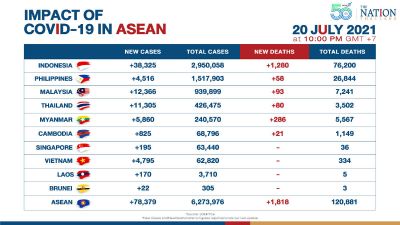

 A secretive body is making questionable Covid decisions in india





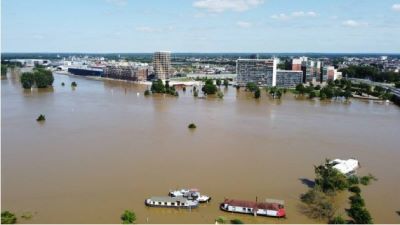
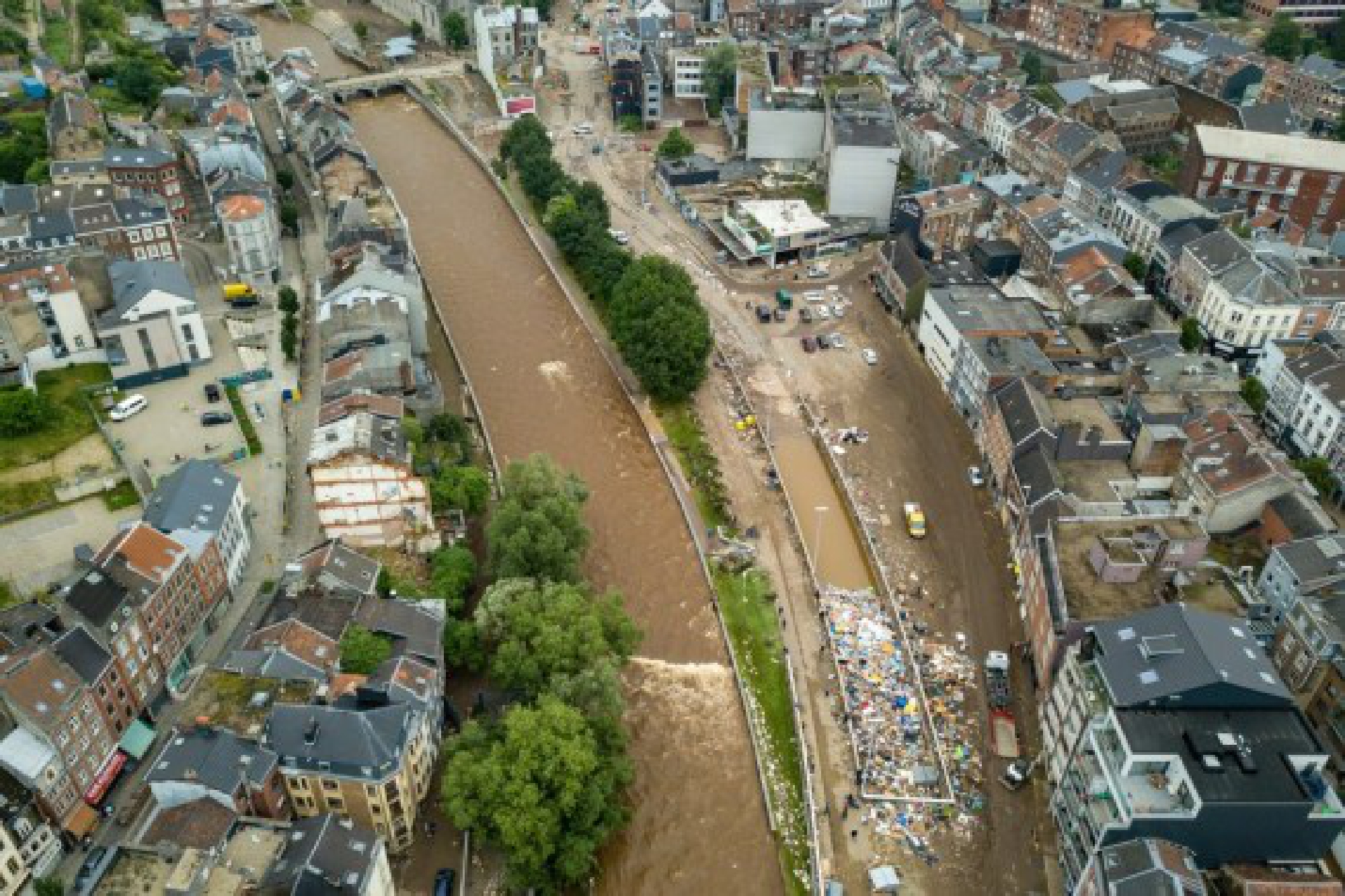 Aerial photo taken on July 16, 2021 shows a scene after floods in Verviers, Belgium.
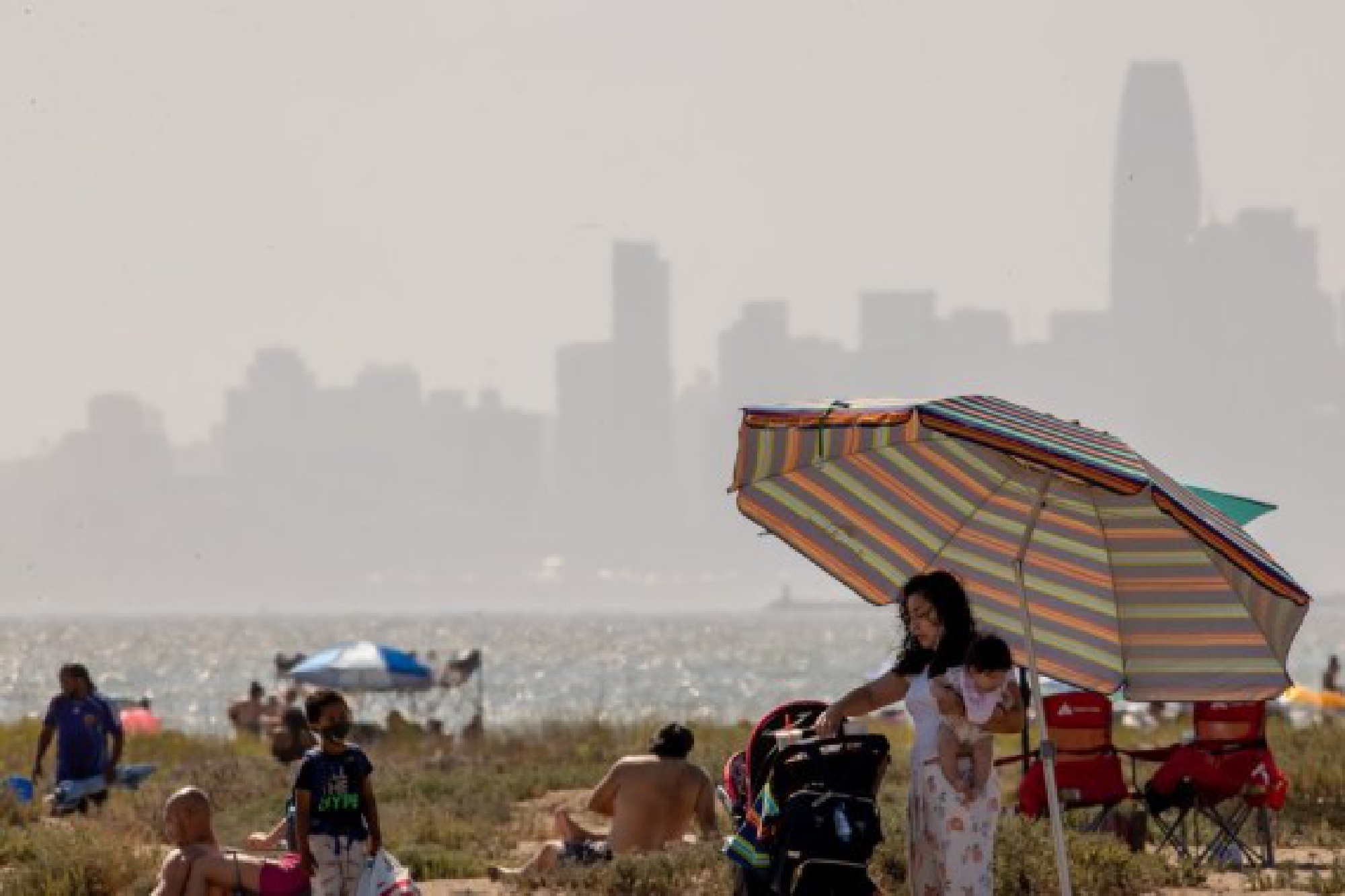 People cool themselves at the beach in Alameda County, California, the United States,
 People enjoy leisure time on a beach of Lake Ontario during a heat wave in Toronto, Canada,
