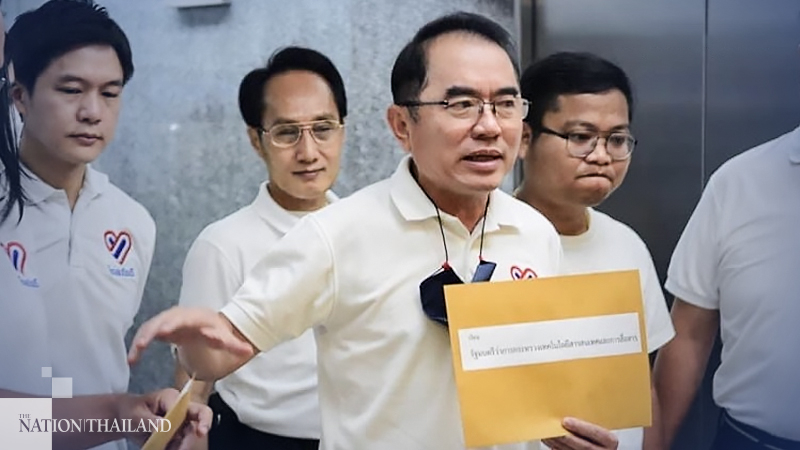
Why CP group got the nod for takeover of Tesco #SootinClaimon.Com

#SootinClaimon.Com : ขอบคุณแหล่งข้อมูล : หนังสือพิมพ์ The Nation.

Why CP group got the nod for takeover of Tesco (nationthailand.com)

Why CP group got the nod for takeover of Tesco

CorporateDec 19. 2020

By THE NATION

The Office of Trade Competition Commission (OTCC) on Friday published a report on its decision regarding Charoen Pokphand’s (CP) acquisition of Tesco’s Thailand business from Ek-Chai Distribution System.

The OTCC on November 6 voted 4:3 in favour of the US$10-billion (Bt302.5 billion) takeover deal.

According to the report, the majority of the commissioners who voted for the acquisition argued that the acquisition was necessary for business operation and would help create revenue for the country’s economy. It would also help preserve the sales channels of domestic products as well as expand exports to Malaysia, as CP would also acquire Tesco Lotus in Malaysia under this deal.

“The deal would subsequently increase domestic sales and exports, create more employment and promote both retail and manufacturing industries,” said the commissioners.

The majority of the commissioners also said that the deal would not create serious negative impact on the economy, as it would not create unemployment in other related sectors, such as wholesale, which is responsible for 50 per cent of the country’s GDP.

“The deal would instead create up to 1.1 million jobs in the small, medium and large industrial supply chain while keeping the manufacturing sector uninterrupted,” they added.

“It will not add to the impact of Covid-19 that has resulted in recession in the macro economy and caused uncertainty among future investors, both domestic and overseas.”

Meanwhile, a minority of commissioners who voted against the acquisition argued that the acquisition could affect Thailand’s economy as it could lead to monopoly, unfair market dominance and socio-economic disparity, as CP is already the largest manufacturer of agricultural and consumer products that are vital to daily life, while the acquired party holds a large market share in wholesale and retail modern trade.

“The acquisition could also result in an obstacle for new entrepreneurs to enter the market, while other businesses would need to adjust their strategies and lower their costs and selling price to remain in the market,” said the minority of commissioners.

“As the biggest player in the market, CP will have more bargaining power against suppliers of products and raw materials, while SME manufacturers will be at a disadvantage when negotiating trade terms with suppliers.

“Furthermore, the acquisition will result in fewer number of competitors, and in the long term consumers will have limited choices of products and prices,” they added.

The OTCC also set terms and conditions that the acquisition parties: CP Retail Development Ltd and Tesco Stores (Thailand) Ltd, as well as their parent companies: CP All and Ek-Chai Distribution System, must follow:

1. The acquisition parties must not acquire other businesses in a similar sector for three years, excluding those in e-commerce.

2. CP All and Ek-Chai must increase the sales of SME products, including agricultural products, community products and OTOP in 7-Eleven and Tesco Lotus stores by at least 10 per cent annually for a period of five years.

3. The acquisition parties must not share related marketing information to product distributors, manufacturers or suppliers of raw materials. The information shall be classified as a trade secret.

4. Ek-Chai will abide by conditions stated in the contract or agreement that they have made with product distributors or manufacturers for a period of two years, unless product distributors or manufacturers agree to change the terms of the contract or agreement.

5. CP All and Ek-Chai must promote SMEs by providing credit terms of 30 days for agricultural products, community products and OTOP, and 45 days for other types of products for a period of five years.

6. CP All and Ek-Chai must submit their business operations report to the OTCC every three month for a period of three years.

7. Acquisition parties must set the business code of conduct to be displayed to the public, while they shall uphold the code of conduct as well as abide by regulations stated in the Trade Competition Act BE 2560.

Related Story: OTCC sets new criteria for businesses to be considered monopolies

Lawmakers hit major roadblock over GOP plan to limit Federal Reserve, imperiling weekend deal for emergency relief package #SootinClaimon.Com

#SootinClaimon.Com : ขอบคุณแหล่งข้อมูล : หนังสือพิมพ์ The Nation.

Lawmakers hit major roadblock over GOP plan to limit Federal Reserve, imperiling weekend deal for emergency relief package (nationthailand.com)

Lawmakers hit major roadblock over GOP plan to limit Federal Reserve, imperiling weekend deal for emergency relief package

EconDec 20. 2020Fed building/ file photoFed building/ file photo 

By The Washington Post · Mike DeBonis, Jeff Stein, Rachel Siegel, Seung Min Kim · NATIONAL, BUSINESS, POLITICS, CONGRESS, WHITEHOUSE 

WASHINGTON – Senior congressional lawmakers attempting to complete an emergency coronavirus relief package this weekend slammed into a major roadblock on Saturday over Republican demands to limit the authority of the Federal Reserve.

A late push from Sen. Patrick Toomey, R-Pa., to rein in the nation’s central bank had already divided lawmakers over the last several days. But the impasse appeared to grow significantly wider on Saturday, as congressional leadership and rank-and-file senators on both sides of the aisle dug in over the issue, imperiling prospects for a deal before Monday.

Toomey, a conservative lawmaker on the Senate’s banking committee, has demanded provisions be included in the covid relief package that would curb the ability of the Fed to restart emergency lending programs for localities and small businesses.

Senate Majority Leader Mitch McConnell, R-Ky., told Senate Republicans on a private call Saturday afternoon that the party should stick by Toomey’s plan, according to two people who requested anonymity to share details of the call.

But Senior Democrats have balked at agreeing to what they see as a nakedly political attempt to limit the economic tools available to the Biden administration. Throughout Friday and Saturday, a chorus of Senate Democrats emerged urging party leadership not to budge on the issue. Democrats have already agreed to drop aid to state and local governments from the relief package, and some lawmakers have hoped the central bank could serve as a backstop for assisting ailing municipalities.

The Toomey proposal would amount to one of the most significant intrusions into the central bank’s autonomy in years. Former Federal Reserve chair Ben Bernake weighed in on the dispute in an unusual public statement on Saturday, saying that the central bank’s emergency lending authorities should be at a minimum as robust as they were before passage of the Cares Act in March. Bernake said that it was “vital” that the central bank’s ability to “respond promptly to damaging disruptions in credit markets not be circumscribed.”

The intensifying dispute threatened to derail delicate negotiations for a nearly $1 trillion relief package that would provide hundreds of billions in emergency aid to the unemployed and small businesses; funding for vaccine distribution and health care facilities; and another round of stimulus checks to millions of Americans.

The need for such a package has only grown as the coronavirus rampages the nation and several emergency programs protecting tens of millions of Americans are set to expire in a matter of days.

House Speaker Nancy Pelosi, D-Calif., on Saturday called the dispute over Toomey’s proposal “the big thing” holding back an agreement.

Asked about the latest in negotiations, Sen. Richard Durbin, D-Ill., the No. 2 ranking Senate Democrat, said: “Toomey, Toomey, Toomey.”

The approaching Christmas holiday, a looming pair of Senate special elections in Georgia and the prospect of a partial government shutdown also are adding to the pressure for negotiators to finalize a deal this weekend.

Congressional leaders had given themselves until Sunday midnight to close out talks. President Donald Trump Friday night signed a two-day spending bill to keep the government open until midnight Sunday. If no deal is reach on the stimulus package, lawmakers would have to pass another temporary measure before Monday, otherwise parts of the federal government would shut down.

In an ominous sign for the relief talks, rank-and-file senators in both parties signaled they would be unwilling to move forward if they did not get their way over the Toomey proposal.

Sen. Elizabeth Warren, D-Mass., on Saturday denounced the Toomey plan and said “Democrats should stay firm” to resist the changes. Sen. Angus King, I-Me., a moderate who caucuses with the Democrats, said such an idea would “cripple the next administration’s ability to deal with a recession.”

On the Republican side, Sen. Tom Cotton, R-Ark., tweeted that Democrats were seeking a “slush fund for their political cronies.” Cotton added that Toomey’s position “is in fact the position of the Republican Senate Conference.” Sen. John Neely Kennedy, R-La., a member of the Senate Banking Committee, told reporters Democrats were trying to use the central bank’s authorities “as a backdoor to do what they couldn’t do through the front door.”

Kennedy added of Republicans approach to the issue: “I think we ought to stand firm.”

Sens. Toomey, Cotton, and Mitt Romney, R-Utah, met in Senate Minority Leader Charles Schumer’s, D-N.Y., office Saturday afternoon to resolve the dispute. Toomey expressed optimism about the possibility of a compromise following the meeting. But Romney, who has sought a compromise, sounded more downbeat, telling reporters: “I can’t predict what the result is going to be. I don’t know whether they’re going to be able to bridge the divide or not.”

McConnell, the Senate majority leader, has said lawmakers will not leave Washington for the holidays until a deal is done. And on Friday night he expressed optimism that a deal would get done. But on Saturday, multiple lawmakers and aides on Capitol Hill who were not authorized to speak about the negotiations publicly, conceded that it was hard to imagine a swift resolution to the stalemate over the Federal Reserve.

Lawmakers have also yet to resolve several other lingering issues. Those include eligibility for small business relief; how to structure unemployment aid; and the criteria for sending out a $600 per person stimulus check. Pelosi also told House Democrats on a call on Saturday that lawmakers remained divided over the amount of money necessary for food assistance, according to a person who spoke on the condition of anonymity to share her private remarks.

However, many aides close to talks expressed optimism these issues could be addressed fairly quickly if the dispute over the Fed is resolved. Sen. John Thune, R-S.D., the No. 2 ranking Republican senator, said Saturday that the “probably more likely scenario” is that negotiations stretch into Monday.

“But I think we’re in the homestretch, we’re on the glide path,” Thune said. “I think we’re going to get this done and help out the American people.”

Still, Treasury Secretary Steven Mnuchin told Senate Republicans on a 1 p.m. call on Saturday that Toomey’s demands had not been resolved, a person familiar with the internal call said. McConnell also told Senate Republicans on the call that the GOP needed to support Toomey’s efforts.

“I think we need to stick with where we are,” McConnell said, according to two people familiar with the call.

Republicans say the Fed’s programs, initially funded with a $500 billion congressional appropriation under the March relief bill, were of marginal utility earlier in the pandemic and are no longer necessary in any case. Toomey gave a floor speech Saturday afternoon aggressively defending his efforts.

Romney appears to be the only Republican to break with Toomey so far. Romney told reporters on Saturday that elements of Toomey’s proposals could be resolved after the current relief package is passed.

Democrats have argued the Toomey proposal represents an unusual political intervention into the independence of the Federal Reserve, limiting emergency lending powers it has possessed since 1932. Senate Minority Leader Charles Schumer, D-N.Y., also said that Federal Reserve Chair Jerome Powell opposes the proposed changes.

The central bank declined to give a public response to the heated debate.

“It’s no surprise that Republicans are drawing a line in the sand over their ability to sabotage the economy, and tie the Biden administration’s hands,” Sen. Ron Wyden, D-Ore., the ranking Democrat on the finance committee, said in a statement.

Democrats have signaled they might be willing to accept language that restricts use of Treasury funds appropriated under the March aid bill, but not language that would restrict the Fed from doing similar lending using its own assets.

“I think we could go with one part and not the other,” House Majority Leader Steny Hoyer, D-Md., said Friday. “And that’s the deal I think we ought to make.”

Hoyer told House members Friday not to expect votes until 1 p.m. Sunday at the earliest – just 11 hours before the next shutdown deadline. House Democratic leaders have scheduled a noon videoconference Saturday to update members on the negotiations.

Likely to run many hundreds of pages, the package is not only expected to carry the $900 billion covid relief deal but also $1.4 trillion in year-long appropriations for federal agencies; the extension of tens of billions of dollars in expiring tax breaks; a bipartisan energy bill; a long-delayed bipartisan solution to surprise medical billing; and dozens of other potential add-ons that a vast corps of lobbyists and congressional aides are hoping to include in this last legislative vehicle of 2020.

Lawmakers will almost certainly be asked to vote on a sweepingly broad piece of legislation with only hours to review it.

Outcome of MPC meeting to influence SET, baht next week #SootinClaimon.Com

#SootinClaimon.Com : ขอบคุณแหล่งข้อมูล : หนังสือพิมพ์ The Nation.

Outcome of MPC meeting to influence SET, baht next week (nationthailand.com)

Outcome of MPC meeting to influence SET, baht next week

EconDec 19. 2020

By The Nation

Investors have been advised to keep an eye on the Monetary Policy Committee (MPC) meeting on December 23, as it would impact the Stock Exchange of Thailand (SET) Index and the baht next week.

The SET Index on Friday closed at 1,482.38, down 1.51 points or 0.10 per cent, with transactions amounting to Bt117.09 billion due to uncertainty over the US move to impose lockdown measures during the Christmas festival period.

Local institutions and foreign investors made net sales of Bt3.63 billion and Bt5.60 billion respectively, while proprietary trading and local individuals made net buys of Bt57.12 million and Bt9.18 billion respectively.

An analyst at Kasikorn Securities expected the SET next week to move between 1,465 and 1,500, advising investors to follow the MPC meeting, Thai exports in November, the Covid-19 situation, the US-China conflict and Brexit negotiations.

Among international factors, he advised following the US third-quarter gross domestic product (GDP), home sales, personal income and durable good orders, as well as China’s loan prime rate and Bank of Japan’s meeting.

The baht on Friday closed at 29.80 to the US dollar on Friday, strengthening from 30.03 at close on December 9, due to the US move to place Thailand on its monitoring list for currency manipulation and the Federal Reserve’s move to maintain bond purchases.

A strategist at Kasikornbank expected the baht next week to move between 29.60 and 30.00 to the dollar, advising investors to follow the MPC meeting, foreign funds flows, Thailand’s exports in November and the US economic stimulus package.

Among international factors, he advised investors to follow the US consumer confidence index, third-quarter GDP, home sales, personal income, durable good orders and inflation rate.

Gold on Friday closed at US$1,882.17 per ounce, while in Thailand it closed at Bt26,640 per baht weight amid the US-China conflict and the rollout of US economic stimulus package.

A strategist at YLG Bullion International advised investors to buy gold when its price drops and sell some of the precious metal when its price rises, with the support line between $1,853 and $1,866 per ounce.

“If the price rises over the resistance line at $1,899 per ounce, investors can wait to sell at the next resistance line,” he said.

2020 and beyond – the Good, Bad and Ugly #SootinClaimon.Com

#SootinClaimon.Com : ขอบคุณแหล่งข้อมูล : หนังสือพิมพ์ The Nation.

2020 and beyond – the Good, Bad and Ugly (nationthailand.com)

2020 and beyond – the Good, Bad and Ugly

ColumnsDec 19. 2020President-elect Joe BidenPresident-elect Joe Biden 

By Andrew Sheng for Asia News Network

2020 must be one of the toughest years in living memory.

 In one year, more than 300,000 people died from coronavirus in the United States, more than the number killed in four years of her involvement in the Second World War.   World growth is down between 5-7 percent and many millions are struggling with their health, jobs and livelihood.  Many more millions have been driven below the poverty line. 

What does the coming 2020s decade portend?   Instead of predicting an unknowable future, let’s paint three possible scenarios – using the Italian spaghetti Western movie title, the Good, the Bad and Ugly. 

The good scenario is that the incoming Biden Administration will heal America, rebuild the multilateral order, growth will recover in 2021, global trade tensions are reduced, and continued trade will bring better cooperation amongst the Great Powers.  Gradually, climate change issues are addressed, social inequality is reduced, there are better jobs from green infrastructure investments, and we have a decade of peace and prosperity.   Stock markets will continue to rise as central banks commit to low interest rates, whilst technology companies are rewarded for game-changing innovation. 

The bad scenario is more muddling through.  This was the opportunity missed during the last 2007/2009 global financial crisis.   Instead of addressing fundamental inequality, clean up the bad management that messed up the banks and derivatives, everyone got rewarded with more central bank money.  We ended up with worse climate change, huge debt overhang, big asset bubbles, rich got richer and poor were so depressed from failing states that they migrated.   The middle class felt they were worst off, blamed immigrants, foreigners, globalization and voted in Brexit and Mr. Trump.

In short, instead of making real structural reforms, most rich countries doubled down on loose monetary policy and avoided rocking the boat.  EU Commission Jean-Claude Juncker summed up this period: “We all know what to do, but we don’t know how to get re-elected once we have done it.”  

Toxic politics got us where we are today, in a bad place with nowhere to hide.

Today, most politicians are repeating the same mistakes, with bad money politics selling out the interests of the majority to keep a minority in power.  Everyone hopes that the vaccine will help the economy recover, but relying only on hope is not good policy.  The pandemic is truly a global crisis, because without close cooperation, no single economy is powerful enough to get out of secular stagnation.   That Britain can risk a No Deal Brexit signals to the world that emotional nationalism triumphs over economic rationalism. 

The recent US Presidential elections reflected this deep polarisation.  With a record voter turnout, it was supposed to be a celebration of rationalism over anger.   Instead, 47% of voters are backing Trump and the Republican leadership in challenging the legitimacy of the Biden victory in the courts.   Although the institutional checks and balances held, it augers badly for the future.  

There is an ugly scenario that I could not have dreamed possible even as late as last year.

For 70 years, the world has assumed that the United States will always be united, land of the free, welcoming to immigrants, opportunities and stood for fairness, rule of law and global peace.  When Democrat President Franklin Delano Roosevelt created the New Deal and President Truman launched the Marshall Plan, the United States was capitalist but left-leaning in caring for the weak and downtrodden.  The United States won world leadership by standing up against the Fascist far right in the Second World War.  

What if America swings to the Far Right to set a scene for a very different world?  An America that stands for world interests is very different from an America First philosophy that changed the game fundamentally as played by Trump.   The Republican Party has moved sharply to the right, and represents today more the white minority that feels threatened by the rising plurality and diversity in US population and cultural values.  The roots of the resentment of the Trump supporters are complex, but they signal an emotional anger that most non-Americans have difficulty comprehending.   The Democratic Left united just in time to hold back this Right Wing tide.  Even they are surprised by the Republicans playing by different rules. 

This ugly scenario will unfold if the Republicans block all Biden initiatives, domestic and foreign, to ensure that he does not deliver.  By 2022 mid-term elections, the Republicans will regain majority in Congress, and with the Republican Party controlling the Senate, House and Supreme Court, the right wing shift in American values and ideology will be difficult to reverse.  Whose rules apply when the game is fixed?

What does that mean for the Rest of the World?  No one will feel secure with radical changes in US foreign policy that swing from moderation to possible extremism and back.  All will feel insecure and few will think and act for the long-term. 

Historically, the Greek and Roman empires went through the same shift, from an open Republican era to an Imperial and autocratic phase.  The British empire did not go through this phase because it was always checked by the Europeans and then over-taken by their American cousins.  Global neoliberal rules of the game will not hold if the strongest military power will not play by its own rules.   Great Power politics will definitely get uglier.

Since we don’t want to spoil the mood for the Christmas festive season, let us hope that the bad and ugly scenarios do not unfold.  Most Hollywood films end up with the good guys winning.  

But as the Good cowboy (Clint Eastwood) won over the Bad (Lee Van Cleef), it was the Ugly (Eli Wallach), who asked the question many asked themselves during this pandemic: “If you work for a living, why do you kill yourself working?”

The answer is that most have no choice.  So let us pray for the Good outcome in 2021. 

Stage show in Khon Kaen highlights ‘forced disappearance’ #SootinClaimon.Com

#SootinClaimon.Com : ขอบคุณแหล่งข้อมูล : หนังสือพิมพ์ The Nation.

Stage show in Khon Kaen highlights ‘forced disappearance’ (nationthailand.com)

Stage show in Khon Kaen highlights ‘forced disappearance’

PoliticsDec 19. 2020Photo credit: Thanom Chapakdee's FacebookPhoto credit: Thanom Chapakdee’s Facebook 

By THE NATION

Performers from the B-floor Theatre group and Khon Kaen University’s students on Friday showcased a performance art with a political message, highlighting the controversial issue of forced disappearances.

The performance was staged at Dao Din House in Khon Kaen province, as part of the art festival “Khon Kaen Manifesto”, organised by the artist Thanom Chapakdee.

According to Thanom’s post on Facebook on Saturday, the performance took around one hour, from 7pm to 8pm.

Regarding the issue of “forced disappearances”, observers said that at least nine Thai political dissidents had disappeared since the coup in 2014.

Sunday’s local elections a ‘proxy war’ between national parties #SootinClaimon.Com

#SootinClaimon.Com : ขอบคุณแหล่งข้อมูล : หนังสือพิมพ์ The Nation.

Sunday’s local elections a ‘proxy war’ between national parties (nationthailand.com)

Sunday’s local elections a ‘proxy war’ between national parties

PoliticsDec 19. 2020

By Thai PBS World Syndicate   

Voters around Thailand go to the polls this coming Sunday (December 20) to elect chiefs and other members of provincial administrative organisations (PAOs).

The first local elections since 2012 come after political activities were suspended following the May 2014 military coup.

Chiefs and other members of PAOs who completed their four-year terms while the post-coup junta was in power had their tenures extended, unless they were suspended on corruption or other charges.

All 76 provinces go to the polls on Sunday, excluding Bangkok. A total of 331 candidates will vie for 76 PAO chief’s seats, while 8,070 candidates will contest for PAO member seats, which range from 24 to 48 per province depending on population size.

As usual, candidates from locally influential political families are expected to secure their seats easily – though some will face a fresh challenge.

Incumbents challenged

Local political clans have long dominated provincial politics, thanks mainly to their strong connections with national parties and the powers-that-be.

However, several of their incumbents are facing a serious challenge from candidates affiliated with the Progressive Movement – a popular political group led by tycoon-turned-politician Thanathorn Juangroongruangkit.

The Progressive Movement is making its debut in local politics, fielding candidates for PAO chief in 42 provinces.

The political group is aiming to repeat the success of Thanathorn’s Future Forward Party, which came third in last year’s general election, winning 81 of the 500 MP seats in its first campaign for office.

Analysts say the Progressive Movement, relying on Thanathorn’s popularity, has livened up the PAO elections. And Thanathorn is betting on young voters to build a strong support base for his political future.

Stithorn Thananithichot, director of the Innovation for Democracy Office at King Prajadhipok’s Institute, said the Progressive Movement is catching voters’ attention with its rousing campaign call to “stand up and change your province”.

However, the deciding factor in PAO elections is still the existing support base, he added. “Candidates with a strong network of local support have a better chance of winning,” he said.

Thanathorn and other ex-Future Forward executives formed the Progressive Movement after the party was dissolved by a court ruling in February for violating funding rules. The former party executive members were also banned from politics for 10 years – during which they are not allowed to register, set up, help found or be executives of any political party.

Hence, Thanathorn and his allies have opted to campaign for election candidates affiliated with the Progressive Movement. However, on the campaign trail they have faced protests from local royalist groups, who have branded the movement enemies of the monarchy.

Thanathorn and other key Progressive Movement leaders, namely Piyabutr Saengkanokkul and Pannika Wanich, are accused of pulling the strings of young anti-establishment protesters who are calling for reform of the monarchy.

Another headache emerged for Thanathorn in the run-up to the PAO polls when his younger brother Sakulthorn was linked to a corruption case, in which a Crown Property Bureau official was found guilty of accepting Bt20 million in bribes.

Fierce fights

Certain provinces are experiencing exceptionally fierce election battles. In a “clash of the titans” underway in Chiang Mai, the Shinawatra family is throwing its support behind a challenger to the incumbent PAO chief.

Fugitive former premier Thaksin Shinawatra posted a handwritten message on Facebook to Chiang Mai residents, asking them to vote for his preferred candidate, Pichai Lertpong-adisorn. Thaksin said he had “been abandoned by some politicians” – which observers said was a veiled reference directed at Chiang Mai’s incumbent PAO chief, Boonlert Buranupakorn.

The letter was signed by Thaksin and his sister, fellow ex-PM Yingluck, both of whom hail from the northern city. Pichai has also reportedly won a stamp of approval from Yaowapa Wongsawat, also Thaksin’s sister.

Pichai’s campaigning team boasts senior figures from Thaksin’s proxy Pheu Thai Party, including Chalerm Yoobamrung and Yaowapa’s husband and ex-PM Somchai Wongsawat.

Pichai is among Pheu Thai candidates for the PAO chief’s post in 25 provinces.

Boonlert has been accused of betraying his long-held ties with the Shinawatras and defecting to the ruling Palang Pracharath Party.

The allegations have been dismissed by Pheu Thai politician and red-shirt leader Jatuporn Prompan, who is aiding Boonlert’s campaign for re-election in Chiang Mai.

Jatuporn also accused an unnamed “Big Sister” of “messing up Chiang Mai in the same way she did with the governments of Thaksin and Yingluck”.

Some analysts view Thaksin’s rare plea to Chiang Mai voters as a sign that Pheu Thai is at a serious disadvantage in the local polls.

“There are signs that Pheu Thai candidates are behind their rivals from the government camp. Thaksin had to write a letter to ask for votes in Chiang Mai. That is a sign of political decline,” said political scientist Olarn Thinbangtieo from Burapha University.

Not so independent

Officially, the core coalition Palang Pracharath Party is not fielding any candidates. However, many local politicians are contesting the PAO polls under newly-formed groups with names containing the word “Pracharath”. Analysts say this signals a link with the ruling party.

Among other major coalition parties, Bhumjaithai is not officially fielding any candidates while the Democrats have candidates in two southern provinces – Songkhla and Satun.

Although the 331 candidates in the PAO chief elections are contesting as independents, more than two-thirds are linked to either a coalition or opposition party, according to research company Rocket Media Lab.

The PAOs have been allocated a combined budget of Bt91 billion in fiscal 2021, or 2.8 per cent of the total Bt3.2 trillion national budget.

PAO chiefs are executives responsible for preparing local development plans and annual spending. PAO members act more like the legislature, issuing local regulations, approving development and budget plans, and scrutinising the local administrators.

Thanks to their power over the lives of local residents, PAO chiefs and members serve as a link to large support bases for national politicians.

The nationwide PAO elections are also big test of popularity before the next general election. Results involving candidates linked to political parties or groups are seen as an indication of their performance in the next parliamentary elections.

Royalists want minister to stop politicians’ plotting against monarchy using students #SootinClaimon.Com

#SootinClaimon.Com : ขอบคุณแหล่งข้อมูล : หนังสือพิมพ์ The Nation.

Royalists want minister to stop politicians’ plotting against monarchy using students (nationthailand.com)

Royalists want minister to stop politicians’ plotting against monarchy using students

PoliticsDec 19. 2020

By The Nation

The ultraroyalist Thai Pakdee group will submit a letter to Education Minister on December 23, asking the ministry to set up measures to prevent bad politicians from using students as a tool to encroach on the monarchy.

In a Facebook post on Saturday, the group leader Warong Dechgitvigrom cited the United Nations Commission on Human Rights (UNCHR)’s concerns about at least 35 people, including a 16-year student, facing lese majeste charges.

“We would like to ask the Foreign Affairs Ministry to clarify to the UNCHR that the abovementioned people are aiming to encroach on the monarchy,” he said.

“Meanwhile, parents should take good care of a 16-year student because he has little experience in politics and he may be a victim of bad politicians’ moves to benefit indirectly.”

Trump contradicts Pompeo in bid to downplay massive hack of U.S. government, Russia’s role #SootinClaimon.Com

#SootinClaimon.Com : ขอบคุณแหล่งข้อมูล : หนังสือพิมพ์ The Nation.

Trump contradicts Pompeo in bid to downplay massive hack of U.S. government, Russia’s role (nationthailand.com)

Trump contradicts Pompeo in bid to downplay massive hack of U.S. government, Russia’s role

InternationalDec 20. 2020President TrumpPresident Trump 

By The Washington Post · Ellen Nakashima, Josh Dawsey · NATIONAL, WORLD, TECHNOLOGY, NATIONAL-SECURITY, WHITEHOUSE, EUROPE 

WASHINGTON – President Donald Trump addressed the ongoing cyber hacks of the U.S. government for the first time on Saturday, seeking to turn blame away from Moscow in defiance of mounting evidence while downplaying how devastating the intrusions appear to be.

In a bizarre outburst on Twitter that Trump’s critics condemned for its alarming disconnect from the facts, the president contradicted his top diplomat, Secretary of State Mike Pompeo, who on Friday pinned the breaches that have afflicted at least five major federal agencies “clearly” on Russia. Rather, the president baselessly suggested that the true culprit “may be China (it may!)”

Trump’s aversion to calling out the Kremlin for its malign activities in cyberspace and his deference to Russian President Vladimir Putin has become a hallmark of his presidency. He has repeatedly trusted the word of Putin over the assessments of his own intelligence community, including its conclusion that Russia waged a sophisticated campaign to interfere in the 2016 presidential election – a verdict Trump believes calls into question the legitimacy of his victory four years ago.

His tweets Saturday raise fresh concerns that he will seek to shrug off what may turn out to be a cyber hack of unprecedented scale, and that Russia will not be held to account. The president has complained to advisers, who believe Russia is culpable, that the intrusions are a fake narrative meant to damage him politically.

“The Cyber Hack is far greater in the Fake News Media than in actuality,” Trump tweeted, despite a federal alert in recent days that called the widespread cyber espionage campaign “a grave risk to” government agencies and the private sector. 

“I have been fully briefed and everything is well under control,” he said, while agencies are scrambling to investigate and contain a series of major breaches at agencies including the State, Treasury, Energy, Homeland Security and Commerce departments – an effort that is likely to take months.

He also speculated, with no evidence, that the hacks may also have included “a hit on our ridiculous voting machines during the election, which is now obvious that I won big.” Twitter flagged that assertion, saying that “multiple sources called this election differently.” There is no evidence that November’s election was undermined by significant or widespread fraud, despite Trump’s insistence otherwise.

Trump had, until Saturday, studiously avoided the topic, reluctant to address publicly an issue that has bedeviled him since he took office: Russia’s hacking of U.S. targets. He broke his silence only after he was criticized publicly by lawmakers from both parties for an apparent unwillingness to confront Putin.

White House officials had drafted a statement to be released Friday accusing Moscow of carrying out the cyber intrusions in a months-long campaign, but they were blocked from doing so, said a senior administration official, who like others spoke on the condition of anonymity because of the matter’s sensitivity.

But Pompeo, in an interview on “The Mark Levin Show,” had no qualms about speaking out. “This was a very significant effort,” he said, “and I think it’s the case that now we can say pretty clearly that it was the Russians that engaged in this activity.”

Pompeo did not specify which branch of the Russian government carried out the campaign, but U.S. officials have privately said they believe it is the foreign intelligence service, the SVR, a successor agency to the KGB. None have suggested that China played any role.

Moscow has denied any involvement in the intrusions. Federal agencies were first revealed to have been hacked last weekend.

Pompeo said he could not say much more as the investigations were ongoing. “But suffice it to say, there was a significant effort to use a piece of third-party software to essentially embed code inside of U.S. government systems, and it now appears systems of private companies and companies and governments across the world as well,” he told Levin, a syndicated radio talk show host.

His remarks come as government agencies and affected companies race to figure out the scope of the breaches, how the Russians carried them off without being detected for months and how to prevent future compromises.

The president is intent on turning the conversation to China and its coercive activities in the technology and economic spheres and its human rights abuses, a second official said. He has directed advisers to look for ways in the waning days of his administration to confront Beijing over those issues, the official said.

Trump’s comments Saturday reflect a long-running disregard for the facts and his disinterest in what he calls “the cyber,” analysts and former aides said. “Starting with Trump’s very first meeting with Putin to today’s tweets we’ve seen an almost unbreakable pattern of denying the obvious about Russia’s misdeeds while carrying water for the Kremlin,” said Andrew Weiss, a Russia expert and vice president for studies at the Carnegie Endowment for International Peace. “Trump’s comments are totally divorced from reality.”

Gregory Treverton, a former chairman of the National Intelligence Council, the government’s senior-most provider of intelligence analysis, said that Trump “behaves so much like a paid Russian agent.” 

“If you look at the string of his actions and pronouncement,” Treverton said, “the only consistent interpretation that you can logically draw is that he’s in their thrall.”

Russia’s SVR waged a widespread cyber espionage campaign in 2014-2015 that ensnared the State Department, Pentagon Joint Chiefs of Staff and White House unclassified email networks, among other targets.

The Obama administration saw that campaign, as disturbing as it was, as classic espionage of the sort that states routinely engage in against each other, rather than as a disruptive attack, and so did not retaliate, said Michael Daniel, who was President Barack Obama’s White House cyber coordinator. Officials were not aware of the thousands of other victims in the private sector and other countries at the time, he said. The administration never publicly accused Russia of perpetrating the hacks.

This time, the context is different. There is widespread publicity around the breaches, which could turn out to be unprecedented in scale. The nature of the compromises, involving corruption of software commonly used by thousands of large organizations around the globe, is alarming. And the public is much more attuned to Russia’s malign activity in cyberspace, in the wake of its 2016 election interference.

Thus far, there is no sign that the intrusions have resulted in disruption or destruction, and the SVR is known mostly for conducting espionage. That doesn’t mean, however, the activity is not a precursor to something beyond spying, some analysts said.

In any case, Pompeo’s “attribution is a very important step,” said Tom Bossert, who was Trump’s homeland security adviser until April 2018. “The United States can now direct its focus and unite the world against this outrage.”

He said the Russian government is holding American networks at risk. “We must impose a cost on the Russians,” he said. “Until we start defending digital infrastructure as if commercial and government operations depended on it, we will remain rudderless.”

Microsoft, a major software and cloud provider, alerted several federal agencies last weekend to the fact that they were breached, its president Brad Smith told The Washington Post in an interview this week. 

Smith said so far the company has notified a little more than 40 customers who were breached, and that 80% of them were in the United States. The others were in Canada, Mexico, Belgium, Spain, Britain, Israel and the United Arab Emirates.

Britain so far has seen only a small number of victims, all in the private sector.

A major avenue for breaching victims’ networks was an update for computer software made by a Texas-based company called SolarWinds. The firm said about 18,000 customers that received the patch, for network management software called Orion, were potentially exposed. The Russians covertly added malware to the update, which installed a backdoor on computers that the hackers could use to enter a victim’s system at will. 

But the intruders were selective in choosing who to compromise. Not everyone who downloaded the patch was seen as an attractive target, Microsoft said.

The SolarWinds update was not the only path into victims’ networks, the Department of Homeland Security’s Cybersecurity and Infrastructure Security Agency said in an alert this week. “CISA has evidence of additional initial access vectors, other than the SolarWinds Orion platform; however, these are still being investigated,” the agency said.

Microsoft is itself a SolarWinds customer and acknowledged in a statement this week it had found SolarWinds malware “in our environment,” which it isolated and removed.

In his interview with The Post, Smith said none of Microsoft’s customers had been breached through the software giant. “I think we can give you a blanket answer that affirmatively states, no, we are not aware of any customers being attacked through Microsoft’s cloud services or any of our other services, for that matter, by this hacker.”

He said: “Lots of people have been hacked and a lot of the people that have been hacked happen to be Microsoft customers and Microsoft cloud customers. But that doesn’t mean they were hacked or attacked through the Microsoft cloud.”

Smith in a blog post called for the establishment of a global norm forbidding the type of “broad and reckless activity” used against SolarWinds and its customers, which threatened the integrity of the broader software supply chain. 

A norm against compromising that supply chain would “kneecap intelligence collection” by western democracies, said Thomas Rid, a cyber espionage expert at Johns Hopkins University. Worse, nondemocratic states would not abide by it, he said. “Some of the most successful western intelligence operations were supply chain compromises,” he said, citing a decades-long operation in which rigged encryption machines allowed U.S. intelligence agencies to spy on dozens of countries undetected.

Daniel, the former White House cyber coordinator, said a broad-based supply chain compromise that affects many different organizations indiscriminately “should probably be frowned upon.” But, he said, to argue that a western spy agency is never going to use the supply chain to spy on an adversary is unrealistic. “For a well-defended adversary,” he said, “it’s something you may want to consider.”


Moderna vaccine shipments set to arrive in states on Monday, Operation Warp Speed operations chief says #SootinClaimon.Com

#SootinClaimon.Com : ขอบคุณแหล่งข้อมูล : หนังสือพิมพ์ The Nation.

Moderna vaccine shipments set to arrive in states on Monday, Operation Warp Speed operations chief says (nationthailand.com)

Moderna vaccine shipments set to arrive in states on Monday, Operation Warp Speed operations chief says

InternationalDec 20. 2020

By The Washington Post · Derek Hawkins · NATIONAL, BUSINESS, WORLD, HEALTH, SCIENCE-ENVIRONMENT, HEALTH-NEWS 

WASHINGTON – Shipments of the second coronavirus vaccine approved by health regulators are set to arrive in states Monday, according to the Trump administration’s vaccine operations chief, one week after front-line health workers received the first shots in the U.S. government’s mass vaccination campaign.

Gustave Perna, chief operating officer of Operation Warp Speed, said Saturday that distribution was already underway for the vaccine developed by Massachusetts biotechnology company Moderna in partnership with the National Institute of Allergy and Infectious Diseases, following the Food and Drug Administration’s decision to clear the shot late Friday.

Workers were packing the vials into boxes at distribution centers run by the medical wholesale giant McKesson, Perna said. FedEx and UPS trucks are slated to depart Sunday and carry the freezer-temperature containers to their destinations. The government has also begun shipping ancillary kits including needles, syringes and other supplies to help administer the shots, according to Perna.

Later on Saturday, an independent vaccine advisory panel to the Centers for Disease Control and Prevention voted to recommend Moderna’s coronavirus vaccine for use in people ages 18 and older, paving the way for inoculations to begin as shipments arrive. The move follows Friday’s authorization from the FDA, which permitted the vaccine to be administered; an endorsement by the CDC immunization panel signals that the vaccine should be administered to the populations included in its guidance.

The rollout of the Moderna vaccine caps a week marked by a mix of high hopes and frustration surrounding the administration’s handling of the first coronavirus vaccine, developed by Pfizer and BioNTech and cleared by the FDA on Dec. 12.

Days after doctors, nurses and other Americans received the first injections, officials in multiple states said they were alerted that their second round of shipments had been drastically cut, creating widespread confusion and raising concerns about whether health departments would receive enough doses to meet the administration’s timelines.

Speaking in a Saturday morning news conference, Perna said he took personal responsibility for the error, saying he misunderstood a step in the process that prevents the government from releasing vaccine doses as soon as the manufacturer makes them available. As a result, he said, his forecasts were incorrect and he had to lower the vaccine allocations.

“To the governors to the governors’ staffs, please accept my personal apology if this was disruptive in your decision-making,” Perna said.

Asked to explain the issue in plain terms, Perna declined to elaborate. He called the situation a “miscommunication” and a “planning problem,” not a problem with either of the vaccines themselves.

He added that the administration was on track to allocate “around 20 million doses” of the vaccines by the end of December, but said distribution could extend into early January. The characterization appeared to mark a departure from the administration’s goal of administering 20 million shots by the end of the year.

“We are pushing out millions of doses of vaccines right now, and each week those numbers will continue to grow,” Perna said.

So far, 2.9 million doses of the Pfizer vaccine have been delivered across all 50 states. Between the two vaccines, 7.9 million doses were allocated and ready for distribution this week, according to Perna.

As of Saturday morning, 272,001 doses of the Pfizer vaccine had been administered, according to the CDC.

The approval of Moderna’s vaccine marks a crucial expansion of the government’s vaccination efforts, freeing the country from having to rely on a vaccine from one manufacturer as officials try to meet ambitious goals for getting doses out the door.

One benefit of the vaccine is that it can be stored at the temperature of a normal freezer, making it easier to transport. Pfizer’s vaccine, by contrast, needs ultra-low-temperature freezers regularly refreshed with dry ice.

Perna said workers were packing containers with 100 vials each, a relatively small number that also eases transportation. “This allows jurisdictions ways to reach small and hard-to-reach rural areas,” he said Saturday.

As the first waves of vaccines have reached hospitals and health departments nationwide, local disputes have arisen over who should get the shots first, bringing the logistical challenges of inoculating millions of people into sharp relief at a time when infections and deaths have reached record levels.

In California, where many intensive care units are overwhelmed with patients, nearly all young front-line doctors at Stanford Medical Center were excluded from the initial round of coronavirus vaccinations, prompting outcry from workers who said such workers should be prioritized.

Dozens of the hospital’s residents and fellows staged a raucous protest on the Palo Alto campus Friday, accusing the university of selecting orthopedists, dermatologists and even some faculty who work from home for vaccination before workers who spend long hours treating covid-19 patients.

Stanford officials apologized for the issue, saying a faulty vaccine algorithm left out early-year doctors and promising an immediate fix. “We take complete responsibility for the errors in the execution of our vaccine distribution plan,” Stanford Medicine said in a statement.

Christine Santiago, a 29-year-old resident in internal medicine who treated covid-19 patients during night shifts in the ICU, told The Washington Post that resident physicians “occupy a very unprotected space in the United States.”

“We’re not fully employees of the workforce,” said Santiago, who said she is home quarantining and waiting on a coronavirus test after using a faulty batch of N95 masks. “We fall in this vague, unclear position.”

Nationwide, coronavirus infections continued to surge, with the seven-day average for new daily cases rising 3.1% over the past week, according to data tracked by The Post. The weekly average for daily deaths rose 6.1%, with 2,878 coronavirus fatalities reported Friday. Hospitalizations also climbed more than 6% nationwide.

California reported a record 379 deaths on Thursday, followed by a near-record of 300 on Friday and 279 as of Saturday afternoon. Infections in the state have topped 40,000 for four consecutive days, with at least 43,600 reported Saturday, according to The Post’s tracking.

Although coronavirus vaccine doses have arrived in all 50 states, only about 15 have begun releasing daily vaccination data. About a dozen others have disclosed plans to offer some form of public vaccination tracking, while others have made no mention of it, the Covid Tracking Project noted in an analysis this week.

Convincing large portions of the population to get the vaccine remains a challenge for health officials around the country, who have launched an array of awareness campaigns to inform people of the benefits and dispel misinformation about the shots. In Missouri, the state health department recently posted a detailed fact sheet on the vaccine, answering common questions about safety and side effects, while also offering a “rumor control” section addressing falsehoods about the vaccine altering patient DNA and containing “tracking chips.”

Speaking with CNN late Friday, Anthony Fauci, the country’s leading infectious-disease expert, praised Vice President Mike Pence and other government officials for getting the vaccine publicly, a move he said could help alleviate concerns among some that the injection is unsafe.

“I think that was a good thing, representing to the community, to the people watching, that this is something that we all should do,” he said, “because if we get the majority of people in this country vaccinated we’re going to turn this around for sure.”

Fauci added that President Trump should get the vaccine as well, even though he was infected earlier this year.

“One of the things you have to keep in mind is he received the monoclonal antibody when he was ill, so he still might have a very high level of antibody in his system, which you might want to wait a bit before you actually vaccinate him,” Fauci said. “But ultimately he might want to get vaccinated.”

In more lighthearted CNN appearance Saturday, Fauci offered a message to children who sent questions to the news network asking whether Santa Claus had been vaccinated, too. “I went there and I vaccinated Santa Claus myself,” he said. “He is good to go.”

America’s image has tumbled during Trump’s presidency. Can Biden turn it around? #SootinClaimon.Com

#SootinClaimon.Com : ขอบคุณแหล่งข้อมูล : หนังสือพิมพ์ The Nation.

America’s image has tumbled during Trump’s presidency. Can Biden turn it around? (nationthailand.com)

America’s image has tumbled during Trump’s presidency. Can Biden turn it around?

InternationalDec 20. 2020President-elect Joe BidenPresident-elect Joe Biden 

By The Washington Post · Dan Balz · NATIONAL, POLITICS, CONGRESS
Analysis/WASHINGTON – President-elect Joe Biden has a daunting to-do list as he prepares to take the oath of office next month, much of it focused domestically. But there was a reminder this past week that among the problems dumped in his lap by President Donald Trump is a world that questions whether the United States is willing and prepared to lead abroad.

A tarnishing of America’s international image has been a constant almost from the day Trump was sworn in four years ago. But 2020 could be the worst yet in terms of how people in other countries perceive the United States as a leader in the world.

The Gallup organization conducts annual surveys assessing how others assess U.S. leadership. In 20 of 29 countries where Gallup has completed these surveys, approval ratings “are at new lows or they tie the previous low,” according to the report released last week. Among the countries where approval hit new lows are two of the nation’s staunchest allies, Germany and Britain.

Four years ago, before Trump became president, 43% of Germans had a positive impression of the United States as a leader in the world. Today just 6% approve. In the United Kingdom, 15% say they approve. More Russians – 18% – approve of American leadership internationally than Brits or Germans.

Gallup’s findings square with a Pew Research Center report of a few months ago. Pew’s regular survey asks whether people elsewhere have a favorable or unfavorable view of the United States. Among the nations where favorable impressions hit record lows or roughly tied them this year were a who’s who of traditional friends: the United Kingdom, Germany, France, Japan, Canada and Australia.

Trump’s departure and Biden’s arrival will likely begin to boost the nation’s image. The former chairman of the Senate Foreign Relations Committee has promised to reengage constructively with other nations, as has his designee for secretary of state, Antony Blinken. That will begin with allies in Europe, who have been treated badly by the current president.

Biden knows the world from his travels as a senator and vice president, but he was described by one former diplomat as someone whose first orientation on foreign policy is through Europe. “When he thinks foreign policy, he thinks allies, and when he thinks allies, he thinks Europe,” said Ivo Daalder, former ambassador to NATO and now president of the Chicago Council on Global Affairs. 

Trump has spurned or hectored allies in Europe and questioned the value of transatlantic alliances. Biden will embrace them all.

Showing up and saying the right words will be helpful in changing perceptions of the United States, but that might be only a first step in what could be a more challenging mission.

Biden will look to European allies for help in dealing with some of the most important foreign policy issues that await him, from U.S. posture toward Russia to Biden’s desire to mend relations with Iran after Trump pulled out of the joint nuclear agreement.

China presents perhaps the biggest challenge, given its gains in power and reach over the past four years. Trump departed from the posture of previous administrations, adopting a more aggressive approach in dealing with the Asian giant. Even critics of the presidents concede there can be no return to the past.

“There is a growing consensus across parties that China poses a series of new challenges and that the status quo was not really sustainable,” Blinken said last summer during an event sponsored by the Hudson Institute. He also said that, because of Trump’s approach, “China is in a strong position and we’re in a weaker position.” The solution, he added, will be “to rally our allies and partners, instead of alienating them.”

Biden said the same in a post-election interview with New York Times columnist Thomas L. Friedman. “The best China strategy, I think, is one which gets every one of our – or at least what used to be our – allies on the same page,” he said. “It’s going to be a major priority for me in the opening weeks of presidency to get us back on the same page with our allies.”

Rhetorically that might seem easy; practically it will take time. Biden’s challenge will involve striking a balance between competition and sometimes confrontation with China over economic and defense issues and cooperation on things like pandemics and climate.

“My view of it is that the Biden administration will invest in strengthening the transatlantic relationship as a means to being able to have a thoughtful, tough, but pragmatic line towards China,” said Robin Niblett, director and chief executive of Chatham House, a London-based think tank. “I think they will take the time to try to get Europe on board before they try anything tougher with China.”

Biden has long experience with European allies, but he will be dealing with a changing and sometimes disunited continent. Hungary and Poland have moved in anti-democratic directions. Turkey is an ally and member of NATO, but the source of disagreements. Britain appears on the brink of exiting the European Union as a result of the Brexit vote in the summer of 2016. 

Biden has said he knows world leaders, and he does, but leadership has changed since he was vice president and will continue to do so. He does not have a particularly strong relationship with British Prime Minister Boris Johnson, and in any case the so-called special relationship between the two nations will take on a different hue with Britain no longer a bridge to the E.U. for the United States.

German Chancellor Angela Merkel, the strongest leader in Europe, will step down later this year and there is no clear successor on the horizon. French President Emmanuel Macron was elected to his position after Biden left the vice presidency. Although he will offer a more welcoming approach than the Trump era, Biden will not be able to pick up where he left off as vice president.

From abroad, the United States is seen as a nation that is badly divided and looking inward, a country undergoing a necessary but painful reckoning on race, preoccupied with its own problems and therefore less prepared to embrace the role played for decades during the Cold War and the post-Cold War period. America also has been judged harshly for the way the Trump administration handled the coronavirus pandemic. 

Biden’s willingness to reengage internationally will be an essential step in restoring U.S. leadership and in the process will rebuild America’s tattered image. But what he accomplishes domestically, his record in dealing with the pandemic and the economy and so much else, could be equally important in shaping perceptions around the world of how America sees itself in the post-Trump era.