Europe seeks to reset relations with U.S., turn page on Trump #SootinClaimon.Com

#SootinClaimon.Com : ขอบคุณแหล่งข้อมูล : หนังสือพิมพ์ The Nation.

Europe seeks to reset relations with U.S., turn page on Trump (nationthailand.com)

Europe seeks to reset relations with U.S., turn page on Trump

InternationalDec 10. 2020President- elect Joe Biden speaks at a news conference on Tuesday, Dec. 8, 2020. MUST CREDIT: Washington Post photo by Demetrius FreemanPresident- elect Joe Biden speaks at a news conference on Tuesday, Dec. 8, 2020. MUST CREDIT: Washington Post photo by Demetrius Freeman 

By The Washington Post · Michael Birnbaum

European leaders plan to use a summit that starts Thursday to agree on a new strategy to rebuild strained relations with the United States after four years of a divide-and-conquer approach from President Donald Trump.

From rebuilding the Iran nuclear deal to fighting the pandemic to addressing climate change, Europeans are scrambling to seize the moment with the incoming U.S. leader. Because of Joe Biden’s age and history, many in the bloc say he will be more interested in cooperation with Europe than any U.S. president for the foreseeable future, Democrat or Republican.

But leaders on both sides of the Atlantic warn that some of the irritants of the Trump years will remain, and that other divides could still open – especially on what may be the greatest foreign policy challenge of Biden’s presidency, an increasingly aggressive and expansionist Beijing. European countries vary on how they think they should manage relations with China. The most populous and most powerful country in Europe, Germany, also has the closest trading relationship with Beijing.

European leaders also have become embroiled in an intramural debate about the extent to which they should seek independence from the United States, a goal increasingly pushed by French President Emmanuel Macron and opposed by Germany and others.

“We must be able to act multilaterally when we can. This is our preference,” E.U. foreign policy chief Josep Borrell said this week after European foreign ministers discussed transatlantic strategy at a meeting in Brussels. But Europe must also “be able to act autonomously when we must, in order to promote and defend more effectively our interests and values.”

Trump frequently had Europe in his crosshairs, declaring the European Union his greatest “foe” on trade issues and slapping around Germany and others for defense spending that failed to meet NATO pledges. Unlike President Barack Obama, who declared ahead of Britain’s June 2016 referendum on membership within the European Union that he wanted Britain to remain, Trump stoked Brexit.

“Everyone around the world who wishes to see us divided has been opening bottles of Champagne the last few years. That is not OK anymore,” the E.U. ambassador to the United States, Stavros Lambrinidis, said at a panel on transatlantic relations last week.

Although it may be Europe’s turn to pop the bubbly, many policymakers are cautious about how permanent the reprieve from Trumpism may be.

“There’s a sense that this is the last chance,” given the possibility that a Trump ally could recapture the White House in 2024, said Rosa Balfour, the head of the Brussels office of the Carnegie Endowment for International Peace, a think tank.

Many of Biden’s pledges align neatly with E.U. priorities. The European Commission has issued a strategy paper that details a long list of issues it hopes to tackle with the Biden administration.

Europeans want the United States back in the World Health Organization and as a leader in global efforts to combat the pandemic – as Biden has said he would make happen from Day 1. They want Washington to rejoin the Paris climate accord, another first-day plan for the incoming Biden administration. They are laying the groundwork for a revival of the Iran nuclear deal, meeting next week in Vienna to formally invite the United States to rejoin the accord after Trump pulled the plug on U.S. involvement. And they hope Biden will drop Trump’s tariffs on steel and aluminum imports and take a more conciliatory approach to trade issues.

And at NATO, a transatlantic group of strategists released a plan last week to adjust the alliance in the next decade to attune it more toward threats from China, a shift that would bring it more in line with U.S. security preoccupations.

“It’s both wonderful and scary because if we screw up this window, it’ll just be heart-wrenching,” said Anthony Gardner, who was U.S. ambassador to the European Union under Obama and advised the Biden campaign on Europe issues.

But Gardner said some of the biggest issues – including China – may be thorny, in part because Europe itself remains divided.

“We really should be more aligned on China, but getting between that statement of intent and the actual delivery is going to be hard,” Gardner said.

The continent has become more skeptical of Beijing during Trump’s term, but some countries remain dependent on trade with China even as a growing number have agreed to keep Huawei out of their infrastructure systems, a U.S. priority.

“If Europe can’t solve these differences within, it’s very difficult to propose to the U.S. a proactive plan,” Balfour said.

Biden brings a long history to the relationship with Europe, first with his longtime chairmanship of the Senate Foreign Relations Committee and later as vice president, when he was frequently dispatched around the world to resolve thorny issues of international affairs.

That is good and bad for Europe, given that Trump’s anger that Europe is not as active in global security issues was largely an undiplomatic reformulation of frustrations from the Obama years.

When Biden, as vice president, met in Rome with Italy’s then-president, Giorgio Napolitano, shortly after the Arab Spring, he complained that the United States was standing alone against Syrian President Bashar Assad as he stoked a bloody war in his country, according to an adviser to Napolitano.

“Biden told Napolitano, ‘We have said what the red lines are in Syria, but we don’t see anyone raising their hands and saying we’re with you,’ ” said Stefano Stefanini, a former Italian diplomat who was Napolitano’s diplomatic counselor at the time.

Although Europe’s engagement with security issues in its neighborhood is still lagging, Stefanini said, the bigger irritant may be in its relations with Russia.

“Europeans have to realize that given the way the ground has shifted between China and the U.S. in the last four years, the idea that exists in some European corners – to continue trading with China as if the rivalry between the U.S. and China is not Europe’s business – cannot apply,” Stefanini said.

European divisions are deep enough that they may struggle to be a strong partner to the United States on all of Washington’s priorities. At the leaders’ summit Thursday and Friday, they will discuss Brexit, their tumultuous relationship with Turkey and their fight with Hungary and Poland about rule-of-law issues.

Relations with Washington will be one of the few areas of concord.
Like Trump, Biden has promised to end ‘forever wars’ #SootinClaimon.Com

#SootinClaimon.Com : ขอบคุณแหล่งข้อมูล : หนังสือพิมพ์ The Nation.

Like Trump, Biden has promised to end ‘forever wars’ (nationthailand.com)

Like Trump, Biden has promised to end ‘forever wars’

InternationalDec 10. 2020

By The Washington Post · Dan Lamothe

WASHINGTON – President Donald Trump took office after repeatedly promising to “beat the hell” out of the Islamic State and end the United States’ “endless wars.” But reality proved more complicated.

Although his administration oversaw the destruction of the Islamic State’s caliphate in Syria and a Special Operations raid that killed its leader, Abu Bakr al-Baghdadi, remnants of the group remain active in several countries.

Meanwhile, the U.S. military is still involved in Afghanistan, Iraq, Somalia, Syria, Yemen and other terrorism hot spots after four years of Trump vowing to bring troops home.

President-elect Joe Biden is expected to face a similar landscape – and political pressure – as he takes over the White House.

In similar fashion to Trump, Biden has said it is time to “end the forever wars,” a catchall for 19 years of military operations launched in response to the September 2001 terrorist attacks. Thousands of U.S. troops – and many more civilians – have been killed since then, and trillions of dollars have been spent.

But Biden has indicated that ending the wars does not mean shutting down all counterterrorism operations abroad.

Although the “vast majority” of U.S. troops should come home, the United States must “narrowly define” and continue counterterrorism operations targeting al-Qaida and the Islamic State, Biden wrote in Foreign Affairs magazine in the spring.

“We must maintain our focus on counterterrorism, around the world and at home, but staying entrenched in unwinnable conflicts drains our capacity to lead on other issues that require our attention, and it prevents us from rebuilding the other instruments of American power,” he wrote.

Early on, the Trump administration sought to reorient itself to prioritize “great power competition” with China and Russia above counterterrorism, and defense officials have said they wanted to make the shift “irreversible.”

But many of the longtime areas of conflict remain just as turbulent.

In Afghanistan, Biden must decide how to handle a delicate situation in which Trump signed a deal with the Taliban that calls for the removal of all U.S. troops by May. U.S. officials have said the agreement will be based on the conditions on the ground, but Trump nonetheless announced plans to cut the number of U.S. troops in Afghanistan to 2,500 by the end of his term, overriding concerns from senior U.S. commanders and former defense secretary Mark Esper.

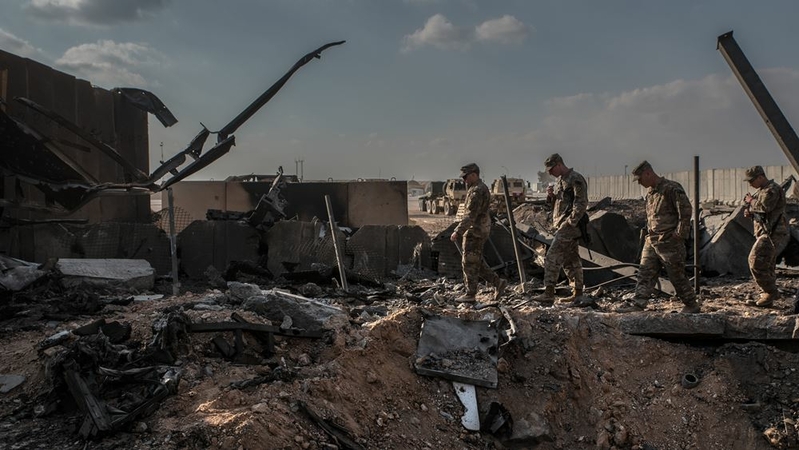
In Iraq, the United States has the approval to keep a residual military force to train Iraqi forces and watch for any resurgence of the Islamic State, Gen. Mark Milley, chairman of the Joint Chiefs of Staff, said recently. But the situation is complicated by Iran, whose proxy forces repeatedly have launched rockets at American military positions. Iran also has vowed revenge for the U.S. killing in Baghdad of Qasem Soleimani, an Iranian general whom U.S. officials have blamed for the deaths of hundreds of Americans.

In Syria, the United States has kept about 1,000 service members deployed in what the Trump administration has said is an effort to protect oil fields from the Islamic State. But the situation is complex, with forces backing the Syrian regime, including Russians, also in the region.

U.S. Special Operations troops also remain in small numbers in Somalia, Yemen and western Africa.

Biden will have to assess risks, including threats to U.S. service members, when examining the future size of any mission, and whether to continue it, said David Maxwell, a retired Special Forces colonel and senior fellow at the Foundation for Defense of Democracies. Arrogance, Maxwell said, has on occasion led to decisions to leave U.S. units without enough support, allowing American fatalities.

“We must be asking: Does this mission fit into our national security strategy?” he said. “It’s a basic equation: Is the benefit [of] conducting this operation worth the cost of conducting it if it goes wrong?”

Michael Nagata, a retired Army general and former director of strategy for the National Counterterrorism Center, said the idea that the United States should focus less on counterterrorism and more on other issues is a “bankrupt premise.” For example, he said, less than three years after the U.S. military withdrew from Iraq, it launched operations there again against the Islamic State in 2014.

“I hear this riff all the time: ‘We’ve got to rebalance,’ as though this is somehow a zero-sum game,” said Nagata, now a distinguished senior fellow with the Middle East Institute. “I understand how attractive that idea is – it’s just completely unrealistic. It never works. It never lasts.”

Poland, Hungary say deal struck on $2.2 trillion EU stimulus #SootinClaimon.Com

#SootinClaimon.Com : ขอบคุณแหล่งข้อมูล : หนังสือพิมพ์ The Nation.

Poland, Hungary say deal struck on $2.2 trillion EU stimulus (nationthailand.com)

Poland, Hungary say deal struck on $2.2 trillion EU stimulus

InternationalDec 10. 2020European Union (EU) flags fly at half mast following the death of Valery Giscard d'Estaing, France's former president, outside the headquarters of the European Commission in Brussels on Dec. 4, 2020. MUST CREDIT; Bloomberg photo by Geert Vanden Wijngaert.European Union (EU) flags fly at half mast following the death of Valery Giscard d’Estaing, France’s former president, outside the headquarters of the European Commission in Brussels on Dec. 4, 2020. MUST CREDIT; Bloomberg photo by Geert Vanden Wijngaert. 

By Syndication Washington Post, Bloomberg · Wojciech Moskwa, Zoltan Simon

Poland and Hungary have agreed on a compromise with Germany to unblock the European Union’s $2.2 trillion budget and pandemic stimulus plan, a senior government official in Warsaw said.

The compromise would end a standoff that saw Budapest and Warsaw threaten to torpedo the EU’s 750 billion-euro ($909 billion) pandemic aid fund and the 2021-2027 budget over objections to attaching rule-of-law conditions to cash.

Polish Deputy Prime Minister Jaroslaw Gowin said an agreement had been clinched with Germany, which holds the EU’s rotating presidency, that would now be presented to the rest of the bloc. A deal could be finalized by Friday by the end of a two-day summit of European leaders in Brussels, he said. A German spokeswoman said a solution hadn’t been reached yet and all member states would need to sign off.

“For now we have agreement between Warsaw, Budapest and Berlin,” Gowin, the government’s biggest advocate of Poland dropping its veto threat, told reporters Wednesday in Warsaw. “I believe this agreement will also include the 24 remaining European capitals.”

The deal was confirmed by a Hungarian official familiar with the state of talks who commented on the condition of not being named. An EU diplomat said officials were waiting for final confirmation that an arrangement had been reached.

A solution would offer a climb-down for Hungarian Prime Minister Viktor Orban and Polish counterpart Mateusz Morawiecki, who’d backed themselves into a corner over their opposition to the money being tied to democratic standards.

EU ambassadors will meet on Wednesday to discuss the budget situation, according to an official.

The proposal being considered would clarify that the rule-of-law mechanism would only apply to new outlays from the EU, with its implementation only happening after the European Court of Justice weighed in, according to two people familiar with the matter who asked not to be named as the discussions are private.

Gowin declined to go into details about the deal, saying only that it keeps “Poland sovereign and the EU united.”

“We know that this veto from Hungary and Poland exists because the financial framework is connected to the rule of law principle,” German deputy government spokeswoman Martina Fietz said in Berlin when asked about whether a deal had been reached. “The chancellor has made clear this morning that she cannot say yet whether a solution will be achieved.”

The zloty jumped 0.7% to the highest level against the euro since September on news of the EU deal. The forint also gained.

The budget holdouts said the link threatened to cut their funding and undermine their governments, which are being probed for alleged violations of the bloc’s norms.

The deadlock threatened at least 180 billion euros that Hungary and Poland were due to receive in the coming years, as well as also payouts that are urgently needed to help ease the record recessions caused by the virus.

It also would have triggered an emergency budget for the EU from Jan. 1, which would have seen funding plunge in almost all areas and potentially put Poland and Hungary at the back of the line for even the limited development aid that would be available in this case.

Migrant caravans head to U.S. border, giving Biden an early test #SootinClaimon.Com

#SootinClaimon.Com : ขอบคุณแหล่งข้อมูล : หนังสือพิมพ์ The Nation.

Migrant caravans head to U.S. border, giving Biden an early test (nationthailand.com)

Migrant caravans head to U.S. border, giving Biden an early test

InternationalDec 10. 2020Residents inspect destroyed houses in the coastal neighborhood of El Muelle after Hurricane Iota made landfall in Bilwi, Nicaragua, on Nov. 20, 2020. MUST CREDIT: Bloomberg photo by Carlos Herrera.Residents inspect destroyed houses in the coastal neighborhood of El Muelle after Hurricane Iota made landfall in Bilwi, Nicaragua, on Nov. 20, 2020. MUST CREDIT: Bloomberg photo by Carlos Herrera. 

By Syndication Washington Post, Bloomberg · Michael McDonald, Eric Martin

President-elect Joe Biden says his priorities when he takes office next month will be the pandemic and economic recovery, but he’s facing another crisis that won’t wait: a wave of desperate migrants on his southern border.

Two ruinous hurricanes that wrecked and flooded swathes of Central America last month have increased the number of families planning a risky journey northward. And after a year of travel bans and soaring unemployment, demand to reach the U.S. was already high.

“There are going to be caravans, and in the coming weeks it will increase,” said Jose Luis Gonzalez, coordinator of the Guatemala Red Jesuita con Migrantes, a non-governmental organization. “People are no longer scared of the coronavirus. They’re going hungry, they’ve lost everything and some towns are still flooded.”

Biden has pledged to abolish many of the migration policies of President Donald Trump, including prolonged detention and separation of families, which were designed to deter illegal migration. This encourages more impoverished Central Americans to make the trip and test the Biden administration, said Gonzalez.

“When there is a change in government in the U.S. or Mexico, caravans start to move because they are testing the waters to see how authorities respond,” he said. “What they see is that the one who said he was going to build a wall and hated Latinos is on his way out.”

On social media, announcements are circulating for caravans, groups of migrants traveling together, leaving San Pedro Sula, Honduras’s second-largest city, which was hit by both storms. The first caravan is scheduled to leave in the coming days and the second in mid-January.

Biden’s advisers are hoping to shift away from Trump’s policies without signaling that the border has been flung open, according to people familiar with the planning. They know that swift, sweeping changes will spur more people to attempt the journey to the U.S.

“President-elect Joe Biden will restore order, dignity and fairness to our immigration system,” said Ned Price, a spokesman for Biden’s transition. “At its core, his immigration policy will be driven by the need to keep families together and end the disastrous policy of family separation.”

A senior Mexican foreign ministry official said migration is likely to remain one of the main challenges in the U.S.-Mexico relationship, adding that Mexico will continue to promote cooperation for development to address its root causes and plan to handle it together with partners in the region.

Hurricanes Eta and Iota were part of a record-setting Atlantic season with 30 named storms. Eta alone caused $5 billion worth of damage across the region and affected 3 million people, flooding homes and damaging roads, bridges and crops throughout Nicaragua, Honduras, Guatemala and El Salvador. Governments are still tallying damages from Iota and water has yet to subside in some towns. The countries were already reeling from the economic slump caused by months of Covid-19 lockdowns.

Victor Espinal, 31, whose home in La Lima, Honduras was flooded by both storms, says he is planning to join one of the caravans. He was laid off at the Chiquita banana packing plant where he worked for eight years, after it flooded, and is afraid he won’t find work again soon.

The house where he lived with his wife, two children and his mother-in-law is now empty, and their mud-soaked mattresses and damaged belongings lay in the street outside.

“There’s nothing for me here now,” he said. “The walls are all that’s left and there isn’t a single piece of furniture, not even a plate to eat off of. I’m not one to cry, but when I returned home I felt like crying. I see memes that say material goods aren’t important, but they are important because people work their whole lives for them and in 15 days, it’s all gone.”

Last month, Guatemala’s president, Alejandro Giammattei, said that without help from rich countries, his citizens and those of surrounding countries would flee.

“If we don’t want hoards of Central Americans looking to move to other countries with better living conditions, we have to make a wall of prosperity in Central America,” he said at an event in Honduras with the Central American Bank for Economic Integration.

Migration from Central America toward Mexico and the U.S. spiked after Hurricane Mitch in 1998 and Hurricane Stan in 2005. Other weather events have also forced Central Americans to abandon their countries in recent years. A study by Inter-American Development Bank showed migration from El Salvador doubled after a severe drought in 2014-15 that hurt corn production.

“The problem in El Salvador and with all these Central American countries is that they’re highly vulnerable to climate events — hurricanes but also extreme droughts,” said IDB Economics Principal Adviser Ana Maria Ibanez. “There is a relationship between migration and extreme weather events.”

As a candidate, Biden called for a $4 billion aid package for Central America and said his administration would address the climate crisis facing the region.

As vice-president to Barack Obama in 2014, Biden led the strategy on confronting the wave of undocumented migrants from Central America. He has a long history of working in Latin America as chairman and ranking member of the Senate foreign relations committee, including the creation of Plan Colombia to combat drug cartels and leftist guerrillas two decades ago.

Biden faces a changed world and no end of foreign policy challenges from China to Iran #SootinClaimon.Com

#SootinClaimon.Com : ขอบคุณแหล่งข้อมูล : หนังสือพิมพ์ The Nation.

Biden faces a changed world and no end of foreign policy challenges from China to Iran (nationthailand.com)

Biden faces a changed world and no end of foreign policy challenges from China to Iran

InternationalDec 10. 2020Members of the Hashd al-Shaabi militia watch as photos featuring Qasem Soleimani and Abu Mahdi al-Muhandis are unveiled in Karrada, Baghdad, on Jan. 20. MUST CREDIT: photo for The Washington Post by Emilienne Malfatto.Members of the Hashd al-Shaabi militia watch as photos featuring Qasem Soleimani and Abu Mahdi al-Muhandis are unveiled in Karrada, Baghdad, on Jan. 20. MUST CREDIT: photo for The Washington Post by Emilienne Malfatto. 
By The Washington Post · Karen DeYoung

WASHINGTON – President-elect Joe Biden has received no shortage of advice on how to fill the yawning gap between his “America’s back!” mantra and the challenges facing a world that has undergone major changes since he last served in the White House.

Biden should concern himself less with human rights in China than with finding issues open to American-Chinese cooperation, foreign policy doyen Henry Kissinger counseled. Let Russia win in Syria, advised Aaron Stein, Middle East director of the Foreign Policy Research Institute.

Progressive groups have called on Biden to cancel major weapons programs and get rid of the Trump-era Space Force. Brazil’s environment minister suggested that if Biden wants to save the Amazon, he should pay for it by buying Brazilian carbon credits. NATO’s secretary general has warned against leaving Afghanistan without an allied agreement.

Biden has set out some big principles – pay close attention to the interplay between domestic and international priorities, consult with allies and participate in international institutions, elevate climate to the top of the agenda – along with plans for first-day reversals of some of President Donald Trump’s more egregious departures from historical norms on issues such as immigration.

But on a host of matters in between, Biden faces competing priorities, congressional hurdles and wary, if welcoming, allies. In some cases, such as with North Korea and Venezuela, the most daunting obstacle to foreign policy success is the one that has bedeviled several presidents before him. There are no good options.

The fight against the coronavirus and righting the economy are likely to consume much of the new president’s first-year emphasis and energy. Biden is “inheriting a country in crisis,” said Ellen Laipson, director of the International Security Program at George Mason University.

“Between the pandemic and not traveling and economic pain, it’s not going to be an easy time for the foreign policy crowd. They’re going to have to wait their turn,” she said.

Some issues will not wait.

New START, the only remaining arms control treaty between the United States and Russia, is set to expire two weeks after Biden’s inauguration. The five-year extension Biden has said he plans to offer will give his administration some breathing room to deal with problems that have worsened over the past four years, including Russia’s development of new strategic and nonstrategic weapons not covered in any arms deal, competition in space-based weaponry and cyber aggression.

Russian President Vladimir Putin will doubtless seek relief from sanctions imposed by President Barack Obama and Trump, Stephen Sestanovich, senior fellow for Russian and Eurasian studies at the Council on Foreign Relations, said in a council podcast last week. But Biden, if so inclined, “is likely to find them very hard to dismantle without backtracking on key issues that led to sanctions in the first place,” including Russia’s annexation of Crimea and military aggression in Ukraine, and poison plots against Kremlin enemies.

Although Biden is likely to seek Russian cooperation on Iran and climate change, “it will take a lot of dialogue, particularly on Ukraine, to see if there’s any give on the Russian side that could justify lifting sanctions,” Sestanovich said.

On Iran, powerful bipartisan forces in Congress oppose Biden’s plan to reenter the nuclear deal from which Trump withdrew. Under the agreement, Iran curtailed its uranium enrichment and allowed strict international monitoring of its nuclear program in exchange for the lifting of economic sanctions.

As Obama and Vice President Biden maintained when the deal was signed in 2015, and the president-elect has now said, the nuclear agreement was designed to be a starting point to remove an immediate threat of an Iranian nuclear weapon and set the stage for further negotiations over stemming the Islamic Republic’s proxy wars and missile development.

Trump argued that those things would never happen, and his departure from the deal ensured that they did not during his administration. Biden’s challenge, beyond dealing with political opposition at home, is how to reenter negotiations with an Iran that portrays itself as the aggrieved party and has expressed no interest in dealmaking beyond the original terms of the agreement.

In the interlocked web of national security issues, Biden must also balance U.S. relationships with the rest of the Middle East, where Israel and Arab countries are likely to object to any outreach toward Iran.

Biden said in October that he will “reassess” the relationship Trump cultivated with Saudi Arabia, “end U.S. support for Saudi Arabia’s war in Yemen, and make sure America does not check its values at the door to sell arms or buy oil.” Those initiatives are likely to find favor with Congress, which saw Trump veto anti-Saudi legislation.

Biden remains committed to ensuring Israel’s security and does not plan to reverse Trump’s recognition of Jerusalem as the Israeli capital and annexation of the Golan Heights. But his opposition to new settlements on occupied land and commitment to a two-state solution with the Palestinians may have less resonance amid new Arab normalization deals with Israel.

At the same time, Biden’s ability to make progress with Iran is an important aspect of his goal to reestablish trans-Atlantic ties with Britain, France and Germany – all still parties to the Iran nuclear deal – and the rest of Europe.

Europe is embroiled in its own problems with the pandemic and rule-of-law rejectionists in countries such as Hungary and Poland, whose leaders Trump embraced. Leading allies are pleased that Biden is a committed trans-Atlanticist who shares their values and has pledged to repair traditional U.S. ties.

But they remain wary about potential contradictions between his vows to reinvigorate U.S. manufacturing and agriculture, and what they hope is an end to Trumpian trade threats and tariffs.

Although Biden has pledged to retain the tens of thousands of U.S. troops who are based as deterrents in Europe, as well as in Japan and North Korea, he also wants to end major deployments to overseas wars, limiting the U.S. presence to relatively small counterterrorism forces of 1,500 to 2,000 to protect the homeland.

That leaves open a lot of questions of interest to NATO and European allies who share responsibility with troops in Afghanistan and Iraq, as well as in Africa.

Biden will take over a world in which the United States, although still a great power, is not necessarily the sole dominant one. “But the passing of U.S. dominance need not mean the end of U.S. leadership,” Jake Sullivan, Biden’s choice as national security adviser, argued in a 2018 essay in Foreign Affairs magazine.

“That is, the United States may not be able to direct outcomes from a position of preeminent economic, political, and military influence,” Sullivan wrote, “but it can still mobilize cooperation on shared challenges and shape consensus on key rules. In the years ahead, although Washington will not be the only destination for countries seeking capital, resources, or influence, it will remain the most important agenda-setter.”

One place where Biden hopes to lead the democratic world in confronting China. Although European allies have sought coordination with the United States on China, U.S. partners in Asia, where neighborhood peace and economies are far more dependent on a smooth relationship with Beijing, are concerned about his intentions.

Biden has not committed to any particular action vis-a-vis China, including the lifting of Trump tariffs or revision of still unrealized trade deals, all of which he has said he will review in terms of how they affect U.S. workers and the economy.

He has called for “pushing back” on “China’s deepening authoritarianism, even as we seek to cooperate on issues where our interests are aligned,” and called on the United States to “speak out” on oppression against Hong Kong and Uighur Muslims.

He has broadly pledged to ensure that China follow international maritime and territorial norms, and said that the United States will greatly increase its diplomatic presence in regional organizations where Trump has largely ceded influence.

Although the Trump administration has beaten the drum against Chinese expansionism and aggression in increasingly bellicose terms, Biden has emphasized a somewhat different approach. He has said he will use the power of U.S. leadership – and a revitalized U.S. economy – to mobilize a more unified global stand against China on all fronts.

“Most important is that we lead once again by the power of our example. America’s commitment to universal values sets us apart from China,” Biden said in written responses to questions posed last summer by the Council on Foreign Relations. “That is how to project a model that others want to emulate, rather than following China’s authoritarian path.”

Deutsche Bank leans on traders as corporate bank outlook cut #SootinClaimon.Com

#SootinClaimon.Com : ขอบคุณแหล่งข้อมูล : หนังสือพิมพ์ The Nation.

Deutsche Bank leans on traders as corporate bank outlook cut (nationthailand.com)

Deutsche Bank leans on traders as corporate bank outlook cut

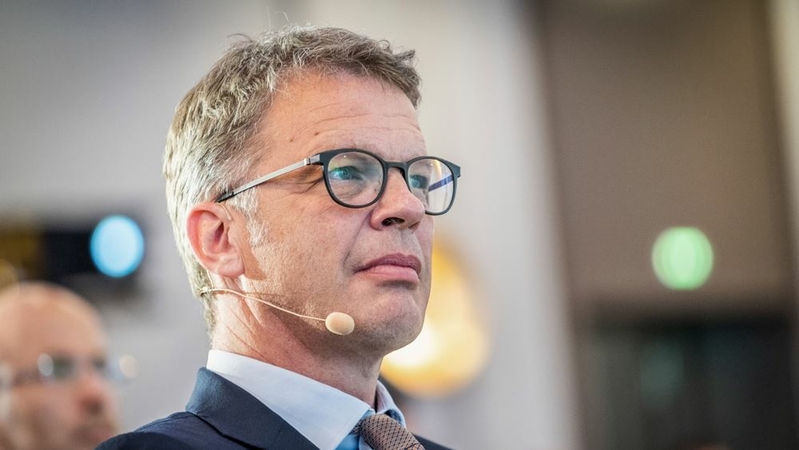
InternationalDec 10. 2020Christian Sewing
, chief executive officer of Deutsche Bank, at the Frankfurt Finance Summit in Frankfurt, Germany, on June 22, 2020. MUST CREDIT: Bloomberg photo by Peter Juelich.Christian Sewing
, chief executive officer of Deutsche Bank, at the Frankfurt Finance Summit in Frankfurt, Germany, on June 22, 2020. MUST CREDIT: Bloomberg photo by Peter Juelich. 

By Syndication Washington Post, Bloomberg · Steven Arons

Deutsche Bank said a trading rally that lifted revenue this year continued into the fourth quarter and will help boost growth through 2022, as Chief Executive Officer Christian Sewing relies increasingly on the investment bank for his turnaround plan.

Sewing on Wednesday increased his outlook for the business, saying it will generate 8.5 billion euros ($10.3 billion) of revenue in two years’ time, 600 million euros more than targeted. But headwinds from negative interest rates forced the CEO to cut the forecast for the corporate bank — a centerpiece of his strategy — and lower the group revenue target slightly, to 24.4 billion euros from 24.5 billion euros.

The bigger role for the investment bank — first reported by Bloomberg on Friday — underscores Sewing’s increasing reliance on a trading business he had initially planned to cut back even further, as profit from lending is being eroded by Europe’s negative interest rates. Fixed-income trading is now a bigger revenue contributor than when former investment bank head Anshu Jain took over as co-CEO in 2012.

“We have really underestimated the potential in those businesses where we want to be strong,” Sewing said in a Bloomberg TV interview. “I do believe that a good part of the outperformance we have seen in 2020 is sustainable.”

Deutsche Bank rose 0.9% at 11:56 a.m. in Frankfurt trading. The stock has gained 38% this year, the best performer among the large European lenders. It’s down about 16% since Sewing took over in April 2018.

Trading grew 10% in October and 23% in November from a year earlier, the lender said in a presentation. Deutsche Bank now expects 9.1 billion euros in revenue at the investment bank for 2020, which translates into about 1.7 billion for the fourth quarter, compared with 1.5 billion euros a year ago. The top line is expected to decline next year when market conditions normalize.

Sewing is counting on the additional revenue from trading to help offset 1.2 billion euros in new headwinds from negative interest rates, which hit the corporate bank the hardest. The unit was initially the centerpiece of Sewing’s strategy when he unveiled it in July of last year. Since then, he’s had to adjust revenue expectations twice because of the rate environment, forcing him to rely more on the trading business he had planned to cut back even further.

Germany’s largest lender also gave a goal for net income for the first time since unveiling the new strategy, targeting 4.5 billion euros by 2022, as it steps up cost reductions in the wake of the pandemic. Germany’s largest lender expects to lower its 2022 adjusted costs by 300 million euros more than previously announced, to 16.7 billion euros.

Sewing, a former corporate banker, last year announced Deutsche Bank’s biggest restructuring in at least two decades, exiting equities trading and focusing on businesses where the bank says it has a leading position. He’s cutting 18,000 jobs, or a fifth of the workforce, after several failed turnaround efforts under his predecessors.

World’s largest rubber glove maker posts record profit #SootinClaimon.Com

#SootinClaimon.Com : ขอบคุณแหล่งข้อมูล : หนังสือพิมพ์ The Nation.

World’s largest rubber glove maker posts record profit (nationthailand.com)

World’s largest rubber glove maker posts record profit

InternationalDec 10. 2020Latex gloves are displayed on hand-shaped molds at the Top Glove Corp. headquarters in Setia Alam, Malaysia, on Feb. 18, 2020. MUST CREDIT: Bloomberg photo by Samsul Said.Latex gloves are displayed on hand-shaped molds at the Top Glove Corp. headquarters in Setia Alam, Malaysia, on Feb. 18, 2020. MUST CREDIT: Bloomberg photo by Samsul Said. 

By Syndication Washington Post, Bloomberg · Yantoultra Ngui

Top Glove Corp., the world’s largest rubber gloves maker, posted a record first-quarter profit as the coronavirus pandemic continued to drive demand for protective equipment.

Net income jumped to 2.38 billion ringgit ($584 million) in the three months ended November, from 111.4 million ringgit in the year-ago period. Revenue almost quadrupled to 4.76 billion ringgit, according to an exchange filing on Wednesday.

Top Glove and its peers have been one of the hottest pandemic trades of 2020, with their shares scaling to records as they rode on an extraordinary boom in demand for protective gear amid the pandemic. The rollout of covid-19 vaccines next year won’t hurt demand for medical gloves as people administering the shots will need protection, the company said, as it set aside 10 billion ringgit to expand capacity by 100 billion pieces over five years.

Top Glove also allocated 100 million ringgit for workers’ housing following the spread of infections at its plants last month that prompted the government to order the company to shut 28 of its factories. The outbreak capped Top Glove’s gains this year, with the stock tumbling 17% in November, the biggest monthly drop since January 2016, as the company said some deliveries could be delayed by up to four weeks.

“In the short run, investors will need to be pay attention to the impact of the closures of factories and potential fines or penalties for living conditions of their workers on the company’s earnings,” said Chua Zhu Lian, investment director at Fortress Capital Asset Management Sdn. in Kuala Lumpur. “Overall, Top Glove should continue benefiting from the higher average selling prices,” he said, adding new entrants into the business will eventually increase supply.

The company proposed an interim dividend of 16.5 sen per share. The stock slid 3.5% to end at 6.84 ringgit as investors including Chua said the record earnings had already been factored into the price. The shares have surged more than 300% this year.

Markets around the world have been given a series of boosts in recent weeks by vaccine news from pharmaceutical firms including Pfizer Inc., Moderna Inc. and AstraZeneca Plc. Top Glove said demand for gloves won’t revert to pre-pandemic level because of rising awareness of hygiene.

“In the weeks to come, a lot of people will be watching the trend and if some of these vaccine don’t prove to be effective, there will be a pullback and scientists will continue to look for the correct vaccine,” Managing Director Lee Kim Meow said at a virtual briefing. “It also takes time to manufacture these vaccines.”

The outsized gains in glove producers’ shares this year have altered the composition of Malaysia’s stock market. Supermax Corp. is set to join rivals Top Glove and Hartalega Holdings Bhd. in the benchmark FTSE Bursa Malaysia Index on Dec. 21. The addition will take the sector’s weighting in the gauge to 13.6% from 11%, according to Smartkarma.

Supermax has rallied more than 1,000% this year, while Hartalega has more than doubled. Meantime, Top Glove is “still working” on its plan to list in Hong Kong, Chairman Lim Wee Chai said the virtual briefing.

The end of Brexit is finally in sight. What actually happened? #SootinClaimon.Com

#SootinClaimon.Com : ขอบคุณแหล่งข้อมูล : หนังสือพิมพ์ The Nation.

The end of Brexit is finally in sight. What actually happened? (nationthailand.com)

The end of Brexit is finally in sight. What actually happened?

InternationalDec 09. 2020

By The Washington Post · Adam Taylor · WORLD, EUROPE 

It was more than four years ago, back in the heady summer of 2016, that Britain voted to leave the European Union. At the time it seemed like a simple decision about the country’s place in the world. Time has proved otherwise.

Britain’s efforts to depart have involved endless negotiations over arcane details. Two British leaders resigned amid the fallout, contesting bitter intraparty rivalries. And the country’s economy is set to decline nearly 10 percent in 2020 in the face of intertwining sources of uncertainty: Brexit and the coronavirus pandemic.

After all this time, Brexit is finally happening. At the end of the year, the negotiations set in motion by the 2016 vote are due to finish. At the end of a winding journey, it’s time to look back and ask:

What on Earth just happened? And did anyone get what they wanted?

– So, what is Brexit exactly?

Brexit, a portmanteau of “Britain” and “exit,” became a popular term to describe the movement to pull Britain out of the E.U. in 2012, with origins in a long-standing drive to cut Britain’s ties to Europe.

Britain joined European Economic Community, the precursor to the E.U., in 1973. But as the body expanded its scope and powers, it became increasingly controversial in Britain. Some argued that E.U. legislation and rules were holding the country back.

The issue of Britain’s membership in the European Union had been divisive within the center-right Conservative Party for decades. These divisions led to the downfall of Prime Minister Margaret Thatcher in 1990 after pro-Europe members of Parliament ousted her.

– Why did Britain hold a referendum?

In 2015, Prime Minister David Cameron pushing for a second term. But he was concerned that divisions over the E.U. could send his ruling Conservative Party back to its role as the opposition, where it was stuck from 1997 to 2010.

The United Kingdom Independence Party (UKIP) was siphoning off support for the Conservatives by running on an explicitly pro-Brexit platform. Polls showed growing support for UKIP and some Conservative figures had defected to the upstart party.

Cameron favored remaining in the E.U., but wanted to give Brexit-backers a reason to support him. So he promised to hold a referendum on the issue if he won the election. At the time, most polling suggested that “remain” would win such a vote. Cameron won reelection comfortably.

But after the date of the referendum was set – June 23, 2016 – the polling began to narrow substantially as popular Conservative figures like Boris Johnson backed Brexit amid a global wave of populism. The “Remainers” eventually lost the vote by a 52-to-48 split. Cameron resigned the morning after the results were announced.

– Why did it take so long to leave the E. U.?

There was no preexisting playbook for a country looking to drop out of the E.U.; it had never been done. Before they could even start planning their future relationship, Britain had to negotiate a withdrawal agreement spelling out the terms of its departure – in negotiation with a 26 nation bloc in which every government has a veto.

Just as tricky were the politics at home. Britain voted in favor of Brexit, but it was never clear what exactly that meant. Some argued that Britain could pursue a “soft Brexit” and seek a close relationship like Norway, an outsider that is essentially bound by many E.U. rules. Others railed against that course as outside the spirit of Brexit and urged a clean break – a “hard Brexit.”

To make matters worse, Britain’s Supreme Court decided in Jan. 2017 that Parliament must have a say on any Brexit deal. Cameron’s successor, Theresa May, tried to reach a compromise in-out deal, but it was voted down in Parliament three times before she eventually resigned.

– What aspects of Brexit have led to the biggest disagreements?

More than three years after Britain voted for Brexit, in July 2019, Johnson, an idiosyncratic though popular politician who had personally backed Brexit, succeeded May.

He quickly pushed for a new election, in which he won a comfortable majority in Parliament. The new prime minister was able to get his withdrawal agreement through Parliament in January 2020, which resulted in the long-awaited “Brexit Day” on Jan. 31 – when Britain formally Brexited.

In many ways, however, the sense of ending was a mirage: Britain may have negotiated its E.U. departure, but it had yet to reach the more important agreement on its future relationship with the bloc. The country entered into an 11-month transition period in which it could negotiate a future trade deal with Europe.

Many of the problems about future relationship have lingered, unresolved. Even this month, there have been significant arguments over fishing rights and other topics.

The largest debate lingers over the Irish border, across which seamless travel from Northern Ireland to Ireland and vice versa is permitted. If trading rules between Northern Ireland do not align with those of Ireland, an E.U. member state, it could result in the need for a hard border – a potential breach of the Good Friday Agreement that some fear could lead to sectarian violence.

– What is a no-deal Brexit?

Johnson’s government has taken a hard line negotiating style, at one point even suggesting that it would might withdraw from elements of the withdrawal agreement – in potential violation of international law – in a dispute over the Irish border.

The British prime minister has also toyed with the idea of a “no deal” Brexit, under which Britain would leave the E.U. at the end of this year when the transition period ends. Under this scenario, Britain would revert to World Trade Organizations for goods from Europe at its border – a chaotic scenario that could disrupt international trade.

Economists suggest such a scenario would be an economic disaster for Britain, but it would hurt E.U. nations too. In October, Johnson said the country needed to prepare to leave the E.U. without a trade deal with “high hearts and with complete confidence.”

– What long-term effects might Brexit have?

It is hard to say. Britain has struggled economically since the 2016 vote, but the effects of Brexit have been overshadowed by the pandemic. Likewise, Johnson’s ambitious plans for a “Global Britain,” free of E.U. involvement, have sputtered amid a disaster that has killed more than 60,000 people.

Some pro-Brexit voices have argued that short-term economic pain was always likely and that the benefits will come in time. Some British officials have pointed to the country’s speedy approval of the Pfizer vaccine as proof of how the country was held back by European bureaucracy, although critics quickly pointed out that the approval was granted under E.U. rules.

In the years since the Brexit vote, polling agencies have asked the public regularly how it would vote in a second referendum. Most recent polls have revealed a nation divided, with most polls suggesting a small but consistent majority preferring to stay in the E.U. Even as Brexit ends, the debate about it will continue.

Bangkok’s BNH Hospital confirms 4 health staff tested positive for Covid-19 #SootinClaimon.Com

#SootinClaimon.Com : ขอบคุณแหล่งข้อมูล : หนังสือพิมพ์ The Nation.

Bangkok’s BNH Hospital confirms 4 health staff tested positive for Covid-19 (nationthailand.com)

Bangkok’s BNH Hospital confirms 4 health staff tested positive for Covid-19

NationalDec 10. 2020

By THE NATION

BNH Hospital confirmed that four of its health staff working in an alternative state quarantine (ASQ) unit in Bangkok have tested positive for Covid-19.

The announcement on Wednesday came shortly after the Department of Disease Control reported that some health workers in alternative state quarantine had contracted Covid-19 after one of them took the temperature of a family of three in ASQ between November 24 and 27.

“The infected workers have been separated and treated under strict protocols of the hospital and supervision of the Public Health Ministry, while their close contacts have been traced,” BNH said.

“Other staff who carry a high risk of having close contact with the infected staff have also been quarantined, while those carrying a low risk were tested and all have negative results,” it said.

“The hospital has also employed preventive measures to make sure that all areas of the facility are infection-free,” it added. “If you are still concerned about the risk of infection at the hospital, you can opt to receive consultation services through our virtual platform online.”

Over 150 detained for drug test in raid on Bangkok nightclub #SootinClaimon.Com

#SootinClaimon.Com : ขอบคุณแหล่งข้อมูล : หนังสือพิมพ์ The Nation.

Over 150 detained for drug test in raid on Bangkok nightclub (nationthailand.com)

Over 150 detained for drug test in raid on Bangkok nightclub

NationalDec 10. 2020

By THE NATION

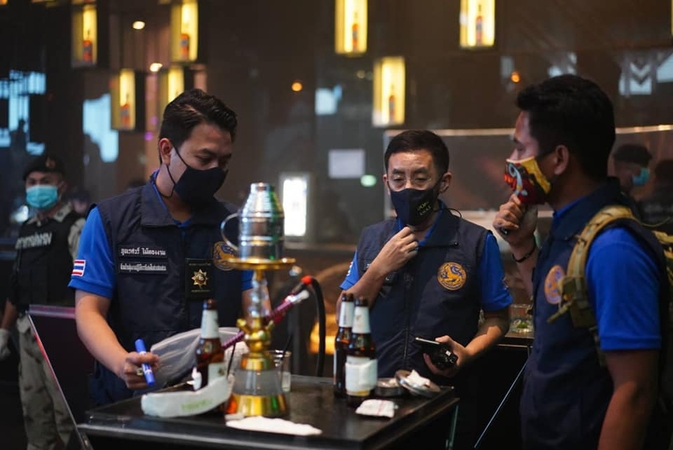
More than 150 club-goers were detained for a drugs test after Law Enforcement Operations Centre officers raided the Insanity Nightclub on Soi Sukhumvit 11 in Bangkok’s Watthana district at 3am on Thursday following a tip-off that the establishment had no permit, allegedly sold baraku and other drugs to visitors, opened beyond the legal limit until 4am and did not employ Covid-19 preventive measures.

Officers found the more than 150 club-goers, both Thai and foreign nationals, dancing in a crowded space. Most did not wear a face mask.

All exits were promptly closed off and the club-goers detained for a drugs test via urine samples.

Officers also reportedly found several baraku smoking pipes in the building as well as white powder in the bathroom, which they suspect to be ketamine. They have collected all evidence for an investigation.

Operations centre director Ronnarong Thipsiri said a preliminary urine result found some club-goers tested positive for drugs.

“Once detailed testing and investigation are complete, we will file charges against the owner and customers,” he said.

“This establishment has clearly violated several orders of the National Council for Peace and Order, and is punishable by being shut down for five years,” he added.