Biden promises to fight new variant with science and speed, not chaos and confusion

#SootinClaimon.Com : ขอบคุณแหล่งข้อมูล : หนังสือพิมพ์ The Nation.

https://www.nationthailand.com/international/40009550


WASHINGTON – President Joe Biden announced an array of measures Thursday to protect Americans from a potential winter surge of coronavirus infections, as three states confirmed cases linked to the omicron variant and international researchers shared data that the still-mysterious variant may lead to more reinfections.
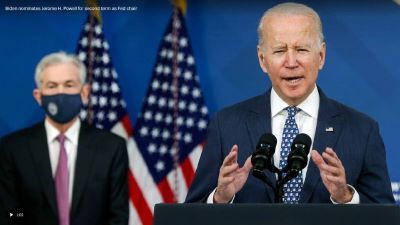
“We’re going to fight this variant with science and speed, not chaos and confusion,” Biden said in a speech at the National Institutes of Health, appealing to Americans to put aside partisan differences and continue to get vaccinated, wear masks and take other precautions. “This is a moment we can put the divisiveness behind us, I hope.”

The president’s plan includes campaigns to increase vaccinations and booster shots, more stringent testing requirements for international travelers and plans to make rapid at-home coronavirus testing free for more people. While some of the measures are new – notably a plan to launch “family mobile vaccination clinics,” where all eligible members of a family could simultaneously get shots and boosters – others build on existing tactics, such as rallying businesses to mandate vaccination-or-testing requirements for employees.

Public health experts praised aspects of Biden’s plan but called for further investments in testing, screening and combating misinformation about the vaccines. They also said that Biden’s vow that the nation will ward off omicron after it “beat back” the delta variant doesn’t reflect a reality where the virus continues to circulate at high levels, with more than 140,000 coronavirus-linked deaths in the United States since the start of September.

It’s the “most aggressive pandemic plan yet for the United States, but still falls short of all that’s needed now,” said Eric Topol, director of the Scripps Research Translational Institute.

Biden’s package of coronavirus strategies comes as officials confirmed omicron-linked infections in California, Minnesota and Colorado, and South African researchers reported that the new variant appeared to significantly increase coronavirus reinfections among those who had previous cases, although the symptoms were mild. Scientists caution that it will take days, if not weeks, to fully understand if the new variant can evade current vaccines and treatments, or cause more severe symptoms in infected people.

In his remarks, Biden stressed that the vaccines remain the best protection against existing and new variants, and that all adults should get a booster shot as soon as they are eligible,given that immunity appears to wane over time – a position increasingly echoed by public health experts.

“Starting today, we’re making it easier than ever to get a booster shot,” the president said, touting a plan for pharmacies to send text messages and emails to remind Americans when they are due for the additional shots. The federal health department also will launch new booster-shot ad campaigns and partnerships with organizations like AARP, the advocacy group for older Americans.

Medicaid, the safety net health insurance program, also will reimburse participating health-care providers for “COVID-19 counseling visits,” where health workers answer families’ questions about vaccines and stress the importance of getting children immunized.

But as the White House confronts a slowdown in new vaccinations, it was unclear whether such plans would spur significant movement in a country where attitudes appear to have hardened over the last year. Fifty-eight percent of Americans were considered “fully vaccinated” against the coronavirus as of Nov. 1 – a figure that climbed to only 59.4% as of Dec. 1, according to The Washington Post’s vaccination tracker.

There is also emerging evidence of a widening partisan gap among Americans choosing to get a booster shot. The Kaiser Family Foundation on Thursday reported that 32% of vaccinated Democrats have received a booster shot, compared to 21% of independents and 18% of Republicans. Meanwhile, 31% of vaccinated Republicans said they definitely or probably would not get a booster shot.

“We saw partisanship play out as the biggest predictor of whether people would get a first shot,” said Liz Hamel, a Kaiser Family Foundation vice president. “Now we’re seeing that even among the fully vaccinated, Republicans are less eager to get boosters.”

Biden also touted a plan to make rapid at-home tests more available by requiring private insurance companies to reimburse consumers for the cost of the tests, beginning in January, while community health centers and some rural clinics offer them for free. “Private insurers already cover the expensive PCR test that you get at a doctor’s office, and now they will cover at home tests as well,” the president said, although the plan will not apply retroactively to already purchased tests.

Some public health experts said they had questions about how the model – which calls for the departments of Health and Human Services, Labor and Treasury to issue federal guidance by Jan. 15 – would be implemented.

Nirav D. Shah, president of the Association of State and Territorial Health Officials and director of Maine’s Center for Disease Control and Prevention, said that state officials are hoping the reimbursement would be approved in real time when someone bought the test – in the same way such claims are processed when people get flu shots and prescription medications.

“Lumping in the covid test under that model would greatly expand access,” he said during a news conference Thursday.

Others argued it would be better for the government to buy the tests and distribute them widely at no charge.

Using private health insurance is “a sucker strategy,” added Tinglong Dai, professor of operations management and business analytics at the Johns Hopkins University Carey Business School. “You have to buy this test and then get reimbursed; it’s a lot of hassle.” In addition, he said, insurance companies eventually raise premiums to recoup their costs. “Nothing is really free,” he said.

Public health experts have spent months clamoring for more access to rapid coronavirus testing, warning that the lack of real-time data on infections has had disastrous consequences for containing the virus’s spread.

“Free and highly available rapid tests would be a game-changer,” said Charity Dean, a former California health official and the CEO of the Public Health Company. “If we had rapid tests at every door for every school, every movie theater, any person can go and get them – just like they can in many other countries – it would enable people to have personal responsibility and know when they’re infectious.”

Shah, head of Maine’s CDC, stressed the continued difficulty that states have had in obtaining rapid at-home tests from manufacturers, as well as getting funding to pay for them. State health departments buy tests in bulk for schools, nursing homes, prisons and other places experiencing local outbreaks.

In Maine, officials have ordered tens of thousands of Abbott’s BinaxNOW rapid at-home antigen tests for delivery, but Abbott has not delivered in a timely fashion, Shah said. While there are other authorized rapid tests on the market, state officials need to send the same test to institutions because “that’s what they know how to use,” Shah said.

Biden also announced that inbound international travelers must be tested for the coronavirus within one day of global departure, regardless of nationality or vaccination status, beginning early next week. That toughens protocols for vaccinated travelers, who had been able to get tested as long as three days before departure. The move, which federal officials had weighed earlier this week, comes after the White House imposed travel restrictions on eight nations in southern Africa following warnings from scientists about the emergence of the omicron variant.

Celine Gounder, an epidemiologist and infectious-disease specialist who advised Biden’s transition team on covid-19 response, said she was unhappy the White House prioritized restrictions and testing for international travelers, while overlooking domestic flights.

“When you think about Texas, it’s the size of France – and it operates as its own country in many respects,” Gounder said, calling for a renewed focus on how state policies contribute to the virus’s spread. “If you’re really trying to prevent spread of dangerous variants, you should be providing similar standards across the board,” she said.

Asked about additional restrictions on domestic and international flights, White House press secretary Jen Psaki said Thursday that “nothing is off the table” when it comes to controlling the virus’s spread. Psaki said the administration is considering what is “most implementable” but noted that “our most important factor is what is going to be most effective.”

Biden also extended requirements that travelers wear masks on airplanes, public transportation and trains, as well as in transportation hubs such as airports and bus stations. The measures, which were set to expire in January, will run through at least March 18, and the minimum fine for noncompliance will be doubled to $500. But the administration’s plan does not include new masking or vaccination mandates – a move that White House officials characterized as unnecessary and that public health experts said would be difficult to implement.

“I feel like they’ve kind of maxed out what they can do with mandates, from a political perspective,” Gounder said.

Some experts said that renewed shutdowns in the wake of omicron would likely be unnecessary.

“The reason why we had to do broad shutdowns and broad stay-at-home orders in March 2020 was because we were flying blind” and lacked information on the virus or how to fight it, Dean added. “Today . . . we can use the tools at our disposal to execute containment and mitigation with surgical precision.”

Biden’s plan arrives as White House officials are in constant communication with their counterparts overseas and vaccine manufacturers about the potential impact of the omicron variant.

Biden and his aides have long said his political fortunes are tied to the pandemic response. And after a difficult summer highlighted by climbing covid cases, a chaotic withdrawal from Afghanistan and supply chain disruptions, White House officials were optimistic about shifting the focus to the president’s economic agenda as the ravages of the delta variant subsided. But the emergence of a new and potentially more dangerous variant has complicated the president’s messaging efforts.

“I expect this not to be the new normal,” Biden said Monday when asked if the country should get used to the idea of new variants and occasional rounds of travel restrictions.

Published : December 03, 2021

By : The Washington Post
House passes stopgap spending bill, but path to avert shutdown remains unclear in the Senate

#SootinClaimon.Com : ขอบคุณแหล่งข้อมูล : หนังสือพิมพ์ The Nation.

https://www.nationthailand.com/international/40009549


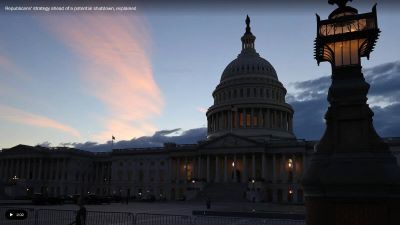
WASHINGTON – House lawmakers on Thursday adopted a bipartisan bill to fund the government into early next year, but a Republican revolt in the Senate against President Joe Bidens vaccine policies still threatened to grind key federal agencies and programs to a halt.

The 221-to-212 nearly party-line vote in the House marked an important development if lawmakers hope to stave off a shutdown that is set to occur at midnight Friday. But its fate in the Senate seemed in great doubt, as Republicans doubled down in opposition to its swift passage with just over 24 hours before the crucial fiscal deadline.

For the second day in a row, a group of Republicans led by Sen. Roger Marshall of Kansas threatened to hold up the government funding measure in protest of a presidential directive that orders large employers to require coronavirus vaccines for workers or implement comprehensive testing programs. Even though many public health experts see such policies as critical to combating the pandemic, the GOP lawmakers charged that Biden’s mandates are unconstitutional and threaten Americans’ rights and jobs.

“We have seen in the course of this pandemic Democrats being very comfortable with being petty tyrants and decreeing that you must obey their medical mandates,” said Republican Sen. Ted Cruz of Texas, who has played a lead role in prompting at least one shutdown in the past.

https://www.washingtonpost.com/video/c/embed/00f377f9-46e7-49bb-bcbe-40b468ecd541?ptvads=block&playthrough=false

The GOP blockade created significant political headaches for Senate Majority Leader Charles Schumer, D-N.Y., and Senate Minority Leader Mitch McConnell, R-Ky., who endorsed the bipartisan funding deal earlier in the day. Only with the support of every chamber lawmaker can the Senate advance the spending resolution before midnight Friday – otherwise a shutdown into early next week is all but guaranteed.

Republicans including Marshall and Cruz did signal Thursday they might be open to an agreement to speed up the clock. Seeking to wield their influence ahead of a critical fiscal deadline, they each said they would be open to allowing the funding bill to proceed expediently in exchange for a vote on an amendment that would defund federal enforcement of Biden’s vaccine and testing policies.

Yet Democratic and Republican leaders by Thursday evening declined to say whether they are willing to permit such an amendment, which conservatives have said they want to be set at a 51-vote threshold for passage. Adding to the political uncertainty, Sen. Joe Manchin, D-W.Va., unexpectedly expressed an openness to supporting such a GOP-led amendment on vaccines, even though he opposed a similar effort offered by Republicans earlier this fall. That vote had occurred before the president announced his vaccine-and-testing policy targeting private businesses.

“I’ve been very supportive of a mandate for federal government, for military, for all the people who work on a government payroll,” Manchin said. “I’ve been less enthused about it in the private sector. So we’re working through all that.”

The Senate jostling only raised the odds that the country could barrel into a short-term shutdown this weekend, an outcome that both parties have insisted for days they do not actually want. The growing possibility even prompted Biden to engage Senate leaders directly Thursday, after which he told reporters he thinks a shutdown will not occur.

“We have everything in place to be able to make sure there is not a shutdown,” Biden said.

On Capitol Hill, meanwhile, some Republicans appeared frustrated by the political predicament created by members of their own party – especially since the funding bill has the votes necessary to pass.

“We know ultimately we’re going to fund the government,” said Sen. Richard Shelby of Alabama, the top Republican on the chamber’s appropriations panel and one of the architects of the new funding deal.

In the process, Shelby said lawmakers faced an urgent political choice: “Do we do it before midnight [Friday]? Or do we stretch it out a few days and get the same result.”

Washington is no stranger to government shutdowns, though each one is different in its scope, duration and the number of Americans it affects. For the most part, many federal operations continue during a funding lapse: Social Security and Medicare benefits do not halt, the Postal Service continues delivering mail, and military functions can proceed.

At times, though, the disruptions can prove significant. National parks often close, though the Trump administration tried to keep them open during a lengthy shutdown two years ago in manner that some budget experts said violated federal law. Passport applications can be delayed, and foreign embassies can curtail services. Federal agencies shutter many services deemed nonessential, sometimes delaying things such as tax filings and passport applications.

For many workers, meanwhile, the implications can be severe. Hundreds of thousands of federal employees are often sent home or forced to work without pay. Those furloughs and other consequences may not rear their heads in the event the shutdown only occurs into a weekend, but the disruptions could prove more troublesome for families and businesses in the event that it drags on for an extended period of time.

With these consequences in mind, Democrats and Republicans began Thursday on a positive political note, brandishing a new funding deal. Known as a continuing resolution, it is set to cover federal operations into Feb. 18 – at which point lawmakers either must adopt another short-term deal or complete their work on roughly a dozen longer-term appropriations bills that fund the government for the remainder of fiscal 2022.

Lawmakers also included as part of the stopgap an additional $7 billion to assist Afghan evacuees. But they generally did not address a slew of unresolved policy issued that they had hoped to tackle as part of the continuing resolution, a reflection of the tense talks that delayed a vote on government funding for days.

“While I wish it were earlier, this agreement allows the appropriations process to move forward toward a final funding agreement which addresses the needs of the American people,” said Rep. Rosa DeLauro, D-Conn., the leader of the House Appropriations Committee.

Shelby later offered his own blessings: “I’m pleased that we have finally reached an agreement on the continuing resolution. Now we must get serious about completing [fiscal 2022] bills.”

Those fights entering February are likely to be fierce, as Democrats hope to deliver on Biden’s budgetary goals, spending greater sums in areas including health and education, while Republicans hope to whittle down those amounts and devote more resources to the Pentagon. Democrats and Republicans also have squared off on a host of policy items, including the fate of the Hyde Amendment, which blocks federal funding for abortion – a provision Democrats hope to scrap despite unwavering GOP objections.

For now, though, House leaders on Thursday adopted the short-term resolution after a brief debate. Taking to the chamber floor, House Majority Leader Steny Hoyer, D-Md., blasted the GOP for failing to provide “any help” toward funding the government until the fiscal year that ends in September.

“This is a result of the inability of the Congress to work,” he said.

House Republican leaders, meanwhile, encouraged their members to oppose the spending stopgap in a move that threatened to inch the country closer to a shutdown. In doing so, they argued that Democrats had failed to negotiate because they spent too much time trying to advance Biden’s broader economic agenda. All but one – Rep. Adam Kinzinger, R-Ill., – later opposed the bill.

“This government should be shut down,” said Rep. Marjorie Taylor Greene, R-Ga., citing a need to control the deficit only days after she said denying federal funding would thwart the president’s vaccine policy and stall Democrats’ agenda. “You want to know why it should be shut down? Because the people in here. The people in here cannot control themselves.”

While the House ultimately muscled through GOP objections, the Senate soon found itself staring down a lengthier, more treacherous fight – chiefly as conservatives raised new objections around vaccines.

Speaking from the well of the chamber, Sen. Mike Lee, R-Utah, blasted Biden’s vaccine-and-testing policies targeting companies as unconstitutional. He slammed Schumer specifically, stressing that conservatives for weeks had made clear to the majority leader that they planned to push an effort to defund the mandates as part of the debate over federal funding.

“I don’t want to shut down the government,” Lee said. “The only thing I want to shut down is Congress funding enforcement of an immoral, unconstitutional vaccine mandate.”

Schumer, for his part, expressed his hope earlier Thursday that “cooler heads will prevail on the other side.” He touted the bipartisan work that had yielded the new deal to fund the government until February, adding of the potential for obstruction: “If there is a shutdown, it will be a Republican, anti-vaccine shutdown.”

McConnell, meanwhile, insisted that dissenting lawmakers would eventually fall into line. “We’re not going to shut the government down,” he told Fox News. “That makes no sense for anyone. Almost no one on either side thinks that’s a good idea.”

Published : December 03, 2021

By : The Washington Post
Crowds descend on Chinatown

#SootinClaimon.Com : ขอบคุณแหล่งข้อมูล : หนังสือพิมพ์ The Nation.

https://www.nationthailand.com/thai-destination/40009536


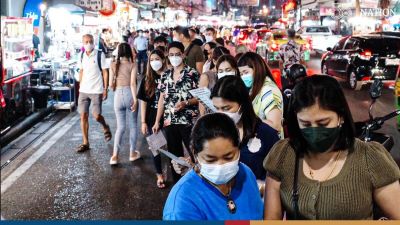
Yaowarat Road, or Bangkoks Chinatown, has sprung back to life again as many Thais and foreigners flocked to the area to wolf down various delicacies on Wednesday night.

It’s all thanks to the government’s recent decision to lift curfew and ease other measures, otherwise Chinatown would have turned into a ghost town.

Crowds descend on Chinatown

The Nation Thailand, however, advises people not to visit Yaowarat Road on Monday as street food vendors operate from Tuesday to Sunday. Happy eating!

Crowds descend on Chinatown

Related stories:

Crowds descend on Chinatown

Published : December 02, 2021

By : THE NATION

Up all night with a Twitch millionaire: The loneliness and rage of the internets new rock stars

#SootinClaimon.Com : ขอบคุณแหล่งข้อมูล : หนังสือพิมพ์ The Nation.

https://www.nationthailand.com/life/40009556


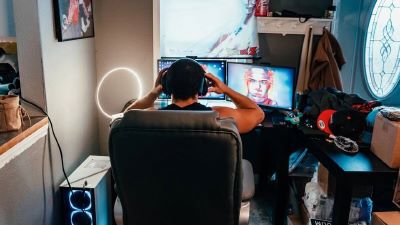
NEW LONDON, Mo. – Just before midnight, six hours into his 10-hour Twitch live stream, Tyler Steinkamps rage begins to erupt.

He’s just scarfed down a dinner of cold chicken fingers over the sink during a three-minute ad break and raced back to his computer, where he is playing the “battle arena” game “League of Legends” as 28,762 people watch.

His face is broadcast onto the screen, alongside convulsions of neon warfare and a raucous chat box overflowing with 280 messages a minute. An anonymous audience is demanding his attention and unloading on him for every mistake. He has four hours of on-camera time to go.

“It’s going to be a terrible day,” he tells a Washington Post reporter before turning back to his screen to read one chat message aloud: ” ‘Does “League” make y’all depressed?’ Yeah, it does.”

As “loltyler1,” his Twitch audience expects him to be tirelessly brash and dominant. But Tyler is trapped in a losing streak, and he’s been reeling from too little sleep. He dies in an in-game brawl and snaps: “I’m so over this s—.” Another 282 messages blast in.

At 26, Tyler is a millionaire and one of the internet’s most popular streamers. For 50 hours a week, he broadcasts himself playing video games from his cramped living room in his 900-person Missouri hometown to 4.6 million followers, watching from around the world.

He earns more than $200,000 a month in Twitch ads and viewer subscriptions. Sponsorships with Nike and Doritos, contracts with giant esports teams, fan donations and merchandise sales have earned him millions more.

When he dropped out of college to stream, Tyler cast himself as an alpha among dweebs, known for crude banter and wild gameplay. To a generation raised by the internet, he became bigger than a rock star: Fans pay him every month for access and intimacy, which he provides in great amounts, allowing nearly every day of his life – from his virtual battles to his most personal real-world moments – to be dissected and criticized.

Streamers like Tyler form the backbone of tech giants’ “creator economy,” and with their lives on permanent display, they’ve pioneered a raw form of entertainment. While Instagram and TikTok value viral perfection, Twitch fans flock to more unpolished streamers; no one can stay perfect on a 10-hour marathon. (Twitch was bought in 2014 for nearly $1 billion by Amazon, whose founder, Jeff Bezos, owns The Washington Post.)

But the punishing need to stay relevant in a supersaturated market is also fueling severe burnout. After five years of building an unapologetically aggressive persona for an audience of mostly young men, Tyler is exhausted by the expectations of an unforgiving crowd. Tyler, whose father is Black, has endured years of personal insults and sometimes explicitly racist abuse. And as his online world has grown, his real one has shrunk dramatically. Tyler has millions of fans but no friends; before spending a recent day with a Post reporter, no one besides his girlfriend and family had visited his house in several years.

“There are just eyes on you, always on you,” he said. “Kids grew up watching me for 10 hours a day. It feels like it’s been my whole life.”

Twitch officials acknowledge that many streamers suffer from burnout and harassment: The company recently hosted a “Creator Burnout” workshop and offers mental health guides for concerns about addiction and self-harm. “We recognize that while creating content is an incredibly rewarding creative experience, a public life online comes with its own pressures and challenges,” a Twitch spokesperson said.

But Tyler is one of the few to see tangible rewards from his Twitch career. When hackers in October published a vast haul of internal Twitch data, they exposed the site’s brutal economy: Though more than 7 million people stream on Twitch every month, only the top 3,000 – less than 0.1 percent – made more than the typical American household earning $67,000 a year. The vast majority earned next to nothing, streaming to empty chat rooms, waiting for a single person to come watch.

Tyler, meanwhile, has brought in more than $2.5 million from the site since August 2019, according to the leaked data, making him Twitch’s 15th highest-paid streamer around the world.

As Twitch’s viewership exploded last year – up 67 percent to more than 1 trillion minutes watched – Tyler gathered an intense fan base seeking community and escape across a fractured internet. But as a gig worker for a media empire, even a successful streamer like Tyler has a livelihood that’s inherently unstable – without insurance, unions, sick days, retirement funds or hope for a sustainable career.

Many people see popular streamers as modern-day success stories, paid only to be themselves, said Brooke Erin Duffy, an associate professor at Cornell University who interviewed influencers for her new book, “Platforms and Cultural Production.” But that “myth of glamour” obscures a reality of extraordinary pressure, she said – the grueling systems of online metrics, the incessant demands of followers, the invisible burden of personal attacks.

“These companies have tremendous power and are reaping tremendous rewards from the creator economy, but they don’t provide the mechanisms of support that a traditional workplace would,” Duffy said. “The job is profoundly individualized and precarious. The fact is, it’s all on you.”

– – –

Growing up in Missouri, Tyler loved to entertain, showing off in front of the camera at his first birthday party. When his mother got their first computer from Rent-a-Center, the 5-year-old would stand behind her while she played Minesweeper, helping her find the bombs.

She’d had him at 17. Tyler never knew his dad, but his mom introduced him once when he was very young, worried Tyler might regret never having seen his face. In the winters, they’d heat their trailer with the oven or scrounge quarters to pay for gas.

Tyler spent hours in the school gym and in the sprawling fantasy worlds of “Diablo” and “RuneScape,” developing an all-consuming competitive streak. He’d duel into the night with his brother over video games, hugging the computer to quiet the sound.

At Central Methodist University, where he played football, he started streaming from his dorm room so his “RuneScape” buddies could watch his screen while he played. Then on Christmas 2015, his grandmother gave him a $50 Best Buy gift card, which he used to buy a webcam. His face has been on the stream ever since.

On Twitch, Tyler said, he multiplied his personality by 20: an over-the-top meathead who didn’t take himself too seriously, a stranger who joked like a friend. His teammates pounded on the door for him to come hang out, but Tyler never relented. “I would just sit inside,” he said, “perfecting my craft.”

His audience grew until finally he made $52 in a week – enough, he reasoned, to live on, if he ate $10 worth of rice and potatoes each week. In the summer before his last year of college, he sat in his mom’s duplex and told her he’d be dropping out to stream. He would have been the family’s first to graduate. She told him it was OK, he said, “but you could see the tears.”

When he moved back home, Tyler’s mom, Christina Lutz, could tell something weird was happening. She’d go to work as an elementary school secretary, making $14,000 a year, and come home to hear her son had made $700 sitting in front of a computer all day. “I could not understand why people were paying him. I still don’t,” she said.

Tyler specialized in “League,” a dazzlingly intricate game notorious for its split-second strategy. Through day-long grinds, he became one of the game’s most tactical and irritating entertainers; upset by his partners, he often killed himself to boost the enemy. When the game’s leaders banned him as a “genuine jerk” in 2016, it only boosted his bad-boy image. His numbers soared.

His fans, Tyler said, were typically guys from the United States and Western Europe looking for somewhere they could belong, a place they could share their excitement, make inside jokes and be around friends 10 hours a day. Tyler always gave people what they wanted, which was to laugh at him, so he began venturing into the absurd – cooking, singing, performing as a clown. Unbanned two years later, he returned to the game only slightly chastened, hawking a line of tank tops and phone cases labeled “REFORMED.”

His streams were free, but thousands of fans paid $5 to $25 a month to subscribe, removing ads and granting them some in-chat status symbols, like the ability to post images of Tyler’s face. Many also donated a few bucks to emblazon a message across the stream – typically some jab Tyler couldn’t ignore.

Some of it was lighthearted, slamming how he flipped pancakes during a breakfast-making stream, but Tyler shared everything, and everything could be weaponized. Viewers made fun of the shape of his head, spewed racist insults, ridiculed growing up in a trailer park, how he lived now, how he’d become “addicted” to the stream.

Tyler joked right back, but the balance was clear: The viewers knew so much about Tyler, and he knew nothing about them. And for all the hours he’d be streaming, there would be nowhere for him to hide.

– – –

Tyler wakes up that Tuesday morning in October like usual, chasing five hours of sleep with a fluorescent bottle of “Blood Rush,” a caffeinated pre-workout drink sold in a powder tub with his screaming face on the label. He has only a few hours until his stream begins.

He lives beneath a highway billboard two hours from St. Louis and rents a run-down house from his stepdad. The place is cluttered with junk: unopened boxes from fans, Tyler1 figurines. On his nightstand sit bottles of Adderall pills he’s taken for attention-deficit/hyperactivity disorder since he was in first grade.

He leaves only to lift weights at the YMCA, then comes home to his desk, with his “Dragon Ball Z” posters and a Walmart keyboard; he’s superstitious about using anything else. Around 4:45 p.m. it’s time. He starts his stream with some thumping hype music and summons a primal scream. Thousands are already waiting. “HES HERE HES HERE HES HERE,” one viewer writes, 12 seconds in.

Tyler always begins with a story spinning himself as superhuman, but on this day he also follows it with a truth: His brain is “frying” from not enough sleep. On his last stream, he’d told fans that for several years he’d been waking up in the middle of the night, gasping for air.

“Look at me,” he says with a stage laugh, flexing his biceps, lightening the mood. “If I wasn’t this big, would you be watching?”

Tyler always boasted of his focus and endurance amid a stream’s chaotic overload, his eyes darting between relentless messages as he shouted over the bruising soundscape of digital war. In the past, he’d take month-long breaks to ease his throat and rest his brain. But he is a celebrity now, and that means he has sponsorship requirements to fulfill, events to attend, corporate contracts to uphold. His latest Twitch deal includes a performance quota; he streams 200 hours a month.

He must play constantly to hold on to his top rank in each “League” season, which he typically ends with a 40-hour marathon. He allows himself to eat only during the commercial-length breaks between games, which can last 30 minutes or more. He forces himself not to yawn, because yawning means boredom. Bored viewers go somewhere else.

Some days he doesn’t have the energy to become the amped-up warrior his crowd expects. He tries to fake it, he said, but he can’t always “come alive.” “If you take one day off, they’re like, ‘Where were you, bro? How could you?’ ” he said. “So I don’t miss days. Ever.”

When he stops streaming in the hours before sunrise, he’s often too drained to speak, peeling off his headset, rubbing his face with his palms. On off days, he rests his throat, going entire weekends without saying a word, lying in bed watching 10-minute YouTube movie recaps on his phone.

He still enjoys the thrill of competing, sparring with hecklers, captivating a crowd. But he sometimes looks in the mirror at the rings under his eyes and thinks about how blissful it must be to work in a cubicle, free to sit silently, do nothing, think.

He’s feeling more anxiety than ever and more obsessed about control, getting worked up if his headset feels off, his chair sits weird, his mouse is moved even an inch. “How bad is it going to get?” he said. “In five years, am I going to not function if my right shoelace is tighter than my left?”

– – –

But there is too much on the line to quit.

There’s his YouTube channel, where his streams are cut into clips for 2.7 million followers and a fortune in extra pay. There’s the $300,000 a year he makes from his merchandise line, run by a small team in Ohio. And there’s the onslaught of big branding deals: Tyler’s manager doesn’t consider anything under $20,000, even if it’s just a few minutes promoting something on stream.

A vast professional class of agents, coaches and brand consultants has multiplied to monetize his work. But unlike more established industries, Tyler and other streamers have few means of personal support: no producers, supervisors, mentors or human resources counselors; no one telling them to slow down.

Tyler has Ismail, his 30-year-old manager in Germany, who spoke on the condition that his last name not be mentioned due to fear of harassment. Tyler hired him as his editor, agent, booker and lead negotiator after a “hype montage” he made went viral in 2016; they’ve met only once, at a Twitch convention in San Diego in 2019.

Tyler estimates he’s made more than $5 million over the past few years, but he has no credit card, financial adviser or clear sense of how to spend it. His rare splurge this year was on a $170,000 Acura NSX sports car, which he keeps in a big tool shed.

Tyler helps fund his stepdad’s roadside fireworks stand and pays his mom $70,000 a year to bring him dinner every evening: calzones or Salisbury steak or chicken and rice. She quit her old job but still feels torn: “Is your kid supposed to take care of you and pay your income?” When people ask, she tells them she’s a personal chef, but doesn’t mention it’s for her son.

Tyler’s fans discuss his life and swap memes across Discord, Reddit and TikTok, sending him gifts like handwritten letters or a sketch of his face. But scorned followers have lashed out, demanding to know why they were ignored. One night, two fans left a note on his doorstep with their phone numbers alongside a menacing gift: a tombstone bench inscribed, “Your spirit lives within me.”

Tyler and his girlfriend, a fellow streamer named Macaiyla Edwards, have also had police officers with rifles swarm their home, forcing them to the ground, after an online harasser falsely reported they were holding a baby hostage. Such “swatting” attacks have led to multiple deaths; the couple suspects the caller wanted violence live on stream. No one has been charged. (The local sheriff’s office declined to comment.)

The cruelest attacks always come “from someone who watched a lot, because they know you so well,” Ismail said. “They’re watching to hate you.”

– – –

Macaiyla eats Mexican takeout on the couch that night as Tyler streams a few steps away. The two go to the gym together and try to decompress, but most nights end like this, with Tyler feverishly clicking his mouse, shouting into the screen. “I fall asleep to him screaming sometimes,” she says. He has three hours left to stream.

Raunchy and combative, Macaiyla built her own fan base, with an esports company contract and 450,000 followers across Twitch and Instagram.

But many fans come for Tyler, and have since they met on Twitch in 2016, their bickering romance playing out on stream nearly every day since. Roughly 200,000 people watched one of their dates this summer, and a popular video on Tyler’s fan subreddit shows his scowl melting after she swoops in for a kiss. “I’ve never seen him smile like that,” one fan wrote. “Imagine being happy,” another said.

Macaiyla expects to earn up to $200,000 this year, but she dreams of doing something real, like building houses or going back to work at a convenience store. “I don’t care if I lose all my followers tomorrow. It doesn’t mean anything,” she said. “I miss people. The human interaction. Seeing the emotion in their face.”

Many of her friends have burned out, worried a day off could lose them followers to the endless scroll of streamers eager to take their place. She’s seen people stress for years over daily viewership, sliding into depression as their hopes of success fade.

But she wants to get married soon, move to a big city and start a family with three to five kids. She thinks they can manage it all by slightly paring back their streaming: maybe eight hours, instead of 10.

Tyler hates change and says he’s content to stay in rural Missouri forever. He dreads leaving the house and sulked through a video-blogged vacation this summer at a Dominican resort. Living his normal life, but “not streaming, with the camera off: That would be a vacation,” he said.

Macaiyla feels guilty about the advantage she’s gained in Tyler’s shadow, but the money is too good to quit. She knows how many 20-somethings have graduated with college debt for dead-end jobs they hate.

“People out there are getting covid to work and they barely make what I make,” she said. “Why wouldn’t I feel guilty?”

That night, she retreats to her streaming room, a windowless corner of the basement draped in fake greenery and rainbow-colored lights. Her fans revel in trashing her, and though she fights back, she is outnumbered: In less than a minute of the four-hour stream, she is called Tyler’s maid, “f—ing dumb” and told, “Imagine looking like you and demanding respect.”

She said she’s desensitized, that it’s all part of the show. But sometimes she wonders whether it’s worth sharing all those hours with people who still don’t understand her life.

“They feel entitled to know so much … and they don’t know anything,” she said. “They have this idea in their heads of what you are, and that’s just not you.”

As night slips into morning, nine hours in, Tyler accidentally hits “Stop Streaming.” He starts the next broadcast a few seconds later in a screaming fury, the camera recording him as he scrolls through his old Twitch videos, all of them 10-hours-plus, obsessed with this new 9-hour stain. “It’s like a tic,” he says, slumping in his chair, face glowing. “Just f— it, man. Maybe I just need to retire.”

He streams for another hour, then checks how viewers reacted on social media, walks to his bed and collapses. It’s 3 a.m., and the house is finally quiet. His next stream starts in 13 hours.

Published : December 03, 2021

By : The Washington Post

Regian Eersel Retains ONE Lightweight Kickboxing World Title With Split Decision Victory Over Islam Murtazaev

#SootinClaimon.Com : ขอบคุณแหล่งข้อมูล : หนังสือพิมพ์ The Nation.

https://www.nationthailand.com/life/40009595


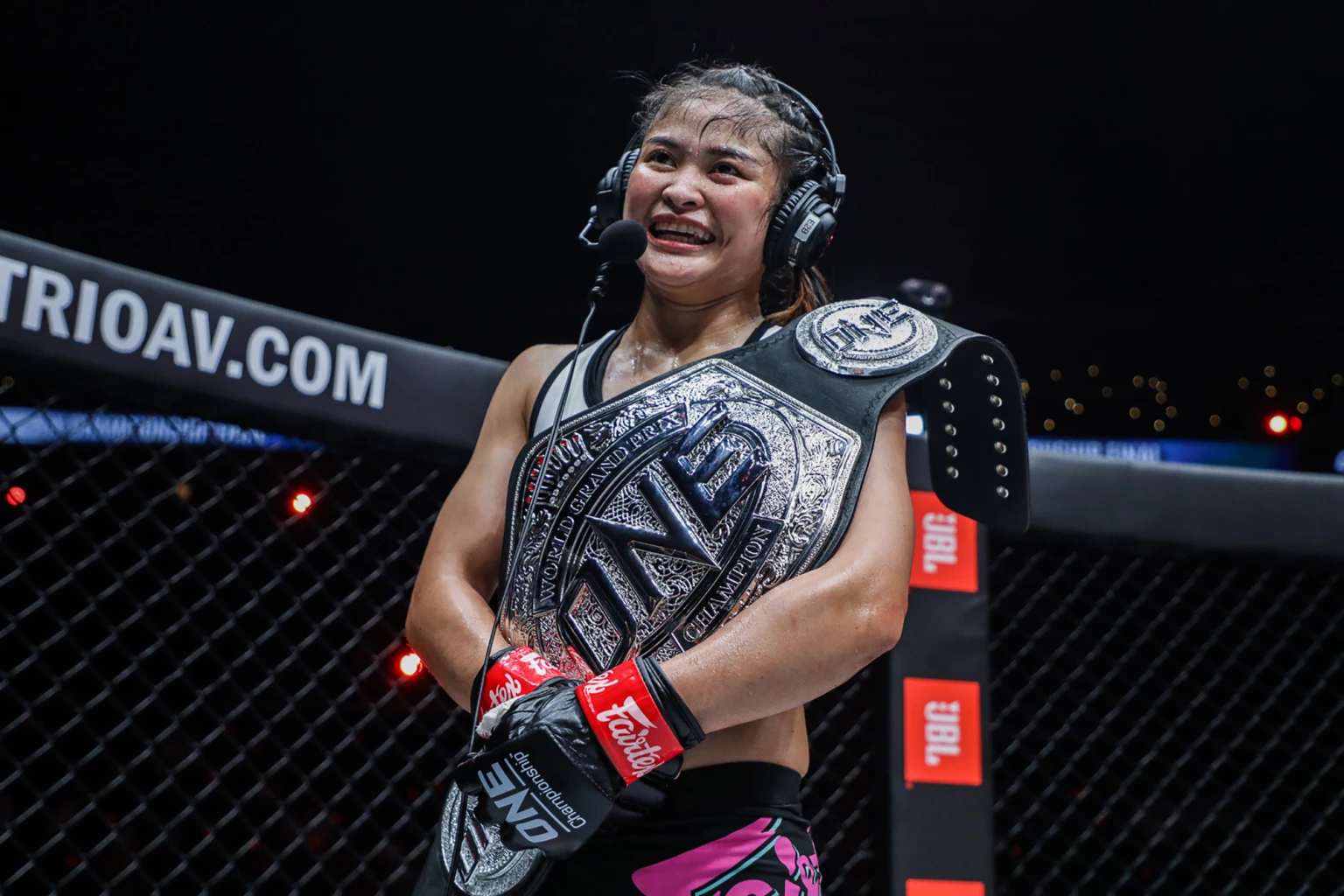
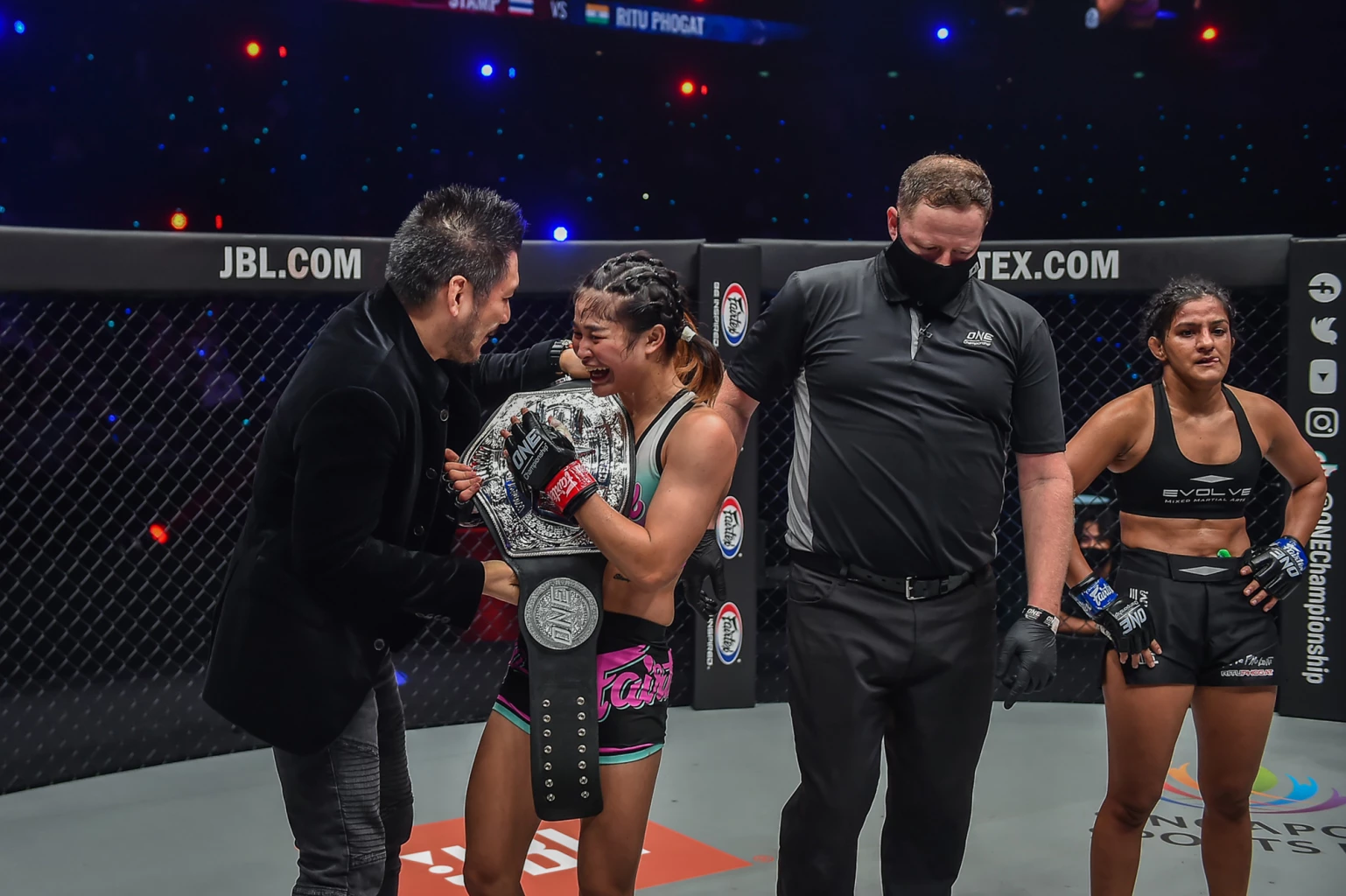
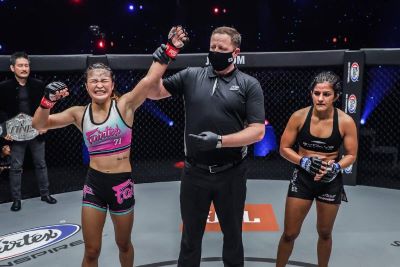
Stamp Fairtex Submits Ritu Phogat in Second Round to Win ONE Womens Atomweight World Grand Prix Championship

ONE Championship™ (ONE) returned with ONE: WINTER WARRIORS, which aired live from the Singapore Indoor Stadium. The card featured a battle for the ONE Lightweight Kickboxing World Title, the conclusion of the historic ONE Women’s Atomweight World Grand Prix, and other exciting martial arts contests.

In the main event, reigning ONE Lightweight Kickboxing World Champion Regian Eersel continued his reign of dominance after going to war with Islam Murtazaev to secure a split decision and retain his World Title.

Murtazaev was aggressive from the start, pushing the pace with a torrent of flashy combinations. Eersel timed his responses well, countering with efficiency, and both fighters had their moments in a fairly even second round.

Regian Eersel Retains ONE Lightweight Kickboxing World Title With Split Decision Victory Over Islam Murtazaev

Related Stories

Eersel came alive in the third, as he pressured an exhausted Murtazaev along the Circle Wall. The championship rounds then saw the Dutch-Surinamese striker establish himself even further, as he eked out a close victory, extended his winning streak to 18, and moved to 6-0 in ONE.

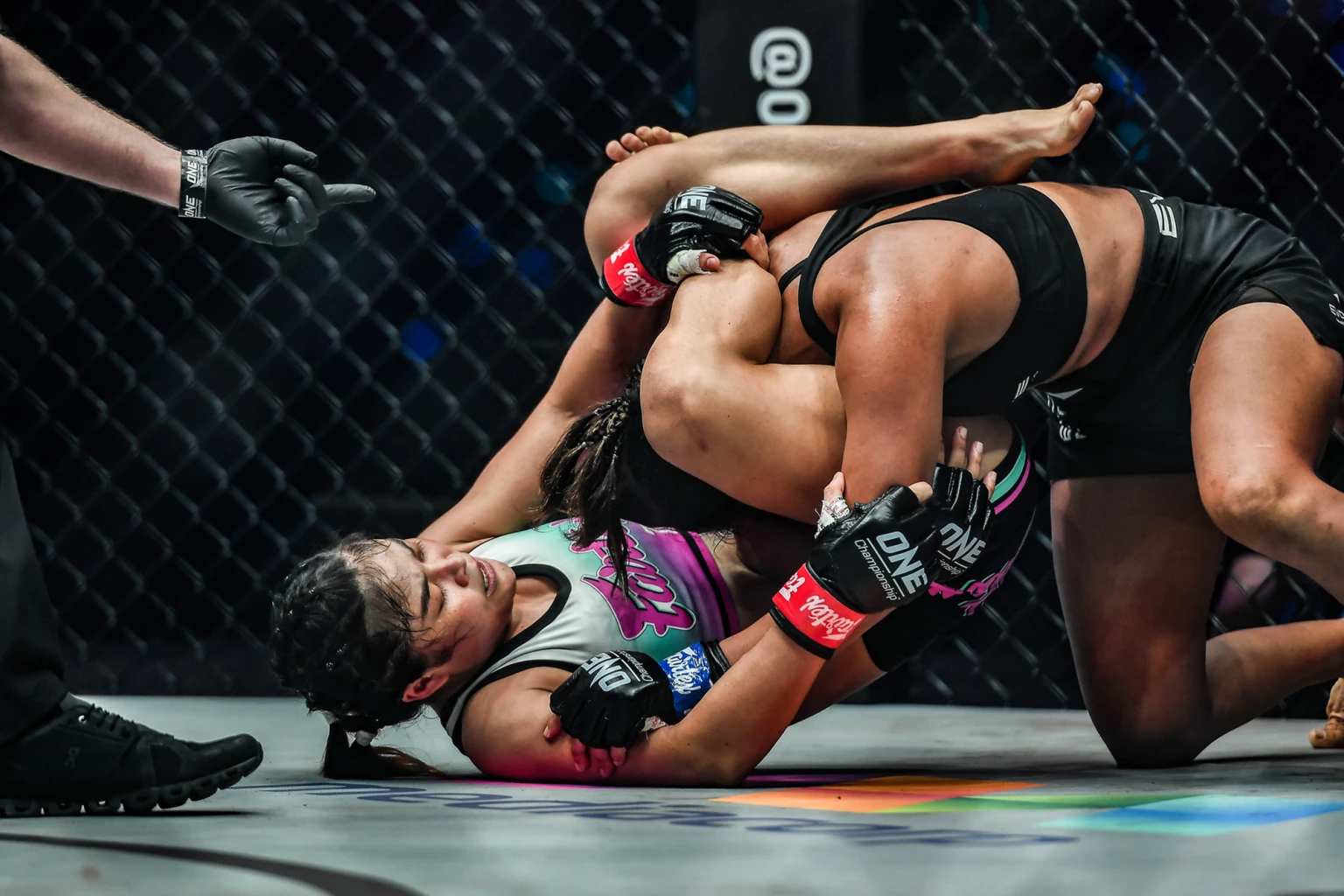
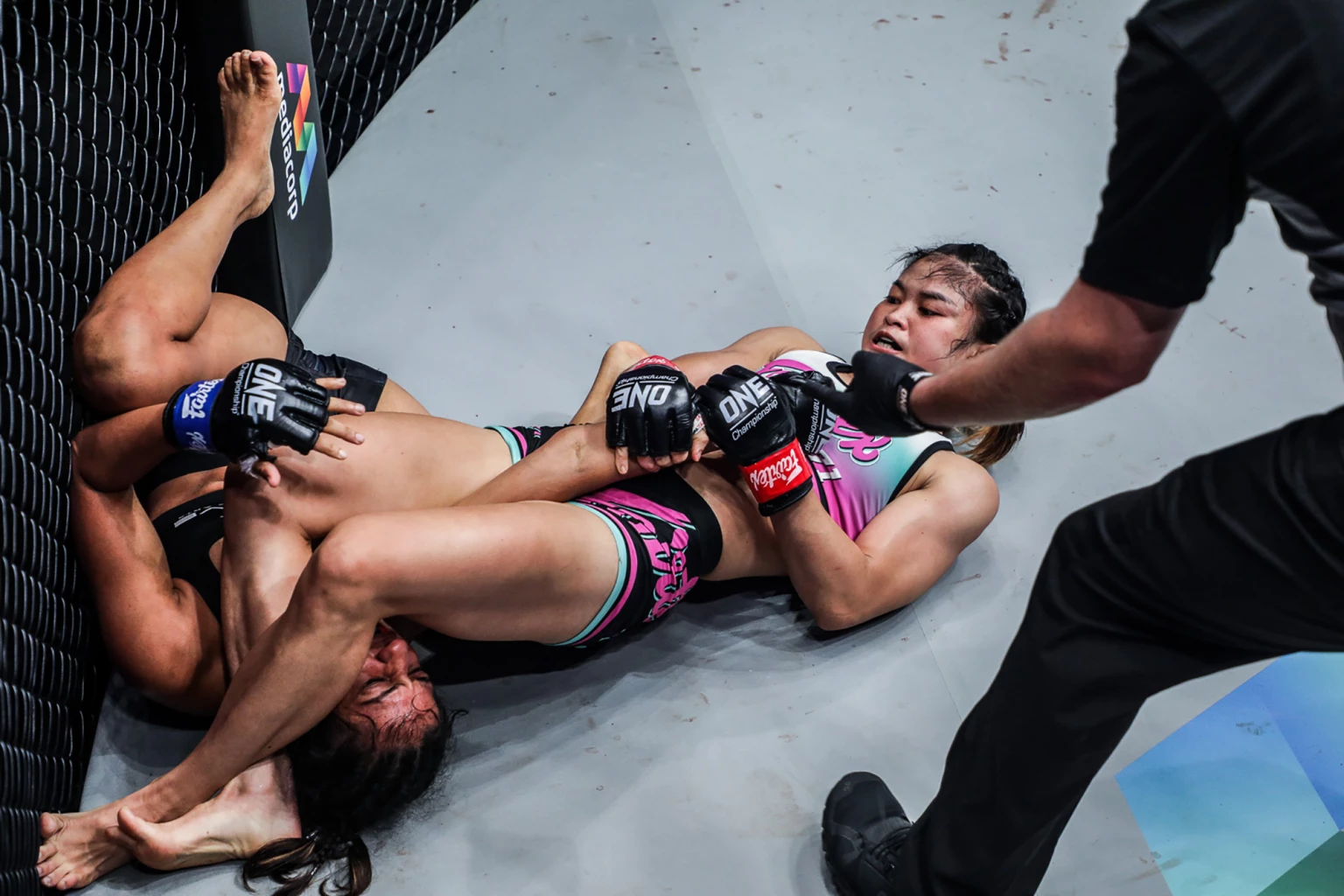
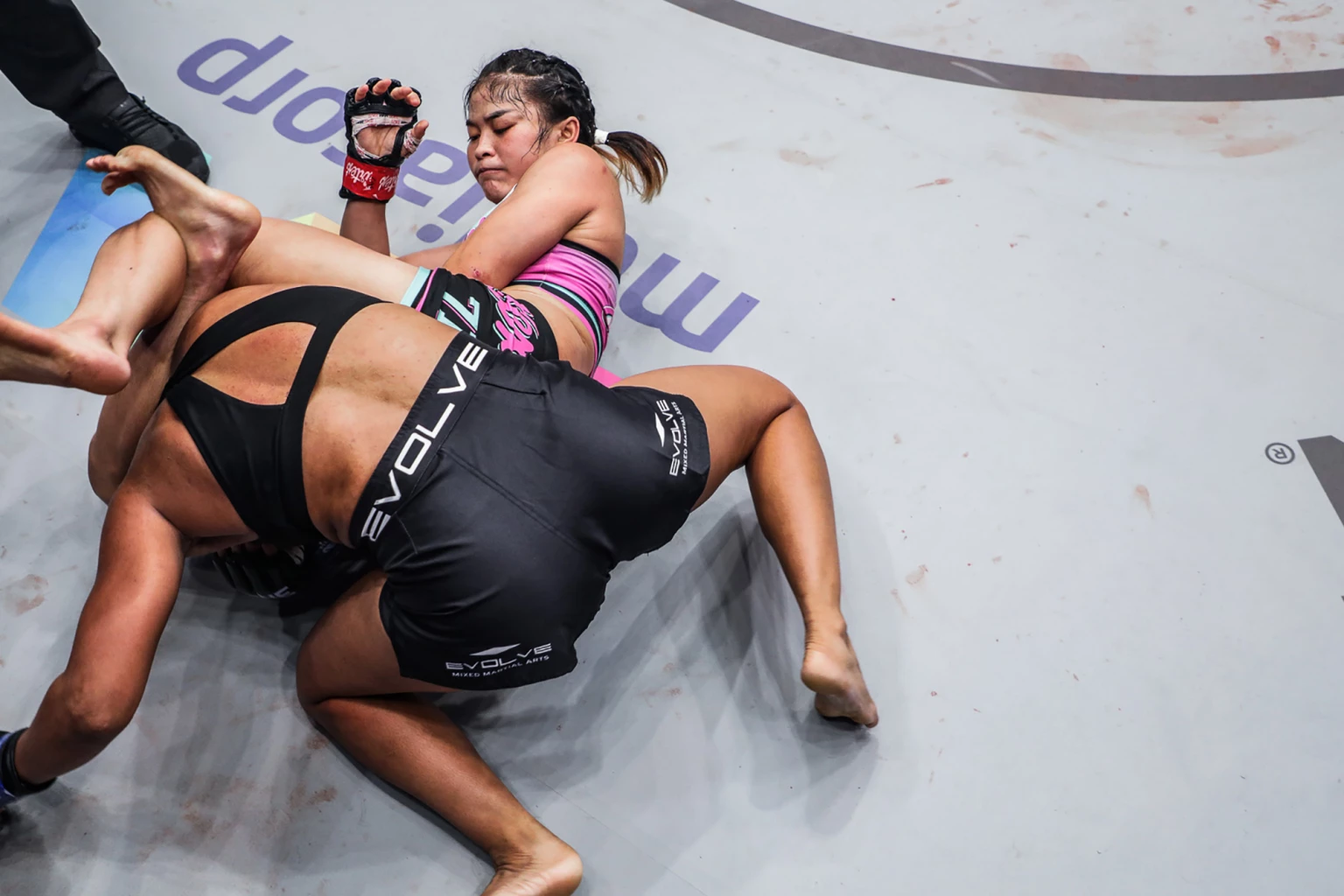
In the co-main event, #2-ranked atomweight contender Stamp Fairtex submitted #4-ranked Ritu Phogat in the second round to win the ONE Women’s Atomweight World Grand Prix Championship Final. Phogat was aggressive with her takedowns early, closing the distance on Stamp, who attacked with kicks from range. However, the former ONE Atomweight Muay Thai and Kickboxing World Champion showcased great takedown defense, preventing Phogat from advancing her positions. In the second round, Stamp locked in a triangle choke after Phogat took her to the mat. She then quickly transitioned to an armbar, which forced the tap at the 2:14 mark.

Regian Eersel Retains ONE Lightweight Kickboxing World Title With Split Decision Victory Over Islam MurtazaevRegian Eersel Retains ONE Lightweight Kickboxing World Title With Split Decision Victory Over Islam Murtazaev

In a ONE Super Series contest, #3-ranked bantamweight kickboxer Hiroki Akimoto upset Chinese superstar Qiu Jianliang in the latter’s highly anticipated promotional debut. Akimoto was aggressive to start, firing off a myriad of powerful combinations in the first round. With a sense of urgency, Qiu came back in the second frame with sharp counters, but Akimoto did not back down. In the final round, the Japanese athlete did just enough to outstrike Qiu and take home the unanimous decision victory.

In a pivotal lightweight mixed martial arts clash, #3-ranked Dagi Arslanaliev and #5-ranked Timofey Nastyukhin put on a show. It was an intense battle from the opening bell, as both men traded destructive blows in the Circle. A furious second frame from Arslanaliev nearly had the Russian out on his feet, but the latter survived the onslaught. In the final round, the Turkish star connected with a thunderous right hand that slept Nastyukhin almost instantly, ending matters at just 49 seconds into round three.

Brazilian Jiu-Jitsu legend Marcus “Buchecha” Almeida made quick work of previously unbeaten knockout artist Kang Ji Wong, submitting the South Korean midway through the first round. “Buchecha” wasted no time with a takedown. Once on the mat, he swiftly took the back and locked in the rear-naked choke to force the tap at the 2:27 mark.

Regian Eersel Retains ONE Lightweight Kickboxing World Title With Split Decision Victory Over Islam Murtazaev

Kicking off an explosive card was #3-ranked flyweight contender Yuya Wakamatsu, who dominated rising star Hu Yong on all fronts to earn a landslide unanimous decision on the judges’ scorecards. Wakamatsu connected early with several powerful right hands that hurt Hu, and he secured a plethora of takedowns across all three rounds to seal the victory.

Official Results for ONE: WINTER WARRIORS
Kickboxing – Lightweight: Regian Eersel def. Islam Murtazaev via Split Decision
MMA – Atomweight: Stamp Fairtex def. Ritu Phogat via Submission (Armbar) at 2:14 of R2
Kickboxing – Bantamweight: Hiroki Akimoto def. Qiu Jianliang via Unanimous Decision 
MMA – Lightweight: Dagi Arslanaliev def. Timofey Nastyukhin via TKO at 0:49 of R3
MMA – Heavyweight: Buchecha def. Kang Ji Won via Submission (Rear-naked Choke) at 2:27 of R1
MMA – Flyweight: Yuya Wakamatsu def. Hu Yong via Unanimous Decision

Regian Eersel Retains ONE Lightweight Kickboxing World Title With Split Decision Victory Over Islam MurtazaevRegian Eersel Retains ONE Lightweight Kickboxing World Title With Split Decision Victory Over Islam MurtazaevRegian Eersel Retains ONE Lightweight Kickboxing World Title With Split Decision Victory Over Islam MurtazaevRegian Eersel Retains ONE Lightweight Kickboxing World Title With Split Decision Victory Over Islam Murtazaev
 

Published : December 04, 2021

By : THE NATION

Caption Jaravee Boonchant claims her maiden professional trophy.

#SootinClaimon.Com : ขอบคุณแหล่งข้อมูล : หนังสือพิมพ์ The Nation.

https://www.nationthailand.com/life/40009593


Rookie Jaravee Boonchant captured her maiden professional title following a stroke victory over teenage rising star Chanettee Wannasaen in the Bt4 million BGC Thailand LPGA Master at the Panya Ram Indra Golf Club on Friday.

The 22-year-old Duke University graduate, despite an ending bogey, carded a final 68 and a total 12 under-par-204 to prevail at the par 72 6,465 yard layout in the season-ending tournament of the Thai LPGA Tour. 

“I’m so overwhelmed to win my first title as a pro,” said Jaravee in her second tournament after turning professional in June. “I’m happy to stick to my game plan until the end. I’m pleased with the way I hit my driver and putter,” added Jaravee who finished her B.A. degree in statistical science with a minor in Japanese language.  

“In fact I was so excited since on the 16th hole. Chanettee was playing so well and tried to catch up with me. But I kept my cool and hanged tough out there,” said Jaravee who had gone through 17 holes without an error until in on the 18th hole. 

In fact, Jaravee is having a holiday in Thailand as she will return to the US in February for the Symetra Tour. She reached the second stage of the LPGA Qualifying School which earned her a spot in the futures tour (Symetra) for the 2022 season. 

“I will spend the off-season preparing for the Symetra Tour next year. My goal is to finish in the top 10 of the Symetra, so that I can get a berth into LPGA Tour in the following year,” said Jaravee who received her biggest cheque of Bt600,000 as the winner on Friday. 

17-year-old Chanettee from Chiang Mai also hit a final 68 to finish at lone second on 11 under-par-205, three shots ahead of Arpichaya Yubol who signed off with a 70 and a total 8 under-par-208. They received Bt400,000 and Bt300,000 respectively.  

Meanwhile, Patcharajutar Kongkraphan, who won the season-opening Thai LPGA event in Kanchanaburi in July, ends the year as the No 1 player on the Thai LPGA Tour, earning an overall prize money of Bt671,033.  

Lerpong Amsa-ngiam
Contributing​ Writer

Published : December 04, 2021

By : THE NATION

Facing Olympic boycott calls, China presses U.S. companies to speak up in its defense

#SootinClaimon.Com : ขอบคุณแหล่งข้อมูล : หนังสือพิมพ์ The Nation.

https://www.nationthailand.com/life/40009554


China is pressuring American companies to push back against campaigns to boycott the Winter Olympics in Beijing, amid heightened scrutiny of human rights abuses in the country.

Chinese Vice Foreign Minister Xie Feng on Tuesday told a video conference of U.S. business executives to “make a positive contribution” to the Games, which open in February.

“Boycotting the Olympics for political reasons harms the interests of athletes, violates the shared ideals and aspirations of the international society, and is unpopular,” Xie said. President Joe Biden has confirmed that the White House is considering a diplomatic boycott of the Games.

The outreach by China comes amid signs that foreign businesses, long compliant with official demands for quiescence, are waking up to the reputational damage from staying silent at a time of intensifying repression. A global furor over the treatment of tennis star Peng Shuai after she accused a retired top Chinese leader of sexual abuse crystallized concerns over censorship and the silencing of women by powerful officials, bolstering calls for a Games boycott.

Attended by the American Chamber of Commerce in China, the American Chamber of Commerce in Shanghai and the U.S.-China Business Council, the event was part of efforts by Beijing to prevent the relationship from deteriorating beyond what is already its worst point since diplomatic ties were established.

Xie declared that a virtual summit between Biden and Chinese President Xi Jinping had sent a strong signal that the relationship needed to be mended. But Beijing has continued to angrily rebuff any suggestion of wrongdoing over military aggression toward Taiwan, a crackdown on civil liberties in Hong Kong and mass internment of Uyghurs and other Muslims in the Xinjiang region.

“Everyone must be clear that Taiwan, Xinjiang, Hong Kong and Tibet are core interests that touch upon China’s sovereignty and secure development,” Xie told the American executives. “China does not have any room to compromise.”

The call for multinationals to support Beijing’s position comes as the Women’s Tennis Association (WTA) on Wednesday announced that it was suspending tournaments in China because of concerns about the Peng’s safety.

On Nov. 2, Peng accused retired Chinese Communist Party executive vice premier Zhang Gaoli of coercing her into a sexual relationship. The post was censored within about half an hour and Peng then disappeared for two weeks.

After an international outcry, she re-emerged in carefully curated posts from Chinese state media and spoke via video with the International Olympic Committee President Thomas Bach. But these reports were not shared on China’s heavily censored social media, where Peng remains silent.

The appearances have not satisfied human rights groups, which see parallels between Peng’s case and those of dozens of activists and dissidents previously forced to confess and recant on state media.

In response to the WTA’s decision, the Chinese Tennis Association on Thursday expressed “indignation” at what it labeled a “unilateral action” based on “fictitious information.”

“It not only beset and hurt the relevant athlete herself, but also will severely harm the female tennis players’ fair opportunities to compete, then damage the interest of the entire sport of tennis,” the association said, without naming Peng or mentioning her post.

The statement was delivered only in English to state media outlets responsible for pushing Beijing’s messaging to the outside world and was not posted on the association’s website or in Chinese media. That followed a pattern of Chinese responses about Peng’s disappearance made solely for external consumption.

Within China, there has been little discussion of the WTA’s decision. Its official account on Chinese microblog Weibo showed no mention of the tournament suspension and the platform had blocked users from making or viewing comments below recent posts, a common form of soft censorship.

Human rights groups and sports icons heralded the WTA’s decision not to back down under Beijing’s pressure. Former world tennis champion and social activist Billie Jean King tweeted, “The WTA is on the right side of history in supporting our players.”

As scrutiny of abuses in China mounts, multinational companies and international institutions have repeatedly found themselves facing pressure from both concerned human rights activists and Chinese officials.

Combined with strict laws on data protection and the lingering China-U. S. trade dispute, that challenging political environment is forcing a rethink by companies that once saw China’s market as irresistible.

Business executives that remain committed to China, however, continue to defend the Chinese leadership and backtrack rapidly if they offend Beijing, intentionally or otherwise.

A day after JP Morgan Chase Chief Executive Jamie Dimon joked last week that the company might outlast the Chinese Communist Party, adding “I can’t say that in China,” he released a statement saying he regretted the remarks, conceding “it’s never right to joke about or denigrate any group of people.”

Speaking to CNBC on Wednesday, Bridgewater Associates founder Ray Dalio responded to a question about human rights issues in China by saying that he “can’t be an expert in all of those particular dynamics.”

Dalio, a long time believer that China sits at the center of global economic growth, added that the Chinese leadership behaved like a “strict parent” toward Chinese people. “The notion of whatever they are doing in terms of calling in people and then behaving in a certain way, that’s their approach,” he said.

The Wall Street Journal reported last week that Bridgewater Associates has raised the equivalent of $1.25 billion for its third investment fund in China.

Published : December 03, 2021

By : The Washington Post

IOC announces second call with Peng Shuai, says it favors quiet diplomacy

#SootinClaimon.Com : ขอบคุณแหล่งข้อมูล : หนังสือพิมพ์ The Nation.

https://www.nationthailand.com/life/40009553


The International Olympic Committee said in a statement released Thursday morning that it held another call Wednesday with Chinese tennis star Peng Shuai amid continued concerns about her well-being in the wake of allegations she made last month that a former Chinese official sexually assaulted her.

The statement, which said Peng appeared “safe and well, given the difficult situation she is in,” came after the Women’s Tennis Association announced Wednesday that it would suspend all tournaments in China and Hong Kong in a decision that could heighten calls for a boycott of the 2022 Beijing Winter Olympics. The IOC has faced criticism from human rights advocates and others for taking a softer approach.

Concerns about Peng, a three-time Olympian and a Grand Slam doubles champion, rose after a nearly three-week public absence followed a Nov. 2 social media post in which she accused former vice premier Zhang Gaoli of sexually assaulting her. There has been no comment about the allegation from Zhang, who retired in 2018, or the Chinese government, which blocked the topic from direct discussion on the country’s Internet. Peng, 35, has been seen publicly only once since her post, which vanished within hours of its publication.

“We share the same concern as many other people and organisations about the well-being and safety of Peng Shuai. This is why, just yesterday, an IOC team held another video call with her,” said the IOC’s statement, which was unsigned by any individual.

“We have offered her wide-ranging support, will stay in regular touch with her, and have already agreed on a personal meeting in January.”

The IOC defended how it has handled the matter, including its announcement Nov. 21 that IOC President Thomas Bach had held a half-hour video call with Peng. “We have taken a very human and person-centred approach to her situation,” Thursday’s statement said. “Since she is a three-time Olympian, the IOC is addressing these concerns directly with Chinese sports organizations.”

The organization added that it was “using ‘quiet diplomacy’ which, given the circumstances and based on the experience of governments and other organisations, is indicated to be the most promising way to proceed effectively in such humanitarian matters.”

On Wednesday, human rights activists applauded the WTA for taking a different approach, making a decision that could represent millions in lost revenue.

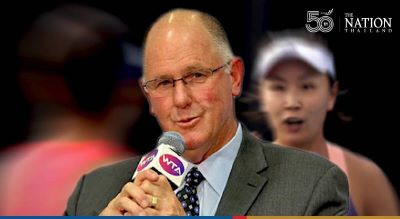
“In good conscience, I don’t see how I can ask our athletes to compete there when Peng Shuai is not allowed to communicate freely and has seemingly been pressured to contradict her allegation of sexual assault,” WTA CEO Steve Simon wrote in his organization’s statement Wednesday, adding that he was “greatly concerned” about the risks WTA players and staff could face if the WTA held tournaments in China in 2022.

“None of this is acceptable nor can it become acceptable,” he wrote. “If powerful people can suppress the voices of women and sweep allegations of sexual assault under the rug, then the basis on which the WTA was founded – equality for women – would suffer an immense setback. I will not and cannot let that happen to the WTA and its players.”

Simon had threatened Nov. 18 to pull all WTA events from the country after Chinese state media circulated an email attributed to Peng in which she renounced her accusation that Zhang had pressured her into sex. Simon questioned the statement’s authenticity and called for an independent investigation of her claims.

Chinese officials responded by sharing what it said was video of Peng dining with friends Nov. 20. A day later, officials set up a video call between Peng and Bach, who said he was satisfied that Peng was “fine.” However, he did not determine whether she was able to speak or travel without government interference or intimidation. Human rights advocates sharply criticized Bach for using his stature as IOC president to shield the 2022 Olympics host as the hashtag #whereispengshuai gathered steam on social media.

The European Union joined the White House and the United Nations on Tuesday in calling for an investigation into Peng’s allegations and disappearance from public life. Also Tuesday, senior IOC member Dick Pound denied that the organization had offered assurances about her safety after the original video call to avoid angering the host of the upcoming Games.

“That’s complete nonsense . . . there was generalized concern about what may or may not have happened to her,” Pound, the IOC’s longest-serving member, told Reuters.

“So what the IOC did was very quietly put a little bit of an Olympic network together with our president, the chair of our Athletes’ Commission, one of our senior members in China, and they got in touch with her and she was happy to be on the call.”

Published : December 03, 2021

By : The Washington Post

WTA suspends tournaments in China due to fallout from Peng Shuais sexual assault allegation

#SootinClaimon.Com : ขอบคุณแหล่งข้อมูล : หนังสือพิมพ์ The Nation.

https://www.nationthailand.com/life/40009509


The Womens Tennis Association announced Wednesday it is immediately suspending its tournaments in China in response to ongoing concerns about the safety and well-being of Peng Shuai.

The announcement was made by WTA chairman and CEO Steve Simon, who noted the decision, which will represent millions in lost revenue, had the full support of the WTA board.

The decision makes good on a threat Simon issued Nov. 19 to pull its events from the country after questioning the authenticity of an email circulated by state media and attributed to Peng. Simon also called for an investigation into her Nov. 2 allegation in a social media post that she had been sexually assaulted by Zhang Gaoli, a former vice premier of China.

Since then, Simon noted, Peng’s message was removed from the Internet and discussion of the topic has been censored in China.

While Chinese officials shared footage of Peng in recent days and on Nov. 21 arranged a video call with International Olympic Committee chief Thomas Bach, it remains unclear, Simon noted, that Peng is free and able to speak without interference or intimidation.

“In good conscience, I don’t see how I can ask our athletes to compete there when Peng Shuai is not allowed to communicate freely and has seemingly been pressured to contradict her allegation of sexual assault,” Simon wrote. ” Given the current state of affairs, I am also greatly concerned about the risks that all of our players and staff could face if we were to hold events in China in 2022.

“None of this is acceptable nor can it become acceptable. If powerful people can suppress the voices of women and sweep allegations of sexual assault under the rug, then the basis on which the WTA was founded – equality for women – would suffer an immense setback. I will not and cannot let that happen to the WTA and its players.

China is preparing to host the 2022 Winter Olympics in Beijing in less than two months.

Published : December 02, 2021

By : The Washington Post
TGO Certifies BTS Group “Carbon Neutral”, the world’s first for a Rail Company

#SootinClaimon.Com : ขอบคุณแหล่งข้อมูล : หนังสือพิมพ์ The Nation.

https://www.nationthailand.com/pr-news/business/40009603


The collaboration between BTS Group and TGO is a joint effort to raise awareness and fight against climate change.

Thailand Greenhouse Gas Management Organisation (TGO), the autonomous Government entity with responsibility for reducing greenhouse gas in Thailand, has certified BTS Group Holdings PCL (BTS Group) as carbon neutral, making it the first carbon neutral rail transportation company in the world.

The collaboration between BTS Group and TGO is a joint effort to raise awareness and fight against climate change. This achievement was also as a result of BTS Group’s sustainable business direction to reduce emissions that come predominantly from its electricity consumption. At the same time, this will help Thailand to achieve its nationally determined contributions to reduce greenhouse gases in accordance with the Paris Climate Agreement as well as its long term target of carbon neutrality by 2050.

Mr. Kiatchai Maitriwong, Executive Director of TGO elaborated “As the key agency for driving greenhouse gas mitigation in Thailand towards sustainable low-carbon economy and society, TGO welcomes the strong corporate commitments of companies like BTS Group. TGO, encourages collaboration with all market participants, in order to tackle climate problems and look forward to seeing the participation of all sectors to push Thailand to reach the target of reducing greenhouse gases as set”.

BTS Group, under its 3M Strategy, provides door-to-door transportation services, and is a leading provider of rail transportation services in Thailand. Through providing electrified rail transportation services, which emit zero carbon emissions, it gives consumers the option to shift their travel mode away from other carbon emitting forms of transport, also helping reduce congestion and improving air quality in Bangkok.

TGO Certifies BTS Group “Carbon Neutral”, the world’s first for a Rail Company

Mr. Kavin Kanjanapas, CEO of BTS Group added “Environmental responsibility is just one of the sustainable business practices that we prioritise at BTS Group, a company that is steered to solving urban issues. This year, we marked a notable step by implementing the voluntary carbon offsetting schemes under TGO by joining a carbon credit programme with Mitr Phol Bio-Power project. As a result, we take a great honour in becoming the first rail transportation company to be certified as carbon neutral by the TGO. Even though our core rail business has helped improve air quality and reduce traffic in Bangkok for decades now, we want our carbon neutrality to serve as a signal for others to follow.”

Published : December 04, 2021