Baht opens slightly down against US dollar on Wednesday
WEDNESDAY, DECEMBER 07, 2022
The baht opened at 35.10 to the US dollar on Wednesday, weakening slightly from Tuesday’s close of 35.07.
The currency will likely move between 35.00 and 35.20 against the greenback during the day, Krungthai market strategist Poon Panichpibool said.
Poon said that the baht might weaken further if the currency market remains in a risk-off state, supporting short-term dollar strengthening and pressuring the gold price.
He added that foreign fund outflows from the Thai stock market may add to downward pressure on the baht.
However, he was doubtful the Thai currency would weaken significantly, projecting its key resistance level at 35.20-35.30 to the dollar.
Factors supporting the baht include foreign purchases of Thai short-term and long-term bonds as well as dollar selling by some exporters.
He also advised investors to use hedging tools such as options to manage risks in a highly volatile currency market.
Are you ready for a host of challenges and the unavoidable wave of high technology less than a decade from now?
The current situation:
– Residents spend an average of 11.4 hours per day in their homes.
– More Than 43% of respondents think smart technology is a necessity.
– There are over 800 million smart wearable devices.
– With smart devices for healthcare, doctors can cut the disease diagnosis time by 15 hours per week.
– Smart wearables will increase the efficiency of exercises by 20%.
– Technology-connected living can expand people’s life expectancy to an average of 72.2 years, an increase of 24 years compared to 70 years ago.
– Land prices are on a continuous rise. In Bangkok, they have been rising by 8% per year.
– A jump in land prices coupled with the economy expanding by just 2.5% per year will see many more people become landless.
Our world in the future will become more complicated because:
– Urban expansion is lead to increased social issues.
– Economic recession obviously makes daily life more expensive.
– There are more environmental crises because of garbage and pollution.
– A rising number of elderly is changing population demographics.
– Social gaps are widened because of attitudes and behaviour of people in different age groups.
Future trends that will usher in significant changes:
– Smart homes and 3D-printed houses
– Robotics healthcare
– Smart wearables
– No more real privacy
– Universal design for inclusiveness
– Space sharing, efficient use of space
– People will shift to rented houses
– Return to plastic use
– Culture of preparedness
– Social distancing
Thai society in 2030
> Inequality: many people cannot afford to own expensive digital technologies.
> Privileges: only rich people will have the privilege to make use of advanced technologies and comfortably living.
> Low-cost living: the state will have to help a lot of people who cannot access basic infrastructure and welfare. Assistance will focus on quantity, not quality.
So are you ready for a host of challenges and the unavoidable wave of high technology less than a decade from now?
YouTube-taught ‘surgeon’ among 8 bogus doctors nabbed in crackdown
TUESDAY, DECEMBER 06, 2022
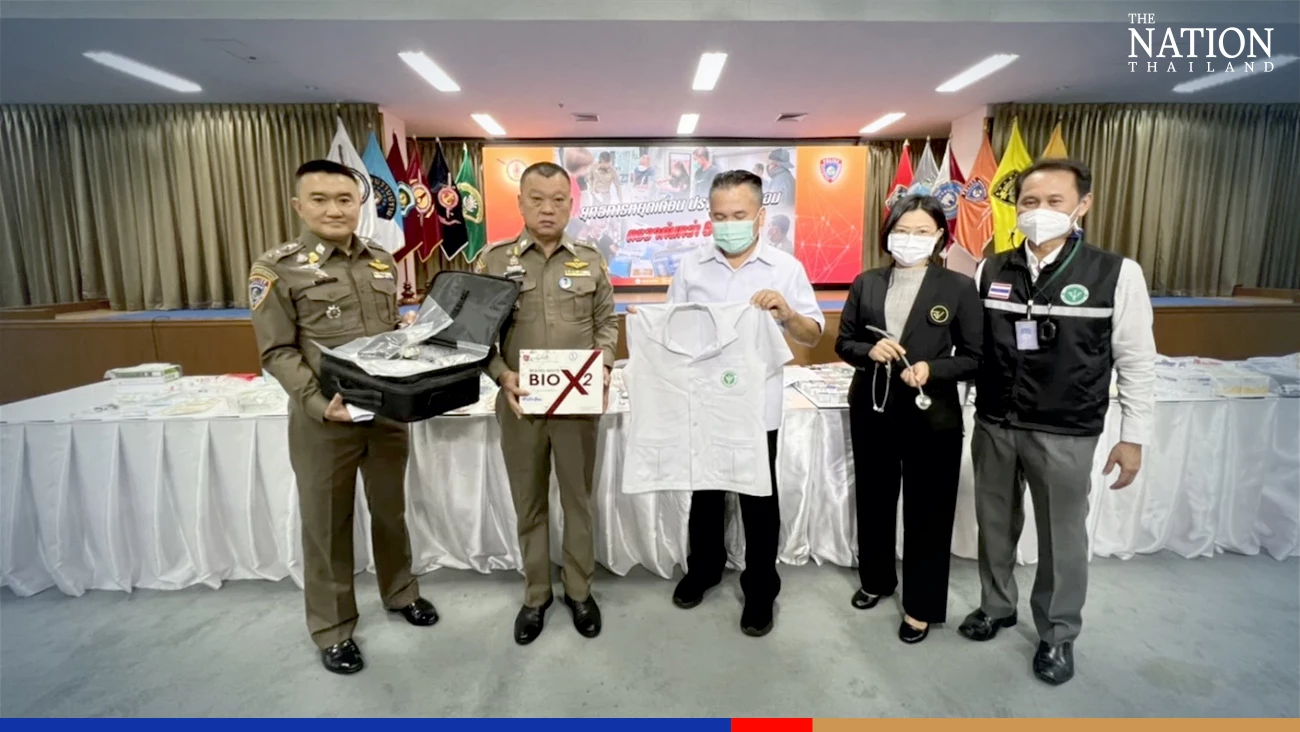
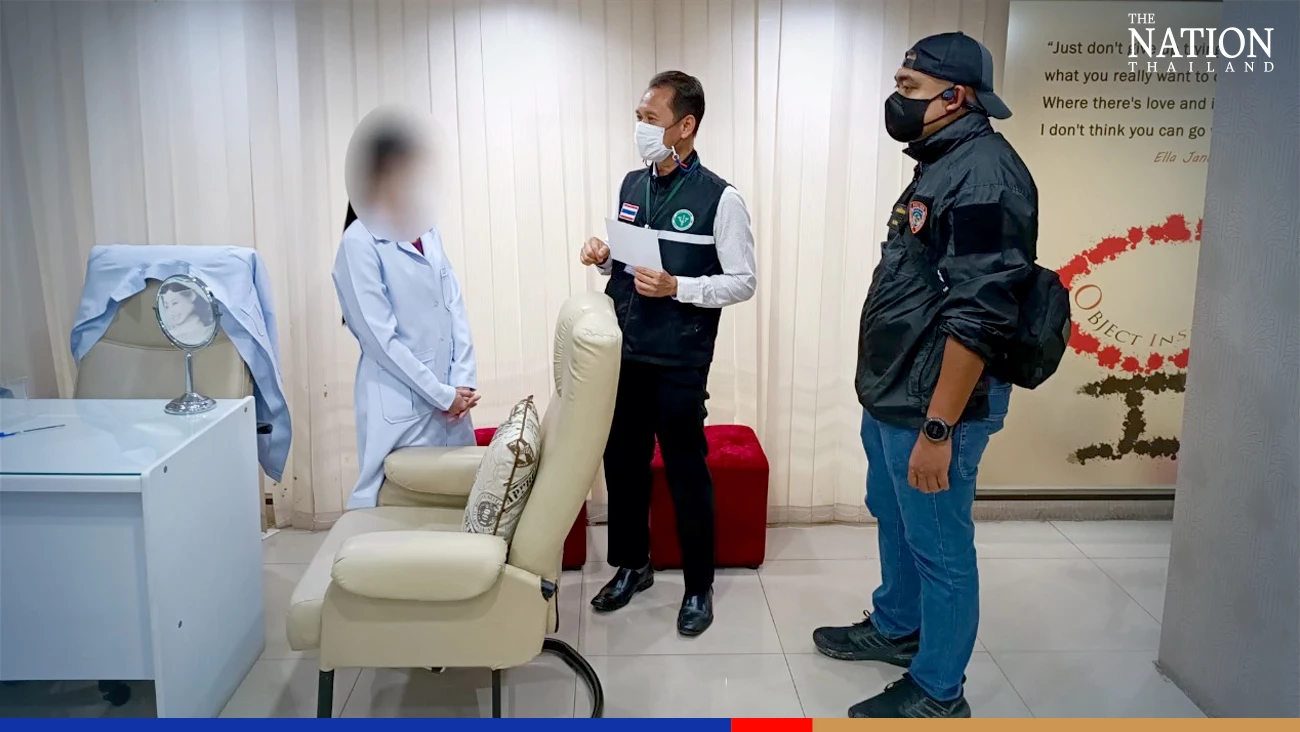
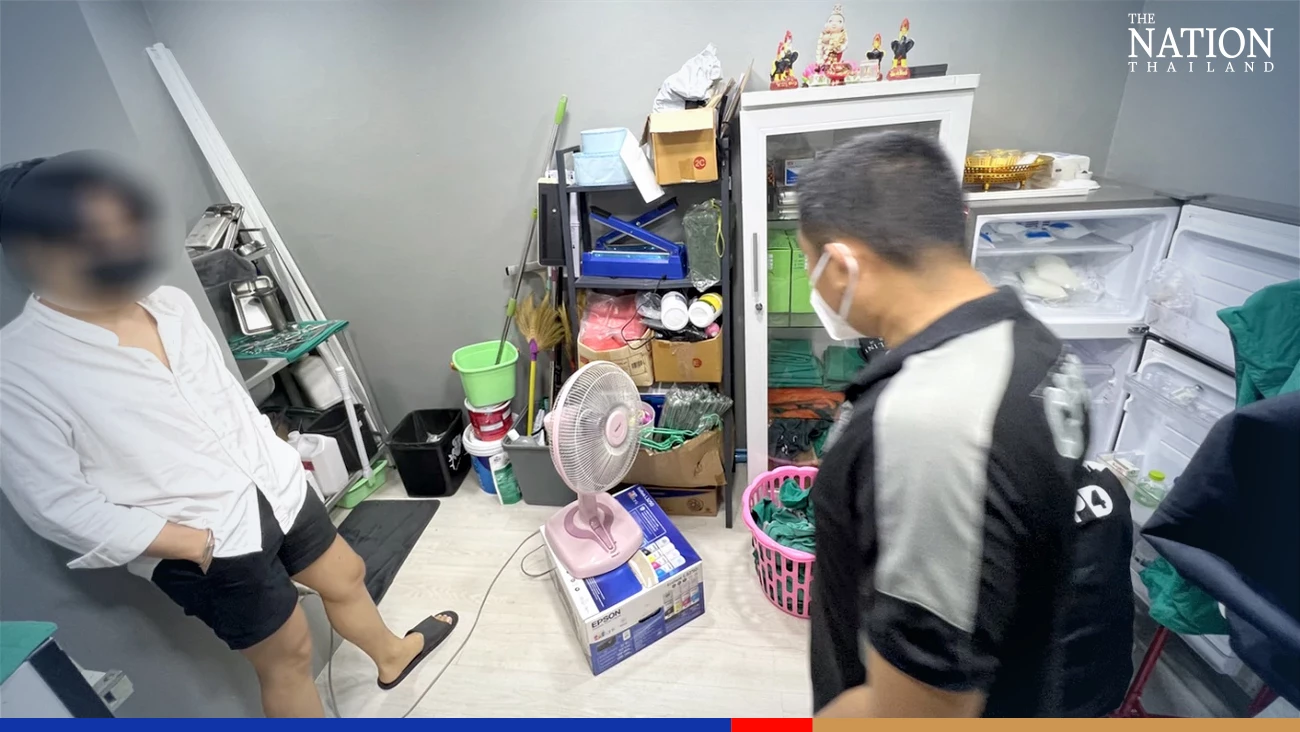
Police and health officials raided eight unlicensed clinics in Bangkok and three other provinces late last month and arrested eight bogus doctors.
One of these so-called doctors was found to have only completed primary education and had learned cosmetic surgery techniques via YouTube tutorials.
The operation was conducted jointly by the Consumer Protection Police Division (CPPD), the Health Service Support Department and the Thai Food and Drug Administration (FDA).
The crackdown was based on complaints received between November 23 and 29 on dubious health products and services being sold in Bangkok, Chonburi, Samut Songkhram and Pathum Thani.
The three agencies called a press conference on Tuesday to announce the result of the operations.
CPPD chief Pol Maj-General Anan Nanasombat only provided the first names of the eight suspects, which were Thanatsorn, 24; Srisunee, 36; Napaphat, 39; Jirat, 23; Sasiphat, 36; Korakot, 54; Boonpha, 48; and Angkhanang, 26.
Jirat and Korakot were the only two men on the list.
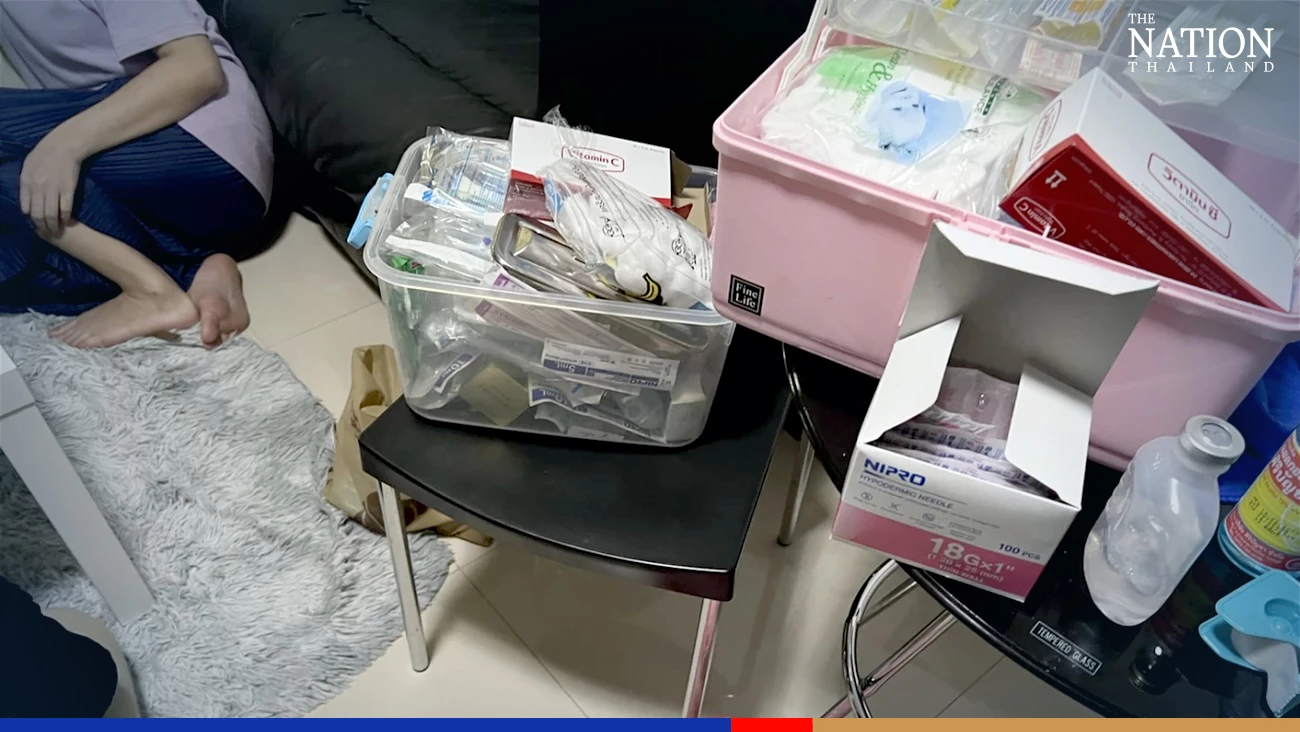
Anan said the authorities also seized 836 items from the illegal clinics.
The so-called doctors were charged with running medical clinics without a licence, performing medical services without a licence and selling medicines that have not been registered with the FDA.
Anan also brought four shocking cases to the media’s attention at the conference.
The first was related to suspect Thanatsorn, who ran an illegal clinic in Samut Songkhram’s Muang district.
She allegedly pretended to be a medical doctor and prescribed medicines to patients. She has reportedly confessed that she only completed her secondary education and used what little she had learned working as a nurse’s assistant for a year to “treat” patients.
Another interesting case was that of Srisunee, who called herself “Dr Nok”. She treated patients at the Min Muntra clinic in Soi Ram Indra 5 in Bangkok’s Bang Khen district and claimed to have been a teaching doctor for six years. In reality, Srisunee has only completed vocational school, Anan said without elaborating.
The third case involved Napaphat and Sasiphat, who allegedly ran the RCA Medical Treatment Clinic.
Anan said these women had completed their bachelor’s degrees in nursing but pretended to be doctors. Napaphat has allegedly been working as a so-called doctor for five years and Sasipat for one year.
However, Anan said the most stunning case was that of Boonpha, who had only completed her primary education.
She ran Pha Zalon in Chonburi’s Bang Lamung district and admitted to having learned the technique of administering beauty filler injections via YouTube. She said she had ordered the products online to try them on herself first before providing beauty services to her clients.
Dr Phanuwat Parnket, deputy director-general of the Health Service Support Department, said the administration of fillers like Botox for beauty enhancement is considered a medical procedure and can only be performed by licensed medical staff in licensed clinics and hospitals.
Companies in four sectors to gain from revival of Thailand-Saudi Arabia ties
WEDNESDAY, DECEMBER 07, 2022
The restoration of bilateral relations between Thailand and Saudi Arabia would benefit four business sectors, according to analysts at news agency Bangkokbiz.
Saudi Arabia restored its relationship with Thailand this year after 32 years of coldness, and this offers an opportunity for several businesses.
Saudi Arabia’s economy weathered even the Covid-19 crisis, recording GDP growth of 6.8% in 2021, its best performance since 2012, due to the global energy demand.
Bangkokbiz analysts evaluated the potential of the relationship and zoomed in on four business sectors in Thailand that could benefit the most.
Food export and food processing
The Saudi Food and Drug Authority has permitted import of chicken from 11 Thai factories including CP, GFPT, and Thai Foods Group (TFG).
Saudi Arabia was the fifth biggest chicken-importing country at 590,000 tonnes per year — 70% from Brazil and 30% from Ukraine and Russia.
In 2021, Thailand exported 912,900 tonnes of chicken worldwide while the export value of chilled, frozen, and processed chicken was 102.529 billion baht, the Bangkokbiz analysts said.
Tourism
Saudi national airline Saudia is now flying three times a week to Thailand from Riyadh and Jeddah, which is beneficial for the SET-listed Airports of Thailand.
According to statistics, Saudi tourists had generated a lot of revenue for Thailand:
2017 – 33,517 tourists; 3.51 billion baht
2018 – 28,334 tourists; 2.615 billion baht
2019 – 30,002 tourists; 2.716 billion baht
2020 – 4,125 tourists
2021 – 467 tourists
Medical
Medical tourism is also popular with Saudi tourists. There is enormous potential for Thailand as the Saudi government aims to improve healthcare for its people.
Meanwhile, the Cabinet has approved an extended 30-day visa on arrival for Saudi visitors, which will be beneficial to Bumrungrad Hospital (BH) and Bangkok Dusit Medical Services (BDMS), the analysts said.
Eastern Economic Corridor (EEC)
The EEC recently revealed that the Saudi government and private sectors are preparing to invest 300 billion baht in Thailand in fiscal year 2023 in several industries including tourism, medical care, and petrochemicals.
Capital Nomura Securities viewed the number as significantly higher than the foreign investment in the first nine months of 2022 with only 2.86 billion baht.
Investment in 2019 — before the Covid-19 pandemic — was 4.64 billion baht and 4.58 billion baht in 2020.
The company expected average foreign direct investment per year to double, which will be beneficial to AMATA Corporation and WHA Corporation.
Thai cement producers urged to eye Philippines as tax on imports ends
WEDNESDAY, DECEMBER 07, 2022
Thai cement producers can turn to the Philippines as a potential market now that the Philippine government has decided not to extend a tax on imports of cement to protect domestic producers, a senior Thai trade official said on Wednesday.
Ronnarong Phoolpipat, director-general of the Foreign Trade Department, said the Philippine Department of Trade and Industry (DTI), announced its decision to end the tax on November 10 following a probe into the issue.
The DTI decided not to continue the import tax on cement after it expired on October 21.
The Philippines imposed the levy on imported cement on October 22, 2019 for three years. In the first year, the tax was 250 pesos (US$4.5) per tonne. The duty fell to 245 pesos and 200 pesos per tonne in the second and third years, respectively.
On February 24 this year, the Philippine Tariff Commission began an inquiry to decide whether to continue duty on. By World Trade Organisation’s rules, it could continue the safeguard measure for seven more years.
However, Ronnarong said his department appealed against the measure, arguing that a safeguard should only be used to protect a damaged industry. The department also noted that cement production had risen in the Philippines.
Ronnarong said the appeal prompted the Philippines to decide not to continue imposing the tax.
During the first nine months of this year, Thailand produced about 20.56 million tonnes of cement. Most, 18.39 million tonnes, was for the domestic market. The rest, 1.67 million tonnes, was exported.
Myanmar, Laos and Cambodia are the major export markets for Thai cement, Ronnarong said, adding that Thai producers rarely exported to the Philippines because of the tax.
He said the Philippines imported about 4 million tonnes of cement a year, with about 90 per cent of that from Vietnam.
The Foreign Trade Department expects the Philippines to import more cement next year as its property market and overall economy continue growing.
Now that the tax on imported cement is gone, the Philippines is a high-potential market for Thai cement exporters, Ronnarong said.
Thailand’s headline inflation edges downward for third successive month
WEDNESDAY, DECEMBER 07, 2022
Thailand’s headline inflation in November eased for the third consecutive month, but the consumer price index (CPI) was up year on year, data showed on Wednesday.
The director of Trade Policy and Strategy Office (TPSO), Poonpong Naiyanapakorn, said Thailand’s consumer price index (CPI) in November stood at 107.92 points compared to 102.25 points in the same month last year, pushing headline inflation up to 5.55%.
But the rate of increase in headline inflation in November continued to drop for the third month. Headline inflation was 6.41% in September and 5.98% in October, the TPSO chief added.
He said the lower inflation was due to lower food prices, especially fresh vegetables and fruits, meat and food seasoning because their production had increased month on month.
Poonpong said Thailand’s headline inflation was better than several countries, including the United States, the United Kingdom, Italy, Mexico, India, Laos, the Philippines and Singapore.
According to Poonpong, the price index of foods and non-alcoholic drinks rose by 8.40% in November, compared to a 9.58% increase in October because the prices of fresh vegetables dropped significantly.
Poonpong said the prices of other goods rose by 3.59% because of the rising prices of oil, electricity and cooking gas as well as cost of public transportation, while the prices of cleaning products such as detergents and softeners saw a slight increase.
He said core inflation, after deduction of price indices of fresh foods and energy, rose to 3.22%, compared to 3.17% in October.
He said the CPI this month dropped by 0.13 compared to October due to the drop in food prices.
Poonpong noted that the average CPI from January to November rose 6.10% year on year in line with the forecast of the Commerce Ministry.
He said the ministry expected headline inflation in December to be at a similar rate as this month and headline inflation for the year would be between 5.5% and 6.5%.
No diesel price cut despite falling oil: Energy minister
WEDNESDAY, DECEMBER 07, 2022
Energy Minister Supattanapong Punmeechaow said on Wednesday it is too early to lower the diesel price in Thailand despite the falling price of oil in the global market.
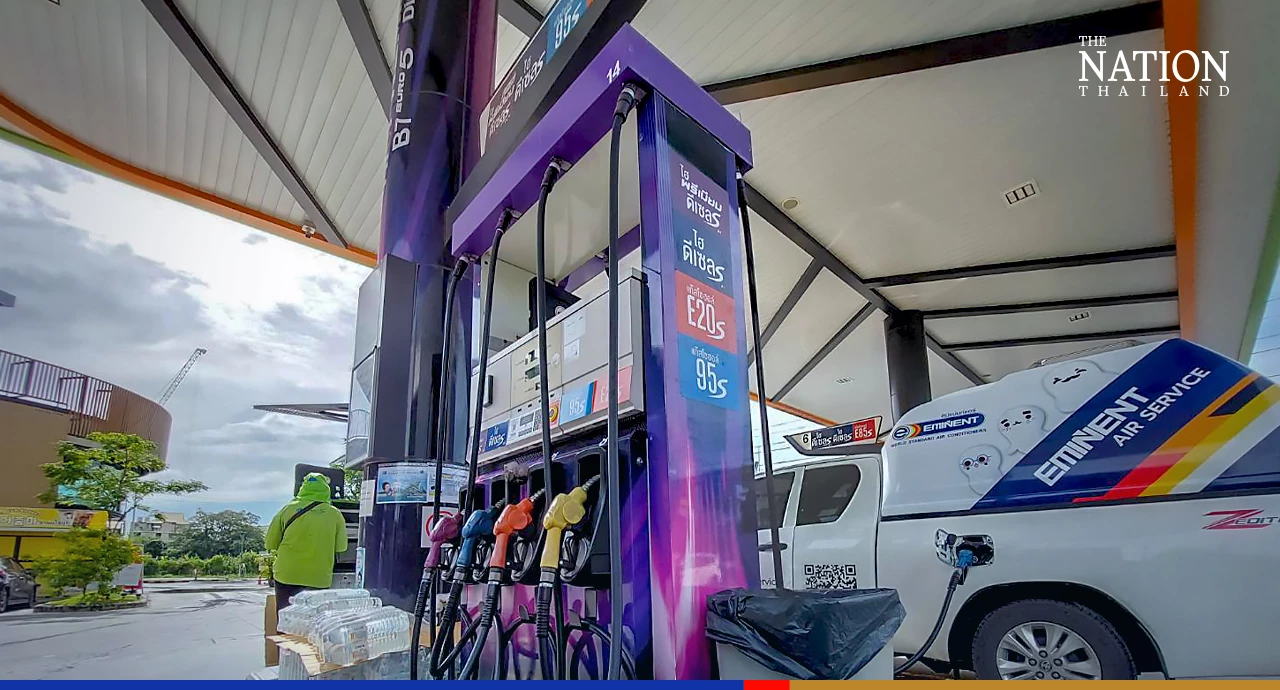
Supattanapong said the diesel price will be maintained at 35 baht per litre even though the Oil Fuel Fund should save around 3 baht per litre as the global oil price drops.
He added that diesel excise tax cut of 5 baht per litre would remain in place as compensation.
“We believe that Thailand’s retail price of diesel at 34.94 baht per litre is not very high compared to neighbouring countries,” he said.
He added that the ministry is collecting data to consider “New Year gifts” for the public.
As of Sunday (December 4), the Oil Fuel Fund was 129.42 billion baht in debt – 87.23 billion baht from subsidising fuel and 44.18 billion baht from subsidising liquefied petroleum gas (LPG).
Supattanapong said the ministry and Oil Fuel Fund are monitoring the global crude oil price closely after Opec+ maintained its production capacity at 2 million barrels per day, while the price of LNG remains high at around US$30 per barrel due to rising global demand in winter.
Moving to electricity bills, he said the ministry would consider the fuel tariff (FT) for January to April next year after talks between the Energy Regulatory Commission (ERC), Electricity Generating Authority of Thailand (EGAT) and PTT.
He said he expects the ERC to clarify the January-April FT soon to ensure it comes into effect on January 1.
The ministry and related agencies are making efforts to lower electricity production costs and find cheaper alternatives to LNG, he added.
“We expect the ERC to announce the FT soon, so the ministry can gather data to launch measures to relieve expense burdens among the public, while industry can seek ways to mitigate FT impacts as much as possible.”
SCB first to raise interest rates after Bank of Thailand rate hike
WEDNESDAY, DECEMBER 07, 2022
Siam Commercial Bank (SCB) on Wednesday raised its interest rates for both deposits and loans, the first bank to do so following the Bank of Thailand (BOT)’s latest policy rate hike.
BOT’s Monetary Policy Committee (MPC) on November 30 raised the policy rate 0.25 points to 1.25% amid an inflation outlook that is declining but still higher than the BOT’s target.
SCB announced it was raising its deposit interest rate to 0.25-1.4% per year and loan interest rate to 0.125%-0.25%, effective today (December 7).
Meanwhile, SCB’s minimum retail rate (MRR) will be raised from 5.995% to 6.12% per year, and the minimum loan rate (MLR) will go up from 5.5% to 5.75%. Finally, the minimum overdraft rate (MOR) will go up from 6.095% to 6.345% annually.
“SCB has always realised that the recovery of Thailand’s economy will happen gradually and not in all sectors at once. Therefore, we will continue to offer special measures to minimise the burden from the loan interest rate on our customers as much as we can,” said the bank’s CEO Kris Chantanotoke.
Thai rubber industry has 2 years to meet international standards
TUESDAY, DECEMBER 06, 2022
Rubber produced in Thailand may be rejected by foreign buyers if plantations do not meet international management standards in the next two years.
Nakorn Takwiraphat, governor of the Rubber Authority of Thailand (RAOT), said on Tuesday that French tyre manufacturer Michelin raised this issue recently with Agriculture Minister Chalermchai Sreeon.
“There is a risk that many international companies like Michelin and Swedish-Dutch furniture conglomerate Ikea, will not buy our rubber if the plantations do not meet international standards in two years,” Nakorn said.
He added that Michelin’s warning came after the United Nations and the international rubber industry decided that all plantations should follow sustainable principles and be transparent in their management.
Exporters failing to meet these standards will face the risk of their products being rejected, he added.
“Hence, RAOT will urge rubber farmers to make changes so they can command high prices in the international market,” he said.
International standards in the rubber industry include certification from the Forest Stewardship Council (FSC) and the Programme for the Endorsement of Forest Certification (PEFC), he added.
“Rubber farmers who meet these standards will be able to sell their products at prices up to 40% more than normal,” he said.
Some 100,000 rai (16,000 hectares) of about 20 million rai of rubber plantations in Thailand have already met FSC standards.
He added that RAOT has summoned rubber farmers, institutions and exporters to discuss global demands and new regulations.
He added that RAOT aims to ensure at least 50% of Thai rubber plantations meet FSC standards to ensure the country can meet international demands.




 She ran Pha Zalon in Chonburi’s Bang Lamung district and admitted to having learned the technique of administering beauty filler injections via YouTube. She said she had ordered the products online to try them on herself first before providing beauty services to her clients.