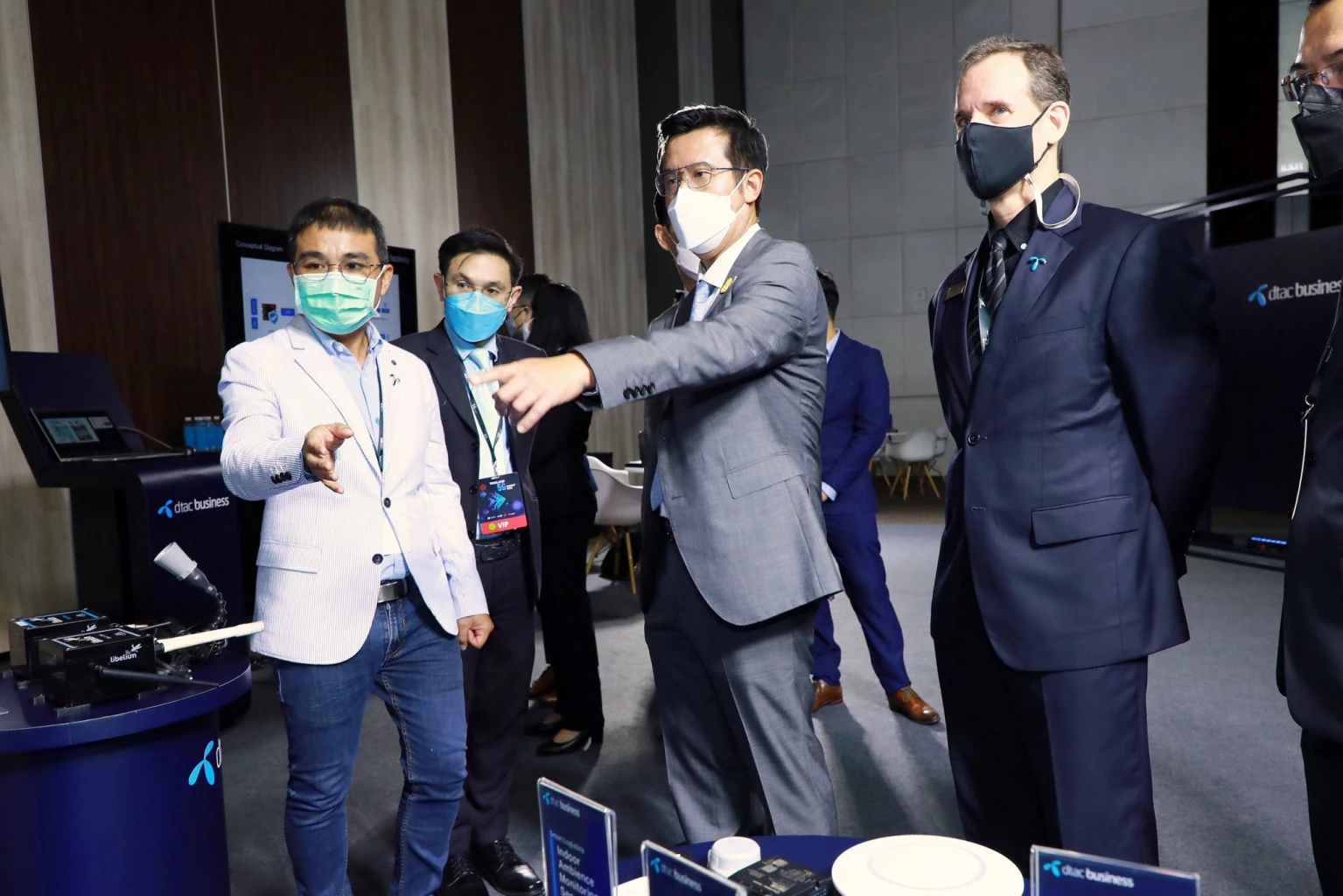
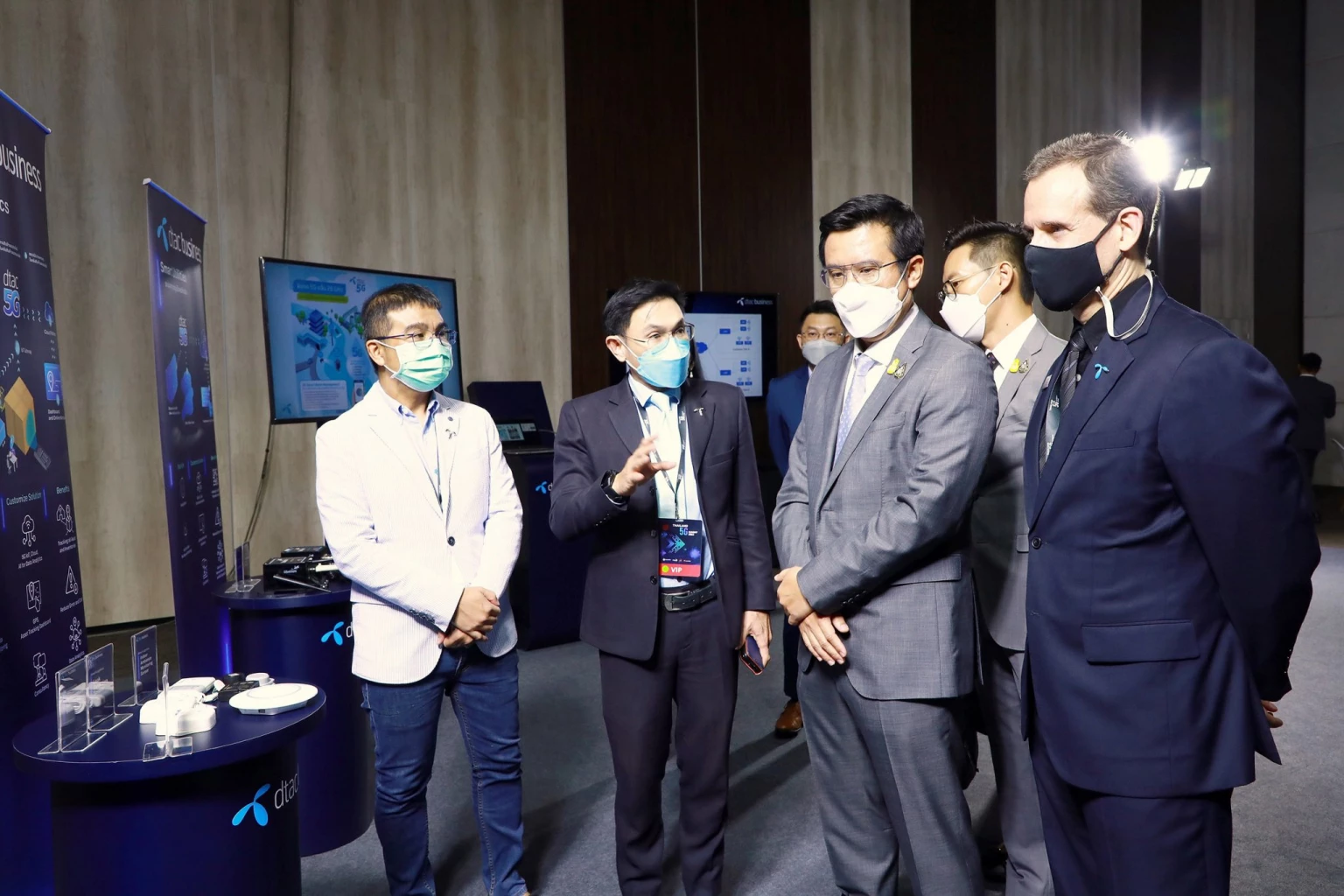
June 16, 2022 – Mr. Chaiwut Thanakamanusorn, Minister of Digital Economy and Society (DES) peruse the launch of dtac 5G IoT Solutions at the Thailand 5G Summit 2022. dtac introduces solutions for 3 core markets: Smart Factory, Smart Logistics, and Smart Utilities to contribute to the revitalization of the Thai economy by digitally transforming the industry and corporate sectors.
In addition, dtac highlights 5G Private Network for the industries. Presenting the 5G technologies to the dignitaries are Mr. Stephen James Helwig, Interim Chief Corporate Affairs Officer, and Mr. Lertratana Ratananukul, Head of Government Relations Division, Total Access Communication PLC or dtac.
Stakeholders in the manufacturing industry and other large enterprises are invited to discover the latest 5G trends at the Thailand 5G Summit 2022, organized by the Digital Economy Promotion Agency (DEPA). The event is held from June 16-17, 2022 on the 22nd floor of the Centara Grand & Bangkok Convention Center, Central World, Bangkok.
At the Thailand 5G Summit 2022, dtac business launches 5G IoT solutions for 3 core markets:
1. Smart Factory Solutions: These will digitally transform factories and traditional or analog manufacturing processes with big data support. dtac solution developers can assess existing systems and develop digitalization plans with IoT capabilities to collect, analyze and monitor data in real-time and remotely improve efficiency, reduce operating costs, and conform with future digital platforms.
2. Smart Logistics Solutions: These will transform warehousing and transportation, with IoT and smart sensors providing precise real-time monitoring of goods as they are transported, enabling businesses to track progress and improve security. Relevant data such as humidity and temperature can also be remotely monitored in real-time to ensure the quality of perishable goods.
3. Smart Utilities Solutions: These will offer efficient, timely 5G-based processes for both water and energy management. Smart Water Management can remotely measure pH and chemical residue levels in wastewater as well as the water level in the wastewater pond in an industrial estate. The Smart Water Meter Reader enables online readings input and processing. For industries and factories, 5G Smart Energy Management enables significantly more efficient and reliable energy management, especially when used in conjunction with Smart Main Distribution Board (MDB). This can also prevent, mitigate and minimize power disruptions such as power brownouts, blackouts, surges, or overloads.
Furthermore, dtac business has introduced the 5G Private Network, an advanced security network for corporate clients to confidently step up into the digital era. The 5G Private Network features edge computing with flexible scalability to suit all corporate requirements and take advantage of technologies such as Massive IoT, Artificial Intelligence (AI), Machine Learning (ML), Augmented Reality (AR), Virtual Reality (VR), and real-time data processing.
Forty-one foreign companies have been allowed to conduct businesses in Thailand under the Foreign Business Act, Sinit Lertkrai, the deputy commerce minister, said on Friday.
“These foreign companies have invested over 18.69 billion baht in Thailand and generated up to 753 jobs for local people,” he said. “Most of these companies are from Singapore, Japan and Cayman Islands.”
Sinit said that allowing more foreign companies to invest in Thailand will help promote knowledge and technology transfer, especially in the areas of petroleum rig control, multiverse platform operation, coronary angioplasty, enterprise software development, data and predictive analytics, and integrated circuit manufacturing.
Sinit added that 12 foreign companies have been approved to invest in the Eastern Economic Corridor (EEC), or 29 per cent of all approved foreign companies in May. These companies have invested 15.16 billion baht in the EEC, accounting for 81 per cent of total foreign investment. Most of these companies are from Japan, Singapore and the Netherlands, while businesses in the EEC that received foreign investments include data collection and processing services, electronic component installation, digital camera and lens manufacturing.
The Commerce Ministry expects more foreign companies to apply for investment in Thailand in the rest of the year due to the improving Covid-19 situation and the easing of restrictions for foreign arrivals, which will help restore confidence among foreign investors.
The Energy Policy and Planning Office (EPPO) has endorsed measures to help cushion the impact of rising petrol and gas prices resulting from the ongoing Russia-Ukraine war, Energy Ministry permanent-secretary Kulit Sombatsiri said on Thursday.
The ministry will seek a green light for the relief measures when the Cabinet convenes next week, the senior official said.
“The price of diesel oil will be maintained at no more than 35 baht per litre until the end of June,” he said.
The EPPO meeting, chaired by Energy Minister Supattanapong Punmeechaow, also agreed to continue subsidising cooking gas for low-income earners for three more months until the end of September.
The Department of Energy Business has also been tasked with calling on petroleum giant PTT to extend a discount on liquified petroleum gas (LPG) to small food vendors and eatery owners until the end of September, Kulit added.
He said EPPO had agreed with the proposed measure to ease the impact of the high price of natural gas for vehicles (NGV).
The Energy Ministry will ask PTT to retain the NGV retail price at 15.59 baht per kilogram, while keeping the price at 13.62 baht per kilo for taxi drivers in Greater Bangkok until September 15.
The baht opened at 35.05 to the US dollar on Friday, strengthening from Thursday’s close of 35.16.
The currency is expected to move between 34.95 and 35.20 on Friday, predicted Krungthai Bank market strategist Poon Panichpibool.
He added that a weakening dollar and mass sale of gold may make the baht fluctuate and strengthen.
However, he said, the value of the baht may weaken if foreign investors sell Thai assets, especially stocks, due to concerns and confusion over Thai monetary policies.
Some investors also expect the Monetary Policy Committee (MPC) to hold an urgent meeting to increase the interest rates even though there has been no indication of that happening.
Poon also believes the Bank of Japan’s moves to ease monetary policies may weaken the yen and baht.
If the baht does weaken, he said it will be limited to between 35.10 and 35.20 to the dollar, allowing exporters to sell their dollars.
He advised speculators to watch the baht’s direction closely as there may be some factors that cause the baht to weaken to test the resistance level of 35.50.
However, he does not expect this to happen unless a lockdown is widely enforced in China, forcing investors to dump assets in emerging Asia markets.
Poon advised investors to use hedging tools like options to manage their risks in the highly volatile currency market.
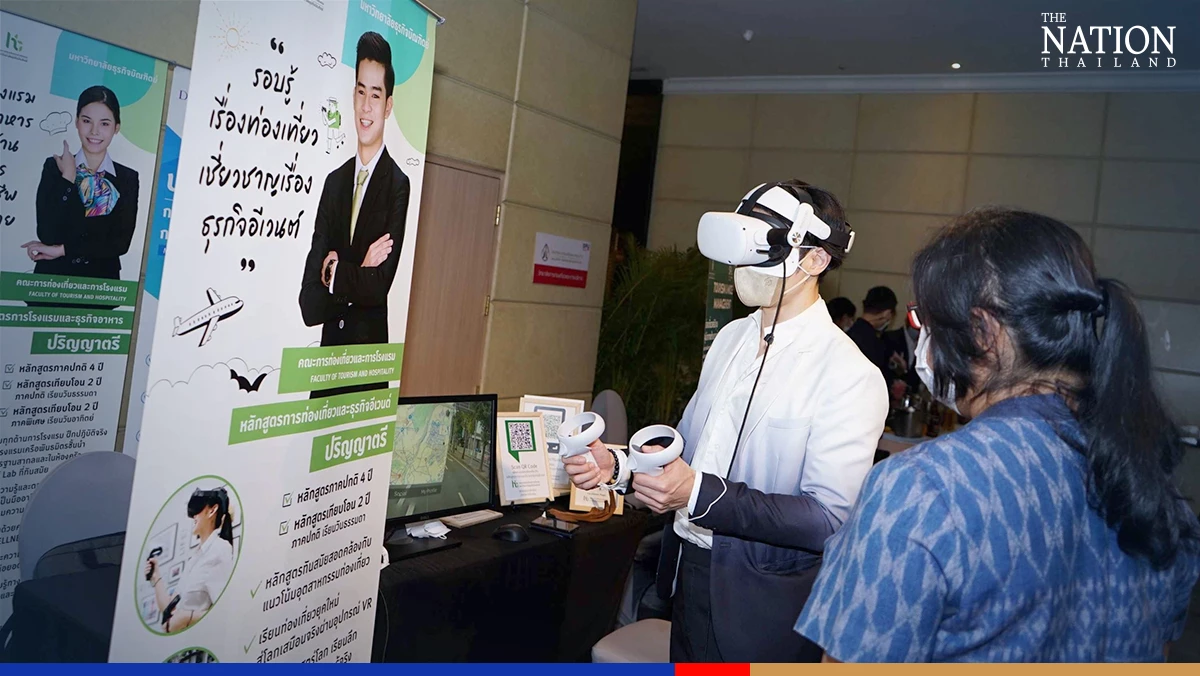
The nationwide educational institution network is being expanded to improve the quality of MICE workforce so as to elevate Thailand’s position in the conference and exhibition organising industry.
The idea has been initiated by Thailand Convention & Exhibition Bureau (Public Organization), or TCEB, which is confident that the MICE (Meetings, Incentives, Conferences, Exhibitions) industry will be the key factor in boosting the country’s tourism after its reopening.
Supawan Teerarat, senior vice president – MICE Capability and Innovation of TCEB, disclosed that before the pandemic, MICE tourism was one of the major sources pf income for the country. Although the number of business purpose visitors is only around 1.2-1.5 million when compared to the overall foreign tourists, the group average spending per person is quite high. So they generate economic value worth more than 200 billion baht.
As the country is reopening, many events, conferences, and exhibitions can be organised. However, to be able to attract and pitch more global events and expositions to exhibit in Thailand, Supanwan said that the country was required to accelerate integration of collaborations to expedite MICE capability enhancement through an education network.
She added that the objectives of this collaboration were to drive regional MICE, distribute quality MICE workforce and create a competitive advantage of MICE in all regions across Thailand. Activities are organised to bolster content development and create jobs and occupations for the new generation of MICE workforce nationwide. “The TCEB has formulated the strategy to expedite regional MICE and established TCEB regional offices to promote MICE nationwide. Currently, the development of MICE capability through the education network in all regions has been formed with educational institutions across Thailand,” said Supawan
At present, MICE courses have been added to the curriculum in 136 institutions, comprising 87 tertiary education institutions and 49 vocational schools. Subjects under MICE Major are offered in 33 institutions, all of which can produce more than 50,000 MICE students in tertiary and vocational education institutions each year in average. Moreover, TCEB has further developed the capability of educational institutions by transforming them into MICE Business Centres, which will help to expedite the distribution of MICE across the nation.
Supawan insisted that establishing an education network was a vital mechanism, as it enables MICE to tap into other regions, as well as all other sectors in each district. The education network also collaborates and bolsters marketing, as well as synergises the development of capability in all dimensions, generating income, creating jobs and efficiently driving the local economy through MICE events held in the region.
According to the survey “Meetings Outlook: 2022 Spring Edition” conducted by MPI (Meetings Professional International), it was found that the Covid-19 pandemic has caused people to realise the importance of face-to-face events. About 64 per cent commented that businesses would probably resume their growth from 2023 onwards. For this reason, event budget will increase, as well as employment volume. Employment rate in the MICE industry also has a tendency to rise. Survey results indicated that more than half of the respondents had encountered problems related to recruiting qualified employees compared with the latest quarter, proving that MICE has begun to thrive again.
To push Thailand to the forefront of the MICE industry, TCEB has accelerated the development of MICE capability in three areas: Content development, connection development and career development, to serve international MICE markets.
“We prioritised producing a high-performing workforce in line with the demands of business premises. TCEB has also accelerated the production of the occupational-level workforce in regard to feeding occupational graduates into the quality MICE job market to support the economy, promote employment, as well as circulate revenue from MICE activities and employment to other regions,” said Supawan
Assistant Professor Niwat Keawpradab, president of Prince of Songkla University, speaking on the institution network Southern MICE Academic Cluster (SMAC), disclosed that the university has always supported outcome-based teaching and learning, especially an active learning approach and experiential learning.
“Students can participate and undergo training to gain actual experience from the industry. They can also use this knowledge as their research studies to expand their insight in relevance with compulsory skill development for MICE personnel in the new normal era,” said Dr.Niwat.
Ariya Banomyong, co-chief rxecutive officer, CMO Pcl, revealed that the current situation inside and outside the country had gradually improved. People have resumed their routine activities and begun to travel, emphasising that all countries are unlocking themselves from previous circumstances.
As one of Thailand’s biggest events organisers, Ariya said that the Thai MICE industry has the potential and opportunity to grow like other countries whether it is Dubai or Singapore. However, Thailand has seldom held events of a regional level recently even though businesspeople and travellers in Business Event category have always had Thailand in their mind. Hence, now is the most suitable time for Thailand to contribute towards restoring the local economy through MICE industry, be they hotels, accommodation, travelling, restaurants or shopping centres. Thai MICE had a market value of up to 230 billion baht in 2019 and is foreseen to increase to 420 billion baht in 2027, based on the average yearly growth of 11.63 per cent from 2021 to 2027.
“What the CMO Pcl will do can be either Homegrown Event or Business Event delivered under the CMO brand. So to speak, our conferences have not only featured hundreds of globally renowned speakers, but also attracted visitors from other countries, as the conferences held by our company could make neighbouring countries want to join too. Besides providing knowledge, the conference is able to encourage the Thai economy through the MICE industry,” said Ariya.
He added that the country’s infrastructure and facilities are already advanced and competitive while Thai-style hospitality and management are second to none. However, the nation misses the opportunity to host some global expositions due to a lack of creativity. Therefore, educating and training the young workforce could be one of the sustainable solutions.
Supawan said that TCEB has targeted the development of MICE capabilities, in terms of education. TCEB has provided support through the establishment of training division and MICE occupation test division at 10 MICE educational network centres nationwide.
Additionally, TCEB has developed MICE Career Platform and successfully done employment matching for more than 1,000 jobs. A MICE Student Chapter has also been created for grooming 5,000 young MICE entrepreneurs by 2023.
Zespri International Limited, the world largest marketer of kiwifruit collaborates with T&G South East Asia Limited as its strategic sales & marketing partner in Thailand, Myanmar, and Cambodia.
Starting the SunGold’s kick off event incorporating with trade partners (retailers and wholesalers) e.g. Tops, Lotus, Makro, other retailers and fresh fruit vendor across Thailand to celebrate 2022 season, sharing business direction/campaign along with introducing new Thailand country manager at PULLMAN KING POWER HOTEL BANGKOK.
Mr. Samuel White (Country Manager-Thailand) stated that Zespri Kiwifruit is the world’s leading kiwifruit brand, it is trusted by our partners and consumers in Thailand because of the fruits superior taste and quality. The product and the brand continue to grow from strength to strength with Zespri targeting global operating revenue of 4.5 billion NZ dollars by 2025. This growth is driven by the commitment of its 2,800 New Zealand based growers to produce premium-quality kiwifruit, and is a testament to the strength of the brand and the Zespri innovation and quality systems.
100% of your daily Vitamin C* in just one Zespri Kiwifruit, plus it is rich in more than 20 vitamins and minerals such as potassium, folate, Vitamin E, antioxidants. Zespri kiwifruit is also rich in soluble and insoluble fiber, and also contains the unique enzyme (Actinidin) that support digestive system and help digest protein to relieve your bloatedness. Zespri SunGold Kiwifruit is sweet as natural’s treat and provide 100% of your daily Vitamin C* and other minerals that also contributes to collagen creation and supports improved energy level. Zespri Green Kiwifruit is refreshing deliciousness and high in Fibre. Cut it, Juice it, anyway you like it. Even eat fresh or adapt into various menu e.g. Zespri Kiwifruit ice-cream, Zespri Kiwifruit smoothies, Zespri Kiwifruit with coconut sticky rice, and Zespri Kiwifruit Thai spicy soup (Tom Yum Koong).
Ms. Somkamol Leelaniphon (Marketing Manager) stated that We-Zespri Kiwifruit would like to get the consumer to rethink their foundation of great health for their family, by adding Zespri Kiwifruit to the fruit bowl. Not all fruits are equal and just 1 Zespri SunGold Kiwifruit provides 100% daily Vitamin C* to support health lifestyles through the marketing program both online and offline to drive engagement and concurrently helps educate consumers on the health and nutritional superiority of Zespri Kiwifruits with the “#Just1ZespriChallenge tongue twisters” campaign.
Zespri SunGold Kiwifruit is available in-store during May-October while Zespri Green Kiwifruit is available in-store during May-Dec of every year. Find us at Tops, Lotus, Makro, Big C, Villa Market and all leading supermarkets and fresh fruit vendor across country.
*Thai RDI recommends Thai people ages more than 6 years to take Vitamin C 60 mg daily, Zespri SunGold Kiwifruit 100 g contains 152 mg of Vitamin C. Zespri Green Kiwifruit 100 g contains 88 mg of Vitamin C. Source: New Zealand FOODfiles 2021.
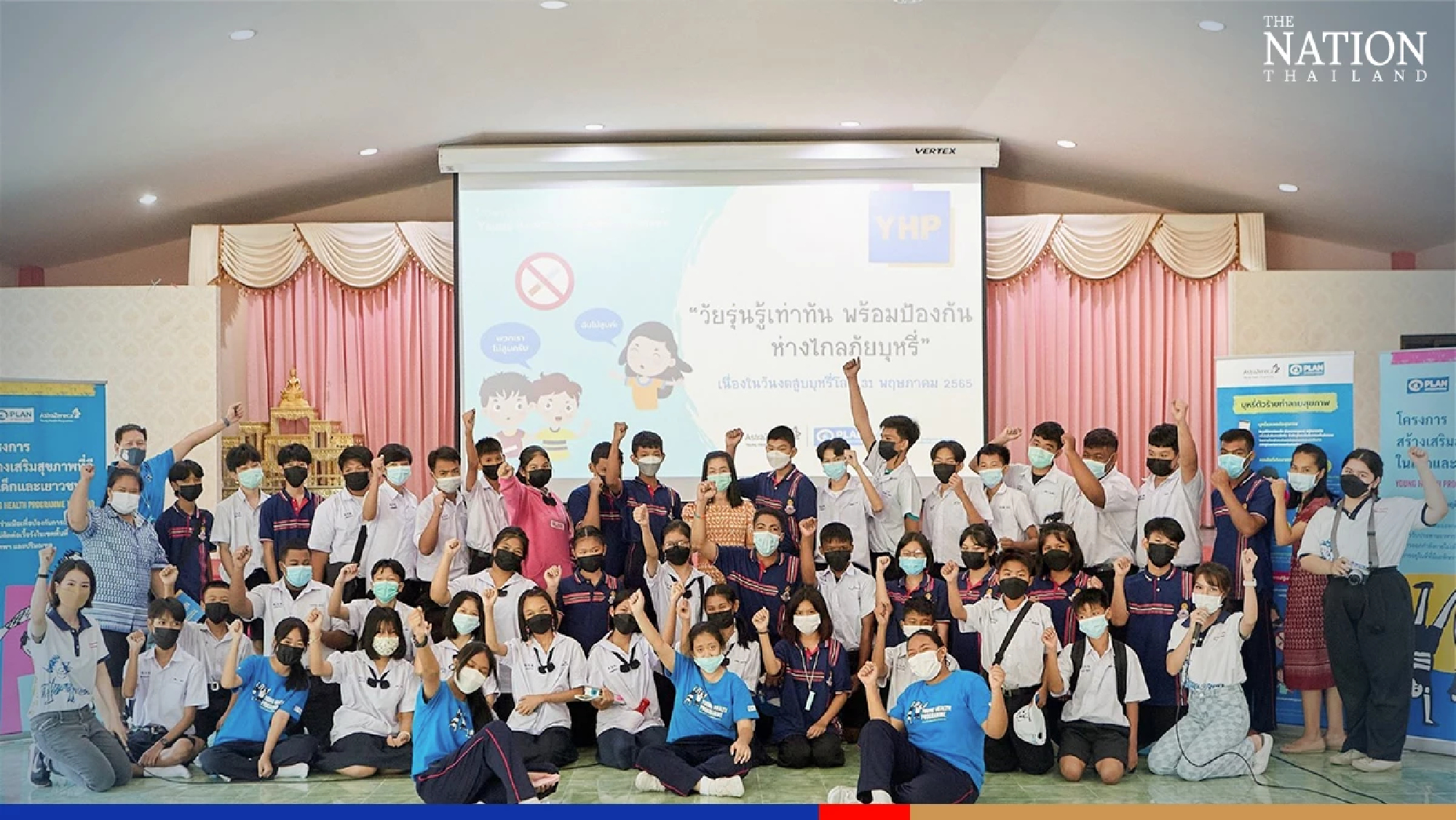
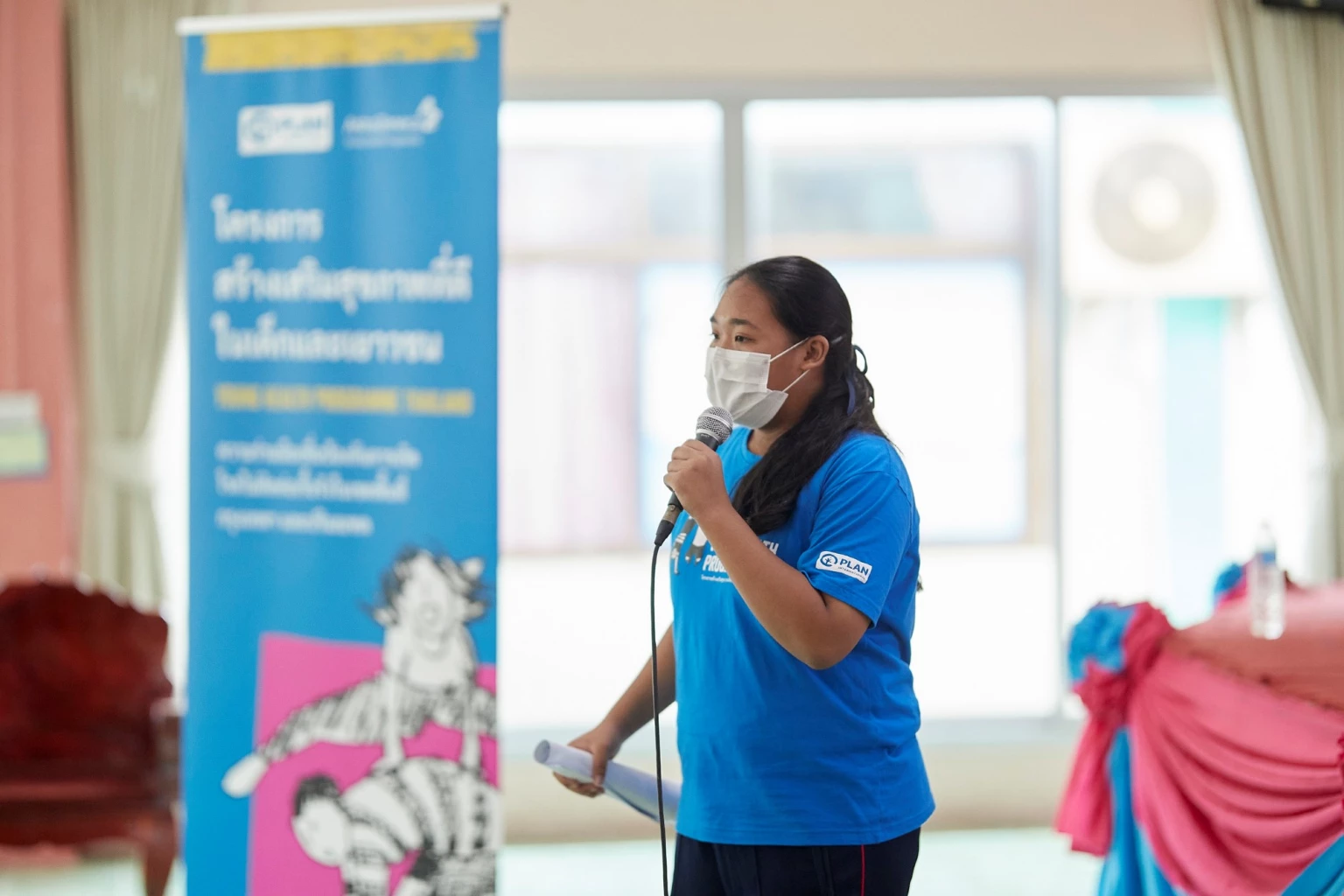
Bangkok – AstraZeneca Thailand, in collaboration with Plan International Thailand, continues Young Health Programme (YHP) into its third year with the “World No Tobacco Day 2022” event. Conducted for more than 1,500 students at 12 primary and secondary schools in Greater Bangkok between May 23 and June 7, 2022, the event aims to raise awareness and ensure that young people in Thailand have increased knowledge about risk behaviours to prevent smoking-related disease.
Educational activities were organized to raise youth’s awareness of smoking-caused health effects, led by Plan International Thailand, AstraZeneca Thailand employees, and the Peer Educators who have completed YHP Peer Education training. Furthermore, the students shared their perspectives on living without tobacco and how young people can refuse and prevent smoking from reducing the risk of NCDs on the Young Health Programme Thailand social media.
The World No Tobacco Day (May 31) is an opportunity to raise awareness of tobacco use’s harmful and deadly effects, both first-hand and second-hand smoke. Statistics show most people start smoking and become addicted to nicotine when they are still children. Those whose parents or siblings smoke are three times more likely to smoke than children living in non-smoking households. In addition, children who start smoking at a young age are more likely to smoke heavily and find it harder to give up.
The World Health Organization reports that smoking kills more than eight million people each year. More than seven million of them die from firsthand smoke, while over 1.2 million deaths are related to secondhand smoke. In Thailand, the National Statistical Office reveals that 10.7 million Thais are smokers. Of them, more than three million are youth. On average, up to 17.3 million Thais are exposed to secondhand smoke from family members. Exposing to secondhand smoke for 30 minutes is harmful to blood vessel lining, which then possibly leads to coronary artery disease2. Such exposure also raises the risks of various other NCDs, such as lung cancer, emphysema, respiratory disorders, heart and blood-vessel conditions, nervous-system issues, weaker body functions, and many other health problems.
The Young Health Programme Thailand, launched in November 2019, is a five-year programme that aims to contribute to the improved health and wellbeing of young people. It aims to ensure that young people in Thailand have increased knowledge about risk behaviours and NCD prevention, which gives them greater capacity to make informed decisions about their health through key educational and inspiring activities; on-the-ground NCD prevention sessions for young people, youth leadership and advocacy training, monthly campaigns and events linked to awareness, youth-friendly health service training for health professional, score-carding by peer educators, seminar on NCD prevention among young people, implement the advocacy strategy, and participation of young people in key advocacy events. The Young Health Programme Thailand hopes to directly reach more than 75,000 young people and community members with health information and NCD prevention programming. Indirectly, it expects to reach an additional 500,000 people in the broader community through campaigns and awareness-raising activities.
Bangkok, April 22, 2020 – Wealthy Planet Company Limited is the manufacturer and distributor of 100 percent genuine bird nest’s beverage products with health benefits under the brand of JERADA Bird’s Nest.
These products are made from raw bird’s nests sourced from farms by the neighboring Baan Rang Nok community located in the district of Cha-uat, Nakhon Si Thammarat province. In addition, the company is the producer of frozen seafood directly obtained from the Andaman Sea under the brand of Cae Dean. Both products have been chosen to represent the best entrepreneur from Thailand’s central region by the 4th annual Young Exporter from Local to Global (YELG) workshop organized by the New Economy Academy (NEA), Department of International Trade Promotion, Ministry of Commerce. Equipped with in-depth training from field experts, the chosen local entrepreneur has the skills and knowledge befitting the role of an exporter of Thai products manufactured with local raw resources with the potential to be exported to international markets and gain recognition in the international trade arena.
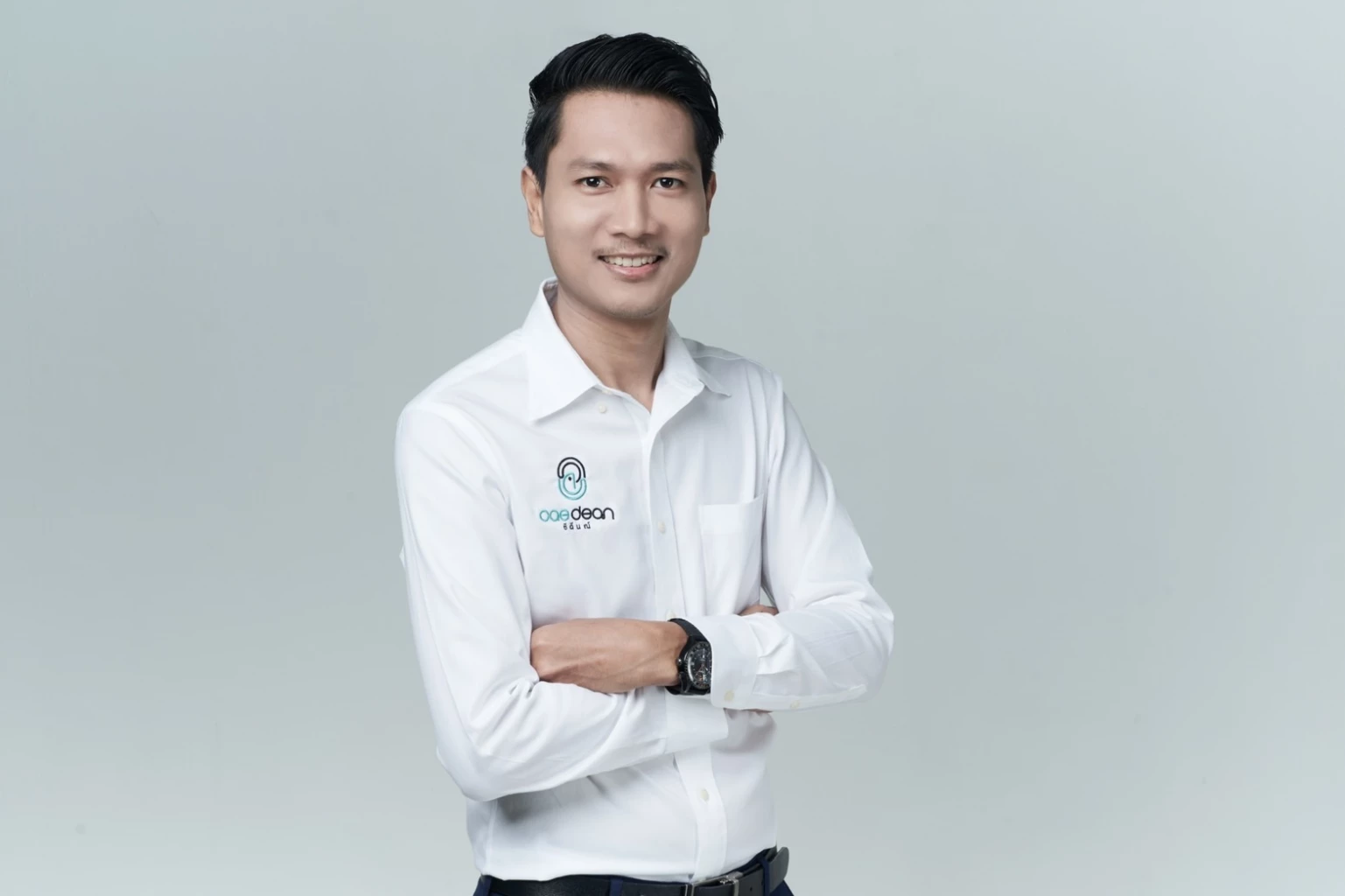
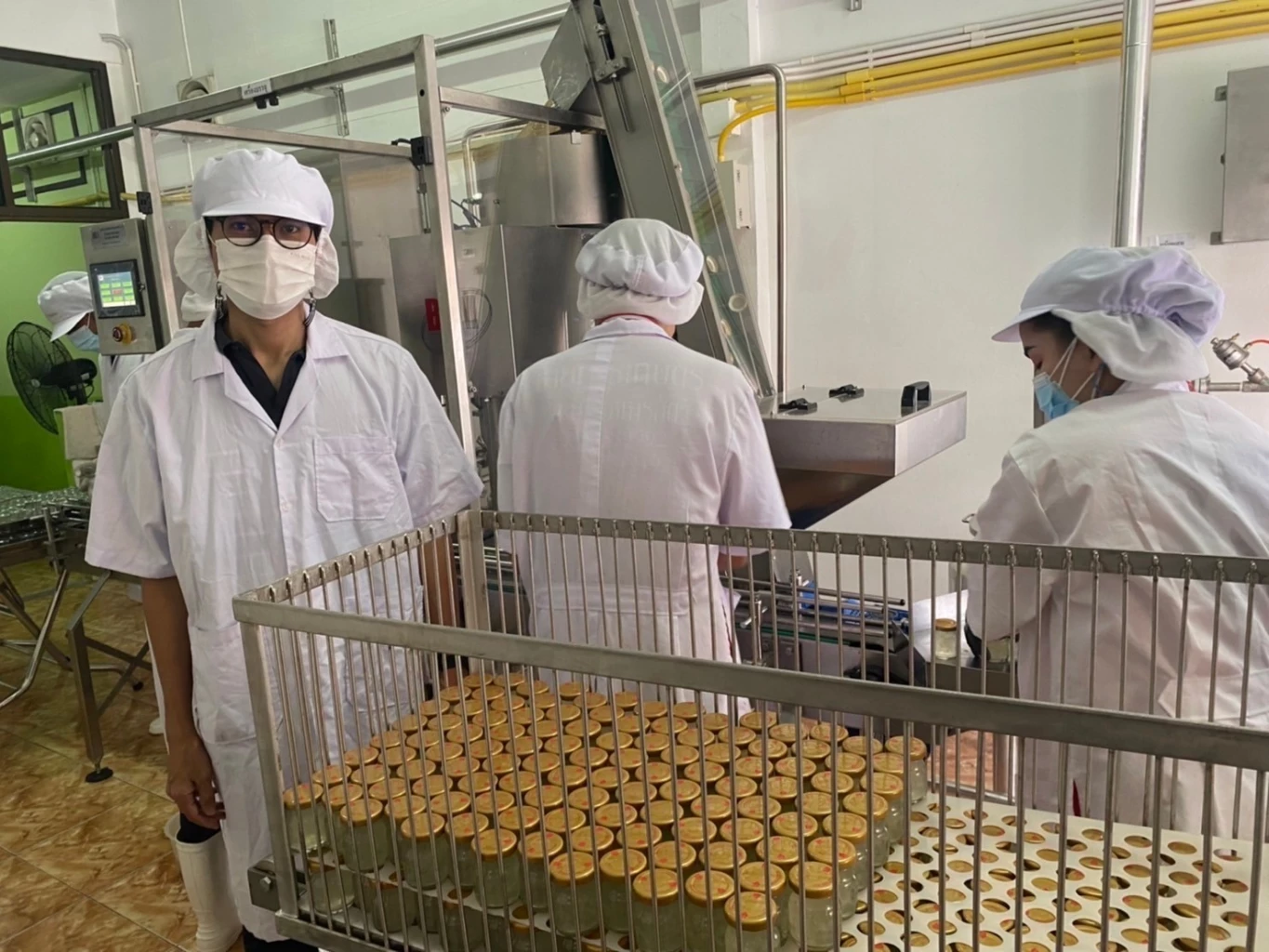
Talking about the 100 percent genuine bird’s nest beverage and frozen food products under the Cae Dean brand, Mr. Kosol Sisaiphet, Managing Director of Wealthy Planet Company Limited, said, “As the manufacturer and distributor of JERADA Bird’s Nest beverage products, it took years of commitment and determination to find the best health-boosting products until they met standards and reached the premium status. They also resulted from a combination of knowledge and experience in tending quality bird’s nests from farms carefully selected by the neighboring Baan Rang Nok community located in the district of Cha-uat, Nakhon Si Thammarat province. This particular area is regarded as the source of natural opulence, prompting a large number of swallows building nests and laying eggs. Furthermore, systems are put in place to maintain and oversee the cleanliness of bird’s nests and manufacturing factories with cutting-edge machines that meet international GMP and Halal standards. These elements make our bird’s nest products high-quality and rich in nutrients from raw materials.”
Also noteworthy is the company’s role as the manufacturer of frozen seafood and seafood snacks delivered straight from the Andaman Sea to consumers under the Cae Dean brand. Multiple seafood products are available for sale: Ready-to-eat and ready-to-cook seafood, fish fillet, sashimi, and fish snacks. They key strategy in the development of these products lies in the “From Sea to Table” concept aimed at maintaining the supreme quality and freshness of food from the sea to your dining table with the potential to provide close oversight on the manufacturing quality control from upstream to downstream. For this reason, all products are guaranteed to be clean, fresh, flavorsome and unique from the rest. They also meet the EU standards on food nutrition, safety, and affordability, introducing them to the “sustainable food” system through the new Farm to Fork (F2F) strategy.
At present, our products are exported to China; however, the global COVID-19 pandemic has significantly halted shipping logistics and caused disruptions to the exportation of animal-based products. These logistical problems have also resulted in an overflow of raw bird’s nest products in our warehouse, as Chinese buyers cannot make direct purchases. Therefore, the process of exporting these products to China and marketing them is no longer an easy task. Another factor worth mentioning is we still lack relevant information on exporting products to China. In response to this challenge, our initial solution is to research international exportation and marketing protocols, which will serve as a good opportunity for small and medium entrepreneurs to have access to a range of in-depth information.
In this regard, our company was afforded the opportunity to partake in the 4th annual Yong Exporter from Local to Global (YELG) workshop organized by the New Economy Academy, Department of International Trade Promotion, Ministry of Commerce, with the goal of learning and enhancing our knowledge. In addition, we also had access to up-to-date information on international exportation to other countries and China in particular. The workshop offered a variety of reliable information relayed by trade ambassadors and export specialists who specialize in exporting products directly to China. This wealth of information benefits business operators in terms of helping them make adjustments during the global COVID-19 pandemic, as well as offers ways to deal with post-COVID-19 business operations.
The Department of International Trade Promotion also values the significance of news updates and information pertaining to the exportation of products to target countries and others that offer the new potential to entrepreneurs nationwide. The Department utilizes both skills and knowledge as a weapon to increase the level of their competitiveness in world markets and to help new small and medium entrepreneurs understand the important aspects of exportation with the goal of forming strategies, conducting businesses, performing cost accounting, setting product prices to achieve profitability, and carving out appropriate business models to avoid being disadvantaged by foreign competitors. They can also apply this knowledge to improve transportation logistics, streamline payment methods, exercise caution in the exportation process to prepare for, respond to, and make adjustments to existing risks with an eye toward reinvigorating their businesses and making them run smoothly.
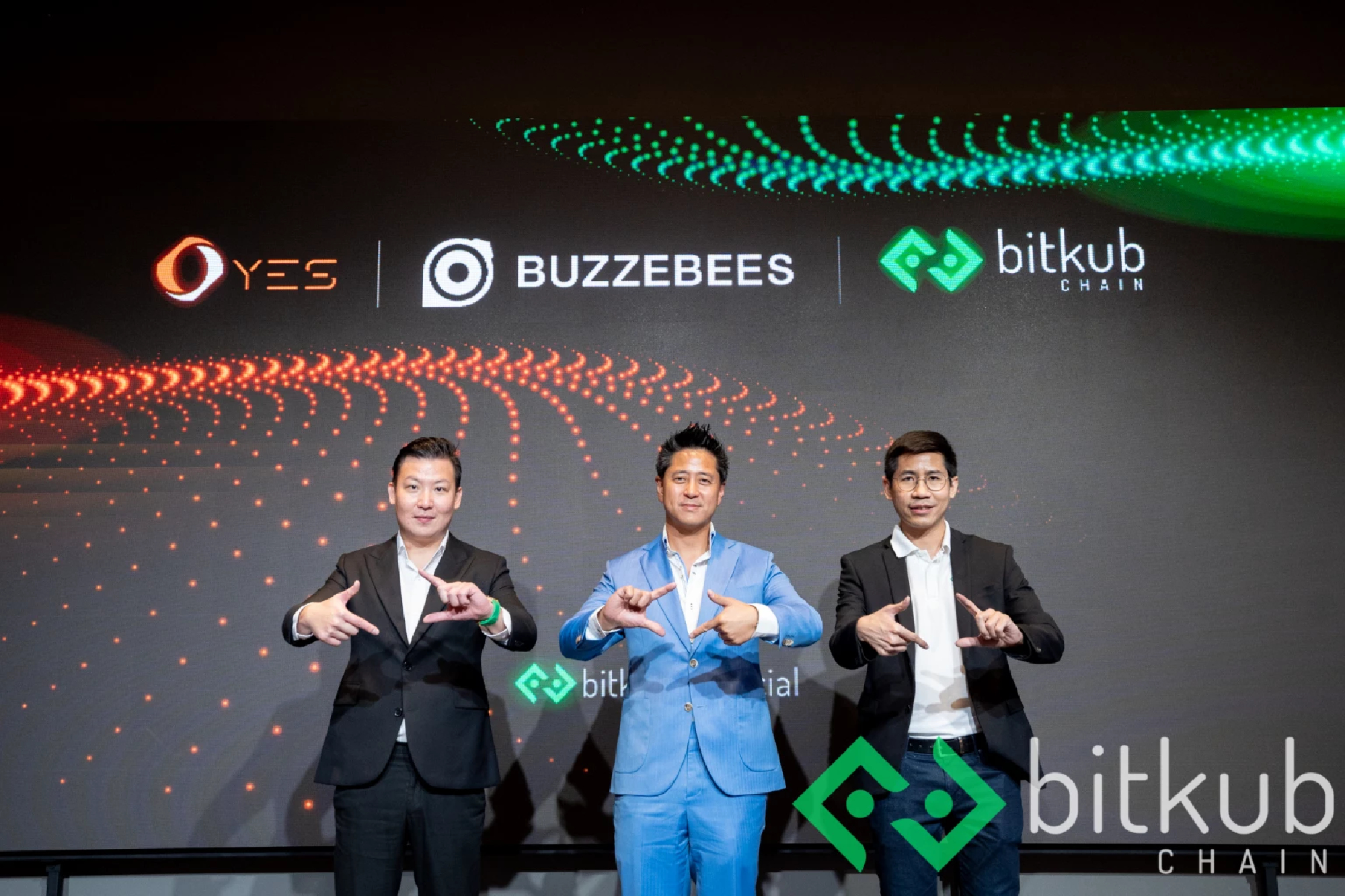
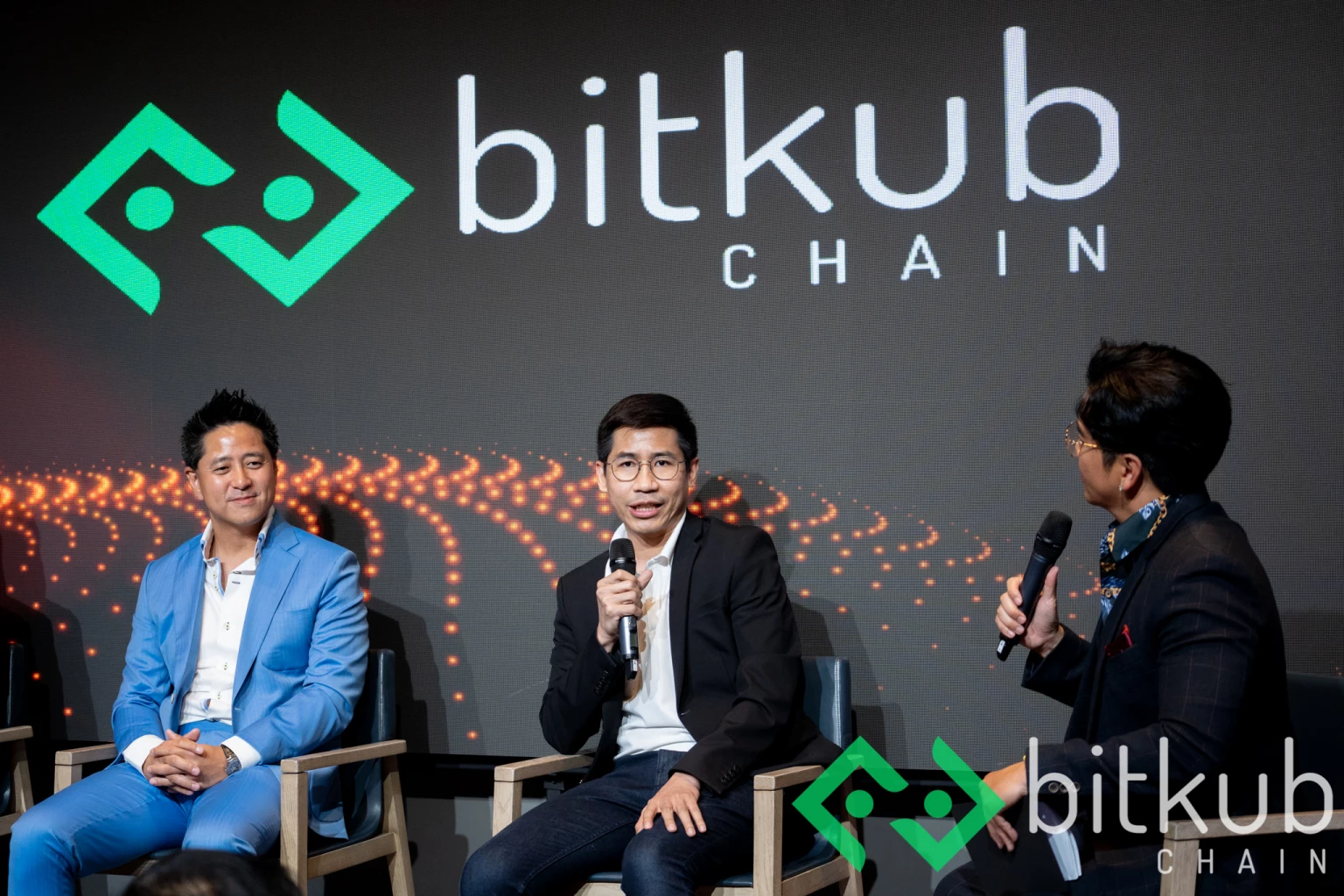
Bangkok, June 15 – Bitkub Blockchain Technology (Bitkub Chain service provider and Blockchain Total Solution) together with Yes Token and Buzzebees (Loyalty Program & CRM leading company with 90% market share) announced a loyalty point campaign to claim YES Token or any other services and merchandise by using Bitkub NEXT digital wallet.
YES Token can be used as collateral digital asset on www.ยืมมั้ย.digital platform with a CeDeFi technology (a combination of decentralized and centralized finance). Also, the users can borrow the NFTs, physical products, claiming for store privilege and other special campaign. At the same time, YES Token holders can use the token for trading on Bitkub Exchange and voting for Governance Function in the future.
For Buzzebees, the CRM Privilege platform with a 90% market share as a corporate and retail service provider to open the new experience for customers, there are more than 90 million accounts users to provide privilege for both online and offline users for more than 20 million prize per month. They were also became a partners with leading company such as LINE, Samsung, PTT, Nestle, Unilever, Mead Johnson, CP, AirAsia, Grab, Citibank, AIA, PepsiCo, Tesco and other South East Asia leading companies.
Besides, special customers with the privilege points on Buzzebees can use YES Token as digital assets to keep or trade on the digital platform developed by Bitkub Blockchain Technology such as Bitkub NFTs, Bitkub NEXT or any other decentralized applications.
“YES Token is the first Fintech application on Bitkub Chain in which the token’s holders can lend the digital asset or redeem to the special store. Thus, this can increase the value and the real use case of YES Token. Under the cooperation of Buzzebees (leading CRM Priviledge platform), this can penetrate to the users due to a large number of base customers (90 million accounts). I would say that YES Token have several use case not only for trading but it also can strengthen the ecosystem for both digital and physical world,” said Suttikiat Kittipattrakul, CEO of Yes x Technology Co., Ltd.
“Beezebees intend to provide special privilege to the members by using YES Token as reward point claiming. In addition, under this cooperation, this is the new beginning of the state-of-art technology for the loyalty point market. This will enhance the value and real use case for digital token as a point claiming reward,” said Nattida Sanguansin, Managing Director of Buzzebees Co., Ltd.
“Under this cooperation, we spot several good opportunities for Bitkub Chain ecosystem. At the same time, this is a key for strategic partnership to help penetrate to the users with regards to Decentralized Finance by using Bitkub NEXT as digital wallet. I believe that all partners from this cooperation will thrive together as an importance strategic partnership on Bitkub Chain,” said Passakorn Pannok, CEO of Bitkub Blockchain Technology Co., Ltd.
Amid increasing demand for flexible and hybrid working offices after the pandemic, JustCo, a leading flexible workspace provider is seizing the momentum to open a new co-working space centre in Bangkok and three other centres in the Asia Pacific.
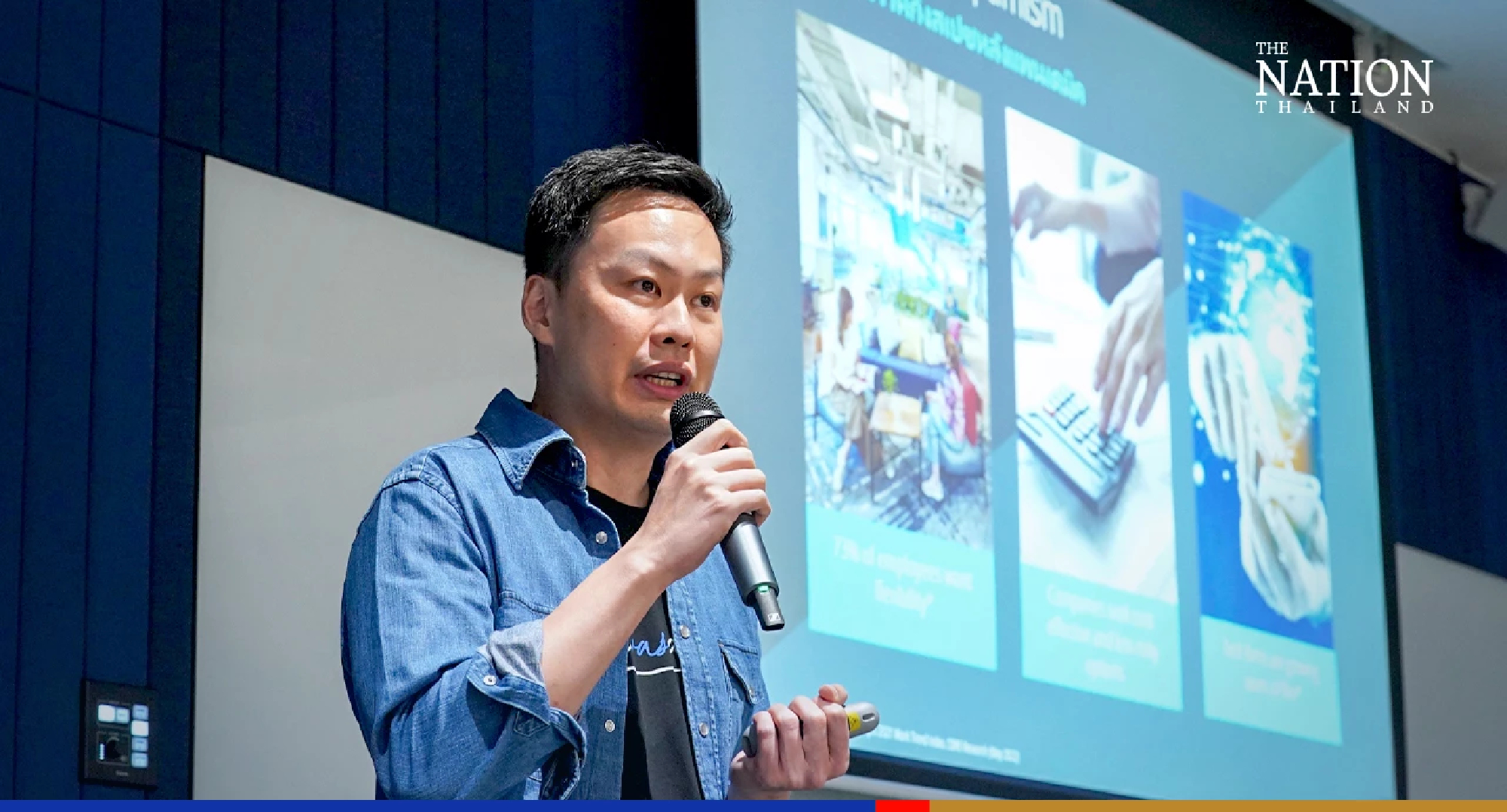
Kong Wan Long, JustCo’s co-founder and chief commercial officer, said hybrid work was not a trend but a reality. Today, every business that has an expiring fixed lease is considering flexible workspaces for more agile and cost-effective planning. The company is filling up its centres with an average 80 per cent occupancy across Asia Pacific, he said.
He added that in Bangkok in particular, all four available JustCo centres are nearing full occupancy, averaging 87 per cent. The majority of customers (60 per cent) are general people, while the rest are small enterprises, multinational corporations (MNCs), and startups.
“As a company, expanding globally will allow us to offer a stronger product. Many of our customers have regional operations. With a single JustCo contract, JustCo members have access to our entire platform of over 45 co-working centres and 30,000 desks,” Kong Wan Long added.
As the strong point of co-working space is flexibility, he strongly believes that the industry has more room to grow. Co-working spaces currently account for 3-5 per cent of the total rental office industry in the Asia Pacific region.
“Our main focus market remains in Asia, as Asia is our roots and we know how to properly serve and show them hospitality,” said Kong Wan Long.
Currently, there are three major trends that support co-working space operators in the post-Covid era. The first factor is most employees want flexibility. The second is many companies are seeking more cost-effective and less risky options. Hence, they would rather prefer to lease an office for a short period like 3-9 months rather than 3-5 years. And the last factor is the boom of tech firms that have become growing users of flexible workspaces, prioritising productivity more than going to work at the office.
Kong Wan Long said that the new centre in Bangkok is located in Silom Edge building, the prime corner of Silom, the capital’s financial hub, and Rama IV Road. Aiming to serve the tech-savvy lifestyle of new-gen employees, the place will house the company’s first live streaming and podcast studio. The studio is available for use by both JustCo members and external customers.
Other latest digital workspace technology, including wireless office access and on-the-go remote booking of all workspaces, meeting rooms and amenities are also well-equipped at the new centre as well.
Three new centres will be opened in Tokyo and Singapore later this year.
Wimolnit Lertpitakkit, JustCo Thailand and Indonesia general manager, said despite the two-year global pandemic, JustCo’s customer base in Thailand grew around 20 per cent compared to early 2020. The company is now serving around 6,000 members in Thailand.
“We believe we have the right team, the right product, and the right locations to grow long-term with our members,” said Wimolnit.