The price of gold in Thailand in the morning trade on Monday was unchanged from Saturdays close.
The Gold Traders Association report at 9.27am showed buying price of a gold bar at THB26,750 per baht weight and selling price THB26,850, while gold ornaments were priced at THB26,272.28 and THB27,350, respectively.
Bipartisan infrastructure deal could make it harder for tax cheats to elude IRS
WASHINGTON – The bipartisan deal on new infrastructure spending that President Joe Biden reached this week with a group of moderate Democrats and Republicans in the Senate represents a significant achievement for the White House, and not only for the roughly $1 trillion it would direct to public works projects if passed into law.
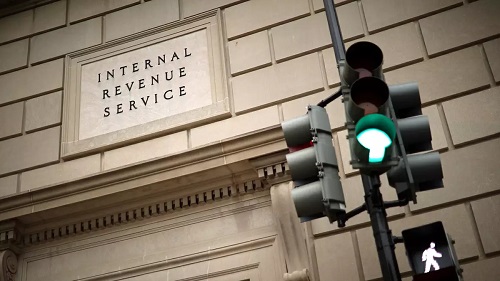
The deal would also secure a boost in the budget of the Internal Revenue Service after a decade of cuts, which independent experts say is critical to ensuring businesses and the wealthiest Americans pay what they owe in taxes. As agreed, the deal would provide $40 billion in new funding for the IRS, which has seen its budget shrink by one-fifth between 2010 and 2018.
Though five moderate Republican senators signed off on the deal, its path is still uncertain in Congress, where there is strong GOP skepticism of the IRS. Republicans renewed their attacks on the agency this month after the investigative news outlet ProPublica published a story based on a vast trove of leaked confidential tax data for the richest Americans.
And the agreement for new funding is not expected to include new reporting requirements for banks, which the Biden administration has proposed in its effort to close the long-persistent “tax gap,” or the difference between the taxes that Americans owe and what they pay.
“What we don’t want is an over-intrusive IRS getting into small businesses and causing inappropriate burdens,” said Sen. Rob Portman, R-Ohio, who helped secure the deal, in describing what Republicans were trying to prevent as part of their agreement on IRS enforcement.
IRS funding from Congress fell 20% in inflation-adjusted dollars between 2010 and 2018, according to a report last year by the Congressional Budget Office. The cuts resulted in a 22% decline in the number of IRS staff.
The number of employees in the enforcement division – the part of the IRS that goes after unpaid taxes – declined by 30%, with even steeper drops among the highly specialized workers who handle the most complex cases.
As a result of the cuts, the number of IRS examinations dropped by 40% between 2010 and 2018, even as the number of tax returns filed increased by 5 percent, the CBO found. The audit rate for returns with more than $1 million in income dropped even further, by 63%. And while nearly all corporations with assets of $20 billion or more were audited in 2010, just half were audited in 2018, the CBO found.
“The big corporations and the wealthiest taxpayers can take advantage of a very complicated tax code and take very aggressive positions . . . and the IRS cannot dispute them,” said Janet Holtzblatt, a senior fellow at the Tax Policy Center. “The IRS with its depleted resources is not in a strong position to dispute the argument that this is avoidance and not evasion.”
Nina Olson, executive director of the Center for Taxpayer Rights and the former U.S. National Taxpayer Advocate, said the IRS needs “significant resources” to improve its employees’ skills and modernize its technology.
“There is no doubt in my mind that the IRS needs sustained investment,” Olson said. “The way that the IRS approaches enforcement now and compliance now is mired in the 20th century.”
The IRS budget cuts over the past decade were driven primarily by congressional Republicans, stemming in part from the agency’s crucial role in enacting the Affordable Care Act, President Barack Obama’s landmark domestic legislative achievement. GOP hostility toward the IRS mounted further in 2013 when an IRS watchdog alleged that the agency had targeted nonprofits affiliated with the tea party and other right-leaning groups for scrutiny.
But over the last few years, Republicans and Democrats alike have expressed concern about the extent of cuts to the IRS. Former Treasury Secretary Steven Mnuchin said in his confirmation hearing in 2017 that the IRS was “under-resourced to perform its duties,” and IRS commissioner Charles Rettig, a Trump appointee, said in Senate testimony this month that “budget cuts over the past decade have resulted in an agency that lacks the capacity to address sophisticated tax evasion efforts.”
In particular, bipartisan concern has coalesced around the tax gap. In part, that is because narrowing the gap is a way to increase government revenue that would not rely on higher tax rates, which conservatives oppose. The most recent IRS research available put the annual tax gap between 2011 and 2013 at $441 billion, and a Treasury Department analysis used that figure to extrapolate forward, putting the 2019 gap at $584 billion.
“There’s just a ton of money out there that we’re not collecting,” said Charles Rossotti, a former IRS commissioner who has put forward a plan to shrink the tax gap, much of which is reflected in the Biden administration’s proposal. “Why don’t we collect some of that before we raise taxes on the people that are already paying?”
But while the extra funding agreed in the bipartisan deal will help the IRS increase revenue, it would barely make a dent in the tax gap. The CBO’s estimate, which assumes no significant changes in reporting requirements, shows that an additional $20 billion in IRS funding for examinations and collections over a decade would bring in an additional $61 billion in revenue, while an extra $40 billion in funding would bring in $103 billion. Both of those are a tiny fraction of the estimated annual tax gap.
The bipartisan deal would provide $40 billion in new money for the IRS, with an expectation that it would result in around $140 billion in new revenue, or a net $100 billion gain. Those numbers differ from the CBO estimates, and it was unclear how they were derived. The White House did not respond to questions about what period of time that money would be spent in.
Independent experts like Rossotti argue that requiring more information to be sent to the IRS is crucial to enabling the agency to collect a larger portion of the taxes owed to the federal government.
“I believe the information reporting is important, and it doesn’t have to be intrusive,” Rossotti said.
A May report released by the Treasury Department concluded that $80 billion in new resources over a decade to fund new technology and to hire and train new agents, if paired with new reporting requirements for banks and other measures, would bring in $700 billion in new revenue. The Penn Wharton Budget Model, an economic research initiative, had a more modest outlook, projecting $480 billion in new revenue over a decade from the proposed tax enforcement measures.
Republicans in Congress have said they are opposed to new bank reporting requirements, pointing to the ProPublica leak as evidence that taxpayer data is not secure. A White House fact sheet on the deal released on Thursday left the issue vague, listing “reduce the IRS tax gap” as one way the bill would be paid for, but with no numbers attached.
ADVERTISEMENT
Any new funding would take time to have a discernible impact. It takes years to fully train a specialized IRS agent, and the agency would need to procure and deploy advanced technology that it doesn’t currently use on a widespread basis. In the meantime, the IRS will be under pressure to show results, Olson said, an approach she said would be a mistake and would potentially put vulnerable taxpayers at risk.
“There will be increasing pressure because you’ve given the IRS all this money,” she said. “Although there are many more protections now than there were for taxpayers in the mid-1990s, we have to be really careful about not putting so much pressure on the IRS to produce that you actually have excesses.”
Dow supports over THB 4 million To help Thailand fight against the new wave of COVID-19
“Dow support Thailand to fight against COVID-19” campaign during the new wave of outbreaks, Dow Thailand Group has continuously provided essential resources, including Dows products, protective equipment, and relief bags in a total value of more than THB 4 million, to government agencies, hospitals, and communities where the company operates.
Since the new wave of COVID-19 in 2021, Dow and Solvay have donated more than 100,000 liters of hydrogen peroxide (H2O2) – a product of MTP HP JV Company, a joint venture between Dow and Solvay in Thailand – to Bangkok and Rayong (in addition to over 15 million liters which was already given in 2020) to disinfect public areas. The H2O2 disinfectant is environmentally benign as it is non-corrosive, colorless, and decomposes to oxygen and water without harmful chemicals left after use.
Dow has provided in-need medical and protective equipment to hospitals and COVID-19 screening centers. The effort includes a donation of powered air-purifying respirators (PAPRs) to Rayong hospital, a fund-raising campaign together with employees to support Siriraj Foundation in purchasing the oxygen high-flow devices which increases the COVID-19 patients’ chance of survival. Dow has also supported protective equipment, such as hand sanitizer gel and spray, foot pedal alcohol dispensers, face masks, food, and drinking water to frontline healthcare workers and officials in Rayong, an industrial and tourist destination with a large number of people living.
Dow supports over THB 4 million To help Thailand fight against the new wave of COVID-19
Caring for the health and well-being of local people and youth, Dow has delivered hundreds of sets of COVID-19 protective equipment consisting of alcohol gel, disinfectant soap, and cloth masks to nearby communities. Moreover, relief bags containing rice, dry food, and other daily necessities have been distributed to communities in the Klong Toey area, Bangkok, and Rayong.
“With the latest wave of COVID-19 impacting our country, Dow is committed to protecting the health and safety of our employees and communities while deploying our business solutions where they are needed most. Dow’s employees are also encouraged to be a part of the support. We continuously sending immediate support to organizations directly addressing the COVID-19 crisis and working to protect the resiliency of local communities,” said Chatchai Luanpolcharoenchai, Dow Thailand President.
Watch the video of Dow Thailand’s donations worth more than THB 4 million at:
Knight Frank Thailand Indicates Foreigners Remain Interested in Real Estate in Phuket
Given the current situation in Phuket, we, the people who work and live in the province, have started to receive vaccinations. Over 75 percent of such people have received the Covid-19 vaccine.
Mr. Nattha Kahapana, Deputy Managing Director and Head of Phuket Operation, Knight Frank Thailand, said that, as everyone well knows, the Covid-19 outbreak affected all sectors, including the real estate market in Phuket and Samui, which has slowed down considerably as foreigners cannot travel to the country. The proportion of purchasing power from foreigners is 80 to 90 percent, and only around 10 percent from Thai buyers.
In 2020, the total condominium supply was 26,096 units, demand stood at 19,761 units, and 6,335 units remained. Meanwhile, the total supply of villas was 3,871 units and 3,056 units were bought and sold, which represents a relatively high percentage as villas are generally constructed only when a buyer has reserved one; as a result, the villa market has not been as heavily impacted as the condominium market. Also, selling prices have been lowered to attract both Thai and foreign buyers as well as investors. By focusing mainly on online sales channels, the lowered selling price makes it easier for buyers to make their purchasing decisions.
The Covid-19 situation appeared to have improved during the beginning of 2021, but new outbreaks occurred in April. This new wave is considered to be the third wave of the epidemic, which may affect plans to open the country where Phuket has been designated as a pilot province without quarantine. Most recently, the government announced plans to open Phuket to inbound tourists under the Phuket Sandbox scheme on 1 July. Tourists must meet the following criteria:
1. Foreigners must be fully vaccinated at least 14 days before the travel date, and they must have a certificate of vaccination.
2. Travelers must be from a low risk country only; in the case of children under 6 years old, they must be accompanied by a parent who has been fully vaccinated.
3. Tourists must have medical documents confirming that they tested for Covid-19 and have found no infection no more than 72 hours before departure.
4. Upon their arrival in Phuket, tourists must be tested again and they must wait for the test results in their accommodations until negative test results are found. Only then can they be allowed to travel within Phuket. Also, after a 14-day stay, they are allowed to travel to other provinces.
Given the current situation in Phuket, we, the people who work and live in the province, have started to receive vaccinations. Over 75 percent of such people have received the Covid-19 vaccine. This gives confidence to both people in the country as well as to foreigners who wish to enter the province. When foreign tourists are allowed to travel to Phuket, it will greatly increase sales opportunities for the real estate sector. We are confident that the situation will gradually improve and the real estate market in Phuket and Samui will become vibrant again. From the information we received, there are 28 countries that want to travel to Phuket, such as China, England, Germany, Singapore, Russia, etc.
ADVERTISEMENT
Although in the beginning, those who come in will be a group that focuses on tourism and leisure, they are still considered to be a good sign for recovery. Before the Covid-19 crisis, this group comes from countries whose citizens tended to buy properties in Phuket as second homes rather than for investment purposes. They view Thailand as a safe place with a moderate cost of living and good healthcare system.
In addition, there is news of a policy to stimulate real estate when the country is opened; this includes the expansion of foreign condominium quotas by more than 49 percent, allowing foreigners to have ownership of houses, and extending leasing rights for more than 30 years. If these measures take place, they will help drive the real estate market enormously, to make up for the slowdown in the business during Covid. Thai investors continue to slow their investments in real estate as they are waiting for the country to open to foreigners.
We believe that real estate in Phuket and Samui will recover before other provinces, as most people in Phuket have been vaccinated against Covid. This includes employees of Knight Frank Phuket. We are ready to serve investors and those who wish to purchase real estate in Phuket and Samui as soon as Phuket is open to foreign tourists.
The Stock Exchange of Thailand (SET) Index closed at 1,582.67 on Friday, down 3.05 points or 0.19 per cent. Transactions totalled THB68.1 billion with an index high of 1,596.16 and a low of 1,577.63.
In the morning session, Krungsri Securities expected the stock market on Friday to move between 1,595 to 1,600 points, in response to US stimulus plans based on infrastructure investment, plus the up-trending oil price.
The 10 stocks with the highest trade value today were BANPU, GUNKUL, KBANK, BDMS, PTTGC, RCL, PTT, KCE, CPF and 7UP.
Other Asian indices were up:
ADVERTISEMENT
Japan’s Nikkei Index closed at 29,066.18, up 190.95 points or 0.66 per cent.
China’s Shanghai SE Composite Index closed at 3,607.56, up 40.91 points or 1.15 per cent, while the Shenzhen SE Component Index closed at 15,003.85, up 219.05 points or 1.48 per cent.
Hong Kong’s Hang Seng Index closed at 29,288.22, up 405.76 points or 1.40 per cent.
South Korea’s KOSPI closed at 3,302.84, up 16.74 points or 0.51 per cent.
Taiwan’s TAIEX closed at 17,502.99, up 95.03 points or 0.55 per cent.
US infrastructure investment plans, oil price lift SET sentiment
The Stock Exchange of Thailand (SET) Index gained 7.16 points, or 0.45 per cent, to 1,592.88 on Friday morning.
Krungsri Securities expected the stock market to move between 1,595 to 1,600, in response to the US government’s resolution to invest in infrastructure in a bid to stimulate the country’s economy. Also, the oil price this time was a related factor.
The securities firm suggested that investors buy PTT, PTTEP and BANPU, due to the current price of oil. It also suggested “buys” for HANA, KCE, TU, CPF and EPG, which will gain from the weakening baht.
With the planned reopening of the country in a few months, Krungsri Securities recommended for buying: BCH, CHG, BDMS, MINT, CENTEL, ERW, AOT, CPALL, HMPRO, CPN, CRC, AAV, AMATA, WHA, BEM and BTS.
Bullish US stock market pushes Thai gold price down
The price of gold in Thailand dropped by THB50 per baht weight in morning trade on Friday due to the rise in the US stock market and strong US economic data.
The Gold Traders Association report at 9.29am showed the buying price of a gold bar at THB26,700 per baht weight and selling price at THB26,800, while gold ornaments were priced at THB26,226.80 and THB27,300, respectively.
At close on Thursday, the buying price of a gold bar was THB26,750 per baht weight and selling price THB26,850, while gold ornaments were priced at THB26,272.28 and THB27,350, respectively.
Spot gold price on Friday was US$1,779 (THB56,643) per ounce after Comex gold on Thursday dropped by $6.7 to $1,776.7 per ounce.
Hong Kong gold price, meanwhile, dropped by HK$70 to $16,420 (THB67,352) per tael, the Chinese Gold and Silver Exchange Society reported.
Baht could quickly slide to 32.50 to the dollar if it breaches 32
The baht opened at 31.90 to the US dollar on Friday, strengthening from Thursday’s closing rate of 31.87.
The Thai currency is likely to move between 31.85 and 32.00 during the day, Krungthai Bank market strategist Poon Panichpibool said.
He said the baht this time was fluctuating due to the Covid-19 situation in Thailand, more than political rallies in the country.
He urged investors to monitor if the baht weakens to 32 to the US dollar on Friday. The strategist explained that the baht could fall to 32.50 if it passes the resistance level at 32.
U.S. initial jobless claims are higher than estimates at 411,000
Applications for U.S. state unemployment insurance fell slightly last week, though were higher than forecast, as the labor market meanders toward a full recovery.
Initial claims in regular state programs decreased by 7,000 to 411,000 in the week ended June 19, Labor Department data showed Thursday. The median estimate in a Bloomberg survey of economists called for 380,000 new applications. The prior week’s claims were revised up to 418,000.
Weekly unemployment claims have fallen considerably since the beginning of the year as health concerns abate and businesses like restaurants return to full capacity. Still, the initial claims remain significantly higher than they were before Covid-19 and many employers say they are having trouble finding workers.
Continuing claims for ongoing state benefits fell by 144,000 in the week ended June 12 to 3.4 million.
Stock futures remained higher after the jobless claims report and other economic data.
States across the county are ending enhanced federal unemployment benefit programs amid an ongoing debate about whether the programs are restraining hiring. Overall, 26 states will end federal programs before their official expiration date in September, which may start to bring continued claims figures down considerably in the coming weeks.
Missouri, Mississippi and Iowa — which ended federal programs on June 12 — all posted declines in claims for pandemic unemployment assistance.
Declines for initial claims were widespread, with states including California, Florida and Ohio posting some of the biggest drops. Pennsylvania posted the biggest gain in applications last week.
Federal Reserve officials are focused on achieving maximum employment, which they define as a “broad and inclusive goal.” In a congressional hearing Tuesday, Chair Jerome Powell said that the labor market has a long way to go and needs continued support.
ADVERTISEMENT
“The very quick job gains of the early recovery essentially involved going back to your old job,” Powell said. “Now it’s actually finding new jobs and that’s a matching function that is more labor intensive and time consuming.”
Published : June 25, 2021
By : Syndication Washington Post, Bloomberg · Olivia Rockeman
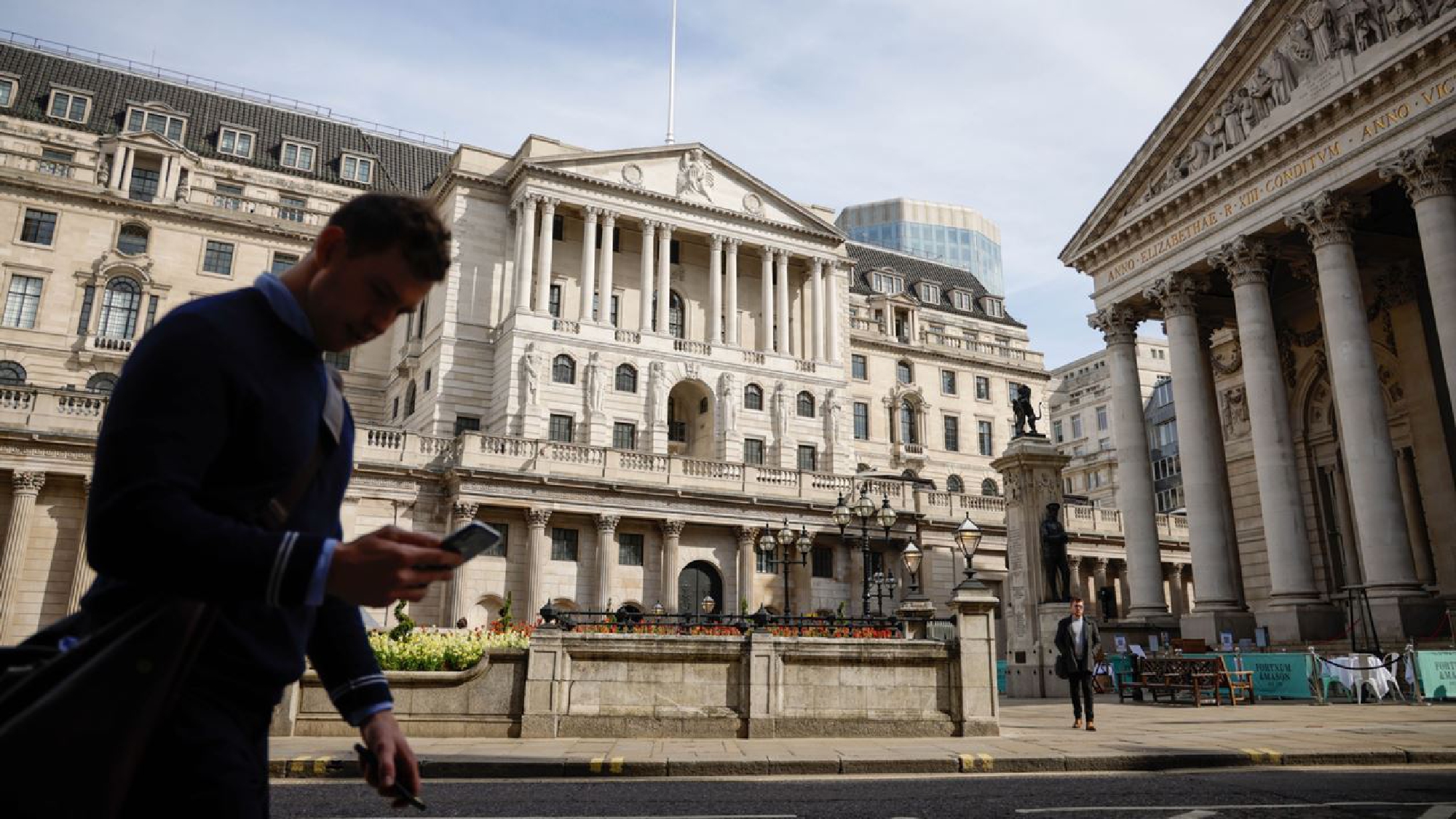
BOE warns against tightening too soon as inflation surges
The Bank of England pushed back against speculation that a surge in U.K. inflation means its preparing to boost interest rates, saying the economy still needs support to recover from the pandemic.
The central bank warned against “premature tightening,” toughening its language on the need to maintain stimulus. The remarks contrasted with a sharp increase in the bank’s outlook for inflation, which officials now see peaking at 3%, a half point higher than their forecast just six weeks ago.
The BOE’s sanguine view follows heightened anxiety among investors and economists that consumer price increases may prove sticky. Last week, the U.S. Federal Reserve brought forward its expectations of rate increases, while central banks in Hungary and the Czech Republic already started raising borrowing costs in recent days.
“Today’s decision reinforces our belief that the committee will continue providing monetary support through the economic restart,” said Vivek Paul, U.K. chief investment strategist at BlackRock Investment Institute.
Officials led by Governor Andrew Bailey voted unanimously to keep the benchmark lending rate at 0.1% and by 8-1 to maintain the pace of its bond purchases, targeting a cumulative 895 billion pounds ($1.2 trillion) by the end of this year. Chief Economist Andy Haldane, who steps down from the nine-member Monetary Policy Committee this month, pressed for a reduction in the stimulus.
The pound dipped against the dollar and euro after the decision, and U.K. stocks ticked higher. The yield on U.K. government 10-year bonds fell after the decision. Money-market bets on the BOE raising interest rates were also pushed back by two months to August 2022.
“Financial market measures of inflation expectations suggest that the near-term strength in inflation is expected to be transitory,” the BOE said in a statement on Thursday.
The rest of the MPC said the economy still has plenty of slack built up during lockdowns that forced thousands of businesses to close during the pandemic. The bank reiterated that it does not intend to tighten policy until there’s clear evidence that inflation will stay above target for a sustained period.
“Spare capacity in the economy was expected to be eliminated as activity picked up, and there was expected to be a temporary period of excess demand,” the BOE said. “As these transitory effects faded, conditioned on the market path for interest rates, inflation was expected to return to around 2% in the medium term.”
Inflation leaped above the bank’s 2% target unexpectedly for the first time in almost two years last month, fanning speculation about when policymakers will have to ease off on stimulus. A growing minority of economists is now anticipating an interest rate increase sometime next year.
“Everyone is trying to work out if the inflation increase is temporary or here to stay,” said Alex Maddox, capital markets and digital director for Kensington Mortgages. “By keeping rates constant, the MPC is suggesting it’s the former.”
Some economists who expect rates to rise next year said the bank may have to change its tone in the months ahead despite the relatively relaxed outlook delivered on Thursday.
“Our own view is that inflation will continue to rise well above the Bank of England’s target in the coming months and that not all of this will prove transitory,” said Ambrose Crofton, Global Market Strategest at J.P. Morgan. “We expect current signs of tightness in the labour market to persist. Upward pressures on wages will support medium-term inflation momentum.”
For now, the policymakers both at the BOE and Treasury have been focused on supporting millions of workers either unemployed or on furlough after coronavirus restrictions forced thousands of businesses to close. The BOE expects unemployment to touch 5.4% in the third quarter before falling back below the current level near 5% next year.
Bank staff revised up their expectations for gross domestic product growth to 5.5% in the second quarter from the 4.25% rate they estimated in May. That would be consistent with output in that period being less than 4% below its pre-pandemic level.
Policymakers are due to revise inflation forecasts in August. Their latest outlook published last month suggested a sharp recovery in the second half of the year, leading to inflation peaking around 2.5% at the end of this year. The latest reading for May was 2.1%, above the expectations of both the BOE and economists.
ADVERTISEMENT
Published : June 25, 2021
By : Syndication Washington Post, Bloomberg · Reed Landberg, Lizzy Burden



 Dow supports over THB 4 million To help Thailand fight against the new wave of COVID-19