Reopening too soon: Lessons from the deadly second wave of the 1918 flu pandemic #ศาสตร์เกษตรดินปุ๋ย

#ศาสตร์เกษตรดินปุ๋ย : ขอบคุณแหล่งข้อมูล : หนังสือพิมพ์ The Nation.

https://www.nationthailand.com/lifestyle/30388426?utm_source=category&utm_medium=internal_referral

Reopening too soon: Lessons from the deadly second wave of the 1918 flu pandemic

May 24. 2020

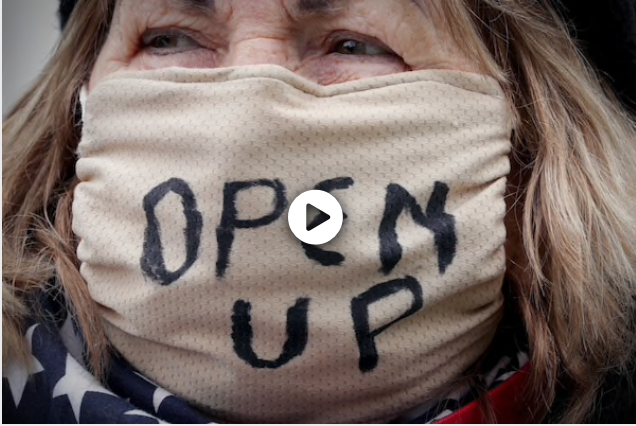
As coronavirus lockdowns loosen and some Americans flock to restaurants, beaches and other outdoor spaces for Memorial Day weekend, the question of reopening too quickly is striking an eerily familiar echo.

As coronavirus lockdowns loosen and some Americans flock to restaurants, beaches and other outdoor spaces for Memorial Day weekend, the question of reopening too quickly is striking an eerily familiar echo.
By The Washington Post · Adriana Usero · NATIONAL, HEALTH, HISTORY 
As coronavirus lockdowns loosen and some Americans flock to restaurants, beaches and other outdoor spaces for Memorial Day weekend, the question of reopening too quickly is striking an eerily familiar echo.

https://www.washingtonpost.com/video/c/embed/ad02411c-5cd5-4ceb-bf0e-a526fe1ceadc

The global flu epidemic of 1918 remains the deadliest on record. According to the Centers for Disease Control and Prevention, the pandemic killed an estimated 50 million worldwide and over half a million in the United States. J. Alexander Navarro of the University of Michigan’s Center for History of Medicine is one of the organizers of the “Influenza Archive,” a collection of information cataloguing and studying the effects of the 1918 pandemic in 43 major U.S. cities.

The research sought an answer to a key question: Was social distancing effective in 1918 as a way of slowing the spread of the disease and saving lives?

Navarro said cities that closed schools and banned public gatherings fared better against the flu. “They had both lower peak and total overall morbidity and mortality cases and deaths,” he said.

In fact, statewide orders making masks mandatory and shuttering nonessential business were widespread in 1918. San Francisco, for example, imposed fines on individuals failing to wear a mask in public, prompting protests.

Current research tracking the success of social distancing efforts to ease the spread of the novel coronavirus point to the same conclusion.

But varying levels of enforcement combined with World War I created a variety of outcomes in 1918. That fall marked the disease’s second and deadliest wave in the United States.

“The pandemic started in military camps first and foremost. So the military worked to try and control those epidemics in the camps,” Navarro said. “The average Joe in the fall of 1918 was very much preoccupied with things like the Liberty Loan drives.”

Philadelphia’s infamous decision not to cancel its Liberty Loan parade in late September resulted in 1,000 deaths in the span of 10 days, making the city one of the hardest hit by the epidemic.

Other cities such as Denver lifted restrictions that November on Armistice Day to celebrate the end of the war, only to experience a deadlier spike.

“Pretty much every city that we examined reported on huge crowds immediately congregating downtown in stores and cafes and theaters and bowling alleys,” Navarro said, adding that the crowding happened on the very day social distancing orders were lifted.

Navarro notes that the main difference between 1918 and the current coronavirus pandemic is the vastly different economic landscape – particularly the role of retail, restaurants, movie theaters and other small businesses. “They could shut down places of public amusement and not have the same type of impact on the local economy in 1918 because the manufacturing sector was so dominant,” Navarro said. “This is an economy that’s built on the service sector. So I think we’re in for a much greater and more severe economic impact today than we were in 1918.”

As states continue to grapple with the pandemic, many are easing restrictions and pushing to revive lagging economies. But leading health experts warn of a second wave of infection. Navarro is cautious about which lessons to draw from the past, noting advances in medical science and technology, but points to a worrying parallel in human behavior.

“Even though the historical context changes, there’s going to be a great clamoring to get back to life as normal,” he said. “There could be really terrible public health consequences as a result.”

On the front lines of the pandemic, grocery workers are in the dark about risks #ศาสตร์เกษตรดินปุ๋ย

#ศาสตร์เกษตรดินปุ๋ย : ขอบคุณแหล่งข้อมูล : หนังสือพิมพ์ The Nation.

https://www.nationthailand.com/lifestyle/30388423?utm_source=category&utm_medium=internal_referral

On the front lines of the pandemic, grocery workers are in the dark about risks

May 24. 2020
Photographs of Yok Yen Lee from her daughter's album. Lee was among 34 Quincy Walmart employees who tested positive for the coronavirus, and she passed away after contracting covid-19. MUST CREDIT: Photo for The Washington Post by Hannah Reyes Morales

Photographs of Yok Yen Lee from her daughter’s album. Lee was among 34 Quincy Walmart employees who tested positive for the coronavirus, and she passed away after contracting covid-19. MUST CREDIT: Photo for The Washington Post by Hannah Reyes Morales
By The Washington Post · Nicole Dungca, Jenn Abelson, Abha Bhattarai, Meryl Kornfield · NATIONAL, BUSINESS, HEALTH

By the end of April, employees at a Walmart in Quincy, Massachusetts, were panicking: Sick colleagues kept showing up at work. Other employees disappeared without explanation. The store’s longtime greeter was in the hospital and on a ventilator, dying from covid-19.

Local health officials grew alarmed as employees and their relatives reported sick co-workers. Shoppers called to complain about crowded conditions.
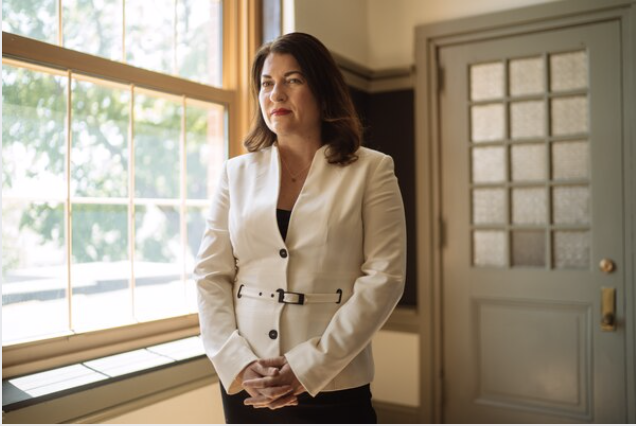
Karyn Clark, the public health director of Worcester, Mass., poses for a portrait inside her workplace. MUST CREDIT: Photo for The Washington Post by Hannah Reyes Morales

Karyn Clark, the public health director of Worcester, Mass., poses for a portrait inside her workplace. MUST CREDIT: Photo for The Washington Post by Hannah Reyes Morales

“We have had consistent problems with Walmart,” wrote Ruth Jones, Quincy’s health commissioner, in an April 28 email to the Massachusetts attorney general’s office. “They have a cluster of Covid cases among employees and have not been cooperative in giving us contact information or in following proper quarantine and isolation guidelines.”

The next day, at another Walmart in Worcester, Massachusetts, a local public health director ordered a shutdown after obtaining an internal company list showing nearly two dozen employees had tested positive.
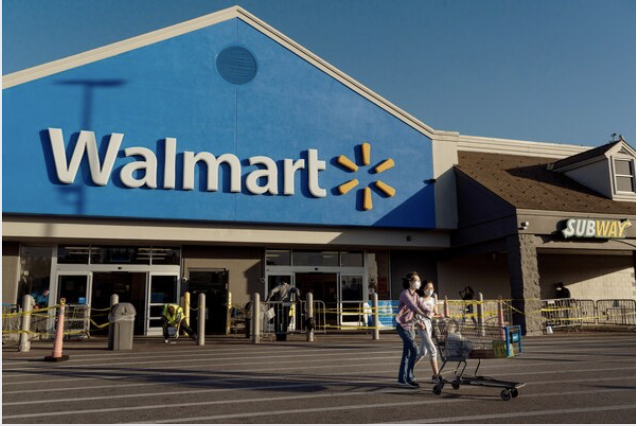
Shoppers are seen outside of a recently reopened Walmart in Quincy, Mass. The Walmart temporarily closed after several employees tested positive for the coronavirus, and one of them, Yok Yen Lee, died. MUST CREDIT: Photo for The Washington Post by Hannah Reyes Morales

Shoppers are seen outside of a recently reopened Walmart in Quincy, Mass. The Walmart temporarily closed after several employees tested positive for the coronavirus, and one of them, Yok Yen Lee, died. MUST CREDIT: Photo for The Washington Post by Hannah Reyes Morales

Health officials in the two cities pressed the nation’s largest grocer to test all of its employees at the two stores for coronavirus. The screenings, which began within days in the store parking lots, helped confirm a wider problem: 119 of the workers were infected, according to health officials.

Despite the pandemic, grocery stores generally are not required to publicly disclose cases of coronavirus involving employees or report them to the local health departments. As states now move to reopen, many grocers are being criticized by health officials, lawmakers and store employees for not being more open with the public and their own workers about outbreaks within their stores.

The Washington Post interviewed about 40 current and former employees at more than 30 supermarkets who alleged that the companies had not disclosed cases of infected or dead workers, retaliated against employees who raised safety concerns and used faulty equipment to implement coronavirus mitigation measures.

The $800 billion grocery industry – dominated by a handful of major players, including Walmart, Kroger and Albertsons – employs more than three million people in what are typically low-paying positions with little job security.

Amid the pandemic, the country’s nearly 40,000 grocery stores have been classified by officials as essential businesses that must remain open, putting the stores at the front lines of the crisis. Grocery stores, one place most consumers cannot avoid during the pandemic, have reported double-digit growth in sales in recent months.

At least 100 grocery workers nationwide have died from the virus since late March, and at least 5,500 others have tested positive for the coronavirus, according to a Post review of data from the nation’s largest grocery workers union, other workers’ rights coalitions and media reports.

Many local health officials told The Post they have been left in the dark as clusters of cases have emerged in supermarkets coast to coast.

“We really need to have better communication. There’s got to be something moving forward … that changes the current process,” said Karyn Clark, Worcester’s public health director. Clark said a nurse had to call the local Walmart several times before the company shared its internal list of infected employees.

In interviews, supermarket chains defended their efforts to protect workers and the public, saying they have required masks for employees, encouraged social distancing and rewarded workers with hazard pay and bonuses. Some grocers said they have collaborated with health departments across the country to help stop the spread of the coronavirus.

“Our associates are playing a critical role in helping people have access to fresh food, medicine and critical supplies during this crisis, and their safety is our highest priority,” said Lorenzo Lopez, a Walmart spokesman. “In areas experiencing community-wide outbreaks like Quincy and Worcester, our associates also felt the impact as members of those communities. We work closely with public health and medical experts and follow their guidance in implementing safety and health measures for our associates and customers.”

Supermarket chains said they are being transparent about outbreaks while protecting the privacy of affected workers, which is governed by a patchwork of laws and regulatory measures.

All of the grocers contacted by The Post – Walmart, Trader Joe’s, Whole Foods Market, Target, Kroger, BJ’s Wholesale Club and Lidl – declined to provide the number of workers who tested positive for the coronavirus or died from it. Combined, those employers account for roughly 11,300 stores and 2.4 million employees nationwide.

United Food and Commercial Workers International Union, which represents 900,000 workers at major chains, including Kroger, Safeway and Giant, has called on the companies to be more forthcoming to protect workers and customers in an industry that has remained a lifeline for households after states shut down most nonessential businesses for the pandemic.

Over the past five weeks, the union said the number of its grocery workers who have been infected or exposed to the virus jumped from 1,557 to 10,453.

“While some companies are doing the right thing and keeping shoppers and employees informed, there are still some keeping consumers in the dark and trying to sweep this information under the rug,” union president Marc Perrone said.

Many grocery workers told The Post that despite social distancing measures, they often share break rooms, bathrooms and devices for clocking in and out of their shifts. One sick employee, public health experts said, can potentially expose hundreds of colleagues and shoppers each day.

Local government health officials, whose job is to track and notify the public of disease outbreaks, said they have been hamstrung by many supermarkets responding slowly to their pleas for information about employees who are infected with the coronavirus or may have been exposed to it.

In Quincy, the health department first contacted the local Walmart on April 11 to inform the store of an employee it learned had tested positive for the coronavirus. Jones, the health director, said they asked the company repeatedly for the names and contact information for employees who worked closely with the infected employee so they could identify and inform other workers who may have been exposed.

In the meantime, the health department kept learning of new cases among store employees and the number of potentially exposed employees mushroomed.

After receiving no information for nearly two weeks, Jones escalated her request to the Walmart corporate office.

Finally, on April 28, Walmart provided contact information for employees at the Quincy store who had been exposed to the virus, Jones said. Five days later, 69-year-old Yok Yen Lee, the greeter at the store, died from covid-19, her family said.

Under pressure from the health department, Walmart then closed the store for a week, cleaned it and offered testing to every worker. In all, 34 employees at that location tested positive. In Worcester, more than 80 employees were infected, health officials said.

Troubled by Walmart’s response in Quincy and Worcester, lawmakers sent a letter on May 7 to Doug McMillon, the company’s president and chief executive.

“Across the country, more than 20 Walmart employees have died from COVID-19, and employees have had to take the critical work of contact tracing into their own hands to try and remain safe,” the delegation, led by Sen. Elizabeth Warren, D-Mass., wrote in the letter.

In a May 19 response to lawmakers, Bruce C. Harris, a Walmart vice president of federal government affairs, wrote that managers are required to meet with associates to let them know about each positive case, and that they are monitoring the number of employees taking leave.

“We are managing thousands of different, and sometimes conflicting, emergency orders and directives,” Harris wrote.

In Los Angeles, a Ralph’s supermarket employee, Jackie Mayoral, said managers instructed workers not to talk about sick colleagues around customers and that managers also refused to disclose how many employees were infected. It was only through the union that Mayoral learned more than 20 of her colleagues at the supermarket, owned by Kroger, had tested positive for the virus.

“Me and my co-workers are a family, and we should be able to talk about the things that are going to be able to affect us and possibly kill us,” said Mayoral, who was diagnosed with covid-19 in April and believes she contracted the virus at the supermarket, the only place she regularly visits outside of her home. She has since recovered.

Asked about the directives to avoid speaking about cases, Kristal Howard, a Kroger spokeswoman, said the company’s guidance “is always to communicate with integrity – openly and transparently – while protecting the privacy of any affected associate.”

Employment attorneys said companies must balance protecting employee privacy with keeping workplaces safe.

“We’re dealing with overlapping laws, gaps in laws and differing guidance from different levels of government,” said Kirk Nahra, an attorney at the law firm WilmerHale who specializes in privacy, data and health-care issues. “Companies are not supposed to disclose your name, but can they tell other employees in the meat department that someone who worked there Tuesday tested positive? Sure.”

Industry experts said the pandemic has left some supermarket chains struggling with what information should be shared with regulators or the public about sick and exposed employees.

Grocery companies are facing unprecedented challenges when an employee falls ill or dies, according to Hilary Thesmar, chief food and product safety officer for the Food Marketing Institute, a trade group for grocery stores and wholesalers.

“Companies are having to weigh a lot of factors: When did the employee test positive? When were they last at work?” she said.

But Oscar Alleyne, chief of programs and services at the National Association of County and City Health Officials, said that retailers need to be more transparent with public health officials in order to protect these high-risk essential workers and the public.

“You’re only as good as the data you have,” Alleyne said.

The federal Occupational Safety and Health Administration, which oversees workplace safety, issued guidance in April that coronavirus cases were reportable to the agency under certain circumstances. But the agency said it generally wouldn’t enforce the rules except for employers in the health-care industry, emergency response organizations and correctional institutions.

New workplace safety guidance from OSHA that goes into effect Tuesday asks most industries to report coronavirus cases that meet certain criteria. But employment experts say it’s murky and allows employers to decide whether the cases are work-related.

In the absence of data, UFCW has compiled daily reports on infected employees from its local chapters. Employees at chains, including Walmart and Whole Foods, have started their own grassroots efforts to tally illnesses and deaths at their stores, using social media and published reports to confirm tips. (Jeff Bezos, the chief executive of Amazon, which owns Whole Foods, owns The Washington Post.)

During the outbreak, Whole Foods, which has about 500 stores in the United States, began sending voice mail and text messages to employees to notify them of coronavirus cases in their stores. But some officials are pushing for more disclosure. On May 11, attorneys general from 12 states and the District of Columbia wrote to Whole Foods and Amazon, admonishing the companies for failing to alert health officials and the public about infections and deaths of their workers.

The attorneys general said they learned from media reports of multiple infections among workers at a Whole Foods in the District and of two employee deaths in Portland, Oregon, and Swampscott, Massachusetts.

By not sharing a breakdown of coronavirus cases, the retailers may be breaching consumer protection laws, which “require businesses to provide truthful information and disclose material information to consumers,” the letter said.

Whole Foods has not responded to the letter, but a company spokeswoman said the chain is balancing the essential services it provides with ensuring the “health, safety and privacy” of their workers.

Grocery chains have publicly touted face masks, social distancing requirements, rigorous cleaning and temperature checks as proof that they are keeping workers and customers as safe as possible.

Two grocery chains have used faulty or ineffective equipment, according to documents and interviews.

The Kroger-owned Quality Food Centers chain uses infrared sensors to count the number of shoppers in its stores as a way to limit customers and facilitate social distancing. But the technology routinely provided false tallies, according to internal company documents obtained by The Post.

“Once a person is inside for 30 minutes, the system assumes that individual is an associate and stops counting that person,” QFC President Chris Albi said in a Q&A with employees of the chain, which has 62 stores in Washington and Oregon.

A Kroger spokeswoman declined to answer specific questions about any problems with the system but said management regularly verifies the capacity limits within the store.

At BJ’s Wholesale Club in Baltimore, a manager said the thermometers were not calibrated properly and the temperature readings of employees consistently reported 96 or 97 degrees. The manager said a supervisor also brushed off concerns about the lack of social distancing by employees who examined customers’ receipts as they left the warehouse.

“It is appalling conduct and a policy that is putting us all in danger,” said the manager, who spoke anonymously for fear of retaliation. “I would quit in protest, but I worry that without me, it’s one more person in a leadership role who is not taking this seriously.”

A BJ’s spokeswoman said since the coronavirus outbreak, the company has “taken aggressive actions and implemented extensive safety and sanitation measures across all our facilities; and we always encourage our team members to provide feedback and voice concerns.”

Even when employees have reported feeling sick, some said that their managers have insisted that they continue to work because of staffing shortages.

Gladys Cortes, who worked at the Best Market supermarket in Islip, New York, told her manager in late March that she wasn’t feeling well and had a bad cough, but her boss wouldn’t allow her to leave early and said she needed to be back the next day, according to Noemi Salavarria, a former colleague who said she talked with Cortes when she was hospitalized days later with covid-19. Two other workers, who spoke on the condition of anonymity because they feared retaliation, said they had heard Cortes talking in the store about how she felt sick and needed a break.

Cortes, a single mother of a young child, died on April 9 of complications from covid-19.

“If they would have let her go home, she could still be alive,” Salavarria said. “She didn’t deserve this.”

After Cortes died, management sent out a letter to employees that noted “the passing of one of our colleagues.” It made no mention of her name or how she had died.

LatinoJustice, a nonprofit legal defense fund, documented concerns about Cortes and employees at other supermarkets in an April 30 letter to the chief executive of Lidl US, a chain that owns Best Market and has about 100 stores in the U.S.

After receiving no response, LatinoJustice said it filed a complaint on May 12 with the New York state attorney general.

William Harwood, a Lidl spokesman, said the company had “no reports indicating that she was sick while working. Our policy is clear that employees who are sick should stay home.”

Marian Meszaros, a 63-year-old employee at the Best Market supermarket in Long Island’s Franklin Square in New York, said she believes a manager waited more than a week to inform her in late April that her co-worker in the cramped meat department had tested positive for the coronavirus.

She said the human resources manager offered her five days of paid leave, saying that it was sufficient time off because she had been exposed over a week ago and wasn’t showing symptoms. Meszaros said she believes the manager delayed informing her because the store had been so short-staffed, and she worried she could still get sick and infect her co-workers.

“I have nightmares about this,” Meszaros said. “No one in the store feels safe.”

The supermarket chain in March had announced a new pandemic-related policy that provides 14 days of paid leave to workers who test positive for the coronavirus, as well as paid leave for colleagues who came into close contact with them.

Harwood said the Islip store immediately contacted Meszaros when it learned of the infected employee, and she was given five days off because it had been nine days since they had been in contact at the supermarket. The human resources team called Meszaros to ensure she had no symptoms prior to returning to work, Harwood said.

“We are taking significant steps to protect the health and safety of our team members during this public health emergency,” Harwood said.

As infections have spread within supermarkets, employees at two national chains said that stores retaliated against them for speaking up about safety or discussing sick colleagues.

When a Target manager informed Michael Branss in late April that a co-worker in Palatine, Illinois, had tested positive for the coronavirus, Branss said the manager also told him not to talk about the case.

A longtime employee, Branss worked in the back of the store where employees were in close proximity as they unloaded incoming merchandise.

Frustrated by the lack of information about the department where the infected employee had worked, Branss said he called several colleagues and advised them to bring their own masks because the store didn’t always have enough. After noticing a missing co-worker, he and fellow employees discussed whether they had been exposed.

A few hours later, Branss said he was called into the human resources office and reprimanded for talking about the sick employee. He was told the store was concerned about following federal privacy laws.

Fearing retaliation, he said he denied talking about the case. About 2 1/2 weeks later, Branss said Target fired him for refusing to answer questions for the store’s investigation of potential privacy violations.

“I didn’t do anything wrong. These are my friends, and I want them to be safe and healthy,” he said. “They punished me for trying to gather information to make a personal safety plan for myself.”

A Target spokeswoman, Danielle Schumann, said Branss was terminated “for conduct reasons unrelated to these claims” but provided no details.

In a Target store in Riverdale, New Jersey, employee Mary Jo Kalchthaler said workers are informed of their colleagues’ illnesses and deaths but are told not to discuss the cases publicly.

“Every store that I know of has had cases of covid-19, but they don’t want to spook people,” said Kalchthaler, who took a leave of absence in early May because she felt unsafe at work. “There are still people who think Target, Walmart and other food stores are magical kingdoms where everything is sterile and nobody has ever gotten sick, and that’s what they want people to keep thinking.”

Target did not respond to questions about allegations that employees were told not to discuss coronavirus cases. But Schumann said, “while being transparent, we’re also careful to keep team member privacy from being compromised.”

Some workers alleged they have been disciplined simply for raising safety concerns.

In early March, Kris King took two weeks off from his job at a Trader Joe’s in Louisville after coming down with a cough, fever and sore throat.

King said he created a private Facebook group for his colleagues to discuss frustrations with the store’s handling of the pandemic and to come up with recommendations to keep them safe. After he returned to work, a manager on March 21 confronted King about the Facebook messages and repeatedly encouraged him to quit, according to a lawsuit King has since filed against Trader Joe’s.

“He said, ‘If you don’t feel safe here, we can end this right now,’ ” King recalled in an interview.

A week later, King was terminated. Trader Joe’s cited multiple reasons, including the creation of the Facebook group, according to King.

“The safety of the people I work with is the most important thing and that workers in this situation are able to be heard and have a voice,” said King, a 37-year-old with four children. “And that’s really just not happening.”

Trader Joe’s, which has 505 outlets nationwide and employs 50,000 people, has denied in court his claims, including that the supermarket “was not following appropriate safety measures” at the store.

“We have made it clear that Mr. King’s employment at Trader Joe’s did not end because of desire to set up a social media page or because he expressed concerns,” said Kenya Friend-Daniel, a Trader Joe’s spokeswoman. “I have been clear that … for privacy reasons I am not at liberty to say more.”

Jon Tenholder, a Trader Joe’s employee at the same Louisville store, received a written disciplinary warning on May 10, roughly two weeks after Tenholder spoke with customers about the Kentucky governor’s order that only one person per household at a time be permitted inside a grocery store.

Management accused Tenholder of making customers uncomfortable by saying they shouldn’t be shopping together. Tenholder refused to sign the incident report and described it in a written rebuttal as “retaliation” for asserting that employees “deserve to be the central voice of our safety.”

Friend-Daniel disputed Tenholder’s account but declined to comment further citing privacy laws.

“We don’t retaliate against people for sharing concerns or for trivial reasons,” Friend-Daniel said.

Walmart, the nation’s largest private employer, has touted its response to the pandemic from the start, including a policy that allowed its 1.5 million U.S. employees to take up to two weeks off if they were exposed to the coronavirus, and waived attendance policies for workers who felt uncomfortable or unable to work.

Shortly after the policy was announced on March 10, Kyle Quiros and his wife, Rebekkah, took jobs as temporary workers at a Walmart in Medina, Ohio. By mid-April, Kyle, who was born with one kidney and has other health problems, had a fever and was vomiting frequently. He said he tested negative for the coronavirus, but a physician recommended he stay home for two weeks.

Rebekkah also fell ill. When she returned to work, she said a supervisor informed her that she was being let go because she had called in sick too many times. A few days later, Kyle came back to work but was sent home because he had a temperature of about 100 degrees. He soon received a call saying his employment was over, despite several weeks left on his contract.

“It was unfair. I was fired because I was sick, even though they have a policy saying you wouldn’t get fired,” he said.

Lopez, the Walmart spokesman, said Rebekkah Quiros was terminated “for performance reasons unrelated to any request for time off due to the pandemic.” He said he “had not been provided with enough information to substantiate” allegations made by Kyle Quiros.

Other Walmart employees also told The Post that workers fear calling in sick because they did not want to jeopardize their jobs.

“These claims are not consistent with the experiences of the more than 235,000 people recently employed by Walmart or the countless other associates that have been able to utilize our emergency leave policy to stay home and keep their jobs protected,” Lopez said.

But in Quincy, days before Lee, the Walmart greeter, was rushed to the hospital on April 20, she told family and friends that she was worried she could lose her job because she was sick and needed time off, said her daughter, Elaine Eklund.

After Lee died, Walmart officials put out a statement saying the company was “mourning alongside their family.” Since then, messages have streamed in from colleagues and longtime shoppers remembering the grandmother of two.

“I worried about her the last time I saw her in the store,” one stranger said in a handwritten letter.
As New Jersey opens its beaches for Memorial Day, the pandemic summer mantra is ‘safety first’ #ศาสตร์เกษตรดินปุ๋ย

#ศาสตร์เกษตรดินปุ๋ย : ขอบคุณแหล่งข้อมูล : หนังสือพิมพ์ The Nation.

https://www.nationthailand.com/lifestyle/30388416?utm_source=category&utm_medium=internal_referral

As New Jersey opens its beaches for Memorial Day, the pandemic summer mantra is ‘safety first’

May 24. 2020
Benches along Ocean Grove Beach in New Jersey have been wrapped in yellow crime tape to encourage social distancing. MUST CREDIT: Washington Post photo by Jabin Botsford

Benches along Ocean Grove Beach in New Jersey have been wrapped in yellow crime tape to encourage social distancing. MUST CREDIT: Washington Post photo by Jabin Botsford
By The Washington Post · Joe Heim · NATIONAL, HEALTH 

ASBURY PARK, N.J. – Joe Bongiovanni has been patrolling Asbury Park’s wide beaches for more than a half century, beginning as a lifeguard when he was 18 and now, at 70, as Beach Safety Supervisor. He has seen vicious riptides and beach brawls, hurricanes and circling sharks, rough surf rescues and even a few marriage proposals.

But this? This is like nothing else.

As the Memorial Day weekend ushered in the summer season, the 75 lifeguards, beach ambassadors and cashiers working for Bongiovanni all wear face masks. Hand sanitizer stations are set up at every entrance on the mile-long beach. A freshly painted yellow line divides the boardwalk with white arrows directing patrons to stay in their lanes. Hundreds of benches have been rounded up, wrapped in yellow crime tape and corralled in a pen to discourage stopping and sitting. And every 50 feet, signs remind visitors about social distancing, a phrase that meant nothing to anyone three months ago and is now as common as the novel coronavirus it is meant to contain.

The opening of New Jersey’s beaches and boardwalks is among the state’s first hopeful steps toward some kind of normal after a spring that was anything but. People want to be outside. Business needs to come back. But the worry hanging in the air at the shore won’t be blown away by a brisk ocean breeze. Bongiovanni and his staff are keeping a hawk eye on the crowds – monitoring spacing, mask-wearing and the numbers.

“The overcrowding thing. We really don’t want to be in that situation,” he said Friday, standing on the boardwalk wearing his red Asbury Park windbreaker, shorts, sunglasses and still looking as fit as most 18-year-old lifeguards. “We’re not just going to allow a free-for-all. When we see it’s getting saturated, we’ll stop selling beach passes. Our focus is going to be on being safe.”

Up and down the Jersey Shore, that’s the mantra as the pandemic summer begins: Safety first, safety first.

New Jersey doesn’t need any more death. A brutal stretch since March has claimed the lives of 11,081 residents as of Saturday. As the U.S. death toll closes in on 100,000, New Jersey accounts for more than 11 percent of the nation’s fatalities. Only New York has paid a higher price.

But what does safety first look like when the enemy approaches unseen and unheard, like a dark spirit in the night claiming hundreds of lives a day? For months the answer has been to wash your hands and avoid each other. No touching, no hugging, no getting too close. That’s a tough ask at the beach, where the whole point is to be together in a sea of people, to be carefree and forget about all the things you spend the rest of your time worrying about.

New Jersey Gov. Phil Murphy, a Democrat, on Friday increased the size of allowed gatherings from 10 to 25 people. That includes on the beaches, and the six-foot social distancing and mask recommendations remain in place. It’s not how anyone wants to spend the summer, but Murphy knows that a resurgence of covid-19 cases could be devastating. In coordination with local governments, the state will closely monitor developments along the shore and be in position to act.

Murphy said he can’t guarantee that the virus won’t resurge, but the state is readying itself by stockpiling ventilators, personal protective equipment, hospital bed capacity and medicine just in case.

“I hope we don’t have to go through hell again, but boy we better be prepared if we do,” Murphy said in an interview Friday, adding that adhering to the rules will help avoid a recurrence, but only if everyone cooperates. “I think this is going to be very tricky. I don’t think there’s any way of saying it otherwise. As we all begin to dip our toes back in the water . . . we’ve got to be really careful and responsible.”

For beach towns, there is no alternative to the strict guidelines if they want to salvage even a sliver of a normal summer.

Vigilance is the only remedy, said Asbury Park Mayor John Moor, who slung hot dogs on the boardwalk as a teenager, saw dozens of bands at the magnificent Convention Hall and has marveled at the city’s rebirth following a long downturn in the last few decades of the 20th century. The city, which was incorporated in 1897 and has a year-round population of about 16,000 residents, estimates it had 450,000 people visit its beaches last year and approximately 2.5 million visitors in total.

This summer won’t be like last year’s. Asbury Park is limiting sales of season beach passes and will shut down daily beach pass sales if social distancing guidelines are threatened. Hotel bookings and short-term rentals won’t be allowed until June, and then only with limited capacity. Arcades and bowling alleys remain shut down as do the bustling bars and popular live music spots such as the Stone Pony and Wonder Bar. Even as Moor helps the city navigate the season ahead and put safety protocols in place, uncertainty is the only sure thing. He’d rather deal with an enemy he could see.

“Give me a blizzard. Give me a hurricane. Give me 10 of those. This thing is an unknown and that’s what’s scaring everyone,” Moor said Friday as he walked the boardwalk under a clear blue sky. “I wouldn’t wish this upon anybody.”

Along with dozens of other Jersey Shore towns – Long Branch, Spring Lake, Belmar, Ventnor, Ocean City, Sea Isle, Wildwood – summer business is the economic driver. And that summer beach tourism is an engine for New Jersey’s broader economy. Of the state’s $45 billion in tourism revenue last year, nearly half came from the state’s four dominant coastal counties – Monmouth, Ocean, Atlantic and Cape May – according to Joe Simonetta, spokesman for the New Jersey Tourism Industry Association. The shore’s tourism economy employs about 235,000 people.

Projections for this summer are already way down.

“We’re optimistic that we’re open, but we know with the restrictions and following the guidelines around hotel and restaurant capacity that we don’t expect to realize those numbers,” Simonetta said. “I don’t think we’ll ever get near 100 percent. Most of the tourism industry is resolved to the fact it’s going to be at least half that, if not worse.”

It has been two months since Sean Holmes and his wife Valerie Hegarty have had a guest at the boutique hotel they’ve owned since 2005 in Ocean Grove, a quiet seaside town of Victorian homes and hotels adjacent to Asbury Park. The 16-room Majestic Hotel is typically booked solid through the summer, but almost all of the calls the couple have received lately have been cancellations.

“People want the fresh air and to be on the beach. Any time the sun shows its face there’s a lot of traffic coming into town,” Holmes, a native of Galway, Ireland, said with a lyrical Irish accent that camouflaged the concern he feels about the coming season.

“Our livelihood depends on getting open,” Holmes said. “The biggest challenge for most in this business is that we have to make money this time of year to get us through the rest of the year. We’ll be lucky if we get 50 percent for the summer.”

Businesses everywhere at the shore are making similar calculations. At Eddie Confetti’s ice cream stand on the Asbury boardwalk, patrons can order from a vast array of homemade flavors – from banana chunk and cannoli to peanut butter caramel cookie dough and cinnamon bun. But this year they might have to wait a little more than usual.

Owner Eddie Catalano, who started the business 16 years ago, is limiting the number of workers inside the stand. Typically he would have five or six teenagers scooping and selling ice cream on each shift, but he’s keeping it to two or three to start the summer to meet distancing guidelines and ensure that his workers are safe.

“God forbid, I wouldn’t want to be the root cause of something happening,” Catalano said. “That’s my biggest concern, way above the financial.”

Typically, Catalano has 300 tubs of ice cream ready at the start of the season, but this year he has just 100. If he’s forced to close back down, he doesn’t want to get stuck with extra product.

“On the business end, I’m welcoming opening up to get the revenue. But I can also see people getting way too comfortable way too quick, and there’s a risk of that,” he said. “This is all a trial. But what if the trial fails?”

What if? That question hangs around every corner at the shore. The only hope, most people feel, is that everyone does their best to keep things as safe as possible. The messages are everywhere. On the highway heading to shore points, an LED display targets younger beachgoers: “Going down the shore, bro? Practice social distancing.” Most are paying heed for now, but some dismiss the warnings and say the state is overreaching.

Andrew Amonte, 22, was not wearing a mask Friday afternoon as he sat on a boardwalk railing watching visitors stroll by. The Asbury Park resident said he thinks orders to wear a mask violate his civil rights and believes the state should reopen entirely and without the limitations now in place.

“Covid is not as lethal as people are making it out to be,” Amonte said. “They need to reopen everything. Things need to reopen because more people are going to die from homelessness if the economy stays shut down.”

Amonte said he was planning to move to Tampa, Florida, to “get out of a Democratic state and to be part of a Republican freedom state.”

A block away, Natasha Campbell, 30, pushed her smiling 7-month-old son Nicolas in a stroller on the boardwalk. A doctor at nearby Jersey Shore University Medical Center, Campbell has been treating patients with covid-19 for the past two months in the hospital’s intensive care unit. Many of those patients have died.

“You can’t take it all to heart or you would lose your mind, but it’s terrible and some really hit close to home,” Campbell said. “When you have a 30-year-old die and the parents have to come to the hospital, that’s really terrible.”

Taking Nicolas for strolls on the boardwalk has been a welcome escape for Campbell and her husband, who also is a doctor at the hospital. But as Memorial Day and summer approach, Campbell said she is concerned about what’s next.

“They’ve really made an effort to separate people, and that’s great. But I am worried,” she said. “The cases are on the downtrend now, but I’m worried about this summer and opening up.”

No one person has done as much for Asbury Park’s image and identity as Bruce Springsteen, who grew up in nearby Freehold and whose freewheeling debut album in 1973, “Greetings from Asbury Park,” burned this little shore town into the imagination of generations of fans around the world. Many of the songs on that and subsequent albums captured the roughshod romance of the boardwalk and beach life with a bursting-at-the-seams exuberance that can feel starkly at odds with these constrained coronavirus times. It’s difficult to imagine any good boardwalk song coming forth from this socially distanced, masked-up summer.

In his song “Asbury Park, Fourth of July (Sandy),” Springsteen delivers a line about a local fortune teller, singing: “Did you hear the cops finally busted Madame Marie for tellin’ fortunes better than they do.”

The song made Madam Marie famous, and her blue-and-white fortune telling stand, Madam Marie’s Temple of Knowledge, still sits on the boardwalk. Marie Castello died in 2008, but her granddaughter, Dainzie Marie Castello, 52, sees customers all summer long, including many Springsteen fans who’ve traveled here from all over the world. Legend has it that her grandmother told a teen Springsteen that he would be a star long before his meteoric rise.

Castello has done readings via FaceTime and Zoom for the past two months. Now back on the boardwalk where she started telling fortunes when she was 9 years old, she’s wearing a mask and medical gloves and is having a plexiglass shield installed so she can tell fortunes and read palms safely.

These days, everyone is asking Castello about the future.

“You know what I tell them? I tell them this summer is not going to be great, but it’s not going to be as bad as everybody thinks,” Castello said. “And by next summer, we’re going to be back to a new normal. But I don’t think we’re ever going to be the same again for a long time.”

Her grandmother was right about Springsteen. Maybe she’ll be right too.

For a woman who loves birthdays, her 100th meant a Zoom call and a car party #ศาสตร์เกษตรดินปุ๋ย

#ศาสตร์เกษตรดินปุ๋ย : ขอบคุณแหล่งข้อมูล : หนังสือพิมพ์ The Nation.

https://www.nationthailand.com/lifestyle/30388437?utm_source=category&utm_medium=internal_referral

For a woman who loves birthdays, her 100th meant a Zoom call and a car party

May 25. 2020
Victorine Creavalle laughs as her relatives congratulate her on her 100th birthday Sunday, May 24, 2020. MUST CREDIT: Washington Post photo by Julie Zauzmer

Victorine Creavalle laughs as her relatives congratulate her on her 100th birthday Sunday, May 24, 2020. MUST CREDIT: Washington Post photo by Julie Zauzmer
By The Washington Post · Julie Zauzmer · FEATURES 

Victorine Creavalle has a life full of birthdays.

The eight days that her children were born and the 22 birthdays of her grandchildren add up to a whole month of birthdays, to start. She has 51 great-grandchildren and two great-great-grandchildren, and she calls every one of them on their birthdays, too.

Add all the friends whose birthdays she has kept written in a tidy little book, and all the spouses of her children and grandchildren and great-grandchildren, and Creavalle has somebody to call and sing “Happy birthday” to almost every day of the year.

On Sunday, the woman of so many birthdays marked her own for the 100th time.

And many of her 83 descendants gathered on Zoom and in cars outside her Maryland home to wish a happy birthday to the woman who never forgets theirs.

“Lots of love and kisses, Mom.” “Happy birthday, Granny!” “Hi, Auntie Vicky! Happy birthday!” “Queen Victorine!” more than 45 participants on the Zoom call said, filling the video frames with all the names that Creavalle has responded to in her life.

Over and over, Creavalle responded: “Thank you. Thank you. Thank you.” And sometimes: “I love you. I love you.”

She wore a sparkly sash and a tiara that said “100,” and balloons bobbed behind her head. In the video feeds, she saw her family wearing birthday hats and T-shirts they had made with her face on them.

Outside the window of the Springdale home where Creavalle lives with her daughter, Joy Creavalle, even more relatives drove into their balloon-festooned cul-de-sac, honking their horns and pulling down their masks to eat candy bars – 100 Grands.

Thelma Anthony, a friend, lamented on the call that she could not be with Creavalle in person, as she had imagined she would be on the day she became a centenarian. “You are an awesome inspiration to all of us for something we could achieve: to be 100, live a good life and raise an awesome, beautiful family,” she said.

Creavalle raised her eight children in the South American country of Guyana, then watched as they moved one-by-one to the United States. In 1984, according to her daughter June Williams, Creavalle followed and settled in the Washington area, where Williams had moved to attend Howard University and several of her siblings had followed.

Today, Creavalle’s descendants live all over the world: many of them in Maryland and Virginia, but others in Canada, England and Vietnam.

Creavalle was a teacher and then an elementary school principal before retiring and moving to the United States, and she has spent a century emphasizing the importance of education to her descendants. She takes tremendous pride in their accomplishments: the dozens of college degrees and PhDs among her children and grandchildren, and the great-grandchildren currently in college and medical school.

Before the coronavirus pandemic, her family visited often, with five or six cars filling the cul-de-sac every weekend. Joy usually cooked for them, carrying on Creavalle’s tradition of making Guyanese specialties every day until she was 88 and baking bucketloads of pastries to give to friends and neighbors.

“If you ever went to her house, something had to be put in your hand before you left,” Williams recalled. “You don’t leave without a meal.”

Creavalle has enjoyed the closeness of her children in the Washington area, especially since her husband died more than 20 years ago.

She stopped walking at 95 and relies on a wheelchair now. Dementia has robbed her of much of her short-term memory, though not her favorite old stories.

She spends her time, many days, watching Steve Harvey and “Shark Tank” on television while sitting beside two blankets that Joy has inscribed with the names of all 83 descendants. (When a second great-great-granddaughter was born a few months ago, Joy found more room to squeeze in another name.)

A birthday during a pandemic meant the family could not have the huge celebration that it might have otherwise. The party for Creavalle’s 90th birthday drew more than 200 guests.

But when Joy brought out a sunflower cake, the dozens of well-wishers watching from their separate homes sang “Happy Birthday.”

Creavalle was, of course, the first to start singing.

Quebec is Canada’s hardest-hit province – and also its fastest to reopen #ศาสตร์เกษตรดินปุ๋ย

#ศาสตร์เกษตรดินปุ๋ย : ขอบคุณแหล่งข้อมูล : หนังสือพิมพ์ The Nation.

https://www.nationthailand.com/lifestyle/30388390?utm_source=category&utm_medium=internal_referral

Quebec is Canada’s hardest-hit province – and also its fastest to reopen

May 24. 2020
Photo credit: PxHere

Photo credit: PxHere
By Special To The Washington Post · Amanda Coletta · WORLD, THE-AMERICAS
Infections spreading among health-care workers. Nursing home staff fleeing outbreaks. Public health officials stationed at the airport to screen arriving visitors.

Quebec, which borders New York and three other states, is the Canadian province hit hardest by the coronavirus. Home to roughly 22% of the country’s population, it has suffered more than 60% of its deaths.

It’s also the province now moving most aggressively to reopen.

Epidemiologists are unsure cases in the French-speaking province have peaked. But retail businesses outside Montreal opened this month. So did elementary schools – a step that provinces with zero cases have not attempted. Construction and manufacturing resumed. Some businesses in Montreal reopen next week. Dentists resume work next month.

The approach – Quebec’s top doctor described it as a “weighted risk” – is being closely watched. Critics have called for more data before pushing ahead.

“My big concern is that we are starting a bit early,” said Benoît Mâsse, a professor of public health at the University of Montreal. “I think we should wait a bit.”

Prime Minister Justin Trudeau, who represents a constituency in Montreal, said he was “worried” for Quebecers.

“I understand how much people do want to go outside,” he said this month. “But we need to do it in ways that we are sure are going to keep people safe.”

Quebec confirmed its first case in February, a month after Ontario and British Columbia. But it was the first to declare a public health emergency, and mobility data from Google showed residents were largely complying with orders to stay home and maintain social distance.

Nonetheless, the province has reported roughly 46,000 of the country’s 84,000 cases, and 3,900 of its 6,400 deaths.

Analysts offer several explanations for the outbreak’s severity.

Quebec’s public school students took spring break during the first week of March, earlier than other provinces. Families decamped for Europe, Mexico and the United States, where the virus was on the march.

At the time, public health officials in Canada said the threat posed by the virus was “low.” By the time federal officials advised against nonessential travel and sealed Canada’s borders, most Quebecers had already returned to work or school.

“If you’re the virus, you cannot have chosen a better time to allow people to travel,” Mâsse said.

In mid-March, officials in Montreal were so concerned by what they said was inadequate screening by border agents that they deployed their own public health workers to airports to screen travelers.

The coronavirus quickly gained a foothold in the province’s ill-prepared and long-neglected long-term care homes. Caregivers, often lacking protective gear, worked at multiple facilities, increasing the opportunity for spread.

At one point, Quebec Premier François Legault said the health-care system was missing some 11,000 workers who were stricken with the virus or afraid to work. Hospital staff have filled in, and the federal government agreed to send more than 1,000 military troops to overwhelmed care homes. Some of them are now sick, too.

The results have been calamitous. At the Résidence Herron in Dorval, 31 residents were found dead after some staff abandoned the facility. Some survivors had not been fed or changed in days. At the Sainte-Dorothée in Laval, at least 87 residents have died.

Legault said he took “full responsibility” for the nursing home crisis, which is responsible for roughly 70 percent of Quebec’s covid-19 deaths. Deaths in long-term care homes account for 81 percent of Canada’s deaths from the coronavirus, with the vast majority occurring in Quebec and neighboring Ontario. He acknowledged facilities were “poorly equipped” for a pandemic.

There are also hot spots outside long-term care homes, though analysts said they might be related. In Montreal-Nord, the borough with the most coronavirus cases in the city, infected health-care workers make up 25% of cases. The median income of the densely populated borough is roughly $16,800, according to the 2016 census.

Some workers live in crowded quarters with multiple generations of a family, making isolation difficult and potentially hastening the virus’s spread through the community.

“It’s not like you can say, ‘Most of the cases are happening in long-term care homes or in hospitals, so we don’t need to worry about what’s happening in the community,’ ” said Ashleigh Tuite, an epidemiologist at the University of Toronto. “People move back and forth and interact.”

Montreal, with a metropolitan population of 4 million some 40 miles from the U.S. border, is the epicenter of Canada’s outbreak, with more than one-quarter of the country’s cases. Matthew Oughton, an infectious diseases specialist at the city’s Jewish General Hospital, said the virus’s “unfortunate predilection for the vulnerable people in our social fabric” has played a role. The city has some of Canada’s poorest neighborhoods.

Legault said conditions there remain “worrisome.”

When Quebec announced its reopening plan in April, Horacio Arruda, the province’s top doctor, said new cases were inevitable but the goal was to keep the number manageable. He said he hoped “not too many people will die,” and that he would change course if necessary.

“We know that it’s a risk. We cannot eliminate the virus,” he said. “It is circulating. The question is, how do we do it? How do we balance things out?”

The province has altered its pandemic response before. Initially, Legault pushed the concept of “herd immunity” as he discussed plans to reopen schools, before backtracking. He twice delayed the reopening of schools in Montreal before canceling the rest of the school year last week.

The decision came after the province’s public health institute released projections indicating deaths could skyrocket to 150 per day in the greater Montreal area by July if all restrictions were lifted.

“It’s hard to keep the entire province shut because of the hot spot in Montreal,” Tuite said. “The challenge is that Montreal is highly connected to the rest of the province, and so there’s a bit of a balancing act there.”

In recent days, new cases and hospitalizations in Quebec have plateaued, but analysts say it’s too soon to tell whether they’ve peaked.

Critics say more testing and contact tracing is needed before reopening the economy. The province has not been able to administer the 14,000 tests per day that officials promised, and some are concerned that areas that haven’t experienced outbreaks don’t have the resources to identify and deal with them.

“I wish the government would err on the side of caution,” said Kate Zinszer, an epidemiologist at the University of Montreal. “My big worry is our capacity to respond as things degenerate.”

Mona Nemer, Canada’s chief science adviser, told Radio-Canada this month that she had asked Quebec “several times” for its plan for widespread testing, but had not seen one.

Arruda said he was not accountable to “this lady,” but to his bosses and the people of Quebec. He then criticized the “gérants d’estrades” – a phrase that translates loosely as “back-seat drivers.”

Mâsse noted the tension between Ottawa and Quebec.

“When the federal government comes in and tells us what we should do, it doesn’t go too well,” he said. “But at some point, we had to call the army to help us, so you cannot have it both ways.”

He added: “I had the same question [as Nemer].”

Our romantic relationships are actually doing well during the pandemic, study finds #ศาสตร์เกษตรดินปุ๋ย

#ศาสตร์เกษตรดินปุ๋ย : ขอบคุณแหล่งข้อมูล : หนังสือพิมพ์ The Nation.

https://www.nationthailand.com/lifestyle/30388346?utm_source=category&utm_medium=internal_referral

Our romantic relationships are actually doing well during the pandemic, study finds

May 23. 2020
By  The Washington Post · Lisa Bonos · FEATURES, RELATIONSHIPS 

Can’t stop fighting with your partner about whose turn it is to do the dishes? Looking at China’s uptick in divorces that followed their coronavirus-related lockdown and wondering if a similar trend in the United States might follow?

Well, here’s encouraging news for America’s sweethearts. A recent Monmouth University poll found that most people in relationships are satisfied with them, despite the expected stresses that might come from, say, working from home together, losing a job, managing kids at home or preventing your family from getting the virus.

“Relationships aren’t perfect – there are always some underlying issues,” said Gary Lewandowski, a psychology professor at Monmouth University who helped craft the survey questions. “But on average, the relationships we’re in are pretty good.”

Here are five takeaways from the survey, which was conducted April 30 to May 4, among a sample of 556 American adults in relationships.

1. About three-quarters of Americans with a romantic partner say their relationship has not fundamentally changed since the coronavirus outbreak.

When asked if their relationship had gotten better or worse since the pandemic began, 74% said it was about the same. Ten percent said it was a lot better and 7% said it was a little better. Only 4% said a little worse and 1% said a lot worse.

Weathering a pandemic adds stress, but Lewandwoski noted that when we’re stressed, “we turn to our partners,” who are generally ready, willing and able to be our support during difficult times. “A lot of people want more closeness in their relationship,” Lewandwoski added, highlighting a finding in earlier research. “Those people are getting what they wished for.”

2. Argument frequency and sex lives have changed for the better, but only slightly.

Less than 2 in 10 of those in relationships said they get into fewer arguments with their partner, while 1 in 10 said they get into more of them – and 7 in 10 said there has been no difference. And despite chatter that isolation leads to more opportunities for intimacy, only 9% said their sex life has improved. Still, even fewer – 5% – said it’s gotten worse, with 77% saying it is about the same.

3. About half expect their relationship will emerge stronger – and hardly any think it’ll be worse.

When looking toward the future, partnered Americans were even more enthusiastic about the strength of their relationships. A 51% majority said their relationships will get stronger by the time the outbreak is over and just 1% said their relationship will be worse. Another 46% said their relationship will not have changed at all.

Lewandowski noted it’s possible poll respondents were being hopelessly optimistic, but he emphasized that if a relationship has at least one partner who’s an optimist, the couple generally has higher relationship satisfaction. “Optimists handle life’s rough patches better, which is certainly helpful given the current situation,” Lewandowski said in a release announcing the poll results.

4. Married partners are more likely than unmarried ones to say their relationship has not changed.

About three-quarters of married couples said their relationship has not changed for better or worse since the coronavirus outbreak began, while just under two-thirds of unmarried couples said the same.

Among unmarried partners, 22% said their relationship has helped decrease their daily stress level, compared with 12% of married couples. Similar shares of each said they have increased levels of stress.

Lewandowski posited that the pandemic hasn’t changed married couples’ relationships drastically because they’re likely to have dealt with trying times – such as a job loss, severe illness or death of a loved one – before this moment. “They’ve traveled a lot of these paths before,” Lewandwoski said, “and have endured other stressors in their lives or relationships and have more refined strategies with how to cope with problems and stress.”

Younger people in relationships, those 18 to 34 years old, were more likely than older people to say the pandemic has affected their relationship. (Couples in that age group are more likely to be unmarried than those who are older.)

5. Most say their relationship isn’t adding to pandemic stress – but women are a little more affected than men.

A 59% majority said their relationship has had no impact on their daily stress level. But 29% of women said their relationship has added to their daily stress, while 23% of men said the same. The key factor for doing well during the pandemic, Lewandwoski said, is the strength of the relationship before the pandemic. “The couples who are already doing well are doing even better now,” he said.

“Overall, these results suggest that the global pandemic may not be as bad for relationships as many have feared,” Lewandowski said in the poll’s release. “Our relationships may become stronger and even more important than they already were.”

Thailand’s highest restaurant reopens after lockdown #ศาสตร์เกษตรดินปุ๋ย

#ศาสตร์เกษตรดินปุ๋ย : ขอบคุณแหล่งข้อมูล : หนังสือพิมพ์ The Nation.

https://www.nationthailand.com/lifestyle/30388329?utm_source=category&utm_medium=internal_referral

Thailand’s highest restaurant reopens after lockdown

May 22. 2020
By THE NATION

Mahanakhon Bangkok SkyBar, Thailand’s highest restaurant, has reopened with new social distancing measures that meet international safety standards.

Located on the 76th floor of King Power Mahanakhon, Mahanakhon Bangkok SkyBar is offering an all-day set menu, selected signature à la carte dishes and Café Gourmand from 11.30am to 8pm daily, with last orders at 7pm.

In operation is the “King Power Care Power”, an initiative prioritising the safety of customers and staff through practices that ensure a high level of hygiene throughout their experience within all King Power destinations.

At King Power Mahanakhon, new protocols include visitor registration at the building entrance, a temperature scan, and an X-ray scan for security.

Tables at Mahanakhon Bangkok SkyBar are separated to ensure more space between diners while hygienic measures also include sanitising and sealing all dining cutlery and equipment for each individual customer’s use. Visitors will be greeted and serviced by staff wearing a mask, gloves, and face shield at all times.

Dining tables, chairs, handrails, exposed surfaces, and all equipment used during service will be frequently sanitised while common areas, rest room facilities and floor surfaces will be disinfected before and after service. In addition to this, Mahanakhon Bangkok SkyBar is offering cashless payments as an option to avoid the use of cash.

Takeaway options are also available for pick-up at the lobby of King Power Mahanakhon.

More evidence emerges on why covid-19 is so much worse than the flu #ศาสตร์เกษตรดินปุ๋ย

#ศาสตร์เกษตรดินปุ๋ย : ขอบคุณแหล่งข้อมูล : หนังสือพิมพ์ The Nation.

https://www.nationthailand.com/lifestyle/30388296?utm_source=category&utm_medium=internal_referral

More evidence emerges on why covid-19 is so much worse than the flu

May 22. 2020
File photo

File photo
By The Washington Post · Lenny Bernstein · NATIONAL, WORLD, HEALTH, SCIENCE-ENVIRONMENT 

Researchers who examined the lungs of patients killed by covid-19 found evidence that it attacks the lining of blood vessels there, a critical difference from the lungs of people who died of the flu, according to a report published Thursday in the New England Journal of Medicine.

Critical parts of the lungs of patients infected by the novel coronavirus also suffered many microscopic blood clots and appeared to respond to the attack by growing tiny new blood vessels, the researchers reported.

The observations in a small number of autopsied lungs buttress reports from physicians treating covid-19 patients. Doctors have described widespread damage to blood vessels and the presence of blood clots that would not be expected in a respiratory disease.

“What’s different about covid-19 is the lungs don’t get stiff or injured or destroyed before there’s hypoxia,” the medical term for oxygen deprivation, said Steven Mentzer, a professor of surgery at Harvard Medical School and part of the team that wrote the report. “For whatever reason, there is a vascular phase” in addition to damage more commonly associated with viral diseases such as the flu, he said.

The research team compared seven lungs of patients who died of covid-19, the disease caused by the coronavirus, with lung tissue from seven patients who died of pneumonia caused by the flu. They also examined 10 lungs donated for transplant but not used. The lungs, acquired in Europe, were matched by age and gender.

They did not look at blood vessels in organs such as the kidneys and heart, where other researchers have described finding attacks from the virus and unexpected blood clots.

In larger blood vessels of the lungs, the number of blood clots was similar among covid-19 and flu patients, the researchers wrote. But in covid-19 patients, they found nine times as many micro-clots in the tiny capillaries of the small air sacs that allow oxygen to pass into the blood stream and carbon dioxide to move out. The virus may have damaged the walls of those capillaries and blocked the movement of those gases, the researchers wrote.

They also found inflamed and damaged cells in the lining of blood vessels in the covid-19 patients.

Most surprising was evidence that the lungs of people attacked by the SARS-CoV-2 virus grew new blood vessels.

“The lungs from patients with covid-19 had significant new vessel growth,” a discovery the researchers described as “unexpected.” In an interview, Mentzer speculated that may have been an attempt by the lungs to pass more oxygen to hypoxic tissue.

“That may be one of the things that gets people better,” he said.

The researchers looked for genetic and other differences that might help predict who is most susceptible to severe illness from the virus but did not find any in their tiny sample. So far in the pandemic, covid-19 has hit certain groups, including older people, African Americans and people with underlying diseases such as diabetes, the hardest.

“Patients who do fairly well have a purely respiratory disease, and the patients who have trouble have a vascular component as well,” Mentzer said. But efforts to determine or explain who will fall into each group have not panned out, he said.

Heavy smoking blamed for Indonesia’s 6.6% coronavirus death rate #ศาสตร์เกษตรดินปุ๋ย

#ศาสตร์เกษตรดินปุ๋ย : ขอบคุณแหล่งข้อมูล : หนังสือพิมพ์ The Nation

https://www.nationthailand.com/lifestyle/30388151?utm_source=category&utm_medium=internal_referral

Heavy smoking blamed for Indonesia’s 6.6% coronavirus death rate

May 19. 2020
By Syndication Washington Post, Bloomberg · Harry Suhartono, Bruce Einhorn · WORLD, ASIA-PACIFIC 
In a country with one of the developing world’s worst covid-19 fatality rates, public health experts see a link between the new coronavirus and an old hazard: tobacco.

While smoking has been declining globally, in Indonesia it’s still common — and growing — and public health experts argue it’s no coincidence that many of the 18,000-plus coronavirus patients in the vast island nation have died. The fatality rate in the country is about 6.6%.

“Many of the fatalities from this coronavirus disease were contributed by the poor health of the patients’ lungs, which were mostly because they are smokers,” said Pandu Riono, an epidemiologist at the University of Indonesia. “The fact that Indonesia has such a high tobacco consumption is not helping us in this fight.”

Nearly two-thirds of Indonesian males 15 and older smoke, and with its large population, the country has been one of the tobacco industry’s last big growth markets. Now, as the coronavirus death toll mounts, Indonesia illustrates the dangers of a permissive public health approach to smoking — and a reliance on tobacco industry tax revenue — amid the outbreak of a virus that turns especially deadly when it reaches the lungs.

The U.S. Food and Drug Administration said in April that smoking makes people more susceptible to coronavirus, and the World Health Organization has said that the effects of coronavirus hit smokers harder. “A review of studies by public health experts convened by WHO on 29 April 2020 found that smokers are more likely to develop severe disease with COVID-19, compared to non-smokers,” it said in a statement.

The link isn’t entirely straightforward. In Greece, the only country where smoking is more prevalent than Indonesia, the coronavirus outbreak has been relatively mild, with fewer than 3,000 cases, though nearly 6% of patients have died. In Germany, where smoking is also prevalent, the rate of coronavirus fatality is a relatively low 4.5%, suggesting the difference a robust health care system can make. French scientists are looking at whether nicotine — or, in medical applications, nicotine substitutes — might offer some protection against the virus.

In Indonesia, smoking is only one of several factors that contribute to poor health, pulmonary and otherwise. Air quality in the capital city of Jakarta is poor. Not everyone has access to quality medical care. And the covid-19 fatality rate is, as of now, really just an educated guess: only a small number of Indonesians have been tested for the virus, out of a total population of more than 270 million.

Still, the government has made scant efforts to discourage tobacco use, and a pack of cigarettes can be bought for as little as $1. In January, the government raised the excise tax on cigarettes, and four months later agreed to delay tax collection from the tobacco companies as part of an economic stimulus package.

About 8% of the government’s total tax revenue, projected at about 173.2 trillion rupiah ($11.6 billion) this year prior to the pandemic, comes from cigarettes and tobacco. Syarif Hidayat, a Finance Ministry director, said in a statement that “the continuation of this industry is needed” to prevent more economic disruption and job loss.

After dozens of workers became infected with covid-19 and two died, Philip Morris International PT Hanjaya Mandala Sampoerna closed two of its factories temporarily. Analysts estimate the subsidiary’s earnings will drop by about 8.9% this year, the most since 2003.

HM Sampoerna declined to comment.

Revenue growth for the company’s main rival, PT Gudang Garam, is expected to slow to 2.1% this year according to average analysts estimates compiled by Bloomberg. That would be the weakest pace since the company went public in 1990.

In any event, the government’s tax relief for the tobacco companies may backfire in the long term, said Abdillah Ahsan, a researcher and lecturer at the University of Indonesia. Smoking remains a leading cause of death from other maladies, including lung cancer, heart disease and stroke.

“In the end the people will be able to keep buying the cigarettes,” said Ahsan, “and their lungs are prone to be compromised.”

Masks are changing the way we look at each other, and ourselves #ศาสตร์เกษตรดินปุ๋ย

#ศาสตร์เกษตรดินปุ๋ย : ขอบคุณแหล่งข้อมูล : หนังสือพิมพ์ The Nation

https://www.nationthailand.com/lifestyle/30388146?utm_source=category&utm_medium=internal_referral

Masks are changing the way we look at each other, and ourselves

May 19. 2020
Melina Basnight, who makes makeup tutorials for her YouTube channel Makeup Menaree, shows off a bold eyeshadow look to go with her face mask. MUST CREDIT: Melina Basnight

Melina Basnight, who makes makeup tutorials for her YouTube channel Makeup Menaree, shows off a bold eyeshadow look to go with her face mask. MUST CREDIT: Melina Basnight
By  The Washington Post · Maura Judkis · FEATURES 

Melina Basnight looks into the camera and applies two shades of eyeshadow: a periwinkle blue, and a bright, bold ochre. It’s like any other tutorial on her YouTube channel, Makeup Menaree, except that it’s based on a new premise: that all points south of the eyes will be eclipsed by a mask.

“I do have some other contours that are a hot damn mess all over my mask, but this seems to stay in place pretty well,” she says, and slides the loops of a plain black face mask – the little black dress of pandemic protection – behind her ears. “You can see the contour and blush, and everything is in an area where the mask does not sit.”

Her brow pencil is working overtime. Lipstick is an afterthought.

The coronavirus has changed the face of the country, literally. Most Americans now wear masks when they’re out and about. In many areas, workers and shoppers and public-transportation passengers are not allowed not to wear one. The bemasking of America has changed the landscape of human expression at a time when people are looking to one another anxiously for signs of fellowship, hope and danger.

Basnight understands this better than most. When she’s not making makeup videos, she works as a discharge assistant at a hospital in Temple, Texas – a job that, pre-coronavirus, did not require her to wear a mask. Now she must wear one all day long.

“It is really difficult when you’re at work, trying to interact with patients, because they can’t see your face,” says Basnight. And because the patients too are wearing masks, she can’t read their expressions, either. “You don’t know if they’re smiling in there. You don’t know if they’re scowling at you. And I felt myself sort of being a little more expressive with my eyes if I wanted somebody to know that I was smiling at them.”

Three months into a global pandemic, and on top of everything else we’re dealing with, we have to get used to a whole new face. Same nose, eyes, lips and brows – but with this giant cloth thing covering half of it. The lockdowns are ending in some states, and social distancing may not last forever. But masks, it seems, will be with us indefinitely: fogging our glasses, smudging our lipstick, changing how we see one another and allow ourselves to be seen.

– – –

When considering the information that masks now conceal, it’s helpful to know that we’re actually pretty bad at reading faces. We think people who have feminine features are more trustworthy, for example, or that people with lower eyebrows are more dominant. Computers are better than people at distinguishing whether someone is smiling in frustration versus delight, or faking pain versus experiencing it.

When people wear a mask, “You’re left really only with the eyes. And that can make it difficult for people to make these snap judgments that they like to make, even if they’re wrong,” says Leslie Zebrowitz, a psychology professor at Brandeis University who studies facial perception. “We feel more comfortable when we feel that we’re able to assess what someone is like.”

In the mask era, those haphazard assessments continue – as do the prejudices they can reveal. Two black men recently said they were kicked out of a Walmart for wearing protective masks, highlighting the challenges facing Americans who, because of racial profiling, might be perceived as threatening with a mask on – a terrible irony, because a mask is supposed to make the wearer less of a danger to others.

Entrepreneurs have emerged to meet the demand for masks that communicate whatcovered mouths and muffled voices cannot. At Mask For It, one of the online mask companies that have sprung up like weeds in the last month, the top-sellingdesign is a simple smile. There are friendly masks with big, toothy grins, or red lipstick puckers. There are less-friendly masks with snarls and zombie mouths. There are masks that simply say “Go Away.”

The face is a blank canvas, and not just for tongue-in-cheek expressions superimposed on our actual tongues and cheeks. Custom Ink is working with companies that are making masks part of the corporate uniform.

“In the fall, you could see it evolving to the point where law firms want like, super high-end masks embroidered with their logos for their attorneys to wear,” said Marc Katz, Custom Ink and Mask For It CEO. Or when – if? – big conferences come back, branded masks could be a popular swag-bag giveaway. People at conferences will need masks, and besides, “It’s a keepsake,” said Katz.

Faces would become billboards, with logos front and center – way easier to interpret than the expressions underneath.

– – –

But forget about other people for a minute. How well will we recognize ourselves?

Taylor Welden’s mask has competition. He is a champion on the competitive beard circuit, and boasts a long, red mane of facial hair.

“When I’m wearing a mask, I have a really big mustache, so it kind of like, pushes down in front of my mouth,” says Welden.

Where the mask makes contact with Welden’s hair, “You get this kind of beard divot thing going on,” he explains. He has resorted to using his girlfriend’s hair straightener to fix it. Some of his fellow beard aficionados who work as first responders have shaved. “We joke: ‘Another one has fallen,’ ” he says.

There’s no getting around the tension between mask and beard. Welden is a unique case, and that may put him at an advantage, because his championship beard simply cannot be contained: “In a sense, I get to keep my identity more than most people” when wearing a mask, he says. “I mean, there’s probably a solid foot beneath the mask.” Those who rely on subtler features to stand out in public might be at a loss.

“If they’re wearing sunglasses and a hat,” says Welden, “they are totally anonymous.”

For those who wear eyeglasses, a loss of identity might be less of a concern than comfort.

“The way glasses fit onto the face is incredibly nuanced, and wearing masks will make that even more complex,” said Dave Gilboa, co-founder and co-CEO of the glasses brand Warby Parker, via email. “We’ll probably start to see more interest in frames that sit higher on the nose bridge to accommodate mask placement, or frames with nose pads that allow for a more adjustable fit.” The brand is considering producing anti-fogging spray, to solve a common complaint of masked-up glasses wearers.

Masks dominate; everything else becomes an accessory, including the visible parts of the face. Makeup brands will probably gravitate toward bolder eye looks, such as the one Basnight favors. But looking good in the Mask Era doesn’t just mean emphasizing the uncovered features; it also means covering for the blemishes masks leave behind.

“We’re seeing a lot of demand for skin care,” says Nick Stenson, senior vice president of salon services and trend at Ulta Beauty, the makeup store. Mask wear has created a new skin ailment – “maskne,” acne where the mask makes contact with the face – and consumers are using their time at home to tend to their complexions.

After all, the masks do come off eventually. And so lipstick endures, if only for the benefit of family members, Zoom colleagues and Instagram followers.

“People still want to look good,” said Stenson, “and they still want to feel like there’s a sense of normal in their life.”

– – –

The basic design of medical masks hasn’t changed much in more than a century.Photos from the pandemic of 1918-1920 show people wearing a similar design to the ones that such brands as Old Navy, J. Crew, and Citizens of Humanity are selling now: Rounded or pleated fabric, with ties behind the head or loops behind the ears. As we look to a masked future, it seems poised for rapid evolution.

“As a historian of medicine, I don’t think I’ve ever seen anything like this – this move to have everyone wearing masks, creating masks and really having a chance to really sort of play with that,” says Alexandra Lord, chair of the division of medicine and science at the National Museum of American History,who is collecting face masks for future scholarship.

Both high-end and mass-market brands are treating the mask as a new category of accessory, and rethinking the materials and shape of facial protection. First they were clinical, then folksy and homemade. Now they’re slick, professional and geared toward every possible interest. There are more than 600 designs from the retailer LookHuman, informed by trend-tracking software: meme masks, Dungeons and Dragons masks, “Tiger King” masks. Elsewhere, you’ll find wedding masks, clear masks, and, paradoxically, MAGA masks. There are masks that would be too risque for the office, if the office were open.

Vasilios Christofilakos, assistant professor of accessories design at the Fashion Institute of Technology, thinks a molded shape will surpass the flat, cloth mask – N95, but make it fashion. “They’re going to be like women’s brassieres,” says Christofilakos.

The surgical face mask – the three-ply, aqua-colored ones found in hospitals – may become less acceptable as streetwear. In some medical offices, they might even be replaced with more lively designs.

“Hospitals are going to stick with the no-frills ones,” predicts Peter Stefanides, an orthopedic surgeon in New York. “In private practice, the dermatologists, the plastic surgeons, they may want to get a more fashionable one.”

Soon enough, the masks will go high-tech: Kristian Hammond, an engineering professor at Northwestern University who specializes in artificial intelligence, believes mask design will incorporate technology to inform contact tracing, or to notify people with a gentle beep when someone gets too close. And facial recognition technology will adapt, perhaps allowing you use your iPhone’s face unlock feature while wearing a mask. One Israeli inventor has already developed a mechanical mask with a mouth that opens and closes, allowing people to wear a mask while eating in restaurants. It makes the wearer look like a dystopian Muppet.

The Mask Era has inspired creativity, but is shaped by deprivation. It has united people in the feeling of being muzzled; we have rallied to make that experience slightly less depressing. But it has introduced at least one experience that everyone looks forward to: the feeling of stepping into your sanctuary after a shift at work or a trip to the grocery store and freeing yourself, at long last, from the mask.

“That feeling of ripping off your bra, or taking off your heels – it’s the same type of feeling,” says Basnight, the hospital worker who does makeup tutorials on YouTube. “It’s just a relief to have it off of your face.”