US hits China with higher tariffs, raising stakes in trade talks

ศาสตร์เกษตรดินปุ๋ย : ขอบคุณแหล่งข้อมูล : หนังสือพิมพ์ The Nation

http://www.nationmultimedia.com/detail/asean-plus/30369154

File photo : US President Donald Trump

 US hits China with higher tariffs, raising stakes in trade talks

ASEAN+ May 10, 2019 14:52

By AFP

Washington – The United States pulled the trigger Friday on a steep increase in tariffs on Chinese products and Beijing immediately vowed to hit back, turning up the heat before a second day of trade negotiations.

    President Donald Trump got a briefing from his trade negotiators after the first day of talks with the Chinese side on Thursday, but made no move to hold off on the tariffs — dashing hopes there might be a last-minute reprieve as the negotiations continued.

Minutes after the US increased punitive duties on $200 billion in imports from 10 to 25 percent, the Chinese commerce ministry said it “deeply regrets” the move and repeated its pledge to take “necessary countermeasures”, without elaborating.

Locked in a trade dispute for more than a year, officials from the world’s two biggest economies returned to the bargaining table late Thursday, led by Chinese Vice Premier Liu He, US Trade Representative Robert Lighthizer and US Treasury Secretary Steven Mnuchin.

    Since last year, the two sides have exchanged tariffs on more than $360 billion in two-way trade, gutting US agricultural exports to China and weighing on both countries’ manufacturing sectors.

Trump began the standoff because of complaints about unfair Chinese trade practices.

The US team met with Trump late Thursday night to brief him and “agreed to continue discussions” on Friday, the White House said in a statement.

Lighthizer and Mnuchin met the Chinese delegation for about 90 minutes Thursday evening and they had a working dinner with Liu.

“We hope the US and the Chinese side can meet each other halfway and work hard together to resolve existing problems through cooperation and consultation,” the Chinese commerce ministry said in a statement.

Despite optimism from officials in recent weeks that the talks were moving towards a deal, tensions reignited this week after Trump angrily accused China of trying to backpedal on its commitments.

“They took many, many parts of that deal and they renegotiated. You can’t do that,” Trump said on Thursday.

But he held out hopes of salvaging a deal.

“It’s possible to do it,” Trump said. “I did get last night a very beautiful letter from President Xi (Jinping).”

At the same time, he said he would be happy to keep tariffs in place. And he has threatened to extend the tough duties to all Chinese goods.

Michael Taylor, a managing director for Moody’s Investors Service, said the tariff hike “further raises tensions” between the two countries.

“While we believe that a trade deal will eventually be reached between the US and China, the risk of a complete breakdown in trade talks has certainly increased,” Taylor said.

– Tariffs increase –

     The renewed tensions roiled global stock markets this week and unnerved exporters, though Chinese stocks closed sharply higher on Friday.

Liu said on his arrival in Washington that the prospects for the talks were “promising,” but warned that raising tariffs would be “harmful to both sides,” and called instead for cooperation.

“I hope to engage in rational and candid exchanges with the US side,” he told Chinese state media.

“Of course, China believes raising tariffs in the current situation is not a solution to the problem, but harmful to China, to the United States and to the whole world.”

The higher duty rates will hit a vast array of Chinese-made electrical equipment, machinery, auto parts and furniture.

But due to a quirk in the implementation of the higher tariffs, products already on ships headed for US ports before midnight will only pay the 10 percent rate, US Customs and Border Protection explained.

That could effectively provide a grace period for the sides to avert serious escalation.

“While we are disappointed that the stakes have been raised, we nevertheless support the ongoing effort by both sides to reach agreement on a strong, enforceable deal that resolves the fundamental, structural issues our members have long faced in China,” said business lobby the American Chamber of Commerce in China.

The US is pressing China to change its policies on protections for intellectual property, massive subsidies for state-owned firms, and reduce the yawning trade deficit.

Derek Scissors, a China expert at the American Enterprise Institute, said the two sides had clashed over how much of the final trade agreement should be enshrined in a public document, something Beijing has long resisted.

“What the Chinese step-back primarily says is they don’t want to publicly acknowledge that their existing laws, especially on IP, are flawed,” he told AFP.

Washington is counting on the strong US economy to be able to withstand the impact of higher costs from the import duties and retaliation better than China, which has seen its growth slow.

While American companies complain of lost export markets, disrupted supply chains and higher costs, the US continues to see steady growth and falling unemployment.

A Chinese central bank advisor told state-run Financial News that Trump’s tariff hike and Chinese retaliation would lower economic growth by 0.3 percentage points.

It is “within a controllable range”, the advisor Ma Jun said.

Five yellow-shirt leaders walk out of prison on Friday after royal pardon

ศาสตร์เกษตรดินปุ๋ย : ขอบคุณแหล่งข้อมูล : หนังสือพิมพ์ The Nation

http://www.nationmultimedia.com/detail/politics/30369170

  • Photo by Korbphuk Phromrekha
  • Photo by Korbphuk Phromrekha

Five yellow-shirt leaders walk out of prison on Friday after royal pardon

politics May 11, 2019 01:00

By The Nation

Five jailed leaders of the yellow-shirt movement were released from prison on Friday under a royal pardon granted to qualified prisoners nationwide on the occasion of the Royal Coronation of HM King Rama X.

Four of them – Pipob Thongchai, Somkiat Pongpaiboon, Somsak Kosaisuk and Suriyasai Katasila – walked free from Bangkok Remand Prison and were welcomed by a group of supporters who gave them flowers and hugs. They wore short hair, white T-shirts and short pants and appeared to have lost weight

They sat before a portrait of the King before waiing him to show their gratitude for releasing them. Meanwhile, Chamlong Srimuang, 72, another leader of the now-defunct People’s Alliance for Democracy, was separately released from a prison hospital. It was not known why he had been admitted to the hospital.

The five began their prison sentence on February 13 after the Supreme Court found them guilty for seizing Government House in 2008. They were due to be released in October but the royal pardon allowed them to walk free after only three months inside.

Somkiat said that he, as a subject of the monarch, felt gratitude for his mercy in granting pardons for the prisoners so that they could return to their families.

Apparently referring to former premiers Thaksin and Yingluck Shinawatra, who escaped court verdicts on corruption charges by fleeing to foreign countries, Somsak said he and his group respected the sentences and served time in prison instead of escaping.

He pledged to work to protect the country’s interests from corruption and social disparity. Somkiat also referred to another leader, Sondhi Limthongkul, who also received the pardon but remained in prison over other offences. Somkiat said he had not met Sondhi in prison but once met him during a court session.

During the jail term he met some red-shirt leaders and had opportunities to exchange experiences on many occasions, he said. “We critiqued ourselves and our own lessons. We expect to write a book about life in prison,” he said.

Pai Dao Din released early on royal pardon

ศาสตร์เกษตรดินปุ๋ย : ขอบคุณแหล่งข้อมูล : หนังสือพิมพ์ The Nation

http://www.nationmultimedia.com/detail/politics/30369158

Photo Courtesy of Thai Lawyers for Human Rights

Pai Dao Din released early on royal pardon

politics May 10, 2019 15:44

By The Nation

Lese majeste prisoner and anti-coup activist Jatupat “Pai Dao Din” Boonpatararaksa was released from prison on Friday after serving nearly two- and-a-half years.

Pai had been jailed for sharing a BBC article deemed an insult to King Rama X. The court in Khon Kaen province handed down a five-year jail sentence but halved it to two years and six months after he confessed.

His prison term was due to end next month but he was given a royal pardon in the occasion of the King’s recent coronation. Ninety-nine other prisoners were released from prison in Khon Kaen on Friday.

As well as family and friends, scores of supporters welcomed Pai in front of the prison on Friday. Among them was newly-elected Future Forward MP Rangsiman Rome who had been an activist in the same pro-democracy network as Pai.

Pai told the press after the release that he was grateful for the King’s kindness and his pardons to prisoners.

Pai said he would continue fighting for human rights and democracy, although he wants to enjoy his freedom with his family first.

Citizenship fast-tracked for teens bound for competitions in the US

ศาสตร์เกษตรดินปุ๋ย : ขอบคุณแหล่งข้อมูล : หนังสือพิมพ์ The Nation

http://www.nationmultimedia.com/detail/national/30369175

Citizenship fast-tracked for teens bound for competitions in the US

national May 11, 2019 01:00

By NATTAWAT LAPING,
KRIANGKRAI RATTANA
THE NATION WEEKEND

TWO TEENAGE schoolgirls in different corners of the Kingdom received national ID cards for the first time on Friday after being invited to represent Thailand in overseas academic competitions.

Yonladee Phiyatat, 17, of Rayong and Nampeung Panya, 18, of Chiang Rai were both born in Thailand.

Yonladee’s request for citizenship was quickly approved earlier this week when word spread online and in news outlets that she risked losing the opportunity to attend the Genius Olympiad in the United States.

Ploy, as she’s nicknamed, won a national competition and the chance to move up to the international level in New York next month.

But her stateless status meant she couldn’t get a passport and thus wouldn’t be allowed to enter the US.

Ploy didn’t automatically acquire citizenship because her parents are foreigners who’d migrated here.

But on hearing of her plight and the public sympathy it stirred, the Interior Ministry’s Provincial Administration Department fast-tracked her application.

Yonladee was delighted when she received her ID at the Muang Ranong District Office on Friday, her parents and teacher on hand.

Ranong Governor Chatupoj Piyumputra and Muang Ranong district chief Boonchai Somjai were at the office to facilitate the matter.

“She is qualified in accordance with the law to receive citizenship,” Chatupoj said. “She’s going to bolster Thailand’s reputation at the international level.”

Nampeung followed Ploy into the media limelight and garnered the same support and prompt action.

She’s been invited to compete at both the Genius Olympiad and next month’s Intel International Science and Engineering Fair in the US Midwest state of Minnesota.

Chiang Rai Governor Prachon Pratsakun on Friday handed her not just her new ID card but also cash to help cover expenses on her trips.

Nampeung’s parents are members of the Tai Yai ethnic minority. She’s attended school in Chiang Rai since kindergarten.

Thammasat University’s Bangkok Clinic run by law lecturers has helped both teens in their quest for citizenship.

Turning the industrial tide

ศาสตร์เกษตรดินปุ๋ย : ขอบคุณแหล่งข้อมูล : หนังสือพิมพ์ The Nation

http://www.nationmultimedia.com/detail/national/30369184

Nation/Pratch Rujivanarom

Turning the industrial tide

national May 11, 2019 01:00

By Pratch Rujivanarom
The Nation
Dawei, Myanmar

Communities in Myanmar’s Dawei region are welcoming tourists into their pristine environments in a bid to push back unfettered development

Communities in Dawei are turning to tourism as a new source of income and as an alternative to negative impacts from the industrial development that has already displaced many families and now threatens the pristine environment.

Set amid fruit orchards and betel-nut plantations, the village of Kalonehtar seems peaceful enough. But the tranquillity is mere surface appearance as residents fight waves of mega-projects continually crashing over the the Tanintharyi region.

Aung Kyaw Thet, a 21-year-old campaigner, said the massive projects ruin their land and traditional livelihoods.

Kalonehtar, with a population of just 1,200, is facing twin threats from a nearby dam that’s part of the Dawei Deep Seaport and Industrial Estate Development Project and a Dawei-Kanchanburi road link. People are worried their land will be expropriated.

United under the leadership of their village abbot, Punya Wunta, they have managed to halt both projects. But everyone knows the battle against unwanted development is far from over, as investors and Myanmar authorities continue to push mega-projects that would turn the peaceful countryside into one of the biggest industrial zones and major deepwater seaports in Southeast Asia.

“Everyone in Kalonehtar lives with fear and uncertainty,” Aung Kyaw Thet said. “If we fail to deter these harmful projects, we’ll be driven off our ancestral lands and lose our farming livelihoods for good.

“The community’s youth network has initiated community-based tourism development. Our aim is to teach the wider public about our struggle here, about our precious resources and our unique way of life, which will all disappear if the big projects get going.”

Though Kalonehtar looks simple and untouched to outsiders, Aung Kyaw Thet explains that the villagers have preserved the pristine forest nearby while continuing in their traditional way of life. The result is a rural hamlet plentiful in resources for tourism.

“Apart from a cultural tour that includes a homestay so that visitors can learn about the way of life and taste local dishes and fruit, we’ve also developed two eco-tourism programmes,” he said.

“Visitors can trek a 3.5-kilometre forest trail to learn about nature or opt for a bird-watching tour with a local guide to see the native fauna.”

Though the tourism campaign only kicked off this year, the village welcomed 100 visitors in the first two months – |mostly Westerners and Myanmar students.

“We consider it a good start and intend to push our campaign further, because it not only raises public awareness about why we should protect Kaloneta and Dawei from large-scale industrialisation, it also generates income for the people. And it helps people maintain a good quality of life,” Aung Kyaw Thet said.

The campaign is just one of the many sparks emanating from communities in the Dawei area, with tourism plans being based on alternative development choices, said Luntharimar Longcharoen, a Thai independent researcher.

In the fishing village of Tizit, tourists can stay and learn their way of life or enjoy a cruise on the Dawei River, hopping onto fishermen’s rafts anchored mid-stream and learning how shrimp paste is made there. The village sites on the proposed site of the deepwater port.

“Dawei and Tanintharyi regions are rich in natural resources, picturesque and have pristine environments – all perfect for creating a booming tourism industry,” Luntharimar said.

“It gives the locals a great opportunity to build their economy in a sustainable way through tourism, which is not only a better option than heavy industry, but also ensures that profits generated go directly to them.”

She said the strategy is more promising because people find their own path of development, one in which they earn directly, whereas industrial development only profits investors.

“Even though work on the Deep Seaport and Industrial Estate has been halted, it can resume at any time once the investors and the authorities have sorted out their problems with the project,” she warned.

A May 3 report by the newspaper Prachachart Turakit noted that Premchai Karnasuta, chairman of Italian-Thai Development Co – a key investor in the Dawei development – had revealed that his firm was seeking assistance from both the Thai and Myanmar governments to restart the project. He claimed work could resume in the next few months.

According to the Dawei Development Association, the initial phase of the Deep Seaport and Industrial Estate has already displaced about 40 families in two communities in Yebyu township.

It was estimated that 22,000 to 43,000 people from 4,384 to 7,807 households in 36 villages will be displaced if the mega-projects proceed.

Also, a projected 790,000 people in Dawei will be affected by pollution and other environmental and health impacts due to large-scale industrialisation.

SPECIAL REPORT: Medical marijuana’s LONG ROAD BACK

ศาสตร์เกษตรดินปุ๋ย : ขอบคุณแหล่งข้อมูล : หนังสือพิมพ์ The Nation

http://www.nationmultimedia.com/detail/national/30369195

  • The new batch of students at Decha’s marijuana oil extraction class.
  • Ajarn Decha Siriphat at his foundation, Khao Khwan.
  • The new batch of students at Decha’s marijuana oil extraction class.
  • The new batch of students are eager to learn how to extract marijuana oil, using kumin as a replacement in the class.

SPECIAL REPORT: Medical marijuana’s LONG ROAD BACK

national May 11, 2019 01:00

By PIYAPORN WONGRUANG
THE NATION WEEKEND

71-year-old DECHA Siriphat has been licensed to practise traditional medicine, but he has a few more steps to go before he can begin giving his patients marijuana-based medication.

The newly amended narcotics law and associated organic regulations have complicated procedures, say Decha and community-rights advocates. They believe the law should be further amended to “truly free” medical cannabis, which remains classified as a narcotic, so it can be used unconditionally.

The National Legislative Assembly (NLA) approved changes to the 1979 narcotics law that came into effect on February 19. Use of marijuana for medical purposes became legal under conditions set out in the law itself and in new regulations issued by the Public Health Ministry.

The law includes a 90-day amnesty period for anyone in prior possession of marijuana for medical purposes or research.

Research institutes, practitioners of both modern and traditional medicine and individuals using cannabis as a curative or for pain relief need to report the fact to the ministry to avoid penalty.

“The law is well-intentioned in spirit, allowing the use of marijuana for medical purposes, but conservative people are concerned, and that’s resulted in complicated rules and procedures,” said Witoon Lianchamroon, a director of BioThai, a non-profit organisation involved in community rights, food security and biodiversity.

“It doesn’t make it easy for any traditional medical practitioner, let alone Ajarn Decha. It’s the big drug firms that can meet these rules, not traditional practitioners.”


Courtesy of BioThai.

Ancient roots

Marijuana has been used in traditional medicine in Thailand for more than 300 years, BioThai research determined. It’s first mentioned as a formula ingredient in the “King Narai Medicine Book” published in 1659. Subsequent medical treatises credited its benefits in treating various illnesses, even psychosis.

But the development of its use in traditional medicine came to a halt with its listing as a narcotic in 1979. Anyone caught producing, distributing or just in possession of marijuana could be jailed for up to 15 years and fined up to Bt1.5 million.

The criminalisation of “ganja”, as it’s commonly known here, resulted in the gradual loss of knowledge of its possible uses in curing illness. Only now has the quest for further knowledge been able to resume following the law amendment.

Inspite of that, marijuana is still listed as a narcotic and strict controls remain in place regarding its use. Only government-endorsed agencies, researchers, medical practitioners and groupings of cooperatives are allowed to possess, produce and distribute marijuana-based medicines.

The ministry’s added regulations specially require practitioners of traditional medicine to be registered as such with the ministry first.

Decha himself had never before done so, though he’s had years of training in the production of traditional medicine and began examining marijuana’s potential 10 years ago when a family member was diagnosed with cancer.

Decha’s main work has been in the conservation of rice variety at his Khao Khwan Foundation in Suphan Buri.

Settling on a formula he believed could help cure cancer and other diseases, Decha has been giving the medication to patients for free at temples for the past two years. Threatened with arrest even after the law was amended, Decha sought formal registration.

After clearing up issues with the Office of the Narcotics Control Board of Thailand, Decha applied for a licence late last month. He underwent a week’s training before the provincial health office in Suphan Buri approved the registration.

But it still doesn’t mean he can now legally distribute his marijuana medicine. His famous formula and any others like it he concocts must also be approved by the ministry and endorsed by the Food and Drug Administration or the Thai Traditional and Alternative Medicine Department. Or he has to get his medicine formula approved and added to the list of already endorsed 16 ancient formulas by the TAM.

Or else, new formulas must be approved under a “special access” scheme extended to particular groups of people in need, or by conducting joint research with state-endorsed institutions.

Decha’s medicines could be approved through at least three approaches of these, but he’s decided the last way is the least complicated in terms of regulations.

Just the same, BioThai expects he’ll still have at least four more steps to cover before he can resume distribution.


Courtesy of BioThai.

Decha’s quest

Having been registered as a traditional medical practitioner, he and his fellow researchers must obtain approval for their project from a ministry committee on guard against formulas that could affect the recipient’s mental state or nervous systems.

Their research will next be subjected to “ethical testing”, another time-consuming process with no set deadline.

As a narcotic, the marijuana used in their research can only come from official sources, which currently means authorities like the police or ONCB that confiscate drugs.

While the research continues, Decha’s patients will be designated as research subjects – and no one else can be given his medicine, a withering restriction for Decha, who wants to help as many people as he can.

Prime Minister Prayut Chan-o-cha instructed officials to make sure Decha’s medicines would emerge from the lab by this month, but Decha, in consultation with allies including BioThai, now says the law must be changed again.

“As Ajarn Decha’s case demonstrates, the laws is full of rules and procedures because it’s still a matter of state control,” said Witoon. “It makes the work really difficult and complicated.

“The point is that access to marijuana for medical purposes is the right of patients and medical practitioners. This is why we want to amend the law again.”

More than 10 organisations involved with community rights and alternative healthcare have proposed this principle of a “right” as the key to the needed amendment.

They’ll be promoting the idea at the Cannabis Walk set to take place once the 90-day amnesty ends on May 19. Decha will lead a 20-day procession from the Phichit temple that distributed his medicine to another one in Suphan Buri.

Decha said the government has to stop thinking of marijuana as a narcotic and regard it as a “controlled substance” such as tobacco, which allows for limitations on excessive use.

Somchai Sawangkarn, the NLA whip who led work on drafting the legal amendment, has no objection to further changes, but noted that the assembly carefully considered both pros and cons and weighed all factors, including the potential for addiction and parents’ concerns.

The amendment, he said, also faced fierce opposition from groups including transnational drug firms that feared the loss of profits from their drug sales.

Somchai said the amended law was the first step towards replacing expensive drugs with marijuana-based medicines in the healthcare system.

“The NLA made the amendment after thorough thought, taking the country’s readiness into account,” he said. “I don’t say we did the best, but this was the first step and you can take the next step from here.”

Schoolgirl prepares for ‘Genius’ contest in US after getting Thai ID card

ศาสตร์เกษตรดินปุ๋ย : ขอบคุณแหล่งข้อมูล : หนังสือพิมพ์ The Nation

http://www.nationmultimedia.com/detail/national/30369164

Schoolgirl prepares for ‘Genius’ contest in US after getting Thai ID card

Breaking News May 10, 2019 17:00

By Kriangkrai Rattana
The Nation

2,675 Viewed

A 17-year-old schoolgirl received her first national ID card on Friday, ending her life as a stateless person and paving the way for her to represent Thailand in the US.

Yonladee Phiyatat’s request for Thai citizenship was quickly approved earlier this week, after she risked missing the Genius Olympiad in the United States. Her plight got the attention of the media and relevant authorities as well as public sympathy.

Nicknamed Ploy, the Ranong student has won a national-level competition to take part in an international academic contest in New York next month.

However, she found that her status as a stateless person meant she could not make the trip.

Yonladee, who was born and grew up in Thailand, did not automatically qualify for Thai citizenship because her parents were foreign migrants.

She had to submit a request to the Interior Ministry’s Provincial Administration Department, which fast-tracked her case this week.

Yonladee went to the Muang Ranong District Office on Friday with her parents and teacher, where she applied for and received her Thai ID card.

With the card she can now get a passport and apply for a US visa.

Ranong Governor Chatupoj Piyumputra and Muang Ranong district chief Boonchai Somjai showed up at the office to facilitate Yonladee’s case.

“She is qualified, in accordance with laws, to receive Thai citizenship. She is going to bolster Thailand’s reputation at an international level,” he said.

Mong Thongdee, who was in the same situation after he won a paper-plane competition a decade ago, said on Friday that Yonladee contacted him recently to discuss her case.

“I recommended the Bangkok Legal Clinic (operated by lecturers at Thammasat University) because lecturers there helped me out of statelessness before,” Mong said. “Now I am happy that she has got Thai citizenship too.”

Mong became a Thai citizen last October.

300 million meth pills seized in six months: ONCB

ศาสตร์เกษตรดินปุ๋ย : ขอบคุณแหล่งข้อมูล : หนังสือพิมพ์ The Nation

http://www.nationmultimedia.com/detail/national/30369160

File photo
File photo

300 million meth pills seized in six months: ONCB

national May 10, 2019 16:06

By Kornkamon Aksorndech
The Nation

The Office of Narcotics Control Board (ONCB) has intercepted more than 300 million methamphetamine pills and apprehended 177,067 suspects in 165,688 drug busts over a six month period.

ONCB secretary-general Niyom Termsrisuk said on Friday that during October 2018-March 2019, Thai authorities had intercepted 197.42 million meth pills in border areas from flowing into Thailand.

Proactive operations to search and arrest drug retailers and abusers led to the arrest of 177,067 suspects in 165,688 drug busts nationwide, Niyom said.

Among them were 38,711 cases, covering 45,337 suspects, that involved five key drug offences: manufacturing, importing, exporting, distributing/selling, and having in possession with intent to sell.

These ‘key offence’ busts also saw officers seize 317.85 million meth pills, 9,271.75 kilograms of marijuana, 4,916.20 of crystal meth or ‘ice’, and 10.30 kilograms of cocaine.

Niyom also said the ONCB also advanced strategies under the Safe Mekong Joint Operation Project (implemented during 2019-2022 by Laos, China, Myanmar, Thailand, Cambodia and Vietnam) and co-operation with officials in related countries that resulted in the interception of reactant or chemical substances that are used in making narcotics.

They included 19,854 kilograms of caffeine (which could result in the production of 270-310 million meth pills) and 32,044 litres of hydrochloric acid (which could result in the production of 105,000 kilograms of ‘ice’). The crackdown – which saw narcotic-manufacturing sources in 10 locations within the Golden Triangle area destroyed – also prompted trans-national drug gangs to use the route through Myanmar’s Koh Song in Andaman Sea, where the authorities seized about five tonnes of illicit drugs.

As for the rehabilitation of drug abusers, Niyom said the ONCB had joined with 15 related agencies to establish a “harm unit” in each province to provide care to those suffering drug-addiction-triggered psychotic ailments.

So far, 80,101 drug addicts had undergone the rehabilitation programs, while 11,031 drug abusers received the harm reduction intervention services, he said.

Officials also followed-up with 76,202 people who had completed previous drug rehabilitation to ensure they wouldn’t resume the habit, and 2,413 were given additional help.

‘คนลูกทุ่ง’เข้ารับรางวัล’ตาชั่งทอง’ครั้งที่7ประจำปี2561

ศาสตร์เกษตรดินปุ๋ย : ขอบคุณแหล่งข้อมูล : หนังสือพิมพ์แนวหน้า

https://www.naewna.com/entertain/380655

'คนลูกทุ่ง'เข้ารับรางวัล'ตาชั่งทอง'ครั้งที่7ประจำปี2561

‘คนลูกทุ่ง’เข้ารับรางวัล’ตาชั่งทอง’ครั้งที่7ประจำปี2561

วันจันทร์ ที่ 3 ธันวาคม พ.ศ. 2561, 12.44 น.

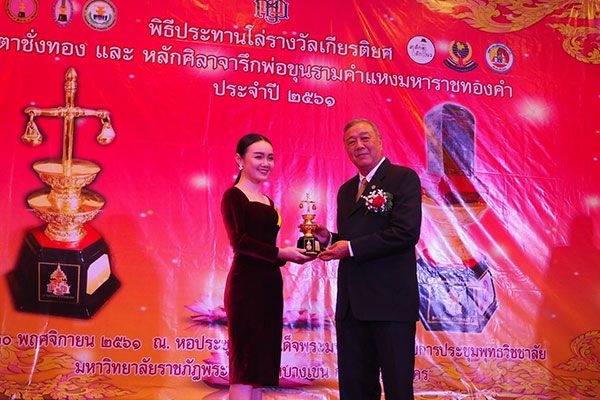
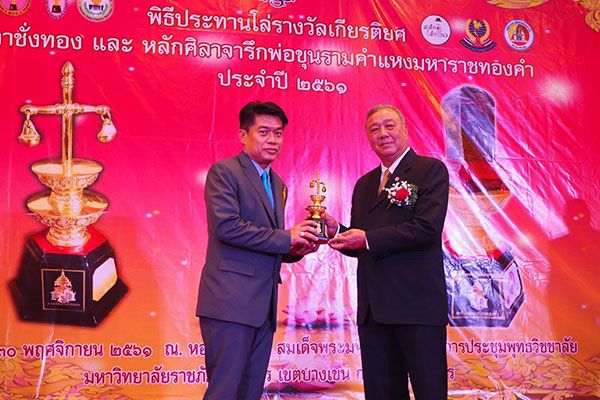
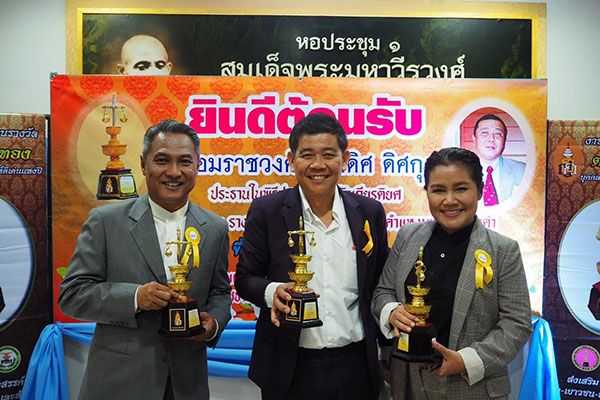
ม.ร.ว.ดำรงดิศ ดิศกุล เป็นประธานในงานประทานโล่รางวัลเกียรติยศ “ตาชั่งทอง” บุคคลสงเคราะห์ดีเด่นแห่งปี โดยสหพันธ์กรรมการสงเคราะห์เด็กและเยาวชนแห่งประเทศไทย สมาคมสถาบันคุ้มครองสิทธิประโยชน์ผู้บริโภค และภาคีเครือข่าย ประจำปี 2561 ครั้งที่ 7 ณ หอประชุม 1 สมเด็จพระมหาวีรวงศ์พุทธวิชชาลัย เขตบางเขน กทม.  การมอบรางวัลนี้เพื่อเป็นการเผยแพร่เกียรติคุณ กรรมการสงเคราะห์และผู้ใหญ่ใจดีผู้มีจิตอาสาด้านสังคมสงเคราะห์เด็กและเยาวชน สตรี ผู้สูงอายุ ผู้พิการ ผู้ด้อยโอกาส และผู้ทำงานด้านยุติธรรมอย่างต่อเนื่อง โดยสมเด็จพระญาณสังวร สมเด็จพระสังฆราชสกลมหาสังฆปริณายก ประทานพระนามย่อ ญสส.ประดิษฐานบนโล่

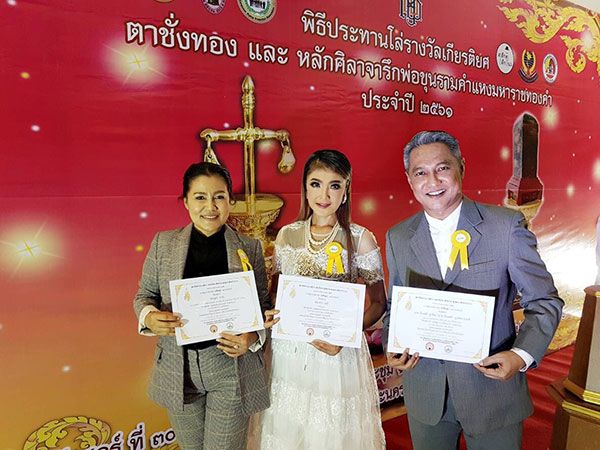
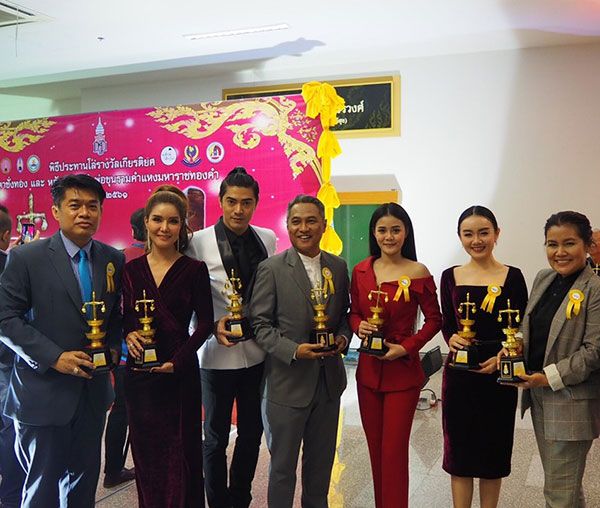
โดยมี ดารา นักแสดง สื่อมวลชน และบุคคล ที่มีชื่อเสียงเข้าร่วมงานและรับรางวัลเป็นจำนวนมาก ใน ส่วนของวงการลูกทุ่ง ที่ ได้เข้ารางวัลในครั้งนี้ เช่น  ก้องหล้า ลูกไทย, ดร.ญดา ถาวร,ดาว มยุรีย์, จิ้ม ชวนชื่น,ลูกตาล ชลธิชา,โจนัส แอนด์เดอร์สัน,ลำไย ไหทองคำ , ต้อม รัชนีกร , เอ็ม ธนวัฒน์ , ดีเจ เอ พีราวุธ  ก็ต้อง ขอแสดงความ ยินดี กับทุกท่าน ที่ได้ เข้ารางวัล ในครั้งนี้ และขอขอบคุณ ทางสหพันธ์กรรมการสงเคราะห์เด็กและเยาวชนแห่งประเทศไทย(สกท.) สมาคมสถาบันคุ้มครองสิทธิประโยชน์ผู้บริโภค (สสคบ.) ที่มอบรางวัล และเห็นความสำคัญ ของบุคคลในวงการ ลูกทุ่ง

“มิตร มิตรชัย” สู้สุดพลังลุยโปรเจ็คท์ลิเกเงินล้านแทน“ไชยา- แอน”ปีกุลคิวงานแน่น

ศาสตร์เกษตรดินปุ๋ย : ขอบคุณแหล่งข้อมูล : หนังสือพิมพ์แนวหน้า

https://www.naewna.com/entertain/380652

“มิตร มิตรชัย” สู้สุดพลังลุยโปรเจ็คท์ลิเกเงินล้านแทน“ไชยา- แอน”ปีกุลคิวงานแน่น

“มิตร มิตรชัย” สู้สุดพลังลุยโปรเจ็คท์ลิเกเงินล้านแทน“ไชยา- แอน”ปีกุลคิวงานแน่น

วันจันทร์ ที่ 3 ธันวาคม พ.ศ. 2561, 12.31 น.

พระเอกลิเกยุคใหม่ที่ตอนนี้มาสานงานลิเก แทนพี่ชาย อย่าง ไชยา มิตรชัย และ แอน มิตรชัย ทำให้   “มิตร” พระเอกลิเงินล้าน ที่กำลังมาแรงแฟนคลับ และแม่ยกตามให้กำลังใจทุกเวที ซึ่งเจ้าตัวไม่หวั่นการประกบคู่ขวัญ คู่ล่าสุด

“ด้วยความที่ยุคสมัยตอนนี้เปลี่ยน และพี่เอ กับพี่แอน มีภาระกันทั้งนั้น ตอนนี้หน้าที่หลักๆ เลยต้องมาเป็นผม ที่จะต้องสานงานลิเก ต่างๆ แทนพี่ทั้ง 2 คน  พอผมมาดู ก็อยากจะปฏิวัติลิเกให้ฉีกไปจากที่เคยเห็น เริ่มจากตัวผมเลย แต่ก่อนพระเอกลิเก อาจจะต้องเอวบางร่างน้อย ตอนนี้ผมแล่นเป็นพระเอก คนดูก็จะเห็นพระเอกที่มีซิกแพค หุ่นบอดี้มีความบึกบึนแข็งแรง  รวมไปถึงการแสดงก็จะเป็นอะไรที่โดดเด่น มากขึ้น คือ บู้แอคชั่นเก่งกาจ  เป็นลิเกที่ล้ำสมัย แต่ความล้ำสมัยยังอยู่ภายใต้ความถูกต้องของคำว่า “ลิเก” ซึ่งหัวใจหลักของงานก็ยังคงอยู่เหมือนเดิม เนื้อหาของเรื่องราวที่นำมาเล่นก็ยังสนุกเข้มข้นในสไตล์ของพี่เอพี่แอนเช่นเดิม”

นอกจากนี้ “มิตร” ดึง “แป้ง มิตรชัย” มาเป็นคู่ขวัญอีกด้วย “สมัยที่พี่เอ พี่แอน ก็เหมือนเป็นพระนางคู่ขวัญกันไปแล้ว พอมาถึงรุ่นผมเลยต้องมีคู่บ้าง ก็เลยดึงแป้ง  ลูกพี่เอ มาทำงานด้วย “ก็ต้องยอมรับครับ ว่ารุ่นเก่าไปรุ่นใหม่มา จากการทำงานของ ตระกูล มิตรชัย ที่มีงานยืนยาวกว่า 30 ปี ทั้งในประเทศและต่างประเทศ วันนี้คู่ขวัญผมคือแป้ง ที่แบ่งเวลาทั้งเล่นละคร (จันทร์กระจ่างที่กลางทุ่ง) ทางช่อง 7  และมารับงานลิเกถือว่าหนักพอสมควร แต่พอพวกเราได้มาทำงานด้วยกัน ฐานแฟนคลับก็ค่อยๆ เพิ่มขึ้นมาเรื่อยๆ  คือสมัยก่อน พี่เอ พี่แอน ทำไว้อย่างไร มายุคผม ก็การันตีมาตรฐานจากผู้ถูกขนานนามว่า ลิเกในตำนานผู้สร้างประวัติศาสตร์คนดูถล่มทลายมาตลอดเช่นกันติดตามผลงานของคู่ขวัญ “มิตร-แป้ง” ที่มารับบทหนักสานงานลิเกให้ก้าวไกลเป็นที่ยอมรับอีกไม่นานเกินรอ