Vietnam orders covid tests for millions in Ho Chi Minh City
Vietnams Prime Minister Pham Minh Chinh ordered covid-19 tests for all of Ho Chi Minh City after the government dispatched the military to dispense food in the nations commercial hub amid new drastic measures to contain a worsening outbreak.
Uncertainty swept across the city of almost 10 million through the weekend, triggered by conflicting information from authorities about food shopping restrictions. Local media depicted crowds of residents descending on food markets and standing in lines for hours. The curbs on shopping are set to be in place starting Monday until Sept. 6.
Officials estimate the city needs to provide 11,000 tons of goods to residents daily and the government is capable of doing that, an unnamed official from the city’s trade department was cited as saying by Tuoi Tre. The military will work with volunteers, veterans and some unions to deliver food to households, Vo Minh Luong, deputy minister of national defense, said in a meeting on Friday with city officials. His comments were made available on a government website, which didn’t give details on the scale of the distribution in the city.
ADVERTISEMENTx
The Southeast Asian country is battling its worst coronavirus wave with a record 11,299 domestic new virus cases reported Saturday. Ho Chi Minh City is the nation’s epicenter with more than 171,000 reported domestic patients out of the country’s 332,626 local cases since April 27, the start of latest national outbreak. The city has recorded 80% of the country’s covid-19 deaths.
Authorities are increasingly concerned that months of tough anti-virus measures have yet to contain the spread of covid-19, and aim to further reduce movements by Ho Chi Minh City residents. They have already been restricted from leaving home and can do so for only essential reasons, such as getting food, seeking medical treatment or going to work-sites approved by the government.
The government aims to contain the virus to pockets in Ho Chi Minh City by Sept. 15, according to its website.
Less than 2% of the nation of 98 million people have been fully vaccinated as of Aug. 19, according to a statement posted on the website of the health ministry’s publication Suc Khoe Doi Song.
Stricter movement restrictions are also being ordered in neighboring provinces including Dong Nai and Binh Duong, according to a statement on the government’s website. That region is dotted with industrial parks – home to suppliers of global brands.
Hundreds of police officers from different parts of the country are being sent to Ho Chi Minh City and Binh Duong province to assist with enforcement of the restrictions, according to the government statement. Likewise, thousands of doctors and other medical professionals have been arriving in the southern region to assist with the growing number of patients.
The army will oversee the enforcement of stay-at-home orders that were extended through Sept. 15 in Ho Chi Minh City and assist the city to ensure its food supply for the next 15 days, according to the government posting. Local officials must detail the number of stores in their areas and calculate the needs of households, the notice said.
Published : August 23, 2021
By : Syndication Washington Post, Bloomberg · Nguyen Xuan Quynh
What corporate america can learn from the Navys vaccine campaign
The corporate world may want to take a page out of the U.S. Navys manual when it comes to boosting workforce Covid-19 vaccination rates.
The Navy is the pride of the U.S. military when it comes to inoculation: 76% of active duty members are fully vaccinated, the highest rate of the main four branches, according to data provided by each. And at a rate of 56%, the broader U.S. population has a ways to catch up.
The Navy has taken a more-stick-than-carrot approach with its members, eschewing the free gift cards or cash bonuses that some private employers are offering as incentives and instead making life more difficult for sailors who haven’t gotten their shots. It had been imposing long quarantines away from family and restricting port calls for unvaccinated sailors even before the Defense Department’s Sept. 15 inoculation mandate was announced.
“A lot of sailors join the Navy because they want to see the world,” said Cmdr. Wade Smith of the USS Sioux City. “I told the crew, if you get to 100% vaccinated, you’ll have that option.”
ADVERTISEMENTx
The Navy’s experience could be a useful roadmap for U.S. employers that are facing a delicate balancing act as they seek to ensure a safe return to office while not alienating certain workers by forcing them to get a jab. Some employers have recently imposed vaccine mandates as the delta variant spreads, but others like Amazon can’t enact such rules in the current labor market without the risk of losing employees.
Companies don’t have the same level of control over employees as officers do sailors on a ship, but they can create inconveniences for their workers’ daily lives and limit activities – like in-person trainings and meetings – that could give employees a leg up.
“What can companies learn from this? Incentives work,” said Mark Cancian, senior adviser at the Center for Strategic and International Studies and a retired Marine Corps colonel. “Putting out another pamphlet about how vaccination is safe and you should do it is not going to help.”
Covid outbreaks at big companies like Amazon – which saw 20,000 of its U.S. workers contract the virus over six months last year – have proven public relations disasters. And the Navy hasn’t been immune, either. Nearly 1,300 sailors were infected on the aircraft carrier USS Theodore Roosevelt in March 2020, forcing the crew to evacuate to Guam and sidelining the ship for more than a month.
Officers have clamored to avoid the same fate since the Defense Department began its vaccine rollout in mid-December. If sailors get sick while at sea, operations could be crippled for weeks, an especially costly problem for the Navy, which is the most expensive of the military’s branches to operate.
ADVERTISEMENT
For commanding officers, “not being effective is not an option,” said Katherine Kuzminski, director of the Military, Veterans, and Society Program at the Center for a New American Security.
In March, Smith’s crew on the USS Sioux City in Mayport, Florida, became the first in the Navy to reach 100% vaccination. Ten ships have rates of 95% or more.
“We tried to tell them all the time about the mission of the ship,” he said about convincing crew members to get the shot. “‘We’re about to deploy, and I only have 70 sailors. I need every one of you.'”
Smith said he first called his crew to the flight deck to emphasize the importance of the Covid vaccines, and the ship’s hospital corpsman then set up a table in the mess deck for 30 minutes every day to answer questions from individual sailors. Capt. John Gay, public affairs officer at the Navy Bureau of Medicine and Surgery, said officers across the country engaged each sailor personally about getting vaccinated.
“We have a unique environment that the other services don’t have, working in these close quarters,” he said. “So there’s been a lot of education, and that face-to-face leadership has really helped.”
ADVERTISEMENT
The newly imposed vaccine mandate requires that all military personnel be vaccinated by mid-September, and those who don’t comply could face punishments as extreme as removal from service. But before the shots became mandatory, the rollback of restrictions for vaccinated sailors in February convinced many to get the jab. Meanwhile, unvaccinated service members faced restrictions that impacted their personal and professional lives. Even now, those without a shot have to quarantine on the ship for at least two weeks before deployment, which means they’re sequestered in close quarters, away from family, before what will likely be a months-long absence at sea.
When docking at a foreign port, which can happen several times per tour, unvaccinated sailors may also be forced to stay on the ship while their vaccinated counterparts enjoy their time off in a new city.
Individual bases have the authority to impose additional rules, too. Mark Julian Martinez, a junior enlisted sailor on the USS Donald Cook, said unvaccinated sailors on the base in Rota, Spain, were prohibited from going anywhere outside the base besides their homes. It was “just another added incentive for people to get the vaccine,” he said.
In the corporate world, some companies have found success in encouraging vaccines by making life inconvenient for those without. Forcing masks and routine testing could be a hassle for unvaccinated workers, while not being able to return to the office or attend in-person events could impact those employees’ professional lives.
“You can choose to be unvaccinated, but then you also give up opportunities that would be beneficial to your career,” Kuzminski said. “At a certain point, that would catch up with you.”
Wall Street firms like Morgan Stanley and Citigroup now require their workers to be vaccinated to return to the office, skirting a mandate while still creating a strong incentive for inoculation. Other employers like AbbVie require only their unvaccinated employees to mask up and undergo weekly testing.
The Navy has allowed vaccinated sailors to go unmasked for the majority of its vaccination campaign, though the requirement was reintroduced at many bases for all sailors at the end of July in response to the delta variant.
Jaslyn Henyard, a junior enlisted sailor on the USS Whidbey Island, said that many people on her ship wanted to get the vaccine in order to “go back to normal life.”
“A lot of people were looking forward to getting out of those restrictions,” she said. “So once the vaccine hit the ship, a lot of people were very excited. They wanted to get it over with.”
Gay, the Bureau of Medicine and Surgery public affairs officer, said that if the rest of the country took notes from the Navy, the pandemic might soon be behind us.
“We have to remain really disciplined, and the Navy’s done a really good job with that by creating Covid-free bubbles of people,” he said. “If we can create that in our communities, I think the end would be near.”
Published : August 23, 2021
By : Syndication Washington Post, Bloomberg · Rebecca Torrence
Escalating U.S.-China solar rift threatens Biden green goals
The first big test of Joe Bidens lofty clean-power ambitions may not be congressional approval of sweeping climate legislation, but managing a solar supply chain thats being shaken by the seizure of imported Chinese panels.
Multiple companies have now had solar components detained at U.S. ports in the aftermath of a Biden administration ban on equipment using raw materials originally from Hoshine Silicon Industry Co., according to people familiar with the situation who asked for anonymity while discussing sensitive trade issues.
The seizures come amid a new push by some U.S. solar manufacturers to extend tariffs to China-linked factories in Vietnam, Malaysia and Thailand, the U.S.’s largest panel suppliers. Together the developments threaten to disrupt the U.S. solar market, potentially jeopardizing Biden’s goal of a carbon-free power sector by 2035.
“It is clear that the administration wants 40% of the nation’s electricity generation to be from solar,” Abigail Ross Hopper, president of the Solar Energy Industries Association, said in an interview Wednesday. “These kind of uncertainties and additional costs could have a material impact on the rapid deployment goals that they have.”
ADVERTISEMENTx
While the solar group isn’t aware of specific project delays, Hopper said the seizures have had a chilling effect on the industry. SEIA has heard about companies not wanting to contract for future shipments until they get more clarity on how the ban will be enforced.
Already, solar developers are scrambling to prove incoming goods — some of which may have been ordered months before the Biden ban — are free of Hoshine material. A major solar-panel maker warned this week that all imports from China risk being detained by U.S. Customs and Border Protection.
Manufacturer Canadian Solar said that four of its sample modules shipped from China to its U.S. office were held last week by officials due to a sourcing issue, and that all Chinese shipments were at risk of being stopped at the border.
Other companies have also been affected, with multiple containers seized at different ports, according to people familiar with the actions. The cost of having products detained at U.S. Customs facilities is prohibitive, making other companies question whether it’s worth the risk of trying to import to the U.S., one of the people said.
The Biden administration’s order is part of efforts to confront alleged human-rights abuses in the Xinjiang region. China denies the allegations, which it claims are an attempt to undermine successful businesses.
ADVERTISEMENT
Solar developers and manufacturers had spent months shuffling supply chains and preparing for an administration move against polysilicon, a prime ingredient in the panels that convert the sun’s rays into electricity. But the administration’s Customs order in June instead had far broader reach by targeting products containing metallurgical-grade silicon, which is used to make polysilicon. Hoshine is the world’s biggest producer of the metal.
The material is so many steps removed from completed panels that just about any module coming to the U.S. can’t yet prove it doesn’t contain Hoshine material, Philip Shen, an analyst at Roth Capital Partners, said in a research note.
U.S. solar advocates are appealing to the administration to refine its initial approach — so it still discourages human-rights abuses in Xinjiang without ensnaring imports. Hopper suggested a focus on polysilicon, not the metal from which it is formed. And some solar supporters are asking the administration to phase in future moves so companies aren’t caught flat-footed, according to two people familiar with the matter.
A White House spokesman didn’t address messages seeking comment and a Customs spokeswoman didn’t immediately address an email seeking comment.
In some respects, there has never been a brighter moment for solar power in the U.S. Installations are booming, and Biden appeared poised to deliver the most progressive climate presidency in history — on the heels of an administration steadfast on boosting fossil fuels. And yet, the industry’s supply chain has been battered by higher costs, including for modules and freight.
ADVERTISEMENT
Solar panels already cost about 40% more in the U.S. than the rest of the world, and expanded tariffs could lift prices further, according to Jenny Chase, BloombergNEF’s head of global solar research.
“Recent enforcement actions and international trade petitions go beyond the intended goal and risk significantly impacting U.S. solar deployment,” said Heather Zichal, chief executive officer of the American Clean Power Association, said by email.
Amid the seizures, a group called the American Solar Manufacturers Against Chinese Circumvention filed petitions with the Commerce Department seeking to extend tariffs to factories run by Chinese firms out of the three Southeast Asian countries.
The filings come at a time when some domestic solar manufacturers are seeking an extension of former President Donald Trump’s solar tariffs — and as Democrats advance a $3.5 trillion tax-and-spending plan that could benefit both solar developers and clean-energy manufacturers.
But while the seizures may hurt U.S. developers, any moves that make imports more expensive could help level the playing field for companies that want to manufacture solar equipment on U.S. soil. That would be a boost to another part of Biden’s agenda — union jobs.
“Trade actions against imported solar products may counter President Biden’s climate agenda,” Timothy Fox, a vice president of ClearView Energy Partners, said in an interview. “But they also could further his union and domestic manufacturing agenda.”
Published : August 23, 2021
By : Syndication Washington Post, Bloomberg · Brian Eckhouse, Jennifer A. Dlouhy
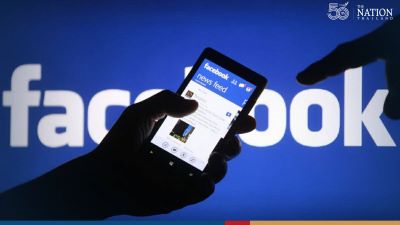
Facebook says post that cast doubt on coronavirus vaccine among the most popular on the platform this year
Facebook said Saturday evening that an article raising concerns that the coronavirus vaccine could lead to death was the top performing U.S. link on its platform from January through March of this year, acknowledging the widespread reach of such material for the first time.
It also said another site that pushed covid-19 misinformation was also among the top 20 most visited pages on the platform.
Facebook earlier this year faced a torrent of criticism from President Joe Biden and others who have alleged that the company has allowed misinformation about coronavirus vaccines to flourish. White House officials have alleged that many Americans are reticent to take the coronavirus vaccine, in part, because of false or misleading information they have read on social media services, including Facebook.
In releasing a report that the company had previously shelved, Facebook attempted to push back against critics, arguing that the definition of health misinformation is often less black and white than what some would make it seem.
For example, the article that surged earlier this year on Facebook’s platform, which is used by more than 2.8 billion people each month, was a factual article from The South Florida Sun Sentinel (distributed by the Chicago Tribune) about the Centers for Disease Control and Prevention investigating the death of a doctor who passed away two weeks after taking the coronavirus vaccine, according to the report (Months later, the medical examiner’s office found that there wasn’t enough evidence to say whether the vaccine played a role in the doctor’s death).
ADVERTISEMENTx
Facebook has said it will take down outright false information about covid-19, but has argued that conversations about factual articles should not be suppressed.
In a report published this past week, Facebook had identified the most popular information shared on its platform from April to June, a disclosure that raised questions about why the company was not disclosing popular posts from the earlier part of this year.
The new release of the January through March data by Facebook came one day after the New York Times first reported that it had been withheld by senior executives. The disclosure reflects the challenge of being open with the public at a time when the social network is being attacked by the White House as well as experts for fomenting the spread of health misinformation. Previously, the company had only shared how much covid-related misinformation it has removed, and has been careful not to acknowledge up to this point what role they’ve played in disseminating material that mislead the public about the virus and the vaccine.
For months, executives have debated releasing both this report and other information, according to a person familiar with the company’s thinking. In those debates, the conversations revolved around whether releasing certain data points were likely to help or hurt the company’s already-battered public image. In numerous instances, the company held back on investigating information that appeared negative, the person said.
In July, President Biden accused platforms like Facebook of “killing people” for spreading misinformation about covid-19, while the Surgeon General called such misinformation an “urgent threat.” (Biden subsequently walked back the comment).
ADVERTISEMENT
After Biden’s comment, there was fear inside Facebook that the narrative was getting out of control, the person said. Facebook had been in discussions for months with the White House and the U.S. Surgeon General. Biden administration officials had repeatedly asked for data about the extent of misinformation on the company’s platform, according to three additional people familiar with the discussions who spoke on the condition of anonymity to discuss private matters.
At first, Facebook only wanted to share data that cast the company in a positive light, including promoting its research that the company has taken down 20 million pieces of content containing misinformation about covid-19.
But as the White House pushed further, Facebook planned to release a transparency report that would show the 100 pieces of most popular content on the platform.
The problem was that they feared what they might find. They were also cautious because they felt that the narrative about what misinformation is was often misconstrued.
As product managers, engineers, policy officials, and other executives began to dig into the data, they found that in the first quarter of this year, one of the most popular pages on the network was a page run by the Epoch Times, a right-wing anti-China publication that has promoted the violent QAnon conspiracy theories and misleading claims of voter fraud related to the 2020 election.
ADVERTISEMENT
Another one of the most popular articles was the Sun Sentinel piece. The article was promoted on Facebook by several anti-vaccine groups.
In a statement, Facebook spokesman Andy Stone said it had “considered making the report public earlier but since we knew the attention it would garner, exactly as we saw this week, there were fixes to the system we wanted to make.” He declined to elaborate on the fixes, except to say that one item involved fixing a technical bug.
In a series of tweets on Saturday evening, Stone said that “given the interest in the first version we did not release, we’ve decided just to make it public. It’s not gleaming, but we’re trying to make progress.”
He said that the case of the Sun Sentinel article “does illustrate just how difficult it is to define misinformation.”
Facebook’s leadership has long felt that skepticism about any subject, including vaccines, should not be censored in a society that allows robust public debate. The company has also viewed research which shows that people are most likely to have their minds changed by people who they trust, including friends, family, and people in their social network. The company, along with other experts, argue that is a strong reason to allow material that may raise questions to be posted and discussed on the platform.
The challenge is that certain factual stories that might cast doubt on vaccines are often promoted and skewed by people and groups that are opposed to them. The result is that factual information can become part of an ideological campaign. Facebook has been slow to remove or block some of the leading anti-vaccine figures that spread such ideas.
In releasing the report, its authors noted that the most popular content still represented just 0.05% of all content views by U.S. users in the first quarter.
Other top links came from UNICEF, ABC News, and the Washington Post.
What’s Runic ? Understanding The Runes, Ancient Alphabets, The Fortune-Telling
When it comes to faith, we cannot blame other people’s beliefs. Some people may have had horoscopes through palmistry, or tarot card reading before but today we will take a look at “The Runes” by Nuntarat Chompusang (runic.me), translated by Nattawadee Ngamsom.
Many people may have heard Runes, ancient alphabets from movies such as Harry Potter, a study of Ancient Runes or Wanda and Vision, Witch Runes as the most powerful magic in Marvel Cinematic Universe (MCU) but to talk about Runes in terms of prophecy or fortune telling would be more interesting.
Runes is a word derived from the word runar, meaning whisper or a secret in myths of Northern Europe. Based on the Hávamál, a collection of Old Norse poems from the Viking age which was published during the 9th century.
ADVERTISEMENTx
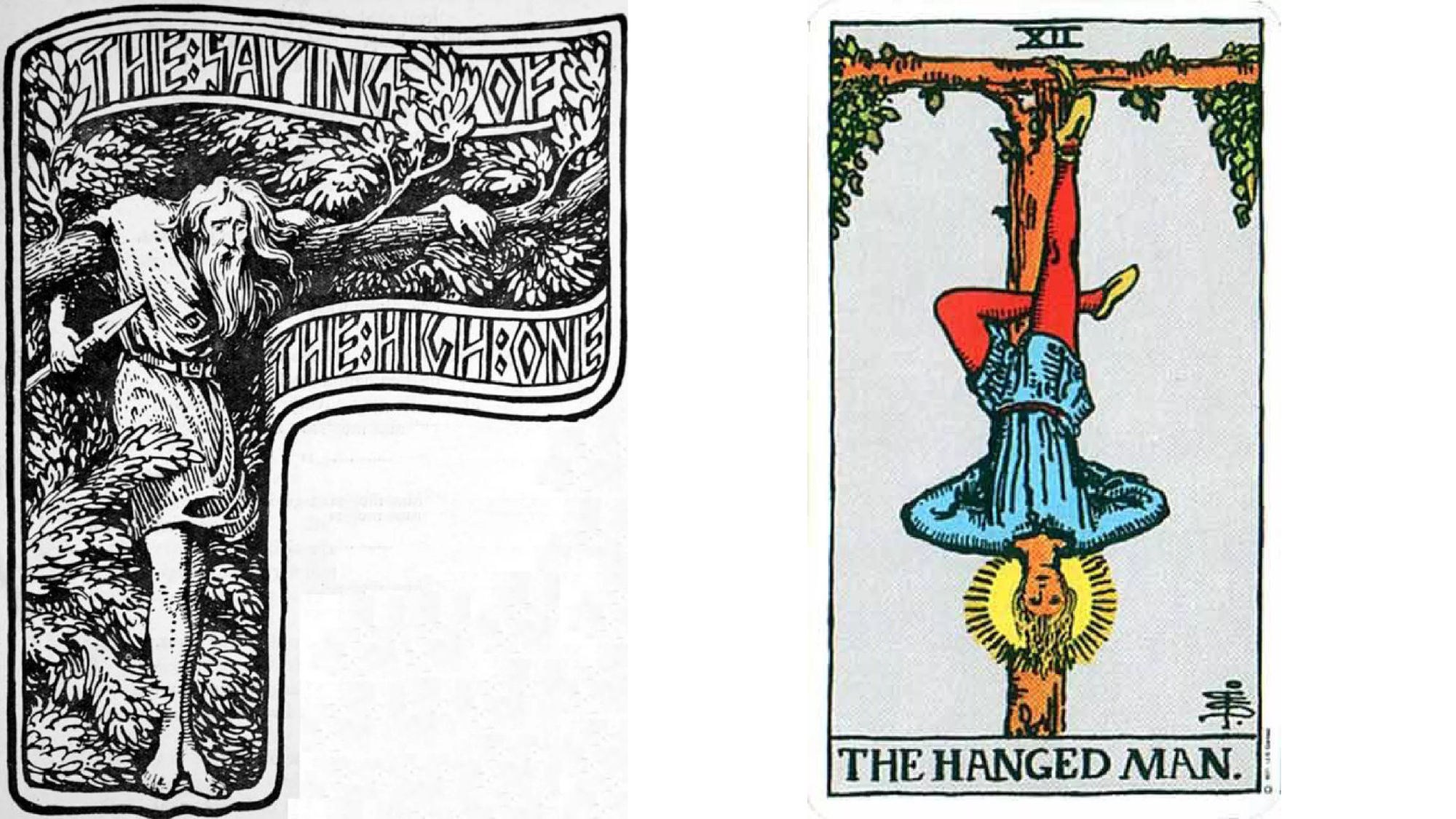
It is believed that “Odin”, the Norse God, the one-eyed All-Father. He hanged himself in Yggdrasil, the tree of life, for nine days and nine nights in order to gain knowledge of other worlds and be able to understand the runes. Then discovered the world’s runic alphabet traditionally holds 24 letters, called Elder Futhark. This image of the origin of the runes, also recorded in The Hanged Man, which we often see in the Rider-Weight tarot deck.
What’s Runic ? Understanding The Runes, Ancient Alphabets, The Fortune-Telling
From archaeological evidence, over 3,000 runes have been found on stone, wood and metal plates in Scandinavia, suggesting that runes flourished in northern Europe since BC among the Germanic tribes extending to the Scandinavian, as well as Wales and England.
In ancient times, runes were engraved on branches, stones, weapons, letters, artwork, jewelry, places, or even tombstones for forecasting use. It is a protective amulet and used in ceremonies with the belief that each letter has its own meaning and magical power.
What’s Runic ? Understanding The Runes, Ancient Alphabets, The Fortune-Telling
The 24 letters of the Elder Futhark runic alphabet are divided into 3 sets of 8 letters each, known as “Aetts”
The first set is called Freya’s Aett, also known as Frey’s Aett, the runes of the goddess Freya and Frey, both of whom are known as the gods of fertility: Fehu, Uruz, Thurisaz, Ansuz, Raido, Kenaz, Gebo and Wunjo
The second set, called Hagal’s Aett, the runes of Heimdall, the watchman of the gods: Hagalaz, Nauthiz, Isa, Jera, Eihwaz, Perthro, Algiz and Sowilo.
The third set, called Tyr’s Aett, the runes of Tiwaz, god of war: Tiwez, Berkana, Ehwaz, Mannaz, Laguz, Inguz, Dagaz and Othila.
The 24 Elder Futhark set runes mentioned above were evolving over time due to topography and functionality, such as The Younger Futhark and Anglo-Saxon Futhark.
Runes have evolved over a long period of time and disappeared when Christianity came as those who use runes would be accused of heresy, until after the 18th century runes began to be used again. Especially using Elder Futhark Runes for prophecy.
Reference: The Beginner’s guide to runes divination
Your Career Horoscope for August 2021. Pick A Card Reading!
Heres what to expect in August 2021. How’s the situation at work? Shall you change your career? Or just stay where you are? Read this pick a card reading by Nuntarat Chompusang (runic.me), translated by Nattawadee Ngamsom
Try making yourself calm, wondering about what you want to know and choose a card from group 1 – 4 (The pictures do not affect the prediction). Let’s get started!
Your Career Horoscope for August 2021. Pick A Card Reading!
Group 1
The promotion or raise may get delayed at work, and nothing has changed much which may make you feel bored. People in the organization are still helping to fight this pandemic together. For some people who are WFH may get up and do more exercise. Job seekers may be disappointed in terms of a new job, you have to wait for another month or two. If you want to try something new, it is advised for you to try applying to international companies or companies with a foreign branches which can give you good opportunities.
Your Career Horoscope for August 2021. Pick A Card Reading!
Group 2
Your current job is quite stable and has more stability in the way of situations, organization, and emotions. The income will be increased especially for those who work in the field of real estate, an agent, or a lessor. As for business people, you will be able to find ways to expand slowly but steadily. Job seekers can find a new job and for those who have a full-time job, you are advised to stay in your current career. Unless you want to quit because of burnout.
ADVERTISEMENTx
Your Career Horoscope for August 2021. Pick A Card Reading!
Group 3
There shall be a small change for your current situation at work, whether a new position, a new office desk or even a new location. You feel comfortable with your career as this is a suitable job and your close colleague can still give you good advice and support. Also, you can receive support from the people in the organization as well. Those who have their own business, will still get income from loyal customers. For people who want to do freelance or make investments during this period, it’s quite risky but there shall be a chance for success or fame as intended, please consider cash reserves.
Your Career Horoscope for August 2021. Pick A Card Reading!
Group 4
There shall be a conflict in your job, and you may feel frustrated. Be careful of document issues or time management. Seeking a new job is highly competitive, it is recommended that you shall be patient and stay with your current career as you will receive help from your network. You may try applying for a new job, and leave after you get accepted. Even though the competition is high, there is still a chance you’ll get a suitable job.
Nualphan named as manager of Thailand football team
The Football Association of Thailand has appointed Nualphan Lamsam as manager of the Thailand national football team and Thailand national under-23 team.
Nualphan will work with the FA to find a replacement for Akira Nishino, who was sacked as national coach after the team failed to qualify for the 2022 Fifa World Cup.
The Thailand team will compete in the 2021 AFF Championship and 2023 AFC Asian Cup qualification.
Meanwhile, the Thailand national under-23 team will compete in the 2022 AFC U-23 Asian Cup qualification.
Nualphan Lamsam is the chairwoman of Port Football Club, who finished third last season in Thai League 1.
ADVERTISEMENTx
Nualphan named as manager of Thailand football team
She is also a former manager of the Thailand women’s national football team. She helped them qualify for the 2015 Fifa Women’s World Cup and 2019 Fifa Women’s World Cup.
Bangkok Airways announces the resumption of Samui – Phuket (v.v.) Starting from 25 August 2021 onwards
The resumed services between Samui and Phuket will be operated by an ATR72-600 aircraft, starting with three flights per week (Monday, Wednesday and Friday).
Starting from 25 August 2021 onwards, Bangkok Airways Public Company Limited will resume its direct services between Samui and Phuket, in order to facilitate passengers as well as to support Thailand’s re-opening projects which are Phuket Sandbox and Samui Plus Model.
The resumed services between Samui and Phuket will be operated by an ATR72-600 aircraft, starting with three flights per week (Monday, Wednesday and Friday). The outbound flight PG253 departs Samui airport at 11.25hrs. and arrives Phuket airport at 12.25hrs. The inbound flight PG254 departs Phuket airport at 13.00hrs. and arrives Samui airport at 14.00hrs. Passengers can visit the website https://www.bangkokair.com/flight/flightSchedule for more details about flight schedules.
Passengers travelling to and from the two cities are required to present a medical certificate with a laboratory result indicating that COVID-19 is not detected (done by RT-PCR technique and issued no more than 72 hours before traveling) and proof of vaccination. Additionally passengers are also required to strictly follow guidelines issued by Phuket provincial office and Surat Thani provincial office, more information about requirements can be checked at https://www.gophuget.com and https://healthpass.smartsamui.com.
Moreover, the airline needs to extend the temporarily suspension of in-flight meal service and temporary closure of its passenger lounges until further notice.
To contact the airline, please use the following contact channels;
Bangkok Airways remains committed to the safety and hygiene of our passengers and employees as the highest priority. The airlines strictly implement surveillance measures to prevent the spread of COVID-19
Upswing in SET expected on hopes lockdown would be eased, but index still faces pressure
The Stock Exchange of Thailand (SET) Index rose by 14.99 points or 0.97 per cent to 1,568.17 on Monday morning.
Krungsri Securities expected the index would move between 1,560 and 1,565 points on Monday on hopes that the lockdown would be eased as domestic Covid-19 cases were seen to be declining and the vaccination rate improving.
However, it predicted that the US Federal Reserve signalling a tapering of its quantitative easing programme, investment fund outflows and the ongoing anti-government protests in Thailand would pressure the index.
ADVERTISEMENTx
It recommended selective buying of the following companies’ shares as an investment strategy:
▪︎ Hana, KCE, TU, CPF, GFPT, Asian, EPG and NER, which benefit from a weakening baht.
▪︎ PSL, TTA and RCL, which would benefit from a rise in the freight rate.
▪︎ AOT, CPN, CRC, HMPro, AAV, BA, Mint, Centel, Amata and WHA, which would benefit from the country reopening.
The SET Index closed at 1,553.18 on Friday, up 8.90 points or 0.58 per cent. Transactions totalled THB82.37 billion with an index high of 1,554.45 and a low of 1,545.92.





 What’s Runic ? Understanding The Runes, Ancient Alphabets, The Fortune-Telling
 What’s Runic ? Understanding The Runes, Ancient Alphabets, The Fortune-Telling
 Your Career Horoscope for August 2021. Pick A Card Reading!
 Your Career Horoscope for August 2021. Pick A Card Reading!
 Your Career Horoscope for August 2021. Pick A Card Reading!
 Your Career Horoscope for August 2021. Pick A Card Reading!
 Nualphan named as manager of Thailand football team
 A full moon is seen over the Temple of Poseidon at cape Sounion, some 70 km southeast of Athens, Greece, on Aug. 21, 2021.
 A full moon is seen over the Temple of Poseidon at cape Sounion, some 70 km southeast of Athens, Greece, on Aug. 21, 2021.
 A full moon is seen over the Temple of Poseidon at cape Sounion, some 70 km southeast of Athens, Greece, on Aug. 21, 2021.

 SootinClaimon.Com