Ubon beauty Arisara crowned this year’s ‘Original’ Miss Tiffany
MONDAY, NOVEMBER 28, 2022
Ubon Ratchathani’s Arisara “Kwang” Kankla was crowned this year’s “Miss Tiffany: The Original” at a gala celebration on Sunday.
The extravaganza was held at Tiffany Show Pattaya in Chonburi and also saw the transgender beauty winning in the “Best of Tiffany’s Fashion Shoot” and “Miss Photogenic” categories.
Apart from the million-baht crown designed by God Diamonds, Arisara also won an MG ZS Limited Edition car, 300,000 baht in cash and a gift voucher from Pratunam Polyclinic among other goodies.
Though the 21-year-old is a trained nursing assistant, she also enjoys traditional and contemporary dance and co-owns a cosmetic surgery business. She also spends her free time working as a volunteer at M Plus Foundation to boost awareness of preventing Aids.
The two runners-up were Napichaya “Namfah” Pimpru and Nattaphat “Earth” Waichana.
E-sport a gamechanger for Thailand’s digital economy: Democrats’ Madame Dear
MONDAY, NOVEMBER 28, 2022
E-sport is not just a leisure pursuit but also a big opportunity to boost Thailand’s digital economy, Democrat Party member Watanya Bunnag said on Sunday.
However, the main obstacle to Thai e-sport development is the lack of government support, she added.
Watanya, also known as “Madame Dear”, was speaking at a seminar titled “E-sport: More Than Just a Game” organised by the Democrat Party’s Bangkok strategy committee at Siam Square.
Many people assume e-sport is just a hobby and are not aware it has a big role to play in Thailand’s digital expansion, she said.
“The main question is what the government can do to make e-sport more than just a sport,” she said.
Watanya noted that other countries are paying serious attention to electronic sport as an economic driver, adding that South Korea has a plan to promote e-sport as soft power.
Experts had demonstrated how e-sport can be used to grow economies, but Thailand was still lagging compared with other countries, she said.
Rathanon Phalanon, founder and director of e-sport agency Invate, agreed that many people fail to see the economic value and potential of e-sports.
Pointing to lucrative rewards from the fast-growing gaming industry and player income, he urged the government and other sectors to promote e-sport in Thailand.
National Basketball League (Thailand) CEO Payu Nerngchamnong said Thailand was a world leader in adopting e-sport, which he defined as a bridge to boost business.
Thailand is the biggest video-game market in Southeast Asia, worth US$1.24 billion (47.48 billion baht) last year. That figure is forecast to rise to $1.4 billion (53.53 billion baht) this year.
The country recognised e-sports as professional sport last year.
SF woos movie buffs with popcorn feast at CentralWorld today
MONDAY, NOVEMBER 28, 2022
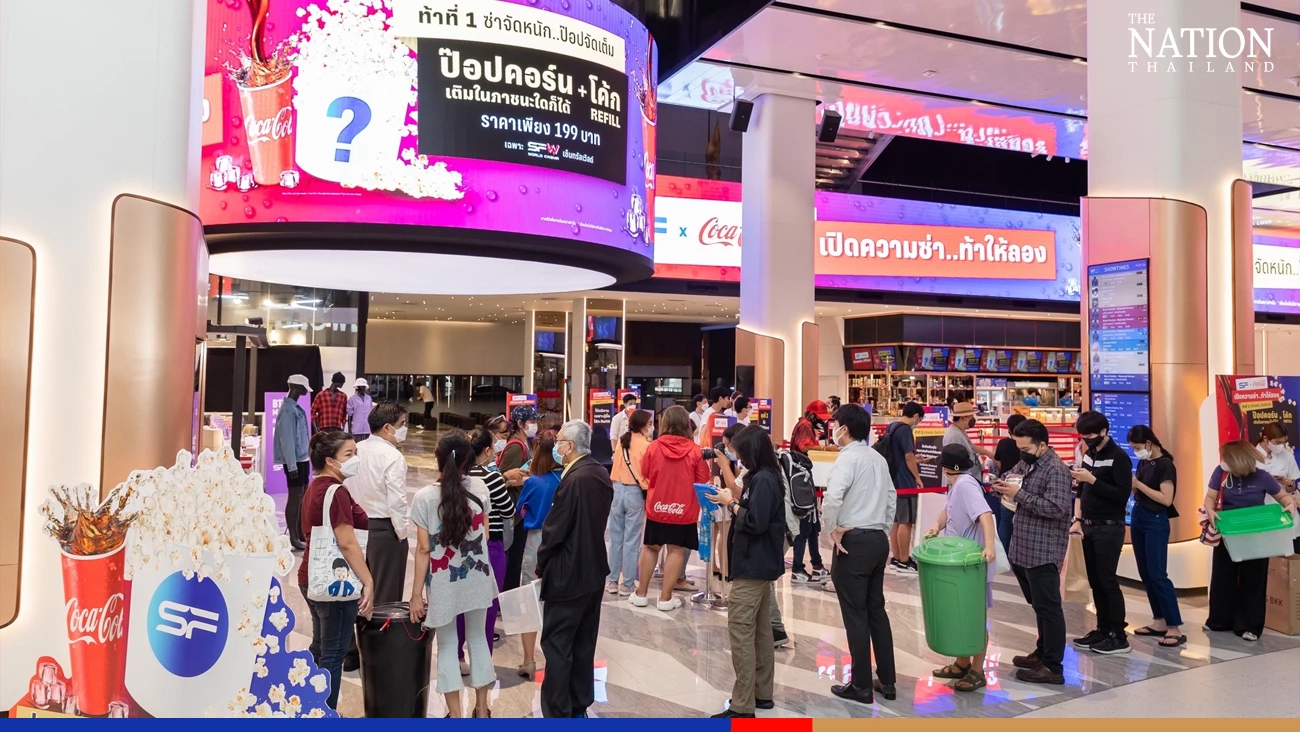
Popcorn and movie-lovers on Monday are queuing up at SF World Cinema CentralWorld with their container of choice for the “Bring Any Container for 199 baht of Popcorn” event.
The one-day offer, hosted by SF Group at CentralWorld shopping centre in Bangkok’s Pathumwan district, is available only on November 28 from 11am.
Customers who have registered can bring any container to fill up as much as they can of the theatre’s popcorn for 199 baht, plus a refillable serving of Coca-Cola.
Containers of choice for most customers are oversized water buckets, while others select multi-purpose plastic containers with wheels for easy movement.
Just last month, the “Popcorn Beast” campaign by Lotte Cinema theatre in Vietnam went viral and became popular on the internet. Customers brought unusual containers, such as water buckets and rice cookers, to get free popcorn for a limited time.
Thailand clamps down on smoking in Amsterdam-style cannabis cafes
MONDAY, NOVEMBER 28, 2022
Cannabis shops have been warned not to use Thai traditional doctors to get around the ban on recreational smoking inside stores.
The Public Health Ministry issued the warning on Sunday after cannabis shops on Bangkok’s Khaosan Road hired traditional doctors to staff their Amsterdam-style weed cafes.
The ministry has struggled to prevent rampant recreational use of the herb after cannabis shops sprang up across the capital following legalisation earlier this year.
Public Health Minister Anutin Charnvirakul said cannabis businesses should not seek loopholes to the ban on smoking in stores.
“The ministry did not campaign for people to use cannabis for recreation, so they cannot smoke the decriminalised herb in stores,” he said on Sunday. He added that the use of cannabis will be regulated by law.
Cannabis can however be smoked in stores if they have permission to operate as medical facilities, according to the Department of Thai Traditional and Alternative Medicine.
Department director-general Thongchai Lertvilairattanapong said his staff will conduct random surveys of stores where cannabis is being sold in the next two weeks to ensure compliance with this rule.
Decriminalisation of the herb occurred in a legal vacuum that has left shops and users uncertain of their rights. Consumption of cannabis in public remains banned.
Meanwhile, legislation to control cannabis use and trade is pending, though some MPs and doctors want legalisation to be revoked.
#SootinClaimon.Com : ขอบคุณแหล่งข้อมูล : หนังสือพิมพ์ The Nation.
E-cigs can help you quit smoking? Fake news, says Thailand
MONDAY, NOVEMBER 28, 2022
The Digital Economy and Society (DES) Ministry says reports that electronic cigarettes can help you quit smoking are fake news and should not be taken seriously.
In the ministry’s fake news weekly update on Sunday, spokesperson Noppawan Huajaiman said reports and posts about e-cigarettes were among the top 10 fake news items it detected between November 18 and 24.
“Several research studies have concluded that using e-cigarettes still increases the risk of diseases caused by smoking normal cigarettes,” Noppawan said.
US and UK health authorities, however, have found evidence that e-cigarettes can be useful in helping smokers to quit the habit.
The ministry’s anti-fake news centre said it monitored 5.18 million online posts and messages during the week and detected that 225 were spreading fake news on 100 topics. The majority of the fake-news topics (64) were related to government policies, it said. Notably, three of the topics were scare stories about Covid-19 after the recent rise in infection rate.
The top 10 fake news items circulating from November 18-24 according to the ministry:
1. E-cigarettes can help you quit smoking.
2. Antiparasitic drug Ivermectin can treat Covid-19.
3. Lime juice can be used to treat kidney disease.
4. The Labour Ministry is hiring people to work from home.
5. A weed called Ya Khai Hao (Mollugo pentaphylla) can treat all kinds of cancer.
6. Others can know your bank account balance from your mobile phone number used to register with Promptpay.
7. The Stemonaceae plant, which is used to make traditional Thai insecticide and anti-parasite concoctions, can cure cancer.
8. Parents of children under six can register to receive a government subsidy of 1,400 baht per month.
9. Eating vitamin-C along with shrimps will immediately kill you.
10. E85 gasohol can remove black spots on your skin.
MPC may up Thailand’s policy rate by 25 points to fight inflation
MONDAY, NOVEMBER 28, 2022
The Monetary Policy Committee (MPC) may raise Thailand’s policy interest rate by 25 basis points to 1.25% per annum when it meets on Tuesday, the Kasikorn Research Centre predicted.
KBank’s research arm said MPC was under pressure to raise the policy rate because inflation remains high even though the Thai economy is recovering.
The centre said Thailand’s headline inflation fell for a second consecutive month in October to 5.98% but was still higher than the MPC’s target.
The centre noted that while the headline inflation had dropped, October’s core inflation had risen to 3.17% year on year, indicating that the price of goods was still rising even though pressure from energy prices is easing.
The centre said the Thai economy is expected to continue improving after it expanded by 4.5% year on year in the third quarter.
“As a result, the MPC can be expected to up the policy rate again by 25 basis points,” the centre said in its analysis released on Monday.
Kasikorn Research also said that MPC’s decision on whether it would raise the policy rate again next year will depend on the rate of inflation, recovery trend and policy rate increases set by the US Federal Reserve.
The centre predicts that Thailand’s policy rate will be pushed up to about 1.75% to 2% next year.
After keeping the interest rate unchanged for more than two years during the Covid-19 pandemic, the MPC decided to increase the policy rate by 25 basis points to 0.75% in August.
The following month, it further raised the policy rate by 25 basis points to 1% per annum with immediate effect.
The MPC signalled in June that it would increase the policy rate to cool down inflation. In June, the MPC voted to maintain the policy rate at 0.50%, though three of its members wanted to boost it by 25 basis points.
Job creation in first nine months exceeds pre-Covid level
MONDAY, November 28, 2022
Employment in nine months of 2022 surpassed the pre-Covid level as Thailand’s economy has been steadily recovering from the impact of the pandemic, the National Economic and Social Development Council (NESDC) said on Monday.
Some industries, however, are still facing labour shortage, it added.
At the end of the third quarter of 2022, 39.56 million people were employed in Thailand, up 2.7% or by 1.03 million people compared to the employment figures in the same period of 2019, before the pandemic.
Of the employed, 37.09 million are Thais and 2.47 million are foreigners, the NESDC reported, while some 490,000 people are currently unemployed.
The NESDC said employment among Thais has risen by 5.1% year on year, especially in key manufacturing sectors. However, employment in agriculture, fishery, hospitality and service industries saw a downward trend.
Employed foreigners plunged 23.2% year on year due to migrant workers from neighbouring countries heading back home during the pandemic, who are yet to return.
This has resulted in labour shortage in industries requiring manual workers, such as manufacturing, construction, retail, agriculture, forestry, and fishery, the NESDC said.
The council estimated that foreign workers would increase next year in keeping with a rising trend that started at the end of the second quarter this year, increasing from 2.26 million to 2.47 million people in just three months.
Myanmar nationals dominated Thailand’s unskilled labour market at 71.94% of total foreign unskilled labour, followed by Cambodians (19.34%), Laotians (8.71%) and Vietnamese (0.01%).
Meanwhile, about 240,000 foreigners are being employed as skilled labourers, or 9.89% of total foreign labour in Thailand.
Thai chamber of commerce presents roadmaps to government for new growth, boosting competitiveness
MONDAY, November 28, 2022
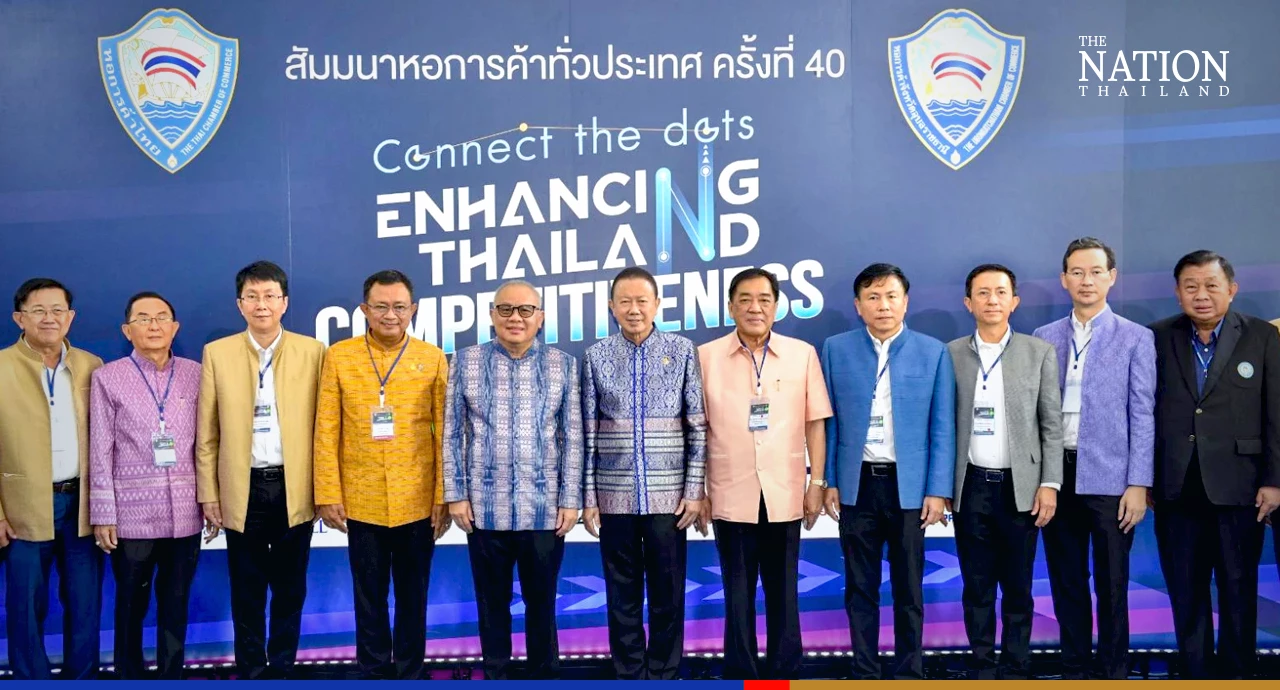
The chambers of commerce around the country are pushing for roadmaps to drive new growth for Thailand – especially measures to improve Thailand’s competitiveness ranking, which plunged by five spots this year.
The roadmaps were drafted during the 40th general assembly of the chambers of commerce held by theThai Chamber of Commerce (TCC) in Ubon Ratchathani province from Friday to Sunday.
At the conclusion of the assembly, titled “Connecting the dots: Enhancing Thailand’s Competitiveness”, TCC chairman Sanan Angubolkul summed up the roadmaps in three words – “Connect, Competitive, Sustainable”. Some 1,200 representatives of chambers of commerce and state agencies joined the assembly.
Speaking to the press after the assembly, Sanan said an urgent agenda of the provincial chambers of commerce is to coordinate efforts between the government and private sectors to raise Thailand’s competitiveness ranking.
Sanan said Thailand is suffering from an economic structure crisis that has caused the country’s competitiveness ranking to fall five spots from last year.
According to the World Competitiveness Ranking 2022, Thailand fell from 28 last year to 33 out of a total of 63 economies this year, as the Kingdom tries to deal with the impact of the Covid-19 pandemic.
Sanan said competitiveness could be enhanced with government support for small and medium-sized enterprises (SMEs) that need to apply digital transformation to increase the effectiveness of their business operations.
“Digital transformation is not an alternative or a way out for SMEs, but it must be a main course of action for their success amid economic crises that are piling up this year,” Sanan said.
Apart from the economic structure crisis, Sanan cited three other crises:
• Energy prices and consumer products’ prices
• Rising cost of manufacturing and inadequate agricultural materials
• Financial crisis for households and SMEs.
“So, the solution for Thailand to return to economic strength is to find ways to increase its competitiveness in all dimensions – especially the economic dimension through mechanisms that will integrate the work of all sectors,” Sanan said.
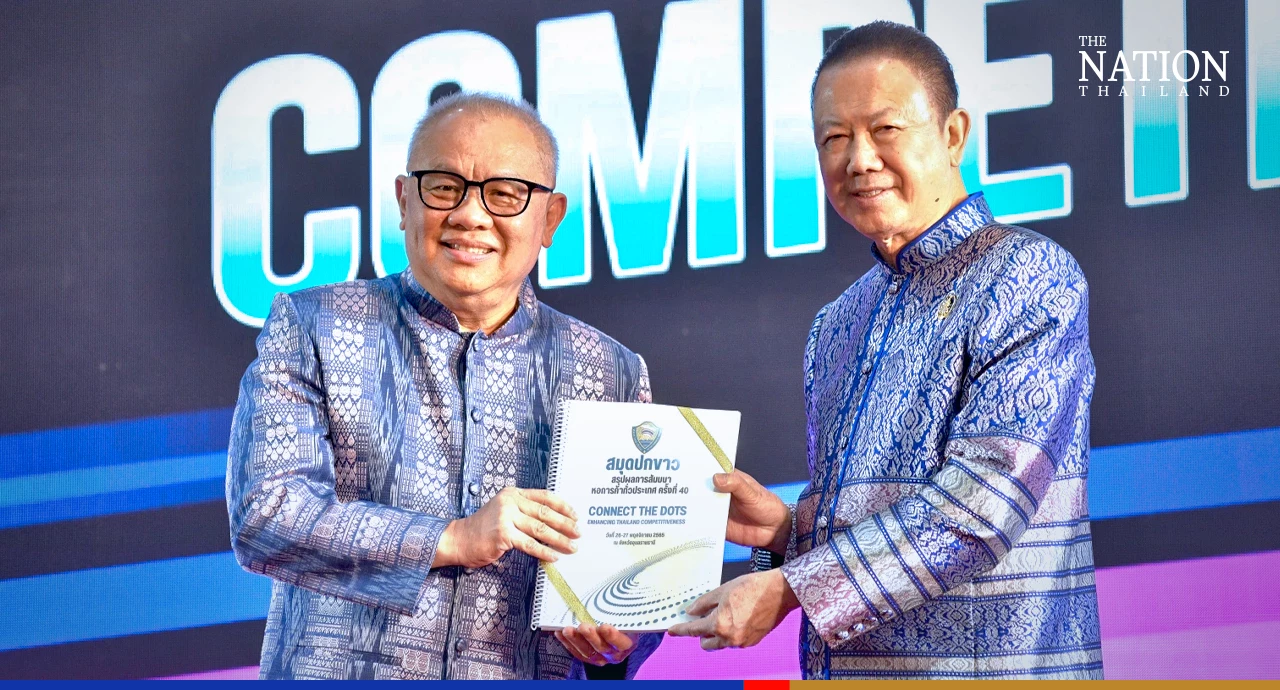
The roadmaps were drafted in terms of flagship projects for driving provincial economies, including agriculture, trade, investment and tourism projects. They have been compiled into a white-cover book that the TCC submitted to the government at the end of the assembly.
Deputy Prime Minister and Energy MinisterSupattanapong Punmeechaow represented the government and received the white-cover book from the TCC at the press conference on Sunday.
During the press conference, Sanan further explained the roadmaps as:
■ Connect — the TCC aims to forge cooperation among networks in Thailand and abroad. The TCC aims to increase the number of its members from 100,000 to 200,000 within three years with a goal to increase SMEs’ economic strength. And the TCC will connect chamber members nationwide to brainstorm ideas for developing the economies in the provinces.
■ Competitive — the TCC will support government efforts to increase Thailand’s competitiveness in all dimensions. It called on the government to follow up on the success of the recent hosting of the Apec Summit to draw more foreign direct investments into the country as well as expand free trade agreements with other countries.
Sanan said the TCC will work closely with the Board of Investment to draw investments from strategic targets, which are Saudi Arabia, Vietnam and India, while preserving investors from Japan and the United States.
The TCC also will call on the government to revise and reform laws on property held by foreign investors, Sanan added.
The chamber also will work with the Tourism Authority of Thailand to implement the Trade & Travel policy by creating soft power for each province and promoting tourism in secondary-tier provinces, Sanan added.
■ Sustainable — the TCC and its provincial chambers will push for the implementation of the Bangkok Goals on the Bio-Circular-Green (BCG) economic model for developing economies in provinces with sustainability during the next five years. The BCG model is aimed at reducing wealth gaps nationwide, Sanan added.
During the assembly, Natural Resources and Environment MinisterVarawut Silpa-archa delivered a special speech on Saturday to back up the BCG economic model, which he said must be implemented together with the ESG (environmental, social and corporate governance) policy.
Varawut said the government has a policy to implement the BCG economic model in order to slash carbon emissions by 40% within eight years, but the administration needs cooperation from the private sector to reach the goal.
Varawut said Prime Minister Prayut Chan-o-cha had pledged the goal during an international climate conference last year.
He added that the BCG economic model would be linked to employment of workers in the agricultural and food sector, health and medical sector, bio-energy and tourism. The value of BCG-related businesses would rise to 4.4 trillion baht, equivalent to 25% of Thailand’s GDP, in the future, he said.
Siam Commercial Bank (SCB)’s Economic Intelligence Centre (EIC) revised up Thailand’s economic growth forecast to 3.2% in 2022, thanks to momentum from the tourism sector and private consumption recovery.
The 2023 growth forecast is downgraded to 3.4%, given risks of global slowdown and uncertainties that overshadow Thai exports and investment, the centre said on Monday.
EIC’s previous growth forecast in 2022 was at 3.0%. An upward revision was attributed to a buoyant rebound in tourism and private consumption, following improvements in tourism and related service sector as well as labor income.
However, the 2023 growth forecast is revised down to 3.4% (from 3.7%) since the signs of global economic slowdown became more apparent amidst rising uncertainties. Some major economies will soon enter a recession, and this would weigh down on Thai exports and investment ahead.
Nonetheless, a solid rebound in tourism —thanks to the return of foreign arrivals— would provide significant support to Thailand’s economy in 2023. EIC anticipated the return of 28.3 million tourist arrivals next year, considering high travel demand and China’s easing of the Zero-Covid policy.
Domestic tourism also regained its pre-pandemic pace, thus adding impetus to tourism revenue, related service sectors, and domestic consumption.
Despite upbeat outlook, Thailand would still witness an uneven rebound as some households and businesses remain fragile. Regarding inflation outlook, headline inflation would be gradually declined and lied above the target at 6.1% and 3.2% in 2022 and 2023, respectively. Inflationary pressures still remain high due to high energy and food prices that somehow embedded in core inflation.
Somprawin Manprasert, First Executive Vice President, Chief Economist of the EIC, and Chief Strategy Officer at the Siam Commercial Bank PCL, stated that “We see a clearer sign of global economic slowdown this year and more to come in 2023, given rising uncertainties from elevated inflation, prolonged energy crisis, and synchronized monetary tightening worldwide. Some advanced economies —such as the UK and EU countries— will head for a recession by late 2022, whereas the US might also witness in H2/23. EIC thus downgrades the global growth forecast from 3.0% to 2.9% in 2022 and from 2.7% to 1.8% in 2023.
“In our base case, the global economy has yet to enter a recession since many countries would still record growth. For instance, China’s economy should make a steady rebound in line with the relaxation of Zero-Covid policy. Nevertheless, unexpected circumstances—such as the escalation of international conflicts or inflation surges which prompt tighter monetary policy responses—might also push the global economy into a recession.”
He further added that “Globally, high inflation is here to stay despite the figures in some countries already passing its peak. In particular, EIC expects that major economies will experience inflation outstripping the central bank’s targets for the next 1-2 years. This is because inflationary pressures start to entrench and service demand strengthens after demand for durable goods eventually rebalance to normal. Hence, major central banks would carry on a tight monetary policy into 2023—albeit with slower rate hikes—and keep policy rates high until inflation settles back within the target.
“Going forward, fiscal policy will shift focus from fiscal stimulus towards more fiscal sustainability, since the COVID-19 crisis left many countries with massive public debt piles. Furthermore, given high uncertainties surrounding the global economy and monetary policy stance, global financial markets might face higher volatility and risks of market liquidity crunch alongside a tightening global financial condition. So far this year, risk-off sentiment took place resulting in a significant drop in risky asset prices worldwide. This would, in turn, hamper wealth effects and consumption ahead.”
Thitima Chucherd, Head of Economic and Financial Market Research of the Economic Intelligence Center (EIC), stated that “In EIC’s view, the Thai economy will witness a modest yet uneven rebound. The tourism sector and consumption are the key drivers, whilst impetus from exports and investment significantly subside. As living costs and business costs remained high, some households encountered their expense exceeding income, whereas firms recovered on uneven ground. This was evident in an increase in the number of fragile households during the Covid-19 pandemic. The figure stood at 2.1 million households or up 24% in two years. Businesses rebound unevenly. Firms that cater to demand from consumption recovery or align with the global trends were among the first to pick up. Meanwhile, some firms remained exposed to uncertainties and thus slowly recovered, given risks from global downturn and emerging mega trends.”
She also added that “There remain high uncertainness—from both domestic and external conditions—that overshadow Thailand’s growth outlook in 2023. In our base case, the recession is somewhat unlikely and the Thai economy should return to its growth potential by the end of 2024. Yet, if major central banks hike policy rates further by 100 bps above our base case in 2023—for instance, if the Fed raises its policy rate to 5.75-6.00%—this might trigger a global recession. In this gloomy scenario, the probability of Thai economy entering a recession next year will be greater than 80%. However, the government still secures enough policy room to cushion uncertainty to the Thai economy, yet the fiscal space has been narrowing since the aftermath of the COVID-19 crisis.
“As for the monetary policy outlook, we expect the MPC to raise its policy rate gradually (by 25 bps in each meeting) to 1.25% at year-end 2022, followed by another three rate hikes to 2% in H1/23. Such gradual normalization approach would gear up the monetary policy stance in line with Thailand’s long-term economic growth path. Also, we believe the BOT will carefully adjust the pace of its policy rate hike to ensure that the policy normalization—both monetary policy and financial measures being gradually lifted next year—will not overly tighten financial condition and derail Thailand’s economic recovery in the wake of global economic slowdown and rising uncertainties.
“Meanwhile, the Thai baht should continue strengthening until next year. The reason behind is that the US dollar tends to weaken as the Fed becomes increasingly dovish and the investor sentiment towards risky assets improves. In addition, the baht would gain impetus from Thailand’s economic recovery—backed by current account surplus that likely continues into 2023, capital inflows to the Thai financial market, and inflation which tends to slow down faster than the US reading. In consequence, EIC anticipates the baht to hover around 36-37 against the US dollar at year-end 2022, before appreciating to 34.5-35.5 baht/USD at year-end 2023.”
“Looking ahead, Thailand’s economy is still subject to downside risks, namely: (1) Sharp slowdown in the global economy that could deter exports and investment, (2) Uncertainties over China’s Zero-Covid policy which affect both incoming Chinese tourists and Thai exports, (3) High inflation, interest rates, and debt that left fragile households and firms further delayed recovery, and lastly (4) Political uncertainty which that could dampen investor sentiment,” Thitima emphasized.
Extensive projects, multifaceted developers triumph at the 17th PropertyGuru Thailand Property Awards
SUNDAY, NOVEMBER 27, 2022
Diverse, Desirable Developments from Coast to Countryside are honoured at the long-running awards programme.
A wide array of real estate developers and projects emerged triumphant on November 25, 2022, from the gala dinner and presentation of the 17th Annual PropertyGuru Thailand Property Awards at The Athenee Hotel, A Luxury Collection Hotel in Bangkok.
The 17th PropertyGuru Thailand Property Awards, presented by Mitsubishi Elevator and supported by IHI and JLL, set the Gold Standard of real estate in 55 categories, giving recognition to diverse segments, niches, and locations across the nation.
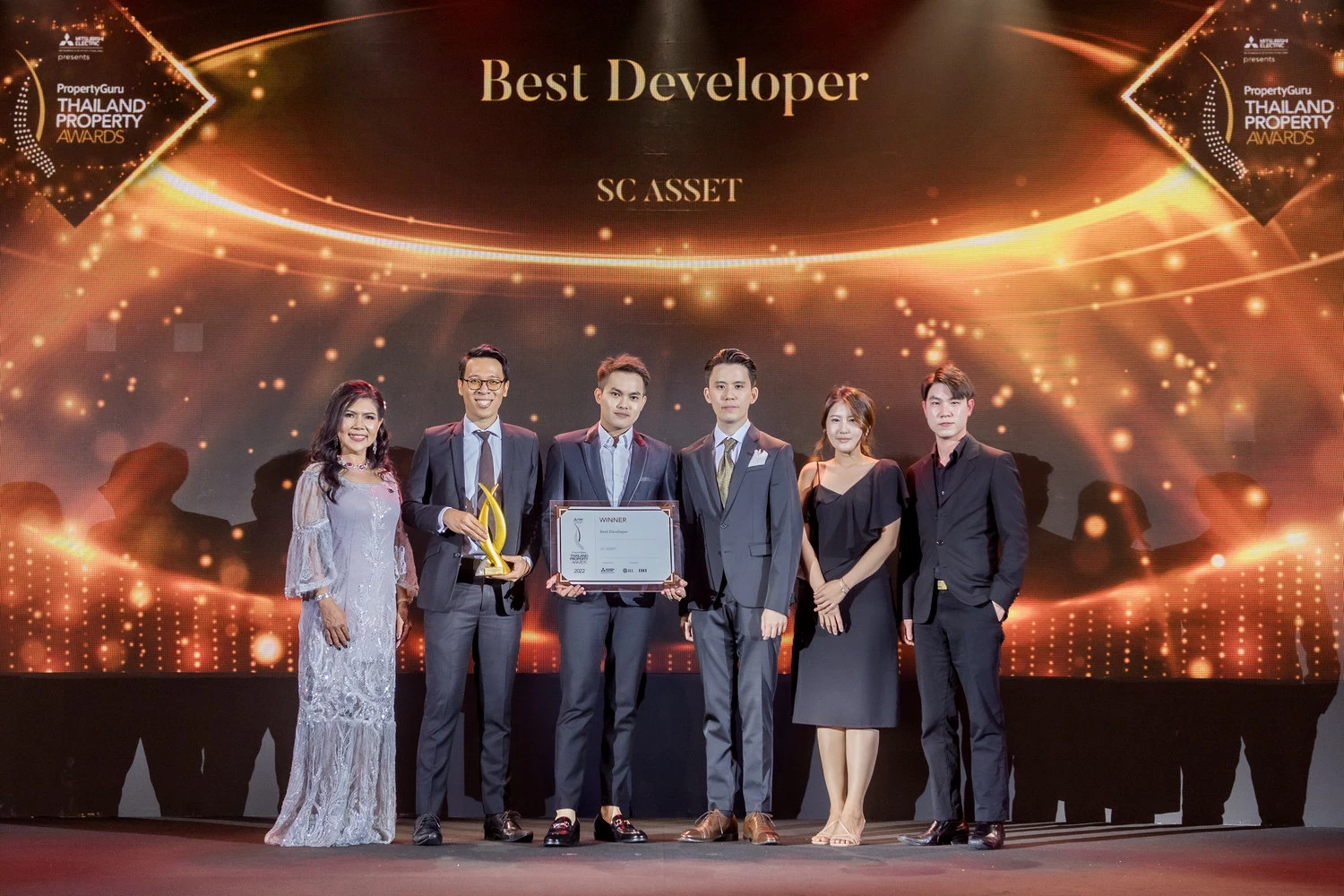
SC Asset won Best Developer, a title the company had last won in 2015. SC Asset garnered a total of five wins, including titles for its projects Reference Sathorn – Wongwianyai, The Gentry Kasetnawamin, and Venue ID Motorway Rama 9.
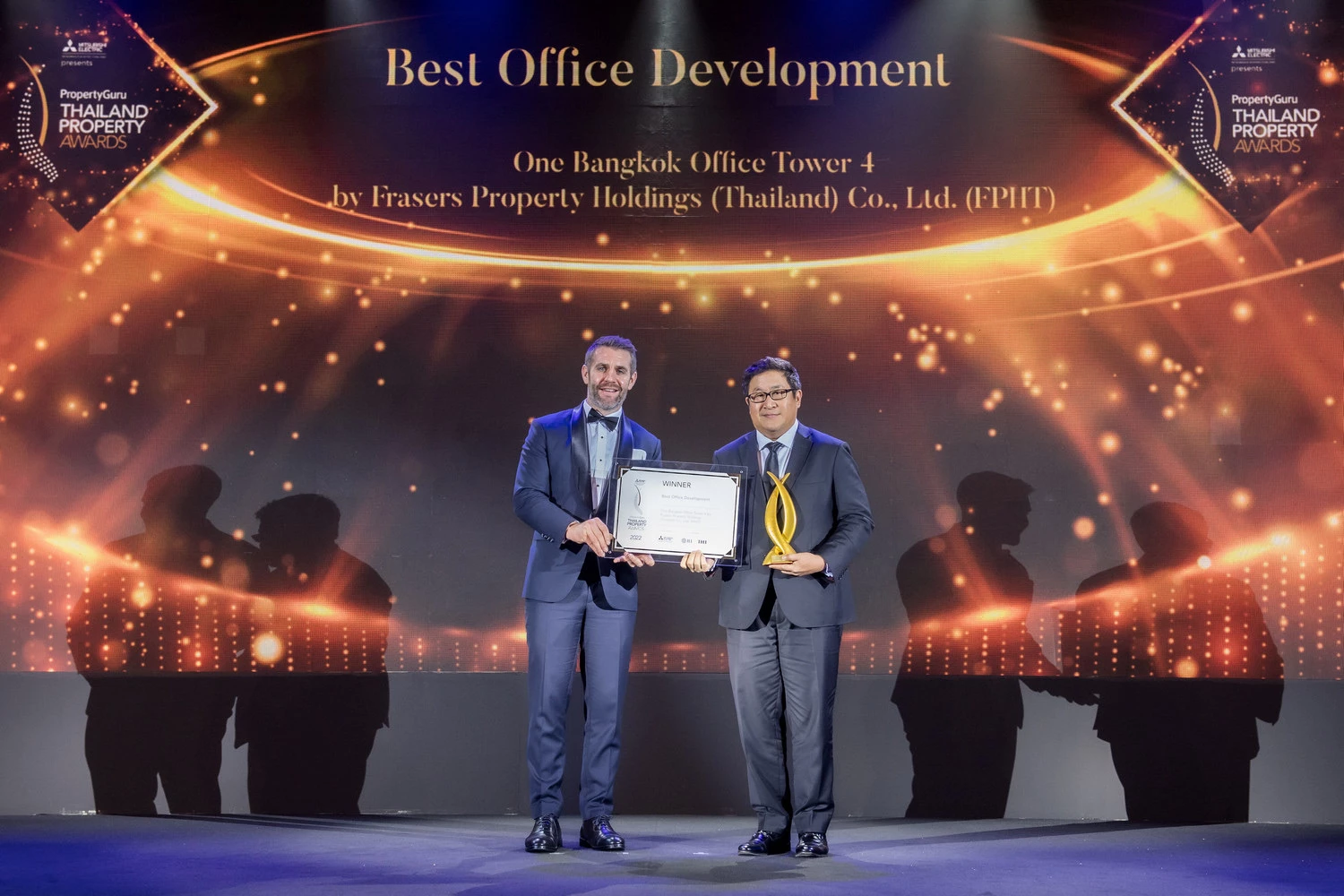
Frasers Property Holdings (Thailand) Co., Ltd. (FPHT) won the never-before-presented title of Best Mega Mixed Use Development for the integrated district One Bangkok. The large project includes One Bangkok Office Tower 4, which won the Best Office Development title.
Frasers Property Industrial (Thailand) Company Limited won Best Industrial Development for the Havi Thailand Cold Chain and Food Distribution Center while the company itself was honoured with the Special Recognition in Sustainable Design and Construction.
Former Best Developer award winner Magnolia Quality Development Corporation Limited garnered two titles, including the coveted Best Condo Development (Thailand) award, for The Aspen Tree at The Forestias. Whizdom the Forestias by MQDC Town Royal Place Limited was honoured Best Pet-Friendly Residential Development.
The Best Housing Development (Thailand) title went to Aquella Lakeside Villas, one of three wins for Paradise Group. Fynn Development Co., Ltd also gained three wins, including the Best Boutique Developer award, plus titles for the project Fynn Asoke.
Other winners in the Developer categories include Comfort Max, the first recipient of the Best Mini Factory Developer title, and Aestima Asset Company Limited, the recipient of this year’s Best Breakthrough Developer title.
Outstanding real estate companies from the countryside to the coast were honoured at the gala celebration. Tropical Life Real Estate was named Best Developer (Samui) while Pearl Island Property Co., Ltd. won the Best Developer (Phuket) title. The Riviera Group won the Best Developer (Eastern Seaboard) title.
Asst. Prof. Kessara Thanyalakpark, managing director of Sena Development Public Company Limited, received the Thailand Real Estate Personality of the Year award. The editors of Property Report by PropertyGuru, the official magazine of the Awards, selected her to receive the award for her innovations and initiatives in the space of renewable energy and carbon neutrality.
Accepting her award, Asst. Prof. Kessara Thanyalakpark encouraged peers to make climate action a priority in their endeavours. She said: “On behalf of Sena Development, we would like to thank you, PropertyGuru, the organiser of the Thailand Property Awards. This is the most respected and longest-running real estate awards programme in the industry. This prestigious award helps raise the bar for real estate to provide quality housing to consumers, ensuring the quality of life and environmental protection. PropertyGuru is the leading resource for assisting home buyers in gaining insight and assisting domestic and international investors in making decisions. We are so honoured to receive this award and would like to take this opportunity to congratulate all the other companies that received awards as well.”
Hari V Krishnan, CEO and managing director of PropertyGuru Group, said: “PropertyGuru has deepened its commitment to the Thailand property market over the last year as part of the company’s journey towards becoming Southeast Asia’s Trust Platform. As we continue to explore the best proptech solutions for Thailand, the Awards remain the benchmarks of excellence for the country’s developers and projects. In this, the 17th year of the PropertyGuru Thailand Property Awards, we congratulate all the companies that have created these dream homes and desirable developments.”
Jules Kay, general manager of PropertyGuru Asia Property Awards and Events, said: “As part of the region’s most established and respected real estate awards series, the PropertyGuru Thailand Property Awards have recognised industry achievements through numerous market challenges, as well as during periods of impressive economic growth. After 17 years, the Awards still stand as a testament to Thai developers’ determination and showcase their ability to face challenges head-on, putting the needs of property seekers first. As Thailand emerges from the global pandemic, we are proud to celebrate the strength and resilience of this year’s Winners and Highly Commended awardees.”
The list of award recipients was decided by an independent panel of judges.
The selection process was made fair, transparent and credible under the supervision of Paul Ashburn, co-managing partner of HLB Thailand, member of HLB International Real Estate Group.
Established in 2005, the PropertyGuru Thailand Property Awards is one of the longest-running real estate awards programmes in Asia.




 Apart from the economic structure crisis, Sanan cited three other crises:
 Deputy Prime Minister and Energy Minister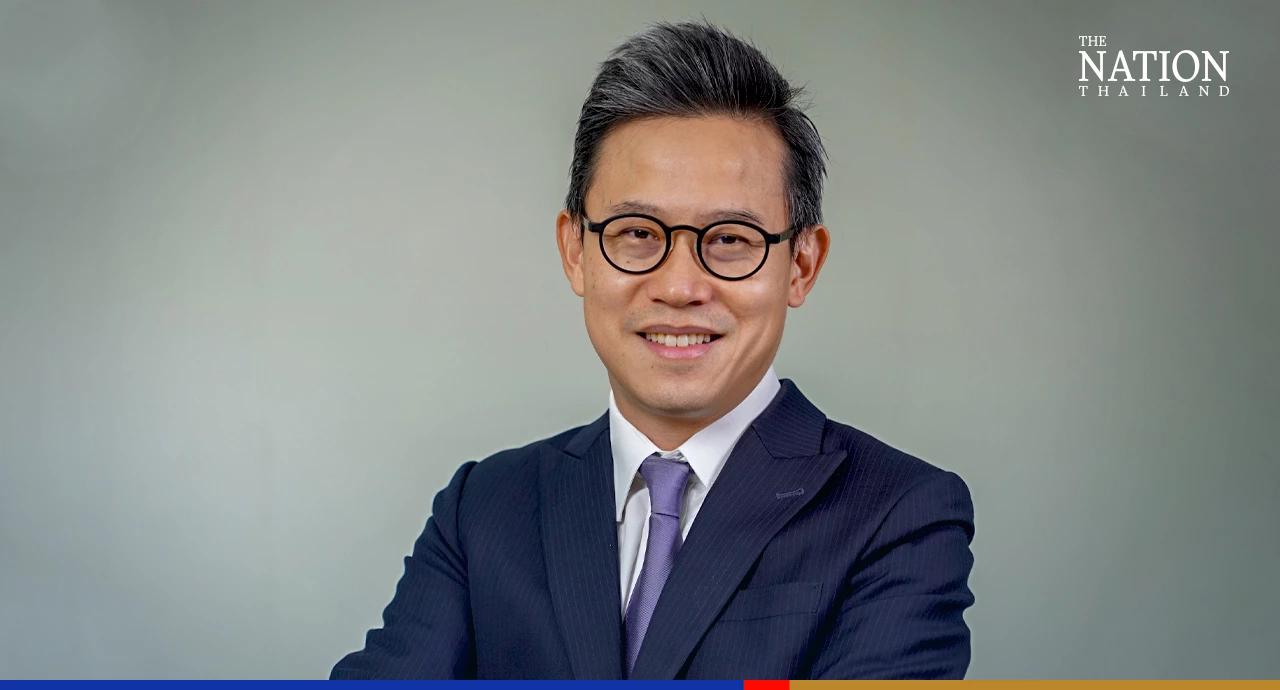




 SootinClaimon.Com