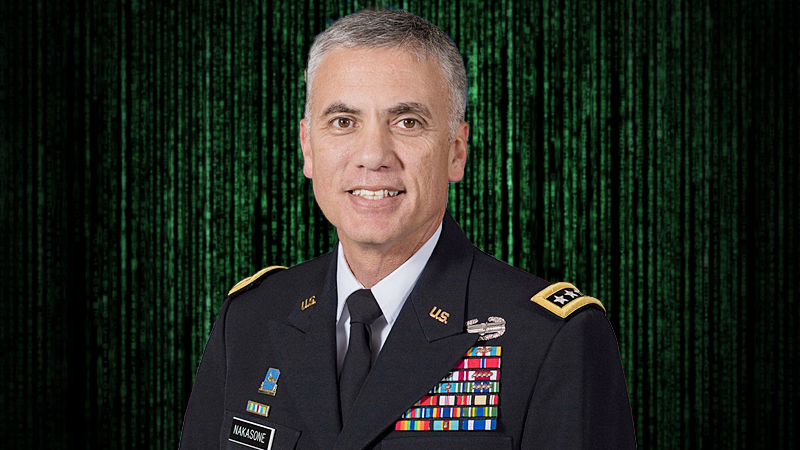
Two nights of black & white truffle delights at VIE Hotel Bangkok #ศาสตร์เกษตรดินปุ๋ย

#ศาสตร์เกษตรดินปุ๋ย : ขอบคุณแหล่งข้อมูล : หนังสือพิมพ์ The Nation

https://www.nationthailand.com/food/30379926?utm_source=category&utm_medium=internal_referral

Two nights of black & white truffle delights at VIE Hotel Bangkok

Dec 27. 2019
By THE NATION

A 7-course feast that will tease, tantalise and delight the senses will be prepared by famed 2-Michelin Star Chef Thierry Drapeau at La VIE Bistronomy restaurant, featuring absolutely delicious black truffles from France and white truffles from Italy on January 15 and 16, 2020 (Wednesday and Thursday).

The exquisite truffle is a rare and precious ingredient and adds an essential quality to dishes made by a master chef, with an aroma and taste that gourmands pursue around the world.

Both the black truffle and white truffle are extremely high-value fungi harvested in late autumn and winter. While the black truffle, from France, is known for a strong and lingering musky flavor, the white truffle is a bit less earthy though with tints of garlic.

Chef Drapeau, from France, has been long hailed as the pioneer of gastronomy in Southeast Asia.

Emphasising natural floral and herbal seasoning that brings out the superb flavor of the meat and fish in his dishes, the evenings’ truffle-focused creations will be a sheer delight for the palate, prepared by an internationally lauded chef who explains that his whole mind and memory are filled with the unforgettable experience of cooking.

This 7-course Black and White Truffles Wine Dinner will be complemented by an excellent wine pairing arranged by La VIE Bistronomy’s new highly experienced Wine Director, Lucas Girod, from Argentina.

Expect a menu of marvelous courses beginning with an Italian creamy panacotta, made with wild mushrooms, Parmesan and black truffle.

This is followed by fresh artichoke also with rich black truffle. From here, Northern French scallops and white truffle take the table, and are countered by a dish of Mediterranean seabass, with an infusion of black truffle.

Roasted veal returns diners to the intensely flavored white truffle with celery and calamansi citrus.

A special savory dish entitled Le Vacherin Thierry Drapeau makes its delicious mark in your memory next, and lastly an incredible La Chocolat Valrhona, with Griotte cherry and white truffle, is served for an unforgettable dessert.

This is a unique experience in Bangkok and not one anyone who loves delicious dining should miss, the rich taste of truffles and fine wine. Our new Wine Director, the highly respected Lucas Girod from Argentina, has used his formidable skills as an expert sommelier to carefully pair the most excellent wines with this extraordinary menu.

Menu of the seven-course Michelin Star Set Dinner, served at 6:30 pm, comprises

Le Champignon Sauvage

Italian creamy Panacotta, wild mushroom, parmesan and black truffle

Champagne Deutz ‘’Brut Rose’’, N.V

L’Artichaud

Fresh artichoke in a different way, black truffle

Sancerre White, Domaine Pre-Semele ‘’Cuvee Zeste’’ 2016

La Noix de Saint Jacques

Scallops ‘’A la Plancha” from the North of France, fennel confit, white truffle

Chablis ‘’Cuvee de la Butte’’ Maison Verget 2017

Le Bar de Ligne

Mediterranean sea bass, infusion of black truffle

Volnay 1er Cru “Carelle Sous La Chapelle” Domaine Violot Guillemard 2015

Le Veau

Roasted veal, celery, calamansi citrus and white truffle

Saint Emilion Grand Cru Classe, Château Barde Haut 2009

Le Vacherin Thierry Drapeau

A delight from a small village in the mountains, black truffle

La surprise de Lucas, our Wine Director

Le Chocolat Valrhona

Griotte cherry, white truffle

Vin de Constance, Klein Constantia 2004

2-Michelin Star Chef Thierry Drapeau is the chef and co-owner of the Thierry Drapeau Logis de Chabotterie restaurant in Saint-Sulpice-le-Verdon, in the Pays de la Loire region of France.

Originally from Nantes, Drapeau fell in love with the art of cooking as a boy while watching his father prepare the family meal every Sunday morning.

He embarked on his own culinary career as Chef de Partie with Bateau Ivre at the age of 21. With a personality both modest and determined, he worked attentively alongside a number of renowned chefs, setting the highest standards possible for his own cooking.

Ever ambitious, Chef Drapeau eventually opened his own restaurant, the Thierry Drapeau Logis de Chabotterie. Within a decade, in 2011, he received the prestigious recognition of two Michelin stars.

Chef Drapeau’s inspired style is called a “cuisine of the soil”, using local produce from the land and sea nearby and creating highly concentrated tastes. Only the highest quality produce is used. His authentic jus-based dishes are low in butter and so maintain a lightness with very distinct and rich flavours.

According to him, a dish must be worked on like a wine. The chef must take his time to discover a balance which combines herbaceous and floral notes, finding the perfect relationship between the acidity, the bitterness and the sweetness.

2-Michelin starred Chef Drapeau will be at La VIE Bistronomy for two delightful evenings of dinners on 15 and 16 January 2020.

Special desserts for THAI passengers to usher in New Year #ศาสตร์เกษตรดินปุ๋ย

#ศาสตร์เกษตรดินปุ๋ย : ขอบคุณแหล่งข้อมูล : หนังสือพิมพ์ The Nation

https://www.nationthailand.com/food/30379908?utm_source=category&utm_medium=internal_referral

Special desserts for THAI passengers to usher in New Year

Dec 27. 2019
By THE NATION

Thai Airways International Pcl (THAI) is serving passengers with special desserts to celebrate the New Year on its flights on December 31, 2019 and January 1, 2020.

On international flights, special desserts will be served during lunch and dinner on all flights departing from Bangkok (except flights to Kuala Lumpur and the Indian and Middle East routes).

Royal First passengers will be served black currant cream with vanilla mousse on puff and sugar dough with raspberry sauce served with honey vanilla ice cream and crumble.

Royal Silk passengers will be served Mont Blanc, black currant custard, and vanilla custard. Economy passengers will be served vanilla blueberry cake.

On domestic flights, special desserts are available on both inbound and outbound flights except the TG226 Phuket-Bangkok flight.

Royal Silk passengers will be served Chocolate Mont Blanc.

Economy passengers will be served tiramisu on outbound flights and New Year cupcakes on inbound flights (except the TG226 Phuket-Bangkok flight).

Dining out on longans #ศาสตร์เกษตรดินปุ๋ย

#ศาสตร์เกษตรดินปุ๋ย : ขอบคุณแหล่งข้อมูล : หนังสือพิมพ์ The Nation

https://www.nationthailand.com/travel/30379906?utm_source=category&utm_medium=internal_referral

Dining out on longans

Dec 27. 2019
By The Nation

Tourists who cannot resist sweet and juicy fruits have a good reason to head to Kanchanaburi province over the next couple of weeks as Maple Gardens, located on the 323 road (Kanchanaburi – Sai Yok), near Ban Kao Intersection, a short drive from Kanchanaburi Rajabhat University, is hosting a longan buffet in its flower gardens until January 12. Most of the longans grown in Thailand are exported, so this is indeed a rare treat for anyone who likes them.

San, the owner of the Maple Gardens, is inviting all comers to munch on as much fruit as they can stomach while walking around the beautiful gardens filled with flowers in all their cool season finery. A range of agricultural products including ornamental flowers and various fruits are on sale. Admission to the garden complete with the longan buffet is Bt99 per adults with kids under 12 allowed of free. Pets are welcome but must be kept under control and on a leash at all times.

Heritage destroyed: why the ASA is trying to raise consciousness of preserving our history #ศาสตร์เกษตรดินปุ๋ย

#ศาสตร์เกษตรดินปุ๋ย : ขอบคุณแหล่งข้อมูล : หนังสือพิมพ์ The Nation

https://www.nationthailand.com/lifestyle/30379911?utm_source=category&utm_medium=internal_referral

Heritage destroyed: why the ASA is trying to raise consciousness of preserving our history

Dec 28. 2019
By Kitchana Lersakvanitchakul
Special to The Nation

In recent years, Bangkok has been busy demolishing its historic buildings with the sad result that some of them are gone for good, taking them with their historical and cultural heritage.

Take for example, the British Embassy in Ploenchit, which was knocked down after being sold Bt18.7 billion to a joint-venture consortium of Hongkong Land, a member of the Jardine Matheson Group, and Central Group.

The colonial-era embassy was built in 1922 in the reign of King Rama VI and considered one of the prime properties in the Wireless Road area.

Mahakan Fort, which was built in 1783 to protect the new capital from potential invasions and home to nearly 300 people who shared walls and pride in their history, has been turned into a public park.

Tourists may know it as Bangkok’s “living heritage museum” due to each home putting up signs, posters, and newspaper articles on their doors, telling their stories.

The planned 14-kilometre-long Chao Phraya Riverside Promenade will be a major risk to the area’s environment, the river’s ecology, history and culture, and to water transport.

The construction of a concrete walkway out into the river would destroy its history and status as a cultural symbol of the country.

The Association of Siamese Architects under royal patronage (ASA) is bringing up the demolition of the British Embassy, the eviction of Mahakan Fort Community, and the construction of the promenade extension above the river – the most discussed issues on Facebook – in its “10 Most Controversial Topics” section of the 34th edition of “Architect ‘20”, the largest building technology exposition in Asean, which will be held at Challenger Halls 1-3, Impact Arena, Exhibition and Convention Centre, Muang Thong Thani, from April 28 to May 3.

“We will catch up with the 10 hot heritage issues on social media these days,” says Dr Vasu Poshyanandana, the chairperson of the Architect ’20 committee, during the recent press conference at Nai Lert Park Heritage Home.

Dr Vasu Poshyanandana

Dr Vasu Poshyanandana

“We will help people to better understand heritage preservation and give them good and successful examples, so that they have a new perspective to find the wayout. When you are back home, you look for your heritage and think how you will keep up it and make it useful. We would like everyone to think that the heritage conservation is really useful for us. It isn’t just about maintaining old buildings.”

“Refocus Heritage” is the theme of this edition. It has been chosen to bring back the architectural heritage from the past, as well as the conservation and maintenance of heritage sites for the next generations.

Today, the conservation of architecture is the new mission of the association.

“This theme aims to raise public awareness and understanding on the concept of ‘heritage’ across several dimensions. Many might suppose that conservation and maintenance of heritage sites is limited to government officers or conservators, and therefore is not relevant to them. However, it is present in everyday life and concerns everyone regardless of the jobs and roles that we hold. The owner of an old house in need of a maintenance, for example, will need information on the right materials and construction to use, as well as the costs that will be incurred. Similarly, the renovation of an old building to create new business opportunity, can generate value added for the community and society, as we can see from the several creative communities that have risen from old quarters throughout the country,” says Dr Vasu.

“It depends on how we think of that word, heritage. I think that some people have the negative thinking of two Thai words, ‘boran’ (ancient) and ‘kao’ (old). If the ancient place is very valuable, we think that it is a far cry from our life and is the national treasure, which will be under the responsibility of the Fine Arts Department. We feel afraid of doing anything to that ancient place and end up by demolishing it. So, we would like everyone to forget those two words and look at heritage instead. The heritage is property that is passed down to an heir, and we will pass it on the next generation. But, how will make these heritages sustainable and useful? That is what we need to communicate,” he comments.

Architect ’20 will be spread over 75,000 square metres and divided into two sections.

The first section houses exhibitions from more than 850 international exhibitors, while the other will be home to thematic exhibitions by ASA covering 5,000 square metres. The latter is constructed with environment-friendly materials and adopts a contemporary design, representing the forms of the past.

Visitors will enjoy different exhibitions, such as “Workmanship and Heritage Exhibition” where rare traditional materials and technology in construction are displayed.

Curious architectural knowledge from the past centuries is also on show in this section. The film screenings section will show 63 heritage short films from 63 interviewees on the topic of heritage site conservation. The screenings will take place in a theatre made from bamboo – a local savoir-faire of the past.

“Heritage Crisis on Online Platform Exhibition” deals with the hot topics on social media including the dismantling of heritage sites, uninformed maintenance or renovation of temples. It aims to raise awareness of and invite the public to question the current heritage events, as well as provide relevant professional information.

“We will create a walking route to lead visitors more easily into several stories and information covering such topics as ‘What is the definition of ‘Refocus Heritage’?’, ‘What does Thai society think about the heritage?’and ‘How will we maintain and manage those heritages?,” says Dr Vasu.

The annual “Architecture Competition” for this event will be raised a level to the National Architecture Competition on the theme

“Everyday Heritage”. The organisers aim to include every sector of the public, especially school students with creative ideas, and for the competition to serve as a platform for further development.

Other showcases at the event include “2020 ASA Award Exhibition”, where the works of ASA-award recipients are displayed; “Art and Architectural Conservation Award Exhibition”, whose criteria this year has been developed to align with the Unesco Asia-Pacific Awards, and “Heritage in Danger Exhibition”, where local architecture students are given space to exhibit their ideas on the recovery and maintenance of existing heritage buildings in areas neighboring their schools.

Other activities include ASA Clinic (Mobaan ASA), where architects, engineers and other professionals are available for advice and information on design and construction; ASA Place, an activity area for the public, where talks and workshops are available in rotation throughout the 6 days of the event.

Demonstrations on the latest technology for conservation including 3-D object scan are also available.

Visitors, especially architects, can join ASA Forum for talks on the newest happenings in the international architecture scene. ASA Club returns as always for ASA members to gather and mingle. ASA shop and ASA Book Club are also back with the newest titles from all over the world and book launches.

The theme “Refocus Heritage” invites the public to look back on the heritage, as well as sharpen their vision and awareness on the topic. The theme also deals with the flexibility of the coexistence between society and the heritage sites, in order to preserve the values of the old buildings and the vivacity of their contemporary counterparts.

The Expo aims to widen the public’s focus on architecture and lend dimensions to the vision of visitors of various age and background, encouraging them to re-consider their ownership of the heritage, and their contribution in the conservation and legacy of these valuables heritage of the future.

“The alertness of the heritage conservation in Thailand is still following behind other countries in Asia. The more we have our heritage buildings, the more they are destroyed,” concludes Dr Vasu.

Donlaphatchai stays in control in Taiwan #ศาสตร์เกษตรดินปุ๋ย

#ศาสตร์เกษตรดินปุ๋ย : ขอบคุณแหล่งข้อมูล : หนังสือพิมพ์ The Nation

https://www.nationthailand.com/sport/30379927?utm_source=category&utm_medium=internal_referral

Donlaphatchai stays in control in Taiwan

Dec 28. 2019
Donlaphatchai Niyomchon

Donlaphatchai Niyomchon
By THE NATION

 Overnight leader Donlaphatchai Niyomchon of Thailand stayed on track for his maiden Asian Development Tour (ADT) title after battling to an even-par 72 to retain his one-shot edge at the halfway stage of the Taifong Open on Friday.


The 29-year-old Thai, who had opened his campaign with a 67, marked his card with four birdies against two bogeys and a double-bogey in blustery conditions to remain atop the leaderboard with a five-under-par 139 total at the highly acclaimed Taifong Golf Club.

Local prospect Tseng Tzu-hsuan and Thai teenager Atiruj Winaicharoenchai returned with matching rounds of 69s to share second place at the US$160,000 event, which is celebrating its sixth consecutive edition on the ADT this week.

Thailand’s Itthipat Buranatanyarat battled to a 72 to lurk two shots off the pace in fourth place alongside compatriot Peradol Panyathanasedh (69), Japan’s Daisuke Yasumoto (68), Singapore’s Gregory Foo (71), local veteran Lien Lu-sen (68) and Korea’s Seung Park (71).

“I fought well today. It was windy and cold out there, very different from yesterday. I didn’t putt as well as I did yesterday but I’m happy to finish well with two birdies in my last three holes,” said Donlaphatchai, who sits in 94th place on the Order of Merit.

Playing in only his seventh start on the ADT this year, Donlaphatchai needs a victory at the season finale to give himself a chance at breaking into top-seven on the final rankings and secure his Asian Tour card for 2020.

Tseng, also chasing for his first ADT win, said: “I hit a lot of greens today. That helped a lot. I made 30 putts in total but I think it’s still alright because the greens are really challenging here. The pin positions are difficult too. I am happy with the way I played today.”

Atiruj, who has claimed three top-five finishes on the ADT this season to sit in 24th place on the Order of Merit, kept up his chase for an Asian Tour card by firing five birdies against two bogeys for a commendable 69.

“I hit it close to the pins and I hit a lot of greens. It was windy and the greens are firm. The game’s trending in the right direction. I hit a very good second shot on the par-five 17th to about 10 feet. Missed the eagle chance there but it’s still a good hole,” said the 19-year-old, who is making his debut appearance in the Taifong Open this week.

A total of 63 players, including one local amateur, survived the halfway cut set at four-over-par 148 in the popular event, which was inaugurated as the richest event on the ADT in 2014.

Defending champion Chan Shih-chang of Chinese Taipei and ADT Order of Merit leader Naoki Sekito of Japan made the cut right on the mark after registering identical rounds of 74 at the 2019 ADT season finale.

The leading seven players, not otherwise exempted, on the final 2019 ADT Order of Merit following the conclusion of the Taifong Open on Sunday will earn their Asian Tour cards for the 2020 season.

Leading round two scores:

139 – Donlaphatchai Niyomchon 67 72

140 – Tseng Tzu-hsuan 71 69, Atiruj Winaicharoenchai 71 69

141 – Seung Park 70 71, Itthipat Buranatanyarat 69 72, Gregory Foo 70 71, Lien Lu-sen 73 68, Peradol Panyathanasedh 72 69, Daisuke Yasumoto 73 68

142 – Lee Chieh-po 71 71, Lin Wen-ko 70 72, Wang Wei-lun 73 69, Brett Munson 74 68

143 – Chinnarat Phadungsil 71 72, David Shen 68 75

144 – Koh Deng Shan 74 70, Nirun Sae-Ueng 72 72, Wolmer Murillo 68 76, Sung Mao-chang 71 73, Huang Yi-tseng 75 69, Kwanchai Tannin 71 73, Ho Yu-cheng 71 73

145 – Yeh Wei-tze 75 70, Kazuki Higa 70 75, Yeh Yu-chen 72 73, Naras Luangphetcharaporn 75 70, Tarik Can 74 71, Sam Gillis 74 71

146 – Lin Yung-lung 74 72, Sattaya Supupramai 74 72, Jesse Yap 73 73, Abdul Hadi 71 75, Hung Chien-yao 70 76, Matt Killen 75 71

All dressed up in style – Thai style, that is #ศาสตร์เกษตรดินปุ๋ย

#ศาสตร์เกษตรดินปุ๋ย : ขอบคุณแหล่งข้อมูล : หนังสือพิมพ์ The Nation

https://www.nationthailand.com/sport/30379907?utm_source=category&utm_medium=internal_referral

All dressed up in style – Thai style, that is

Dec 27. 2019
Photo Credit to Lcfcthai.com

Photo Credit to Lcfcthai.com
By The Nation

Players of Leicester City FC donned jackets made by residents of Kiriwong village in Nakhon Sri Thammarat province before the big match against Liverpool FC on December 27 at King Power Stadium.

The jackets were made from natural materials such as leaves, bark and heartwood creating beautiful colours and patterns. Thailand’s flag was embroidered on the left sleeve while the right sleeves sported the Union Jack.

Even though Leicester were beaten by Liverpool 0-4, footballers from all over the world still had an opportunity to appreciate the beauty of Thai traditional art. The club had 100 jackets made for the event.

U.S. CyberCom contemplates information warfare to counter Russian interference in the 2020 election #ศาสตร์เกษตรดินปุ๋ย

#ศาสตร์เกษตรดินปุ๋ย : ขอบคุณแหล่งข้อมูล : หนังสือพิมพ์ The Nation

https://www.nationthailand.com/edandtech/30379905?utm_source=category&utm_medium=internal_referral

U.S. CyberCom contemplates information warfare to counter Russian interference in the 2020 election

Dec 27. 2019
By The Washington Post · Ellen Nakashima 

WASHINGTON – Military cyber officials are developing information warfare tactics that could be deployed against senior Russian officials and oligarchs if Moscow tries to interfere in the 2020 U.S. elections through hacking election systems or sowing widespread discord, according to current and former U.S. officials.

One option being explored by U.S. Cyber Command would target senior leadership and Russian elites, though likely not President Vladimir Putin, which would be considered too provocative, said the current and former officials who spoke on the condition of anonymity because of the issue’s sensitivity. The idea would be to show that the target’s sensitive, personal data could be hit if the interference did not stop, though officials declined to be more specific.

“When the Russians put implants into an electric grid, it means they’re making a credible showing that they have the ability to hurt you if things escalate,” said Bobby Chesney, a law professor at the University of Texas at Austin. “What may be contemplated here is an individualized version of that, not unlike individually targeted economic sanctions. It’s sending credible signals to key decision-makers that they are vulnerable if they take certain adversarial actions.”

Cyber Command and officials at the Pentagon declined to comment.

The military has long used psychological operations – dropping hundreds of thousands of leaflets in Iraq, for instance, to persuade Iraqi soldiers to surrender to the U.S.-led coalition during the Gulf War. But the Internet, social media and smartphones have vastly extended the reach and precision of such tactics.

The development comes as numerous agencies within the Trump administration seek to ensure the United States is shielded against foreign efforts to disrupt the 2020 elections, even as President Donald Trump himself has cast doubt on or belittled his own intelligence community’s finding of Russian interference in 2016.

The intelligence community last month issued a classified update – a “national intelligence estimate” – assessing that Russia’s main goal in the 2020 campaign continues to be to sow discord. “It’s always been about exacerbating fault lines in our society,” said one senior U.S. official.

In the past year, Congress and the Trump administration have eased restraints on the military’s use of cyber-operations to thwart foreign adversaries. The push is part of a move by military officials such as Gen. Paul Nakasone, who heads both CyberCom and the National Security Agency, the government’s powerful electronic surveillance arm, to weave cyber-offensive capabilities into military operations.

The 10-year-old command’s foray into influence operations reflects an evolution in thinking. “It’s a really big deal because we have not done a good job in the past of integrating traditional information warfare with cyber-operations,” Chesney said. “But as Russia has demonstrated, these two are increasingly inseparable in practice.”

While other military organizations, such as Joint Special Operations Command, also have cyber and information warfare capabilities, CyberCom is the first to turn such powers toward combating election interference.

“In 332 days, our nation is going to elect a president,” Nakasone told a defense forum earlier this month. “We can’t let up. This is something we cannot be episodic about. The defense of our nation, the defense of our elections, is something that will be every single day for as long as I can see into the future.”

The options being considered build on an operation CyberCom undertook last fall in the run-up to the midterm elections. Beginning in October 2018, CyberCom used emails, pop-ups and texts to target Russian Internet “trolls” who were seeding disinformation on U.S. social media platforms. The trolls worked for the Internet Research Agency, a private entity controlled by a Russian oligarch close to Putin. CyberCom also messaged hackers working for Russian military intelligence, indicating their identities were known and could be publicized. Although the command did not sign its messages, the Americans knew there would be no mistaking who had sent them, officials said at the time.

When the trolls persisted, CyberCom, beginning on Election Day and for at least two days afterward, knocked their servers offline, The Washington Post previously reported. The Americans also sent messages aimed at spreading confusion and discord among IRA operatives, including computer system administrators. Some personnel were so perturbed that they launched an internal investigation to root out what they thought were insiders leaking personnel information, according to U.S. officials.

The new options contemplate targeting key leaders in the security services and the military and potentially some oligarchs. The messaging would be accompanied by a limited cyber-operation that demonstrates the Americans’ access to a particular system or account and the capability to inflict a cost, said individuals familiar with the matter. The message would implicitly warn the target that if the election interference did not cease, there would be consequences.

The options do not envision any attempt to influence Russian society at large, which officials saw as having limited success given Putin’s control of the country, including much of the media.

Some see the new options as potentially effective at altering a key official’s decision-making calculus without being hugely escalatory because they do not seek to foment a popular uprising, which is Putin’s big fear, analysts note.

Another possibility involves disinformation aimed at exploiting rivalries within the Russian government and power elites. In 2016, National Security Council aides in the Obama administration developed cyber options against Russia similar to those being contemplated by CyberCom now, but “no one had an appetite for it,” a former senior official said.

“There is a night-and-day difference between 2016 and this,” said a second former U.S. official, who said that CyberCom’s thinking several years ago was much more limited and conventional.

Any operation would be reviewed by other agencies, including the State Department and CIA, and require the defense secretary’s approval. It would be aligned with other potential U.S. efforts, such as sanctions or indictments, officials said.

Cyber-operations alone are usually not sufficient to transform an adversary’s behavior. “It can serve a useful message of ‘We’re watching and be careful not to go further,’ ” said Michael Carpenter, a former senior defense policy official in the Obama administration. But generally, he said, it is likely to be more effective when used with other tools such as sanctions – especially those also backed by allies.

Cyber Command got a boost in August 2018 when Congress clarified that cyber actions that fall below the use of force – what practitioners call “the gray zone” – can be conducted as “traditional military activities” as distinct from covert action. That was a key change that meant that clandestine operations such as the IRA takedown last fall, for instance, would not get delayed by disputes about whether they were covert operations.

Also enhancing CyberCom’s flexibility was Trump’s signing the following month of a national security presidential memorandum that revised the process by which cyber-operations are vetted and approved, leaving the final decision with the defense secretary even if other agencies object.

No single office within the Defense Department oversees cyber, electronic warfare and psychological operations. So this month, Congress created a Senate-confirmed position of principal information operations adviser to coordinate strategy and policy in this area across the Pentagon and with other agencies.

Other former U.S. officials are wary of CyberCom’s move into information operations. “I’m not a big fan of the Department of Defense doing messaging operations,” said Richard Stengel, a former undersecretary of state for public diplomacy in the Obama administration. “I’m even skeptical of the State Department doing messaging operations. . . . I just don’t think that’s something we’re good at.”

Meanwhile the Marine Corps has created a position of deputy commandant for information to build information warfare capability. Army Cyber Command has integrated cyber, electronic warfare and information operations into its mission. The 16th Air Force cyber unit is doing the same.

Among the things that cyber officials are discussing are operations that expose adversaries’ malign behavior.

The United States already has experimented with such disclosures, in 2014 releasing satellite images and other sensitive intelligence that showed Moscow had trained and equipped pro-Russian rebels in Ukraine responsible for shooting down a Malaysian airliner, killing 298 civilians. Such efforts could be expanded, officials say, to educate a broader audience about the actions of adversaries.

“Basically, it’s a war of strategic narrative,” said Sean McFate, a foreign policy expert and author of “The New Rules of War.” “We need to get into that domain.”

We picked the 10 most-influential technologies of the decade. It isn’t all bad. #ศาสตร์เกษตรดินปุ๋ย

#ศาสตร์เกษตรดินปุ๋ย : ขอบคุณแหล่งข้อมูล : หนังสือพิมพ์ The Nation

https://www.nationthailand.com/edandtech/30379902?utm_source=category&utm_medium=internal_referral

We picked the 10 most-influential technologies of the decade. It isn’t all bad.

Dec 27. 2019
The driver app on the windshield of an UberX in 2014. MUST CREDIT: photo for The Washington Post by Evelyn Hockstein.

The driver app on the windshield of an UberX in 2014. MUST CREDIT: photo for The Washington Post by Evelyn Hockstein.
By The Washington Post · Geoffrey A. Fowler

A decade ago, we typed on computers. Now we talk with them. We used to take taxis. Now an app picks a stranger’s car to ride. We used to meet people in bars. Now we swipe on photos of their faces.

As we round the corner to 2020, I’ve been tallying the ways we use technology that would have made zero sense in 2010. Which had the biggest impact? There was no iconic new product of the 2010s – no iPod or Walkman. Yet so much changed, bringing us new powers, new peril and a dash of dystopia.

This decade made life something that happens on a screen. The smartphone is where we communicate with family, do work, record memories and find entertainment. It was invented in 2007 so disqualified from my list, but in the past decade the smartphone certainly reinvented us – it powers half of the technologies on this list.

This is also the decade that computers became the boss of you. In the case of Uber drivers and other gig-economy workers, software literally tells them what work to do. Algorithms now make decisions that shape the daily life of any person with a phone. Computers decide what we read and watch. Apps hijack our attention for the promise of more “likes.” Just by searching Google, using a map or talking to Alexa, we feed computers personal data that trains artificial intelligence – and fuels businesses that have made us into a product.

With such a central role in our lives, Silicon Valley and Seattle firms this decade became the world’s most valuable companies. Their leap to trillion-dollar valuations was staggering: In January 2010, Apple was worth about $194 billion. Now it’s worth more than six times that. Over that same period, Facebook’s value multiplied about 41 times.

How will we remember the 2010s? At the beginning, we were pretty optimistic about tech. “Sharing economy” companies such as Airbnb actually seemed to be about sharing. Lots of people really believed Facebook would bring the world together. Lately, though, the view has darkened: We’re more aware of the ways tech companies are spying on us and shirking their responsibilities.

Today, most of the technologies on this list can be seen both as a tool and tyrant. One thing we know better going into the 2020s: With great power comes great responsibility.


– – –

– Instragram’s likes. Facebook’s Instagram helped make photography everyone’s hobby not just by giving us filters, but by making photos easy to share. Since it launched in 2010, Instagram evolved new forms of self-expression – and new ways for tech to hijack our brains.

The app made us voyeurs. It turned living into a performance. It commodified our faces, bodies, travels and aesthetic into “brands” that some influencers have even developed into businesses. The hunt for Gram-worthy vacation shots has damaged once-tranquil destinations and led to deaths by selfie.

How did it hook a billion-plus people? Instagram’s most powerful tool is the heart-shaped like, an expression of somebody’s admiration for a post. The app doles them out like a slot machine, keeping us coming back and creating new posts. (Psychologists call these dopamine hits intermittent variable rewards.) “Do it for the Gram!” is really, “Do it for the likes.”

It’s no wonder that some people report using the app contributes to depression and unhealthy body image. Instagram recently began testing not displaying Like tallies in the hopes of creating a “less pressurized” experience.

– Alexa’s ears. Apple’s talking Siri AI on the iPhone beat Amazon’s Alexa to market by three years. But it is Alexa – built into an Echo smart speaker that plays music, answers questions and cracks jokes on demand – that has come closer to the robot butler of our dreams. That idea came naturally to young people, a generation of whom now think you can access the power of the Internet just by talking to the lady in the box. (Why it’s usually a lady is a question we’ll be unpacking for years.)

Alexa also shifted our relationship with tech in other ways. Every time we speak to it, Amazon keeps a recording of our voices to improve its AI systems. We’re working for it, even as it works for us.

The voice assistants Alexa, Siri and rival Google Assistant also helped make us comfortable with the idea there is just one answer to a question. Remember when searching for information required sorting through Google links? Now a tech giant gets to decide.

(Amazon founder and CEO Jeff Bezos owns The Washington Post, but I review all tech with the same critical eye.)

– Uber’s X workers. The most-popular ride-hailing app has, of course, changed how we get to the airport and come home after a night out. It has all but wiped out the traditional taxi industry in many places.

But when Uber’s now-ubiquitous “UberX” service started allowing nonprofessional drivers to provide rides in 2013, it symbolized a whole new way of thinking about work. A smartphone app became a kind of supervisor, with software deciding what job you get and where you go. It gamified employment, incentivizing drivers to take rides they don’t want and punishing them for saying no. It took advantage of people not having better options for work.

Uber defined these workers not as employees because they were just doing a “gig,” and the company was just running a “software platform.” Under these rules, workers didn’t get benefits or protections. This model became a mainstay of Silicon Valley in the 2010s, from DoorDash to Instacart.

Even without the overhead of “employees,” Uber struggles to turn a profit. It enters the next decade with the open question of whether a software platform can ultimately make for a more-efficient company. Its success may hinge on its ability to make good on a so-far unfilled tech promise: self-driving vehicles.

– Netflix and binge. Remember a time when we owned music and movies stored in hard drives and DVDs? I bet you don’t even know where those are any more. Now we rent entertainment, through subscriptions from Netflix, Spotify, Apple TV Plus and an ever-growing list of services.

The good of this is we can watch whatever we want, whenever we want, giving us a feeling of incredible abundance. Starting around the time Netflix began streaming its first original show “House of Cards” in 2013, we stopped watching shows and started binging them. Who needs to leave the house any more? Creators changed the way they developed projects and the kinds of stories they tried to tell. There’s space for more risks: This year, for example, Netflix added a comedy called “Special” about a gay man with cerebral palsy.

The downside to the streaming revolution is we’ve handed even more power over to technology companies, to whom we have to continue paying rent for content . . . forever.

– The sexy Model S. Tesla CEO Elon Musk is one of the most divisive personalities in tech, but at the end of the decade, his influence on automobiles in undeniable.

The Model S sedan, which debuted in 2012, is expensive and has long been in short supply. Still, it established that an all-electric car is a viable and even sexy mode of transportation. It shifted perceptions of electric vehicles from awkward contraptions with golf-cart like acceleration to the halo car of this generation. When you think of a hybrid, you might think Prius. In the same way, electric is synonymous with Tesla.

The Model S also established that a car is a kind of consumer electronics. It was one of the first vehicles that got better with regular over-the-air software upgrades, making the car more like a smartphone.

– Feeds and filter bubbles. The Facebook News Feed launched way back in 2006, but it wasn’t until this decade that we came to understand it shapes even our offline world. The idea of a “feed,” now used by many apps and websites, is an answer to the abundance of information online. Instead of presenting it all or asking us to sort, it lets an algorithm organize the information based on what we’ve looked at before. You might see news about vaccines while I see news about climate change.

But when social media feeds become a major source of information, we risk losing important common ground. In 2011, author Eli Pariser gave this phenomenon a name: the “filter bubble.” The danger is people inhabit different realities. Our bubbles entertain us, outrage us, distract us, upset us – and harden our politics.

During the 2016 U.S. presidential election, we learned bubbles – and ads that can be micro-targeted to them – can also be weaponized. Foreign agents spread disinformation on Facebook, Twitter and other sites through targeted posts and paid ads. It’s hard to measure exactly how much they shaped the election’s outcome, but battles are raging about what responsibility sites have to reject such content – and pop our bubbles – in the 2020 race and beyond.

– The Apple Watch prescription. Serious athletes have long used tech to track performance. Then in 2011, Nike produced one of the first wrist-wearable trackers for the rest of us, the $150 FuelBand. Nike eventually killed the product, but it helped create an idea today we take for granted: that a gadget could make you healthier by collecting even more data about your body. It was called the “quantified self.”

After the Apple Watch debuted in 2015, wearables went mainstream with fitness as their No. 1 selling point. Now tens of millions don’t think twice about sending heart rate, activity and other intimate data to a technology company and taking advice from it on how to improve wellness and even avoid life-threatening disease.

Earlier this year, Google purchased Apple Watch rival Fitbit, which also makes watches that collect body data. That sets up what’s likely to be one of the biggest tech titan battles of the next decade over health care.

– The Ring’s connected eye. When the Ring doorbell debuted from a start-up in 2013, connecting security cameras and household appliances to the Internet seemed to hold so much promise. Ring, which puts a webcam inside a doorbell, would let you know when someone was at your door, even if you weren’t at home.

Seven years later, Ring is owned by Amazon, and we’re waking up to the downsides of having our homes online. The device’s popularity has made it a target for hackers, who take advantage of weak defenses to spy on people’s homes. Through partnerships with police, Ring is also increasingly looking like a neighborhood surveillance system that we installed ourselves.

– The iPad digital babysitter. The last major product from Apple co-founder Steve Jobs before he died in 2011 changed the definition of a computer. Today, the iPad far outsells Apple’s Mac laptops.

The iPad’s biggest fans are perhaps all under the age of 10. For this generation, which seems to intuitively grasp its finger-first interface, the iPad and other tablets are digital babysitters. It’s the device parents hand over to keep the kids happy on a long flight, or as a reward for doing chores. iPads hooked millions of kids on YouTube – and made “Baby Shark” an icon.

So there’s great irony in reports that Jobs himself didn’t like exposing his kids to the iPad. Now many people are reckoning with what they fear is an addiction to “screen time,” both for their kids and themselves. Apple has responded with some parental controls and time limits, but getting the balance right remains a struggle.

– Finger and face tech. A decade ago, fingerprint-reading and facial-identification technology, also known as biometrics, was the stuff of “Mission Impossible” movies. Then, in 2013, Apple added Touch ID, a fingerprint reader built into the home button, as a way to unlock the $200 iPhone 5S. Four years later, it switched to Face ID, which reads faces. Now it feels impossible that we ever had to type in passcodes to unlock a phone.

Biometrics are generally a good way to secure devices. The problem is not all uses of our fingers and faces are created equal. Businesses increasingly pitch it as a convenience; Facebook runs facial recognition on our photos to power name-tagging. Now governments and airports want to use it to pick out suspected criminals and speed up processing.

But doing so brings surveillance to parts of life that used to be comfortably anonymous. These systems still have many problems accurately identifying people of color. And they put our faces at risk of being stolen by hackers. Figuring out the balance of usefulness and protection will be one of the biggest privacy battles of the 2020s.

Passenger jet crashes shortly after takeoff in Kazakhstan, killing at least 15 #ศาสตร์เกษตรดินปุ๋ย

#ศาสตร์เกษตรดินปุ๋ย : ขอบคุณแหล่งข้อมูล : หนังสือพิมพ์ The Nation

https://www.nationthailand.com/ann/30379910?utm_source=category&utm_medium=internal_referral

Passenger jet crashes shortly after takeoff in Kazakhstan, killing at least 15

Dec 27. 2019
By Isabelle Khurshudyan
The Washington Post

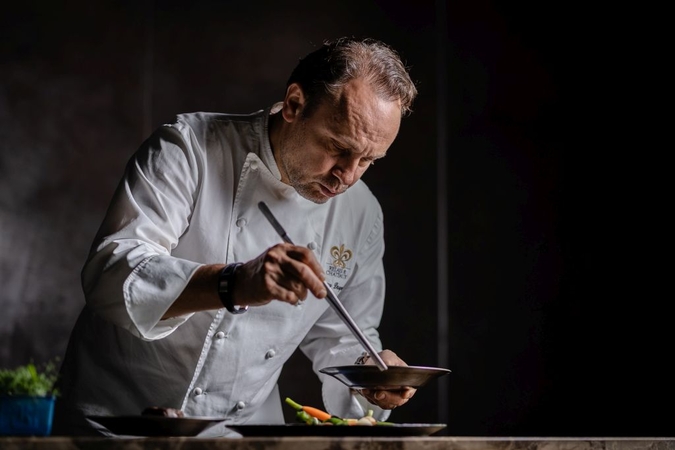
MOSCOW — A passenger plane with 100 people on board crashed shortly after takeoff near Almaty airport in Kazakhstan on Friday, killing at least 15 people with more than 60 others taken to the hospital.
The Bek Air jet, a Fokker 100, hit a concrete fence before crashing into a two-story building, Kazakhstan’s Civil Aviation Committee said in a statement. All Bek Air flights and Fokker 100 aircraft in Kazakhstan were suspended from operations pending an investigation.

The flight took off at 7:22 a.m. local time and was en route to Kazakhstan’s capital, Nursultan. There was no fire at the crash site.

Kazakh President Kassym-Jomart Tokayev expressed condolences to the victims on Twitter, adding that a government commission has been created to investigate the crash.

“All those guilty will be severely punished in accordance with the law,” he wrote.

The head of the Alma-Ata Health Department, Tleukhan Abildaev, told reporters at the scene one victim died at the hospital. Of the 66 people brought to the hospital, 50 were hospitalized with 12 in serious condition, he said.

Michaels jumps as new CEO brings digital expertise from Walmart #ศาสตร์เกษตรดินปุ๋ย

#ศาสตร์เกษตรดินปุ๋ย : ขอบคุณแหล่งข้อมูล : หนังสือพิมพ์ The Nation

https://www.nationthailand.com/business/30379940?utm_source=category&utm_medium=internal_referral

Michaels jumps as new CEO brings digital expertise from Walmart

Dec 28. 2019
By Syndication Washington Post, Bloomberg · Catherine Larkin 
Michaels Cos. rose the most in more than three months after naming Ashley Buchanan, a 12-year Walmart veteran, as its next chief executive officer.

Buchanan was named president and CEO designate at Michaels and appointed to the board, effective Jan. 6. He will succeed Mark Cosby as CEO after a transition period that ends April 1, the Irving, Texas-based retailer said in a statement. Cosby was named CEO in October after holding the position on an interim basis since February.

As the former chief merchandising and chief operating officer for Walmart’s U.S. e-commerce business, Buchanan satisfies Michaels’ need for “an executive with heavy digital experience,” according to Stephens Inc. analyst Rick Nelson. Shares of Michaels rose as much as 16% on the news, their biggest gain since Sept. 9.

“The arts/crafts industry appears to be in the early stages of shakeout with consumer creativity increasingly swinging to social media and competitors beginning to close stores,” Nelson wrote in a research note.

Near-term challenges remain. Michaels also said Friday that Chief Financial Officer Denise Paulonis has accepted a position at another company and will leave at the end of the fiscal year on Jan. 31. The company is also taking on some leases from rival A.C. Moore, which said in November that it would close its stores due to the tough retail environment.

“We see MIK as an eventual winner with a dominant market position, brand awareness, and strong balance sheet,” Nelson said, referring to Michaels by its stock symbol. “In the interim, however, store closings, liquidation sales, and new strategies are likely to produce choppy results.”