The debate between cast-iron haters and loyalists is as enduring as the pan itself
Dec 13. 2020The debate between cast-iron haters and loyalists is as enduring as the pan itself. MUST CREDIT: Photo by Stacy Zarin Goldberg for The Washington Post.
By The Washington Post · Emily Heil · FEATURES, FOOD
Cast-iron pans have a storied place in American home cooking. The hefty, glossy black workhorses have plenty of attributes: they hold heat like champs, can put a crusty sear on a steak, and they look gorgeous hanging from a rack. Their fans are legion.
And so, inevitably, when someone expresses anything other than reverence for the durable cookware, the oven mitts come off, and Team Cast Iron (some of whom self-identify as “Skilletheads”) is spoiling for a fight.
This week saw the latest flare-up in the long-simmering debate between those who love the stuff and those who find them too fiddly, too high maintenance, or just too heavy.
Rosie Gray, a reporter for BuzzFeed News this week tweeted what one might have thought was an innocent musing. “I’ve never seen anyone make a convincing argument for why i should have a cast iron pan,” she wrote.
The missive drew nearly 2,000 responses, most in defense of the sacred cookware, including a small number of nasty responses. In an interview, Gray called her ensuing mentions “out of control” – and this is from a female reporter who has covered the Trump administration.
Gray says the heft of the cookware is simply unappealing, and so is the idea of doing a separate cleaning regime than she uses for her other pans. “People were like, it’s easy to just rub it with salt, or oil it, and I’m thinking, ‘or I could cook in a pan that I don’t have to do that to?'” she says. “I just might not be one of the people who has patience to do that.”
She isn’t the first cast-iron heretic to draw public note. This summer, New York chef Frank Prisinzano made headlines for his blistering put-down of cast iron. “We’re way past cast-iron now,” he said on Instagram, blasting the pans for being heavy, and time-consuming to clean and season. “This is really something from history here.”
But when you ask cast-iron partisans about the skeptics, a funny thing happens. Most don’t sling insults. Will Copenhaver, vice president for marketing and sales for the Charleston-based Smithey Ironware Co., strikes a genteel (yet unmistakably shade-filled) note when asked about those on the other side of the aisle.
Perhaps they’re just “contrarians,” suggests Copenhaver, whose company produces swoon-inducing, artisanal pans. Or it’s just a matter of taste, he says, with the unspoken suggestion that the haters . . . well, as Southerners say about people with bad taste, bless their hearts. “Some people don’t like old houses,” he says. “Some people do. People who haven’t been exposed to cast iron might think it’s a pure nostalgia play, which is not fair.”
Copenhaver allows that some people might find it annoying not to be able to put their pans in the dishwasher. But beyond that, he thinks that people who don’t like cast iron probably just think it’s harder to maintain than it really is.
Ashley Jones, author of the cookbook “Modern Cast Iron,” has a similar read on the doubters, and chalks up their negative takes to what she says is information overload – after all, many cast-iron devotees insist that they alone know the best way to care for their pans, whether that’s a salt-scrub method or using chain-mail “sponges” to clean them. “There’s a lot of confusion,” Jones says. “If you look up how to care for cast iron, there’s a lot of conflicting information, you’ll see a million different answers.” “It’s an old debate, and I don’t blame people for either side of it.”
Jones offers a simple technique for everyday cleaning that she hopes could win over the fearful. Go ahead and use soap, she says. (Today’s mild detergents aren’t your grandmom’s harsh lyes, and won’t strip the seasoning.) Dry the pan well on a warm burner, add a bit of oil, and give it a quick wipe with a paper towel.
Plenty of people similarly sought to educate Gray about cast iron in the hopes of converting her, sharing their own tips and techniques for maintaining it. But she’s still not planning to buy a new pan.
“Look, we should all use the kitchen tools that we like, and for me, the benefits don’t outweigh the negatives,” she says. “But I applaud the effort people put into convincing me.”
Don’t expect the faithful to give up trying. One of the biggest selling points for cast-iron pans is that they last forever. The debate over them will, too.
By The Washington Post · Hannah Sampson · NATIONAL, BUSINESS, FEATURES, HEALTH, SCIENCE-ENVIRONMENT, TRANSPORTATION, US-GLOBAL-MARKETS, TRAVEL
Ariella Granett wanted people to stop flying in 2020. Just not this way.
“The pandemic was not the way we were hoping to reduce air travel,” Granett, co-founder of Flight Free USA, said in an email. “But I think there is a lot to learn from it.”
According to an outlook from the International Air Transport Association, the number of air travelers in 2020 is expected to drop more than 60% to 1.8 billion, about the same number of people who flew in 2003. Next year, the group projects that number will increase to 2.8 billion – still far less than the 4.5 billion who flew in 2019. Airlines have slashed routes and furloughed workers, and some have gone out of business.
Those who advocate flight-free living have been grounded, in some cases for years, by choice. And in a year when so many more have been forced to stay put because of the novel coronavirus, leaders of the fly-less movement are hopeful that people, businesses and institutions will reconsider their behavior post-pandemic – and treat climate change as an emergency.
“Regardless of the pandemic, climate change is like the elephant in the room,” Granett, an architect who stopped flying two years ago, said in an interview. “It’s huge and we’re hurtling toward this cliff, toward this point of no return. It makes the pandemic seem like a little trial run.”
Magdalena Heuwieser, one of the founders of the Vienna-based network Stay Grounded, which advocates for a reduction in aviation, said she expects to see a continued rethinking of business travel moving forward.
“Companies just realized that it’s cheaper to do online conferencing … employees realized that it’s less stressful,” she said. “It’s something that I think will not jump back to previous levels.”
Climate scientist Peter Kalmus, founder of the site NoFlyClimateSci, said he has urged the American Geophysical Union in the past to hold its big fall meeting at least in part virtually.
“Now it’s a completely virtual meeting by force,” he said – and he thinks there’s potential to do the same in the future, maybe even a hybrid with regional groups meeting in person and others joining remotely.
“I think we can even do virtual meetings better than this,” Kalmus said. “This is a place where technology really should be shining.”
As hard-hit airlines continue to seek help from governments after receiving billions of dollars in aid earlier in the pandemic, Heuwieser cautioned that bailouts should come with climate change in mind.
“We worry that this will jump back to pollution as usual if structural changes are not imposed right now – if we don’t rather use this bailout money for recovery packages to finance living wage basic income for workers who are losing their jobs, social protection, retraining programs, creation of jobs in climate safe sectors and foster safe alternatives to flying,” said Heuwieser, who is based in Germany.
She said governments should be investing in better, more comfortable and attractive train services, for example.
Once the pandemic is over, the fly-less community hopes trains and other forms of slower travel will appeal to those who are eager to get out and explore again.
“This is not the optimal situation for flying less,” said Kalmus, who lives in Southern California and hasn’t flown since 2012. “Hopefully we can fly less in a more joyful way than this because we’ll still be able to travel, we’ll still be able to meet in groups. This is flying less superimposed onto all this other stuff that makes life so difficult for us.”
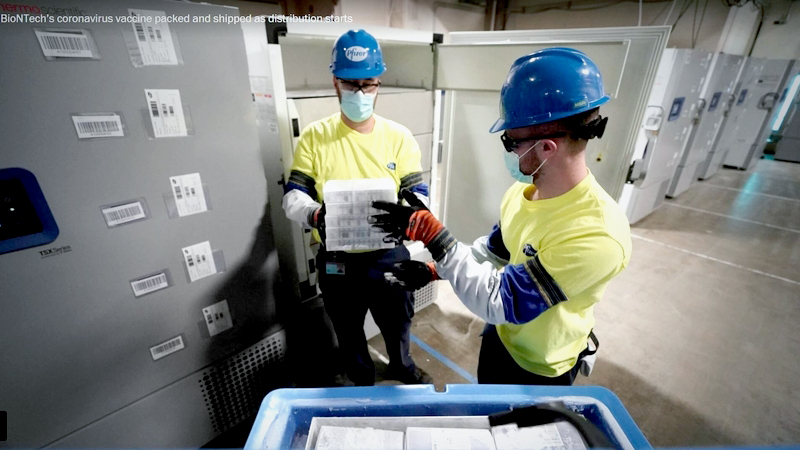
Nearly 3 million doses of the Pfizer-BioNTech vaccine are expected to arrive at 145 facilities Monday, marking the beginning of a massive logistical effort to stop the rampant spread of the disease covid-19, which has so far killed more than 298,000 Americans. The vaccine against the virus it causes will arrive at nearly 500 additional sites Tuesday and Wednesday.
But even as state officials scrambled to distribute the first doses, they criticized the federal government for a lack of transparency and limited financial help, warning that both could hamper efforts to quickly vaccinate the most vulnerable populations, including health-care workers and the elderly.
As the vaccine doses made their way to hospitals Sunday, Centers for Disease Control and Prevention Director Robert Redfield gave the final nod, approving the decision to recommend Pfizer’s vaccine for people 16 and older.
Additionally, the governors of California, Washington, Oregon and Nevada announced Sunday that an independent review of the Pfizer vaccine found it safe for public use. They said the vaccine was on the way but did not give a specific estimate for when the first shots would be given.
As the vaccine arrived at a Louisville, Ky., hub for distribution across the East Coast on Sunday, Democratic Gov. Andy Beshear moved up his timeline, announcing that immunizations could begin as early as Monday. New Jersey Gov. Phil Murphy, a Democrat, said Sunday that the first vaccines are expected to be administered Tuesday at University Hospital in Newark.
Amid questions about when people can get their shots, a Sunday report said people in President Donald Trump’s White House circle were told to expect to be vaccinated shortly.
“Senior officials across all three branches of government will receive vaccinations pursuant to continuity of government protocols established in executive policy,” National Security Council spokesman John Ullyot said in a statement. The administration has not mentioned when Trump will get a dose. Since contracting the virus, Trump has repeated false claims that he is “immune,” though experts are not yet certain about how long immunity lasts.
Despite the rapid rollout of the Pfizer vaccine, it will be months before immunizations have any effect on the pandemic in the United States, where case numbers are surging. As of Saturday, more than 16 million people in the United States have tested positive, and an average of 2,415 people died of the virus every day for the past week, a pandemic record.
Officials stressed that a large proportion of the nation’s population – about 70% to 80% – will need to get the vaccine before herd immunity is achieved.
Moncef Slaoui, chief science adviser to the White House’s effort to develop a vaccine, said officials hope to “reach that point between the month of May and the month of June.”
“All in all, we hope to have immunized 100 million people, which would be the long-term-care-facility people, the elderly people with co-morbidities, the first-line workers, the health-care workers,” he said in an interview on “Fox News Sunday. “It’s about 120 million people – we would have immunized 100 million people by the first quarter of 2021 with two doses of vaccines.”
Health and Human Services Secretary Alex Azar detailed what could come in the weeks and months following the initial vaccine shipments. He said the plan is to have 20 million people vaccinated by the end of December, up to 50 million by the end of January and 100 million by the end of February. That includes plans for a second vaccine, developed by Moderna, which is expected to gain emergency authorization from the Food and Drug Administration soon.
The FDA gave emergency use authorization for Pfizer and BioNTech’s vaccine on Friday for people 16 and older, and Moderna’s vaccine is expected to be authorized following a review scheduled for this Thursday by the agency’s independent advisers.
“We’ll be getting more and more Pfizer product, and we’ve got 12 1/2 million Moderna product, assuming that we get approval at the end of this week on Moderna, that we’ll ship out very soon thereafter,” Azar said during an interview with CBS News’s “Face the Nation.”
He also was asked by host Margaret Brennan whether he believes President-elect Joe Biden’s team will be able to meet the goals, and Azar appeared to acknowledge that the incoming Biden administration will take over the process.
“If they carry forward with the plans that we’ve put in place, 100 million shots in arms by the end of February is very much in scope,” Azar said.
Officials hoping to bolster confidence in the vaccine worry that such a large immunization effort could be hindered by skepticism.Francis Collins, director of the National Institutes of Health, said the level of potential vaccine hesitancy in the nation is of “great concern for all of us.”
During an interview on NBC News’s “Meet the Press,” he urged viewers to “hit the reset button on whatever they think they knew about this vaccine that might cause them to be so skeptical.”
“The data is out there now. It’s been discussed in a public meeting, all the details of the safety and the efficacy for anybody who wants to look,” he said, adding: “I think all reasonable people, if they had the chance to sort of put the noise aside and disregard all those terrible conspiracy theories, would look at this and say, ‘I want this for my family. I want it for myself.’ People are dying right now. How could you possibly say? ‘Let’s wait and see’ if that might mean some terrible tragedy is going to befall?”
There’s also particular concern about addressing any vaccine hesitancy in communities of color, especially because they have been disproportionately affected by the pandemic.
NBC’s Chuck Todd asked Collins to respond to concerns from a health-care worker who said she hopes people who look like her and other Black doctors in the community also will help generate trust in the vaccines.
“She’s absolutely right. For somebody like me to say, ‘You should be signing up for this vaccine,’ OK, a White guy who works for the government. Sure, that isn’t necessarily going to be the voice that people need to hear if they’re skeptical,” Collins said. “We are working closely with health-care providers, especially those in communities of color, and trying to make sure that all of those messages are ready to go.”








.jpg)
.jpg)
.jpg)
.jpg)
 The debate between cast-iron haters and loyalists is as enduring as the pan itself. MUST CREDIT: Photo by Stacy Zarin Goldberg for The Washington Post.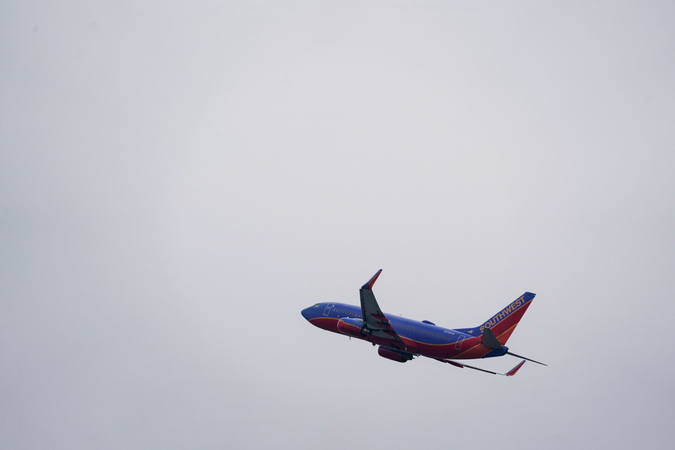
 SootinClaimon.Com