Women are getting more jobs than ever in changing Saudi Arabia #SootinClaimon.Com

#SootinClaimon.Com : ขอบคุณแหล่งข้อมูล : หนังสือพิมพ์ The Nation.

https://www.nationthailand.com/business/40001482

Women are getting more jobs than ever in changing Saudi Arabia


It looks like a womans world on the 29th floor of Tamkeen Tower, where a call center for Saudi Arabias General Authority for Statistics overlooks the beige sprawl of Riyadh. Past frosted glass doors, the few men to one side of the room are vastly outnumbered by female colleagues sitting at desks spread across the office.
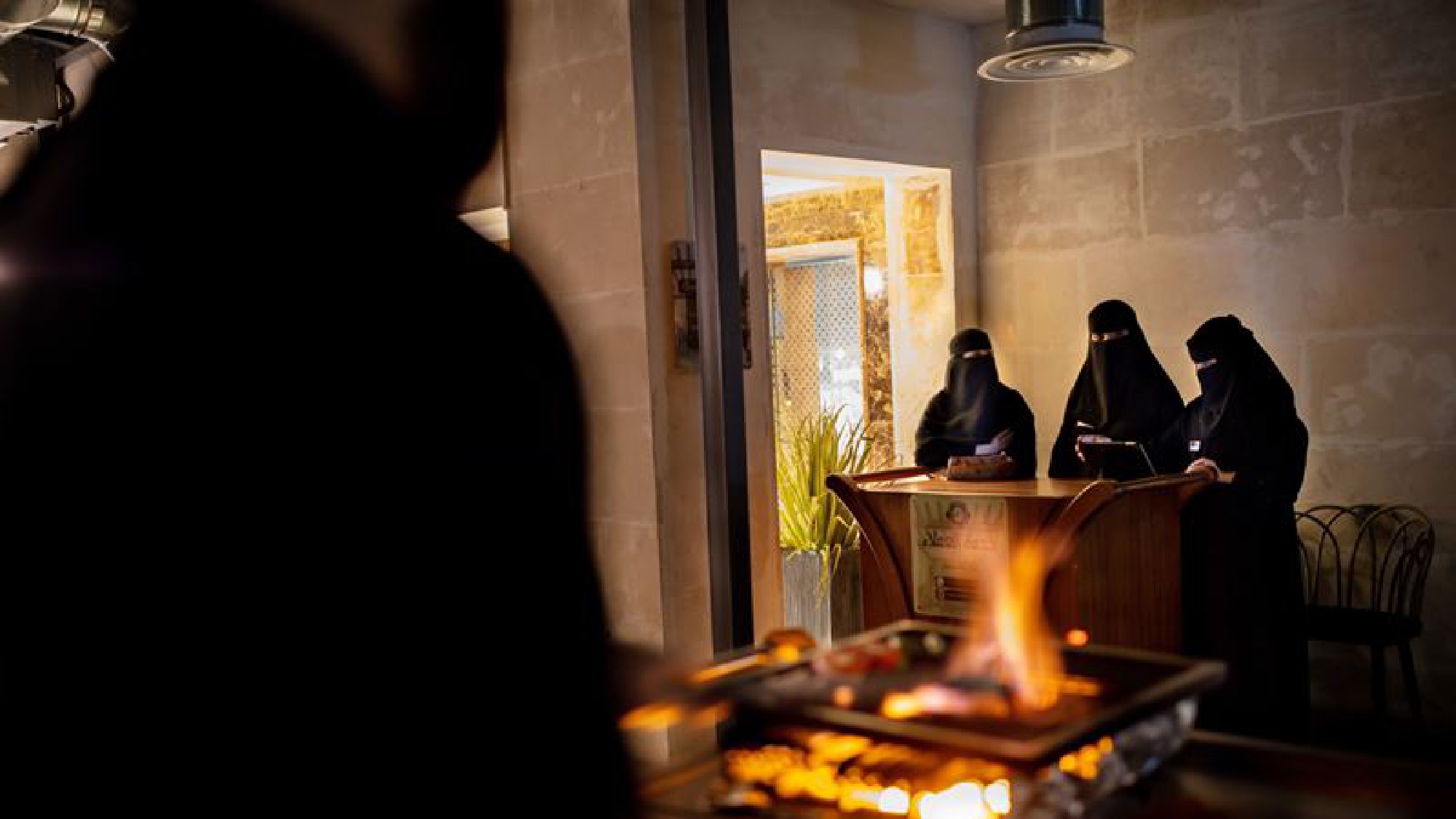
Women are getting more jobs than ever in changing Saudi Arabia

The scene is the opposite of what most workplaces in the conservative Islamic kingdom looked like a few years ago, reflecting the growing influx of women into the job market. “Look where we were and where we are now,” says Reem Almuhanna, 31, who oversees the call center’s 74 employees as they gather data on households and businesses.

Keeping women at home is a luxury the world’s largest exporter of crude can no longer afford. Crown Prince Mohammed bin Salman, 35, is overhauling the economy to prepare for a post-oil future and striving to create jobs amid sputtering economic growth. With the cost of living on the rise as the government cuts gasoline and electricity subsidies and introduces new fees and taxes, including a 15% value-added tax, Saudi households increasingly depend on women working.

As a result, social and economic changes are ripping through the country-upending traditions, changing women’s lives all across the class spectrum, and stirring resentment among some conservative Saudis. The state, facing pressure from foreign governments and human-rights groups over its clampdowns on dissent, recognizes that the narrative of female empowerment may help burnish its reputation abroad. But the changes are not illusory.

Gender segregation-once strictly enforced by religious police-is gradually dissolving, not just among the metropolitan elites, but even in conservative provinces such as Qassim. Men and women who aren’t related can mingle openly at restaurants now. Many offices are mixed, as are music festivals and business and professional conferences.

Although decision-making remains largely in the hands of men, female participation in the workforce increased from 19% in 2016 to 33% last year, according to the statistics authority’s Labor Force Survey. “The government’s strong commitment to Saudi female empowerment has been the main driver,” the Ministry of Human Resources and Social Development said in a statement to Bloomberg News in March.

Increased female participation in the labor force was the only goal set out in Prince Mohammed’s Vision 2030 framework to be met a decade early, with Saudi women taking jobs as waitresses, cashiers, and police officers. In the process, the dress code for women has loosened; jeans and uncovered hair are now tolerated alongside traditional floor-length black abayas.

The shift began under King Abdullah, who died in 2015, but it’s quickened dramatically under Prince Mohammed, now the de facto ruler. In the past five years, the government has curtailed the power of the religious police, ended the ban on women driving, and eased rules that kept women beholden to male guardians. “There is this recognition that we cannot keep going-it’s economically not sustainable-without utilizing 50% of the population,” says Salma AlRashid, chief advocacy officer at Alnahda, an independent nonprofit focused on women’s empowerment.

The changes have come at a cost. As social liberties have expanded, political freedoms have retreated for men and women alike, leaving little room for the citizenry to debate policies that are transforming one of the world’s most socially restrictive countries. Prince Mohammed’s crackdown on domestic critics has ensnared female activists, writers, and academics alongside male ones.

Campaigners such as Loujain al-Hathloul and Aziza al-Yousef, who spent years advocating for changes such as allowing women to drive, were arrested in 2018 and accused of undermining state security. (Al-Hathloul, sentenced to a nearly six-year prison term that was partly suspended, was freed in February, and al-Yousef was released in 2019, though both are banned from travel abroad. Human-rights groups say they were tortured, which the government denies.) Other dissenters have fallen silent out of fear.

As Saudi society evolves, some men worry that women are taking their jobs and subverting their traditional role as the head of the household, responsible for their families financially and otherwise. “I’m against the fact that women are prioritized in getting jobs while men are left behind,” says Yazeed, a 25-year-old Saudi dentist, asking that his last name be withheld so he can speak openly in a country where the government limits free speech. “I believe women’s employment is a necessity only when she can’t find someone to provide for her.”

Prince Mohammed has said it’s time for women to take a bigger role. He rarely gives interviews, but he told Bloomberg in 2016: “Women are half of this society, and we want it to be a productive half.” More than two-thirds of unemployed Saudi women hold a bachelor’s degree or higher, compared with just a third of male job seekers. Getting the kingdom’s educated women into the workforce is seen as essential to the success of the Vision 2030 plan.

The logic of female empowerment is straightforward, says Rasha Alturki, Alnahda’s chief executive officer. The government has invested for generations in educating Saudi women, she says. “There has to be a return on your investment. Otherwise what’s the point?”

Few people have lived the changes in Saudi Arabia as viscerally as Ahlam Eisa, a 32-year-old mother of four who works in a women’s clothing shop in Riyadh and drives for Uber Technologies Inc. and other ride-sharing companies to make extra cash, all while studying for her high school diploma.

Born in the south, Eisa got married and moved to the capital when she was 19, living the kind of closed-off life typical for many Saudi women. Her divorce three years ago jolted her into an alternative universe where women worked and unmarried couples ate together in cafes. “I didn’t know what the world outside was,” she says. “I was in a bubble.”

Today, Eisa drives around Riyadh in a silver Hyundai Accent, her short hair styled beneath a gray hooded robe. The car, which a local charity helped her buy, has transformed her life, she says. Now her focus is to finish school and then train as a nurse. One of her daughters wants to be a flight attendant; the other, a makeup artist. “I realized that with or without a man, I’m making my life beautiful,” Eisa says. “Everything in this era is available for women.”

Nawal Alunaizi is similarly elated at her newfound choices. The 42-year-old mother of five says she endured a bad marriage for two decades, afraid to lose custody of her children under a patriarchal system where only men were considered legal guardians. Reforms that made it easier for women to file for divorce and get custody of their children emboldened her to leave the relationship four years ago.

“I’m living a new life,” says Alunaizi, who works in human resources at a real estate company. “At first when I’d come and say to my daughters, ‘Be strong, face life,’ I’d be embarrassed. Now I say it, and I look them in the eye.”

The changes that have come to the Saudi workforce have been uneven (and completely bypassed some foreign women in the kingdom, including 1 million female domestic workers who have limited rights and are largely at the mercy of their employers). Many traditionally male-dominated industries-such as manufacturing and construction-remain so. There are roughly 18 Saudi men in the mining sector for every Saudi woman. That ratio narrows to about 1 to 1 in fields like health care, social work, arts and entertainment, and the hospitality industry.

When the pandemic struck, the General Authority for Statistics, where Almuhanna works, switched from all-male enumerators knocking on doors to mostly women surveyors working the phones, who ended up reaching more women directly by not having to go through male heads of households. Among other things, the data they gathered suggested more women were already working outside the home than previously thought.

Job creation is Prince Mohammed’s most pressing domestic challenge. The double blow of last year’s decline in oil prices and the Covid-19 pandemic underscored the importance of diversifying the economy. In the fourth quarter of 2020 the unemployment rate was 12.6% for Saudis overall and almost double that for women.

With more women entering the workforce and a youth bulge changing the shape of the labor market, it’s been hard for the economy to keep up. This is particularly true now that economic growth is sputtering. Gross domestic product shrank by 4.1% last year; this year, according to the International Monetary Fund, it’s expected to grow by 2.9%, which is relatively weak compared to the oil boom years.

Many of the jobs opening up for women are lower-paid and include roles once filled by workers from Asia and other Arab countries. For a decade, Saudi Arabia has sought to tackle high unemployment among its citizens by encouraging companies to hire them over foreigners, who remit much of their earnings to family members in their home countries.

These efforts have intensified under the crown prince. The government has imposed levies on employers that hire foreigners, fees that expatriates pay to allow their dependents to reside in Saudi Arabia, and minimum quotas for Saudi hires in certain sectors, such as retail.

“Yes, finding a job for us women is easy, but finding a good job is difficult,” says Sahar, 23, a saleswoman in a clothing store. Her salary of 3,500 riyals ($933) per month goes toward supporting her family following the death of her father. To go to work she had to drop out of college, and she isn’t sure she’ll be able to go back. “I don’t think I’ll ever advance in my career,” says Sahar, who asked that her last name be withheld so she could speak freely.

Alnahda’s research has found gender gaps not just in workforce participation but also in career development and compensation, with Saudi women earning 57 riyals for every 100 riyals earned by Saudi men-even after adjusting for differences in education and experience. The gap is starkest at the top. There are few women on company boards and none in the Saudi cabinet. Prince Mohammed’s closest advisers are all men.

But as mixed as the picture is for Saudi women in the workplace, it’s a world away from what it was. When Noha Kattan became one of the first women to work at what’s now the Ministry of Sports in 2016, there wasn’t even a women’s bathroom in the building. Now she’s a deputy minister for national partnerships and development at the Ministry of Culture, where 49% of the 667 employees are female.

Behind the culture ministry’s stone-and-glass facade, women wearing colorful abayas sit at open-floor-plan desks alongside men-a far cry from the sealed-off women’s sections, often dark, cramped, and hidden away, that still exist in some government institutions. What’s more, women no longer worry they’ll be reported to the religious police and punished for taking a five-minute coffee break with male colleagues.

Speaking with a reporter in her spacious, glass-walled office, Kattan considers the changes she’s lived through. To go from having no bathroom fewer than five years ago to “having this conversation now,” Kattan says, is “mind-blowing.”

Published : May 31, 2021

By : Syndication Washington Post, Bloomberg · Vivian Nereim

BMA to hire new adviser tor 19km MRT PPP project #SootinClaimon.Com

#SootinClaimon.Com : ขอบคุณแหล่งข้อมูล : หนังสือพิมพ์ The Nation.

https://www.nationthailand.com/business/40001472

BMA to hire new adviser tor 19km MRT PPP project


The Bangkok Metropolitan Administration (BMA) plans to hire an adviser by June this year to study the Public-Private Partnership project for the first phase of the 19-kilometre MRT Grey Line from Watcharapol to Thong Lor.

BMA to hire new adviser tor 19km MRT PPP project

The move is a result of the adviser’s document details submitted so far not meeting the authority’s conditions.

The BMA said it would allow private agencies to participate in the bidding for the estimated THB30 billion PPP project between 2022 and 2023, expecting to find the contractor by 2024.

The BMA added that the construction of a monorail would take three years.

“Regarding Environmental Impact Assessment, the Office of Natural Resources and Environmental Policy and Planning has not replied to our proposal yet, but we believe that it would be okay,” the BMA said.

“We will conduct land expropriation assessment together with public hearing, which will take about 200 days.”

Construction of the MRT Grey Line is divided into three phases:

The first phase (Watcharapol to Thong Lor) links MRT Watcharapol station (Pink Line), Lat Phrao 83 Station (Yellow Line), Wat Phra Ram 9 station (Orange Line) and BTS Sukhumvit line.

The second phase (Phra Khanong to Lumpini) links BTS Phra Khanong station, MRT Queen Sirikit National Convention Centre, Khlong Toei and Lumpini stations.

The third phase (Lumpini to Tha Phra) links BTS Chong Nonsi station and BRT Sathorn to Ratchaphruek.

Published : May 30, 2021

By : The Nation

Four Thai game developers win dream shot at multitrillion-baht global industry #SootinClaimon.Com

#SootinClaimon.Com : ขอบคุณแหล่งข้อมูล : หนังสือพิมพ์ The Nation.

https://www.nationthailand.com/perspective/40001504

Four Thai game developers win dream shot at multitrillion-baht global industry


Four teams of Thai gaming developers have “unlocked the next level” in the government’s start-up incubator and will now get help from Nintendo in their quest to become industry players.

Four Thai game developers win dream shot at multitrillion-baht global industry

The four winners of Game Accelerator Program Batch #1, run by the Digital Economy Promotion Agency (depa), will be upskilled by Nintendo and then be matched with potential investors. The winning teams will also get the chance to test their software on real games players before launching their products in Thailand and abroad.

Thailand’s first accelerator programme for the gaming industry will help Thai developers meet international standards in an industry that is growing exponentially, said depa president Nuttapon Nimmanphatcharin.

Four Thai game developers win dream shot at multitrillion-baht global industryFour Thai game developers win dream shot at multitrillion-baht global industry

Nenin Ananbanchachai, president of the Thai Game Software Industry Association, said Covid-19 lockdowns had resulted in a significant increase in digital gamers, with 41 per cent (27.8 million) of Thailand’s population now playing online. In 2020, the game market was worth US$159 billion or about 4.9 trillion baht, according to e-sports marketing consultancy Newzoo. That figure is expected to grow to $200 billion by 2023.

“Such statistics have led us to believe that there will be more investment and manpower in the Thai gaming industry in the near future. Moreover, we might be able to see companies in the gaming industry listed in the new sector on the Stock Exchange of Thailand so that investors can invest in those games development companies,” said Nenin.

Four Thai game developers win dream shot at multitrillion-baht global industryFour Thai game developers win dream shot at multitrillion-baht global industry

The Game Accelerator Programme’s four categories, winners and their games are as follows:

Action game category: IGLOO STUDIO – Bounty Brawl

Adventure game category: Plastiek Company Limited -RRR Express

Strategy game category: Fairplay Studios – at your service

Sport (Casual Game) category: Varisoft Company Limited – Pakapow party

Four Thai game developers win dream shot at multitrillion-baht global industryFour Thai game developers win dream shot at multitrillion-baht global industry

Published : May 31, 2021

By : THE NATION

วันที่ 29 พ.ค. 2564 ข่าวเศรษฐกิจ-ธุรกิจ #SootinClaimon.Com

#SootinClaimon.Com : ขอบคุณแหล่งข้อมูล : หนังสือพิมพ์โพสต์ทูเดย์

https://www.posttoday.com/economy

ไมเนอร์ X เซ็นทรัล ร่วมกองเสริมสนับสนุนอาหาร-จุดฉีดวัคซีนนอก รพ.  นาน 6 เดือน

ไมเนอร์ X เซ็นทรัล ร่วมกองเสริมสนับสนุนอาหาร-จุดฉีดวัคซีนนอก รพ.  นาน 6 เดือน

ไมเนอร์ฯ  ร่วมกลุ่มเซ็นทรัล หนุนภาครัฐเดินหน้าประเทศไทยให้คนกรุงเทพฯ รับวัคซีน 70% ในสิ้นปีนี้ สนับสนุนอาหารกว่า 1 แสนมื้อ ให้’ทีมแพทย์-อาสาสมัคร’ ในจุดฉีดวัคซีนนอกโรงพยาบาลผ่านกลุ่มเซ็นทรัล นาน 6 เดือนวันที่ 29 พ.ค. 2564 เวลา 13:19 น. | ข่าวเศรษฐกิจ-ธุรกิจ

สขค. ดึง 5 แพลทฟอร์มบริการส่งอาหาร พร้อมใจลดค่า GP เหลือ 25% ร่วมฝ่าวิกฤตโควิด

สขค. ดึง 5 แพลทฟอร์มบริการส่งอาหาร พร้อมใจลดค่า GP เหลือ 25% ร่วมฝ่าวิกฤตโควิด

สขค. เคาะแนวทางความช่วยเหลือผู้ประกอบธุรกิจร้านอาหาร ของผู้ประกอบธุรกิจให้บริการดิจิทัลเเพลตฟอร์มรับและส่งอาหาร (Food Delivery)วันที่ 29 พ.ค. 2564 เวลา 11:34 น. | คอลัมนิสต์เศรษฐกิจ-ธุรกิจ

วันที่ 28 พ.ค. 2564 ข่าวเศรษฐกิจ-ธุรกิจ #SootinClaimon.Com

#SootinClaimon.Com : ขอบคุณแหล่งข้อมูล : หนังสือพิมพ์โพสต์ทูเดย์

https://www.posttoday.com/economy

ไทยเวียตเจ็ท ออกโปรฯเด็ด จองตั๋วบินราคาเริ่มต้น 5 บาท ไปได้ทั่วประเทศ

ไทยเวียตเจ็ท ออกโปรฯเด็ด จองตั๋วบินราคาเริ่มต้น 5 บาท ไปได้ทั่วประเทศ

สายการบินไทยเวียตเจ็ท กระตุ้นมั่นใจเดินทางในประเทศ เปิดตัวโปรโมชั่น ‘Super Sale’ บัตรโดยสารราคาเริ่มต้น 5 บาท เดินทางได้ทุกเส้นทางบินในประเทศ จองภายในสิ้นเดือนพ.ค.ให้บินได้ ถึงสิ้นปี2564วันที่ 28 พ.ค. 2564 เวลา 18:02 น. | ข่าวเศรษฐกิจ-ธุรกิจ

ฟู้ดแพนด้า ลดค่าคอมมิชชั่นนาน 1เดือนช่วยเอสเอ็มอี-ผู้ค้าตลาดสด ต้องรอดจากวิกฤตโควิด ระลอกนี้

ฟู้ดแพนด้า ลดค่าคอมมิชชั่นนาน 1เดือนช่วยเอสเอ็มอี-ผู้ค้าตลาดสด ต้องรอดจากวิกฤตโควิด ระลอกนี้

ฟู้ดแพนด้า เดินหน้าแคมเปญ #SupportSME ช่วยเอสเอ็มอี และผู้ค้าในตลาดสด กว่า 3 หมื่นรายรวมกว่า 75 ล้านบาท ที่ได้รับผลกระทบจากโควิด-19 ระลอกสามวันที่ 28 พ.ค. 2564 เวลา 16:55 น. | ข่าวเศรษฐกิจ-ธุรกิจ

วุ่น!!! ศาลเลื่อนไต่สวนแผนฟื้นฟูฯบินไทย

วุ่น!!! ศาลเลื่อนไต่สวนแผนฟื้นฟูฯบินไทย

เจ้าหนี้บินไทย 2 รายยื่นคัดค้านแผนฟื้นฟูฯ ส่งผลศาลฯงดสืบพยาน เลื่อนนัดไต่สวนพิจารณาแผนฯเป็น 15 มิ.ย. เปิดทางให้เคลียร์ประเด็นข้อสงสัยวันที่ 28 พ.ค. 2564 เวลา 13:30 น. | ข่าวเศรษฐกิจ-ธุรกิจ

ดีแทค มองโลกธุรกิจยุคใหม่หลังโควิด-19คลี่คลาย เผชิญความท้าทาย 3 เทรนด์ใหญ่ 

ดีแทค มองโลกธุรกิจยุคใหม่หลังโควิด-19คลี่คลาย เผชิญความท้าทาย 3 เทรนด์ใหญ่ 

ดีแทคเผย 3 ความท้าทายสำคัญของโลกยุคหลังโควิด-19 เดินหน้าวิสัยทัศน์ภายใต้แนวคิด ‘การดำเนินธุรกิจอย่างมีความรับผิดชอบ’ เพื่อฝ่า 3 ความปกติใหม่ทางธุรกิจ พร้อมเพิ่มขีดความสามารถปรับตัวท่ามกลางความไม่แน่นอนวันที่ 28 พ.ค. 2564 เวลา 12:32 น. | ข่าวเศรษฐกิจ-ธุรกิจ

ซีอาร์จี ขน 11 ร้านอาหารในเครือมอบสิทธิ์เมนู1แถม1 โชว์หลักฐานฉีดแล้ววัคซีนโควิด-19 

ซีอาร์จี ขน 11 ร้านอาหารในเครือมอบสิทธิ์เมนู1แถม1 โชว์หลักฐานฉีดแล้ววัคซีนโควิด-19 

ซีอาร์จี ชวนฉีดวัคซีนไฟท์โควิด HELP THAI FIGHT COVID-19  ระดม 11 แบรนด์ดังในเครือ จัดโปรฯ 1 แถม 1 ให้ลุกค้าแสดงหลักฐานฉีดวัคซีนป้องกันโควิด-19 ที่ร้านอาหารในเครือซีอาร์จีที่ร่วมรายการวันที่ 28 พ.ค. 2564 เวลา 11:40 น. | ข่าวเศรษฐกิจ-ธุรกิจ

U City Public Company Limited (U City) shares in strong demand #SootinClaimon.Com

#SootinClaimon.Com : ขอบคุณแหล่งข้อมูล : หนังสือพิมพ์ The Nation.

https://www.nationthailand.com/business/40001423

U City Public Company Limited (U City) shares in strong demand

U City, whose main business is the hospitality business with 51 hotels and 8,978 keys, is poised to benefit from what Airbnb CEO, Brian Chesky regards as ‘the Travel rebound of the Century’ as countries open their borders, and people are desperate to travel after more than a year of restrictions.

U City Public Company Limited (U City) shares in strong demand
UCity Public Company Limited (U City) capital increase was strongly received with a total subscription for 22.5 bn shares. The results of the capital increase procedure, which ran from May 12 until May 21, were released by the Company on May 25. In total, shareholders injected about THB 15.7 bn into the Company, affirming a huge signal of support as it emerges out from a difficult COVID 19 pandemic period.

U City, whose main business is the hospitality business with 51 hotels and 8,978 keys, is poised to benefit from what Airbnb CEO, Brian Chesky regards as ‘the Travel rebound of the Century’ as countries open their borders, and people are desperate to travel after more than a year of restrictions.

U City Public Company Limited (U City) shares in strong demandU City Public Company Limited (U City) shares in strong demand

Some of the proceeds of THB 15.7bn will be used to repay debt, further boosting profitability. These proceeds are in addition to the potential THB 4.4bn from sales of noncore assets that the Company is progressing, which is expected to reduce the net/debt ratio to around 0.1 times.

Acting Chief Executive Officer and Chief Financial Officer Soraya Satiangoset commented “U City’s financial footing is now very secure following the capital increase and sale of lower profit operating lease hotels and other noncore assets. The remaining high quality hotel portfolio is set to benefit from pent up travel demand. The EU vaccine progress will exceed 50% of the population by June, with herd immunity within this Summer. Countries are already relaxing the travel restrictions”

U City has underperformed its hospitality sector peers and now has a Price to Book Value of only 0.38x, the lowest in the property sector. U City’s largest shareholder is BTS Group, one of the major shareholders of U-Tapao International Airport and Eastern Airport City Development Project, set to be one of the largest real estate developments on Thailand’s eastern seaboard.

For more information: Tel. 02 273 8838

Or https://www.ucity.co.th/en/contact-us/company-address

Published : May 29, 2021

SET levels off amid worries over foreign outflows #SootinClaimon.Com

#SootinClaimon.Com : ขอบคุณแหล่งข้อมูล : หนังสือพิมพ์ The Nation.

https://www.nationthailand.com/business/40001422

SET levels off amid worries over foreign outflows


The Stock Exchange of Thailand (SET) Index closed at 1,581.98 on Friday, down 0.98 points or 0.06 per cent. Transactions amounted to THB99.50 billion with an index high of 1,595.45 and a low of 1,579.53.

SET levels off amid worries over foreign outflows

In the morning session, Krungsri Securities expected the index on Friday to rise to between 1,595 and 1,600 points as the number of US jobless claims continued to fall and US President Joe Biden prepared to deliver his $6-trillion budget plan for 2022 on Friday.

It added that the index had also gained positive sentiment from the rising oil price.

However, investors should beware of mass sell-offs due to the outflow of foreign funds, Krungsri Securities said.

The 10 stocks with the highest trade value today were KBANK, KTC, CBG, ITD, RCL, STGT, BANPU, CPALL, PTT and AOT.

Other Asian indices were mixed:

Japan’s Nikkei Index closed at 29,149.41, up 600.40 points or 2.10 per cent.

China’s Shanghai SE Composite Index closed at 3,600.78, down 8.07 points or 0.22 per cent, while the Shenzhen SE Component Index closed at 14,852.88, down 44.31 points or 0.30 per cent.

Hong Kong’s Hang Seng Index closed at 29,124.41, up 11.21 points or 0.039 per cent.

South Korea’s KOSPI closed at 3,188.73, up 23.22 points or 0.73 per cent.

Taiwan’s TAIEX Index closed at 16,870.86, up 269.25 points or 1.62 per cent.

Published : May 28, 2021

By : The Nation

Amazon-MGM seen winning antitrust nod as tech critics cry foul #SootinClaimon.Com

#SootinClaimon.Com : ขอบคุณแหล่งข้อมูล : หนังสือพิมพ์ The Nation.

https://www.nationthailand.com/business/40001383

Amazon-MGM seen winning antitrust nod as tech critics cry foul


Amazon.coms takeover of Metro-Goldwyn-Mayer is sparking fresh criticism about the spreading tentacles of Americas technology giants, but the deal underscores how competition watchdogs have their hands tied when it comes to curbing the companies growth.

Amazon-MGM seen winning antitrust nod as tech critics cry foul

Critics of tech firms in Washington on Wednesday slammed the MGM deal as the latest example of how the industry’s biggest players snap up companies to expand their reach, even as they face a flurry of antitrust lawsuits and moves by lawmakers to rein them in.

“Another day. Another mega merger,” tweeted Rep. David Cicilline, the Rhode Island Democrat who led a sweeping investigation of Amazon, Facebook, Alphabet and Apple. “Amazon’s proposed purchase of MGM reinforces what we already know — they are laser-focused on expanding and entrenching their monopoly power.”

Amazon announced the MGM deal a day after being sued by the attorney general of Washington, D.C., who said the online retailer is engaging in anticompetitive conduct that’s leading to higher prices for consumers. The case, the first government antitrust lawsuit against Amazon in the U.S., opened a new front in the regulatory assault on the tech industry.

The deal presents an early test for the Biden administration’s antitrust agenda. The president has yet to nominate an assistant attorney general to run the Justice Department’s antitrust division, which would probably review the MGM deal.

For those troubled about the relentless growth of the biggest tech companies, the MGM acquisition could highlight how antitrust law falls short, said Sam Weinstein, who teaches antitrust at Cardozo School of Law in New York. Under traditional antitrust analysis, which would look at whether Amazon will gain outsized market power in film and TV content, the MGM deal is very likely to be cleared by regulators, he said.

“If you’re really concerned about how big a company is — just how big it is, not that it’s creating a monopoly in a particular market — this acquisition will bother you, and the antitrust laws as currently constituted aren’t designed to deal with something like this,” Weinstein said.

Amazon is the second-largest paid streaming service in the world behind Netflix, and the MGM acquisition will give it more than 4,000 movies and 17,000 TV shows, including “Rocky,” “RoboCop” and “The Handmaid’s Tale.”

But the combination still leaves many studios competing to produce content. MGM doesn’t even rank among the top five Hollywood studios by box office share: Walt Disney, Warner Bros., Universal Pictures, Sony Group and Lions Gate Entertainment. Then there’s Netflix, which produces its own content for its streaming service, including hits like “Bridgerton,” “Stranger Things” and “The Queen’s Gambit.”

That’s not stopping criticism of the takeover.

“In acquiring MGM Studios, Amazon is brazenly trying to take over another sector of the economy,” said Sarah Miller, the executive director of the American Economic Liberties Project, an anti-monopoly organization in Washington. “Congress should respond quickly by passing bipartisan legislation to ban mergers by large tech firms.”

On Capitol Hill, Republican Sen. Josh Hawley of Missouri, a fierce critic of tech platforms, said on Twitter that Amazon is a monopoly that “shouldn’t be able to buy anything else. Period.”

“This is a major acquisition that has the potential to impact millions of consumers,” said Sen. Amy Klobuchar of Minnesota, who chairs the Senate’s antitrust panel. “The Department of Justice must conduct a thorough investigation to ensure that this deal won’t risk harming competition.”

Amazon and its tech peers have bought hundreds of companies in the last decade, none of which has been stopped by antitrust enforcers. Their buying spree has triggered criticism that antitrust cops aren’t being aggressive enough to challenge the companies. It’s also fueling calls for new legislation that would revise antitrust laws.

The $8.45 billion MGM deal is Amazon’s second-largest acquisition after Whole Foods Market, the grocery chain Amazon bought for about $13.7 billion in 2017. That deal was cleared by antitrust officials at the Federal Trade Commission without an in-depth investigation.

With the Whole Foods deal, Amazon was making a major acquisition in a market where it wasn’t a big player, so it didn’t raise competition concerns. The MGM acquisition fits the same pattern, said Jennifer Rie, an analyst at Bloomberg Intelligence, who expects the deal will clear the antitrust review. That will probably help build support for antitrust legislation that will give enforcers new tools to stop deals, she said.

The biggest critics of the tech companies “simply don’t think these companies should be able to get any bigger,” Rie said. “That’s not where the law stands now.”

Published : May 28, 2021

By : Syndication Washington Post, Bloomberg · David McLaughlin

Business resilience in post-pandemic lies within climate change #SootinClaimon.Com

#SootinClaimon.Com : ขอบคุณแหล่งข้อมูล : หนังสือพิมพ์ The Nation.

https://www.nationthailand.com/business/40001369

Business resilience in post-pandemic lies within climate change


• dtac unveils three megatrends for businesses in the post-pandemic economy and its strategy under responsible business to tackle the new normal • dtac has committed to cutting its greenhouse gas emissions in half by 2030

Business resilience in post-pandemic lies within climate change

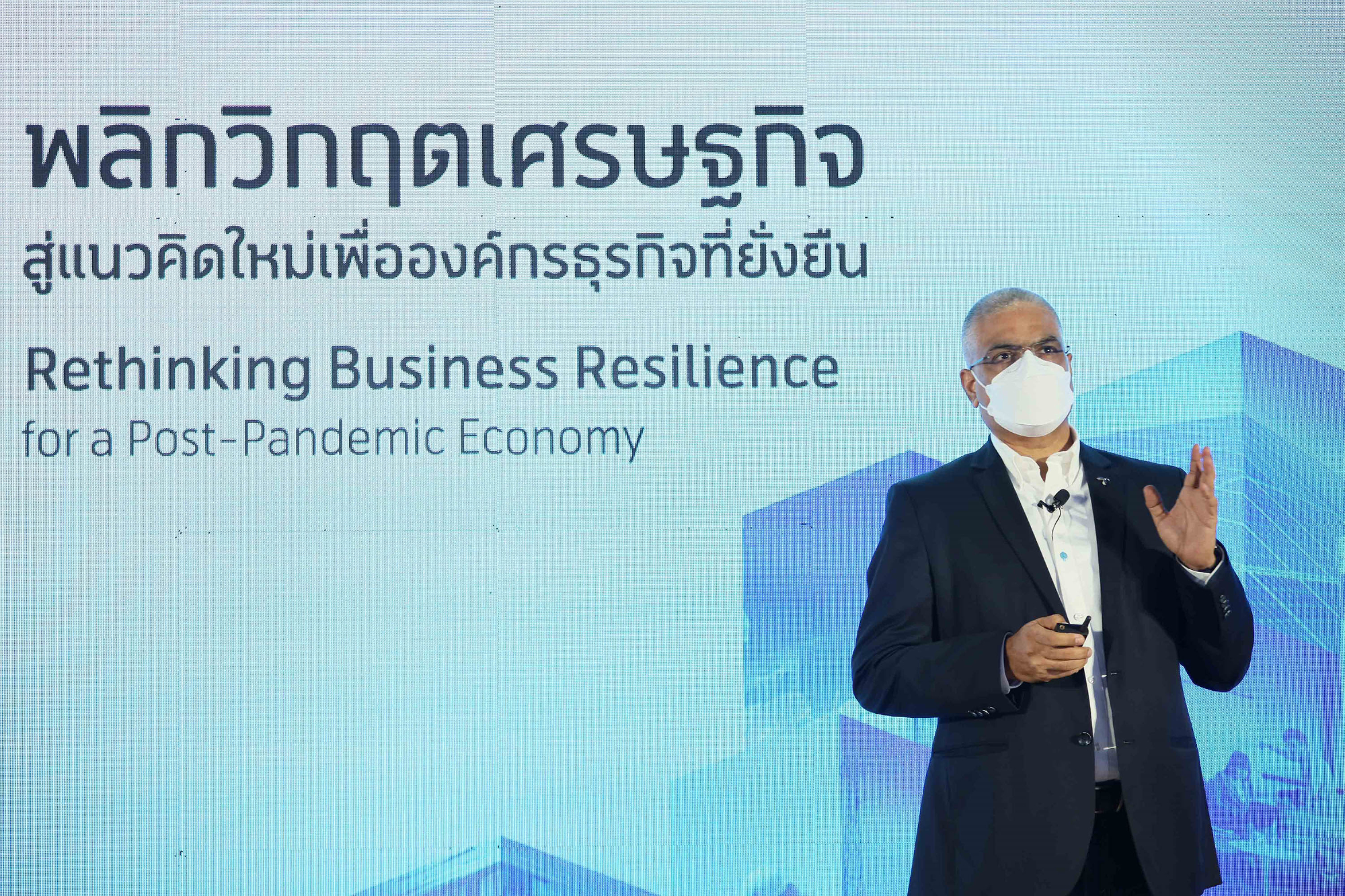
Dtac unveiled three megatrends in the post-pandemic economy – a critical need for scale and efficiency, the threat of a widening digital divide, and the growing impact of climate change on supply chain sustainability. In response, the company announced its strategy to rethink business resilience and commit to responsible business practices.

Sharad Mehrotra, chief executive officer of Total Access Communication Plc or dtac, said in the dtac Responsible Business virtual forum 2021 that, “The COVID-19 outbreak has proven how truly inspiring human resilience is, as we saw in the significant growth in the adoption of digital channels. But Thailand is now faced with the formidable challenge of rethinking business resilience for the post-pandemic economy. Businesses must be faster to change, less easily disrupted, and built on sustainable models that benefit all their stakeholders.”

Business resilience in post-pandemic lies within climate changeBusiness resilience in post-pandemic lies within climate change

MEGATRENDS AFFECTING BUSINESS RESILIENCE

Mr. Mehrotra shared three megatrends that the business sector must adapt to for greater resilience.

1st Megatrend: A critical need for scale and efficiency.

The pandemic has accelerated the need for businesses to seek economies of scale and a depth of expertise that can be difficult to develop without sufficient scale. This will reshape businesses across the region as seen in the potential merger between Malaysia’s Digi and Celcom, the IPO announcement for Singapore’s Grab and, in Thailand, Gulf Energy’s interest in entering the telecoms industry.

2nd Megatrend: The threat of a widening digital divide.

COVID-19 accelerated the adoption of digital channels, both for private and government services. This has been an extraordinary opportunity for businesses to build their resilience by developing always-on, touch-free channels that are unaffected by lockdowns. But it also threatens the livelihoods of brick-and-mortar shop owners and increases the risks of marginalizing people who are not digitally literate.

3rd Megatrend: The growing impact of climate change on supply chain sustainability.

Aside from the COVID-19 crisis, Thailand has also been struggling with global warming. Climate change has already affected our fragile coastal and agricultural ecosystems. If preventive measures are not taken, the global supply chain may face a major disruption due to an extreme climate event, such as when the 2011 floods in Thailand led to a global shortage of hard drives for months.

Business resilience in post-pandemic lies within climate changeBusiness resilience in post-pandemic lies within climate change

A HOLISTIC PLAN FOR BUSINESS RESILIENCE

In response to these challenges, dtac has taken a holistic view of responsible business that brings together compliance, data privacy, supply chain sustainability, digital upskilling, climate change, human rights and the health and safety of our workers into one single platform for change. dtac recognizes the need to act in all these areas, but it has identified three focus areas most likely to impact resilience in the new normal.

1. Climate Change

According to the GSMA, the telecommunications sector accounts for roughly 4 percent of global electricity consumption. And telecommunications infrastructure continues to expand. In Thailand, the average annual expansion rate of the number of network sites is at 7 percent, which is about 3 percentage points higher than the global average. This reflects active attempts by local mobile operators to close the digital divide, increase digital adoption, and develop 5G.

COVID-19 has further increased Thailand’s mobile connectivity needs, with dtac customers’ average data usage reaching 20 GB per person. This will augment energy consumption in the network, which currently accounts for more than 97 percent of the dtac’s business operations’ energy needs.

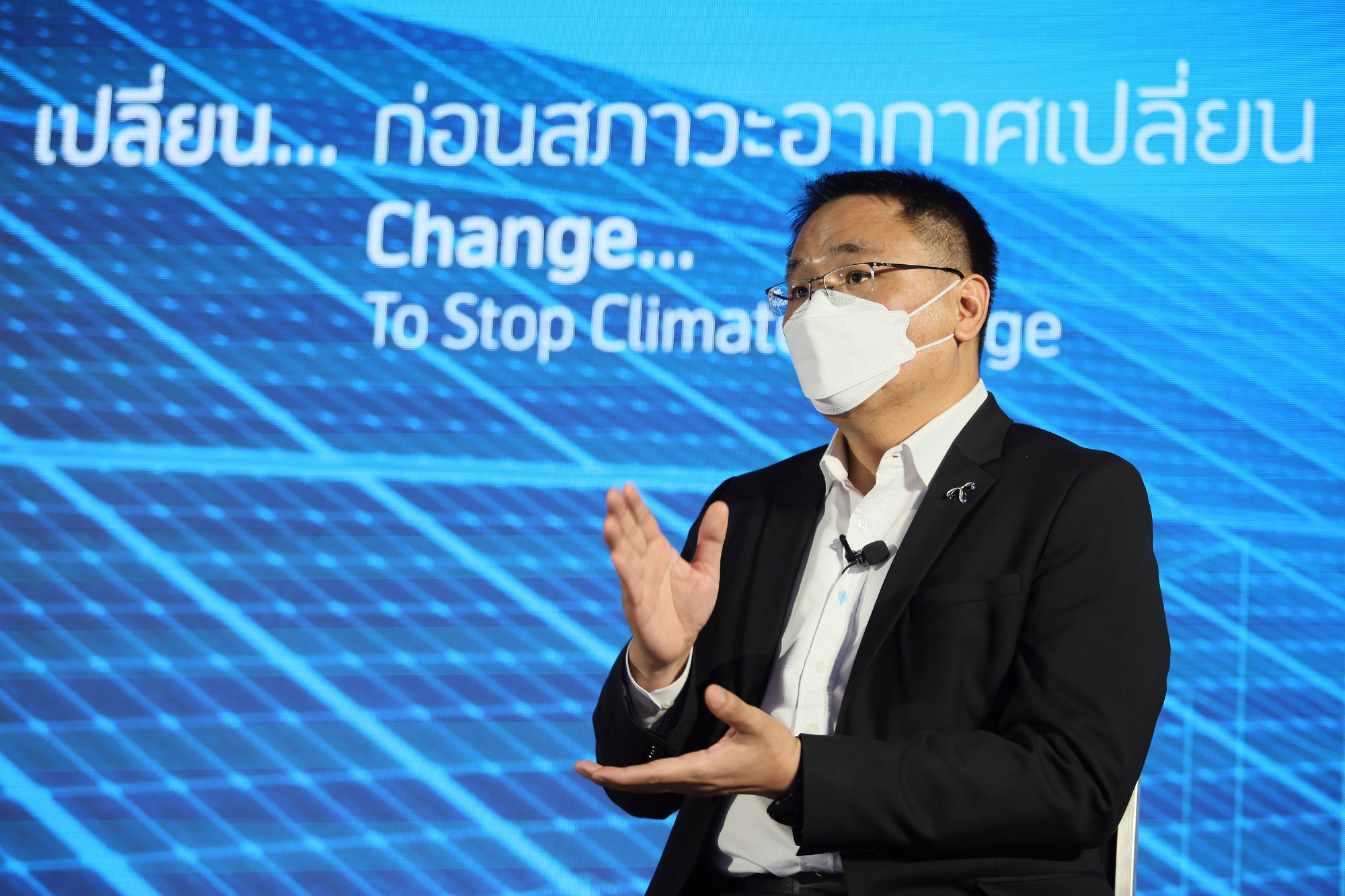
In response, dtac has committed to cutting its greenhouse gas emissions in half by 2030 through alternative and renewable energy and by boosting energy efficiency in the network infrastructure and data center. dtac also collaborates across industries to develop IoT use cases, including smart water management and smart energy, which will enable other industries to reduce their greenhouse gas emissions. Moreover, dtac is committed to achieving zero landfill disposal of its solid and electronic waste by 2022, 80 percent of which comes from the network.

Prathet Takuranun, Chief Technology Officer at dtac, said, “Accessing alternative and renewable energy sources is challenging for mobile operators, as the patterns of energy usage in network infrastructure are structurally unique. But dtac’s goals to reduce greenhouse gas emissions are tangible and set clear indicators.”

1. Supply Chain Sustainability

Under social distancing, mobile connectivity plays a critical role in sustaining business activities. To provide uninterrupted mobile services under these circumstances, dtac thus improved the flexibility and resilience of its supply chain.

Tipayarat Kaewsringam, Chief Sales Officer at dtac, said, “dtac’s first priority is always uninterrupted mobile services. We’ve completely rethought our way of work, and 95 percent of our office and call center employees now embrace flexible work, rotating between home and office settings. Secondly, we redesigned our whole supply chain based on users’ mobility data to be much more localized, with an increased number of depots in the regions. Our third priority is digital acceleration among our customers and suppliers via digital channels.”

dtac also says the respect of human rights in supply chains promotes resilience by reducing risk. For dtac, there are two focus areas. One is the data protection rights of customers, the other is health and safety for employees and suppliers. The company is committed to zero incident, which aims to eliminate injury and fatal injury in dtac’s supply chain.

1. Data privacy

With accelerating digital transformation due to the pandemic, there are rising public concerns around the issue of privacy and personal data protection. This factor increasingly impacts how consumers choose a product or service. In a Cisco 2020 privacy survey, 48 percent of respondents said they do not feel they can adequately protect their data, the main reason being that they lack clarity on how companies use their data. dtac has responded with strict internal policies that govern how it uses personal data, in line with the European Union’s General Data Protection Regulation (GDPR) and Thailand’s Personal Data Protection Act (PDPA).

Marcus Adaktusson, Chief Corporate Affairs Officer at dtac, said, “Companies are heavily reliant on data to build new products and services. As such, dtac welcomes the implementation of a national framework around personal data usage by businesses. Its success will hinge on the clarity around its key provisions and the consistency of its application across all sectors. If the standards and expectations are well defined, it will also support a better understanding from consumers as to how their data is used.”

Published : May 27, 2021

Agency launches contest for new Thai rice varieties in bid to boost exports #SootinClaimon.Com

#SootinClaimon.Com : ขอบคุณแหล่งข้อมูล : หนังสือพิมพ์ The Nation.

https://www.nationthailand.com/business/40001408

Agency launches contest for new Thai rice varieties in bid to boost exports


The Thai Rice Exporters Association is holding a contest to find new rice varieties to feed the global market, as well as strengthen Thailand’s competitiveness.

Agency launches contest for new Thai rice varieties in bid to boost exports

Innovators have until June 30 to register, before planting their variety between July and November. The winner will be chosen in December when the rice is harvested and tasted.

The association’s president Charoen Laothamatas said Thailand exported 1.45 million tonnes of rice in the first four months of this year, a fair bit lower than the target of 2 million tonnes.

He put the drop down to the price – Thai rice is more expensive compared to Vietnam or Pakistan – and an improvement in the quality of rice from other countries.

He added a similar contest will be held next year as well.

Published : May 28, 2021

By : The Nation