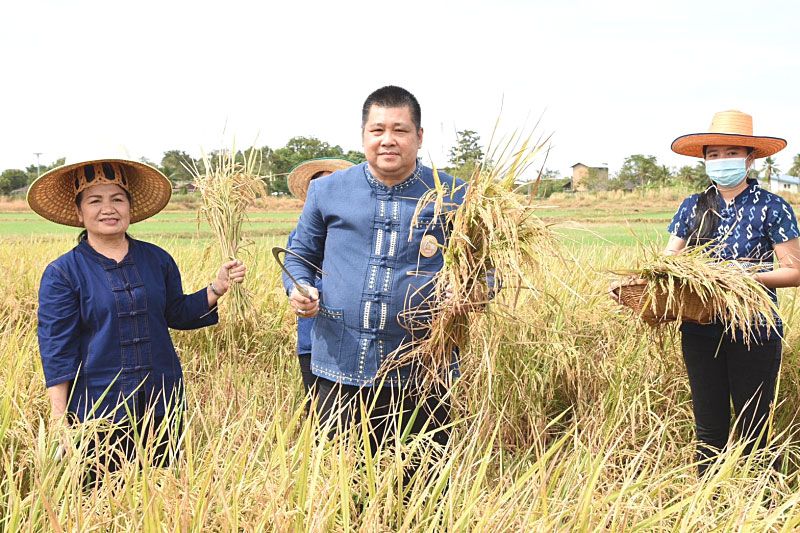
BA.2.75 now responsible for 75% of new Covid-19 cases in Thailand
THURSDAY, DECEMBER 08, 2022
Omicron subvariant BA.2.75 accounted for 75.9% of new cases logged in Thailand last week (November 26-December 2), according to new data released by the Department of Medical Sciences (DMS). That figure rose from 58.9% in the previous week.
BA.2.75 was found in 75.4% of new domestic infections, rising from 60.1% in the previous week, when it overtook BA.5 as the dominant subvariant, said DMS director-general Dr Supakit Sirilak.
Genome sequencing on samples from new cases in Thailand last week found that 856 were caused by the BA.2.75 strain.
The XBB strain spreading in Singapore was found in 30 samples, while the BQ.1 subvariant affecting the Americas and Europe accounted for 13 cases sampled. The DMS found only one case of XBC or Deltacron, a hybrid of Delta and Omicron found recently in the Philippines.
Supakit warned that those who had recovered from infections by previous strains could be reinfected by the newly dominant BA.2.75. However, there is no evidence it causes more severe symptoms than other strains, he added.
“People are still advised to wear face masks in public, wash their hands regularly and get a vaccine booster shot every four months to stay safe from Covid-19,” he said. “Current vaccines are still effective and can reduce the chance of infection and prevent severe symptoms.”
Google’s Year in Search reveals Thailand’s top trends in 2022
THURSDAY, DECEMBER 08, 2022
“State welfare card” and “Nida ‘Tangmo’ Patcharaveerapong” were the top trending internet searches this year in Thailand, according to Google’s Year in Search 2022.
Government aid and stimulus schemes were among the top searched words for the fourth year running in the annual review, which provides a snapshot of the key trends and interests over the past 12 months, based on Google searches.
Ranked first in Thailand’s top-10 searches was “State welfare card”, as people struggled with the economic impact of Covid-19 and the cost-of-living crisis. Second was the actress Tangmo, whose death in a controversial boating accident in Bangkok on February 24 dominated the headlines for weeks.
Third place went to “Khon La Khrueng (Let’s Go Halves) Phase 5”, the government’s latest shopping subsidy scheme. “Tai Lar” (The Giver), a Thai drama series, and Indian film “Gangubai Kathiawadi” were the fourth and fifth most popular searches, respectively.
Sixth was the AI text-to-speech app “Botnoi Voice”, followed by the word game “Wordle”. Eighth and ninth places went to the Thai drama series “Duay Rak Lae Haklang” (P.S. I Hate Your) and “Khue Thoe” (Bad Romeo). Ranked 10th was “Sor Thor 02”, the government’s online platform for vocational education institutes.
Google Thailand said Thai users this year searched for ways to relax, with five in 10 trending searches involving entertainment (four dramas or films and one game). Meanwhile education-related searches such as “Botnoi Voice” and “Sor Thor 02” made the top 10, signifying people are still using the internet for learning.
Other trending searches in notable categories were as follows:
Trending news
1. Tangmo Nida 2. Mass shooting in Nongbua Lamphu 3. “Phra Bida” cult leader 4. Russia-Ukraine war 5. Nong Chompoo murder case in Mukdahan
Trending domestic destinations
1. Bangkok 2. Suphanburi 3. Hua Hin 4. Chiang Mai 5. Rayong
Trending overseas destinations
1. Singapore 2. Vietnam 3. Laos 4. Japan 5. Korea
Trending people
1. Chinese singer Jackson Wang 2. Prinn Panitchpakdi, former Democrat deputy leader 3. Bangkok governor Chadchart Sittipunt 4. Actress Amena “Mo” Pinit 5. Actor Thanapon ‘Tle’ Nimtaisuk
“Gowajee”, a Thai Speech-Recognition AI from Chula
THURSDAY, DECEMBER 08, 2022
“Gowajee”, a Thai-language speech recognition AI capable of delivering speech-to-text/ text-to-speech with the accuracy of a native speaker while keeping users’ data secure. Having been rolled out in call centres, and depression patients screening processes, Gowajee is set to be adapted to many other functions.
‘OK, Google’
We’re getting used to using our voice commands for AIs like Google or Siri to search or carry out tasks instead of typing them out. But for Thai speakers, have you ever felt that those AI voices don’t seem to understand the Thai tone of voice that we use?
Many times, we get a transcription that doesn’t match our words which means we need to adjust our Thai pronunciation to the AI developed by a foreign company that was aimed for multilingual adaptability, mostly standard languages like English.
Realizing this problem, a team led by Ekapol Chuangsuwanich of the Department of Computer Engineering, Faculty of Engineering, Chulalongkorn University has developed “Gowajee” a genuine Thai speech-recognition AI that understands and execute commands in the Thai language more naturally and accurately. Actual usage has shown only a 9% incidence of linguistic inaccuracy compared to 15% for other language-recognition AIs.
The name Gowajee derives from the word ‘Go’ and ‘Wajee’ which means words. The word is designed as a command similar to ‘OK Google’ or ‘Hey Siri’. The word Gowajee was designed in such a way as not to replicate any other word being used in the Thai language.
Thai language AI with a Thai sound database
Ekapol and his team began the task of compiling a Thai sound database from 2017 up until the present. As he recalled, “….we applied a variety of methods and formats such as creating a website for people to log in and read a text to be stored as a sound database, getting people to engage in a conversation or actors to perform emotional speaking. Altogether, we achieved a compilation totalling five thousand hours which made us confident that we had a big enough database to transcribe Thai accurately.”
This database was enough to enable the Gowajee team to develop an accurate Thai language recognition AI that could be adapted for use in three main features:
1. Automated Speech Recognition (ASR) which turns speech into text. “For example, if we record a lecture, the AI will transcribe it into texts for us to read without having to transcribe it ourselves,” Ekapol suggested. 2. Text-to-Speech (TTS) works by transcribing a passage into spoken words in the same way that we might be familiar with the use of Google or Siri except that Gowajee will deliver more natural speech thanks to a larger Thai database.
3. Automatic Speaker Verification (ASV) is an identity verification through sound which can be used when contacting a call centre or indicating the speaker and time frame.
Gowajee – a perfect solution for call centres Ever since it was developed, Gowajee has been used by various agencies, like universities, and the public and private sectors, especially at call centres, both for speech-to-text, and text-to-speech functions. Gowajee’s error is only at 9% compared to 15% by other AIs.
“Most clients have been satisfied with Gowajee’s level of accuracy. It is an improved version of what they have previously used and the price is also more affordable. As for the errors, we are certain that they will decrease as the database grow.”
In search of meaning in the voice: Gowajee helps to screen patients with depression
As a result of data gathering of voices that convey various emotions, Gowajee has been able to help develop the systems used in DMIND for screening patients with depression.
“DMIND proved to be very challenging for us. Aside from transcriptions, a model of classifying and decoding emotions from voices in at-risk groups is also needed. Crying is usually involved which makes voices difficult to transcribe and decode, but Gowajee was able to do considerably well by determining the important keywords for decoding.”
How can Gowajee be adapted for use in other areas?
Gowajee and AI technology can be used in many other areas such as … • A dental assistant takes notes while the dentist is doing dental work on the patient and needs to record some notes. • It can be used to detect a stroke risk in patients with slurred speech. • Act as a life coach by asking questions and analyzing people’s life goals from video interviews, use as part of students’ and employees’ orientation. • Modify and amplify sounds for the hard-of-hearing so that they can hear more clearly.
Your data is safe with Gowajee
“Data safety” is what puts Gowajee above other speech-recognition AIs. As Ekapol tells us “Normally other transcription programs store their data on the cloud or compile them on users’ computer. With Gowajee, all the data is stored on the user’s database ensuring its safety. This is useful for organizations like banks which need high data security.”
AIs are becoming increasingly clever with the enhanced linguistic abilities that are getting closer and closer to human beings which have caused many to worry about being replaced by technologies. In terms of AIs for Thai language transcription, Ekapol only sees them as enablers that will make life easier for us in the present and the future.
“AIs aren’t that disrupting to our lives. We are disrupting ourselves. Ageing societies and a shortage of working-age labour are making it necessary for us to create technologies to substitute what we can’t find humans to do.” Ekapol also concluded by saying “I’m not expecting that my work is going to be helpful to the aged of today but I’m thinking that in the future when I reach an old age I will be making use of these technologies.”
Industrial Estate Authority expects to sell/lease 2,500 rai next year as FDI rises
THURSDAY, DECEMBER 08, 2022
The Industrial Estate Authority of Thailand (IEAT) estimates it will sell or lease about 2,500 rai (400 hectares) of land to investors next year, its governor said on Thursday.
Wiris Amrapal said he expects the recovery of the global economy coupled with development of IEAT estates to draw more foreign direct investment (FDI) to Thailand, resulting in more sale/lease of estates.
Wiris said the IEAT fast-developing industrial estates had already drawn attention from foreign investors.
FDI is starting to rise again, with overseas companies seeking opportunities in the Eastern Economic Corridor since September 1 after Thailand began issuing long-term residency visas, he said.
The increasing number of foreign investors could be seen from the steep rise in leasing and sales on IEAT estates, Wiris said.
From September 2021 to October 2022, the IEAT sold or leased 2,016.14 rai on estates, up 65.1% from the same period a year earlier.
Wiris said major IEAT development projects making significant progress this year include:
– Third phase of the Map Ta Phut Industrial Port project, where construction is 30.33% complete.
– Smart Park Industrial Estate (1,384 rai), where construction is 38.65% complete for the September 2024 deadline.
– Special Economic Zone (SEZ) in Sa Kaew Industrial Estate (660.56 rai) in Aranyaprathet, where construction is 100% complete and six investors have moved in.
– Two industrial estates on Corrections Department land – one developed by Sivachai Co Ltd on 4,131 rai, and the other by Green Utility Holding.
– Project to cut greenhouse gas emissions, which now covers 31 factories.
Finance Ministry brushes off protest over upcoming tax on stock trades
THURSDAY, DECEMBER 08, 2022
The Finance Ministry is brushing off protesters who called on Thursday for an end to trading on the Stock Exchange of Thailand and warned authorities they would shift their money to foreign bourses due to the upcoming financial transaction tax.
If they want to trade on foreign bourses to avoid paying tax here, they will have to pay a tax there and it may be higher than here, said Kritsada Jinavijarana, the ministry’s permanent secretary.
Kritsada said that the Office of the Council of State was still ironing out some details of the new tax.
Kritsada also expressed optimism that the Thai economy would attain 5% annual growth due to the government’s efforts to restructure the agricultural and industrial sectors.
If there is more investment in Eastern Economic Corridor or the Eastern Seaboard Industrial Estate the economy will expand, he said.
“Economic growth could come from several drivers, including tourism. Although the current base number [of tourists] is low, if 40 million tourists came to Thailand in 2023, it will help the [economy] grow,” he said, adding that if that number of tourists arrive next year the economy could grow by 5%,” Kritsada explained.
He also said he agreed with the estimate from the Fiscal Policy Office that the Thai economy would grow 3.4% this year and 3.8% next year.
Thailand remains secure financially and should be able to remain so in the long term, he added, explaining that the current level of foreign exchange reserves is “great”.
Kritsada declined to provide an opinion on the Pheu Thai’s policy goal of nearly doubling the minimum wage to 600 baht a day in four years, saying the Fiscal Policy Office is currently considering what effects this increase would have.
High growth potential for Thailand’s halal food industry as exports to Islamic nations keep growing
THURSDAY, DECEMBER 08, 2022
Thailand’s halal food industry has a bright future with rising value of export to Muslim nations and the increasing number of Muslim tourists visiting the country, the Trade Policy and Strategy Office said on Thursday.
TPSO Poonpong Naiyanapakorn said Thailand exported halal foods worth US$4.681 billion to the 57 member nations of the Organisation of Islamic Cooperation (OIC) during the first nine months of this year. The value rose by 64.65% from the same period last year, Poonpong said.
In 2014, the value of halal food exports to the 57 OIC nations was US$4.188 billion, an increase of 4.12% from the previous year, Poonpong added. The value of halal food exports was 12.13% of the overall food export value.
The top five halal food categories exported to the 57 OIC nations in 2014 were:
– Cereals worth $1.063 billion
– Food mixtures (preparations) made from meat, fish, and marine sources $619.36 million
– Sugar and sweets $522.53 million
– Food mixtures (preparations) made from cereal, flour and milk $330.17 million
– Miscellaneous foods mixtures (preparations) $260.05 million
Poonpong said the top five OIC nations that imported halal foods from Thailand in 2014 were:
– Malaysia $1.193 billion
– Indonesia $885.77 million
– United Arab Emirates $228.64 million
– Egypt $225.18 million
– Yemen $165 million.
Apart from exports, Thailand could also earn a lot of income from selling halal foods to visiting Muslim tourists, Poonpong said.
He said the Global Muslim Travel Index (GMTI) 2022 made by the Mastercard-Crescent Rating reported that Thailand was ranked the third most popular destination for Muslim tourists after Singapore and Taiwan.
The ranking improved from fourth spot in the 2021 ratings, Poonpong added.
Before the Covid-19 pandemic, the statistics from the Tourism and Sports Ministry showed that of the 57 OIC nations, the highest number of travellers to Thailand came from Malaysia.
In 2019, 4.272 million Malaysian tourists visited Thailand and during the first 10 months of this year, 1.291 million tourists from the neighbouring country visited, followed by Indonesia and Saudi Arabia.
Poonpong added that the halal food industry has a bright future because of the large Muslim population worldwide and in Thailand.
He said statistics from the Pew Research Centre showed that world Muslim population was 1.9 billion, or 23.54% of world population.
Indonesia has the biggest Muslim population of 229 million, followed by Pakistan (200 million), India (195 million), Bangladesh (154 million) and Nigeria (99 million).
In Thailand, figures from the National Statistical Office of Thailand showed that there are 3.639 million Thai Muslims, or 5.4% of Thai population.
“Islam is the second most-practised religion in Thailand after Buddhism, so the Muslim consumer market is large with a lot of potential. Moreover, Muslims have a tendency to constantly spend [on halal foods],” Poonpong said.
TMBThanachart hikes loan interest rate but GHB maintains status quo
THURSDAY, DECEMBER 08, 2022
TMBThanachart Bank (TTB) on Thursday raised its lending rates following the central bank’s move to hike the key policy rate.
Piti Tantakasem, chief executive officer of TTB, said his bank had to raise the interest rate after the policy rate was increased for the third time this year.
On November 30, the Bank of Thailand’s Monetary Policy Committee voted unanimously to raise the policy interest rate by 25 basis points to 1.25% to control inflation.
Piti said TTB raised its MRR (minimum retail rate) for retail customers by 0.20 percentage point to 6.68% per annum while the MLR (minimum loan rate) for big clients was raised by 0.25 percentage point to 6.625% per annum.
He said the MOR (minimum overdraft rate) was raised by 0.25 percentage point to 6.65% per annum.
The increase takes immediate effect.
Meanwhile, Government Housing Bank president Chatchai Sirilai said the bank would maintain the current lending rates until the end of January before raising them in accordance with the new policy rate.
He said the GHB decided to maintain the current loan rates to minimise impact on its clients.
But the GHB has decided to increase its deposit rates for fixed accounts and deposit drafts with two-year, three-year, and five-year terms by 0.10 to 0.50 percentage point per annum from 1.1% per annum.
The increase will take effect on Friday, he said.
On Wednesday, Siam Commercial Bank (SCB) had raised its interest rates for both deposits and loans, the first bank to do so following the Bank of Thailand’s latest policy rate hike.
The baht opened at 34.88 to the US dollar on Thursday, strengthening from Wednesday’s close of 35.08.
The currency will likely move between 34.80 and 35.00 against the greenback during the day, Krungthai market strategist Poon Panichpibool said.
Poon said that the baht strengthened quickly last night after the dollar weakened and the gold price increased.
However, he cautioned the baht could weaken, especially if the latest US producer price index slows less than expected and triggers market concern over another possible rate hike by the US Federal Reserve.
The market is also in a risk-off state amid the global economic slowdown, which may trigger foreign fund outflows from the Thai stock market, Poon said.
However, he viewed that the baht will not weaken much and projected its key resistance level at 35.20, supported by foreign investors who are still buying Thai short-term and long-term bonds.
He forecast exporters would wait until the baht dropped close to its resistance level before selling dollars.
He also advised investors to use hedging tools such as options to manage risks in a highly volatile currency market.


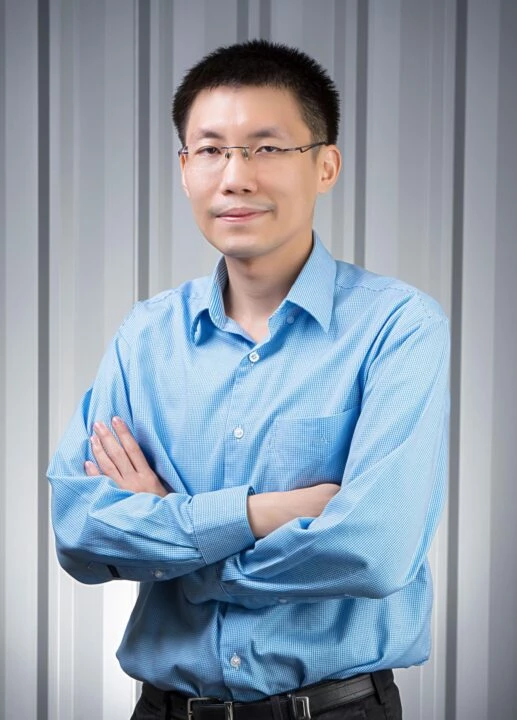



 Poonpong said the top five OIC nations that imported halal foods from Thailand in 2014 were:
 Apart from exports, Thailand could also earn a lot of income from selling halal foods to visiting Muslim tourists, Poonpong said.
 Poonpong added that the halal food industry has a bright future because of the large Muslim population worldwide and in Thailand.