Agony as foreign tourist breaks back at Pai waterfall
FRIDAY, JANUARY 13, 2023
A foreign tourist broke his back in a motorbiking accident at a waterfall in the backpacking hotspot of Pai, Mae Hong Son province on Thursday.
Issam Messaoudi, a dual Belgian-Moroccan national, was rescued and rushed to Pai Hospital after his motorcycle lost control while he was riding up a path next to Mor Paeng waterfall in Pai district.
X-rays taken at the hospital showed his spine was broken, prompting medics to transfer him to the better-equipped Bangkok Hospital in Chiang Mai – an agonising 130-kilometre journey.
Messaoudi and a friend rented the motorcycle from a local shop that offers a rental service for sightseeing around waterfalls and other attractions in Mae Hong Son.
Officials said the steep path where the accident occurred had been made slippery and hazardous by recent rainfall. Messaoudi’s friend escaped the accident without injury.
The Mor Paeng waterfall is highly popular among foreign tourists as the beauty spot is located only 6 kilometres from Pai’s town centre. The 50-metre-high, 3-stage waterfall has a steep cliff that offers challenges for those who enjoy mountain climbing and mountain bike or scooter riding. The clear water and flat rocky banks also make it an excellent destination for paddling and swimming during summer.
Parliament study a blueprint for legalising casinos minus controls: NGO
FRIDAY, JANUARY 13, 2023
An NGO has slammed the Thai Parliament’s study on entertainment complexes as a blueprint for legalising casinos that ignores damage to society from legalised gambling.
Thanakorn Khomkris, secretary-general of the Stop Gambling Foundation, said that about 95% of the report focuses on how to legalise and collect revenues from casinos, while only 5% is devoted to other entertainment-complex businesses such as hotels, theme parks, sports arenas, and shopping malls.
“This shows that the study aims to highlight the pros of legalising casinos in Thailand, while many important topics have been omitted, such as prevention of money laundering and other criminal activities, and the impact of legalised gambling on society,” he said on Thursday.
The Parliament subcommittee on entertainment complexes has launched the study eight months ago and the results were recently made public.
Thanakorn then proposed three improvements to the report before the subcommittee submits it for Parliament’s consideration:
1. The focus of the report should be equally distributed between casinos and other entertainment-complex businesses.
2. It should include measures to prevent money laundering and criminal activities from legalising casinos in Thailand.
3. It should also feature measures to prevent and mitigate the impacts of legalised gambling on society, especially among children and families.
He said that without these details, the report should be considered incomplete, and Parliament should not approve it.
“The subcommittee members must ask themselves who are they serving: businesspeople who aim to open casinos in Thailand or the Thai people,” he said.
Kazakhstan and Thailand mark three decades of ties with tree planting
THURSDAY, JANUARY 12, 2023
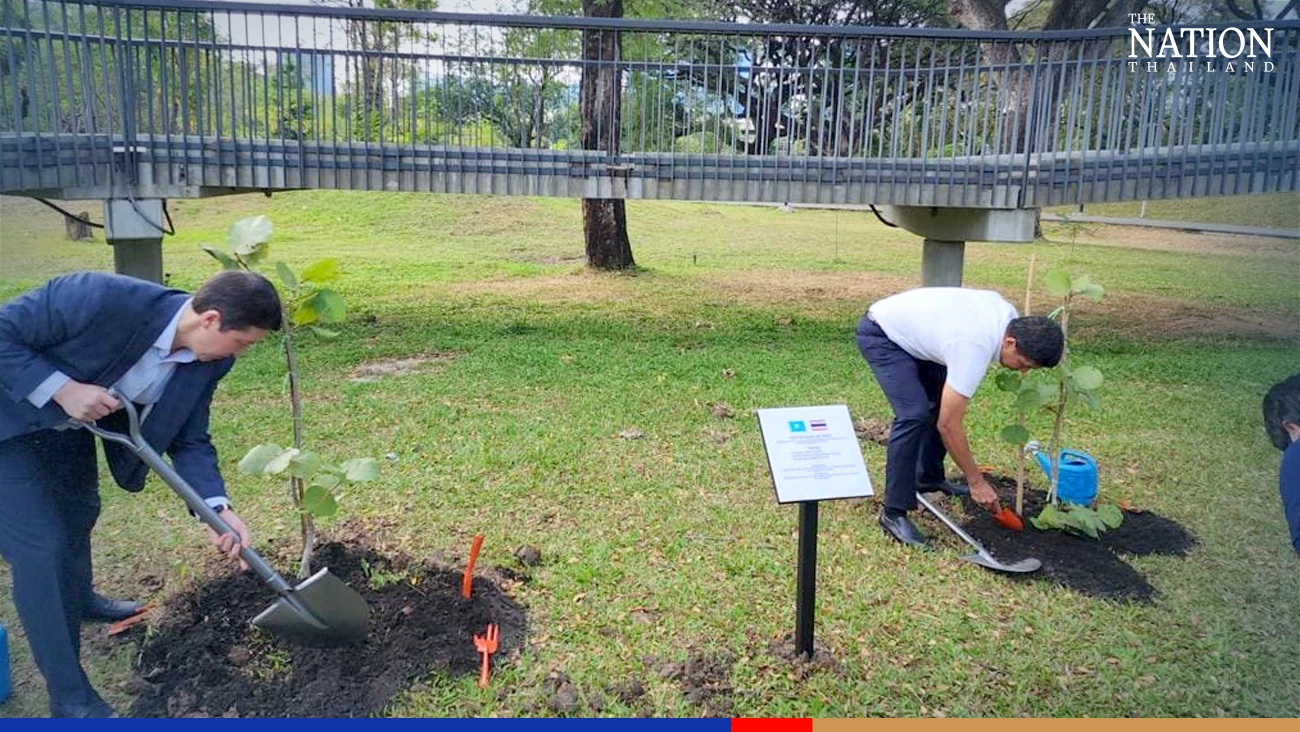
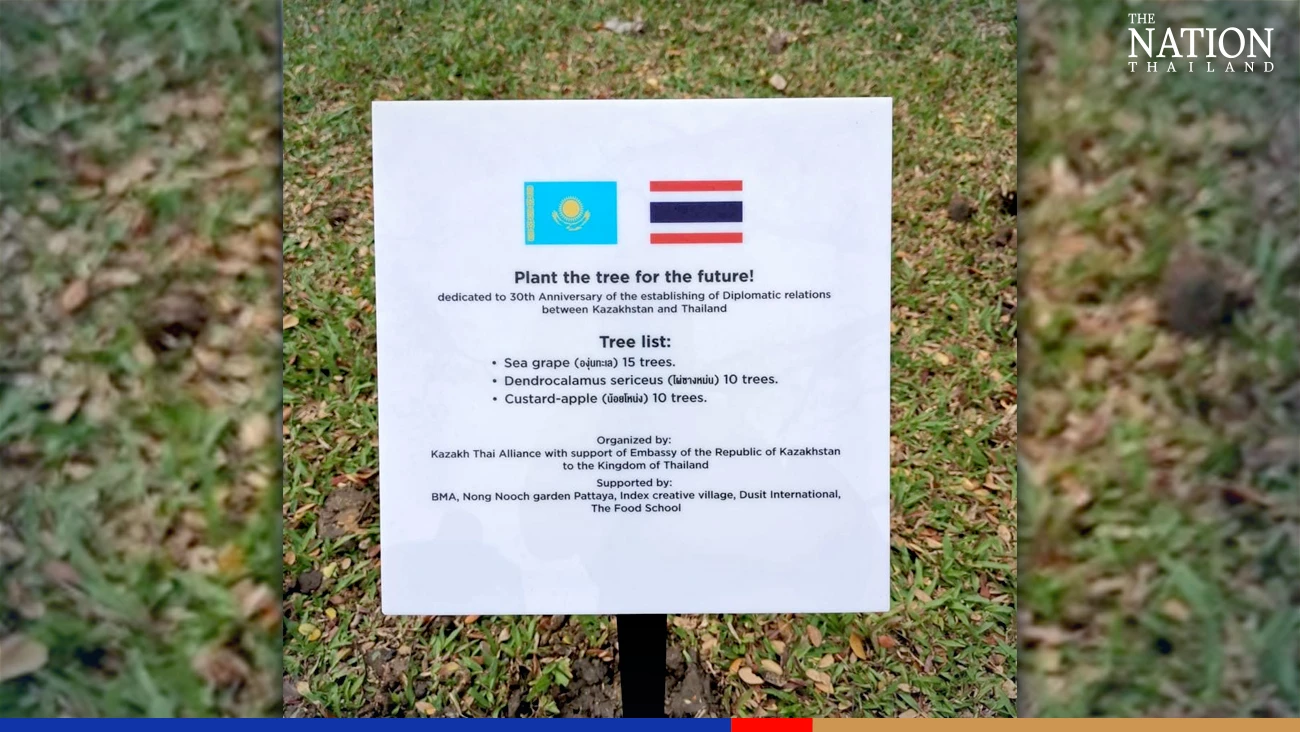
Thailand and Kazakhstan celebrated 30 years of diplomatic ties with a tree-planting event in Bangkok’s Benjakitti Park.
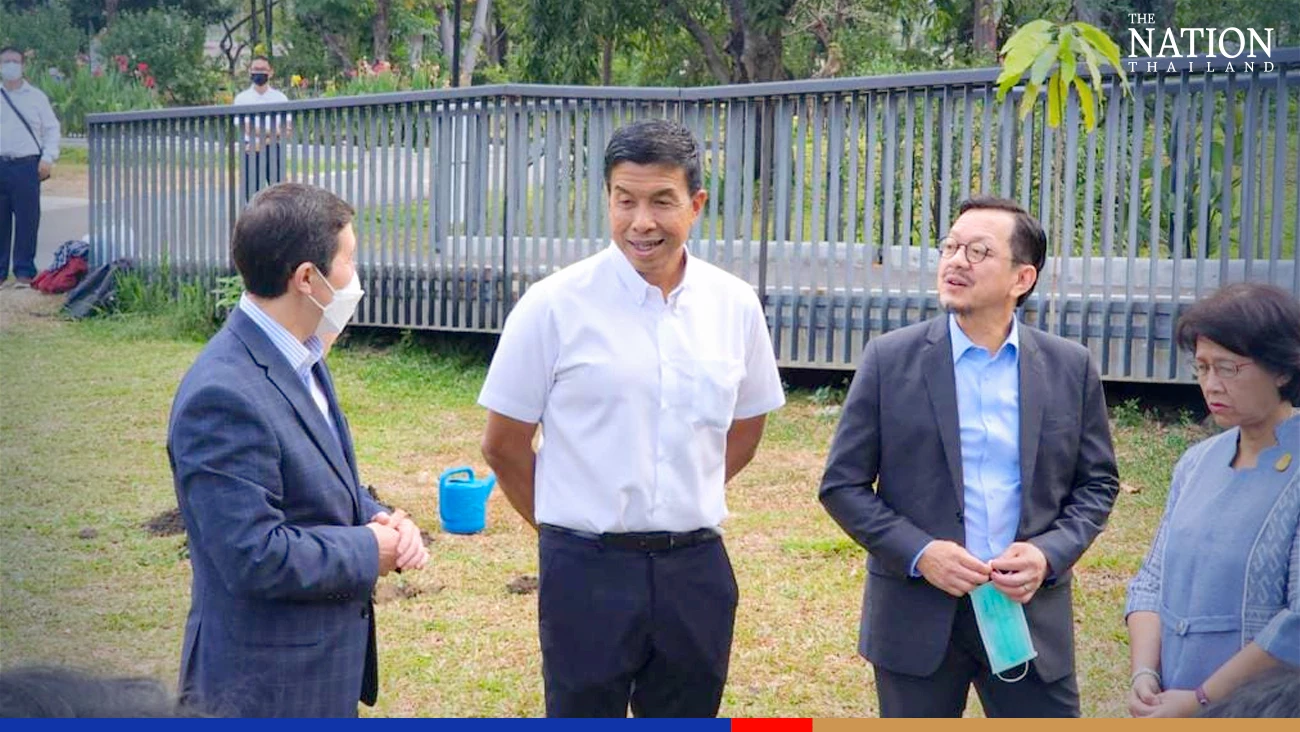
The Kazakh-Thai Alliance, with the support of the Embassy of Kazakhstan in Thailand, organised the tree-planting event on Wednesday (January 11). The event was attended by Kazakhstan’s Ambassador Arman Issetov and Bangkok Governor Chadchart Sittipunt, as well as other guests.
They included Warawoot Pongprapapant from Thailand’s Ministry of Foreign Affairs, Professor Kanchanaratt Leevirojana, president of the Thai-Kazakh Parliamentary Friendship Group of the Senate, Nong Nooch Tropical Garden director Kampol Tansajja, Banpu Power chairman Assoc Prof Naris Chaiyasoot, Dusit Thani Group CEO Suphajee Suthumpun, and Index Creative Village Group founder and CEO Kreingkrai Kanjanapokin.
The event aimed to support the Bangkok Metropolitan Administration’s “green city” initiative.
Kazakhstan, which was previously a part of the Soviet Union, and Thailand established diplomatic relations in 1992, shortly after the dissolution of the USSR.
Thailand has its embassy in Kazakhstan’s capital Astana and an honorary consulate in Almaty, which is the Central Asian nation’s largest city, while Kazakhstan has its embassy in Bangkok and an honorary consulate in Chonburi province.
Kazakhstan, located mainly in Central Asia and partly in Eastern Europe, borders Russia to the north and west, China to the east, Kyrgyzstan to the southeast, Uzbekistan to the south, and Turkmenistan to the southwest, with a coastline along the Caspian Sea.
In recognition of the 30th anniversary of bilateral ties, Kazakhstan’s Deputy Prime Minister and Foreign Affairs Minister Mukhtar Tileuberdi and Thailand’s Deputy Premier and Foreign Minister Don Pramudwinai exchanged congratulatory letters, according to the Kazakh Embassy.
“For 30 years, the two states have been developing mutually advantageous collaboration in view of their common interests in the fields of security, trade, tourism, culture and education,” the embassy said.
Numerous joint events have been organised through state bodies, parliaments, business groups, and scientific, educational, and cultural centres, its press release said.
Kazakhstan and Thailand also maintain good cooperation under the United Nations, Conference for Interaction and Confidence-Building Measures in Asia, the Asian Cooperation Dialogue, and other international platforms. Thai representatives have taken part in the Congress of Leaders of World and Traditional Religions, supporting Kazakhstan’s initiatives to consolidate mutual respect and tolerance between followers of various denominations.
“Sharing similar geopolitical characteristics as natural transit hubs in Asia, Kazakhstan and Thailand remain committed to further progress of the bilateral cooperation,” the Kazakh Embassy said.
Thai-Myanmar Friendship Bridge reopens three years after closure during Covid
THURSDAY, JANUARY 12, 2023
The Thai-Myanmar Friendship Bridge, which links Thailand’s Tak province and Myawaddy in Myanmar, was reopened on Thursday, more than three years after it was shuttered due to the Covid-19 crisis.
Senior officials from both sides of the border took part in a ceremony held on the bridge to mark the reopening.
Tak Governor Somchai Kitcharoenrungroj joined his Myanmar counterpart U Zaw Tin at the long-awaited reopening of the bridge.
Among those attending the ceremony were customs officials, immigration officers, police and military officers, local administrators, public health officials, and local business leaders.
Local officials from Thailand and Myanmar had convened many meetings in preparation for the bridge’s reopening.
Business people on both sides of the border agreed that the reopening would benefit both Thailand and Myanmar in many ways, including trade, investment, tourism and their economies in general.
They expect a quick recovery of tourism and a return of tourists to the area shortly after the bridge’s reopening.
Border trade and tourism had suffered due to the closure of the bridge, which has the Mae Sot border checkpoint on the Thai side.
Meanwhile, security measures have been tightened along the Thai-Myanmar border in Tak province, with security forces using sniffer dogs to patrol the Thai side of the bridge.
ICONSIAM celebrates Children’s Day in “THE ICONIC CHILDREN’S PLAYGROUND 2023” event from January 11-15
THURSDAY, JANUARY 12, 2023
ICONSIAM, the global landmark by the Chao Phraya River, and Playmobil, a world’s popular imaginative and educational toy from Germany, celebrate Children’s Day in “THE ICONIC CHILDREN’S PLAYGROUND 2023” event from 11-15 January 2023 at ICONSIAM.
Discover the largest collection of over 50 giant Playmobil figures. Features also are Playmobil figure assembly contest and an opportunity to donate Playmobil figures value over 1.2 million baht to children in needs. Meet the new Playmobil collection ‘Wiltopia,’ the world’s first sustainable toy made from 80-percent recycled materials. Children can also enjoy Feature AR to learn more about Amazon wildlife.
In addition, Experience entertaining activities by the National Science Museum Thailand and have fun at “Kids Sanook Sook Siam”, the wonderland that encourages learning and stimulate imagination at Sook Siam, Plus an outdoor playground “Let’s Play Bouncing” right by the Chao Phraya River.
Playmobil, imagination and educational toys, invite children to join figure assembly contest at Charoennakorn Hall, M Floor, and share toys with underprivileged children.
A highlight of the Children’s Day 2023 event is the opportunity for children to meet with the largest number of Playmobil Giant Figures and to participate in the challenging Playmobil figure assembly contest. Playmobil figures is the high-quality toys from Germany that promotes children development, unlimited imagination, logical thinking process, cognitive skills and social skills as well as small muscle and emotional development. Children will have fun learning more about different careers and inspired by more than 50 Giant Figures in different career outfits, such as policeman, firefighter, football player and figures from imagination like knights, princess and leading cartoon characters. Participating children and the general public can also participate in the Playmobil figure assembling contest that allow contestants to freely use their imagination to create new toys under “Your Own Figures” theme. This will be the first and the largest competition of its kind in Thailand with expected 6,400 participants and 12,800 figures with total and largest budget of 3,200,000 baht.
What’s special about this contest is the “sharing” concept. Each “contest” does incorporate “sharing”. The contest rule is that the winner will win two Playmobil figures that they assemble while the rest will have to donate one of the two Playmobil toys they make in the contest to the small children’s development centers in Khlong San and Thonburi districts, schools in the Khlong San district and children living in ICONSIAM neighbourhood. The total value of the toy donation is over 1,200,000 baht.
To participate in the Playmobil figure contest, interested persons are required to show a receipt of their goods or service purchase from participating shops within ICONSIAM, as well as Siam Takashimaya worth at least 200 baht per receipt (not including online payment) to win the right to the contest on the same day. Special for children joining the event, ICONSIAM has prepared Child Safety ID Card as a special gift for them to use in their daily life. To obtain the Child Safety ID Card, one has to present One Siam Super App and a receipt worth at least 200 baht.
In addition, ICONSIAM will unveil a special collection “Wiltopia”, the latest green figures made from post-consumer recycled plastic (PCR), which is as environmentally friendly as bioplastic. Playmobil has a clear goal and commitment towards Net-zero Carbon Emissions by 2027. As part of this vision, Playmobil aims to encourage children to learn more about sustainable environmental conservation through participation in various activities at the event. Children can also discover the amazing life of animals, nature and the environments through AR technology that display life-size 3D picture of such animal together with nice narration.
Having fun with creative science activities from National Science Museum Thailand
Children can also enjoy discovering the magic of science by the National Science Museum Thailand (NSM) at “Sense Science,” where they can learn, have fun and challenge themselves. Other fun filled activities such as making tube rocket, balloon rocket, paper airplane and gliders are available at ICONSIAM at Rassada Hall, 1 Floor.
Stimulate kid’s imagination and learning at The magic town “Kids Sanook Sook Siam,” at Sook Siam, G Floor
Sook Siam opens its door to welcome children on the National Children’s Day to “Kids Sanook Sook Siam” event from 10-15 January 2023, at Lan Muang 2, Sook Siam, G Floor, ICONSIAM. Themed “Small World,” a lot of activities that promote children’s learning and imagination include old-time toys and snacks from Pracharat Community Shops, many fun games and prizes, such as popcorn set, Kid Cinema movie tickets, and M Generation Kids membership cards from ICON Cineconic, and Horse-brand stationary from Nanmee. These games will be held at 12.30 hrs., 13.30 hrs., 15.30 hrs., 16.30 hrs., 17.30 hrs. and 18.30 Hrs. On 14-15 January 2023, four children musical plays by Taem Fun story telling group are featured on 14.00 and 17.00 hrs respectively. On 14 January are “Three Little Pigs” and the “Pinocchio”. On January 15 are “The Giant Turnip” and “Snow White and the Seven Dwarfs.” Featured also are cartoon parade, magical show, bozo and the balloons, and many workshops, such as piggy bank painting, ocean-themed gel candle making, animal-shape clay making, key chain painting, woven fish making, and mini khon mask painting.
Let’s Play Bouncing! The open-air playground by the Chao Phraya River at River Park, G Floor
Children can enjoy playing in the outdoor inflatable playground at the “Let’s Play Bouncing” where they can fhave fun climbing up, sliding down and jumping freely and safely on the four giant inflatable bouncers. On offer also are bumper cars and paddle boats. Entrance fee is 250 baht for a child and 100 baht for an adult. The playground is open from 11-17 January 2023 and 25 January – 9 February 2023 at River Park, G Floor, ICONSIAM.
“THE ICONIC CHILDREN’S PLAYGROUND 2023” opening is set on 12 January 2023, with presence of Lydia Sarunrat – Mathew Dean and their children Dylan and Demi at 14.00 hrs.
Children are invited to dress up in their dream career outfit and join this fun-filled event and get a chance to receive special souvenirs from Playmobil (available in limited number). Also available at this event are booths from children skill and talent development schools and toy shops where parents can browse for the right course and toys for their little angels.
The National Children’s Day event will be held from 11-15 January 2023, at Charoennakorn Hall on M Floor, Rassada Hall on 1 Floor, Sook Siam and River Park on G Floor of ICONSIAM. For more information, call 1338 or ICONSIAM facebook page.
Premier Chinese restaurant Mott 32 at The Standard, Bangkok Mahanakhon announces first Lunar New Year program
THURSDAY, JANUARY 12, 2023
Bangkok, Thailand, January 2023 – Mott 32 Bangkok will be at the center of this year’s Lunar New Year celebrations at The Standard, Bangkok Mahanakhon. Specially for the occasion, the restaurant will be offering an exclusive a la carte menu available from 22 to 29 January 2023 for both lunch and dinner and focused on dishes associated with prosperity and good fortune.
One of Hong Kong’s most celebrated Cantonese restaurants, Mott 32 is renowned for its innovative approach to Chinese cuisine, with a deep respect for tradition and ethical sourcing. Honoring the brand’s values, the Lunar New Year menu, available for a limited time only, promises an array of soul-soothing classics made from the finest ingredients. Guests gathering for a reunion will find auspicious dishes such as E-Fu Longevity Noodles with Hairy Crab Roe, Bird’s Nest with Bamboo Pith, Steamed Cod Fillet with Hwa Tiao, Fish Curd in Rice Soup, and more.
Additionally, guests are invited to join Mott 32’s first ever Not Your Standard Bingo on 21 January for a night of fun and games. Taking place from 9.30 pm onwards at the canopied open-air terrace with lush greenery, the experience is priced at THB 888++ per person including two Signature cocktails or wine, and one entry into our lucky draw for a chance to win a 2-night stay in a Lagoon Overwater Villa at The Standard, Maldives, valued at THB 65,000.
Taking inspiration from Chinese history and bustling trade along the Ayutthaya river back in the day, Mott 32 Bangkok’s visionary interior promotes relaxation amid wide-open spaces as well as hosting intimate gatherings in private dining rooms themed around traditional music cultures of China and Thailand, silk trade between Asia and Europe, and teak — a popular material used by both Thai and Chinese artisans to make furniture.
Mott 32 Bangkok is located on the 2nd floor at The Standard, Bangkok Mahanakhon. The restaurant is open for lunch and dinner daily from 11.30 am to 2.30 pm and 5.30 pm to 10.30 pm. To make a reservation or for more information, call +66 2 085 8888, email STBKK@standardhotels.com or visit www.standardhotels.com/bangkok/properties/bangkok.
Airbnb and TAT support digital nomad travel rebound with Live and Work guide
THURSDAY, JANUARY 12, 2023
The rise of remote working is a growing opportunity for countries and regions, and one that Thailand is capitalising on with a unique partnership between Airbnb and the Tourism Authority of Thailand.
Looking to attract more remote workers and long-term travellers to Thailand, both parties today co-launched a dedicated ‘Live and Work in Thailand’ digital information guide that is now live at https://www.airbnb.com/liveandworkanywherethailand.
With Thailand targeting 20 million international arrivals this year and Bangkok currently ranking #5 on top trending travel destinations globally on Airbnb in 2023, tourism and long-term stays (stays longer than 28 days) remain key to the country’s economic recovery.
Notably, Airbnb data in 2022 showed rapidly growing interested in long-term stays across the country – nights booked for long-term stays in non-urban areas approximately doubled in Thailand in Q2 2022, up from Q2 2019 pre-pandemic.
While Bangkok, Phuket and Chiang Mai usually rank as the top searched destinations for long-term stays, destinations outside major metropolitan hubs – namely Koh Pha Ngan, Koh Lanta and Krabi – were also popular for long-term stays in Q2 last year.
Airbnb and the TAT’s new ‘Live and Work Anywhere‘ guide aims to provide key information for remote workers, including digital nomads, who are aspiring to live and work in Thailand – including practical information on the country’s economy and infrastructure, affordable living, culture and heritage, and tips on travel and leisure.
The guide also includes resources for long-term visas, tax information and language. It highlights the variety of long-term stay options available including on Airbnb, and showcases cities currently popular with remote workers as well as lesser-known but equally compelling options, making the guide an essential one-stop resource for anyone interested in remote working from Thailand.
Yuthasak Supasorn, Governor of the Tourism Authority of Thailand, said, “The Tourism Authority of Thailand (TAT) is delighted to partner with Airbnb on this global initiative to publicise Thailand as a premier destination for digital nomads and remote workers. Many Thai destinations, including Bangkok and Koh Pha Ngan in Surat Thani province, have already ranked worldwide as top hotspots for digital nomads, and we are committing to promoting this priority as part of our ‘Visit Thailand Year 2023: Amazing New Chapters‘ campaign. Together, we will continue working to drive Thailand towards a more Sustainable and Responsible Tourism“.
Mich Goh, Airbnb’s Head of Public Policy for Southeast Asia, India, Hong Kong and Taiwan, said, “Thailand is one of the top choices for remote workers and digital nomads across the globe, who are looking for more flexibility in where they live and work. In partnership with the Tourism Authority of Thailand, we support the growth of long-term travellers keen to live and work in Thailand, while driving tourism and economic benefits to more destinations and local communities across the country.”
Airbnb recently launched a Host Guide with tips for Hosts on how to support remote workers. The global company has also published Airbnb’s Guide to Live and Work Anywhere: How Communities Can Benefit from Remote Workers, a guide for governments and destinations outlining recommendations for how communities can benefit economically from the rise in remote workers. The guide is based on Airbnb’s insights, data and experiences in partnering with 20 destinations worldwide, including Thailand, that are embracing the potential of remote work, as well as a review of global remote worker programs.
Chula develops blood test for markers of Alzheimer’s 10 years before onset
THURSDAY, JANUARY 12, 2023
The Thai Red Cross Emerging Infectious Diseases Health Science Center at the Faculty of Medicine, Chulalongkorn University has unveiled research on a blood test for markers of Alzheimer’s that can give a 10-year warning. The test may enable people to slow the development of dementia in old age.
Alzheimer’s is a disease that many people pray that they or their loved ones do not experience. But looking at today’s social context, there’s no denying that the disease is more relevant to us than it seems because it usually manifests itself when we are 60 years old and above. The fact that we are in an ageing society, dementia, therefore, becomes more common.
Currently, 50 million people are suffering from dementia around the world. In Thailand, there are 700 thousand such patients, 500 thousand of which suffer from Alzheimer’s. Without individual and social measures to slow or prevent dementia, the number of cases will increase. It is estimated that the global population of elderly people suffering from dementia will increase threefold within thirty years!
Dementia and Alzheimer’s are incurable, so it’s best to prevent them from developing or slow them down as soon as possible.
Poosanu Thanapornsangsuth, M.D., lecturer of Neurology, the Department of Medicine, and head of the Neurodegenerative Disease Biomarker Project at the Thai Red Cross Emerging Infectious Diseases Health Science Center, Faculty of Medicine, Chulalongkorn University, discusses the approach to Alzheimer’s prevention: “Alzheimer’s has an incubation period of 10 – 15 years before the onset of symptoms, and can be called latent Alzheimer’s. Patients do not show any symptoms. They can work normally. By the time the disease has progressed to the point where symptoms manifest, the patient would have already lost a lot of brain cells, and rehabilitating or salvaging the brain is difficult. Now, we have a medical technology allowing us to detect the presence of the disease ahead of people’s retirement age so that we can take care of ourselves and stay away from dementia before the symptoms appear.”
Older adults at risk of dementia Dementia can be caused by many reasons and many diseases, but the most important culprit is Alzheimer’s and the second is vascular diseases. The cause of Alzheimer’s is not known, however, there are many contributing factors, including genetics, the environment, pollution, stress, etc.
Dementia and Alzheimer’s often occur in the elderly aged 60 and older, with 1 in 16 people over the age of 60 having a chance of developing Alzheimer’s disease, while in those 80 and older, the ratio increases to 1 in 6.
“The longer a person lives, the greater the likelihood of dementia.” Dementia begins with forgetfulness about past events. As symptoms grow, patients become less and less able to help themselves until they are unable to perform their daily activities on their own, as they used to, requiring constant supervision. And when the disease has reached the final stage, they are at risk of dying from infections.
“This disease is a nightmare for the patients as it erases the patient’s identity that was forged over time. Living is filled with challenges, affecting loved ones in the family,” Poosanu said.
Predicting dementia before symptoms appear In general, there are two ways to check for Alzheimer’s disease before the symptoms show:
1. PET Scan (Positron Emission Tomography) is a nuclear diagnostic technology that uses imaging to evaluate the function of organs and tissues within the body. The cost of the examination is quite high and takes 2-3 days to complete.
2. Spinal tap and subsequent measurement of the level of Alzheimer’s-causing protein in spinal fluid. In Thailand, this procedure must be done only by a physician. This method has been used sparingly because many people are afraid of possible pain.
Dr Poosanu reveals that currently, the Emerging Infectious Diseases Health Science Center uses immunological techniques to perform blood tests instead of lumbar puncture, and analysis is done by Simoa (Single molecule array) or LC-MS (Mass spectrometry) to detect phosphorylated Tau in the blood which can indicate the presence of latent Alzheimer’s, and Neurofilament light chan, a brain cells loss test. The project is funded by the Institute of Health Systems Research Institute (HSRI).
This approach offers a more affordable solution with a less complex and less painful procedure yielding more accurate results.
“Alzheimer’s protein detection with a blood test is a new and cost-effective procedure that can yield up to 88 % accuracy. Similar to the techniques used abroad, the cost of the test is low compared to the traditional methods. Importantly, it also increases accessibility to the service,” said Dr Poosanu elaborated. “The test is simple and safe. The test subject does not need to fast before the blood draw. Only 10 cc. of blood is needed for a single test and analysis takes 2 months to get results.”
The subjects will also be required to take a cognitive test to assess their “brain reserve”.
“Alzheimer’s or other latent illnesses don’t always manifest, especially in those with good brain reserve,” said Dr Poosanu.
The blood test result has to be analyzed in conjunction with the cognitive test result. The whole process, especially digesting the results, is complicated and must only be carried out by an expert!
Take care of yourself today to reduce the chance of latent dementia For people with risk factors for dementia or Alzheimer’s, whether due to genetic, environmental, pollution, or ageing factors, good self-care will reduce the additional risk factors and the likelihood of dementia by 40 %. Dr Phusanu further recommends a course of action to prevent dementia:
Take care not to have non-communicable diseases (NCDs) such as diabetes, high blood pressure, etc., or if you do have NCDs, treat and control them well.
People who suffer from deafness, are hard of hearing, their brain doesn’t get stimulated, and this can easily lead to dementia. Seek doctor’s treatment.
Eat nutritious foods, especially foods that help prevent dementia such as fruits and vegetables. Meat should be seafood. Refrain from desserts, salted foods, and fried foods. Eat vegetable fats such as olive oil or nuts oil, etc. No smoking. Reduce or stop drinking.
“Most importantly, exercise every day for 30 minutes to 1 hour. Exercise can reduce dementia because it helps the body to produce the brain-regenerating substance,” Doctor Phusanu concluded.
However, in addition to the risk factors that each person can take care of to maintain their physical and mental health, there are other social risk factors involved, such as air pollution, depression, and social isolation that come from living alone. These risk factors require the collaboration of people in society to take care of their environment and relationships so that we can stay away from Alzheimer’s.
One of the main controversies in the Thai entertainment industry in the past week has been the complaint from veteran film director Pairote Sangwaribut that his latest film – “Couples in Trouble” – is losing money due to a lack of ticket sales.
Pairote – who produced, directed and starred in the romantic-comedy – used numerous media channels to entreat theatre owners to increase prime time screenings of his 12th film.
His efforts, however, ignited widespread criticism from industry players, who suggested that the 69-year-old director chose the wrong time to make a movie. Others labeled his film too old fashioned for younger audiences.
Several critics agreed that “Couples in Trouble” was a poorly made film, and cited the commonplace refrain that “a high quality film will automatically attract viewers”.
“Couples in Trouble”, however, is not the first time a Thai film has failed to sell enough tickets to recoup its investment.
I am certain it will not be the last.
To accurately analyse the problem, however, we must first separate quality concerns from the number of theatres that screen a film.
Thai films receive far fewer slots at theaters than international films.
The superhero decade
The 2010s were the golden decade for American superhero movies. In the past 10 years, theatres earned massive revenues from such blockbusters. As a result, about 80% of show slots have been reserved for these movies during the weeks they premiere, while only one or two screens per multiplex show other films.
Smaller, local and international films have a better chance of being screened during weeks when there are no new superhero movies premiering. However, there are many smaller films waiting to be screened – sometimes seven or eight per week.
Consequently, moviegoers miss many excellent alternative movies. These films have limited runs then have to make way for new superhero films that take over the majority of screens in theatres as soon as they debut.
Theatre titans
Two titans run the majority of movie theatres in Thailand : Major Cineplex and SF Cinema. They have near absolute power to control which movies can be shown at how many theatres and for how long.
For films by local producers, these companies will also decide if the movies are worth showing based on the story, actors, and trailers, which must be appropriate in length and be interesting enough to attract viewers.
For these reasons, Thai movies have had difficulty securing suitable slots in theatres during the superhero decade. Those from reputable studios may have increased negotiating power to get more slots from theatres, while those from lesser known filmmakers might end up with as few as one or two screenings per day at unpopular times, such as 11am or after 8pm on weekdays.
Sent to the suburbs
Usually, new Thai films start showing on Thursdays, and if they do not gain enough viewers by the weekend, their screenings can be reduced to one per day. They also risk being pushed out of the theatres in cities to suburban areas.
I believe people who say “a high quality film will automatically attract viewers” probably are unaware of this fact.
Let’s say you are opening a restaurant in a market, but are given a plot in the back with little foot traffic. No matter how good of a cook you are, you will have a hard time gaining customers as most people would not be bothered walking too far for a restaurant they don’t know.
And without initial customers, you will not be able to get the word of mouth necessary to attract new ones.
Thai filmmakers have asked the two titans to increase screenings of Thai films to around five shows per day per theatre. They have also asked the duopoly not to reduce the number of screenings based simply on the number of viewers in the first three days. Lastly, they have said that if the first two requests are impossible, then at least screen Thai films during times when viewers go to theatres.
However, neither Major Cineplex nor SF Cinema have replied to these requests.
“Blue Again”
The notion that optimal show time and theatre location can make a difference in a movie’s revenue has been proven by the success of “Blue Again”.
The three-hour film by Thai director Thapanee Loosuwan debuted at the Pusan International Film in October last year before being shown in Thailand for the first time in December at the Bangkok International Film Festival.
After that, the director personally contacted three theatres in Bangkok to show the film. Two were SF Cinema (at CentralWorld and Central Rama IX), while the third was the smaller House Samyan theatre.
The film left SF theatres after only one week but continued being shown at House Samyan three times a day for three weeks, attracting 40-50 viewers per screening. From the fourth week, screenings were cut to one a day, at 4pm.
Now, during its 6th week at House Samyan, the film still gets 40 to 50 viewers per screening thanks to word of mouth and a show time that suits the urban lifestyle. The theatre is also conveniently located on Rama IV Road.
A few weeks after “Blue Again” left SF theatres in the city, the film was picked up by a suburban branch of SF – SF Cosmo Bazaar in Nonthaburi province – to be shown in tandem with the documentary “Scala” by Thai director Anatta Thitanat.
The two films were shown in succession twice daily and drew over 40 viewers per screening, mostly students from nearby Silpakorn University. This surprised SF Cinema as it didn’t expect that Thai films would be popular among students, let alone at a suburban theatre.
“Blue Again” has proven that Thai films only need a theatre and time slots that fit the lifestyles of their target audience. The size of the theatre and frequency of screenings is less relevant. Even in suburban areas, a film can be popular as long as the theatre it is shown at is not too far from its target audience. In the case of “Blue Again” the audience is university students.
I sincerely hope that the success of “Blue Again” will at least make the two theatre titans rethink their marketing strategies and start promoting Thai films.
Corporate indifference
Giant corporations need to survey their customers in both urban and suburban areas to ensure their selection of films is appropriate to their lifestyles. This way, they can expand their viewer base, instead of focusing on dedicating most of their screens to foreign superheroes. Those blockbusters have oversaturated the market anyway.
For over a year, the government has been convincing us that “soft power” will drive the country’s economy forward, while urging filmmakers to make movies that are more marketable.
However, they don’t seem to understand that filmmakers are suffering from limited opportunities and platforms to showcase their work due to the marketing strategy of the two main theater operators.
These operators are not just the middle men who show movies to make money. They are part of the National Federation of Motion Pictures and Contents Association. Its current president, Thanakorn Puriwekin, is also an executive of Major Cineplex.
It is time for the association – as a pillar of the Thai film industry – to help prolong the life of Thai films.
Rock guitar legend Jeff Beck dies at 78, family says
THURSDAY, JANUARY 12, 2023
Jeff Beck, the influential, genre-bending English guitarist who rose to fame with The Yardbirds before later embarking on a solo career, has died at the age of 78, his family announced on social media on Wednesday.
He passed away peacefully on Tuesday (January 10) after suddenly contracting bacterial meningitis, the family said.
Beck is a two-time Rock & Roll Hall of Fame inductee – in 1992 for his work with The Yardbirds and as a solo performer in 2009. In 2015, Rolling Stone magazine ranked Beck as the fifth greatest guitarist of all time, one spot ahead of blues icon B.B. King.
In 2022, Beck released his final album: “18,” a 13-track collection of mostly cover songs, with Hollywood starJohnny Depp.
“We slowly built songs that we just like. We didn’t really make any design,” Beck said at the time.
A native of Wallington, England, Beck won his first Grammy award in 1985 with the instrumental “Escape.” He would go on to win seven more of the gold-plated statuettes in his career.
Black Sabbath guitarist Tony Iommi mourned Beck’s death on Twitter, saying he was shocked to hear of his passing.
“Jeff was such a nice person and an outstanding iconic, genius guitar player – there will never be another Jeff Beck,” Iommi wrote. “His playing was very special & distinctively brilliant! He will be missed.”
Led Zeppelin guitarist Jimmy Page, also a former Yardbirds member, paid tribute to Beck, saying his technique was unique and imagination limitless.
“The six-stringed Warrior is no longer here for us to admire the spell he could weave around our mortal emotions. Jeff could channel music from the ethereal,” he said. “Jeff, I will miss you along with your millions of fans.”