The Severity Of Covid-19 Is Declining Thanks To Vaccinations And Improved Diagnostics And Medication, Chulalongkorn University Expert Virologist Dr Yong Poovorawan Said On Wednesday.
In a Facebook post, Yong said the severity of the diseases has been gradually declining since it was first discovered in China in late 2019.
Yong, who is chief of the Centre of Excellence in Clinical Virology at Chulalongkorn University’s Faculty of Medicine, said the early version of Covid-19 had a mortality rate of 3-5 per cent as the virus infected the lungs and developed into pneumonia.
“However, as new waves occurred, we saw a declining trend in disease severity,” he pointed out.
Yong cited a report from the United States Centres for Disease Control and Prevention, which said the hospitalisation rate during the Omicron outbreak dropped to 4.9 per cent, compared to 15.1 per cent during Delta.
“In Thailand, the mortality rate of Covid-19, when it first spread in the country [in 2020], was around 1 per cent. This has dropped to less than 0.1 per cent these days, while the hospitalisation rate has also declined significantly, with most new patients being treated at home now,” he added.
Yong said the reason behind the declining severity is the fact that most people have been vaccinated, creating herd immunity against the virus.
“Furthermore, diagnostics methods and technology have also improved over the years, resulting in faster, more accurate detection of infections and therefore improving the chance of cure,” he wrote.
“We have also developed more efficient drugs to counter symptoms and reduce the chance of hospitalisation and death.”
On Wednesday, Thailand recorded 1,129 confirmed Covid-19 cases and 13 deaths in the past 24 hours, while 934 patients have recovered and been discharged from hospital.
The number of cumulative cases in the country since January 1, 2022, stands at 2,452,097, with 10,970 deaths.
The Thailand Privilege Card Co is launching a new “Elite Flexible One” campaign, which will make it easier for foreigners to buy property in the country. A separate “Welcome Back to Amazing Paradise” campaign has been launched to bring back existing elite cardholders, so they can contribute to the revival of the economy.
Thailand Privilege Card Company Limited under the supervision of the Tourism Authority of Thailand (TAT), launched the “Elite Flexible One” project and “Welcome back to Amazing Paradise” campaign on Monday in a bid to respond to the government’s policy to build confidence in the eyes of foreigners amid the Covid-19 pandemic.
The elite card programme offers the opportunity to obtain a long-term multiple entry visa and affords members the right to live in Thailand for up to 20 years with selections of additional complementary services and benefits. The company revealed that there are currently 14,476 cardmembers, as of the data collected until August 31.
The company said that the “Elite Flexible One” project has been set up to help support the real estate business to attract foreign investors, including foreigners who have purchasing power and are interested in a long-term stay in the kingdom.
The company also launched the campaign “Welcome back to Amazing Paradise” to encourage foreign members to travel to the country and stay for a long time through the Phuket Sandbox programme. The campaign is aimed to boost the tourism sector in line with the TAT strategy.
Vietnam prepares to welcome international visitors at selected destinations
HCM CITY — In addition to previous plans to open Phú Quốc Island to international tourists, Hạ Long, Hội An, Nha Trang and Đà Lạt will also welcome tourists this year, under a plan developed by the Ministry of Culture, Sports and Tourism (MoCST).
The MoCST has issued a plan to stimulate travel demand, restore the tourism industry, and resume travel activities in late 2021 and early 2022 while ensuring the dual goals of disease prevention and control and socio-economic development.
It will create favourable conditions for domestic and international tourists who have valid vaccination travel certificates.
Phú Quốc in Kiên Giang Province will be the first locality to welcome international visitors in October, followed by Hạ Long in Quảng Ninh Province, Hội An in Quảng Nam Province, Nha Trang in Khánh Hoà Province and Đà Lạt in Lâm Đồng Province.
In addition to safety measures such as 5K rules and improving medical capacity to prevent the outbreak of COVID-19, the Ministry will prioritise COVID-19 vaccinations for local residents and employees in these tourism centres.
Existing tourism campaigns including “Vietnamese people traveling to Việt Nam” and “Safe and attractive local tourism” will continue, together with other programmes helping local businesses sell their tourism products at preferential prices.
Tourism products post-COVID-19 will be associated with sustainability, nature and healthcare, according to the plan. Night tourism and eco-tourism will be invested in and developed as well.
In order to start the stimulus programme, the tourism industry is expected to upgrade existing applications such as “Safe Việt Nam Tourism”, local medical declaration systems, vaccination certification systems and information systems about current tourist attractions.
The ministry has also proposed a preferential credit programme for business recovery activities and smooth employee payments. Relevant authorities are encouraged to advise local People’s Committees before rolling out the official campaigns.
Prime Minister Phạm Minh Chính had previously instructed authorities to pilot Phú Quốc as a safe destination for international tourists.
The Government plans to launch a pilot inbound tourism programme with an aim to lure 2-3 million foreign arrivals to Phú Quốc Island by the year end, according to the Prime Minister.
Addressing the cabinet meeting on Monday, PM Chính underscored that containing COVID-19 outbreak was now the highest priority while gradually reopening economic activities in safe areas.
He called for doubling efforts to get the COVID-19 pandemic under control by the end of the month but preventive measures needed to remain in place due to the shortage of vaccines.
According to Foreign Minister Bùi Thanh Sơn, head of the Government’s working group on COVID-19 vaccine diplomacy, Việt Nam had received 33 million doses of vaccines as of September 4 and the figure is expected to increase to around 50 million doses by the end of September.
As planned, on Thursday, the MoCST, together with the Việt Nam National Administration of Tourism (VNAT), discussed the detailed plan for Phú Quốc with the Kiên Giang Province People’s Committee.
Chairman of the VNAT Nguyễn Trùng Khánh said the pilot plan to welcome international tourists to Phú Quốc had been sent to relevant ministries and agencies for comments.
Accordingly, Phú Quốc will experimentally open to receive foreign visitors for a period of six months, expected from October 2021. If necessary, the time will be adjusted appropriately, depending on the actual conditions.
International tourists subjected to the piloted programme are those who have a certificate of full vaccination against COVID-19 accepted by Vietnamese authorities with the duration of the second injection not later than 14 days and not more than 12 months before the time of entry.
They should also satisfy other requirements including a certificate of recovery from COVID-19 recognised by a Vietnamese authority.
The time since they were released from the hospital after treatment until the entry date must not exceed 12 months. They must be tested for SARS-CoV-2 by RT-PCR/RT-LAMP method within 72 hours before departure and be certified by the competent authority of the country conducting the test (written in the English language) with negative results.
They should have registered to participate in the package tour programme of a travel agency.
Khánh also requested the People’s Committee of Kiên Giang Province to coordinate with the Ministry of Health to complete two vaccinations against COVID-19 for people and workers in Phú Quốc City before implementing the pilot plan.
The MoCST will take prime responsibility and coordinate with related ministries and agencies in selecting international tourist markets from countries and territories during the time of the pilot.
Those markets should have high potential, safety, and quality in COVID-19 prevention and control, such as some regions in Northeast Asia, Europe, the United States, the Middle East and Australia. Foreign tourists can enter by air via charter flights or commercial flights.
Lâm Đồng welcomes visitors
A number of tourism activities have resumed in Lâm Đồng Province. The provincial People’s Committee requires all tourism accommodation establishments of two stars or more to host no more than two people per room and operate at a capacity not exceeding 50 per cent.
Locals are allowed to take part in some sports activities, but only up to 50 per cent of people compared to normal days can experience indoor sports services.
Barbers and beauty salons, along with dining services, are open at 50 per cent capacity.
Checkpoints to prevent and control the COVID-19 outbreak within the province have been temporarily suspended. However, Lâm Đồng will continue to maintain checkpoints at the province’s gateways to neigbouring provinces to ensure the dual goals of disease prevention and control and socioeconomic development. VNS
Worsening Covid situation in Thailand expected to maintain pressure on baht
The baht opened at 32.88 to the US dollar on Friday, weakening from Thursday’s closing rate of 32.86.
The Thai currency is likely to move between 32.80 and 32.95 during the day, Krungthai Bank market strategist Poon Panichpibool said.
Poon said the baht was unlikely to strengthen anytime soon due to the worsening Covid-19 situation in the country. The situation is not grim, but foreign investors have already offloaded their assets, such as stocks in Thailand, leading to a weakening of the baht.
In the short term, the performance of registered companies will tend to surpass observers’ expectations, if the market feels relaxed about the Covid-19 situation around the world. This scenario would also weaken the dollar, since investors need not hold the currency in order to cushion against fluctuations in the market, Poon said. And if the dollar weakens, the baht could escape falling to 33 to the US currency, he added.


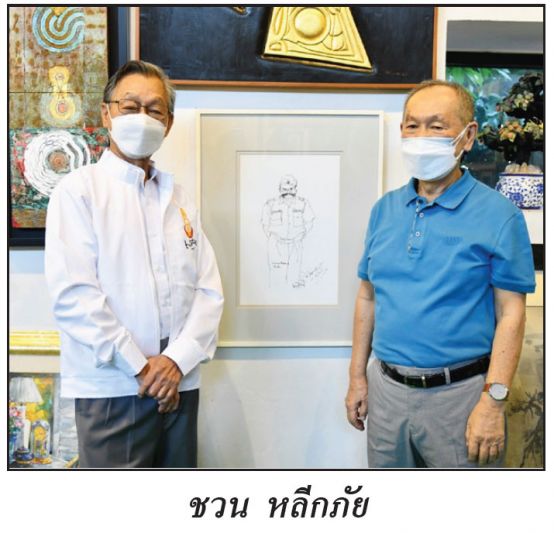
 กระตุ้นเศรษฐกิจช่วงปลายปี เซ็นทรัลพัฒนา คัดสินค้าตัวท็อปกว่า 10,000 ไอเท็ม จากธุรกิจในเครือเซ็นทรัลรีเทล จัดโปรแรงสุดในงาน “BIGGEST SALE สุดพลัง” ที่เซ็นทรัล ลาดพร้าว






 SootinClaimon.Com