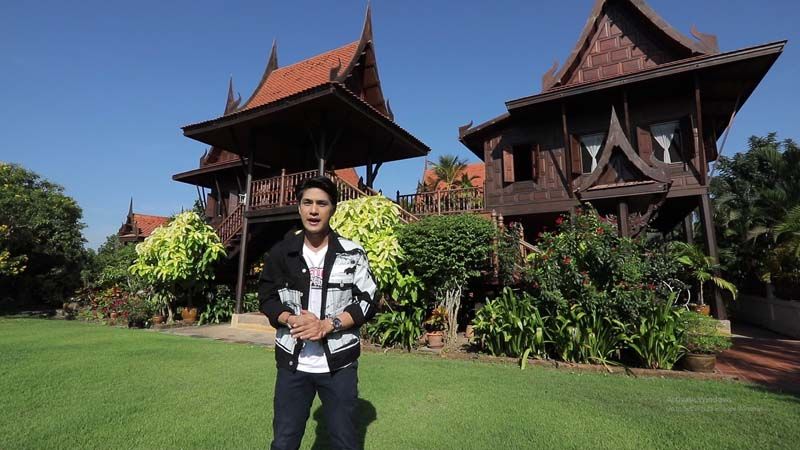
‘เขต-ธาราเขต’ พาไปล่องชมวิถีชีวิตริมน้ำของคน ‘เมืองนนท์’ #SootinClaimon.Com

#SootinClaimon.Com : ขอบคุณแหล่งข้อมูล : หนังสือพิมพ์แนวหน้า

บันเทิง – ‘เขต-ธาราเขต’พาไปล่องชมวิถีชีวิตริมน้ำของคน‘เมืองนนท์’ (naewna.com)

‘เขต-ธาราเขต’พาไปล่องชมวิถีชีวิตริมน้ำของคน‘เมืองนนท์’

‘เขต-ธาราเขต’พาไปล่องชมวิถีชีวิตริมน้ำของคน‘เมืองนนท์’

วันอาทิตย์ ที่ 13 ธันวาคม พ.ศ. 2563, 06.00 น.

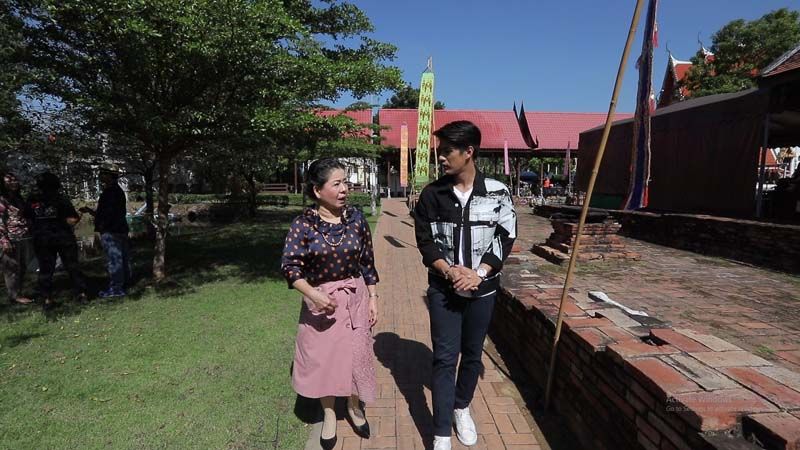
รายการ “คุณนายจ่ายตลาด”อาทิตย์นี้ พิธีกรสุดหล่อ “เขต- ธาราเขต เพ็ชร์สุกใส” ยังอยู่ที่จ.นนทบุรี ซึ่งได้แขกรับเชิญ พญ.สุวรรณา ไชยชุมศักดิ์ ภริยาผู้ว่าราชการจังหวัดนนทบุรี นายกเหล่ากาชาดจังหวัดนนทบุรี และประธานแม่บ้านมหาดไทยจังหวัดนนทบุรี รับหน้าที่เป็นไกด์ ซึ่งทั้งคู่จะพาเราล่องเรือเที่ยวชมวิถีชีวิตริมน้ำและไปเรียนรู้การทำกระดาษจากผักตบชวา เที่ยวสนุกแล้วก็ไปจ่ายกันต่อที่ตลาดพระราม 5 เพื่อมาทำเมนูขนมเบื้องญวน ที่สำคัญเตรียมรับความพิเศษมากมายที่จัดมาให้

โดย “เขต-ธาราเขต” เผยถึงเรื่องนี้ว่า “สัปดาห์ก่อนเราพาไปเช็คอินกันที่ใต้สะพานมหาเจษฎาบดินทร์ ตรงบริเวณนี้จะเต็มไปด้วยภาพวาด งานศิลปะสวยๆ เต็มเลย ตอนนี้ที่นี่คือ Street Art เมืองนนท์เป็นแลนด์มาร์คแห่งใหม่ของจังหวัดนนทบุรีและสัปดาห์นี้เรายังอยู่ที่เมืองนนท์ ต้องบอกว่าสนุกมาก ซึ่งครั้งนี้เราจะพาไปล่องเรือเที่ยวชมวิถีชีวิตริมน้ำและไปเรียนรู้การทำกระดาษจากผักตบชวา นอกจากนั้น ยังได้เรียนรู้การทำขนมเบื้องญวนซึ่งอร่อยมาก ไม่อยากจะพลาดเทปนี้กันจริงๆ นะครับ” ติดตามชมรายการ “คุณนายจ่ายตลาด” ได้วันอาทิตย์นี้ 13 ธันวาคมนี้เวลา 13.40 น. ทาง อมรินทร์ทีวี HD34

‘แอมมี่ The Bottom Blues’ บอกสิ่งที่อยู่เหนือทุกสถาบัน คือความรักที่มนุษย์มีให้กัน #SootinClaimon.Com

#SootinClaimon.Com : ขอบคุณแหล่งข้อมูล : หนังสือพิมพ์แนวหน้า

บันเทิง – ‘แอมมี่ The Bottom Blues’บอกสิ่งที่อยู่เหนือทุกสถาบัน คือความรักที่มนุษย์มีให้กัน (naewna.com)

'แอมมี่ The Bottom Blues'บอกสิ่งที่อยู่เหนือทุกสถาบัน  คือความรักที่มนุษย์มีให้กัน

‘แอมมี่ The Bottom Blues’บอกสิ่งที่อยู่เหนือทุกสถาบัน คือความรักที่มนุษย์มีให้กัน

วันเสาร์ ที่ 12 ธันวาคม พ.ศ. 2563, 22.15 น.

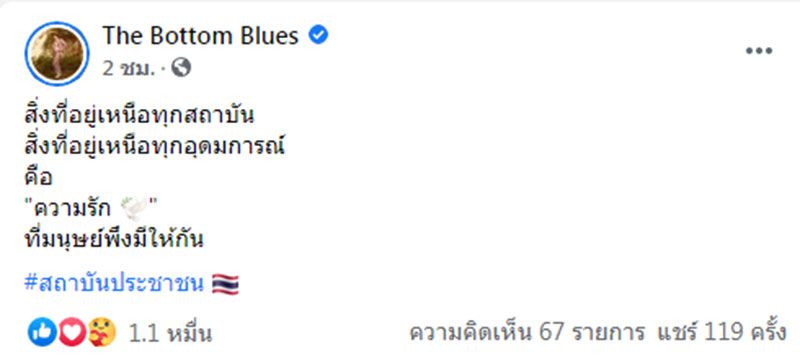
วันที่ 12 ธันวาคม 2563 แอมมี่ The Bottom Blues นักร้องชื่อดังและนักเคลื่อนไหวทางการเมือง โพสต์ข้อความว่า ระบุว่า 

สิ่งที่อยู่เหนือทุกสถาบัน

สิ่งที่อยู่เหนือทุกอุดมการณ์

คือ

“ความรัก [] “

ที่มนุษย์พึงมีให้กัน

#สถาบันประชาชน []
 

สจล.ได้ฤกษ์วางศิลาฤกษ์ ยกเสาเอกโรงพยาบาลพระจอมเกล้าฯ #SootinClaimon.Com

#SootinClaimon.Com : ขอบคุณแหล่งข้อมูล : หนังสือพิมพ์แนวหน้า

ในประเทศ – สจล.ได้ฤกษ์วางศิลาฤกษ์ ยกเสาเอกโรงพยาบาลพระจอมเกล้าฯ (naewna.com)

สจล.ได้ฤกษ์วางศิลาฤกษ์ ยกเสาเอกโรงพยาบาลพระจอมเกล้าฯ

สจล.ได้ฤกษ์วางศิลาฤกษ์ ยกเสาเอกโรงพยาบาลพระจอมเกล้าฯ

วันอาทิตย์ ที่ 13 ธันวาคม พ.ศ. 2563, 14.32 น.

สจล.ได้ฤกษ์วางศิลาฤกษ์ ยกเสาเอกโรงพยาบาลพระจอมเกล้าฯ เป็นโรงพยาบาลศูนย์วิจัยนวัตกรรมทางการแพทย์แห่งแรกของประเทศ

เมื่อวันที่ 13 ธันวาคม 2563 ที่มูลนิธิโรงพยาบาลพระจอมเกล้าเจ้าคุณทหาร ในพระสังฆราชูปถัมภ์ ได้จัดพิธีวางศิลาฤกษ์ และยกเสาเอก  อาคาร “โรงพยาบาลพระจอมเกล้าเจ้าคุณทหาร” โดยสมเด็จพระมหารัชมงคลมุนี (ธงชัย ธมฺมธโช) เจ้าคณะใหญ่หนกลาง วัดไตรมิตรวิทยารามวรวิหาร ประกอบพิธีวางศิลาฤกษ์ และยกเสาเอก ศ.ดร.สุชัชวีร์ สุวรรณสวัสดิ์ อธิการบดี สถาบันเทคโนโลยีพระจอมเกล้าเจ้าคุณทหาร (สจล.) ในฐานะประธาน มูลนิธิโรงพยาบาลพระจอมเกล้าเจ้าคุณทหาร ในพระสังฆราชูปถัมภ์ กล่าวว่า เนื่องในโอกาสครบรอบ 60 ปี ในปี 2563 ของสจล.จึงได้จัดทำโครงการจัดตั้ง”โรงพยาบาลพระจอมเกล้าเจ้าคุณทหาร” ซึ่งเป็นโรงพยาบาลศูนย์วิจัยนวัตกรรมทางการแพทย์ แห่งแรกของไทย ซึ่งวันนี้ สจล. โดยมูลนิธิโรงพยาบาลพระจอมเกล้าเจ้าคุณทหาร ได้จัดกิจกรรมวิ่งการกุศล “วิ่งเพื่อสร้าง” รายได้เพื่อสมทบทุนจัดสร้างโรงพยาบาลพระจอมเกล้าคุณทหาร (KMC Hospital) ซึ่งเป็นโรงพยาบาลขนาด 60 เตียง บนพื้นที่ขนาด14,000 ตารางเมตร บริเวณถนนกรุงเทพ-ชลบุรี สายใหม่ เขตลาดกระบัง ใช้งบประมาณในการก่อสร้าง 900 ล้านบาท เพื่อให้เป็นที่พึ่งพาของผู้ป่วยและรองรับประชาชนทั่วไป โดยมีวัตถุประสงค์เพื่อการรักษาและการวิจัยทางการแพทย์

“เนื่องจากปัจจุบันประเทศไทยยังขาดการพัฒนาเทคโนโลยีทางการแพทย์ ซึ่งต้องอาศัยนวัตกรรมและเทคโนโลยีต่างประเทศและจำเป็นต้องนำเข้าอุปกรณ์เครื่องมือทางการแพทย์ ปีละรวมแสนล้านบาท โรงพยาบาลพระจอมเกล้าเจ้าคุณทหาร จะเป็นโรงพยาบาลมิติใหม่ ที่ไม่ใช่โรงพยาบาลเพื่อรักษา แต่จะเป็นโรงพยาบาลวิจัยบูรณาการ ผสมผสานองค์ความรู้ทางการแพทย์ วิศวกรรม สถาปัตยกรรม วิทยาศาสตร์ เกษตรกรรม อุตสาหกรรม ฯลฯ เพื่อสร้างเครื่องมือและอุปกรณ์ทางการแพทย์ที่ทันสมัย และมีคุณภาพชีวิตที่ดีขึ้นอย่างเท่าเทียม”อธิการบดี สจล.กล่าวและว่า พร้อมกันนี้ สจล.จะเป็นโรงพยาบาลนำร่องในการวิจัยและพัฒนาเครื่องมือแพทย์ด้วยฝีมือคนไทยระดับภูมิภาค โดยมุ่งมั่นให้เป็นศูนย์นวัตกรรมทางการแพทย์ครบวงจรอย่างแท้จริง โดยคนไทยเพื่อคนไทย ซึ่งสอดคล้องกับแนวนโยบายทางการศึกษาของสถาบัน และเพื่อผลิตกำลังคนทางด้านวิทยาศาสตร์และเทคโนโลยีที่มีคุณภาพในการพัฒนาประเทศโดยสามารถขับเคลื่อนสถาบันมุ่งสู่มหาวิทยาลัยชั้นนำระดับโลก ให้เกิดผลผลิตที่มีคุณภาพออกสู่สังคมไทยและสังคมโลกต่อไป

ผู้สนใจสามารถร่วมเป็นส่วนหนึ่งของการ “ให้เพื่อสร้าง” เพียงกด *948*1960*100# และโทร.ออก ซึ่งครอบคลุมผู้ประกอบการธุรกิจโทรศัพท์เคลื่อนที่ 5 เครือข่าย ได้แก่ AIS, DTAC, TRUE, TOT และ CAT สอบถามข้อมูลเพิ่มเติมได้ที่ มูลนิธิโรงพยาบาลพระจอมเกล้าเจ้าคุณทหาร โทร. 092-454-8160, 092-548-2640 หรือเฟซบุ๊กแฟนเพจที่ http://www.facebook.com/KMCHospitalbyKMITL และ http://www.ให้เพื่อสร้าง.com

‘นิด้าโพล’ ระบุเสียงส่วนใหญ่หนุนมี ‘เครื่องแบบนักเรียน’ ต่อ ใส่ ‘ชุดไปรเวท’ อาทิตย์ละ 1 วัน #SootinClaimon.Com

#SootinClaimon.Com : ขอบคุณแหล่งข้อมูล : หนังสือพิมพ์แนวหน้า

ในประเทศ – ‘นิด้าโพล’ระบุเสียงส่วนใหญ่หนุนมี‘เครื่องแบบนักเรียน’ต่อ ใส่‘ชุดไปรเวท’อาทิตย์ละ 1 วัน (naewna.com)

‘นิด้าโพล’ระบุเสียงส่วนใหญ่หนุนมี‘เครื่องแบบนักเรียน’ต่อ ใส่‘ชุดไปรเวท’อาทิตย์ละ 1 วัน

‘นิด้าโพล’ระบุเสียงส่วนใหญ่หนุนมี‘เครื่องแบบนักเรียน’ต่อ ใส่‘ชุดไปรเวท’อาทิตย์ละ 1 วัน

วันอาทิตย์ ที่ 13 ธันวาคม พ.ศ. 2563, 07.52 น.

‘นิด้าโพล’ระบุเสียงส่วนใหญ่หนุนมี‘เครื่องแบบนักเรียน’ต่อ ใส่‘ชุดไปรเวท’อาทิตย์ละ 1 วัน

13 ธันวาคม 2563 ศูนย์สำรวจความคิดเห็น “นิด้าโพล” สถาบันบัณฑิตพัฒนบริหารศาสตร์ (นิด้า) เปิดเผยผลสำรวจของประชาชน เรื่อง “เครื่องแบบนักเรียน จะเอาอย่างไร?” ทำการสำรวจระหว่างวันที่ 7-8 ธันวาคม 2563 จากประชาชนที่มีอายุ 15 ปีขึ้นไป กระจายทุกภูมิภาค ระดับการศึกษา และอาชีพ ทั่วประเทศ รวมทั้งสิ้น จำนวน 1,332 หน่วยตัวอย่าง เกี่ยวกับข้อเสนอของกลุ่มนักเรียนเลวที่ให้ยกเลิกการบังคับใส่เครื่องแบบนักเรียนไปโรงเรียน การสำรวจอาศัยการสุ่มตัวอย่างโดยใช้ ความน่าจะเป็นจากบัญชีรายชื่อฐานข้อมูลตัวอย่างหลัก (Master Sample) ของ “นิด้าโพล” สุ่มตัวอย่างด้วยวิธีแบบง่าย (Simple Random Sampling) เก็บข้อมูลด้วยวิธีการสัมภาษณ์ทางโทรศัพท์โดยกำหนดค่าความเชื่อมั่นที่ร้อยละ 97.0

จากการสำรวจ เมื่อถามถึงความคิดเห็นของประชาชนต่อเครื่องแบบนักเรียน พบว่า ส่วนใหญ่ ร้อยละ 78.15 ระบุว่า เพื่อส่งเสริมความมีระเบียบวินัย รองลงมา ร้อยละ 24.47 ระบุว่า เป็นการบ่งบอกถึงสถานศึกษาของนักเรียน , ร้อยละ 7.96 ระบุว่า เป็นการป้องกันการแอบอ้างเป็นนักเรียน , ร้อยละ 7.88 ระบุว่า เพื่อความปลอดภัยของนักเรียน

ร้อยละ 6.31 ระบุว่า ทำให้ผู้ปกครองประหยัด , ร้อยละ 4.58 ระบุว่า เป็นความภาคภูมิใจของนักเรียน / ผู้ปกครอง , ร้อยละ 4.28 ระบุว่า เพิ่มภาระด้านการเงินให้ผู้ปกครอง , ร้อยละ 3.83 ระบุว่า เป็นการจำกัดเสรีภาพของนักเรียน , ร้อยละ 1.35 ระบุว่า ไม่สามารถนำไปใช้ได้ในทุก ๆ โอกาส , ร้อยละ 1.13 ระบุว่า เป็นการแบ่งชนชั้นระหว่างโรงเรียน , ร้อยละ 0.98 ระบุว่า เฉย ๆ/ไม่ตอบ/ไม่สนใจ , ร้อยละ 0.75 ระบุว่า ทำให้นักเรียนไม่ปลอดภัย และร้อยละ 0.60 ระบุว่า เป็นเครื่องหมายของการกดขี่ / อำนาจนิยม

ด้านความคิดเห็นต่อข้อเสนอของกลุ่มนักเรียนเลวที่ให้ยกเลิกการบังคับใส่เครื่องแบบนักเรียนไปโรงเรียน พบว่า ส่วนใหญ่ ร้อยละ 69.67 ระบุว่า การบังคับให้ใส่เครื่องแบบนักเรียนไปโรงเรียนควรมีต่อไป รองลงมา ร้อยละ 12.09 ระบุว่า ในรอบสัปดาห์ควรอนุญาตให้ใส่ชุดอื่น ๆ (ชุดไพรเวต) ไปโรงเรียนได้บ้าง

ร้อยละ 7.06 ระบุว่า ควรให้เรื่องการใส่เครื่องแบบนักเรียนอยู่ในดุลยพินิจของผู้บริหารแต่ละโรงเรียน , ร้อยละ 5.10 ระบุว่า สมควรให้นักเรียนได้มีอิสระที่จะเลือกว่าจะใส่เครื่องแบบนักเรียนไปโรงเรียนหรือไม่ , ร้อยละ 3.23 ระบุว่า ควรให้เรื่องการใส่เครื่องแบบนักเรียนเป็นไปตามประชามติของนักเรียนในแต่ละโรงเรียน , ร้อยละ 2.40 ระบุว่า สมควรยกเลิกการใส่เครื่องแบบนักเรียนไปโรงเรียน และร้อยละ 0.45 ระบุว่า เฉย ๆ/ไม่ตอบ/ไม่สนใจ

ทั้งนี้ เมื่อถามถึงจำนวนวันจากผู้ที่ระบุว่าในรอบสัปดาห์ควรอนุญาตให้ใส่ชุดอื่น ๆ (ชุดไพรเวต) ไปโรงเรียนได้บ้าง พบว่า ส่วนใหญ่ ร้อยละ 50.93 ระบุว่า 1 วันต่อสัปดาห์ รองลงมา ร้อยละ 37.27 ระบุว่า 2 วันต่อสัปดาห์ , ร้อยละ 9.94 ระบุว่า 3 วันต่อสัปดาห์ และร้อยละ 1.86 ระบุว่า 4 วันต่อสัปดาห์

ท้ายที่สุดเมื่อถามถึงความคิดเห็นของประชาชนต่อการชุมนุมของกลุ่มนักเรียนเลว พบว่า ร้อยละ 7.66 ระบุว่า เห็นด้วยมาก เพราะ เป็นสิทธิส่วนบุคคล ทุกคนมีสิทธิเสรีภาพในการแสดงออกทางความคิด , ร้อยละ 13.51 ระบุว่า ค่อนข้างเห็นด้วย เพราะ เป็นสิทธิของกลุ่มนักเรียนที่จะเรียกร้องหรือแสดงความคิดเห็น , ร้อยละ 21.10 ระบุว่า ไม่ค่อยเห็นด้วย เพราะ เป็นการกระทำที่ไม่เหมาะสม เนื่องจากหน้าที่หลักของนักเรียนคือการเรียนหนังสือไม่ใช่ออกมาชุมนุมประท้วง , ร้อยละ 51.50 ระบุว่า ไม่เห็นด้วยเลย เพราะ เป็นการกระทำที่ไม่เหมาะสมอย่างยิ่ง ควรใช้เวลาทุ่มเทให้กับการเรียนจะดีกว่า และร้อยละ 6.23 ระบุว่า เฉย ๆ/ไม่ตอบ/ไม่สนใจ

First coronavirus vaccine shipments set to arrive in states Monday #SootinClaimon.Com

#SootinClaimon.Com : ขอบคุณแหล่งข้อมูล : หนังสือพิมพ์ The Nation.

First coronavirus vaccine shipments set to arrive in states Monday (nationthailand.com)

First coronavirus vaccine shipments set to arrive in states Monday

Health & BeautyDec 13. 2020Pharmacy Director Ahmed El Kority opens a new ultra freezer that will be used to store COVID-19 vaccines at the Riverside Shore Memorial Hospital in Onancock, Va. MUST CREDIT: photo for The Washington Post by Parker Michels-Boyce.Pharmacy Director Ahmed El Kority opens a new ultra freezer that will be used to store COVID-19 vaccines at the Riverside Shore Memorial Hospital in Onancock, Va. MUST CREDIT: photo for The Washington Post by Parker Michels-Boyce. 

By  The Washington Post · Frances Stead Sellers, Ariana Eunjung Cha, , Lena H. Sun, Isaac Stanley-Becker · NATIONAL, HEALTH, HEALTH-NEWS 

WASHINGTON – Hospitals that have spent months seeking a silver bullet against a virus that has killed more than 295,000 people in the United States will begin receiving shipments of the first coronavirus vaccine on Monday, U.S. officials said, comparing the start of distribution this weekend to the Allied invasion of Normandy in June 1944.

Saturday, said the four-star Army general overseeing vaccine rollout, was “D-Day,” following the Food and Drug Administration’s Friday-night clearance for emergency use of the two-dose regimen developed by Pfizer and the German company BioNTech.

“D-Day was a pivotal turning point in World War II; it was the beginning of the end,” said the general, Gustave Perna, who is chief operating officer of Operation Warp Speed, the public-private partnership speeding the development of vaccines and therapeutics. “D-Day was the beginning of the end, and that’s where we are today.”

The initial distribution of 2.9 million doses, a sliver of what was initially anticipated and intended only for health care workers and residents and staff of long-term care facilities, will arrive at hospitals battling climbing case counts and mounting deaths. Immunization in its early phases will not curtail intensifying outbreaks, experts cautioned, underscoring the need for continued public-health precautions.

But the vaccine’s clearance on Friday night from the FDA, followed by backing on Saturday from a Centers for Disease Control and Prevention advisory group, set into motion one of one of the most complicated logistical missions in U.S. history, marking a new phase of the pandemic. The vaccine, which must be stored at ultracold temperatures, is being sent nationwide by plane and guarded truck.

“It’s a hugely important step,” Nancy Messonnier, director of the CDC’s National Center for Immunization and Respiratory Diseases, said Saturday as the CDC’s Advisory Committee on Immunization Practices recommended the nation’s first coronavirus vaccine for people 16 and older. 

Members of the committee stressed that the vaccine, while developed in record time, had moved transparently through all required regulatory channels. They also expressed alarm about the lack of resources available to state and local authorities to carry out vaccination, in contrast to the billions in taxpayer dollars devoted to quickening the vaccine’s rollout.

As experts gave final sign-off, boxes were being packed and loaded with the vaccine, Perna said. The cargo would begin moving Sunday morning from Pfizer’s manufacturing facility in Kalamazoo, Mich., to FedEx and UPS hubs nationwide, he said.

Vaccine, he predicted, would arrive at 145 sites, mostly large hospital systems, on Monday, with another 425 sites receiving supply on Tuesday. The final 66 of the 636 locations poised to receive doses in the first round of Pfizer shipments would receive their supply on Wednesday, Perna said.

The general made clear that earlier-than-anticipated clearance from federal regulators, which took place late Friday instead of Saturday after pressure from the White House, did not alter the timetable for the distribution or actual administration of the shots. Delivery, he said, must occur when “professionals are available to receive it, and then eventually administer it,” making Monday the anticipated target.

Top FDA officials took steps on Saturday to assure the public that the vaccine was safe, that its clearance was not driven by politics and that health care sites would be equipped in the event of a rare allergic reaction observed among two British health care workers with a history of severe reactions. 

Stephen Hahn, the FDA commissioner, told reporters he would get the vaccine as soon as he was eligible for it, denying, as he did on Friday, that his job had been threatened over the timing of the vaccine’s approval. Asked about the possibility of allergic reactions, Peter Marks, director of the agency’s division that regulates vaccines, said officials had examined possible side effects and concluded that people should be vaccinated unless they have had a severe reaction to one of the vaccine’s components.

The initial shipments include only the first shot in a two-dose regimen for some of the nation’s most at-risk people, with another 2.9 million doses set for distribution 21 days later. According to CDC recommendations, the nation’s 21 million health care workers and three million residents of long-term care facilities should receive the vaccine first. With a second vaccine from Moderna expected to gain approval from the FDA soon, as many as 40 million doses could be delivered by the end of the year – enough to vaccinate the CDC’s first priority group. Additional vaccines are in late-stage trials.

Health care workers, who have been prioritized because of their exposure to the virus and critical role in sustaining the nation’s strained health care system, will begin receiving the shots within days. Each hospital system is moving on a slightly different timetable, depending on resources and staffing needs, with many saying vaccination would not begin until Wednesday. Some medical centers were independently reviewing the vaccine data to double-check the FDA’s decision.

Inoculation at long-term care facilities could begin by the end of the week, Perna said. Separate kits with needles and alcohol wipes are being shipped so as to sync up with vaccine batches at each site, underscoring the complex choreography of the operation.

Perna tempered his confidence with an acknowledgment of the challenges involved in a mass vaccination campaign against a rampaging virus, with limited supplies initially available for a country of 330 million people eager to return to normal. 

“We know that the road ahead of us will be tough,” Perna said.

The vaccines will arrive at hospitals overwhelmed with covid patients. As of Saturday, more than 108,000 were hospitalized nationwide, according to Washington Post data.

These facilities have spent months grappling with the ethical and logistical challenges of distributing the vaccine. At some institutions, intensive care unit staff members will receive priority; others are including those who work in housekeeping or with cancer patients or newborns. Hospitals wrestled with whether to include those working with covid-19 patients in full protective gear ahead of masked staff members interacting with people who may be asymptomatic carriers.

At many health care institutions, surveys are quietly being sent out, lotteries launched and invitations issued to one of the most highly anticipated events of 2020: the opportunity to get in line for a shot. At the same time, institutions are seeking to address unease about a brand-new vaccine.

On Thursday, Temple Health in Philadelphia emailed 3,000 invitations to employees deemed at “high risk” of infection. Within minutes, janitorial staff and anesthesiologists began signing up. And within 24 hours, each of the 252 slots at the main campus’s vaccination site was taken.

High demand assuaged Chief Medical Officer Tony S. Reed’s fears that vaccine hesitancy would keep people away, wasting precious vaccine. Among the first takers, who will likely start receiving shots Wednesday, will be people working on covid-19 floors and in the emergency room. The goal is simple, Reed said: “To do the most good for the most people.”

In Philadelphia, all of the city’s hospitals will be receiving vaccine, either directly from the federal distributor or from the city health department’s ultracold storage, said James Garrow, a spokesman for the health department.

On Thursday, a package needed to administer the Pfizer vaccine suddenly showed up at the University of Pittsburgh Medical Center’s Presbyterian hospital, including vaccination record cards, masks, visors, information sheets, syringes and the diluent that needs to be mixed with every dose before it is injected.

The multi-facility Cleveland Clinic has set up a “refrigeration farm” with rows of gleaming white freezers capable of keeping the vaccine at Antarctic temperatures. The atrium at the UF Health Jacksonville hospital in Florida is being turned into a vaccination site. And other hospitals are preparing to receive the ancillary supplies needed for the finicky Pfizer vaccine.

But much depends on the supply of vaccine.

Dora Anne Mills, who is overseeing the vaccine rollout for MaineHealth, which operates 10 hospitals, said the entire system may get around 970 doses in this first round – covering a fraction of the 17,000 patient-facing employees the system aims to vaccinate as soon as possible.

“We are all facing the same dilemma: How do we stabilize the hospital systems at a time when we have so many doctors and nurses out because of covid exposure?” she said. The hospital has been holding Zoom sessions to explain the vaccine to staff and convince them of its safety.

At Salt Lake City-based Intermountain Healthcare, a 23-hospital system that serves Utah, Idaho and Nevada, officials have asked staff to sign up around their shifts in case they have mild to moderate side effects in the days after they get the vaccine.

In Minnesota, which has reported one of the nation’s highest per capita rates of infection, state health officials have meticulously planned for months the rollout of the vaccine. The Minnesota Department of Health designated 25 main distribution hubs around the state that will deliver the vaccine to 118 smaller facilities, including in rural areas.

Still, Gov. Tim Walz acknowledged lingering concerns, including access to dry ice, which the Democratic governor said could pit the state and health-care industry against Upper Midwest cheese and dairy producers that use dry ice to ship cheese curds.

In Florida, Gov. Ron DeSantis (R) said this week he expects the state to receive 180,000 doses of the vaccine in its first release. Of those, 100,000 doses will go to five hospitals that can store the shots, DeSantis said. The rest of the doses, he said, will go to nursing homes and long-term care facilities.

John Couris, president and chief executive of Tampa General Hospital, acknowledged challenges in convincing staff to be immunized. He noted, “If we say you must take the vaccine, if you don’t, what are we going to do? Terminate them?”

At the UF Health Jacksonville hospital, the atrium offers space to spend 15 minutes monitoring those who are vaccinated. The space is large enough to accommodate 500 to 1,000 people a day, said Leon Haley Jr., chief executive of UF Health Jacksonville and Dean of the University of Florida’s College of Medicine. Haley said he will be videotaped getting one of the first doses to boost confidence for others.

Riverside Health System, based in Newport News, Va., will receive 2,925 doses for five hospitals. It expects to start vaccinating personnel at the highest risk for covid-19 exposure Wednesday, including doctors, nurses and housekeeping staff, said Cindy Williams, Riverside’s chief pharmacy officer.

“There are so many moving pieces,” Williams said. The system is used to administering flu shots, but must change its clinic layout for the coronavirus vaccine to allow for social distancing and recipients to be monitored for 30 minutes post-jab.

Riverside Health System, based in Newport News, Va., will recpehilaive 2,925 doses for five hospitals. It expects to start vaccinating personnel at the highest risk for covid-19 exposure Wednesday, including doctors, nurses and housekeeping staff, said Cindy Williams, Riverside’s chief pharmacy officer.storage to an ultracold freezer or three minutes for transfer between low temperatures and thawing. The vaccine must remain in frozen storage for at least two hours if it is put back in an ultracold freezer after room temperature exposure.

The health system had previously surveyed employees before news about the efficacy of the Pfizer-BioNTech and Moderna vaccines. It found about a third of respondents were willing to get a shot. A more recent survey this week found that about 60% were interested in getting the vaccine, Williams said.

Lauren Sauer, director of operations at the Johns Hopkins Office of Critical Event Preparedness and Response, which has hospitals in the District of Columbia, Florida and Maryland, said she is concerned about the emotional burdens being placed on already exhausted health-care workers as they are turned into role models.

“We are asking them to take a brand-new vaccine and then in addition to be advocates for patients, friends, family members,” Sauer said.

“That is a lot to ask during a pandemic.”

Book World: Dissecting athletic greatness: Nature, nurture, lucky breaks and a ‘quiet eye’ #SootinClaimon.Com

#SootinClaimon.Com : ขอบคุณแหล่งข้อมูล : หนังสือพิมพ์ The Nation.

Book World: Dissecting athletic greatness: Nature, nurture, lucky breaks and a ‘quiet eye’ (nationthailand.com)

Book World: Dissecting athletic greatness: Nature, nurture, lucky breaks and a ‘quiet eye’

EntertainmentDec 12. 2020

The Best
Photo by: Nicholas Brealey — Handout

The Best Photo by: Nicholas Brealey — Handout 

By Special To The Washington Post · Liz Robbins 

The Best: How Elite Athletes Are Made

By Mark Williams and Tim Wigmore

Nicholas Brealey. 353 pp. $24.95

– – –

When Brandi Chastain scored the winning penalty kick in the 1999 Women’s World Cup and ripped off her jersey to celebrate victory for the United States, she sent a thunderous thrill through the Rose Bowl crowd and inspired generations of athletes to come.

I was fortunate to witness such unbridled moments of triumph, superhuman feats from once-in-a-generation athletes like Roger Federer and LeBron James, in my years as a sportswriter. Journalists, fans and fellow athletes alike cannot help but marvel at greatness as something often intangible.

Now a new book breaks down the championship process, from birth to retirement, and the practice hours in between, making it at least relatable. In “The Best: How Elite Athletes Are Made,” British sports scientist Mark Williams and sportswriter Tim Wigmore offer an engrossing guidebook for youth athletes, parents, coaches and perhaps even fantasy-league fans looking for a little insight.

It should not be taken as a bible. Sports do involve variables – a lucky bounce here, a freak break there. How athletes react to such changes, the authors argue, is a measure of their training and their will.

“We do not claim there is a simple template to becoming the best, or even maximizing your chances of becoming the best you can be – sport, like life, is altogether more complicated,” they write in the prologue. “Leading athletes benefit from a complex, and interrelated, mixture of nature and nurture.”

For readers used to literary sports narratives in the vein of John McPhee or David Halberstam, this is a much more academic enterprise. At times, the work is reminiscent of Malcom Gladwell’s “Outliers: The Story of Success,” which it references.

The strength of “The Best” is in its synthesis of hundreds of sports science journals, which Williams and Wigmore condense into clear sections amplified by original interviews with stars such as Steph Curry, Annika Sorenstam and Pete Sampras. The book covers sports as diverse as the National Football League and Norwegian cross-country skiing, soccer’s Premier League and England women’s field hockey. Even the underhanded free throw shooter Rick Barry gets a couple of pages.

Easy to follow, the chapters are divided into three sections, starting at the beginning: who becomes a champion based in part on siblings, birth date and community support.

“Part Two: Inside the Minds of Champions” is the meat of the material, showing the training and mental makeup athletes need under pressure. The best athletes have intense focus, but where they direct that focus is illuminating.

Joan Vickers, a scientist at the University of Calgary, introduced the concept of the “quiet eye,” when in the final milliseconds of preparation for a shot, athletes fixate on one target – like the rim of a basket or the upper corner of the goal. The longer the duration of the “quiet eye,” the more successful the outcome.

The tips range from useful to delightful in chapters like “The art of the con” (not a political reference) and “How to hit a ball in 0.5 seconds,” which shows how athletes study their opponents’s tics that might provide clues in returning a serve in tennis or hitting a ball in baseball or cricket. The Zen master Andre Agassi solved Boris Becker’s serve by figuring out that Becker stuck his tongue out on his lip, literally pointing to where he was going to place it in the service box – center, left or right. The chapter “How to win a penalty shoot-out” does not mention Chastain but relays how England’s men’s soccer team overcame its penalty-kick curse. The little black book of opposing players’ tendencies kept by Britain’s field hockey goalie Maddie Hinch is a rich detail.

“Why athletes choke” had me nodding in sympathy. What golfer does not remember Jean Van de Velde’s epic meltdown in the 1999 British Open? With a three-shot lead coming into the 18th hole, he somehow ended up in a river with no socks and shoes, trying to play the ball from there. Van de Velde lost the tournament in a playoff.

“When athletes are anxious, they reinvest attention on the technical execution of the skill, those aspects of the movement that have generally become automated – ‘paralysis by analysis,’ ” the authors write. (It is a phrase they repeat often.)

And it relates to the “quiet eye” concept: “Athletes weighed down by anxiety also use their eyes less efficiently, in both dynamic and static tasks.”

Although the lessons here are widely applicable, a caveat: This book does have a distinct British accent. When talking about the National Basketball Association in the chapter on neighborhood pickup games, the authors refer to them as “ad-hoc games.” They call a playoff game a “match.” There is football (never soccer) and American football. And spellings have not been changed for American readers, so we have the British versions of some words: practise and defence. And there is a whole lot of cricket.

The authors couldn’t include everything, yet there is only a half-page mention of doping. It comes in a brief section on mental health. Athletes cheat for reasons beyond internal pressure; they often face financial incentives and government mandates. Then again, this game within the game could be – and has been – worthy of many separate books.

Part Three concludes with training methods and the science of success. I was pleased to see the authors include the famous team-bonding dinners led by Gregg Popovich, the oenophile coach of the five-time champion San Antonio Spurs, and the intense practice techniques of Women’s National Basketball Association star Elena Delle Donne, who led the Washington Mystics to their first WNBA championship in 2019.

In “The next frontier,” the final chapter about technology, the authors leave us, appropriately, with an eye to the future. Analytics make the scene, but the discussion of how teams are using virtual reality to assist injured players and simulate pressure situations left me thinking of the next generation of champions.

Still, for all the technological advantages of the Nike Vaporfly shoe, which has transformed the running world, the authors include the benefits of a low-tech training solution for any athlete: naps. Finally, something attainable for us mere mortals.

– – –

Robbins is a freelance writer in New York. She covered tennis for the New York Times from 2000 to 2010.

In an Army-Navy game like no other, the Knights shut out the Mids under a blanket of fog #SootinClaimon.Com

#SootinClaimon.Com : ขอบคุณแหล่งข้อมูล : หนังสือพิมพ์ The Nation.

In an Army-Navy game like no other, the Knights shut out the Mids under a blanket of fog (nationthailand.com)

In an Army-Navy game like no other, the Knights shut out the Mids under a blanket of fog

Dec 13. 2020The Army Black Knights take the field for the 121st Army-Navy Football game at Michie Stadium in West Point, N.Y., on Saturday Dec. 12, 2020. MUST CREDIT: Washington Post photo by Jonathan NewtonThe Army Black Knights take the field for the 121st Army-Navy Football game at Michie Stadium in West Point, N.Y., on Saturday Dec. 12, 2020. MUST CREDIT: Washington Post photo by Jonathan Newton 
By The Washington Post · Kareem Copeland · SPORTS, FOOTBALL 

WEST POINT, N.Y. – The 121st football game between Army and Navy would be different, and that was obvious well before it started. Three hours before kickoff Saturday afternoon, during March On – the entrance in formation of the Corps of Cadets, followed by the Brigade of Midshipmen – the Cadets moved in relative silence, wearing their dress grays as the sound of the band echoed around Michie Stadium. The only people in the stands at the time were Department of Defense leadership.

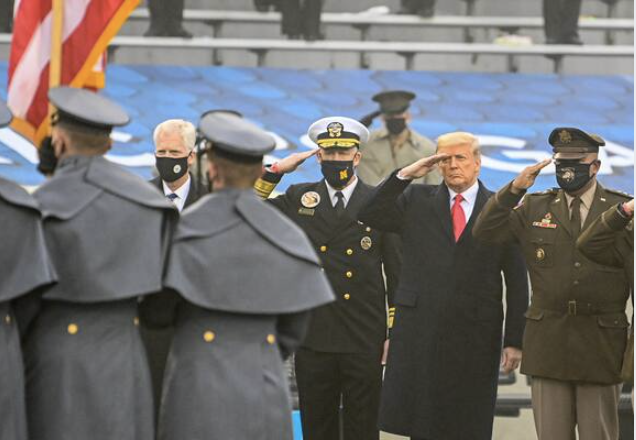
President Donald Trump salutes the flag during the playing of the national anthem prior to the 121st Army-Navy football game at Michie Stadium in New York on Dec. 12, 2020. MUST CREDIT: Washington Post photo by Jonathan Newton

President Donald Trump salutes the flag during the playing of the national anthem prior to the 121st Army-Navy football game at Michie Stadium in New York on Dec. 12, 2020. MUST CREDIT: Washington Post photo by Jonathan Newton
Things got rowdier when it was Navy’s turn. The coronavirus pandemic had moved the game to West Point for the first time since 1943, and it was truly a home game, even though no fans were in attendance. Boos rained down from the cadets as 4,000-plus Midshipmen in their dress blues congregated at the end of their march.

After 60 minutes of ground and pound under a blanket of fog, Army was victorious, 15-0, for its first shutout in the rivalry since 1969. The Midshipmen (3-7) have lost four of their past five meetings with the Black Knights (8-2).

Army Black Knights quarterback Tyhier Tyler (2) pounds his way inside the 20-yard line during fourth quarter of Saturday's game againt Navy. Tyler had the lone touchdown of the game as Army prevailed 15-0. MUST CREDIT: Washington Post photo by Jonathan Newton

Army Black Knights quarterback Tyhier Tyler (2) pounds his way inside the 20-yard line during fourth quarter of Saturday’s game againt Navy. Tyler had the lone touchdown of the game as Army prevailed 15-0. MUST CREDIT: Washington Post photo by Jonathan Newton

This was an Army-Navy game like none other as many traditions were canceled in the name of safety. The pregame tug-of-war, however, went on, and it was dominated by the cadets – to the thrill of those in heavy gray overcoats.

The cadets’ dress matched the sky as dense fog rolled in just before the game and worsened throughout. Jersey numbers were indiscernible from the stands, and Lusk Reservoir, which normally provides a picturesque background, disappeared behind the dense, low hanging clouds. The pregame flyover could only be heard as the fog obscured views of anything higher than the stadium’s light poles. All of Navy’s offensive coaches and all but two defensive coaches moved from the coaches’ box to the field after halftime because they couldn’t see.

President Donald Trump arrived about 30 minutes before the game and received raucous applause as he walked onto the field for the pregame coin flip.

Army quarterback Tyhier Tyler rushed for 96 yards and the game’s only touchdown as Army finished with 134 yards on the ground and 162 total. Navy quarterback Xavier Arline rushed for 109 yards before he left the game with about two minutes remaining; that accounted for all but eight of the Midshipmen’s yards. He finished 0 for 4 through the air, and the teams combined for just 12 first downs. J’arius Warren had a career-high 14 tackles for Navy.

The teams combined for just five first downs in the first half, and a 37-yard field goal by Army’s Quinn Maretzki in the second quarter accounted for every point. The Black Knights’ lone completion of the game, a 28-yarder from Tyler to Tyrell Robinson, had moved Army into the red zone. 

Army had a chance to add three more points late in the half after starting a drive in Navy territory, but Maretzki missed a 38-yard attempt.

The Midshipmen’s best scoring opportunity came on their first drive of the second half after Arline rushed for 52 yards on the second snap to set up first and goal from the Army 2-yard line. Navy ran the ball on four straight plays and still couldn’t reach the end zone, giving the ball back to the Black Knights.

Army put the game away in the fourth quarter after Navy slotback CJ Williams dropped a pitch from Arline on the perimeter and the Black Knights recovered at the Navy 13-yard line. Tyler ran in a 4-yard draw to give Army a 10-0 lead.

That was more than enough to ice the victory as the Navy offense was, in the words of Coach Ken Niumatalolo, inept for the third consecutive game. The Midshipmen were held to seven, six and zero points in that stretch and failed to score a touchdown for the second week in a row. Navy was held to a touchdown or less in three consecutive games for the first time since a 1-10 season in 1992.

Arline became the fifth Navy freshman quarterback to start against Army, with the most recent being Keenan Reynolds in 2012. The other freshmen went 3-1.

A 14-yard loss on a reverse by Navy’s Mark Walker gave Army two more points with just over five minutes to play when Daryan McDonald dropped him for a safety. A 40-yard field goal by Maretzki with 2:20 left added insult to injury.

Medinah Country Club named host venue of 2026 Presidents Cup #SootinClaimon.Com

#SootinClaimon.Com : ขอบคุณแหล่งข้อมูล : หนังสือพิมพ์ The Nation.

Medinah Country Club named host venue of 2026 Presidents Cup (nationthailand.com)

Medinah Country Club named host venue of 2026 Presidents Cup

Dec 13. 2020

 Presidents Cup added to illustrious list of tournaments hosted at Medinah Country Club

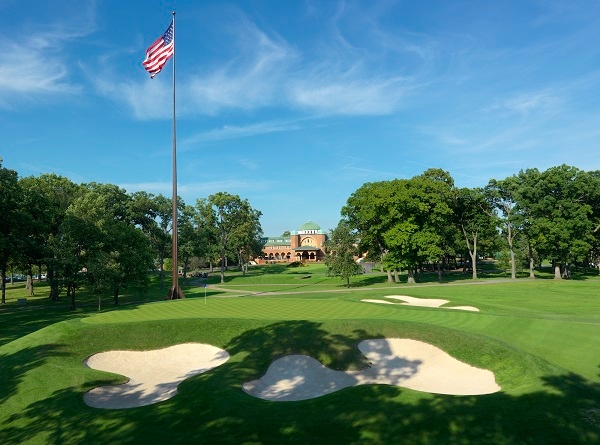
The PGA TOUR announced today that the 16th Presidents Cup will be held at the renowned Medinah Country Club outside of Chicago in 2026. Medinah is the fifth different venue in the United States to host the Presidents Cup and adds the biennial team event to an illustrious list of tournaments hosted at Course #3 that include the 2019 BMW Championship, 2012 Ryder Cup, two PGA Championships, three U.S. Opens, the 1988 U.S. Senior Open, three Western Opens (BMW Championship), and a number of other professional championships.

The announcement comes on the one-year anniversary of the 2019 Presidents Cup at Royal Melbourne Golf Club in Australia, where the Tiger Woods-led United States Team defeated Captain Ernie Els and the International Team in one of the closest finishes in Cup history, 16-14.

“As the significance of the Presidents Cup continues to grow, we look forward to showcasing the 2026 event from one of the world’s great sporting and cosmopolitan cities in Chicago and a storied venue in Medinah Country Club,” said PGA TOUR Commissioner Jay Monahan. “One year ago, we saw an influx of great young talent on the International Team taking on a very experienced U.S. Team that resulted in a dramatic four days of competition for our fans throughout the world. I fully expect that competitive momentum to continue in the coming years. We express our thanks to our current Global Partners, Citi and Rolex, for their support of the Presidents Cup and to the leadership and membership at Medinah Country Club, a world-class facility that hosted several of the most memorable events in our game’s history.”

The PGA TOUR visited Medinah most recently in 2019, where Justin Thomas won the BMW Championship in the second event of the FedExCup Playoffs for his 10th PGA TOUR victory.

In 2022, the Presidents Cup will make its debut in the Southeastern United States at Quail Hollow Club in Charlotte before heading to Canada for the second time at Royal Montreal Golf Club in Montreal, Quebec in 2024.

Located 25 miles west of downtown Chicago in suburban Medinah, Illinois, Medinah Country Club was established in 1924 and boasts the challenging Course #3, which was designed by Tom Bendelow and redesigned by Rees Jones. Winners at Medinah Country Club include Thomas, Tiger Woods, Hale Irwin, Billy Casper, Lou Graham, Cary Middlecoff, Gary Player, and Byron Nelson.

“Medinah Country Club’s members are honored to host the 2026 Presidents Cup matches on our famed Course #3, adding to our 90-year history of hosting golf’s most prestigious championships, and producing some of golf’s most memorable outcomes,” said Michael Scimo, Medinah’s 2026 Presidents Cup Bid Leader. “The club is excited about providing a terrific venue for the teams and fans from around the world to experience one of the premier events on golf’s biennial calendar. We also acknowledge and appreciate the strong support we have received from the PGA TOUR, DuPage County, and the Chicago Sports Commission that helped bring the 2026 Presidents Cup matches to Medinah Country Club.”

Tournament dates for the 2026 Presidents Cup will be announced at a later date.

UK ‘General’ silences Japanese ‘Sniper’ in ONE Championship #SootinClaimon.Com

#SootinClaimon.Com : ขอบคุณแหล่งข้อมูล : หนังสือพิมพ์ The Nation.

UK ‘General silences Japanese ‘Sniper’ in ONE Championship (nationthailand.com)

UK ‘General silences Japanese ‘Sniper’ in ONE Championship

Dec 12. 2020Jonathan Jonathan “The General” Haggerty of the United Kingdom delivers a blow to Japan’s Taiki “Silent Sniper” Naito. 

By THE NATION

Another night of thrilling martial arts action in the ONE Championship™ (ONE), electrified the Singapore Indoor Stadium.

The “ONE: Big Bang II”, a previously recorded event broadcast globally on Friday, featured a series of impressive finishes and performances from the world’s top mixed martial artists, kickboxers, and Muay Thai practitioners.

In the main event, former ONE flyweight Muay Thai world champion and current No. 3-ranked contender Jonathan “The General” Haggerty of the United Kingdom dominated Japan’s Taiki “Silent Sniper” Naito across three action-packed rounds.

Haggerty showcased his trademark ring IQ, calculating distance and deciphering Naito’s rhythm before putting on a striking clinic.

“The General” had his complete arsenal on display, including a plethora of feints, thudding leg kicks, and sharp boxing combinations.

A bullet-like right hand down the middle in round one dropped Naito for the count, but the Japanese athlete was able to regain his footing. In the second frame, Haggerty again connected with a haymaker, this time a wild right hook that sent Naito down to the canvas once more. Naito tried his best to turn his luck around in the third stanza, but Haggerty cruised to the final bell. In the end, all three judges scored the bout in favour of Haggerty, who earned the convincing unanimous decision victory.

In a ONE Super Series kickboxing contest, No. 1-ranked contender Nieky “The Natural” Holzken of the Netherlands got back in the winner’s column with a crushing body shot knockout of No. 5-ranked contender Elliot “The Dragon” Compton of Australia. Holzken weathered an early storm from Compton and then landed the debilitating liver shot, which sent “The Dragon” to the canvas. Compton could not beat the count, and Holzken was awarded the knockout victory.

South Korea’s “The Fighting God” Kim Jae Woong turned in one of the finest performances of his career with an exciting TKO victory over No. 4-ranked mixed martial arts featherweight contender Tetsuya “MMA Fantasista” Yamada of Japan. The bout began with Kim on the offensive, as he pressed Yamada against the Circle Wall with thunderous combinations. Yamada tried to take matters to the ground but found no success. In the second round, Kim maintained his aggression, blasting Yamada with a frightening display of ground-and-pound. Yamada offered little resistance, and the referee called a halt to the contest.

In a showdown between hard-hitting heavyweight kickboxers, 23-year-old Rade Opacic of Serbia authored a stunning knockout finish of Muay Thai and kickboxing champion Errol “The Bonecrusher” Zimmerman of the Netherlands. In round one, Opacic and Zimmerman traded their best shots at the centre of the Circle, testing each other’s chins on multiple occasions. In the second round, Opacic unleashed a picture-perfect spinning heel kick that landed right on the jaw, sending Zimmerman down and forcing the referee to call off the fight.

Former ONE welterweight world title challenger Tyler McGuire of the United States overcame a spirited effort from Malaysian star Agilan “Alligator” Thani to earn a unanimous decision victory in their mixed martial arts contest. It was a high-level wrestling battle through two rounds, as the two athletes showcased their ground skills, traded dominant positions, and attacked from various angles. McGuire, however, controlled more of the fight and put in a dominant third round to pull away on the judges’ scorecards.

Chinese mixed martial artist “The Ghost” Chen Rui kicked off the action at ONE: Big Bqng II with an explosive first-round stoppage of Iran’s Ali “Moti” Motamed.

Chen walked through a plethora of kicks from “Moti” to land his boxing combinations. A left hook dropped Motamed, and Chen followed up with punches to earn the finish.

Next, ONE Championship returns with “ONE: Collision Course”, which broadcasts live from the Singapore Indoor Stadium on December 18.

In the main event, ONE light heavyweight kickboxing world champion Roman Kryklia of the Ukraine defends his title against challenger Andrei “Mister KO” Stoica of Romania. For more information, visit the official ONE: Collusion Course Event Page.

Official Results for ONE: Big Bang II

Muay Thai – flyweight: Jonathan Haggerty bt Taiki Naito via unanimous decision

Kickboxing – lightweight: Nieky Holzken bt Elliot Compton via knockout at 1:36 of round one

Mixed Martial Arts – featherweight: Kim Jae Woong bt Tetsuya Yamada via TKO at 4:39 of round two

Kickboxing – heavyweight: Rade Opacic bt Errol Zimmerman via TKO at 1:35 of round two

Mixed Martial Arts – welterweight: Tyler McGuire bt Agilan Thani via unanimous decision

Mixed Martial Arts – bantamweight: Chen Rui bt Ali Motamed via TKO at 1:56 of round one

Hybrids are quietly selling faster than fully electric cars #SootinClaimon.Com

#SootinClaimon.Com : ขอบคุณแหล่งข้อมูล : หนังสือพิมพ์ The Nation.

Hybrids are quietly selling faster than fully electric cars (nationthailand.com)

Hybrids are quietly selling faster than fully electric cars

Dec 12. 2020A Toyota Prius hybrid electric vehicle drives down past the Ballona Wetlands Ecological Reserve in Los Angeles on Sept. 19, 2019. MUST CREDIT: Bloomberg photo by Patrick T. Fallon.
Photo by: Patrick T. Fallon — Bloomberg
Location: Los Angeles, United StatesA Toyota Prius hybrid electric vehicle drives down past the Ballona Wetlands Ecological Reserve in Los Angeles on Sept. 19, 2019. MUST CREDIT: Bloomberg photo by Patrick T. Fallon. Photo by: Patrick T. Fallon — Bloomberg Location: Los Angeles, United States 

By Syndication The Washington Post, Bloomberg · River Davis 

Hybrid cars are seeing a quiet resurgence as the boom in electric vehicles spurs automakers to give the older, cheaper technology a second look.

This year has been an extraordinary one for electric-car manufacturers. Investors have embraced makers of pure-electric vehicles, driving the share prices of Tesla Inc. and Chinese competitor Nio Inc. to stratospheric levels. Drivers are also coming on board, with EV sales from China to Europe rising despite the pandemic.

But the market risks becoming a crowded one, with more than 500 EV models expected to be available globally by 2022. Many conventional automakers are mulling their options, trying to decide which technologies will reign in the decades between now and a full transition away from combustion engines. The investment decisions they make today could determine whether they sink or swim.

While hybrids, which blend the power of a gasoline engine with electric motors and batteries, are now more than two decades old – the first Prius debuted in Japan in 1997 – they’re still seeing demand even as EVs loom large. Ford and Toyota are among those releasing fresh hybrid versions of their flagship marques and investing anew in their hybrid component supply chains. While non plug-in hybrids aren’t subject to the same sort of generous subsidies meted out to electric vehicles in China, Europe and California, their appeal has been rising after a multiyear slump.

Hybrid sales in the U.S. rose 17% last year from 2018; in the European Union they rose 22% over the same period as the region braces for tightening emissions regulations. In China, Japanese brands – which claim the biggest share of the hybrid market globally – sold about 30% more hybrids, making the segment one of the market’s fastest growing. Electric-car sales by contrast increased 6% in 2019 from 2018, well down on previous years’ double-digit growth.

The reasons are severalfold. Hybrids offer savings at the pump, while not sparking the same range anxiety as EVs. And because hybrid cars are supported by a gasoline engine, therefore requiring smaller and less expensive battery packs, their overall costs are lower – an attractive prospect for a consumer wanting a car that’s better for the environment but who’s not able to shell out top dollar for a Tesla.

That’s the dilemma facing car buyers such as John Briggs, a mechanical engineer living in Massachusetts who values fuel efficiency but isn’t ready to make a complete transition to EVs. He’s keeping his trusty hybrid Prius even though he bought Nissan Motor Co.’s popular electric Leaf five years ago.

“The nice thing about our Prius, it’s an efficient car and its range isn’t limiting like our EV’s is,” said Briggs, whose wife uses the Leaf for a short commute to and from work. They take the Prius for longer trips to go hiking on weekends. “It’s just not practical to have to stop and the charging time takes too long.”

Ford’s 2021 inaugural F-150 truck, part of the 43-year-best-selling F-series, is set to be the first full-hybrid, full-size truck available on the market. Toyota’s 2021 iteration of its bestselling crossover Rav4 is a plug-in hybrid called the RAV4 Prime that’s the automaker’s most powerful model of the car yet.

In fact, hybrid sales are projected to keep growing until they peak in 2027 with a market value of $792 billion, according to IDTechEx.

Hybrid Rav4s outsold their gas-only counterparts in the U.S. in June, a rare occurrence that lends credence to Toyota’s theory that there’s demand for new hybrid versions of its existing models that come with added fuel-economy, torque and power.

In April, a Toyota and Panasonic Corp.-led battery venture called Prime Planet Energy & Solutions Inc. began operations. It aims to produce batteries for 500,000 hybrid vehicles a year, starting in 2022.

“For now, we’re going to firmly move forward with making batteries for hybrid vehicles as they are today’s standard,” Prime Planet Chief Executive Officer Hiroaki Koda said, acknowledging that an industry shift to full-electric or fuel-cell vehicles will require flexibility and some change in direction.

That’s a question mark in some analysts’ minds, too. Will tying up too much capital in the hybrid-vehicle pipeline inhibit carmakers’ ability to invest in electric vehicles down the track? It is, after all, a segment that’s expected to skyrocket to 64 million units from about 2 million units in annual sales over the next two decades as battery costs fall and consumer tastes shift.

Similarly, while elevated oil prices and strict fuel-economy regulations can drive up hybrid sales, if either of those factors gets too strong, the market will be pushed toward full EVs, according to Colin McKerracher, head of advanced transport at Bloomberg New Energy Finance.

Indeed, Honda is set to stop selling gas and diesel-only cars in Europe by 2022, Honda Europe Senior Vice President Ian Howells told Autocar in an interview published last week, suggesting a more decisive shift to hybrids.

Toyota sees hybrids making up a quarter of sales, Bob Carter, Toyota’s executive vice president for North America sales, told reporters last week. That’s up from about 16% currently and capacity constraints are the only reason the company isn’t selling more hybrids now, he said.

Toyota, which hasn’t released a mass-market all-electric car in any major market except China, will have to “quickly change its tune” on plug-in vehicles and EVs and sell more of them or risk falling short of the European Union’s regulations on fleet emissions by 2025, McKerracher said. “Eventually you reach a place where you’re at 70, 80, 90% hybrids and then you’re out of room to keep hitting those tightening regulations just by hybridizing vehicles.”

Toyota however sees hybrids as a necessary stepping stone to other next-generation technologies. The world’s second-largest automaker is investing heavily in fuel-cell vehicles and battery EVs, Chief Competitive Officer Shigeki Terashi said at a briefing last month, but until those technologies mature, “hybrid vehicles are most practical.” Toyota is expected to invest about $13.5 billion through the end of the decade in electrifying its vehicles, as it targets sales of 4.5 million hybrids and one million full-EVs and fuel cell vehicles a year by 2030 or sooner.