สำหรับรายละเอียดที่มากกว่านี้ สามารถติดตามได้จากงาน Open House เปิดตัวโครงการ นปร.รุ่นที่ 15 ในวันที่ 19ธันวาคมนี้ เวลา 13.00-16.00 น.ณ The Society ชั้น 22 เกษรทาวเวอร์ สามารถลงทะเบียนเข้าร่วมกิจกรรมได้ที่ https://forms.gle/igLKvUUqKFJXpvWS7
VST ECS inks deal to distribute Thomas EV motorbikes in Thailand
Dec 07. 2020
By The Nation
VST ECS (Thailand) has signed a deal with Thomas Design to become the official distributor for Thomas EV Motorcycle in Thailand.
VST ECS (Thailand) is a member of VST ECS Group, a leading ICT distributor in Asia Pacific.
Under the agreement, VST ECS will be responsible for marketing and distribution through more than 5,000 company dealers throughout Thailand.
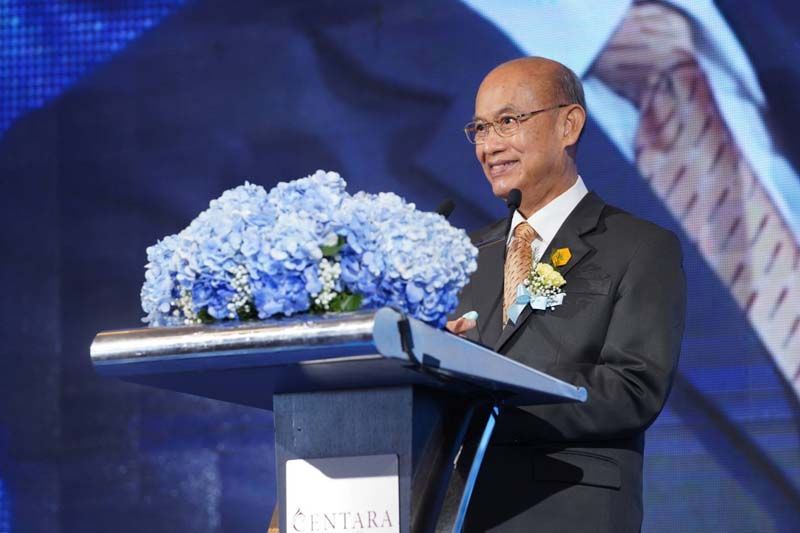
“The business cooperation has occurred because the company foresaw the direction of electric vehicle technology of the future. This is in line with the government’s policy to accelerate the change of fuel powered motorcycles at present to use electric motorcycles,” said Somsak Pejthaveeporndej, CEOof VST ECS (Thailand).
Possawat Thomas, CEO of Thomas Design, said: “Electric vehicles, especially motorcycles, are getting attention in Thailand’s market due to their affordable price and suitability for urban living. In addition, they are very economical for fleet companies. With this latent demand in the market, Thomas Group aims to be the leader in electric vehicles in Thailand’s market.
“Moreover, environmental concern is another factor boosting demand … since EV motorcycles are environmentally friendly both in terms of air and noise pollution.”
“Also, the use of electric vehicles can transform the Thai automotive industry and encourage direct investment in Thailand … in line with the government’s strategic plan to promote the use of EV and reduce EV tax policy.”
Thomas Design uses the technology from Taiwan to manufacture its electric vehicle at its two main factories in Chonburi and Nakhon Pathom, with 30 per cent local parts and 70 per cent imported from Taiwan. Next year it at aims to increase production and raise the proportion of local parts used to 70 per cent.
By The Washington Post · Laurie McGinley · NATIONAL, HEALTH, HEALTH-NEWS
For a nation ravaged by the pandemic, this week marks a pivotal moment – the final push by federal regulators to clear the first experimental coronavirus vaccine for a besieged populace.
If all goes well over the next few days, the Food and Drug Administration could give emergency authorization to the vaccine as early as week’s end, triggering the start of an unprecedented effort to inoculate enough Americans to confer individual immunity and eventually stop the virus’ spread. That next chapter, however, is filled with herculean challenges, including ramping up production to tens of millions of doses, shipping them in specially designed boxes packed with dry ice to keep them ultracold and vaccinating people in every corner of the United States.
“It’s staggering where we find ourselves,” said Robert Wachter, chairman of the department of medicine at the University of California at San Francisco. “And this remarkable week will either put us on a path to getting out of this in six months, or if people lose trust in the process, put us back by months, or a year.”
The regulatory drama kicks off early Tuesday. The Food and Drug Administration tips its hand to the public for the first time about its view of experimental coronavirus vaccine by pharmaceutical giant Pfizer and German biotech BioNTech, when it releases its evaluation of the safety and effectiveness data. That’s in preparation for a meeting two days later of the agency’s vaccine advisory committee – independent experts who will debate that data and whether the FDA should clear the vaccine, a decision many hope will eventually change the course of the crisis.
The agency sees Thursday’s open committee meeting, which includes time for the general public to speak, as a critical part of its effort to be transparent and convince people to take the vaccine. Its commitment to holding a public session is one reason Britain managed to authorize the vaccine before the U.S., angering President Donald Trump.
“We feel it’s our responsibility to make it happen as fast as possible,” said Peter Marks, director of the Center for Biologics Evaluation and Research. But, he added, “We want to show that we really thought this all through carefully.”
If the advisory committee gives the thumbs’ up in a formal vote on Thursday, the FDA is expected to authorize the vaccine within days, clearing the way for its almost-immediate distribution to all 50 states. Operation Warp Speed, the White House-led initiative to develop and distribute vaccines, has said it plans to begin shipping the vaccine within 24 hours of an FDA authorization. But if an unexpected problem should emerge, or the advisory panel raises concerns, the process could be slowed.
Even if all goes as hoped, a new, potentially lifesaving vaccine won’t immediately change the pandemic outlook. Vaccinating most Americans will take several months, even if the vaccine is widely accepted. And, with more than 280,000 dead, even grimmer days lay ahead, with deaths potentially rising to 3,000 or 4,000 a day, experts say.
– – –
What happens first this week?
Public health experts hope that documents released by the FDA and Pfizer on Tuesday will provide many more details about the vaccine, as well as the agency’s opinion about it. If there are any surprises that could slow or derail an authorization, they could pop up here.
“For now, all we have is this press release with a big efficacy number,” said Jason Schwartz, assistant professor of health policy and management at the Yale School of Public Health, referring to Pfizer’s press statements that its vaccine is a remarkable 95 percent effective overall and 94 percent in people over 65. It hasn’t released information on other subgroups, and the data has not yet been published in a peer-reviewed journal.
Also Tuesday, the White House is having a “Covid-19 Vaccine Summit” to tout the vaccine development effort, and inviting governors, federal officials, and executives of pharmaceutical companies and drugstore chains. The goal appears to be to give Trump, who called the FDA part of the “deep state” and accused Pfizer of trying to hurt his reelection prospects, a chance to claim credit for the vaccine.
– – –
Can I watch the advisory committee meeting?
The all-day remote meeting on Thursday will be carried online by the FDA, YouTube and Facebook. University of Michigan epidemiologist Arnold Monto, the temporary chairman of the panel, is shoring up his spotty home WiFi. Meanwhile, teams of FDA staffers are poring over Pfizer data and the quality of the manufacturing process. Manufacturing vaccines can be notoriously difficult, and quality is paramount. In 1955, tainted polio vaccine made by Cutter Laboratories caused five deaths.
The independent panel has a core group of 15 voting members, including all-star experts on immunology, virology and infectious diseases. They include Paul Offit, director of the Vaccine Education Center at the Children’s Hospital of Philadelphia and the co-developer of a rotavirus vaccine. The panel, whose official name is the Vaccine and Related Blood Products Advisory Committee, also includes a consumer representative and a nonvoting member who represents the pharmaceutical industry.
– – –
What does the FDA want from the meeting?
Agency officials will be looking for the panel to say the Pfizer safety and efficacy data justifies an emergency use authorization for the vaccine. They are likely to consider a broad “label,” saying the vaccine should be used to prevent covid-19, the disease caused by the coronavirus, in people from ages 16 and up. Pfizer has started to test the shots in children as young as 12, but more data is needed.
Emergency authorizations are temporary approvals used to accelerate the availability of medical products during a public health emergency. They require less data than full approvals. The FDA has said, however, it will apply rigorous criteria because millions of healthy people are expected to receive the vaccine.
Panel members are sure to drill down on the safety data. In a general vaccine meeting on Oct. 22, some members said the FDA’s requirement that vaccine developers provide two months’ follow-up on half the trial participants wasn’t stringent enough.
“How much oxygen do those concerns get at this meeting?” said Schwartz. “If there are serious concerns, that would complicate the effort to assure the public that this process is every bit as rigorous as we would expect this vaccine to be.”
FDA officials and some panel members have said the two months’ standard is appropriate, given that most serious complications occur in the first six weeks after inoculation. Waiting longer can’t be justified, they said, considering the pandemic’s horrific daily toll, now up to a seven-day average of more than 2,000 deaths daily.
– – –
What else will be discussed?
A critical issue will be the longer-term safety program the FDA and Pfizer have set up to ensure they catch any serious complications caused by the vaccine after it is on the market. “Once you roll something out to hundreds of thousands and millions of people, safety problems can emerge,” said Lawrence Gostin, a public health expert at Georgetown Law School.
The panel also might ask how long the vaccine’s protection will last. The information is important because once people are vaccinated, they are likely to change their behavior – eschewing masks, for example – said Walid Gellad, director of the Center for Pharmaceutical Policy and Prescribing at the University of Pittsburgh. But officials say it’s too soon to know the duration of protection.
The committee also is likely to wrestle with the ethical issue of whether Pfizer should offer the vaccine to people in the placebo group, once the shots are cleared. The company has said that it plans to do so, but the FDA is worried such “unblinding” of the trial will make it difficult to continue to collect long-term data on safety and duration of protection.
Michael Tovar, a participant in the Pfizer trial, predicted a “mass exodus” of enrollees if the placebo group is not offered the vaccine. “For most of us, the possibility of receiving a vaccine early was one of the main reasons for joining the trial,” he said in a comment filed to the public docket on the meeting. “Were it not for the bravery and commitment of trial participants, this historic moment would not be happening.”
But if those participants are not in high-risk priority groups, they might not be able to get the vaccines outside the trial.
– – –
What’s the most important part of the meeting?
The biggest moment will come at the end of the day – probably 5 p.m. or later – when the panel will vote on questions posed by the FDA. The key one will be on whether to authorize the vaccine.
Does the FDA have to follow the panel’s advice?
No, the advice isn’t binding. But the FDA often follows the recommendations of its advisers. And in this case, with all the controversy and political wrangling that has surrounded the vaccine, experts say it would be hard for the agency to ignore the committee, which is partly designed to boost public confidence in the shots.
– – –
What happens then?
Marks, of the FDA, said the agency could authorize the Pfizer vaccine “within a week” of a favorable recommendation from the advisory committee. Some think the decision would be even sooner than that.
The following week, the process starts over for Moderna. On Dec. 15, the agency will post its view of the vaccine, in preparation for a Dec. 17 advisory committee.
National Zoo’s giant pandas will head to China in three years
LivingDec 07. 2020The National Zoo’s giant panda cub is shown at 8 weeks old. He is growing and crawling, zookeepers said. MUST CREDIT: Photo courtesy of National Zoo.
By The Washington Post · Michael E. Ruane · NATIONAL, WORLD, FEATURES, ASIA-PACIFIC, ANIMALS
WASHINGTON – The National Zoo said Monday that all three of its giant pandas will be going to China at the end of 2023, according to a new agreement struck with Chinese officials.
The agreement grants a three-year extension to the stay of the adult giant pandas, Mei Xiang, a female, and Tian Tian, a male, who have been at the zoo for 20 years, the zoo said.
But they and their 4-month-old cub, Xiao Qi Ji, a male, are to go to China by the end of the extension on Dec. 8, 2023.
The agreement means the zoo and the adoring public will have the popular black and white animals for three more years.
But it leaves the future of the National Zoo’s almost 50-year giant panda program unsettled.
Zoo director Steve Monfort said he was confident, despite international tensions, that Chinese officials would consider sending more giant pandas to Washington in the future.
He said he was thrilled to have Mei Xiang and Tian Tian for three more years.
The current agreement that has allowed them to stay expires Monday. Giant pandas are native to China, and it owns all giant pandas in U.S. zoos. As with earlier extensions, the zoo will pay the Chinese government $500,000 per year of the new stay, the zoo said.
“We have . . . three more years to really prepare ourselves also for saying goodbye,” Monfort said. “These animals are beloved not just by the people who work and care for them, but by millions of people.”
“It’s great to have them for a little longer but it also is a reminder that that’s ephemeral, and they will return to China,” he said. “This gives us three years to celebrate that and to get ready for it.”
“It’s going to be a heartbreak for us,” he said. Some keepers have been with the adult pandas their entire careers and will be “absolutely crushed when these animals go away. Lots of tears will flow.”
But there will also be a sense of pride at how well the zoo has cared for them, he said.
Montfort, who has been studying giant pandas for 33 years, said the zoo’s relationship with Chinese panda experts is solid.
“I went over there in January . . . to Beijing, and we had an excellent meeting with our counterparts there,” Monfort said. “It was all good, and we’ve just been having positive interactions since then.”
“We have a 48-year history with pandas, and we’d like to have another many decades of additional collaboration with Chinese colleagues,” he said.
“There’s no question that, when the time is right, we will approach them and begin discussions about the future of the program after this pair,” he said.
“It is our hope that we will have pandas for decades to come,” he said. The zoo’s relationship with its Chinese counterparts is “such a good and strong partnership that we hope that that could be made possible.”
But tensions between the United States and China are ongoing, and President Donald Trump has repeatedly blamed the Chinese for the spread of the coronavirus pandemic, calling the deadly malady the “Chinese virus.”
(The zoo is closed because of the virus.)
Monfort said he is not worried.
“There’s a lot of concern that people have about the relationship between our two countries, on the political side of things,” he said. “That’s all very fraught.”
“But . . . the relationships that we have with our colleagues on the ground there . . . are very strong professional relationships . . . very productive, very collegial, friendly,” he said. “On that level, everything’s really great.”
“But we can’t control politics,” he noted.
He added:
“I don’t believe there’s any sign that anyone is interested in politicizing these pandas . . . No one that I’ve talked to thinks that would be a smart idea . . . It’s a winning story . . . Why would you want to disrupt that success?”
“I don’t see any sign that anyone is interested in making a political statement via pandas,” he said. “I really don’t.”
By prior agreement with the Chinese, all giant panda cubs born in U.S. zoos must be sent to a breeding program in China by the time they turn 4. So at the end of the new three-year deal the cub, Xiao Qi Ji, would depart with the adults, Monfort said.
“It’s just going to make sense to do it all at once,” he said.
The zoo has had giant pandas almost continuously since 1972, when Chinese Premier Zhou Enlai gave the United States Ling-Ling, a female, and Hsing-Hsing, a male. Both were 18 months old.
In return, the United States sent China two musk oxen, Milton and Matilda, from the San Francisco Zoo. Musk oxen are shaggy natives of the Arctic known for their strong odor.
Ling-Ling died in 1992, and Hsing-Hsing died in 1999. There was a gap of about a year between Hsing-Hsing’s death and the arrival of Mei Xiang and Tian Tian on Dec. 6, 2000.
Both Mei Xiang, 22, and Tian Tian, 23, were born at the China Conservation and Research Center for the Giant Panda in Sichuan province.
Their Washington debut was spectacular. Several hundred VIPs met their plane when it arrived. Outgoing President Bill Clinton and daughter Chelsea Clinton got an early audience. “They have long claws and very big teeth,” the president said afterward.
The conductor of the Washington Symphony Orchestra reportedly wrote a piece called “March of the Giant Pandas.” And zoo goers began a romance with the animals that would last more than 20 years.
The estimated life span of a giant panda is about 15 to 20 years in the wild, and about 30 years for those in human care, the zoo said. .
When Mei Xiang gave birth to Xiao Qi Ji on Aug. 21, she became the oldest giant panda to have a cub in North America.
So why does China want two aging giant pandas back?
Monfort said he thinks the Chinese believe they can best take care of older pandas. “They have many, many more pandas,” and more experience, he said.
Also, he said Chinese experts feel they have an obligation to care for their giant pandas in their declining years.
“They’re very special animals,” he said. “They’re . . . revered . . . in China, and I think they feel like it’s their responsibility to care for them at the end of their lives.”
Along with the announcement of the new agreement, the zoo said that benefactor David Rubenstein has pledged another $3 million to its giant panda research program.
Rubenstein has, with this pledge, donated a total of $12 million in support of the giant panda conservation program, the zoo said.
By The Washington Post · Taylor Telford · BUSINESS, ENTERTAINMENT, US-GLOBAL-MARKETS, RETAIL, MUSIC
Universal Music Publishing Group has acquired Bob Dylan’s entire song catalogue, the company announced Monday, in a blockbuster deal that includes more than 600 songs spanning six decades.
Universal now owns the rights to Dylan’s 39 studio albums, from 1962′s self-titled debut to this year’s “Rough and Rowdy Ways.” Up until now, the rock icon and Nobel laureate had retained the rights to his own work.
The terms of the deal were not made public, but Variety reported that it was worth “at least nine figures.”
“To represent the body of work of one of the greatest songwriters of all time – whose cultural importance can’t be overstated – is both a privilege and a responsibility,” UMPG’s chief executive Jody Gerson said in a news release Monday. “We look forward to working with Bob and the team in ensuring his artistry continues to reach and inspire generations of fans, recording artists and songwriters around the world.”
It’s been a devastating year for the music industry. Goldman Sachs predicted that global music business revenues would fall 25% this year and live music revenues would plunge 75 percent as the pandemic has silenced live music and taken touring off the table.
Copyrights have become big business, especially as streaming continues to dominate music and new platforms create licensing opportunities. Many musicians have taken to selling the rights to their work: Last month, DJ Calvin Harris and rock band the Killers struck deals with private equity firms for their catalogs. In recent months, TikTok signed licensing deals with the National Music Publishing Association and Sony Music to ensure popular music would still be allowed on its platform.
Universal, one of the biggest players in the global music industry, has weathered the storm well thanks to its streaming business. Despite the pandemic and second-quarter hit, Universal generated more than $1 billion in streaming revenues in the first nine months of 2020, Vivendi, its French parent company, announced in its third-quarter earnings report. After Chinese conglomerate Tencent took a 10% stake in Universal last year, the company’s value grew to more than $35 billion. Vivendi is planning to take Universal public in 2022.
The son of a Minnesota appliance-store owner, Dylan got his start as a folk singer and soon became one of the voices of political protest and cultural reshaping in the 1960s. His songs – driven by his distinctive nasal-twang vocals – are often seen as dense prose poems packed with flamboyant, surreal images. His oeuvre earned him the Nobel Prize for Literature in 2016, making him the only songwriter to ever win the award.
“It’s no secret that the art of songwriting is the fundamental key to all great music, nor is it a secret that Bob is one of the very greatest practitioners of that art,” Sir Lucian Grainge, chairman and chief executive of Universal Music Group, said in a news release. “Brilliant and moving, inspiring and beautiful, insightful and provocative, [Dylan’s] songs are timeless – whether they were written more than half a century ago or yesterday.”
Rolling Stone magazine once called Dylan “the most influential American musician rock-and-roll has ever produced.” His songs have been recorded more than 6,000 times by artists spanning many continents and genres. He has sold more than 125 million records throughout his career, according to a news release – not that money has ever been Dylan’s metric for success.
“What’s money?” Dylan famously said. “A man is a success if he gets up in the morning and gets to bed at night and in between does what he wants to do.”
























 The National Zoo’s giant panda cub is shown at 8 weeks old. He is growing and crawling, zookeepers said. MUST CREDIT: Photo courtesy of National Zoo.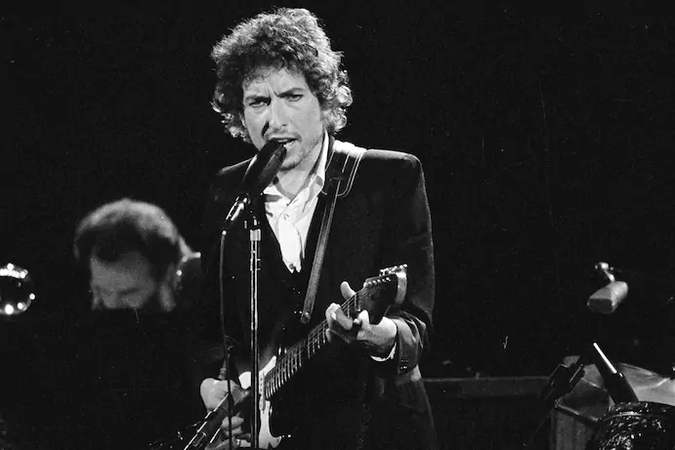
 SootinClaimon.Com