‘ศึกษานารี-สตรีวิทยา-ราชวินิตบางแก้ว’ ปิดโรงเรียน พร้อมเรียนออนไลน์-เลี่ยงเสี่ยงโควิด #SootinClaimon.Com

#SootinClaimon.Com : ขอบคุณแหล่งข้อมูล : หนังสือพิมพ์แนวหน้า

ในประเทศ – ‘ศึกษานารี-สตรีวิทยา-ราชวินิตบางแก้ว’ปิดโรงเรียน พร้อมเรียนออนไลน์-เลี่ยงเสี่ยงโควิด (naewna.com)

'ศึกษานารี-สตรีวิทยา-ราชวินิตบางแก้ว'ปิดโรงเรียน พร้อมเรียนออนไลน์-เลี่ยงเสี่ยงโควิด

‘ศึกษานารี-สตรีวิทยา-ราชวินิตบางแก้ว’ปิดโรงเรียน พร้อมเรียนออนไลน์-เลี่ยงเสี่ยงโควิด

วันจันทร์ ที่ 21 ธันวาคม พ.ศ. 2563, 16.14 น.

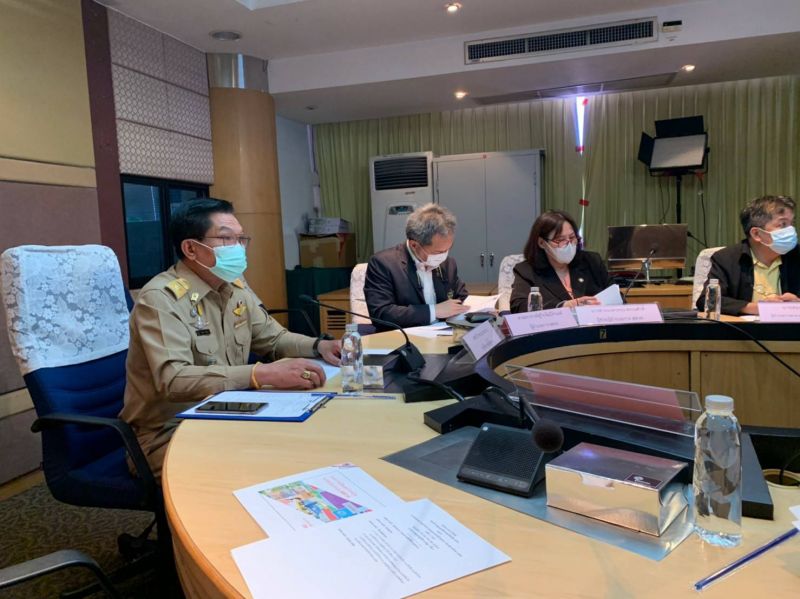
วันที่ 21 ธันวาคม 2563 สืบเนื่องจากสถานการณ์การแพร่ระบาดโรคโควิด-19 ในพื้นที่จังหวัดสมุทรสาคร กรุงเทพมหานครจึงได้เชิญคณะกรรมการป้องกันและควบคุมโรคติดต่อกรุงเทพมหานคร ร่วมประชุมหารือด่วน เพื่อเตรียมมาตรการป้องกันและรับมือกับสถานการณ์การแพร่ระบาดของโรคติดเชื้อโควิด-19

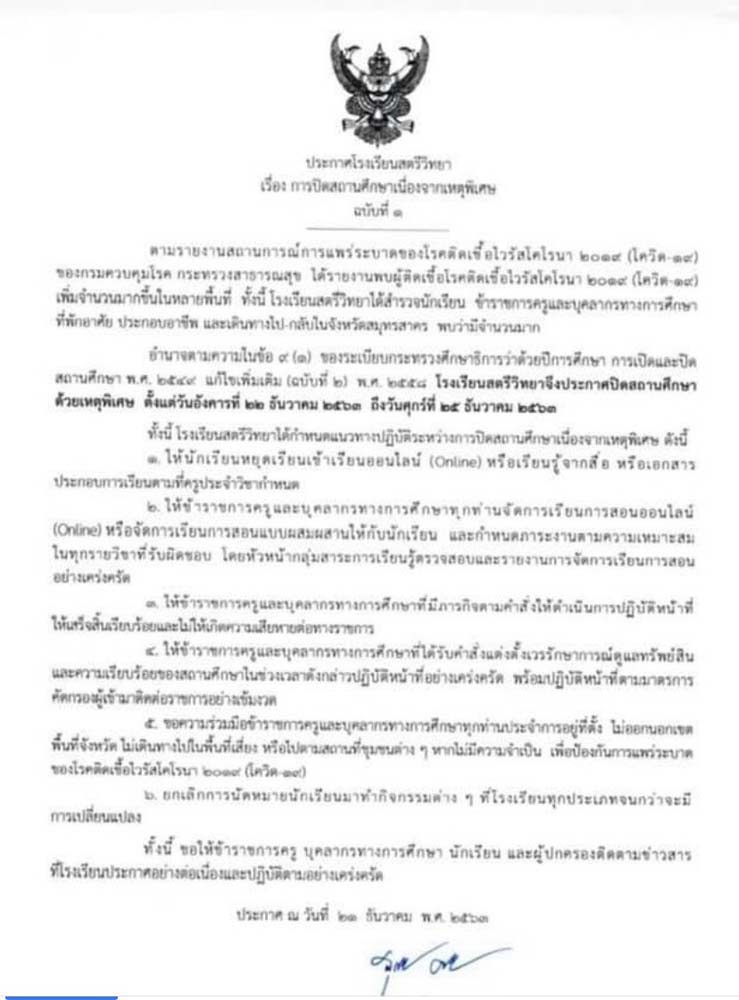
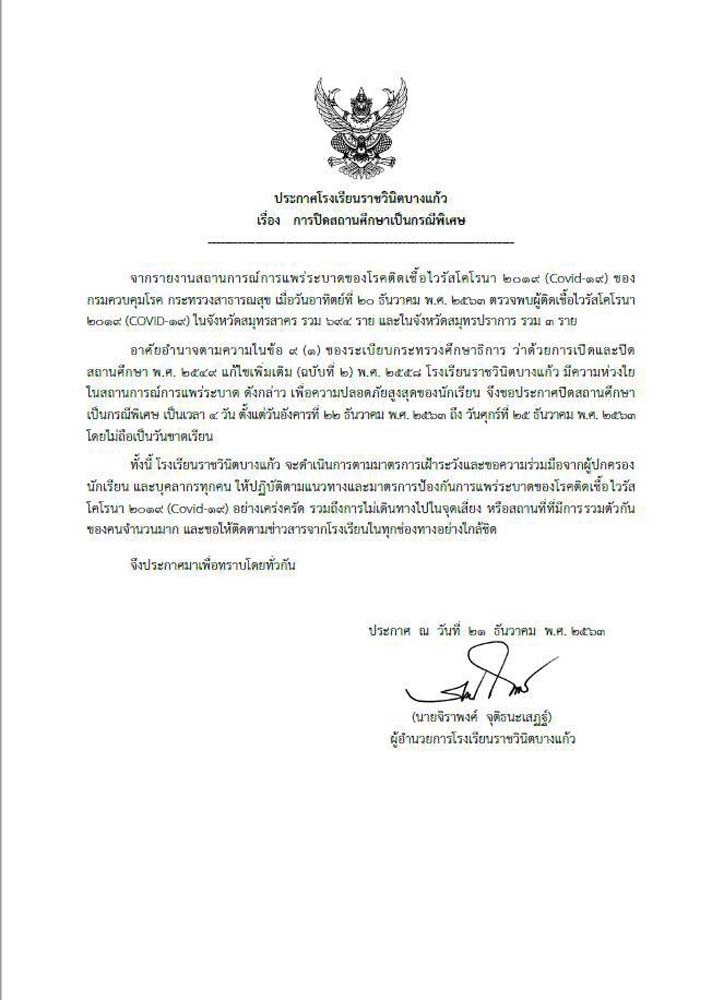
ล่าสุด  3 โรงเรียนอย่าง โรงเรียนศึกษานารี โรงเรียนสตรีวิทยา โรงเรียนวินิตบางแก้ว ได้ประกาศปิดโรงเรียน ดังนี้

สกสค.ฝัน 8 ปีองค์การค้าฯปลดหนี้หมด ตั้งเป้าพิมพ์ตำราส่งเรียนทันเปิดเทอม ปี64 #SootinClaimon.Com

#SootinClaimon.Com : ขอบคุณแหล่งข้อมูล : หนังสือพิมพ์แนวหน้า

ในประเทศ – สกสค.ฝัน 8 ปีองค์การค้าฯปลดหนี้หมด ตั้งเป้าพิมพ์ตำราส่งเรียนทันเปิดเทอม ปี64 (naewna.com)

สกสค.ฝัน 8 ปีองค์การค้าฯปลดหนี้หมด ตั้งเป้าพิมพ์ตำราส่งเรียนทันเปิดเทอม ปี64

สกสค.ฝัน 8 ปีองค์การค้าฯปลดหนี้หมด ตั้งเป้าพิมพ์ตำราส่งเรียนทันเปิดเทอม ปี64

วันจันทร์ ที่ 21 ธันวาคม พ.ศ. 2563, 14.22 น.

21 ธ.ค.63 นายอัมพร พินะสา เลขาธิการคณะกรรมการการศึกษาขั้นพื้นฐาน (เลขาธิการ กพฐ.) เปิดเผยภายหลังการประชุมคณะกรรมการดูแลและติดตามการผลิตหนังสือเรียน ปีการศึกษา 2564 โดยมีนายธนพร สมศรี เลขาธิการ สกสค. นายอดุลย์ บุสสาผู้อำนวยการองค์การค้า ของ สกสค. และ ศ.ดร.ชูกิจ ลิมปิจำนงค์ สถาบันส่งเสริมการสอนวิทยาศาสตร์และเทคโนโลยี (สสวท.) ร่วมประชุมด้วย ว่า คณะกรรมการชุดนี้เป็นการทำงานร่วมกันของ องค์การค้าของสำนักงานคณะกรรมการส่งเสริมสวัสดิการและสวัสดิภาพครูและบุคลากรทางการศึกษา (สกสค.) และสถาบันส่งเสริมการสอนวิทยาศาสตร์และเทคโนโลยี (สสวท.) ซึ่งที่ประชุมได้สรุปผลการดำเนินการในปีที่ผ่านมา ว่ามีความสำเร็จ หรือมีปัญหาอุปสรรคอะไรบ้าง และจะปรับยุทธวิธีอย่างไร เพื่อให้การจัดพิมพ์หนังสือเรียนจัดส่งถึงนักเรียนและโรงเรียนทันก่อนเปิดภาคเรียน ตามเป้าหมาย 

ทั้งนี้ จากการหารือ พบว่า การดำเนินการที่ผ่านมาค่อนข้างมีประสิทธิภาพขึ้น สามารถจัดส่งหนังสือเรียนได้ทันตามกำหนด ยกเว้นบางโรงเรียน ที่จัดการเรียนการสอนชั้นมัธยมศึกษาปีที่ 1 และ ชั้นมัธยมศึกษาปีที่ 4 โดยเฉพาะในโรงเรียนขนาดกลางและขนาดเล็ก ซึ่งต้องรอจำนวนนักเรียนที่แน่นอนแล้วค่อยสั่งหนังสือ จึงเป็นปัญหาที่เกิดจากโรงเรียนไม่ใช่จากองค์การค้าฯ   

“ปีนี้ เพื่อให้การผลิตและจัดส่งหนังสือเรียนเกิดประสิทธิภาพมากขึ้น โดยจะร่นระยะเวลาการดำเนินการให้เร็วขึ้นกว่าปีที่ผ่านมา ตั้งแต่ขั้นตอนการจัดทำต้นฉบับของ สสวท.และการผลิตขององค์การค้าฯ รวมถึงจะเน้นย้ำไปยังโรงเรียนให้เตรียมการในการสำรวจจำนวนนักเรียน ปี 2564 ว่าแต่ละชั้นปีมีจำนวนเท่าไร เพื่อดำเนินการผลิตและจัดส่งหนังสือเรียน ให้ทันเปิดภาคเรียนที่ 1 ปีการศึกษา 2564 ในกลุ่มสาระวิชาวิทยาศาสตร์ คณิตศาสตร์ และ เทคโนโลยี” นายอัมพร กล่าว 

ด้าน นายอดุลย์ บุสสาผู้อำนวยการองค์การค้า ของสกสค. กล่าวว่า องค์การการค้าฯ มีการจัดเตรียมความพร้อมการจัดพิมพ์หนังสือให้เร็วขึ้น คิดว่าจะสามารถจัดพิมพ์เสร็จเร็วกว่าปีที่ผ่านมา โดยจ้างหน่วยงานภายนอกจัดพิมพ์กว่า 80% ส่วนที่เหลือ องค์การค้าฯ ดำเนินการจัดพิมพ์เอง เชื่อว่าจะสามารถดำเนินการได้ทันตามกำหนด 

ขณะที่ นายธนพร สมศรี เลขาธิการ สกสค. กล่าวว่า เชื่อว่าการจัดพิมพ์หนังสือเรียนครั้งนี้ จะช่วยลดภาระหนี้สิน เพราะใช้บุคลากรได้เหมาะสมกับค่าใช้จ่ายและรายได้ ก็ต้องขอขอบคุณ สพฐ.ที่สนับสนุนองค์การค้าของ สกสค.ได้กลับมาจัดพิมพ์หนังสือให้กับ สพฐ. องค์การค้าก็จะได้นำกำไรมาใช้หนี้สินที่ องค์การค้ามีอยู่ เชื่อว่าภายใน 7 – 8 ปี นี้ภาระหนี้สินขององค์การค้าฯน่าจะดีขึ้นหรือหมดหนี้ได้

New transport app Bolt promises cheaper rides in Chiang Mai #SootinClaimon.Com

#SootinClaimon.Com : ขอบคุณแหล่งข้อมูล : หนังสือพิมพ์ The Nation.

New transport app Bolt promises cheaper rides in Chiang Mai (nationthailand.com)

New transport app Bolt promises cheaper rides in Chiang Mai

Dec 21. 2020

By The Nation

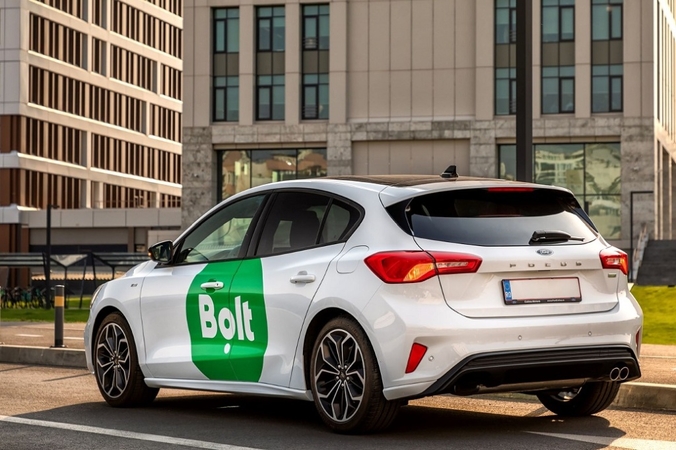
Bolt, an on-demand transportation platform in Europe and Africa, on Monday announced its pilot service in Chiang Mai, with more than 500 drivers ready to start accepting rides.

Bolt enters Chiang Mai on the heels of its debut in Bangkok earlier this year.

“At Bolt, we’re on a mission to make urban transport more affordable and convenient,” said the firm’s regional manager, Ireoluwa Obatoki. “We’ve seen an amazing success of Bolt app in Bangkok, where people have completed thousands of rides on our platform since our launch in July. We are now excited to bring equally affordable rides and great driver earnings to Chiang Mai”.

The firm describes Bolt as a free mobile app that allows passengers to request a driver, collect them wherever they are and take them where they want to go in a quick, reliable and affordable way. Drivers registered to the platform can earn money by accepting rides through the application.

Bolt in Chiang Mai said it will charge drivers no commission for using the platform for the first six months, and offers fares 20 per cent lower than other competitors on the market.

The free Bolt app can be downloaded from the Apple App Store or Google Play Store. Drivers with their own car can join Bolt platform by registering at partners.bolt.eu/driver-signup or through the Bolt Driver app.

Bolt has more than 50 million users in over 40 countries across Europe and Africa. Its services range from ride-hailing to micromobility with e-scooters and electric bikes to food and package delivery.

Nursing homes face daunting task of getting consent before they give coronavirus vaccines #SootinClaimon.Com

#SootinClaimon.Com : ขอบคุณแหล่งข้อมูล : หนังสือพิมพ์ The Nation.

Nursing homes face daunting task of getting consent before they give coronavirus vaccines (nationthailand.com)

Nursing homes face daunting task of getting consent before they give coronavirus vaccines

Health & BeautyDec 20. 2020

Mike Wasserman, past president of the California Association of Long Term Care Medicine, says the coronavirus vaccination process for such facilities is

Mike Wasserman, past president of the California Association of Long Term Care Medicine, says the coronavirus vaccination process for such facilities is “a mess.” MUST CREDIT: Photo for The Washington Post by Allison Zaucha 

By The Washington Post · Fenit Nirappil, Yasmeen Abutaleb · NATIONAL, HEALTH, HEALTH-NEWS 

More than 3 million elderly and infirm residents of nursing homes and other long-term-care facilities may face delays in getting coronavirus vaccines as the facilities confront the difficult task of obtaining consent, which consumer advocates, operators and some health officials say should have been simplified and started earlier by the federal government.

Obtaining consent presents one of the toughest hurdles as officials mobilize to inoculate residents of these facilities, many of whom have dementia or Alzheimer’s disease.

Facilities must track down relatives or attorneys in those cases, which could take days or weeks. In some instances, they may need to resolve disputes when family members disagree on whether their loved ones should receive a vaccine. 

Even residents of sound mind may be anxious about a new vaccine and need time to weigh risks and benefits and consult with relatives.

Federal health officials gave top priority for vaccines to long-term-care residents and staff after outbreaks ravaged facilities, killing more than 113,000 residents and staff and accounting for more than a third of all U.S. covid-19 deaths. Health and Human Services Secretary Alex Azar recently said the government has the capacity to inoculate all long-term-care residents by Christmas. But the retail pharmacies administering the vaccines have indicated the process will likely take several months as a result of logistical and consent challenges that will require multiple visits to facilities. That process will be occurring over what is projected to be the deadliest period of the pandemic.

“It’s a mess,” said Mike Wasserman, medical director of a California facility and past president of the California Association of Long Term Care Medicine who has talked to other nursing homes about the rollout. “The federal government just hasn’t provided good direction, and the direction keeps changing every day. And you get different stories from different people at different levels.”

Operators of nursing homes and other long-term-care facilities have been scrambling to resolve the conflicting directions.

The government’s partnership with Walgreens and CVS to distribute vaccines gave the companies discretion to secure permission however they wanted. The Centers for Disease Control and Prevention, which oversees that partnership, advised that verbal consent is enough. 

But the pharmacies wanted more, imposing onerous consent rules far stricter than what nursing homes have used for seasonal flu shots, operators said. The pharmacies eased up after complaints. 

Advocates say the Trump administration could have prevented this confusion had they instructed pharmacies at the outset that verbal permission was sufficient. 

“We knew months ago, before any vaccine was approved, that these complex logistical issues were going to have to be dealt with once a vaccine was rolled out,” said Mike Dark, a staff attorney with California Advocates for Nursing Home Reform. “If people who need the vaccine don’t get it, we are going to see more deaths and more transmission.”

Dark said the federal government could have taken steps to reach out to facilities ahead of the vaccinations with a coordinated education campaign and by encouraging safe family visits so residents could discuss the decisions in person.

CVS originally said it would require three hard-copy written consent forms from each resident or their proxy. They planned to mail the forms to the facilities, which some nursing home operators fretted hadn’t arrived a week before the shots were to be administered. Homes and advocates complained that those requirements were burdensome, particularly when they would need to track down family members for signatures.

CVS now allows residents capable of decision-making to give verbal consent and will accept emailed consents from medical decision-makers for those who are not capable of giving permission, a spokesman said. 

A Walgreens spokeswoman said forms are distributed to facilities several days ahead of vaccination clinics and can be marked to note verbal consent. Walgreens executive Ed Kaleta said last week that the pharmacy has become more flexible about what it will accept to indicate consent.

“A number of long-term facilities have said the consent form can be done orally or electronically, so for those facilities that are allowing that to occur, we’re obviously complying with that because it is making it easier,” he said during a webinar hosted by the Alliance for Health Policy.

Peter Van Runkle, executive director of the Ohio Health Care Association, a long-term-care trade group, said facilities that need ample time for consent were left confused by the changing directions.

“A couple of days before the clinic works fine if you are talking about people who are there in person and capable,” Van Runkle said. “When you have to go outside to find someone and get their consent, a couple of days doesn’t work. It would have been helpful to have more time to get consent.” 

HHS and Operation Warp Speed officials, who are overseeing the distribution of vaccines, did not answer questions about whether the federal government should have streamlined consent rules at the outset.

Several HHS officials said they had warned it would take time to obtain consent in long-term-care facilities, especially because they were hearing that some residents and employees were hesitant to get the vaccine, according to two senior administration officials who spoke on the condition of anonymity because they were not authorized to discuss the issue. They said they raised those concerns with Warp Speed officials and said there could have been high-level coordination ahead of the Food and Drug Administration’s authorization of the Pfizer-BioNTech vaccine that would have enabled nursing homes to begin the process earlier.

Scott Gottlieb, a former FDA commissioner under President Donald Trump, also said HHS could have been more proactive in confronting potential delays. 

“They could have started to get those consents in place sooner, but they would have needed to clear a fact sheet on the vaccine through FDA, to properly disclose the anticipated risks and benefits to the patients’ families,” he said. 

But some officials cautioned that such a fact sheet would not have helped the process if the FDA’s review of Pfizer’s vaccine produced additional data and risks that were not yet known. 

“FDA’s staff were reviewing the terms of the authorization and Pfizer-BioNTech’s fact sheets – which contain many important details that providers need, including risks providers must know prior to administering the vaccine to a patient – up until the time of authorization,” said Stephanie Caccomo, an FDA spokeswoman. “This information absolutely must be accurate and complete – incomplete or outdated information would be detrimental to the delivery of vaccines to recipients.”

Warp Speed officials declined to address the issue on the record. A senior Trump administration official said the rollout could have been even more chaotic had staff given out such fact sheets and then been forced to go back to relatives and residents after the FDA evaluation to describe new side effects. 

“It was not a slam-dunk plan that I think some Monday morning quarterbackers are suggesting,” said the official, who spoke on the condition of anonymity to talk candidly. 

Vaccinations began at a handful of nursing homes last week, including in Florida and Ohio. 

Gen. Gustave F. Perna, who oversees logistics for the federal vaccine distribution effort under Operation Warp Speed, said Wednesday that 1,100 of 70,000 facilities would receive vaccines by Monday before expanding to “thousands” a day. West Virginia, Florida, Ohio and Connecticut are the first states, he said. 

Suzanne Messenger, West Virginia’s long-term-care ombudsman, said some nursing home networks had to draw up their own consent forms – which are no longer necessary – while they were waiting for clearer guidance.

“It seems like folks had ample opportunity to have something, a skeleton consent form, so our facilities are able to roll out vaccines as soon as possible,” Messenger said. 

Some nursing home operators said they have found other ways to get things moving. Sunrise Senior Living, which operates 275 U.S. facilities, sent a survey to residents and family members to gauge interest in vaccines, finding that 92 percent wanted them when available. 

David Grabowski, a Harvard Medical School professor who has been monitoring nursing homes during the pandemic, said early conversations about consent are important for vaccine rollouts.

Lines of communication between facilities and families have been disrupted with restricted visitations, which put greater demands on nursing home staff. Some patients able to make their own decisions may resist the vaccine if they feel they are being rushed into it. 

“We shouldn’t be figuring out how to fly the plane while we’re in the air,” he said. “We should have been doing it before takeoff.”

World No 1 Jin Young Ko ends 2020 season on high note #SootinClaimon.Com

#SootinClaimon.Com : ขอบคุณแหล่งข้อมูล : หนังสือพิมพ์ The Nation.

World No 1 Jin Young Ko ends 2020 season on high note (nationthailand.com)

World No 1 Jin Young Ko ends 2020 season on high note

Dec 21. 2020Jin Young Ko (Photo credit to LPGA)Jin Young Ko (Photo credit to LPGA) 

Ariya lands at tied 10th on eight under-par.

When she woke up Monday morning for the final round of the U.S. Women’s Open, Jin Young Ko wasn’t even in the CME Group Tour Championship field. 

Following a blistering 6-under 66 today, the No. 1 player in the Rolex Women’s World Golf Rankings captured a five-stroke victory and earned the title of Race to the CME Globe champion. With the victory comes a $1.1 million check, the largest single prize in women’s golf this season.

Ko finished atop the leaderboard at -18 overall, one off the tournament scoring record, with fellow major winners Hannah Green and Sei Young Kim finishing tied for second at -13.

“I still can’t believe it, that I am here. And then I won this tournament,” said an incredulous Ko, who earned a berth in the championship by virtue of her runner-up finish at the U.S. Women’s Open. “I want to thank God. He makes my plan. Not me. I did nothing. He makes everything, so I just want to thank God and I can’t believe right now.”

Although Ko started the day trailing Kim by one stroke, she quickly joined her countrywoman at the top with a birdie at No. 1. Still knotted after nine holes, Ko charged home on the back nine with five birdies, including a perfectly paced 10-foot birdie on No. 18 that sealed the win. With the lucrative prize now in her pocket, Ko already knows the major purchase that is first on her wish list.

“I looked (at a) house in the States until this morning because I had no money in my bank account because I send to Korea all my money,” said Ko, who is eyeing a house in Frisco, Texas, near her good friend M.J. Hur. “So, I needed money for buy the house. But, yeah, I can buy house right now.”

With her second-place finish, Kim captured 2020 Rolex Player of the Year honors by six points over 2013 winner Inbee Park. It was more than a worthy consolation prize for Kim, who shot an even-par 72 on Sunday to fall short of her third title of the season.

“I’m little disappointed I couldn’t play well today, but I finish normal,” said Kim. “But very happy I got the Player of the Year. It’s really awesome. And then, yeah, I’m very proud of her win this tournament.”

On her 24th birthday, Green made a good run at earning perhaps the best of all possible birthday presents. While not enough to take the title, a bogey-free 67 did earn the Australian major champion her only top-10 finish of the season. With a two-week quarantine ahead of her in order to return home to Perth, Green is more than happy to finish the season on a high note.

“Felt like I did some good work through quarantine with my coach. Gained some distance, so that really was nice to actually come out and see it in a tournament,” said Green. “I wish there was an event next week because I finally feel like everything is coming together, but then again, I want to go back to Australia.”

Mina Harigae and Lydia Ko played alongside Green on Sunday, with the entire group returning bogey-free rounds. Harigae finished in solo fourth at -12, while Ko and Lexi Thompson tied for fifth at -11.

Danielle Kang, a two-time winner in 2020, finished with the season with a scoring average of 70.082 to claim the Vare Trophy, awarded to the player with the season’s lowest scoring average. Kang tied for 30th at –3 overall.

Thai No 1 Ariya Jutanugarn enjoyed an unbelmished round of a 67 and a total 8 under-par-280 to share the 10th spot along side Anna Nordqvist and Cristie Kerr. 

KO CLAIMS 2020 OFFICIAL MONEY TITLE

Across four events played this season, World No. 1 Jin Young Ko secured the 2020 Official Money Title. With her win at Tiburon Golf Club, Ko earned a $1.1 million winner’s prize, for a total of $1,667,925 earned this season. Aside from her win, Ko earned $9,106 with her T34 finish at the Pelican Women’s Championship, $71,553 with her fifth-place result at the Volunteers of America Classic and $487,286 from her second-place performance at the U.S. Women’s Open.

In 2019, Ko also claimed the Official Money Title, earning $2,773,894 thanks, in large part, to four wins that included major championship victories at the ANA Inspiration and The Evian Championship.

SEI YOUNG KIM WINS ROLEX PLAYER OF THE YEAR

With her T2 finish at the CME Group Tour Championship, Sei Young Kim is the 2020 Rolex Player of the Year. Kim earned 118 points with two wins this season at the KPMG Women’s PGA Championship and the Pelican Women’s Championship presented by DEX Imaging and Konica Minolta, and captured three additional top-10 finishes at the Diamond Resorts Tournament of Champions (T7), Gainbridge LPGA at Boca Rio (5th) and Walmart NW Arkansas Championship presented by P&G (T5).

“It feels great. I’m very proud of it. Yeah, it’s great because me and Paul, we working hard and we been great this year,” said Kim, who was named the Louise Suggs Rolex Rookie of the Year in 2015. “I’m very thankful to all who is around me, like parents and then my coach and my trainer, Mr. Moon, and yeah, my family. Yeah, I’m very thankful to all of them.”

Inbee Park came in second to Kim in the Rolex Player of the Year standings, earning 112 points. In 2020, Park won the ISPS Handa Women’s Australian Open and finished the year with seven additional top-10 results in 13 events, including three runner-up performances at the Diamond Resorts Tournament of Champions, KPMG Women’s PGA Championship and Volunteers of America Classic. Danielle Kang was third in points with 87, after two wins at the LPGA Drive On Championship – Inverness Club and Marathon LPGA Classic presented by Dana along with three additional top-10s across her 13 starts.

The prestigious Rolex Player of the Year award was introduced to the LPGA in 1966. LPGA Tour players are awarded points at each official LPGA tournament based on top-10 finishes with the top points earner taking home the prestigious honor each year. Points are doubled at each of the LPGA’s five major championships – ANA Inspiration, KPMG Women’s PGA Championship, U.S. Women’s Open, AIG Women’s Open and the Evian Championship.

DANIELLE KANG WINS THE 2020 VARE TROPHY

With rounds of 71-75-70-69 at the season-ending CME Group Tour Championship, Danielle Kang etched her name in the LPGA Tour history books with a scoring average of 70.082 to win the 2020 Vare Trophy.

“At the end of the round, I looked at my caddie and said, ‘We won the Vare.’ That is an accomplishment in all cases,” said Kang, who hit 13 of 14 fairways today and 14 greens in regulation. “This one feels like a really good mark in my career, that I was able to do it and accomplished it. I can look back on the 2020 season and at the Vare Trophy, and that’s part of it.

“To be part of the legends [list to win the Vare Trophy], I just want to make them proud moving forward as well, because they left this game for us and they left this stage for us, and I wish that I can do that for the future.”

Earlier in the week, Kang also pledged $1,000 for every birdie she made during tournament action to St. Jude Children’s Hospital, a proud partner of the LPGA Tour. Thanks to 16 birdies at Tiburón Golf Club, Kang raised $16,000 on her own, while donations through her online platform are nearing $15,000 with time still left to donate.

“I always like to say give when you can. I was really inspired by how Mary Browder spoke about St. Jude and I was very appreciative of CME to host the event,” Kang said. “We have to appreciate that. With all that said, being able to play for something and knowing that we can make a difference, no matter how I finished I am personally donating $16,000. Plus all the people that were involved in the pledge account [online], really thankful.”

IF THERE WAS A TROPHY FOR MOST BOGEY-FREE ROUNDS, IT WOULD GO TO MINA HARIGAE

On a day with so many awards and trophies to hand out, including the CME Group Championship trophy and Rolex Player of the Year Award, another shoutout goes to 11-year LPGA Tour veteran Mina Harigae, who didn’t record a bogey since the first round on Thursday. In sum, Harigae recorded two bogeys, 14 birdies, and 60 pars throughout the four days, leaving her with an overall score of -12.

“For the most part I was hitting the ball really solid. I think maybe the last two days I hit a lot of greens so I only had to try to get up and down a few times,” said Harigae. “When I missed the green my short game saved me and I made a couple good par putts and couple good chips. Yeah, just everything felt good.”

Speaking modestly, the American-Japanese player hit 56 of 72 greens in regulation and 51 of 56 fairways with luck having nothing to do with it. It was all of Harigae’s hard work since the summer of 2019.

“It feels like a long time. Honestly I think the process started probably like a year and a half ago. Even like January, February I was still working on a lot of things, so the break actually helped my game a lot. Once we started, I was like a whole new person,” said Harigae.

JIN YOUNG KO A WHITE KNIGHT TO CAP OFF 2020

It has been hard to look forward. Planning past tomorrow in 2020 has seemed like an exercise in frustration and futility. Where are we going? What is Plan B? And then, when summer slipped to fall and fall into a disheartening winter, the questions became darker. What are we doing? What is the point?

Through it all, golf has been a respite, a light, an oasis in a desert of despair. From the first Drive On Championship at Inverness Club to the CME Group Tour Championship the week before Christmas, the LPGA Tour did its part to add some normalcy to the abnormal. Players like Danielle Kang, Sei Young Kim, Stacy Lewis and Angela Stanford gave us a reason to cheer, a reason to breathe, a north star on which to set our bearings in what often seemed like an unbearable time.  

The fact that Jin Young Ko would win the CME Group Tour Championship in just her fourth start of the year and become the only player since the LPGA began keeping statistics to win the season-long money title in just a tick over a month is the perfect metaphor for 2020. Ko couldn’t plan for this week. She didn’t know until last Monday that she was in the field. She had to finish fourth or better at the U.S. Women’s Open to qualify. In the frigid north winds of Houston, Ko shot a closing 68 to finish tied for second.

A week later, she rolled in a 10-foot putt on the final green at Tiburon Golf Club – her fifth birdie in seven holes – to shoot 66 and put the perfect capstone on the year. Dressed in what has become her traditional Sunday white, Ko blew a kiss to the sky to cap off her five-shot victory.

She is a white knight for a black time.

The car I’m most excited to drive in 2021 is a truck – and it could change everything #SootinClaimon.Com

#SootinClaimon.Com : ขอบคุณแหล่งข้อมูล : หนังสือพิมพ์ The Nation.

The car I’m most excited to drive in 2021 is a truck – and it could change everything (nationthailand.com)

The car I’m most excited to drive in 2021 is a truck – and it could change everything

Dec 20. 2020Rivian's electric pickup iat AutoMobility LA, ahead of the Los Angeles Auto Show, on Nov. 27, 2018. MUST CREDIT: Bloomberg photo by Patrick T. Fallon.Rivian’s electric pickup iat AutoMobility LA, ahead of the Los Angeles Auto Show, on Nov. 27, 2018. MUST CREDIT: Bloomberg photo by Patrick T. Fallon. 

By Syndication Washington Post, Bloomberg · Hannah Elliott · BUSINESS, TECHNOLOGY, US-GLOBAL-MARKETS 

Even the pandemic didn’t stop automakers from unveiling cars in 2020. From the achingly beautiful Ferrari Roma to the electric Polestar 2, and from the Mercedes-Maybach GLS to three track-worthy wagons, the new products provided some optimism about the future of driving while many other diversions (concerts, shopping, travel) stalled.

But that’s old news.

What I’m really looking forward to driving in 2021 is not a car at all. It’s a truck: the Rivian R1T.

The company announced it in 2018, long before Tesla’s Cybertruck and General Motors’s Hummer EV, so it’s about time. (Last year, I wrote about wanting to drive the Cybertruck … and I’m still waiting for that test drive.)

With a 754 horsepower and all-wheel drive, the R1T is not the most practical construction-site hauler, though potential buyers will certainly include a few hardworking ranchers, builders, and outdoor types. The truck bed alone is dwarfed by that of the Cybertruck, which is 6½ feet long and 57 inches wide. The R1T’s bed is reportedly just 4¼ feet by 50 inches. It will, however, go from zero to 60 mph in the same time as a Porsche 911.

But more than the $75,000 truck’s considerable capabilities-it promises up to 400 miles of driving range-I’m also fascinated by the company behind it.

Founded in 2009 and now headquartered in Plymouth, Mich., Rivian Automotive Inc. has garnered wide praise for bringing to market what myriad others (Bollinger, Fisker, Lordstown Motors, Atlis, and Nikola, among others) have yet to produce: an actual, for-sale, road-legal, live-in-living-color electric truck.

If Rivian executives hold true to their promise that the R1T will hit customers’ driveways in June, it will beat the Cybertruck (slated for the end of 2021), Ford’s electric F-150 (on sale by 2022), and the Hummer to become America’s first battery-powered pickup (the full range will premiere in 2023). Whichever company gets its out first, and does it well, will land a huge coup from a branding perspective, as well as immense profits. The electrified truck represents an astoundingly lucrative market: Last year, 2.5 million Americans bought a pickup truck. They’re on track to outpace the sales of SUVs, which, when combined with truck sales, constitute 70% of the U.S. market for new vehicles. 

“We’re seeing customers come out of just about everything,” RJ Scaringe, Rivian’s founder and chief executive officer, told Bloomberg on Dec. 10. “Of course, [they’re] coming out of pickups, but often-more likely-coming out of SUVs, out of other electric vehicles.”

The big question is what makes, or will make, Rivian exceptional among its set. Plenty of people do believe it’s special: T. Rowe Price, BlackRock, Fidelity, Soros Fund Management, and Cox Automotive, among others, have invested a cumulative total of more than $6 billion into the company. Last year, Ford paid $500 million for access to Rivian’s electric “skateboard” truck platform, a few months before Amazon.com Inc.’s Jeff Bezos ordered 100,000 Rivian-made delivery vans.

Last week, former Aston Martin President Laura Schwab announced she had left the legacy British auto brand to become Rivian’s vice president for sales and marketing. “It is sooooooo exciting!” is how she put it. 

What’s more, Rivian has ambitions far beyond an electric pickup (and subsequent SUV, called the R1S). It wants to go global, with lower-priced, smaller models planned for Europe and China. It wants to build 41 service centers across the U.S. by next year. (Company execs say 80% of servicing will be done at an owner’s home or workplace via a fleet of customized Ford Transit vans and Rivian’s own electrified service fleet.) And it wants to open a nationwide network of fast-charging stations capable of adding 140 miles of range in 20 minutes. 

It’s wild ambition that will look either delusional or prescient in the future. Only time will tell, which is why I can’t wait to see for myself what all the fuss is about. For me, the proof is in the pudding … or the pickup, as the case may be.

The quest to replicate Tesla’s success keeps EV mania alive #SootinClaimon.Com

#SootinClaimon.Com : ขอบคุณแหล่งข้อมูล : หนังสือพิมพ์ The Nation.

The quest to replicate Tesla’s success keeps EV mania alive (nationthailand.com)

The quest to replicate Tesla’s success keeps EV mania alive

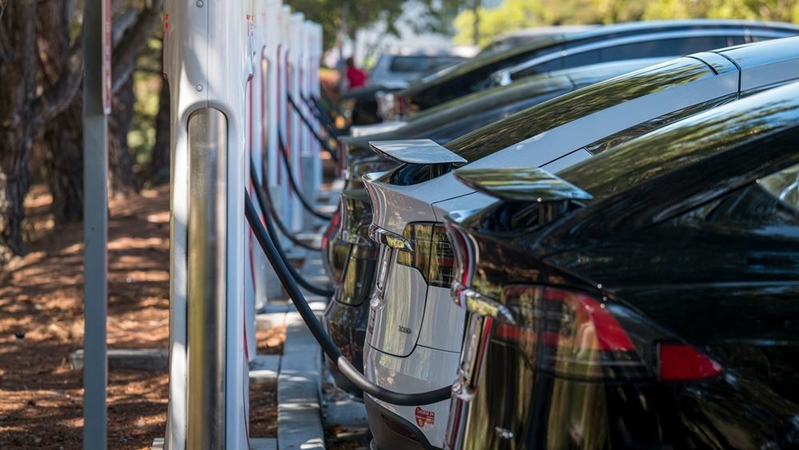
Dec 20. 2020Tesla vehicles charge at a charging station in San Mateo, Calif., on Sept. 22, 2020. MUST CREDIT: Bloomberg photo by David Paul Morris.Tesla vehicles charge at a charging station in San Mateo, Calif., on Sept. 22, 2020. MUST CREDIT: Bloomberg photo by David Paul Morris. 
By Syndication Washington Post, Bloomberg · Craig Trudell · BUSINESS, TECHNOLOGY, US-GLOBAL-MARKETS 

Tesla has thrilled some investors and jarred others by soaring to a valuation of as much as $649 billion, more than what the world’s seven largest carmakers were collectively worth at the beginning of this year. The company is now comfortably in a category by itself, defying even Chief Executive Officer Elon Musk’s warnings. “I

actually said the stock is too high a long time ago,” Musk said at the start of December. “But they didn’t listen to me.”

For startups aiming to mimic Musk’s success and for traditional carmakers struggling to disrupt themselves, most lingering doubts about future demand for electric vehicles have dissipated. Thanks in large part to the Tesla phenomenon, a consensus has emerged that they are undeniably the future.

“What you’ve had is a greater realization of the inevitability” of EVs, said Michael Pye, an investment manager at Baillie Gifford, which oversees about $370 billion and is one of the biggest shareholders of both Tesla and China-based EV maker Nio. Ten years from now, “it’s likely we’ll look back on this as the electric decade.”

Tesla alone has not brought the world to this point. A mix of stricter regulations against internal-combustion cars, increased support for plug-in vehicle purchases, improvements in technology and benefits of scale have led more consumers to embrace electrics. Still, two big questions remain: Can any other startup meaningfully replicate Tesla’s success? And will the EV market grow quickly enough to support both incumbents and startups?

The dramatic rise and fall of Nikola over just a few months was this year’s cautionary tale. The company founded by entrepreneur Trevor Milton set out to transform the trucking industry by replacing the diesels in big rigs with batteries and fuel cells. It also said it would build a hydrogen-station network and charge customers upfront for refueling.

In June, Nikola went public by merging with a special purpose acquisition company, or SPAC, led by a former vice chairman of General Motors. Optimism that the infusion of cash would help the startup begin to produce trucks briefly sent its valuation soaring past Ford’s. The stock collapsed by September after a short seller claimed Nikola had deceived investors about its technology; the company has denied this. Regulators opened investigations, and Milton left the company.

Nikola’s breakdown hasn’t deterred other SPACs. The so-called blank-check firms have raised $70 billion in 2020 – a fivefold increase from 2019 – and at least 15 EV companies have been taken public or have listings pending. Those that already made their debut include Lordstown Motors, which has said it will begin producing its Endurance electric pickup in September 2021, and Fisker, whose Ocean SUV is planned for 2022.

“I have had very credible people, with very large sums of money, DM me on Twitter to see if we’d be interested in working with their SPAC,” said Gene Berdichevsky, CEO of Sila Nanotechnologies, a California-based battery company, and ex-Tesla engineer. The blank-check company board member who messaged him reached out in early October, after Nikola’s implosion.

Tesla shares started their meteoric rise in late 2019, when Musk proved he could not only dominate the nascent EV market but also make a small amount of money in the process. The company got on a roll by accelerating production of Model 3 sedans in China and Model Y crossovers in California and has now recorded five consecutive quarterly profits.

Companies getting in on the coinciding EV stock-buying bonanza include XPeng, the Guangzhou-based company co-founded by He Xiaopeng, the billionaire behind one of China’s most popular mobile browsers. Within three months after its U.S. listing in August, the stock almost quintupled.

“We have been talking about our goals of penetration and growth for the past five years,” said Brian Gu, the vice chairman and president of XPeng. “Yet we hadn’t seen the real explosion until this year. There’s an increased confidence in the industry’s long-term growth.”

Even so, XPeng won’t appear high up on global sales charts anytime soon. Bloomberg Intelligence analysts estimate the company will deliver about 25,000 P7 sedans and G3 SUVs this year. Its market cap still managed to reach $53 billion last month, a valuation Ford hasn’t seen in several years. Entering December, investors were awarding the company about $1.7 million of market cap per vehicle it’s expected to sell this year. If the same multiple were applied to Volkswagen, the German giant would be worth about $15.5 trillion. Instead, it’s being valued at about $10,000 per vehicle.

VW wasn’t alone in watching its valuation take a hit from the biggest disruption to auto-industry output since World War II. Vehicle sales in some markets were almost completely wiped out for the month of April. By June, the industry had taken on $72 billion of new debt to cope.

But amid all the carnage, EVs outperformed. It hasn’t mattered that the price of oil crashed and remains depressed. China stepped in with a series of measures that supported plug-in car purchases, while Germany and France started offering subsidies to help boost automakers out of their slump.

“If historically low oil prices, a major economic downturn, a plunge in auto sales and all these other factors didn’t derail the growth, it gets harder to see what does,” said Colin McKerracher, head of advanced transport for BloombergNEF. “The trajectory is getting clearer and clearer, and all these factors that might have derailed things are sort of bouncing off and not landing a blow.”

The current quarter may well be the first ever in which automakers sell 1 million fully electric and plug-in hybrid vehicles worldwide. It took the industry until 2015 to get its first million on the road. The global fleet is now about to cross the 10 million mark. “Each order of magnitude, a different number of people become aware that this shift is happening,” McKerracher said. “EVs have become part of the general consciousness instead of the consciousness of a small number of people who care about them.”

Conventional carmakers are benefiting somewhat from the bump in EV demand, too, but only a handful have seen their shares rise meaningfully this year. Companies including GM and Daimler are getting credit for undergoing metamorphoses, though they have spent more than a century basing manufacturing, labor and retailing practices on the internal-combustion engine.

GM’s stock got a boost when it told investors in November that it would spend $27 billion introducing 30 battery-powered models by 2025, increasing its budget by more than a third. But it’s going through an awkward process of buying out some Cadillac dealers that aren’t on board with the shift.

Daimler, which envisions more than half of its global sales being electrified by the end of the decade, will have to overcome labor-union opposition to shrinking its variations of combustion engines by 70%. Workers protested last month after the leader of a powertrain plant Daimler is retooling for EVs left the company for Tesla.

Musk may have ambitions to dominate Daimler’s home market of Germany and the rest of Europe, but the growth that has the region rivaling China for the first time this year has been driven by incumbents. In the U.S., GM and Ford have electric pickups in the works and have successfully defended that segment – far and away their most lucrative – from Toyota and others.

“I would not underestimate traditional OEMs in this area,” said Christina Woon, a Singapore-based investment manager at Aberdeen Standard Investments, which manages about $563 billion in global assets, including Toyota shares. “Having an existing business that’s profitable and that has cash flows that you can use to invest in a new or emerging business – that does help to balance out that risk.”

No automotive CEO has been as supportive and openly admiring of Musk and Tesla as VW’s Herbert Diess. He joined the company just before its 2015 diesel-emissions scandal and has remained consistent in his message about and moves toward electrification. During a two-hour briefing last month on the massive spending VW has planned for the next half-decade, Tesla’s name came up 31 times.

“We think it’s a very important competitor” because Musk is “really pulling the industry,” Diess said in an interview last month. “Coming from a software background, he has capabilities which we still have to build up. He’s a reference for us.”

But VW unintentionally echoed a troubling time for Tesla when launching a crucial new electric model this year. When software issues plagued the launch of the German carmaker’s ID.3, it hired a contractor to fix thousands of the electric hatchbacks in a tent, then rushed them to sale before some features were ready. The episode was reminiscent of when Tesla erected a structure in its parking lot two years ago during its struggle to get Model 3 sedans out the factory door.

As rough as the ID.3 launch was, Diess is starting to see some payoff. The car outsold all other EVs across Europe in November. Analysts at Evercore ISI predict that VW and Tesla will form a global EV duopoly for the foreseeable future. Baillie Gifford’s Pye credits VW for grasping where the industry is headed. In his view, too many of its peers still don’t.

“If you’re about to be run over by a 40-ton semi, don’t lie down in the middle of the road and smile,” Pye said. Even for those who “have got the gist of that,” like VW, “whether they’re able to act on it or not within the required time frame is more challenging.”

The quest to replicate Tesla’s success keeps EV mania alive #SootinClaimon.Com

#SootinClaimon.Com : ขอบคุณแหล่งข้อมูล : หนังสือพิมพ์ The Nation.

The quest to replicate Tesla’s success keeps EV mania alive (nationthailand.com)

The quest to replicate Tesla’s success keeps EV mania alive

Dec 21. 2020

By Syndication Washington Post, Bloomberg · Craig Trudell

Tesla has thrilled some investors and jarred others by soaring to a valuation of as much as $649 billion, more than what the world’s seven largest carmakers were collectively worth at the beginning of this year. The company is now comfortably in a category by itself, defying even Chief Executive Officer Elon Musk’s warnings.

“I actually said the stock is too high a long time ago,” Musk said at the start of December. “But they didn’t listen to me.”

For startups aiming to mimic Musk’s success and for traditional carmakers struggling to disrupt themselves, most lingering doubts about future demand for electric vehicles have dissipated. Thanks in large part to the Tesla phenomenon, a consensus has emerged that they are undeniably the future.

“What you’ve had is a greater realization of the inevitability” of EVs, said Michael Pye, an investment manager at Baillie Gifford, which oversees about $370 billion and is one of the biggest shareholders of both Tesla and China-based EV maker Nio. Ten years from now, “it’s likely we’ll look back on this as the electric decade.”

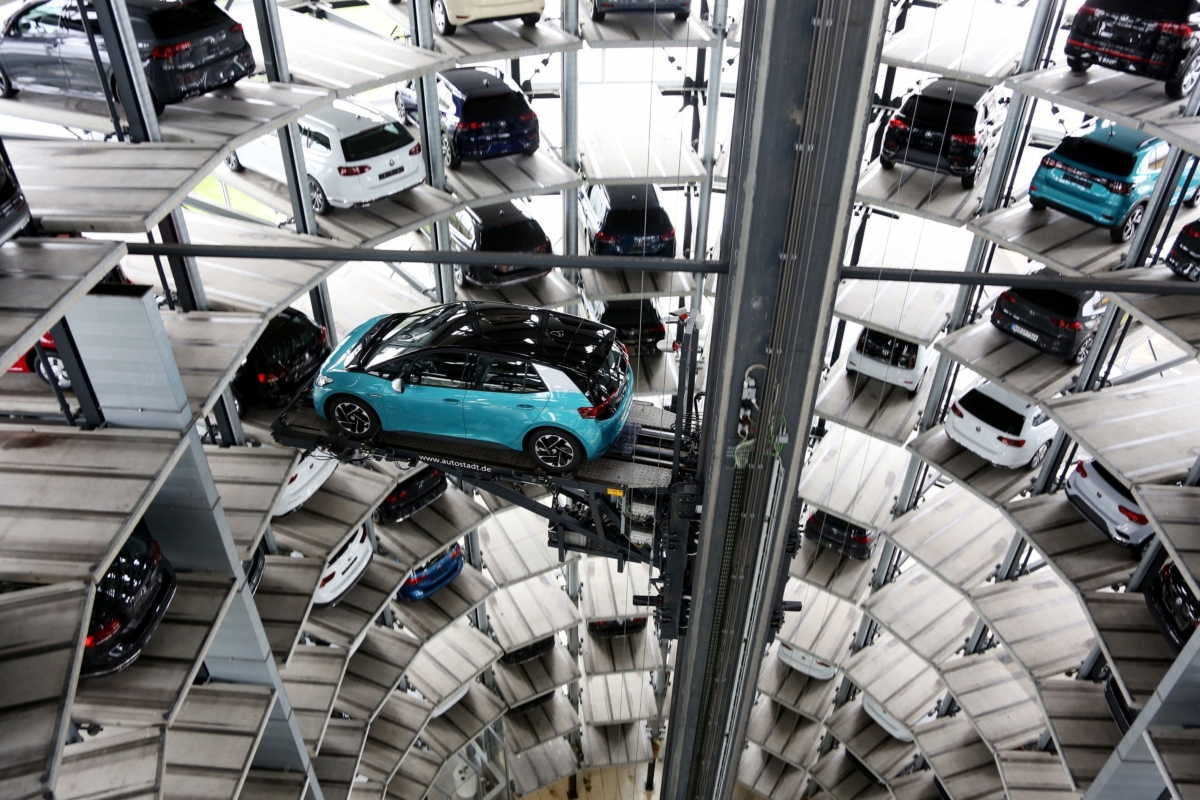
A new Volkswagen AG (VW) ID.3 electric automobile inside one of the automaker's Autostadt delivery towers at the VW headquarters in Wolfsburg, Germany, on Oct. 26, 2020. MUST CREDIT: Bloomberg photo by Liesa Johannssen-Koppitz.

A new Volkswagen AG (VW) ID.3 electric automobile inside one of the automaker’s Autostadt delivery towers at the VW headquarters in Wolfsburg, Germany, on Oct. 26, 2020. MUST CREDIT: Bloomberg photo by Liesa Johannssen-Koppitz.

Tesla alone has not brought the world to this point. A mix of stricter regulations against internal-combustion cars, increased support for plug-in vehicle purchases, improvements in technology and benefits of scale have led more consumers to embrace electrics. Still, two big questions remain: Can any other startup meaningfully replicate Tesla’s success? And will the EV market grow quickly enough to support both incumbents and startups?

The dramatic rise and fall of Nikola over just a few months was this year’s cautionary tale. The company founded by entrepreneur Trevor Milton set out to transform the trucking industry by replacing the diesels in big rigs with batteries and fuel cells. It also said it would build a hydrogen-station network and charge customers upfront for refueling.

In June, Nikola went public by merging with a special purpose acquisition company, or SPAC, led by a former vice chairman of General Motors. Optimism that the infusion of cash would help the startup begin to produce trucks briefly sent its valuation soaring past Ford’s. The stock collapsed by September after a short seller claimed Nikola had deceived investors about its technology; the company has denied this. Regulators opened investigations, and Milton left the company.

Nikola’s breakdown hasn’t deterred other SPACs. The so-called blank-check firms have raised $70 billion in 2020 – a fivefold increase from 2019 – and at least 15 EV companies have been taken public or have listings pending. Those that already made their debut include Lordstown Motors, which has said it will begin producing its Endurance electric pickup in September 2021, and Fisker, whose Ocean SUV is planned for 2022.

“I have had very credible people, with very large sums of money, DM me on Twitter to see if we’d be interested in working with their SPAC,” said Gene Berdichevsky, CEO of Sila Nanotechnologies, a California-based battery company, and ex-Tesla engineer. The blank-check company board member who messaged him reached out in early October, after Nikola’s implosion.

Tesla shares started their meteoric rise in late 2019, when Musk proved he could not only dominate the nascent EV market but also make a small amount of money in the process. The company got on a roll by accelerating production of Model 3 sedans in China and Model Y crossovers in California and has now recorded five consecutive quarterly profits.

Companies getting in on the coinciding EV stock-buying bonanza include XPeng, the Guangzhou-based company co-founded by He Xiaopeng, the billionaire behind one of China’s most popular mobile browsers. Within three months after its U.S. listing in August, the stock almost quintupled.

“We have been talking about our goals of penetration and growth for the past five years,” said Brian Gu, the vice chairman and president of XPeng. “Yet we hadn’t seen the real explosion until this year. There’s an increased confidence in the industry’s long-term growth.”

Even so, XPeng won’t appear high up on global sales charts anytime soon. Bloomberg Intelligence analysts estimate the company will deliver about 25,000 P7 sedans and G3 SUVs this year. Its market cap still managed to reach $53 billion last month, a valuation Ford hasn’t seen in several years. Entering December, investors were awarding the company about $1.7 million of market cap per vehicle it’s expected to sell this year. If the same multiple were applied to Volkswagen, the German giant would be worth about $15.5 trillion. Instead, it’s being valued at about $10,000 per vehicle.

VW wasn’t alone in watching its valuation take a hit from the biggest disruption to auto-industry output since World War II. Vehicle sales in some markets were almost completely wiped out for the month of April. By June, the industry had taken on $72 billion of new debt to cope.

But amid all the carnage, EVs outperformed. It hasn’t mattered that the price of oil crashed and remains depressed. China stepped in with a series of measures that supported plug-in car purchases, while Germany and France started offering subsidies to help boost automakers out of their slump.

“If historically low oil prices, a major economic downturn, a plunge in auto sales and all these other factors didn’t derail the growth, it gets harder to see what does,” said Colin McKerracher, head of advanced transport for BloombergNEF. “The trajectory is getting clearer and clearer, and all these factors that might have derailed things are sort of bouncing off and not landing a blow.”

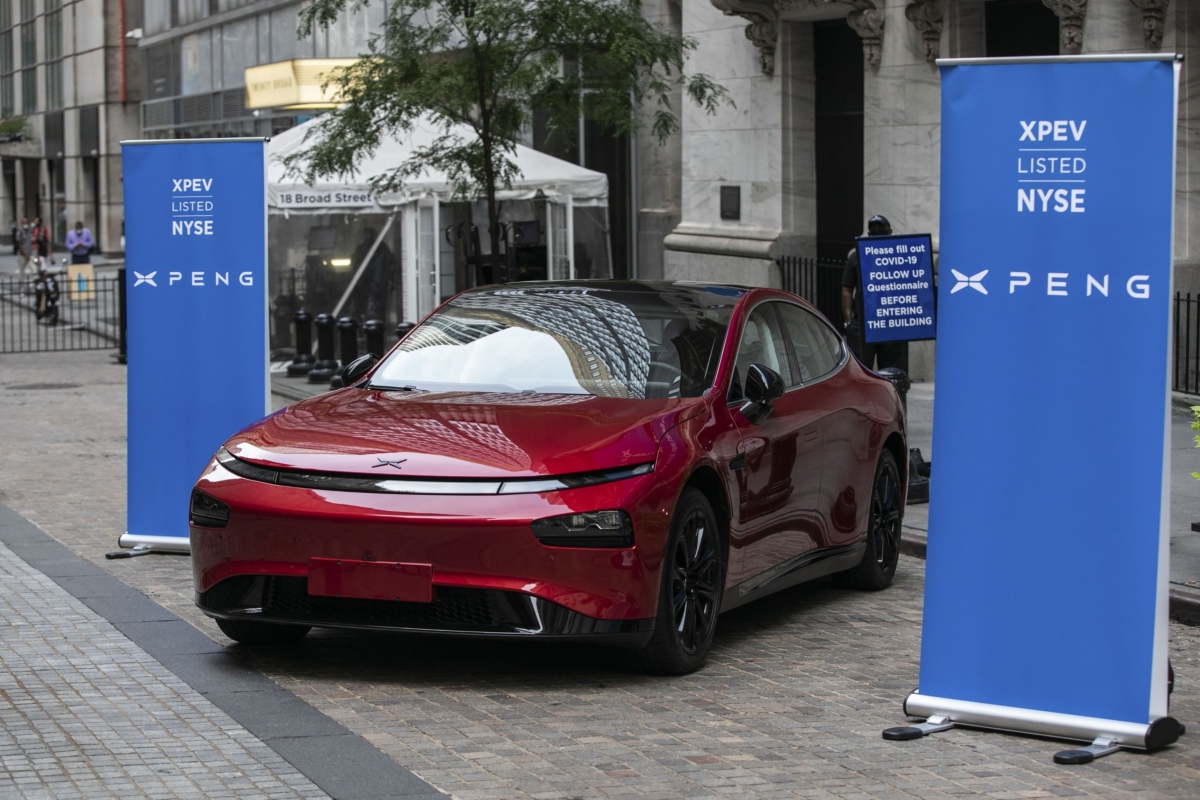
The Xpeng P7 electric vehicle is displayed outside the New York Stock Exchange in New York on Aug. 27, 2020. MUST CREDIT: Bloomberg photo by Jeenah Moon.

The Xpeng P7 electric vehicle is displayed outside the New York Stock Exchange in New York on Aug. 27, 2020. MUST CREDIT: Bloomberg photo by Jeenah Moon.

The current quarter may well be the first ever in which automakers sell 1 million fully electric and plug-in hybrid vehicles worldwide. It took the industry until 2015 to get its first million on the road. The global fleet is now about to cross the 10 million mark. “Each order of magnitude, a different number of people become aware that this shift is happening,” McKerracher said. “EVs have become part of the general consciousness instead of the consciousness of a small number of people who care about them.”

Conventional carmakers are benefiting somewhat from the bump in EV demand, too, but only a handful have seen their shares rise meaningfully this year. Companies including GM and Daimler are getting credit for undergoing metamorphoses, though they have spent more than a century basing manufacturing, labor and retailing practices on the internal-combustion engine.

GM’s stock got a boost when it told investors in November that it would spend $27 billion introducing 30 battery-powered models by 2025, increasing its budget by more than a third. But it’s going through an awkward process of buying out some Cadillac dealers that aren’t on board with the shift.

Daimler, which envisions more than half of its global sales being electrified by the end of the decade, will have to overcome labor-union opposition to shrinking its variations of combustion engines by 70%. Workers protested last month after the leader of a powertrain plant Daimler is retooling for EVs left the company for Tesla.

Musk may have ambitions to dominate Daimler’s home market of Germany and the rest of Europe, but the growth that has the region rivaling China for the first time this year has been driven by incumbents. In the U.S., GM and Ford have electric pickups in the works and have successfully defended that segment – far and away their most lucrative – from Toyota and others.

“I would not underestimate traditional OEMs in this area,” said Christina Woon, a Singapore-based investment manager at Aberdeen Standard Investments, which manages about $563 billion in global assets, including Toyota shares. “Having an existing business that’s profitable and that has cash flows that you can use to invest in a new or emerging business – that does help to balance out that risk.”

No automotive CEO has been as supportive and openly admiring of Musk and Tesla as VW’s Herbert Diess. He joined the company just before its 2015 diesel-emissions scandal and has remained consistent in his message about and moves toward electrification. During a two-hour briefing last month on the massive spending VW has planned for the next half-decade, Tesla’s name came up 31 times.

“We think it’s a very important competitor” because Musk is “really pulling the industry,” Diess said in an interview last month. “Coming from a software background, he has capabilities which we still have to build up. He’s a reference for us.”

But VW unintentionally echoed a troubling time for Tesla when launching a crucial new electric model this year. When software issues plagued the launch of the German carmaker’s ID.3, it hired a contractor to fix thousands of the electric hatchbacks in a tent, then rushed them to sale before some features were ready. The episode was reminiscent of when Tesla erected a structure in its parking lot two years ago during its struggle to get Model 3 sedans out the factory door.

As rough as the ID.3 launch was, Diess is starting to see some payoff. The car outsold all other EVs across Europe in November. Analysts at Evercore ISI predict that VW and Tesla will form a global EV duopoly for the foreseeable future. Baillie Gifford’s Pye credits VW for grasping where the industry is headed. In his view, too many of its peers still don’t.

“If you’re about to be run over by a 40-ton semi, don’t lie down in the middle of the road and smile,” Pye said. Even for those who “have got the gist of that,” like VW, “whether they’re able to act on it or not within the required time frame is more challenging.”

Rules issued on security review of foreign investment #SootinClaimon.Com

#SootinClaimon.Com : ขอบคุณแหล่งข้อมูล : หนังสือพิมพ์ The Nation.

Rules issued on security review of foreign investment (nationthailand.com)

Rules issued on security review of foreign investment

Dec 21. 2020

By China Daily, ZHONG NAN and LIU ZHIHUA

The newly released rules on China’s security review of foreign investment will effectively restrain national security risks while actively promoting and protecting foreign investment, analysts said on Sunday.

They made the remark after the National Development and Reform Commission and the Ministry of Commerce jointly specified provisions concerning the security review mechanism on foreign investment on Saturday.

Under the new measure, the scope of foreign investment that will be subject to security review includes the military industry and other national defense and security fields, locations near military facilities and military industrial facilities, as well as major agricultural products, energy and certain fields that have importance in national security.

Approved by the State Council, China’s Cabinet, the 23-clause rules aim to support the country’s higher-level opening-up and facilitate the new growth paradigm, said a statement released by the NDRC and the ministry. The rules will take effect 30 days after their release.

Ma Yu, a senior researcher at the Beijing-based Chinese Academy of International Trade and Economic Cooperation, said it is fairly common for countries to carry out security reviews on foreign investment that affects or may affect national security.

From the perspective of global competition, the legal environment is a vital element in supporting both economic growth and the earning strength of multinational corporations, said Huang Jin, a researcher at the Chinese Academy of Social Sciences’ Institute of International Law.

A well-developed legal system will not only boost sales for global companies, but also create an even bigger market, he said at an economic forum on Saturday.

As China’s continuously improving business environment has provided global companies a fair and open market, an efficient supply chain and a competitive talent pool, foreign direct investment in China increased by 6.3 percent year-on-year to 899.38 billion yuan ($137.6 billion) between January and November of this year, according to the Ministry of Commerce.

While China continues to attract foreign investment in high-end manufacturing, modern services and environmental protection sectors, and creates a law-based business environment, the US Commerce Department announced on Friday that it had added 59 Chinese companies to a trade blacklist, in the name of “protecting US national security”.

Because of this move, US firms will have to obtain a license to do business with companies on the list.

The Ministry of Commerce responded to the US move by calling it “another example of the US abusing its power to suppress Chinese companies”.

China will continue to take necessary measures to safeguard the legitimate rights and interests of its companies, according to the ministry.

The new restrictions imposed on the Chinese companies have already caused controversy in the US, because China and the US have a wide range of cooperation on science, technology and trade, and enlarging the blacklist also severely damages the interests of US companies and universities, said Tu Xinquan, a professor and dean of the China Institute for WTO Studies at the University of International Business and Economics in Beijing.

Zhang Yongjun, a researcher at the Beijing-based China Center for International Economic Exchanges, said that even though more Chinese companies have been added to the blacklist, their commercial operations will not be affected as they have already built a global presence and the US market only accounts for part of their overseas operations.

Utmost caution urged after Covid outbreak in Thailand #SootinClaimon.Com

#SootinClaimon.Com : ขอบคุณแหล่งข้อมูล : หนังสือพิมพ์ The Nation.

Utmost caution urged after Covid outbreak in Thailand (nationthailand.com)

Utmost caution urged after Covid outbreak in Thailand

Dec 21. 2020Cambodian Minister of Health Mam Bun Heng has urgently advised residents near the border to exercise heightened caution and quarantine all people crossing the border for 14 days following the Covid-19 outbreak in Thailand’s Samut Sakhon province. Photo Credit: Hong MeneaCambodian Minister of Health Mam Bun Heng has urgently advised residents near the border to exercise heightened caution and quarantine all people crossing the border for 14 days following the Covid-19 outbreak in Thailand’s Samut Sakhon province. Photo Credit: Hong Menea 

By The Phnom Penh Post, Mom Kunthear

Following the Covid-19 outbreak in Thailand’s Samut Sakhon province, Cambodian Minister of Health Mam Bun Heng has urgently advised residents near the border to exercise heightened caution and quarantine all people crossing the border for 14 days.

Bun Heng relayed notification on December 20 that Thai health authorities issued an alert advising regional counterparts of detection of a Covid-19 outbreak in Samut Sakhon that had spread to Bangkok. Over 500 people, mostly Burmese migrant workers, tested positive in a single day, and the Thai government has put the province under lockdown from December 20 to January 3.

“The [Thai] ministry released this emergency guidance because Samut Sakhon province is only 300km from Cambodia. Koh Kong, Pursat, Battambang, Banteay Meanchey and Oddar Meanchey provinces have border crossings with Thailand. The guidance was released to try to prevent infection from entering Cambodia by means of the movements of individuals who are positive for Covid-19,” Bun Heng said.

He called on people on both sides of the border to be diligent in monitoring inbound international passengers. Authorities must examine travellers’ health seriously, especially checking temperatures and ensuring that health forms were filled in correctly, he insisted.

Bun Heng added that a mandatory quarantine of 14 days applies to all people arriving to the country. Their testing would be handled by the Institut Pasteur du Cambodge, the National Institute of Public Health or the provincial Hospital of Siem Reap.

“Sub-national level authorities must steadfastly monitor the quarantine of arriving passengers to Cambodia in order to prevent people escaping undetected from quarantine facilities. Community members should provide information to local authorities regarding new arrivals,” he said.

Prime Minister Hun Sen delivered cash to seven provinces near the Cambodia-Thailand border earmarked for poor people during quarantine. Battambang, Banteay Meanchey, Pailin, Preah Vihear, Oddar Meanchey, Pursat and Koh Kong provinces each received 50 million riel ($12,500).

Health ministry spokeswoman York Sambath said Hun Sen had instructed the authorities of these provinces to strengthen enforcement of quarantine procedures for Cambodian workers returning from Thailand to prevent spread of the infection.

On December 19, Bun Heng issued revised health measures, including a strict, 14-day quarantine for diplomats and international officials holding diplomatic visas. They will be required to obtain a certificate indicating a negative Covid-19 test within 72 hours of departure from their country of origin. Upon arrival, they must have samples taken for testing by Cambodian doctors.

He stressed that foreign representatives and UN organisations in Cambodia need to ensure compliance by those who have obtained Cambodian diplomatic visas. In the event that an in-bound passenger tests positive for Covid-19, the person will be sent to a hospital managed by the ministry.

“Diplomats must be kept in a complete, 14-day quarantine at embassy residences or related facilities. In the case that diplomats do not stay at embassy facilities, they must complete a 14-day quarantine at the Himawari Hotel under supervision of their embassy or organisation officials. They must cover all expenses themselves,” Bun Heng said.

Also on December 18, South Korea delivered new aid to Cambodia’s health ministry via four agencies. In a press release, the Korea International Cooperation Agency (KOICA) said that the aid included 20 hazmat suits for conducting Covid-19 testing, 12 stretchers, two mobile X-ray machines, four disinfectant machines, 23,000 test kits, two RT PCR testing machines and 300 pieces of protective gear.

On December 20, the health ministry announced that 30 of 41 people who tested positive for Covid-19 in connection with the November 28 community transmission had recovered. Seventeen more patients continue to undergo treatment.