‘แพนเค้ก’นำทีมศิลปินดาราร่วมรณรงค์ ในแคมเปญ ‘ออกบ้าน หยุดประมาท เพื่อชีวิต’ #SootinClaimon.Com

#SootinClaimon.Com : ขอบคุณแหล่งข้อมูล : หนังสือพิมพ์แนวหน้า

บันเทิง – ‘แพนเค้ก’นำทีมศิลปินดาราร่วมรณรงค์ ในแคมเปญ ‘ออกบ้าน หยุดประมาท เพื่อชีวิต’ (naewna.com)

‘แพนเค้ก’นำทีมศิลปินดาราร่วมรณรงค์  ในแคมเปญ ‘ออกบ้าน หยุดประมาท เพื่อชีวิต’

‘แพนเค้ก’นำทีมศิลปินดาราร่วมรณรงค์ ในแคมเปญ ‘ออกบ้าน หยุดประมาท เพื่อชีวิต’

วันจันทร์ ที่ 7 ธันวาคม พ.ศ. 2563, 06.00 น.

เหล่าศิลปินดาราชื่อดังนำทีมโดย “แพนเค้ก-เขมนิจ, หลุยส์ เฮสดาร์ซัน, อ๊อฟ-ชนะพล, ติช่า-กันติชา, ใหม่-สุคนธวา, มากิ-มาชิดา, ฟิล์ม-จิรายุ, กุน-กิตติคุณ,แพรว-หัสสยา, ข้าว-จุฑารัตน์ หรือ ข้าว The face, แมน the face, แพรว the face, โตโต้-ธนเดช, ดุ่ย-ฐานทรัพย์, ภัทร-นัตธนนท์, เติร์ด-อาทิชา, ธนิสร เฮงสุนทร (แอนเน่ Drag), ปัถวี เทพไกรวัล (อมาดีว่า Drag), มนัญญา พึ่งไม้ (มีนตรา Drag), วริทธิ์ เกษมณี (กิมฮวง drag) ร่วมมือร่วมใจชวนประชาชนรณรงค์การใช้รถใช้ถนนอย่างปลอดภัย ในแคมเปญ “ออกบ้าน หยุดประมาทเพื่อชีวิต” ที่จัดโดยกระทรวงคมนาคม กรมการขนส่งทางบก และกองทุนเพื่อความปลอดภัยในการใช้รถใช้ถนน (กปถ.) โดย “แพนเค้ก” กล่าวว่า

“ใกล้ถึงช่วงเทศกาลวันหยุดยาว รวมไปถึงเทศกาลปีใหม่ที่กำลังจะมาถึง แพนและพี่น้องศิลปินดาราเลยอยากจะมาชวนทุกคน ตระหนักถึงความปลอดภัยในการใช้รถใช้ถนน รณรงค์ให้คนไทยขับขี่อย่างปลอดภัย เพื่อป้องกันและลดอุบัติเหตุ ในแคมเปญ“ออกบ้าน หยุดประมาท เพื่อชีวิต” ซึ่งหลายคนอาจจะมีแพลนเดินทางกลับบ้านหรือไปเที่ยวสถานที่ต่างๆ แพนก็อยากให้ทุกคนใช้ชีวิตด้วยความไม่ประมาท ทุกครั้งที่เราออกจากบ้าน ก็อยากให้มีสติ เพื่อลดการเกิดอุบัติเหตุบนท้องถนน และก็ได้กลับไปหาคนที่เรารักกัน ยังไงจะไปไหนมาไหนก็ขอให้เดินทางโดยสวัสดิภาพทั้งไปและกลับ มีความสุขในช่วงเทศกาลวันหยุดยาวกันนะคะ”

สมเด็จพระเจ้าลูกเธอ เจ้าฟ้าพัชรกิติยาภาฯ เสด็จทรงเปิดป้ายโครงการอนุรักษ์ฟื้นฟูแหล่งน้ำช้างป่า #SootinClaimon.Com

#SootinClaimon.Com : ขอบคุณแหล่งข้อมูล : หนังสือพิมพ์แนวหน้า

ในประเทศ – สมเด็จพระเจ้าลูกเธอ เจ้าฟ้าพัชรกิติยาภาฯ เสด็จทรงเปิดป้ายโครงการอนุรักษ์ฟื้นฟูแหล่งน้ำช้างป่า (naewna.com)

สมเด็จพระเจ้าลูกเธอ เจ้าฟ้าพัชรกิติยาภาฯ เสด็จทรงเปิดป้ายโครงการอนุรักษ์ฟื้นฟูแหล่งน้ำช้างป่า

สมเด็จพระเจ้าลูกเธอ เจ้าฟ้าพัชรกิติยาภาฯ เสด็จทรงเปิดป้ายโครงการอนุรักษ์ฟื้นฟูแหล่งน้ำช้างป่า

วันอาทิตย์ ที่ 6 ธันวาคม พ.ศ. 2563, 21.00 น.

6 ธันวาคม 2563 พระบาทสมเด็จพระเจ้าอยู่หัว ทรงพระกรุณาโปรดเกล้าโปรดกระหม่อมให้สมเด็จพระเจ้าลูกเธอ เจ้าฟ้าพัชรกิติยาภา นเรนทิราเทพยวดี กรมหลวงราชสาริณี สิริพัชร มหาวัชรราชธิดา เสด็จทรงเปิดป้ายโครงการอนุรักษ์ฟื้นฟูแหล่งน้ำช้างป่า หลังต้นน้ำภูไท อำเภอท่าตะเกียบ จังหวัดฉะเชิงเทรา

โครงการเร่งด่วนเพื่อเก็บกักน้ำในฤดูฝน ปี 2563 (แก้มลิงคลองมะหาด) บ้านคลองมะหาด หมู่ที่ 14 อำเภอท่าตะเกียบ และพื้นที่เกษตรแปลงรวมบ้านหนองกระทิง หมู่ที่ 20 ตำบลท่ากระดาน อำเภอสนามชัยเขต จังหวัดฉะเชิงเทรา

BLACKPINK to hold first livestream concert this month #SootinClaimon.Com

#SootinClaimon.Com : ขอบคุณแหล่งข้อมูล : หนังสือพิมพ์ The Nation.

BLACKPINK to hold first livestream concert this month (nationthailand.com)

BLACKPINK to hold first livestream concert this month

EntertainmentDec 06. 2020Photo credit: BLACKPINKPhoto credit: BLACKPINK 

By Korea Herald

​​​​​​​K-pop group BLACKPINK is set to hold its first-ever online concert in collaboration with YouTube Music later this month, its management agency said Thursday.

K-pop girl group BLACKPINK (YG Entertainment)

K-pop girl group BLACKPINK (YG Entertainment)

The concert, titled “YG Palm Stage – 2020 BLACKPINK: The Show,” will take place at 2 p.m. on Dec. 27, according to YG Entertainment.

It will be the four-piece band’s first time performing in a concert in roughly 17 months since it wrapped up a successful global tour in 23 countries in four continents.

YG Entertainment said BLACKPINK will be holding a live YouTube session Friday where it will share the details on the upcoming gig.

BLACKPINK is one of the world’s most popular pop groups on YouTube, with 53.9 million people subscribing to its YouTube channel. It has 3 billion-view music videos, with view counts for the 2018 hit “Ddu-du Ddu-du” reaching 1.4 billion. (Yonhap)

Malaysian star Yeo Yann Yann wins Best Actress at Asian Academy Creative Awards #SootinClaimon.Com

#SootinClaimon.Com : ขอบคุณแหล่งข้อมูล : หนังสือพิมพ์ The Nation.

Malaysian star Yeo Yann Yann wins Best Actress at Asian Academy Creative Awards (nationthailand.com)

Malaysian star Yeo Yann Yann wins Best Actress at Asian Academy Creative Awards

EntertainmentDec 06. 2020Yeo Yann Yann won the award for her role as a single mother struggling to cope financially and mentally while taking care of her 19-year-old autistic son in 'Invisible Stories'. Photo: Yeo Yann Yann/InstagramYeo Yann Yann won the award for her role as a single mother struggling to cope financially and mentally while taking care of her 19-year-old autistic son in ‘Invisible Stories’. Photo: Yeo Yann Yann/Instagram 

By The Star

Malaysian actress Yeo Yann Yann has added another award to her long list of accolades. This time, the 43-year-old won the Best Actress In A Leading Role at the Asian Academy Creative Awards for her role in the HBO Asia series, Invisible Stories.

In the six-episode anthology, Yeo plays a single mother struggling to cope financially and mentally while taking care of her 19-year-old autistic son.

In an interview with The Star earlier this year, Yeo said she spent time with families with grown-up children with autism to understand what it is like to raise an autistic child.

“I actually knew very little about that sort of situation. But after visiting these families and doing all the research, I understand more, and and hope that this show will help more people to understand and have more compassion towards families who have autistic kids, ” Yeo said.

She also mentioned that the hardest part about filming Invisible Stories were the physical scenes.

“We actually spent a lot of time rehearsing scenes where the boy had meltdowns. I had to be very alert and be well prepared, because (these scenes have) a lot of struggling, and a lot of fighting and pushing,” the actress said, adding that she got some bruises shooting those scenes.

This role has also bagged her a nomination for Best Performance by an Actress nomination at the 2020 International Emmy Awards in September. The award was won by 84-year-old Glenda Jackson from Britain eventually.

In September, Yeo was also nominated for Best Actress at the Asian Film Awards for her role in the Singaporean film, Wet Season. China actress Zhou Dongyu was named the winner in this category.

The Asian Academy Creative Awards, part of the Singapore Media Festival, celebrates the region’s best content and creatives. This year’s ceremony was staged virtually on Dec 3 and 4.

Another winner from Malaysia is The Garden Of Evening Mists which took home the Best Feature Film. The movie is based on Malaysian author Tan Twan Eng’s novel of the same name.

When a Baltimore museum tried to raise money by selling three pricey artworks, it backfired stupendously #SootinClaimon.Com

#SootinClaimon.Com : ขอบคุณแหล่งข้อมูล : หนังสือพิมพ์ The Nation.

When a Baltimore museum tried to raise money by selling three pricey artworks, it backfired stupendously (nationthailand.com)

When a Baltimore museum tried to raise money by selling three pricey artworks, it backfired stupendously

Arts & CultureDec 06. 2020“The Last Supper” (1986) by Andy Warhol, a work in the collection of the Baltimore Museum of Art that was slated to be deaccessioned. MUST CREDIT: Baltimore Museum of Art 

By The Washington Post · Sebastian Smee, Peggy McGlone · ENTERTAINMENT, MUSEUMS 

In early October, Baltimore Museum of Art director Christopher Bedford announced a bold plan to raise $65 million for diversity and equity efforts by selling three paintings – including a gigantic Andy Warhol take on Leonardo’s “The Last Supper” – from the museum’s collection.

Framed as a response to the summer-long Black Lives Matter protests, Bedford’s idea was approved by the museum’s board of trustees. Sotheby’s was tapped to handle a private sale of the Warhol and to auction works by Brice Marden (“3”) and Clyfford Still (“1957-G”) on Oct. 28.

But the masterpieces didn’t make it to the auction block. With hours to spare, the BMA rescinded the entire plan, capitulating to a firestorm of criticism that had sparked internal board squabbles and resignations and the withdrawal of tens of millions of dollars in promised gifts and art work. The dramatic turnaround sent shock waves through the field and highlighted the fraught nature of “deaccessions,” the term for selling works from a museum collection.

The still-reverberating controversy didn’t just leave Bedford licking his wounds and the BMA with a crisis of governance. It has left American museums in the dark about how to interpret the rules around selling art from their collections – an increasingly tempting option in an era that combines acute budget shortfalls with a booming art market.

All around the country, museums reeling from dried-up revenue streams are considering their options. Publicly held paintings by Jackson Pollock, Claude Monet, Gustave Courbet and Lucas Cranach the Elder have been sold into private ownership in recent months. The number of museums attempting deaccessions in coming months is likely to double, according to Nina del Rio, who handles museum relations for Sotheby’s.

Deacessioning is common practice in art museums, which may need to prune their collections for any number of reasons, including to get rid of duplicates, damaged works or works that simply don’t fit with the rest of the collection.

Guidelines put in place by the Association of Art Museum Directors stated that the funds raised by selling a work should be used only for acquiring new art. The policy was intended to prevent museums – which are nonprofit organizations with favorable tax status – from treating their collections as assets to be monetized. Museums that failed to abide by this policy were reprimanded, shamed and ostracized.

But the AAMD decided to loosen these restrictions in April, just as the pandemic was surging. Recognizing the financial crisis ahead, the membership organization tweaked its deaccessioning policy to allow museums some flexibility for up to two years in the way they use the funds from these sales.

The newly loosened guidelines granted museums more leeway. But how much leeway?

Bedford knew his proposal could get him in trouble. A well-dressed, smooth-talking Englishman in his early 40s, he has led the BMA since 2016. In 2018, he successfully sold seven works from the collection – including another Warhol, a Robert Rauschenberg and a Franz Kline – and used the $16.2 million from the sales to buy works by women and Black artists.

This second sale was supposed to fund a plan for racial equity that went beyond diversifying the collection. Over the summer, art world activists around the country had accused the (mostly white and male) leaders of America’s art museums of exploiting their lower-paid and more diverse staff. Bedford wanted the BMA – the premier art museum in a city that is 65 percent Black – to be seen as a leader in these issues of improving staff equity and community-building, which were separate from the goal of diversifying the collection. And he wanted the whole museum field to take notice.

He was also testing the limits of the AAMD’s new guidelines, which were intended to be a lifeline for financially fragile museums trying to survive pandemic-related closures and the economy’s downturn.

Bedford had made it clear that the BMA is not in financial distress, but he still believed he could take advantage of the revised guidelines, and his belief appeared confirmed when he shrewdly lined up AAMD executive director Christine Anagnos’s support before going public. (Bedford and Anagnos declined to be interviewed.)

Yet if Bedford thought this support would inoculate him from criticism, he was wrong. 

“If you start monetizing the value of the art on the walls, it raises a whole host of problems and leads to a slippery slope,” Laurence Eisenstein, a leading critic, said. “Next time the state or city are thinking about giving money to the museum, it leads to people asking questions like ‘Why don’t you sell some works?'”

The opposition to Bedford’s plan started with a small group of Baltimore art lovers who focused their objections on the choice of works. On the day of the announcement, retired BMA curator Brenda Richardson, who had acquired Warhol’s “The Last Supper” for the museum, told The Washington Post that she was “horrified” by the move to sell it.

Kristen Hileman, another former curator who had helped shape and then defend the 2018 deaccessions, also criticized the new plan. The Warhol anchored the museum’s generous holdings by that artist, she argued, and the paintings by Still and Marden were the only ones by those artists in the collection. Furthermore, as she pointed out, Marden is still alive. Selling works by living artists is widely considered bad museum practice because it signals to the market a lack of faith in the artists that can adversely affect their careers. 

Several prominent art critics also weighed in, including the Los Angeles Times’s Christopher Knight, who excoriated Bedford, implying his motives were cynical. The “sleaze,” he wrote, was “almost too hard to wrap your head around.” And, breaking with convention, Arnold Lehman, BMA director for 18 years until 1997, called the plan “a devastating mistake for (the museum’s) present and its future.”

The value and significance of the works made the proposed sale egregious, Lehman said. “Something that you deaccession that’s worth $100,000, people don’t look. When something is $20 million they start looking,” he said in an interview with The Post after the sale was blocked. Bedford’s plan, he said, “took the deaccession issue and pushed it to an extreme. If you listen to the Constitution it says you can have and bear arms. They are talking about muskets, not AK-47s. This is above and beyond.”

Eisenstein, a lawyer and former BMA trustee, articulated the breadth of the criticisms in an Oct. 12 letter to Maryland government officials that asked them to halt the sale. The letter, charging the museum with “irregularities and potential conflicts of interest in the sales,” was signed by almost 200 community members, including five former board chairs, former board members, donors and docents.

For three weeks after the Baltimore plan was announced, the museum maintained a united front in public. Behind the scenes, however, a frantic game of telephone was unfolding as critics reached out to their networks and urged leaders in the field to keep the pressure on. Less than a week before the auction, that unity began to crumble. The outside criticism turned to internal squabbling and then outright mutiny.

On Oct. 22, artist Adam Pendleton, whom Bedford had invited onto the board, quietly resigned his position. The next afternoon, Amy Sherald – who shot to international prominence after her portrait of Michelle Obama was unveiled at the National Portrait Gallery in 2018 – followed suit. Neither artist offered an explanation, but both seemed to be done with a controversy they hadn’t invited. 

Former trustee John Waters, the artist and film director who was about to give the bulk of his personal collection to the museum, privately shared his opposition to the sale, although he went ahead with his bequest. Caplan, a former board chair and an art collector, revoked her promise to donate a significant part of her collection.

The inner turmoil went public when former chairman Charles Newhall III publicly confirmed that he and former chairman Stiles Colwill had rescinded $50 million in promised gifts in protest. (Newhall’s public identification of Colwill was a surprise to his former fundraising co-chair, who had thought his $20 million promised gift would remain anonymous.)

Trouble was also brewing on another front. A powerful group of current and former museum directors was calling and exchanging emails, sharing misgivings about the AAMD’s new guidelines, which they viewed as setting a dangerous precedent. Like a panel of soccer referees disputing a new interpretation of “handball,” they discussed whether Anagnos had erred – had, in effect, gone rogue – when she voiced her support for the BMA plan.

They were surprised that Bedford was trying to exploit the loosened restrictions designed to help cash-strapped museums. If the sale went ahead, they feared, the whole philanthropic model sustaining America’s great art museums could collapse. If you could raise $65 million simply by selling three paintings, how could you ever ask anyone for a donation again?

“I don’t think most directors rush to deaccession works of considerable importance,” said Maxwell Anderson, a past president of AAMD and former director of museums in New York, Indianapolis and Dallas. “I am of a sense, as most of my colleagues are, that fundraising is how you go about these issues. It’s not by the monetization of the collection.”

Anderson and his colleagues were relieved when AAMD president Brent Benjamin wrote a letter to the organization’s members on Oct. 27. Intended as a private memo, the letter clarified the limited scope of the April rule changes, emphasizing their two-year window. (Bedford’s plan technically broke with this by proposing that the funds set up endowments in perpetuity.) While Benjamin did not name the BMA, his rejection of deaccessions intended to fund “long-term needs – or ambitious goals” was viewed by critics as a repudiation. He declined to be interviewed.

That same afternoon – the day before the auction – six BMA trustees, including Caplan, sought an emergency meeting of the board. Their emailed letter to board chairwoman Clair Zamoiski Segal, obtained by The Post, voiced concern that when voting to approve the sales, they “may not have had a full set of information regarding the importance and heritage of these works nor a full understanding of the process by which the sales by Sotheby’s were arranged. Moreover,” they wrote,”the refined guidance from the AAMD demands our immediate consideration.”

Bedford replied within hours, repeating that the AAMD had confirmed that “the BMA’s plans are in compliance” but agreeing to a meeting the next day. An hour later, the museum issued a statement that emphasized the AAMD had not retracted its original support and that the sale would proceed.

“What’s it going to take?” Colwill said heremembered thinking that night, when the BMA again refused to relent.

The next morning, Lehman called his colleague, Anderson, to commiserate over what seemed to be the inevitable loss of the three paintings. The conversation prompted Anderson to ask, “Why don’t we get the old gang together, the past presidents who sat in that chair, to restate what didn’t seem controversial to us?” Using an AAMD email list, Andersoncut and pasted a 60-word letter signed by him and Lehman and addressed to the board chair, Segal, asking her to reconsider the sale.

He sent the draft letter to a dozen past presidents and within a few hours, everyone he wrote to responded and signed it.

“It was inspiring,” he said. “It just proves that most directors are deeply concerned about the hemorrhaging of professional standards.”

The letter hit Segal’s inbox minutes before the executive committee meeting. By the time the full board met later that afternoon – just hours before the auction would hammer its first sale – the board revoked the plan. The paintings would remain in Baltimore.

The larger issues around deaccessioning – the when, why and how it should be done going forward – remain unresolved. But there’s one thing the Baltimore episode made clear: even the most noble of causes, including paying the mostly minority guards a living wage and improving access for the community, can’t be funded by monetizing the collection.

“There was nothing that they wanted to do that wasn’t terrific, forward-thinking, informed. In a majority minority city, you have to look at your audience. You have to want that audience to feel good and welcome,” Lehman, the former director, said. “They own that building.”

But what they also own, it seems, are the paintings inside that building.

Stanford reigns supreme in Volunteers of America Classic #SootinClaimon.Com

#SootinClaimon.Com : ขอบคุณแหล่งข้อมูล : หนังสือพิมพ์ The Nation.

Stanford reigns supreme in Volunteers of America Classic (nationthailand.com)

Stanford reigns supreme in Volunteers of America Classic

Dec 07. 2020

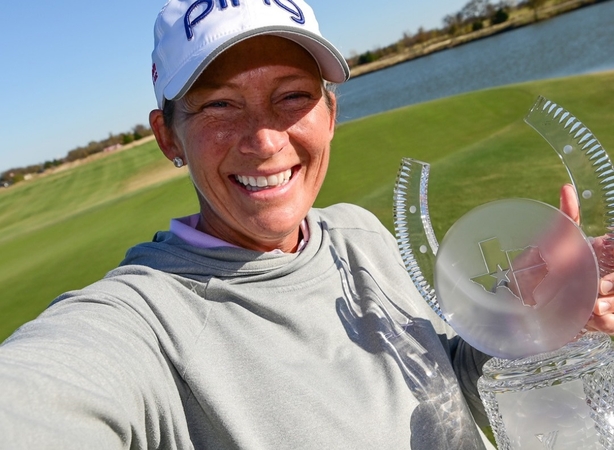
 As the final day of the Volunteers of America Classic began with two major champions, Inbee Park and So Yeon Ryu, and LPGA Tour rookie Yealimi Noh with the 54-hole lead, Angela Stanford rose to the occasion just 55 minutes away from home at the Old American Golf Club.

She secured her seventh career LPGA Tour victory and first since her maiden major title at the 2018 Evian Championship.

Stanford tied for the lead after three consecutive birdies on Nos. 6, 7, and 8, and pulled away from the pack after adding four more birdies on her back nine. Shooting the lowest score of the day with a fourth-round 67, Stanford may have closed with a bogey, but was over-the-moon nonetheless.

“Honestly, I never thought I would,” Stanford admitted about her odds of winning in her home state. “I think the longer you’re out here, it’s so hard to win on this tour. I think being at home, it took me a while to figure it out. The very first time we played in the Dallas/Fort Worth area I remember getting off the airplane and everybody from the tour kind of came with me to baggage claim. I’m like, ‘oh, that’s weird.’ So I just think learning how to play in your hometown is kind of hard because obviously I haven’t done it since Junior Golf, so I think I had to kind of figure it out. Big shout out to Cheyenne Knight. She proved last year you can win at home, so that inspired me and made me realize that I am making it harder than it needs to be.”

Stanford held a two-stroke lead while waiting for Park to finish on No. 18. Without a leaderboard and knowing where her competitors played, she kept fighting until the very end.

“I actually told my caddie, we were standing in 10 fairway and I said, ‘I don’t want to know where I am today unless we get to 18 and we have to hit a shot to either win or hold on to a win, but I feel like I’m in a pretty good head space today. I just don’t want to know,” said Stanford.“I was kind of watching Ko. I knew I was a shot off of her most of the day, so at least she was definitely beating me, so I kind of paid attention to her and it wasn’t until 14 where I made that birdie and she had a tough hole that I thought, ‘okay, and you can kind of tell with how people were starting to show up,’ but even on 18 I said when we were chipping, I said ‘do I need to get this up and down?’ He said ‘no.’ I said, ‘okay, well, I’m going to bump it into the hill,” Stanford said with a chuckle.

The win gives Stanford her first home-state victory and is her first since winning the 2018 The Evian Championship. Getting to stay in the lone-star state for a week more, Stanford and friend, Brittany Altomare, head straight to Houston, Texas to compete in the U.S. Women’s Open.

“Well, so I told Brittany Altomare I’d give her a ride down to Houston to pick up her car. I wasn’t going to let her drive my truck. Now I’m going to let her drive my truck,” laughed Stanford as she revealed how she would celebrate. “So I can sit in the passenger side; I’m not driving to Houston. Brittany Altomare will be driving to Houston.”

The day’s final grouping of Noh, Ryu and Park all finished in a tie for second, with Rolex Rankings No. 1 Jin Young Ko, who played the day with Stanford, finishing in solo fifth. Ko was tied for the lead after two birdies on her front nine, but a bogey on No. 14 pushed her down the leaderboard. Playing alongside the role models she idolized since she was a kid, Noh said she still remained calm until the end.

“I feel really good, and to be able to play with some of the greatest players in the world was a really good experience for me and I got to learn a lot from them. It was just a really fun learning experience,” said Noh.

STANFORD MAY BE 43 YEARS OLD, BUT SHE WON’T BE SLOWING DOWN ANYTIME SOON

If there is anything that this year’s Volunteers of America Classic champion 43-year-young Angela Stanford proved, it is that age is just a number. What really matters is how alive the heart is. Crediting her victory due to her “passion,” Stanford had a message for individuals of all ages.

I really think it boils down to passion. I just love trying to get better. I think if you love what you’re doing and you love your process and you just love getting better, then you have to keep going. I would tell anybody, you work and you try until you just don’t have that desire and that passion anymore. I just turned 43. Not many people at 42 are going to say, ‘I want to learn how to chip the ball properly.’ So I just felt like if I’m getting close to the end of my career I don’t want to leave any stone unturned. I want to find out, if I chip it the best I can, if I putt it the best I can, if I hit it the best I can, what am I capable of before I’m done? I think if you have the passion to get up every morning and get better, you can chase your dream as long as you want,” said Stanford.

The first player at or over the age of 40 to win on Tour since Cristie Kerr (40, 2017 Sime Darby LPGA Malaysia) and Catriona Matthew (42, 2011 Lorena Ochoa Invitational), Stanford finds herself winning during her 20th year on the LPGA Tour. It’s pretty easy, though, when the love she’s had for the sport is as grand as it has always been.

“All year I’ve been so grateful to get to play golf. I think LPGA Commissioner Mike Whan and his team and all the staff at the LPGA, all of our sponsors and partners, I was scared to death that I wasn’t going to get to play golf this year, and there are so many people that made this year happen and I don’t get to sit here today without all those people. I didn’t expect this in the 20th year, and I was just thinking I took a picture at Diamond Resort this year. It’s my 20th year,” said Stanford. “Now looking back, you’re just like, ‘wow, didn’t think this year was going to go this way.’ So you just never know. I never saw this year coming. Honestly, I didn’t think I would win this year. I didn’t know if I’d ever win again. You know, that’s the thing, it’s hard to win on this tour and I’m just so grateful to everybody that stepped up and said, no, we want to play golf. The sponsors that came beside us and said we want to put you all out on a golf course. It’s a big deal, and it’s much appreciated.”

PARK STILL SATISFIED WITH VOA CLASSIC SHOWING

Inbee Park started the final day of the Volunteers of America Classic in a tie for the lead and in the final group with Yealimi Noh and So Yeon Ryu. It was the 21st time Park had held the 54-hole lead/co-lead on the LPGA Tour, and had converted 12 of the last 20 times into victories. After starting off with an unfortunate bogey on No. 1, Park regained ground to sit in a tie for the top at the turn after birdies on Nos. 4 and 6. But, as Angela Stanford put the pedal to the medal two groups in front of her, Park’s bogey on No. 12 and birdie on No. 14 weren’t enough to secure her third VOA Classic victory since 2013.

“Today was a little bit tougher out there with the wind. I feel like I gave myself a couple of opportunities, but I guess Angela played really well and under really tough conditions. So I don’t feel I played bad, just wasn’t my day,” said Park, who would have needed an eagle on No. 18 to force a playoff with Stanford. “Yeah, still very happy with the round and having 3 under par rounds in this cold weather, tough conditions is giving me things to accomplish going into next week.”

Park will go for her third victory in another event next week – the U.S. Women’s Open at Champions Golf Club, a major championship she won in 2008 and 2013. After a tie-for-second showing at the Old American Golf Club, she’s hoping to keep the momentum going into the season’s final major title opportunity. “I think it’s going to be a little bit similar conditions with a little bit of wind and probably a little bit chilly weather,” said Park. “I think good practice week this week, so yeah, looking forward to next week.”

SO YEON RYU SHINES UNDER THE COLONY, TEXAS SKIES

Despite finishing in a tie for second this week at the Volunteers of America Classic, So Yeon Ryu’s sunny disposition never seemed to fade as she recorded her second bogey-free round in a row at Old American Golf Club. Closing with a fourth-round 70, Ryu made 17 straight pars and closed with a birdie, her first since Saturday’s round at No. 13.

“I was quite nervous coming back [to the LPGA Tour], even though I played a few good events in Korea, I haven’t played on the LPGA for a long time, so I was nervous I was still eligible to compete with these greatest players or not, but it was really great to be in contention,” said Ryu, who spend most of 2020 once the Tour took a hiatus due to the coronavirus. “Well, to be honest, like last 27 holes were a little disappointing, but finish second is always good, I cannot complain to that, so it’s really good to be back.”

Ryu won her country’s open this past summer, the Korean Women’s Open on the KLPGA and is looking forward to add another Open title next week at U.S. Women’s Open. She won the event back in 2011, which jumpstarted her career on Tour, and earning her Membership for the 2012 season. A strong showing in her first LPGA Tour event since February only solidifies her confidence for next week.

“I think it’s going very needed to have the confidence and if I can win the tournament again, that will be awesome,” said Ryu. “Having two U.S. Women’s Open trophy under my belt is something really big, so looking forward to playing next week.”

CME GROUP CARES CHALLENGE—SCORE 1 FOR ST. JUDE

The CME Group Cares Challenge is a season-long charitable giving program that turns aces into donations. Though there were no aces this week at VOA Classic, CME Group remains committed to donating from previous holes-in-one from earlier on in the year. The donated $20,000 for each hole-in-one made on the LPGA Tour in 2019, with a minimum guaranteed donation of $500,000 to St. Jude Children’s Research Hospital, which is leading the way in how the world understands, treats and defeats childhood cancer and life-threatening diseases.

A $200,000 donation helps provide families with grocery gift cards for two years for 20 St. Jude families: Families whose children are undergoing long-term treatment live at St. Jude Target House free of charge. Each week, Target House families receive a grocery gift card from Kroger so that they may cook their own meals and eat together in their apartment if they choose. These shared meals help families maintain a sense of togetherness during trying times. Also, the donation helps provide 16 days of inpatient care and helps cover the cost of eight major surgical procedures.

With increased donations come additional support; $100,000 more helps treat one child with acute lymphoblastic leukemia and helps the St. Jude Blood Donor Center run for 20 weeks.

For Washington’s Terry McLaurin, the little things are adding up to something big #SootinClaimon.Com

#SootinClaimon.Com : ขอบคุณแหล่งข้อมูล : หนังสือพิมพ์ The Nation.

For Washington’s Terry McLaurin, the little things are adding up to something big (nationthailand.com)

For Washington’s Terry McLaurin, the little things are adding up to something big

Dec 06. 2020Terry McLaurin has 963 receiving yards to rank fifth in the NFL through Week 12. MUST CREDIT: Washington Post photo by John McDonnellTerry McLaurin has 963 receiving yards to rank fifth in the NFL through Week 12. MUST CREDIT: Washington Post photo by John McDonnell 

By The Washington Post · Nicki Jhabvala · SPORTS, FOOTBALL 

ESPN analyst Todd McShay can’t forget one of the most forgettable moments ahead of the 2019 NFL draft.

It was March 20 and, after trekking from one pre-draft showcase to another, McShay was in Columbus, Ohio, alongside dozens of NFL scouts, coaches and general managers for Ohio State’s pro day. ESPN’s cameras closely tracked the Buckeyes’ projected first-rounders, but McShay was in search of more – the skill that separated these players from the hundreds of others hoping to hear their name called during the draft.

He got an earful about one of them.

Urban Meyer, who had just retired as Ohio State’s coach, raved about the kid and urged McShay to watch the special teams tape. Newly appointed coach Ryan Day encouraged the same and mentioned the player’s precise route-running and love for the game. Whatever you need him to do, he’ll do, Day told McShay.

But in between hits for “SportsCenter,” McShay got the best intel.

“I’ll never forget: During his pro day, I was talking to one of the guys that worked in the building for Ohio State,” he recalled. “I don’t think he was officially on their staff. He was working at the facility, setting things up and all that. He made a point to pull me aside and said: ‘The one guy you can’t miss on is Terry McLaurin. Every day he’s here doing stuff. Some of the coaches don’t even see how hard he’s working.’ “

McLaurin, a two-time captain and three-year starter at Ohio State, “checked all the boxes,” as many analysts wrote, but he didn’t check the one that labeled him a future top-tier talent. He had the freakish speed (a 4.35-second 40-yard dash at the combine), the rare athleticism and the durability. He was a perfect teammate and an even better pupil, and he had enough reckless abandon to throw his body around as a gunner in punt coverage.

“That’s really where you saw the speed and the toughness, and that’s where it was easy to buy in to Terry,” said Jim Nagy, the executive director of the Senior Bowl. “Going into Senior Bowl week, most teams had late-round grades on him. He was like a fifth-, sixth-, seventh-rounder for most teams.

“What you didn’t see a lot of was what he showed here in Mobile as a route-runner. He turned people inside out all week. Nobody could cover him.”

But because he was part of a crowded wide receivers room at Ohio State, McLaurin’s college stats were mediocre, never topping 701 receiving yards in a season. So he was labeled a “special teams ace” and drafted behind 11 other wide receivers to wait for “his moment,” as he has said.

He didn’t wait long. Just 25 games into his pro career, McLaurin is not only the Washington Football Team’s top receiver and 37 yards from his first 1,000-yard season. But he’s also a team captain and one of the NFL’s most impactful and complete players, with game-saving tackles and highlight-reel catches that have turned some of the game’s biggest stars into his biggest fans.

“He’s a f—ing animal,” former Cincinnati Bengals wideout Chad Johnson said on a recent podcast. “He’s an f-ing animal. … I talked about him as a rookie. His second year, he’s picking up right where he left off. He’s so freaking good. Now, if we can just get some consistency at the quarterback spot, sky’s the limit. When in doubt, he’s always there. He’s like life insurance. Or he’s like birth control. He will be there.”

– – –

Few get to see it live and up close, but the ones who do rarely forget it. McLaurin, the polished and clean-cut 25-year-old who says and does all the right things, has a fire that, when fueled, can ravage a defense.

Even his own defense.

In training camp as a rookie, he torched Josh Norman, nearly broke the ankles of Troy Apke and put Deion Harris on skates.

In training camp this year, McLaurin beat Greg Stroman on a go route along the left sideline and, after diving for the touchdown grab, punted the ball and flexed in celebration.

“When he flips that switch on game day, you can see it,” quarterback Alex Smith said. “You can see it in his eyes. You can certainly see it in his play.”

Dallas Cowboys cornerback Trevon Diggs found that out this season. One play after the rookie was caught talking trash, McLaurin burned him for a 52-yard touchdown. Diggs didn’t talk much after that.

“I’m pretty calm throughout the game, (but when) you kind of poke at me a little bit, that kind of ups my play and my energy a little bit more,” McLaurin said after Washington’s Week 7 win.

McLaurin’s swagger and workman mentality are a rare blend for a position that thrives on selfishness. Wide receivers want targets. They are paid to catch passes. Many publicly declare they want more. But McLaurin views his role with a wider lens and strikes a balance that belies his experience.

Although he ranks fifth in the league in receiving yards (963) and second in yards after the catch (447), McLaurin is not in a bunch of TV commercials or sponsored by a dozen brands. He doesn’t have a personal website or his own logo stamped on T-shirts and hoodies like so many other players do.

“He hasn’t done that yet, even though he has no shortage of opportunities, because he wants to focus on being the best receiver he can and help the team win,” said his agent, Buddy Baker. “That’s truly his agenda. He realizes that if I go out and I don’t perform anymore, then, first of all, that stuff is not going to have any value anyway. It’s about the long term over the short term. I think that’s kind of how he views football but also how he views life.”

Nagy puts McLaurin in an elite group of players who emanate “greatness” upon first meeting because of his maturity. “You can just feel it,” Nagy said. “And that was really clear with Terry. He was obviously here (during Senior Bowl week) on a business trip. This was all about business to him, yet he still had fun with it.”

Washington Coach Ron Rivera, who eyed McLaurin in the 2019 draft while he was with the Carolina Panthers, has said McLaurin, in Year 2, is already a “leader by example” for the team’s young offense. After his team’s first victory over Dallas, McLaurin gave an impromptu speech in the locker room to encourage his teammates to enjoy the results of their hard work. Days later he was unanimously voted a team captain, and this past week he was named Washington’s nominee for the Art Rooney Sportsmanship Award.

“A lot of young guys come in and they don’t know how to act, they don’t know how to prepare, they don’t know how to take care of themselves,” Rivera said. “Terry’s one of those guys that prepares the right way every day.”

He also treasures the dirty work.

One of McLaurin’s signature plays at Ohio State came on a score against Penn State in 2018. He didn’t catch the game-winning touchdown, though. He took out three defenders with a single block to clear a path to the end zone for teammate KJ Hill Jr.

One of the plays McLaurin is most proud of this season happened in Washington’s Thanksgiving win at Dallas, when he chased down linebacker Jaylon Smith on an interception return. McLaurin reached 20.99 mph, according to the NFL’s Next Gen Stats, before catching Smith at the 4-yard line and saving four points when the Cowboys settled for a field goal.

“Yeah, my job is to catch passes, but once the ball is intercepted, my job is to get them on the ground,” McLaurin said. “… The dirty work is still something I hang my hat on. It’s cool catching touchdowns and making big plays, but running down guys and making big plays for our running backs is also even more fun.”

– – –

Almost immediately after his standout rookie season ended, McLaurin contacted Pete Bommarito, a well-known trainer to NFL hopefuls and veterans alike. Bommarito Performance Systems, in Florida, is at various times the offseason hub for players such as Tyreek Hill and Stefon Diggs, Von Miller and Chris Jones, Frank Gore and even Washington’s Morgan Moses.

“The main thing I really was looking for in an offseason program was to get around more NFL guys – receivers, running backs, skill player guys who can really help push me in the offseason,” McLaurin said.

After shedding the “special teams” label in Year 1, McLaurin didn’t want another label as simply a rookie sensation. So he started working early.

“A lot of my receivers don’t come in January, but Terry had a very specific plan,” Bommarito said. “He wanted to get going.”

Atop his list was improving his footwork and route-running, to get in and out of his breaks faster and create more separation with defenders. Other priorities included improving his ability to gain yards after the catch, to turn six-yard hitch routes into 12-yard gains.

“That’s huge for your offense and opens up even more plays that you can call,” McLaurin said.

He wanted to get better at grabbing contested catches – “That gives confidence to your quarterback and your coaches because it’s like, ‘Even when he’s covered, he’s not,’ ” he said – and to use his speed more efficiently.

“He obviously has the talent. He has the speed. But a lot of players have talent and speed. A lot of players work hard,” Bommarito said. “It’s the ones that focus on every conceivable thing. Receivers are passionate about running routes, and you’ll see when we have those types of training stimulus, they’ll be focused and all-in. But with Terry, he had the same focus even if we were doing a warmup, a prep, a corrective exercise, in the weight room, on the medical table.”

From January until the coronavirus pandemic shut down much of the country in mid-March, McLaurin worked – every day, sometimes for five hours. Four days per week were in the weight room, four days per week were on the field for positional work, and joint preparation and recovery were scattered in between. His workouts were centered on the finer points of his performance, such as joint mobility at high speeds, alignment to promote symmetry in his movements, and acceleration and deceleration in his routes. Also important: taking care of his body during the season to keep him on the field and playing at a high level.

When NFL facilities opened for the start of training camp in July, McLaurin’s focus shifted to the finer points of receiving – while learning a new system and getting to know a new coaching staff and many new teammates. New wide receivers coach Jim Hostler told him that, to have the production of many No. 1 receivers, he had to learn to play comfortably inside and outside.

“It’s a shift in mind-set,” McLaurin said. “… The footwork is a little different in some of the routes you run inside. So you could run a basic in-route from the slot, but the timing and the footwork is a lot different than if you were to run an in-route from outside the numbers. The biggest thing I’m trying to focus on is making sure my steps are right, making sure it marries up with the quarterback.”

Example: In the fourth quarter against the Arizona Cardinals in Week 2, McLaurin caught a quick pass from Dwayne Haskins on a slant and beat three defenders for a 24-yard touchdown.

This season, while accounting for 36 percent of his team’s receiving yards, McLaurin has run 22 percent of his routes and averaged 16.2 yards per catch from the slot. Last year, he was inside for 16.7 percent of his routes and averaged 13.7 yards. He also has turned heads with his refined route-running, made contested catches appear routine and racked up yards after the catch seemingly with ease.

In the fourth quarter against the New York Giants in Week 9, McLaurin ran a deep post route from the slot, caught the ball as one defender whipped him around, then sped past three others to gain 48 yards after the catch for the touchdown. The 68-yard play was Alex Smith’s first touchdown pass since returning from a devastating leg injury.

Two weeks later, in a win over Chad Johnson’s former team, the Bengals, McLaurin turned in one of his more memorable plays of the season. Lined up outside, McLaurin split two defenders on another post to catch a 50-50 ball with cornerback William Jackson III hanging on him. Those 42 yards helped set up a touchdown for running back Antonio Gibson six plays later.

“He will be a top-five receiver in two years,” Johnson predicted during the podcast interview. “He has a peculiar skill set that not many others have. Maybe two or three other receivers have the skill set: the footwork, the speed, the ability to transition with little to no time for DBs to recover.

“It’s small stuff that the average fan can’t see. It’s special. It’s special.”

Thousands participate in annual Phuket running event #SootinClaimon.Com

#SootinClaimon.Com : ขอบคุณแหล่งข้อมูล : หนังสือพิมพ์ The Nation.

Thousands participate in annual Phuket running event (nationthailand.com)

Thousands participate in annual Phuket running event

Dec 06. 2020

 An 8,000-strong field turned out for the “Run Paradise” in Phuket this weekend at the 15th Supersports Laguna Phuket Marathon.

Lewis Chalk (GBR)

Held on December 5 and 6, the “new normal” edition combined stringent safety and hygiene measures with a scenic course which took Thai and expat runners past local villages and the beaches of Nai Yang, Layan and Bang Tao.

Organisers shone a spotlight on Phuket’s preparedness to host large-scale events.

The Supersports Laguna Phuket Marathon also provided a much-needed boost to the island’s economy.

Impressive times were the order of the two days with two double-headers in the male divisions and some top performances by Thai athletes.

Polish Triathlete Krzysztof Hadas, winner of the recent Laguna Phuket Triathlon, took a comfortable win in the 5km in what was to be a warm-up for his half marathon the following day. And after some close racing with Russian Sergei Zyrianov over the 21.0975km distance, Hadas finished fast to make it two wins in two days, and his first Supersports Laguna Phuket Marathon Half Marathon title.

Suttida Udomchai (THA)

n the 10.5km on Saturday, Lewis Chalk (Britain) got the better of Anuwat Bunmak of Thailand after racing shoulder-to-shoulder, claiming the win in an impressive time of 00:35:22. Not enough, Chalk then lined up against some tough competition the following day for the Marathon and showing no signs of fatigue, he used his short-distance speed to break-away from the pack and cross the finish line first in a time of 02:55:48, almost five minutes ahead of the second-place finisher.

Other notable performances at this year’s Supersports Laguna Phuket Marathon included Sasiwimon Khongjit (THA), who took the female marathon title ahead of Maysinee Sukkuea (ZAF) and Wipawadee Titawattanavijit (THA).

In the Half Marathon, the top two spots in the female division went to Thai runners Suchada Wattanaves and Nopchaya Handittagul, while Suttida Udomchai led a Thai 1-2-3 in the 10.5KM female division the day before.

Regulars at the event, and fans of Phuket, Thai superstar couple Artiwara “Toon” Kongmalai and Ratchawin “Koi” Wongwiriya were running again this year and finished their first marathon together following their talk-of-the-town wedding just a week earlier.

Overall results

For detailed results, visit www.sportstats.asia<http://www.sportstats.asia>.

Marathon – Male

1. Lewis Chalk (GBR) 02:55:48;

2. Tharatorn Poomrungrueang (THA) 03:00:27; 3. Worapoj Sukkaew (THA), 03:01:25

Female,:

1. Sasiwimon Khongjit (THA) 03:41:54; 2. Maysinee Sukkuea (ZAF), 03:57:23; 3. Wipawadee Titawattanavijit (THA) 04:00:42.

Marathon relay:

1. Team Subaru, Phuket, 03:07:26;

2. Team Nham Daeng Yam Yen 03:13:22; 3 Team Badass Bitches 03:40:57

Half Marathon

Male: 1. Krzysztof Hadas (POL) 01:09:41; 2. Sergei Zyrianov (RUS) 01:10:14;

3. Erik Bohm (NLD) 01:18:41.

Female: 1. Suchada Wattanaves (THA) 01:37:58;

2. Nopchaya Handittagul (THA) 01:42:03; 3. Sabine Claudia Egger-Weickhardt (AUS) 01:42:27.

10.5km

Male: 1. Lewis Chalk (GBR) 00:35:22; 2. Anuwat Bunmak (THA) 00:36:17; 3. Merrick Fairall (ZAF) 00:38:05

Female: 1. Suttida Udomchai (THA) 00:43:44; 2. Pimporn Udomdee (THA) 00:49:14; 3. Wilai Aer-Loh (THA) 00:50:21.

5km

Male: 1. Krzysztof Hadas (POL) 00:15:38; 2. Eakkalak Chankaew (THA) 00:16:13; 3. Arthitta Veerathamwatin (THA) 00:17:03.

Female: 1. Chiara Jessica Egger (AUS) 00:21:13;

2. Siena Milgate (AUS) 00:23:13;

3. Phichaya Phattharathanasut (THA) 00:23:21.

2km Kids

Male: 1. Alangkran Khongrat (THA) 00:08:15; 2. Nathee Gorton (THA) 00:08:22;

3. Tanadul Panichyanont (THA) 00:08:38

Female: 1. Urassaya Suebhait (THA) 00:08:17; 2. Valeriia Iakovleva (RUS) 00:08:45; 3. Thea Primarolo (GBR) 00:09:45.

The best car I drove in 2020-plus eight runners-up #SootinClaimon.Com

#SootinClaimon.Com : ขอบคุณแหล่งข้อมูล : หนังสือพิมพ์ The Nation.

The best car I drove in 2020-plus eight runners-up (nationthailand.com)

The best car I drove in 2020-plus eight runners-up

Dec 06. 2020The Porsche 911. MUST CREDIT: Bloomberg photo by Hannah Elliott.The Porsche 911. MUST CREDIT: Bloomberg photo by Hannah Elliott. 

By Syndication Washington Post, Bloomberg · Hannah Elliott · BUSINESS, FEATURES 

A longtime New Yorker, I am deeply missing the beautiful, messy, glorious humanity of crowding into the concerts, airplanes, museums, bacchanals, and bars that coronavirus has rendered unsafe.

But at least the highway is open.

One of the bright spots in this most surreal year has been the fact that, for those of us interested in cars-for that matter, interested in any escape whatsoever, however brief-we can still get in our vehicles and drive.

And while the automotive shows and glitzy world debuts that traditionally launch new products have stalled, that doesn’t mean car manufacturers aren’t selling new products. Far from it. They punched back with everything from unveilings via livestream video feeds, as Lamborghini did for its Huracán STO, to one-on-one journalist viewings in airplane hangars at near-abandoned airports, as General Motors did with its new Hummer EV. 

I’ve driven 66 (by my count) of those new vehicles so far in 2020: such coupes as the Chevrolet Corvette, SUVs like the Genesis GV80 and Land Rover Defender, convertibles such as the Lamborghini Huracán RWD Spyder, wagons like the Audi RS6 Avant, and even some motorcycles and electric bicycles. 

Plenty were forgettable. (More about those in an upcoming column.) Some, like the Volvo XC90 and Audi A6 Allroad achieved the right things: Thoughtful design, fair pricing, intuitive technology, and performance that live up to whatever their manufacturer has promise in advertising and marketing. A very few, including the delicious Corvette C8 and decadent Ferrari Roma, also added to the mix of sex-appeal, thrilling driving excitement, and engineering references that show the cars knows their places in the brand’s future-and history.

One or two cars each year combine all that and add a certain X factor that makes them memorable for generations. Scroll down for the ultimate winner. But first, here are the best in their class of what I drove in 2020.

— Best grand tourer: Ferrari Roma. The Roma is the car that made me the happiest to be around, inside and out, all year. And although it ultimately didn’t win top spot, it’s nearly perfect-and the most beautiful Ferrari to roll off the line since forever. It marries impeccable elegance with 612-horsepower performance, refreshingly intuitive technology, and enough creature comforts to make it doable on a daily basis. 

— Best electric vehicle: Polestar 2. The Porsche Taycan may have been the one car I most wanted to drive this year, but the Polestar 2 wins the electric beat. Impressively quick and nimble for about a third of the cost, the 402 hp, all-wheel-drive hatchback offers the solidity of Volvo safety systems, an ingeniously unique cabin, and a body style that combines the practicality and ride height of a small crossover SUV with a front end that looks like a sedan. Driving range: 233 miles. 

– Best family SUV: Volvo XC90. In a segment laden with boring appliances, the XC90 manages to be quietly elegant, memorable, and moreover, fun to drive. Plus its values are applicable for many families: sustainable materials, laudable efficiency ratings, beaucoup safety systems, and sensible entertainment technology. 

– Best monster SUV: Cadillac Escalade. The king of American SUVs is not for the faint of heart: It’s nearly five inches longer than the previous generation, and the same ride height as a UPS truck, although with a new independent rear suspension that improves handling. In the maximalist, upscale SUV market (the cabin of one I drove was covered in glamorous, delightfully impractical white leather), you could spend a half-million dollars on the exceptional Rolls-Royce Cullinan or a fraction of that on the redesigned Escalade.

– Best wagon: Mercedes-Benz E63AMG. In the sledgehammer-shaped E63AMG wagon, Mercedes finds a way to make a grocery-getter feel like Darth Vader. It has 602 horsepower, a 3.4 second sprint time, and a silky smooth, nine-speed transmission with massive sport brakes that bite the instant you hit them. The raw, roaring intensity outmatches the Porsche and Audi wagons in its class, while cool new factory paint colors and prohibitively small production volumes spell out b-a-d-a-s-s without saying a word. 

– Best track star: Lamborghini Huracán EVO RWD. Driving this volatile rear-wheel-drive Huracán feels like a throwback to days when Lamborghinis were wild, gas-gulping bulls meant to impose themselves on anyone and anything in their path. A thoughtful, cockpit-style interior and intuitive entertainment systems make it comfortable to shuttle between your home and its true home: the track. The 631-horsepower V10 engine and zero-to-62 mph sprint time of 2.9 seconds match a body chiseled to aerodynamic, aggressive perfection.

– Best convertible: Ferrari F8 Tributo Spider. Ferrari revved it up in the convertible category this year, too. The F8 Tributo Spider has jaw-dropping body styling, leather handiwork unparalleled within the segment, exciting rear wheel drive, and a hardtop that drops in just 14 second at speeds of nearly 30 mph. But the refined engine note on its 710 hp V8 is the most commendable thing about it, having left me refreshed-not buzzing and frayed-after hours of driving, as other screaming machines in the segment do. Full review here

— Best sedan: Rolls-Royce Ghost. There’s a reason the phrase “it’s the Rolls-Royce of [insert appliance here]” exists, and the next-generation “post-luxury” Ghost does nothing to dispel that. The powerful V12 engine, imposing new grille, deep-pile lambswool carpeting, and blessed silence has road presence enough to satisfy the heads of state who ride in it, while my multiday test drive felt like joining a regal club that has stretched a century. No other production sedan approximates the upscale accoutrement, total exclusivity-or price tag. 

– The best car of 2020. Even with all those winners, the single best car I drove this year will be memorable for years to come. It combines performance, looks, cost-to-value, and comfort with a true X factor that made me fall in love. It’s the 2021 Porsche 911 Turbo S. (If you’re tracking, this also makes it the year’s best coupe.)

The eighth-generation installment updates an iconic design that started in 1964 with new modern cabin and safety technologies but without rendering it unrecognizable. Most of all, it provides intoxicating performance in a package that is drivable every day-arguably more capable over uneven or steep terrain, and in inclement weather, than that Roma-while still feeling special every time you slip behind the wheel. 

It is faster and more powerful than previous generations, with a 640 hp, twin-turbo, six-cylinder engine (60 hp more than the previous 911 Turbo S) and 590 pound-feet of torque (37 pound-feet more). It goes from zero to 60 mph in 2.6 seconds, a 0.2-second improvement. Top speed is 205 mph-the same as the scintillating, track-targeted 2021 McLaren 765LT.

Impressive stats. But the truly brilliant side to the car is its control. With the 911 Turbo S, driving becomes a meditation on a knife’s edge. It is the roaring, gas-gulping embodiment of power controlled by precision, like those muscled Lipizzan stallions that seem to pirouette on a thimble. It’s a balance that evades many sports cars with more cylinders, more horsepower, and more torque.

I love the 911 Turbo S because it made me a better driver than I actually am-better able to dip into corners and carry speed faster through them, braking later and getting back on the gas sooner than I normally am able to do. But instead of being scary or reckless, forcing me to drive beyond my ability, it instilled utter confidence from behind the wheel.

Plus, there are (a few) cup holders.

There’s also a usable trunk and rear “seat” for storage, all-terrain capable AWD, a beautiful interior cabin, ingenious infotainment, and enough ride height to handle cobbled and messy streets. Call it the Swiss Army Knife of sports cars wrapped in a legendary package; for 2020, the Porsche 911 Turbo S is the clear winner. 

More students than ever got F’s in first term of 2020-21 school year – but are A-F grades fair in a pandemic? #SootinClaimon.Com

#SootinClaimon.Com : ขอบคุณแหล่งข้อมูล : หนังสือพิมพ์ The Nation.

More students than ever got F’s in first term of 2020-21 school year – but are A-F grades fair in a pandemic? (nationthailand.com)

More students than ever got F’s in first term of 2020-21 school year – but are A-F grades fair in a pandemic?

Dec 06. 2020

By The Washington Post · Valerie Strauss · NATIONAL, EDUCATION 

Students’ grades for the first period of the 2020-21 academic year are now being recorded and we are seeing stories from around the country about an unprecedented rise in F’s.

Is anybody surprised?

Millions of kids are living through the most disruptive school year of their lives because of the coronavirus pandemic. They are forced to learn at home online or wear masks in classrooms without the benefit of their usual social, sports and artistic outlets. Anxiety among students is exploding, as is depression and loneliness and trauma, according to health officials and students themselves.

To be sure, many adults are having a hard time staying focused on their work amid the health and political chaos of 2020, so why would anybody expect young people to be any better?

And is it fair to give kids regular A-F grades when nothing has been regular about the way they are living and learning since last March, and won’t be for some time?

Last spring, when the coronavirus pandemic began and schools across the United States closed and reverted to remote learning – literally overnight – many districts decided to halt giving A-F grades and institute some form of pass-fail system.

School and district officials said then that giving A-F grades wouldn’t be fair because of the inadequacy of remote learning at the time and because many students did not have sufficient technology and/or Internet access, and/or a quiet, safe place to learn at home, and/or no resources to help with their school work. Before the pandemic, millions of children attended poorly funded schools and lived in poverty, but the pandemic exacerbated the inequities.

When the 2020-21 academic year began this fall, A-F grading systems returned even though many students were still learning from home. Now there are news stories from across the country about a tsunami of F’s:

In Maryland: Failure rates in math and English jumped as much as sixfold for some of the most vulnerable students in Montgomery County, the largest system in the state. – The Washington Post

In Texas: Students across the greater Houston metropolitan area got F’s at unprecedented rates, with some districts reporting nearly half of middle and high school students failing in at least one class. – The Houston Chronicle

In North Carolina: Forty-six percent of students in grades 3-12 in Wilson County Schools failed at least one class – more than double the rate from the same period in fall 2019. – Associated Press

In Virginia: Fairfax County Public Schools, the largest district in the state, reported that the percentage of middle school and high school students who earned F’s in at least two classes jumped from 6 percent to 11 percent. – The Washington Post 

In California: Districts around the San Francisco Bay area reported spikes in failing grades. The Sequoia Union High School District in Redwood City said the percentage of students with more than one failing grade jumped from 19.7 percent last year at the same time to 29 percent. F’s in Mt. Diablo Unified School District in Contra Costa County jumped from 19 percent over the previous two fall terms to 30.7 percent. – The Mercury News

When the 2020-21 school year started, fears that millions of students were falling badly behind in their school work had escalated, and administrators and teachers believed that students would try harder if they had to achieve a specific grade rather than just pass a class. They also said that remote learning had improved a lot from the spring and the academic programming was more substantial. And they said there is no systemic substitute right now for the traditional grading system.

In addition, high school students worried about how colleges and universities would view an entire academic year of pass-fail grades. Institutions of higher education had told students not to worry about their grades last spring but that changed in the fall. The University of California and California State University systems said, for example, that they would not accept pass/fail or similar marks for 2020-21 on applicants’ transcripts next year.

So A-F grades reappeared, but in a nod to the unique pandemic circumstances and continued inequities that make it harder for some students to work from home, many districts and schools have given some flexibility to students.

For example, in Newman, Calif., the school board of the Newman-Crows Landing Unified School District voted last month to temporarily ease the grading policy. Teachers can’t give a zero to students who don’t turn in assignments; now the lowest score on all assignments is 50 points on a scale of 100 – and the policy is retroactive to the start of the 2020-21 school year.

Some teachers spoke against the policy, citing an argument made by educators around the country: Pass/fail systems are a disincentive for students to try hard for a good grade and they work against those students who work their hardest.

WestSideConnect.com reported that Scott Felber, a teacher at Orestimba High School in Newman-Crows Landing, wrote a letter to the board saying: “What will happen to a student who gives everything they have to squeak by with a passing grade when they watch their friends do minimal work and get the same grade?”

Nearly 20 Yolo Middle School teachers said in a letter that giving students half-credit for incomplete assignments “is not preparing them for life,” WestSideConnect.com reported.

Other teachers said, however, that they had already been giving 50 points for uncompleted assignments and that it had not affected the motivation of students to work hard.

Lily Villa is a 16-year-old junior who attends Mabton Junior High School in Washington state. She said that she was worried last spring that her school had turned to a pass-fail system grading system. “When we are thinking about higher education,” she said, “we are thinking about credentials, and when you have pass and fail grades, that affects your GPA and that can hurt you.”

Now, she said, she has changed her mind.

“School districts currently believe the online system is good enough to have a full letter grade format, but it’s not,” she said. “Students are worried about their mental health, their grades, their communication with teachers, being able to have Internet access, being able to have modern technology at home. And that type of letter-grade system just makes things worse, and brings students more to worry about.”

The effect of pass-fail systems on GPAs was a concern in Massachusetts, where a joint committee on grades for Newton South High School and Newton North High School agreed over the summer that teachers would give A-F grades this year but that the results would not factor into a cumulative GPA.

Pedro Noguera, dean of the University of Southern California’s Rossier School of Education, said the issue is complicated.

“Ideally, teachers should provide feedback in narrative form so that students receive detailed comments on how they have done and where improvement may be needed,” he said. “This is a lot of work for teachers so it may not be possible in many cases. For students who are motivated by grades, a letter grade may be helpful for encouragement. For students who are struggling, letter grades are unlikely to do much to motivate them to apply themselves.”

Justin Parmenter, a seventh-grade English Language Arts teacher in Charlotte, N.C., said he opposes the use of A-F grades right now.

“I think A-F grades are questionable even during non-pandemic times but absolutely pointless right now,” he said. “When a student’s ability to access instruction depends on what kind of internet signal they have, it’s a huge equity issue. Add to that the fact that these conditions make it very difficult for us to provide the kind of individualized instruction that our students need (and in some cases, legally require) and so many other reasons. This is just not the time for it.”

Jessyca Matthews, a high school English teacher in Flint, Mich., said: “If I had a choice, this year would have been a growth year. No grades, but a focus on mental health, cultivation of new interest in education, and thinking of ways to reach out and uplift kids. If that could have happened, maybe even for the first semester, that would have been wonderful.

“But, even with knowing there needs to be major shifts in education, we continue to do the same oppressive behaviors, just in a virtual space,” she said.