The Thailand Meteorological Department said on Monday that the weak high-pressure system covering upper Thailand and the South China Sea would cause morning fog, with dense fog in some areas. Cool weather continues in the North and the Northeast, while mountaintops are cold to very cold.
Motorists in upper Thailand should proceed with caution due to poor visibility, the department said.
Meanwhile, the weakening northeast monsoon over the Gulf and the South results in less rain over the South.
The department also said that from December 30 to January 3, the strong high pressure from China will extend to cover upper Thailand. Cool to cold weather will be likely over upper Thailand with a 4-6 degrees Celsius drop in temperature and strong winds.
The weather forecast for the next 24 hours:
North: Cool weather with fog in the morning and dense fog in some areas; minimum temperature 16-22 degrees Celsius, maximum 31-36°C; temperature on hilltops is likely to drop to 6-13°C.
Northeast: Cool weather with fog in the morning and dense fog in some areas; minimum temperature 18-23°C, maximum 34-35°C; temperature on hilltops is likely to drop to 12-16°C.
Central: Fog in the morning and dense fog in some areas; minimum temperature 23-25°C, maximum 35-37°C.
East: Partly cloudy with fog in the morning; minimum temperature 24-26°C, maximum 32-36°C; waves 1-2 metres high and two metres off shore.
South (east coast): Partly cloudy with thundershowers in 20 per cent of the areas; minimum temperature 23-24°C, maximum 31-33°C; waves 1-2 metres high and two metres during thundershowers.
South (west coast): Partly cloudy with thundershowers in 10 per cent of the areas; minimum temperature 22-26°C, maximum 31-34°C; waves a metre high and 1-2 metres during thundershowers.
Bangkok and surrounding areas: Fog in the morning; minimum temperature 25-27°C, maximum 33-36°C.
The governor of Rayong said 49 additional cases of Covid-19 were found in the province, taking the total to 85.
He said many of the new cases were linked to a gambling den. He said the province was considering opening a field hospital to accommodate the increasing number of patients.
Deputy Public Health Minister Sathit Pitutecha said at the press conference that Rayong needs more “strong medicine”, asking people at risk to take a test for free. Temporarily Covid-19 checkpoints are set up at Noen Urai Flea Market with 400 tests offered per day.
Rayong governor Charnna Iamsaeng said that the numbers were expected to increase due to proactive testing. The timeline of patients is set to be published soon.
In the future, Rayong may have to set up a field hospital to accommodate the growing number of patients, he said.
“Rayong has not locked down. People can travel in and out normally, without quarantine. “Tourist attractions are still open because the infected people live in Muang district, while no cases have been found in other districts,” the governor said.
Rayong provincial public health office chief Sunthorn Rheanpumikankit said that at the moment they are accelerating the timeline data of everyone. They have prepared all three hospitals — Rayong Hospital, Klaeng Hospital, and Map Ta Phut Hospital — for treatment.
At the moment, the symptoms of the patients are not severe, the governor said.
Huamak Police Station is investigating the case of a 51-year-old woman who fell to her death from an eight-storey hotel in Bangkok’s Bang Kapi district on Sunday.
The hotel is serving as a state quarantine centre.
Police in protective suit found the woman’s body on the second floor awning of the hotel. Outsiders were immediately blocked from entering the area.
According to the case history of the deceased, she had taken a flight from South Korea at 11.10pm on December 24 and checked in at the hotel at 1.52am on December 25 to undergo quarantine. Her first Covid-19 test was negative.
Police are investigating the scene and interrogating witnesses to determine whether the deceased had jumped or fallen before sending the body for autopsy.
The Bangkok Metropolitan Administration (BMA) on Sunday published on Sunday the timeline of the city’s 14th to 21st Covid-19 cases in the recent outbreak.
The details were revealed on the Facebook page of BMA spokesman Pongsakorn “Earth” Kwanmuang.
▪︎ A 55-year-old man
December 13: He goes to a market in Samut Sakhon to set up lights and CCTV cameras.
December 14: At 8am, he goes to an educational institute in Nakhon Pathom to drop off his daughter. From
11am to 5pm, he visits a market in Samut Sakhon to set up lights and CCTV cameras. At 6pm, he goes to a pharmacy to buy medicine.
December 15: From11am to 5pm, he visits a market in Samut Sakhon to set up lights and CCTV cameras. At 6pm, he goes to a pharmacy to buy medicine.
December 17: At 10am, he visits a market in Thawi Watthana district to buy pork and vegetables. He has fever.
December 19: He goes to a department store and amulet market in Petchakasem district.
December 20: He goes to a hospital in Nong Khaem district. He has cough.
December 22: An ambulance takes him to hospital.
▪︎ A 51-year-old woman
December 18: From 7am to 6pm, she goes to a market in Onnut district to sell seafood.
December 19: From 7am to 6pm, she goes to a market in Onnut district to sell seafood. From 7pm to 7.40pm, she visits a department store and convenience store in Onnut district to buy goods.
December 20: From 7am to 6pm, she visits a market in Onnut district to sell seafood.
December 23: She takes the Covid-19 test.
December 24: She tests positive. Later, BMA’s Erawan Centre takes her to a hospital in Bangkok.
▪︎ A 27-year woman
December 9-19: From 10am to 8pm, she goes to a market in Pathum Thani to sell seafood. From 9pm to 3am, she goes to a market in Samut Sakhon to buy seafood.
December 20: She suffers from headache, nausea, numb tongue and sore throat.
December 21: She goes to a market near her dormitory in Sai Mai to buy food.
December 22: She takes a Covid-19 test at a private hospital.
December 23: She tests positive.
▪︎ A 55-year-old man
December 13: From 6am to noon, he is on Phaholyothin Road to sell his goods.
December 14: From 6am to noon, he is on Phaholyothin Road to sell his goods. From 8pm to 3am, he goes to a market in Samut Sakhon to buy goods.
December 15: He has fever, sore throat, headache and feels tired.
December 16: From 8pm to 3am, he goes to a market in Samut Sakhon to buy goods.
December 17: He goes to Phaholyothin Road in the morning and a market in Lak Si district in the afternoon to sell his goods. He feels numbness on the tongue.
December 18: In the morning, he goes to a market in Chaeng Wattana district to sell goods. From 8pm to 3am, he goes to a market in Samut Sakhon to buy goods.
December 19-20: In the morning, he goes to Phaholyothin Road to sell his goods.
December 21: In the morning, he goes to a public hospital in Bangkok. In the afternoon, he goes to a market in Ram-Indra district to sell goods. From 8pm to 3am, he is at a market in Samut Sakhon to buy goods.
December 22: He goes to a public hospital in Bangkok. He tests positive.
▪︎ A 33-year-old woman
December 15: She visits a temple in Phra Nakhon Si Ayutthaya with her family. She buys flowers from Myanmar retailers.
December 19: She goes to a market in Samut Sakhon with her family. Later, she goes to Nonthaburi to sell shaved ice with her husband.
December 21: She goes to a private hospital as she suffers from fever, cough and sore throat.
December 22: At 7am, she goes to a market in Bangkok Noi district. At 8am, she meets her mother and a papaya salad retailer in Taling Chan district. From 11am to 5pm, she is in Nonthaburi province to sell shaved ice with her husband. A private hospital contacts her that day about her test being found positive.
December 23: A private hospital’s ambulance takes her to another private hospital in Phra Nakhon Si Ayutthaya.
▪︎ A 49-year-old man
December 8-13: He goes to a shrimp market in Samut Sakhon.
December 14: He visits a shrimp market in Samut Sakhon. From 6pm-9pm, he visits a department store in Pathumwan to have dinner and buy cosmetics.
December 15: He goes to a shrimp market in Samut Sakhon.
December 16 and 19: He goes to a bank on Petchakasem Road.
December 22: He goes to a private hospital in Bangkok to receive medical treatment.
▪︎ A 23-year-old woman
December 8: She works at a company in Bang Sue district. She goes to a market in Bang Son district.
December 9: She reports for work as usual.
December 10: She eats at a shabu restaurant in Lak Si district, in her house in Bang Sue district, at noodle and dessert shops in Sri Yan district.
December 11: She reports for work and goes to a restaurant that day.
December 12: She goes to a karaoke shop in a department store.
December 13: She goes to a market in Bang Sue district to sell foods with her mother.
December 14-15: She works at a company in Bang Sue district. She goes to a noodle shop in Bang Son district that day.
December 16-18: She works at a company in Bang Sue district.
December 19: She attends an ordination ceremony, goes to a noodle shop and a department store in Bang Sue district.
December 20: She visits a department store. Later, she goes to a market to sell foods with her mother.
December 21: She works at a company in Bang Sue district. Later, she takes leave to get a Covid-19 test done at a private hospital. She has a runny nose.
December 22: She goes to a private hospital to receive medical treatment. Her test us found positive.
▪︎ A 28-year-old woman:
December 13: She dines at a restaurant in Samut Sakhon.
December 14: She goes to a grocery store near her dormitory to buy goods.
December 15: She works at a department store in Pathumwan district and dines with her friends.
December 16: She attends a friend’s birthday party in Rama IV district.
December 19: She reports for work at the department store in Pathumwan district. The store owner advises her to test for Covid-19 because she had visited a high-risk area for infection.
December 21: She takes a Covid-19 test at a private hospital.
December 22: She goes to a private hospital for medical treatment and tests positive.
InternationalDec 27. 2020Kevin Euceda, an asylum seeker from Honduras, in detention at Farmville, Va. As the novel coronavirus sickened detainees in the facility, Kevin wrestled with the question of whether he was better off pursuing his asylum claim or asking to be deported. MUST CREDIT: Washington Post photo by Michael S. Williamson
By The Washington Post · Hannah Dreier · NATIONAL, WORLD, POLITICS, COURTSLAW, RACE, THE-AMERICAS
Kevin Euceda believed he was in imminent danger.
Down the hall in the immigration detention center where he was being held, a man whose psychiatric visits had been suspended because of the pandemic was hallucinating and screaming. Others were shivering and sweating, scared they were going to die. Surrounded by so much sickness, Kevin was growing desperate to find a way out.
A migrant who said he came to the United States when he was 17 years old to escape gang threats in Honduras, Kevin had been living for nearly three years in a place that was now being overrun by covid-19.
And so, last summer, after he was taken in shackles for his daily hour of outside time, he asked for a phone to be passed into his cell and called the pro bono legal clinic that had taken on his case in 2017, when it appeared that he was about to be granted asylum and freed. The lawyer who spoke to him that day remembered his voice sounding shaky, his words coming too fast to understand.
“Whatever you can do to get me out of here, please make it happen,” Kevin said.
The lawyer promised to call a deportation officer, the very person who for three years, Kevin, now 20, had been trying to avoid.
Outside the town of Farmville, Va., is a holding center for immigrants detained by federal authorities. The facility was the site of one of the largest outbreaks of the novel coronavirus in the immigration detention system. The picture above is from 2010. MUST CREDIT: Washington Post photo by Michael S. Williamson
In detention centers on the country, more and more people have been asking for the same thing, seeking their own deportation as the novel coronavirus has spread through facilities and sickened more than 8,000 detainees, according to government data.
The virus has collided with the Trump administration’s “zero tolerance” approach toward people looking for refuge and asylum in the United States. Those policies have led to a record number of immigrants being held in detention, including 7,000 people who had cleared the first steps of requesting asylum when the pandemic began and would normally have been released on bond while their cases were processed.
Some immigrants have been withdrawing cases against their lawyers’ advice, saying they’re more afraid of being in detention during a coronavirus outbreak than of what might be waiting in the places they fled. More than 2,500 detainees, most with no serious criminal history, have given up their cases since March, according to records from the Transactional Records Access Clearinghouse, a research group at Syracuse University. Those records also show that detainees put in deportation proceedings in July 2020 were twice as likely to opt for voluntary departure than those from a year before.
During 32 months at the Farmville detention center in Virginia, Kevin had held on through threats from dorm mates, protests about conditions that ended in guards using pepper spray, an outbreak of mumps and long periods of isolation. Again and again, his lawyers had assured him that his claim for asylum was a sound one and that, eventually, he was likely to win release. But now he explained to them that even when he had been targeted for death by gang members back in Honduras, he had at least been able to flee the country. At the detention center, he felt there was nothing he could do to escape the virus. “I’ve never been this scared,” he said.
– – –
Kevin had been living with different forms of danger for most of his life. He had been raised by a grandmother who attacked him when she drank and left him with a V-shaped scar on his forehead. She died when he was 12, and the gang MS-13 took over the house where they had been living, which was little more than a shack. Gang members slept in Kevin’s bed, tortured rivals on the patio, and put him to work selling drugs, he would later say in sworn testimony that was found credible by an immigration judge and also accepted by the government. One night, the leaders forced him to watch as they murdered his cousin for refusing to join the gang. Eventually, in 2017, they told Kevin he had to kill a stranger to prove his loyalty, and he fled to the United States to seek asylum.
After he crossed the Rio Grande on an inflatable raft, Kevin was processed by Border Patrol and sent to a shelter for migrant children. There, as documented earlier this year by The Washington Post, he went through an intake process that included a mandatory mental health therapy session. He told the therapist that he had fled MS-13 and that gang leaders had ordered him killed if he returned. The therapist assured him that their session was confidential, but, because of a new Trump administration policy, her notes were instead shared with Immigration and Customs Enforcement to be used in court proceedings about whether Kevin would be allowed to stay in the United States.
Lawyers for ICE, who argued that Kevin was a threat to the community and should be deported, cited these notes some half a dozen times to keep him from being released as he was moved through shelters and detention centers, ending with his transfer to Farmville, in a rural part of central Virginia.
Twice, a judge ordered Kevin released on bond, and twice ICE appealed. Kevin also was certified as a victim of forced labor and granted asylum. But ICE appealed that ruling, too, and also appealed after a judge granted Kevin protection from deportation under the United Nations Convention against Torture, finding that he would not be safe anywhere in Central America because of widespread MS-13 control and police corruption.
As a result of what the American Psychological Association would later call an “appalling” breach of the right to patient confidentiality, Kevin was still waiting in detention for his case to be settled when the novel coronavirus began to spread through the country.
He was living in a dorm of 100 men, with tables in one corner for meals and toilet cubicles without doors in another. At night, they slept head-to-head on beds bolted flush with each other, close enough to smell each other’s breath, “like husband and wife,” one detainee said.
Kevin’s one connection to the outside world was a shared computer he could use to text with students at Washington and Lee University’s law school, who earned class credits for taking on his case.
“We’re in a very, very strong position,” one of the students, Erick Resek, wrote in March, updating Kevin on their strategy to get him permanent asylum.
“OK, I’ll keep holding on here,” Kevin wrote back, in correspondence the legal team shared with his permission.
“Are you in quarantine?” Resek wrote.
“Quarantine?” Kevin wrote.
“I mean, is Farmville in quarantine yet? Outside, the whole country is in quarantine,” Resek wrote.
“Umm no, we’re not in quarantine at all here,” Kevin wrote.
“Hmm, that’s weird. The whole country is in a total panic,” Resek wrote.
Even as Resek gave Kevin reason for optimism about his case, he was careful to explain that a final ruling was likely to be many months away.
“What if this coronavirus thing lasts for a long time?” Kevin wrote, adding a frowning emoji. “Imagine if the virus got in here. I think we’d all die.”
Three months later, the virus arrived at Farmville when 74 detainees were transferred there from detention centers in Arizona and Florida. It happened in early June, a time in the pandemic when different agencies in charge of prison inmates and immigration detainees were developing different ways of dealing with viral spread. In the federal prison system, for instance, inmate transfers between institutions had been put on hold because of concerns about infection. But ICE was operating with limited restrictions at that point, which allowed a transfer to take place that, as The Post reported, was driven in large part by the Trump administration’s desire to bring federal agents in from other parts of the country to quell anti-racism protests in D.C. ICE agents are not allowed to travel on charter flights unless detainees also are aboard, so, to expedite the agents’ travel to the protests, the transfer was arranged to bring a group of detainees to Farmville, the ICE facility closest to the nation’s capital.
When the detainees arrived on June 2, at least two were feverish. Farmville initially housed the new detainees in separate dorms but then moved several of them into the general population, where they mixed with the 400 other men.
“We were touching their shoes, touching their clothes,” recalled a detainee named Sarafin Saragoza, a 36-year-old from Mexico who earned $1 a day for helping distribute uniforms. “There was no way to keep distance from them.”
Within weeks, 51 of the new arrivals tested positive for the virus, and whole dorm rooms began falling ill.
– – –
Among the first to get sick was Gerson Garcia, a 27-year-old asylum seeker from Honduras. He wrote, “I need to see the doctor” on a sick-call request form and dropped it into a box that was supposed to be checked daily. He was still waiting to see the doctor 10 days later and crying about body aches, when, medical records show, three guards lifted him down from his bed and took him to the center’s clinic.
After that, he was moved to a medical room where there was already another sick detainee. His fever spiked to 103. He lost 30 pounds because of diarrhea. He and the other man remember a night when Garcia felt he couldn’t breathe and pounded on the door until he was too dizzy to stand. “I was begging for help. Finally, the guard came and said there was no doctor at night and he would punish me if I kept banging,” Garcia said. That’s when he decided to ask for deportation.
Another detainee who fell ill was Frank Bauer, who is 39 and moved to the United States from Bolivia as a child. “My lungs hurt,” he wrote in one of a series of near-daily requests for medical attention. “I still haven’t seen a doctor,” he wrote on another. “Please help us – we need medication,” he wrote on another, because Farmville does not provide any medicine, even Tylenol, without a prescription. Then he wrote, “We don’t have any more sick call request forms in this dorm,” on the last form he could find. He, too, decided to ask for deportation.
Some detainees later sued the company that runs Farmville, Immigration Centers of America (ICA), accusing it of failing to protect their health and safety. In a sworn statement submitted in response to that lawsuit, Farmville director Jeffrey Crawford said he tried to slow the outbreak by giving everyone masks, instituting daily temperature checks and distributing hand sanitizer. ICA also posted signs encouraging social distancing, though investigators from the Centers for Disease Control and Prevention later found that the layout of the dorms, with beds inches apart, made viral spread “difficult to mitigate.”
Asked to comment for this story, ICA said in a statement that it was unable to answer questions “due to pending litigation.” The response continued that ICA has “worked hard” to “adhere to the continuously evolving science and medical recommendations from our local, state and federal health authorities.”
By the third week of June, dozens of people in Kevin’s room were sick. Their coughs echoed through the dorm at night, mixed, some remembered, with the quieter sounds of crying.
Kevin had learned as a child to keep to himself to avoid trouble. He was so polite with the guards that some detainees suspected he might be an informant. But it felt like he was running out of ways to stay safe.
“There are 27 cases of coronavirus here now,” he wrote in a text message to a recent law school graduate, Hollie Webb, who had represented him when she was a student.
“Wow, please be careful,” Webb wrote back.
“Yes, of course, I’m trying,” he wrote.
Farmville had nine medical isolation rooms for nearly 500 men, so most sick detainees had to stay in the dorms, where they were required to stand in front of their beds to be counted each morning. Saragoza, who had helped book in the transfers and was now sick himself, watched one day as his dorm mate passed out. “He fell straight on his face and his head bounced like a basketball,” he said.
There were multiple episodes of fainting, according to interviews with detainees. One man collapsed while waiting in line to see a nurse. Another while taking a shower. Another while walking back to his bed with a blanket around his shoulders. In his statement, Crawford acknowledged that in one dorm, six detainees had passed out over a single weekend.
ICA subcontracts medical care to a company called Armor Correctional Health Services, which has had several government contracts canceled because of recurring complaints that staffers ignore sick inmates. In 2018, Armor was criminally charged with falsifying records to give the appearance that staffers had been checking on a man as he died of dehydration in his cell. In other instances, Armor has hired medical staff with disciplinary records, including the sole doctor at Farmville, Teresa Moore, who had been reprimanded twice by the state medical board, and also had her license restricted, for overprescribing narcotics and misusing her prescription pad.
Citing pending litigation, Armor declined to answer specific questions for this story. In a statement, the company said that it has followed CDC and Virginia Department of Health guidelines for combating coronavirus spread. “We will continue to enhance our plan as new facts about the pandemic materialize,” the company said. Armor also addressed the ongoing criminal case about falsifying records, and said in a statement that its employees’ actions did not reflect a company policy and “the charges filed do not involve any allegations of misconduct or negligent supervision against Armor management.”
Farmville does not track sick-call response times, but a nurse named Jackie Rothwell said the center struggled with an unmanageable caseload after the June 2 transfer. “Most of the staff had never dealt with actual acute care, and the stipulations for care greatly overwhelmed the staff,” said Rothwell, adding that she retired this summer because she felt unsafe.
On June 18, Kevin made contact with Webb again.
“There are 38 people infected with the virus now,” he wrote. “It’s getting crazy.”
– – –
Soon, detainees started protesting the conditions at Farmville. They refused to stand for count and stopped eating meals. They told guards they needed Tylenol for their fevers and wanted the bunkmates who were coughing in their faces to be moved.
The guards also were becoming jumpy. More than two dozen had gotten sick, and some were quitting. “We were all terrified,” said a guard who spoke on the condition of anonymity because he still works for ICA. Another worker said supervisors were asking guards to come in if they had tested positive for the virus but were asymptomatic, because the center was so short-staffed. Crawford said in his statement that ICA directed its staff to “stay home with any sign of any illness.” A CDC assessment would later find that people were working through nausea, diarrhea and breathlessness.
As the protests continued and grew, guards began responding with pepper spray, which can make the respiratory tract more susceptible to infection. On July 1, guards used several cans of spray after detainees decided not to stand for count, according to Crawford’s statement. One of the men in the room was a 72-year-old Canadian doctor named James Hill, who was in Farmville awaiting deportation after serving a prison sentence for inappropriately prescribing narcotics. Hill began coughing uncontrollably, according to his family and bunkmate, and was taken to the hospital with shortness of breath. He died a month later on a ventilator.
The detainees in Kevin’s dorm decided to sit on their beds instead of standing for count as required after three people were taken away in wheelchairs. That afternoon, the men refused to eat lunch or dinner, and Kevin texted Webb that he was worried about what might happen next.
“People here are losing it and trying to protest,” he wrote. “They’ve locked us all in, and the guards don’t want to come give us any explanations. I think it’s going to get really ugly.”
In the evening, guards in body armor entered the dorm, according to Crawford’s statement. One fired a weapon that made a loud bang and sent everyone running.
The guards pulled Kevin and several others out and led them to a row of cells deep inside the detention center. Kevin sounded panicked when he called the professor supervising his case to report that he was being punished with 30 days in solitary confinement.
“How did you get in there?” the professor asked.
“I have horrible luck,” Kevin said, and explained that he had been lumped in with the protest leaders for, as he put it, “asking questions” when the riot squad came in.
Farmville ranks among the top 10 ICE detention centers nationwide for its use of solitary confinement, according to the nonprofit Project on Government Oversight. ICA declined to release Kevin’s discipline record, so his lawyers never knew why he was being punished.
With no natural light in his cell, Kevin began to tell time by the arrival of his three daily meals. He was allowed out once a day, shortly before dawn, to stand in an open-air cage for an hour. Men in the other cells passed time by shouting back and forth about their symptoms. Kevin rarely spoke, but he was getting sick, too. He told a nurse that he had a bad headache, chills and a sore throat. The other detainees sometimes noticed that his eyes were red and wondered if he had been crying.
“I’m in the hole and I hate it,” he wrote to Webb. “The conditions have gotten so hard. Everything is worse.”
By July 9, ICA had tested 286 detainees, and 267 were positive for the coronavirus. The center’s nursing director alerted the health department in an email, writing, “Dr. Moore said good news is that’s almost the whole facility, so can’t go over that much.”
Kevin was tested July 2. “They gave me a covid 19 test today and it was horrible, ha-ha,” he wrote to Webb. The next week, a notation went into his medical chart: “Positive covid result.” But it’s unclear whether Kevin was ever told. His lawyers think he was not informed, because he never mentioned getting his results and continued to call them frantic with worry. After years of arguing for his release into the United States, his lawyers began contacting his deportation officer daily, along with any other official they could think of, asking for Kevin to be removed from Farmville.
For Kevin’s part, he wanted out as quickly as possible. “Life has dealt me a lot of blows, a lot of suffering, and it’s sapped my strength and my will to fight,” he wrote to Webb. He told her he hoped to be deported before serving his full 30 days in solitary confinement.
– – –
Kevin wasn’t the only one who decided that returning to a dangerous place would be better than staying at Farmville. More than a dozen detainees said in interviews that they chose to give up their cases during the outbreak.
Bauer, the man who filed daily sick requests, asked for deportation without telling his wife or U.S.-citizen children, for fear they would try to persuade him to stay in a center where ultimately 339 detainees caught the virus. Now trying to recover from lingering symptoms in Bolivia, he wrote to a judge before being deported that he was abandoning his case because “after contracting covid-19 due to ICE and facility negligence, I fear for my life in this facility.”
A 22-year-old named Zack, who asked that his last name be withheld for his safety, had been seeking asylum because he was a gay man in a North African country where homosexuality is illegal. After being sent to solitary for inciting a hunger strike, he said he struggled to get care for covid symptoms. At one point, he tried covering the camera in his cell with wet toilet paper to attract help, he said, “but still no one came. Then, out of nowhere, the guard opened the slot in the door and pepper-sprayed me.” After a month, he gave up his case. He was assaulted within days of being deported, he said, and is now hiding in a third country from relatives who have threatened to kill him for shaming the family.
A man named Jose Rauda, who also was put in solitary confinement for protesting conditions, decided to request deportation soon after being removed from his dorm. He was killed in El Salvador two weeks after arriving back, according to his mother, by MS-13 members who thought he belonged to a rival gang.
The Farmville outbreak ended in August after the virus infected nearly everyone held there and a federal judge barred ICA from accepting new detainees. Recently, fewer Farmville detainees have been giving up their claims, especially as lawyers advise clients that the next administration is likely to roll back much of Trump’s immigration agenda, dramatically improving their odds of winning legal status and being released while they wait for an outcome.
It is advice Kevin never got to hear. At the end of July, his request for deportation was granted and he was flown back to Honduras in shackles. It was nighttime when he walked out of the airport, and Webb remembers him calling in tears to say how overwhelming it felt to see the stars for the first time in three years. Two days later, he crossed the border into Guatemala, where his 21-year-old sister was living. The gang MS-13 operates in Guatemala as well, but Kevin thought he could hide there, at least for a while.
His sister, who asked that her name not be used because she, too, fears being targeted by the gang, set up an extra bed in her rented room and threw Kevin a party with a cake and the fried fish he had been missing in detention. He continued to wake up before dawn as he had at Farmville, and got a job working at a grocery for $5 a day.
After a childhood spent in forced labor for gang leaders and an early adulthood spent in detention, Kevin began trying to live out some of his earlier daydreams. He adopted a stray cat. He bought a used motorcycle. He also started rebuilding a relationship with his mother, who had left him as a small child. He told her he forgave her and pledged to help support her in the coming years. Everyone was struck by how focused and confident the tall 20-year-old seemed. “He was scared that something might happen to him, but he was so happy,” his sister said.
After a few weeks, Kevin took a day off work to visit a river with his sister – he on his motorcycle, and she riding with a friend. When they got there, the water looked like it was moving too fast for swimming, so they leaned on a bridge and watched it pass. On the way back, his sister lost track of Kevin on the curving highway. When she caught up, he was sprawled on the side of the road, unconscious.
It wasn’t clear whether Kevin had had an accident or been attacked. No witnesses came forward. After an ambulance took him to the hospital, police claimed Kevin’s motorcycle as evidence, and the family says that was the last they heard about the case.
“We’ll never know what happened,” his mother, Erika Euceda, said. “There are lots of people who try to rob motorcycles here. Lots of people who make threats. Or watch people who have just been deported. But the police didn’t try to find any answers.”
At the hospital, doctors said Kevin needed to be sent to a bigger city for surgery. His sister was trying to find the money to have him moved when he suffered a massive brain hemorrhage. The doctors said there was nothing to be done, and so it was that three years after he was a 17-year-old asking for protection in the United States, two years after he was first granted asylum, and four weeks after he returned to Central America, Kevin Euceda died and was in danger no more.
















.jpg)
 Kevin Euceda, an asylum seeker from Honduras, in detention at Farmville, Va. As the novel coronavirus sickened detainees in the facility, Kevin wrestled with the question of whether he was better off pursuing his asylum claim or asking to be deported. MUST CREDIT: Washington Post photo by Michael S. Williamson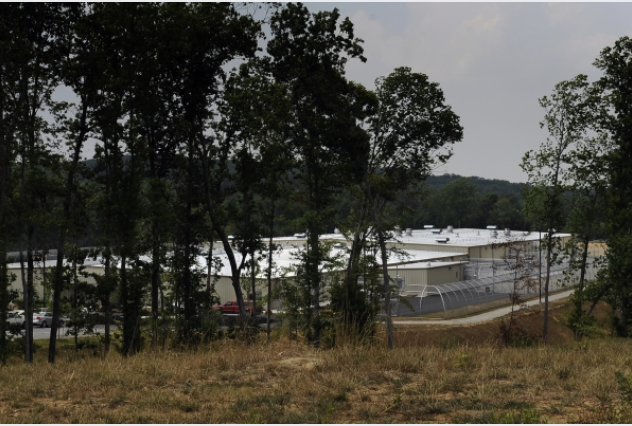
 SootinClaimon.Com